Itinerary
United with France only since 1860, Nice has its own history and atmosphere, which dates back 230,000 years. It was on Colline du Château (now château-less) and at the Plage des Ponchettes, in front of the Old Town, that the Greeks established a market-port in 350 BC and named it Nikaia, which would become Marseilles’ chief coastal rival. The Romans established themselves a little later on the hills of Cimiez (Cemenelum), already previously occupied by Ligurians and Celts, and quickly overshadowed the waterfront port. After falling to the Saracen invasions, Nice regained power as an independent state, becoming an important port in the early Middle Ages.So cocksure did it become that in 1388, Nice, along with the hill towns behind, effectively seceded from the county of Provence, under Louis d’Anjou, and allied itself with Savoie. Thus began its liaison with the House of Savoy, and through it with Piedmont and Sardinia, it was the Comté de Nice (Nice County). This relationship lasted some 500 years, tinting the culture, architecture, and dialect in rich Italian hues.By the 19th century Nice was flourishing commercially, locked in rivalry with the neighboring shipping port of Genoa. Another source of income: the dawning of tourism, as first the English, then the Russian nobility, discovered its extraordinary climate and superb waterfront position. A parade of fine stone mansions and hotels closed into a nearly solid wall of masonry, separated from the smooth-round rocks of the beach by what was originally named Camin deis Anglés (the English Way), which of course is now the famous Promenade des Anglais. This magnificent crescent, which is seeking UNESCO recognition, is one of the noblest in France. Many of Nice’s most delightful attractions—the Cours Saleya market, the Old Town streets, the Hotel Negresco, and the Palais Masséna—are on or close to this 10-km (6-mile) waterfront, making it the first stop for most visitors, while the redevelopment of Nice’s port, around the other side of the Colline du Château, makes it easier for amblers who want to take in the Genoese architecture or peruse the antiques at the Puces de Nice, now part of the Promenade des 100 Antiquaires, along Quai Papacino. Nice also has the distinction of the “Family Plus” label, with free strollers, play areas, and restaurants with child-friendly activities.
One of the most photographed villages along the coast, with a decidedly romantic and affluent aura, Portofino has long been a popular destination for the rich and famous. Once an ancient Roman colony and taken by the Republic of Genoa in 1229, it’s also been ruled by the French, English, Spanish, and Austrians, as well as by marauding bands of 16th-century pirates. Elite British tourists first flocked to the lush harbor in the mid-1800s. Some of Europe’s wealthiest drop anchor in Portofino in summer, but they stay out of sight by day, appearing in the evening after buses and boats have carried off the day-trippers.There’s not actually much to do in Portofino other than stroll around the wee harbor, see the castle, walk to Punta del Capo, browse at the pricey boutiques, and sip a coffee while people-watching. However, weaving through picture-perfect cliffside gardens and gazing at yachts framed by the sapphire Ligurian Sea and the cliffs of Santa Margherita can make for quite a relaxing afternoon. There are also several tame, photo-friendly hikes into the hills to nearby villages.Unless you’re traveling on a deluxe budget, you may want to stay in Camogli or Santa Margherita Ligure rather than at one of Portofino’s few very expensive hotels. Restaurants and cafés are good but also pricey (don’t expect to have a beer here for much under €10).
Located in the southeast of the French Provence region, Antibes ranks among France’s oldest cities. Originally named ‘Antipolis’, Antibes was founded by Greek merchants in the 5th century. The Old City is a maze of small, flower-bedecked streets with Roman and Medieval sections. A portion of the impressive 16th-century ramparts overlooking the Mediterranean Sea still protect the heart of the Old City. Antibes is comprised of three distinct sections. The first is Antibes, which includes the Old City and ramparts. Next is Juan les Pins, a famous beach resort once praised by Francis Scott Fitzgerald and the site of the annual International Jazz Festival. Antibes’ third section is Cap d’Antibes, a wooden peninsula that has become a haunt for the rich and famous. Antibes is also home to Europe’s largest yacht harbor, Port Vauban, where the super-yachts of the wealthy are anchored. For cruise vessels, Antibes offers an opportunity to visit some of Provence’s prettiest areas. It also serves as a convenient starting point for trips to the walled-in hilltop village of St. Paul de Vence. Pier Information The ship is scheduled to anchor in the bay and tender guests ashore. The town centre is within walking distance from the tender pier. Taxis are not easy to find; therefore, it is recommended that private travel arrangements be planned in advance. Shopping The Old City offers a wide range of souvenir shops, home decoration, antiques and Provencal artifacts. Postcards are easily found, and must be sent with French postage stamps. Most shops, however, do close between 12:00 p.m. and 2:00 p.m. The local currency is the euro. Cuisine The cuisine in the southeastern part of France is considered to be varied and healthy, thanks to the common use of quality fresh products and olive oil. Fresh local fish caught daily, excellent vegetable stew, or ratatouille , and great local wines highlight the wide range of gastronomical delights that can be found here. In addition, restaurants in the harbor area typically offer the chef’s daily special, or plat du jour , on their menus. Other Sites Antibes primarily serves as a starting point for trips into the surrounding areas, which are included in the organized excursions. An early-morning stroll through the local fruit and vegetable market may also be of interest. Private Arrangements For those guests interested in touring at their leisure, we are pleased to offer .Silver Shore Privato – both half-day and full-day private arrangements by private car or van. This program may be booked in advance at silversea.com or purchased on board the ship, subject to availability. Other private arrangements for independent sightseeing may be requested through the Tour Office on board the ship.
Cannes is pampered with the luxurious year-round climate that has made it one of the most popular resorts in Europe. Cannes was an important sentinel site for the monks who established themselves on Île St-Honorat in the Middle Ages. Its bay served as nothing more than a fishing port until in 1834 an English aristocrat, Lord Brougham, fell in love with the site during an emergency stopover with a sick daughter. He had a home built here and returned every winter for a sun cure—a ritual quickly picked up by his peers. Between the popularity of Le Train Blue transporting wealthy passengers from Calais, and the introduction in 1936 of France’s first paid holidays, Cannes became the destination, a tasteful and expensive breeding ground for the upper-upscale.Cannes has been further glamorized by the ongoing success of its annual film festival, as famous as Hollywood’s Academy Awards. About the closest many of us will get to feeling like a film star is a stroll here along La Croisette, the iconic promenade that gracefully curves the wave-washed sand coastline, peppered with chic restaurants and prestigious private beaches. This is precisely the sort of place for which the French invented the verb flâner (to dawdle, saunter): strewn with palm trees and poseurs, its fancy boutiques and status-symbol grand hotels—including the Carlton, the legendary backdrop to Grace Kelly in To Catch a Thief —all vying for the custom of the Louis Vuitton set. This legend is, to many, the heart and soul of the Côte d’Azur.
At first glance, it really doesn’t look all that impressive. There’s a pretty port with cafés charging €5 for a coffee and a picturesque old town in sugared-almond hues, but there are many prettier in the hills nearby. There are sandy beaches, rare enough on the Riviera, and old-fashioned squares with plane trees and pétanque players, but these are a dime a dozen throughout Provence. So what made St-Tropez an internationally known locale? Two words: Brigitte Bardot. When this pulpeuse (voluptuous) teenager showed up in St-Tropez on the arm of Roger Vadim in 1956 to film And God Created Woman, the heads of the world snapped around. Neither the gentle descriptions of writer Guy de Maupassant (1850–93), nor the watercolor tones of Impressionist Paul Signac (1863–1935), nor the stream of painters who followed (including Matisse and Bonnard) could focus the world’s attention on this seaside hamlet as did this one sensual woman in a scarf, Ray-Bans, and capris. Vanity Fair ran a big article, “Saint Tropez Babylon,” detailing the over-the-top petrodollar parties, megayachts, and Beyoncé–d paparazzi. But don’t be turned off: the next year, Stewart, Tabori & Chang released an elegant coffee-table book, Houses of St-Tropez, packed with photos of supremely tasteful and pretty residences, many occupied by fashion designers, artists, and writers. Once a hangout for Colette, Anaïs Nin, and Françoise Sagan, the town still earns its old moniker, the “Montparnasse of the Mediterranean.” Yet you might be surprised to find that this byword for billionaires is so small and insulated. The lack of train service, casinos, and chain hotels keeps it that way. Yet fame, in a sense, came too fast for St-Trop. Unlike the chic resorts farther east, it didn’t have the decades-old reputation of the sort that would attract visitors all year around. For a good reason: its location on the south side of the gulf puts it at the mercy of the terrible mistral winter winds. So, in summer the crowds descend and the prices rise into the stratosphere. In July and August, you must be carefree about the sordid matter of cash. After all, at the most Dionysian nightclub in town, a glass of tap water goes for $37 and when the mojo really gets going, billionaires think nothing of “champagne-spraying” the partying crowds—think World Series celebrations but with $1,000 bottles of Roederer Cristal instead of Gatorade. Complaining about summer crowds, overpricing, and lack of customer service has become a tourist sport and yet this is what makes St-Tropez—described by the French daily newspaper Le Figaro as the place you can see “the greatest number of faces per square meter”—as intriguing as it is seductive.
United with France only since 1860, Nice has its own history and atmosphere, which dates back 230,000 years. It was on Colline du Château (now château-less) and at the Plage des Ponchettes, in front of the Old Town, that the Greeks established a market-port in 350 BC and named it Nikaia, which would become Marseilles’ chief coastal rival. The Romans established themselves a little later on the hills of Cimiez (Cemenelum), already previously occupied by Ligurians and Celts, and quickly overshadowed the waterfront port. After falling to the Saracen invasions, Nice regained power as an independent state, becoming an important port in the early Middle Ages.So cocksure did it become that in 1388, Nice, along with the hill towns behind, effectively seceded from the county of Provence, under Louis d’Anjou, and allied itself with Savoie. Thus began its liaison with the House of Savoy, and through it with Piedmont and Sardinia, it was the Comté de Nice (Nice County). This relationship lasted some 500 years, tinting the culture, architecture, and dialect in rich Italian hues.By the 19th century Nice was flourishing commercially, locked in rivalry with the neighboring shipping port of Genoa. Another source of income: the dawning of tourism, as first the English, then the Russian nobility, discovered its extraordinary climate and superb waterfront position. A parade of fine stone mansions and hotels closed into a nearly solid wall of masonry, separated from the smooth-round rocks of the beach by what was originally named Camin deis Anglés (the English Way), which of course is now the famous Promenade des Anglais. This magnificent crescent, which is seeking UNESCO recognition, is one of the noblest in France. Many of Nice’s most delightful attractions—the Cours Saleya market, the Old Town streets, the Hotel Negresco, and the Palais Masséna—are on or close to this 10-km (6-mile) waterfront, making it the first stop for most visitors, while the redevelopment of Nice’s port, around the other side of the Colline du Château, makes it easier for amblers who want to take in the Genoese architecture or peruse the antiques at the Puces de Nice, now part of the Promenade des 100 Antiquaires, along Quai Papacino. Nice also has the distinction of the “Family Plus” label, with free strollers, play areas, and restaurants with child-friendly activities.
Ship features
Owner's Suite
In addition to the common services provided to all our suites and staterooms:
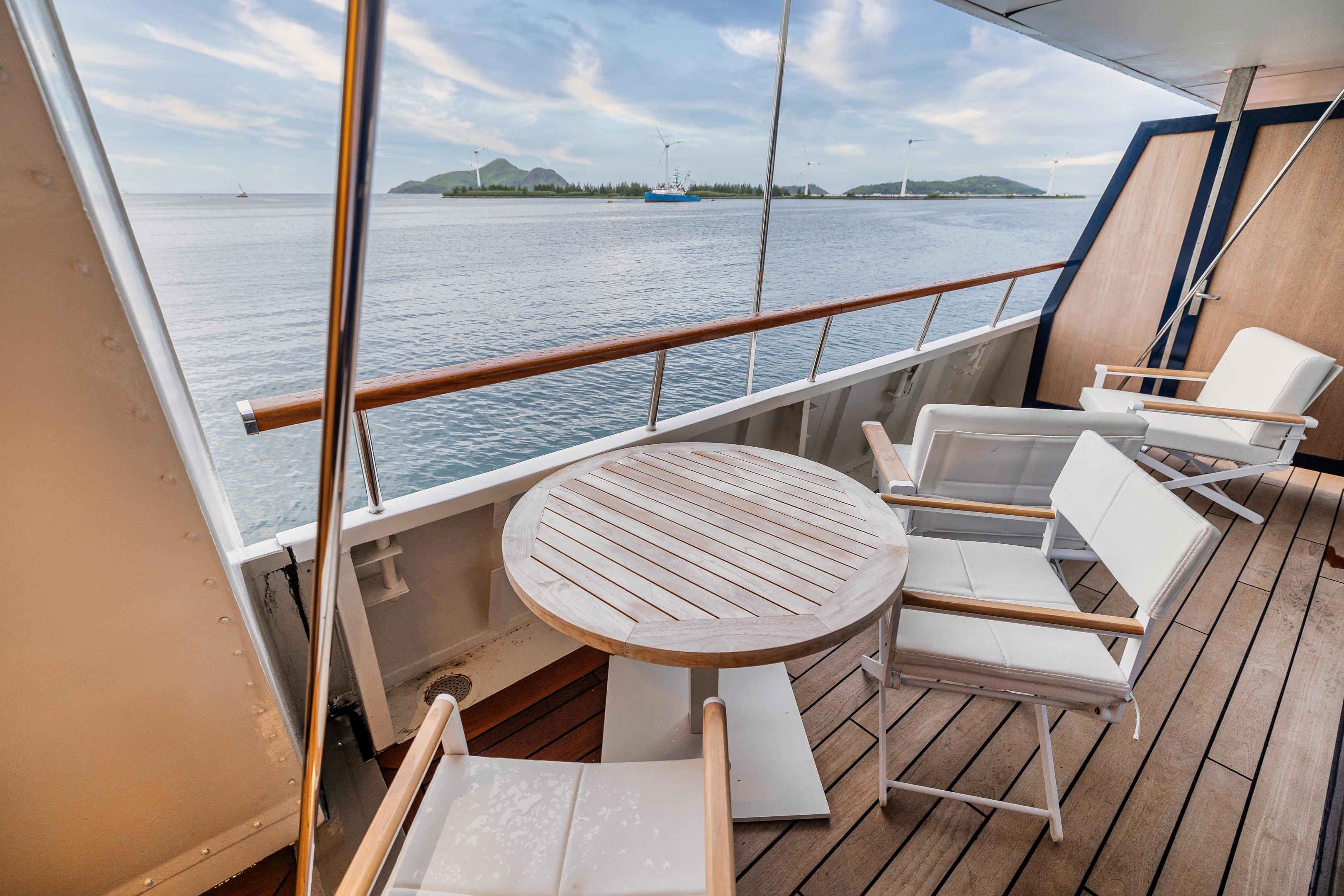
- A private 96 ft² balcony with 2 armchairs
- Room service is available for breakfast, lunch, and dinner
- A bathroom with double shower
- A one-hour treatment per person (for 2 people) in the wellness area, including body and facial treatments
- A private return transfer
- Three portholes and glass door
- Champagne and fruit on arrival
- A daily selection of sweet and savoury canapés and a fruit basket
- One bedroom with king-size bed (180 x 190 cm) or two single beds (90 x 190 cm)
- A living room with a convertible sofa and armchair
- Dining area for 4 people
Included in all staterooms
- Minibar
- Diptyque Paris top-of-the-line bath products
- Nespresso coffee maker and boiler
- Dressing room with shelves and closet
- 110V American / 220V European
- Dressing table and hairdryer
- No lift, not suitable for people with reduced mobility
- Direct line telephone
- Electronic safe
- Flat screen TV, international channels and videos on demand
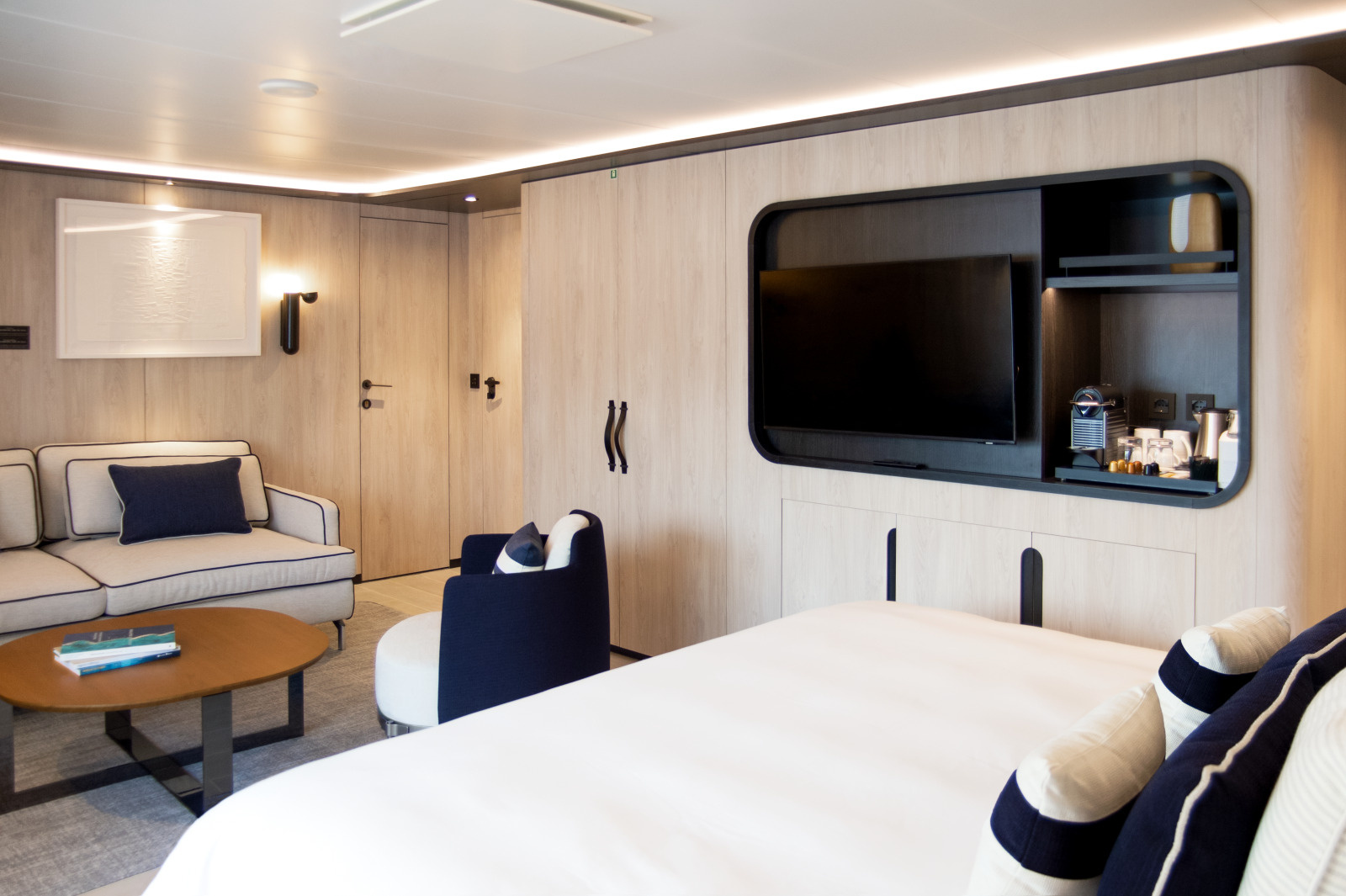
Grand Privilege Suite
In addition to the common services provided to all our suites and staterooms:
- A private 139 ft² balcony with four armchairs
- Double dressing rooms
- Two panoramic portholes and two hinged windows
- Two bathrooms with shower
- Two one-hour treatments per person (for 2 people) in the wellness area, including body and facial treatments
- A daily selection of sweet and savoury canapés and a fruit basket
- Two king-size beds (180 x 190 cm) or four single beds (90 x 190 cm)
- A lounge area with convertible sofa, two armchairs, and TV
- Champagne and fruit on arrival
Included in all staterooms
- Minibar
- Diptyque Paris top-of-the-line bath products
- Nespresso coffee maker and boiler
- Dressing room with shelves and closet
- 110V American / 220V European
- Dressing table and hairdryer
- No lift, not suitable for people with reduced mobility
- Direct line telephone
- Electronic safe
- Flat screen TV, international channels and videos on demand

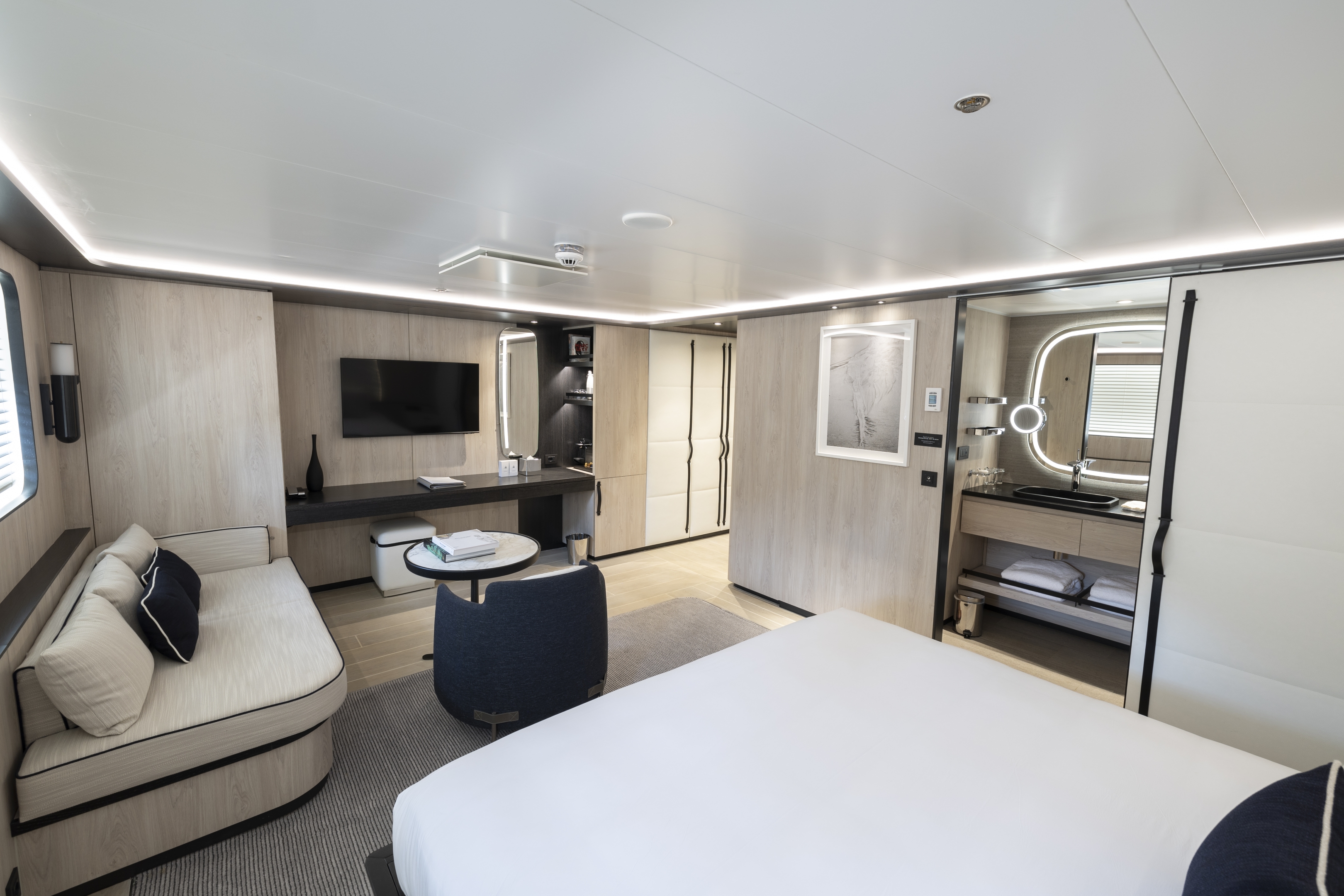
Privilege suite
In addition to the common services provided to all our suites and staterooms:
- A private 96 ft² balcony with four armchairs
- Panoramic window and panoramic hinged window
- Champagne and fruit on arrival
- A daily selection of sweet and savoury canapés and a fruit basket
- One king-size bed (180 x 190 cm) or two single beds (90 x 190 cm)
- A lounge area with convertible sofa and two armchairs
- A bathroom with shower
Included in all staterooms
- Minibar
- Diptyque Paris top-of-the-line bath products
- Nespresso coffee maker and boiler
- Dressing room with shelves and closet
- 110V American / 220V European
- Dressing table and hairdryer
- No lift, not suitable for people with reduced mobility
- Direct line telephone
- Electronic safe
- Flat screen TV, international channels and videos on demand
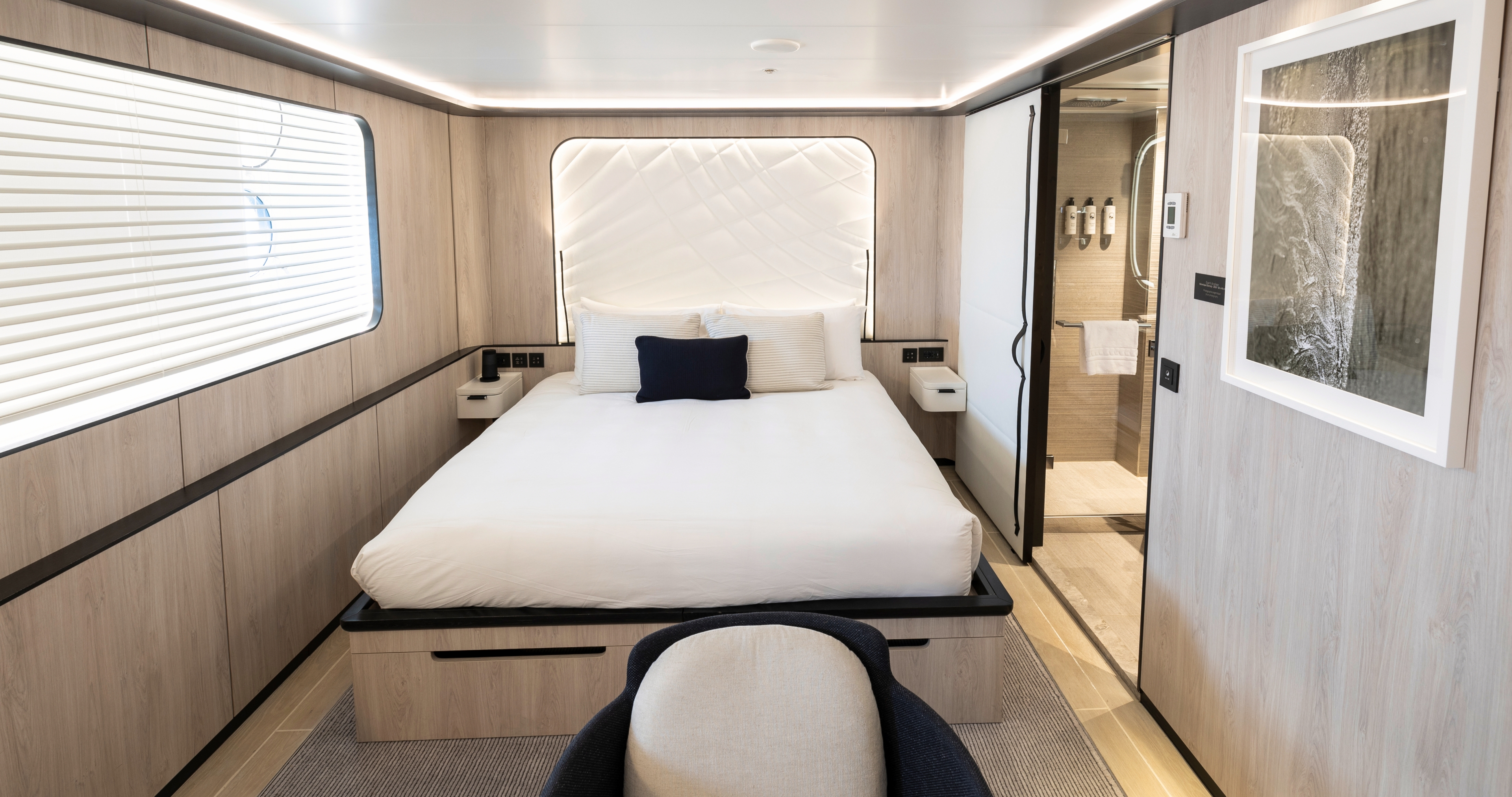
Prestige Suite
In addition to the common services provided to all our suites and staterooms:
- Two portholes
- One king-size bed (180 x 190 cm) or two single beds (90 x 190 cm)
- A bathroom with shower
- A lounge area with convertible sofa and an armchair
Included in all staterooms
- Minibar
- Diptyque Paris top-of-the-line bath products
- Nespresso coffee maker and boiler
- Dressing room with shelves and closet
- 110V American / 220V European
- Dressing table and hairdryer
- No lift, not suitable for people with reduced mobility
- Direct line telephone
- Electronic safe
- Flat screen TV, international channels and videos on demand
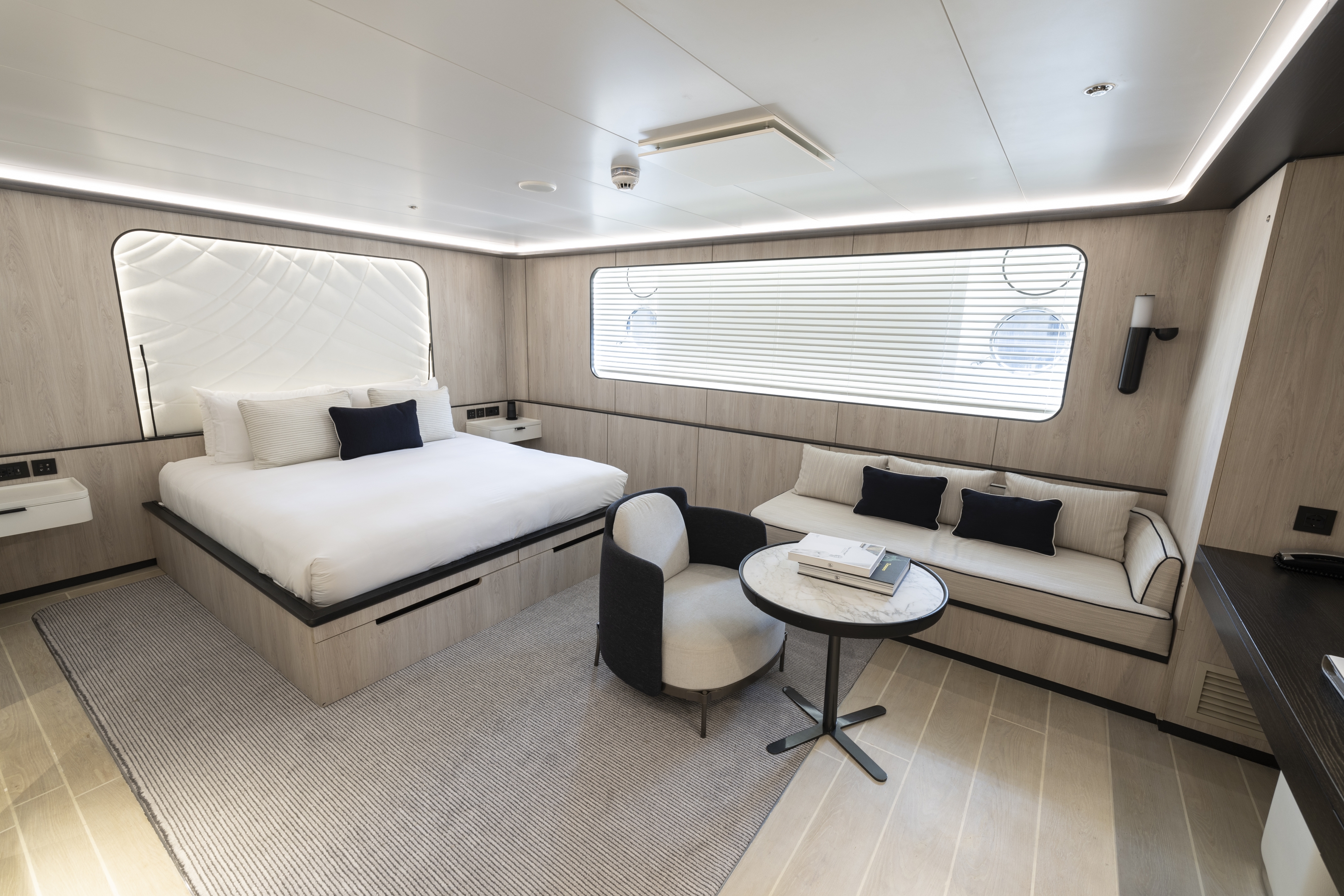
Junior Suite
In addition to the common services provided to all our suites and staterooms:
- Two portholes
- One king-size bed (180 x 190 cm) or two single beds (90 x 190 cm)
- A bathroom with shower
- A lounge area with convertible sofa and an armchair
Included in all staterooms
- Minibar
- Diptyque Paris top-of-the-line bath products
- Nespresso coffee maker and boiler
- Dressing room with shelves and closet
- 110V American / 220V European
- Dressing table and hairdryer
- No lift, not suitable for people with reduced mobility
- Direct line telephone
- Electronic safe
- Flat screen TV, international channels and videos on demand
Upper decks balcony stateroom
In addition to the common services provided to all our suites and staterooms:
- A 16 m² stateroom (Alizés Prestige Stateroom with balcony) or 19 m² stateroom (Alizés Stateroom with balcony)
- A private 43 ft² balcony (Alizés Stateroom with balcony) or 86 ft² balcony (Alizés Prestige Stateroom with balcony)
- A panoramic hinged glass door
- A bathroom with shower
- One king-size bed (180 x 190 cm) or two single beds (90 x 190 cm)
Included in all staterooms
- Minibar
- Diptyque Paris top-of-the-line bath products
- Nespresso coffee maker and boiler
- Dressing room with shelves and closet
- 110V American / 220V European
- Dressing table and hairdryer
- No lift, not suitable for people with reduced mobility
- Direct line telephone
- Electronic safe
- Flat screen TV, international channels and videos on demand
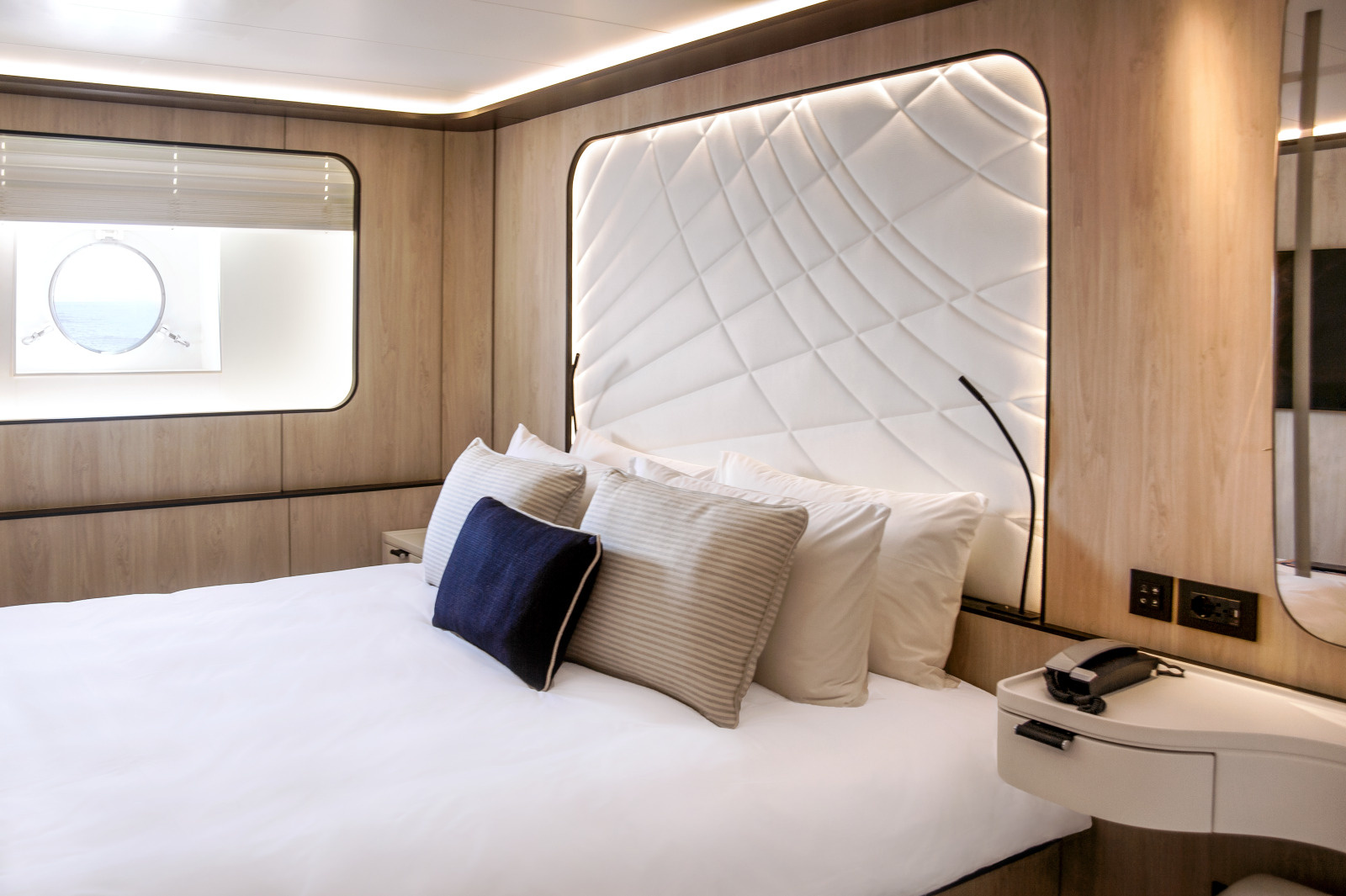
Window or Porthole Stateroom
In addition to the common services provided to all our suites and staterooms:
- One king-size bed (180 x 200 cm) or two single beds (90 x 200 cm)
- A bathroom with shower
- One round porthole
Included in all staterooms
- Minibar
- Diptyque Paris top-of-the-line bath products
- Nespresso coffee maker and boiler
- Dressing room with shelves and closet
- 110V American / 220V European
- Dressing table and hairdryer
- No lift, not suitable for people with reduced mobility
- Direct line telephone
- Electronic safe
- Flat screen TV, international channels and videos on demand
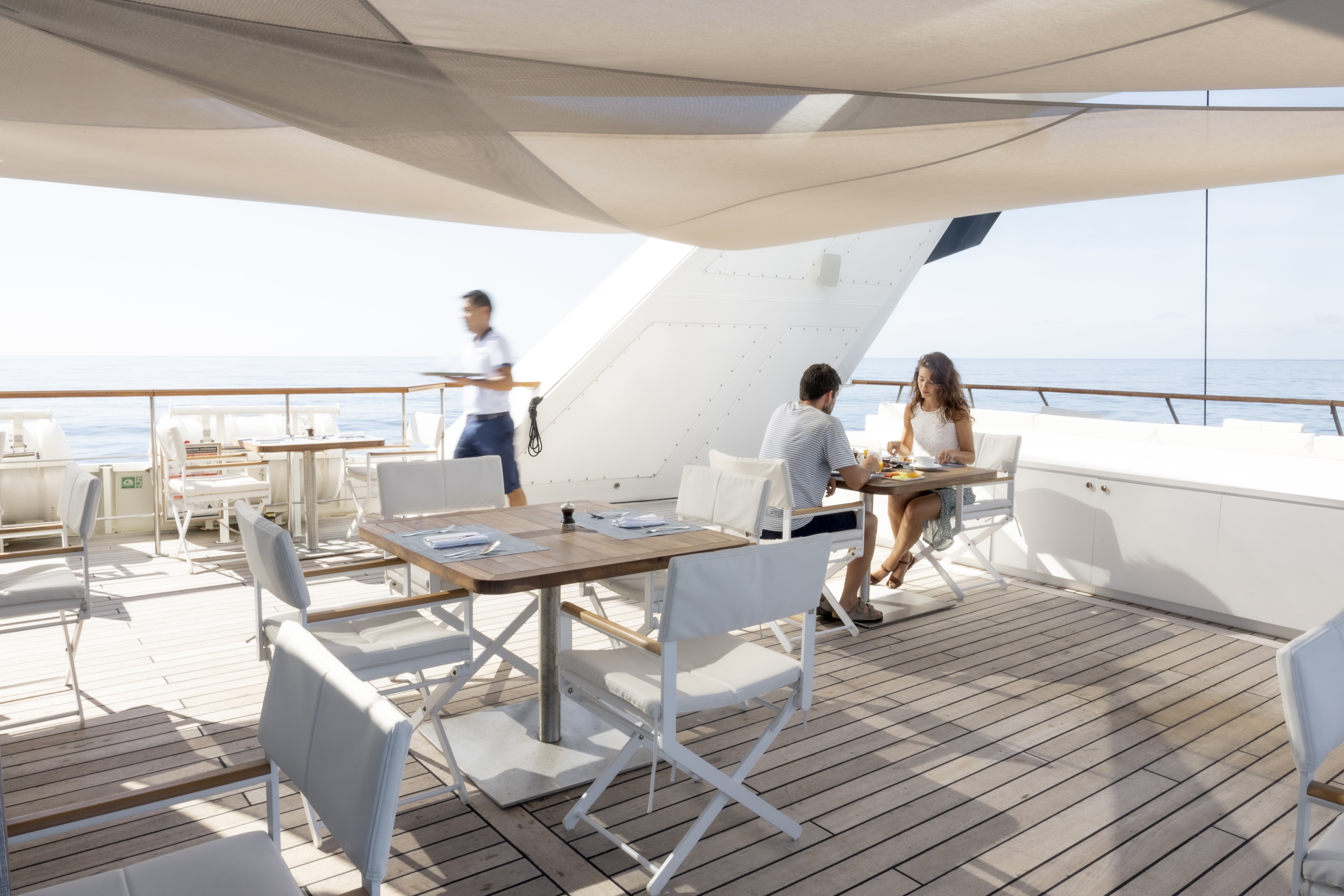
Le Diamant
On board the Ponant, the restaurant Le Diamant celebrates the terroir of each visited coast, offering a culinary experience in perfect harmony with the itinerary of the journey. Driven by the chef’s demanding standards and passion, each dish reveals the richness of local products, carefully selected from the markets along the way. This responsible and sustainable approach invites you to savor the very essence of each stop. In this exceptional setting, gastronomy extends the emotion of the journey.

Excursions
There are many ways to see the world. But to truly discover it? Unexplored shores, authentic encounters, iconic wildlife… Our experts imagine the most beautiful travel stories for you.
Unforgettable moments
Holding your breath to better perceive that of a distant whale, stepping foot on Antarctica for the first time, watching through binoculars the passage of a polar bear in the Arctic, marvelling at the splendour of the Mediterranean architectural heritage… Moments of pure emotion as time seems to suspended.
Unique exchanges
Share the art of living, wisdom and hospitality of communities with strong ancestral traditions. Exchanges about their philosophy in connection with the environment are an endless source of teachings.
Explore further
Navigating close to the almost inaccessible coasts of Greenland, exploring the confidential shores of Oceania, reaching the most remote seas of Antarctica, taking new paths in the Mediterranean or Northern Europe: our experts are constantly seeking new travel experiences to offer you.
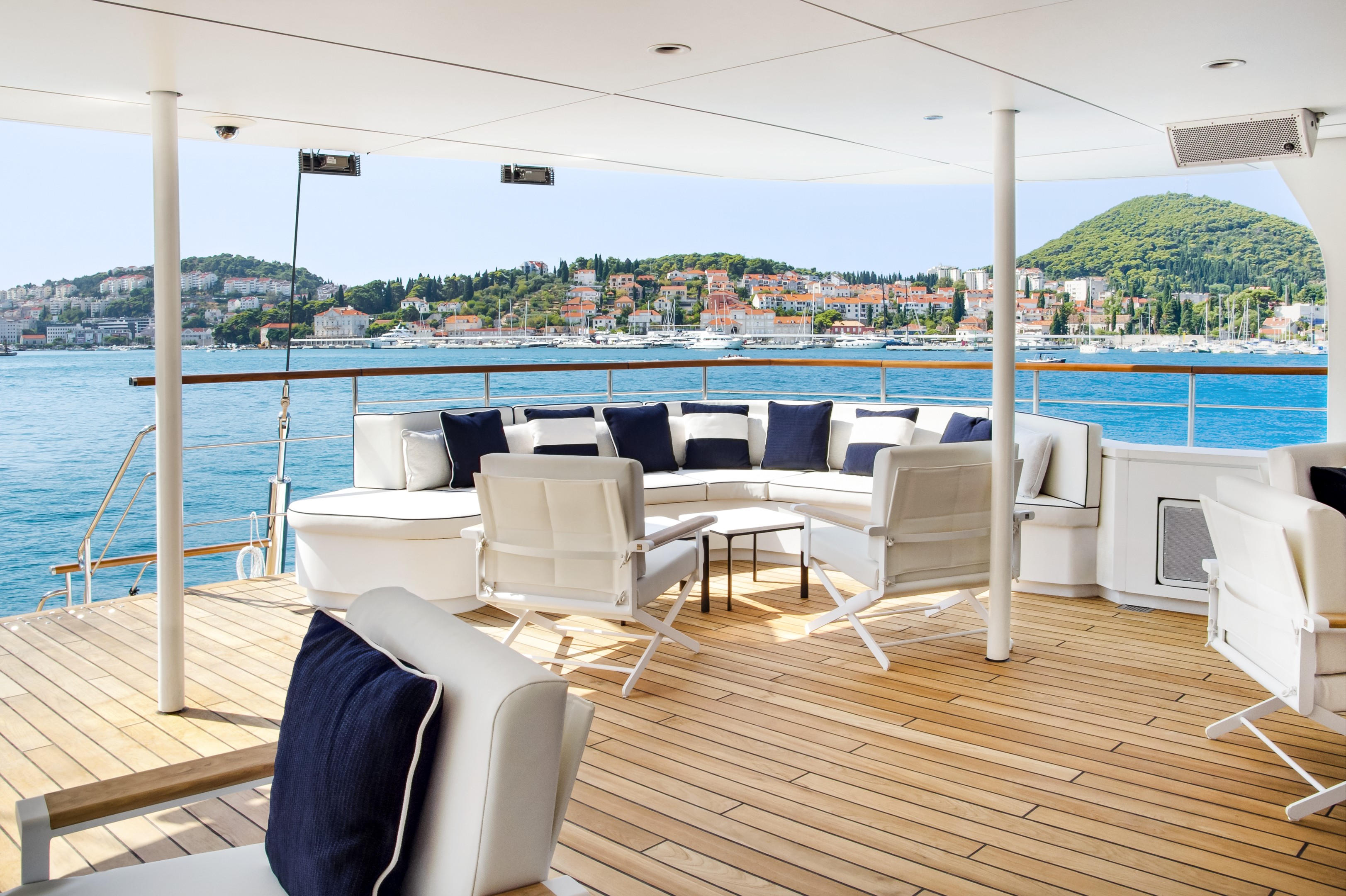
The Marina
Water activities
Explore nature’s swimming pool with transparent-bottom kayaks, paddle boards and diving equipment for intimate experiences, all accessible from the marina.
The sea as a private swimming pool
The navy is deployed from the Alizés bridge to create a secure natural pool. Stand-up paddleboarding, masks and snorkels, and transparent-bottom kayaks fulfill the desires of sea lovers.
Underwater Tranquility
On a radiant afternoon, immerse yourself in crystal-clear waters and paddle to shimmering seabeds teeming with colorful fish. Beneath the surface, let yourself be soothed by the rhythm of a life with its own temporality.

Experts by your side
Captains, expedition leaders, experienced naturalist guides, lecturers, wildlife photographers, personalities from the world of art, science, culture and gastronomy… Experts share their passions with you on board or on land.
Captains
Your captain is responsible for ensuring the smooth running of your journey on board. An expert in navigating polar or tropical waters, their announcements punctuate your day. And when wildlife appears on the horizon, do not hesitate to accept their invitation to join the outer decks for magnificent observations. Gala dinners are also unmissable opportunities to meet your captain and share with them your passion for travel.
Expedition leaders
Alongside the captain, the expedition leader conducts your exploration. They supervise the team of naturalist guides, ensure the safety of the proposed experiences, and adjust the highlights of your journey according to the navigation conditions, to reveal all the riches of these fascinating ecosystems.
Photo ambassadors
During some trips, having renowned photographers on board offers you the unique opportunity to participate in workshops, and conferences, and receive personalised advice to enhance your images.
Activity guides
Scuba diving, snorkelling, kayaking, polar hiking on foot or snowshoes, cross-country skiing, dog sledding… Whether it’s for an introduction or to deepen your practice, experience immersive activities led by certified guides, ambassadors of local cultures and communities.
Guests and partners
Dancers, musicians, writers, journalists, researchers, adventurers… Experts and prestigious partners share their passion, whether it is artistic or scientific.
Speakers
Art historians, journalists, ethnologists, naturalists… Every journey is a unique opportunity to learn more about the regions visited.
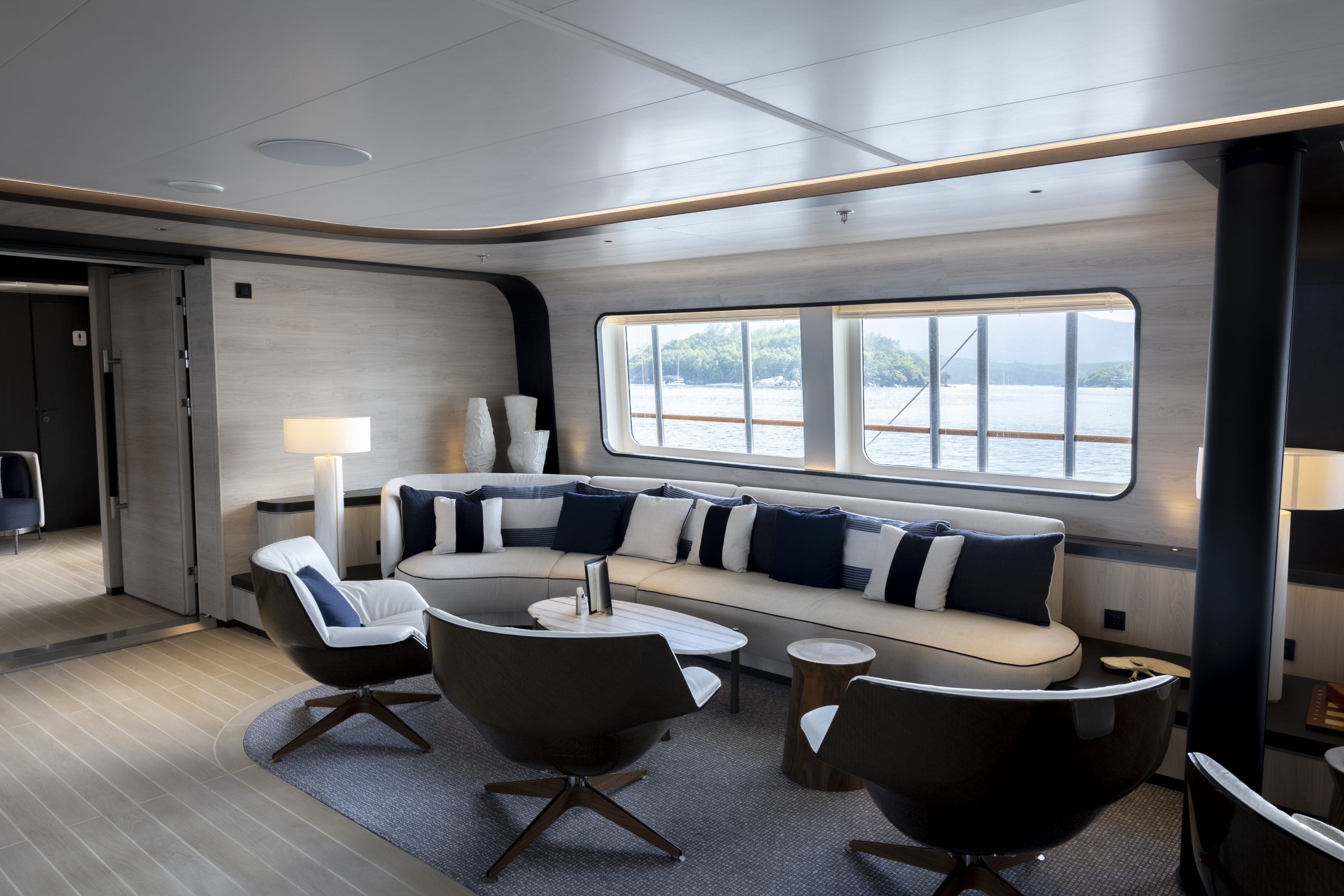
Emeraude Lounge and Bar
library, tearoom, bar, and live entertainment on certain evenings. Access to the outdoor terrace
Sun Deck
- Sun beds
- Exterior bar
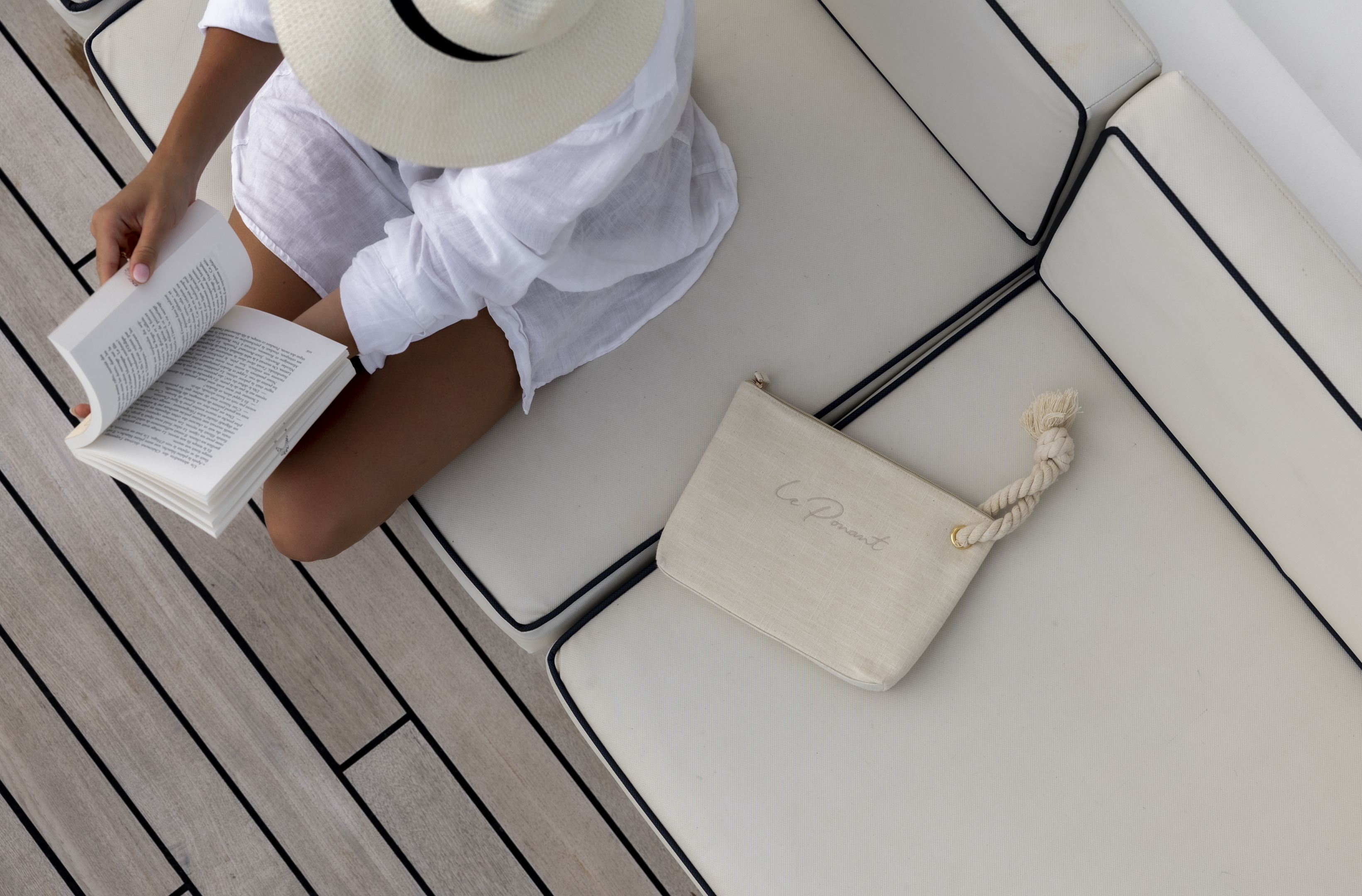
The Wellness Space
Le Ponant has been designed as a cocoon dedicated to well-being and relaxation.
- Spa: massage cabin and Biologique Recherche care products.
- Fitness centre with dedicated fitness coach
- Yoga sessions
Laundry
Your staterllm attendant is at your disposal to provide a laundry service. It takes 24 to 48 hours to wash and iron your clothes. Only an ironing service can be provided on the same day. Dry cleaning is not possible, so we kindly ask you to only give us clothes that can be washed with water.
** These services are chargeable and billed directly to your cabin account.
Smoking Policy
Ships are non-smoking, even on accommodation balconies. Smoking is only allowed in designated outdoor areas of the ship.
Power Adapters
Electrical plug adapters are provided on board, they are available at the reception.
Are the electrical outlets on board compliant with European standards?
Yes, the alternating current 220 volts 50 Hertz is distributed through outlets compliant with European standards. The electricity on board is in 220 volts AC (European standard) and 110 volts AC (North American standard). For safety reasons, the use of hair straighteners and irons is not allowed in the staterooms. On board Le Ponant, the 110 volts AC is only distributed in the bathroom of the staterooms.
Age Restrictions
Children under one (1 year old / 12 months) are not permitted on PONANT EXPLORATIONS cruises.
On Classic cruises, children are permitted from one (1 year old), with a maximum of five children aged one to six (1 to 6 years old) on board each voyage.
Children aged four years and older are welcome at the Kids’ Club when the service is offered on board.
In all cases and at all times, both on board or on land, children and young minors are the full and total responsibility of their parents or accompanying adults.
Languages
The languages spoken on board are French and English. The signage is in French and English. On some cruises, crew members also speak other languages.
Telephone
To reach a correspondent around the world, a satellite communication system is available to you. The cost of communications is charged directly to your account (pricing depends on the navigation zone). Calls from your correspondents can be transferred directly to your accommodation or to any common area on the ships. You can also send and receive faxes. Contacting reception.
Wi-Fi
You have free Wi-Fi internet access on board all ships (cabins and common areas). On the Sisterships (L’Austral, Le Lyrial, The Boréal, Le Soléal), one or more computers are available to you in the leisure areas. Thanks to the Starlink network provided by Marlink, PONANT EXPLORATIONS GROUP guarantees you quality Wi-Fi access, regardless of the location and navigation conditions.
Medical Facilities
There is a doctor on board available to the passengers on all our ships:
- The schedules of consultation are listed each day in the log book (emergency consultation 24/7).
- The Sisterships, PONANT Explorers and Le Commandant Charcot also have a hospital for any small surgery.
- During the excursions, the passengers are accompanied by a doctor or a nurse.
- There is a fee for consultations on board . The price may vary according to the time and place of the consultation (hospital or staterooms). You must also pay for medications.
- The doctor on board is not authorised to distribute sick leaves and prescriptions. Only accounts and invoices are provided which may be used by the passenger to obtain a refund from his/her health insurance if his/her contract allows.
Medical Consultations
Consultations, medical and surgical procedures, laboratory tests or medical imaging examinations (radiology) carried out on board by the doctor or nurse are subject to charges. The price may vary depending on the time and location of the consultation (at the onboard hospital or in the cabin). The cost of all procedures is displayed in the waiting room. Guests are also required to pay for any medications.
The ship’s doctor is unable to provide medical certificates and prescriptions. Only reports and invoices are issued, which can be used by the guest to claim a refund from their health insurance if their policy allows it.
Special Medical Treatment
If you have a special treatment, please inform the reservation service at the time of your registration, indicate it on the information form filled out before departure, then inform the crew on board at the time of boarding and bring your specific medications for the duration of the cruise.
Seasickness
Our ships (with the exception of Le Ponant and the Spirit of Ponant) are equipped with stabilisers fitted with dynamic fins that adapt to the movements of the ship. This system allows for anticipation and compensation for pitch and roll to provide great stability. Guests anticipating seasickness experience reduced symptoms and are surprised not to be inconvenienced.
Guests with reduced mobility
Only the Sisterships, the PONANT Explorers, Paul Gauguin and Le Commandant Charcot have been designed to accommodate passengers with reduced mobility.
Staterooms specially designed on board the Sisterships, decks 3 (307), 4 (407) and 5 (509) 3 c for two people aged 18. in a wheelchair, with a double bed (180 x 200) cm) or two single beds (90 x 200 shower and toilet in the bathroom as well as a balcony of 4 2 (only for cabins on the decks 4 and 5) having a small ramp Wheelchair accessible,
on board the PONANT Explorers, decks 4 (431) and 5 (527) 2 cabins for two people each at 27.5 2in a wheelchair, with a double bed (180 x 200) cm) or two single beds (90 x 200 sink, shower, and toilet in the bathroom, as well as a balcony of 4 Wheelchair accessible,
on board the Commandant Charcot, points 6 (626 and 628) and 8 (818) 3 cabins for two people each of 28
2I’m accIin a wheelchair, with a double bed (180 x 200) cm) or two single beds (90 x 200 shower and toilet in the bathroom, as well as abalcony of 7.5.2 a small ramp Wheelchair accessible,
on board the Paul Gauguin, bridge 4 (415 and 416) 2 cabins for two people each aged 21 in a wheelchair, with a double queen size bed (160 x 200) cm) only for the 416, and a double queen size bed (160 x 200 cm) or two single beds (80 x 200 cm) for the 415, shower and toilet in the bathroom, as well as.a window with panoramic view.
Ramps providing easy access for movement in common areas.
Posters, signage, and cabin numbers translated into braille.
Despite these arrangements, each passenger must be able to be autonomous or travel with a companion who can provide all the necessary assistance during their journey. If a person is not deemed sufficiently fit to travel safely, the company reserves the right to refuse their boarding. Landings in difficult areas or on zodiacs are subject to the approval of the captain, always with the passenger’s well-being and safety in mind.
Packing Tips
Technical Accessories
We recommend that you bring a ski mask, sunglasses, walking sticks, a waterproof backpack, binoculars, a technical watch, a mosquito net for the face (in the Arctic), and a waterproof pouch. These accessories are also available for purchase at the onboard shop.
Dress Code
Dress Code
We recommend wearing casual and elegant outfits, cocktail attire for gala evenings, and white or black and white attire for the Officers’ evening. Shorts and bermudas are not allowed in the evening at gourmet restaurants.
Expedition Cruise
For an expedition cruise, pack practical clothing and comfortable shoes. During your polar cruises, a polar parka in your size will be provided and boots in your size will be loaned to you.
Sustainable Development
Sustainable development is enshrined in the company’s statutes and is at the heart of the PONANT EXPLORATIONS GROUP project. Founded over 30 years ago by committed sailors, the company was born out of a desire to share the passion for the oceans and the treasures of the Earth. This responsibility commits us to engage in a respectful dialogue with the environment and the populations encountered, and to invest in various areas related to the preservation and enhancement of the natural and cultural heritage of polar and oceanic regions.
To learn more about our commitments to sustainable development and about the PONANT Foundation, visit the page. Engagements.
Clean Ships
We were among the first in the world to abandon heavy fuel. Our ships are equipped with electric diesel engines and SCR catalytic converters, which help reduce our emissions and fuel consumption. Our high polar exploration ship, Le Commandant Charcot, is a hybrid electric ship, powered by liquefied natural gas (LNG) and light fuel. Thanks to LNG, there is a reduction of -25% in CO2 emissions, -85% in nitrogen oxide emissions, and -95% in fine particle emissions. Every time we design a new ship, we equip it with the latest eco-technologies available, allowing us to maintain our position as a leader in the cruise industry in terms of the environment, surpassing international regulations in some aspects. This commitment is recognised by numerous independent organisations. If you would like to learn more, please visit our section on ‘labels, certifications, and distinctions’ on the Engagements page.
Wastewater
Wastewater is treated using processes that exclude the use of chemicals. The treated water is sometimes reused on board for technical purposes (laundry, deck washing…) and is used for the external cleaning of the ship.
Waste
We have optimised our organisation to reduce waste at the source, waste is still produced on board. Equipment adapted for sorting each type of waste is in place. This equipment helps reduce the stored volume and facilitates their recovery. We ensure complete traceability of this waste and have a valuation rate of 80% by 2026.
Single-use plastics
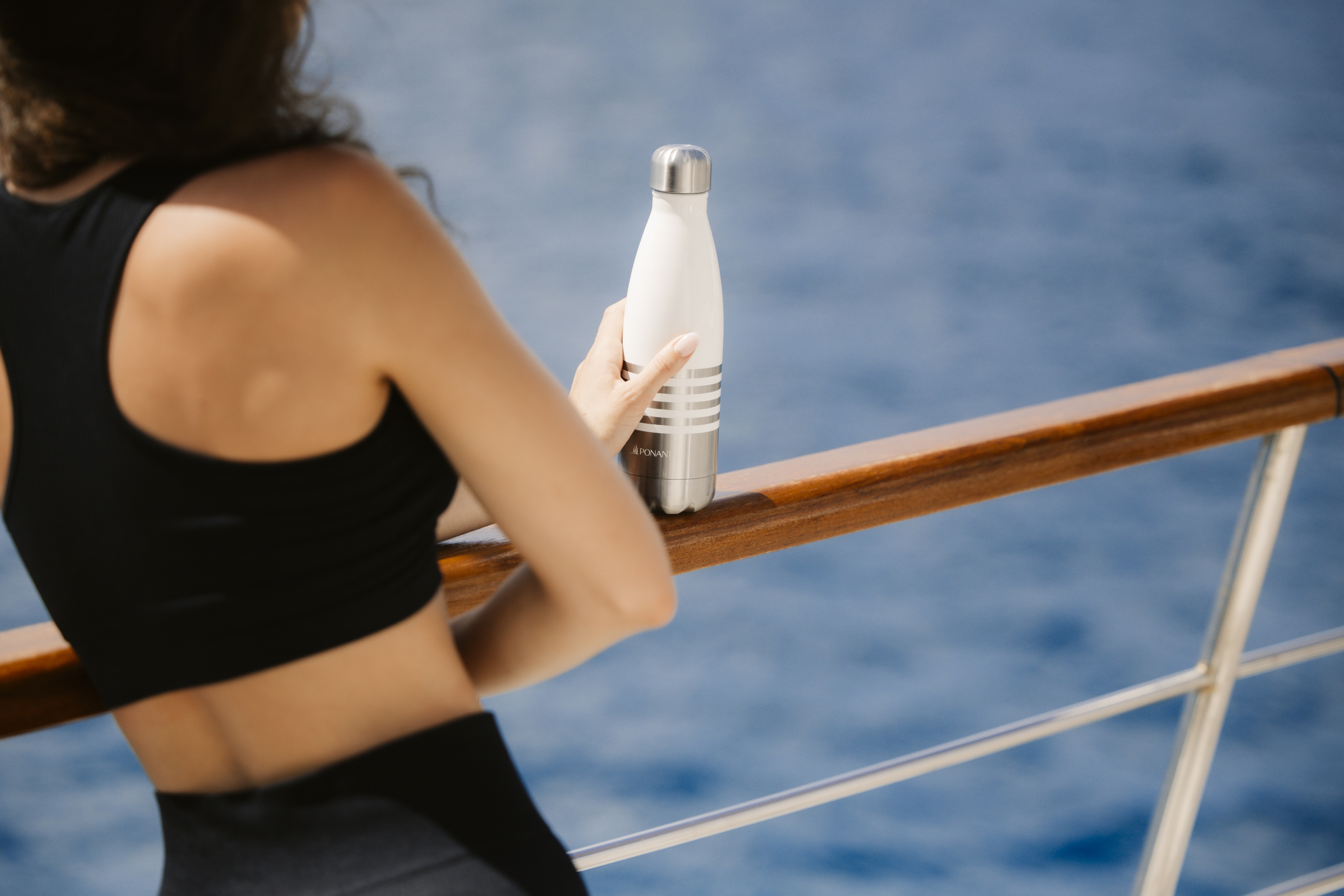
We have eliminated single-use plastics (such as straws, cups, food portions, laundry bags, etc.). A metal water bottle is provided to each guests during expedition cruises, and water fountains are available in the common areas of the ships. We are also developing the bottling of our water in glass bottles.
Discover all our products in daily actions.
Special Diets
If you follow a specific diet (vegetarian, diabetic, low calorie, gluten-free, allergy…), it is essential to specify it when making your reservation. You will then receive adapted menus throughout your cruise.
Solo Travelling
Every season, we offer a wide range of cruises with ‘no single supplement’: you thus benefit from a double stateroom to yourself, at no extra cost. The onboard atmosphere is conducive to meeting and interacting with other guests, and the crew ensures your well-being and integration on board. Discover the cruises by consulting the single page offered.
Ponant App
Our app accompanies you in your preparations and during your stay on board. Find the services offered and the information that facilitates your journey.
Are you soon boarding with us?
Thanks to its app, PONANT accompanies you in your travel preparations, and then during your stay on board. Find our services and information that will make your cruise even easier.
Prepare your cruise with peace of mind
- Receive notifications to pre-book your programs before and after the cruise, as well as your excursions.
- Get a sneak peek of the captain and crew who will accompany you during your stay.
- Follow in real-time the positioning of the ship on which you will embark.
- Access your luggage checklist, the clothing outfits recommended by our experts for your destination, and the formalities to be expected before your departure.
- Check the steps of your journey and find out the details of the amenities in your cabin.
Once on board, the PONANT app makes all your procedures easier
- Use the guest mode to access onboard services without logging in.
- Find the highlights of your cruise, day by day.
- Add your favourite excursions to your wishlist.
- Check out the most beautiful photos from your cruise.
- Order your breakfast and room service from your smartphone.
- Conference schedules, spa relaxation sessions… All your important appointments on board are noted in your application.
Download the application
The companion of your next journey
Required Android version: 5.0 and later Required iOS version: 12.4 and later
Included on Every Cruise
A complete offer (excluding Spirit of PONANT and La Désirade¹)
SERVICES INCLUDED ON ALL OUR CRUISES
- Full board from arrival to departure day
- High-end gastronomy in all restaurants
- All drinks in restaurants, bars and minibars. All drinks are included² (selection of champagnes, wines and spirits, beers, cocktails, water, soft drinks, hot drinks)
- 24-hour room service
- Butler service for certain suites³
- Free and unlimited internet access on board
- Evenings, shows and other entertainment
- Access to the fitness area and the hammam or sauna, depending on the ship.
- All port and security fees
SERVICES INCLUDED DEPENDING ON THE TYPE OF CRUISE/SHIP
- Timeless: one included excursion⁴ per person, per day and per stopover, led by local guides (visits to monuments, tastings of local products, etc.)
- Discoveries: one included activity per person, per day and per stopover, which can be either an included excursion⁴ led by local guides or an included activity led by naturalist guides
- Expeditions: one activity included per person, per day, per port of call, led by naturalist guides (hiking, zodiac excursions, etc.).
- Some more secluded ports of call, with few or no facilities, will be offered for independent exploration. Passengers will thus have the freedom to explore the area and enjoy activities on their own (swimming at the beach, shopping, restaurants, shows, etc.).
- Lectures by our naturalist guides or our destination expert (excluding sea voyages)
- Non-motorized water sports activities (excluding diving), such as kayaking on the Commandant Charcot or stand-up paddleboarding depending on the ship, are subject to weather and safety conditions, local authorizations, and the Captain’s agreement.
- Taxes for national parks and protected areas
- The accompaniment of a team of naturalist guides is provided only on expedition and discovery cruises; on land or, depending on the destination, during excursions and/or landings by Zodiac.
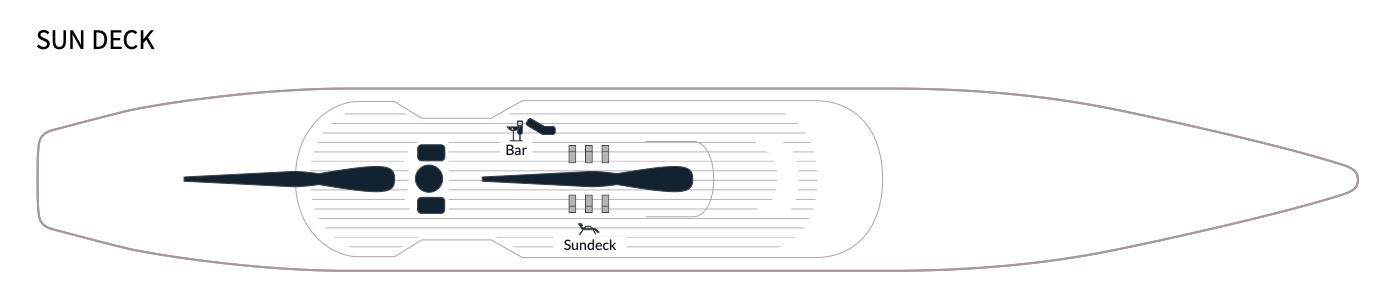
Deck 5
- Sun Deck
- Bar
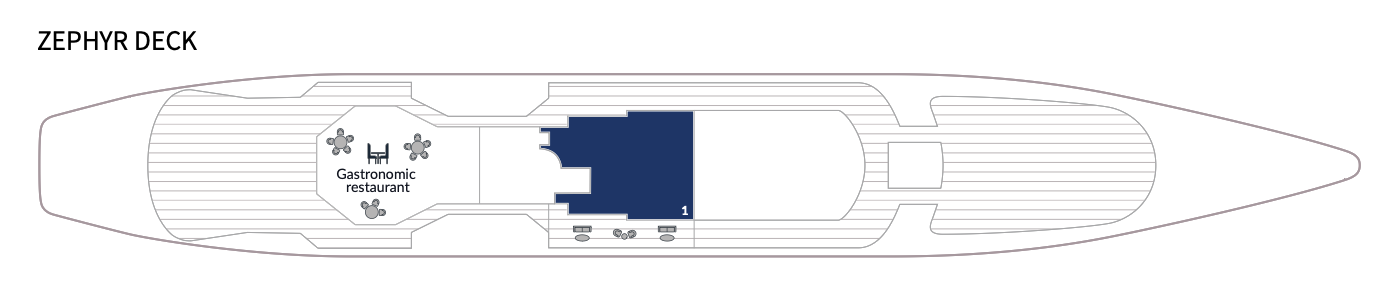
Deck 4
- Restaurant
- Owner’s Suite
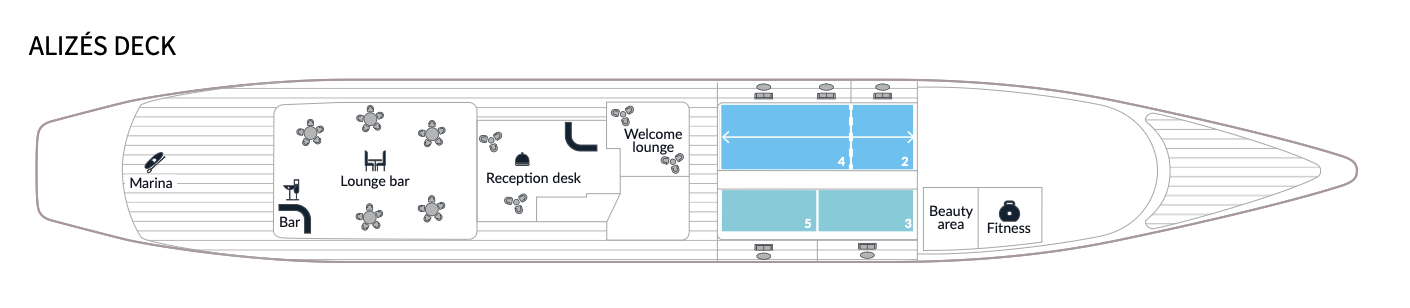
Deck 3
- Marina
- Bar
- Lounge
- Reception Desk
- Welcome Lounge
- Beauty Area
- Fitness
- Grand Privilege Suite
- Privilege Suite
- Upper Decks Balcony Stateroom (Alizes Prestige Stateroom with Balcony)
- Upper Decks Balcony Stateroom (Alizes Stateroom with Balcony)
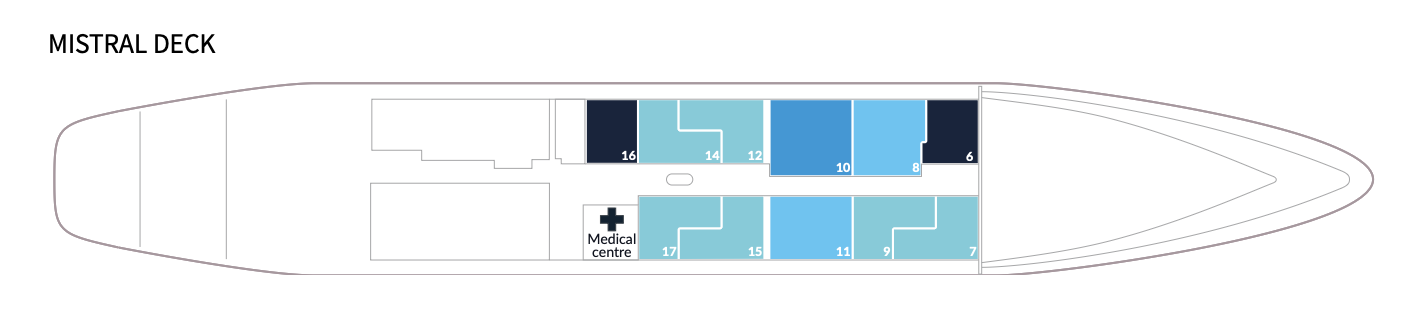
Deck 2
- Medical Centre
- Prestige Suite
- Junior Suite
- Window Stateroom (Mistral Prestige Stateroom)
- Porthole Stateroom (Mistral Stateroom)