
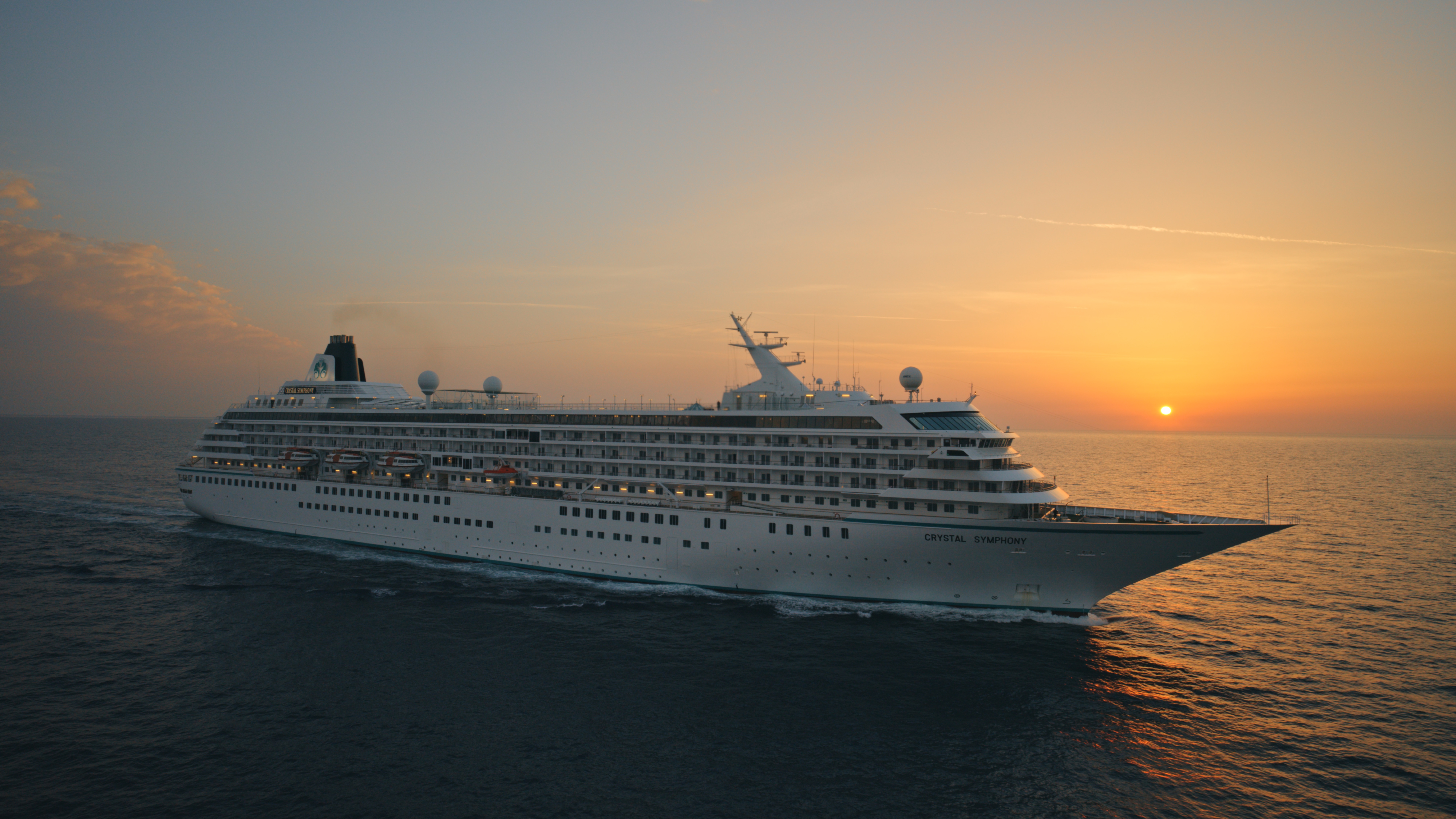
Itinerary
Borneo’s forbidding interior made it less attractive to early traders and explorers than neighboring areas, so what is now the state of Sabah remained unexploited by the British until the late 19th century, although traders long visited for exotic items such as bird’s nests (for the celebrated Chinese soup). In 1963, Sabah joined Sarawak, Malaya, and Singapore (which later seceded) in forming the Federation of Malaysia. Known as the “Land Below the Wind” because it’s south of the typhoon belt, Sabah occupies Borneo’s northern tip. It shares its southwestern border with Sarawak and the rest of its southern border with the Indonesian province of East Kalimantan. Today vast tracts of forest have been replaced by oil-palm plantations, and a sizable portion of remaining forest land is protected in national parks or conservation areas.On the shore of a deep bay, Sandakan was the capital of British North Borneo and one of the most important towns in Southeast Asia from the 1880s through the 1930s. But Japanese occupation during World War II and allied bombing virtually destroyed the town, and the capital was transferred to Jesselton (now Kota Kinabalu) in 1946. Sandakan enjoyed a revival in the 1970s as the center of the region’s logging industry. Logging has since declined, but Sandakan is still worth visiting for its rich history and proximity to some of Borneo’s most accessible wildlife attractions. Sandakan’s downtown, much of it built on landfill, is squeezed between a steep promontory and Sandakan Bay. In recent years, this city of 450,000 (counting its extensive suburbs) has begun redeveloping its downtown waterfront into a shopping and nightlife hub. Its working harbor area for passengers and cargo is 6 km (4 miles) west of downtown.
The Spanish arrived at this beautiful corner of the world in March of 1872, founding the city, that would eventually become the Capital of Palawan. In 2011, the area received a huge boost, when New7 announced its list of the 7 Wonders of Nature – counting 500 million votes in the process. Puerto Princesa’s stunning underground river – complete with a cavernous, sunken lagoon – beat off wonderful sites like the Great Barrier Reef, to claim a spot on the final, prestigious list. Set sail across the glowing green water, on a journey into the gaping mouth of the limestone caves at Puerto Princesa. Known for being one of the least densely populated, cleanest and most environmentally friendly cities in the Philippines, there’s a raft of natural wonders to explore – from diving hotspots to towering limestone cliffs, and the entrancing underworld of the underground river.
MANILA, the capital city of the Philippines, was founded in, 1571 by Spanish conquistador Miguel López de Legazpi. It is one of the oldest cities in the country and was the seat of power for most of the colonial rules of the Philippines. It is situated on the eastern shore of Manila Bay and contains a multitude of landmarks, some of which date back to the 16th century. It is home to the baroque 16th-century San Agustin Church as well as Fort Santiago, a storied citadel and military prison. In the 19th century Manila became one of the most modern cities in Asia. Before the Spanish–American War, Manila saw the rise of the Philippine Revolution. Under the American rule following the Spanish-American War, the United States changed the official language from Spanish to English. Towards the end of World War II, during the Battle of Manila, most of the city was flattened by intensive aerial bombardment. Today, tourism is a vital industry in Manila. Major shopping malls and bazaars thrive around Manila.
MANILA, the capital city of the Philippines, was founded in, 1571 by Spanish conquistador Miguel López de Legazpi. It is one of the oldest cities in the country and was the seat of power for most of the colonial rules of the Philippines. It is situated on the eastern shore of Manila Bay and contains a multitude of landmarks, some of which date back to the 16th century. It is home to the baroque 16th-century San Agustin Church as well as Fort Santiago, a storied citadel and military prison. In the 19th century Manila became one of the most modern cities in Asia. Before the Spanish–American War, Manila saw the rise of the Philippine Revolution. Under the American rule following the Spanish-American War, the United States changed the official language from Spanish to English. Towards the end of World War II, during the Battle of Manila, most of the city was flattened by intensive aerial bombardment. Today, tourism is a vital industry in Manila. Major shopping malls and bazaars thrive around Manila.
Romantically referred to by the French as the Pearl of the Orient, Ho Chi Minh City today is a super-charged city of sensory overload. Motorbikes zoom day and night along the wide boulevards, through the narrow back alleys and past vendors pushing handcarts hawking goods of all descriptions. Still called Saigon by most residents, this is Vietnam’s largest city and the engine driving the country’s current economic resurgence, but despite its frenetic pace, it’s a friendlier place than Hanoi and locals will tell you the food—simple, tasty, and incorporating many fresh herbs—is infinitely better than in the capital.This is a city full of surprises. The madness of the city’s traffic—witness the oddball things that are transported on the back of motorcycles—is countered by tranquil pagodas, peaceful parks, quirky coffee shops, and whole neighborhoods hidden down tiny alleyways, although some of these quiet spots can be difficult to track down. Life in Ho Chi Minh City is lived in public: on the back of motorcycles, on the sidewalks, and in the parks. Even when its residents are at home, they’re still on display. With many living rooms opening onto the street, grandmothers napping, babies being rocked, and food being prepared, are all in full view of passersby.Icons of the past endure in the midst of the city’s headlong rush into capitalism. The Hotel Continental, immortalized in Graham Greene’s The Quiet American, continues to stand on the corner of old Indochina’s most famous thoroughfare, the rue Catinat, known to American G.I.s during the Vietnam War as Tu Do (Freedom) Street and renamed Dong Khoi (Uprising) Street by the Communists. The city still has its ornate opera house and its old French city hall, the Hôtel de Ville. The broad colonial boulevards leading to the Saigon River and the gracious stucco villas are other remnants of the French colonial presence. Grisly reminders of the more recent past can be seen at the city’s war-related museums. Residents, however, prefer to look forward rather than back and are often perplexed by tourists’ fascination with a war that ended 40 years ago.The Chinese influence on the country is still very much in evidence in the Cholon district, the city’s Chinatown, but the modern office towers and international hotels that mark the skyline symbolize Vietnam’s fixation on the future.
Romantically referred to by the French as the Pearl of the Orient, Ho Chi Minh City today is a super-charged city of sensory overload. Motorbikes zoom day and night along the wide boulevards, through the narrow back alleys and past vendors pushing handcarts hawking goods of all descriptions. Still called Saigon by most residents, this is Vietnam’s largest city and the engine driving the country’s current economic resurgence, but despite its frenetic pace, it’s a friendlier place than Hanoi and locals will tell you the food—simple, tasty, and incorporating many fresh herbs—is infinitely better than in the capital.This is a city full of surprises. The madness of the city’s traffic—witness the oddball things that are transported on the back of motorcycles—is countered by tranquil pagodas, peaceful parks, quirky coffee shops, and whole neighborhoods hidden down tiny alleyways, although some of these quiet spots can be difficult to track down. Life in Ho Chi Minh City is lived in public: on the back of motorcycles, on the sidewalks, and in the parks. Even when its residents are at home, they’re still on display. With many living rooms opening onto the street, grandmothers napping, babies being rocked, and food being prepared, are all in full view of passersby.Icons of the past endure in the midst of the city’s headlong rush into capitalism. The Hotel Continental, immortalized in Graham Greene’s The Quiet American, continues to stand on the corner of old Indochina’s most famous thoroughfare, the rue Catinat, known to American G.I.s during the Vietnam War as Tu Do (Freedom) Street and renamed Dong Khoi (Uprising) Street by the Communists. The city still has its ornate opera house and its old French city hall, the Hôtel de Ville. The broad colonial boulevards leading to the Saigon River and the gracious stucco villas are other remnants of the French colonial presence. Grisly reminders of the more recent past can be seen at the city’s war-related museums. Residents, however, prefer to look forward rather than back and are often perplexed by tourists’ fascination with a war that ended 40 years ago.The Chinese influence on the country is still very much in evidence in the Cholon district, the city’s Chinatown, but the modern office towers and international hotels that mark the skyline symbolize Vietnam’s fixation on the future.
The main island of Singapore is shaped like a flattened diamond, 42 km (26 miles) east to west and 23 km (14 miles) north to south. Near the northern peak is the causeway leading to West Malaysia—Kuala Lumpur is less than four hours away by car. It is at the southern foot where you will find most of the city-state’s action, with its gleaming office towers, working docks, and futuristic “supertrees,” which are solar-powered and serve as vertical gardens. Offshore are Sentosa and over 60 smaller islands, most uninhabited, that serve as bases for oil refining or as playgrounds and beach escapes from the city. To the east is Changi International Airport, connected to the city by metro, bus, and a tree-lined parkway. Of the island’s total land area, more than half is built up, with the balance made up of parkland, farmland, plantations, swamp areas, and rain forest. Well-paved roads connect all parts of the island, and Singapore city has an excellent, and constantly expanding, public transportation system. The heart of Singapore’s history and its modern wealth are in and around the Central Business District. The area includes the skyscrapers in the Central Business District, the 19th-century Raffles Hotel, the convention centers of Marina Square, on up to the top of Ft. Canning. Although most of old Singapore has been knocked down to make way for the modern city, most colonial landmarks have been preserved in the CBD, including early-19th-century buildings designed by the Irish architect George Coleman.
The main island of Singapore is shaped like a flattened diamond, 42 km (26 miles) east to west and 23 km (14 miles) north to south. Near the northern peak is the causeway leading to West Malaysia—Kuala Lumpur is less than four hours away by car. It is at the southern foot where you will find most of the city-state’s action, with its gleaming office towers, working docks, and futuristic “supertrees,” which are solar-powered and serve as vertical gardens. Offshore are Sentosa and over 60 smaller islands, most uninhabited, that serve as bases for oil refining or as playgrounds and beach escapes from the city. To the east is Changi International Airport, connected to the city by metro, bus, and a tree-lined parkway. Of the island’s total land area, more than half is built up, with the balance made up of parkland, farmland, plantations, swamp areas, and rain forest. Well-paved roads connect all parts of the island, and Singapore city has an excellent, and constantly expanding, public transportation system. The heart of Singapore’s history and its modern wealth are in and around the Central Business District. The area includes the skyscrapers in the Central Business District, the 19th-century Raffles Hotel, the convention centers of Marina Square, on up to the top of Ft. Canning. Although most of old Singapore has been knocked down to make way for the modern city, most colonial landmarks have been preserved in the CBD, including early-19th-century buildings designed by the Irish architect George Coleman.
Ship features
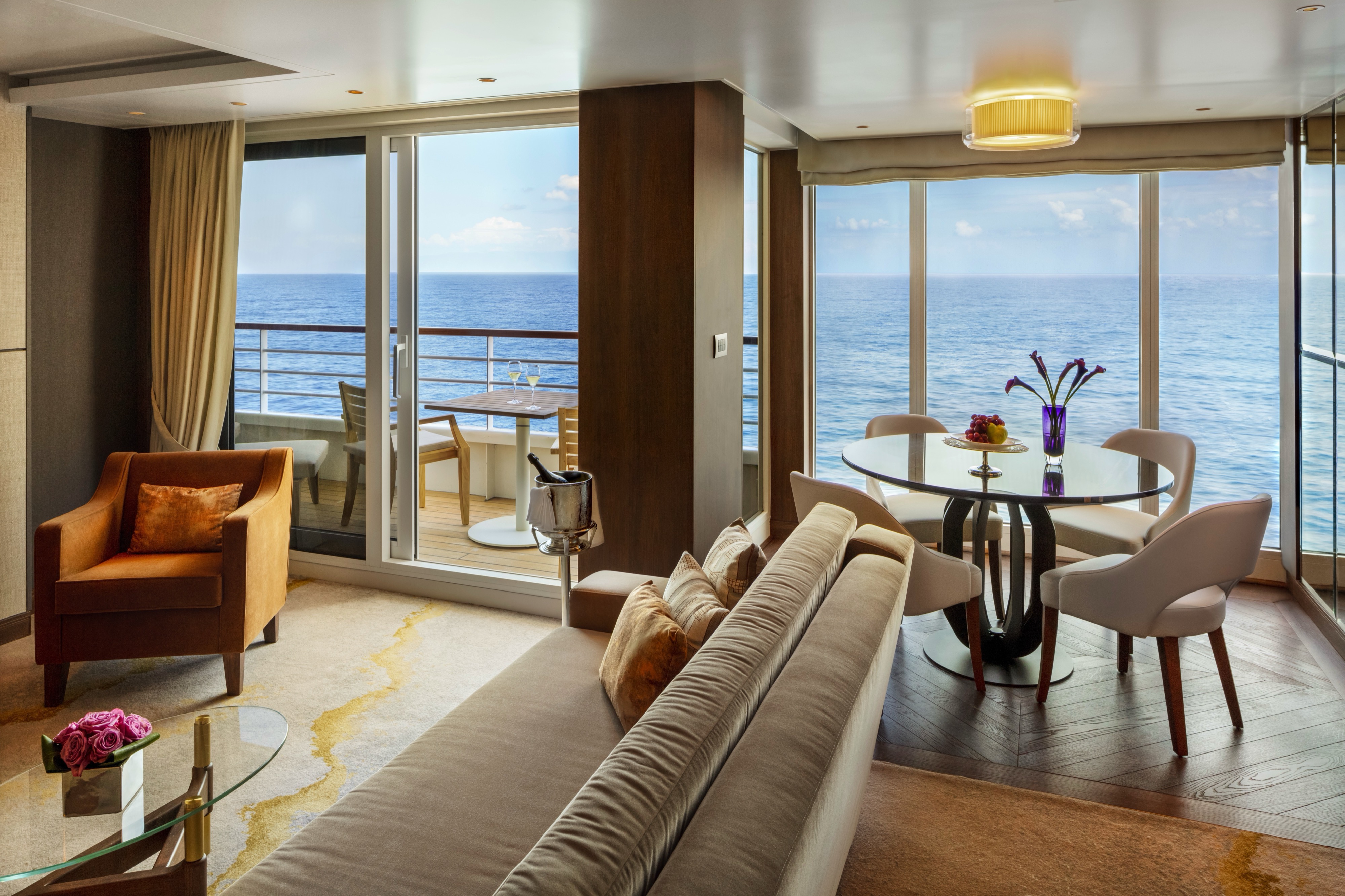
Crystal Penthouse Suite
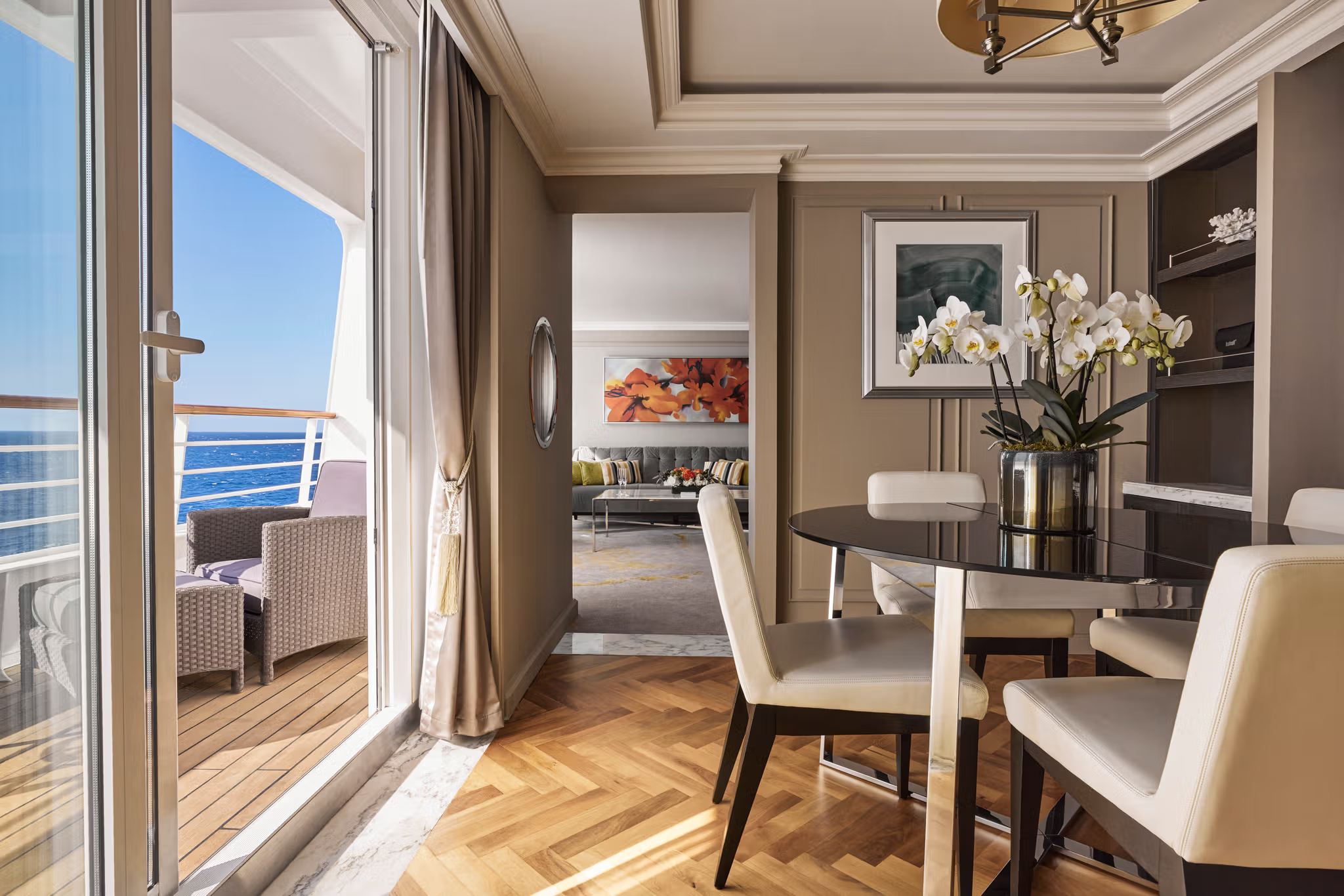
Our largest suite, available in 2023 or 2020 designs, offers two walk-in wardrobes, separate living and dining areas with panoramic ocean views, a study, and a custom built-in bar. There is also a Jacuzzi bathtub with ocean views, separate shower, bidet, and guest bathroom. Enjoy unlimited dining at specialty restaurants, unlimited laundry services, and more.
Details
- Large private veranda with teak furniture
- Spacious living room with TV, custom wool carpets, walnut floors, cabinetry and Swarovski® chandelier
- Dining area with panoramic ocean views
- Separate study
- Custom built-in bar
- Large bedroom with queen-size bed or twins, plus his and hers walk-in closets and TV
- Master bath with jacuzzi, ocean view, crystal sconces and Calacatta marble floors, separate shower and bidet
- Guest bathroom
Services
- 24 hour in-suite dining
- Unlimited room service from Osteria D’Ovidio and Umi Uma
- Unlimited dining in Osteria D’Ovidio and Umi Uma
- Shoeshine service
- Assistance with packing and unpacking
- Free unlimited laundry and dry cleaning, 2nd day service
- In-Suite cocktail parties
- Private transfer to and from ship up to 50 miles
Amenities
- Welcome champagne
- Complimentary wine and spirits from set menu
- Complimentary soft drinks
- Flowers
- Fresh fruits, daily change, on request only
- Turndown service with handmade truffles
- Pillow menu (selection from a variety of pillow types)
- Afternoon canapés
- Coffee maker
- Binoculars
- Complimentary unlimited standard WiFi
- In-suite safe
- Interactive tablet for news, updates, and reservations
- Hair dryer
- Hair iron (available upon request)
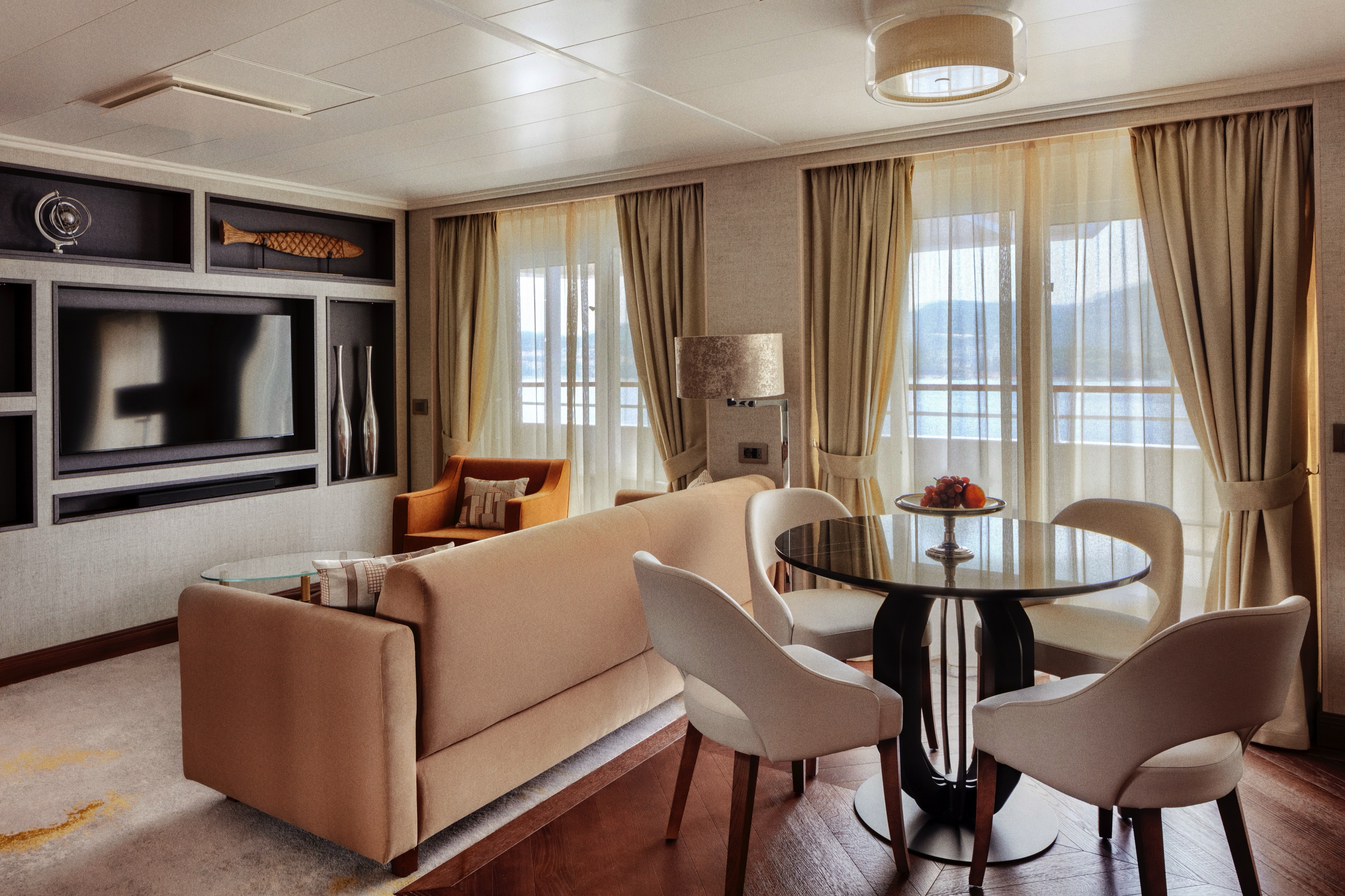
Junior Crystal Penthouse Suite
Redesigned in 2023, this luxurious suite features a walk-in wardrobe, separate living room and dining area, Jacuzzi bathtub, separate shower, bidet, and guest bathroom. Guests staying in this stylish home away from home enjoy unlimited dining at specialty restaurants, unlimited laundry services, afternoon canapés, flowers, binoculars, and a coffee maker.
Details
- Large private veranda
- Spacious living room
- Dining area
- Two TV’s
- Separate bedroom area
- Vanity in bedroom
- Queen-size bed or twin beds with sumptuous bedding, and third berth
- Full jacuzzi bathtub with separate shower and bidet
- Walk-in closet
Services
- 24 hour in-suite dining
- Unlimited room service from Osteria D’Ovidio and Umi Uma
- Unlimited dining in Osteria D’Ovidio and Umi Uma
- Turndown service with handmade truffles
- Shoeshine service
- Assistance with packing and unpacking
- Free unlimited laundry and dry cleaning, 2nd day service
- In-suite cocktail parties
- Private transfer to and from ship up to 50 miles
Amenities
- Welcome champagne
- Complimentary wine and spirits from set menu
- Complimentary soft drinks
- Flowers
- Fresh fruits, daily change, on request only
- Pillow menu (selection from a variety of pillow types)
- Afternoon canapés
- Coffee maker
- Binoculars
- Complimentary unlimited standard WiFi
- In-suite safe
- Interactive tablet for news, updates, and reservations
- Hair dryer
- Hair iron (available upon request)
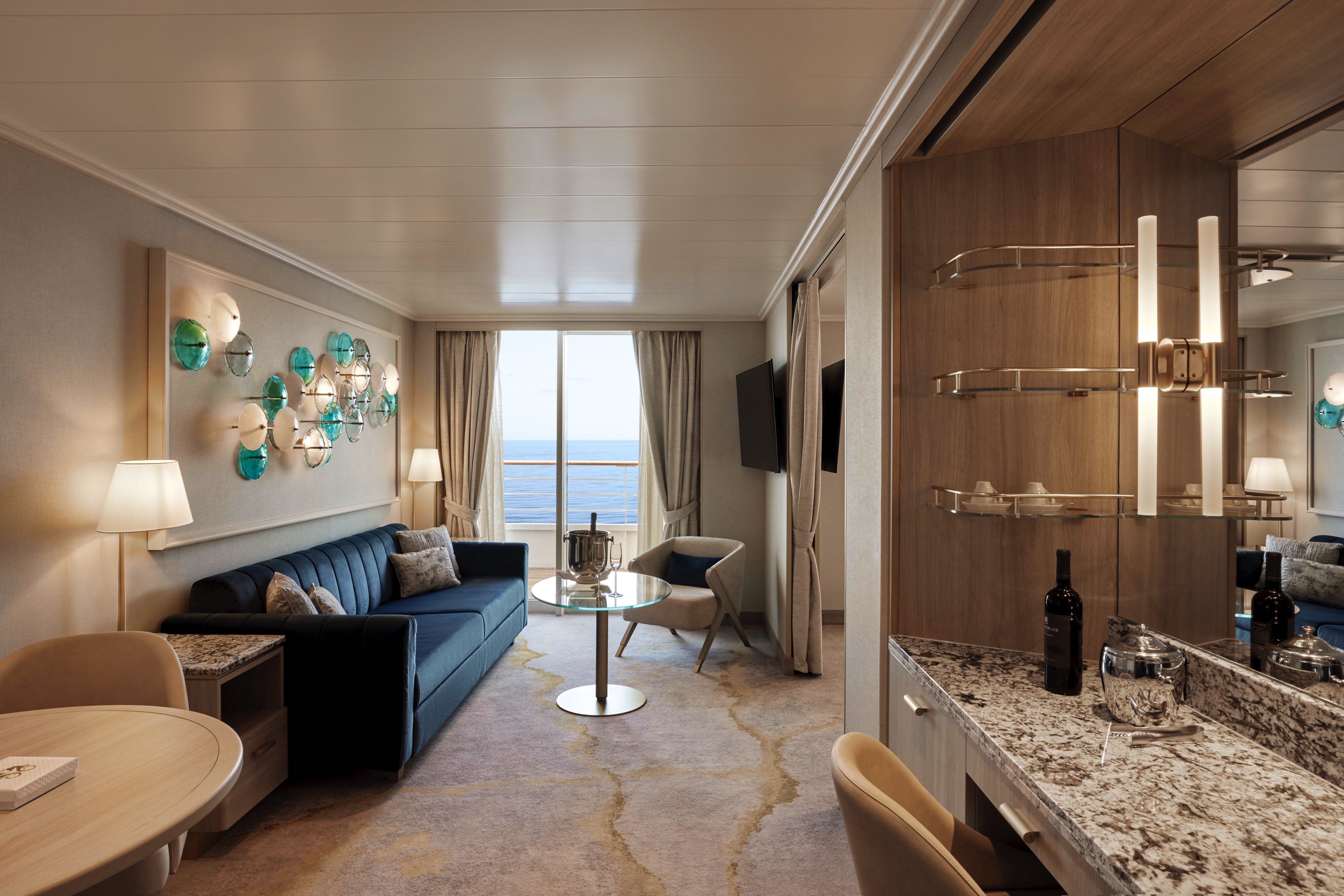
Sapphire Veranda Suite
Available in either a newly redesigned style with a walk-in shower or a classic design with a separate shower and bath, this elegant suite features a walk-in wardrobe, separate living room with sofa and dining area, and a private veranda. Enjoy special touches such as afternoon canapés, binoculars, a coffee maker, and complimentary laundry, dry cleaning, and pressing services.
Details
- Private veranda
- Spacious living room and dining area
- Queen-size bed or twin beds with sumptuous bedding, and third berth
- Walk-in closet
- Two TV’s
- Washer and Dryer Combo available in select suites
Services
- 24 hour in-suite dining
- Turndown service with handmade truffles
- Shoeshine service
- Assistance with packing and unpacking
- Dry cleaning for five pieces plus one bag of free laundry every 10 cruise days, 2nd day service
- Free pressing (5pcs/day), 2nd day service
Amenities
- Welcome champagne
- Complimentary wine and spirits from set menu
- Complimentary soft drinks
- Fresh fruits, daily change, on request only
- Pillow menu (selection from a variety of pillow types)
- Afternoon canapés
- Coffee maker
- Binoculars
- Complimentary unlimited standard WiFi
- In-suite safe
- Interactive tablet for news, updates, and reservations
- Hair dryer
Sapphire Ocean View Suite
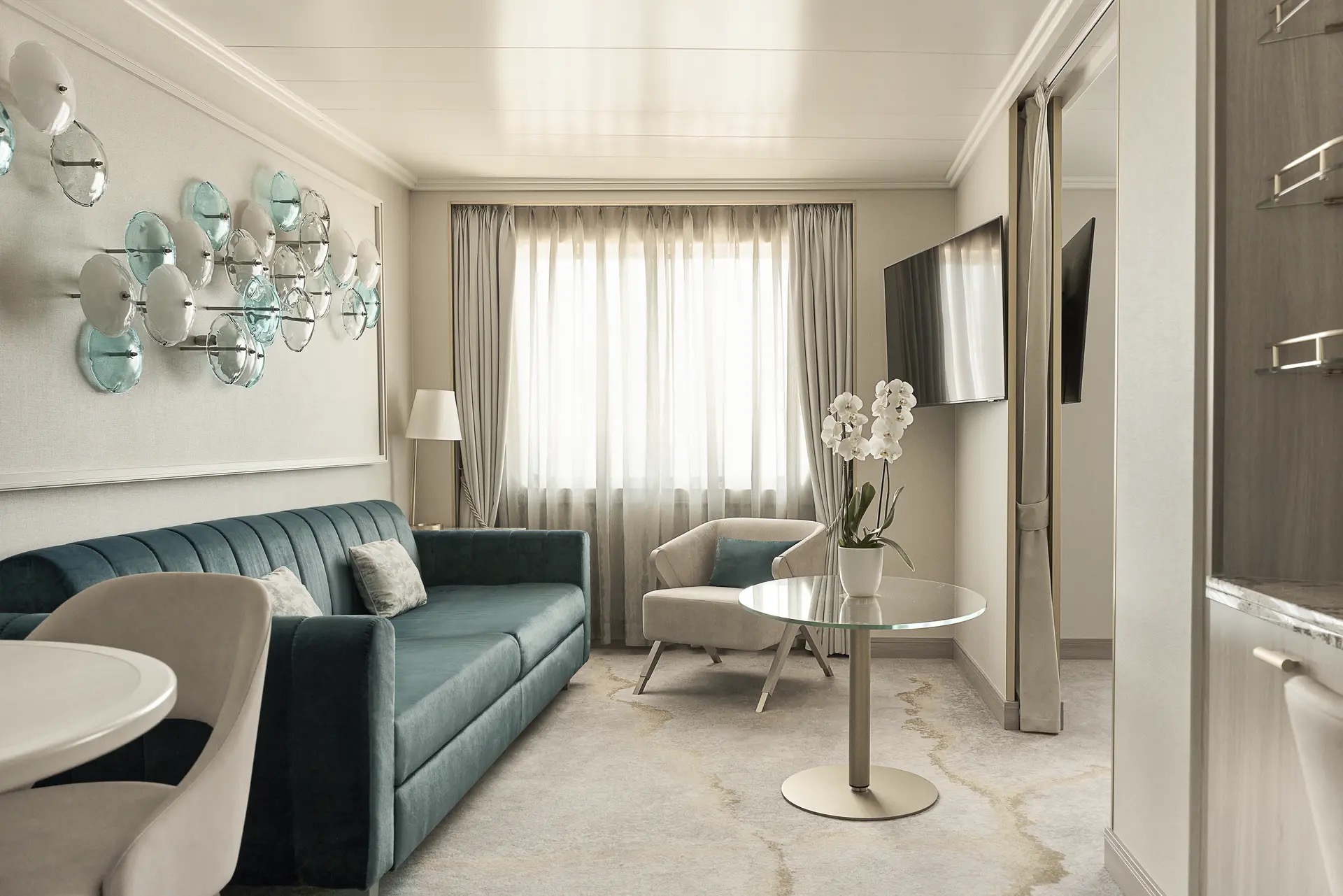
Redesigned in 2023, this elegant suite offers a walk-in wardrobe, separate living room with sofa and dining area, walk-in shower, and two large picture windows. Enjoy special touches such as afternoon canapés, binoculars, a coffee maker, and complimentary laundry, dry cleaning, and pressing services.
DETAILS
- Large Picture Window
- Spacious living room and dining area
- Queen-size bed or twin beds with sumptuous bedding, and third berth
- Walk-in closet
- Two TV’s
SERVICES
- 24 hour in-suite dining
- Turndown service with handmade truffles
- Shoeshine service
- Assistance with packing and unpacking
- Complimentary dry cleaning (5 pieces every 10 days, 2nd day service)
- Complimentary laundry (1 bag every 10 days, 2nd day service)
- Complimentary pressing (5 pieces per day, 2nd day service)
AMENITIES
- Welcome champagne
- Complimentary wine and spirits from set menu
- Complimentary soft drinks
- Fresh fruits, daily change, on request only
- Pillow menu (selection from a variety of pillow types)
- Afternoon canapés
- Coffee maker
- Binoculars
- Complimentary unlimited standard WiFi
- In-suite safe
- Interactive tablet for news, updates, and reservations
- Hair dryer
- Hair iron (available upon request)
Aquamarine Veranda Suite
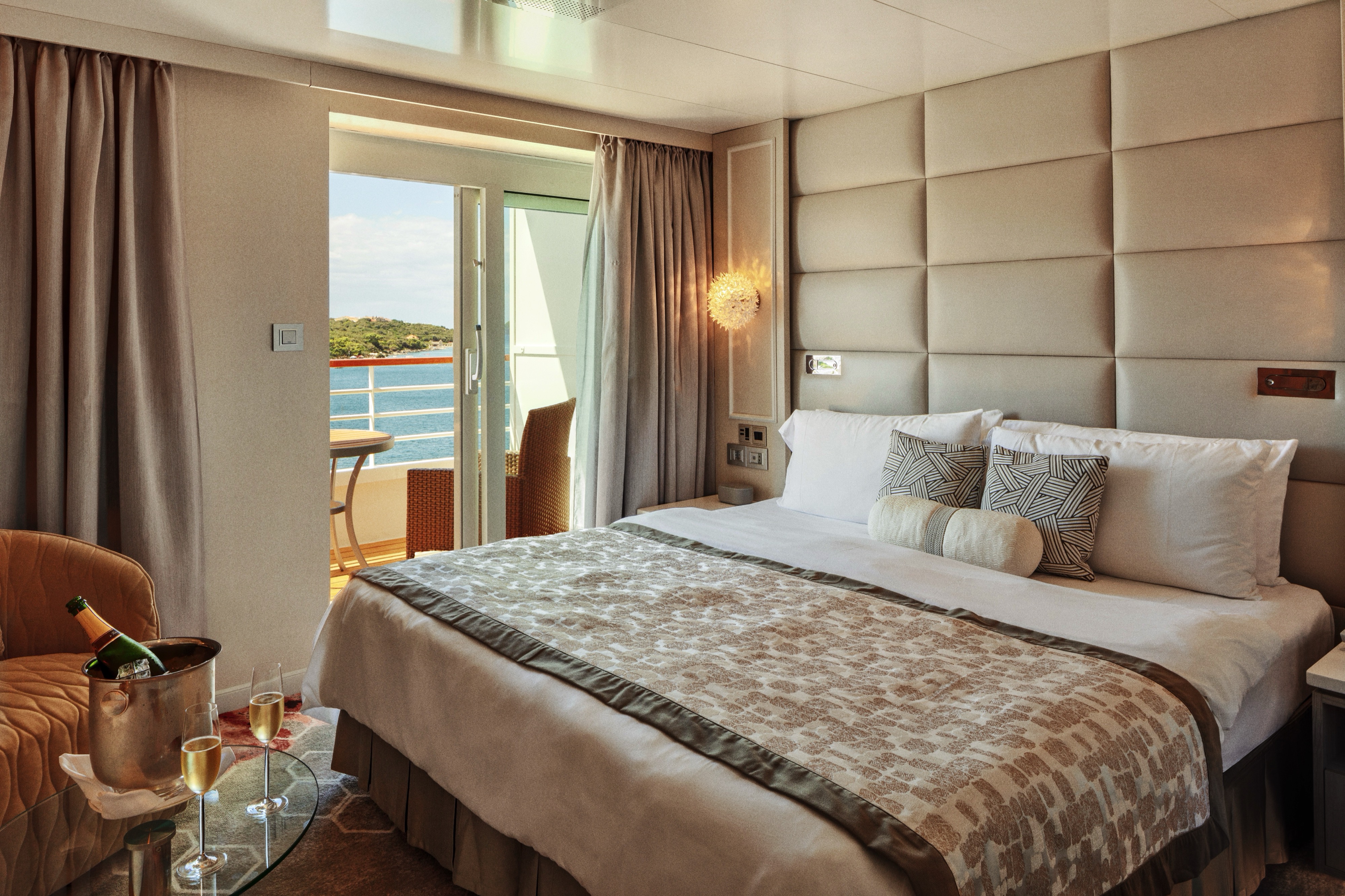
Available in either a newly redesigned style with a walk-in shower or a classic design with a separate shower and bath, this spacious suite features a private veranda, walk-in wardrobe, comfortable living area with sofa, and complimentary pressing service.
DETAILS
- Private veranda
- Sizeable living area
- Queen-size bed or twin beds with sumptuous bedding
- Vanity in dressing area
- TV
- Walk-in closet
SERVICES
- 24 hour in-suite dining
- Turndown service
- Shoeshine service
- Assistance with packing and unpacking
AMENITIES
- Welcome champagne
- Complimentary wine and spirits from set menu
- Complimentary soft drinks
- Fresh fruits, daily change, on request only
- Afternoon canapés
- Coffee maker
- Binoculars
- Complimentary unlimited standard WiFi
- In-suite safe
- Interactive tablet for news, updates, and reservations
- Hair dryer
- Hair iron (available upon request)
-
Free pressing (5pcs/day), 2nd day service
Single Guest Room with Ocean View
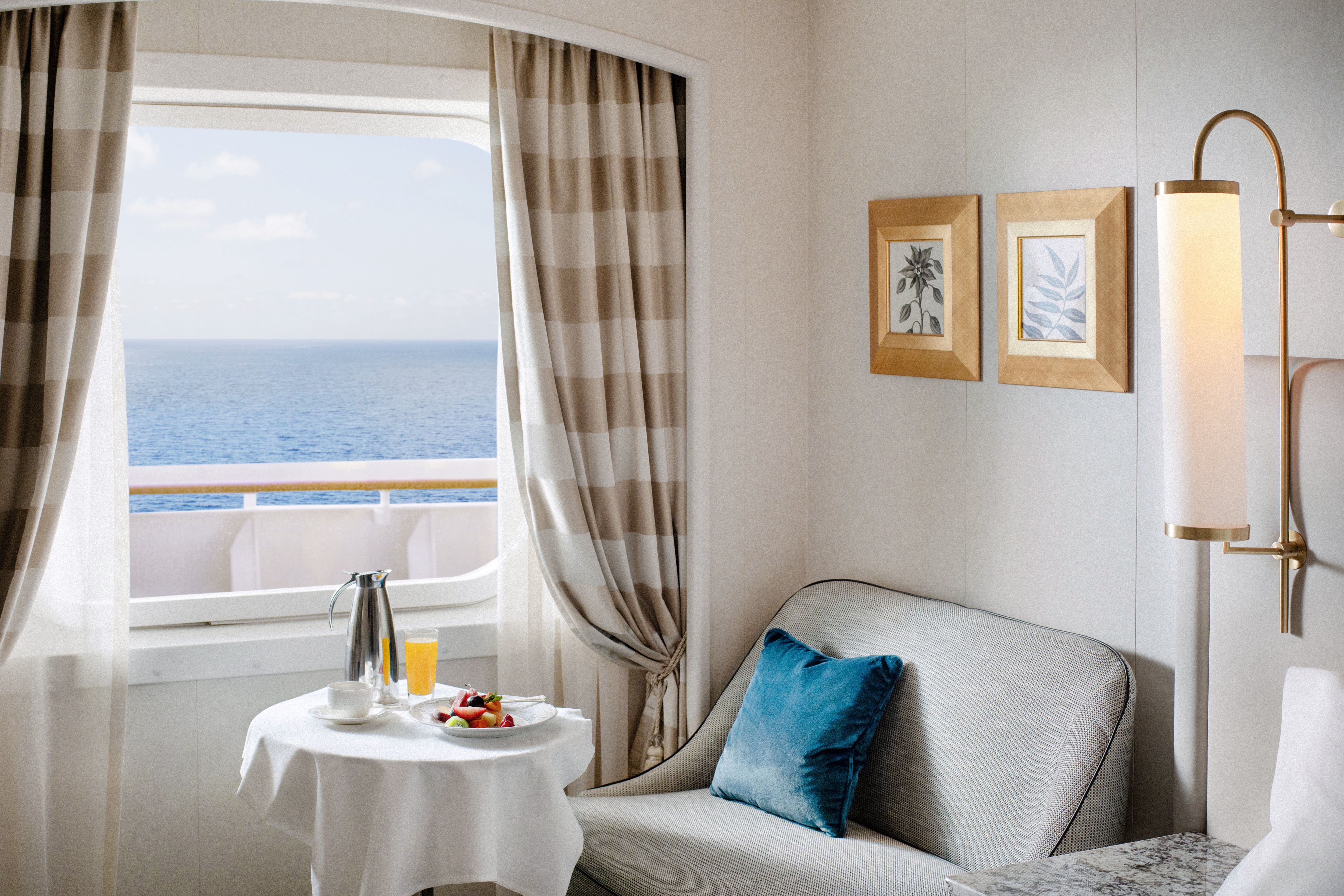
Redesigned in 2023 exclusively for solo occupancy, this stylish guest room offers a comfortable living area with sofa, large picture window, walk-in shower, and a sleek built-in wardrobe.
DETAILS
- Large picture window
- Sizeable living area with sofa
- Queen-size bed or twin beds with sumptuous bedding
- TV
- Walk-in shower
SERVICES
- 24 hour in-suite dining
- Turndown service
- Shoeshine service
- Assistance with packing and unpacking
AMENITIES
- Welcome champagne
- Complimentary wine and spirits from set menu
- Complimentary soft drinks
- Fresh fruits, daily change, on request only
- Pillow menu (selection from a variety of pillow types)
- Complimentary unlimited standard WiFi
- In-suite safe
- Interactive tablet for news, updates, and reservations
- Hair dryer
- Hair iron (available upon request)
Double Guest Room with Veranda
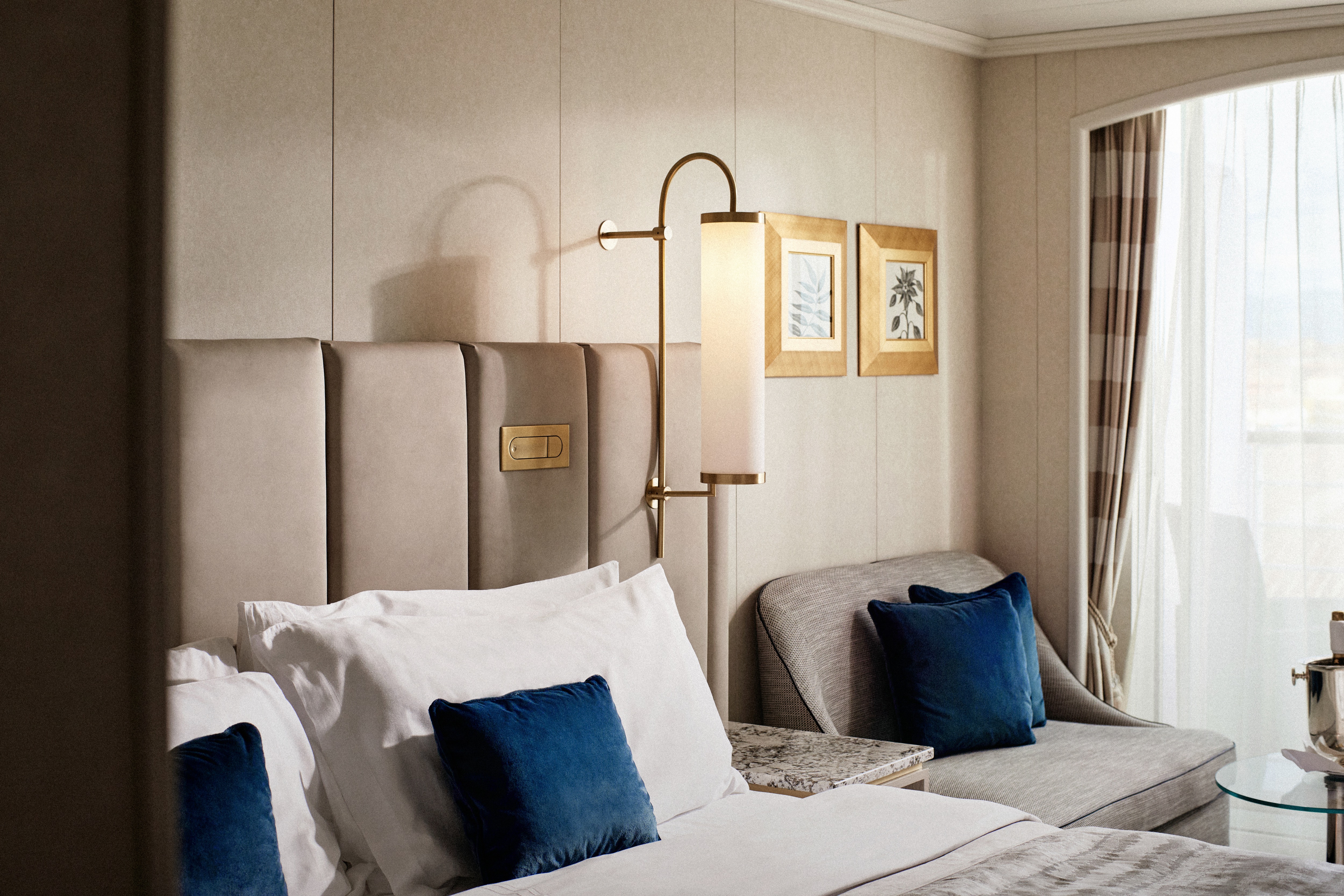
Redesigned in 2023, this elegant guest room offers a private veranda, comfortable living area with sofa, walk-in shower, and a built-in wardrobe.
DETAILS
- Private veranda
- Sizeable living area with sofa
- Queen-size bed or twin beds with sumptuous bedding
- TV
- Walk-in shower
SERVICES
- 24 hour in-suite dining
- Turndown Service
- Shoeshine service
- Assistance with packing and unpacking
AMENITIES
- Welcome champagne
- Complimentary wine and spirits from set menu
- Complimentary soft drinks
- Fresh fruits, daily change, on request only
- Pillow menu (selection from a variety of pillow types)
- Complimentary unlimited standard WiFi
- In-suite safe
- Interactive tablet for news, updates, and reservations
- Hair dryer
- Hair iron (available upon request)
Double Guest Room with Ocean View
Redesigned in 2023, this stylish guest room features a comfortable living area with sofa, large picture window, walk-in shower, and a sleek built-in wardrobe.
DETAILS
- Large picture window
- Sizeable living area with sofa
- Queen-size bed or twin beds with sumptuous bedding
- TV
- Walk-in shower
SERVICES
- 24 hour in-suite dining
- Turndown service
- Shoeshine service
- Assistance with packing and unpacking
AMENITIES
- Welcome champagne
- Complimentary wine and spirits from set menu
- Complimentary soft drinks
- Fresh fruits, daily change, on request only
- Pillow menu (selection from a variety of pillow types)
- Complimentary unlimited standard WiFi
- In-suite safe
- Interactive tablet for news, updates, and reservations
- Hair dryer
- Hair iron (available upon request)
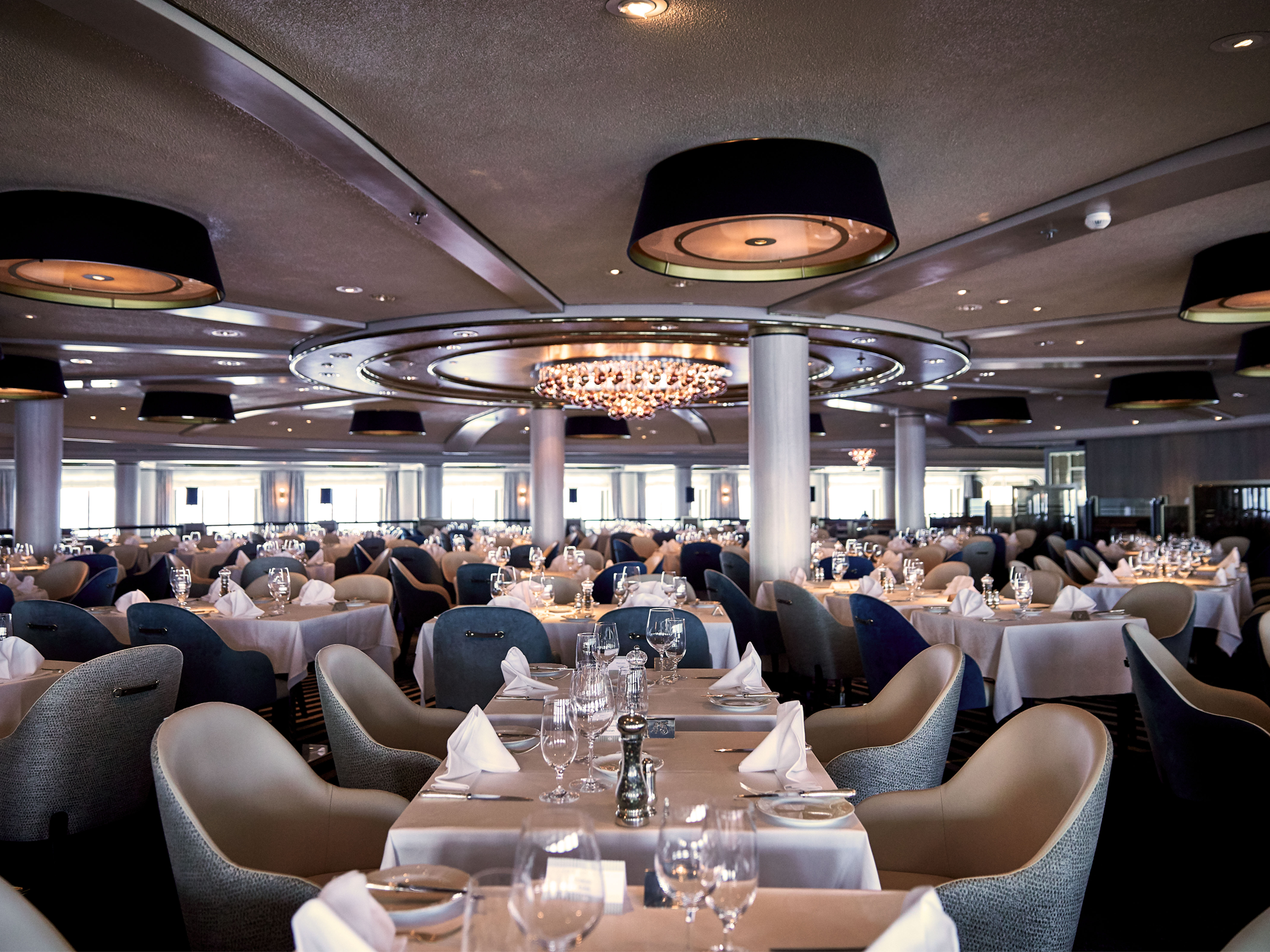
Waterside Restaurant
The main dining room aboard Crystal Symphony, features open seating as well as tables for two and four guests. Open for breakfast, lunch, and dinner. No reservations are required.
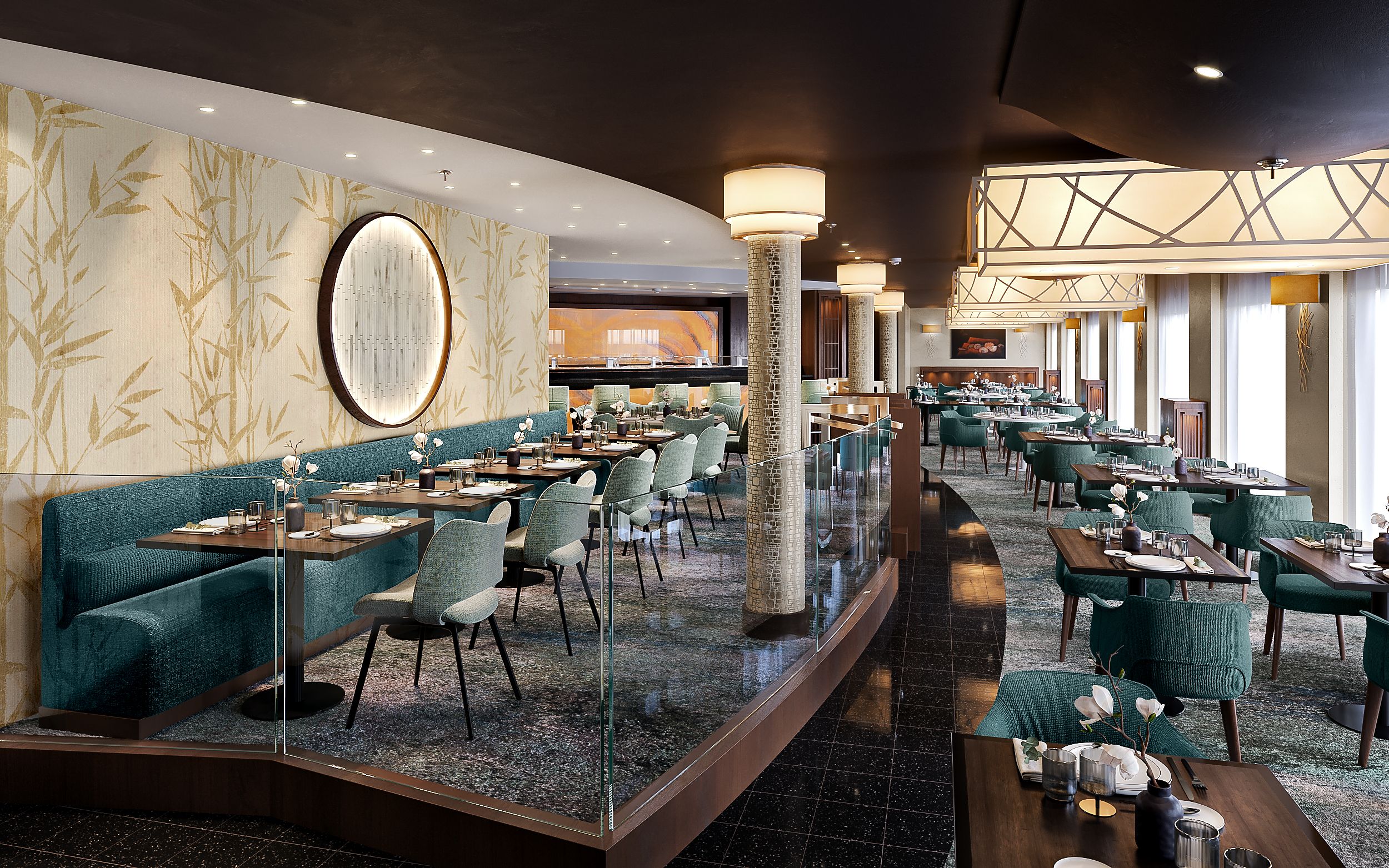
Umi Uma by Nobu Matsuhisa
Created by legendary Master Chef Nobuyki (Nobu) Matusuhisa, Umi Uma is an innovative Japanese-Peruvian restaurant inspired by the rich culture of Japanese cuisine and Peruvian ingredients. Reservations required and limited per sailing.
All inclusive – however its one complimentary reservation in each specialty restaurant (Umi Uma and Osteria) is included on sailings of 11 days or less, two reservations on sailings between 12 and 22 days, three reservations on sailings 23 days or more, and unlimited reservations for all full World Cruise guests”. However guests can pay to dine outside of their allowance at £50 pp which is great value for these 2 specialist restaurants
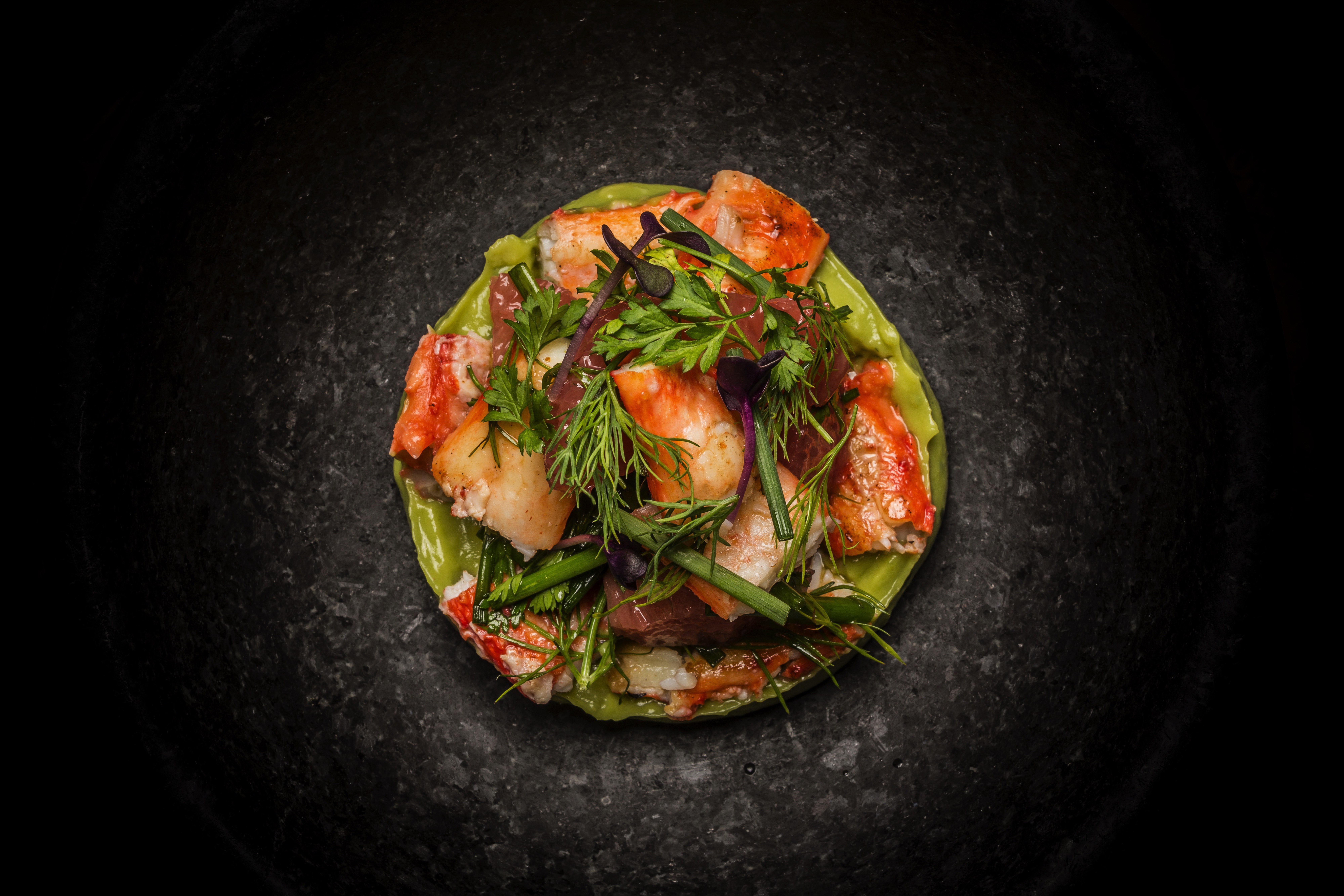
Beefbar
The most exciting flavours from the global street-food scene – Beef, Reef and Leaf – are fashioned from the freshest ingredients by creative chefs and served for sharing in stylish surroundings.
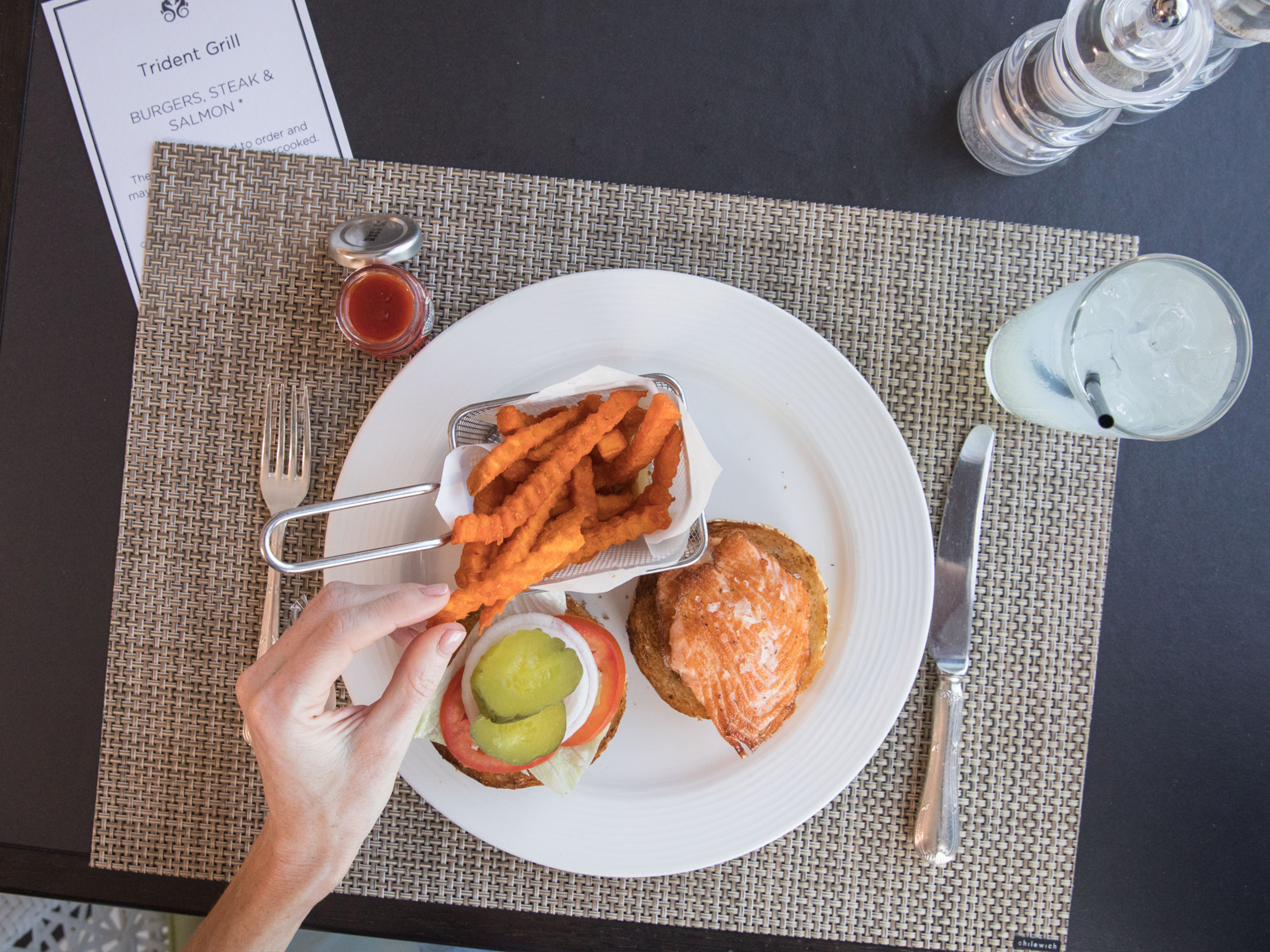
Trident Grill
Our pool restaurant featuring favourite classics such as Burgers, melts, salads and quick snacks for an indulgent poolside snack.
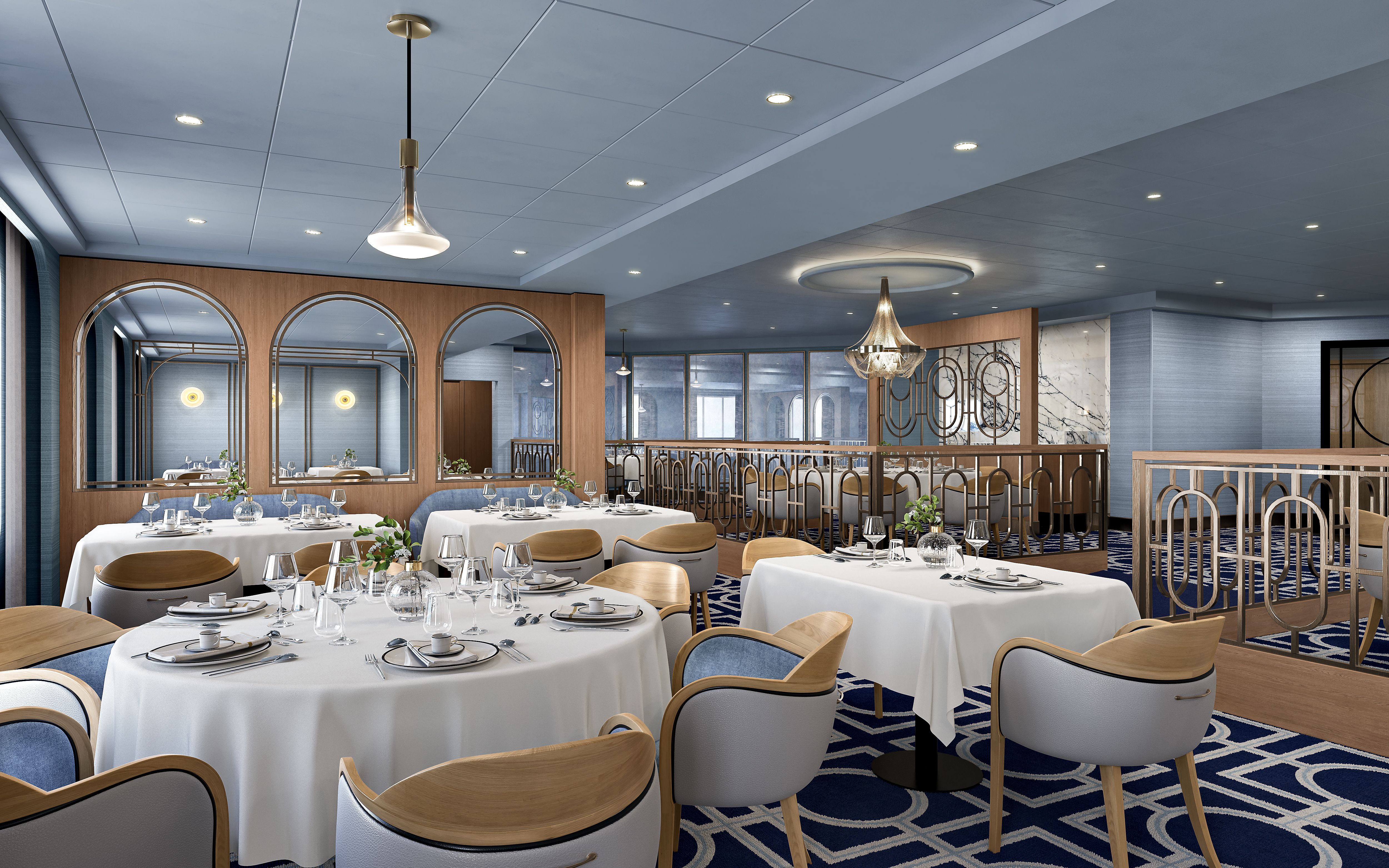
Osteria D'Ovidio
Fine Italian cuisine, featuring original menus and dishes created by talented Crystal chefs. Reservations required and limited per sailing.
All inclusive – however its one complimentary reservation in each specialty restaurant (Umi Uma and Osteria) is included on sailings of 11 days or less, two reservations on sailings between 12 and 22 days, three reservations on sailings 23 days or more, and unlimited reservations for all full World Cruise guests”. However guests can pay to dine outside of their allowance at £50 pp which is great value for these 2 specialist restaurants
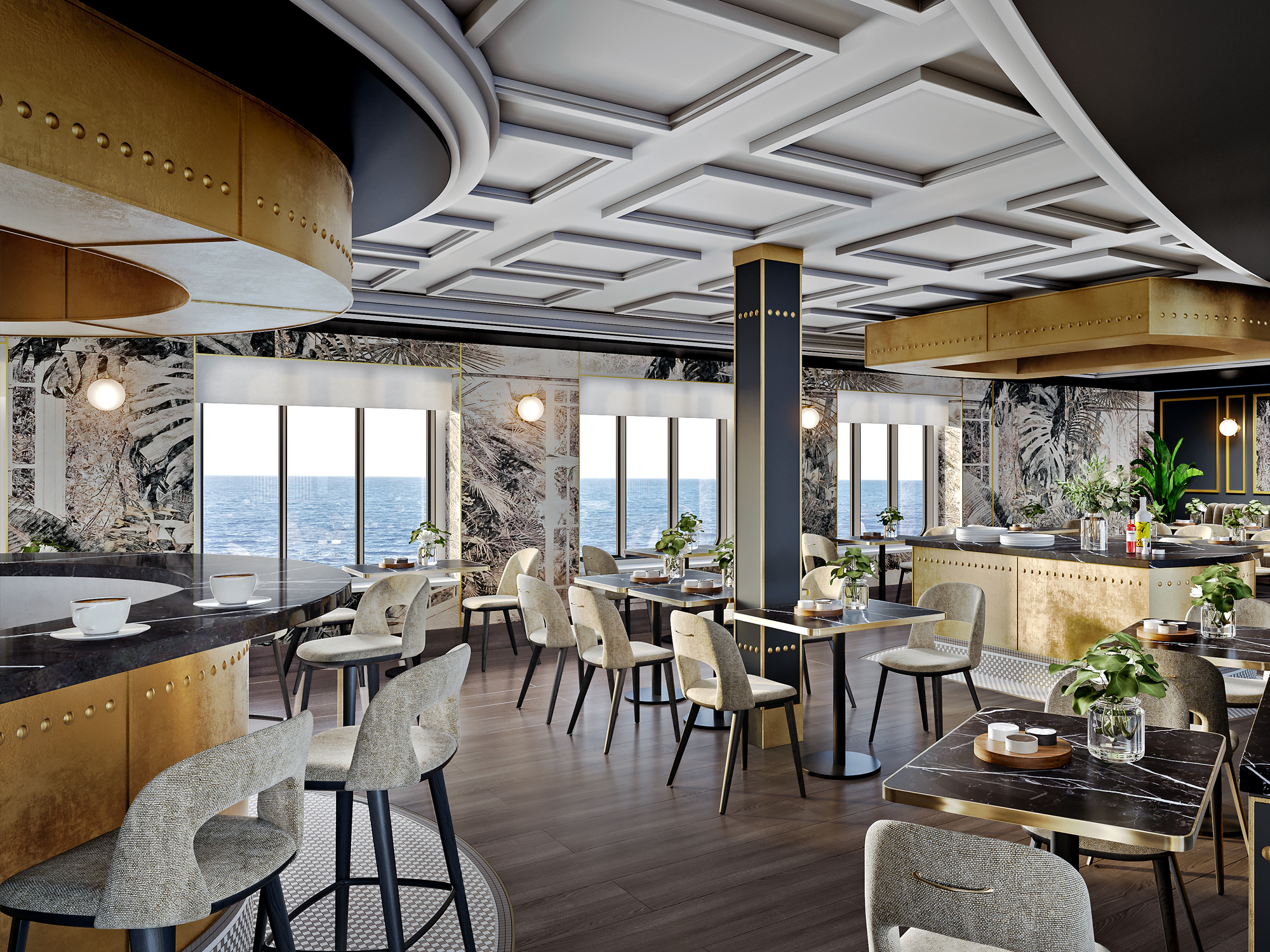
The Bistro
Parisian-inspired café and coffee bar with light snacks such as fresh pastries, bagels and fruit in the morning and a selection of international cheeses, pâtés, prosciutto, smoked salmon and dessert delicacies through late afternoon.
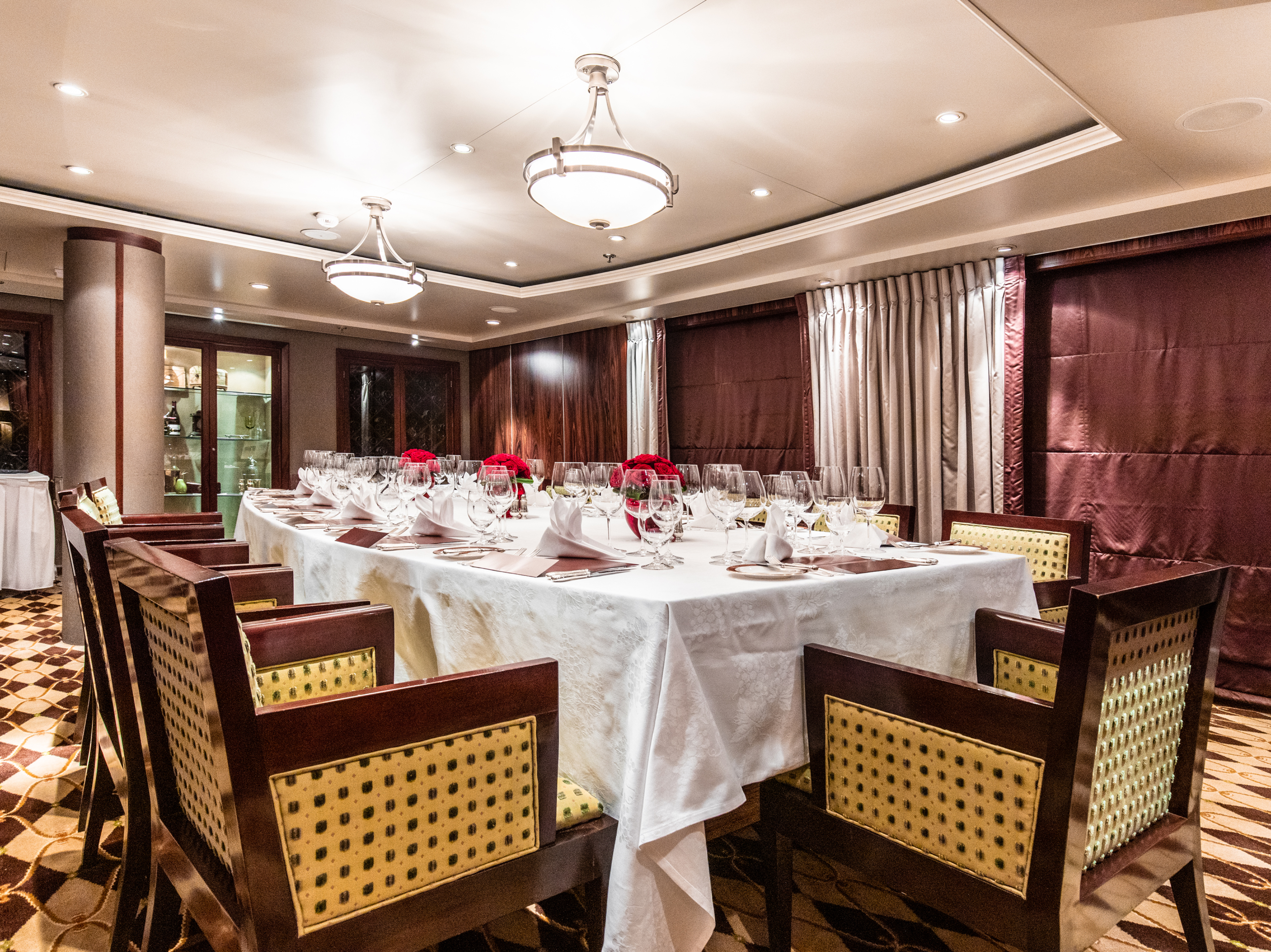
The Vintage Room
Led by our head sommelier, this intimate venue focuses on wine education and cuisine. Vintages are paired with the masterful gastronomy served and specially aerated in advance. Includes six courses plus pralines for a cost of $300 per person. The Ultimate Vintage Room dinner is also available featuring guest chefs for $1,200 per person. Reservations required.
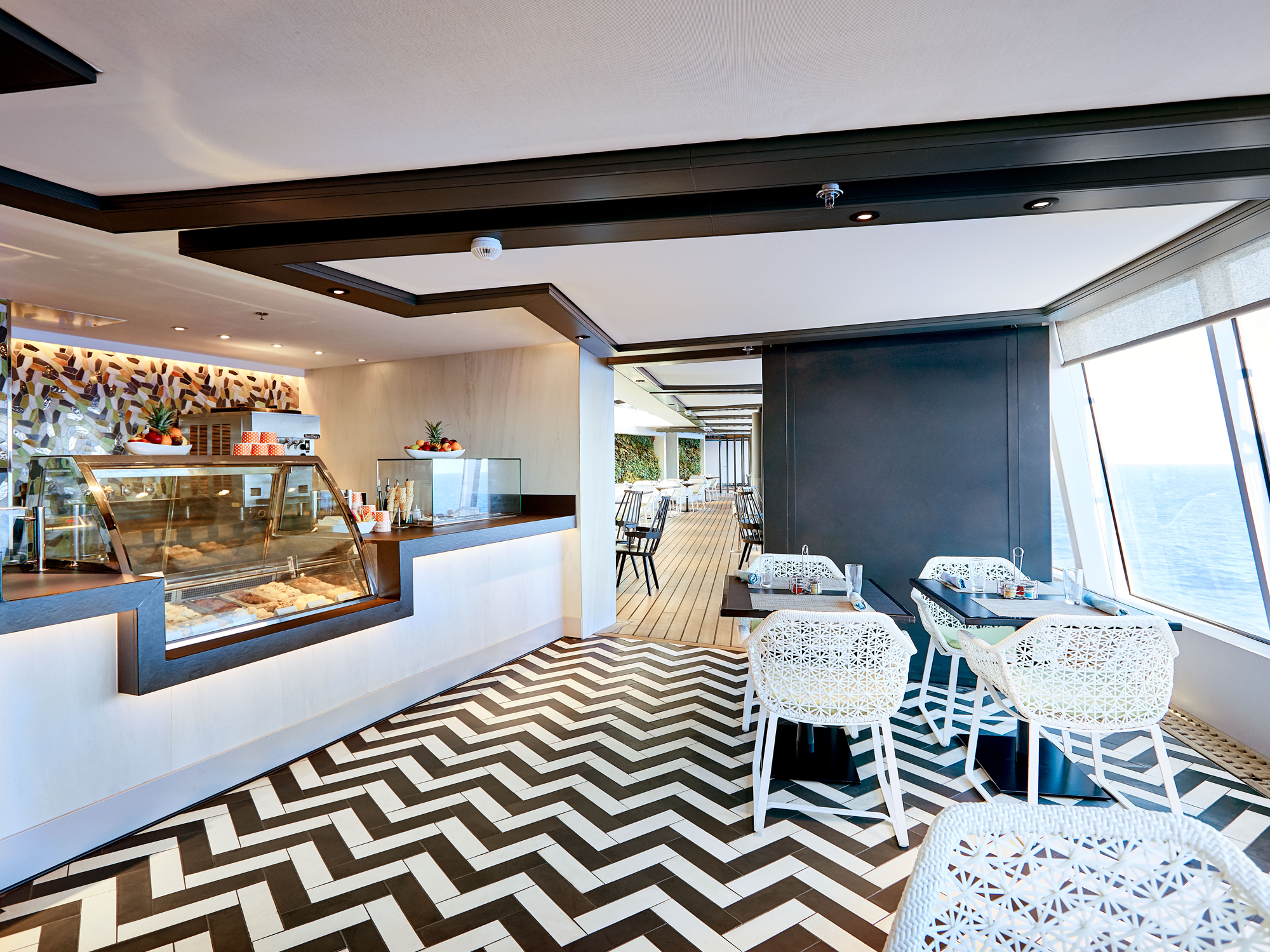
Scoops Ice Cream Bar
Enjoy premium gelato in partnership with prestigious Florence artisan, Badiani. Customise your dessert with toppings, homemade cookies and even a drizzle of your favourite liquor.
A sumptuous ice cream bar featuring fresh toppings and homemade cookies, with frozen yoghurt accompanying classics from Ben & Jerry’s.
Marketplace
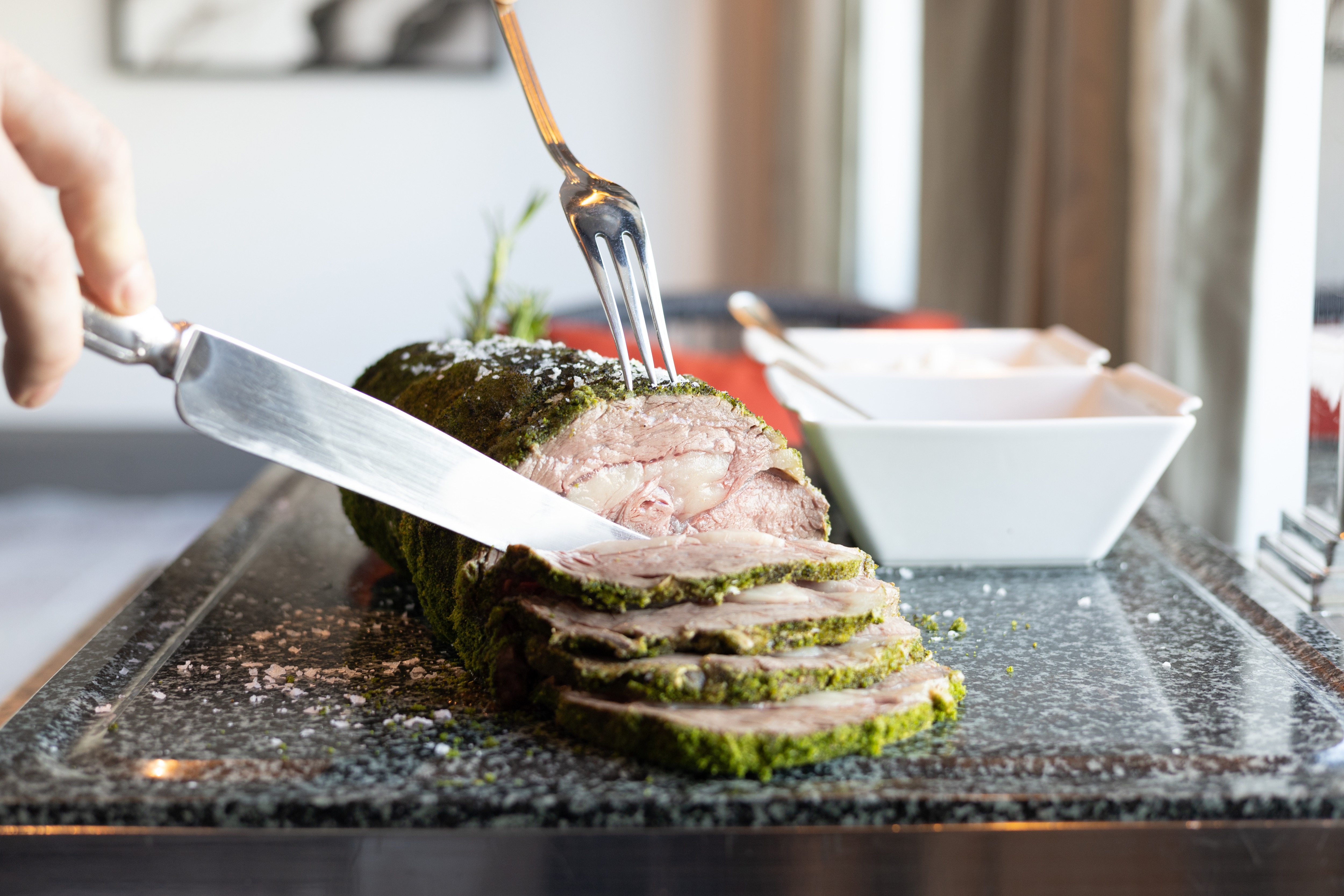
Buffet style dining wrapped in floor to ceiling windows and a chic open air dining area. This venue offers breakfast and lunch with a variety of choices from appetisers to desserts. Itinerary driven food selections keep the menu’s fresh, while carving stations and individual a la minute cooking add a dynamic element. Open seating.
24 Hours In-Suite Dining
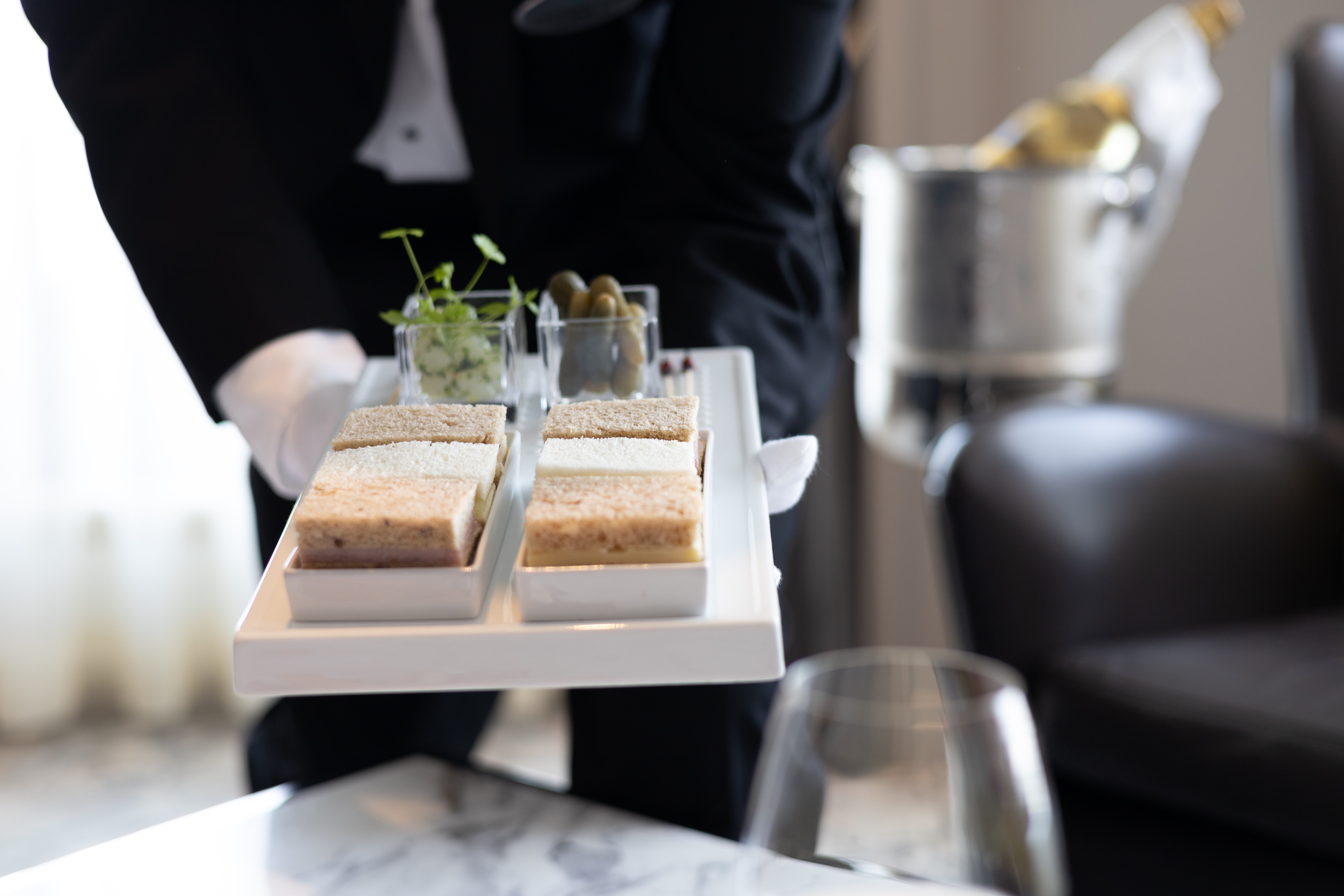
Dine in the comfort of your own suite, 24 hours a day. Savor the extensive selection of delicious dishes from Waterside’s menu. Guests staying in the Crystal Penthouse can also enjoy in-suite dining from our specialty restaurants, during opening hours.Service includes afternoon snacks and our Connoisseur Caviar Menu, for a epicurean treat (for an additional charge).
Tea Time
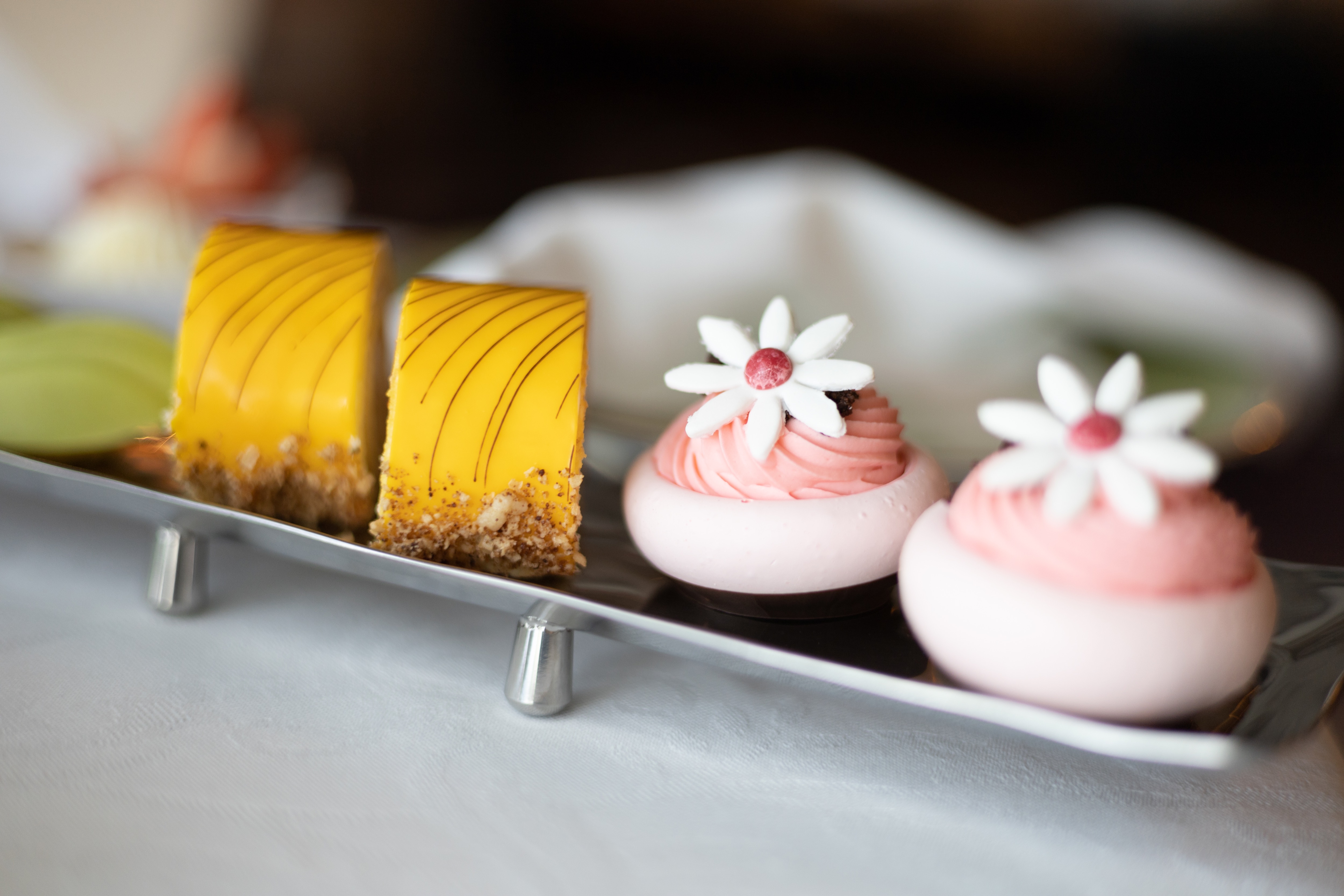
More information coming soon.
Shore Excursion Desk
Introducing our new collection of destination experiences created in partnership with Abercrombie & Kent
From dawn breaking over the ocean to dinner overlooking the vast golden plains of the savannah, our new partnership with our sister brand, Abercrombie & Kent, brings the very best of land and sea together for the first time.
By Abercrombie & Kent is our new collection of unique destination experiences, crafted by the award-winning experts at A&K to take you deeper into the beating heart of a destination than ever before. Whether you want to journey overland between two Crystal ports or enjoy a bespoke trip before or after your cruise, we have plenty of experiences to make the magic of your vacation last even longer.
Be fitted for a kimono in Tokyo, go truffle hunting in Tuscany, take a hot-air balloon ride over the Serengeti, or learn the ancient Dreamtime stories in Australia – all By A&K adventures are created to the same superlative standard you’ve come to expect from Crystal for a seamless experience from ship to shore.
OVERLAND ADVENTURES BY A&K – Hop off midway through your cruise to embark on an exhilarating multi-night experience on land, rejoining the ship at the next port. Travel through Australia’s epic landscapes, traverse the Great Wall of China, and go tiger-spotting in India – these soul-stirring journeys will stay with you forever.
PRE- AND POST-CRUISE EXTENSIONS BY A&K – Packed with expert insights and unique experiences, these short breaks can be enjoyed before or after your cruise. Experience a traditional tea ceremony in Tokyo, or marvel at sunrise over the Masai Mara – short is most certainly sweet.
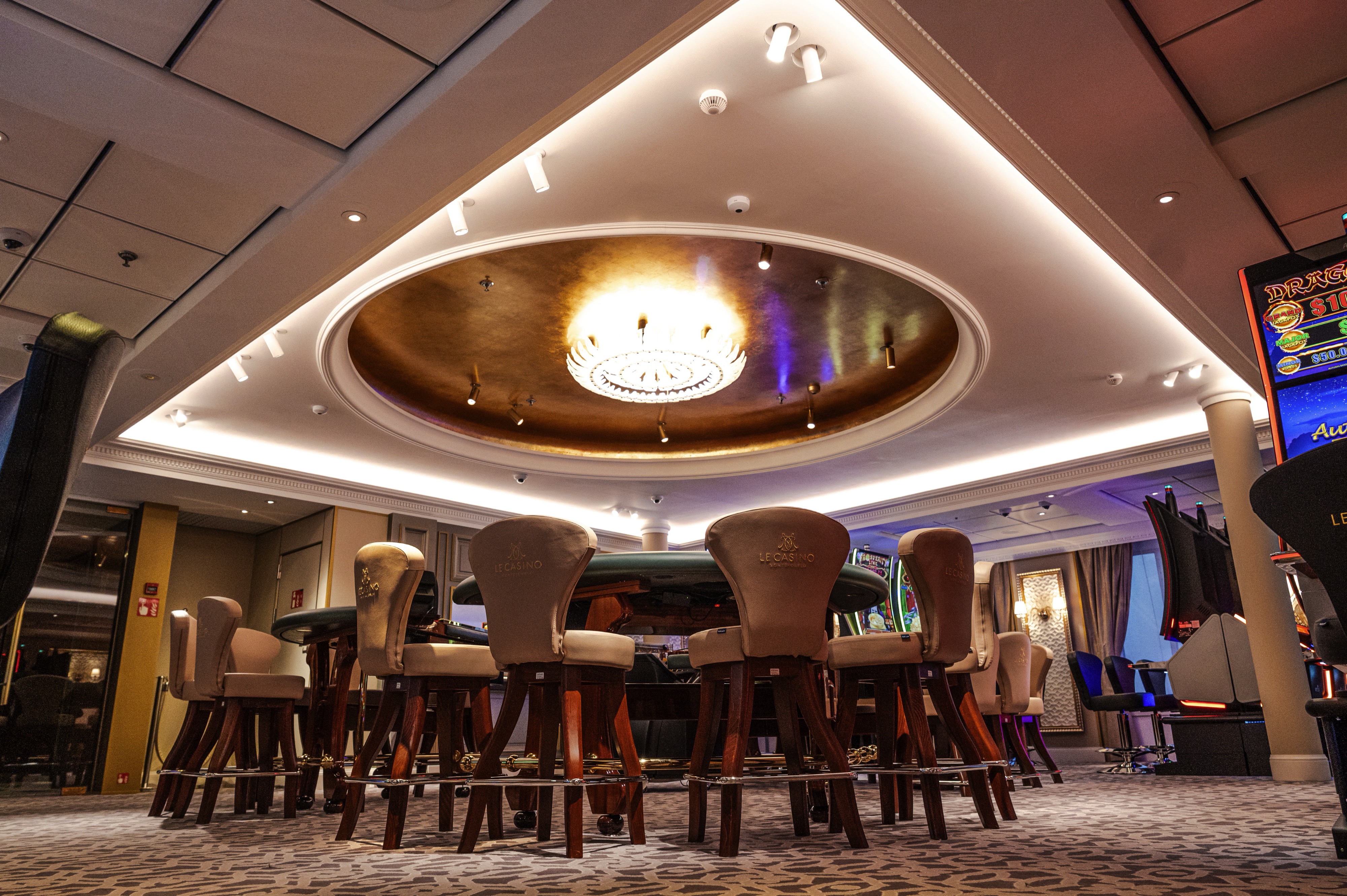
Casino De Monte-Carlo
Le Casino de Monte-Carlo is offering a new and unique experience onboard. Place your bets on table games with the unique savoir-faire of Monaco’s world-famous casino or get excited to a dynamic range of slots to hit the jackpot. An ultimate way to embrace the thrill of the game in an elegant atmosphere adorned in the hues of the historical building.
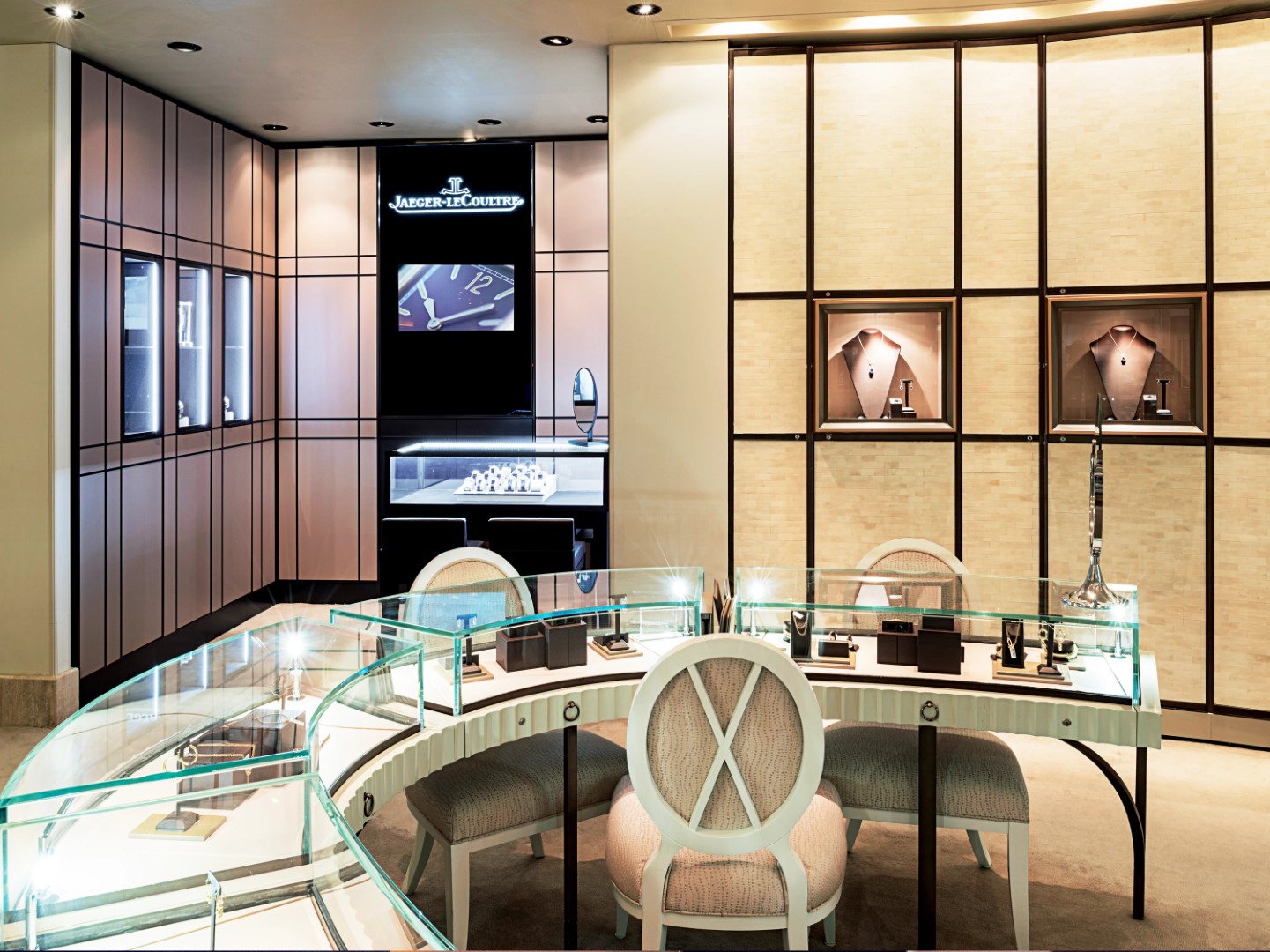
Apropos & Facets Onboard Shopping
Heighten the experience on board with a selection of fine jewellery, watches and cruise wear available in our arcade, alongside designer apparel. Make the most of being at sea with a selection of duty free items available.
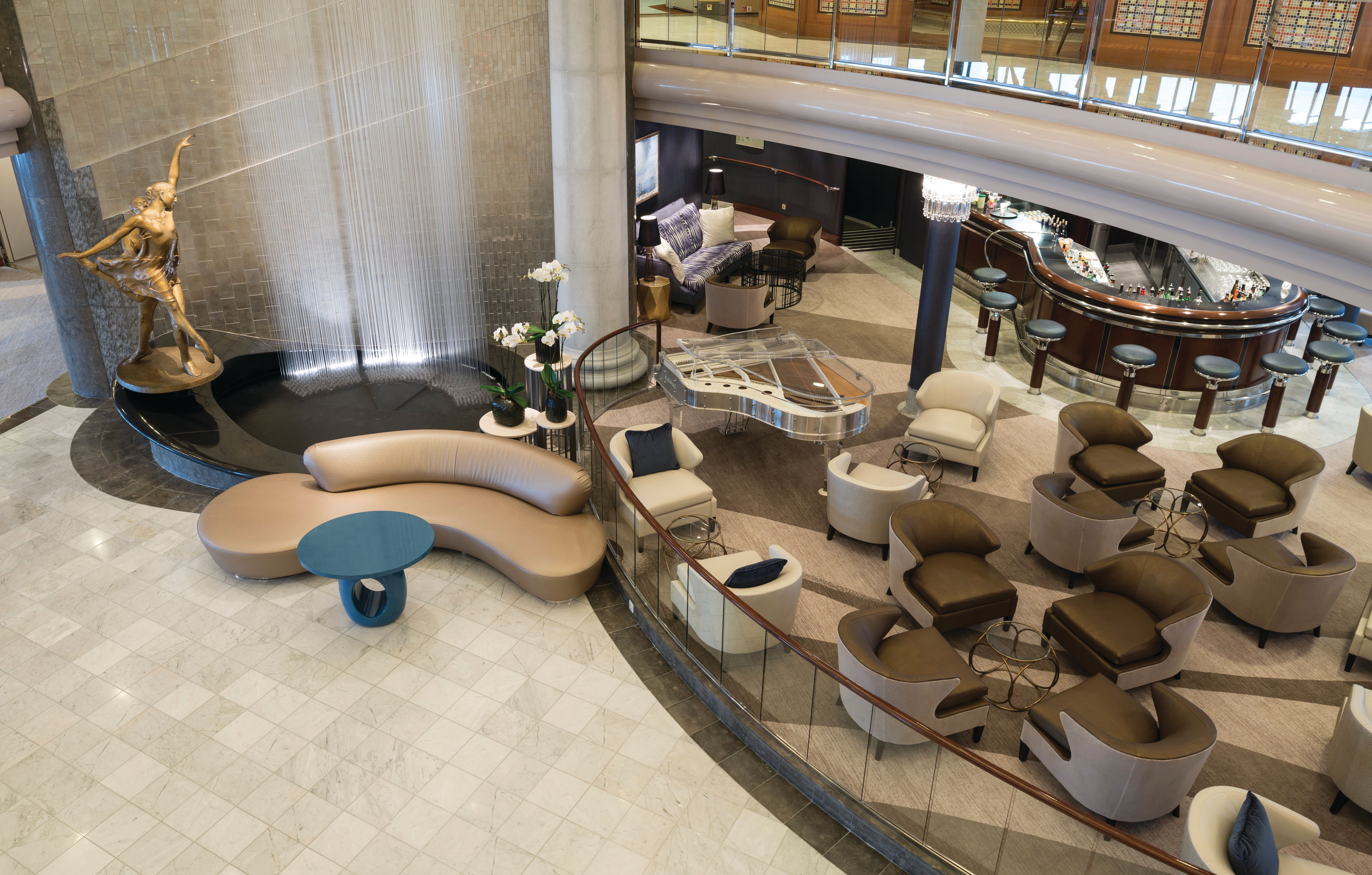
Atrium
The central meeting place on the ship where you can visit the front desk, concierge, shore excursion desk, or sip on a casual drink at the Crystal Cove.
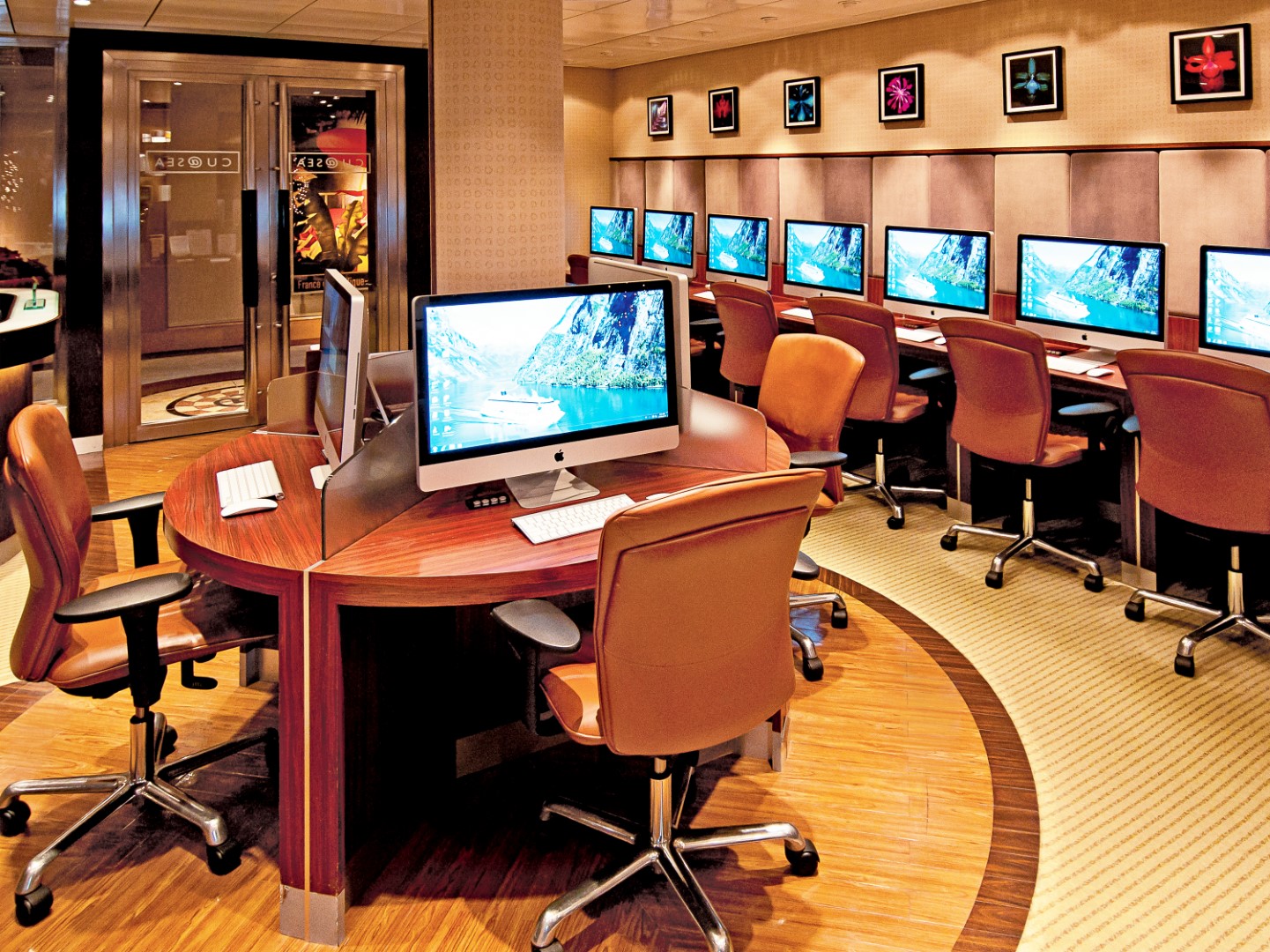
Computer University@Sea
Our innovative Computer lab onboard led by a team of tech experts.
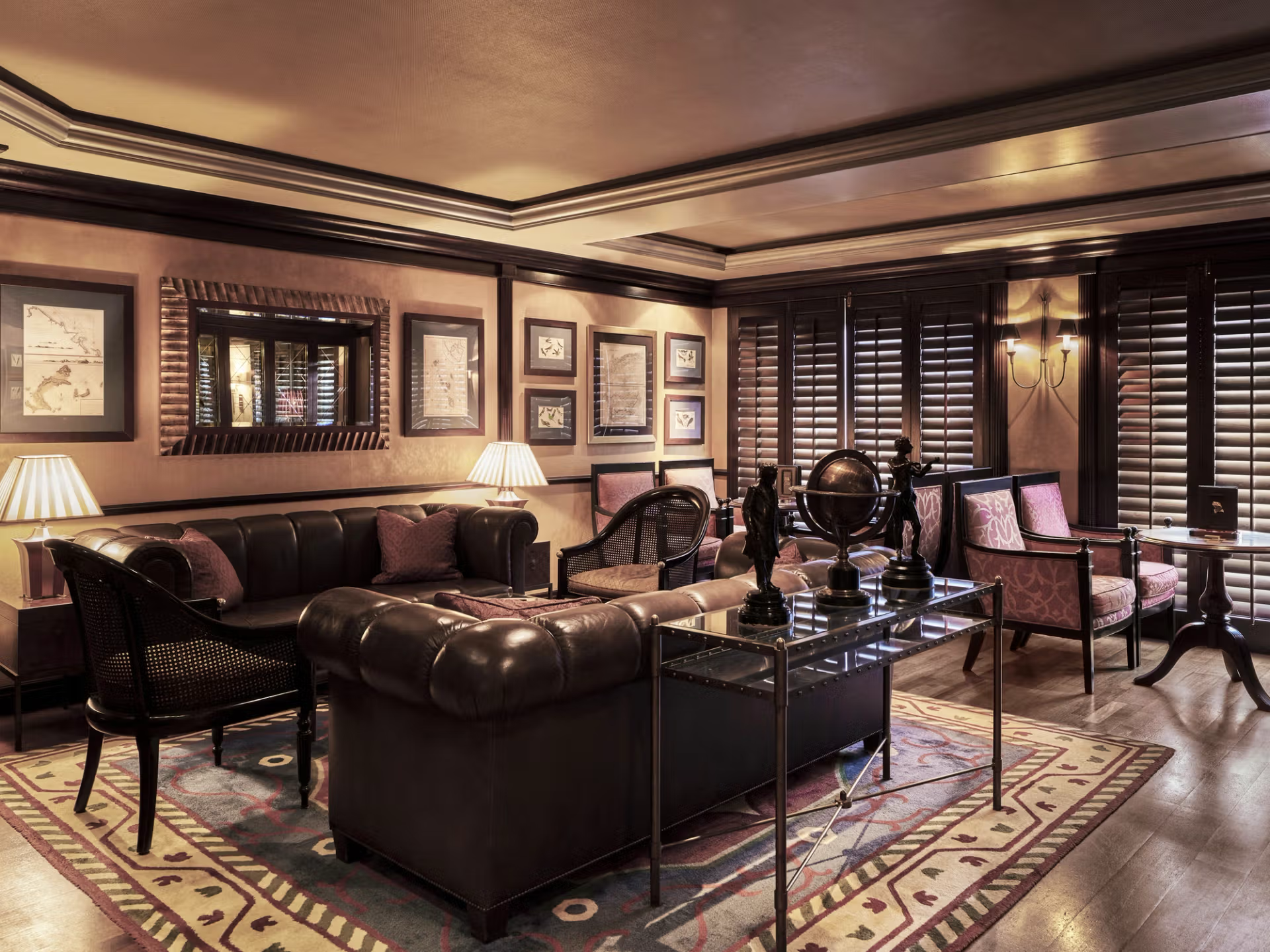
Connoisseur Club
An elegant space to indulge in the finest cigars and cognacs.
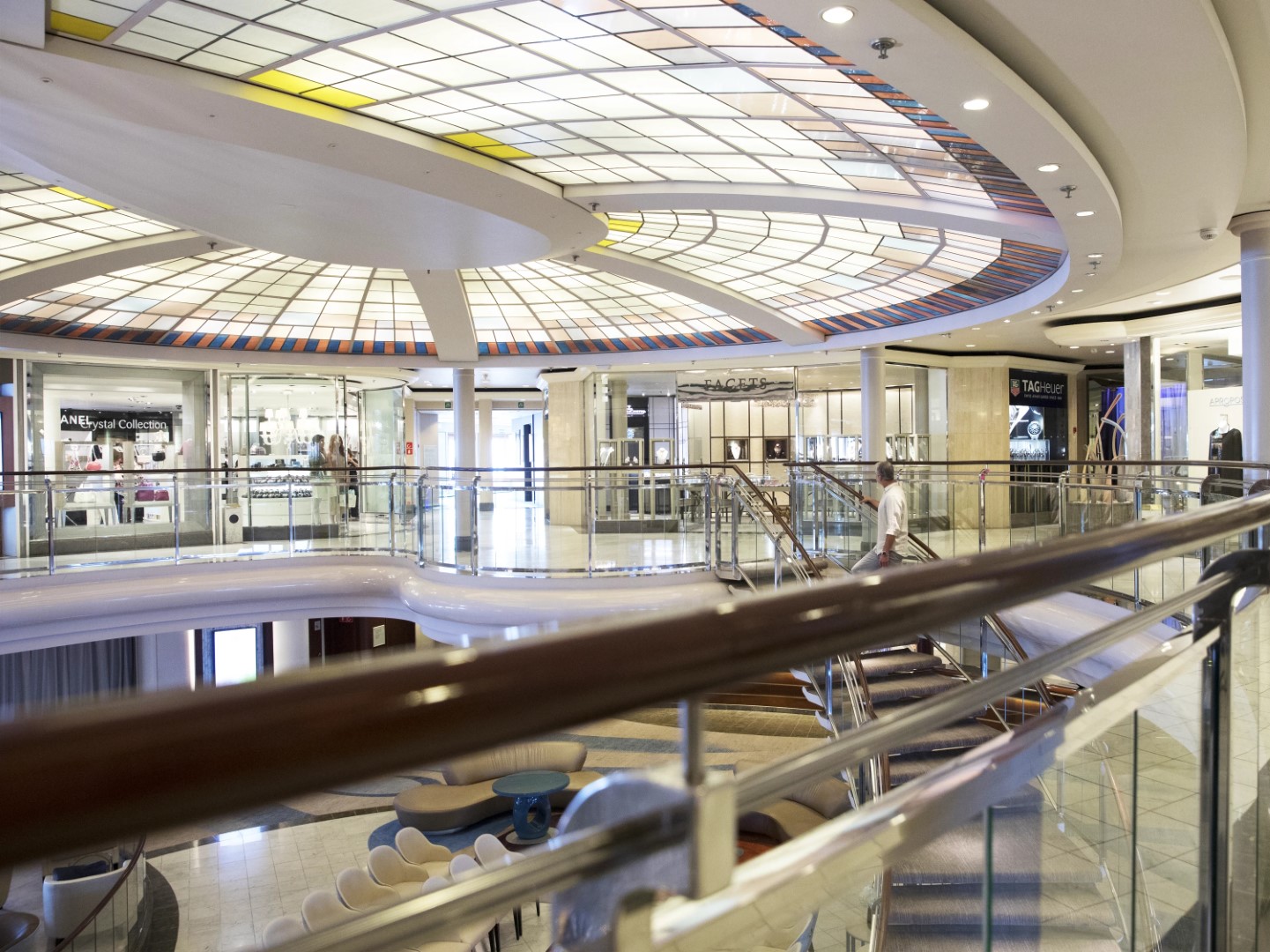
Crystal Collection
Offers fine perfumes and colognes, cosmetics, purses, sun glasses, and jewellery.
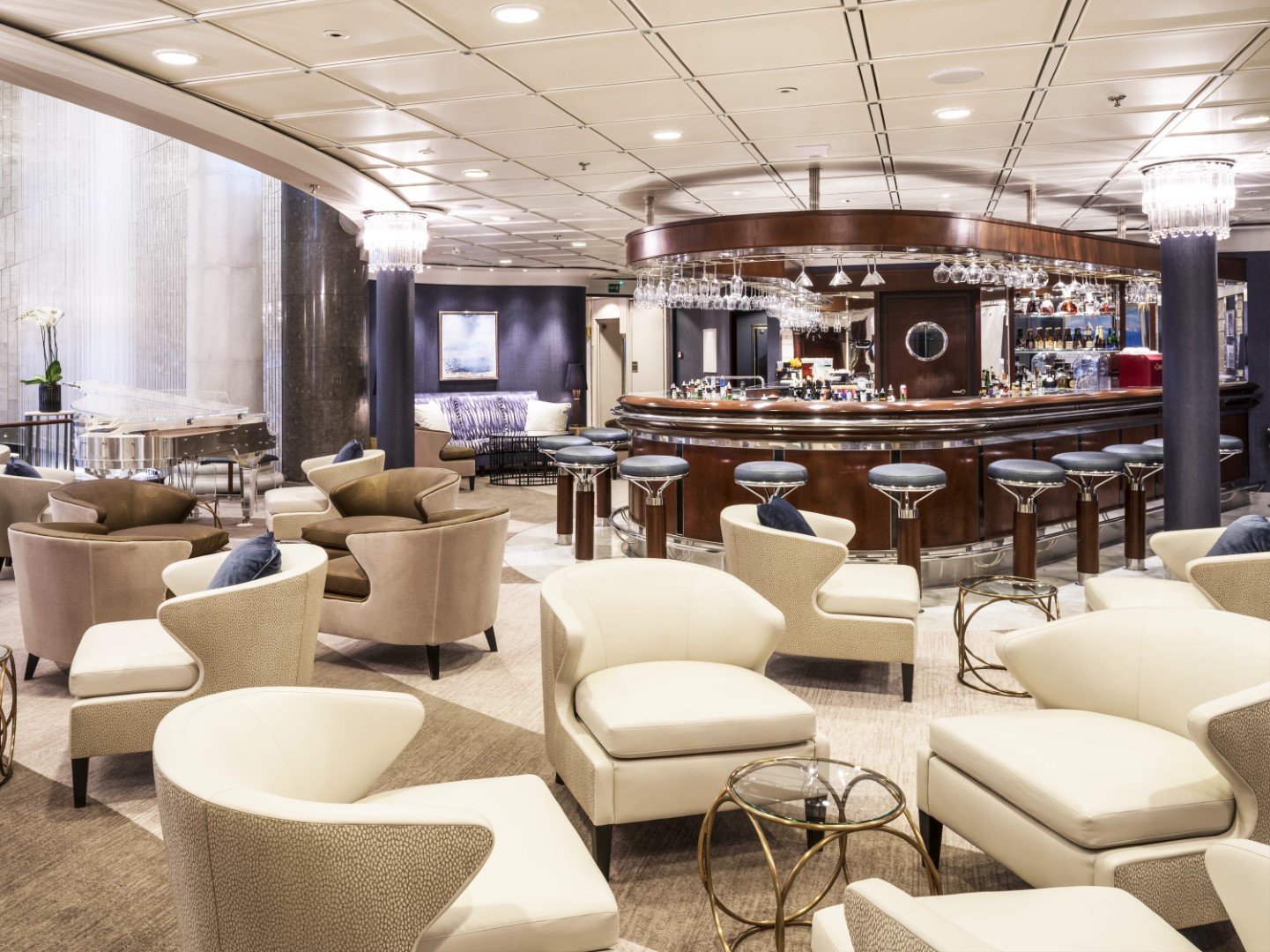
Crystal Cove
An ideal refreshment stop any time of the day, and the perfect place to meet friends for a pre-dinner cocktail. Enjoy a variety of musical styles as the day turns into night.
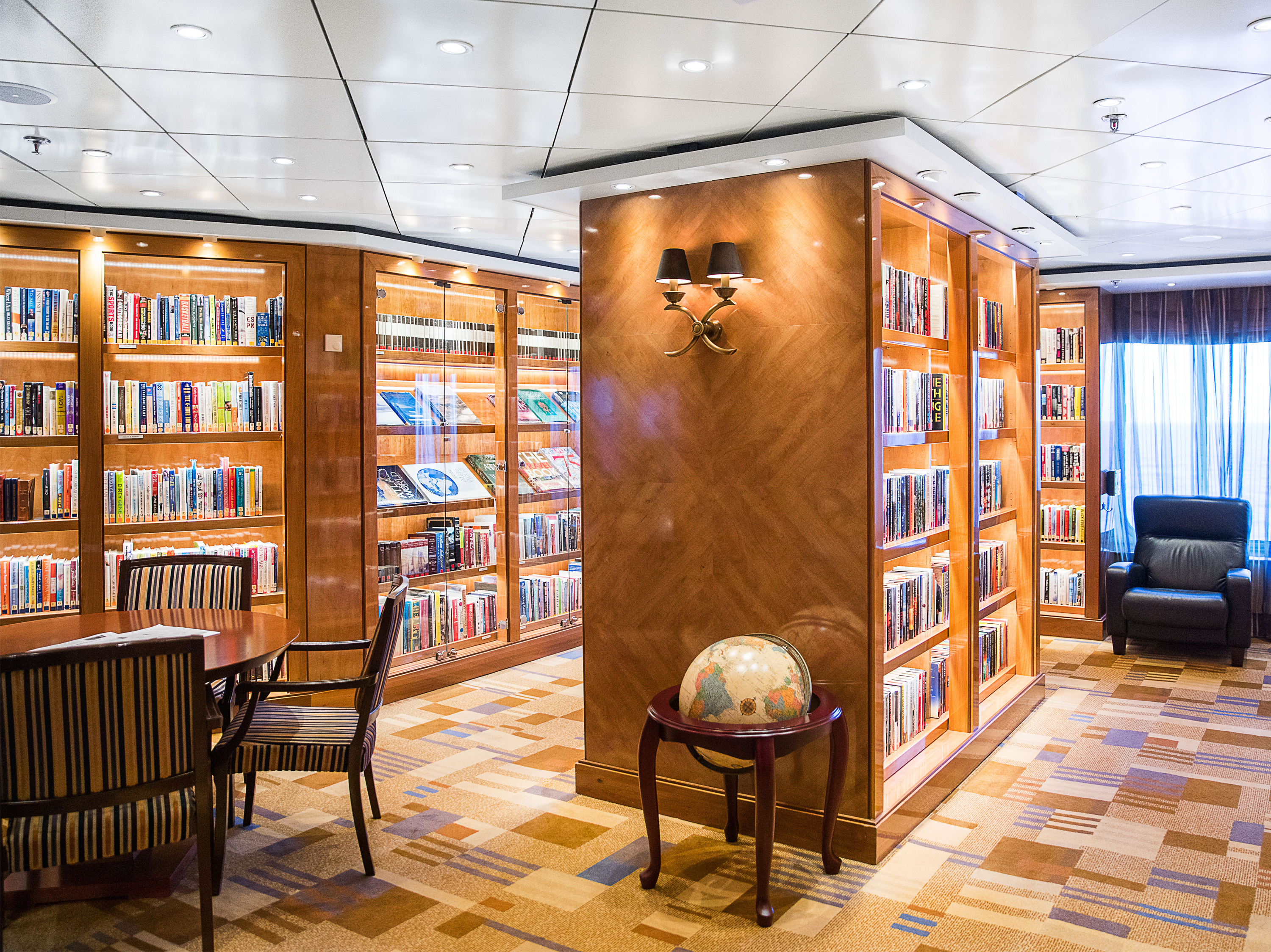
Library
A well-stocked library containing over 2,000 books on a range of subjects from classics to popular biographies, history to contemporary mysteries. Plus enjoy an ample selection of magazines and board games perfect for poolside reading
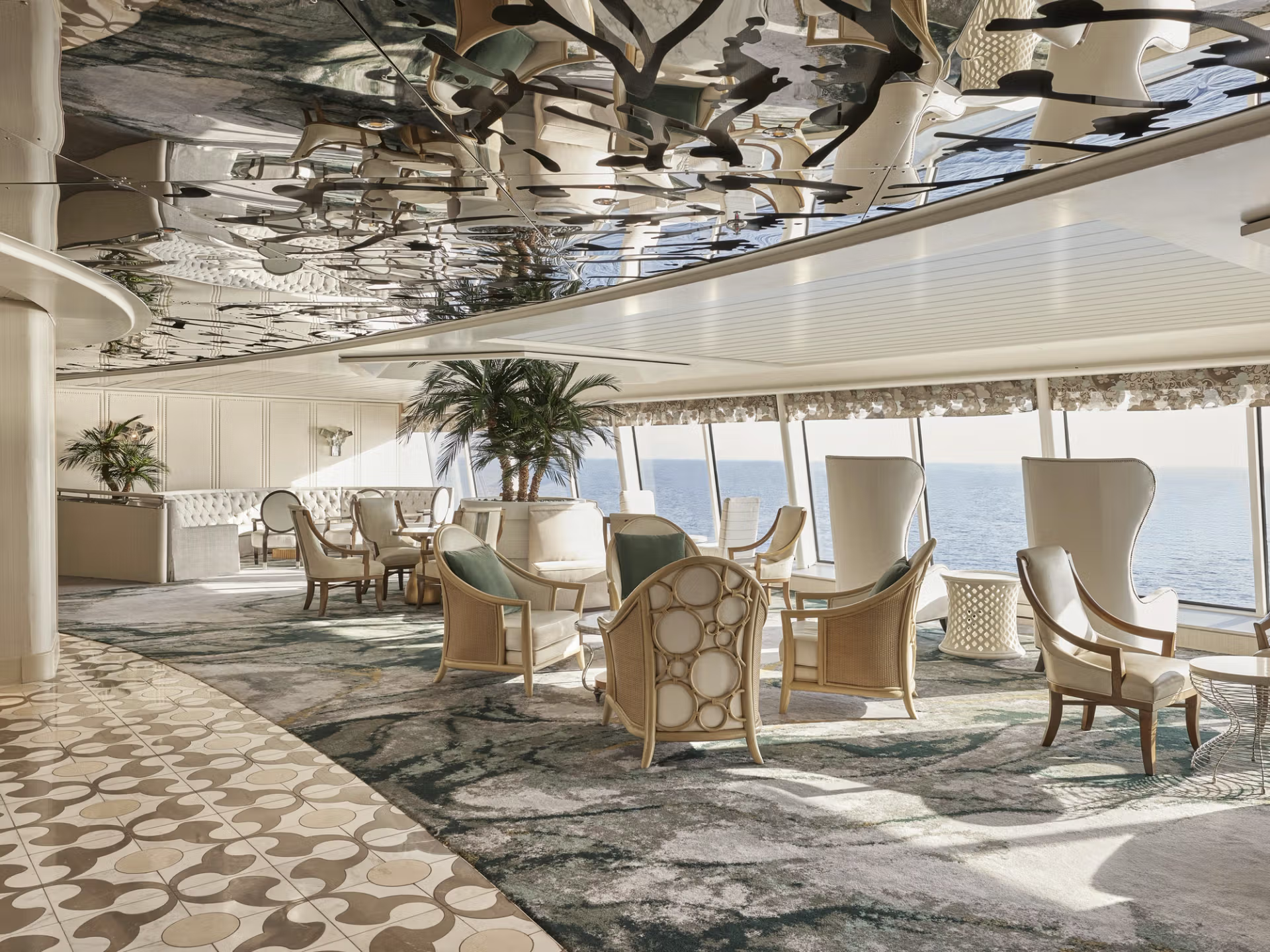
Palm Court
Featuring large sky lights, floor-to-ceiling windows and a fabulous 270-degree forward view, this venue is perfect for afternoon tea, social gatherings and dancing.
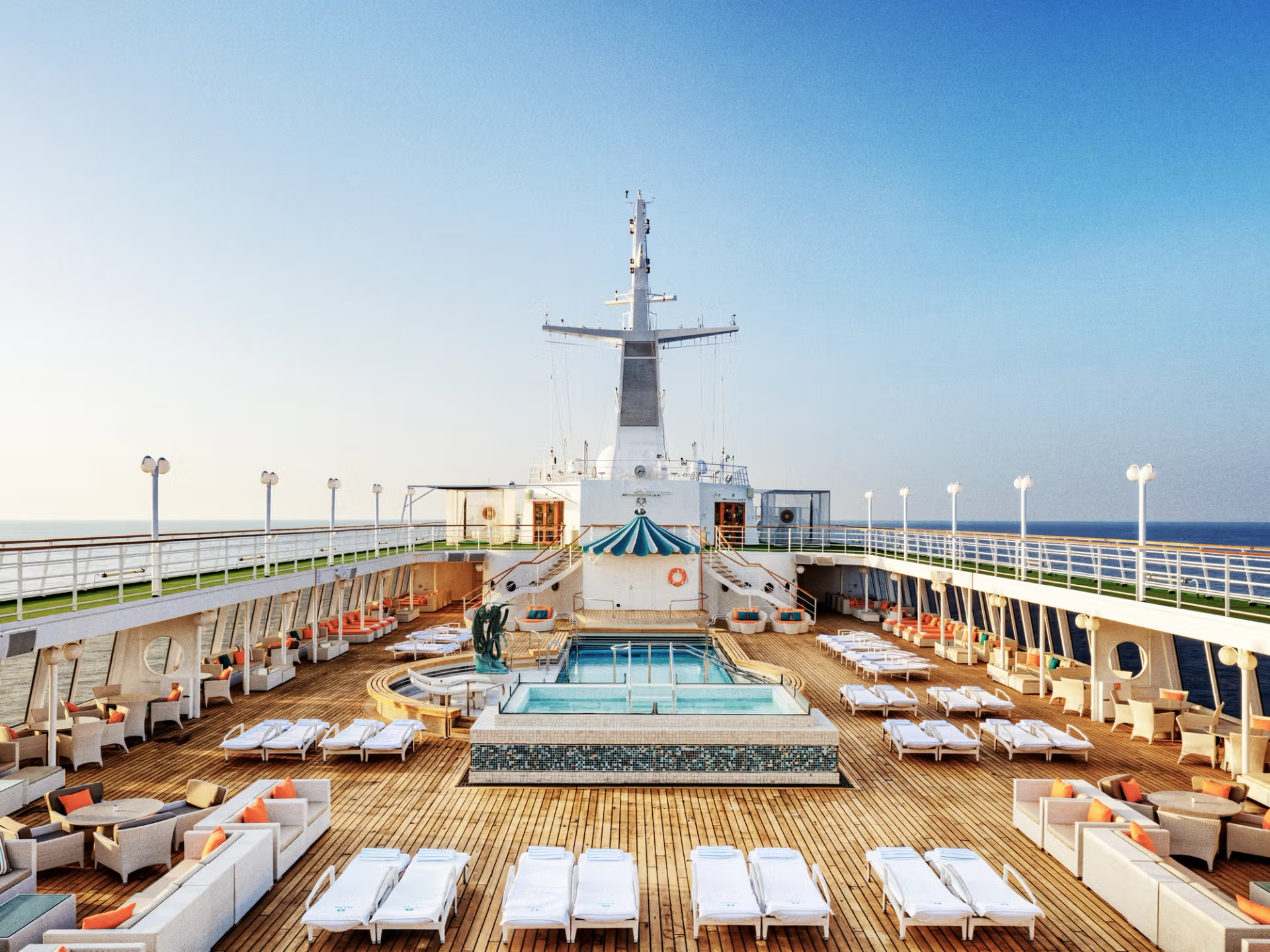
Seahorse Pool
Our Seahorse Pool, with plenty of surrounding deck space to sunbathe, relax and read while enjoying a cool drink in the afternoon.
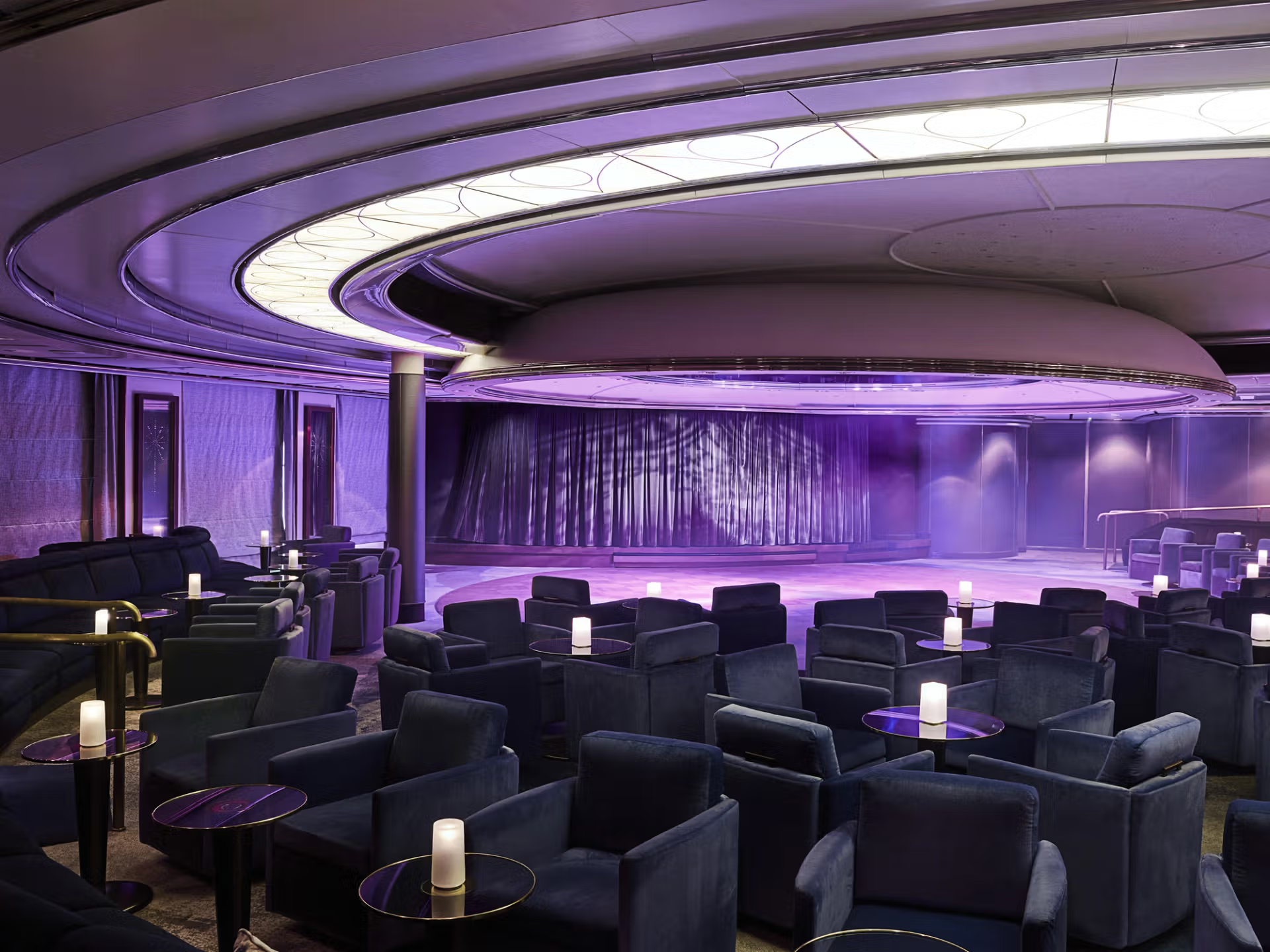
Starlite Club
On selected evenings before and after dinner, this entertainment lounge features dancing, production spot shows, cabaret performances and other themed events.
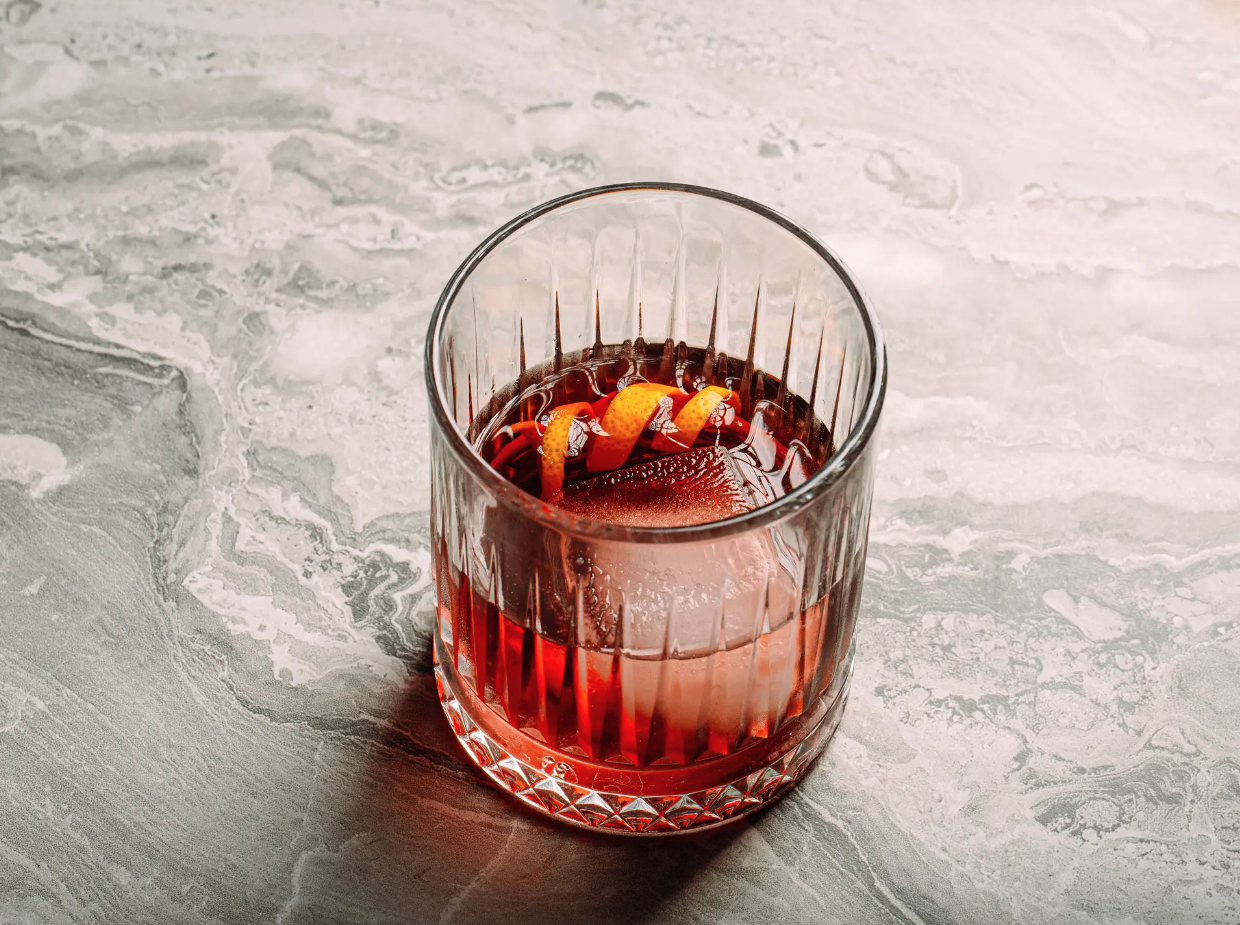
Jade Night Club
An intimate lounge for a late-night drink, dancing or a place to let loose with karaoke.
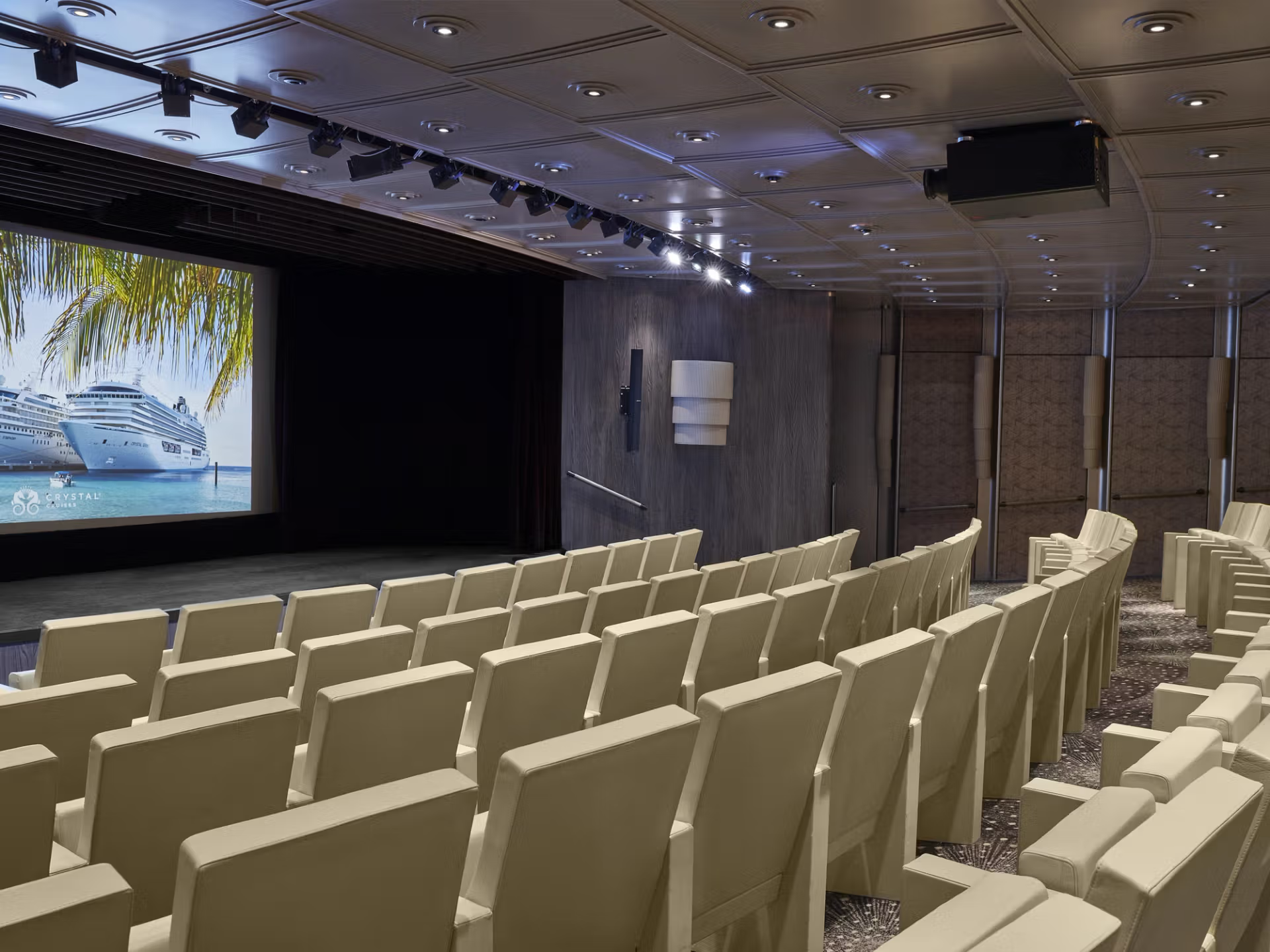
Hollywood Theatre
The ship’s sleek cinema for recent-released movies, live sport events, guest lectures and religious services.
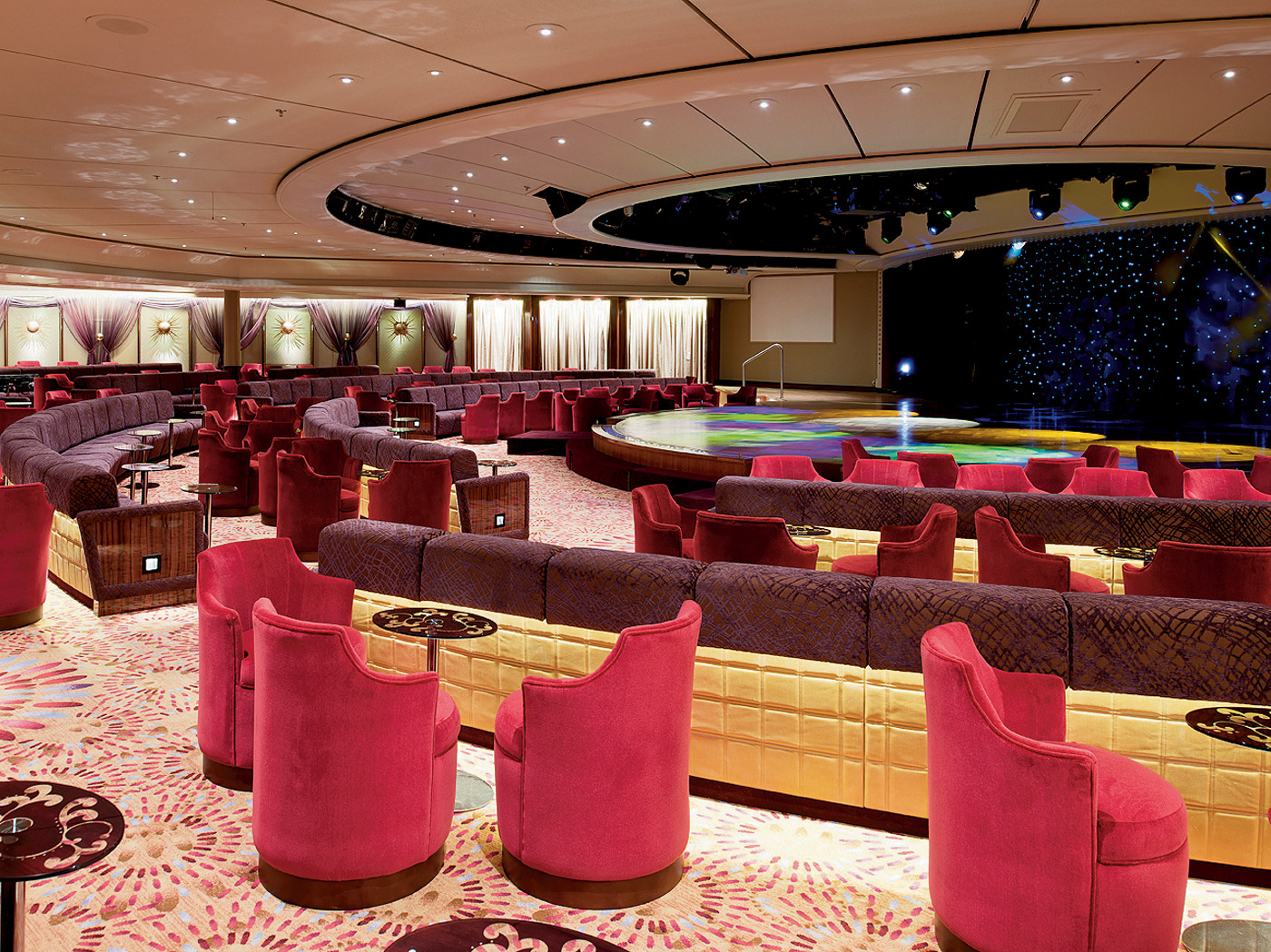
Galaxy Lounge
Performances are the focal point here, with appearances by fantastic Broadway-style performers and headline entertainers. Drink service provided before each show.
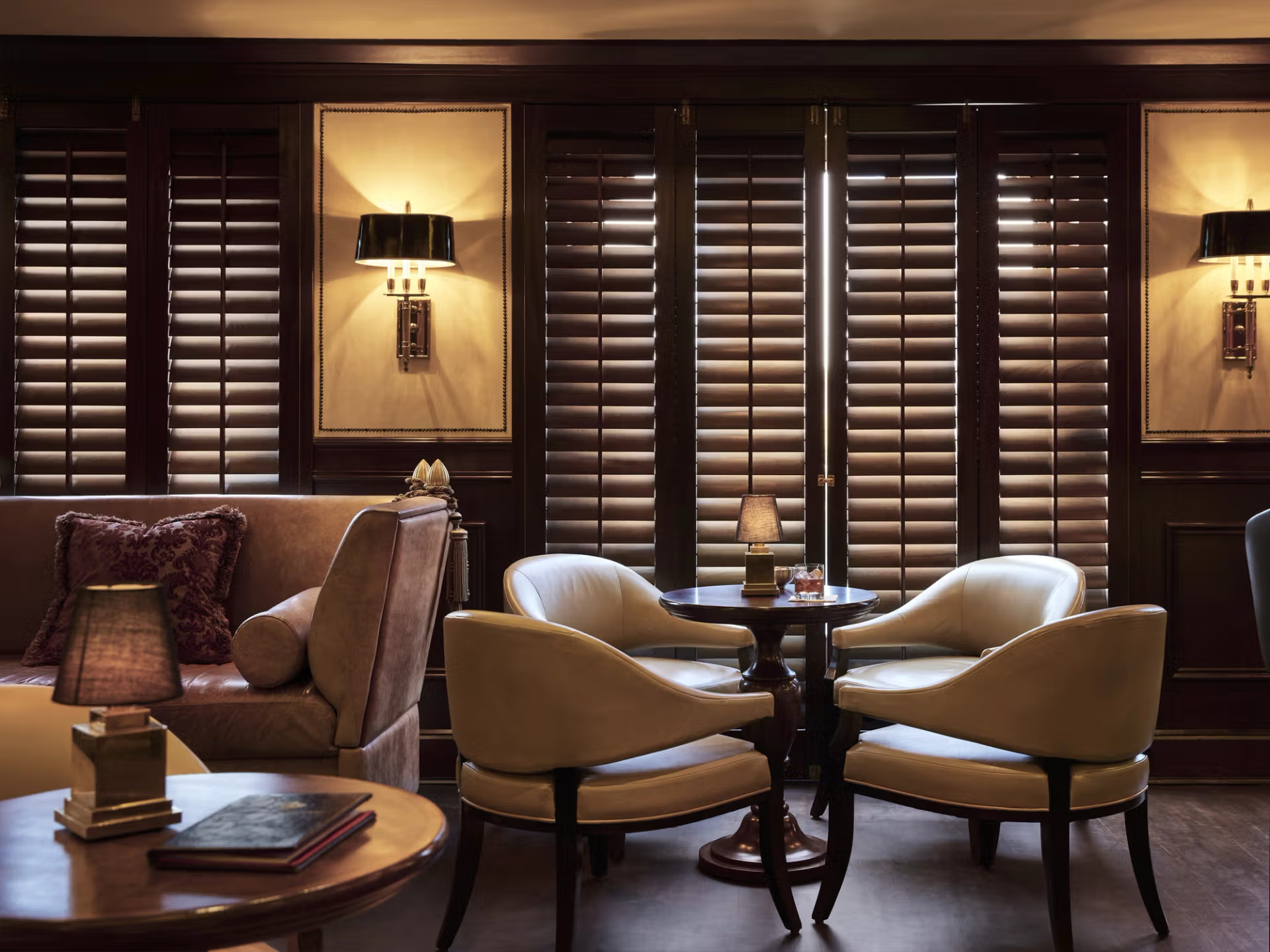
Avenue Saloon
Signature piano bar with an intimate ambience. The perfect setting for a cocktail before and after dinner.

Crystal Aurōra Spa
Our spa offers a wide range of health and beauty services for ladies and gentlemen. There is a complete sauna and steam room facilities, as well as a variety of treatments, including aromatherapy, aqua meditation, exfoliation, reflexology and Swedish massage. Treatments are by appointment only.
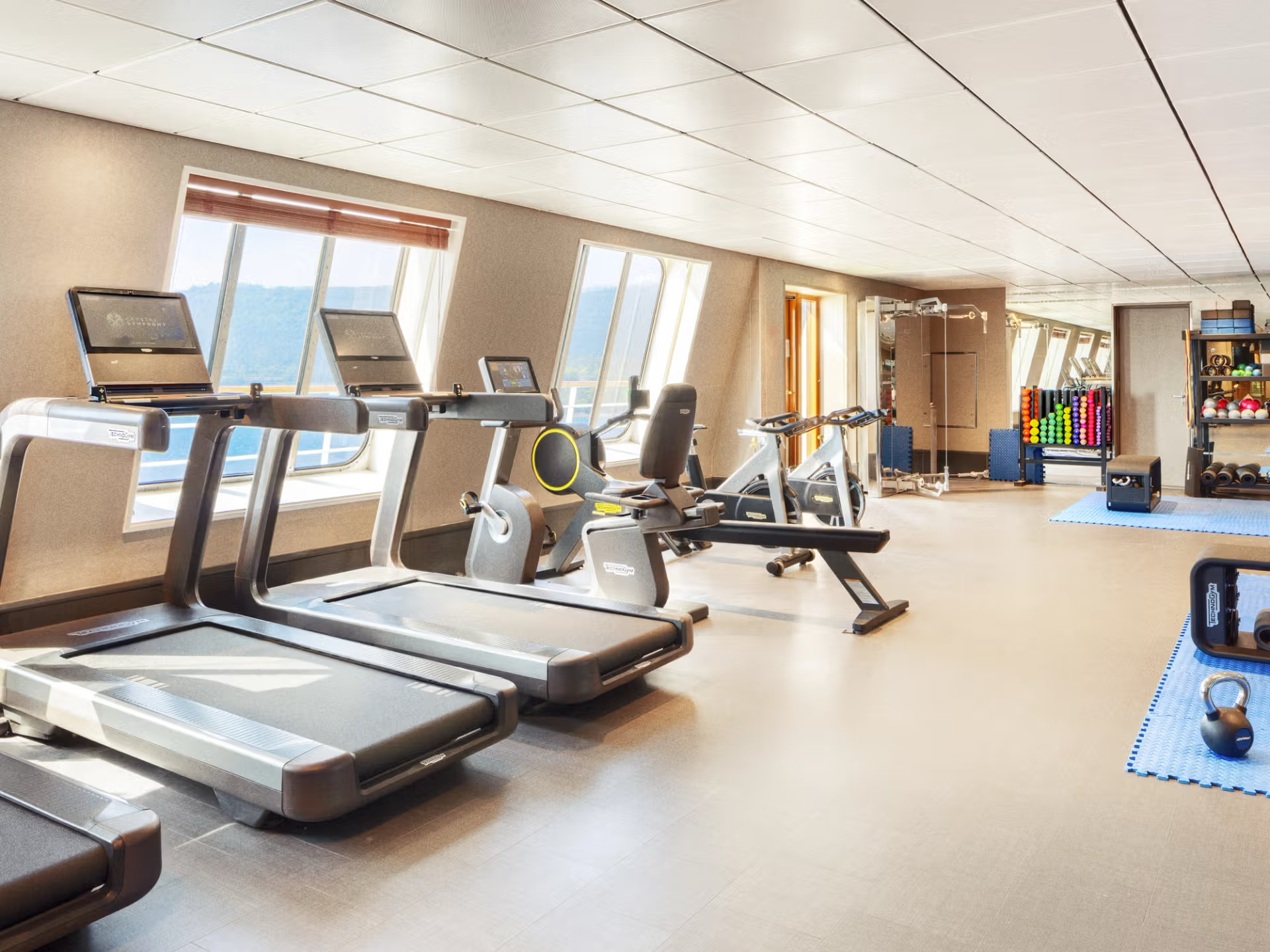
Crystal Life Fitness
Our 3,000+ square-foot Fitness Center, Weight Room and Aerobics Studio feature an extensive line of professional weights and Technogym® exercise equipment, along with panoramic views. We also offer Wellness program with classes in yoga, mat pilates and spinning classes. Our ships’ full-time Fitness Director offers fitness advice and a variety of stretch and aerobic instruction.
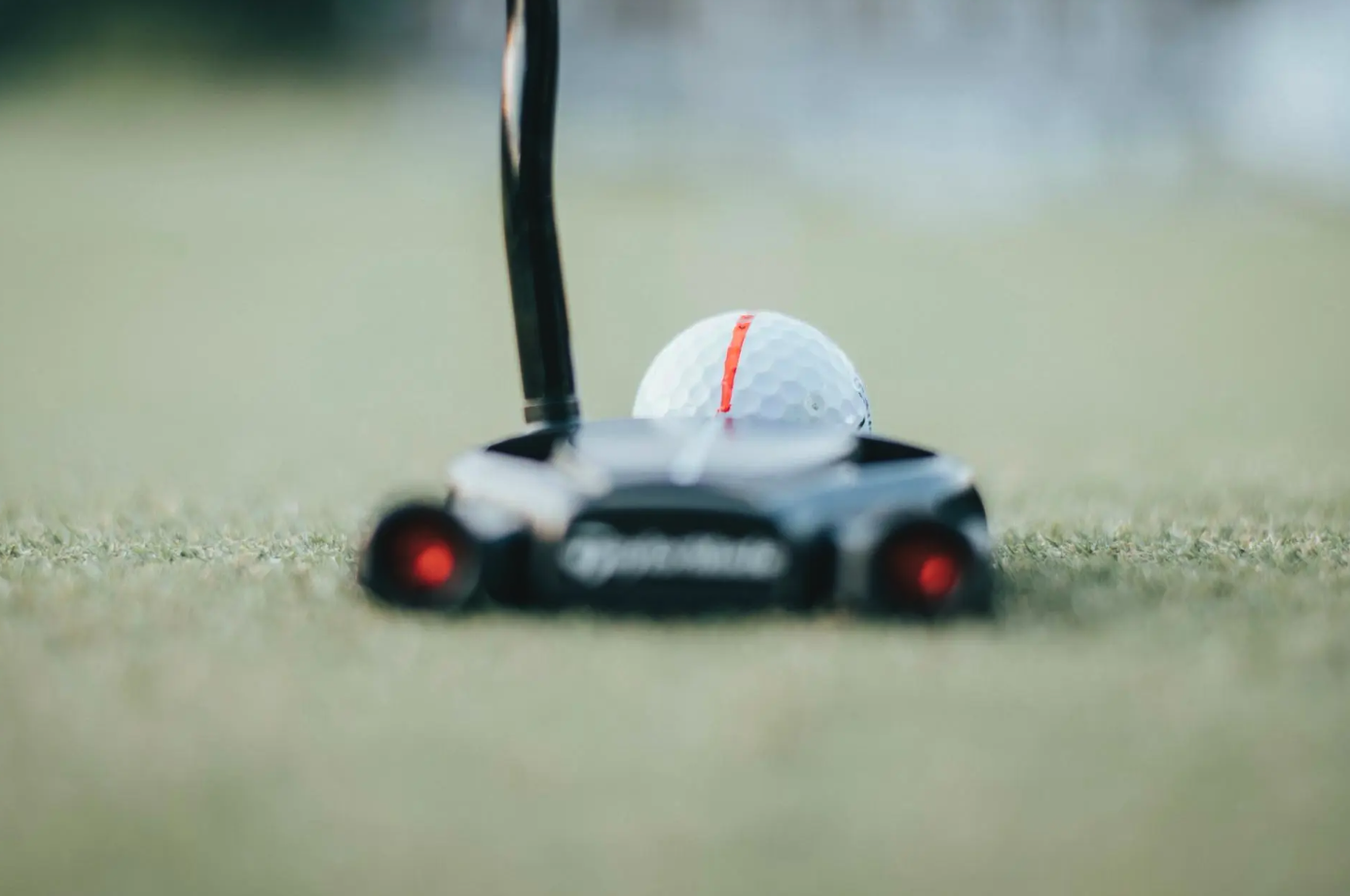
Golf Driving Nets & Putting Green
Practice your golf-game with the expert coaching of our qualified Golf Professional (available on most cruises). TaylorMade® clubs are available from the sports director or golf pro, and for personal use in port, you can head to the concierge desk to rent a set of clubs.
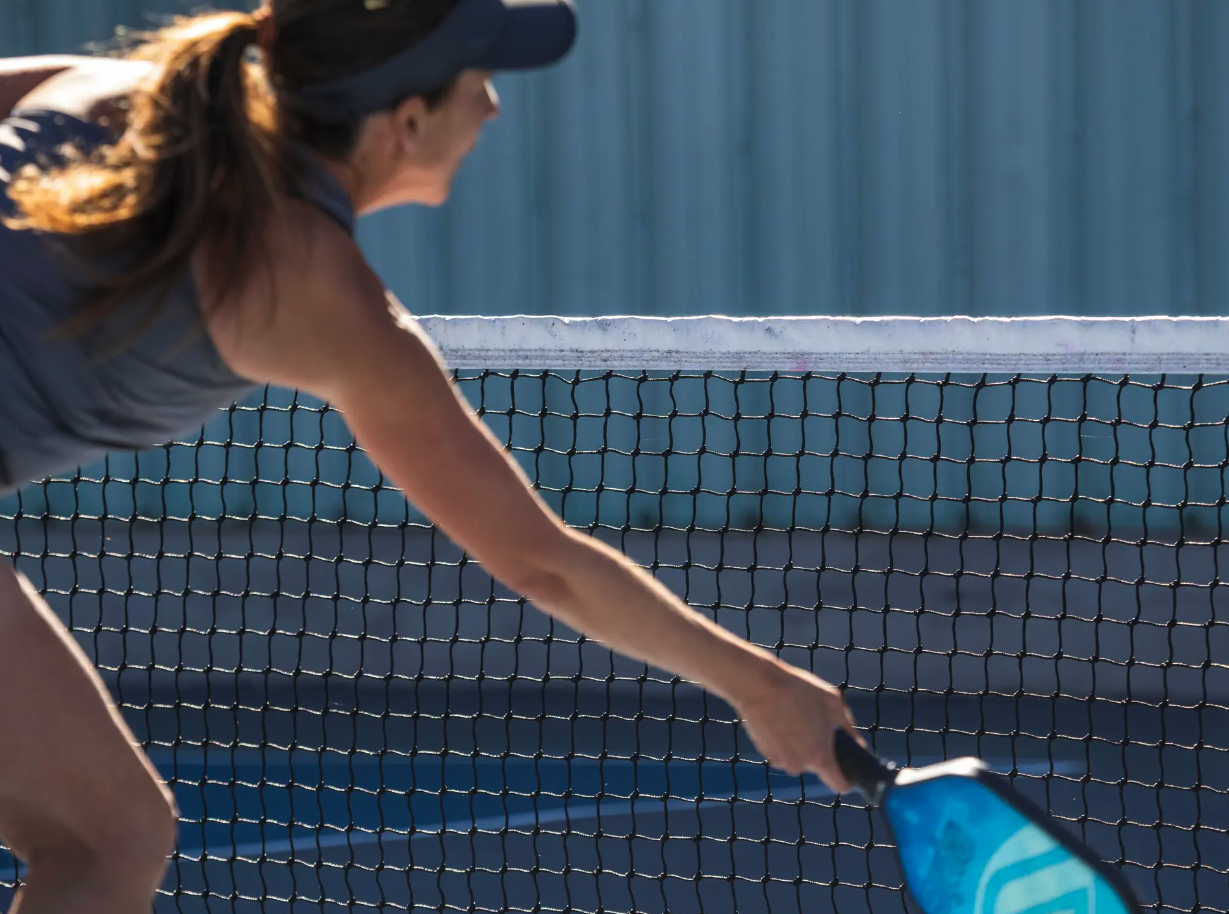
Wimbledon Court
Hit the full-sized paddle tennis and pickle ball court for a friendly game. Crystal Serenity has two courts available.
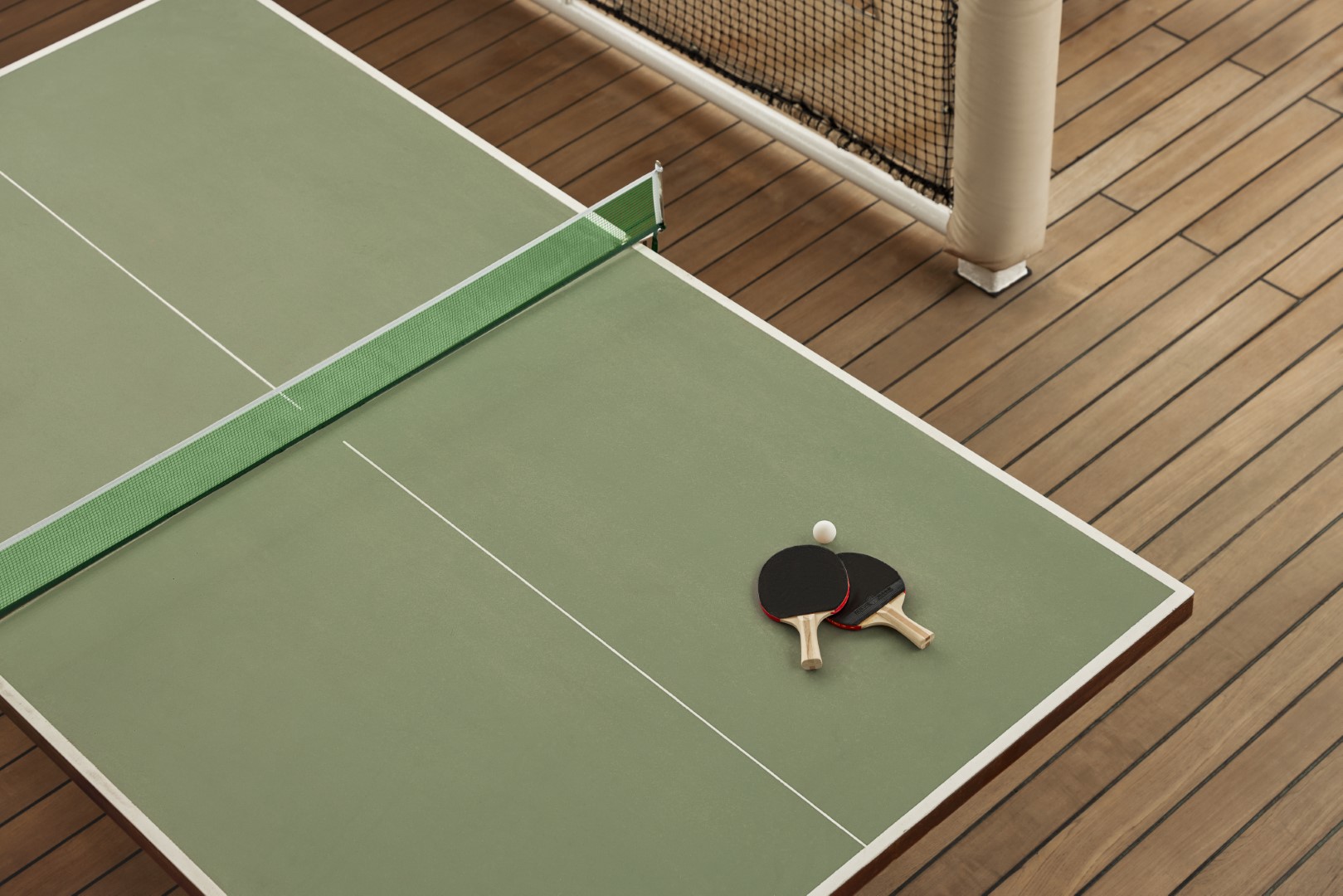
Table Tennis
Challenge a friend to a fun game of ping-pong on one of our tennis tables.
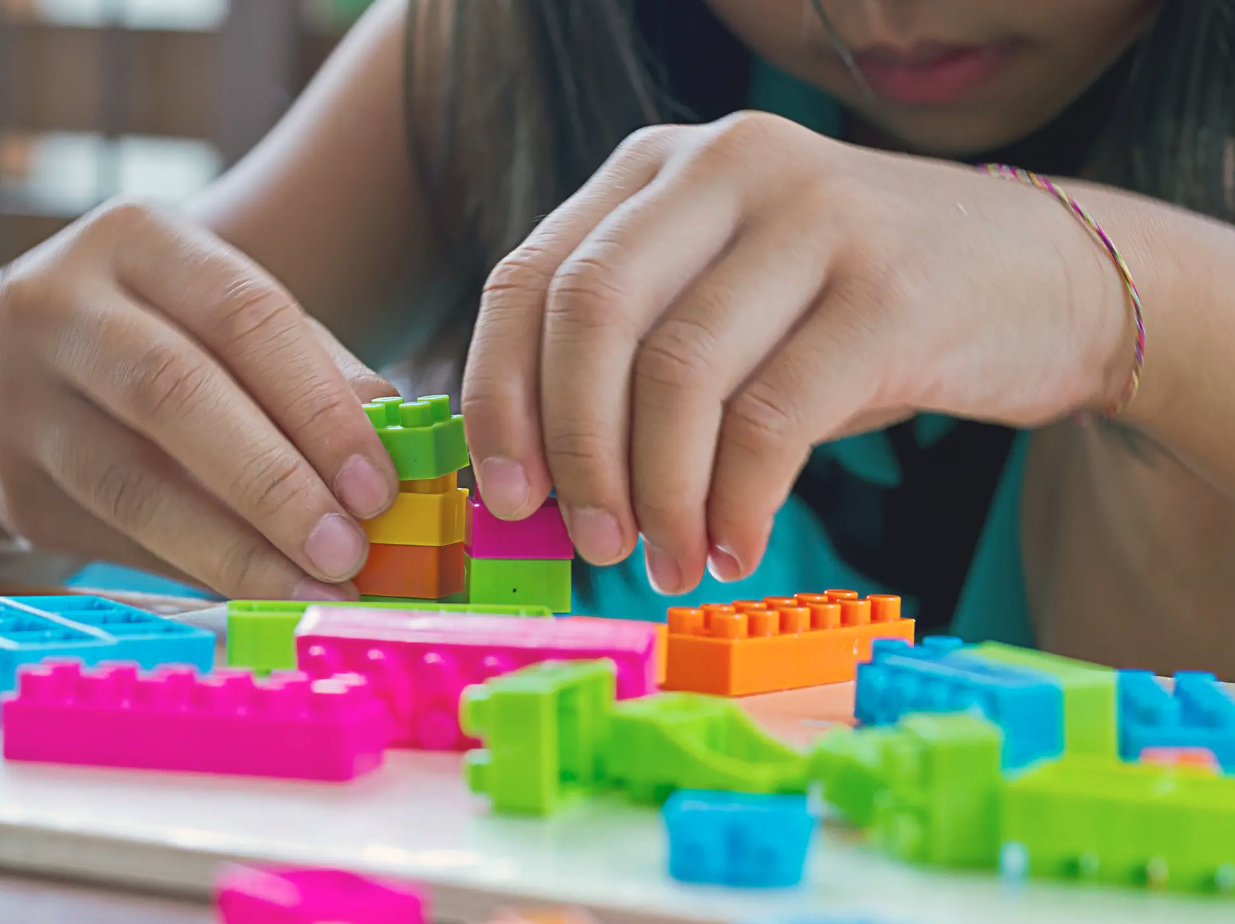
Fantasia & Waves
Specialised fun for junior cruisers.
Wheelchair Assistance
Guests with limited mobility should ideally be able to navigate the ship independently. Alternatively, they may opt to travel with a companion who can provide assistance if needed.
Service Animals
Service animals will be permitted on select voyages. Animals that are not trained to do work or perform tasks are not considered to be service animals. Emotional support animals, which provide emotional support, well-being, comfort, or companionship to an individual with disabilities but are not trained to do work or perform tasks, are not considered to be service animals. Pets and other animals who are not service animals are not allowed on board.
For more details, please contact obgs@crystalcruises.com
Smoking Policy
At Crystal, we recognise that some of our guests smoke and others do not. While most areas of the ship are non-smoking, there will be designated smoking areas throughout. Please note that pipe and cigar smoking is only allowed in the Connoisseurs Club and all suites/guest rooms are non-smoking, including on the verandas.
Dress Code
At Crystal, we want guests to feel confident and relaxed throughout their stay, so we have compiled the following guide to the different dress codes on board. If you have any questions, please don’t hesitate to contact us by calling 1.888.617.0110 or +1.786.464.4420.
Day Casual
A less formal look allows guests to feel comfortable during the day; Day Casual attire may be worn everywhere, including our restaurants, until 18:00.
Suggestions for a Day Casual look:
Women
- Sundresses
- Elegant shorts
- Jeans
- T-shirts or blouses
- Linen clothing
- Swimsuits with cover-ups (when not poolside)
Men
- Shorts
- Jeans
- T-shirts or polo shirts
- Linen clothing
- Swim shorts with a T-shirt or polo (when not poolside)
NOTE: Swimwear on its own, wet swimwear, revealing clothing, bathrobes, bare feet, tank tops, baseball caps, and clothes bearing any offensive messaging are not permitted. Covered swimsuits may only be worn at Trident Grill, Tastes, and Marketplace.
Evening Resort
A step up from Day Casual, after 18:00, we ask that guests adopt the more refined Evening Resort dress code.
Suggestions for an Evening Resort look:
Women
- Dress
- Skirts
- Pants
- Blouses or sweaters
- Dark-wash jeans with no rips
- Tailored dress shorts
Men
- Shirts
- Collared polo shirt
- Sweaters or smart designer sweatshirts
- Dark-wash jeans with no rips (only when accompanied with a jacket)
- Chinos
- Sports jacket or blazer (optional)
- Tailored shorts (these may only be worn in the Tastes restaurant)
NOTE: Please avoid flip-flops/sliders, swimwear, and hats.
Formal Evening
On sailings over seven days, there will be at least one optional ship-wide formal night (depending on the length of the segment), which will require more formal cocktail chic attire. These special events will be defined in your personal pre-sailing guide.
Suggestions for a Formal Evening look:
Women
- Cocktail dresses or gowns
- Suits Evening skirts or pants with an elegant top
- Evening shoes
Men
- Suits or tuxedos
- Shirts
- Dress shoes
- Ties (optional)
*Formal evening attire should be adhered to in the specialty restaurants, during a captain or officer dinner, and during a recognition dinner
As always, dress for the climate and conditions of any destination we visit.
What's Included
WHICH RESTAURANTS ARE INCLUDED AND WHICH ARE SUBJECT TO AN UPCHARGE?
Our restaurants are complimentary, except for The Vintage Room. For our specialty restaurants, Umi Uma by Nobu Matsuhisa Restaurant and Sushi Bar and Osteria d’Ovidio, guests will be allotted one complimentary reservation for two people per voyage of up to 11 days (more than one for more extended stays – see below). In addition, guests staying in Crystal Penthouse or Junior Crystal Penthouse Suites can enjoy unlimited free visits.
- Up to 11 days: One complimentary reservation to each restaurant
- 12 to 22 days: Two complimentary reservations to each restaurant
- 23 or more days: Three complimentary reservations to each restaurant
- Reservations above the complimentary allotment will be $50 per person.
WHAT AMENITIES ARE INCLUDED IN SUITES AND GUEST ROOMS?
• Beverages including select fine wines, champagne, premium spirits, and all nonalcoholic beverages such as bottled water, soft drinks, and specialty coffees
• Gratuities for housekeeping, dining, and bar staff
• One complimentary reservation to Osteria d’ Ovidio and one complimentary reservation to our second Asian specialty restaurant (not yet announced)
• Butler service in all suites and guest rooms
• Wi-Fi/Internet access in-room and throughout the ship, signal permitting
IS DRY CLEANING INCLUDED WITH ALL ROOM CATEGORIES, OR JUST SUITES. OR WILL IT DEPEND ON THE TRAVEL TIER?
Dry cleaning will be included in select suite categories and detailed on your itinerary.
IS ROOM SERVICE INCLUDED?
An expansive, complimentary in-suite dining menu will be available. Select suite categories will also be able to order from specialty dining venues via their butler.
Medical Needs
CAN I BRING OXYGEN ON BOARD?
If you are dependent on oxygen or require oxygen therapy, you must supply your own oxygen.
CAN I BRING A CPAP MACHINE?
The following devices are permitted on board:
- BIPAP machines, CPAP machines, Concentrators, and Nebulizers.
- You must bring your own equipment on board for personal use. Please hand-carry these items and do not place them in your checked luggage.
Language
The official language spoken on board is English. All officers, staff, and crew as well as local guides and regional specialists speak fluent English. All announcements and lectures will be presented in English.
Special Dietary Requirements
In most cases, we can accommodate special requirements. Please provide details about any allergies or food requirements to our Reservations team or your travel advisor prior to your cruise departure.
Alcohol Policy
You may bring your own nonalcoholic or alcoholic drinks aboard. Please note that certain restrictions apply by country or destination.

Deck 12
- Sauna + Steam room
- AURÖRA
- Fitness Center
- Glass Roof Over Beefbar
- Golf Putting Green
- Wimbledon Court (Paddle Tennis & Pickle Ball)
- Golf Driving Nets
- Forward Observation Deck

Deck 11
- The Palm Court
- Fantasia Children’s Playroom
- Stage
- Waves Teen Centre
- Seahorse Pool & Whirlpool
- Trident Grill
- Scoops Gelato Bar
- Beefbar
- Marketplace Restaurant

Deck 10
- Aquamarine Veranda Suite
- Sapphire Veranda Suite
- Crystal Penthouse Suite
- Launderette

Deck 9
- Junior Crystal Penthouse Suite
- Aquamarine Veranda Suite
- Sapphire Veranda Suite
- Double Guest Room with Veranda
- Launderette
Suites & Guest Rooms Beyond The Forward Elevators Are subject To Alternative Pricing

Deck 8
- Crystal Penthouse Suite
- Sapphire Veranda Suite
- Double Guest Room with Veranda
- Junior Crystal Penthouse Suite
- Sapphire Ocean View Suite
- Double Guest Room with Ocean View
- Table Tennis
- Launderette
Suites & Guest Rooms Beyond The Forward Elevators Are subject To Alternative Pricing

Deck 7
- Sapphire Ocean View Suite
- Single Guest Room with Ocean View
- Double Guest Room with Ocean View
- Shuffleboard
- Walking/Jogging Track
- Elevator & Stairs
Suites & Guest Rooms Beyond The Forward Elevators Are subject To Alternative Pricing

Deck 6
- Main Stage
- Galaxy Lounge
- The Lounge
- Hollywood Theatre
- Jade Nightclub
- Crystal Collection
- Facets
- Aprops
- Avenue of the Star Boutique
- The Bistro
- Atrium
- Library
- Stage
- Starlite Club
- Vintage Room
- Crystal Images
- Uma Uma & Sushi Bar by Nobu Matsuhisa
- Connoisseur Club
- Avenue Saloon
- Computer University @Sea
- The Studio
- Casino
- Osteria D’Ovidio

Deck 5
- Sapphire Ocean View Suite
- Double Guest Room with Ocean View
- Medical Centre
- Concierge
- Reception
- Shore Excursions
- Crystal Cove
- Future Sales Consultant
- Crystal Plaza
- Waterside Restaurant
Itinerary
The Spanish arrived at this beautiful corner of the world in March of 1872, founding the city, that would eventually become the Capital of Palawan. In 2011, the area received a huge boost, when New7 announced its list of the 7 Wonders of Nature – counting 500 million votes in the process. Puerto Princesa’s stunning underground river – complete with a cavernous, sunken lagoon – beat off wonderful sites like the Great Barrier Reef, to claim a spot on the final, prestigious list. Set sail across the glowing green water, on a journey into the gaping mouth of the limestone caves at Puerto Princesa. Known for being one of the least densely populated, cleanest and most environmentally friendly cities in the Philippines, there’s a raft of natural wonders to explore – from diving hotspots to towering limestone cliffs, and the entrancing underworld of the underground river.
MANILA, the capital city of the Philippines, was founded in, 1571 by Spanish conquistador Miguel López de Legazpi. It is one of the oldest cities in the country and was the seat of power for most of the colonial rules of the Philippines. It is situated on the eastern shore of Manila Bay and contains a multitude of landmarks, some of which date back to the 16th century. It is home to the baroque 16th-century San Agustin Church as well as Fort Santiago, a storied citadel and military prison. In the 19th century Manila became one of the most modern cities in Asia. Before the Spanish–American War, Manila saw the rise of the Philippine Revolution. Under the American rule following the Spanish-American War, the United States changed the official language from Spanish to English. Towards the end of World War II, during the Battle of Manila, most of the city was flattened by intensive aerial bombardment. Today, tourism is a vital industry in Manila. Major shopping malls and bazaars thrive around Manila.
MANILA, the capital city of the Philippines, was founded in, 1571 by Spanish conquistador Miguel López de Legazpi. It is one of the oldest cities in the country and was the seat of power for most of the colonial rules of the Philippines. It is situated on the eastern shore of Manila Bay and contains a multitude of landmarks, some of which date back to the 16th century. It is home to the baroque 16th-century San Agustin Church as well as Fort Santiago, a storied citadel and military prison. In the 19th century Manila became one of the most modern cities in Asia. Before the Spanish–American War, Manila saw the rise of the Philippine Revolution. Under the American rule following the Spanish-American War, the United States changed the official language from Spanish to English. Towards the end of World War II, during the Battle of Manila, most of the city was flattened by intensive aerial bombardment. Today, tourism is a vital industry in Manila. Major shopping malls and bazaars thrive around Manila.
Romantically referred to by the French as the Pearl of the Orient, Ho Chi Minh City today is a super-charged city of sensory overload. Motorbikes zoom day and night along the wide boulevards, through the narrow back alleys and past vendors pushing handcarts hawking goods of all descriptions. Still called Saigon by most residents, this is Vietnam’s largest city and the engine driving the country’s current economic resurgence, but despite its frenetic pace, it’s a friendlier place than Hanoi and locals will tell you the food—simple, tasty, and incorporating many fresh herbs—is infinitely better than in the capital.This is a city full of surprises. The madness of the city’s traffic—witness the oddball things that are transported on the back of motorcycles—is countered by tranquil pagodas, peaceful parks, quirky coffee shops, and whole neighborhoods hidden down tiny alleyways, although some of these quiet spots can be difficult to track down. Life in Ho Chi Minh City is lived in public: on the back of motorcycles, on the sidewalks, and in the parks. Even when its residents are at home, they’re still on display. With many living rooms opening onto the street, grandmothers napping, babies being rocked, and food being prepared, are all in full view of passersby.Icons of the past endure in the midst of the city’s headlong rush into capitalism. The Hotel Continental, immortalized in Graham Greene’s The Quiet American, continues to stand on the corner of old Indochina’s most famous thoroughfare, the rue Catinat, known to American G.I.s during the Vietnam War as Tu Do (Freedom) Street and renamed Dong Khoi (Uprising) Street by the Communists. The city still has its ornate opera house and its old French city hall, the Hôtel de Ville. The broad colonial boulevards leading to the Saigon River and the gracious stucco villas are other remnants of the French colonial presence. Grisly reminders of the more recent past can be seen at the city’s war-related museums. Residents, however, prefer to look forward rather than back and are often perplexed by tourists’ fascination with a war that ended 40 years ago.The Chinese influence on the country is still very much in evidence in the Cholon district, the city’s Chinatown, but the modern office towers and international hotels that mark the skyline symbolize Vietnam’s fixation on the future.
Romantically referred to by the French as the Pearl of the Orient, Ho Chi Minh City today is a super-charged city of sensory overload. Motorbikes zoom day and night along the wide boulevards, through the narrow back alleys and past vendors pushing handcarts hawking goods of all descriptions. Still called Saigon by most residents, this is Vietnam’s largest city and the engine driving the country’s current economic resurgence, but despite its frenetic pace, it’s a friendlier place than Hanoi and locals will tell you the food—simple, tasty, and incorporating many fresh herbs—is infinitely better than in the capital.This is a city full of surprises. The madness of the city’s traffic—witness the oddball things that are transported on the back of motorcycles—is countered by tranquil pagodas, peaceful parks, quirky coffee shops, and whole neighborhoods hidden down tiny alleyways, although some of these quiet spots can be difficult to track down. Life in Ho Chi Minh City is lived in public: on the back of motorcycles, on the sidewalks, and in the parks. Even when its residents are at home, they’re still on display. With many living rooms opening onto the street, grandmothers napping, babies being rocked, and food being prepared, are all in full view of passersby.Icons of the past endure in the midst of the city’s headlong rush into capitalism. The Hotel Continental, immortalized in Graham Greene’s The Quiet American, continues to stand on the corner of old Indochina’s most famous thoroughfare, the rue Catinat, known to American G.I.s during the Vietnam War as Tu Do (Freedom) Street and renamed Dong Khoi (Uprising) Street by the Communists. The city still has its ornate opera house and its old French city hall, the Hôtel de Ville. The broad colonial boulevards leading to the Saigon River and the gracious stucco villas are other remnants of the French colonial presence. Grisly reminders of the more recent past can be seen at the city’s war-related museums. Residents, however, prefer to look forward rather than back and are often perplexed by tourists’ fascination with a war that ended 40 years ago.The Chinese influence on the country is still very much in evidence in the Cholon district, the city’s Chinatown, but the modern office towers and international hotels that mark the skyline symbolize Vietnam’s fixation on the future.
The main island of Singapore is shaped like a flattened diamond, 42 km (26 miles) east to west and 23 km (14 miles) north to south. Near the northern peak is the causeway leading to West Malaysia—Kuala Lumpur is less than four hours away by car. It is at the southern foot where you will find most of the city-state’s action, with its gleaming office towers, working docks, and futuristic “supertrees,” which are solar-powered and serve as vertical gardens. Offshore are Sentosa and over 60 smaller islands, most uninhabited, that serve as bases for oil refining or as playgrounds and beach escapes from the city. To the east is Changi International Airport, connected to the city by metro, bus, and a tree-lined parkway. Of the island’s total land area, more than half is built up, with the balance made up of parkland, farmland, plantations, swamp areas, and rain forest. Well-paved roads connect all parts of the island, and Singapore city has an excellent, and constantly expanding, public transportation system. The heart of Singapore’s history and its modern wealth are in and around the Central Business District. The area includes the skyscrapers in the Central Business District, the 19th-century Raffles Hotel, the convention centers of Marina Square, on up to the top of Ft. Canning. Although most of old Singapore has been knocked down to make way for the modern city, most colonial landmarks have been preserved in the CBD, including early-19th-century buildings designed by the Irish architect George Coleman.
The main island of Singapore is shaped like a flattened diamond, 42 km (26 miles) east to west and 23 km (14 miles) north to south. Near the northern peak is the causeway leading to West Malaysia—Kuala Lumpur is less than four hours away by car. It is at the southern foot where you will find most of the city-state’s action, with its gleaming office towers, working docks, and futuristic “supertrees,” which are solar-powered and serve as vertical gardens. Offshore are Sentosa and over 60 smaller islands, most uninhabited, that serve as bases for oil refining or as playgrounds and beach escapes from the city. To the east is Changi International Airport, connected to the city by metro, bus, and a tree-lined parkway. Of the island’s total land area, more than half is built up, with the balance made up of parkland, farmland, plantations, swamp areas, and rain forest. Well-paved roads connect all parts of the island, and Singapore city has an excellent, and constantly expanding, public transportation system. The heart of Singapore’s history and its modern wealth are in and around the Central Business District. The area includes the skyscrapers in the Central Business District, the 19th-century Raffles Hotel, the convention centers of Marina Square, on up to the top of Ft. Canning. Although most of old Singapore has been knocked down to make way for the modern city, most colonial landmarks have been preserved in the CBD, including early-19th-century buildings designed by the Irish architect George Coleman.
Ship features
Penthouse Suite
Our largest suite offers two walk-in wardrobes, separate living and dining areas with panoramic ocean views, a study, and a custom built-in bar. There is also a Jacuzzi bathtub with ocean views, separate shower, bidet, and guest bathroom. Enjoy unlimited dining at specialty restaurants, unlimited laundry services, and more.
SUITE SIZE
- UP TO 909 SQ FT
VERANDA SIZE
- UP TO 107 SQ FT
Details
- Large private veranda with teak furniture
- Spacious living room with TV, custom wool carpets, walnut floors, cabinetry and Swarovski® chandelier
- Dining area with panoramic ocean views
- Separate study
- Custom built-in bar
- Large bedroom with queen-size bed or twins, plus his and hers walk-in closets and TV
- Master bath with jacuzzi, ocean view, crystal sconces and Calacatta marble floors, separate shower and bidet
- Guest bathroom
Services
- 24 hour in-suite dining
- Unlimited room service from Osteria D’Ovidio and Umi Uma
- Complimentary dining at Osteria d’Ovidio and Umi Uma® (reservations required, subject to availability)
- Shoeshine service
- Assistance with packing and unpacking
- Free unlimited laundry and dry cleaning, 2nd day service
- In-Suite cocktail parties
- Private transfer to and from ship up to 50 miles
Amenities
- Welcome champagne
- Complimentary wine and spirits from set menu
- Complimentary soft drinks
- Flowers
- Fresh fruits, daily change, on request only
- Turndown service with handmade truffles
- Pillow menu (selection from a variety of pillow types)
- Afternoon canapés
- Coffee maker
- Binoculars
- Complimentary unlimited standard WiFi
- In-suite safe
- Interactive tablet for news, updates, and reservations
- Hair dryer
- Hair iron (available upon request)
Junior Penthouse Premium Suite
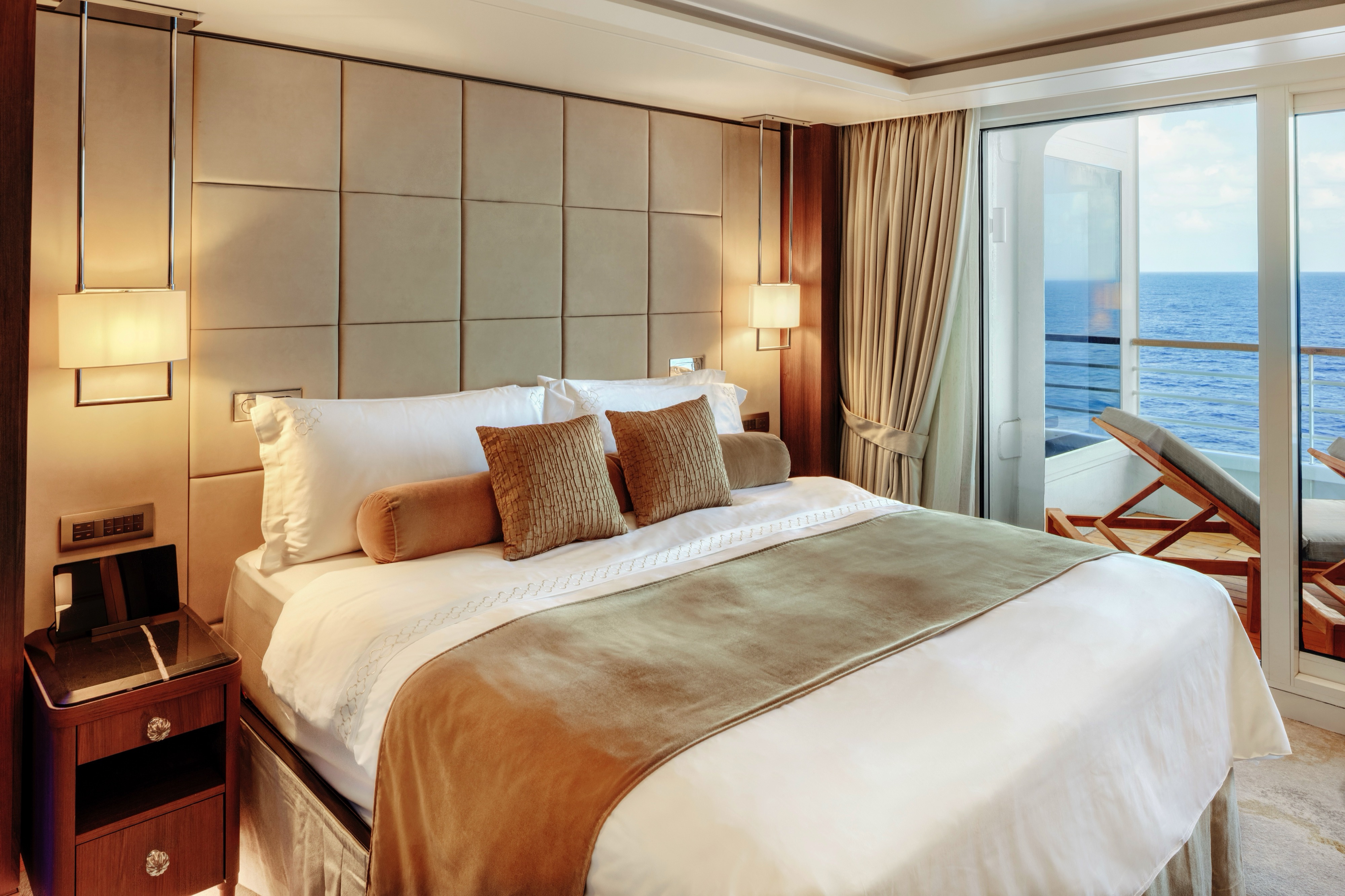
This luxurious suite features a walk-in wardrobe, separate living room and dining area, Jacuzzi bathtub, separate shower, bidet, and guest bathroom. Guests staying in this stylish home away from home enjoy unlimited dining at specialty restaurants, unlimited laundry services, afternoon canapés, flowers, binoculars, and a coffee maker.
SUITE SIZE
- UP TO 645 SQ FT
VERANDA SIZE
- UP TO 161 SQ FT
Details
- Large private veranda
- Spacious living room
- Dining area
- Two TV’s
- Separate bedroom area
- Vanity in bedroom
- Queen-size bed or twin beds with sumptuous bedding, and third berth
- Full jacuzzi bathtub with separate shower and bidet
- Walk-in closet
Services
- 24 hour in-suite dining
- Unlimited room service from Osteria D’Ovidio and Umi Uma
- Complimentary dining at Osteria d’Ovidio, Beefbar and Umi Uma® (reservations required, subject to availability)
- Turndown service with handmade truffles
- Shoeshine service
- Assistance with packing and unpacking
- Free unlimited laundry and dry cleaning, 2nd day service
- In-suite cocktail parties
- Private transfer to and from ship up to 50 miles
Amenities
- Welcome champagne
- Complimentary wine and spirits from set menu
- Complimentary soft drinks
- Flowers
- Fresh fruits, daily change, on request only
- Pillow menu (selection from a variety of pillow types)
- Afternoon canapés
- Coffee maker
- Binoculars
- Complimentary unlimited standard WiFi
- In-suite safe
- Interactive tablet for news, updates, and reservations
- Hair dryer
- Hair iron (available upon request)
Junior Penthouse Deluxe Suite
This luxurious suite features a walk-in wardrobe, separate living room and dining area, Jacuzzi bathtub, separate shower, bidet, and guest bathroom. Guests staying in this stylish home away from home enjoy complimentary dining at specialty restaurants, unlimited laundry services, afternoon canapés, flowers, binoculars, and a coffee maker.
SUITE SIZE
- UP TO 645 SQ FT
VERANDA SIZE
- UP TO 161 SQ FT
Details
-
Large private veranda
- Spacious living room
- Dining area
- Two TV’s
- Separate bedroom area
- Vanity in bedroom
- Queen-size bed or twin beds with sumptuous bedding, and third berth
- Full jacuzzi bathtub with separate shower and bidet
- Walk-in closet
Services
- 24 hour in-suite dining
- Unlimited room service from Osteria D’Ovidio and Umi Uma
- Complimentary dining at Osteria d’Ovidio, Beefbar and Umi Uma® (reservations required, subject to availability)
- Turndown service with handmade truffles
- Shoeshine service
- Assistance with packing and unpacking
- Free unlimited laundry and dry cleaning, 2nd day service
- In-suite cocktail parties
- Private transfer to and from ship up to 50 miles
Amenities
- Welcome champagne
- Complimentary wine and spirits from set menu
- Complimentary soft drinks
- Flowers
- Fresh fruits, daily change, on request only
- Pillow menu (selection from a variety of pillow types)
- Afternoon canapés
- Coffee maker
- Binoculars
- Complimentary unlimited standard WiFi
- In-suite safe
- Interactive tablet for news, updates, and reservations
- Hair dryer
- Hair iron (available upon request)
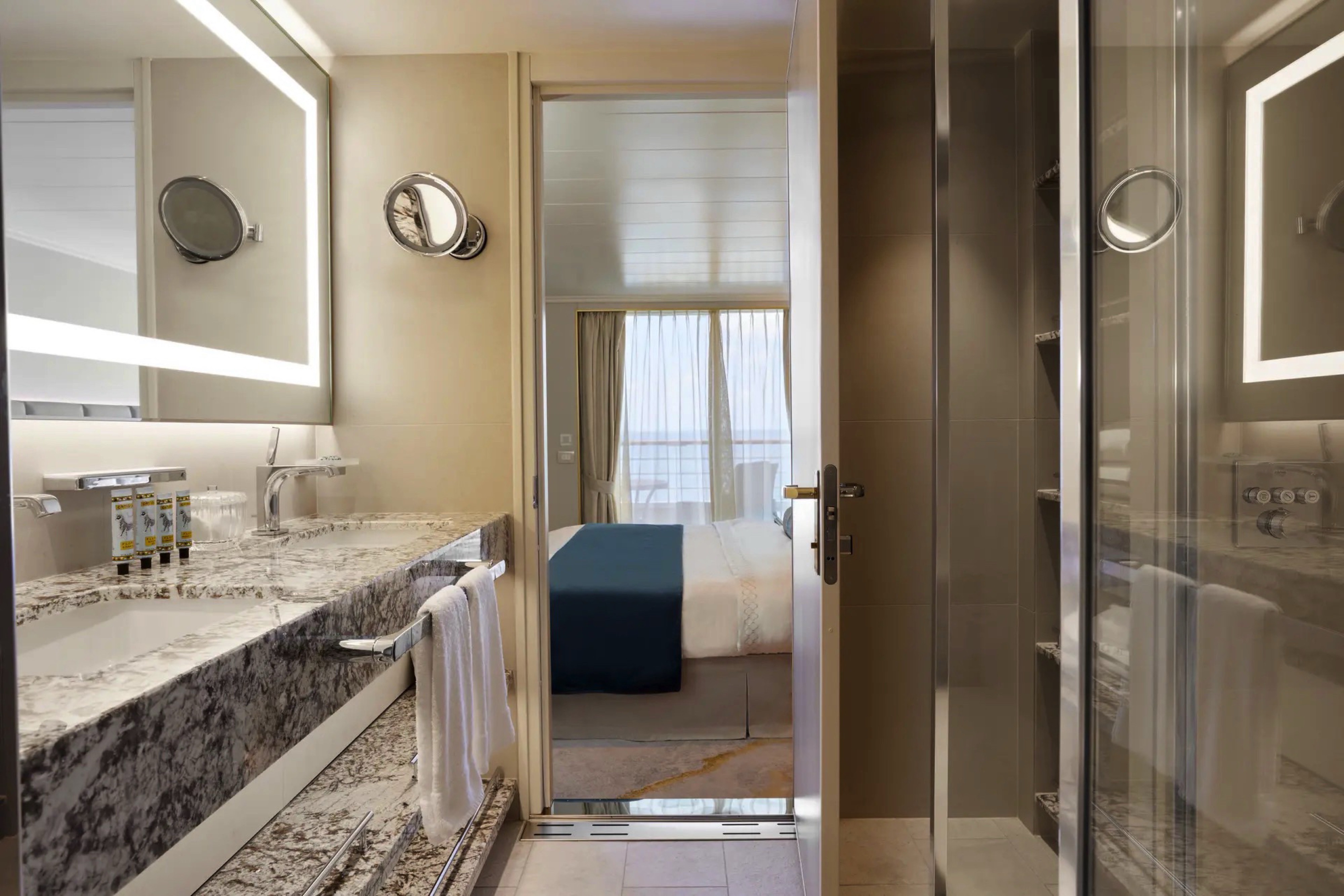
Sapphire Premium Suite
Available with either a walk-in shower or with a separate shower and bath, this elegant suite features a walk-in wardrobe, separate living room with sofa and dining area, and a private veranda. Enjoy special touches such as afternoon canapés, binoculars, a coffee maker, and complimentary laundry, dry cleaning, and pressing services.
SUITE SIZE
- UP TO 430 SQ FT
VERANDA SIZE
- UP TO 107 SQ FT
Details
-
Private veranda
- Spacious living room and dining area
- Queen-size bed or twin beds with sumptuous bedding, and third berth
- Walk-in closet
- Two TV’s
- Washer and Dryer Combo available in select suites
- Either with a walk-in shower or with a separate shower and bath
Services
- 24 hour in-suite dining
- Turndown service with handmade truffles
- Shoeshine service
- Assistance with packing and unpacking
- Dry cleaning for five pieces plus one bag of free laundry every 10 cruise days, 2nd day service
- Free pressing (5pcs/day), 2nd day service
Amenities
- Welcome champagne
- Complimentary wine and spirits from set menu
- Complimentary soft drinks
- Fresh fruits, daily change, on request only
- Pillow menu (selection from a variety of pillow types)
- Afternoon canapés
- Coffee maker
- Binoculars
- Complimentary unlimited standard WiFi
- In-suite safe
- Interactive tablet for news, updates, and reservations
- Hair dryer
- Hair iron (available upon request)
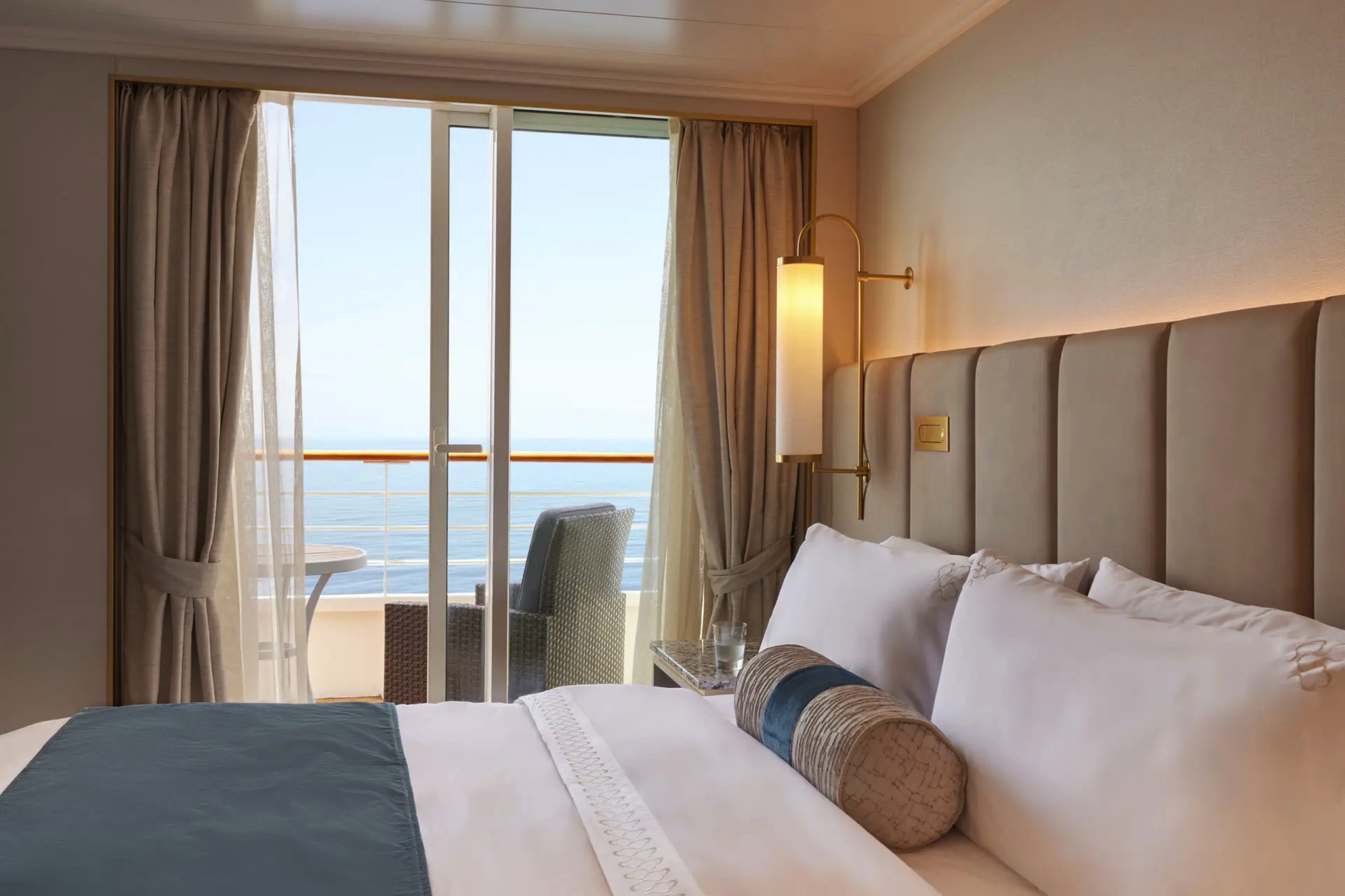
Sapphire Deluxe Suite
Available with either a walk-in shower or with a separate shower and bath, this elegant suite features a walk-in wardrobe, separate living room with sofa and dining area, and a private veranda. Enjoy special touches such as afternoon canapés, binoculars, a coffee maker, and complimentary laundry, dry cleaning, and pressing services.
SUITE SIZE
- UP TO 430 SQ FT
VERANDA SIZE
- UP TO 107 SQ FT
Details
-
Private veranda
- Spacious living room and dining area
- Queen-size bed or twin beds with sumptuous bedding, and third berth
- Walk-in closet
- Two TV’s
- Washer and Dryer Combo available in select suites
- Either with a walk-in shower or with a separate shower and bath
Services
- 24 hour in-suite dining
- Turndown service with handmade truffles
- Shoeshine service
- Assistance with packing and unpacking
- Dry cleaning for five pieces plus one bag of free laundry every 10 cruise days, 2nd day service
- Free pressing (5pcs/day), 2nd day service
Amenities
- Welcome champagne
- Complimentary wine and spirits from set menu
- Complimentary soft drinks
- Fresh fruits, daily change, on request only
- Pillow menu (selection from a variety of pillow types)
- Afternoon canapés
- Coffee maker
- Binoculars
- Complimentary unlimited standard WiFi
- In-suite safe
- Interactive tablet for news, updates, and reservations
- Hair dryer
- Hair iron (available upon request)
Sapphire Suite
Available with either a walk-in shower or with a separate shower and bath, this elegant suite features a walk-in wardrobe, separate living room with sofa and dining area, and a private veranda. Enjoy special touches such as afternoon canapés, binoculars, a coffee maker, and complimentary laundry, dry cleaning, and pressing services.
SUITE SIZE
- UP TO 430 SQ FT
VERANDA SIZE
- UP TO 107 SQ FT
Details
-
Private veranda
- Spacious living room and dining area
- Queen-size bed or twin beds with sumptuous bedding, and third berth
- Walk-in closet
- Two TV’s
- Washer and Dryer Combo available in select suites
- Either with a walk-in shower or with a separate shower and bath
Services
- 24 hour in-suite dining
- Turndown service with handmade truffles
- Shoeshine service
- Assistance with packing and unpacking
- Dry cleaning for five pieces plus one bag of free laundry every 10 cruise days, 2nd day service
- Free pressing (5pcs/day), 2nd day service
Amenities
- Welcome champagne
- Complimentary wine and spirits from set menu
- Complimentary soft drinks
- Fresh fruits, daily change, on request only
- Pillow menu (selection from a variety of pillow types)
- Afternoon canapés
- Coffee maker
- Binoculars
- Complimentary unlimited standard WiFi
- In-suite safe
- Interactive tablet for news, updates, and reservations
- Hair dryer
- Hair iron (available upon request)
Sapphire Ocean View Suite
This elegant suite offers a walk-in wardrobe, separate living room with sofa and dining area, walk-in shower, and two large picture windows. Enjoy special touches such as afternoon canapés, binoculars, a coffee maker, and complimentary laundry, dry cleaning, and pressing services.
SUITE SIZE
- UP TO 430 SQ FT
VERANDA SIZE
- UP TO 107 SQ FT
DETAILS
- Large Picture Window
- Spacious living room and dining area
- Queen-size bed or twin beds with sumptuous bedding, and third berth
- Walk-in closet
- Two TV’s
SERVICES
- 24 hour in-suite dining
- Turndown service with handmade truffles
- Shoeshine service
- Assistance with packing and unpacking
- Complimentary dry cleaning (5 pieces every 10 days, 2nd day service)
- Complimentary laundry (1 bag every 10 days, 2nd day service)
- Complimentary pressing (5 pieces per day, 2nd day service)
AMENITIES
- Welcome champagne
- Complimentary wine and spirits from set menu
- Complimentary soft drinks
- Fresh fruits, daily change, on request only
- Pillow menu (selection from a variety of pillow types)
- Afternoon canapés
- Coffee maker
- Binoculars
- Complimentary unlimited standard WiFi
- In-suite safe
- Interactive tablet for news, updates, and reservations
- Hair dryer
- Hair iron (available upon request)
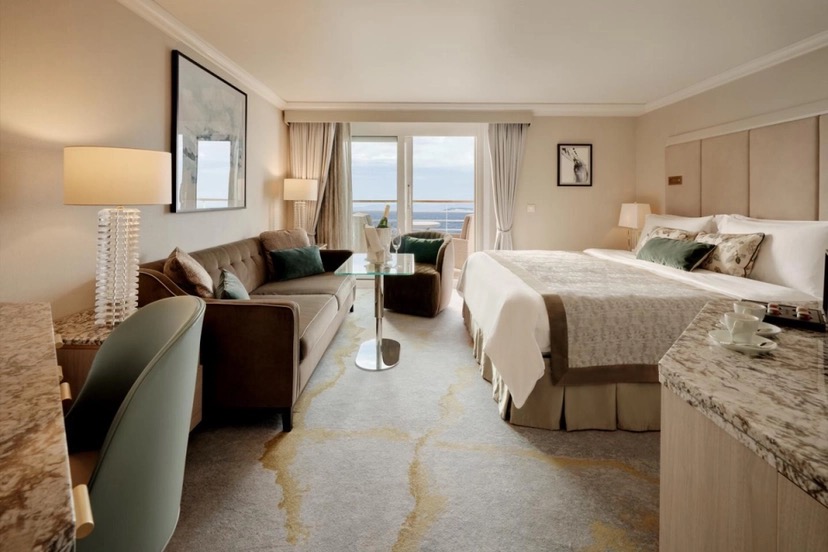
Aquamarine Deluxe Suite
Available with either a walk-in shower or with a separate shower and bath, this spacious suite features a private veranda, walk-in wardrobe, comfortable living area with sofa, and complimentary pressing service.
SUITE SIZE
- UP TO 323 SQ FT
VERANDA SIZE
- UP TO 86 SQ FT
Details
- Private veranda
- Sizeable living area
- Queen-size bed or twin beds with sumptuous bedding
- Vanity in dressing area
- TV
- Walk-in closet
- Either with a walk-in shower or with a separate shower and bath
Services
- 24 hour in-suite dining
- Turndown service
- Shoeshine service
- Assistance with packing and unpacking
Amenities
- Welcome champagne
- Complimentary wine and spirits from set menu
- Complimentary soft drinks
- Fresh fruits, daily change, on request only
- Afternoon canapés
- Coffee maker
- Binoculars
- Complimentary unlimited standard WiFi
- In-suite safe
- Interactive tablet for news, updates, and reservations
- Hair dryer
- Hair iron (available upon request)
- Free pressing (5pcs/day), 2nd day service
Aquamarine Suite
Available with either a walk-in shower or with a separate shower and bath, this spacious suite features a private veranda, walk-in wardrobe, comfortable living area with sofa, and complimentary pressing service.
SUITE SIZE
- UP TO 323 SQ FT
VERANDA SIZE
- UP TO 86 SQ FT
Details
-
Private veranda
- Sizeable living area
- Queen-size bed or twin beds with sumptuous bedding
- Vanity in dressing area
- TV
- Walk-in closet
- Either with a walk-in shower or with a separate shower and bath
Services
- 24 hour in-suite dining
- Turndown service
- Shoeshine service
- Assistance with packing and unpacking
Amenities
- Welcome champagne
- Complimentary wine and spirits from set menu
- Complimentary soft drinks
- Fresh fruits, daily change, on request only
- Afternoon canapés
- Coffee maker
- Binoculars
- Complimentary unlimited standard WiFi
- In-suite safe
- Interactive tablet for news, updates, and reservations
- Hair dryer
- Hair iron (available upon request)
- Free pressing (5pcs/day), 2nd day service
Premium Veranda
This elegant guest room offers a private veranda, comfortable living area with sofa, walk-in shower, and a built-in wardrobe.
SUITE SIZE
- UP TO 215 SQ FT
VERANDA SIZE
- UP TO 54 SQ FT
Details
- Private veranda
- Sizeable living area with sofa
- Queen-size bed or twin beds with sumptuous bedding
- TV
- Walk-in shower
Services
- 24 hour in-suite dining
- Turndown Service
- Shoeshine service
- Assistance with packing and unpacking
Amenities
- Welcome champagne
- Complimentary wine and spirits from set menu
- Complimentary soft drinks
- Fresh fruits, daily change, on request only
- Pillow menu (selection from a variety of pillow types)
- Complimentary unlimited standard WiFi
- In-suite safe
- Interactive tablet for news, updates, and reservations
- Hair dryer
- Hair iron (available upon request)
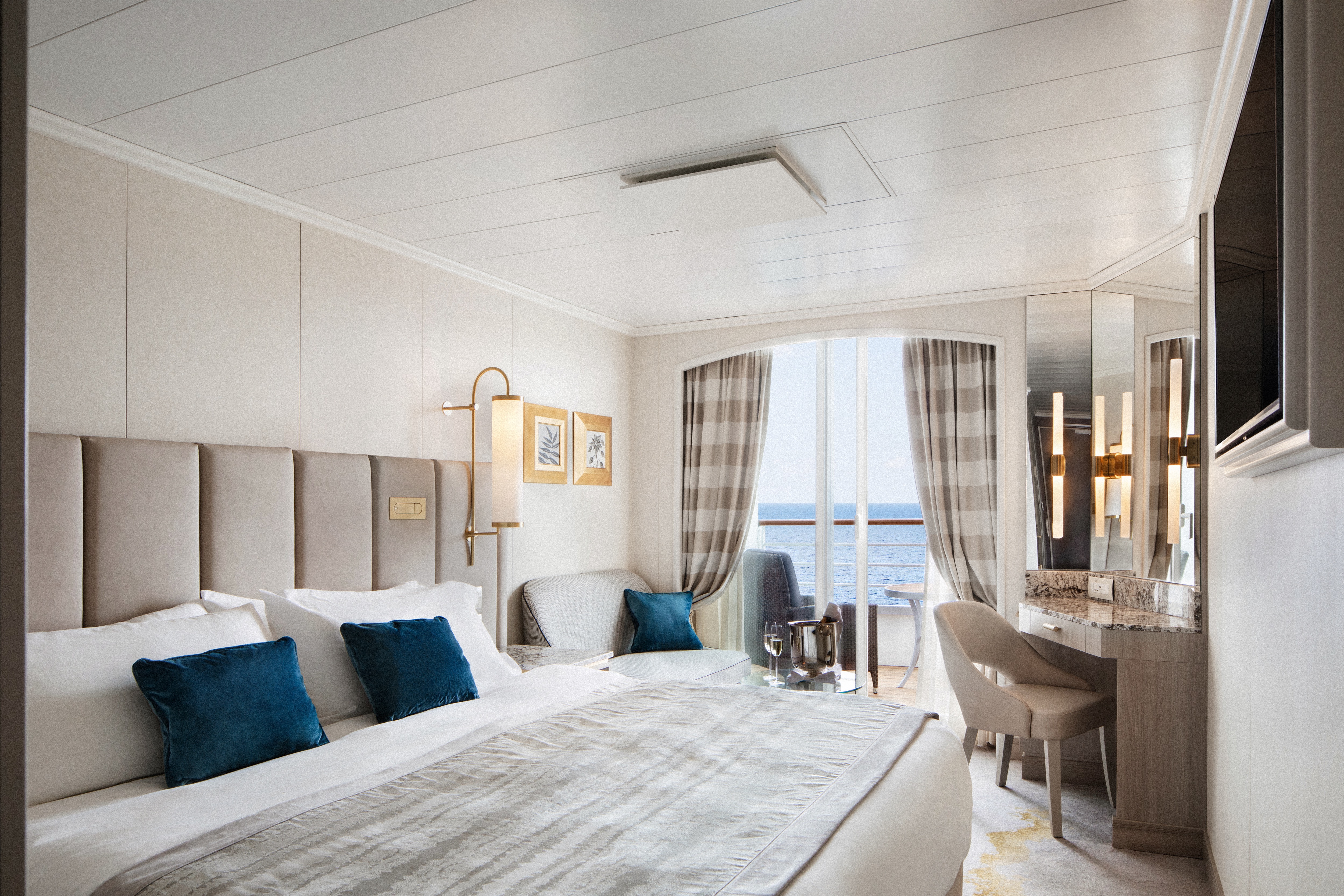
Deluxe Veranda
This elegant guest room offers a private veranda, comfortable living area with sofa, walk-in shower, and a built-in wardrobe.
SUITE SIZE
- UP TO 215 SQ FT
VERANDA SIZE
- UP TO 54 SQ FT
Details
-
Private veranda
- Sizeable living area with sofa
- Queen-size bed or twin beds with sumptuous bedding
- TV
- Walk-in shower
Services
- 24 hour in-suite dining
- Turndown Service
- Shoeshine service
- Assistance with packing and unpacking
Amenities
- Welcome champagne
- Complimentary wine and spirits from set menu
- Complimentary soft drinks
- Fresh fruits, daily change, on request only
- Pillow menu (selection from a variety of pillow types)
- Complimentary unlimited standard WiFi
- In-suite safe
- Interactive tablet for news, updates, and reservations
- Hair dryer
- Hair iron (available upon request)
Premium Ocean View
This stylish guest room features a comfortable living area with sofa, large picture window, walk-in shower, and a sleek built-in wardrobe.
Details
- Large picture window
- Sizeable living area with sofa
- Queen-size bed or twin beds with sumptuous bedding
- Walk-in shower
- TV
Services
- 24 hour in-suite dining
- Turndown service
- Shoeshine service
- Assistance with packing and unpacking
Amenities
- Welcome champagne
- Complimentary wine and spirits from set menu
- Complimentary soft drinks
- Fresh fruits, daily change, on request only
- Pillow menu (selection from a variety of pillow types)
- Complimentary unlimited standard WiFi
- In-suite safe
- Interactive tablet for news, updates, and reservations
- Hair dryer
- Hair iron (available upon request)
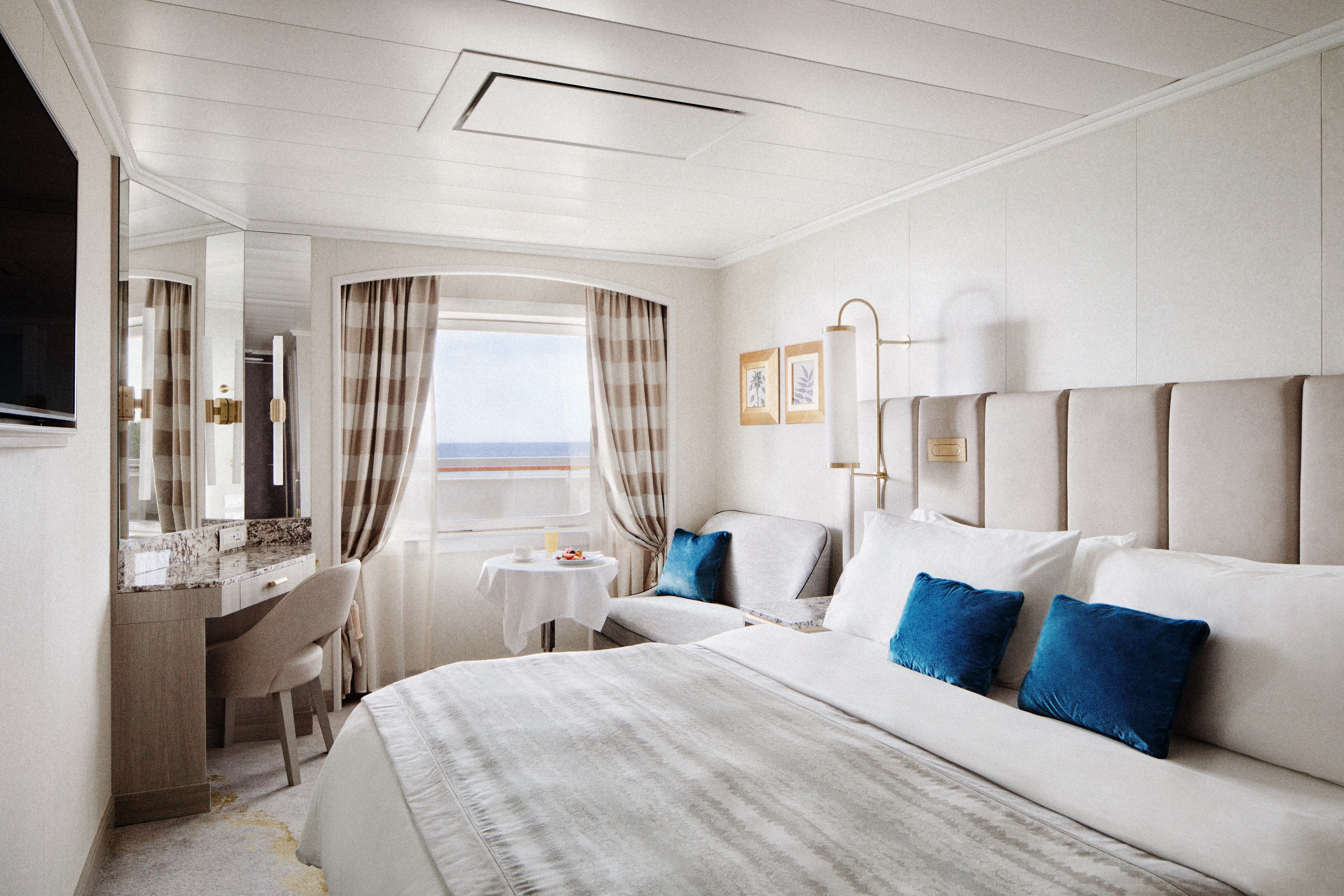
Deluxe Ocean View
This stylish guest room features a comfortable living area with sofa, large picture window, walk-in shower, and a sleek built-in wardrobe.
SUITE SIZE
- UP TO 215 SQ FT
Details
- Large picture window
- Sizeable living area with sofa
- Queen-size bed or twin beds with sumptuous bedding
- TV
- Walk-in shower
Services
- 24 hour in-suite dining
- Turndown service
- Shoeshine service
- Assistance with packing and unpacking
Amenities
- Welcome champagne
- Complimentary wine and spirits from set menu
- Complimentary soft drinks
- Fresh fruits, daily change, on request only
- Pillow menu (selection from a variety of pillow types)
- Complimentary unlimited standard WiFi
- In-suite safe
- Interactive tablet for news, updates, and reservations
- Hair dryer
- Hair iron (available upon request)
Single Ocean View
Exclusively for solo occupancy, this stylish guest room offers a comfortable living area with sofa, large picture window, walk-in shower, and a sleek built-in wardrobe.
Details
- Large picture window
- Sizeable living area with sofa
- Queen-size bed or twin beds with sumptuous bedding
- Walk-in shower
- TV
Services
- 24 hour in-suite dining
- Turndown service
- Shoeshine service
- Assistance with packing and unpacking
Amenities
- Welcome champagne
- Complimentary wine and spirits from set menu
- Complimentary soft drinks
- Fresh fruits, daily change, on request only
- Pillow menu (selection from a variety of pillow types)
- Complimentary unlimited standard WiFi
- In-suite safe
- Interactive tablet for news, updates, and reservations
- Hair dryer
- Hair iron (available upon request)
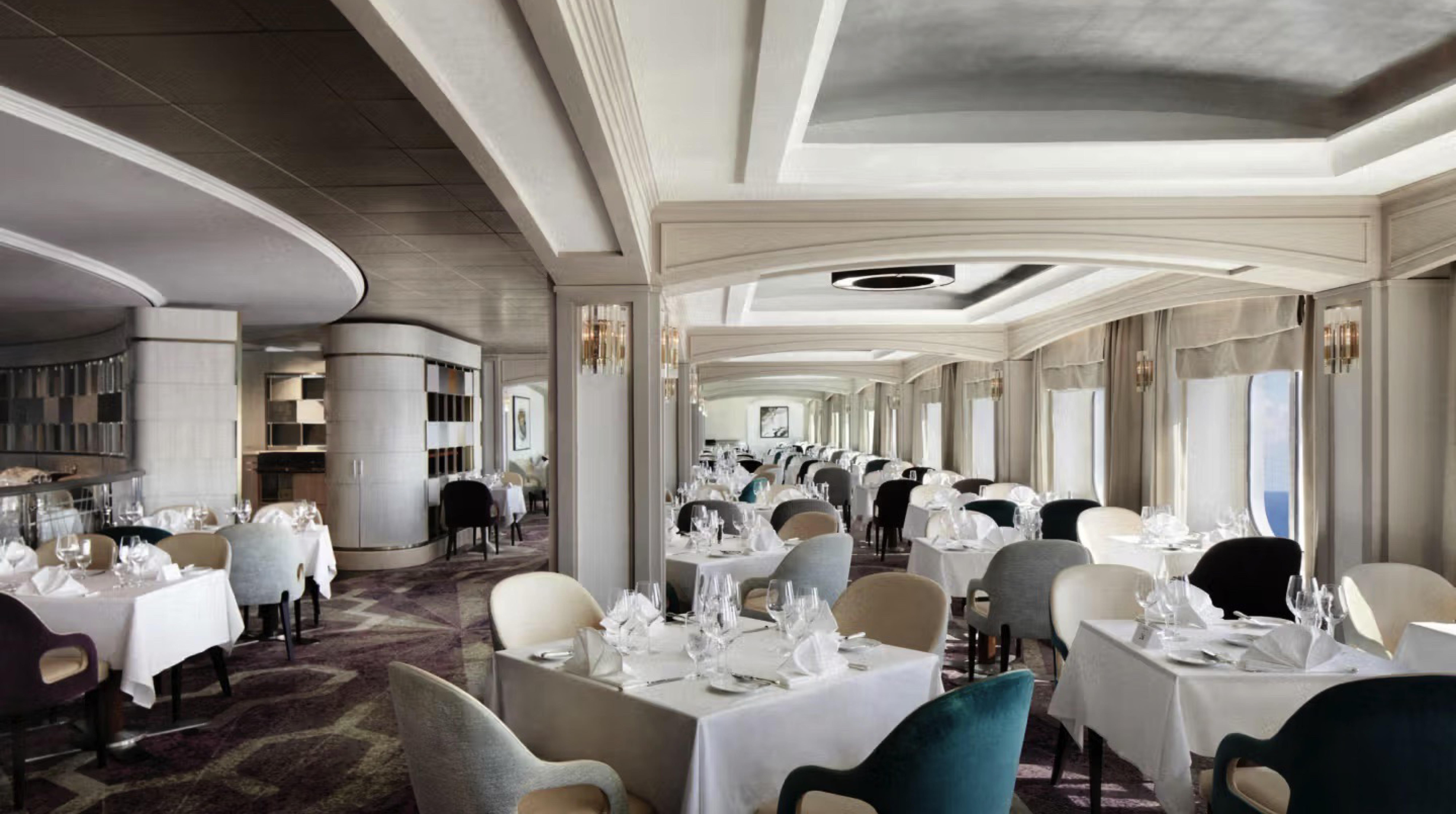
Waterside Restaurant
Take your tastebuds on a tour of our modern, international cuisine options. Enjoy creative, seasonal dishes in an elegant setting with beautiful ocean views.
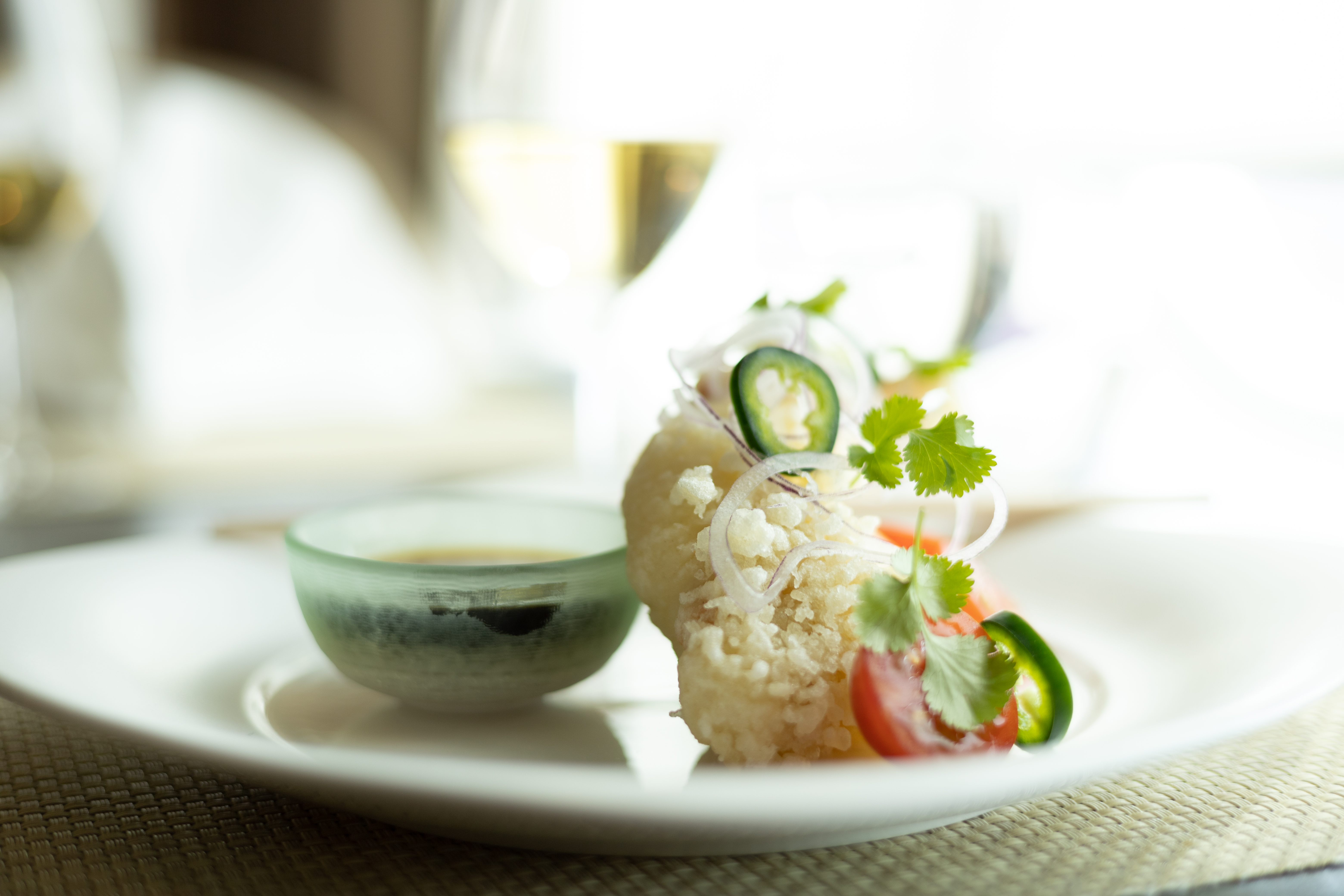
Umi Uma
Few restaurants can boast a creative vision of contemporary cuisine as Nobu. Prepare to lose yourself in the beautiful décor and signature Japanese-Peruvian dishes. Reservations required and limited per sailing.
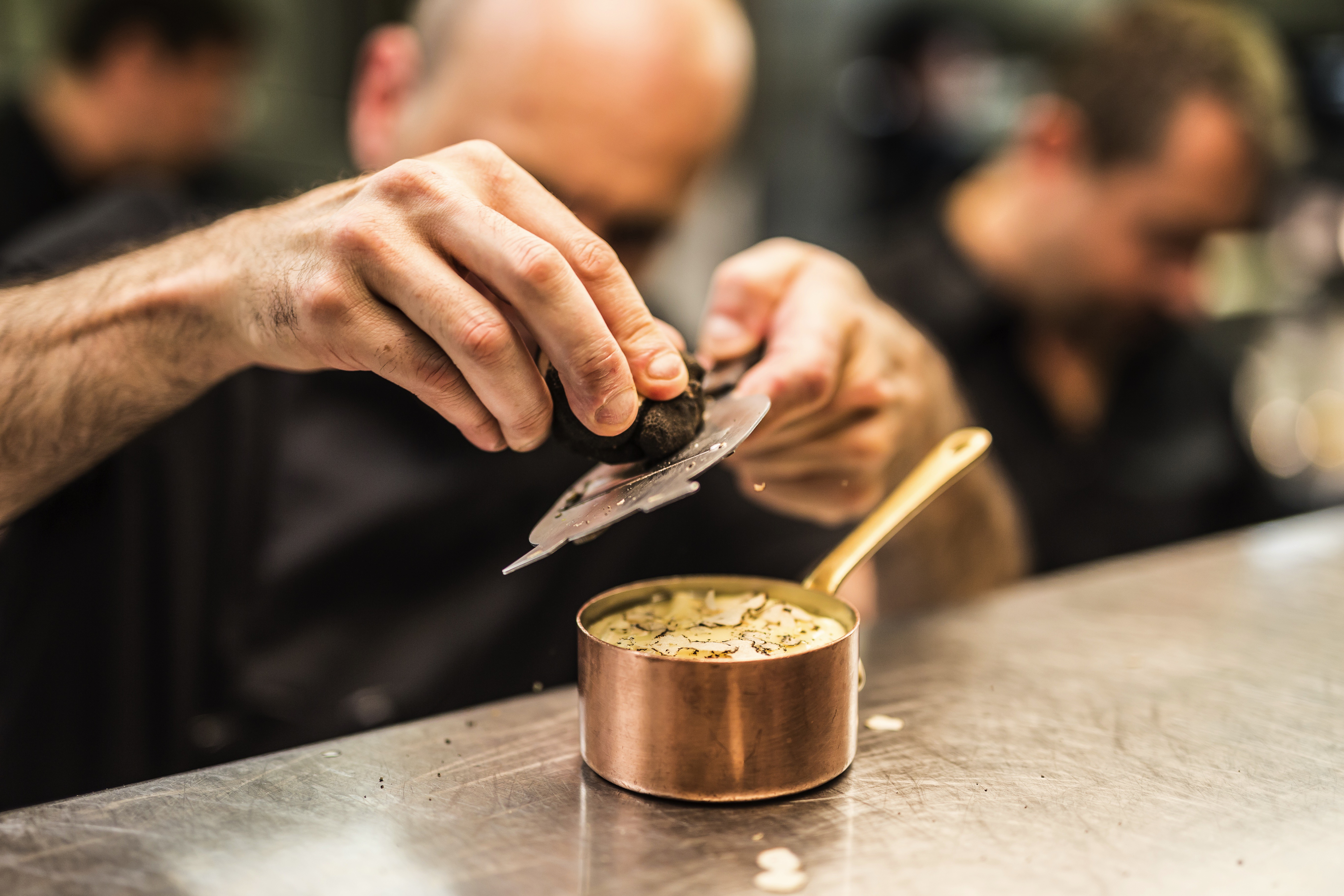
Beefbar
The most exciting flavours from the global street-food scene are fashioned from the freshest ingredients by creative chefs and served for sharing in stylish surroundings.
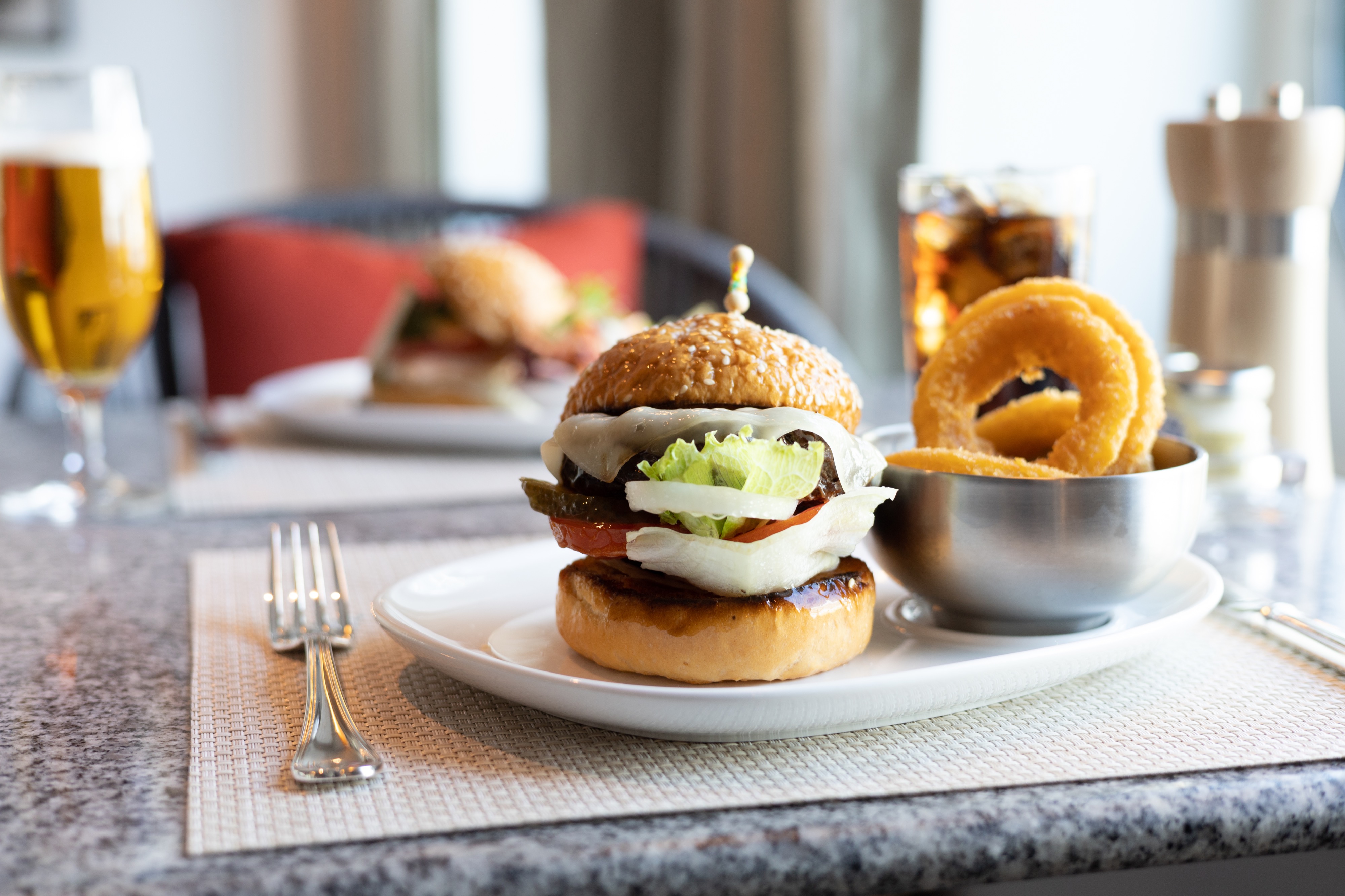
Trident Grill
Enjoy a burger with a view. Our pool restaurant and grill offer a comfortable terrace highlighted by an elegant design, making it the perfect spot for outdoor dining.
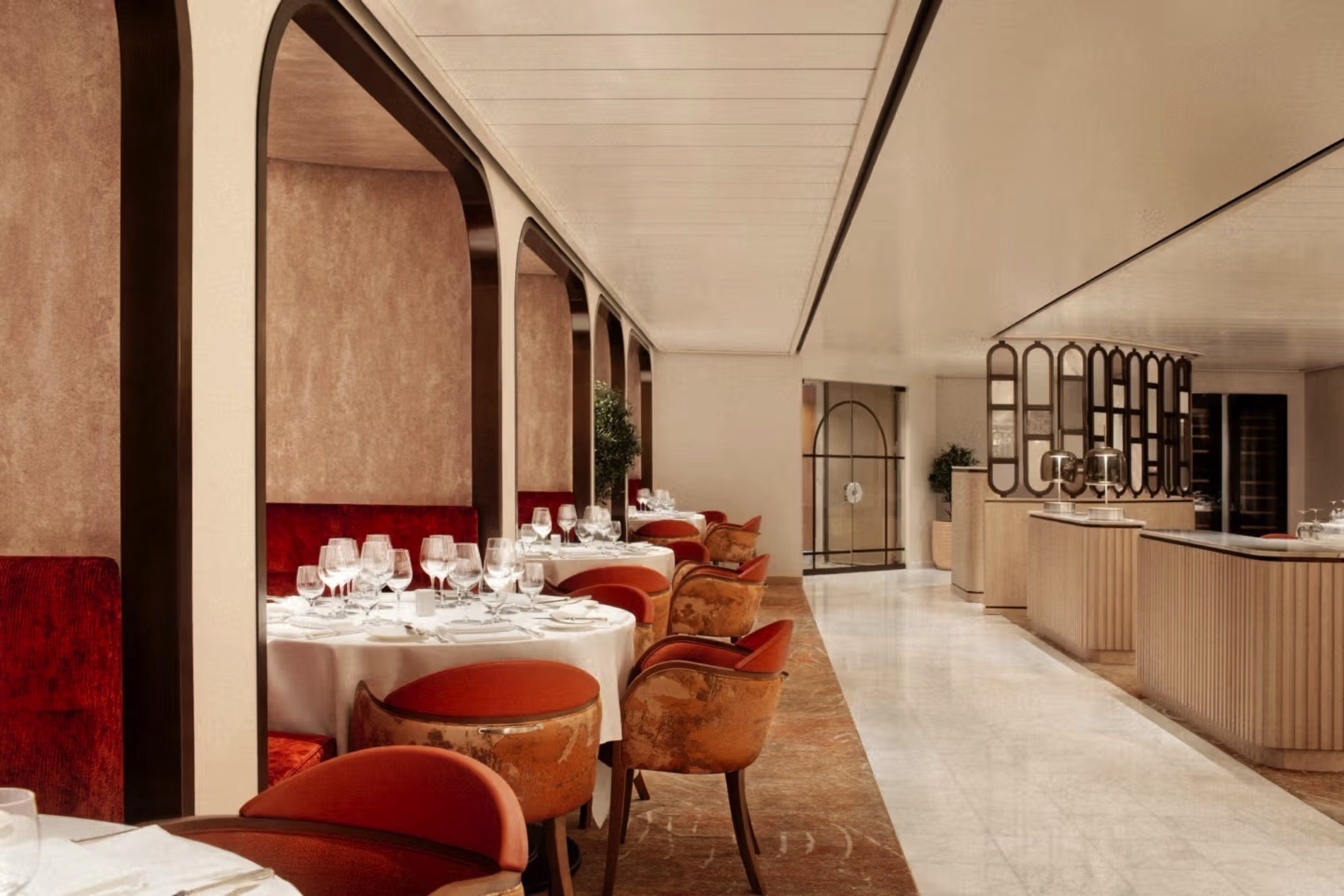
Osteria D'Ovidio
Named for our owner, Manfredi Lefebvre d’Ovidio, this restaurant specializes in show-stopping Italian cuisine, in collaboration with the Michelin-rated Alajmo brothers. Reservations are required and are limited per sailing.
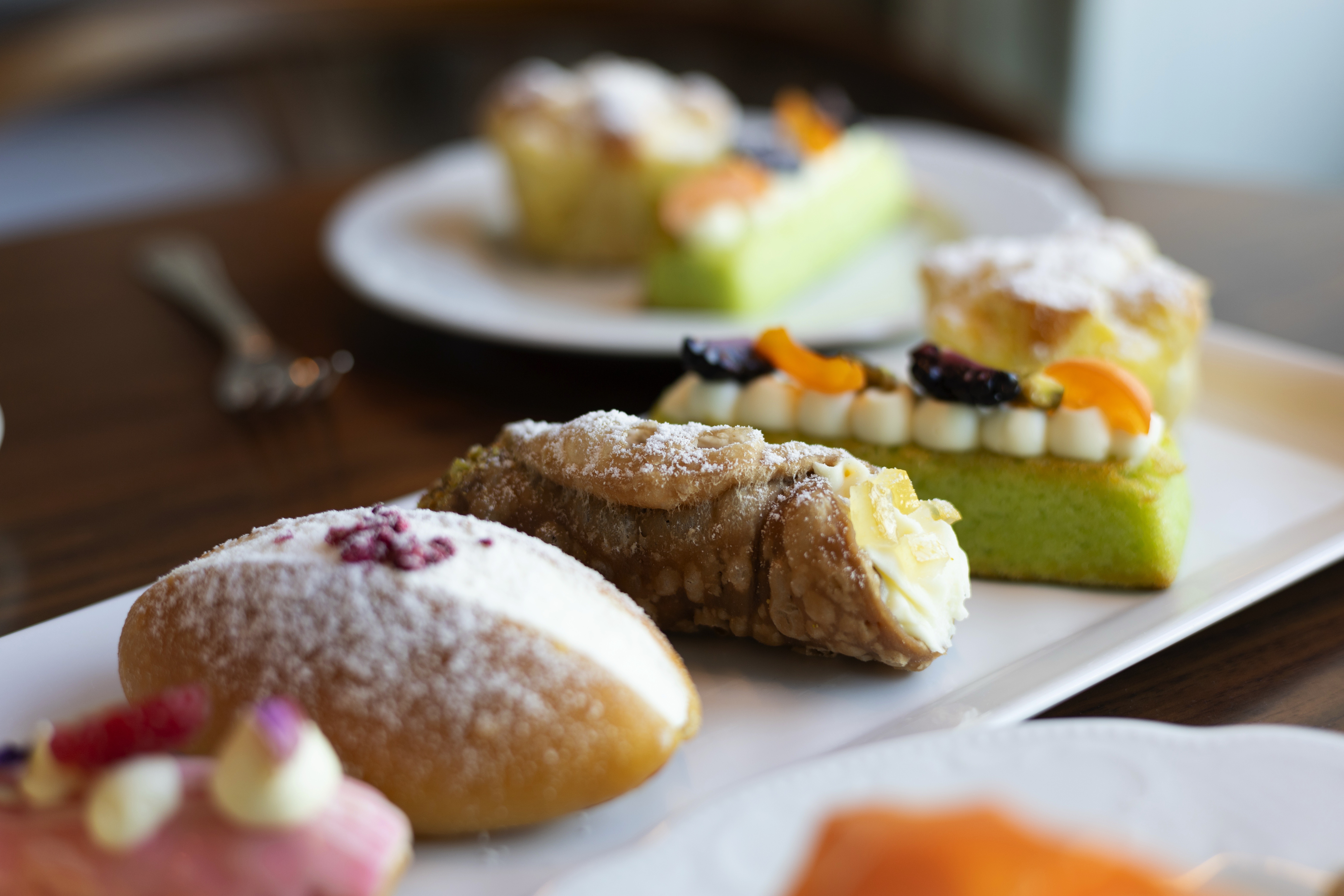
The Bistro
A nod to the mythic bars and bistros of Paris. Celebrate the classics in this spacious and airy café that serves light bites from dawn to dusk.
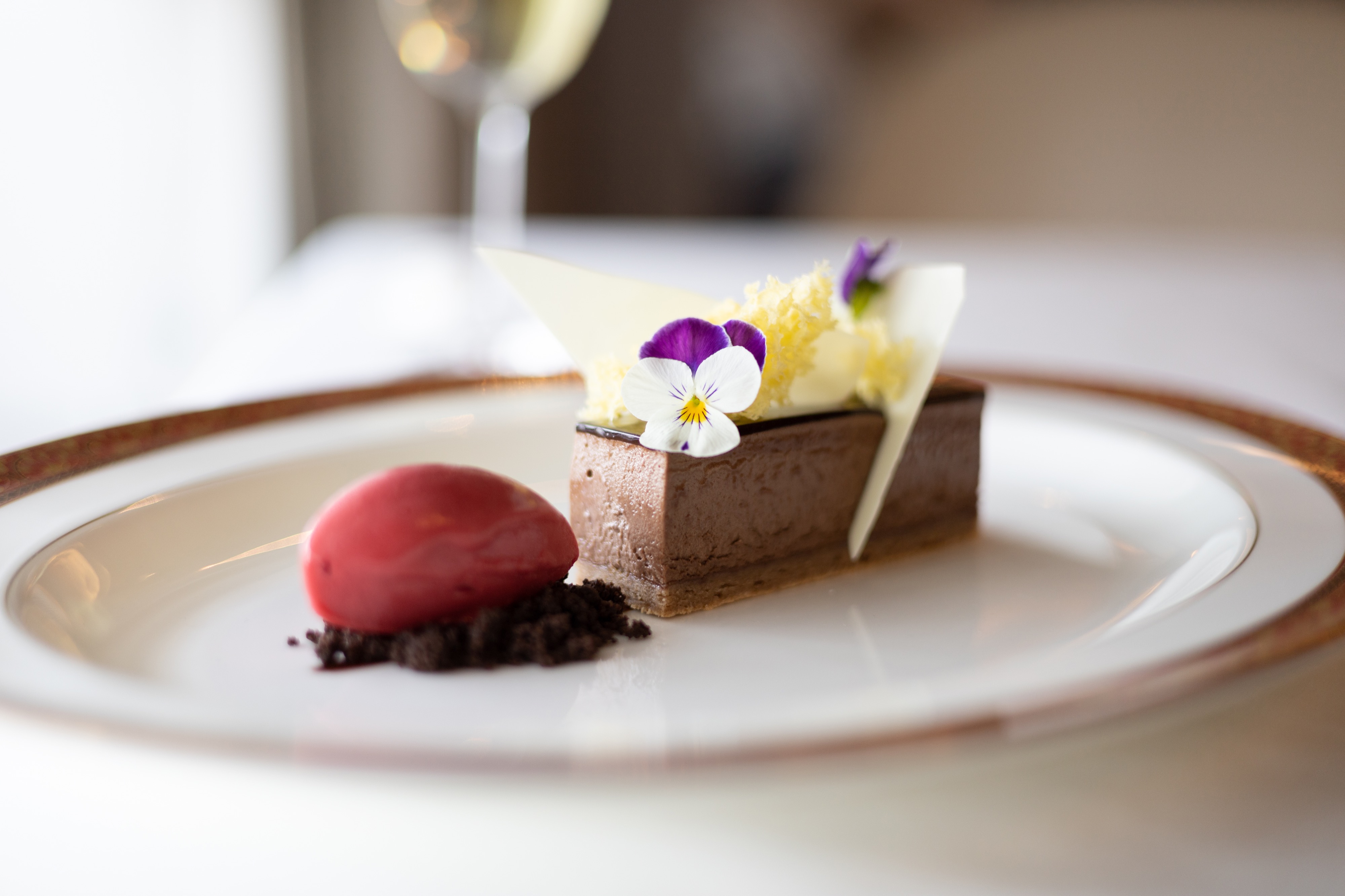
The Vintage Room
A unique gourmet food and wine pairing restaurant that offers an educational dining experience while enjoying some of the best vintages at sea.
Scoops Gelato Bar
Enjoy the finest authentic Italian gelato with a sea view at our pool-deck gelato bar, Scoops. Choose from must-try innovative flavors or traditional favorites in partnership with prestigious Florence artisan, Badiani.
Marketplace
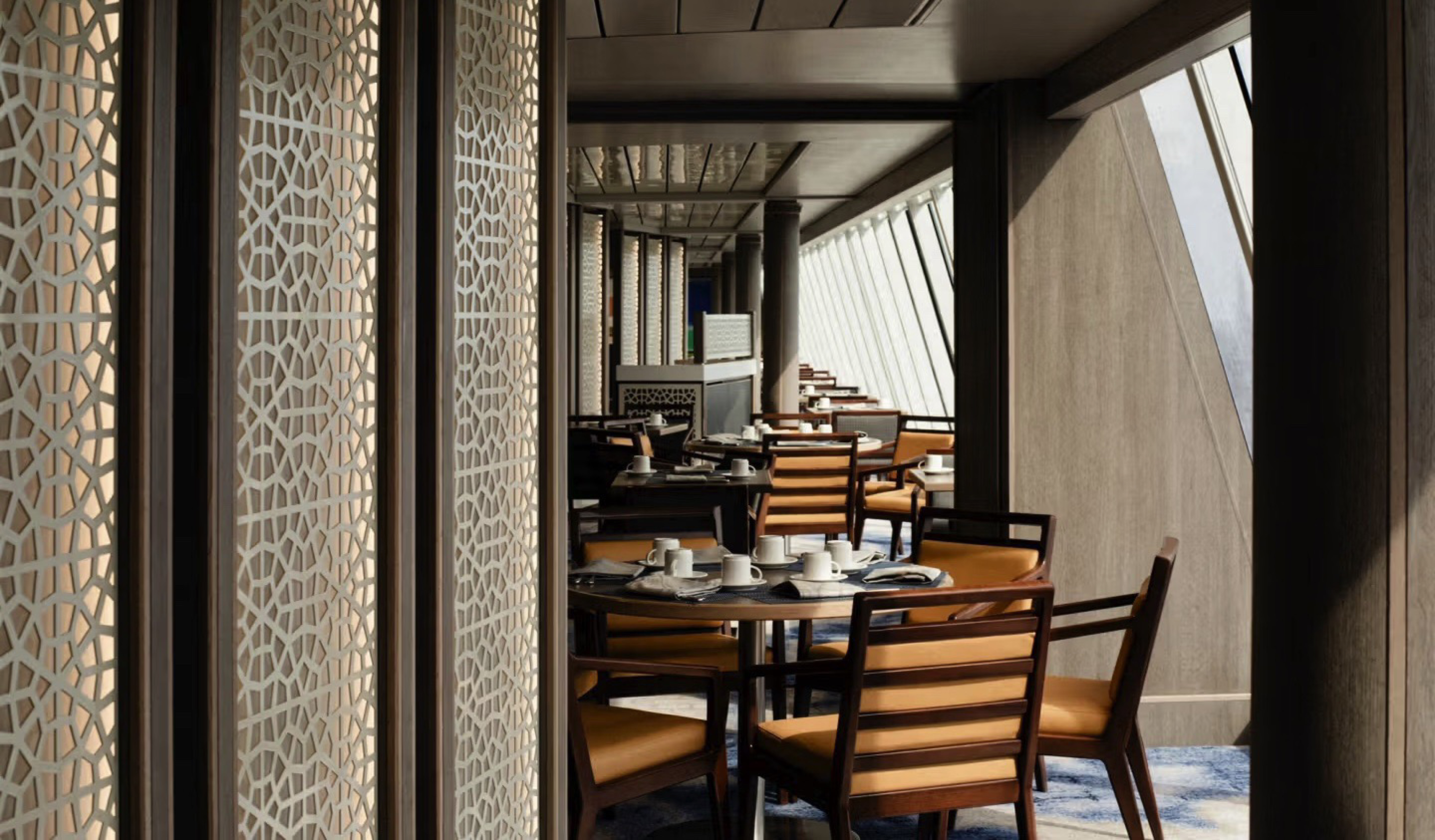
This sophisticated buffet-style restaurant features a dizzying array of hot and cold choices for those who like a little of everything.
24 Hours In-Suite Dining
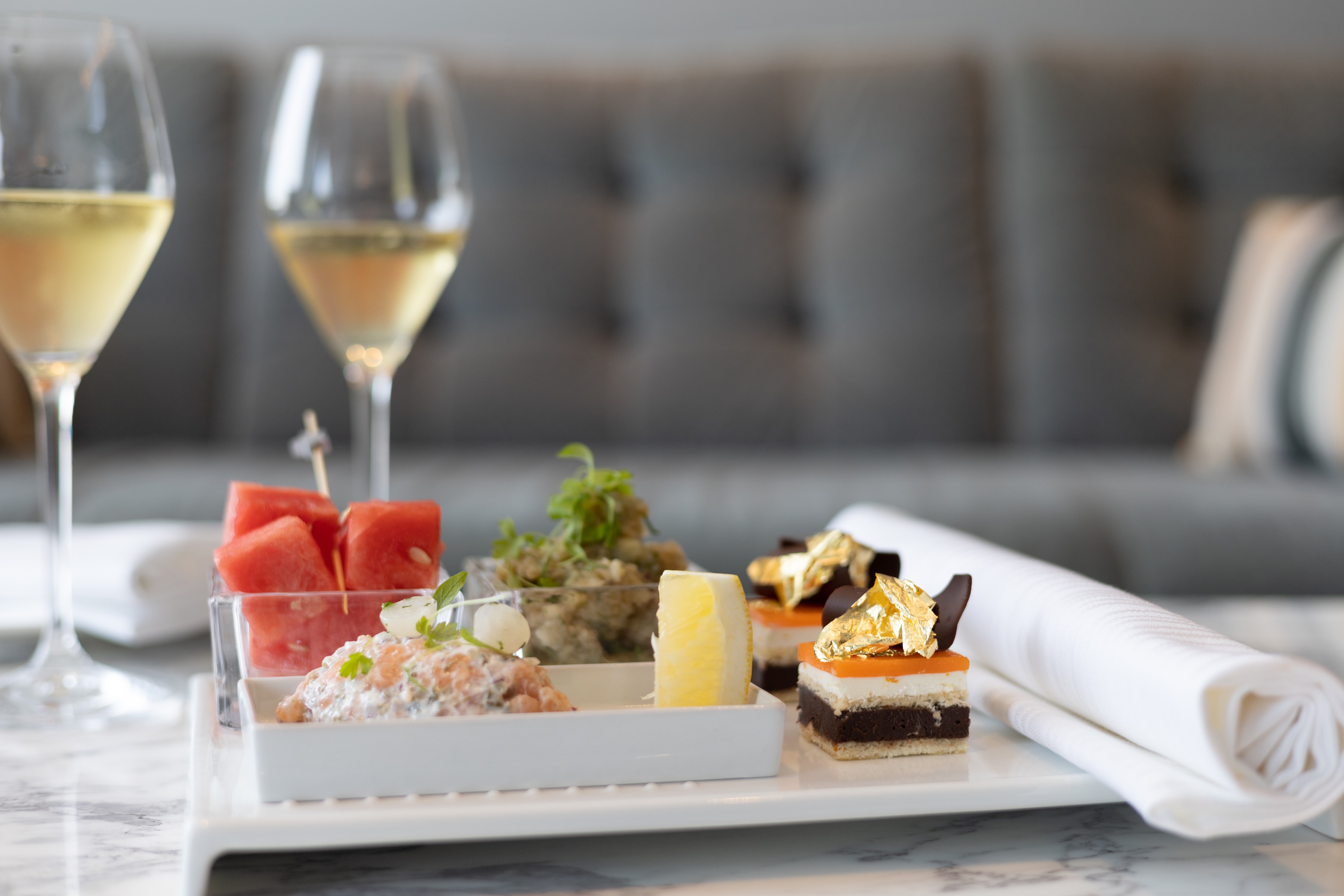
Enjoy a meal from the comfort of your suite while relaxing in Crystal comfort. Select from our inspired menu to delight you while you stay in, watch a movie or read a favorite book.
Tea Time
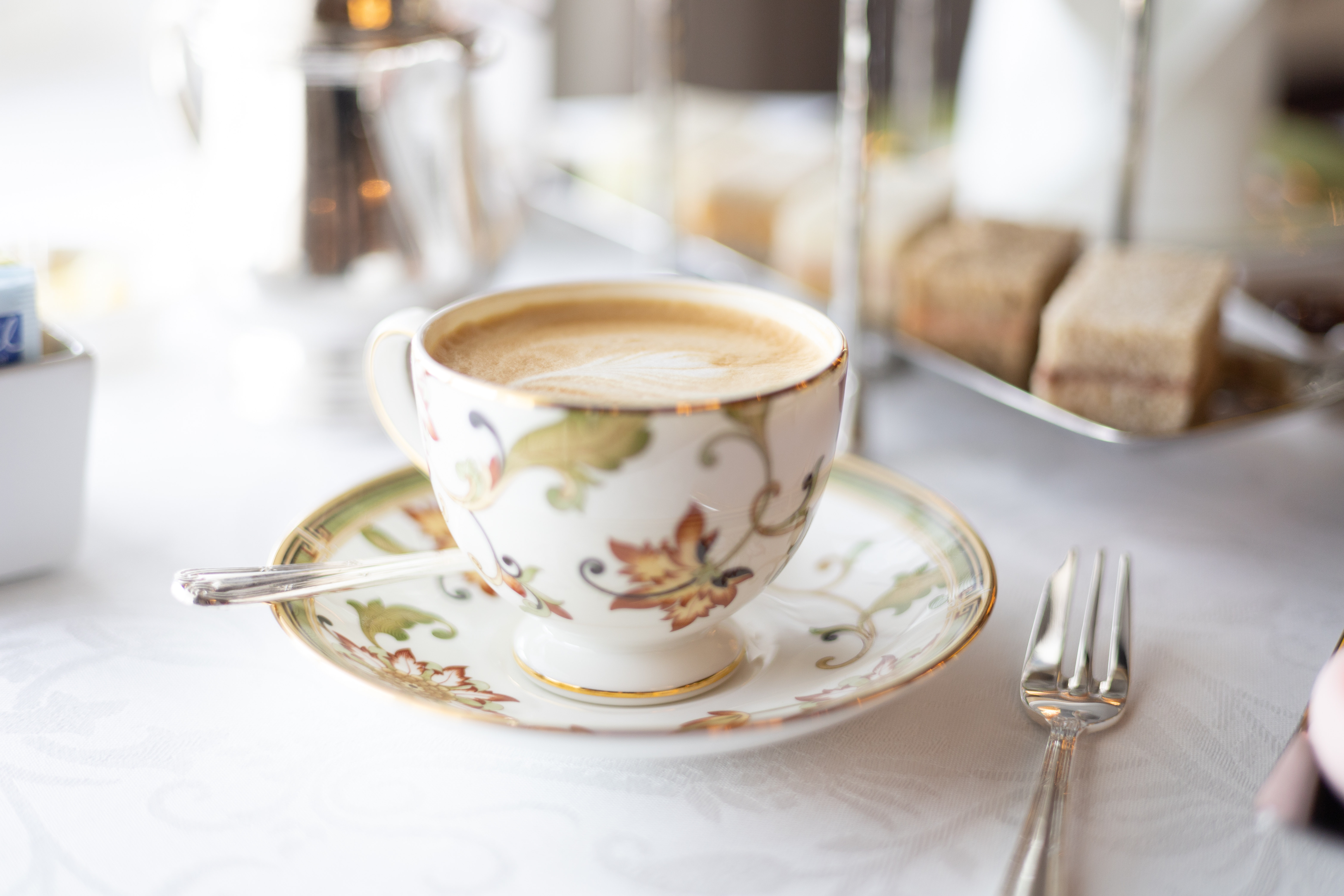
More information coming soon.
Tastes Kitchen & Bar
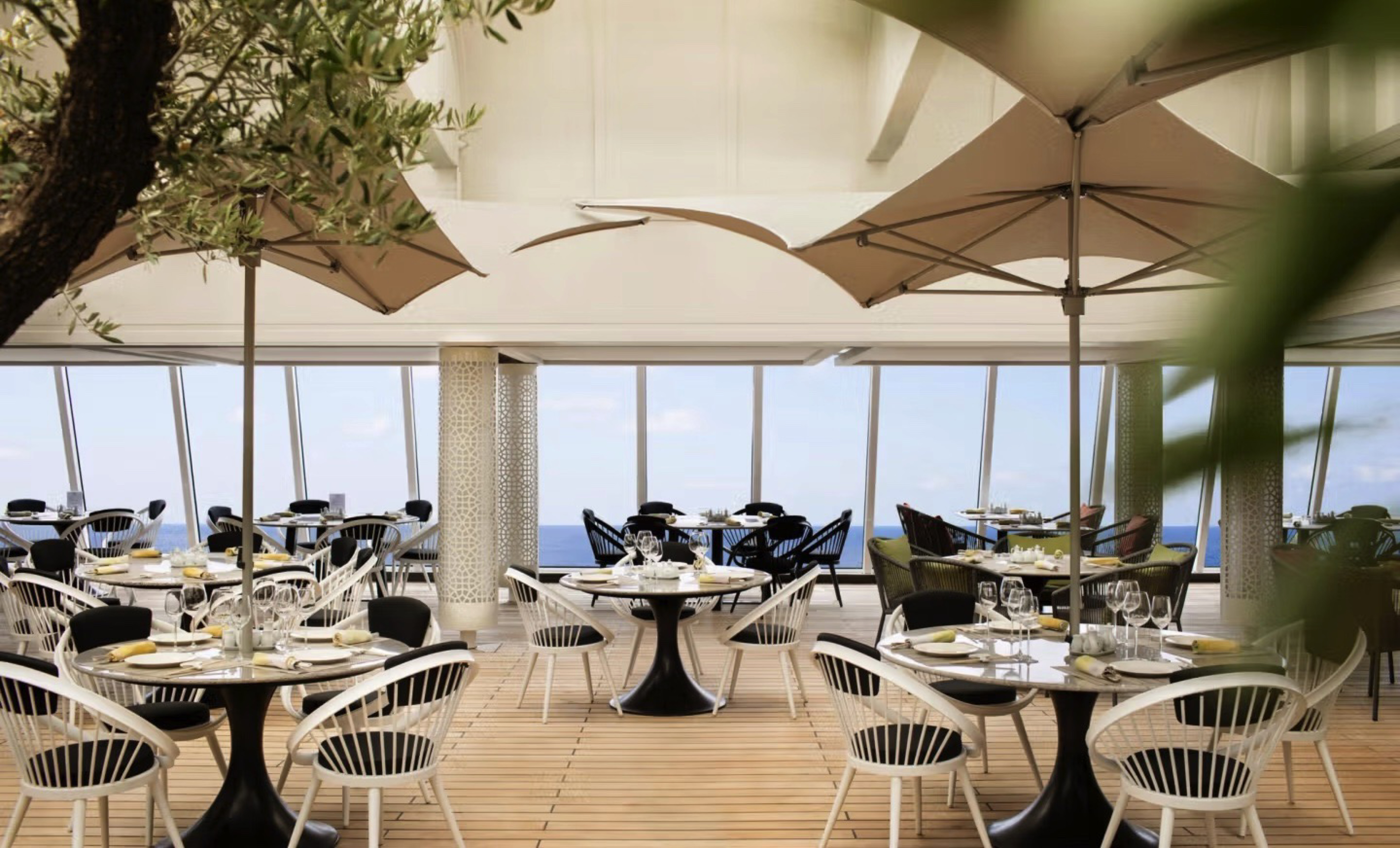
A new definition of traveling with taste. Sumptuous, regionally inspired tapas-style cuisine is the perfect combination of sophisticated style and casual dining.
Shore Excursion Desk
There’s something for everyone
Our vast and varied collection of Crystal Shore Excursions continue to delight our guests. From themed experiences – cooking classes, flamenco dancing, and diving trips, to name but a few – to guided tours of historical sites in the company of experts, there’s something to suit all ages, interests, and fitness levels.
Take to the skies with a flight over Alaskan glaciers, roll up your sleeves with a cooking class in the Caribbean, or soar in a hot-air balloon over France’s wine country in Bordeaux. Whether you’re looking for adventure, relaxation, or both, our Crystal Shore Excursions will always deliver.
From Ship to Shore – Exclusive Destination Experiences by Abercrombie & Kent
Our new onshore experiences are crafted by experts
Crystal guests can now add exclusive By Abercrombie & Kent experiences to their cruise itinerary. From bear-watching in Canada to tea ceremonies in Japan, the thrill of safari in Africa or sunrise over Uluru in Australia, each itinerary has been carefully created to take full advantage of A&K’s network of experts, unlocking new and unforgettable ways of experiencing each destination.
OVERLAND ADVENTURES BY A&K
Hop off midway through your cruise to embark on an exhilarating multi-night experience on land, rejoining the ship at the next port. Travel through Australia’s epic landscapes, traverse the Great Wall of China, and go tiger-spotting in India – these soul-stirring journeys will stay with you forever.
PRE- AND POST-CRUISE EXTENSIONS BY A&K
Packed with expert insights and unique experiences, these short breaks can be enjoyed before or after your cruise. Experience a traditional tea ceremony in Tokyo, or marvel at sunrise over the Masai Mara – short is most certainly sweet.
The A&K x Crystal Expedition Cruise
For the first time, A&K’s renowned Expedition Team brings their expertise aboard Crystal ships, pairing acclaimed A&K destination and insider experiences with Crystal’s award-winning service, amenities and dining. This groundbreaking voyage is limited to just 50 guests, ensuring intimate group experiences, personalized attention, and exclusive access.
An A&K Cruise
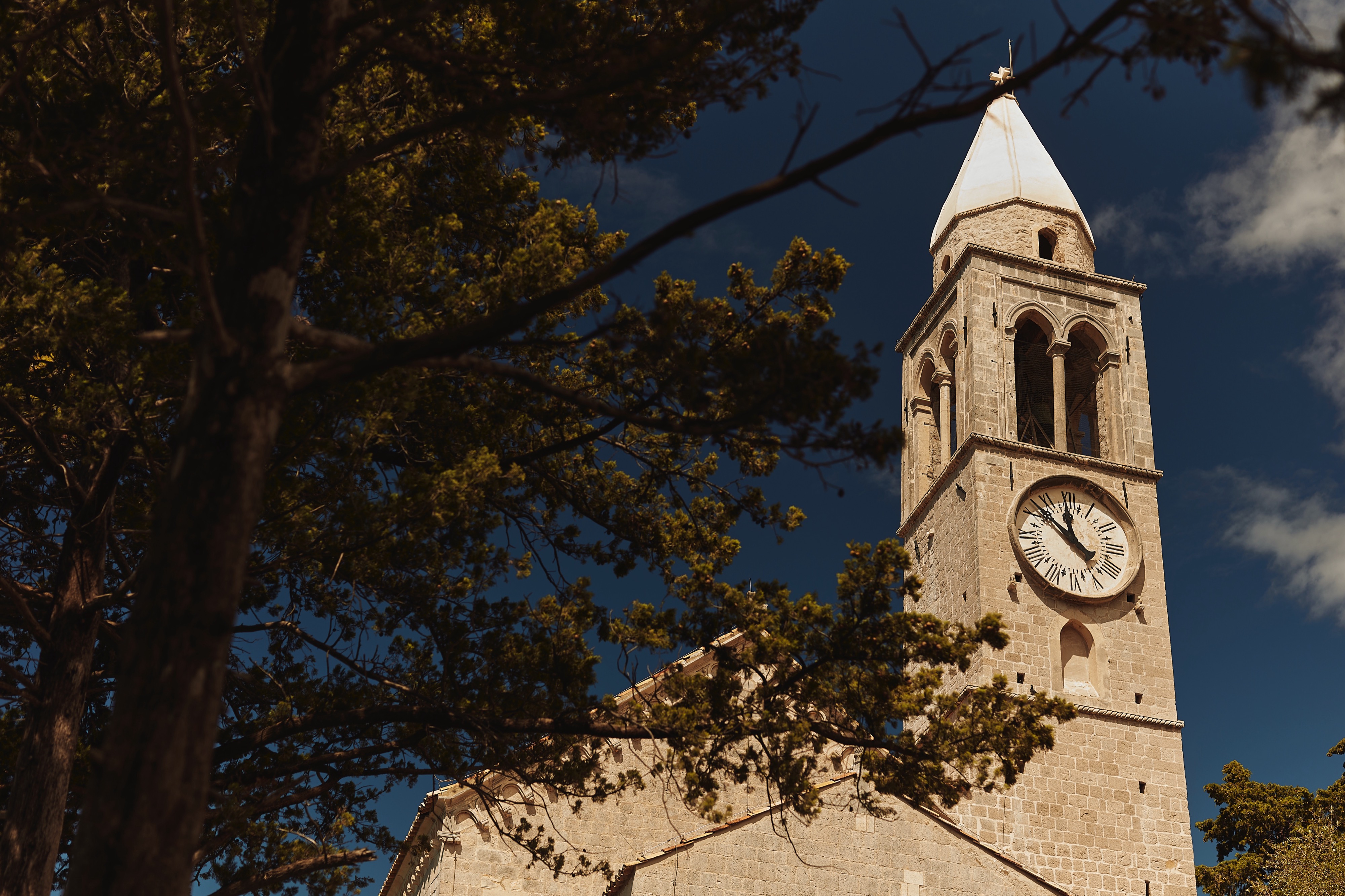
This voyage marks the start of something truly special. For the very first time, we’re sailing an A&K Expedition Cruise aboard a Crystal ship, pairing our acclaimed Expedition Team, shore excursions and VIP experiences with the award-winning service, amenities and dining of Crystal Serenity — all on one groundbreaking, nine-night cruise. After kicking things off with two nights at the Anantara Palazzo Naiadi Rome Hotel, this inaugural voyage sails the iconic ports of Italy, Greece, Montenegro and Croatia, stopping to explore some of the world’s finest art, architecture, wines and cuisines along the way. With only 50 openings available, this is your chance to experience A&K Expedition Cruises and Crystal — together at last.
inclusions
- Engaging onboard lectures and workshops from our acclaimed Expedition Team
- Your choice of expertly guided A&K shore excursions
- Nine world-class dining options, including the only Nobu restaurant at sea
- Unlimited house drinks, including Champagne, onboard
- Airport Meet and Greet with Private Transfers
- 24/7 A&K On-Call Support
- English-speaking staff, including a doctor
- Complimentary Wi-Fi and use of an in-cabin tablet
- Ortigia bath amenities and Etro robes
- Laundry and shoeshine services
- Private balcony and butler service
- Crystal’s celebrated lineup of nightly onboard entertainment
Casino De Monte-Carlo
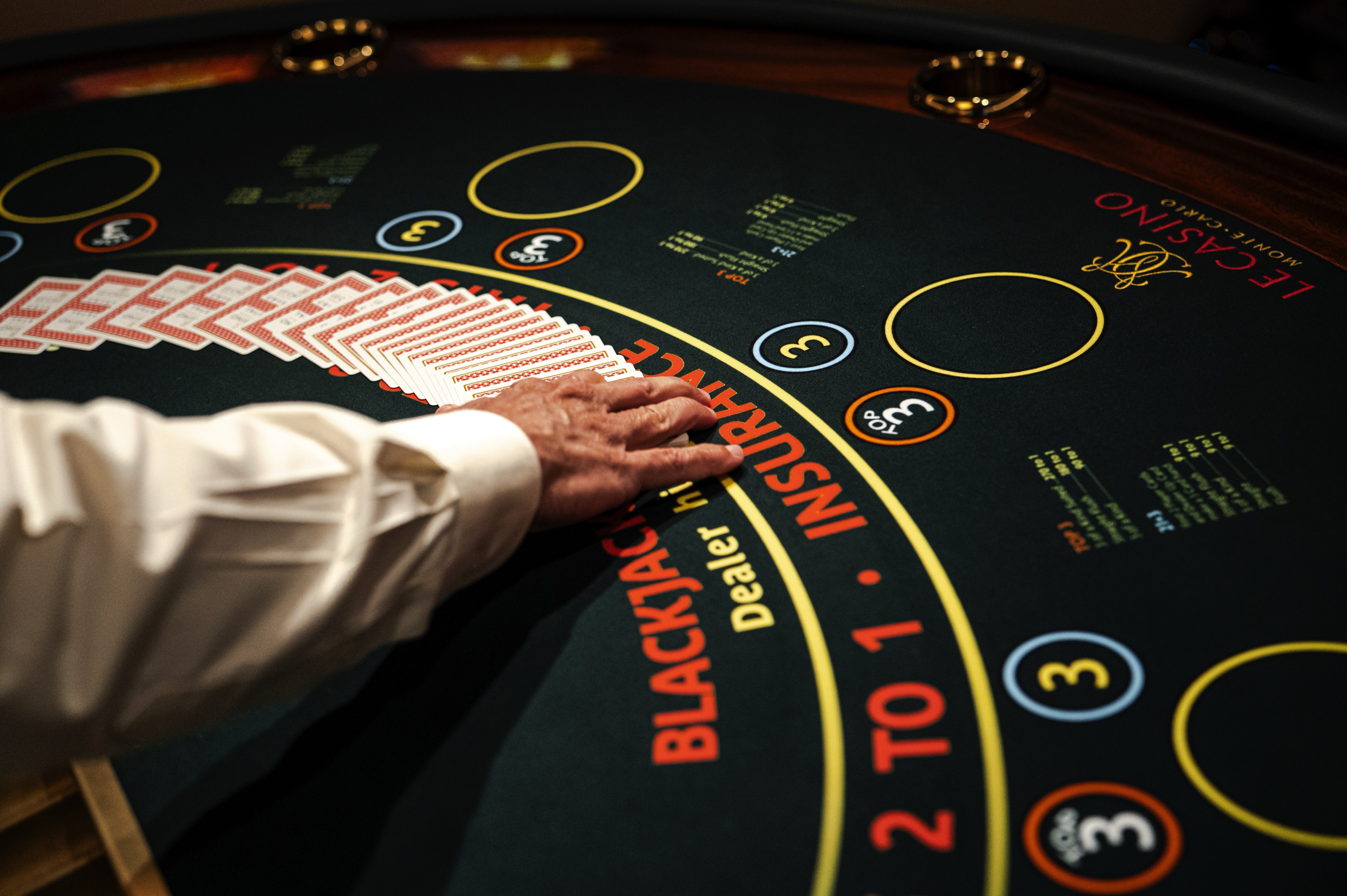
Le Casino de Monte-Carlo is offering a new and unique experience onboard. Place your bets on table games with the unique savoir-faire of Monaco’s world-famous casino or get excited to a dynamic range of slots to hit the jackpot. An ultimate way to embrace the thrill of the game in an elegant atmosphere adorned in the hues of the historical building.
Apropos & Facets Onboard Shopping
Heighten the experience on board with a selection of fine jewelry, watches and cruise wear available in our arcade, alongside designer apparel. Make the most of being at sea with a selection of duty free items available.
Atrium
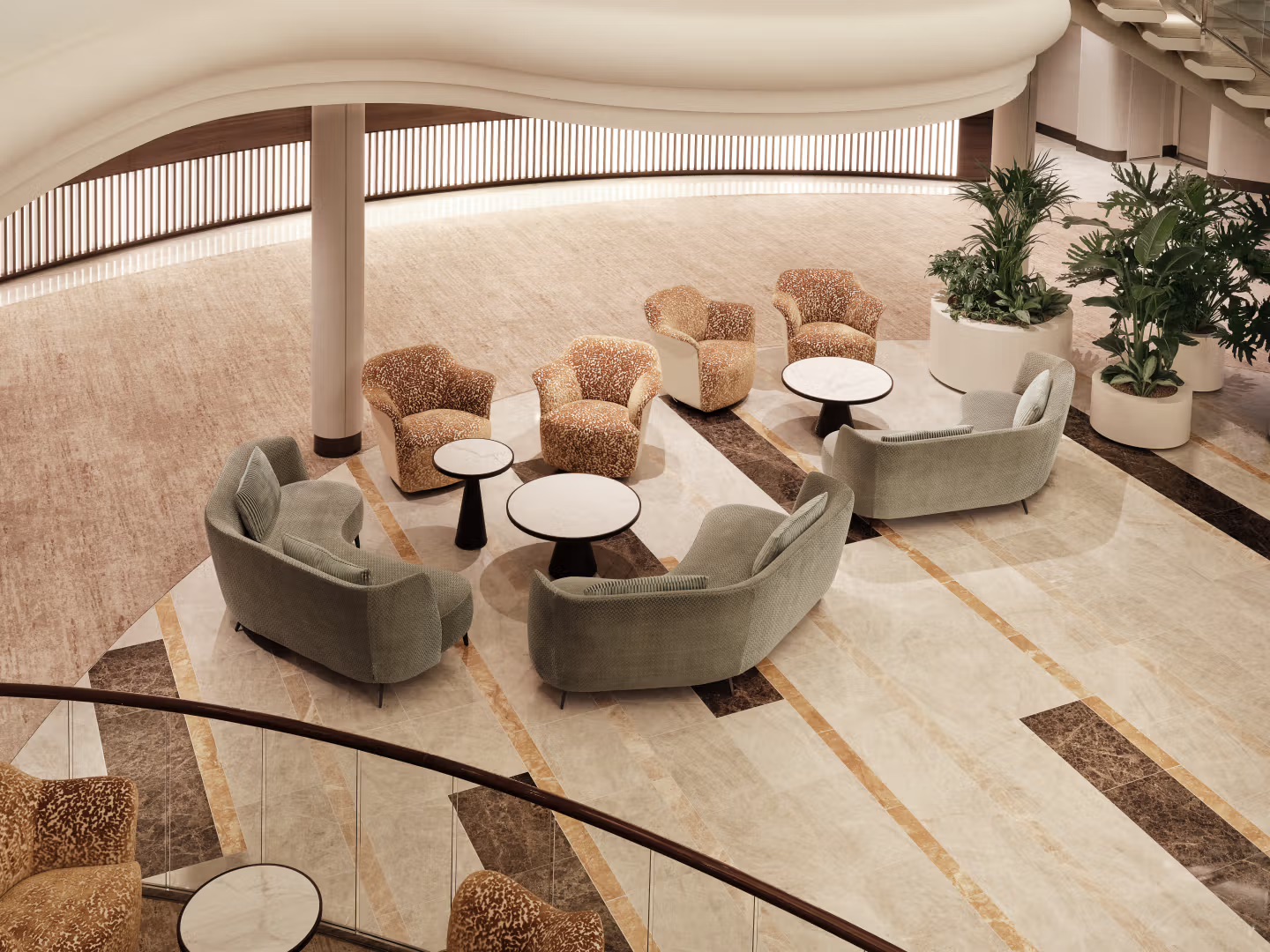
The central meeting place on the ship where you can visit the front desk, concierge, shore excursion desk, or sip on a casual drink at the Crystal Cove.
Computer University@Sea
Our innovative Computer lab onboard led by a team of tech experts.
Connoisseur Club
An elegant space to indulge in the finest cigars and cognacs.
Crystal Collection
Offers fine perfumes and colognes, cosmetics, purses, sun glasses, and jewellery.
Crystal Cove
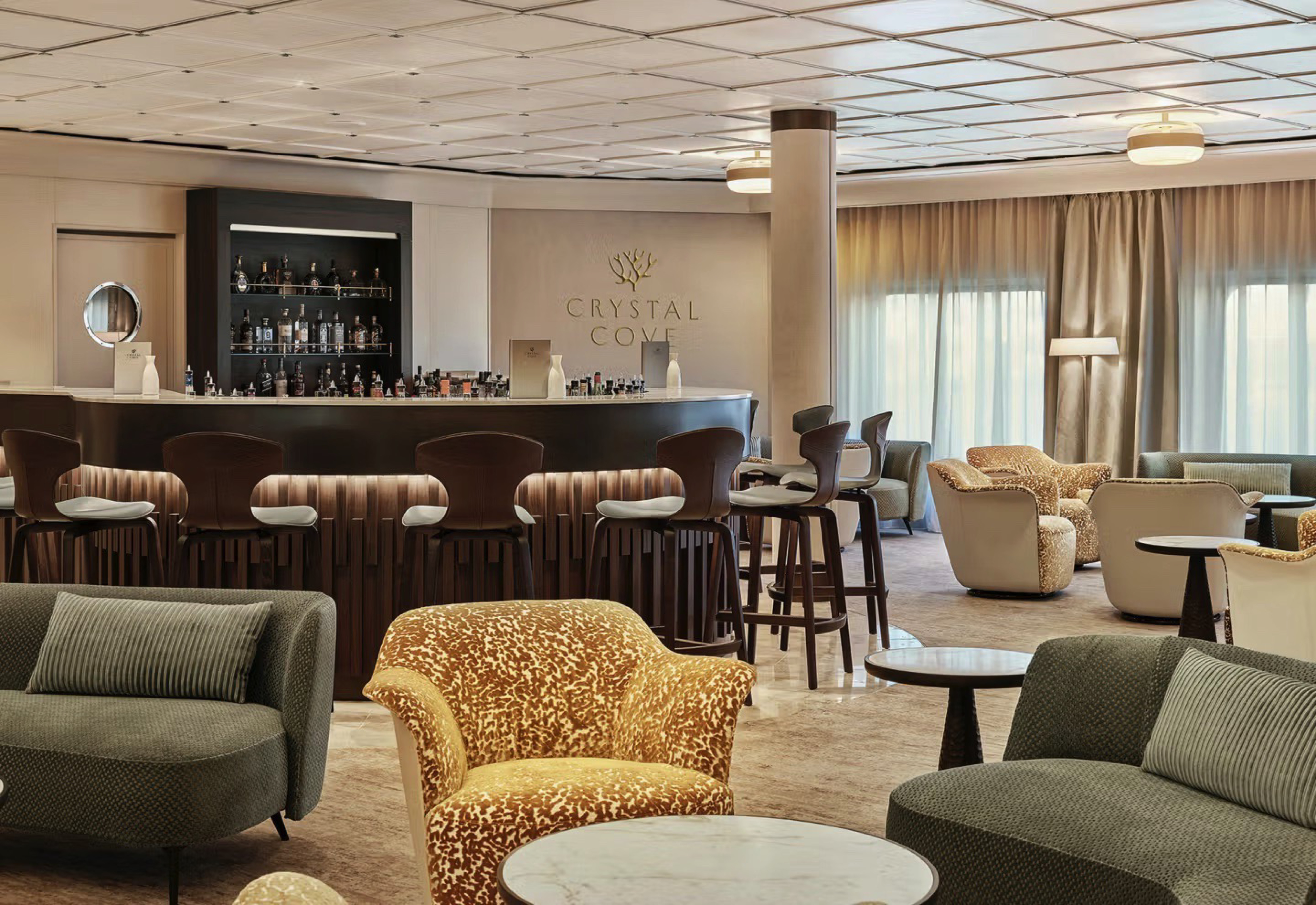
An ideal refreshment stop any time of the day, and the perfect place to meet friends for a pre-dinner cocktail. Enjoy a variety of musical styles as the day turns into night.
Library
A well-stocked library containing over 2,000 books on a range of subjects from classics to popular biographies, history to contemporary mysteries. Plus enjoy an ample selection of magazines and board games perfect for poolside reading
Palm Court
Featuring large sky lights, floor-to-ceiling windows and a fabulous 270-degree forward view, this venue is perfect for afternoon tea, social gatherings and dancing.
Seahorse Pool
Our Seahorse Pool, with plenty of surrounding deck space to sunbathe, relax and read while enjoying a cool drink in the afternoon.
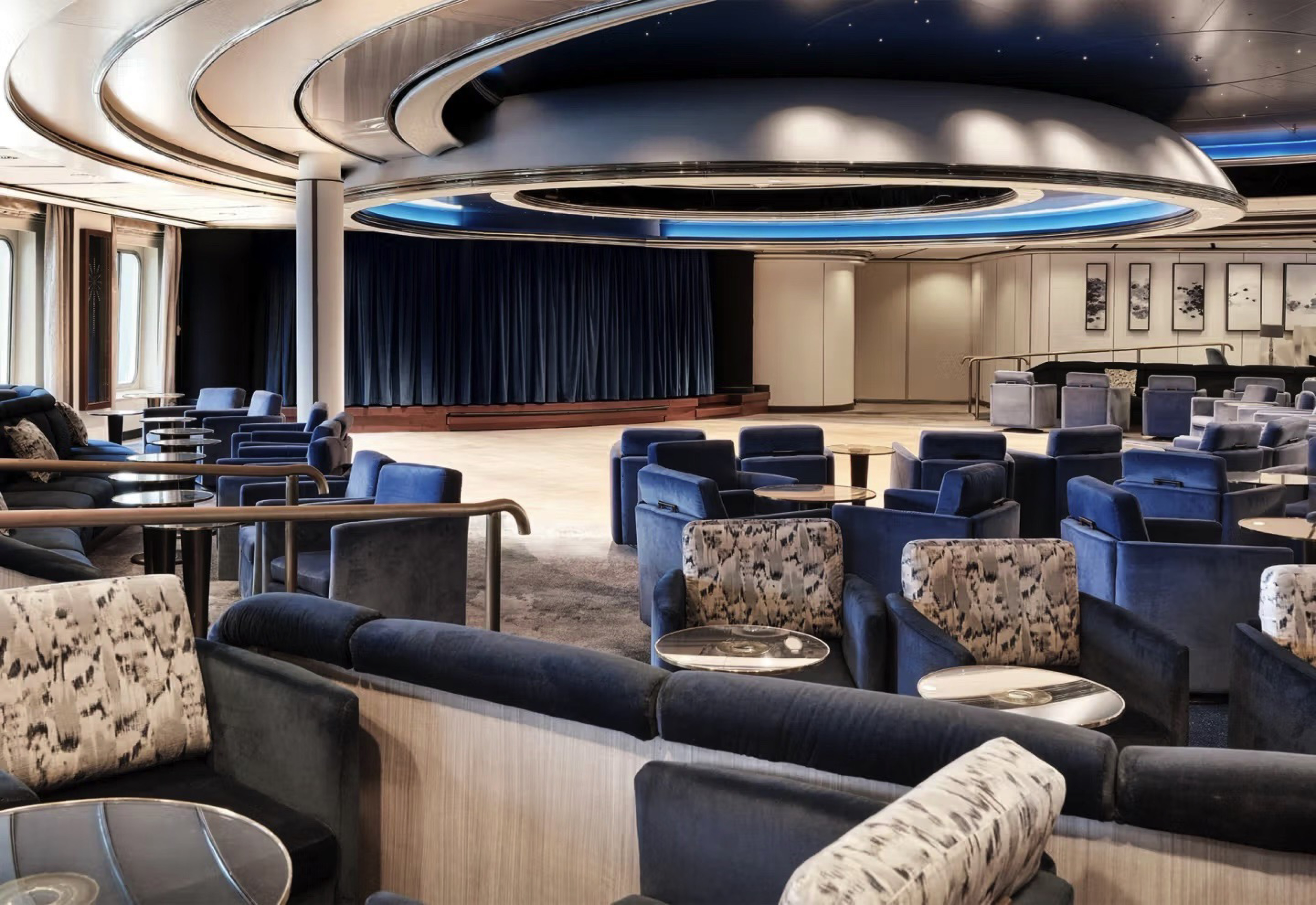
Starlite Club
On selected evenings before and after dinner, this entertainment lounge features dancing, production spot shows, cabaret performances and other themed events.
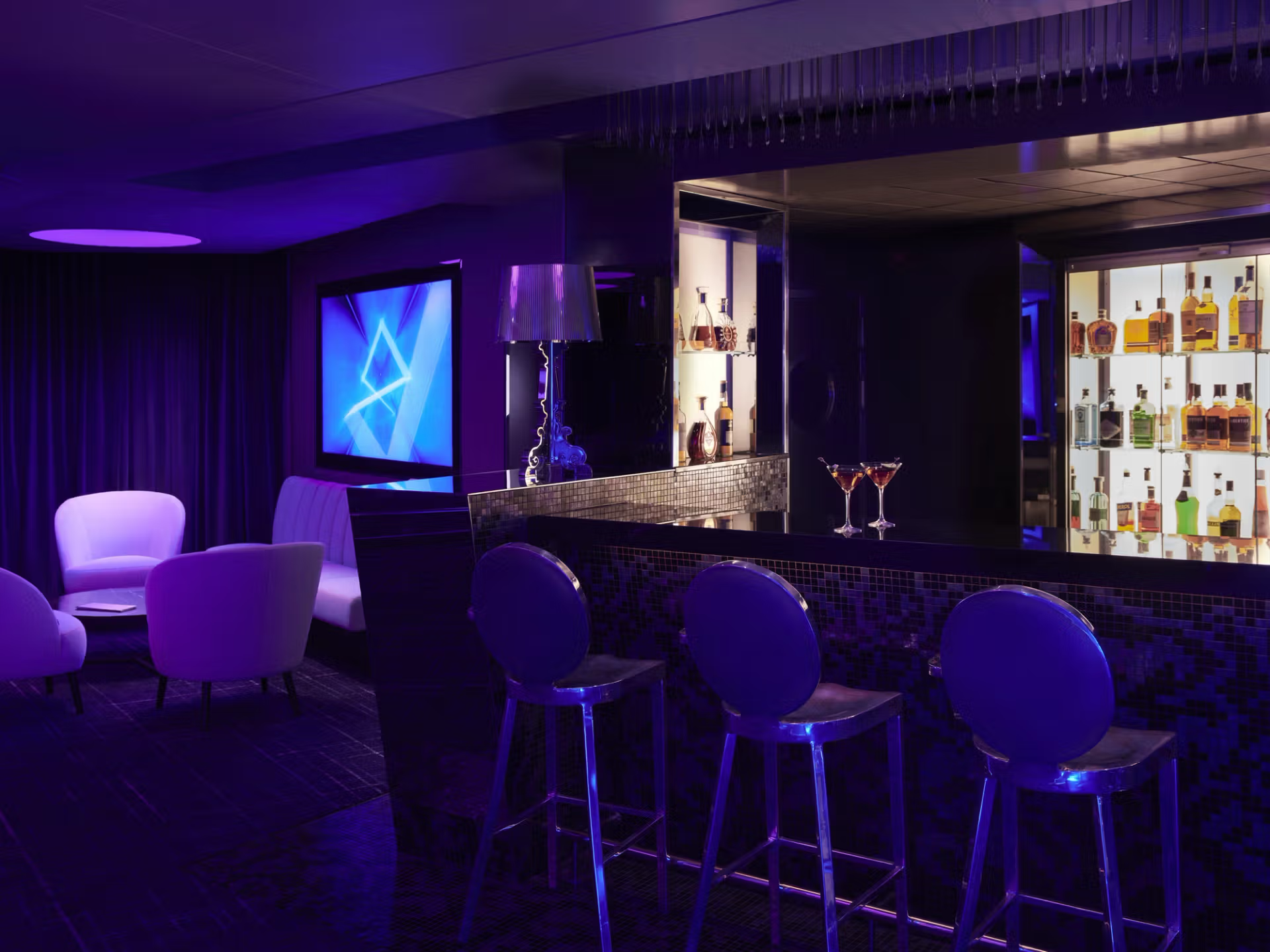
Jade Night Club
An intimate lounge for a late-night drink, dancing or a place to let loose with karaoke.
Hollywood Theatre
The ship’s sleek cinema for recent-released movies, live sport events, guest lectures and religious services.
Galaxy Lounge
Performances are the focal point here, with appearances by fantastic Broadway-style performers and headline entertainers. Drink service provided before each show.
Avenue Saloon
Signature piano bar with an intimate ambience. The perfect setting for a cocktail before and after dinner.
Crystal Aurōra Spa
Our spa offers a wide range of health and beauty services for ladies and gentlemen. There is a complete sauna and steam room facilities, as well as a variety of treatments, including aromatherapy, aqua meditation, exfoliation, reflexology and Swedish massage. Treatments are by appointment only.
Crystal Life Fitness
Our 3,000+ square-foot Fitness Center, Weight Room and Aerobics Studio feature an extensive line of professional weights and Technogym® exercise equipment, along with panoramic views. We also offer Wellness program with classes in yoga, mat pilates and spinning classes. Our ships’ full-time Fitness Director offers fitness advice and a variety of stretch and aerobic instruction.
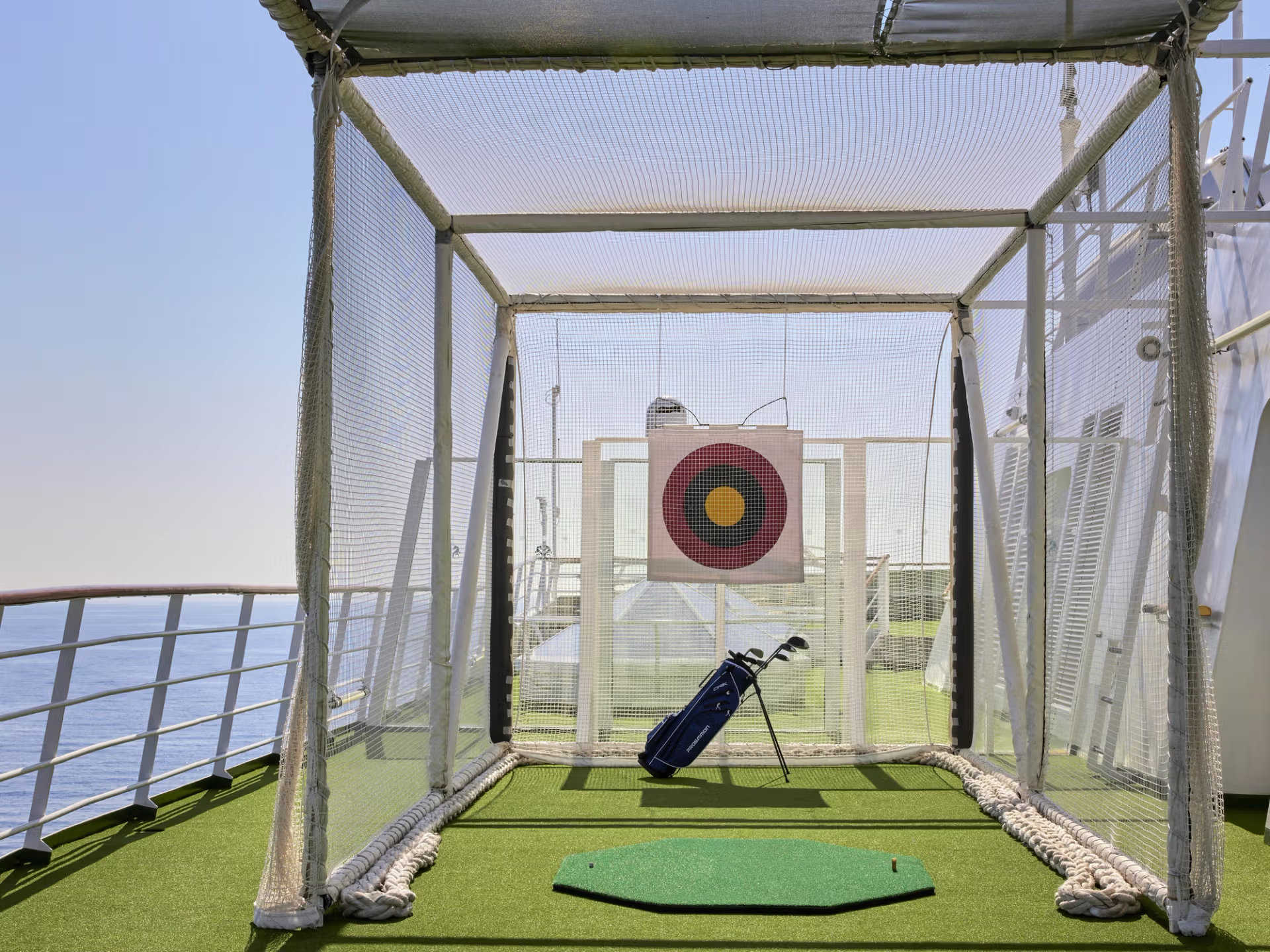
Golf Driving Nets & Putting Green
Practice your golf-game with the expert coaching of our qualified Golf Professional (available on most cruises). TaylorMade® clubs are available from the sports director or golf pro, and for personal use in port, you can head to the concierge desk to rent a set of clubs.
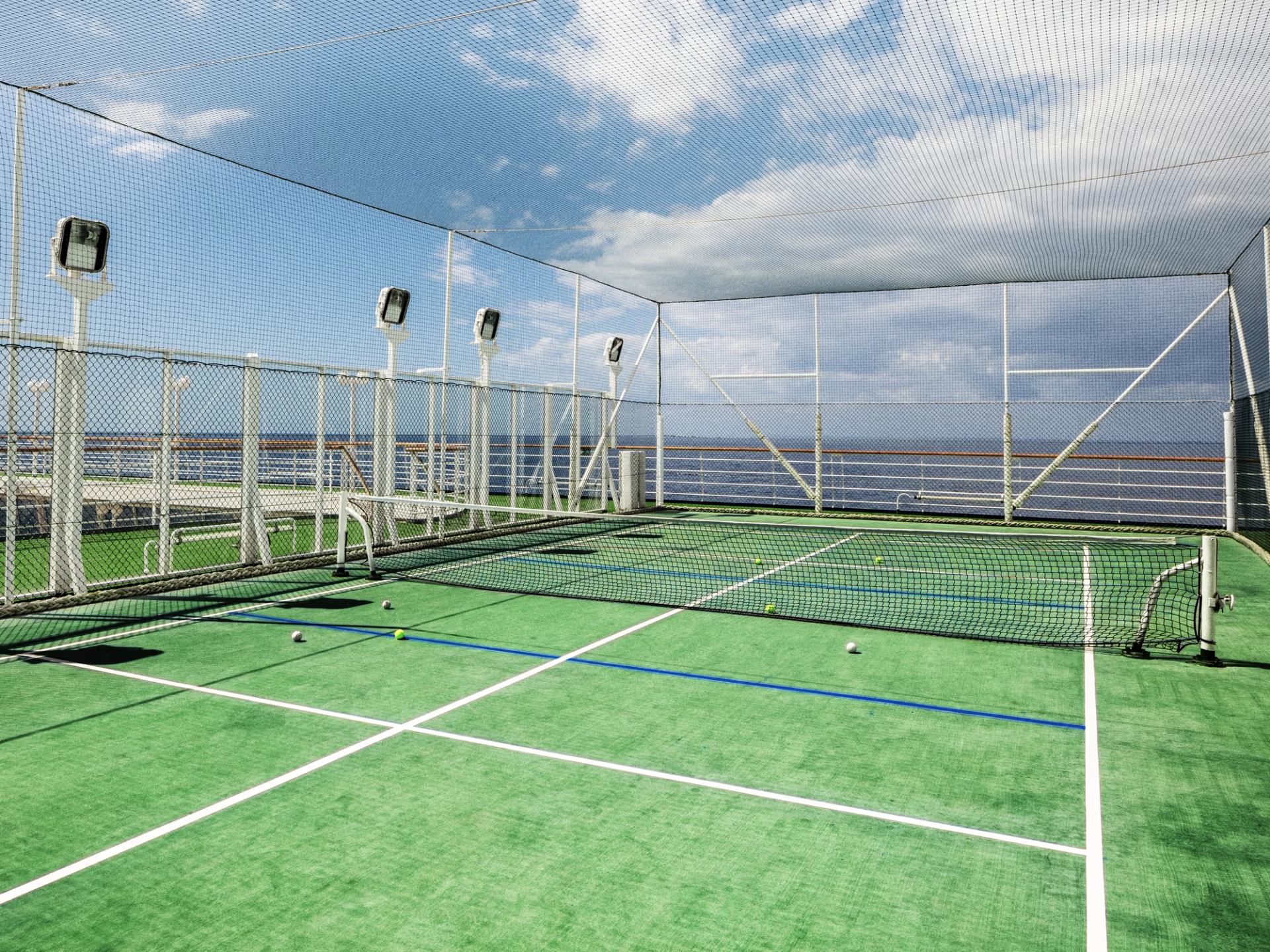
Wimbledon Court
Hit the full-sized paddle tennis and pickle ball court for a friendly game. Crystal Serenity has two courts available.
Table Tennis
Challenge a friend to a fun game of ping-pong on one of our tennis tables.
Fantasia & Waves
Specialised fun for junior cruisers.
Wheelchair Assistance
Guests with limited mobility should ideally be able to navigate the ship independently. Alternatively, they may opt to travel with a companion who can provide assistance if needed.
Service Animals
Service animals will be permitted on select voyages. Animals that are not trained to do work or perform tasks are not considered to be service animals. Emotional support animals, which provide emotional support, well-being, comfort, or companionship to an individual with disabilities but are not trained to do work or perform tasks, are not considered to be service animals. Pets and other animals who are not service animals are not allowed on board.
For more details, please contact obgs@crystalcruises.com
Smoking Policy
At Crystal, we recognise that some of our guests smoke and others do not. While most areas of the ship are non-smoking, there will be designated smoking areas throughout. Please note that pipe and cigar smoking is only allowed in the Connoisseurs Club and all suites/guest rooms are non-smoking, including on the verandas.
Dress Code
At Crystal, we want guests to feel confident and relaxed throughout their stay, so we have compiled the following guide to the different dress codes on board. If you have any questions, please don’t hesitate to contact us by calling 1.888.617.0110 or +1.786.464.4420.
Day Casual
A less formal look allows guests to feel comfortable during the day; Day Casual attire may be worn everywhere, including our restaurants, until 18:00.
Suggestions for a Day Casual look:
Women
- Sundresses
- Elegant shorts
- Jeans
- T-shirts or blouses
- Linen clothing
- Swimsuits with cover-ups (when not poolside)
Men
- Shorts
- Jeans
- T-shirts or polo shirts
- Linen clothing
- Swim shorts with a T-shirt or polo (when not poolside)
NOTE: Swimwear on its own, wet swimwear, revealing clothing, bathrobes, bare feet, tank tops, baseball caps, and clothes bearing any offensive messaging are not permitted. Covered swimsuits may only be worn at Trident Grill, Tastes, and Marketplace.
Evening Resort
A step up from Day Casual, after 18:00, we ask that guests adopt the more refined Evening Resort dress code.
Suggestions for an Evening Resort look:
Women
- Dress
- Skirts
- Pants
- Blouses or sweaters
- Dark-wash jeans with no rips
- Tailored dress shorts
Men
- Shirts
- Collared polo shirt
- Sweaters or smart designer sweatshirts
- Dark-wash jeans with no rips (only when accompanied with a jacket)
- Chinos
- Sports jacket or blazer (optional)
- Tailored shorts (these may only be worn in the Tastes restaurant)
NOTE: Please avoid flip-flops/sliders, swimwear, and hats.
Formal Evening
On sailings over seven days, there will be at least one optional ship-wide formal night (depending on the length of the segment), which will require more formal cocktail chic attire. These special events will be defined in your personal pre-sailing guide.
Suggestions for a Formal Evening look:
Women
- Cocktail dresses or gowns
- Suits Evening skirts or pants with an elegant top
- Evening shoes
Men
- Suits or tuxedos
- Shirts
- Dress shoes
- Ties (optional)
*Formal evening attire should be adhered to in the specialty restaurants, during a captain or officer dinner, and during a recognition dinner
As always, dress for the climate and conditions of any destination we visit.
What's Included
WHICH RESTAURANTS ARE INCLUDED AND WHICH ARE SUBJECT TO AN UPCHARGE?
Our restaurants are complimentary, except for The Vintage Room. For our specialty restaurants, Umi Uma by Nobu Matsuhisa Restaurant and Sushi Bar and Osteria d’Ovidio, guests will be allotted one complimentary reservation for two people per voyage of up to 11 days (more than one for more extended stays – see below). In addition, guests staying in Crystal Penthouse or Junior Crystal Penthouse Suites can enjoy unlimited free visits.
- Up to 11 days: One complimentary reservation to each restaurant
- 12 to 22 days: Two complimentary reservations to each restaurant
- 23 or more days: Three complimentary reservations to each restaurant
- Reservations above the complimentary allotment will be $50 per person.
WHAT AMENITIES ARE INCLUDED IN SUITES AND GUEST ROOMS?
• Beverages including select fine wines, champagne, premium spirits, and all nonalcoholic beverages such as bottled water, soft drinks, and specialty coffees
• Gratuities for housekeeping, dining, and bar staff
• One complimentary reservation to Osteria d’ Ovidio and one complimentary reservation to our second Asian specialty restaurant (not yet announced)
• Butler service in all suites and guest rooms
• Wi-Fi/Internet access in-room and throughout the ship, signal permitting
IS DRY CLEANING INCLUDED WITH ALL ROOM CATEGORIES, OR JUST SUITES. OR WILL IT DEPEND ON THE TRAVEL TIER?
Dry cleaning will be included in select suite categories and detailed on your itinerary.
IS ROOM SERVICE INCLUDED?
An expansive, complimentary in-suite dining menu will be available. Select suite categories will also be able to order from specialty dining venues via their butler.
Medical Needs
CAN I BRING OXYGEN ON BOARD?
If you are dependent on oxygen or require oxygen therapy, you must supply your own oxygen.
CAN I BRING A CPAP MACHINE?
The following devices are permitted on board:
- BIPAP machines, CPAP machines, Concentrators, and Nebulizers.
- You must bring your own equipment on board for personal use. Please hand-carry these items and do not place them in your checked luggage.
Language
The official language spoken on board is English. All officers, staff, and crew as well as local guides and regional specialists speak fluent English. All announcements and lectures will be presented in English.
Special Dietary Requirements
In most cases, we can accommodate special requirements. Please provide details about any allergies or food requirements to our Reservations team or your travel advisor prior to your cruise departure.
Alcohol Policy
You may bring your own nonalcoholic or alcoholic drinks aboard. Please note that certain restrictions apply by country or destination.
Age Restrictions
The minimum age to sail on Crystal is six months old at the time of embarkation. Crystal reserves the right to limit the number of infants aged six months to two years.

Deck 12
- Sauna + Steam room
- AURÖRA
- Fitness Center
- Glass Roof Over Beefbar
- Golf Putting Green
- Wimbledon Court (Paddle Tennis & Pickle Ball)
- Golf Driving Nets
- Forward Observation Deck

Deck 11
- The Palm Court
- Fantasia Children’s Playroom
- Stage
- Waves Teen Centre
- Seahorse Pool & Whirlpool
- Trident Grill
- Scoops Gelato Bar
- Beefbar
- Marketplace Restaurant

Deck 10
- Aquamarine Veranda Suite
- Sapphire Veranda Suite
- Crystal Penthouse Suite
- Launderette

Deck 9
- Junior Crystal Penthouse Suite
- Aquamarine Veranda Suite
- Sapphire Veranda Suite
- Double Guest Room with Veranda
- Launderette
Suites & Guest Rooms Beyond The Forward Elevators Are subject To Alternative Pricing

Deck 8
- Crystal Penthouse Suite
- Sapphire Veranda Suite
- Double Guest Room with Veranda
- Junior Crystal Penthouse Suite
- Sapphire Ocean View Suite
- Double Guest Room with Ocean View
- Table Tennis
- Launderette
Suites & Guest Rooms Beyond The Forward Elevators Are subject To Alternative Pricing

Deck 7
- Sapphire Ocean View Suite
- Single Guest Room with Ocean View
- Double Guest Room with Ocean View
- Shuffleboard
- Walking/Jogging Track
- Elevator & Stairs
Suites & Guest Rooms Beyond The Forward Elevators Are subject To Alternative Pricing

Deck 6
- Main Stage
- Galaxy Lounge
- The Lounge
- Hollywood Theatre
- Jade Nightclub
- Crystal Collection
- Facets
- Aprops
- Avenue of the Star Boutique
- The Bistro
- Atrium
- Library
- Stage
- Starlite Club
- Vintage Room
- Crystal Images
- Uma Uma & Sushi Bar by Nobu Matsuhisa
- Connoisseur Club
- Avenue Saloon
- Computer University @Sea
- The Studio
- Casino
- Osteria D’Ovidio

Deck 5
- Sapphire Ocean View Suite
- Double Guest Room with Ocean View
- Medical Centre
- Concierge
- Reception
- Shore Excursions
- Crystal Cove
- Future Sales Consultant
- Crystal Plaza
- Waterside Restaurant