Itinerary
The infinite variety of street life, the nooks and crannies of the medieval Barri Gòtic, the ceramic tile and stained glass of Art Nouveau facades, the art and music, the throb of street life, the food (ah, the food!)—one way or another, Barcelona will find a way to get your full attention. The capital of Catalonia is a banquet for the senses, with its beguiling mix of ancient and modern architecture, tempting cafés and markets, and sun-drenched Mediterranean beaches. A stroll along La Rambla and through waterfront Barceloneta, as well as a tour of Gaudí’s majestic Sagrada Famíliaand his other unique creations, are part of a visit to Spain’s second-largest city. Modern art museums and chic shops call for attention, too. Barcelona’s vibe stays lively well into the night, when you can linger over regional wine and cuisine at buzzing tapas bars.
If you look north of the cathedral (La Seu, or the seat of the bishopric, to Mallorcans) on a map of the city of Palma, you can see around the Plaça Santa Eulàlia a jumble of tiny streets that made up the earliest settlement. Farther out, a ring of wide boulevards traces the fortifications built by the Moors to defend the larger city that emerged by the 12th century. The zigzags mark the bastions that jutted out at regular intervals. By the end of the 19th century, most of the walls had been demolished; the only place where you can still see the massive defenses is at Ses Voltes, along the seafront west of the cathedral.A torrent (streambed) used to run through the middle of the old city, dry for most of the year but often a raging flood in the rainy season. In the 17th century it was diverted to the east, along the moat that ran outside the city walls. Two of Palma’s main arteries, La Rambla and the Passeig d’es Born, now follow the stream’s natural course. The traditional evening paseo (promenade) takes place on the Born.If you come to Palma by car, park in the garage beneath the Parc de la Mar (the ramp is just off the highway from the airport, as you reach the cathedral) and stroll along the park. Beside it run the huge bastions guarding the Almudaina Palace; the cathedral, golden and massive, rises beyond. Where you exit the garage, there’s a ceramic mural by the late Catalan artist and Mallorca resident Joan Miró, facing the cathedral across the pool that runs the length of the park.If you begin early enough, a walk along the ramparts at Ses Voltes from the mirador beside the cathedral is spectacular. The first rays of the sun turn the upper pinnacles of La Seu bright gold and then begin to work their way down the sandstone walls. From the Parc de la Mar, follow Avinguda Antoni Maura past the steps to the palace. Just below the Plaça de la Reina, where the Passeig d’es Born begins, turn left on Carrer de la Boteria into the Plaça de la Llotja (if the Llotja itself is open, don’t miss a chance to visit—it’s the Mediterranean’s finest Gothic-style civic building). From there stroll through the Plaça Drassana to the Museu d’Es Baluard, at the end of Carrer Sant Pere. Retrace your steps to Avinguda Antoni Maura. Walk up the Passeig d’es Born to Plaça Joan Carles I, then right on Avenida de La Unió.
The capital of Menorca since 1721, Mahon has a impressive natural deep water harbour, which is one of the largest in the world. This, coupled with its strategic location, has made it a stronghold for many nations throughout history. Mahon has an abundance of historical buildings, the oldest being the Arch of Saint Roc which is all that remains of the wall that once encircled the whole town. The island was occupied by the British during the 18th century and Lord Nelson is thought to have stayed there. Indeed, San Antoni Mansion, located on the north side of the harbour, houses a collection of Nelson memorabilia. The legacy of colonial rule can be seen in the muted Georgian style of some of the buildings, but Mahon still boasts attractive examples of neo-Classical, Baroque and Romanesque architecture. With narrow streets to explore, pleasant shaded squares and welcoming pavement cafés, there is something for everyone to enjoy. Please be aware that most shops in town close for a siesta between 1330 and 1730.
Calvi, Corsica’s slice of the Riviera, has been described by author Dorothy Carrington as “an oasis of pleasure on an otherwise austere island.” Calvi prospered by supplying products to Genoa; its citizens remained loyal supporters of Genoa long after the rest of the island declared independence. Calvi also claims to be the birthplace of Christopher Columbus. During the 18th century the town endured assaults from Corsican nationalists, including celebrated patriot Pasquale Paoli. Today Calvi sees a summertime invasion of tourists, drawn to the 6-km (4-mile) stretch of sandy white beach, impressive citadel overlooking the Old Town, lively restaurants, and buzzing nightlife.
At first glance, it really doesn’t look all that impressive. There’s a pretty port with cafés charging €5 for a coffee and a picturesque old town in sugared-almond hues, but there are many prettier in the hills nearby. There are sandy beaches, rare enough on the Riviera, and old-fashioned squares with plane trees and pétanque players, but these are a dime a dozen throughout Provence. So what made St-Tropez an internationally known locale? Two words: Brigitte Bardot. When this pulpeuse (voluptuous) teenager showed up in St-Tropez on the arm of Roger Vadim in 1956 to film And God Created Woman, the heads of the world snapped around. Neither the gentle descriptions of writer Guy de Maupassant (1850–93), nor the watercolor tones of Impressionist Paul Signac (1863–1935), nor the stream of painters who followed (including Matisse and Bonnard) could focus the world’s attention on this seaside hamlet as did this one sensual woman in a scarf, Ray-Bans, and capris. Vanity Fair ran a big article, “Saint Tropez Babylon,” detailing the over-the-top petrodollar parties, megayachts, and Beyoncé–d paparazzi. But don’t be turned off: the next year, Stewart, Tabori & Chang released an elegant coffee-table book, Houses of St-Tropez, packed with photos of supremely tasteful and pretty residences, many occupied by fashion designers, artists, and writers. Once a hangout for Colette, Anaïs Nin, and Françoise Sagan, the town still earns its old moniker, the “Montparnasse of the Mediterranean.” Yet you might be surprised to find that this byword for billionaires is so small and insulated. The lack of train service, casinos, and chain hotels keeps it that way. Yet fame, in a sense, came too fast for St-Trop. Unlike the chic resorts farther east, it didn’t have the decades-old reputation of the sort that would attract visitors all year around. For a good reason: its location on the south side of the gulf puts it at the mercy of the terrible mistral winter winds. So, in summer the crowds descend and the prices rise into the stratosphere. In July and August, you must be carefree about the sordid matter of cash. After all, at the most Dionysian nightclub in town, a glass of tap water goes for $37 and when the mojo really gets going, billionaires think nothing of “champagne-spraying” the partying crowds—think World Series celebrations but with $1,000 bottles of Roederer Cristal instead of Gatorade. Complaining about summer crowds, overpricing, and lack of customer service has become a tourist sport and yet this is what makes St-Tropez—described by the French daily newspaper Le Figaro as the place you can see “the greatest number of faces per square meter”—as intriguing as it is seductive.
At first glance, it really doesn’t look all that impressive. There’s a pretty port with cafés charging €5 for a coffee and a picturesque old town in sugared-almond hues, but there are many prettier in the hills nearby. There are sandy beaches, rare enough on the Riviera, and old-fashioned squares with plane trees and pétanque players, but these are a dime a dozen throughout Provence. So what made St-Tropez an internationally known locale? Two words: Brigitte Bardot. When this pulpeuse (voluptuous) teenager showed up in St-Tropez on the arm of Roger Vadim in 1956 to film And God Created Woman, the heads of the world snapped around. Neither the gentle descriptions of writer Guy de Maupassant (1850–93), nor the watercolor tones of Impressionist Paul Signac (1863–1935), nor the stream of painters who followed (including Matisse and Bonnard) could focus the world’s attention on this seaside hamlet as did this one sensual woman in a scarf, Ray-Bans, and capris. Vanity Fair ran a big article, “Saint Tropez Babylon,” detailing the over-the-top petrodollar parties, megayachts, and Beyoncé–d paparazzi. But don’t be turned off: the next year, Stewart, Tabori & Chang released an elegant coffee-table book, Houses of St-Tropez, packed with photos of supremely tasteful and pretty residences, many occupied by fashion designers, artists, and writers. Once a hangout for Colette, Anaïs Nin, and Françoise Sagan, the town still earns its old moniker, the “Montparnasse of the Mediterranean.” Yet you might be surprised to find that this byword for billionaires is so small and insulated. The lack of train service, casinos, and chain hotels keeps it that way. Yet fame, in a sense, came too fast for St-Trop. Unlike the chic resorts farther east, it didn’t have the decades-old reputation of the sort that would attract visitors all year around. For a good reason: its location on the south side of the gulf puts it at the mercy of the terrible mistral winter winds. So, in summer the crowds descend and the prices rise into the stratosphere. In July and August, you must be carefree about the sordid matter of cash. After all, at the most Dionysian nightclub in town, a glass of tap water goes for $37 and when the mojo really gets going, billionaires think nothing of “champagne-spraying” the partying crowds—think World Series celebrations but with $1,000 bottles of Roederer Cristal instead of Gatorade. Complaining about summer crowds, overpricing, and lack of customer service has become a tourist sport and yet this is what makes St-Tropez—described by the French daily newspaper Le Figaro as the place you can see “the greatest number of faces per square meter”—as intriguing as it is seductive.
United with France only since 1860, Nice has its own history and atmosphere, which dates back 230,000 years. It was on Colline du Château (now château-less) and at the Plage des Ponchettes, in front of the Old Town, that the Greeks established a market-port in 350 BC and named it Nikaia, which would become Marseilles’ chief coastal rival. The Romans established themselves a little later on the hills of Cimiez (Cemenelum), already previously occupied by Ligurians and Celts, and quickly overshadowed the waterfront port. After falling to the Saracen invasions, Nice regained power as an independent state, becoming an important port in the early Middle Ages.So cocksure did it become that in 1388, Nice, along with the hill towns behind, effectively seceded from the county of Provence, under Louis d’Anjou, and allied itself with Savoie. Thus began its liaison with the House of Savoy, and through it with Piedmont and Sardinia, it was the Comté de Nice (Nice County). This relationship lasted some 500 years, tinting the culture, architecture, and dialect in rich Italian hues.By the 19th century Nice was flourishing commercially, locked in rivalry with the neighboring shipping port of Genoa. Another source of income: the dawning of tourism, as first the English, then the Russian nobility, discovered its extraordinary climate and superb waterfront position. A parade of fine stone mansions and hotels closed into a nearly solid wall of masonry, separated from the smooth-round rocks of the beach by what was originally named Camin deis Anglés (the English Way), which of course is now the famous Promenade des Anglais. This magnificent crescent, which is seeking UNESCO recognition, is one of the noblest in France. Many of Nice’s most delightful attractions—the Cours Saleya market, the Old Town streets, the Hotel Negresco, and the Palais Masséna—are on or close to this 10-km (6-mile) waterfront, making it the first stop for most visitors, while the redevelopment of Nice’s port, around the other side of the Colline du Château, makes it easier for amblers who want to take in the Genoese architecture or peruse the antiques at the Puces de Nice, now part of the Promenade des 100 Antiquaires, along Quai Papacino. Nice also has the distinction of the “Family Plus” label, with free strollers, play areas, and restaurants with child-friendly activities.
Ship features

The Owners Suite
SUITE DESCRIPTION
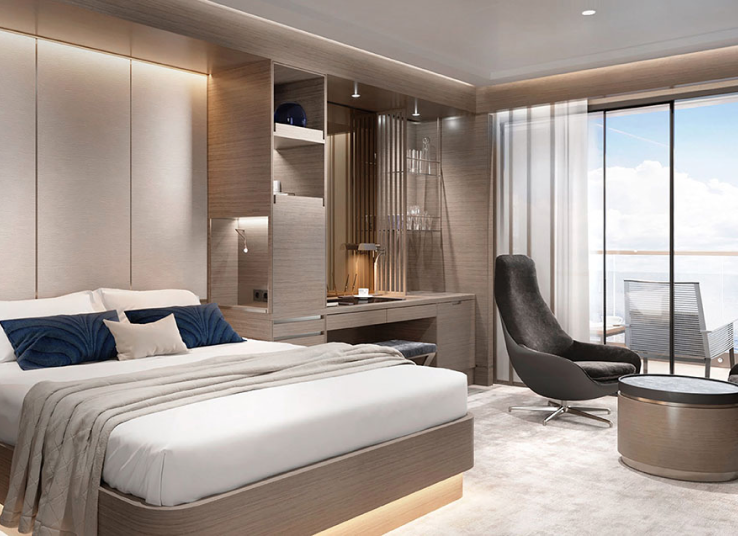
The Owner’s Suite was designed to epitomize the yachting lifestyle, with outsize suite and terrace spaces inviting unparalleled entertaining and ultimate comfort. The suite’s expansive private terrace truly wows with a whirlpool, dedicated outdoor dining table and conversation spaces that blur the lines of indoor-outdoor living, all to the sweeping backdrop of majestic sea views. The suite itself is distinguished by a second full bath with shower, a full bar with seating, two living/conversation areas and a dining table that comfortably seats 6 guests.
SUITE HIGHLIGHTS
MAGNIFICENT OCEAN VIEWS
- Private, spacious terrace overlooking the ocean, with private whirlpool
SPACIOUS SUITE ACCOMMODATIONS
- Luxurious and modern living and dining area
- Luxury custom king bed sleep system
- Double vanity bathroom
PERSONALIZED SERVICE AND AMENITIES
- The Personal Concierge is your single onboard touch point to ensure a flawless, seamless journey from beginning to end
- 24-hour in-suite dining, espresso machine, complimentary coffee and teas and a mini-bar provisioned to your preferences, upon request once on board
ACCOMMODATIONS
Bed & Bath
- Luxury custom king bed sleep system
- Double vanity bathroom with modern soaking tub and separate shower
- Second bathroom with modern shower system
- Custom luxury bed and bath linens
Suite Features
- Private, spacious terrace overlooking the ocean with private whirlpool
- Luxurious and modern living and dining area
- Walk-in wardrobe
- Convertible sleep sofa
Size
- Suite: 1091 SQ FT | 101 SQ M
- Terrace: 635 SQ FT | 59 SQ M
SERVICES AND AMENITIES
- 24-hour in-suite dining
- Luxury bath amenities & individual robe and slippers
- Premium Wi-Fi, supporting browsing, social media, streaming services, video calls and VPN services
- Complimentary chilled bottle of champagne upon arrival
- Espresso machine with complimentary coffee and teas
- Digital flat screen television
- In-suite safe
- Vanity mirror
- Hair dryer
- Hypoallergenic pillows, upon request
- 230v and 120v outlets, as well as USB charging capabilities
- Set of high-zoom binoculars

The View Suite
The View suite brings the outdoors in with its expansive length of dramatic floor to ceiling glass and private terrace, offering unmatched views and capturing the sea breeze from Juliet balconies in the living, bed and bath areas. These views are meant to be shared, with the large private terrace, living and dining areas allowing guests to entertain out of sight of the suite’s bed and bath area.
SUITE HIGHLIGHTS
MAGNIFICENT OCEAN VIEWS
- Dramatic floor to ceiling glass throughout
- Private, spacious terrace overlooking the ocean
SPACIOUS SUITE ACCOMMODATIONS
- Luxurious and modern living and dining area
- Luxury custom king bed sleep system
- Double vanity bathroom
PERSONALIZED SERVICE AND AMENITIES
- The Personal Concierge is your single onboard touch point to ensure a flawless, seamless journey from beginning to end
- 24-hour in-suite dining, espresso machine, complimentary coffee and teas and a mini-bar provisioned to your preferences, upon request once on board
ACCOMMODATIONS
Bed & Bath
- Luxury custom king bed sleep system
- Double vanity bathroom with modern soaking tub and separate shower
- Custom luxury bed and bath linens
Suite Features
- Private, spacious terrace overlooking the ocean
- Convertible sleep sofa
Size
- (Suite 732 & 733)
- Suite: 544 SQ FT | 51 SQ M
- Terrace: 108 SQ FT | 10 SQ M
(Suite 734 & 735)
- Suite: 574 SQ FT | 53 SQ M
- Terrace: 129 SQ FT | 12 SQ M
SERVICES AND AMENITIES
- 24-hour in-suite dining
- Luxury bath amenities & individual robe and slippers
- Premium Wi-Fi, supporting browsing, social media, streaming services, video calls and VPN services
- Complimentary chilled bottle of champagne upon arrival
- Espresso machine with complimentary coffee and teas
- Digital flat screen television
- In-suite safe
- Vanity mirror
- Hair dryer
- Hypoallergenic pillows, upon request
- 230v and 120v outlets, as well as USB charging capabilities

The 2-Story Loft Suite
The Loft suite is a study in duality: a lower level designed for rest and relaxation, and an upper level perfect for socializing and entertaining. With a powder room and expanded living area upstairs, this space easily converts into a second private sleeping area for guests traveling with children or travelers sleeping separately. The expanded desk and dressing table in the lower level provides uninterrupted views through an oversized picture window.
SUITE HIGHLIGHTS
MAGNIFICENT OCEAN VIEWS
- Private, spacious terrace overlooking the ocean on the upper level
- Picture window on the lower level
SPACIOUS SUITE ACCOMMODATIONS
- Innovative two story suite with entry from both levels
- Luxurious and modern living and dining area on the upper level
- Luxury custom king bed sleep system on the lower level
- Double vanity bathroom
PERSONALIZED SERVICE AND AMENITIES
- The Personal Concierge is your single onboard touch point to ensure a flawless, seamless journey from beginning to end
- 24-hour in-suite dining, espresso machine, complimentary coffee and teas and a mini-bar provisioned to your preferences, upon request once on board
ACCOMMODATIONS
Bed & Bath
- Powder room on the upper level
- Double vanity master bathroom with modern soaking tub and separate shower on the lower level
- Luxury custom king bed sleep system on the lower level
- Custom luxury bed and bath linens
Suite Features
- Innovative two story suite with entry from both levels
- Private, spacious terrace overlooking the ocean on the upper level
- Luxurious and modern living and dining area on the upper level
- Convertible sleep sofa on the upper level
Size
- Suite: 611 SQ FT | 57 SQ M
- Terrace: 81 SQ FT | 7.5 SQ M
SERVICES AND AMENITIES
- 24-hour in-suite dining
- Luxury bath amenities & individual robe and slippers
- Premium Wi-Fi, supporting browsing, social media, streaming services, video calls and VPN services
- Complimentary chilled bottle of champagne upon arrival
- Espresso machine with complimentary coffee and teas
- Digital flat screen television
- In-suite safe
- Vanity mirror
- Hair dryer
- Hypoallergenic pillows, upon request
- 230v and 120v outlets, as well as USB charging capabilities
The Grand Suite
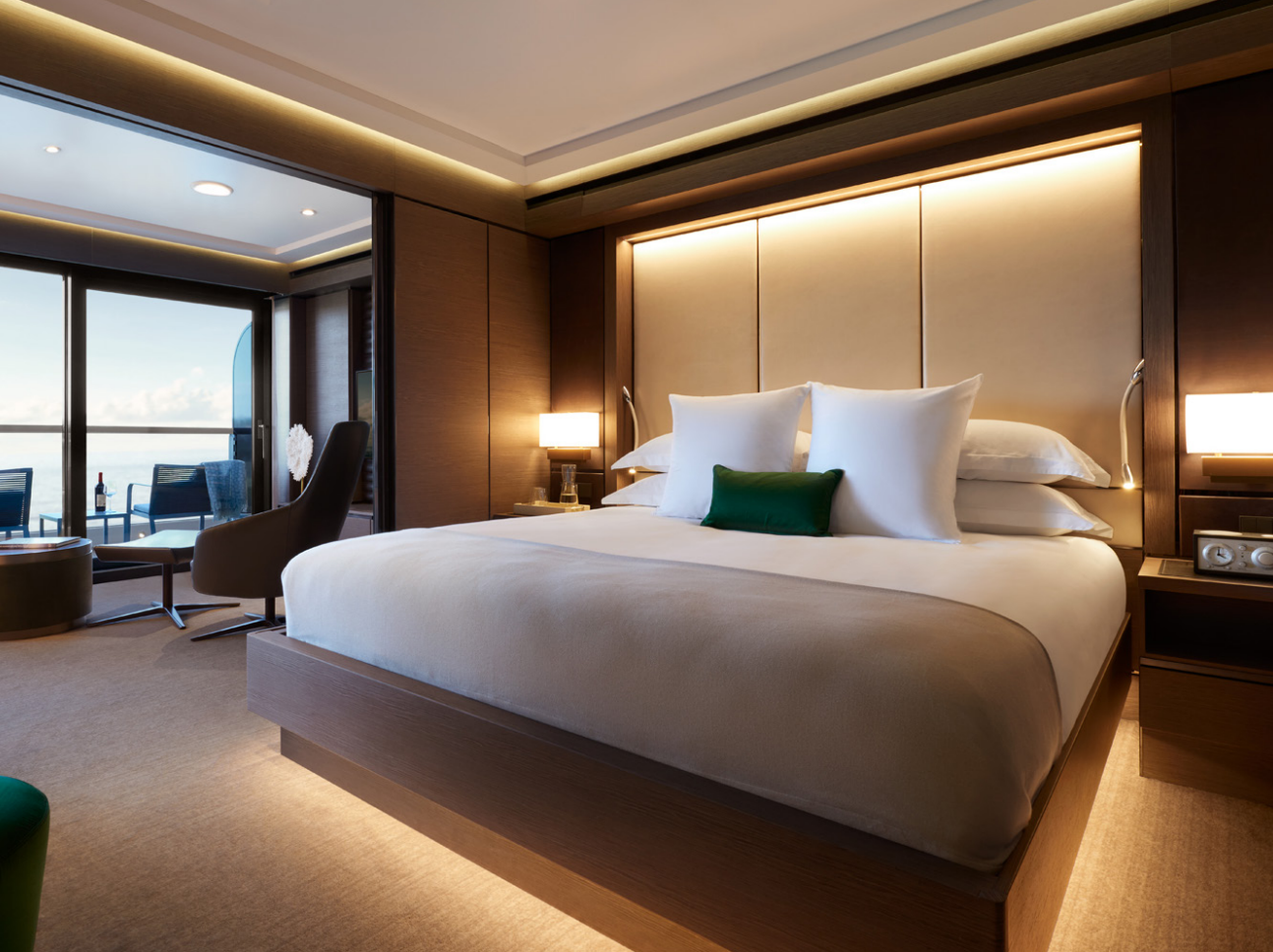
The Grand Suite offers a distinctly residential suite experience, allowing guests to feel at home upon the sea. The suite features dual walk-in closets, a dining table that comfortably accommodates 4 guests, plus added space on the private terrace and in living and bath spaces to spread out and relax.
SUITE HIGHLIGHTS
MAGNIFICENT OCEAN VIEWS
- Private, spacious terrace overlooking the ocean
SPACIOUS SUITE ACCOMMODATIONS
- Luxury custom king bed sleep system
- Double vanity bathroom
- Luxurious and modern living and dining area
PERSONALIZED SERVICE AND AMENITIES
- The Personal Concierge is your single onboard touch point to ensure a flawless, seamless journey from beginning to end
- 24-hour in-suite dining, espresso machine, complimentary coffee and teas and a mini-bar provisioned to your preferences, upon request once on board
ACCOMMODATIONS
Bed & Bath
- Luxury custom king bed sleep system
- Double vanity bathroom with modern soaking tub and separate shower
- Custom luxury bed and bath linens
Suite Features
- Private, spacious terrace overlooking the ocean
- Luxurious and modern living and dining area
- Dual walk-in wardrobes
- Convertible sleep sofa
Size
- Suite: 587 SQ FT | 55 SQ M
- Terrace: 108 – 118 SQ FT | 10 – 11 SQ M
SERVICES AND AMENITIES
- 24-hour in-suite dining
- Luxury bath amenities & individual robe and slippers
- Premium Wi-Fi, supporting browsing, social media, streaming services, video calls and VPN services
- Complimentary chilled bottle of champagne upon arrival
- Espresso machine with complimentary coffee and teas
- Digital flat screen television
- In-suite safe
- Vanity mirror
- Hair dryer
- Hypoallergenic pillows, upon request
- 230v and 120v outlets, as well as USB charging capabilities
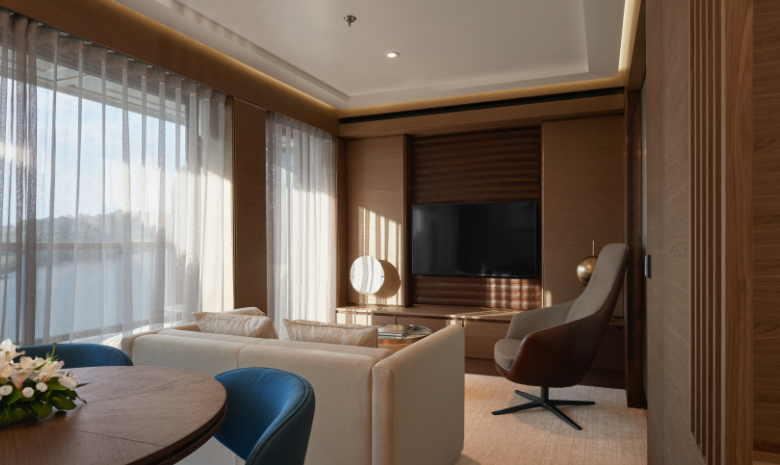
The Signature Suite
SUITE HIGHLIGHTS
MAGNIFICENT OCEAN VIEWS
- Private, spacious terrace overlooking the ocean
SPACIOUS SUITE ACCOMMODATIONS
- Luxurious and modern living and dining area
- Luxury custom king bed sleep system
- Double vanity bathroom
PERSONALIZED SERVICE AND AMENITIES
- The Personal Concierge is your single onboard touch point to ensure a flawless, seamless journey from beginning to end
- 24-hour in-suite dining, espresso machine, complimentary coffee and teas and a mini-bar provisioned to your preferences, upon request once on board
ACCOMMODATIONS
Bed & Bath
- Luxury custom king bed sleep system
- Double vanity bathroom with modern soaking tub and separate shower
- Custom luxury bed and bath linens
Suite Features
- Private, spacious terrace overlooking the ocean
- Luxurious and modern living and dining area
- Convertible sleep sofa
Size
- Suite: 429 SQ FT | 40 SQ M
- Terrace: 81 – 118 SQ FT | 7.5 – 11 SQ M
SERVICES AND AMENITIES
- 24-hour in-suite dining
- Luxury bath amenities & individual robe and slippers
- Premium Wi-Fi, supporting browsing, social media, streaming services, video calls and VPN services
- Complimentary chilled bottle of champagne upon arrival
- Espresso machine with complimentary coffee and teas
- Digital flat screen television
- In-suite safe
- Vanity mirror
- Hair dryer
- Hypoallergenic pillows, upon request
- 230v and 120v outlets, as well as USB charging capabilities
The Terrace Suite
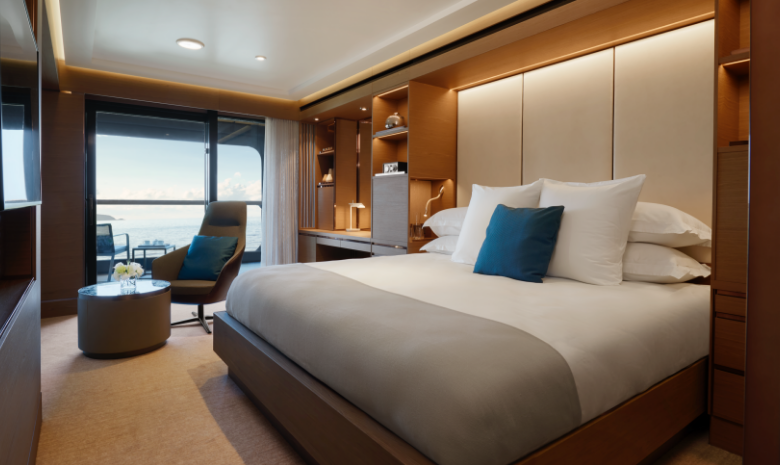
The Terrace Suite provides a foundation for the very best amenities enjoyed by all suite categories on board, including a private terrace, king-sized bed and double vanity. Best of all, guests enjoy the superlative service of an assigned suite ambassador.
SUITE HIGHLIGHTS
MAGNIFICENT OCEAN VIEWS
- Private, spacious terrace overlooking the ocean
SPACIOUS SUITE ACCOMMODATIONS
- Luxury custom king bed sleep system
- Double vanity bathroom
PERSONALIZED SERVICE AND AMENITIES
- The Personal Concierge is your single onboard touch point to ensure a flawless, seamless journey from beginning to end
- 24-hour in-suite dining, espresso machine, complimentary coffee and teas and a mini-bar provisioned to your preferences, upon request once on board
ACCOMMODATIONS
Bed & Bath
- Luxury custom king bed sleep system
- Double vanity bathroom with modern shower system
- Custom luxury bed and bath linens
Suite Features
- Private, spacious terrace overlooking the ocean
Size
- Suite: 300 SQ FT | 28 SQ M
- Terrace: 54 – 81 SQ FT | 5 – 7.5 SQ M
SERVICES AND AMENITIES
- 24-hour in-suite dining
- Luxury bath amenities & individual robe and slippers
- Premium Wi-Fi, supporting browsing, social media, streaming services, video calls and VPN services
- Complimentary chilled bottle of champagne upon arrival
- Espresso machine with complimentary coffee and teas
- Digital flat screen television
- In-suite safe
- Vanity mirror
- Hair dryer
- Hypoallergenic pillows, upon request
- 230v and 120v outlets, as well as USB charging capabilities
The Evrima Room
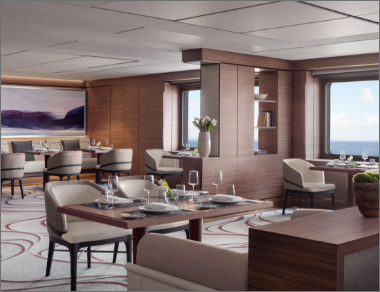
Designed with intimate seating arrangements, the spacious main restaurant offers a thoughtfully-designed balance of privacy and social connection. A menu of locally inspired creations change with the seasons to reflect the passing scene. The menu highlights the varied cultures, lands, and sights that are best explored at The Ritz-Carlton Yacht Collection destinations.
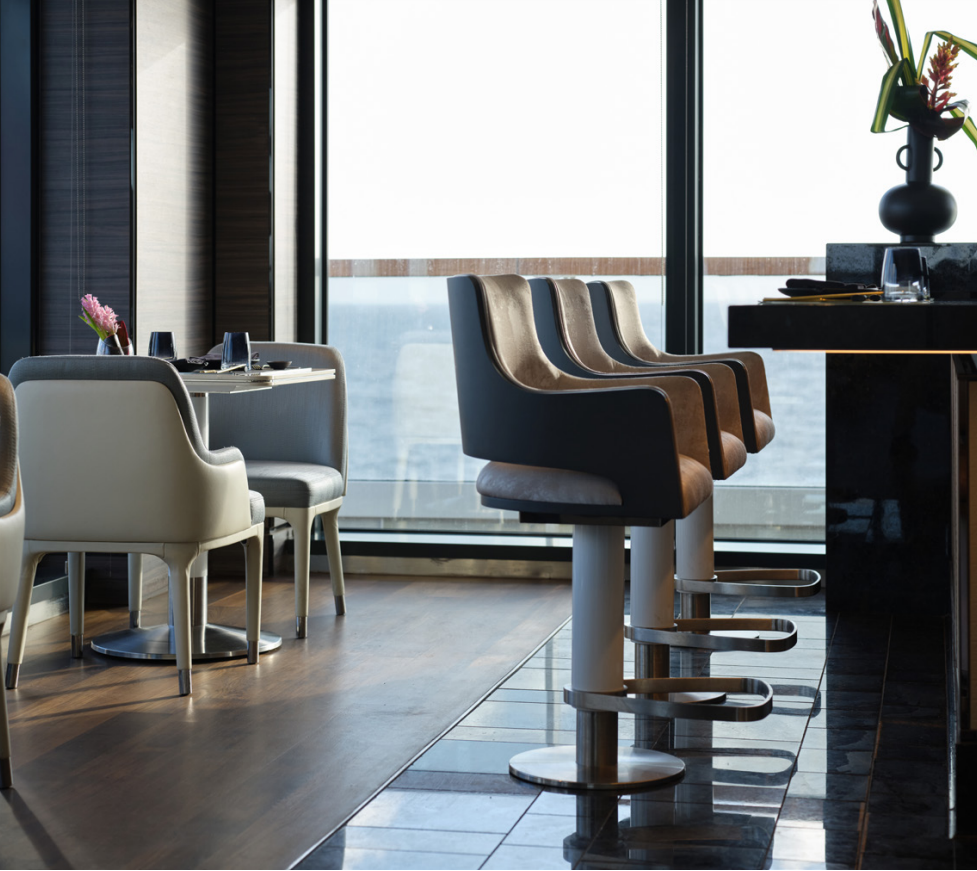
Talaat Nam
Creative interpretations of Southeast Asian cuisine are paired with sophisticated, laidback luxury in this sleek, contemporary restaurant. Sit down at the sushi bar, enjoy a more family-style table experience, or dine outside and watch the day’s destination disappear with the setting sun.
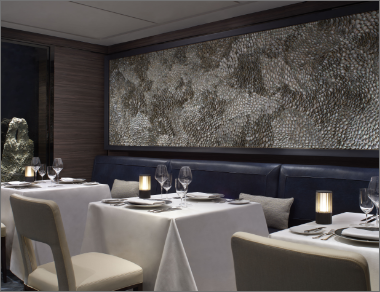
S.E.A
Indulge in a specialty dining experience designed by Chef Sven Elverfeld of Aqua, the three Michelin-starred restaurant at The Ritz-Carlton® in Wolfsburg. S.E.A. offers an inspired European tasting menu in a sophisticated setting with a contemporary feel. Cruise dining has never been more refreshing. Reservations required, additional fee applies. Located on Deck 6.
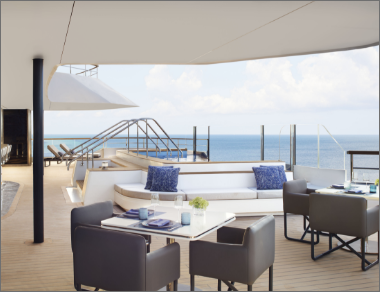
Mistral
Come as you are, for lunch or a romantic dinner al fresco. The Mediterranean-inspired menu features fresh local catches, while prime cuts are prepared to order from the grill. The deck serves as one of the best views on the yacht to enjoy dinner or drinks. Located on Deck 8.

The Living Room
Guests will wake to freshly roasted coffees and baked pastries at the espresso counter and bar. An array of ready-made culinary treats are also available for day trips and late nights.

In-Suite Dining
Dine in the comfort of your suite or on your private terrace when you order from the All-Day Dining menu, featuring influences from every dining venue onboard. For guests looking for further flexibility within all of The Ritz-Carlton Yacht Collection suites, a Late-Night Dining menu will also be available.
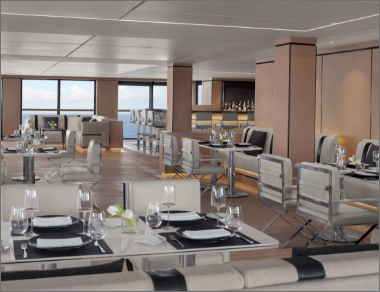
The Pool House
From a leisurely breakfast for early risers to late-night dining, this casual eatery serves a variety of cuisines prepared à la minute in an open air space. Enjoy a relaxing meal or casual bite at this inspired poolside restaurant.
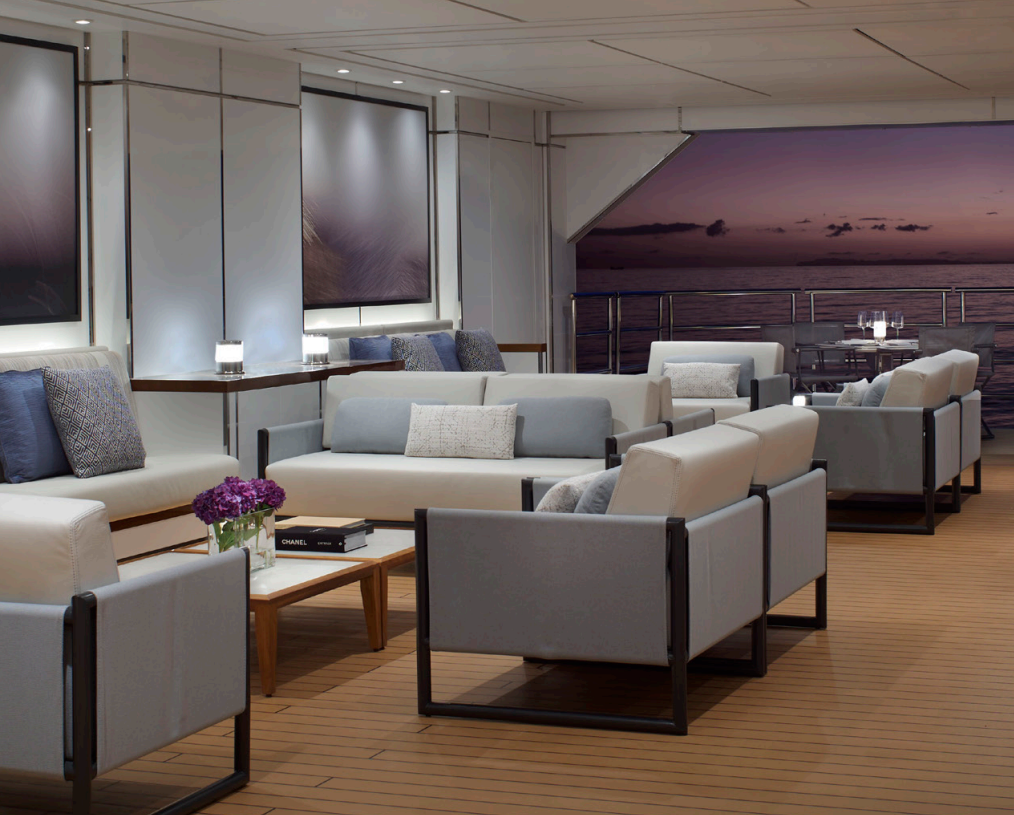
Marina and Marina Terrace
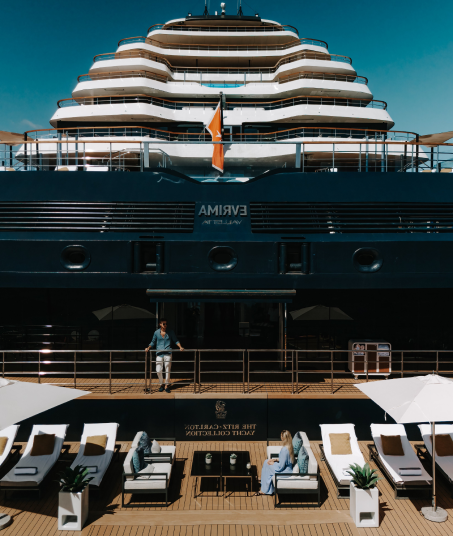
Sitting right at the water’s edge, the Marina offers sun loungers and a generous choice of water toys. Like a private beach with seamless entry into the sea, it’s the go-to spot while at anchor. Just steps above, the Marina Terrace serves handcrafted cocktails and light bites with stunning view

The Observation Lounge
Top-deck views erase the borders between land and sea, an inspired setting for lounging, cocktails or socializing. At twilight, the space is transformed into a venue with cocktails and live entertainment, extending into a late-night hangout. Whether exploring on luxury repositioning cruises, luxury Baltic cruises, US-based cruises, or anything in between, The Observation Lounge is your vantage point for sightseeing anywhere at sea.
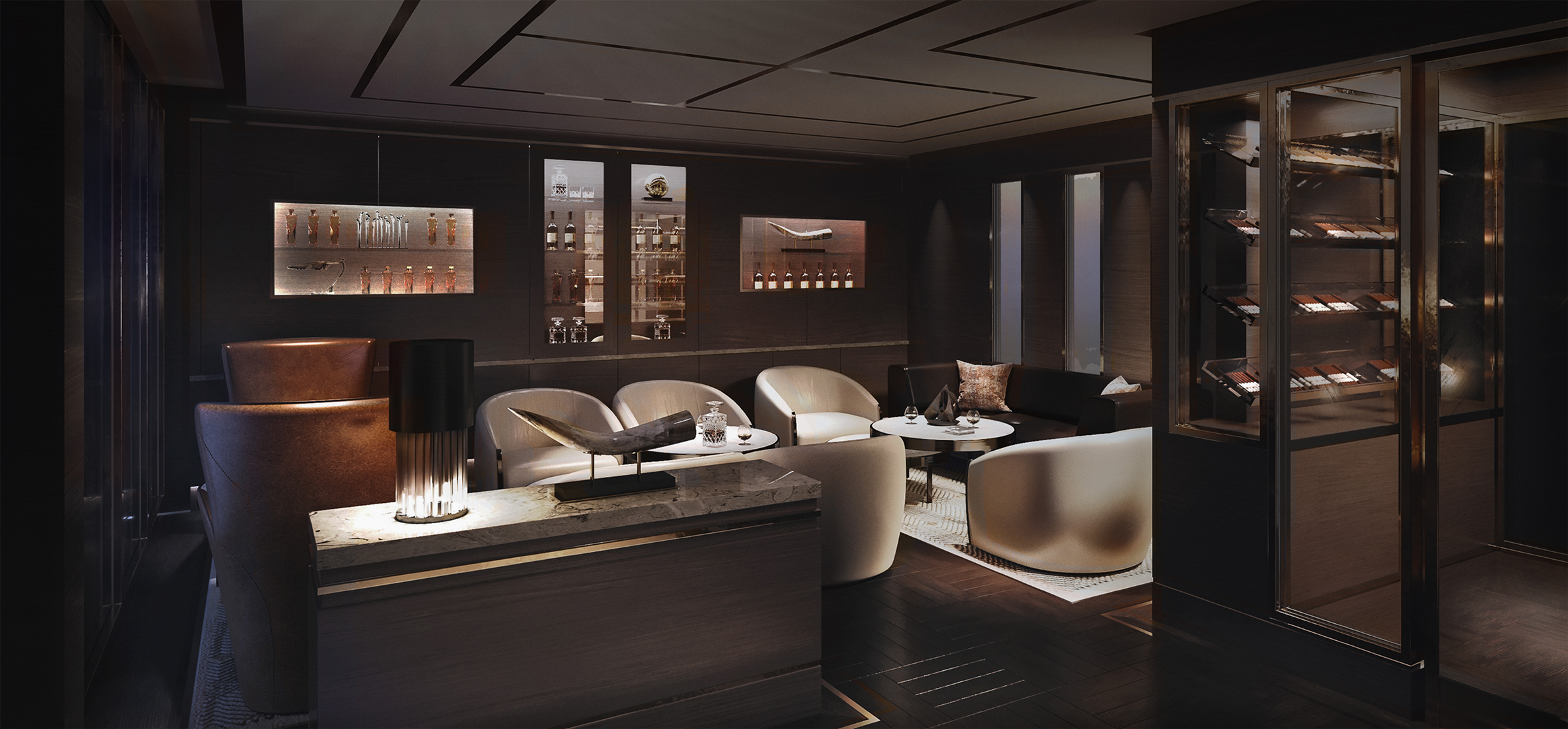
The Humidor
Cap off your day with a premium cognac in this intimate lounge with its comfortable furnishings. An excellent selection of premium, hand-rolled cigars are showcased in the state-of-the-art humidor.
The Boutique
From exclusive sportswear and branded apparel to jewelry and leather goods, leading labels offer enticing options. In select ports, your shopping experience is further enhanced by bespoke collaborations with local artisans who come on board to showcase their offerings.
The Living Room
Bold shades of blue reflecting the sea provide a vibrant accent to the yacht’s gathering place, with its chic, comfortable furnishings and library with travel guides and best sellers. Diffused lighting transforms the space into a cocktail lounge with piano bar, dancing and live music later on, making The Living Room one of the most popular Ritz-Carlton Yacht Collection onboard features.
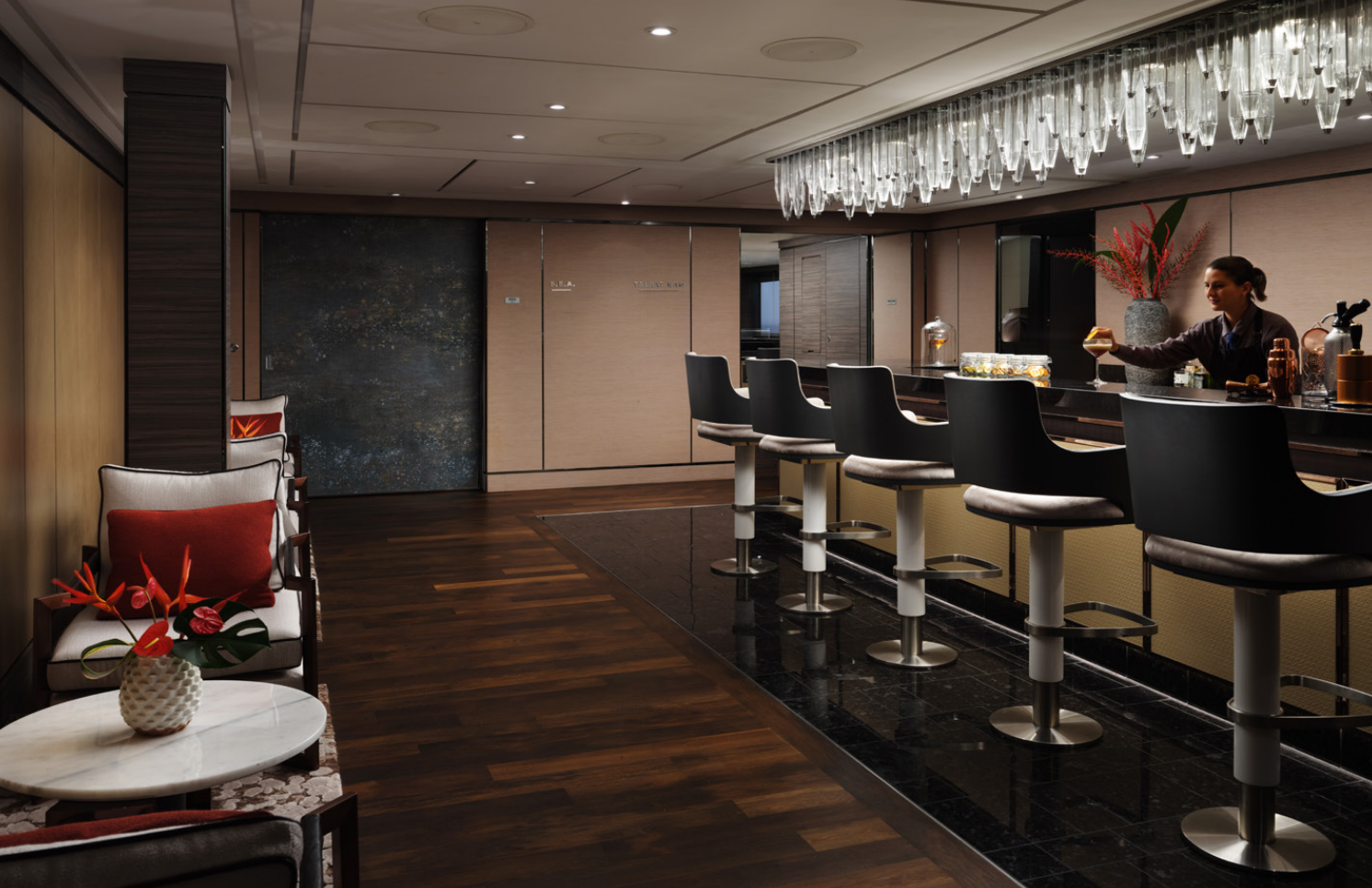
The Bar
This intimate lounge serves premium labels from around the world and also offers champagne and caviar pairings.
The Pool
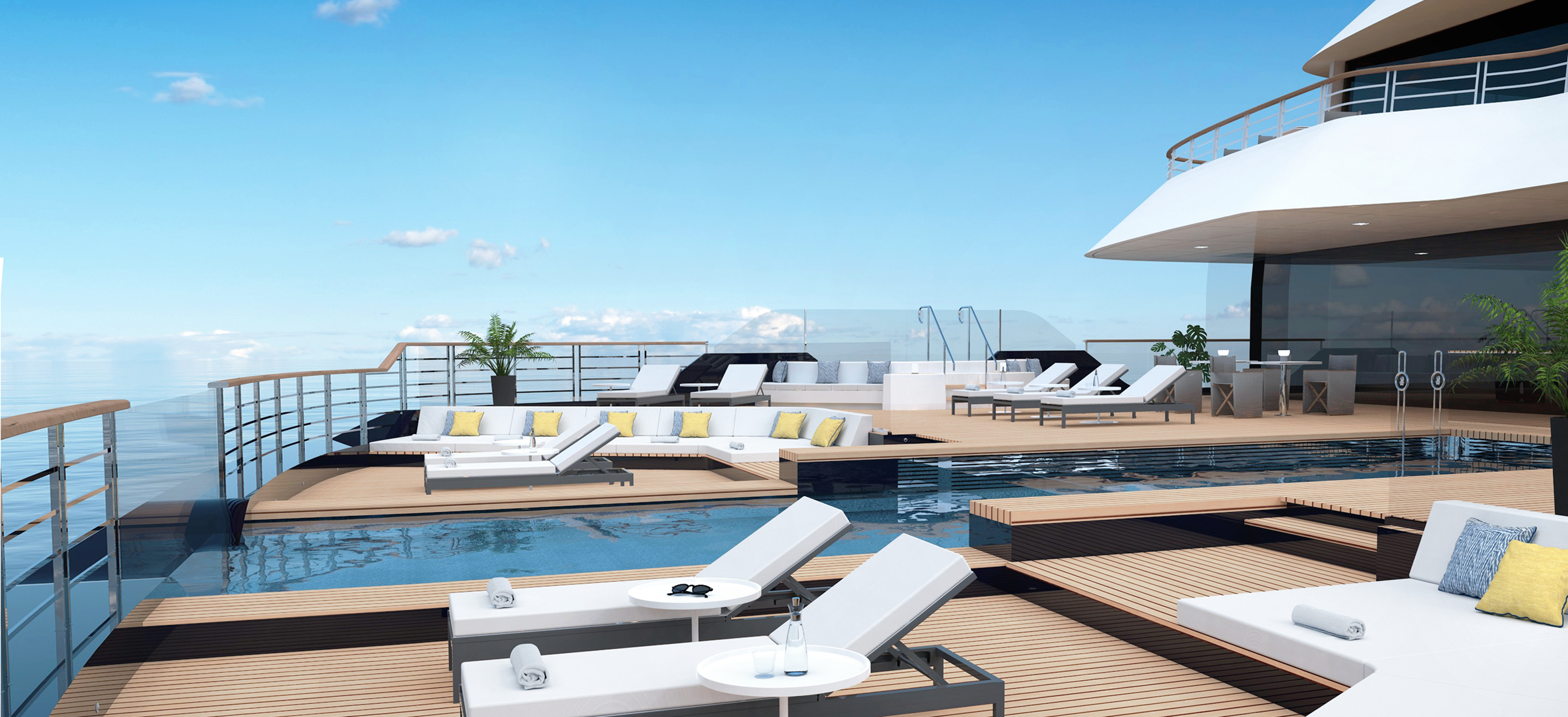
An infinity oasis of blue is just steps away from The Pool House, where guests can enjoy all-day dining. Frozen treats and refreshing water mistings pamper guests on the sun loungers and banquettes or soaking in the whirlpools. A spacious venue for deck parties and open-air movies.
The Ritz-Carlton Spa
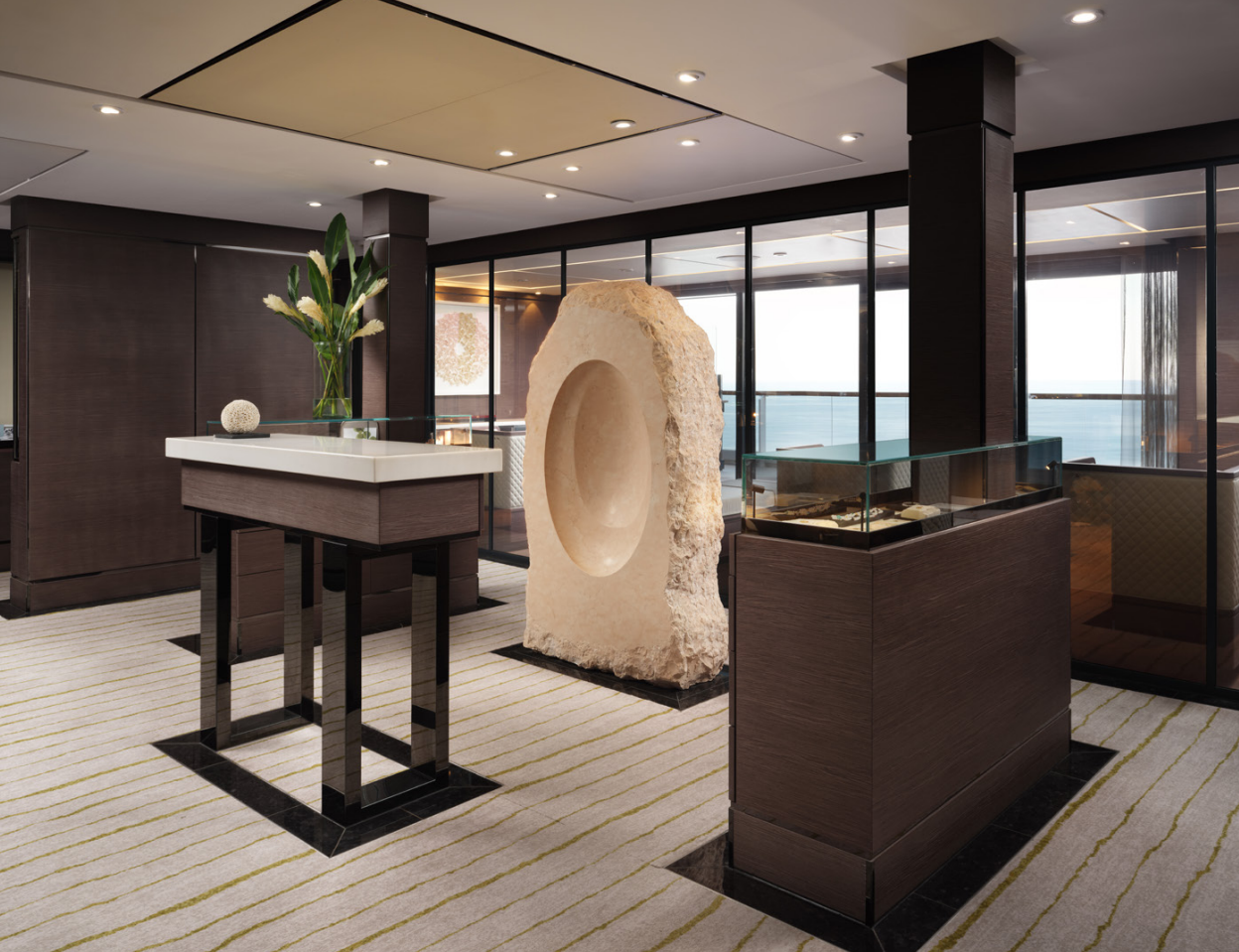
Listen to the gentle lap of waves while reclining on a massage table, savoring a therapeutic spa treatment from the private terrace of one of our treatment rooms. Inspired by the destinations we visit and curated to fulfill your needs, our treatments feature the finest ESPA products to awaken the senses, refresh the body and renew the spirit. Arrive early, stay a while and drift away into relaxation aboard your oasis at sea.
The Fitness Studio
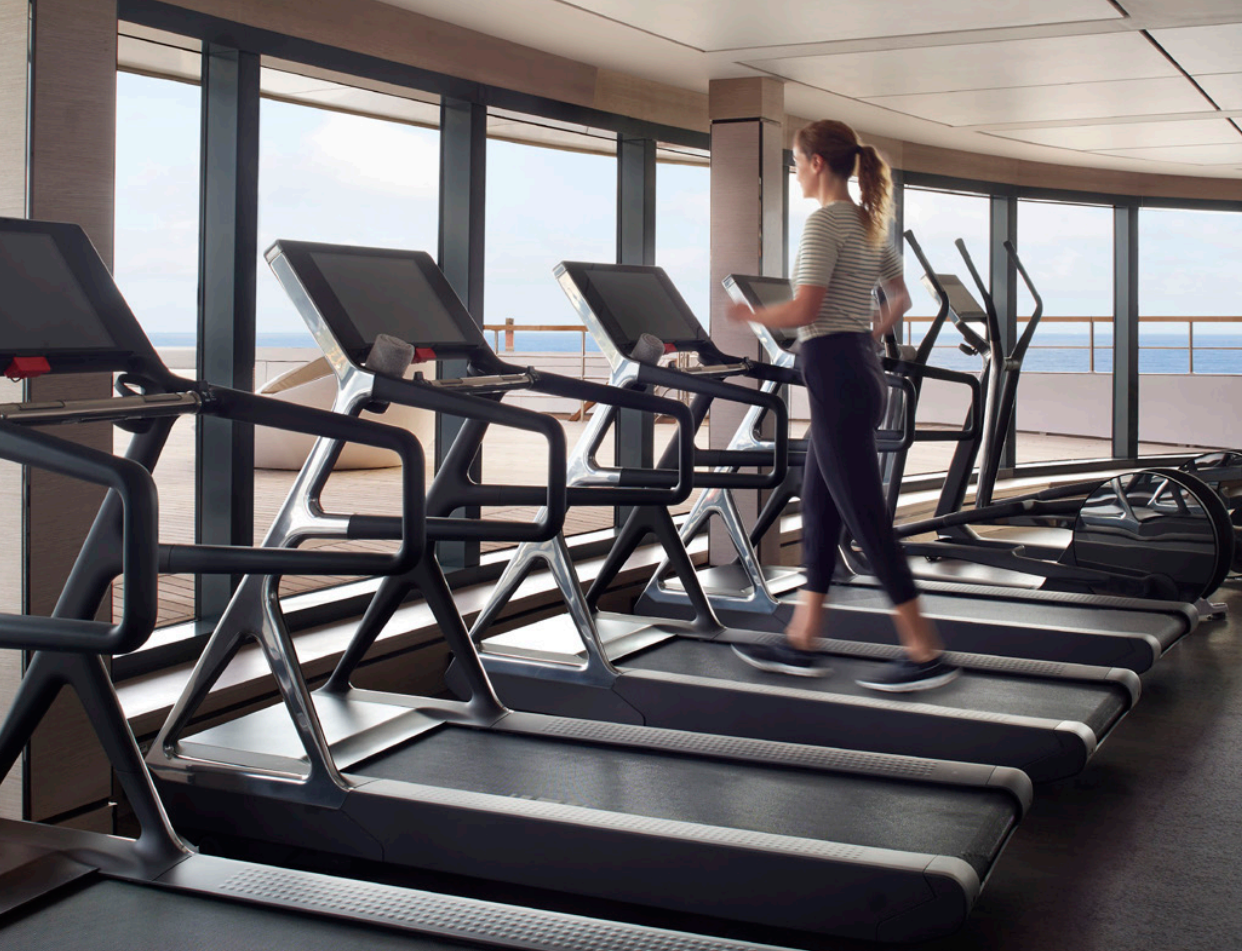
The Fitness Studio is home to a health and wellness program that integrates fitness and spa with lectures and nutrition that can be customized for each guest. From personal training to sunrise yoga and mat Pilates, each voyage has opportunities to maintain a healthy lifestyle.
Barber & Salon Services
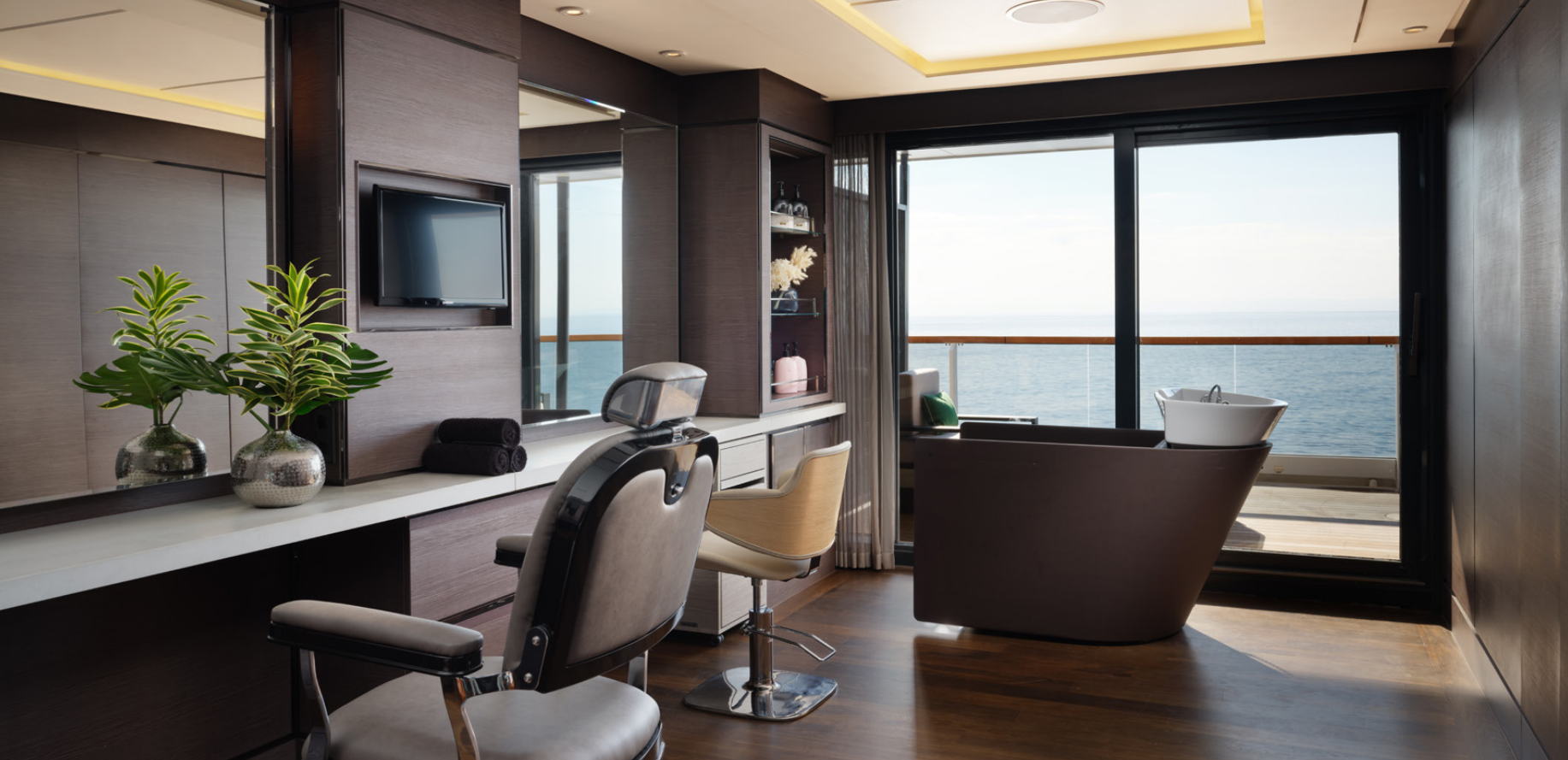
The Salon offers a variety of beauty and hair services including manicure and pedicure treatments, hair consultations, cutting, styling and blow drying. Next door at The Barber, gentlemen can enjoy a close shave or invigorating facial before heading ashore to explore the port feeling refreshed and revitalized.
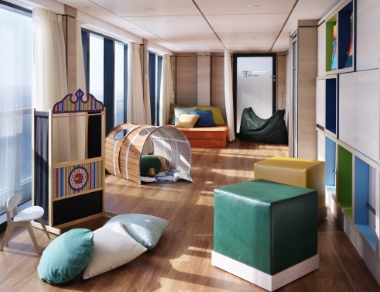
Ritz-Kids
Families exploring the world together are welcome aboard The Ritz-Carlton Yacht Collection. With its own dedicated space on board, Ritz-Kids® is an educational and fun-filled program that encourages children ages 4 to 12 to explore the world around them. Enhanced programming will be available during holidays and summer months.
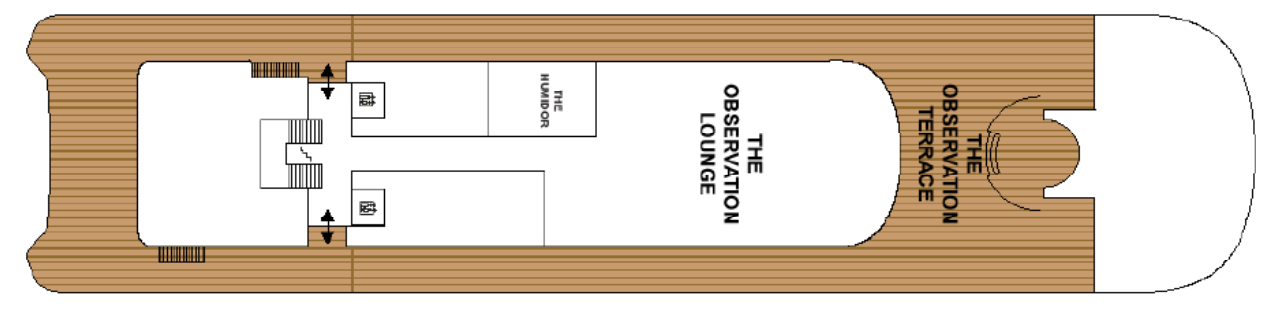
Deck 10
- The Observation Lounge
- The Observation Terrace
- The Humidor
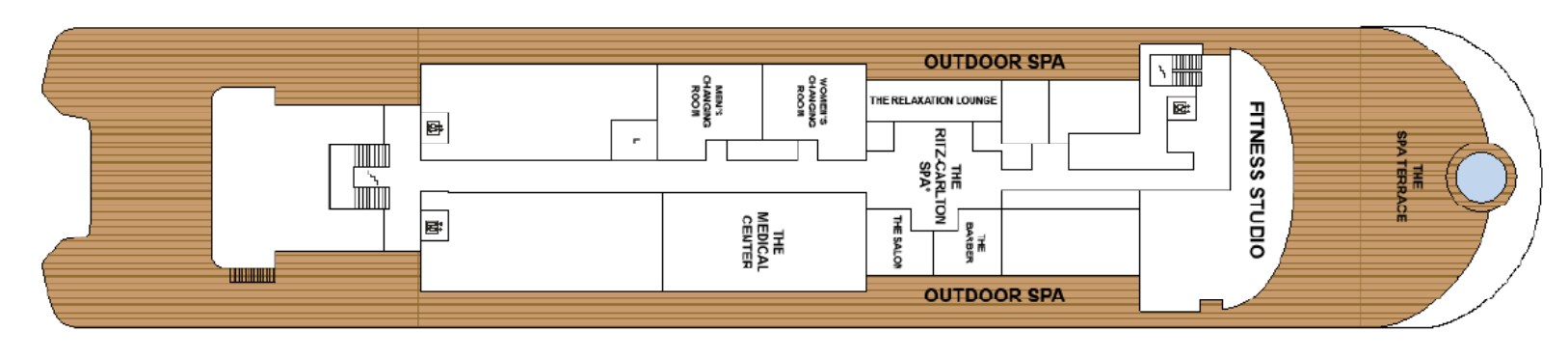
Deck 9
- The Gym
- Fitness Studio
- The Ritz-Carlton Spa
- Outdoor Spa
- The Spa Terrace
- The Barber/The Salon
- Launderette
- Men/Women’s Changing Rooms
- The Medical Centre
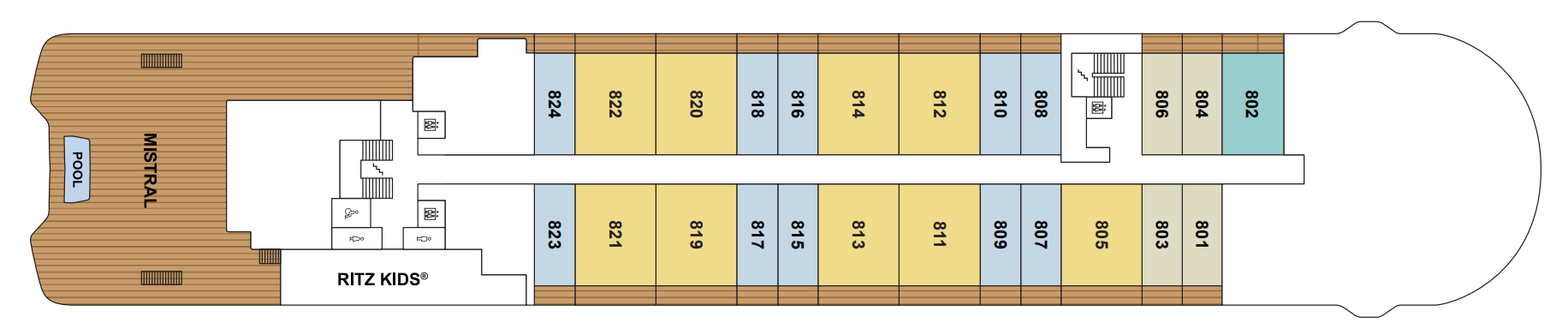
Deck 8
- Mistral
- Pool
- Ritz-Kids
- Suites 801 – 824

Deck 7
- Suites 701 – 737

Deck 6
- The Bar
- S.E.A
- Talaat Nam
- Suites 601 – 645

Deck 5
- The Pool House
- The Pool
- Suites 501 – 545

Deck 4
- The Meeting Rooms
- The Living Room
- The Boutique
- Wine Vault
- Wine Tasting Area
- The Evrima Room
- Dining Privee
- Dining Privée
- 505 – 519 Lower Level

Deck 3
- The Marina Terrace
- The Marina