Itinerary
Stockholm is a city in the flush of its second youth. Since the mid-1990s, Sweden’s capital has emerged from its cold, Nordic shadow to take the stage as a truly international city. What started with entry into the European Union in 1995 gained pace with the extraordinary IT boom of the late 1990s, strengthened with the Skype-led IT second wave of 2003, and solidified with the hedge-fund invasion that is still happening today as Stockholm gains even more global confidence. And despite more recent economic turmoil, Stockholm’s 1 million or so inhabitants have, almost as one, realized that their city is one to rival Paris, London, New York, or any other great metropolis.With this realization comes change. Stockholm has become a city of design, fashion, innovation, technology, and world-class food, pairing homegrown talent with an international outlook. The streets are flowing with a young and confident population keen to drink in everything the city has to offer. The glittering feeling of optimism, success, and living in the here and now is rampant in Stockholm.Stockholm also has plenty of history. Positioned where the waters of Lake Mälaren rush into the Baltic, it’s been an important trading site and a wealthy international city for centuries. Built on 14 islands joined by bridges crossing open bays and narrow channels, Stockholm boasts the story of its history in its glorious medieval old town, grand palaces, ancient churches, sturdy edifices, public parks, and 19th-century museums—its history is soaked into the very fabric of its airy boulevards, built as a public display of trading glory.
Estonia’s history is sprinkled liberally with long stretches of foreign domination, beginning in 1219 with the Danes, followed without interruption by the Germans, Swedes, and Russians. Only after World War I, with Russia in revolutionary wreckage, was Estonia able to declare its independence. Shortly before World War II, in 1940, that independence was usurped by the Soviets, who—save for a brief three-year occupation by Hitler’s Nazis—proceeded to suppress all forms of national Estonian pride for the next 50 years. Estonia finally regained independence in 1991. In the early 1990s, Estonia’s own Riigikogu (Parliament), not some other nation’s puppet ruler, handed down from the Upper City reforms that forced Estonia to blaze its post-Soviet trail to the European Union. Estonia has been a member of the EU since 2004, and in 2011, the country and its growing economy joined the Eurozone. Tallinn was also named the European City of Culture in 2011, cementing its growing reputation as a cultural hot spot.
A city of the sea, Helsinki was built along a series of oddly shaped peninsulas and islands jutting into the Baltic coast along the Gulf of Finland. Streets and avenues curve around bays, bridges reach to nearby islands, and ferries ply among offshore islands.Having grown dramatically since World War II, Helsinki now absorbs more than one-tenth of the Finnish population. The metro area covers 764 square km (474 square miles) and 315 islands. Most sights, hotels, and restaurants cluster on one peninsula, forming a compact central hub. The greater Helsinki metropolitan area, which includes Espoo and Vantaa, has a total population of more than a million people.Helsinki is a relatively young city compared with other European capitals. In the 16th century, King Gustav Vasa of Sweden decided to woo trade from the Estonian city of Tallinn and thus challenge the Hanseatic League’s monopoly on Baltic trade. Accordingly, he commanded the people of four Finnish towns to pack up their belongings and relocate to the rapids on the River Vantaa. The new town, founded on June 12, 1550, was named Helsinki.For three centuries, Helsinki (Helsingfors in Swedish) had its ups and downs as a trading town. Turku, to the west, remained Finland’s capital and intellectual center. However, Helsinki’s fortunes improved when Finland fell under Russian rule as an autonomous grand duchy. Czar Alexander I wanted Finland’s political center closer to Russia and, in 1812, selected Helsinki as the new capital. Shortly afterward, Turku suffered a disastrous fire, forcing the university to move to Helsinki. The town’s future was secure.Just before the czar’s proclamation, a fire destroyed many of Helsinki’s traditional wooden structures, precipitating the construction of new buildings suitable for a nation’s capital. The German-born architect Carl Ludvig Engel was commissioned to rebuild the city, and as a result, Helsinki has some of the purest neoclassical architecture in the world. Add to this foundation the influence of Stockholm and St. Petersburg with the local inspiration of 20th-century Finnish design, and the result is a European capital city that is as architecturally eye-catching as it is distinct from other Scandinavian capitals. You are bound to discover endless engaging details—a grimacing gargoyle; a foursome of males supporting a balcony’s weight on their shoulders; a building painted in striking colors with contrasting flowers in the windows. The city’s 400 or so parks make it particularly inviting in summer.Today, Helsinki is still a meeting point of eastern and western Europe, which is reflected in its cosmopolitan image, the influx of Russians and Estonians, and generally multilingual population. Outdoor summer bars (“terrassit” as the locals call them) and cafés in the city center are perfect for people watching on a summer afternoon.
Rīga has an upscale, big-city feel unmatched in the region. The capital (almost as large as Tallinn and Vilnius combined) is the business center of the area while original, high-quality restaurants and hotels have earned Rīga some bragging rights among its Western European counterparts. The city also doesn’t lack for beauty—Rīga’s Old Town (now a UNESCO World Heritage site) is one of Europe’s most striking examples of the art nouveau architectural style. Long avenues of complex and sometimes whimsical Jugendstil facades hint at Rīga’s grand past. Many were designed by Mikhail Eisenstein, the father of Soviet director Sergei. This style dominates the city center. In many ways, the wonder of Rīga resides less in its individual attractions and more in the fabric of the town itself. In the medieval Old Town, an ornate gable or architrave catches the eye at every turn. The somber and the flamboyant are both represented in this quarter’s 1,000 years of architectural history. Don’t hesitate to just follow where your desire leads—the Old Town is compact and bounded by canals, so it’s difficult to get totally lost. When the Old Town eventually became too crowded, the city burst out into the newer inner suburbs. The rich could afford to leave and build themselves fine fashionable mansions in the style of the day; consequently, city planners created a whole new Rīga. Across the narrow canal, you’ll find the Esplanāde, a vast expanse of parkland with formal gardens and period mansions where the well-heeled stroll and play. Surrounding this is the art nouveau district. Encompassing avenues of splendid family homes (now spruced up in the postcommunist era), the collection has been praised by UNESCO as Europe’s finest in the art nouveau style. The best examples are at Alberta 2, 2a, 4, 6, 8, and 13; Elizabetes 10b; and Strēlnieku 4a. If the weather permits, eschew public transport and stroll between the two districts, taking in the varied skylines and multifaceted facades, and perhaps stopping at a café or two as you go. The city has churches in five Christian denominations and more than 50 museums, many of which cater to eclectic or specialist tastes.
Gotland is Sweden’s main holiday island, a place of ancient history, a relaxed summer-party vibe, wide sandy beaches, and wild cliff formations called raukar (the remnants of reefs formed more than 400 million years ago). Measuring 125 km (78 miles) long and 52 km (32 miles) at its widest point, Gotland is where Swedish sheep farming has its home. In its charming glades, 35 varieties of wild orchids thrive, attracting botanists from all over the world.
By the 11th century, Copenhagen was already an important trading and fishing centre and today you will find an attractive city which, although the largest in Scandinavia, has managed to retain its low-level skyline. Discover some of the famous attractions including Gefion Fountain and Amalienborg Palace, perhaps cruise the city’s waterways, visit Rosenborg Castle or explore the medieval fishing village of Dragoer. Once the home of Hans Christian Andersen, Copenhagen features many reminders of its fairytale heritage and lives up to the reputation immortalised in the famous song ‘Wonderful Copenhagen’.
Ship features

The Owners Suite
SUITE DESCRIPTION
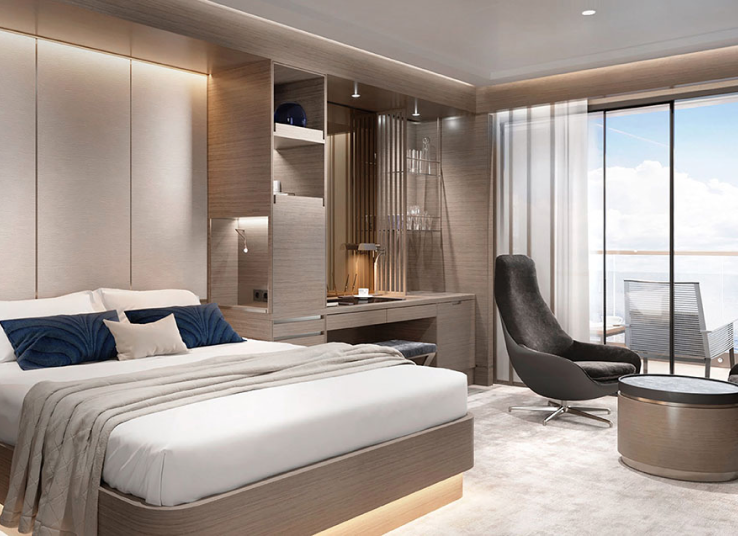
The Owner’s Suite was designed to epitomize the yachting lifestyle, with outsize suite and terrace spaces inviting unparalleled entertaining and ultimate comfort. The suite’s expansive private terrace truly wows with a whirlpool, dedicated outdoor dining table and conversation spaces that blur the lines of indoor-outdoor living, all to the sweeping backdrop of majestic sea views. The suite itself is distinguished by a second full bath with shower, a full bar with seating, two living/conversation areas and a dining table that comfortably seats 6 guests.
SUITE HIGHLIGHTS
MAGNIFICENT OCEAN VIEWS
- Private, spacious terrace overlooking the ocean, with private whirlpool
SPACIOUS SUITE ACCOMMODATIONS
- Luxurious and modern living and dining area
- Luxury custom king bed sleep system
- Double vanity bathroom
PERSONALIZED SERVICE AND AMENITIES
- The Personal Concierge is your single onboard touch point to ensure a flawless, seamless journey from beginning to end
- 24-hour in-suite dining, espresso machine, complimentary coffee and teas and a mini-bar provisioned to your preferences, upon request once on board
ACCOMMODATIONS
Bed & Bath
- Luxury custom king bed sleep system
- Double vanity bathroom with modern soaking tub and separate shower
- Second bathroom with modern shower system
- Custom luxury bed and bath linens
Suite Features
- Private, spacious terrace overlooking the ocean with private whirlpool
- Luxurious and modern living and dining area
- Walk-in wardrobe
- Convertible sleep sofa
Size
- Suite: 1091 SQ FT | 101 SQ M
- Terrace: 635 SQ FT | 59 SQ M
SERVICES AND AMENITIES
- 24-hour in-suite dining
- Luxury bath amenities & individual robe and slippers
- Premium Wi-Fi, supporting browsing, social media, streaming services, video calls and VPN services
- Complimentary chilled bottle of champagne upon arrival
- Espresso machine with complimentary coffee and teas
- Digital flat screen television
- In-suite safe
- Vanity mirror
- Hair dryer
- Hypoallergenic pillows, upon request
- 230v and 120v outlets, as well as USB charging capabilities
- Set of high-zoom binoculars

The View Suite
The View suite brings the outdoors in with its expansive length of dramatic floor to ceiling glass and private terrace, offering unmatched views and capturing the sea breeze from Juliet balconies in the living, bed and bath areas. These views are meant to be shared, with the large private terrace, living and dining areas allowing guests to entertain out of sight of the suite’s bed and bath area.
SUITE HIGHLIGHTS
MAGNIFICENT OCEAN VIEWS
- Dramatic floor to ceiling glass throughout
- Private, spacious terrace overlooking the ocean
SPACIOUS SUITE ACCOMMODATIONS
- Luxurious and modern living and dining area
- Luxury custom king bed sleep system
- Double vanity bathroom
PERSONALIZED SERVICE AND AMENITIES
- The Personal Concierge is your single onboard touch point to ensure a flawless, seamless journey from beginning to end
- 24-hour in-suite dining, espresso machine, complimentary coffee and teas and a mini-bar provisioned to your preferences, upon request once on board
ACCOMMODATIONS
Bed & Bath
- Luxury custom king bed sleep system
- Double vanity bathroom with modern soaking tub and separate shower
- Custom luxury bed and bath linens
Suite Features
- Private, spacious terrace overlooking the ocean
- Convertible sleep sofa
Size
- (Suite 732 & 733)
- Suite: 544 SQ FT | 51 SQ M
- Terrace: 108 SQ FT | 10 SQ M
(Suite 734 & 735)
- Suite: 574 SQ FT | 53 SQ M
- Terrace: 129 SQ FT | 12 SQ M
SERVICES AND AMENITIES
- 24-hour in-suite dining
- Luxury bath amenities & individual robe and slippers
- Premium Wi-Fi, supporting browsing, social media, streaming services, video calls and VPN services
- Complimentary chilled bottle of champagne upon arrival
- Espresso machine with complimentary coffee and teas
- Digital flat screen television
- In-suite safe
- Vanity mirror
- Hair dryer
- Hypoallergenic pillows, upon request
- 230v and 120v outlets, as well as USB charging capabilities

The 2-Story Loft Suite
The Loft suite is a study in duality: a lower level designed for rest and relaxation, and an upper level perfect for socializing and entertaining. With a powder room and expanded living area upstairs, this space easily converts into a second private sleeping area for guests traveling with children or travelers sleeping separately. The expanded desk and dressing table in the lower level provides uninterrupted views through an oversized picture window.
SUITE HIGHLIGHTS
MAGNIFICENT OCEAN VIEWS
- Private, spacious terrace overlooking the ocean on the upper level
- Picture window on the lower level
SPACIOUS SUITE ACCOMMODATIONS
- Innovative two story suite with entry from both levels
- Luxurious and modern living and dining area on the upper level
- Luxury custom king bed sleep system on the lower level
- Double vanity bathroom
PERSONALIZED SERVICE AND AMENITIES
- The Personal Concierge is your single onboard touch point to ensure a flawless, seamless journey from beginning to end
- 24-hour in-suite dining, espresso machine, complimentary coffee and teas and a mini-bar provisioned to your preferences, upon request once on board
ACCOMMODATIONS
Bed & Bath
- Powder room on the upper level
- Double vanity master bathroom with modern soaking tub and separate shower on the lower level
- Luxury custom king bed sleep system on the lower level
- Custom luxury bed and bath linens
Suite Features
- Innovative two story suite with entry from both levels
- Private, spacious terrace overlooking the ocean on the upper level
- Luxurious and modern living and dining area on the upper level
- Convertible sleep sofa on the upper level
Size
- Suite: 611 SQ FT | 57 SQ M
- Terrace: 81 SQ FT | 7.5 SQ M
SERVICES AND AMENITIES
- 24-hour in-suite dining
- Luxury bath amenities & individual robe and slippers
- Premium Wi-Fi, supporting browsing, social media, streaming services, video calls and VPN services
- Complimentary chilled bottle of champagne upon arrival
- Espresso machine with complimentary coffee and teas
- Digital flat screen television
- In-suite safe
- Vanity mirror
- Hair dryer
- Hypoallergenic pillows, upon request
- 230v and 120v outlets, as well as USB charging capabilities
The Grand Suite
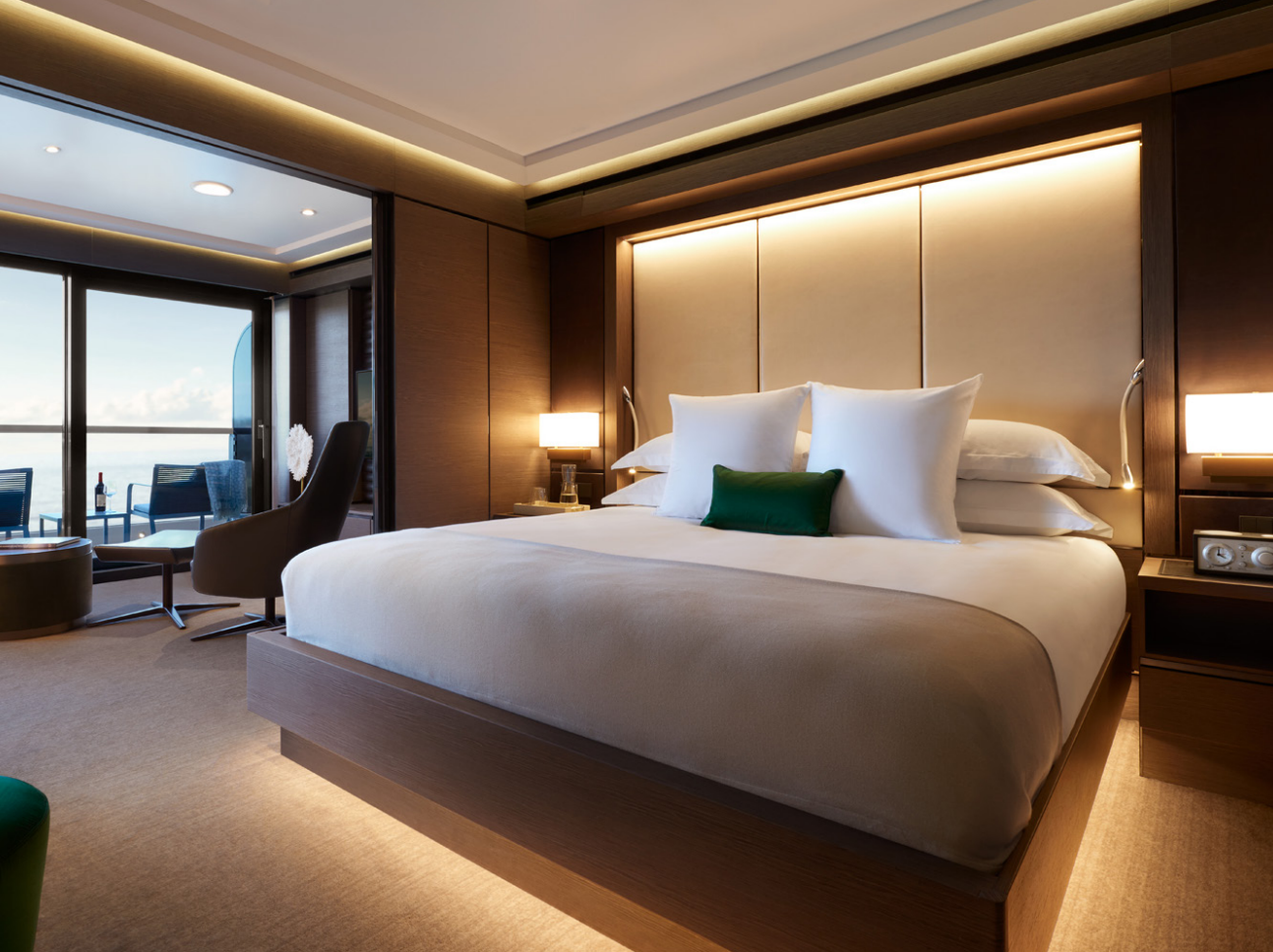
The Grand Suite offers a distinctly residential suite experience, allowing guests to feel at home upon the sea. The suite features dual walk-in closets, a dining table that comfortably accommodates 4 guests, plus added space on the private terrace and in living and bath spaces to spread out and relax.
SUITE HIGHLIGHTS
MAGNIFICENT OCEAN VIEWS
- Private, spacious terrace overlooking the ocean
SPACIOUS SUITE ACCOMMODATIONS
- Luxury custom king bed sleep system
- Double vanity bathroom
- Luxurious and modern living and dining area
PERSONALIZED SERVICE AND AMENITIES
- The Personal Concierge is your single onboard touch point to ensure a flawless, seamless journey from beginning to end
- 24-hour in-suite dining, espresso machine, complimentary coffee and teas and a mini-bar provisioned to your preferences, upon request once on board
ACCOMMODATIONS
Bed & Bath
- Luxury custom king bed sleep system
- Double vanity bathroom with modern soaking tub and separate shower
- Custom luxury bed and bath linens
Suite Features
- Private, spacious terrace overlooking the ocean
- Luxurious and modern living and dining area
- Dual walk-in wardrobes
- Convertible sleep sofa
Size
- Suite: 587 SQ FT | 55 SQ M
- Terrace: 108 – 118 SQ FT | 10 – 11 SQ M
SERVICES AND AMENITIES
- 24-hour in-suite dining
- Luxury bath amenities & individual robe and slippers
- Premium Wi-Fi, supporting browsing, social media, streaming services, video calls and VPN services
- Complimentary chilled bottle of champagne upon arrival
- Espresso machine with complimentary coffee and teas
- Digital flat screen television
- In-suite safe
- Vanity mirror
- Hair dryer
- Hypoallergenic pillows, upon request
- 230v and 120v outlets, as well as USB charging capabilities
The Signature Suite
SUITE HIGHLIGHTS
MAGNIFICENT OCEAN VIEWS
- Private, spacious terrace overlooking the ocean
SPACIOUS SUITE ACCOMMODATIONS
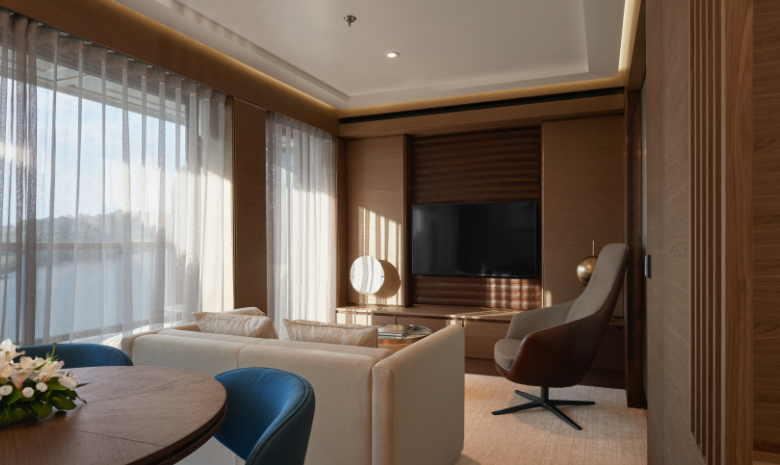
- Luxurious and modern living and dining area
- Luxury custom king bed sleep system
- Double vanity bathroom
PERSONALIZED SERVICE AND AMENITIES
- The Personal Concierge is your single onboard touch point to ensure a flawless, seamless journey from beginning to end
- 24-hour in-suite dining, espresso machine, complimentary coffee and teas and a mini-bar provisioned to your preferences, upon request once on board
ACCOMMODATIONS
Bed & Bath
- Luxury custom king bed sleep system
- Double vanity bathroom with modern soaking tub and separate shower
- Custom luxury bed and bath linens
Suite Features
- Private, spacious terrace overlooking the ocean
- Luxurious and modern living and dining area
- Convertible sleep sofa
Size
- Suite: 429 SQ FT | 40 SQ M
- Terrace: 81 – 118 SQ FT | 7.5 – 11 SQ M
SERVICES AND AMENITIES
- 24-hour in-suite dining
- Luxury bath amenities & individual robe and slippers
- Premium Wi-Fi, supporting browsing, social media, streaming services, video calls and VPN services
- Complimentary chilled bottle of champagne upon arrival
- Espresso machine with complimentary coffee and teas
- Digital flat screen television
- In-suite safe
- Vanity mirror
- Hair dryer
- Hypoallergenic pillows, upon request
- 230v and 120v outlets, as well as USB charging capabilities
The Terrace Suite
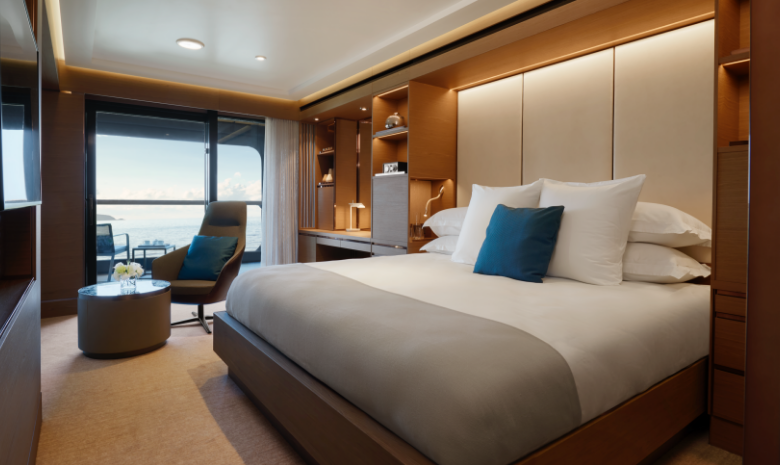
The Terrace Suite provides a foundation for the very best amenities enjoyed by all suite categories on board, including a private terrace, king-sized bed and double vanity. Best of all, guests enjoy the superlative service of an assigned suite ambassador.
SUITE HIGHLIGHTS
MAGNIFICENT OCEAN VIEWS
- Private, spacious terrace overlooking the ocean
SPACIOUS SUITE ACCOMMODATIONS
- Luxury custom king bed sleep system
- Double vanity bathroom
PERSONALIZED SERVICE AND AMENITIES
- The Personal Concierge is your single onboard touch point to ensure a flawless, seamless journey from beginning to end
- 24-hour in-suite dining, espresso machine, complimentary coffee and teas and a mini-bar provisioned to your preferences, upon request once on board
ACCOMMODATIONS
Bed & Bath
- Luxury custom king bed sleep system
- Double vanity bathroom with modern shower system
- Custom luxury bed and bath linens
Suite Features
- Private, spacious terrace overlooking the ocean
Size
- Suite: 300 SQ FT | 28 SQ M
- Terrace: 54 – 81 SQ FT | 5 – 7.5 SQ M
SERVICES AND AMENITIES
- 24-hour in-suite dining
- Luxury bath amenities & individual robe and slippers
- Premium Wi-Fi, supporting browsing, social media, streaming services, video calls and VPN services
- Complimentary chilled bottle of champagne upon arrival
- Espresso machine with complimentary coffee and teas
- Digital flat screen television
- In-suite safe
- Vanity mirror
- Hair dryer
- Hypoallergenic pillows, upon request
- 230v and 120v outlets, as well as USB charging capabilities
The Evrima Room
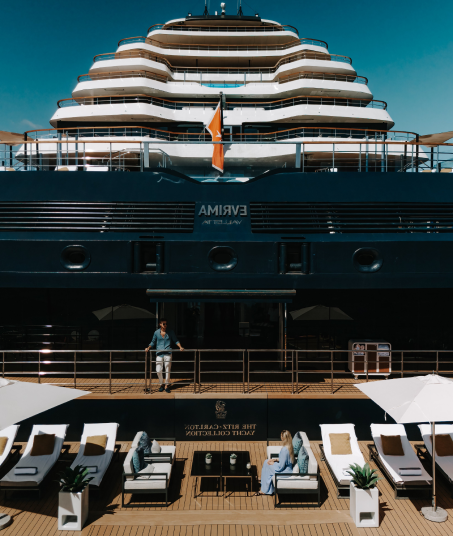
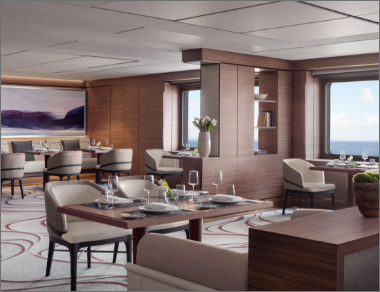
Designed with intimate seating arrangements, the spacious main restaurant offers a thoughtfully-designed balance of privacy and social connection. A menu of locally inspired creations change with the seasons to reflect the passing scene. The menu highlights the varied cultures, lands, and sights that are best explored at The Ritz-Carlton Yacht Collection destinations.
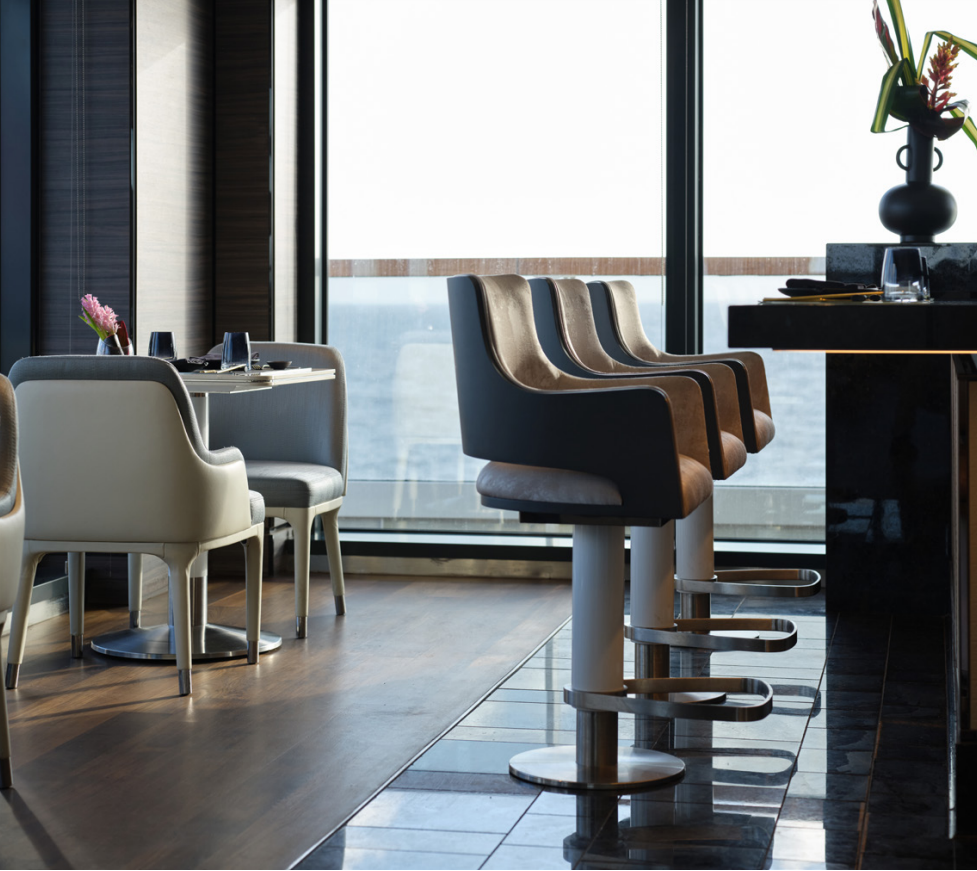
Talaat Nam
Creative interpretations of Southeast Asian cuisine are paired with sophisticated, laidback luxury in this sleek, contemporary restaurant. Sit down at the sushi bar, enjoy a more family-style table experience, or dine outside and watch the day’s destination disappear with the setting sun.
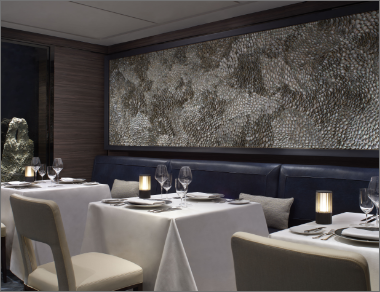
S.E.A
Indulge in a specialty dining experience designed by Chef Sven Elverfeld of Aqua, the three Michelin-starred restaurant at The Ritz-Carlton® in Wolfsburg. S.E.A. offers an inspired European tasting menu in a sophisticated setting with a contemporary feel. Cruise dining has never been more refreshing. Reservations required, additional fee applies. Located on Deck 6.
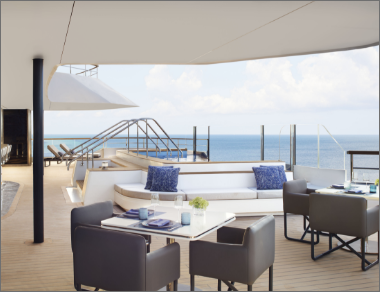
Mistral
Come as you are, for lunch or a romantic dinner al fresco. The Mediterranean-inspired menu features fresh local catches, while prime cuts are prepared to order from the grill. The deck serves as one of the best views on the yacht to enjoy dinner or drinks. Located on Deck 8.

The Living Room
Guests will wake to freshly roasted coffees and baked pastries at the espresso counter and bar. An array of ready-made culinary treats are also available for day trips and late nights.

In-Suite Dining
Dine in the comfort of your suite or on your private terrace when you order from the All-Day Dining menu, featuring influences from every dining venue onboard. For guests looking for further flexibility within all of The Ritz-Carlton Yacht Collection suites, a Late-Night Dining menu will also be available.
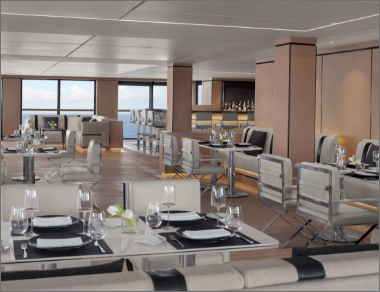
The Pool House
From a leisurely breakfast for early risers to late-night dining, this casual eatery serves a variety of cuisines prepared à la minute in an open air space. Enjoy a relaxing meal or casual bite at this inspired poolside restaurant.
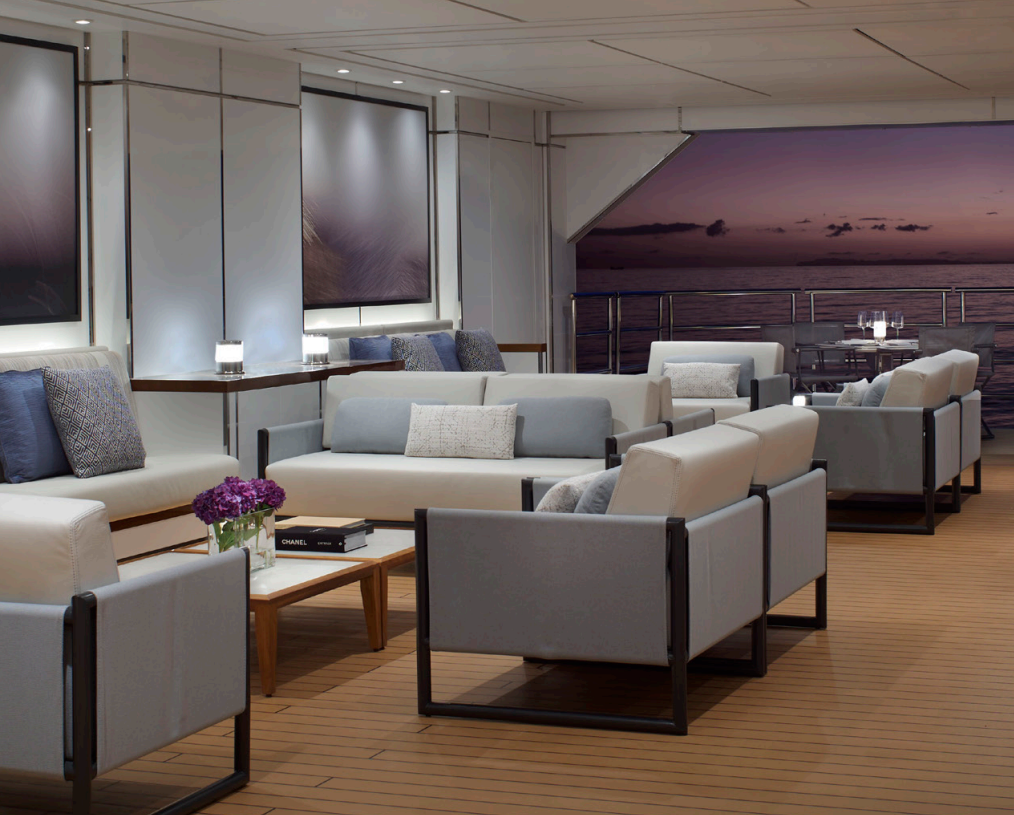
Marina and Marina Terrace
Sitting right at the water’s edge, the Marina offers sun loungers and a generous choice of water toys. Like a private beach with seamless entry into the sea, it’s the go-to spot while at anchor. Just steps above, the Marina Terrace serves handcrafted cocktails and light bites with stunning view

The Observation Lounge
Top-deck views erase the borders between land and sea, an inspired setting for lounging, cocktails or socializing. At twilight, the space is transformed into a venue with cocktails and live entertainment, extending into a late-night hangout. Whether exploring on luxury repositioning cruises, luxury Baltic cruises, US-based cruises, or anything in between, The Observation Lounge is your vantage point for sightseeing anywhere at sea.
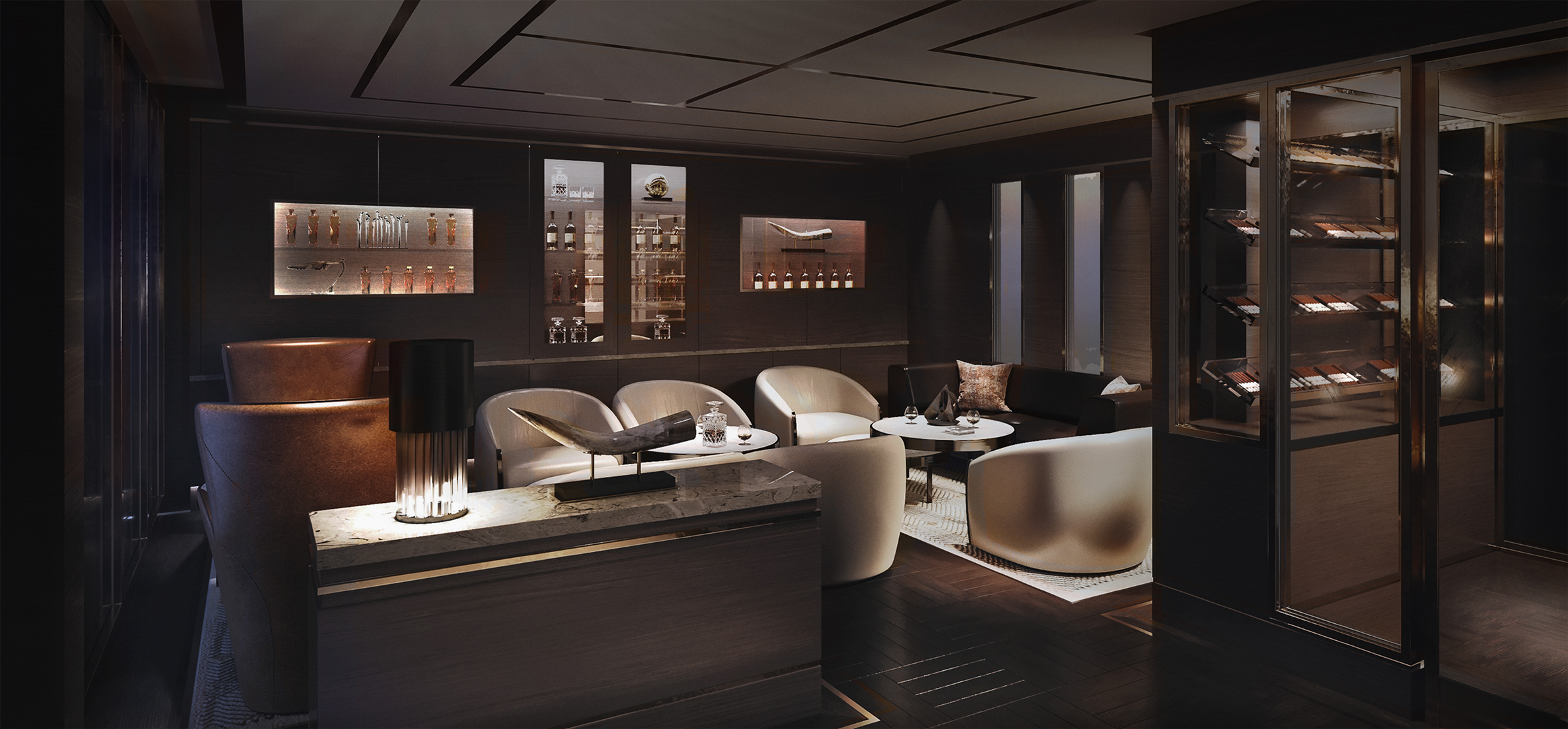
The Humidor
Cap off your day with a premium cognac in this intimate lounge with its comfortable furnishings. An excellent selection of premium, hand-rolled cigars are showcased in the state-of-the-art humidor.
The Boutique
From exclusive sportswear and branded apparel to jewelry and leather goods, leading labels offer enticing options. In select ports, your shopping experience is further enhanced by bespoke collaborations with local artisans who come on board to showcase their offerings.
The Living Room
Bold shades of blue reflecting the sea provide a vibrant accent to the yacht’s gathering place, with its chic, comfortable furnishings and library with travel guides and best sellers. Diffused lighting transforms the space into a cocktail lounge with piano bar, dancing and live music later on, making The Living Room one of the most popular Ritz-Carlton Yacht Collection onboard features.
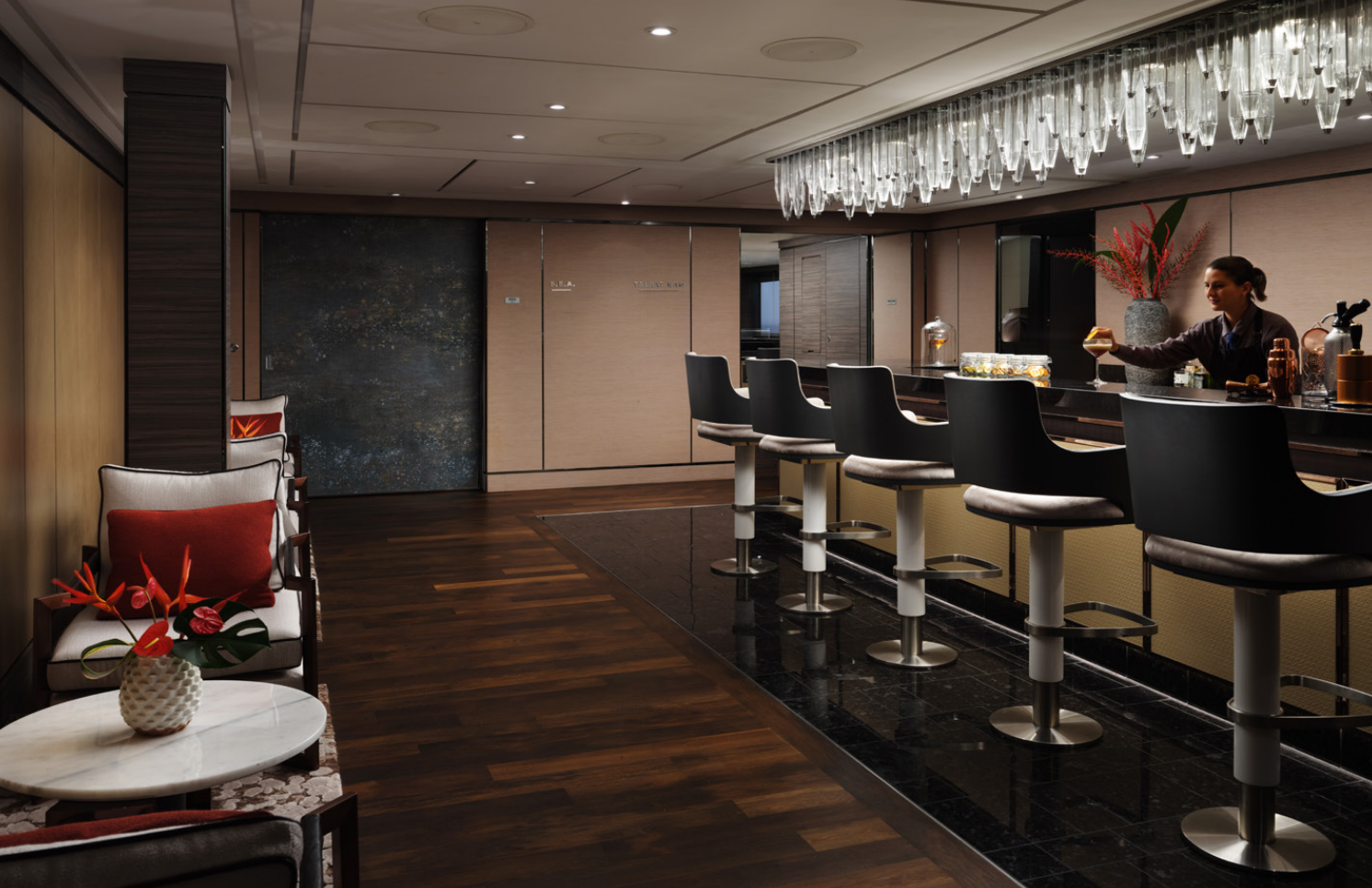
The Bar
This intimate lounge serves premium labels from around the world and also offers champagne and caviar pairings.
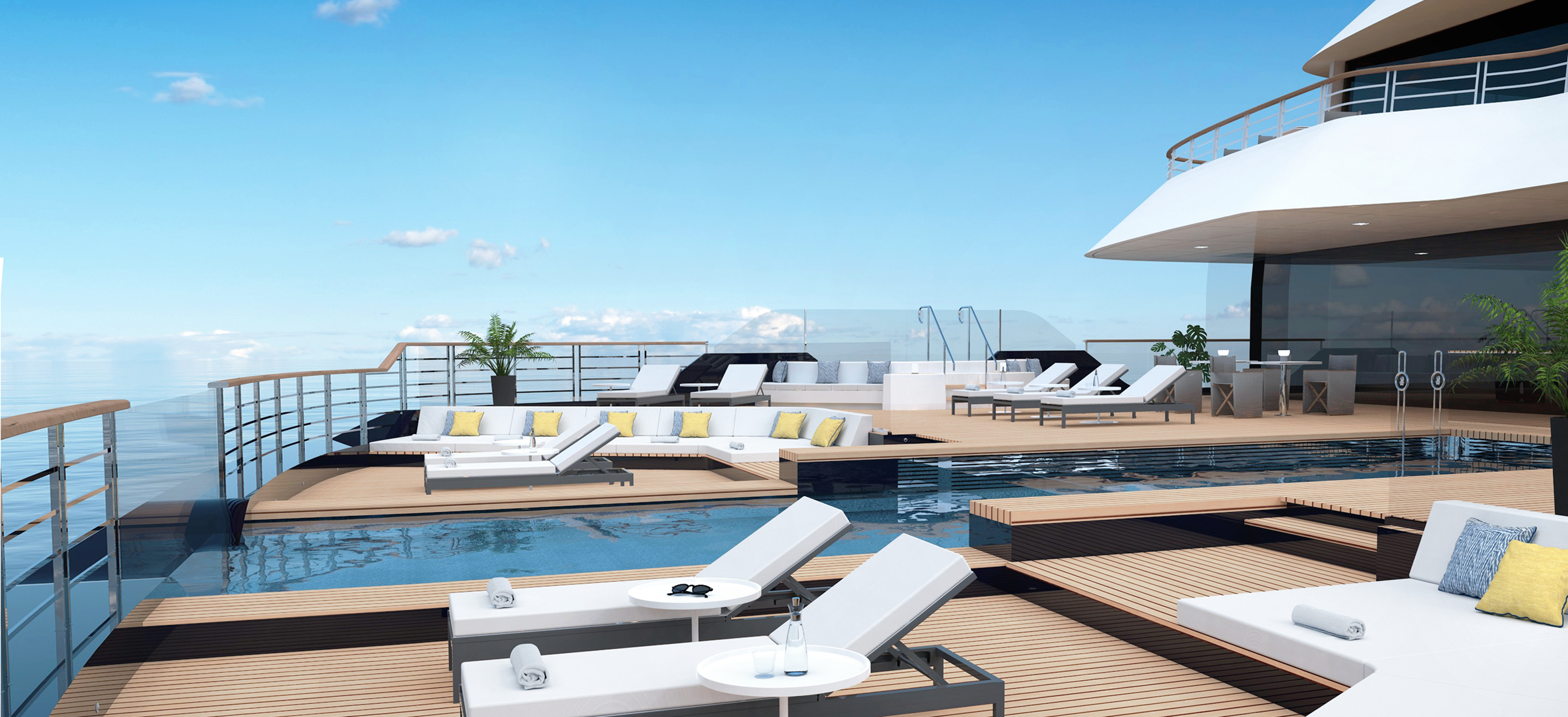
The Pool
An infinity oasis of blue is just steps away from The Pool House, where guests can enjoy all-day dining. Frozen treats and refreshing water mistings pamper guests on the sun loungers and banquettes or soaking in the whirlpools. A spacious venue for deck parties and open-air movies.
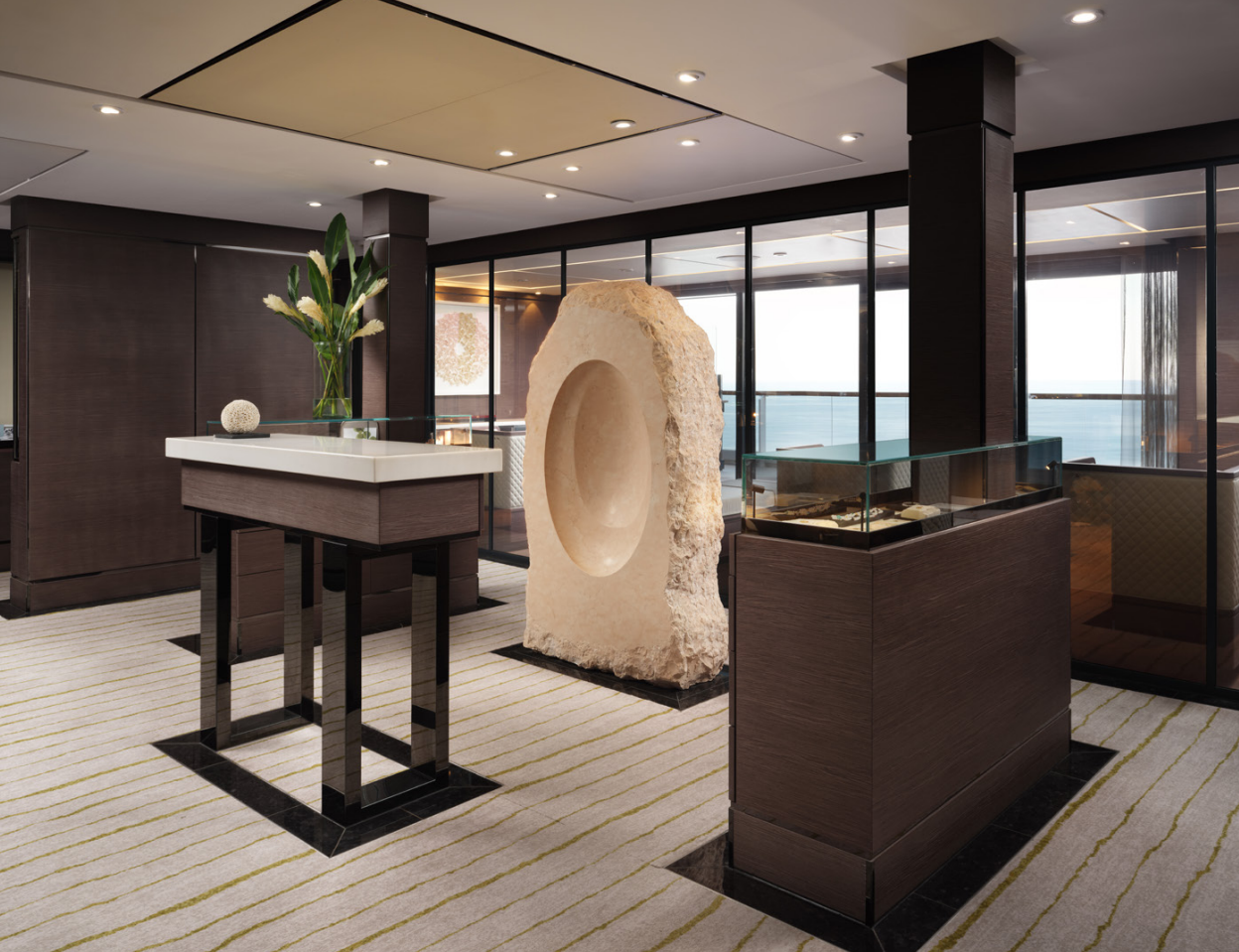
The Ritz-Carlton Spa
Listen to the gentle lap of waves while reclining on a massage table, savoring a therapeutic spa treatment from the private terrace of one of our treatment rooms. Inspired by the destinations we visit and curated to fulfill your needs, our treatments feature the finest ESPA products to awaken the senses, refresh the body and renew the spirit. Arrive early, stay a while and drift away into relaxation aboard your oasis at sea.
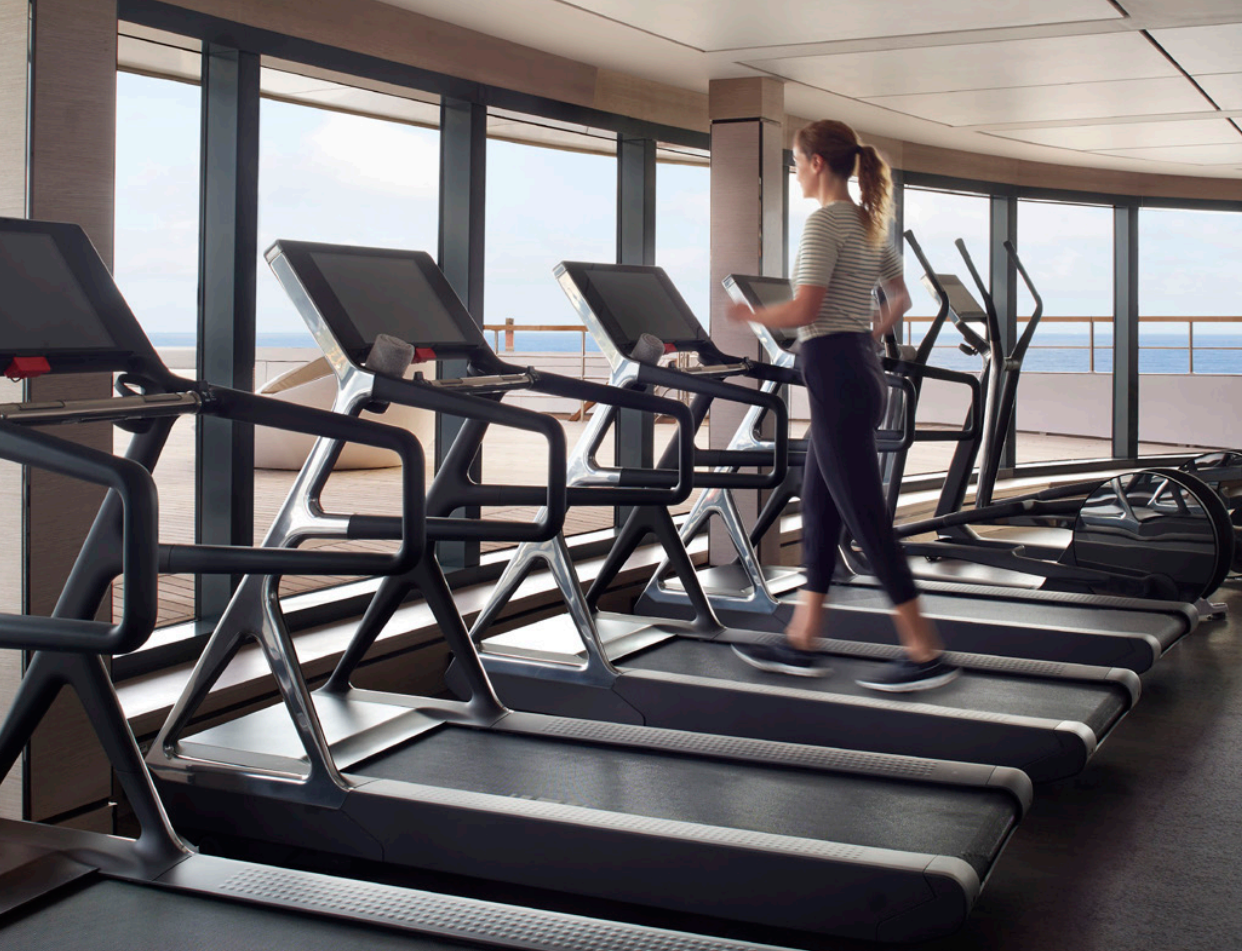
The Fitness Studio
The Fitness Studio is home to a health and wellness program that integrates fitness and spa with lectures and nutrition that can be customized for each guest. From personal training to sunrise yoga and mat Pilates, each voyage has opportunities to maintain a healthy lifestyle.
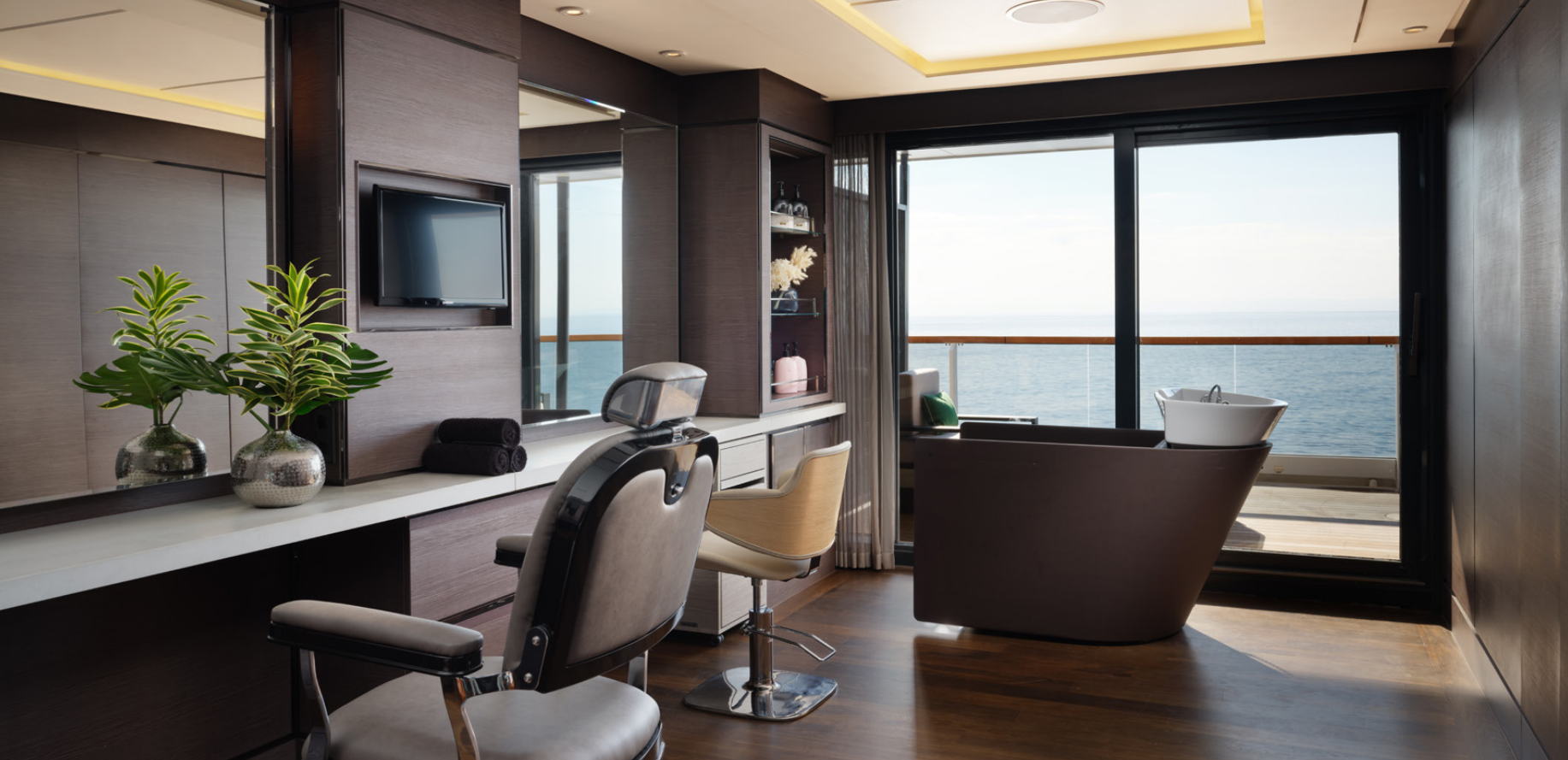
Barber & Salon Services
The Salon offers a variety of beauty and hair services including manicure and pedicure treatments, hair consultations, cutting, styling and blow drying. Next door at The Barber, gentlemen can enjoy a close shave or invigorating facial before heading ashore to explore the port feeling refreshed and revitalized.
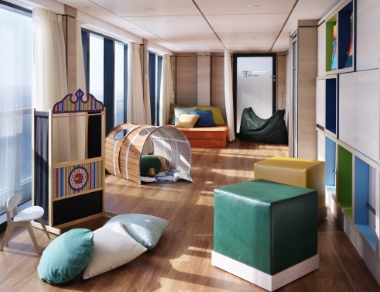
Ritz-Kids
Families exploring the world together are welcome aboard The Ritz-Carlton Yacht Collection. With its own dedicated space on board, Ritz-Kids® is an educational and fun-filled program that encourages children ages 4 to 12 to explore the world around them. Enhanced programming will be available during holidays and summer months.
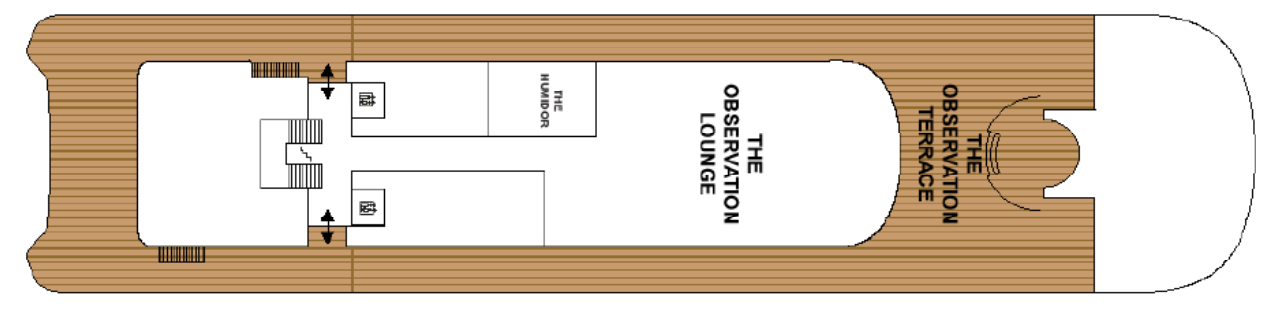
Deck 10
- The Observation Lounge
- The Observation Terrace
- The Humidor
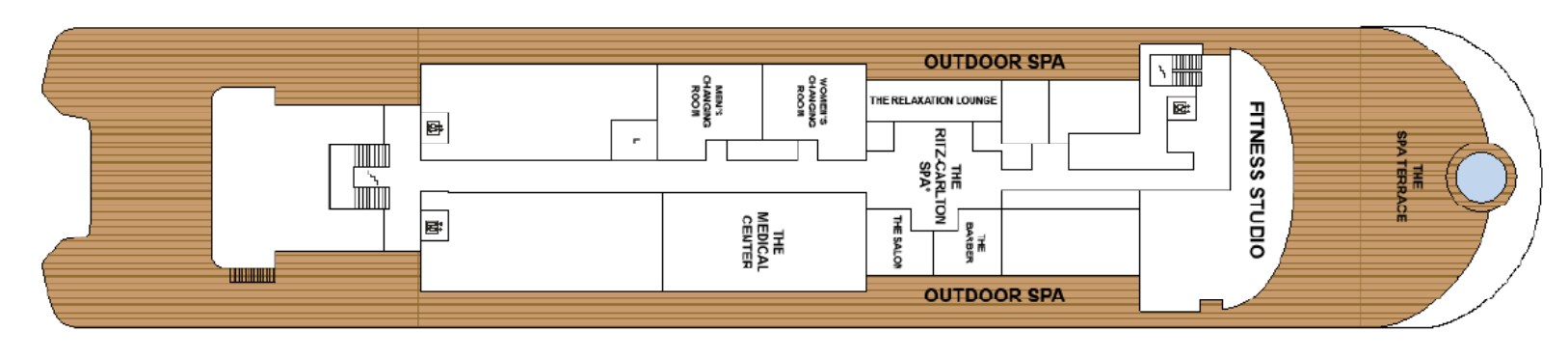
Deck 9
- The Gym
- Fitness Studio
- The Ritz-Carlton Spa
- Outdoor Spa
- The Spa Terrace
- The Barber/The Salon
- Launderette
- Men/Women’s Changing Rooms
- The Medical Centre
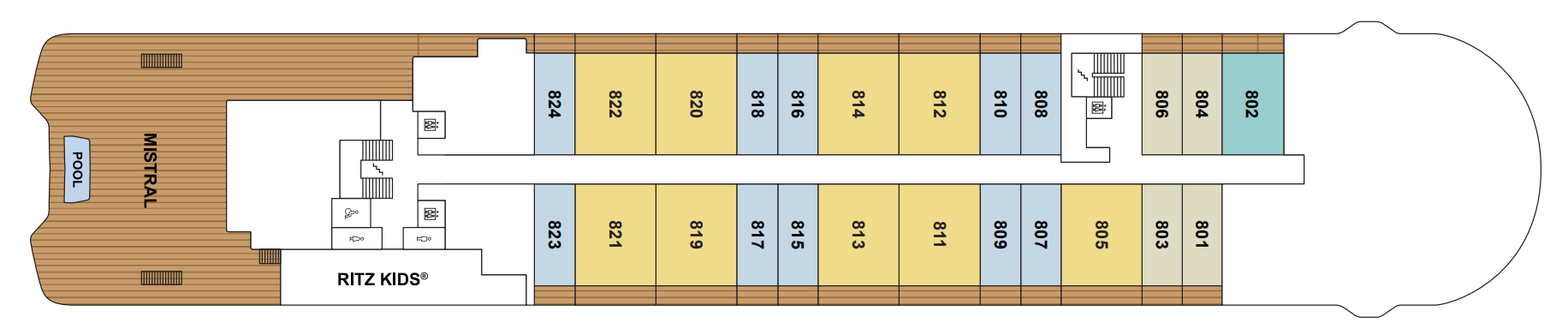
Deck 8
- Mistral
- Pool
- Ritz-Kids
- Suites 801 – 824

Deck 7
- Suites 701 – 737

Deck 6
- The Bar
- S.E.A
- Talaat Nam
- Suites 601 – 645

Deck 5
- The Pool House
- The Pool
- Suites 501 – 545

Deck 4
- The Meeting Rooms
- The Living Room
- The Boutique
- Wine Vault
- Wine Tasting Area
- The Evrima Room
- Dining Privee
- Dining Privée
- 505 – 519 Lower Level

Deck 3
- The Marina Terrace
- The Marina