Itinerary
Sprawling Reykjavík, the nation’s nerve center and government seat, is home to half the island’s population. On a bay overlooked by proud Mt. Esja (pronounced eh-shyuh), with its ever-changing hues, Reykjavík presents a colorful sight, its concrete houses painted in light colors and topped by vibrant red, blue, and green roofs. In contrast to the almost treeless countryside, Reykjavík has many tall, native birches, rowans, and willows, as well as imported aspen, pines, and spruces.Reykjavík’s name comes from the Icelandic words for smoke, reykur, and bay, vík. In AD 874, Norseman Ingólfur Arnarson saw Iceland rising out of the misty sea and came ashore at a bay eerily shrouded with plumes of steam from nearby hot springs. Today most of the houses in Reykjavík are heated by near-boiling water from the hot springs. Natural heating avoids air pollution; there’s no smoke around. You may notice, however, that the hot water brings a slight sulfur smell to the bathroom.Prices are easily on a par with other major European cities. A practical option is to purchase a Reykjavík City Card at the Tourist Information Center or at the Reykjavík Youth Hostel. This card permits unlimited bus usage and admission to any of the city’s seven pools, the Family Park and Zoo, and city museums. The cards are valid for one (ISK 3,300), two (ISK 4,400), or three days (ISK 4,900), and they pay for themselves after three or four uses a day. Even lacking the City Card, paying admission (ISK 500, or ISK 250 for seniors and people with disabilities) to one of the city art museums (Hafnarhús, Kjarvalsstaðir, or Ásmundarsafn) gets you free same-day admission to the other two.
It’s hard to imagine, as you stroll Heimaey’s idyllic streets of white wooden houses, that this island was literally torn apart by a spectacular volcanic eruption, just over 40 years ago. The fact that you can visit incredible Heimaey at all is something of a miracle – because the oozing lava of the Eldfell volcano threatened to seal the harbour off completely. Fortunately, its advance was halted by gallons of seawater, pumped onto it by the plucky islanders, who saved their fishing industry in the process. Iceland’s famous for its scenery, and the huge castles of volcanic rock that rise out of the sea’s waves here are some of the country’s most dramatic.
Founded by Dutch fishermen in the 17th century, Lerwick today is a busy town and administrative center. Handsome stone buildings—known as lodberries—line the harbor; they provided loading bays for goods, some of them illegal. The town’s twisting flagstone lanes and harbor once heaved with activity, and Lerwick is still an active port today. This is also where most visitors to Shetland dock, spilling out of cruise ships, allowing passengers to walk around the town.
With close to 220,000 inhabitants, Aberdeen is Scotland’s third most populous city. Locally quarried grey granite was used during the mid-18th to mid-20th centuries for many of Aberdeen’s buildings, and hence the nicknames it has earned as the Granite City, or the Grey City. Aberdeen granite was also used to build the terraces of the Houses of Parliament and Waterloo Bridge in London. Since the discovery of North Sea oil in the 1970s, Aberdeen has also been called the Oil Capital of Europe or the Energy Capital of Europe. It is no wonder that because of the oil fields in the North Sea, Aberdeen’s seaport is very important. The Heliport with its flights to the oil fields is one of the busiest commercial heliports in the world.
Edinburgh is to London as poetry is to prose, as Charlotte Brontë once wrote. One of the world’s stateliest cities and proudest capitals, it’s built—like Rome—on seven hills, making it a striking backdrop for the ancient pageant of history. In a skyline of sheer drama, Edinburgh Castle watches over the capital city, frowning down on Princes Street’s glamour and glitz. But despite its rich past, the city’s famous festivals, excellent museums and galleries, as well as the modern Scottish Parliament, are reminders that Edinburgh has its feet firmly in the 21st century.Nearly everywhere in Edinburgh (the burgh is always pronounced burra in Scotland) there are spectacular buildings, whose Doric, Ionic, and Corinthian pillars add touches of neoclassical grandeur to the largely Presbyterian backdrop. Large gardens are a strong feature of central Edinburgh, where the city council is one of the most stridently conservationist in Europe. Arthur’s Seat, a mountain of bright green and yellow furze, rears up behind the spires of the Old Town. This child-size mountain jutting 822 feet above its surroundings has steep slopes and little crags, like a miniature Highlands set down in the middle of the busy city. Appropriately, these theatrical elements match Edinburgh’s character—after all, the city has been a stage that has seen its fair share of romance, violence, tragedy, and triumph.Modern Edinburgh has become a cultural capital, staging the Edinburgh International Festival and the Fringe Festival in every possible venue each August. The stunning Museum of Scotland complements the city’s wealth of galleries and artsy hangouts. Add Edinburgh’s growing reputation for food and nightlife and you have one of the world’s most beguiling cities.Today the city is the second most important financial center in the United Kingdom, and the fifth most important in Europe. The city regularly is ranked near the top in quality-of-life surveys. Accordingly, New Town apartments on fashionable streets sell for considerable sums. In some senses the city is showy and materialistic, but Edinburgh still supports learned societies, some of which have their roots in the Scottish Enlightenment. The Royal Society of Edinburgh, for example, established in 1783 “for the advancement of learning and useful knowledge,” remains an important forum for interdisciplinary activities.Even as Edinburgh moves through the 21st century, its tall guardian castle remains the focal point of the city and its venerable history. Take time to explore the streets—peopled by the spirits of Mary, Queen of Scots; Sir Walter Scott; and Robert Louis Stevenson—and pay your respects to the world’s best-loved terrier, Greyfriars Bobby. In the evenings you can enjoy candlelit restaurants or a folk ceilidh (pronounced kay-lee, a traditional Scottish dance with music), though you should remember that you haven’t earned your porridge until you’ve climbed Arthur’s Seat. Should you wander around a corner, say, on George Street, you might see not an endless cityscape, but blue sea and a patchwork of fields. This is the county of Fife, beyond the inlet of the North Sea called the Firth of Forth—a reminder, like the mountains to the northwest that can be glimpsed from Edinburgh’s highest points, that the rest of Scotland lies within easy reach.
About 8 miles downstream—which means seaward, to the east—from central London, Greenwich is a small borough that looms large across the world. Once the seat of British naval power, it is not only home to the Old Royal Observatory, which measures time for our entire planet, but also the Greenwich Meridian, which divides the world into two—you can stand astride it with one foot in either hemisphere. Bear in mind that the journey to Greenwich is an event in itself. In a rush, you can take the driverless DLR train—but many opt for arriving by boat along the Thames. This way, you glide past famous sights on the London skyline (there’s a guaranteed spine chill on passing the Tower) and ever-changing docklands, and there’s usually a chirpy Cock-er-ney navigator enlivening the journey with his fun commentary. A visit to Greenwich feels like a trip to a rather elegant seaside town—albeit one with more than its fair share of historic sites. The grandiose Old Royal Naval Hospital, designed by Christopher Wren, was originally a home for veteran sailors. Today it’s a popular visitor attraction, with a more glamorous second life as one of the most widely used movie locations in Britain. Greenwich was originally home to one of England’s finest Tudor palaces, and the birthplace of Henry VIII, Elizabeth I, and Mary I. Inigo Jones built what is considered the first “classical” building in England in 1616—the Queen’s House, which now houses a collection of fine art. Britain was the world’s preeminent naval power for over 500 years, and the excellent National Maritime Museum> details that history in an engaging way. Its prize exhibits include the coat worn by Admiral Lord Nelson (1758–1805) in his final battle—bullet hole and all. The 19th-century tea clipper Cutty Sark was nearly destroyed by fire in 2007, but reopened in 2012 after a painstaking restoration. Now it’s more pristine than ever, complete with an impressive new visitor center. Greenwich Park, London’s oldest royal park, is still home to fallow red deer, just as it has been since they were first introduced here for hunting by Henry VIII. The Ranger’s House now houses a private art collection, next door to a beautifully manicured rose garden. Above it all is the Royal Observatory, where you can be in two hemispheres at once by standing along the Greenwich Meridian Line, before seeing a high-tech planetarium show. Toward north Greenwich, the hopelessly ambitious Millennium Dome has been successfully reborn as the O2 and now hosts major concerts and stand-up comedy gigs. More adventurous visitors can also go Up the O2 on a climbing expedition across the massive domed surface. Meanwhile, those who prefer excursions of a gentler kind may prefer to journey a couple of miles south of the borough, farther out into London’s southern suburbs, to the shamefully underappreciated Eltham Palace. Once a favorite of Henry VIII, parts of the mansion were transformed into an art deco masterpiece during the 1930s.
Ship features

The Owners Suite
SUITE DESCRIPTION
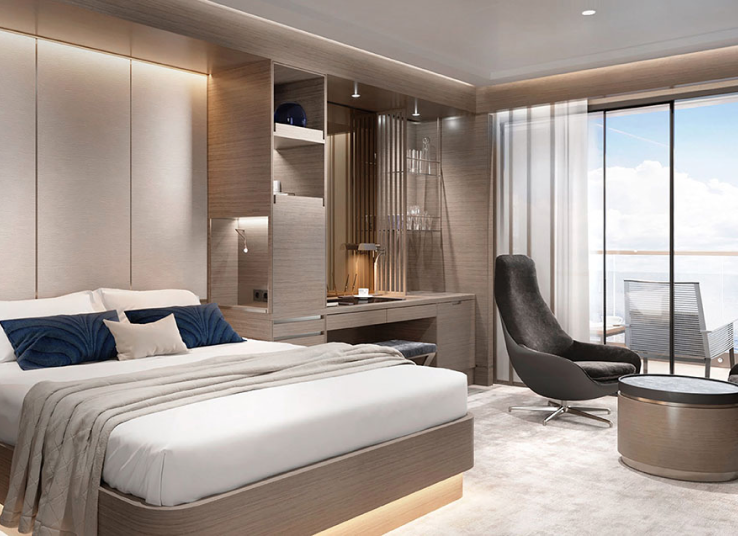
The Owner’s Suite was designed to epitomize the yachting lifestyle, with outsize suite and terrace spaces inviting unparalleled entertaining and ultimate comfort. The suite’s expansive private terrace truly wows with a whirlpool, dedicated outdoor dining table and conversation spaces that blur the lines of indoor-outdoor living, all to the sweeping backdrop of majestic sea views. The suite itself is distinguished by a second full bath with shower, a full bar with seating, two living/conversation areas and a dining table that comfortably seats 6 guests.
SUITE HIGHLIGHTS
MAGNIFICENT OCEAN VIEWS
- Private, spacious terrace overlooking the ocean, with private whirlpool
SPACIOUS SUITE ACCOMMODATIONS
- Luxurious and modern living and dining area
- Luxury custom king bed sleep system
- Double vanity bathroom
PERSONALIZED SERVICE AND AMENITIES
- The Personal Concierge is your single onboard touch point to ensure a flawless, seamless journey from beginning to end
- 24-hour in-suite dining, espresso machine, complimentary coffee and teas and a mini-bar provisioned to your preferences, upon request once on board
ACCOMMODATIONS
Bed & Bath
- Luxury custom king bed sleep system
- Double vanity bathroom with modern soaking tub and separate shower
- Second bathroom with modern shower system
- Custom luxury bed and bath linens
Suite Features
- Private, spacious terrace overlooking the ocean with private whirlpool
- Luxurious and modern living and dining area
- Walk-in wardrobe
- Convertible sleep sofa
Size
- Suite: 1091 SQ FT | 101 SQ M
- Terrace: 635 SQ FT | 59 SQ M
SERVICES AND AMENITIES
- 24-hour in-suite dining
- Luxury bath amenities & individual robe and slippers
- Premium Wi-Fi, supporting browsing, social media, streaming services, video calls and VPN services
- Complimentary chilled bottle of champagne upon arrival
- Espresso machine with complimentary coffee and teas
- Digital flat screen television
- In-suite safe
- Vanity mirror
- Hair dryer
- Hypoallergenic pillows, upon request
- 230v and 120v outlets, as well as USB charging capabilities
- Set of high-zoom binoculars

The View Suite
The View suite brings the outdoors in with its expansive length of dramatic floor to ceiling glass and private terrace, offering unmatched views and capturing the sea breeze from Juliet balconies in the living, bed and bath areas. These views are meant to be shared, with the large private terrace, living and dining areas allowing guests to entertain out of sight of the suite’s bed and bath area.
SUITE HIGHLIGHTS
MAGNIFICENT OCEAN VIEWS
- Dramatic floor to ceiling glass throughout
- Private, spacious terrace overlooking the ocean
SPACIOUS SUITE ACCOMMODATIONS
- Luxurious and modern living and dining area
- Luxury custom king bed sleep system
- Double vanity bathroom
PERSONALIZED SERVICE AND AMENITIES
- The Personal Concierge is your single onboard touch point to ensure a flawless, seamless journey from beginning to end
- 24-hour in-suite dining, espresso machine, complimentary coffee and teas and a mini-bar provisioned to your preferences, upon request once on board
ACCOMMODATIONS
Bed & Bath
- Luxury custom king bed sleep system
- Double vanity bathroom with modern soaking tub and separate shower
- Custom luxury bed and bath linens
Suite Features
- Private, spacious terrace overlooking the ocean
- Convertible sleep sofa
Size
- (Suite 732 & 733)
- Suite: 544 SQ FT | 51 SQ M
- Terrace: 108 SQ FT | 10 SQ M
(Suite 734 & 735)
- Suite: 574 SQ FT | 53 SQ M
- Terrace: 129 SQ FT | 12 SQ M
SERVICES AND AMENITIES
- 24-hour in-suite dining
- Luxury bath amenities & individual robe and slippers
- Premium Wi-Fi, supporting browsing, social media, streaming services, video calls and VPN services
- Complimentary chilled bottle of champagne upon arrival
- Espresso machine with complimentary coffee and teas
- Digital flat screen television
- In-suite safe
- Vanity mirror
- Hair dryer
- Hypoallergenic pillows, upon request
- 230v and 120v outlets, as well as USB charging capabilities

The 2-Story Loft Suite
The Loft suite is a study in duality: a lower level designed for rest and relaxation, and an upper level perfect for socializing and entertaining. With a powder room and expanded living area upstairs, this space easily converts into a second private sleeping area for guests traveling with children or travelers sleeping separately. The expanded desk and dressing table in the lower level provides uninterrupted views through an oversized picture window.
SUITE HIGHLIGHTS
MAGNIFICENT OCEAN VIEWS
- Private, spacious terrace overlooking the ocean on the upper level
- Picture window on the lower level
SPACIOUS SUITE ACCOMMODATIONS
- Innovative two story suite with entry from both levels
- Luxurious and modern living and dining area on the upper level
- Luxury custom king bed sleep system on the lower level
- Double vanity bathroom
PERSONALIZED SERVICE AND AMENITIES
- The Personal Concierge is your single onboard touch point to ensure a flawless, seamless journey from beginning to end
- 24-hour in-suite dining, espresso machine, complimentary coffee and teas and a mini-bar provisioned to your preferences, upon request once on board
ACCOMMODATIONS
Bed & Bath
- Powder room on the upper level
- Double vanity master bathroom with modern soaking tub and separate shower on the lower level
- Luxury custom king bed sleep system on the lower level
- Custom luxury bed and bath linens
Suite Features
- Innovative two story suite with entry from both levels
- Private, spacious terrace overlooking the ocean on the upper level
- Luxurious and modern living and dining area on the upper level
- Convertible sleep sofa on the upper level
Size
- Suite: 611 SQ FT | 57 SQ M
- Terrace: 81 SQ FT | 7.5 SQ M
SERVICES AND AMENITIES
- 24-hour in-suite dining
- Luxury bath amenities & individual robe and slippers
- Premium Wi-Fi, supporting browsing, social media, streaming services, video calls and VPN services
- Complimentary chilled bottle of champagne upon arrival
- Espresso machine with complimentary coffee and teas
- Digital flat screen television
- In-suite safe
- Vanity mirror
- Hair dryer
- Hypoallergenic pillows, upon request
- 230v and 120v outlets, as well as USB charging capabilities
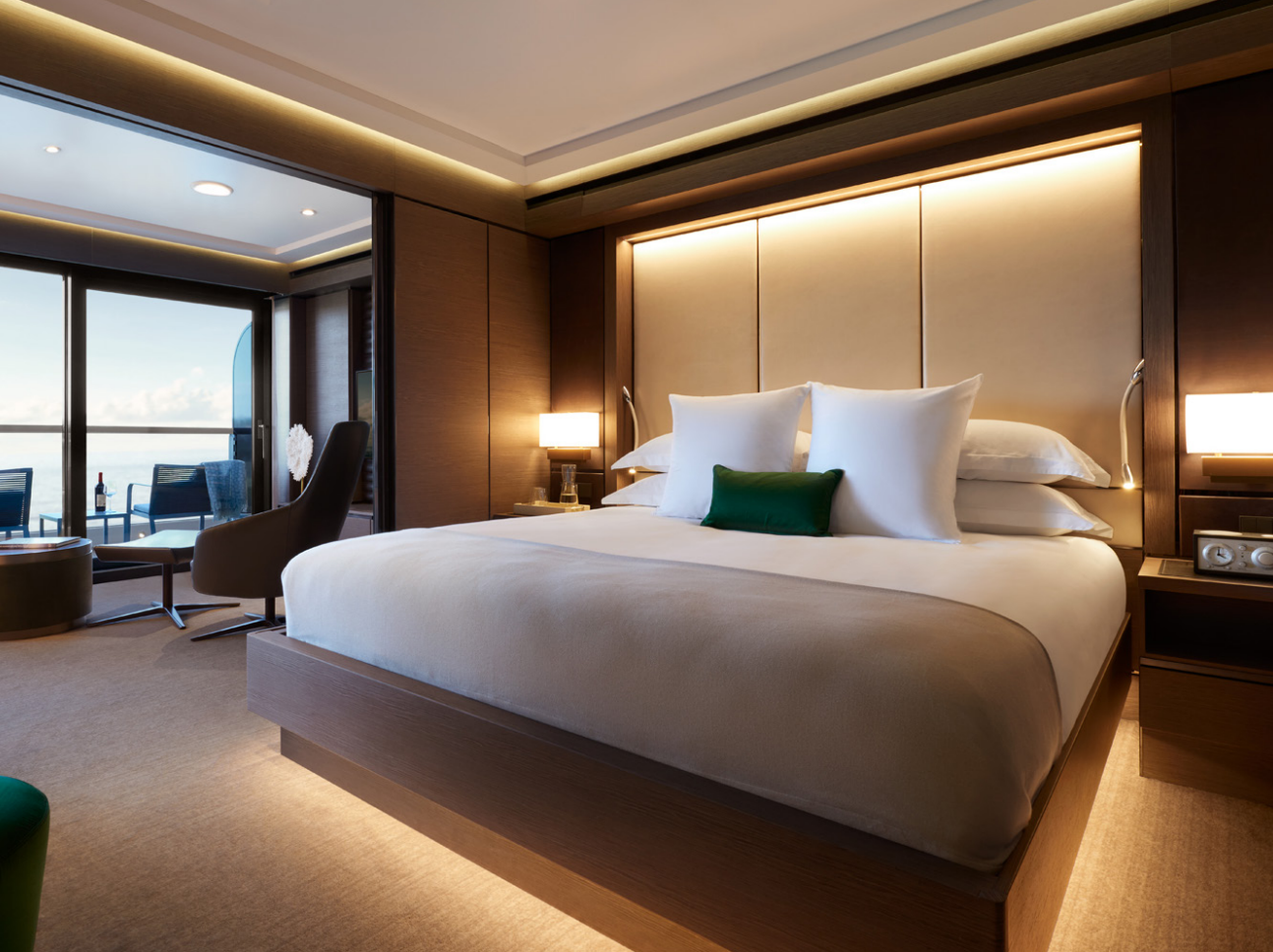
The Grand Suite
The Grand Suite offers a distinctly residential suite experience, allowing guests to feel at home upon the sea. The suite features dual walk-in closets, a dining table that comfortably accommodates 4 guests, plus added space on the private terrace and in living and bath spaces to spread out and relax.
SUITE HIGHLIGHTS
MAGNIFICENT OCEAN VIEWS
- Private, spacious terrace overlooking the ocean
SPACIOUS SUITE ACCOMMODATIONS
- Luxury custom king bed sleep system
- Double vanity bathroom
- Luxurious and modern living and dining area
PERSONALIZED SERVICE AND AMENITIES
- The Personal Concierge is your single onboard touch point to ensure a flawless, seamless journey from beginning to end
- 24-hour in-suite dining, espresso machine, complimentary coffee and teas and a mini-bar provisioned to your preferences, upon request once on board
ACCOMMODATIONS
Bed & Bath
- Luxury custom king bed sleep system
- Double vanity bathroom with modern soaking tub and separate shower
- Custom luxury bed and bath linens
Suite Features
- Private, spacious terrace overlooking the ocean
- Luxurious and modern living and dining area
- Dual walk-in wardrobes
- Convertible sleep sofa
Size
- Suite: 587 SQ FT | 55 SQ M
- Terrace: 108 – 118 SQ FT | 10 – 11 SQ M
SERVICES AND AMENITIES
- 24-hour in-suite dining
- Luxury bath amenities & individual robe and slippers
- Premium Wi-Fi, supporting browsing, social media, streaming services, video calls and VPN services
- Complimentary chilled bottle of champagne upon arrival
- Espresso machine with complimentary coffee and teas
- Digital flat screen television
- In-suite safe
- Vanity mirror
- Hair dryer
- Hypoallergenic pillows, upon request
- 230v and 120v outlets, as well as USB charging capabilities
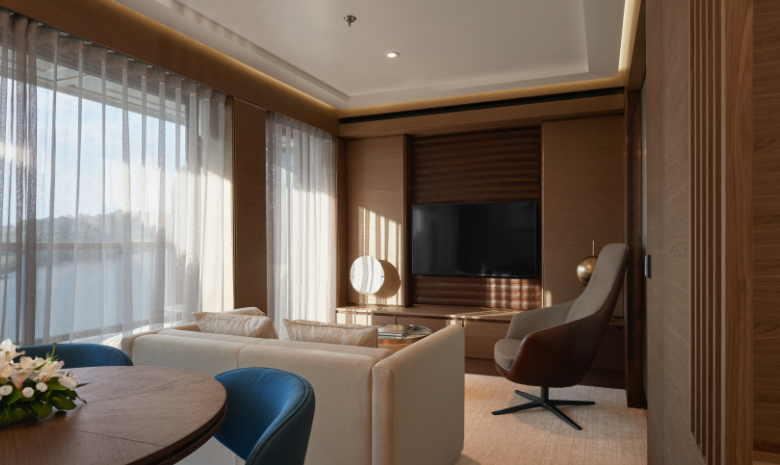
The Signature Suite
SUITE HIGHLIGHTS
MAGNIFICENT OCEAN VIEWS
- Private, spacious terrace overlooking the ocean
SPACIOUS SUITE ACCOMMODATIONS
- Luxurious and modern living and dining area
- Luxury custom king bed sleep system
- Double vanity bathroom
PERSONALIZED SERVICE AND AMENITIES
- The Personal Concierge is your single onboard touch point to ensure a flawless, seamless journey from beginning to end
- 24-hour in-suite dining, espresso machine, complimentary coffee and teas and a mini-bar provisioned to your preferences, upon request once on board
ACCOMMODATIONS
Bed & Bath
- Luxury custom king bed sleep system
- Double vanity bathroom with modern soaking tub and separate shower
- Custom luxury bed and bath linens
Suite Features
- Private, spacious terrace overlooking the ocean
- Luxurious and modern living and dining area
- Convertible sleep sofa
Size
- Suite: 429 SQ FT | 40 SQ M
- Terrace: 81 – 118 SQ FT | 7.5 – 11 SQ M
SERVICES AND AMENITIES
- 24-hour in-suite dining
- Luxury bath amenities & individual robe and slippers
- Premium Wi-Fi, supporting browsing, social media, streaming services, video calls and VPN services
- Complimentary chilled bottle of champagne upon arrival
- Espresso machine with complimentary coffee and teas
- Digital flat screen television
- In-suite safe
- Vanity mirror
- Hair dryer
- Hypoallergenic pillows, upon request
- 230v and 120v outlets, as well as USB charging capabilities
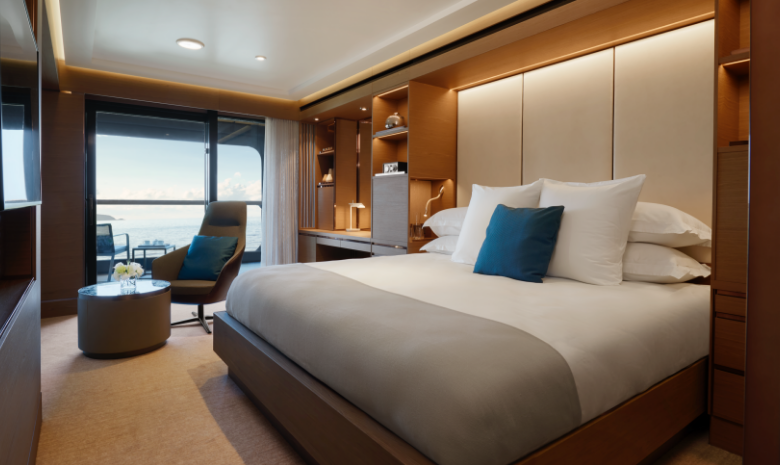
The Terrace Suite
The Terrace Suite provides a foundation for the very best amenities enjoyed by all suite categories on board, including a private terrace, king-sized bed and double vanity. Best of all, guests enjoy the superlative service of an assigned suite ambassador.
SUITE HIGHLIGHTS
MAGNIFICENT OCEAN VIEWS
- Private, spacious terrace overlooking the ocean
SPACIOUS SUITE ACCOMMODATIONS
- Luxury custom king bed sleep system
- Double vanity bathroom
PERSONALIZED SERVICE AND AMENITIES
- The Personal Concierge is your single onboard touch point to ensure a flawless, seamless journey from beginning to end
- 24-hour in-suite dining, espresso machine, complimentary coffee and teas and a mini-bar provisioned to your preferences, upon request once on board
ACCOMMODATIONS
Bed & Bath
- Luxury custom king bed sleep system
- Double vanity bathroom with modern shower system
- Custom luxury bed and bath linens
Suite Features
- Private, spacious terrace overlooking the ocean
Size
- Suite: 300 SQ FT | 28 SQ M
- Terrace: 54 – 81 SQ FT | 5 – 7.5 SQ M
SERVICES AND AMENITIES
- 24-hour in-suite dining
- Luxury bath amenities & individual robe and slippers
- Premium Wi-Fi, supporting browsing, social media, streaming services, video calls and VPN services
- Complimentary chilled bottle of champagne upon arrival
- Espresso machine with complimentary coffee and teas
- Digital flat screen television
- In-suite safe
- Vanity mirror
- Hair dryer
- Hypoallergenic pillows, upon request
- 230v and 120v outlets, as well as USB charging capabilities
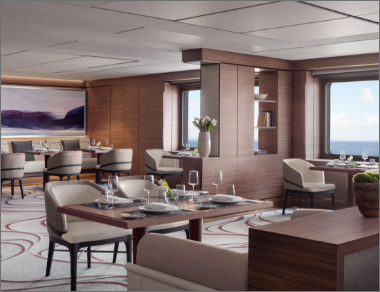
The Evrima Room
Designed with intimate seating arrangements, the spacious main restaurant offers a thoughtfully-designed balance of privacy and social connection. A menu of locally inspired creations change with the seasons to reflect the passing scene. The menu highlights the varied cultures, lands, and sights that are best explored at The Ritz-Carlton Yacht Collection destinations.
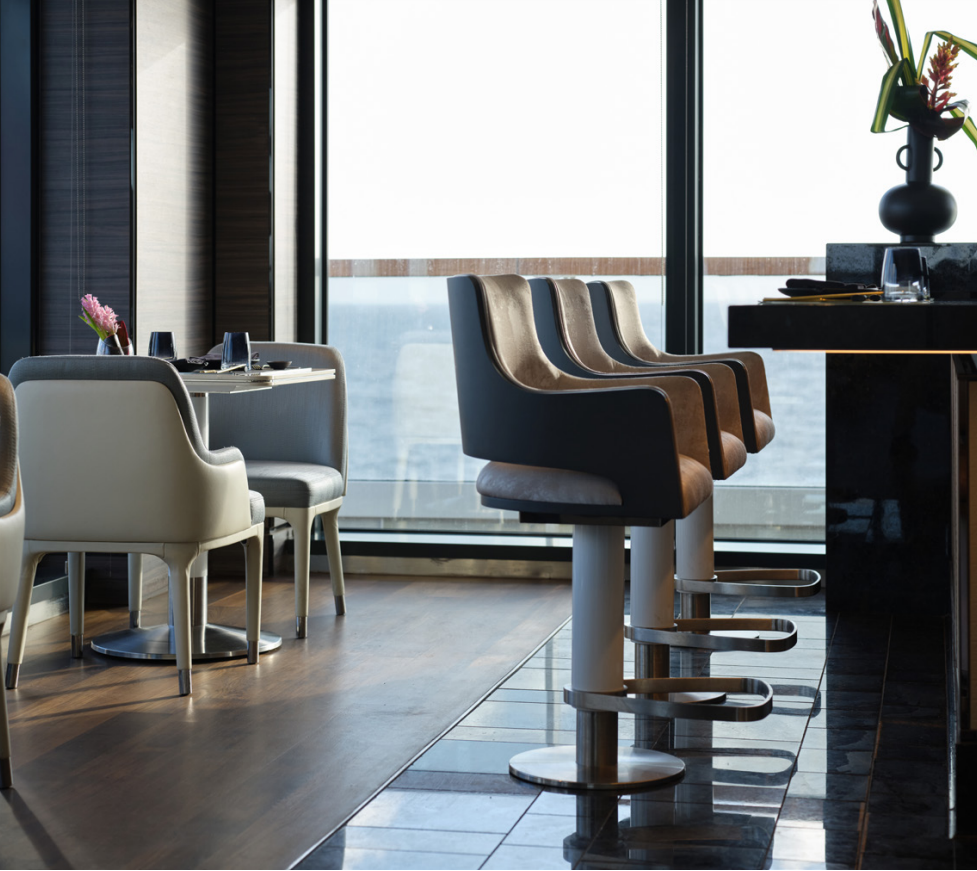
Talaat Nam
Creative interpretations of Southeast Asian cuisine are paired with sophisticated, laidback luxury in this sleek, contemporary restaurant. Sit down at the sushi bar, enjoy a more family-style table experience, or dine outside and watch the day’s destination disappear with the setting sun.
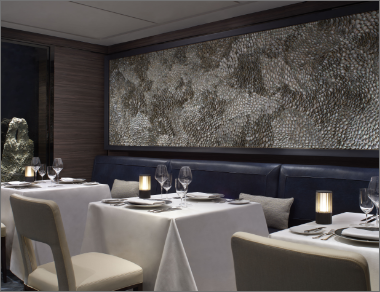
S.E.A
Indulge in a specialty dining experience designed by Chef Sven Elverfeld of Aqua, the three Michelin-starred restaurant at The Ritz-Carlton® in Wolfsburg. S.E.A. offers an inspired European tasting menu in a sophisticated setting with a contemporary feel. Cruise dining has never been more refreshing. Reservations required, additional fee applies. Located on Deck 6.
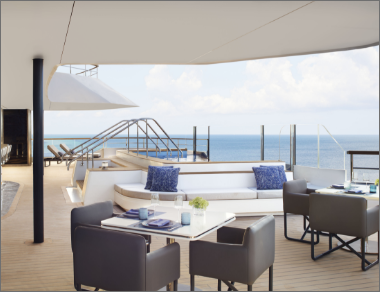
Mistral
Come as you are, for lunch or a romantic dinner al fresco. The Mediterranean-inspired menu features fresh local catches, while prime cuts are prepared to order from the grill. The deck serves as one of the best views on the yacht to enjoy dinner or drinks. Located on Deck 8.

The Living Room
Guests will wake to freshly roasted coffees and baked pastries at the espresso counter and bar. An array of ready-made culinary treats are also available for day trips and late nights.

In-Suite Dining
Dine in the comfort of your suite or on your private terrace when you order from the All-Day Dining menu, featuring influences from every dining venue onboard. For guests looking for further flexibility within all of The Ritz-Carlton Yacht Collection suites, a Late-Night Dining menu will also be available.
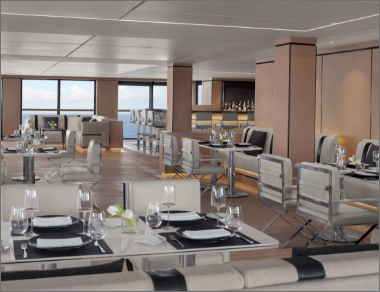
The Pool House
From a leisurely breakfast for early risers to late-night dining, this casual eatery serves a variety of cuisines prepared à la minute in an open air space. Enjoy a relaxing meal or casual bite at this inspired poolside restaurant.
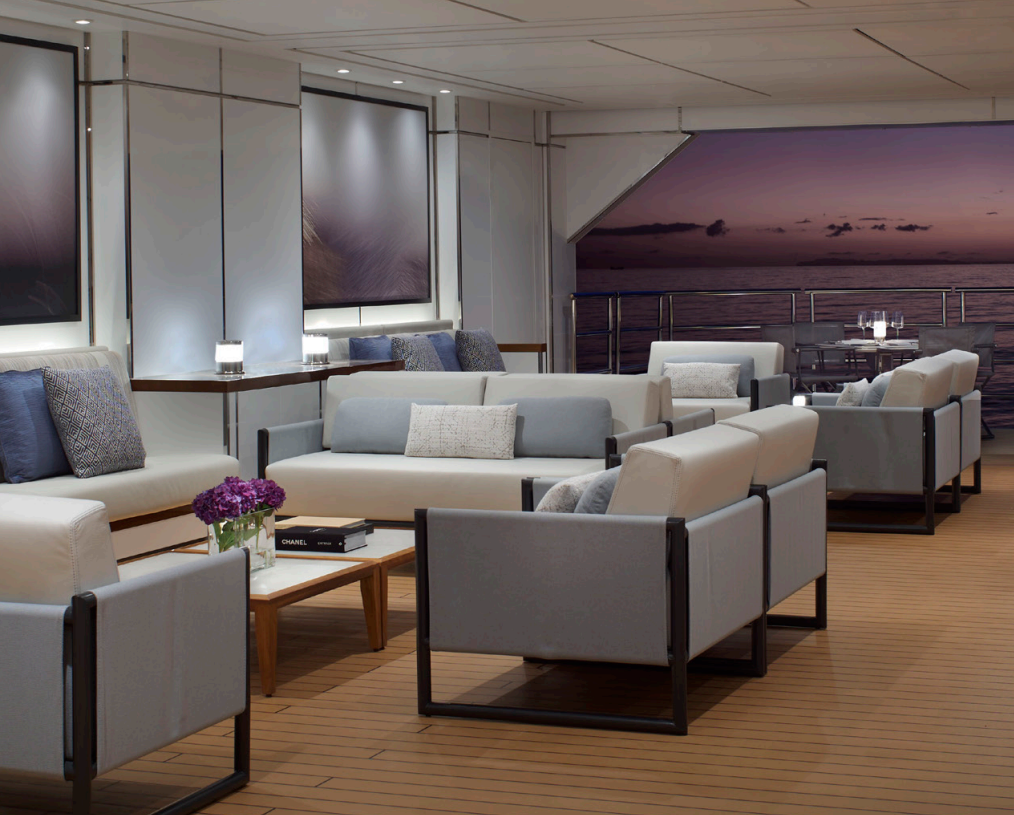
Marina and Marina Terrace
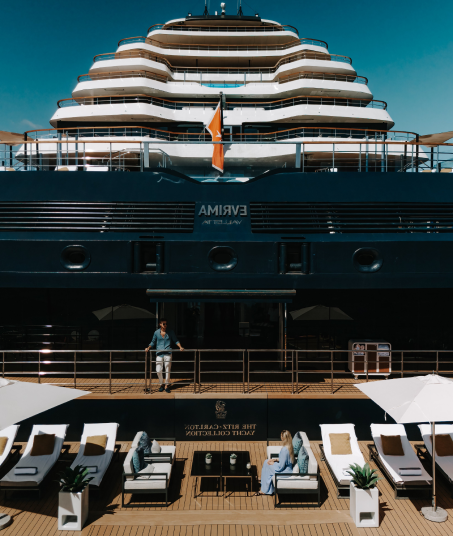
Sitting right at the water’s edge, the Marina offers sun loungers and a generous choice of water toys. Like a private beach with seamless entry into the sea, it’s the go-to spot while at anchor. Just steps above, the Marina Terrace serves handcrafted cocktails and light bites with stunning view

The Observation Lounge
Top-deck views erase the borders between land and sea, an inspired setting for lounging, cocktails or socializing. At twilight, the space is transformed into a venue with cocktails and live entertainment, extending into a late-night hangout. Whether exploring on luxury repositioning cruises, luxury Baltic cruises, US-based cruises, or anything in between, The Observation Lounge is your vantage point for sightseeing anywhere at sea.
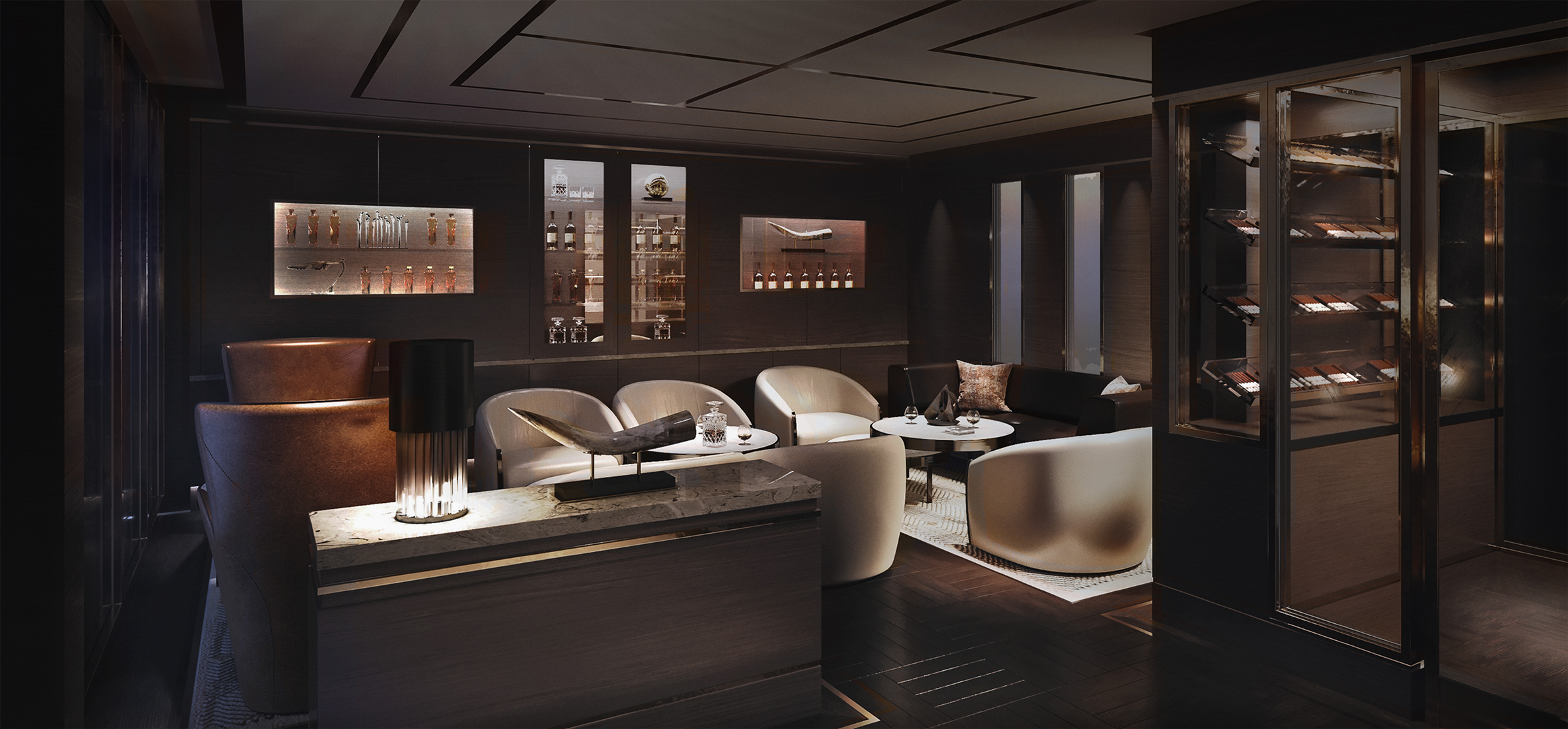
The Humidor
Cap off your day with a premium cognac in this intimate lounge with its comfortable furnishings. An excellent selection of premium, hand-rolled cigars are showcased in the state-of-the-art humidor.
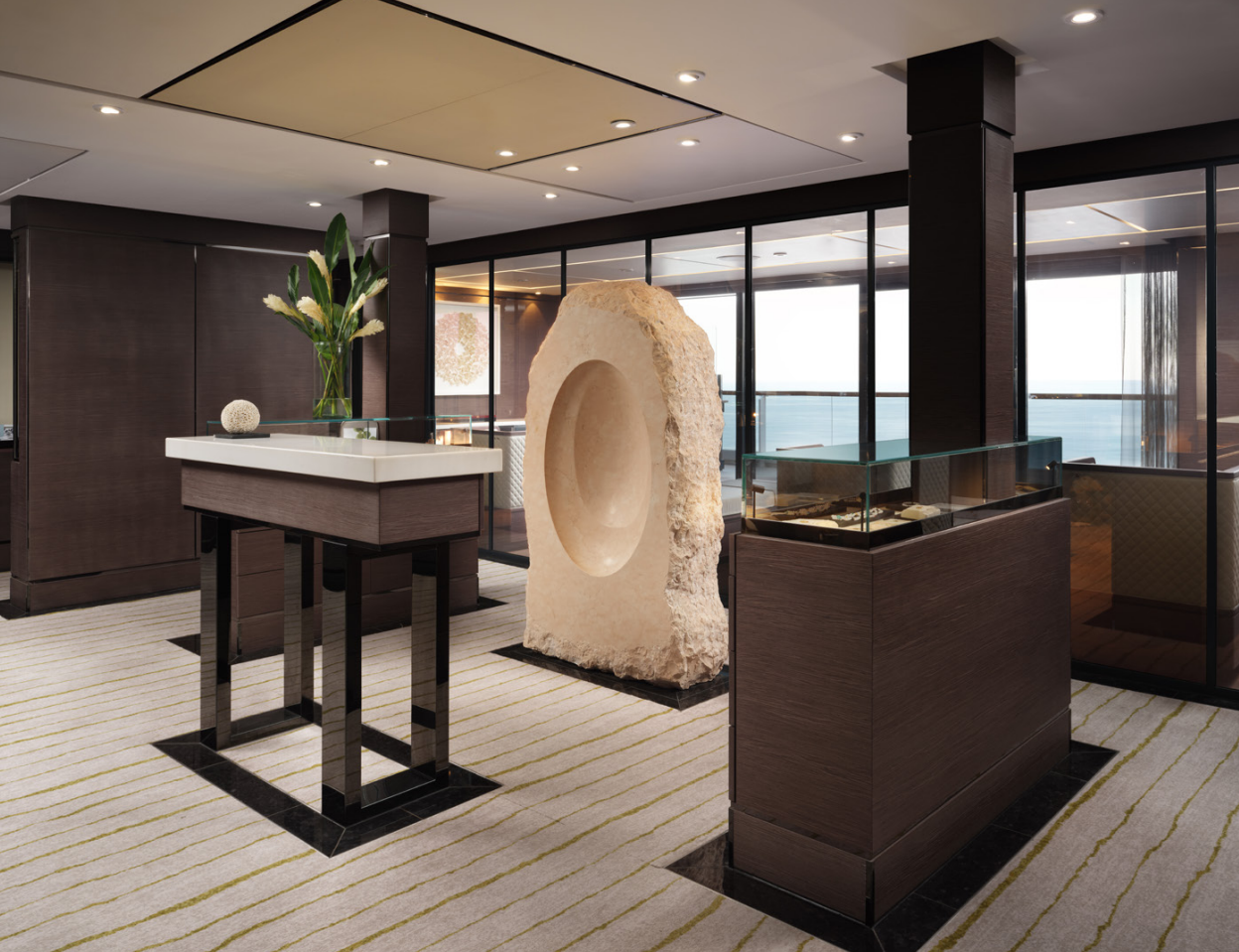
The Boutique
From exclusive sportswear and branded apparel to jewelry and leather goods, leading labels offer enticing options. In select ports, your shopping experience is further enhanced by bespoke collaborations with local artisans who come on board to showcase their offerings.
The Living Room
Bold shades of blue reflecting the sea provide a vibrant accent to the yacht’s gathering place, with its chic, comfortable furnishings and library with travel guides and best sellers. Diffused lighting transforms the space into a cocktail lounge with piano bar, dancing and live music later on, making The Living Room one of the most popular Ritz-Carlton Yacht Collection onboard features.
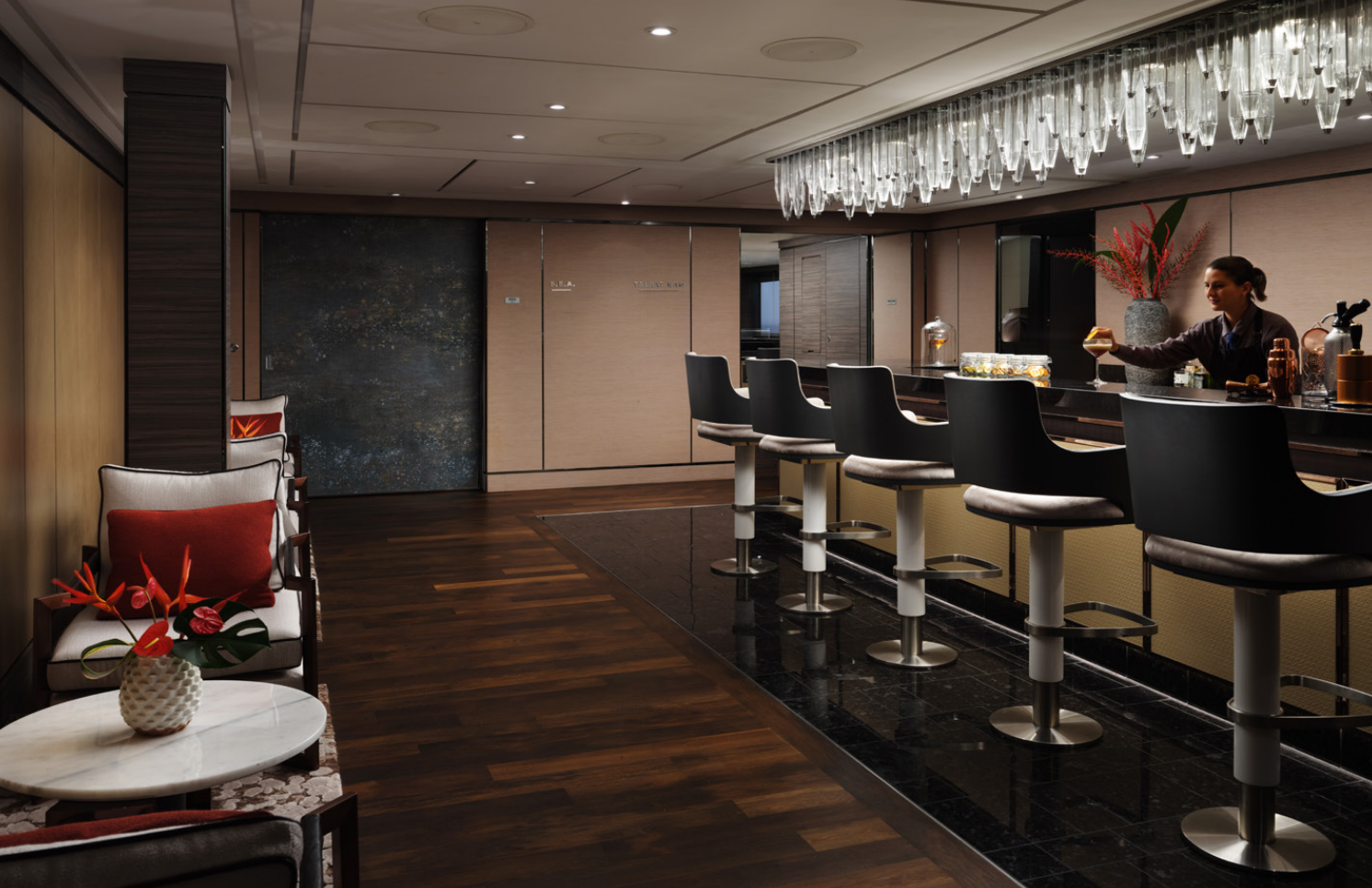
The Bar
This intimate lounge serves premium labels from around the world and also offers champagne and caviar pairings.
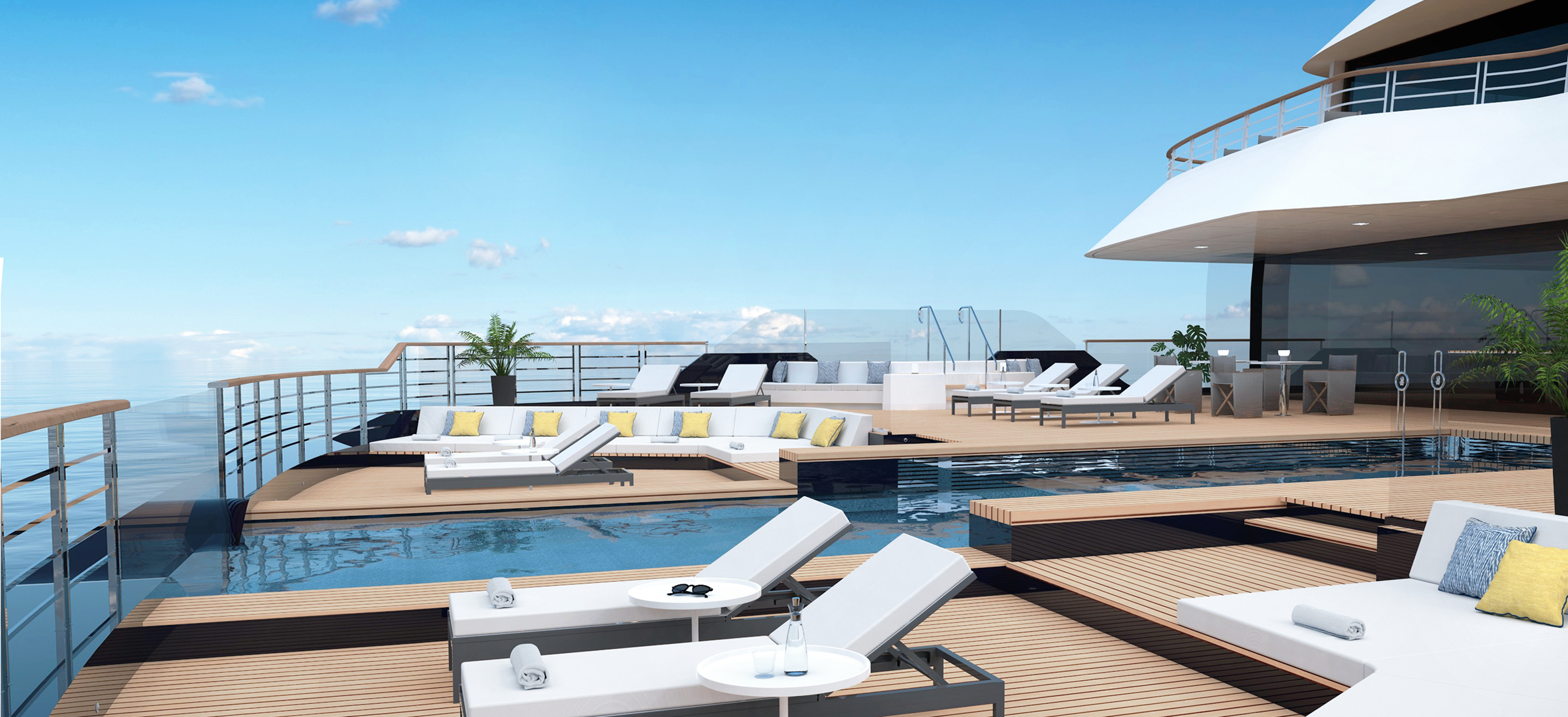
The Pool
An infinity oasis of blue is just steps away from The Pool House, where guests can enjoy all-day dining. Frozen treats and refreshing water mistings pamper guests on the sun loungers and banquettes or soaking in the whirlpools. A spacious venue for deck parties and open-air movies.
The Ritz-Carlton Spa
Listen to the gentle lap of waves while reclining on a massage table, savoring a therapeutic spa treatment from the private terrace of one of our treatment rooms. Inspired by the destinations we visit and curated to fulfill your needs, our treatments feature the finest ESPA products to awaken the senses, refresh the body and renew the spirit. Arrive early, stay a while and drift away into relaxation aboard your oasis at sea.
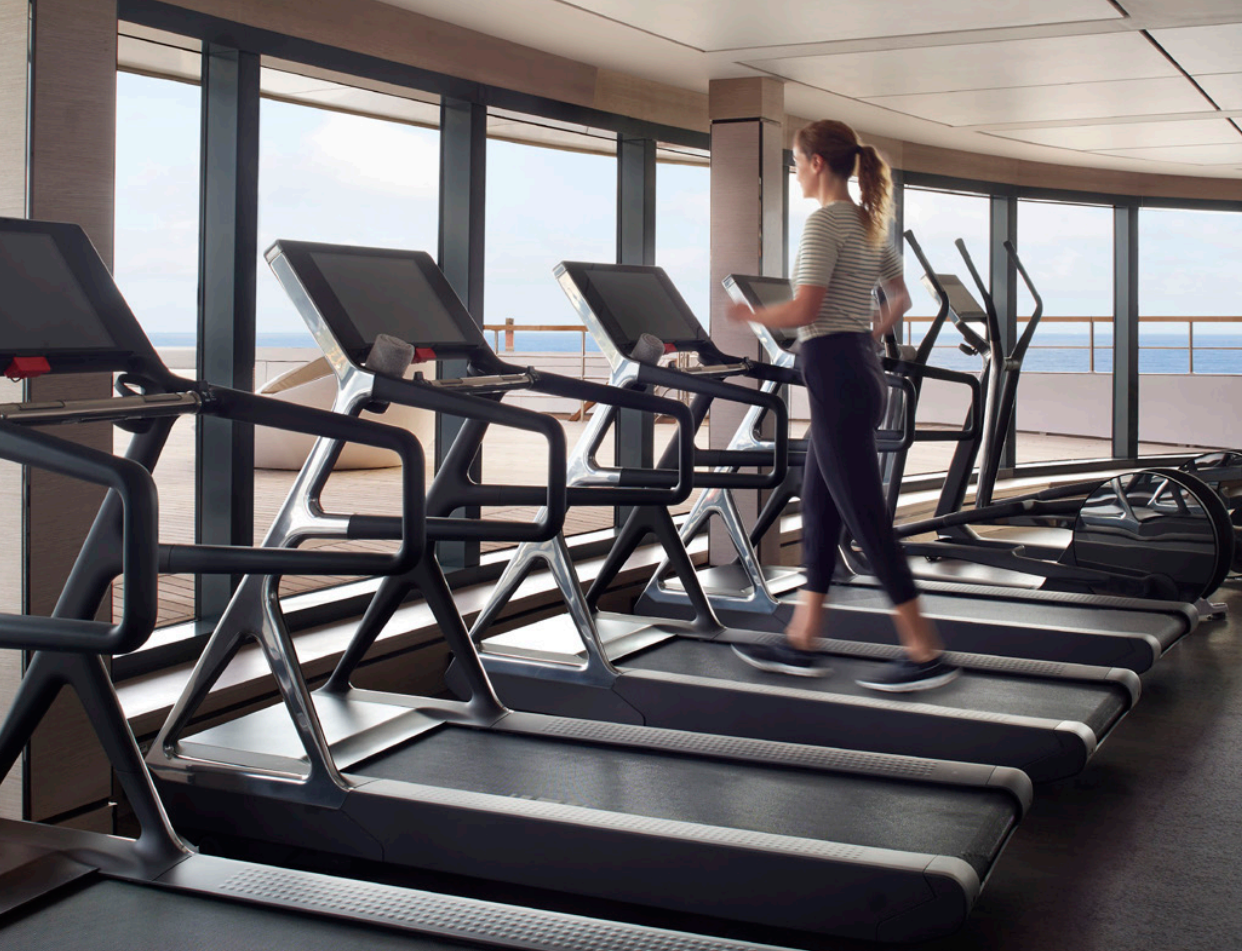
The Fitness Studio
The Fitness Studio is home to a health and wellness program that integrates fitness and spa with lectures and nutrition that can be customized for each guest. From personal training to sunrise yoga and mat Pilates, each voyage has opportunities to maintain a healthy lifestyle.
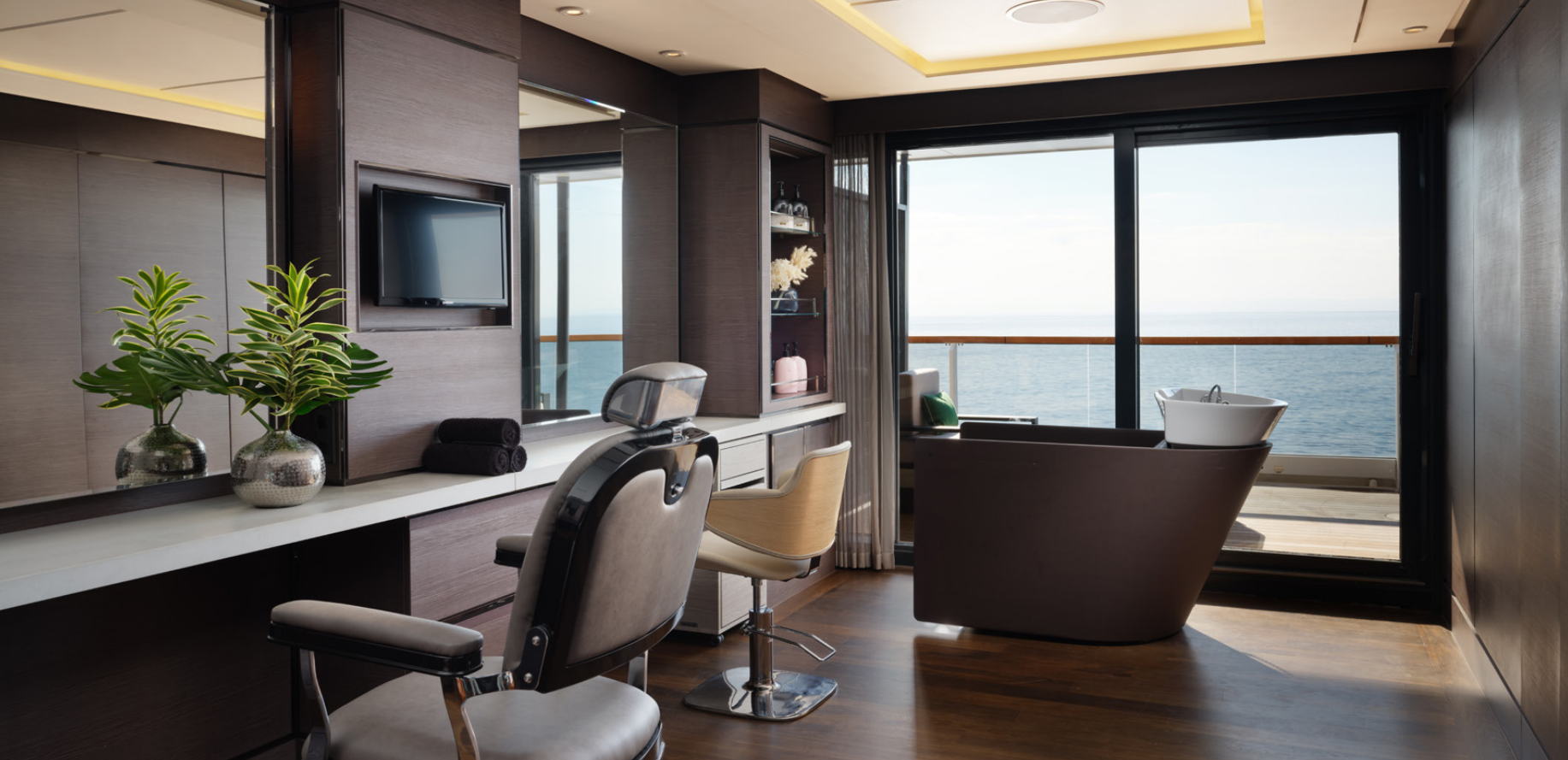
Barber & Salon Services
The Salon offers a variety of beauty and hair services including manicure and pedicure treatments, hair consultations, cutting, styling and blow drying. Next door at The Barber, gentlemen can enjoy a close shave or invigorating facial before heading ashore to explore the port feeling refreshed and revitalized.
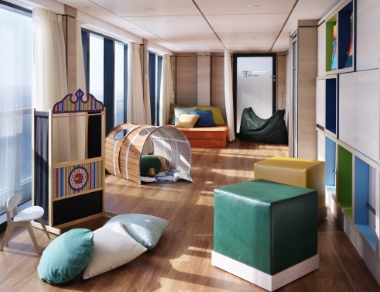
Ritz-Kids
Families exploring the world together are welcome aboard The Ritz-Carlton Yacht Collection. With its own dedicated space on board, Ritz-Kids® is an educational and fun-filled program that encourages children ages 4 to 12 to explore the world around them. Enhanced programming will be available during holidays and summer months.
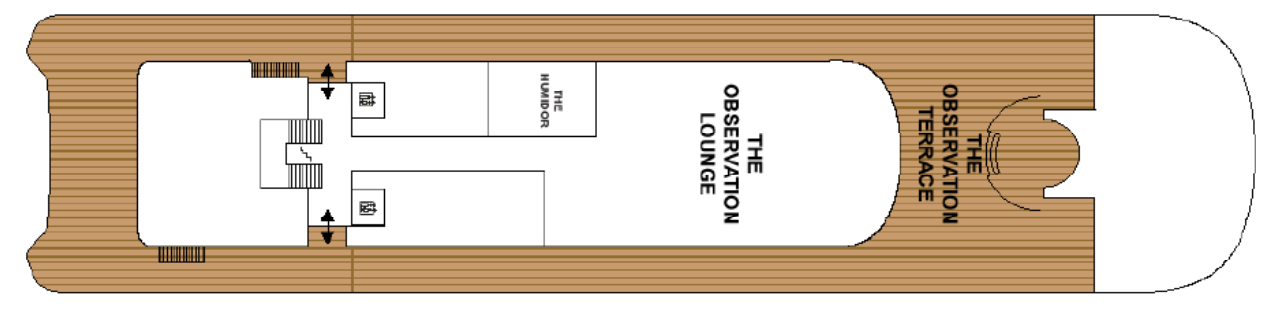
Deck 10
- The Observation Lounge
- The Observation Terrace
- The Humidor
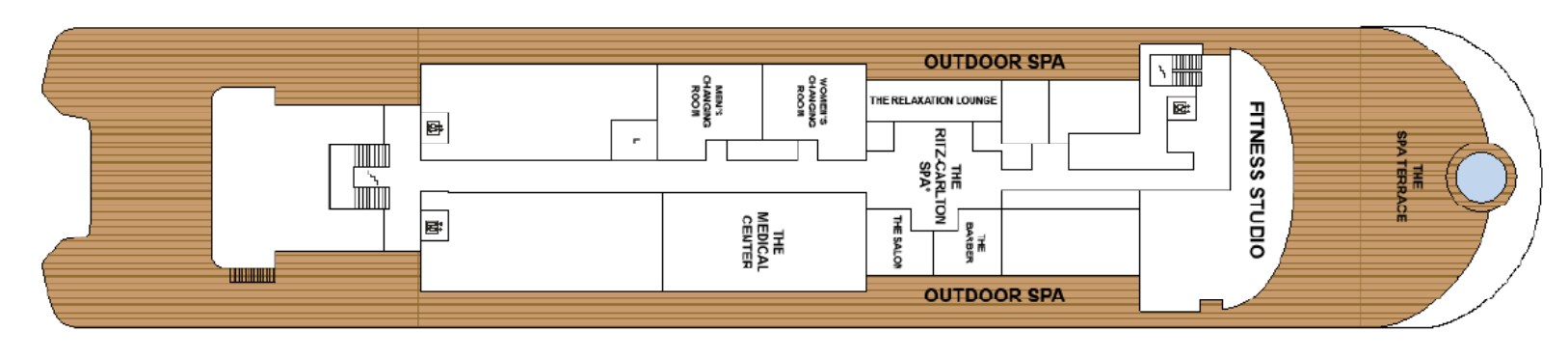
Deck 9
- The Gym
- Fitness Studio
- The Ritz-Carlton Spa
- Outdoor Spa
- The Spa Terrace
- The Barber/The Salon
- Launderette
- Men/Women’s Changing Rooms
- The Medical Centre
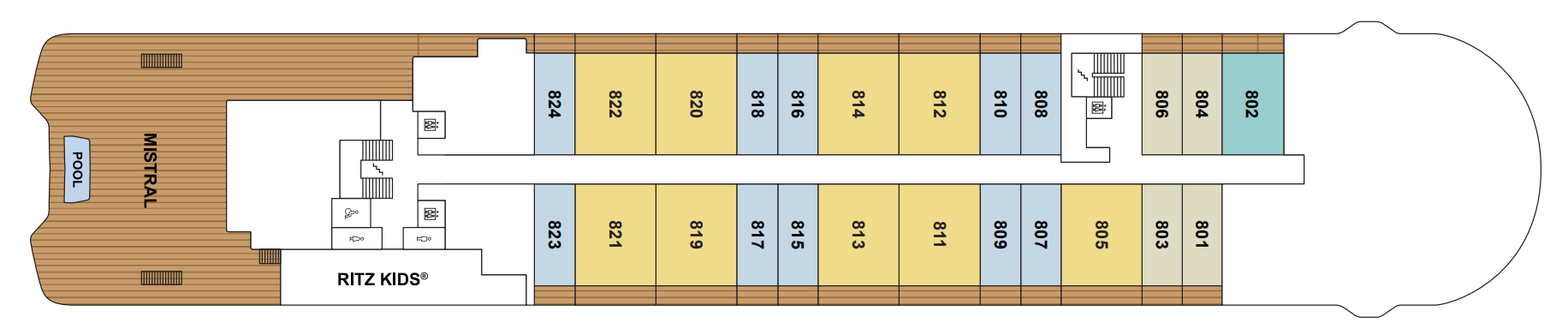
Deck 8
- Mistral
- Pool
- Ritz-Kids
- Suites 801 – 824

Deck 7
- Suites 701 – 737

Deck 6
- The Bar
- S.E.A
- Talaat Nam
- Suites 601 – 645

Deck 5
- The Pool House
- The Pool
- Suites 501 – 545

Deck 4
- The Meeting Rooms
- The Living Room
- The Boutique
- Wine Vault
- Wine Tasting Area
- The Evrima Room
- Dining Privee
- Dining Privée
- 505 – 519 Lower Level

Deck 3
- The Marina Terrace
- The Marina