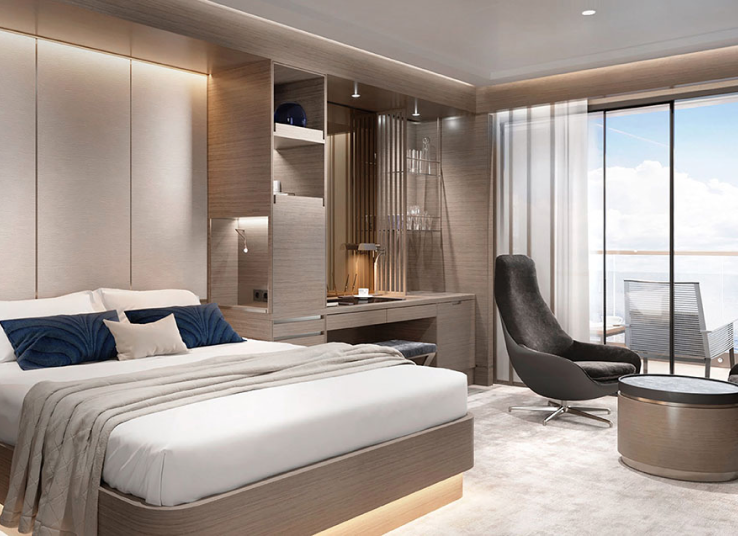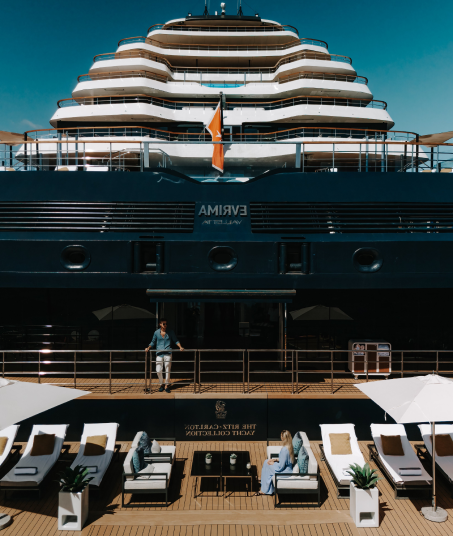

Itinerary
Italy’s vibrant capital lives in the present, but no other city on earth evokes its past so powerfully. For over 2,500 years, emperors, popes, artists, and common citizens have left their mark here. Archaeological remains from ancient Rome, art-stuffed churches, and the treasures of Vatican City vie for your attention, but Rome is also a wonderful place to practice the Italian-perfected il dolce far niente, the sweet art of idleness. Your most memorable experiences may include sitting at a caffè in the Campo de’ Fiori or strolling in a beguiling piazza.
Kalè polis, meaning beautiful city, is the name ancient Greek mariners bestowed on Gallipoli, with good reason. Situated on a mound, the Old Town with its labyrinth of winding lanes, emerges from the Ionian Sea. It is connected to the mainland and modern Gallipoli via a 17th-century bridge. The area lies on the Salentina Peninsula in the extreme southeast end of Italy, commonly referred to as the heel of the boot. The Salento region was inhabited already in prehistoric times; later centuries were marked by Greek, Norman, Byzantine and Baroque cultures. It is a land of farms, castles, works of art, myths and legends. Many heroic battles were fought; fierce resistance was shown by Gallipoli’s citizens against numerous invaders that included Romans, Vandals, Swabians, Venetians, French and lastly the English in 1809. In addition to its tumultuous history and natural beauty, the city’s claim to fame rests in its art treasures, most notably, the Basilica of Sant’Agata with its majestic 17th-century façade. Inside, the church contains a rich and important art collection with numerous works by its great native son, Giovanni Andrea Coppola.
Backed by imposing mountains, tiny Kotor lies hidden from the open sea, tucked into the deepest channel of the Bokor Kotorska (Kotor Bay), which is Europe’s most southerly fjord. To many, this town is more charming than its sister UNESCO World Heritage Site, Dubrovnik, retaining more authenticity, but with fewer tourists and spared the war damage and subsequent rebuilding which has given Dubrovnik something of a Disney feel.Kotor’s medieval Stari Grad (Old Town) is enclosed within well-preserved defensive walls built between the 9th and 18th centuries and is presided over by a proud hilltop fortress. Within the walls, a labyrinth of winding cobbled streets leads through a series of splendid paved piazzas, rimmed by centuries-old stone buildings. The squares are now haunted by strains from buskers but although many now house trendy cafés and chic boutiques, directions are still given medieval-style by reference to the town’s landmark churches.In the Middle Ages, as Serbia’s chief port, Kotor was an important economic and cultural center with its own highly regarded schools of stonemasonry and iconography. From 1391 to 1420 it was an independent city-republic and later, it spent periods under Venetian, Austrian, and French rule, though it was undoubtedly the Venetians who left the strongest impression on the city’s architecture. Since the breakup of Yugoslavia, some 70% of the stone buildings in the romantic Old Town have been snapped up by foreigners, mostly Brits and Russians. Porto Montenegro, a new marina designed to accommodate some of the world’s largest super yachts, opened in nearby Tivat in 2011, and along the bay are other charming seaside villages, all with better views of the bay than the vista from Kotor itself where the waterside is congested with cruise ships and yachts. Try sleepy Muo or the settlement of Prčanj in one direction around the bay, or Perast and the Roman mosaics of Risan in the other direction.
Off the coast of Croatia in the southern Adriatic Sea lie some thousand islands and the largest of them, Korçula, is considered the most beautiful. With an average of 3,000 hours of sunshine per annum, which guarantees a wide assortment of Mediterranean vegetation, it is not difficult to understand why seasoned travelers compare Korçula to a latter-day Eden. Separated from the mainland by a channel of only one mile, Korçula’s main town, named the same as the island, ranks among the best preserved medieval towns in the Mediterranean. It is the island’s main tourist, economic and cultural center. Thanks to its strategic location along the sea trade routes, Korçula has always attracted travelers and settlers. Korcula was founded by Greek colonists, who were followed by Illyrians, Romans and finally the Croats. The Korçula Statute of 1214 is one of the oldest legal documents to have been adopted in this part of Europe. The same century saw the birth of the famous world traveler, Marco Polo. The house said to be his birthplace can be seen in town. Korçulans have always been known as keen seafarers, excellent shipbuilders, stonemasons and artists. From their many voyages, sailors brought back new ideas, which eventually mixed with local customs. To this day, Korçula has maintained the tradition of performing knightly games such as the chivalrous Moreska dance, which has been in existence for more than 400 years. Visitors to Korçula enjoy its stunning location, natural beauty and medieval ambiance. And if that’s not enough, the town offers numerous attractions that are within walking distance from the pier, including the City Museum and the Bishop’s Treasury.
Nothing can prepare you for your first sight of Dubrovnik. Lying 216 km (135 miles) southeast of Split and commanding a jaw-dropping coastal location, it is one of the world’s most beautiful fortified cities. Its massive stone ramparts and fortress towers curve around a tiny harbor, enclosing graduated ridges of sun-bleached orange-tiled roofs, copper domes, and elegant bell towers. Your imagination will run wild picturing what it looked like seven centuries ago when the walls were built, without any suburbs or highways around it, just this magnificent stone city rising out of the sea.In the 7th century AD, residents of the Roman city Epidaurum (now Cavtat) fled the Avars and Slavs of the north and founded a new settlement on a small rocky island, which they named Laus, and later Ragusa. On the mainland hillside opposite the island, the Slav settlement called Dubrovnik grew up. In the 12th century the narrow channel separating the two settlements was filled in (now the main street through the Old Town, called Stradun), and Ragusa and Dubrovnik became one. The city was surrounded by defensive walls during the 13th century, and these were reinforced with towers and bastions in the late 15th century.From 1358 to 1808 the city thrived as a powerful and remarkably sophisticated independent republic, reaching its golden age during the 16th century. In 1667 many of its splendid Gothic and Renaissance buildings were destroyed by an earthquake. The defensive walls survived the disaster, and the city was rebuilt in baroque style.Dubrovnik lost its independence to Napoléon in 1808, and in 1815 passed to Austria-Hungary. During the 20th century, as part of Yugoslavia, the city became a popular tourist destination, and in 1979 it was listed as a UNESCO World Heritage Site. During the war for independence, it came under heavy siege. Thanks to careful restoration, few traces of damage remain; however, there are maps inside the Pile and Ploče Gates illustrating the points around the city where damage was done. It’s only when you experience Dubrovnik yourself that you can understand what a treasure the world nearly lost
The Croatian island of Hvar bills itself as the “sunniest island in the Adriatic.” Not only does it have the figures to back up this claim—an annual average of 2,724 hours of sunshine—but it also makes visitors a sporting proposition, offering them a money-back guarantee if there are seven consecutive days of snow (snow has been known to fall here; the last time being February 2012).
Venice is a city unlike any other. No matter how often you’ve seen it in photos and films, the real thing is more dreamlike than you could imagine. With canals where streets should be, water shimmers everywhere. The fabulous palaces and churches reflect centuries of history in what was a wealthy trading center between Europe and the Orient. Getting lost in the narrow alleyways is a quintessential part of exploring Venice, but at some point you’ll almost surely end up in Piazza San Marco, where tourists and locals congregate for a coffee or an aperitif.
Ship features

The Owner's Suite
Natural light streams through the floor-to-ceiling windows of the Owner’s Suite, illuminating the interior of up to 1,033 square feet. The contemporary living area includes an in-suite bar for hosting cocktail hour before enjoying dinner with friends in the dining area — or alfresco on the expansive private terrace. After sunset, unwind under the stars in the terrace’s whirlpool spa and indulge in a soothing outdoor shower before heading inside to retire. The bedroom welcomes you to a sanctum of repose, complete with a custom king bed and spacious walk-in wardrobe, and the marble bath includes a modern shower, soaking tub, double vanity and a powder room that can be accessed conveniently from the foyer.
OWNERS SUITE
MAGNIFICENT OCEAN VIEWS
- Private, spacious terrace overlooking the ocean, with private whirlpool and outdoor shower
SPACIOUS SUITE ACCOMMODATIONS
- Luxurious and modern living and dining area
- Luxury custom king bed sleep system
- Double vanity bathroom with modern soaking tub and separate shower
PERSONALIZED SERVICE AND AMENITIES
- The Personal Concierge is your single onboard touch point to ensure a flawless, seamless journey from beginning to end
- 24-hour in-suite dining, espresso machine, complimentary coffee and teas and a mini-bar provisioned to your preferences, upon request once on board
ACCOMMODATIONS
Bed & Bath
- Luxury custom king bed sleep system
- Double vanity bathroom with modern soaking tub and separate shower
- Second powder room in select suites
- Custom luxury bed and bath linens
Suite Features
- Private, spacious terrace overlooking the ocean with private whirlpool and outdoor shower
- Luxurious and modern living and dining area
- Walk-in wardrobe
- Convertible sleep sofa
Size
- Suite: 732 – 1033 SQ FT | 68 – 96 SQ M
- Terrace: 581 – 721 SQ FT | 54 – 67 SQ M
SERVICES AND AMENITIES
- 24-hour in-suite dining
- Luxury bath amenities & individual robe and slippers
- Premium Wi-Fi, supporting browsing, social media, streaming services, video calls and VPN services
- Complimentary chilled bottle of champagne upon arrival
- Espresso machine with complimentary coffee and teas
- Digital flat screen television
- In-suite safe
- Vanity mirror
- Hair dryer
- Hypoallergenic pillows, upon request
- 230v and 120v outlets, as well as USB charging capabilities
The Concierge Suite
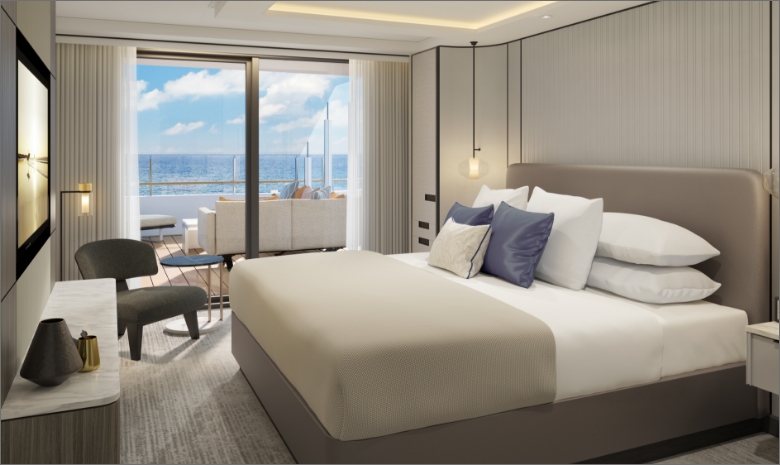
Spacious indoors and out, the Concierge Suite offers up to 786 square feet of interior area and a private terrace of up to 409 square feet. The bedroom includes a generous walk-in wardrobe and dressing area as well as a marble bath with a double vanity, walk-in shower, soaking tub and an enclosed powder room accessible from the foyer. Sunlight casts a warm glow through the floor-to-ceiling glass in the bedroom and living room, which both open onto the terrace so you can step out to take in the views. The interior and outdoor spaces each feature an elegant dining area and a comfortable living area with a plush sofa, perfect for entertaining guests or enjoying a romantic evening for two.
CONCIERGE SUITE
MAGNIFICENT OCEAN VIEWS
- Private, spacious terrace overlooking the ocean, with entry from living area and bedroom
SPACIOUS SUITE ACCOMMODATIONS
- Luxurious and modern living and dining area
- Luxury custom king bed sleep system
- Double vanity bathroom with modern soaking tub and separate shower
PERSONALIZED SERVICE AND AMENITIES
- The Personal Concierge is your single onboard touch point to ensure a flawless, seamless journey from beginning to end
- 24-hour in-suite dining, espresso machine, complimentary coffee and teas and a mini-bar provisioned to your preferences, upon request once on board
ACCOMMODATIONS
Bed & Bath
- Luxury custom king bed sleep system
- Double vanity bathroom with modern soaking tub and separate shower
- Custom luxury bed and bath linens
Suite Features
- Private, spacious terrace overlooking the ocean
- Luxurious and modern living and dining area
- Walk-in wardrobe
- Convertible sleep sofa
Size
- Suite: 689 – 785 SQ FT | 64 – 73 SQ M
- Terrace: 355 – 409 SQ FT | 33 – 38 SQ M
SERVICES AND AMENITIES
- 24-hour in-suite dining
- Luxury bath amenities & individual robe and slippers
- Premium Wi-Fi, supporting browsing, social media, streaming services, video calls and VPN services
- Complimentary chilled bottle of champagne upon arrival
- Espresso machine with complimentary coffee and teas
- Digital flat screen television
- In-suite safe
- Vanity mirror
- Hair dryer
- Hypoallergenic pillows, upon request
- 230v and 120v outlets, as well as USB charging capabilities

The Ilma Suite
The Ilma Suite embraces the ever-changing vistas along the horizon with an expansive private terrace of 291 to 301 square feet. Sunbathe with a traveling companion on the dual chaise lounges or curl up with a bestseller on the comfortable outdoor sofa. Host friends for dinner with a seaside harbor as a backdrop when you dine alfresco on the terrace or view the tableau through the floor-to-ceiling windows of the indoor dining area. Within up to 657 square feet of interior space, the cozy bedroom retreat features a luxurious king bed, spacious closets, and a modern shower system in the bath, which may also include a separate soaking tub.
ILMA SUITE
MAGNIFICENT OCEAN VIEWS
- Private, spacious terrace overlooking the ocean
SPACIOUS SUITE ACCOMMODATIONS
- Luxurious and modern living and dining area
- Luxury custom king bed sleep system
- Double vanity bathroom with modern soaking tub and separate shower
PERSONALIZED SERVICE AND AMENITIES
- The Personal Concierge is your single onboard touch point to ensure a flawless, seamless journey from beginning to end
- 24-hour in-suite dining, espresso machine, complimentary coffee and teas and a mini-bar provisioned to your preferences, upon request once on board
ACCOMMODATIONS
Bed & Bath
- Luxury custom king bed sleep system
- Double vanity bathroom with modern soaking tub and separate shower
- Custom luxury bed and bath linens
Suite Features
- Private, spacious terrace overlooking the ocean
- Luxurious and modern living and dining area
- Walk-in wardrobe
- Convertible sleep sofa
Size
- Suite: 506 – 657 SQ FT | 47 – 61 SQ M
- Terrace: 291 – 301 SQ FT | 27 – 28 SQ M
SERVICES AND AMENITIES
- 24-hour in-suite dining
- Luxury bath amenities & individual robe and slippers
- Premium Wi-Fi, supporting browsing, social media, streaming services, video calls and VPN services
- Complimentary chilled bottle of champagne upon arrival
- Espresso machine with complimentary coffee and teas
- Digital flat screen television
- In-suite safe
- Vanity mirror
- Hair dryer
- Hypoallergenic pillows, upon request
- 230v and 120v outlets, as well as USB charging capabilities
The View Suite
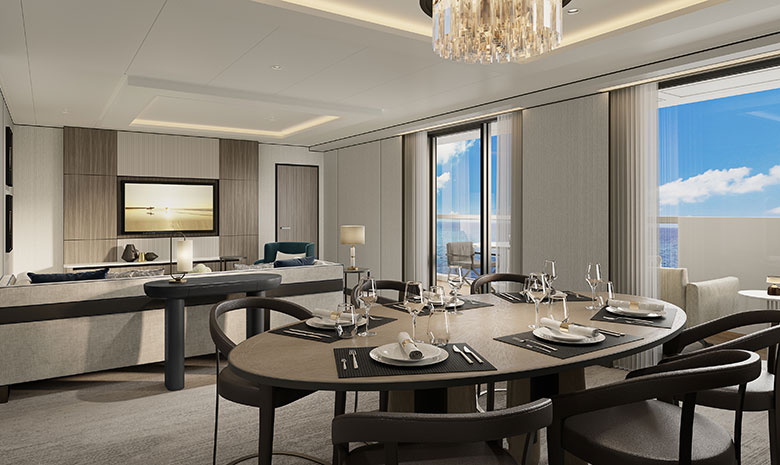
Within the View Suite interiors of up to 689 square feet, dramatic floor-to-ceiling windows in the living area and bedroom connect you to the surrounding seascapes. Step from the bedroom onto your private terrace of up to 205 square feet, where fresh sea breezes and scenic views await. After an alfresco breakfast, prepare for your day in the spacious marble bath featuring a double vanity, modern soaking tub and separate shower. The walk-in wardrobe and dressing area in the bedroom provide ample space to ready yourself for the day’s exploration. When evening comes, invite friends to join you in the dining area of your suite, which may also include a separate powder room for your guests.
VIEW SUITE
MAGNIFICENT OCEAN VIEWS
- Private, spacious terrace overlooking the ocean
- SPACIOUS SUITE ACCOMMODATIONS
- Luxurious and modern living and dining area
- Luxury custom king bed sleep system
- Double vanity bathroom with modern soaking tub and separate shower
PERSONALIZED SERVICE AND AMENITIES
- The Personal Concierge is your single onboard touch point to ensure a flawless, seamless journey from beginning to end
- 24-hour in-suite dining, espresso machine, complimentary coffee and teas and a mini-bar provisioned to your preferences, upon request once on board
ACCOMMODATIONS
Bed & Bath
- Luxury custom king bed sleep system
- Double vanity bathroom with modern soaking tub and separate shower
- Custom luxury bed and bath linens
- Powder room in select suites
Suite Features
- Private, spacious terrace overlooking the ocean
- Luxurious and modern living and dining area
- Walk-in wardrobe
- Convertible sleep sofa
Size
- Suite: 517 – 689 SQ FT | 48 – 64 SQ M
- Terrace: 108 – 205 SQ FT | 10 – 19 SQ M
SERVICES AND AMENITIES
- 24-hour in-suite dining
- Luxury bath amenities & individual robe and slippers
- Premium Wi-Fi, supporting browsing, social media, streaming services, video calls and VPN services
- Complimentary chilled bottle of champagne upon arrival
- Espresso machine with complimentary coffee and teas
- Digital flat screen television
- In-suite safe
- Vanity mirror
- Hair dryer
- Hypoallergenic pillows, upon request
- 230v and 120v outlets, as well as USB charging capabilities
The Grand Suite
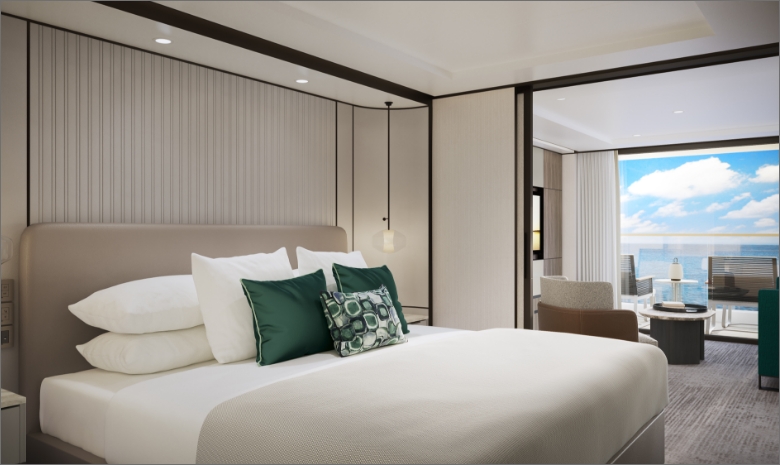
With 560 square feet of interior luxury plus a private terrace of up to 199 square feet, the Grand Suite has all the comforts of home and then some. Host friends for dinner at the stylish dining table for four and enjoy after-dinner drinks and conversation in the spacious living area. When it’s time to retire, open the double doors onto your bedroom retreat, which includes dual walk-in wardrobes, and enjoy a relaxing soak in the marble-clad tub before drifting off in the comfort of the custom king bed. Each morning, sip an espresso on your terrace as you take in the view of the enchanting destination you’re about to explore.
GRAND SUITE
MAGNIFICENT OCEAN VIEWS
- Private, spacious terrace overlooking the ocean
SPACIOUS SUITE ACCOMMODATIONS
- Luxurious and modern living and dining area
- Luxury custom king bed sleep system
- Double vanity bathroom with modern soaking tub and separate shower
PERSONALIZED SERVICE AND AMENITIES
- The Personal Concierge is your single onboard touch point to ensure a flawless, seamless journey from beginning to end
- 24-hour in-suite dining, espresso machine, complimentary coffee and teas and a mini-bar provisioned to your preferences, upon request once on board
ACCOMMODATIONS
Bed & Bath
- Luxury custom king bed sleep system
- Double vanity bathroom with modern soaking tub and separate shower
- Custom luxury bed and bath linens
Suite Features
- Private, spacious terrace overlooking the ocean
- Luxurious and modern living and dining area
- Dual walk-in wardrobe
- Convertible sleep sofa
Size
- Suite: 560 SQ FT | 52 SQ M
- Terrace*: 90 – 199 SQ FT | 8.4 – 18.5 SQ M
- *Expanded terrace on Deck 6
SERVICES AND AMENITIES
- 24-hour in-suite dining
- Luxury bath amenities & individual robe and slippers
- Premium Wi-Fi, supporting browsing, social media, streaming services, video calls and VPN services
- Complimentary chilled bottle of champagne upon arrival
- Espresso machine with complimentary coffee and teas
- Digital flat screen television
- In-suite safe
- Vanity mirror
- Hair dryer
- Hypoallergenic pillows, upon request
- 230v and 120v outlets, as well as USB charging capabilities
The Signature Suite
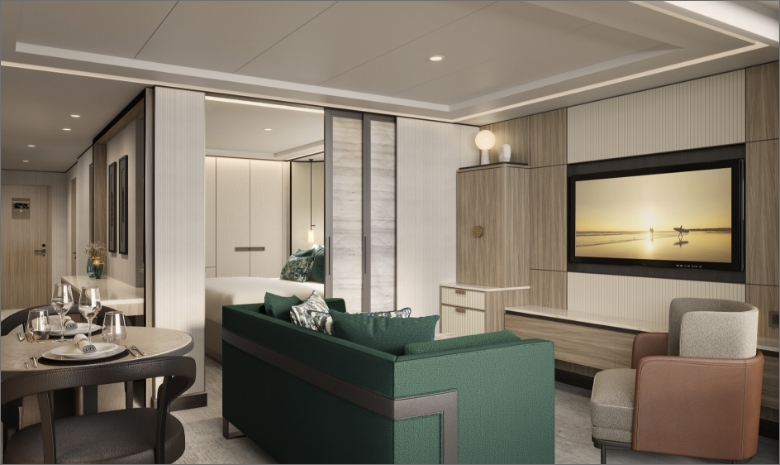
The welcoming entry corridor of the Signature Suite leads to an intimate dining area for two, where you can enjoy a delicious meal at any time of day or night. Then take in a movie from the plush sofa in the living area, or from the custom king bed in the spacious bedroom that features a second television. The bath offers the convenience of a double vanity for couples, a walk-in shower and a soaking tub, perfect for unwinding after adventures ashore. The ample 409 square feet of interior space is complemented by a private outdoor terrace of up to 151 square feet, where a comfortable lounger is equally suited to sunbathing or stargazing.
SIGNATURE SUITE
MAGNIFICENT OCEAN VIEWS
- Private, spacious terrace overlooking the ocean
SPACIOUS SUITE ACCOMMODATIONS
- Luxurious and modern living and dining area
- Luxury custom king bed sleep system
- Double vanity bathroom with modern soaking tub and separate shower
PERSONALIZED SERVICE AND AMENITIES
- The Personal Concierge is your single onboard touch point to ensure a flawless, seamless journey from beginning to end
- 24-hour in-suite dining, espresso machine, complimentary coffee and teas and a mini-bar provisioned to your preferences, upon request once on board
ACCOMMODATIONS
Bed & Bath
- Luxury custom king bed sleep system
- Double vanity bathroom with modern soaking tub and separate shower
- Custom luxury bed and bath linens
Suite Features
- Private, spacious terrace overlooking the ocean
- Luxurious and modern living and dining area
- Convertible sleep sofa
Size
- Suite: 409 SQ FT | 38 SQ M
- Terrace*: 71 – 151 SQ FT | 6.6 – 14 SQ M
- *Expanded terrace on Deck 6
SERVICES AND AMENITIES
- 24-hour in-suite dining
- Luxury bath amenities & individual robe and slippers
- Premium Wi-Fi, supporting browsing, social media, streaming services, video calls and VPN services
- Complimentary chilled bottle of champagne upon arrival
- Espresso machine with complimentary coffee and teas
- Digital flat screen television
- In-suite safe
- Vanity mirror
- Hair dryer
- Hypoallergenic pillows, upon request
- 230v and 120v outlets, as well as USB charging capabilities
The Terrace Suite
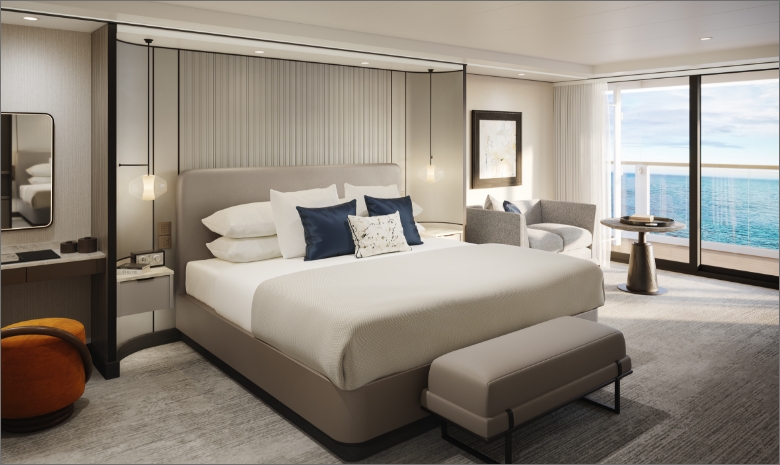
The airy interiors of the Terrace Suite offer 294 square feet of comfort, and just beyond the floor-to-ceiling windows, the namesake private terrace provides up to 108 square feet overlooking the sea.
This personal oasis includes a custom king bed, an ample wardrobe and a separate sitting area for curling up with a good book. The marble bath features luxurious amenities by Diptyque Paris, a modern shower system and a double vanity — ideal when sharing the space with a companion. Wake each morning to fresh coffee from the in-suite espresso machine and conclude each day with a nightcap from the mini-bar, while a Suite Ambassador attends to your wishes in the moments in between.
TERRACE SUITE
MAGNIFICENT OCEAN VIEWS
- Private, spacious terrace overlooking the ocean
SPACIOUS SUITE ACCOMMODATIONS
- Luxury custom king bed sleep system
- Double vanity bathroom with modern shower system
PERSONALIZED SERVICE AND AMENITIES
- The Personal Concierge is your single onboard touch point to ensure a flawless, seamless journey from beginning to end
- 24-hour in-suite dining, espresso machine, complimentary coffee and teas and a mini-bar provisioned to your preferences, upon request once on board
ACCOMMODATIONS
Bed & Bath
- Luxury custom king bed sleep system
- Double vanity bathroom with modern shower system
- Custom luxury bed and bath linens
Suite Features
- Private, spacious terrace overlooking the ocean
Size
- Suite: 294 SQ FT | 27.3 SQ M
- Terrace*: 52 – 108 SQ FT| 4.8 – 10 SQ M
- ADA
- Suite: 452 SQ FT | 42 SQ M
- Terrace*: 73 – 161 SQ FT | 6.8 – 15 SQ M
- *Expanded terrace on Decks 5 and 6
SERVICES AND AMENITIES
- 24-hour in-suite dining
- Luxury bath amenities & individual robe and slippers
- Premium Wi-Fi, supporting browsing, social media, streaming services, video calls and VPN services
- Complimentary chilled bottle of champagne upon arrival
- Espresso machine with complimentary coffee and teas
- Digital flat screen television
- In-suite safe
- Vanity mirror
- Hair dryer
- Hypoallergenic pillows, upon request
- 230v and 120v outlets, as well as USB charging capabilities
Tides
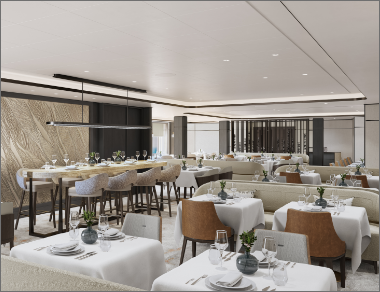
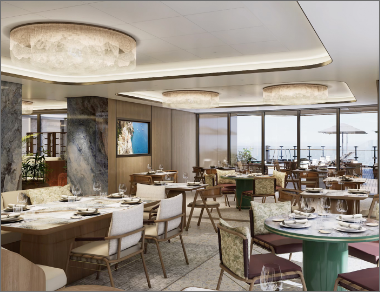
The thoughtful design of the spacious main restaurant creates a warm, welcoming ambiance that balances a sense of privacy with the desire for social connection. Both traditional and innovative, the breakfast, lunch and dinner dishes showcase the fresh local ingredients and seasonal cuisines of the destinations that Ilma explores, with menus ever changing like the tides of the sea.

Dining Privée
Join friends at a private enclave within Tides for an exclusive dining experience. The stylish and inviting ambiance of Dining Privée provides the perfect setting for celebratory dinners and other special events. Reservations are required, and an additional fee applies.
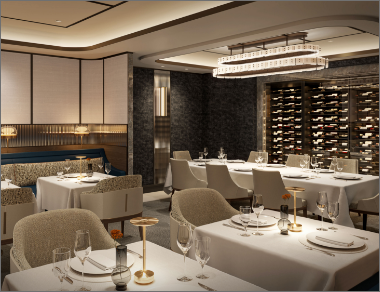
Seta Su Ilma
In collaboration with Chef Fabio Trabocchi, Seta Su Ilma, named after the Italian word for “silk,” offers a contemporary interpretation of Italian cuisine, nodding to regional flavors. Savor fresh seafood, perfectly grilled steak and handmade pasta — each course impeccably paired with a fine wine. Accompaniments like freshly baked bread, cold-pressed olive oils, and seasonal truffles complete an elegant Italian dining experience worthy of a Michelin star. Reservations are required, and an additional fee applies.
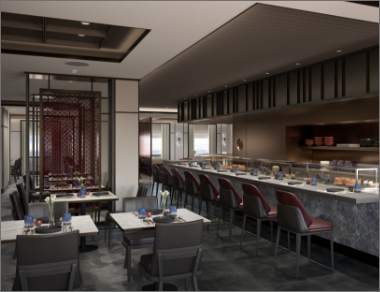
Memorī
From sashimi to tempura to Wagyu beef dishes, Memorī offers contemporary interpretations of authentic Japanese cuisine. With sleek angles and textural accents, the vibrant space centers around the sushi bar at the heart of the restaurant, while also offering ample seating at comfortable tables indoors and alfresco.
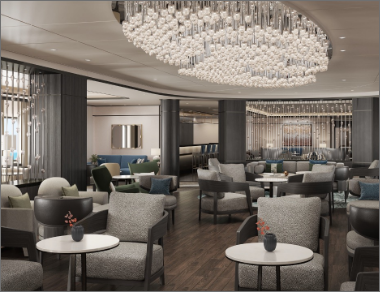
The Living Room
Comfortable and stylish, The Living Room greets you with fresh coffee, tea, pastries and other sweet and savory treats each morning. As the day progresses, the bar pours premium cocktails, fine wines and champagne, and a live pianist sets the mood. Each evening this becomes the perfect spot to enjoy canapés and an aperitif before dinner — and then return afterward for late-night dancing.
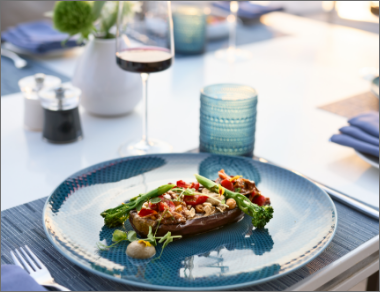
In-Suite Dining
When you wish to dine in the comfort of your suite or on your private terrace, our All-Day Dining menu offers a variety of selections from the onboard restaurants. Later in the evening, a Late-Night Dining menu is available.
Beach House
At the Beach House, bright, airy interiors flow into an expansive outdoor pool deck, creating an effervescent setting for enjoying Pan-Latin cuisine alongside craft beers, bold wines, and an elevated tequila selection. The menu, developed in collaboration with James Beard Award-winning chef Michael Mina, is inspired by the bold, fire-born flavors of South and Central America while highlighting ingredients from the Caribbean with light, refreshing shareable bites, such as grilled meats, seafood, and ceviche. Located on Deck 5.

The Boutique
From exclusive sportswear and branded apparel to jewelry and leather goods, The Boutique offers enticing options to shoppers. In select ports, your shopping experience is further enhanced by collaborations with local artisans who come on board to showcase their bespoke offerings.

The Observation Terrace
A tranquil open-air retreat on Deck 9 forward, The Observation Terrace offers comfortable chaises and sofas for sunbathing or socializing while taking in the panoramic views. Cool off with a frozen cocktail, spritzer or ice cream treat from the bar, and enjoy attentive deck service offering chilled misting and iced towels.

The Humidor
A softly lit enclave furnished in rich leathers and dark walnut timbers, this cozy lounge is named for its state-of-the-art humidor showcasing fine tobaccos that include an exceptional collection of hand-rolled cigars by Davidoff. Settle into a plush armchair and sip a premium cognac or a well-aged Macallan single-malt whisky.
Marina and Marina Terrace
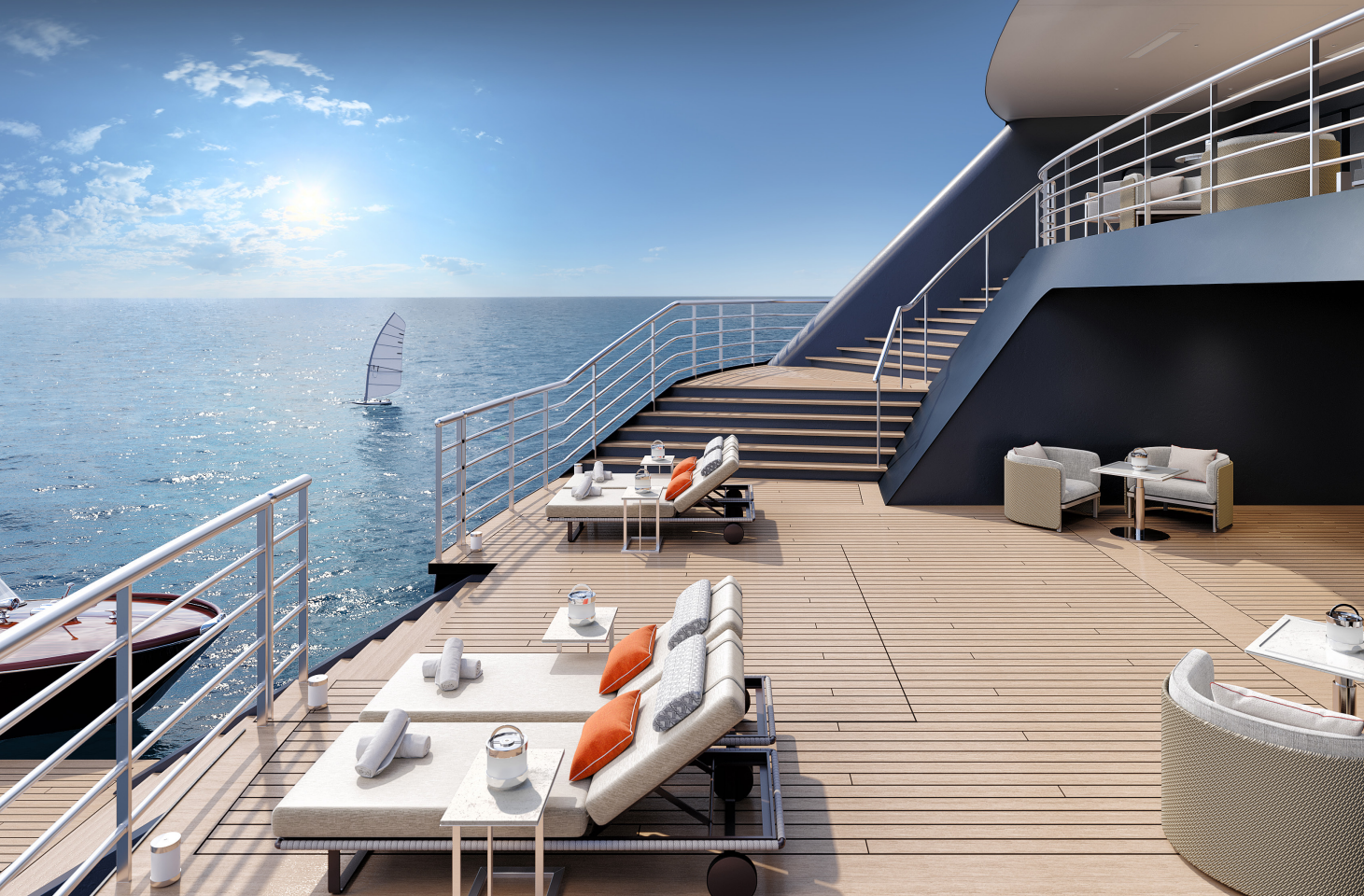
Right at the water’s edge, the Marina offers space for lounging as well as direct access to the sea for kayaking, paddle boarding and other watersports. Just steps above, the expansive Marina Terrace serves cool refreshments, such as handcrafted cocktails, frozen sorbet and chilled fruit brochettes, with a backdrop of dramatic seascapes.
The Ritz-Carlton Spa®
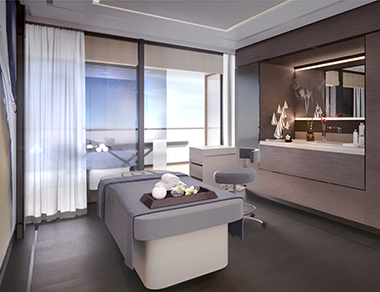
Listen to the gentle lap of waves while reclining on a massage table, savoring a therapeutic spa treatment from the private terrace of one of our treatment rooms. Inspired by the destinations we visit and curated to fulfill your needs, our treatments feature the finest ESPA products to awaken the senses, refresh the body and renew the spirit. Arrive early, stay a while and drift away into relaxation aboard your oasis at sea.
Main Pool and Infinity Pool
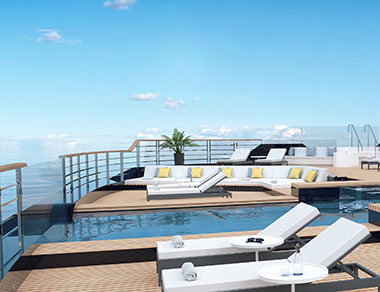
With panoramic views from high atop the yacht, Deck 10 is home to Ilma’s large Main Pool, with tanning ledges and spacious sundecks for lounging and The Pool Bar serving refreshing drinks. This lively space is also an entertainment hub for sail-away parties, themed events and movies under the stars. A few decks down, the Beach House not only serves delicious Latin-inspired cuisine but also features the aft Infinity Pool, where views from a comfortable chaise stretch as far as the horizon.
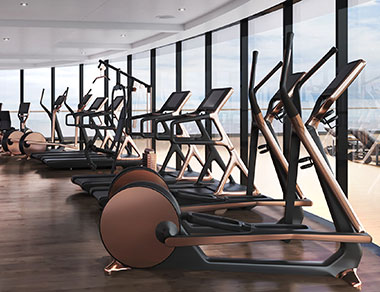
Fitness Studio
The Fitness Studio is home to a health and wellness program that integrates fitness and spa with lectures and nutrition that can be customized for each guest. From personal training to sunrise yoga and mat Pilates, each voyage has opportunities to maintain a healthy lifestyle. With a selection of machines such as bikes, rowers and ellipticals as well as free weights and other equipment, guests can take their regular exercise routine onboard.

Barber & Salon Services
The Salon offers a variety of beauty and hair services including manicure and pedicure treatments, hair consultations, cutting, styling and blow drying. Next door at The Barber, gentlemen can enjoy a close shave or invigorating facial before heading ashore to explore the port feeling refreshed and revitalized.

Ritz Kids®
The Ritz-Carlton Yacht Collection welcomes families traveling the world together. Ritz Kids® is an educational and fun-filled program that encourages children to explore the world around them. Enhanced services are available during holidays and summer months.
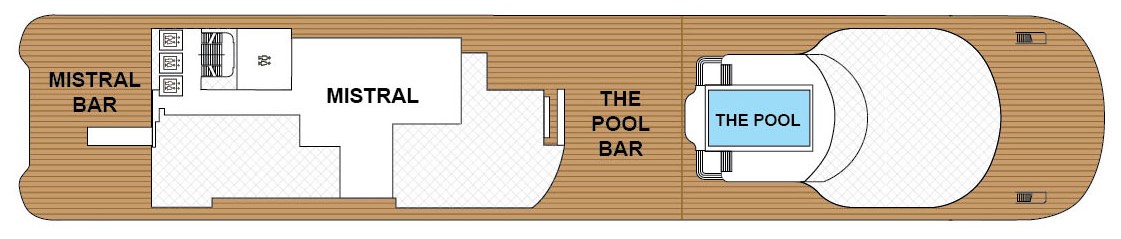
Deck 10
- Minstral
- The Main Pool
- The Main Pool Bar
- Mistral Bar

Deck 9
- The Observation Terrace
- The Owner’s Suite
- The Concierge Suite
- The Grand Suites
- The Signature Mid Suites
- The Signature Suites
- The Terrace Mid Suites
- The Terrace Suites

Deck 8
- The Owners Suites
- The Concierge Suites
- The Grand Suites
- The Signature Mid Suites
- The Signature Suites
- The Terrace Mid Suites
- The Terrace Suites

Deck 7
- The Owner’s Suites
- The Concierge Suites
- The View Suites
- The Grand Suites
- The Signature Mid Suites
- The Signature Suites
- The Terrace Mid Suites
- The Terrace Suites

Deck 6
- The Concierge Suites
- The Ilma Suites
- The Grand Suites
- The Signature Mid Suites
- The Signature Suites
- The Terrace Mid Suites

Deck 5
- The Living Room
- Beach House
- Infinity Pool
- The Humidor
- The Boutique
- Suites 501-527

Deck 4
- The Ritz-Carlton Spa
- Memori
- The Fitness Studio
- Ritz Kids®
- Women Steam & Sauna
- Men Steam & Sauna
- Relaxation Room
- Launderette
- The Barber
- The Salon
- Guest Services
- Ritz Kids / Meeting Room

Deck 3
- The Marina Terrace
- The Marina
- Tides
- Dining Privee
- SETA
- Medical Centre
- Wine Vault