Itinerary
Canada’s most diverse metropolis, Montréal, is an island city that favors style and elegance over order or even prosperity, a city where past and present intrude on each other daily. In some ways it resembles Vienna—well past its peak of power and glory, perhaps, yet still vibrant and grand.But don’t get the wrong idea. Montréal has always had a bit of an edge. During Prohibition, thirsty Americans headed north to the city on the St. Lawrence for booze, music, and a good time, and people still come for the same things. Summer festivals celebrate everything from comedy and French music and culture to beer and fireworks, and, of course, jazz. And on those rare weeks when there isn’t a planned event, the party continues. Clubs and sidewalk cafés are abuzz from late afternoon to the early hours of the morning. And Montréal is a city that knows how to mix it up even when it’s 20 below zero. Rue St-Denis is almost as lively on a Saturday night in January as it is in July, and the festival Montréal en Lumière, or Montréal Highlights, enlivens the dreary days of February with concerts, balls, and fine food.Montréal takes its name from Parc du Mont-Royal, a stubby plug of tree-covered igneous rock that rises 764 feet above the surrounding cityscape. Although its height is unimpressive, “the Mountain” forms one of Canada’s finest urban parks, and views from the Chalet du Mont-Royal atop the hill provide an excellent orientation to the city’s layout and major landmarks.Old Montréal is home to museums, the municipal government, and the magnificent Basilique Notre-Dame-de-Montréal within its network of narrow, cobblestone streets. Although Montréal’s centre-ville, or Downtown, bustles like many other major cities on the surface, it’s active below street level as well, in the so-called Underground City–-the underground levels of shopping malls and food courts connected by pedestrian tunnels and the city’s subway system, or métro. Residential Plateau Mont-Royal and trendy neighborhoods are abuzz with restaurants, nightclubs, art galleries, and cafés. The greener areas of town are composed of the Parc du Mont-Royal and the Jardin Botanique.
Day itinerary:
Montreal is one of North America’s great cultural capitals, where European heritage and contemporary creativity intersect. A UNESCO City of Design, the city is renowned for its architecture, museums, and vibrant arts scene. Explore Old Montreal’s cobblestone streets and historic squares, admire the soaring interior of Basilique Notre-Dame, and discover museums and galleries that reflect the city’s French roots and modern spirit. Then, visit distinct neighborhoods such as Plateau Mont-Royal showcasing Montreal’s trendier and more artistic side.
Day itinerary:
Saguenay is a cultural and natural anchor of the voyage, offering access to the only navigable fjord in North America. Surrounded by forest, rivers, and steep-sided cliffs, the region combines striking landscapes with deep historical roots. Ashore, guests can explore reconstructed New France settlements, learn about Indigenous culture and land use, and venture into parks and canyons guided by knowledgeable naturalists. Additional highlights include, Chicoutimi’s Boardwalk and local markets to shop for the popular Saguenay Cheese and blueberry pie.
Day itinerary:
With its village main street and many restaurants and bars, charming Cap aux Meules is the gateway to the Magdalen Islands Archipelago located in the middle of the Gulf of St. Lawrence. The port bustles with fishing boats, ferries, and a well-equipped marina offering a huge travel lift crane for dry dock. Sites to see include the church of St. Pierre, constructed from the wreckage of ships and the lighthouse which now warns of the offshore shoals.
By heading almost due east from Cap-aux-Meules in Canada, it is possible to reach France in about one day’s worth of steaming! With barely 6,000 inhabitants living on tiny St. Pierre, it is the smallest French Overseas Collective. The residents of St. Pierre are predominantly descendants of Normans, Basque and Bretons and the French spoken is closer to Metropolitan French than to Canadian French. Although Basque is not spoken any longer, the influence is still felt through sport and a Basque Festival. Interestingly, this small island has two museums in part dedicated to the Prohibition. The Musée Heritage is St. Pierre’s newest museum with a focus on medical artefacts from the 19th and 20th century. Another claim to fame is a guillotine, the only one ever used in North America. In this quirky village it is easy to find the Post Office; just look for the clock tower shaped like a praying monk.
Day itinerary:
This self-governing French territory offers a rare cultural experience — a piece of France set just off the coast of North America. St. Pierre blends French and North American influences through its architecture, language, and history. Museums and archives trace the islands’ story from prehistoric settlement through fishing, Prohibition-era intrigue, and modern life. Additional highlights include, scenic coastal landscapes, historic walking routes, and small-scale maritime heritage, noticeable everywhere you turn.
Like any seaport worth its salt, Saint John is a welcoming place but, more than that, it is fast transforming into a sophisticated urban destination worthy of the increasing number of cruise ships that dock at its revitalized waterfront. Such is the demand that a second cruise terminal opened in 2012, just two years after the first one, and 2013 will see the two-millionth cruise passenger disembark. All the comings and goings over the centuries have exposed Saint Johners to a wide variety of cultures and ideas, creating a characterful Maritime city with a vibrant artistic community. Visitors will discover rich and diverse cultural products in its urban core, including a plethora of art galleries and antiques shops in uptown.Industry and salt air have combined to give parts of Saint John a weather-beaten quality, but you’ll also find lovingly restored 19th-century wooden and redbrick homes as well as modern office buildings, hotels, and shops.The natives welcomed the French explorers Samuel de Champlain and Sieur de Monts when they landed here on St. John the Baptist Day in 1604. Then, nearly two centuries later, in May 1783, 3,000 British Loyalists fleeing the aftermath of the American Revolutionary War poured off a fleet of ships to make a home amid the rocks and forests. Two years later the city of Saint John became the first in Canada to be incorporated.Although most of the Loyalists were English, there were some Irish among them. After the Napoleonic Wars in 1815, thousands more Irish workers found their way to Saint John. It was the Irish potato famine of 1845 to 1852, though, that spawned the largest influx of Irish immigrants, and today a 20-foot Celtic cross on Partridge Island at the entrance to St. John Harbour stands as a reminder of the hardships and suffering they endured. Their descendants make Saint John Canada’s most Irish city, a fact that’s celebrated in grand style each March with a weeklong St. Patrick’s celebration.The St. John River, its Reversing Rapids, and Saint John Harbour divide the city into eastern and western districts. The historic downtown area (locally known as “uptown”) is on the east side, where an ambitious urban-renewal program started in the early 1980s has transformed the downtown waterfront. Older properties have been converted into trendy restaurants and shops, while glittering new apartment and condo buildings will take full advantage of the spectacular view across the bay. Harbour Passage, a redbrick walking and cycling path with benches and lots of interpretive information, begins downtown at Market Square and winds along the waterfront all the way to the Reversing Rapids. A shuttle boat between Market Square and the falls means you have to walk only one way. On the lower west side, painted-wood homes with flat roofs—characteristic of Atlantic Canadian seaports—slope to the harbor. Industrial activity is prominent on the west side, which has stately older homes on huge lots.Regardless of the weather, Saint John is a delightful city to explore, as so many of its key downtown attractions are linked by enclosed overhead pedways known as the “Inside Connection.”
Day itinerary:
Considered one of North America’s oldest settlements, St. John’s is a charming blend of winding streets, colorful row houses, hidden alleyways and a bustling harbor. Visit Quidi Vidi, St. John’s village-within-a-city, and Signal Hill where small wooden houses cling to the cliff-sides and Cabot Tower stands guard. A highlight of the visit is The Rooms, an exceptional museum and archive documenting Newfoundland and Labrador’s maritime heritage, settlement, and culture, located next to the twin clock towers of the Basilica of St. John the Baptist.
Like any seaport worth its salt, Saint John is a welcoming place but, more than that, it is fast transforming into a sophisticated urban destination worthy of the increasing number of cruise ships that dock at its revitalized waterfront. Such is the demand that a second cruise terminal opened in 2012, just two years after the first one, and 2013 will see the two-millionth cruise passenger disembark. All the comings and goings over the centuries have exposed Saint Johners to a wide variety of cultures and ideas, creating a characterful Maritime city with a vibrant artistic community. Visitors will discover rich and diverse cultural products in its urban core, including a plethora of art galleries and antiques shops in uptown.Industry and salt air have combined to give parts of Saint John a weather-beaten quality, but you’ll also find lovingly restored 19th-century wooden and redbrick homes as well as modern office buildings, hotels, and shops.The natives welcomed the French explorers Samuel de Champlain and Sieur de Monts when they landed here on St. John the Baptist Day in 1604. Then, nearly two centuries later, in May 1783, 3,000 British Loyalists fleeing the aftermath of the American Revolutionary War poured off a fleet of ships to make a home amid the rocks and forests. Two years later the city of Saint John became the first in Canada to be incorporated.Although most of the Loyalists were English, there were some Irish among them. After the Napoleonic Wars in 1815, thousands more Irish workers found their way to Saint John. It was the Irish potato famine of 1845 to 1852, though, that spawned the largest influx of Irish immigrants, and today a 20-foot Celtic cross on Partridge Island at the entrance to St. John Harbour stands as a reminder of the hardships and suffering they endured. Their descendants make Saint John Canada’s most Irish city, a fact that’s celebrated in grand style each March with a weeklong St. Patrick’s celebration.The St. John River, its Reversing Rapids, and Saint John Harbour divide the city into eastern and western districts. The historic downtown area (locally known as “uptown”) is on the east side, where an ambitious urban-renewal program started in the early 1980s has transformed the downtown waterfront. Older properties have been converted into trendy restaurants and shops, while glittering new apartment and condo buildings will take full advantage of the spectacular view across the bay. Harbour Passage, a redbrick walking and cycling path with benches and lots of interpretive information, begins downtown at Market Square and winds along the waterfront all the way to the Reversing Rapids. A shuttle boat between Market Square and the falls means you have to walk only one way. On the lower west side, painted-wood homes with flat roofs—characteristic of Atlantic Canadian seaports—slope to the harbor. Industrial activity is prominent on the west side, which has stately older homes on huge lots.Regardless of the weather, Saint John is a delightful city to explore, as so many of its key downtown attractions are linked by enclosed overhead pedways known as the “Inside Connection.”
Day itinerary:
Considered one of North America’s oldest settlements, St. John’s is a charming blend of winding streets, colorful row houses, hidden alleyways and a bustling harbor. Visit Quidi Vidi, St. John’s village-within-a-city, and Signal Hill where small wooden houses cling to the cliff-sides and Cabot Tower stands guard. A highlight of the visit is The Rooms, an exceptional museum and archive documenting Newfoundland and Labrador’s maritime heritage, settlement, and culture, located next to the twin clock towers of the Basilica of St. John the Baptist.
Day itinerary:
Red Bay is one of the most significant maritime archaeology sites in the world and a UNESCO World Heritage Site. Once the center of a vast 16th-century Basque whaling operation, the area preserves shipwrecks, artifacts, and historic landscapes that reveal the origins of industrial whaling. Museums and guided walks bring this extraordinary history to life, offering insight into early transatlantic exploration and the harsh realities of life along the Labrador coast.
Day itinerary:
Located within Gros Morne National Park, a UNESCO World Heritage Site, Bonne Bay and Woody Point sit amid an ancient landscape shaped by glaciers and tectonic forces. Fjords, mountains, and coastal ecosystems create a natural classroom where geology, marine life, and human history intersect. Small but information-rich museums and interpretive centers near the waterfront deepen understanding of the region’s natural history.
Havre St. Pierre is a tiny seaside port on the north shore of the Saint Lawrence River in Quebec. It was settled in 1857 by Acadians from the Magdalen Island, and still today locals speak a dialect more similar to Acadian French than to Quebec French. It was originally called Saint-Pierre-de-la-Pointe-aux-Esquimaux until 1927, when it was officially shortened to Havre St Pierre. Until recently the local economy relied mainly on fishing and lumbering, today it is mainly a titanium ore-transhipment port. Nearby is one of the world’s most amazing natural phenomena – the Mingan Archipelago. They are the largest group of erosional monoliths in Canada, and were declared a Nation Park in 1984. These limestone monoliths have formed over thousands of years by wave action, strong winds and seasonal freezing and thawing. The result is a unique set of large limestone sculptures.
Day itinerary:
Situated at the northern end of the St. Lawrence River, Havre St. Pierre is home to the eerie limestone structures of the Mingan Archipelago National Park Reserve. Tourism contributes hugely to the economy of this small town noted for the unique variety of flora and fauna found here such as the rare Mingan Thistle and puffins. Excellent fishing is also found here, made up of snow crab, scallops, lobster and salmon. Just steps from the pier, a local museum introduces the history, ecology, and settlement of Quebec’s North Coast and explores the region’s distinctive landscape and cultural heritage.
Québec City’s alluring setting atop Cape Diamond (Cap Diamant) evokes a past of high adventure, military history, and exploration. This French-speaking capital city is the only walled city north of Mexico. Visitors come for the delicious and inventive cuisine, the remarkable historical continuity, and to share in the seasonal exuberance of the largest Francophone population outside France.The historic heart of this community is the Old City (Vieux-Québec), comprising the part of Upper Town (Haute-Ville) surrounded by walls and Lower Town (Basse-Ville), which spreads out at the base of the hill from Place Royale. Many sets of staircases and the popular funicular link the top of the hill with the bottom. Cobblestone streets, horse-drawn carriages, and elaborate cathedrals here are charming in all seasons. The Old City earned recognition as an official UNESCO World Heritage site in 1985, thanks largely to city planners who managed to update and preserve the 400-year-old buildings and attractions without destroying what made them worth preserving. The most familiar icon of the city, Fairmont Château Frontenac, is set on the highest point in Upper Town, where it holds court over the entire city.Sitting proudly above the confluence of the St. Lawrence and St. Charles rivers, the city’s famous military fortification, La Citadelle, built in the early 19th century, remains the largest of its kind in North America. In summer, visitors should try to catch the Changing of the Guard, held every morning at 10 am; you can get much closer to the guards here than at Buckingham Palace in London.Enchanting as it is, the Old City is just a small part of the true Québec City experience. Think outside the walls and explore St-Roch, a downtown hot spot, which has artsy galleries, foodie haunts, and a bustling square. Cruise the Grande-Allée and avenue Cartier to find a livelier part of town dotted with nightclubs and fun eateries. Or while away the hours in St-Jean-Baptiste, a neighborhood with trendy shops and hipster hangouts.
Day itinerary:
A focal point of French culture and one of North America’s oldest and most beautiful cities, Quebec City sits above the St. Lawrence River on a rocky spur with 328-foot cliffs. This French-speaking city was established in 1608 with the only fortified city walls remaining in America north of Mexico, and declared a UNESCO World Heritage City. The Old Town is packed with museums, cobblestone streets and mansard-roofed houses begging to be explored. Other historic attractions include the Fairmont Chateau Frontenac, Notre Dame Basilica, Battlefields Park and Terrasse Dufferin.
Day itinerary:
Sail inland along the St. Lawrence River from the Atlantic, passing the mid-river Phare du Haut-Fond-Prince lighthouse, forested islands, and charming historic river towns as you make your way toward the vibrant city of Montréal.
Canada’s most diverse metropolis, Montréal, is an island city that favors style and elegance over order or even prosperity, a city where past and present intrude on each other daily. In some ways it resembles Vienna—well past its peak of power and glory, perhaps, yet still vibrant and grand.But don’t get the wrong idea. Montréal has always had a bit of an edge. During Prohibition, thirsty Americans headed north to the city on the St. Lawrence for booze, music, and a good time, and people still come for the same things. Summer festivals celebrate everything from comedy and French music and culture to beer and fireworks, and, of course, jazz. And on those rare weeks when there isn’t a planned event, the party continues. Clubs and sidewalk cafés are abuzz from late afternoon to the early hours of the morning. And Montréal is a city that knows how to mix it up even when it’s 20 below zero. Rue St-Denis is almost as lively on a Saturday night in January as it is in July, and the festival Montréal en Lumière, or Montréal Highlights, enlivens the dreary days of February with concerts, balls, and fine food.Montréal takes its name from Parc du Mont-Royal, a stubby plug of tree-covered igneous rock that rises 764 feet above the surrounding cityscape. Although its height is unimpressive, “the Mountain” forms one of Canada’s finest urban parks, and views from the Chalet du Mont-Royal atop the hill provide an excellent orientation to the city’s layout and major landmarks.Old Montréal is home to museums, the municipal government, and the magnificent Basilique Notre-Dame-de-Montréal within its network of narrow, cobblestone streets. Although Montréal’s centre-ville, or Downtown, bustles like many other major cities on the surface, it’s active below street level as well, in the so-called Underground City–-the underground levels of shopping malls and food courts connected by pedestrian tunnels and the city’s subway system, or métro. Residential Plateau Mont-Royal and trendy neighborhoods are abuzz with restaurants, nightclubs, art galleries, and cafés. The greener areas of town are composed of the Parc du Mont-Royal and the Jardin Botanique.
Day itinerary:
Montreal is one of North America’s great cultural capitals, where European heritage and contemporary creativity intersect. A UNESCO City of Design, the city is renowned for its architecture, museums, and vibrant arts scene. Explore Old Montreal’s cobblestone streets and historic squares, admire the soaring interior of Basilique Notre-Dame, and discover museums and galleries that reflect the city’s French roots and modern spirit. Then, visit distinct neighborhoods such as Plateau Mont-Royal showcasing Montreal’s trendier and more artistic side.
Day itinerary:
Sail inland along the St. Lawrence River from the Atlantic, passing the mid-river Phare du Haut-Fond-Prince lighthouse, forested islands, and charming historic river towns as you make your way toward the vibrant city of Montréal.
Québec City’s alluring setting atop Cape Diamond (Cap Diamant) evokes a past of high adventure, military history, and exploration. This French-speaking capital city is the only walled city north of Mexico. Visitors come for the delicious and inventive cuisine, the remarkable historical continuity, and to share in the seasonal exuberance of the largest Francophone population outside France.The historic heart of this community is the Old City (Vieux-Québec), comprising the part of Upper Town (Haute-Ville) surrounded by walls and Lower Town (Basse-Ville), which spreads out at the base of the hill from Place Royale. Many sets of staircases and the popular funicular link the top of the hill with the bottom. Cobblestone streets, horse-drawn carriages, and elaborate cathedrals here are charming in all seasons. The Old City earned recognition as an official UNESCO World Heritage site in 1985, thanks largely to city planners who managed to update and preserve the 400-year-old buildings and attractions without destroying what made them worth preserving. The most familiar icon of the city, Fairmont Château Frontenac, is set on the highest point in Upper Town, where it holds court over the entire city.Sitting proudly above the confluence of the St. Lawrence and St. Charles rivers, the city’s famous military fortification, La Citadelle, built in the early 19th century, remains the largest of its kind in North America. In summer, visitors should try to catch the Changing of the Guard, held every morning at 10 am; you can get much closer to the guards here than at Buckingham Palace in London.Enchanting as it is, the Old City is just a small part of the true Québec City experience. Think outside the walls and explore St-Roch, a downtown hot spot, which has artsy galleries, foodie haunts, and a bustling square. Cruise the Grande-Allée and avenue Cartier to find a livelier part of town dotted with nightclubs and fun eateries. Or while away the hours in St-Jean-Baptiste, a neighborhood with trendy shops and hipster hangouts.
Day itinerary:
A focal point of French culture and one of North America’s oldest and most beautiful cities, Quebec City sits above the St. Lawrence River on a rocky spur with 328-foot cliffs. This French-speaking city was established in 1608 with the only fortified city walls remaining in America north of Mexico, and declared a UNESCO World Heritage City. The Old Town is packed with museums, cobblestone streets and mansard-roofed houses begging to be explored. Other historic attractions include the Fairmont Chateau Frontenac, Notre Dame Basilica, Battlefields Park and Terrasse Dufferin.
Day itinerary:
Four hundred miles northeast of Quebec City lies Gaspe, one of National Geographic’s Canada’s 50 Places of a Lifetime. This wonderful wilderness area is home to four national parks; Perce Rock; North America’s largest gannet colony; lighthouses and remarkable historic sites. Visit the modern cathedral built almost entirely of wood and make sure to try some of the local specialties such as French-styled lobsters and game.
If you come directly to Cape Breton via plane, ferry, or cruise ship, Sydney is where you’ll land. If you’re seeking anything resembling an urban experience, it’s also where you’ll want to stay: after all, this is the island’s sole city. Admittedly, it is not the booming center it was a century ago when the continent’s largest steel plant was located here (that era is evoked in Fall on Your Knees, an Oprah Book Club pick penned by Cape Bretoner Anne-Marie MacDonald). However, Sydney has a revitalized waterfront and smattering of Loyalist-era buildings that appeal to visitors. Moreover, it offers convenient access to popular attractions in the region—like the Miner’s Museum in nearby Glace Bay (named for the glace, or ice, that filled its harbor in winter), the Fortress at Louisbourg, and beautiful Bras d’Or Lake.
Day itinerary:
Sydney is the largest city on Cape Breton Island where the hub of activity can be found at the waterfront where you’ll find the world’s largest fiddle. A popular tourist destination, grab a Cape Breton Artisan Trail Map and immerse yourself in the lives of local artisans. Hit Casino Nova Scotia or take a mining tour with the help of a local miner. Check out the year-round indoor Cape Breton Farmers’ Market or discover the history of the Membertou people at their Heritage Park.
If you come directly to Cape Breton via plane, ferry, or cruise ship, Sydney is where you’ll land. If you’re seeking anything resembling an urban experience, it’s also where you’ll want to stay: after all, this is the island’s sole city. Admittedly, it is not the booming center it was a century ago when the continent’s largest steel plant was located here (that era is evoked in Fall on Your Knees, an Oprah Book Club pick penned by Cape Bretoner Anne-Marie MacDonald). However, Sydney has a revitalized waterfront and smattering of Loyalist-era buildings that appeal to visitors. Moreover, it offers convenient access to popular attractions in the region—like the Miner’s Museum in nearby Glace Bay (named for the glace, or ice, that filled its harbor in winter), the Fortress at Louisbourg, and beautiful Bras d’Or Lake.
Day itinerary:
Sydney is the largest city on Cape Breton Island where the hub of activity can be found at the waterfront where you’ll find the world’s largest fiddle. A popular tourist destination, grab a Cape Breton Artisan Trail Map and immerse yourself in the lives of local artisans. Hit Casino Nova Scotia or take a mining tour with the help of a local miner. Check out the year-round indoor Cape Breton Farmers’ Market or discover the history of the Membertou people at their Heritage Park.
Surrounded by natural treasures and glorious seascapes, Halifax is an attractive and vibrant hub with noteworthy historic and modern architecture, great dining and shopping, and a lively nightlife and festival scene. The old city manages to feel both hip and historic. Previous generations had the foresight to preserve the cultural and architectural integrity of the city, yet students from five local universities keep it lively and current. It’s a perfect starting point to any tour of the Atlantic provinces, but even if you don’t venture beyond its boundaries, you will get a real taste of the region.It was Halifax’s natural harbor—the second largest in the world after Sydney, Australia’s—that first drew the British here in 1749, and today most major sites are conveniently located either along it or on the Citadel-crowned hill overlooking it. That’s good news for visitors because this city actually covers quite a bit of ground.Since amalgamating with Dartmouth (directly across the harbor) and several suburbs in 1996, Halifax has been absorbed into the Halifax Regional Municipality, and the HRM, as it is known, has around 415,000 residents. That may not sound like a lot by U.S. standards, but it makes Nova Scotia’s capital the most significant Canadian urban center east of Montréal.There’s easy access to the water, and despite being the focal point of a busy commercial port, Halifax Harbour doubles as a playground, with one of the world’s longest downtown boardwalks. It’s a place where container ships, commuter ferries, cruise ships, and tour boats compete for space, and where workaday tugs and fishing vessels tie up beside glitzy yachts. Like Halifax as a whole, the harbor represents a blend of the traditional and the contemporary.
Day itinerary:
The capital of Nova Scotia was ranked the 4th best place to live in Canada back in 2012. It is a city with more pubs and clubs per capita than any other Canadian city and even one of the mayors was a brewmaster. The boardwalk on the waterfront follows the water’s edge and is lined with unique shops. Halifax is home to the longest running saltwater ferry and a 200-year-old restored fishing village. Be sure to find time to try fabled donair (pita, meat and sauce), the official food of Halifax.
Surrounded by natural treasures and glorious seascapes, Halifax is an attractive and vibrant hub with noteworthy historic and modern architecture, great dining and shopping, and a lively nightlife and festival scene. The old city manages to feel both hip and historic. Previous generations had the foresight to preserve the cultural and architectural integrity of the city, yet students from five local universities keep it lively and current. It’s a perfect starting point to any tour of the Atlantic provinces, but even if you don’t venture beyond its boundaries, you will get a real taste of the region.It was Halifax’s natural harbor—the second largest in the world after Sydney, Australia’s—that first drew the British here in 1749, and today most major sites are conveniently located either along it or on the Citadel-crowned hill overlooking it. That’s good news for visitors because this city actually covers quite a bit of ground.Since amalgamating with Dartmouth (directly across the harbor) and several suburbs in 1996, Halifax has been absorbed into the Halifax Regional Municipality, and the HRM, as it is known, has around 415,000 residents. That may not sound like a lot by U.S. standards, but it makes Nova Scotia’s capital the most significant Canadian urban center east of Montréal.There’s easy access to the water, and despite being the focal point of a busy commercial port, Halifax Harbour doubles as a playground, with one of the world’s longest downtown boardwalks. It’s a place where container ships, commuter ferries, cruise ships, and tour boats compete for space, and where workaday tugs and fishing vessels tie up beside glitzy yachts. Like Halifax as a whole, the harbor represents a blend of the traditional and the contemporary.
Day itinerary:
The capital of Nova Scotia was ranked the 4th best place to live in Canada back in 2012. It is a city with more pubs and clubs per capita than any other Canadian city and even one of the mayors was a brewmaster. The boardwalk on the waterfront follows the water’s edge and is lined with unique shops. Halifax is home to the longest running saltwater ferry and a 200-year-old restored fishing village. Be sure to find time to try fabled donair (pita, meat and sauce), the official food of Halifax.
A resort town since the 19th century, Bar Harbor is the artistic, culinary, and social center of Mount Desert Island. It also serves visitors to Acadia National Park with inns, motels, and restaurants. Around the turn of the last century the island was known as the summer haven of the very rich because of its cool breezes. The wealthy built lavish mansions throughout the island, many of which were destroyed in a huge fire that devastated the island in 1947, but many of those that survived have been converted into businesses. Shops are clustered along Main, Mount Desert, and Cottage streets. Take a stroll down West Street, a National Historic District, where you can see some fine old houses.The island and the surrounding Gulf of Maine are home to a great variety of wildlife: whales, seals, eagles, falcons, ospreys, and puffins (though not right offshore here), and forest dwellers such as deer, foxes, coyotes, and beavers.
Day itinerary:
One of the best places to appreciate nature is found at Bar Harbor, with its stunning coastal beauty. Surrounded by Acadia National Park, with over 50 square miles of mountains, lakes, forests, soaring granite cliffs and amazing views, Bar Harbor’s laid-back atmosphere encourages relaxation and repose. Bar Harbor was the premier summer resort of the 19th century for some of America’s most powerful families like the Vanderbilts and the Rockefellers until the destructive 1947 fire. Visit the Abbe Museum, which showcases the Wabanaki Indians, the Dorr Museums of Natural History or the Bar Harbor Historical Society Museum.
The Isle of Portland is a tied island, 6 kilometres long by 2.7 kilometres wide, in the English Channel. The southern tip, Portland Bill lies 8 kilometres south of the resort of Weymouth, forming the southernmost point of the county of Dorset, England. A barrier beach called Chesil Beach joins it to the mainland.
Day itinerary:
The New England charm of Portland is a delightful mix of stylish and sophisticated, modest and folksy, with a reputation for great dining. There is a plethora of local art and music, lovely parks and a pleasing array of 19th century architecture including beautiful Victorian-era homes. The cobblestone lanes of the Old Port district waterfront are alive with working fishing piers and warehouses converted into shops and restaurants.
There’s history and culture around every bend in Boston—skyscrapers nestle next to historic hotels while modern marketplaces line the antique cobblestone streets. But to Bostonians, living in a city that blends yesterday and today is just another day in beloved Beantown.
Day itinerary:
Founded in 1630 by Puritan settlers, Boston is one of the oldest cities in the U.S. It was a pivotal place during the American Revolution for the Boston Massacre, the Boston Tea Party, the Battle of Bunker Hill and the Siege of Boston. Tourists to Boston see the Faneuil Hall Marketplace, the JFK Library and Museum, the Museum of Fine Arts, the New England Aquarium, and the USS Constitution.
Ship features
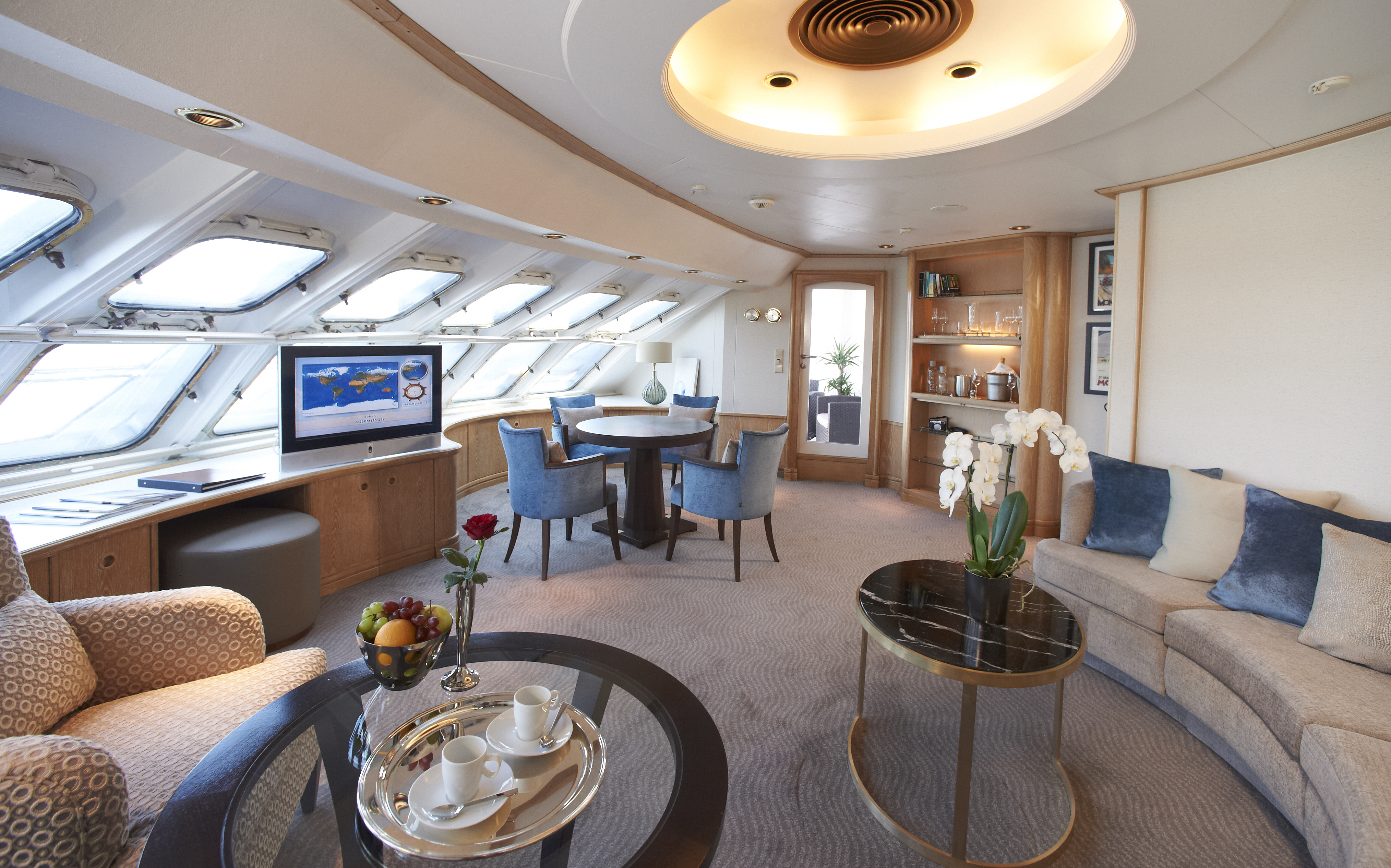
Owner's Suite
With 575 square feet, your Owner’s Suite offers separate living room and dining areas. A veranda, Interactive TVs and a full master bath and separate powder room indulge you in spacious comfort.
Amenities: Owner’s Suite
- Queen-size bed with luxurious linens
- Buttery soft velour bathrobe and slippers
- Upgraded L’Occitane bath amenities
- Mini Bar offering and fridge
- In-room premium filtered water
- Large upgraded fruit plate
- Macarons & Berries upon arrival
- Daily Canapés service
- Chilled bottle of Champagne upon arrival
- Fresh flower arrangement
- Illy capsule espresso machine
- Walk-in closet
- Magnifying mirror, hairdryer and umbrella
- TV with complimentary on-demand entertainment
- Safe
- 110/220-volt outlets
- Ultimate Internet Package (Complimentary)
- Preferred check-in
- Personalized wake-up call with beverage
- Binoculars
- Binoculars
- Invitation to Captain or Senior officer table
- Preferred Specialty Restaurant dining
- Laundry Service (various packages available for purchase)
- 24 Hour In-Room dining (complimentary)
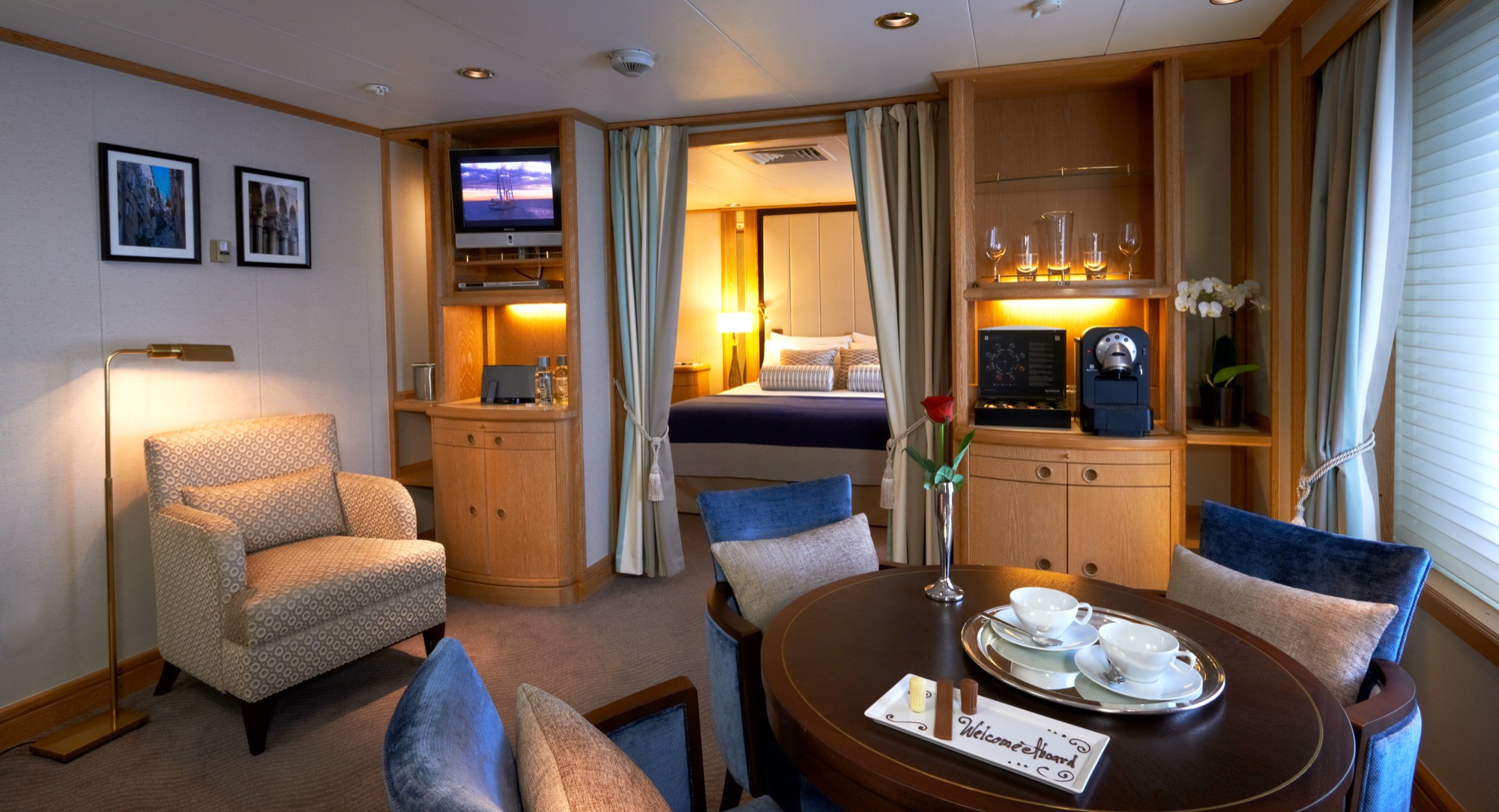
Broadmoor Suite/Sea Island Suite
Relax in 400 spacious square feet, thoughtfully designed for comfort and style. Your inviting living area offers plenty of light through forward-facing windows and French doors from your bedroom that open onto your private veranda. Generous closets provide ample space to unpack and settle in with ease. Each suite reflects a distinctive sense of place—one inspired by the timeless elegance of Sea Island (Suite 501), a renowned Xanterra property known for its refined coastal charm and gracious Southern hospitality, and the other capturing the classic sophistication of The Broadmoor (Suite 500), celebrated for its grand mountain resort heritage and impeccable service.
Amenities: Broadmoor Suite/Sea Island Suite
- Queen-size bed with luxurious linens
- Buttery soft velour bathrobe and slippers
- Upgraded L’Occitane bath amenities
- Fully Upgraded Bath Amenity Line Including Pure Pampering L’Occitane
- Mini Bar offering and fridge
- In-room premium filtered water
- Large upgraded fruit plate
- Fully Stocked Mini Bar/Refrigerator
- Macarons & Berries upon arrival
- Daily Canapés service
- Chilled bottle of Champagne upon arrival
- Fresh flower arrangement
- Illy capsule espresso machine
- Walk-in closet
- Magnifying mirror, hairdryer and umbrella
- TV with complimentary on-demand entertainment
- Safe
- 110/220-volt outlets
- Ultimate Internet Package (Complimentary)
- Personalized wake-up call with beverage
- Binoculars
- Invitation to Captain or Senior officer table
- Preferred Specialty Restaurant dining
- Laundry Service (various packages available for purchase)
- 24 Hour In-Room dining (complimentary)
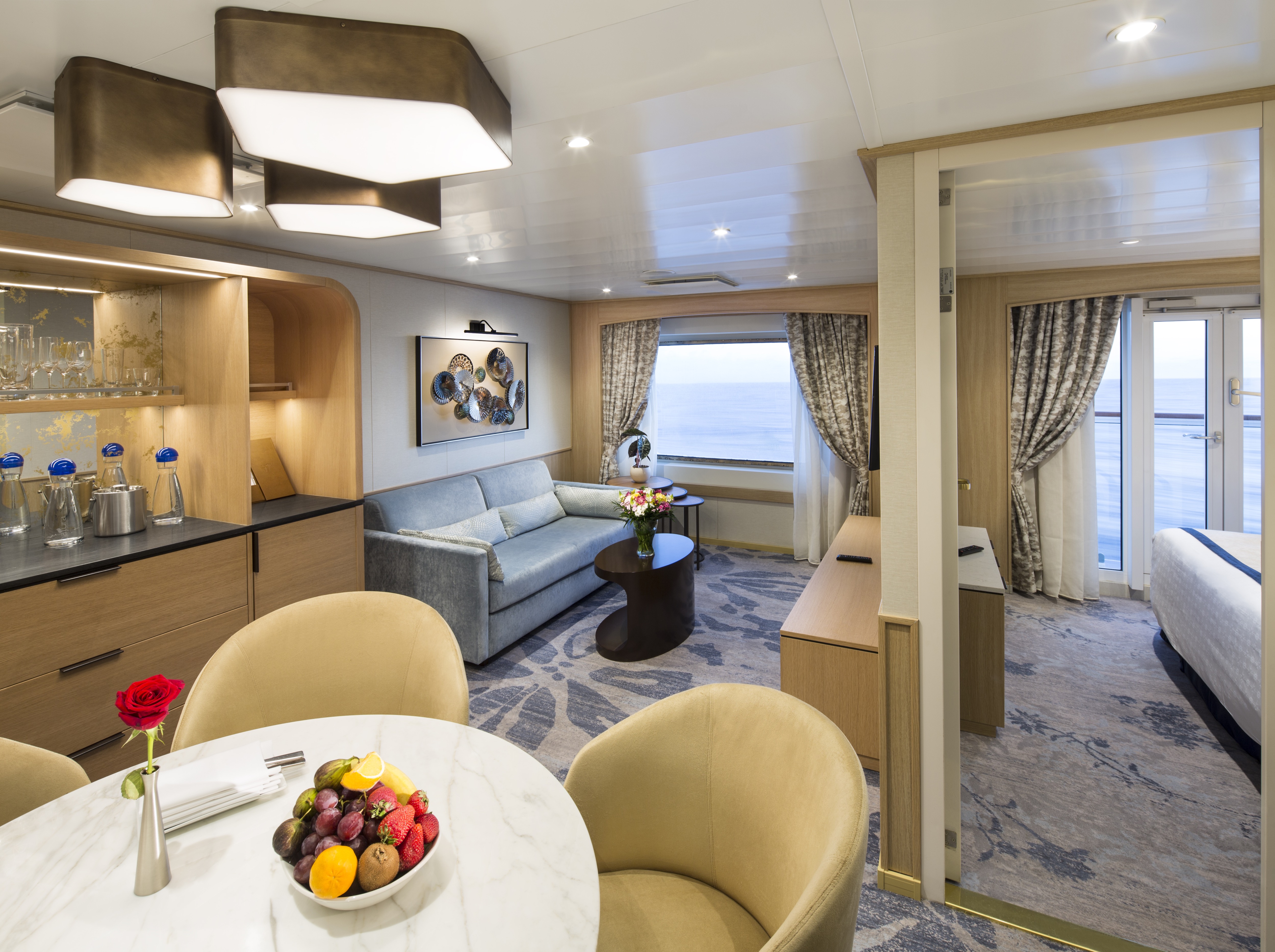
Deluxe Suite
Brand new Deluxe Suites welcome you with 468 square feet of casually elegant living space and an ocean viewing French balcony. All these suites feature 3rd berths, and a sleep-inducing queen bed easily converted to twins.
Amenities: Deluxe Suite
- Queen-size bed with luxurious linens
- Buttery soft velour bathrobe and slippers
- Upgraded L’Occitane bath amenities
- Mini Bar offering and fridge
- In-room premium filtered water
- Fresh Fruit Plate
- Chilled bottle of sparkling wine upon arrival
- Fresh flower arrangement
- Walk-in closet
- Magnifying mirror, hairdryer and umbrella
- TV with complimentary on-demand entertainment
- Safe
- 110/220-volt outlets
- Ultimate Internet Package (Complimentary)
- Illy capsule espresso machine
- Preferred check-in
- Personalized wake-up call with beverage
- Binoculars
- Invitation to hosting table by Officer
- Laundry Service (various packages available for purchase)
- 24 Hour In-Room dining (complimentary)
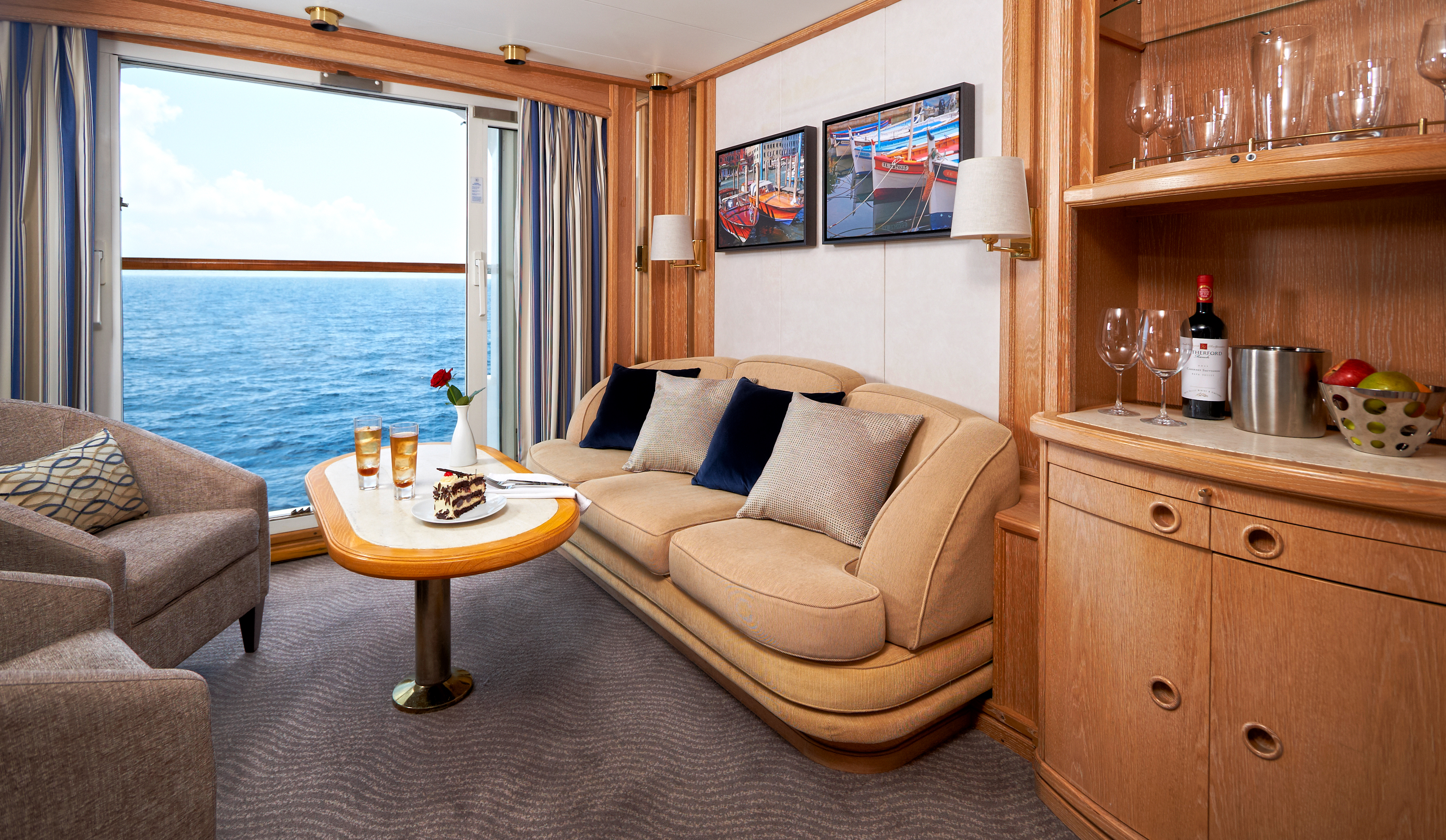
Balcony Suite
Stylish comfort and ocean views welcome you in 277 square feet. Your queen bed (which can be separated as twins if you prefer) features luxurious Egyptian cotton linens. Enjoy a luxurious soak in your full-size tub or an invigorating shower, then wrap up in your waffle-weave robe and slippers, savour a treat from the fresh fruit bowl, or simply stretch out and enjoy the fresh flowers.
Amenities: Balcony Suite
- Queen Size Bed with Luxurious Linens
- TV with complimentary on-demand entertainment
- Safe
- L’Occitane Bath Amenities
- Fresh Fruit Plate
- Wi-Fi (internet packages available for purchase)
- Waffle-weave robe and slippers
- Mini Bar offering and fridge
- Magnifying mirror, hairdryer and umbrella
- Walk-in closet
- In-room premium filtered water
- 110/220-volt outlets
- Laundry Service (various packages available for purchase)
- 24 Hour In-Room dining (complimentary)
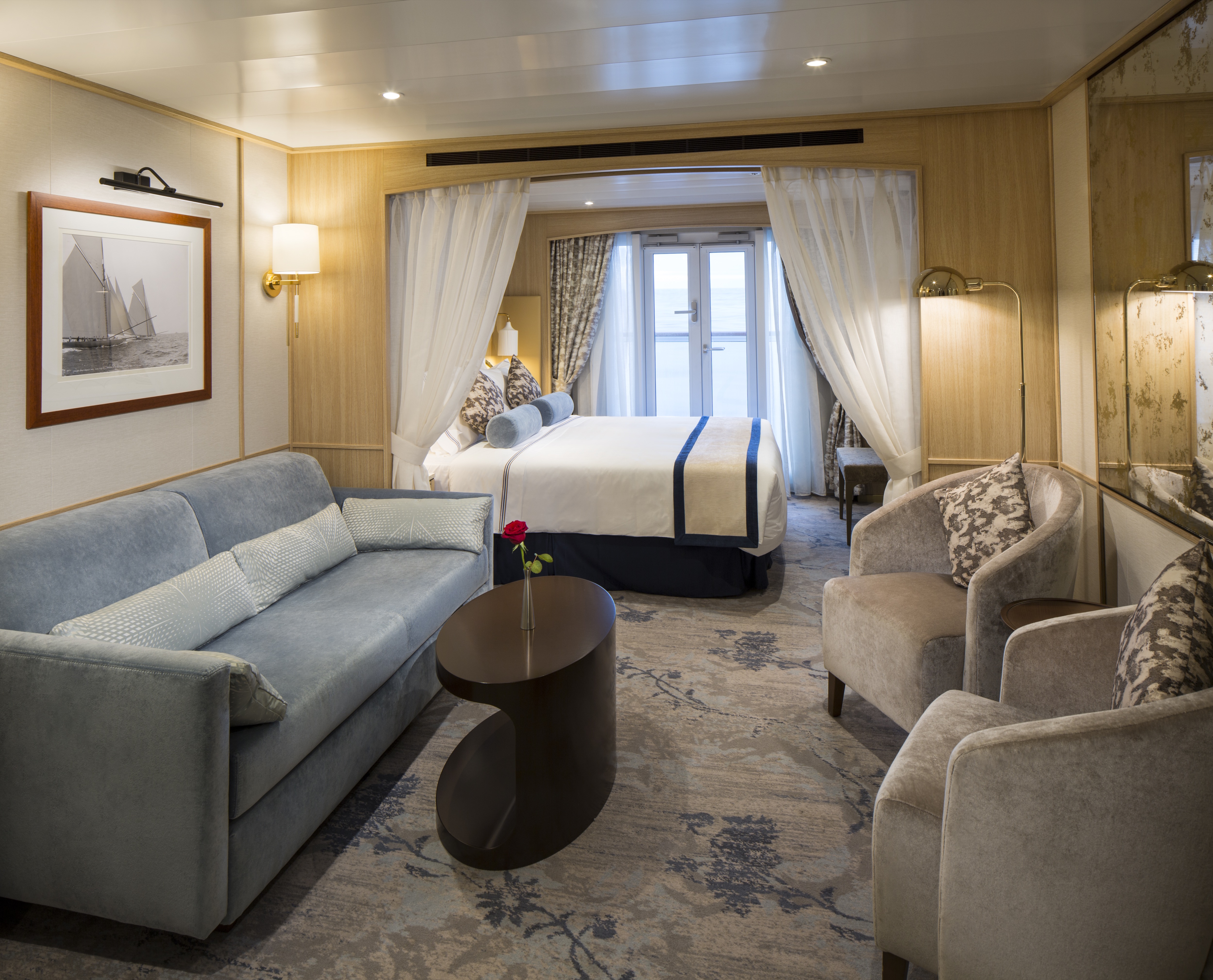
Star Balcony Suite
As soon as you walk through the door, you’re greeted with an open living area for a more welcoming entrance. Drift off to sleep by the window in your queen bed as you watch the same stars that sailors used to navigate the seas hundreds of years ago.
Amenities: Star Balcony Suite
- Queen Size Bed with Luxurious Linens
- TV with complimentary on-demand entertainment
- Safe
- L’Occitane Bath Amenities
- Fresh Fruit Plate
- Wi-Fi (internet packages available for purchase)
- Waffle Weave Robe and Slippers
- Mini Bar offering and fridge
- Magnifying mirror, hairdryer and umbrella
- Walk-in closet
- In-room premium filtered water
- 110/220-volt outlets
- Laundry Service (various packages available for purchase)
- 24 Hour In-Room dining (complimentary)

Star Ocean View Suite
As soon as you walk through the door, you’re greeted with an open living area for a more welcoming entrance. Drift off to sleep by the window in your queen bed as you watch the same stars that sailors used to navigate the seas hundreds of years ago.
Amenities: Star Ocean View Suite
- Queen Size Bed with Luxurious Linens
- TV with complimentary on-demand entertainment
- Safe
- L’Occitane Bath Amenities
- Fresh Fruit Plate
- Wi-Fi (internet packages available for purchase)
- Waffle-weave robe and slippers
- Mini Bar offering and fridge
- Magnifying mirror, hairdryer and umbrella
- Walk-in closet
- In-room premium filtered water
- 110/220-volt outlets
- Laundry Service (various packages available for purchase)
- 24 Hour In-Room dining (complimentary)
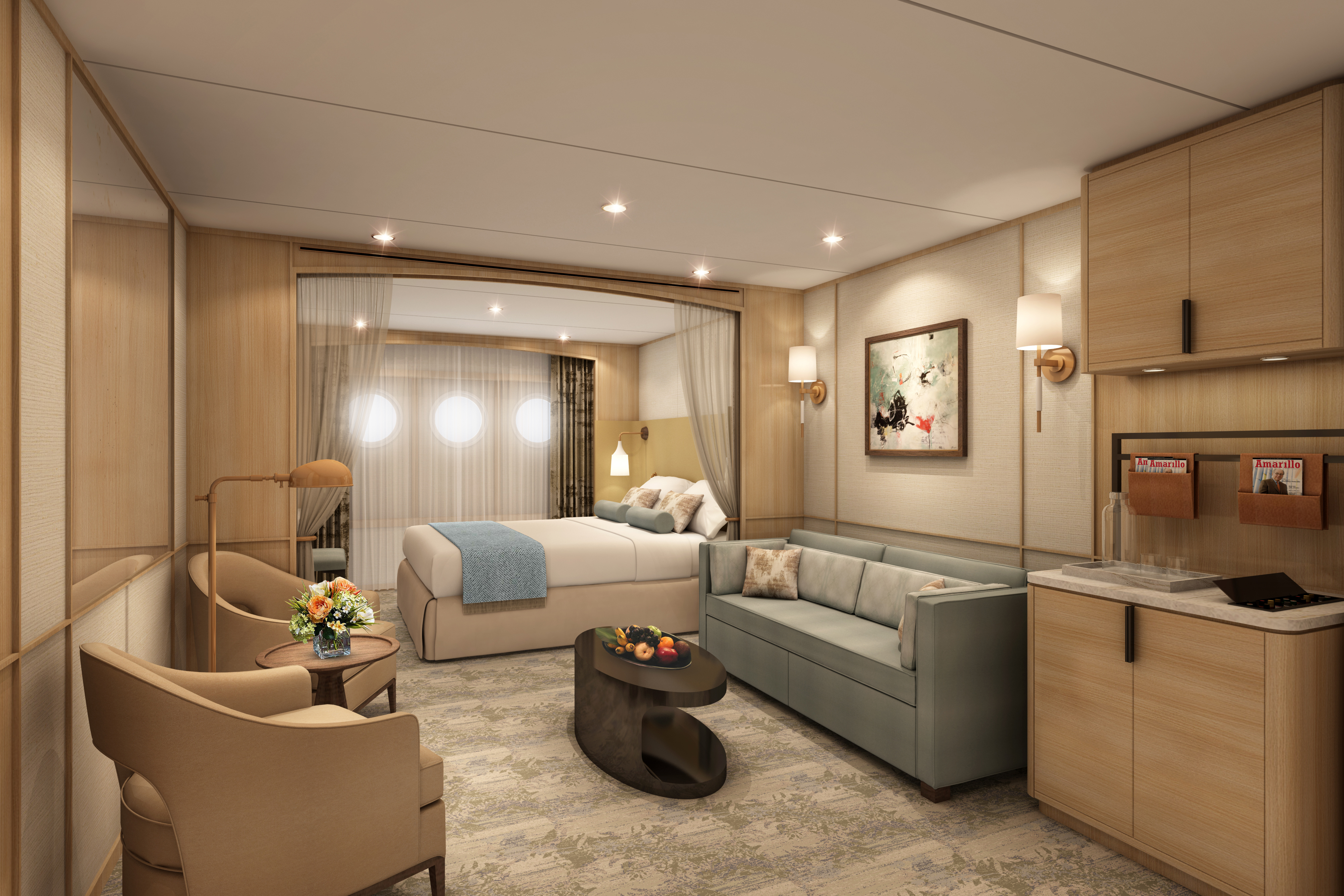
Star Porthole Suite
These rooms represent a nod the sailing tradition of porthole windows. And while sailors might have had cramped quarters, your 277 square foot stateroom is wonderfully spacious and furnished with all the modern amenities and comforts of home.
Amenities: Star Porthole Suite
- Queen Size Bed with Luxurious Linens
- TV with complimentary on-demand entertainment
- Safe
- L’Occitane Bath Amenities
- Fresh Fruit Plate
- Wi-Fi (internet packages available for purchase)
- Waffle-weave robe and slippers
- Mini Bar offering and fridge
- Magnifying mirror, hairdryer and umbrella
- Walk-in closet
- In-room premium filtered water
- 110/220-volt outlets
- Laundry Service (various packages available for purchase)
- 24 Hour In-Room dining (complimentary)
Ocean View Suite
Stylish comfort and ocean views welcome you in 277 square feet. Your queen bed (which can be separated as twins if you prefer) features luxurious Egyptian cotton linens. Enjoy a luxurious soak in your full-size tub or an invigorating shower, then wrap up in your waffle-weave robe and slippers, and savor a treat from the fresh fruit bowl.
Amenities: Ocean View Suite
- Queen Size Bed with Luxurious Linens
- TV with complimentary on-demand entertainment
- Safe
- L’Occitane Bath Amenities
- Fresh Fruit Plate
- Wi-Fi (internet packages available for purchase)
- Waffle Weave Robe and Slippers
- Mini Bar offering and fridge
- Magnifying mirror, hairdryer and umbrella
- Walk-in closet
- In-room premium filtered water
- 110/220-volt outlets
- Laundry Service (various packages available for purchase)
- 24 Hour In-Room dining (complimentary)
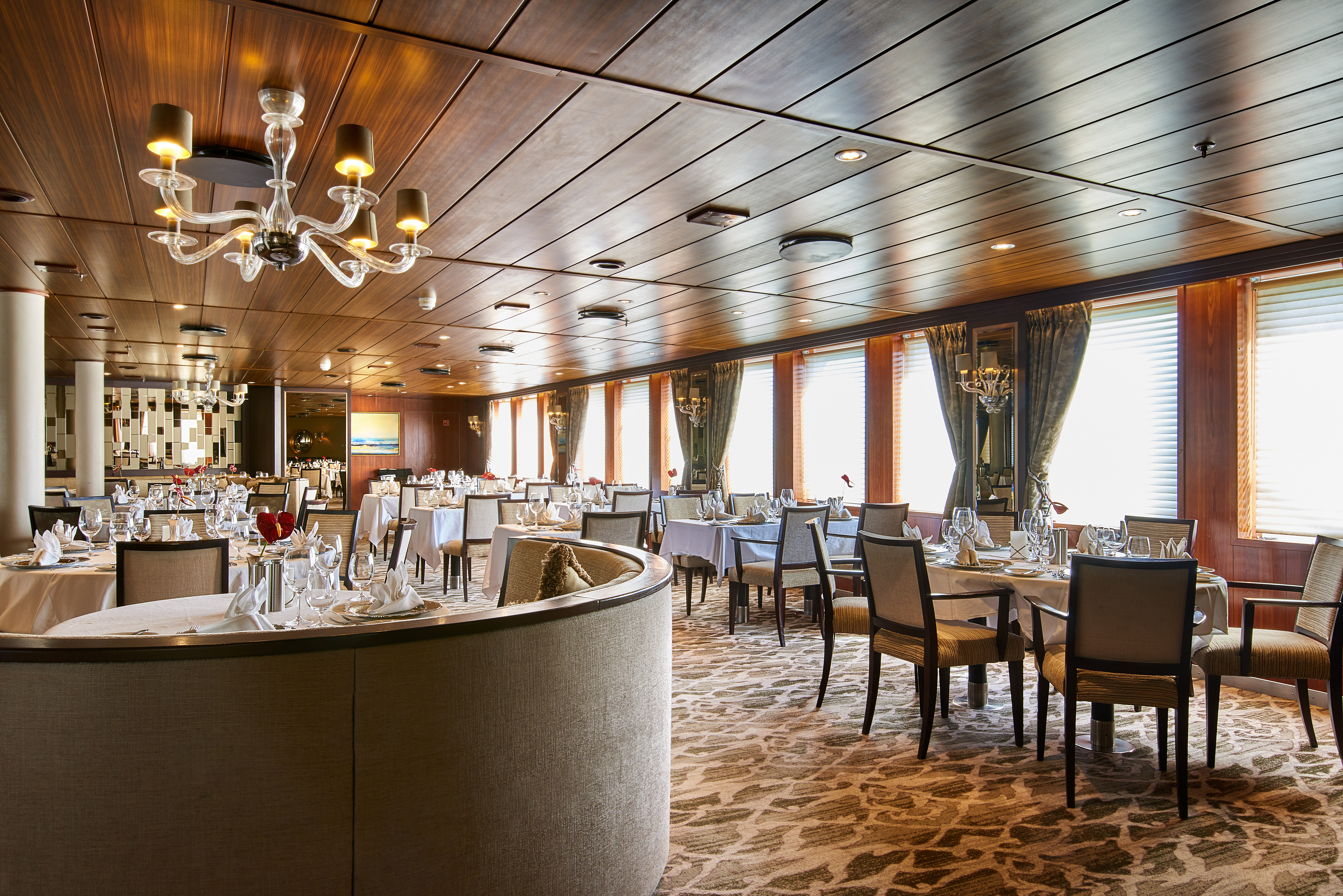
Amphora Restaurant
Here, the dining room manager seats you, but where is your decision. There are no pre-assigned tables or first or second seatings. When you dine and with whom are entirely up to you. Seating usually begins at 6:30 p.m. and will be printed in the ship’s daily program. Each delightful dish is prepared exactly to your liking – an exquisite dinner served course-by-course with a fine selection of vintage wines.
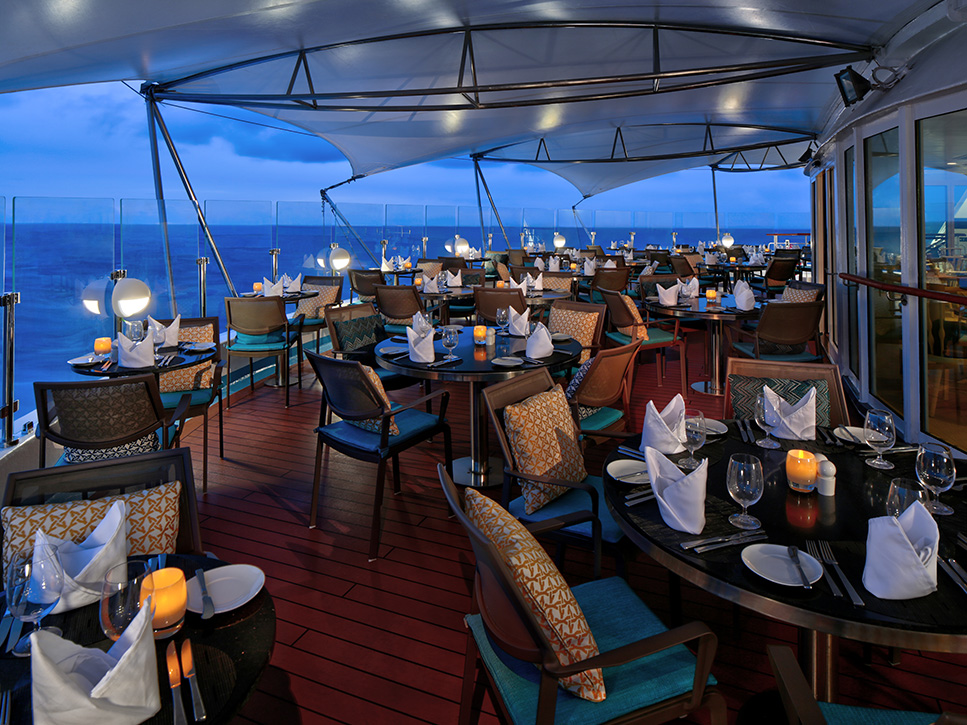
Candles Restaurant
Here’s the perfect place for a romantic tête-a-tête under the stars in Candles, Windstar’s signature outdoor restaurant transformed by night into a dreamlike paradise. Delectable cuisine, memorable surroundings, inspired wine pairings await you.
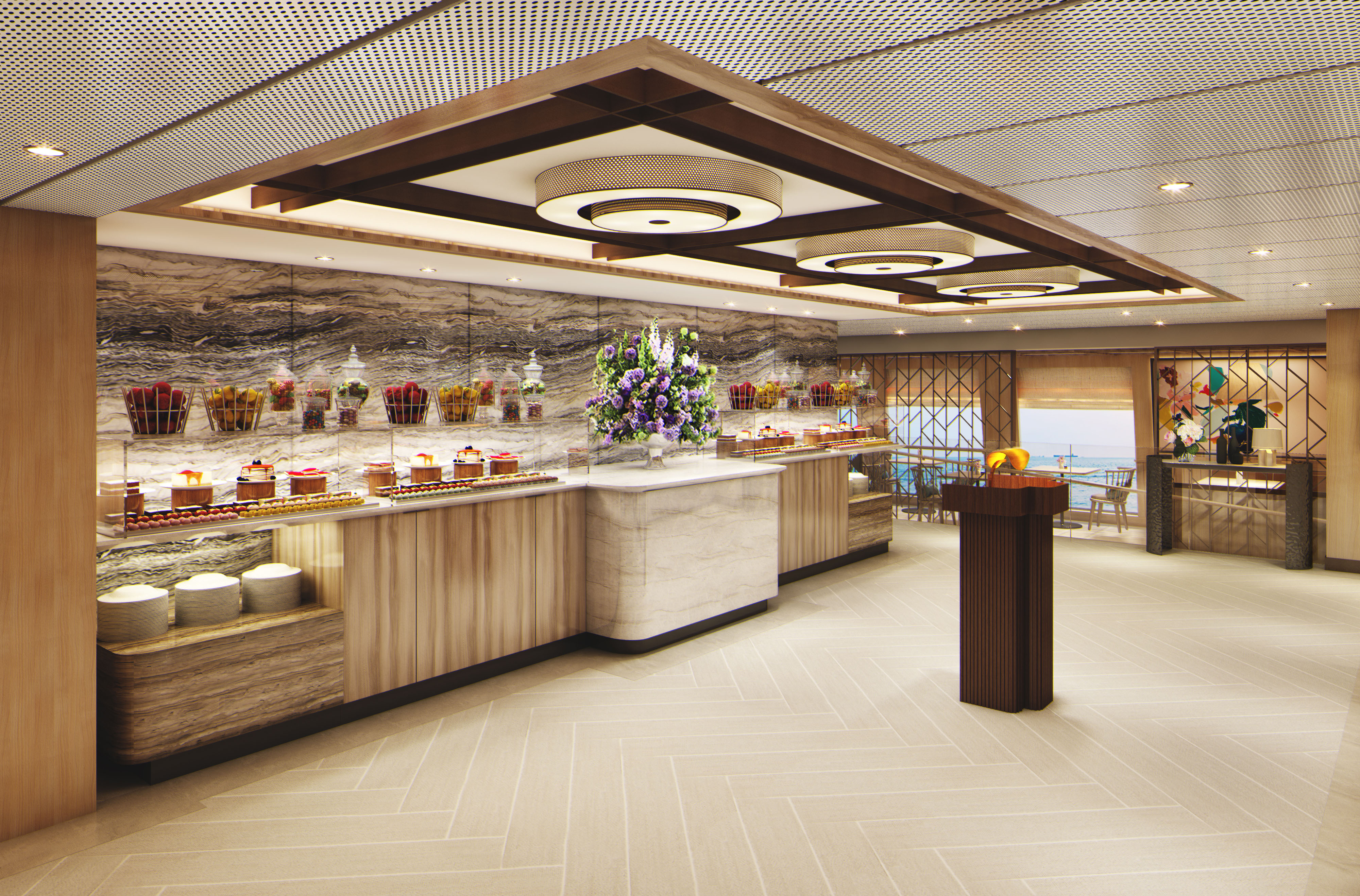
Veranda
It’s breakfast alfresco, full service or buffet-style, anytime till 9:30 a.m. No need to hurry. Again, the choices are many in Veranda. Choose the sumptuous, seemingly endless buffet. Or, order from the lunch menu between noon and 2:30 p.m.
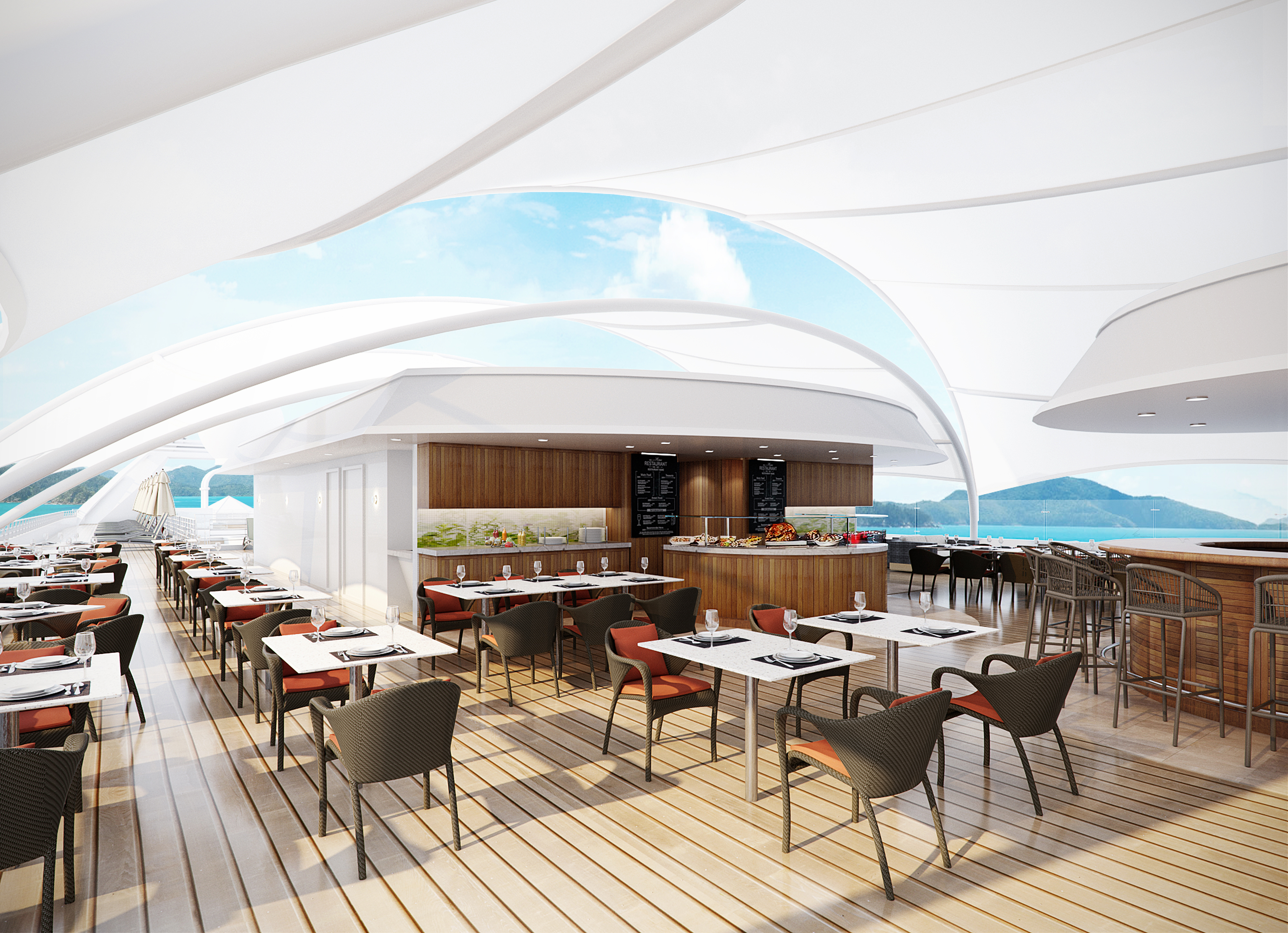
Star Grill
You’ll find all your traditional grilled and barbecued favourites (and discover new dishes from around the world) in our new casual outdoor restaurant.
Basil + Bamboo
Step into Basil + Bamboo, where clean lines and warm accents set the stage for a relaxed, refined experience. Savor dishes that fuse Asian influences with a Mediterranean twist — an inventive culinary adventure designed to delight your palate and create moments of shared discovery.
Guest Lecturers
Have you ever wanted to learn about rowing across the Atlantic or the inner workings of the Monte Carlo Grand Prix? On select Windstar voyages, satisfy your curiosity and enhance your understanding of the local culture by listening to our onboard lecturers. We’ve curated a group of speakers designed to bring you an insider’s perspective on a multitude of intriguing topics. Listen raptly as your voyage becomes more than just a vacation – and a thought-provoking exploration of enchanting lands.
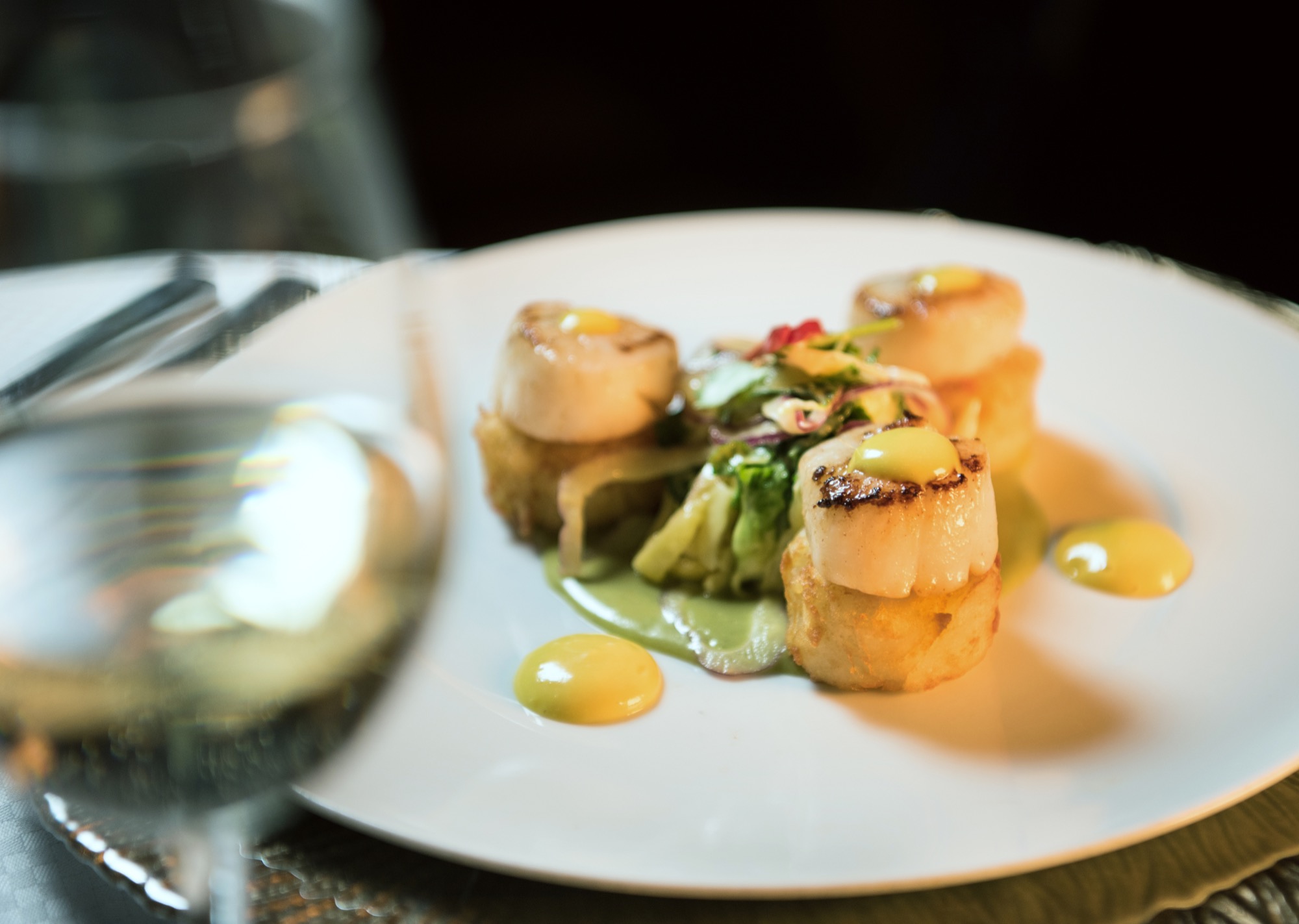
Culinary Demonstrations
“Set Sail with the Official Cruise Line of the James Beard Foundation “
It’s the perfect pairing. Windstar Cruises and the James Beard Foundation are partnered to bring you culinary experiences that are 180 degrees from ordinary. Through this program, Windstar works with the James Beard Foundation to bring together some of the most talented chefs on themed cruises and in our dining program.
Imagine dining on dishes created by not just one celebrity chef, but a list of all-stars with the likes of Maxime Bilet (The Cooking Lab), Evan Hanzcor (Egg), and José Mendín (Pubbelly Noodle Bar, Habitat, Baja Bao) every single night in our main Amphora dining room. For a truly beyond ordinary experience, join us on our themed cruises featuring James Beard Foundation chefs and beverage experts: a foodie’s dream with dishes created by the chefs themselves and chef-accompanied market tours. And learn their secrets as you watch demos of their recipes on every sailing.
The James Beard Foundation was created to recognize and celebrate the chefs, writers and restaurateurs who advance America’s culinary arts. This emphasis on innovation and excellence pairs perfectly with Windstar’s superior service, intimate ambiance and drive to constantly innovate its cuisine. The James Beard Foundation nominates and chooses winners of the James Beard Awards, referred to as the Oscars of the restaurant industry.
As the Official Cruise Line of the James Beard Foundation, we’re able to work with over 20 of the best chefs to create the extraordinary dishes on our nightly menu and in our culinary demos. Windstar is celebrating the 10th anniversary of our partnership in 2025. To mark this special occasion, we’re thrilled to announce the return of several beloved chefs who have sailed with us in the past.
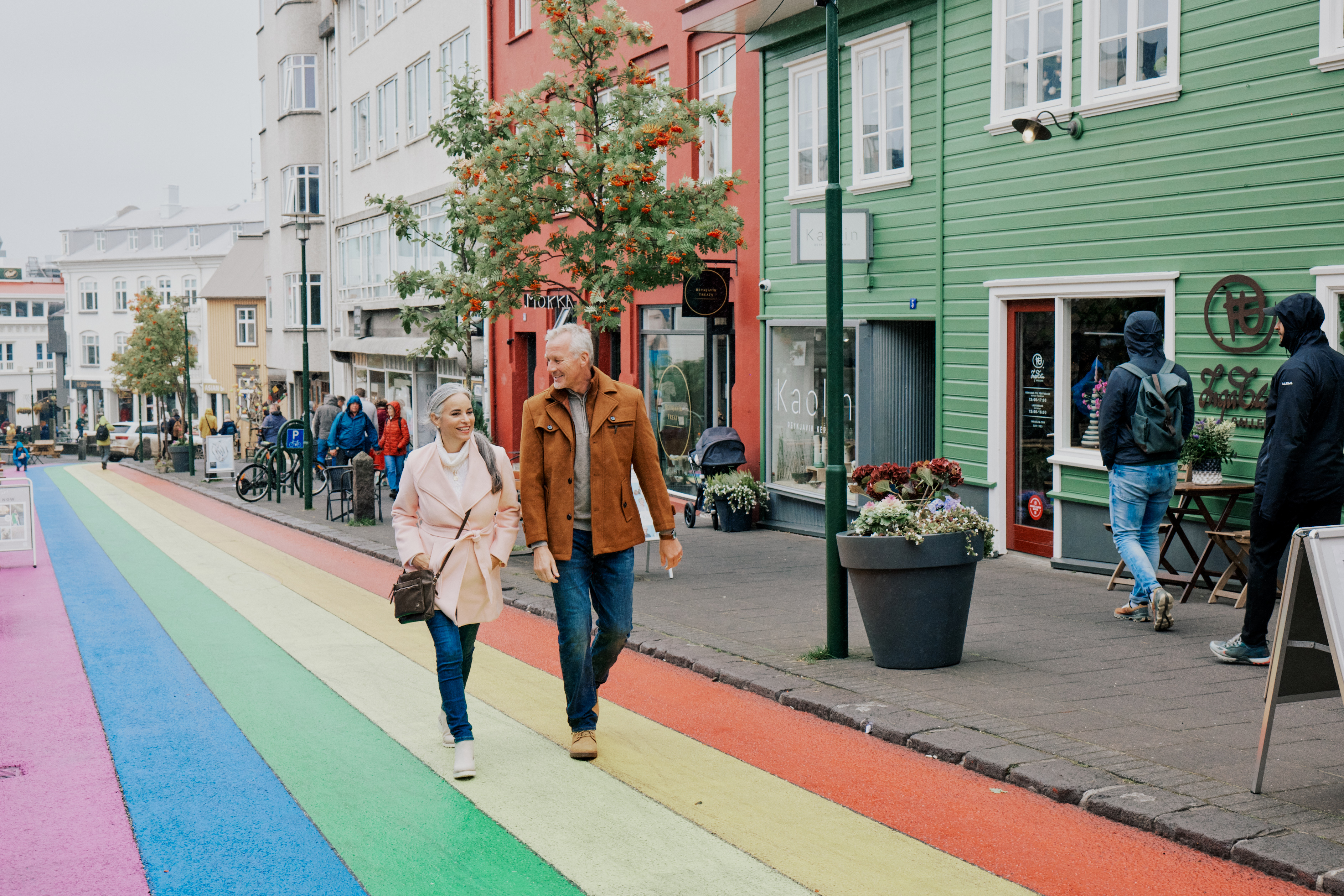
Shore Excursions
The Best on Land Brought to You by the Best at Sea
Get to the heart of local cultures with Windstar shore excursions.Choose from over 2,000 one-of-a-kind tours and activities.
You don’t want to just dip a toe in local culture, you want to dive into the deep end, and that’s exactly what Windstar shore excursions are designed to do. All of our excursions are created to provide authentic local experience — the kind travelers like you are looking for. And with more than 2,000 excursions to choose from, you can experience your destination in whatever way is most meaningful to you. Whether you’re an outdoor enthusiast, a foodie, a history buff or someone who loves to get to know the faces behind the many places we travel.
We make sure the hot springs are hot and the pinot grigio is chilled.How do we find these authentic experiences, you ask? Our Product Development Team travels to each destination and personally vet each shore excursion to make sure it makes the grade (So yes, the Open Course Canopy Challenge in Falmouth Harbour, Antigua? They went on that). And because we travel in small groups, we can adjust tours in real time based on guest feedback, whether that means finding a different place for lunch, or spending more time at a particularly fascinating historical site. We take the time and make the trip because we want your travels to be unforgettable.
Immersion in Regional Culture
Local guides share insight into their everyday world, as well as insider highlights that you don’t want to miss. As part of a smaller group, you’re able to bypass long lines, visit places off the beaten path, and get all of your questions personally answered.
Private Tours Available
Explore at your leisure with a private vehicle, driver and English-speaking guide. These exclusive tours allow you to customize your time ashore and explore the sites most interesting to you in the comfort and privacy of your own car or van. With your private vehicle, and the personalized attention of your driver and guide, you will have the flexibility and independence to design your own unique tour. This is a great option for families and groups traveling together.
Quality and Convenience
Every Windstar excursion meets our high standards of enjoyment, safety and professionalism. Tour departure times coincide with your ship’s schedule and depart right from the pier. All of our tour operators are fully insured, licensed and bonded. Our guests consistently rate their shore excursion experiences as excellent.
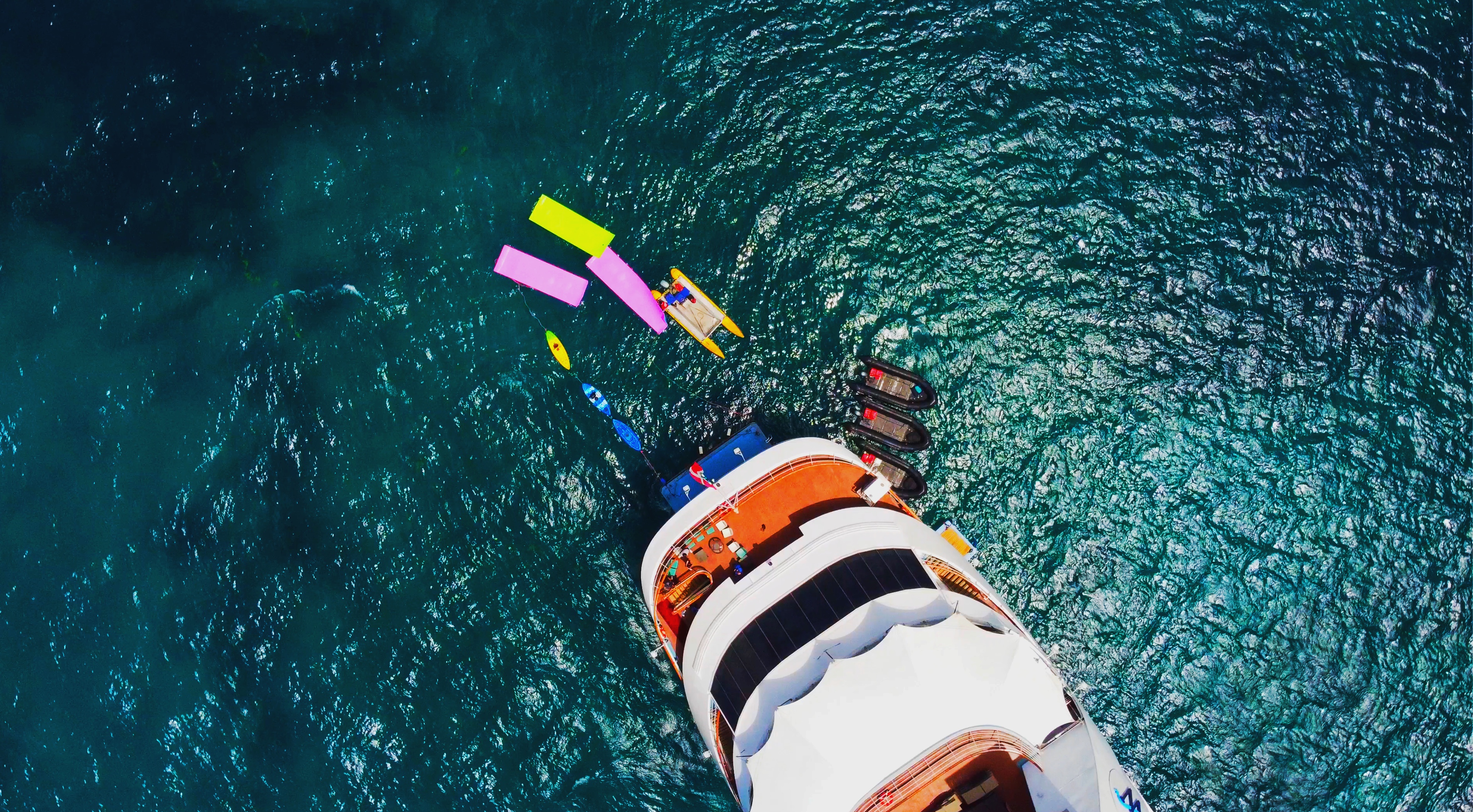
Watersports Platform
Jump in For Fun
A cruise to Tahiti, the Mediterranean or the Caribbean isn’t just about the land. It’s about the sea. That warm, turquoise water is more than willing to answer your question about what to do today, and the phenomenal Watersports Platform on the stern of your Windstar yacht is more than willing to provide the means — no beach required. It’s just one more way our yachts get you closer to your destination.
Complimentary Watersports Equipment and Activities Include*:
Snorkeling gear (a personal custom-fit set for your use throughout your Tahiti cruise and in select Caribbean and Central • America destinations)
Stand-up paddleboards
Kayaks
Foam flotation magic carpet
Water trampoline
Sailboat
*Available on select itineraries and ports of call. Selection on yachts may vary.
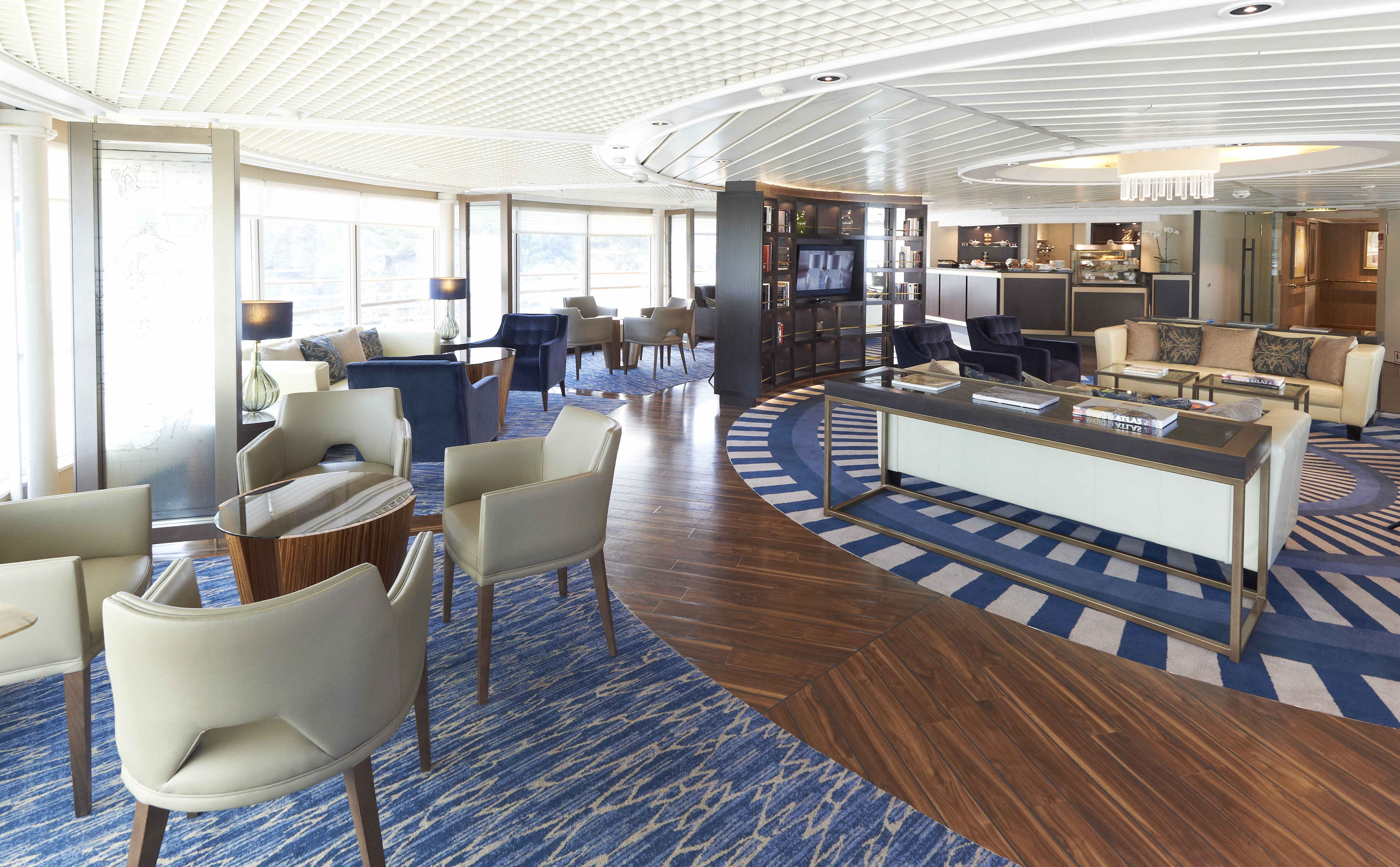
The Yacht Club
Stop by the Yacht Club Café for a bite or coffee crafted by our barista.
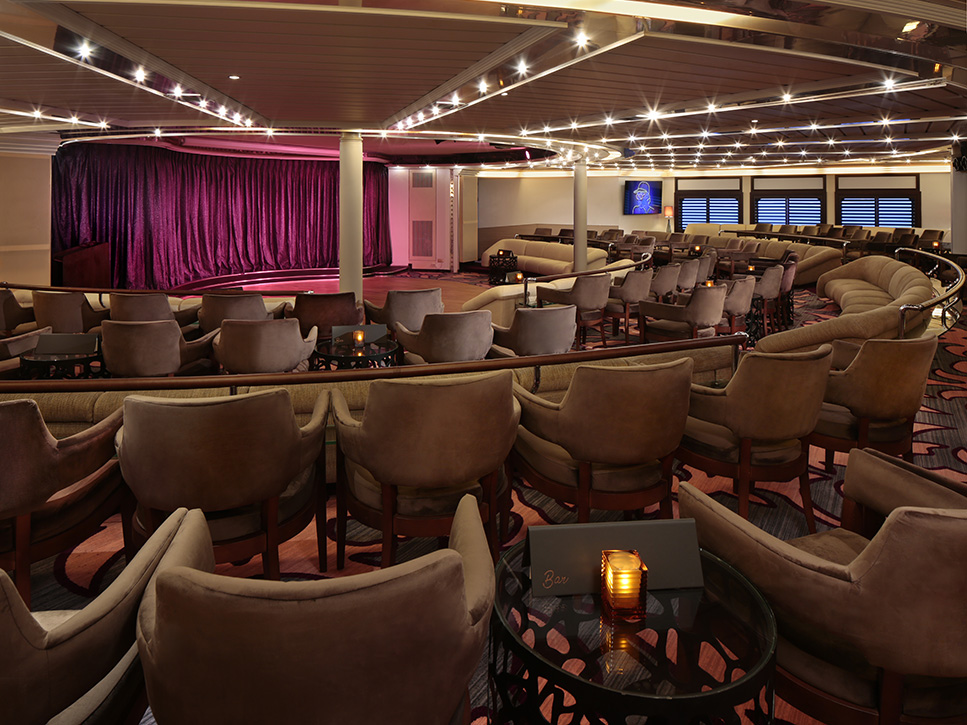
The Lounge
The Lounge can be found on Deck 5.
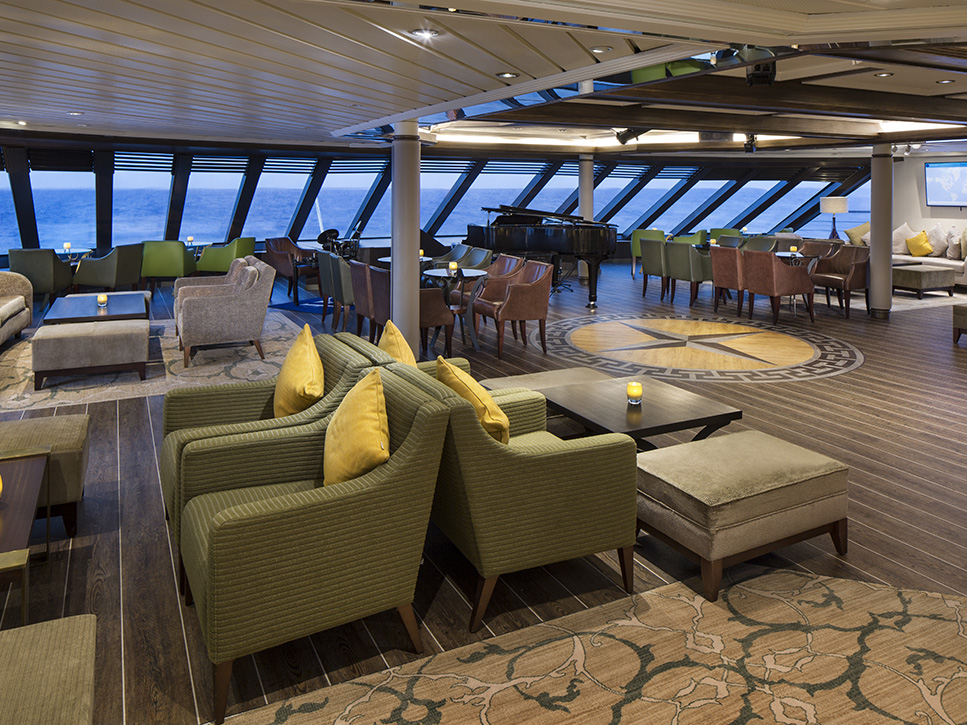
Compass Rose
Compass Rose can be found on Deck 6.
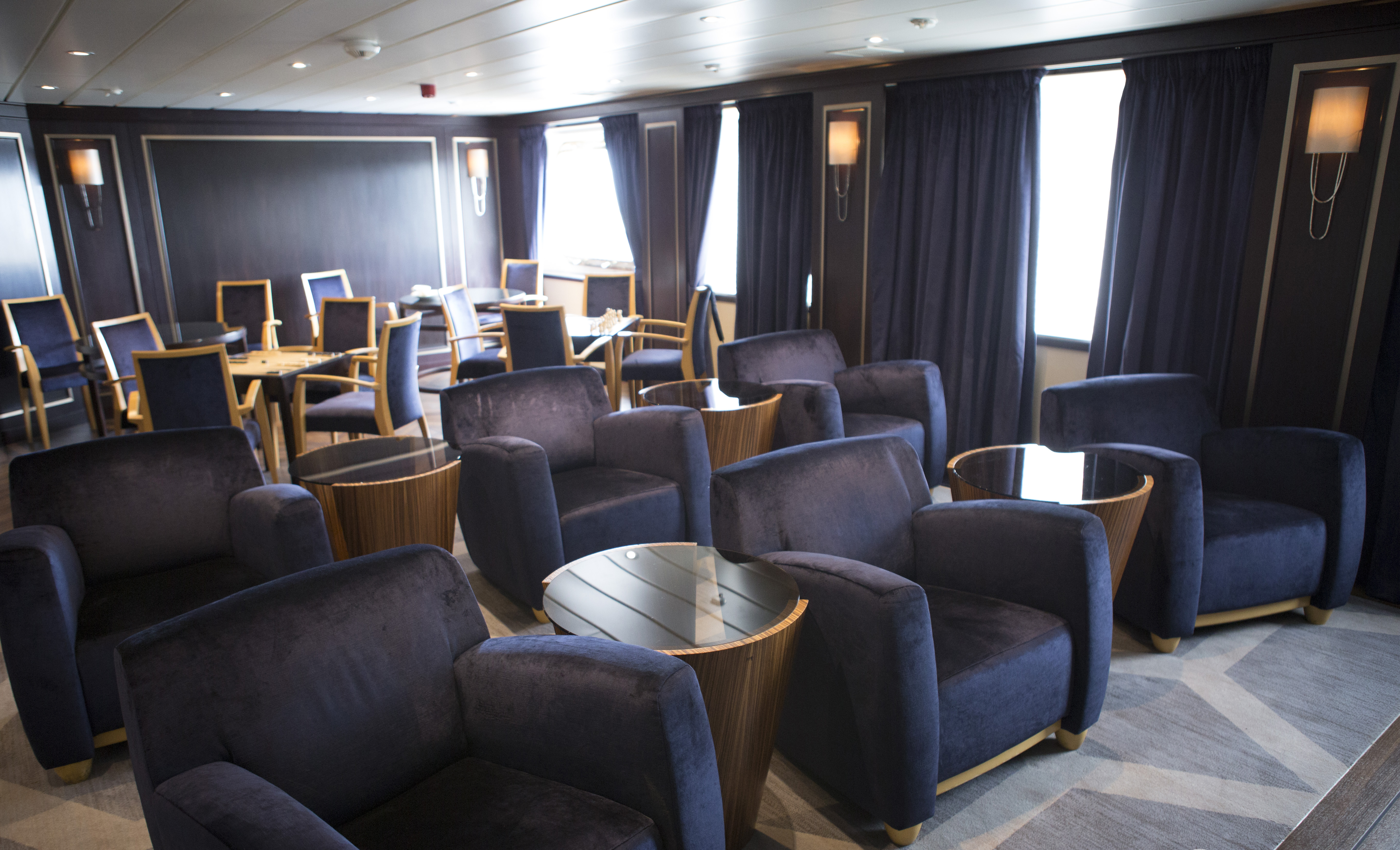
Screening Room
The ship’s card room is now the new Star Screening Room, where guests can view current movies.
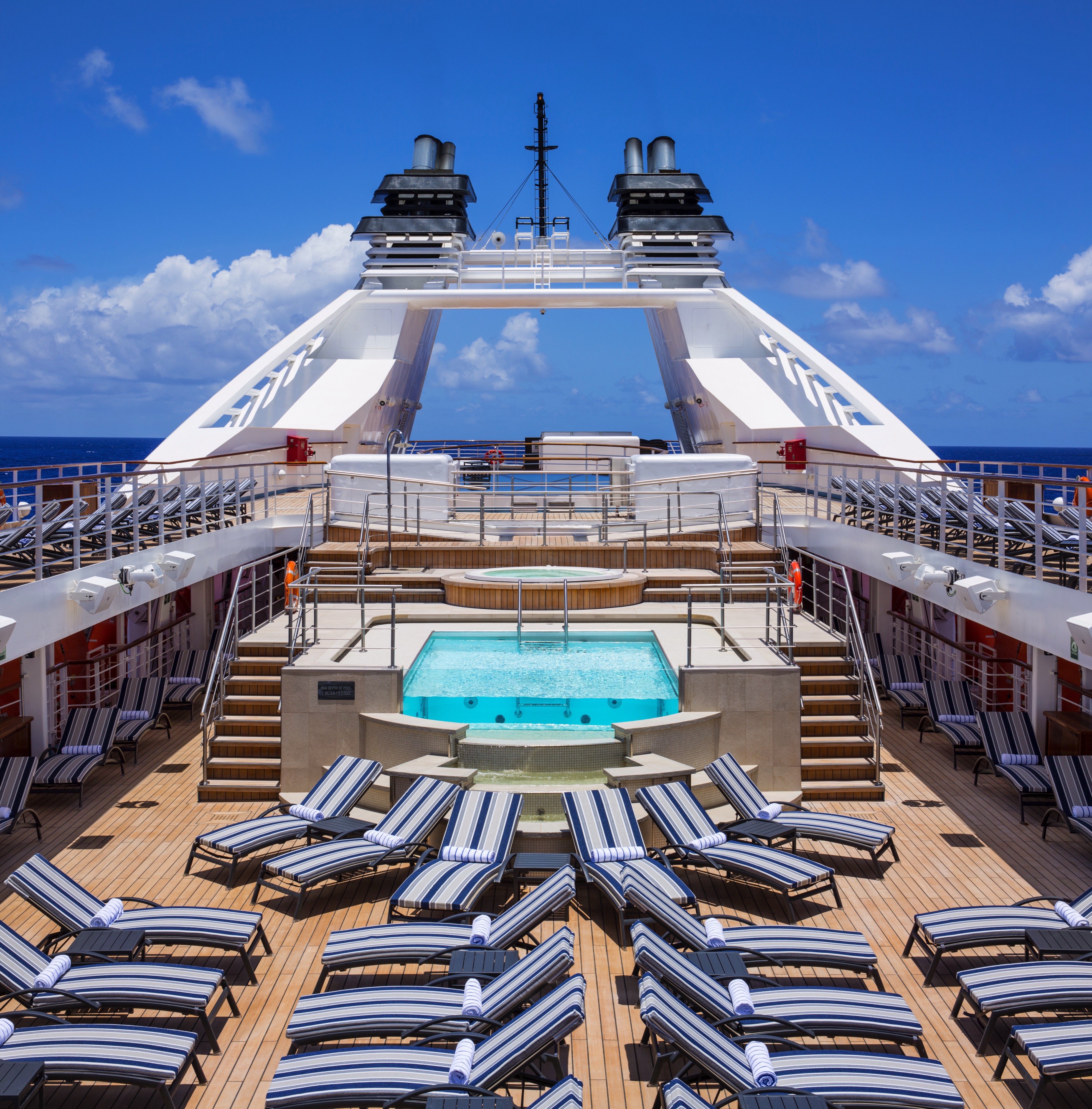
Sun Deck
The Sun Deck can be located on Deck 7.
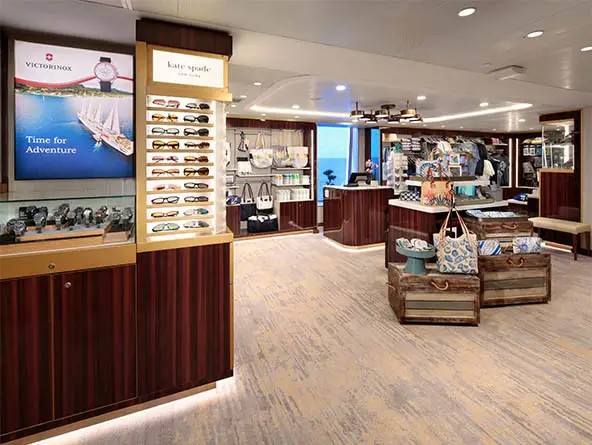
Star Boutique
Visit our newly transformed specialty shopping boutique, Star Boutique, rolling out fleet-wide through early 2022. The new shop features quality brand-name and exclusive Star Collection merchandise, from clothing and fragrances to jewelry and accessories, all at duty free or special pricing.
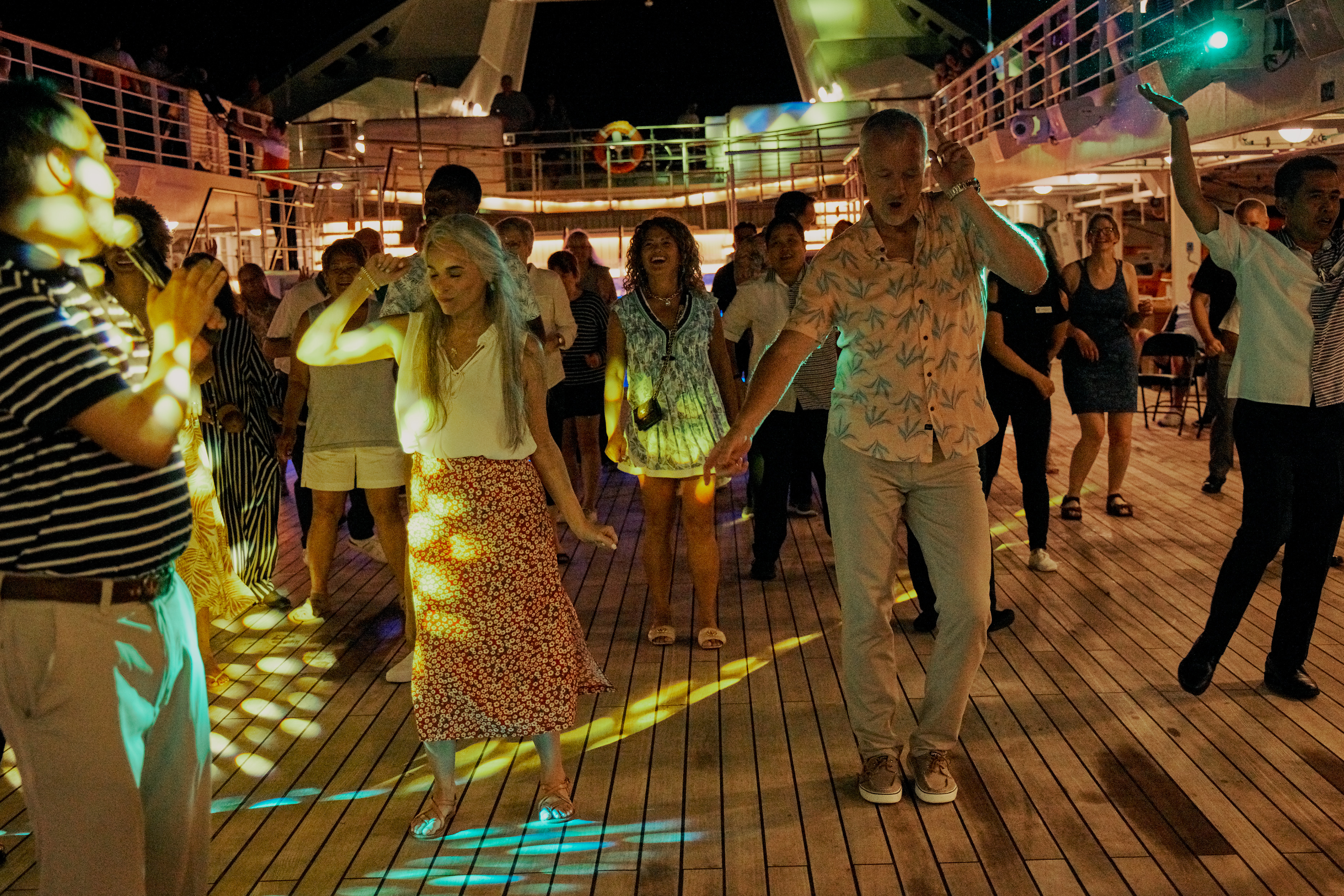
Live Entertainment
After a long day at port or sea, relax in the lounge and enjoy a drink while being entertained by our onboard band, local performers or our talented crew members.
Each cruise, our crew demonstrates their hidden abilities, whether dancing, singing, magic or comedy. Our team will continue to delight you through the night during the crew talent show, and perhaps you’ll find a hidden talent of your own.
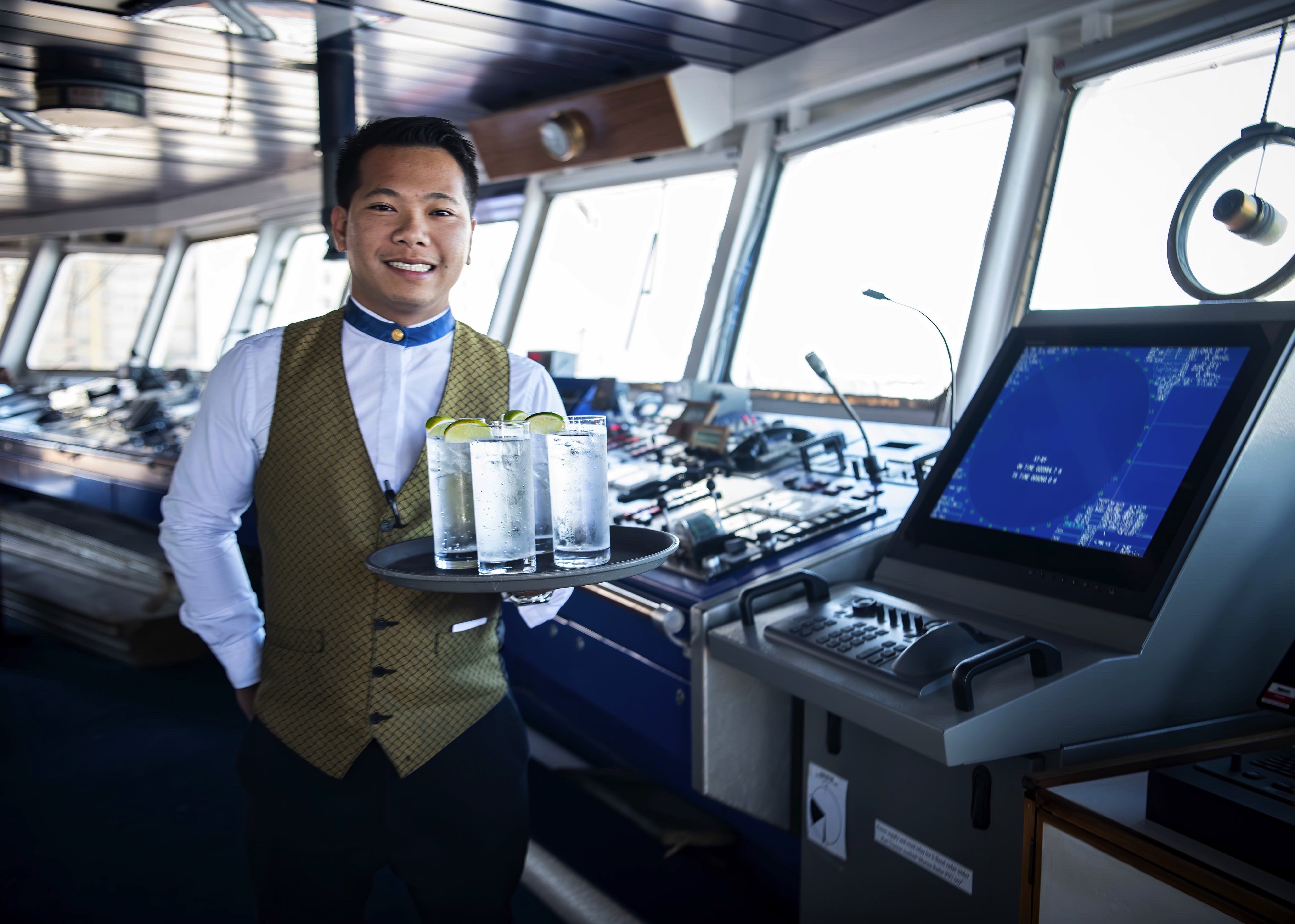
Open Bridge
We’re the only cruise line welcoming guests on to an Open Bridge, where they can pop in to watch the Captain and crew at work, and learn about chart navigation.
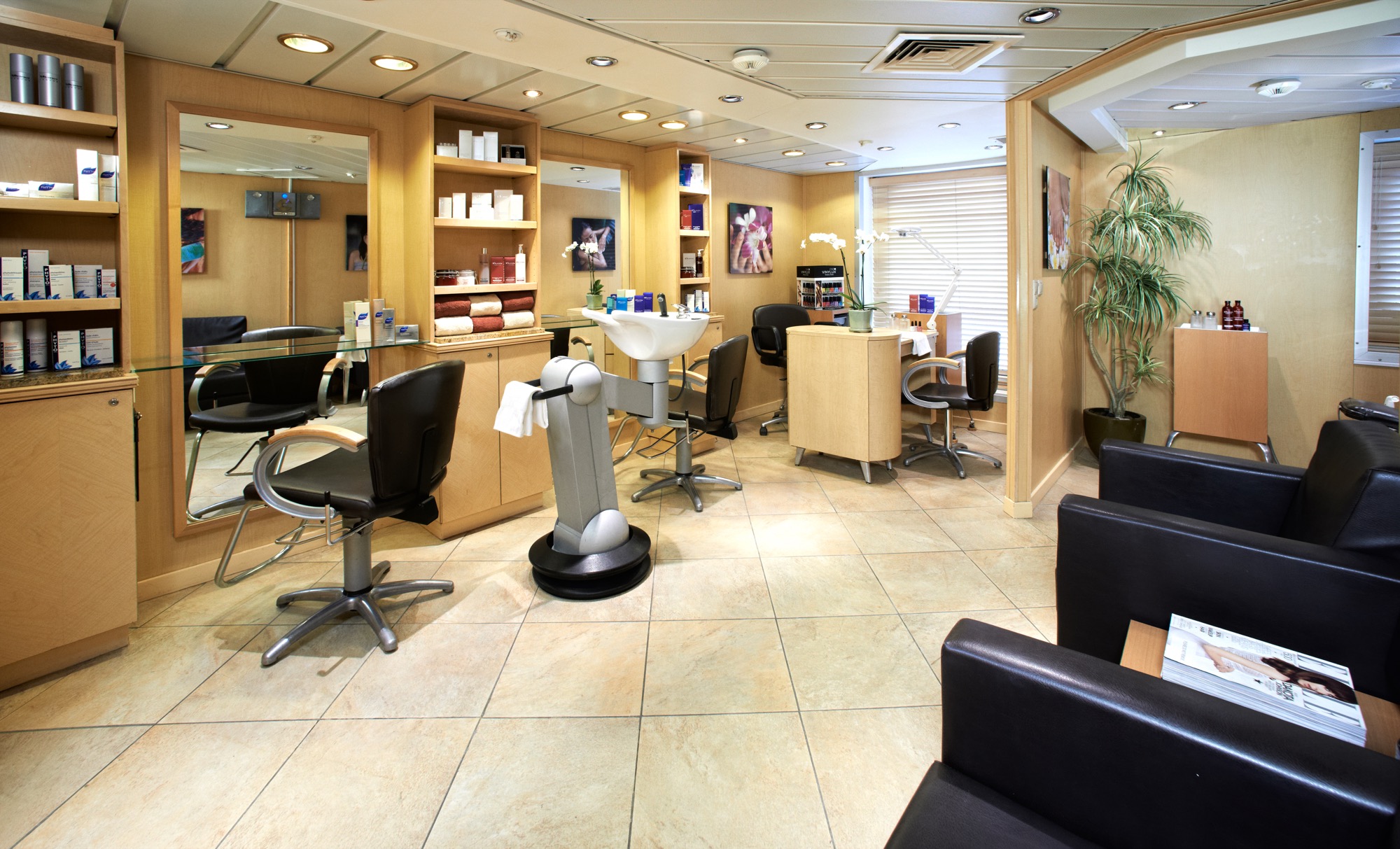
World Spa
Expanded state-of-the-art World Spa by Windstar. Recharge in new tranquil treatment rooms featuring massages inspired from the world’s regions or join a group exercise class in the new sunlit studio.
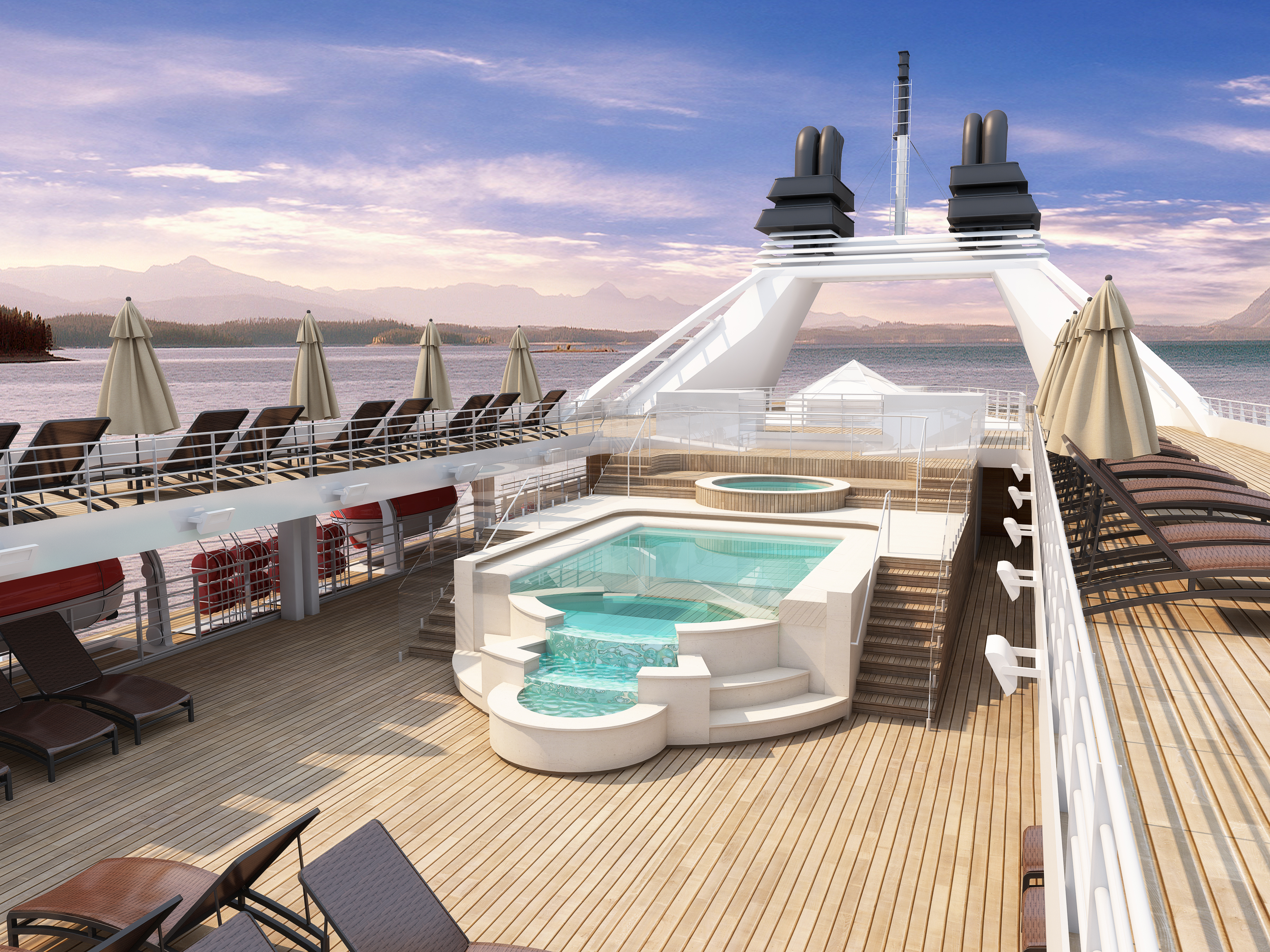
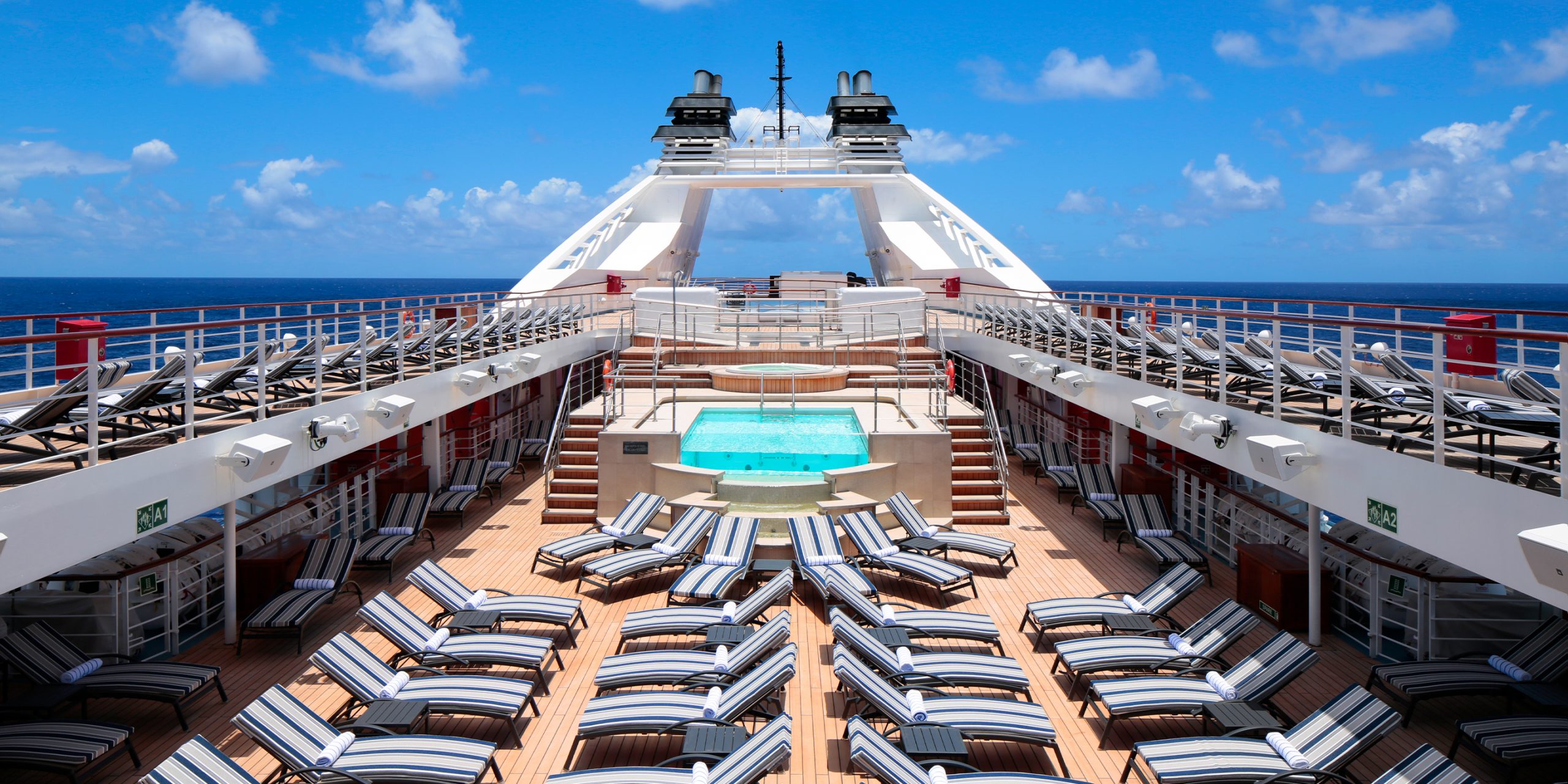
Pool & Whirlpool
New breathtaking pool and whirlpool. Soak it all in with an elevated pool, and expanded deck for sunbathing and relaxing.
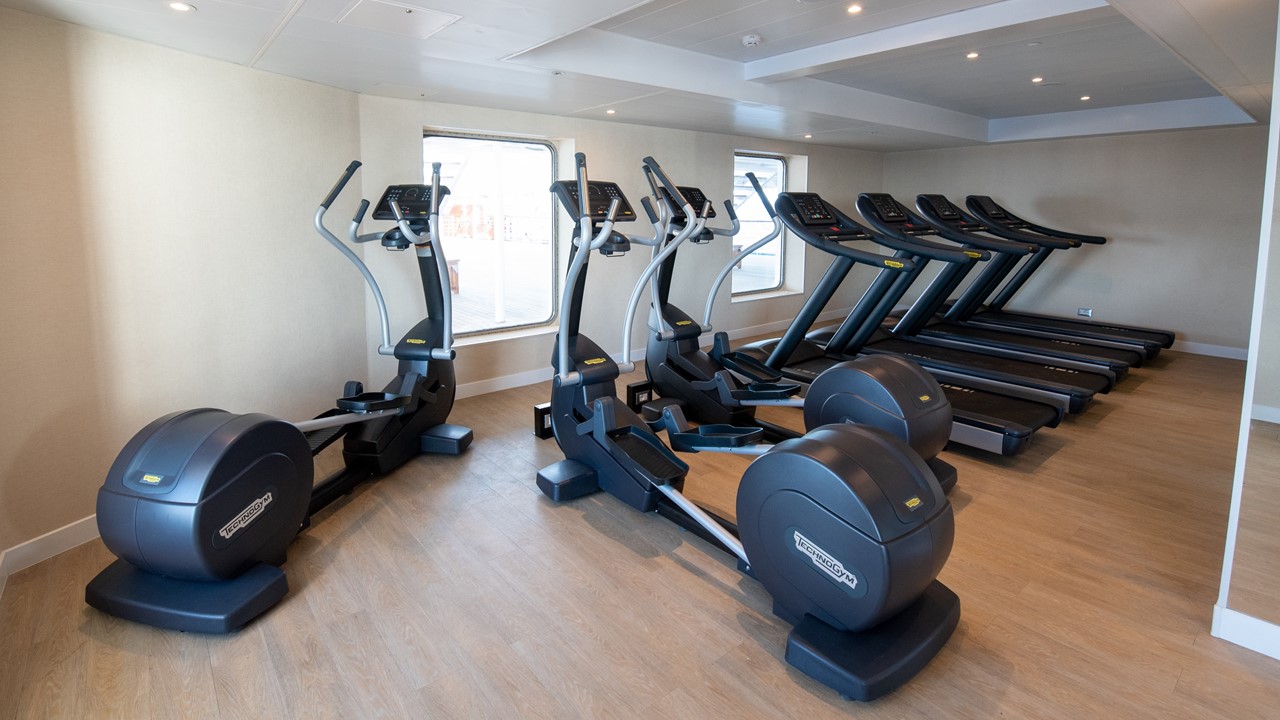
Fitness Centre
Work out in the well-equipped Fitness Center
Guests With Disabilities
Windstar does not discriminate against persons on the basis of disability. We seek, to the extent feasible, to accommodate the needs of persons with disabilities. There are no elevators on Wind Star and Wind Spirit nor were the ships originally constructed to be wheelchair accessible. As a result, these ships may be unsuitable for people relying solely on wheelchairs. The other yachts are equipped with elevators, but staterooms on Wind Surf are not wheelchair accessible. Also note, there is no elevator access to board the ship. Star Pride, Star Breeze, and Star Legend have modified wheelchair accessible suites available.
Certain ports require the ship to anchor; in this case guests must be ferried into port. Service Dogs are permitted onboard ships if prior arrangements have been made at time of booking. In limited situations where an individual with a disability would be unable to satisfy certain specified safety and other criteria, even when provided with appropriate auxiliary aids and services, we may find it necessary to ask the individual to make alternative travel arrangements. It is essential that Windstar is notified of any special medical, physical or other requirements you may have at the time of booking. For additional information, please contact accessdesk@windstarcruises.com
Age Restrictions
Windstar Cruises is unable to accommodate children under eight (8) years of age. All Guests under 21 years of age must be accompanied by a parent, guardian or chaperone who is at least 21 years old. Parents, guardians, and chaperones are responsible for overseeing the onboard conduct of minors. Alcoholic beverages will not be served to guests under age 21.
For family groups booking multiple staterooms, the minimum age for at least one person in each stateroom is 18 years of age, provided they are traveling with a parent, guardian or chaperone.
Packing Advice
The less you bring the better. We suggest clothes that are light, cool, and made of natural fabrics like cotton and silk. You may wish to bring warmer clothing (layers are best), if you are traveling on an Ocean Crossing or an autumn Mediterranean cruise.
The Dress Code – from 7 am – 6 pm guests are welcome to dress as they please with the exception of no swimwear in all public lounges and restaurants and no clothing with offensive language or graphics that distract from the comfort and well-being of others. The general shipboard style is elegant, but relaxed including jeans and Bermuda/ walking shorts.
In the evening – after 6 pm when dining in Amphora, Stella Bistro or Cuadro 44 by Anthony Sasso, the dress code is country club-type clothing. For men – nice slacks, polo shirts, button down shirts, shoes other than athletic shoes. Designer denim jeans without rips or holes or are multi-colored are also acceptable. Sport coats are optional. Ties are not needed. For women – nice pants, skirts, tops, casual dresses, sundresses, nice sandals or casual shoes and designer denim dress jeans not ripped or multi-colored or having holes. Blazers are optional.
No assigned seating in Amphora or Veranda restaurants. And what can be more casual than merely signing for onboard purchases? You will feel like this is your ship, your personal yacht. The environment inspires the attitude. Reservations are required for Candles and can be made on board.
For those guests traveling to Alaska, it’s important to wear the right gear. We have partnered with the leading expedition outfitter to offer an online Alaska clothing and accessories service that ships directly to your ship. You’ll find all the right gear for Alaska, packing lists, clothing tips and our limited-edition Alaska inaugural season jacket here..
Premium Beverage Package
While non-alcoholic beverages are complimentary, you may enjoy a pre-dinner cocktail under the setting sun or a champagne toast at the evening Sail Away with our beverage packages for wine, beer, cocktails and more. Zero-proof cocktails are also included with our Captain’s Exclusive and All-In packages. Find the perfect wine pairing with your meal and then end the night sipping scotch as you contemplate the stars.
Captain’s Exclusive Beverage Package — $79 per person per day.
The ultimate beverage package and the perfect way to try new drinks for a bit of added adventure. Includes all domestic and imported beers and 33 varieties of wine/sparkling/champagne by the glass PLUS cordials, liqueurs, apertifs, cocktails, and even mini bar items. (Cocktails based on house & select brands)
The All-In Package — From $99 per person per day.
Have it all by making it an all-inclusive voyage with Wi-Fi, unlimited select beer, wine & cocktails, and gratuities, including the 18% beverage service charge. A convenient bundle that saves time and money, pays most of your expenses upfront and avoids the European VA Tax when pre-purchased. The All-In Package is sold per person and must be purchased up to 5 days prior to departure at $99. On board the All-In Package can be purchased for $109.
The Captain’s Exclusive and All-In Packages are sold per person and must be purchased in advance or during the first 2 days of your cruise and for the full duration of the cruise. The minimum drinking age aboard Windstar Cruises is 21 years old.
Personal Onboard Laundry Service
Laundry service is provided on board at a nominal charge. Dry cleaning is not available. Laundry Service Packages must be added by the first day of the cruise and will be priced by the total number of cruise days. Pricing is inclusive of applicable taxes.
Your Windstar Voyage Includes
-
All meals in all venues at all times, including room service menu available 24 hours
- All non-alcoholic beverages, including cappuccino, espresso, and other specialty non-alcoholic drinks
- Welcome cocktails at reception
- All onboard entertainment
- Unlimited use of Fitness Center
- Unlimited use of all water sports equipment
- Informative nightly port talks and destination briefings
Food Allergies and Special Dietary Needs
Here at Windstar we are committed to offering our guests healthy food selections. We offer vegetarian selections and lighter fare options, seeking to provide the freshest, top quality foods handled with the utmost care. If you have food allergies or special dietary needs, there are several ways to notify us prior to boarding the ship.
It’s important to let us know about your special request when you book your cruise to help us plan and prepare for your meals. Your travel professional will enter this information in Special Requests. It is then noted on your booking and your ship will be notified, although it will not appear on your invoice or in My Windstar.
Special Request Dietary Needs include:
• Alcohol Free
• Celiac
• Dairy Free
• Diabetic – Diet Controlled
• Diabetic – Insulin Controlled
• Food Allergy
• Gluten Free
• Lactose Intolerant
• Low Carbohydrate
• Low Cholesterol
• Low Protein
• Low Sodium
• Other Dietary
• Sugar Free
• Vegan
• Vegetarian
• Wheat Free Diet
Unfortunately we are unable to accommodate Kosher or Halal meals. If you have specific dietary needs, such as lactose intolerant requiring almond milk, please complete a Special Requirements Information Form. Return this information via:
1. Mail to Windstar Vacation Planning at 8400 NW 36th St. Suite 520, Miami, FL U.S.A. 33166
2. Fax to 786-685-3089
3. Call +1 855-650-9058 to speak with a Vacation Planner in person
When you embark the ship please feel free to ask to speak with the Executive Chef about your specific request.
If you have any additional questions or concerns please call us during business hours at +1 855-650-9058.
Smoking Policy
Smoking or vaping is not permitted in any of the staterooms, suites, or public spaces, including all restaurants and corridors. Smoking and vaping is permitted on the outside decks in designated smoking areas only. Smoking cigars is permitted in a specific designated area on each yacht, however, only sold on board the Cigar Room of Wind Surf.
Internet Access & Usage Plans
As part of our onboard service we offer internet access on our ships. We recently modified our internet usage packages from minutes to the amount of data used.
How does internet access at home differ from access at sea?
As with all ship communications, the internet service is operated through satellites. While you are most likely used to a fast internet connection at home, in hotels or other local Wi-Fi spots, internet at sea can be slow, and at times, disruptive. The only option available is satellite connection, which is costly and limits the amount of data used. The connection is also influenced by weather, the movement of the ship, and in the case of our sailing ships, blockage from our sails passing in front of the satellite dish.
It is not recommended for downloading movies or large files due to system speed. In some areas the service can be interrupted by weather or the ship’s position. We recommend that guests use the service only for emails or small files.
Why did the Internet Usage Plan change from minutes to megabytes?
Windstar modified the Internet Usage Plan in order to provide guests with the ability to access the same number of sites and/or read the same number of emails, regardless of connection speed. The previous plan was based on the number of minutes the guest was accessing the internet, regardless of connection speed. At times, factors like bad weather, ship speed, overcast conditions, all contributed to slow and/or disrupted connections.
What is a megabyte (MB)?
Any file, whether it’s a spreadsheet, word document, or email, takes up electronic storage space, otherwise known as bytes. The larger the file, the greater the number of bytes. The standard increment of measurement is bytes, kilobytes (1000 bytes), megabytes (1,000,000 bytes) and gigabytes (1,000,000,000, bytes).
As a frame of reference, an 80-word email is around 10 kilobytes, while a typical web page is approximately 1 megabyte.
Unlimited Internet Package
-7 Day Cost $245
-8 Day Cost $280
-9 Day Cost $315
-10 Day Cost $350
-11 Day Cost $385
-14 Day Cost $490
-15 Day Cost $525
This plan gives you unlimited internet access. You have no worries about how much time you spend on the internet.
How can I get internet access on board?
Guests can purchase Internet Usage Plans prior to their cruise through a Vacation Planner or on board at Reception. These plans can be used on personal laptops or smart devises that are Wi-Fi enabled.
* Please Note: All packages allow for two devices at a time to be connected to the internet.
Please contact a Vacation Planner if you have questions.
Hotel Service Charge
Our crew works very hard to make sure that every aspect of your cruise meets the highest standards. This includes those crew members who serve you directly, such as wait staff, beverage servers, and the stewards who service your stateroom or suite each day. There are also many others who support their efforts whom you may never meet, such as galley and laundry staff. To ensure that the efforts of all of our crew members are recognized and rewarded, a Hotel Service Charge of $16 per passenger per day is automatically added to each guest’s onboard account. If our service exceeds or fails to meet your expectations, you are free to adjust this amount at the end of the cruise. In addition, a 18% Beverage Service Charge is automatically added to bar charges and dining room wine purchases. These charges are paid entirely to Windstar crew members, and represent an important part of their compensation.
Please note: Promotional Onboard Credit cannot be applied towards the Hotel Service Charge.
Medical Facilities, Infants, and Pregnancy Policy
A doctor and limited medical facilities are available on board. However, if you take special medications, please bring an adequate supply with you together with a copy of the prescription from your doctor; it may not be available on board. Medical services and all medicines (except acetaminophen, aspirin, and seasickness pills) dispensed by the ship’s doctor will be charged to your onboard account. If you become ill during the voyage and the physician is unable to care for your needs on board, you will be transferred to medical facilities on shore. Shoreside medical care and/or evacuation are not charged to your onboard account. You will be responsible for paying all of these charges.
If you will require a special medical apparatus or assistance on board or have any special medical, physical or other requirements, please contact our Vacation Planners Department at +1 855-650-9058. Due to limited medical facilities, we will not accept reservations for children under 8 years of age or women who are 24 or more weeks pregnant at the time their travel with Windstar concludes.
Cell Phone Service
Many wireless carriers are now offering affordable, convenient and accessible cruise plans, so you can receive calls and texts from your mobile number anywhere on the yacht while at sea where your shore service is not available. Once the yacht reaches 12 nautical miles from land (about an hour after departure from the pier) Cellular at Sea service is available and your phone will say “Cellular at Sea” or “901” to indicate service is on. In addition to cruise plans, pay-per-minute, text or data sessions are also available. Cellular at Sea data speeds support web browsing, social media / chat apps and checking e-mail. Actual data speed can vary depending on which network technology (3G or 4G LTE) your wireless carrier supports, the network onboard the vessel and satellite connectivity. Due to the speed of transmission, video streaming is not an option. This service needs to be added prior to boarding the yacht. Please contact your wireless carrier for your specific rates.
In order to maintain Windstar’s atmosphere of casual elegance and intimate retreat, we ask guests to consider the following cell phone courtesy guidelines.
Cell phone service is intended primarily for guests’ use in the privacy of their own stateroom or suite. Talking on cell phones is discouraged in public areas such as dining areas or lounges and guests are asked to set their phone’s ringer on vibrate when in public areas.

Deck 8
- Yacht Club Café & Library (1)
- Star Bar (2)
- Star Grill (3)

Deck 7
- Bridge (4)
- World Spa by Windstar (5)
- Fitness Centre and Motion Studio (6)
- Pool and Whirlpool (7)
- Veranda/Candles (8)

Deck 6
- Basil & Bamboo Restaurant* (9)
- Star Boutique (10)
- Compass Rose (11)
- Owner’s Suites
- Star Porthole Suites
- Star Balcony Suites
- Deluxe Suite
- Star Ocean View Suites
- Balcony Suites

Deck 5
- Whirlpool (12)
- Reception (13)
- Destination Office (14)
- Screening Room (15)
- Lounge (16)
- Deluxe Suite
- Ocean View Suites
- Balcony Suites
- Deluxe Suite
- Star Balcony Suite
- Star Ocean View Suite
- Ocean View Suite – Accessible Suites (548, 550)

Deck 4
- Star Ocean View Suites
- Balcony Suite
- Ocean View Suites – Accessible Suites (448,450)
- Deluxe Suite

Deck 3
- Watersports Platform (19)
- Amphora Restaurant (18)
- Medical Facility (17)
- Star Porthole Suites