Itinerary
Budapest is the capital city of Hungary and is located over the River Danube. It is one of the largest cities in the European Union and much of its historical sites have been awarded UNESCO World Heritage Site status. Originally formed in 1873 by the joining of Buda, Pest and Old Buda, the city suffered heavy destruction during World War II and was rebuilt into the country’s political, cultural and commercial hub it is now. Bridges and railways connect the city over the Danube, including the six small islands situated on the river themselves. Some of Budapest’s UNESCO World Heritage sites include Chain Bridge, Budapest Parliament, the striking Matthias church and the iconic Royal Palace visible from every location within Budapest City. The Castle Hills district architecture represents over a thousand years of the city’s history with examples of Roman, Turkish, Gothic, Renaissance and Art Nouveau styles. Budapest also has a rich Jewish heritage and is home to the largest synagogue in Europe. The city has an abundance of restaurants offering international cuisines, as well as traditional Hungarian dishes ,including goulash soup, a very popular lunchtime dish. Hungarians enjoy their coffee so a traditional cafe is never hard to find.
Day programme:
ARRIVE IN BUDAPEST, HUNGARY – EMBARKATION. Board the ship in Budapest for your Magnificent Europe cruise. (D)
Bratislava is the capital city of Slovakia and is located along the Danube a river on the borders of Austria and Hungary. The city is surrounded by the Little Carpathians Mountains and vineyards as well as its iconic reconstructed Bratislava Castle overlooking Old Town. The castle offers a picturesque view of the city, the neighbouring countries and is home to the Museum of History. Bratislava offers a blend of historic and modern attractions including the Old Town Hall, now home to the Bratislava City Museum, the UFO Bridge, Martin’s Cathedral, Michael’s Gate and Blue Church St Elizabeth’s. Bratislava is home to one of the oldest city parks in Central Europe and is popular with walkers, runners and cyclists as is the city forest park and foothills of the Carpathian Mountains. The city is popular for its locally brewed beers and has many micro-breweries and underground beer cellars. The local cuisine of Bratislava is an eclectic influence of European cultures including Slovak, Hungarian, Austrian and German and serves as a reminder of the history of this cosmopolitan city. However, visitors will find an array of offerings to suit all tastes with lunch being the main meal of the day and roast goose with lokse considered a signature dish of the area.
Day programme:
BRATISLAVA, SLOVAKIA. Sail to the “Coronation City of Kings,” where you can join a walking tour or choose instead to enjoy a “Tastes of Slovakia” tour. For those who wish a more active exploration, hike up to Bratislava Castle for magnificent views of the city. (B,L,D)
Vienna is the capital and largest city of Austria. Located on the Danube River in the East of the country, the city is renowned for its strong music heritage and rich culture, and is the largest German speaking city in the world, outside of Berlin. In 2001, Vienna was designated a UNESCO World Heritage Site and boasts magnificent architecture. The city is home to over 27 castles and 150 palaces including the symbolic Gothic St Stephen’s Cathedral and the iconic Schönbrunn Palace. Art and music are in abundance and all tastes are catered for. Live music venues offer everything from Rock to Opera. Enjoy world class performances at Vienna State Opera and experience the epicentre of international concert life at Musikverein. Modern and historical art can be found in indoor and outdoor spaces around the city, and a visit to the famous Kunsthistorisches Museum (KHM) is highly recommended. Enjoy views of the city from the Danube Tower and the Giant Ferris Wheel, then relax in the ample cosy coffee houses, cafes, bars and restaurants where traditional and international cuisines are served, as well as the locally produced wines.
Day programme:
VIENNA, AUSTRIA. The heart of the Austro-Hungarian Empire, Vienna, remains as renowned today as it has throughout history. The entire city center is a UNESCO World Heritage Site awash with Baroque treasures. Your city tour showcases its regal splendors, including the majestic Opera House and the former Imperial Palace of the Habsburgs. Conclude in Vienna’s historic city center and then visit the majestic St. Stephen’s Cathedral, which has stood watch over Vienna for 700 years and is one of the most important and beloved landmarks in Austria. Alternatively, enjoy a guided bike tour through Vienna. (B,L,D)
Dürnstein is a town located in the Northeast of Austria, situated on the Danube river. It is part of the UNESCO World Heritage site and wine region of Wachauer. It is a popular destination for wine lovers as many wineries offer accommodation. In addition to wine tasting and vineyard tours, visitors will find exploring the area on foot is easy and enjoyable. Take one of the many beautiful hiking trails across ancient rocks and admire the impressive views across the Danube valley. Children will enjoy exploring the outdoors of Dürnstein too, with outdoor playgrounds and theme trails available to keep them entertained. In addition, children and adults will enjoy Austria’s only outdoor biological swimming pool, Kuenringerbad, with an average temperature of 23 degrees celsius. Enjoy views of the town from overhead helicopter tours, leisurely river excursions, or hike up into the mountains and explore some of Dürnstein’s ruins. The mountains offer the ruins of Dürnstein castle and city wall as well as beautiful flora and fauna to spot.
Day programme:
DÜRNSTEIN – MELK, AUSTRIA. Once in Dürnstein, you have a choice of excursions. Partake in a walking tour along cobblestone streets to the beautiful blue Baroque Stiftskirche before enjoying a local wine tasting. For a more active adventure, hike up to the fortress where Richard the Lionheart was once held and enjoy sweeping views of the river and vineyards below. You may also choose to visit a local apricot grower, where you’ll be treated to the finest apricot products in the region. You can also join a guided bike tour along the Danube, and if you would like, you can bike later in the day further along the Danube through the UNESCO-designated Wachau Valley and meet your ship in Melk. Or, cruise to Melk, known for its magnificent Benedictine Abbey, a UNESCO World Heritage Site, which you will visit later in the day. (B,L,D)
Melk is an Austrian town situated on the River Danube. Located west of Vienna, the town is mostly famous for its 11th Century Melk Abbey, a magnificent monastery built high above the town. Melk Abbey is the largest example of Baroque architecture in the Wachau Valley, with the valley itself awarded UNESCO World Heritage Site status in 2000. Its steep terraced vineyards mean vinters cultivate with traditional manual practices and the springtime sees this unique landscape covered in apricot tree blossoms. Strolling around the streets of Melk Old Town, visitors will find the Town Hall Square, the Main Square, the old Post Office, now a local museum, Old Abbey Tavern, and Kremser Strasse. River cruises, self-guided walking tours and cycle tours are also extremely popular around Melk, as the Wachau Valley offers unique landscape to be explored and enjoyed. Art festivals and Baroque music is celebrated each year with the Melk Baroque Days, an international festival.
Linz is a city in northern Austria located on both banks of the Danube River and is a short distance from Salzburg and Vienna. Linz has been awarded UNESCO City of Media Arts status and prides itself on offering a broad spectrum of events, activities and cultural institutions. Enjoy popular open air concert such as Klassik am Dom and extravagant street performances, which attract large crowds and popular international artists. Art galleries and centres are in abundance around the city as well as many museums housing international collections and depictions of the history and heritage of Linz. The architecture of the city also plays an important role in Linz’s cultural heritage with Main Square, Old Town and Mariendom Cathedral being some key attractions. Families will enjoy a trip to Postlingberg, located high up in the mountains and featuring a zoo, the Grottenbahn and spectacular views of the river and city below.
Day programme:
ENGELHARTSZELL, GERMANY – PASSAU, GERMANY. Enjoy a morning of scenic cruising on your way to Engelhartszell, your jumping off point for excursions in Passau. Discover Passau in one of three ways. Enjoy a walking tour and marvel at Gothic and Italian Baroque architecture and St. Stephen’s Cathedral. Guests looking for a more active excursion can choose between a guided bike tour along the Danube, or a guided hike up to the Veste Oberhaus Fortress. For those who love The Sound of Music, you can also choose to enjoy a full-day excursion to Salzburg and tour the historic center, Mirabell Gardens, Residenz Square and the Old Market. (B,L,D)
Regensburg is a medieval city of Bavaria in southeast Germany. It is situated on the northern point of the Danube River at its confluence with the Regen and Naab rivers. The city is famous for its iconic 12th Century stone bridge and sixteen arches, crossing the Danube into Old Town and is the oldest preserved bridge in Germany. Regensburg is also noted for its 13th Century Regensburg Cathedral and Gothic twin spires that feature prominently on the city’s skyline. Recently awarded UNESCO World Heritage status, the city is home to many preserved sites. Visit the the 2nd Century Porta Praetoria which served as the north gate to a Roman camp and St Peter’s Cathedral, with its French Gothic architecture. Also the 18th Century Thurn and Taxis Palace and the Old Town Hall, which is now home to the Imperial Diet Museum, are also worth a visit. Regensburg benefits from lots of parks and gardens for visitors to relax in, as well as walks and cycle paths along the banks of the rivers.
Day programme:
REGENSBURG, GERMANY. Explore one of Germany’s best preserved medieval cities, Regensburg, on a guided walking tour showcasing the city’s architectural highlights, including the Old Town Hall and the Porta Praetoria. As an alternate option, sample some of Bavaria’s specialties—beer, sausage and pretzels. And for a more active adventure, bike to Walhalla where you will see the neoclassical white marble temple. (B,L,D)
Nuremberg is a medieval city located in northern Bavaria in Germany. It is Bavaria’s second largest city and is noted for its iconic red roofed buildings and medieval architecture. The imperial Castle overlooks Nuremberg and was one of the most important fortifications of the Roman Empire. For more significant cultural history, the Germanisches Nationalmuseum, one of the largest cultural history museums in the German speaking world, offers visitors exhibitions from Prehistoric all the way to present day. Walking tours around the city offer an enjoyable and active way to learn of Nuremberg’s history and culture. Through Old Town, discover fountains, wells, churches, and art treasures, as well as learning of the colourful past and cosmopolitan present of the city and its people. Nuremberg is also home to one of the oldest Christmas markets in Germany, the Nuremberg Christkindlesmarkt, where visitors can purchase traditional handmade decorations and enjoy the famous gingerbread, mulled wine, and grilled sausage from over one hundred and eighty wooden stalls.
Day programme:
NUREMBERG, GERMANY. Depart the ship for a guided tour of Kaiserburg, Nuremberg’s Imperial castle and one of the most important palaces of the Old Holy Roman Empire. Following your Kaiseburg tour, we will head to the former home of Albrecht Dürer, arguably Germany’s most famous artist and Nuremberg’s most famous resident. Alternatively, enjoy a guided tour through this well-preserved medieval city, showcasing the Imperial Castle, famous town wall and the legendary fountain of the Market Square. (B,L,D)
Nuremberg is a medieval city located in northern Bavaria in Germany. It is Bavaria’s second largest city and is noted for its iconic red roofed buildings and medieval architecture. The imperial Castle overlooks Nuremberg and was one of the most important fortifications of the Roman Empire. For more significant cultural history, the Germanisches Nationalmuseum, one of the largest cultural history museums in the German speaking world, offers visitors exhibitions from Prehistoric all the way to present day. Walking tours around the city offer an enjoyable and active way to learn of Nuremberg’s history and culture. Through Old Town, discover fountains, wells, churches, and art treasures, as well as learning of the colourful past and cosmopolitan present of the city and its people. Nuremberg is also home to one of the oldest Christmas markets in Germany, the Nuremberg Christkindlesmarkt, where visitors can purchase traditional handmade decorations and enjoy the famous gingerbread, mulled wine, and grilled sausage from over one hundred and eighty wooden stalls.
Day programme:
NUREMBERG, GERMANY. Turn back the pages of a darker history with a guided tour of the city’s most important WWII sites, including the coliseum. You’ll also visit the Nuremberg Trials Memoriam and Courtroom 600, if the courtroom is not in session. Alternatively, partake in a traditional Franconian specialties tasting of famous Nuremburger bratwurst, rotbier (red beer) and lebkuchen (gingerbread). For more active exploration, take a guided bike tour through the city. (B,L,D)
Bamberg is a German town located over a landscape of seven hills and the confluence of Regnitz and Main rivers. The town is a UNESCO World Heritage Centre with Old Town home to structures dating back to the 11th century. An iconic landmark to visit in Bamberg is the town hall Altes Rathaus, located on an island in the Regnitz and covered in murals. Bamberg Cathedral, with its four towers and numerous stone carvings, is a striking example of Romanesque architecture. Head to the Market Gardeners District and visit the historical houses where centuries ago the town gardeners would grow and export produce such as onions, seeds and liquorice. In the town centre and heart of Little Venice, the rivers and arched bridges connecting the island city are reminiscent of Venice, with a lively atmosphere and modern shops set in historical surroundings. After a day shopping, head to one of the many Brewery pubs for some popular German beer. Bamberg is famous for its beer and is where its name originated from, with the town being populated by nine traditional breweries.
Day programme:
BAMBERG, GERMANY. Explore enchanting Bamberg, a UNESCO World Heritage Site, in one of three ways. Join a guided walking tour of this medieval gem to see its cathedral, Old Town Hall and elegant old mansions. Or taste your way through the city sampling smoked beer, pralines, and Hornla, a pastry. And for a more active adventure, join a guided bike tour. (B,L,D)
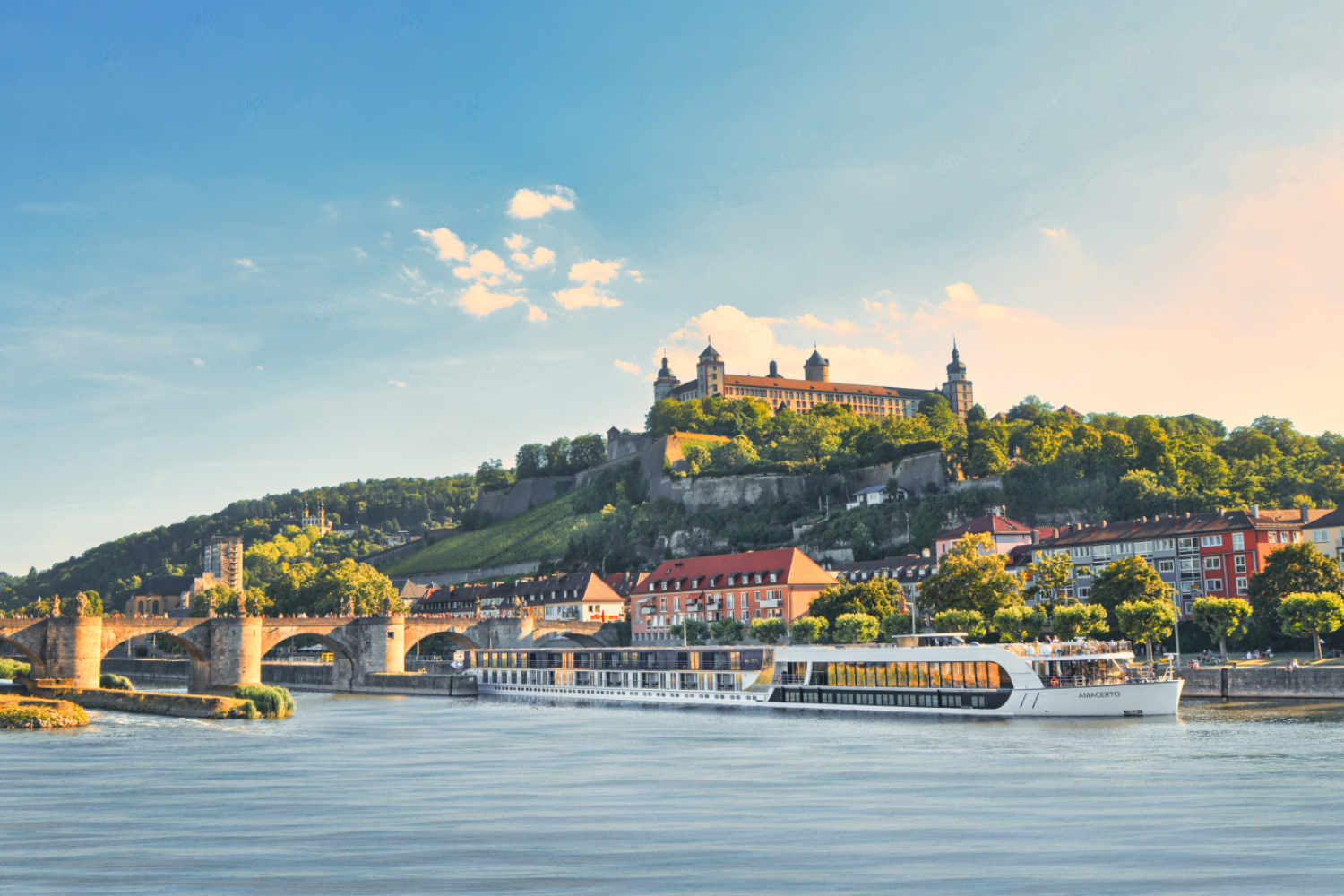
Würzburg is a city in Bavaria in southern Germany. It is located on the River Main and is famous for its lavish baroque architecture and Franconian wine. The Residence Palace is a UNESCO World Heritage Site and is highly recommended. It is a well known example of Baroque architecture with its acclaimed staircase, impressive frescos and imperial hall. Other impressive sites in Würzburg include the towering fortress of Festung Marienberg, the Alt Mainbrücke old bridge, which offers ideal views of the Marienberg, Dom St. Kilian cathedral and the many churches of Würzburg including the Romanesque Neumünster. Many of these sites have their own museums for visitors to learn of the history or view unique collections. Other museums of interest are the Mineralogical Museum, exhibiting the world of minerals and stones, and the Botanical Gardens, with various greenhouses and outdoor areas to enjoy. Wine lovers will find an abundance of wineries in Würzburg, offering cellar tours and wine tasting as well as traditional Bavarian cuisines and hospitality. Enjoy wine soup, Gerupfter (cheese spread) and Sauerbraten (braised beef in wine) in a friendly traditional wine tavern.
Day programme:
WÜRZBURG, GERMANY. You have several choices of excursions. Join a walking tour of Würzburg nestled along the “Romantic Road,” or visit its crown jewel, the Baroque Residenz, a UNESCO World Heritage Site. If you prefer to get more active, hike up to the Marienberg Fortress, the most prominent landmark on the left bank of the Main River in Würzburg. Alternatively, go to Rothenburg, the best-preserved medieval town in Germany. The town is so pretty that the imagery of Walt Disney’s Pinocchio was very much influenced by sketches of Rothenburg. (B,L,D)*Not combinable with other tours on this day.
Day programme:
WERTHEIM – MILTENBERG. Wertheim is considered to have one of Germany’s most beautiful city centers. While here, join a walking tour or hike to the ruins of Wertheim Castle. Later in the day, enjoy a scenic cruise to Miltenberg, the “Pearl of the Main River.” While on your walking tour, you’ll discover why this medieval town seems to leap from the pages of a fairytale with its 14th- and 15th-century half-timbered, gabled houses; the famed Crooked House; and the venerable Royal Inn. For those who would like a more active adventure, hike to the Miltenberg Castle, offering majestic views of the town and river. (B,L,D)
Rudesheim am Rhine is a town in the Rhine Valley in Germany and part of the UNESCO World Heritage Site of Rhine Gorge. It is known for its production of Riesling wine and has been popular for its wine making since ancient times. The Medieval Bromserburg Castle is home to the Rheingau Wine Museum and wine is a crucial part of Rudesheimer culture. The town is surrounded with vineyards and wineries, as well as many local wine bars and seasonal wine taverns. Wine tasting is a must do in Rudesheim and dining out is a great accompaniment. The local cuisine is seasonal and is closely intertwined with the wine growing traditions together with soups such as Zwiebelkuchen, Handkäs mit Musik and Spundekäs. Nordic Walking is popular around town, with five adventure trails around the vicinity, as well as many popular cycling routes. Great views of the town can be found from the water, the cable car to Niederwald Monument and the Monument itself. Old Town has the best examples of the town’s architecture with Eagle Tower, Oberstrasse and Rheinstein Castle some key sites to visit.
Day programme:
RÜDESHEIM, GERMANY – RHINE GORGE, GERMANY – LAHNSTEIN, GERMANY. Drink up the stunning views of this charming winemaking town by soaring high above the vineyards with a gondola ride to the Niederwalddenkmal Statue and a wine tasting. For a more active adventure, join a guided bike tour along the scenic Rhine River or join a hike through Rüdesheim’s famed vineyards. Later, head up to the Sun Deck to listen to your Cruise Manager regale you with the tales of the more than 40 castles lining the Rhine River’s banks as you cruise through the scenic Rhine Gorge UNESCO World Heritage Site. In the evening, be treated to an exclusive visit to Burg Lahneck Castle. (B,L,D)
Cologne is a city in western Germany located across the Rhine river. It is the oldest in Germany, dating back 2000 years and is considered the region’s cultural hub. The city is known for its iconic landmark of the twin-spired Cologne Cathedral set against the reconstructed Old Town buildings. When in Old Town, visit the historic Old Town Hall and the Roman Church Great St Martin, or take time out and sit at one of the traditional breweries and enjoy the scenery around you. Historical sites such as the Roman Dionysus mosaic and the medieval Overstolzenhaus are worth a visit too. Another iconic sight in Cologne is at Hohenzollern Bridge. Here, local and tourist couples affix padlocks to the railings of the bridge and swear their loyalty to each other, they then throw the key into the Rhein to ensure everlasting love. Cologne is home to over 30 stages providing cabaret, free ensembles, theatre and dance and also celebrates its openly gay culture.
Day programme:
COLOGNE, GERMANY. Cologne is home to one of Germany’s most revered Gothic masterpieces, the Cologne Cathedral. Join a guided tour through the Old Town and to the Cologne Rathaus, Germany’s oldest town hall, the Old Market and the Heumarkt. Plus, taste the city’s famous Kölsch beer, only made in Cologne. Alternatively, delve into the history of the city’s cathedral on an educational architecture tour. Active adventurists will instead want to join a guided bike ride along the Rhine. (B,L,D)
Amsterdam combines the unrivaled beauty of the 17th-century Golden Age city center with plenty of museums and art of the highest order, not to mention a remarkably laid-back atmosphere. It all comes together to make this one of the world’s most appealing and offbeat metropolises in the world. Built on a latticework of concentric canals like an aquatic rainbow, Amsterdam is known as the City of Canals—but it’s no Venice, content to live on moonlight serenades and former glory. Quite the contrary: on nearly every street here you’ll find old and new side by side—quiet corners where time seems to be holding its breath next to streets like neon-lit Kalverstraat, and Red Light ladies strutting by the city’s oldest church. Indeed, Amsterdam has as many lovely facets as a 40-carat diamond polished by one of the city’s gem cutters. It’s certainly a metropolis, but a rather small and very accessible one. Locals tend to refer to it as a big village, albeit one that happens to pack the cultural wallop of a major world destination. There are scores of concerts every day, numerous museums, summertime festivals, and, of course, a legendary year-round party scene. It’s pretty much impossible to resist Amsterdam’s charms. With 7,000 registered monuments, most of which began as the residences and warehouses of humble merchants, set on 160 man-made canals, and traversed by 1,500 or so bridges, Amsterdam has the largest historical inner city in Europe. Its famous circle of waterways, the grachtengordel, was a 17th-century urban expansion plan for the rich and is a lasting testament to the city’s Golden Age. This town is endearing because of its kinder, gentler nature—but a reputation for championing sex, drugs, and rock ’n’ roll does not alone account for Amsterdam’s being one of the most popular destinations in Europe: consider that within a single square mile the city harbors some of the greatest achievements in Western art, from Rembrandt to Van Gogh. Not to mention that this is one of Europe’s great walking cities, with so many of its treasures in the untouted details: tiny alleyways barely visible on the map, hidden garden courtyards, shop windows, floating houseboats, hidden hofjes(courtyards with almshouses), sudden vistas of church spires, and gabled roofs that look like so many unframed paintings. And don’t forget that the joy lies in details: elaborate gables and witty gable stones denoting the trade of a previous owner. Keep in mind that those XXX symbols you see all over town are not a mark of the city’s triple-X reputation. They’re part of Amsterdam’s official coat of arms—three St. Andrew’s crosses, believed to represent the three dangers that have traditionally plagued the city: flood, fire, and pestilence. The coat’s motto (“Valiant, determined, compassionate”) was introduced in 1947 by Queen Wilhelmina in remembrance of the 1941 February Strike in Amsterdam—the first time in Europe that non-Jewish people protested against the persecution of Jews by the Nazi regime.
Day programme:
AMSTERDAM, THE NETHERLANDS. There are 165 canals in Amsterdam, and you’ll get to enjoy some of them on your canal cruise. (B,L,D)
Amsterdam combines the unrivaled beauty of the 17th-century Golden Age city center with plenty of museums and art of the highest order, not to mention a remarkably laid-back atmosphere. It all comes together to make this one of the world’s most appealing and offbeat metropolises in the world. Built on a latticework of concentric canals like an aquatic rainbow, Amsterdam is known as the City of Canals—but it’s no Venice, content to live on moonlight serenades and former glory. Quite the contrary: on nearly every street here you’ll find old and new side by side—quiet corners where time seems to be holding its breath next to streets like neon-lit Kalverstraat, and Red Light ladies strutting by the city’s oldest church. Indeed, Amsterdam has as many lovely facets as a 40-carat diamond polished by one of the city’s gem cutters. It’s certainly a metropolis, but a rather small and very accessible one. Locals tend to refer to it as a big village, albeit one that happens to pack the cultural wallop of a major world destination. There are scores of concerts every day, numerous museums, summertime festivals, and, of course, a legendary year-round party scene. It’s pretty much impossible to resist Amsterdam’s charms. With 7,000 registered monuments, most of which began as the residences and warehouses of humble merchants, set on 160 man-made canals, and traversed by 1,500 or so bridges, Amsterdam has the largest historical inner city in Europe. Its famous circle of waterways, the grachtengordel, was a 17th-century urban expansion plan for the rich and is a lasting testament to the city’s Golden Age. This town is endearing because of its kinder, gentler nature—but a reputation for championing sex, drugs, and rock ’n’ roll does not alone account for Amsterdam’s being one of the most popular destinations in Europe: consider that within a single square mile the city harbors some of the greatest achievements in Western art, from Rembrandt to Van Gogh. Not to mention that this is one of Europe’s great walking cities, with so many of its treasures in the untouted details: tiny alleyways barely visible on the map, hidden garden courtyards, shop windows, floating houseboats, hidden hofjes(courtyards with almshouses), sudden vistas of church spires, and gabled roofs that look like so many unframed paintings. And don’t forget that the joy lies in details: elaborate gables and witty gable stones denoting the trade of a previous owner. Keep in mind that those XXX symbols you see all over town are not a mark of the city’s triple-X reputation. They’re part of Amsterdam’s official coat of arms—three St. Andrew’s crosses, believed to represent the three dangers that have traditionally plagued the city: flood, fire, and pestilence. The coat’s motto (“Valiant, determined, compassionate”) was introduced in 1947 by Queen Wilhelmina in remembrance of the 1941 February Strike in Amsterdam—the first time in Europe that non-Jewish people protested against the persecution of Jews by the Nazi regime.
Day programme:
AMSTERDAM. Disembark the ship and you prepare for your flight home. (B)
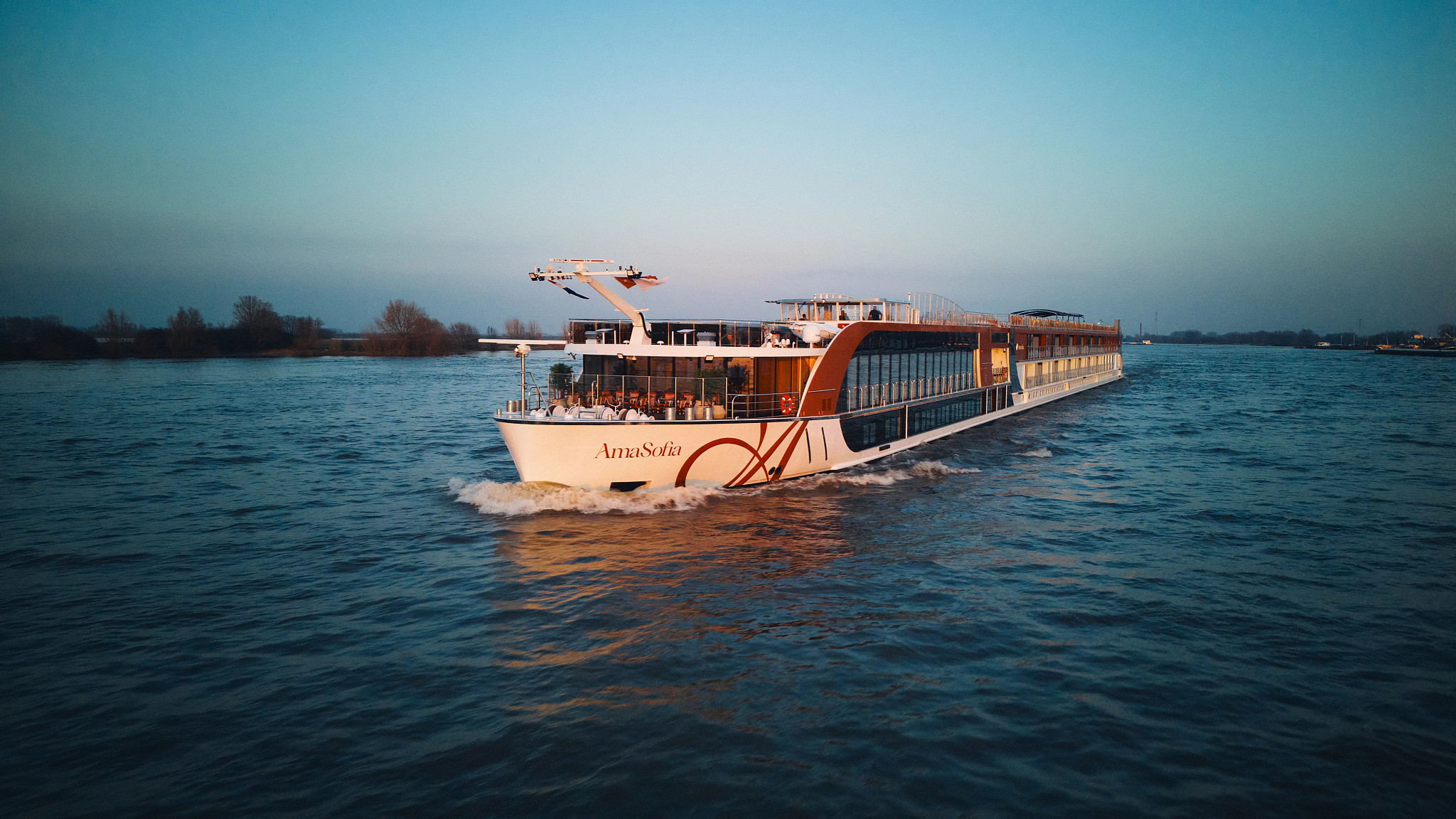
Ship features
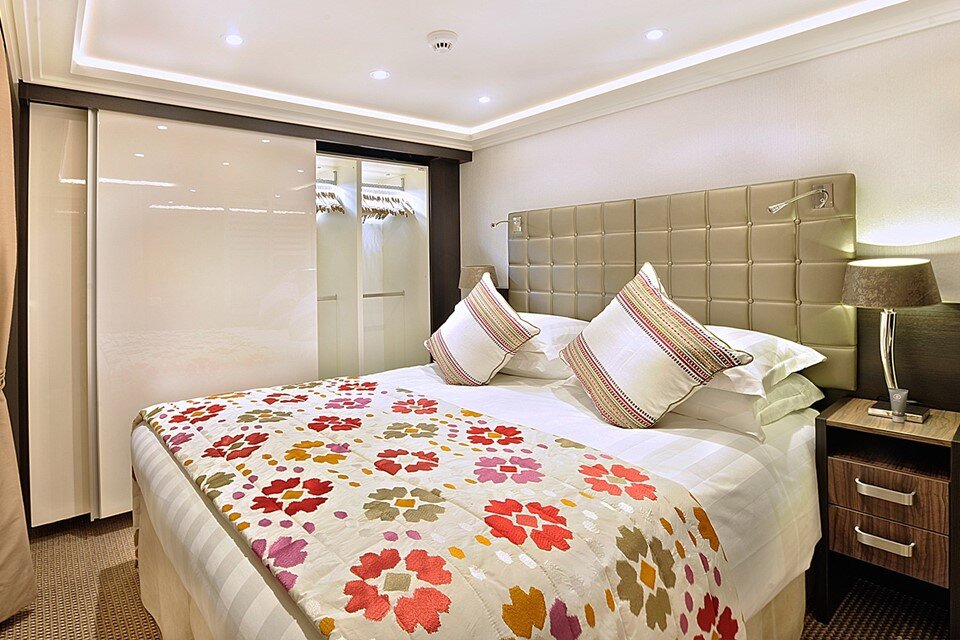
Suite
Spacious Staterooms and Suites
Unwind in thoughtfully designed rooms with room to relax and enjoy the river views. Elegant décor and comfortable spaces create a peaceful retreat to start and end the day.
Comfort and Understated Luxury
Experience the art of subtle indulgence in every room. Soft fabrics, marble-tiled bathrooms, and thoughtful touches elevate each room into a sanctuary of effortless luxury.
- Violin Deck
- Suite
- French Balcony & Outside Balcony
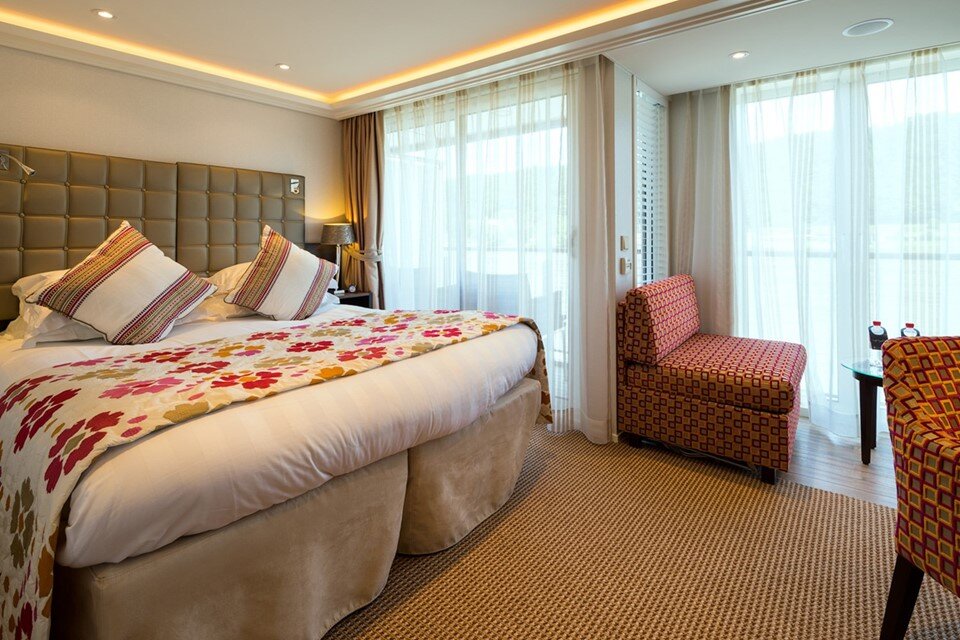
Category AA Staterooms
Balconies and Panoramic Views
Take in ever-changing scenery from your room, whether through a picture window, French balcony, or our signature twin balcony design. Each offers its own beautiful perspective of the river.
Comfort and Understated Luxury
Experience the art of subtle indulgence in every room. Soft fabrics, marble-tiled bathrooms, and thoughtful touches elevate each room into a sanctuary of effortless luxury.
- Violin Deck
- Category AA
- French Balcony & Outside Balcony
Category AB Staterooms
Balconies and Panoramic Views
Take in ever-changing scenery from your room, whether through a picture window, French balcony, or our signature twin balcony design. Each offers its own beautiful perspective of the river.
Comfort and Understated Luxury
Experience the art of subtle indulgence in every room. Soft fabrics, marble-tiled bathrooms, and thoughtful touches elevate each room into a sanctuary of effortless luxury.
- Cello Deck
- Category AB
- French Balcony & Outside Balcony
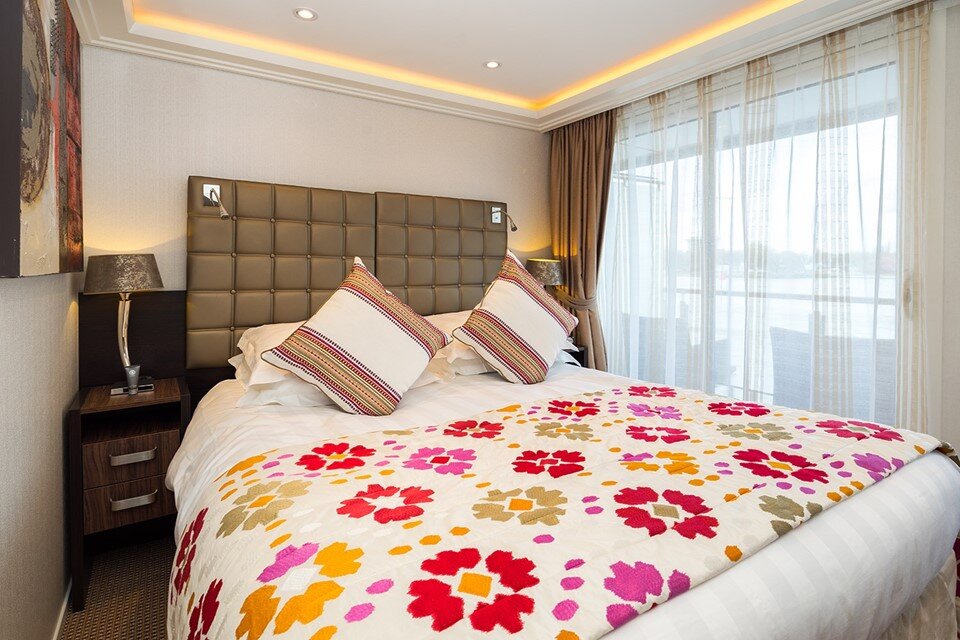
Category BA Staterooms
Balconies and Panoramic Views
Take in ever-changing scenery from your room, whether through a picture window, French balcony, or our signature twin balcony design. Each offers its own beautiful perspective of the river.
Comfort and Understated Luxury
Experience the art of subtle indulgence in every room. Soft fabrics, marble-tiled bathrooms, and thoughtful touches elevate each room into a sanctuary of effortless luxury.
- Violin Deck
- Category BA
- French Balcony & Outside Balcony
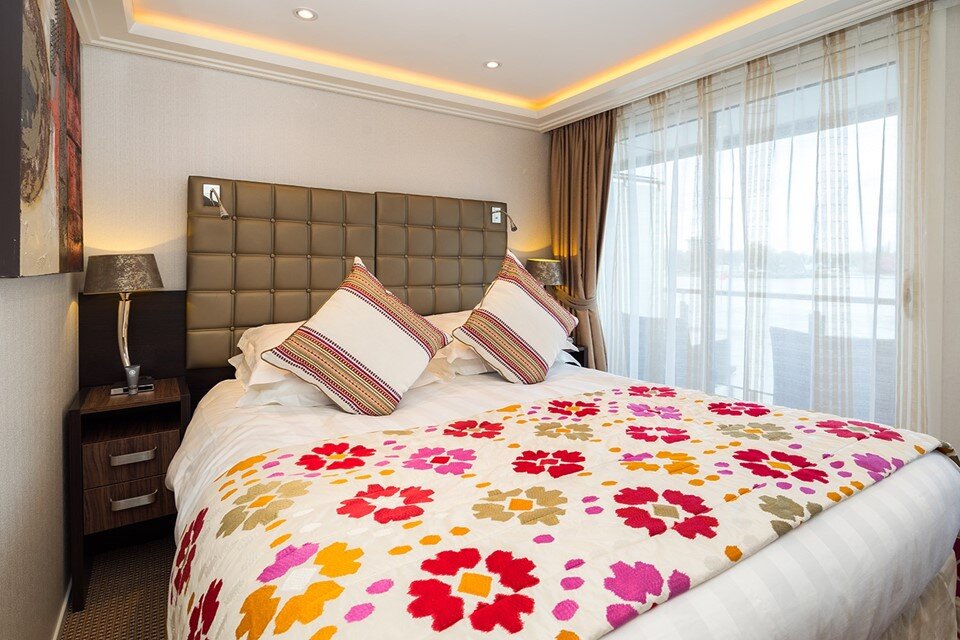
Category BB Staterooms
Balconies and Panoramic Views
Take in ever-changing scenery from your room, whether through a picture window, French balcony, or our signature twin balcony design. Each offers its own beautiful perspective of the river.
Comfort and Understated Luxury
Experience the art of subtle indulgence in every room. Soft fabrics, marble-tiled bathrooms, and thoughtful touches elevate each room into a sanctuary of effortless luxury.
- Cello Deck
- Category BB
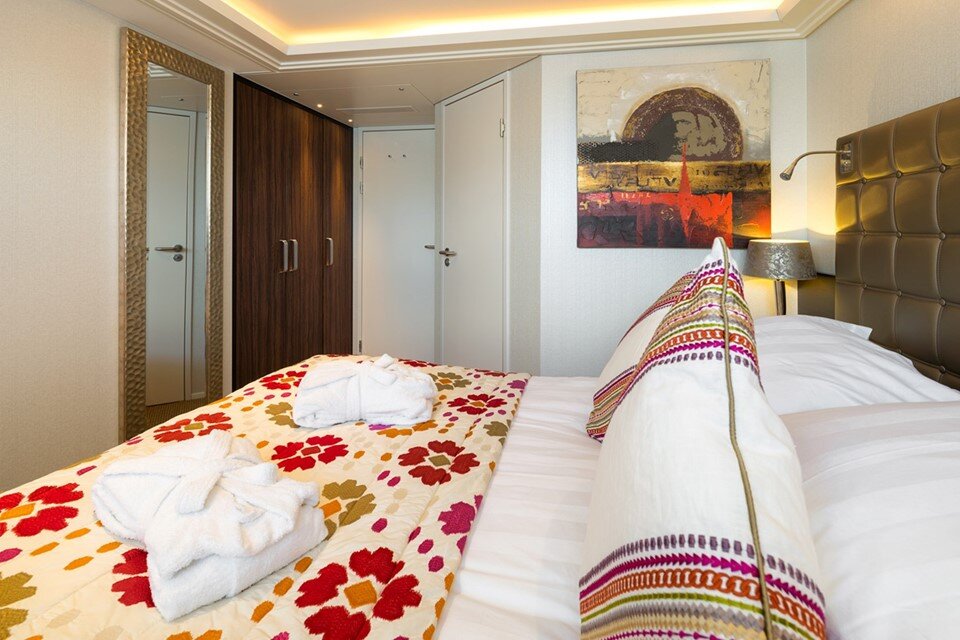
Category CA Staterooms
Balconies and Panoramic Views
Take in ever-changing scenery from your room, whether through a picture window, French balcony, or our signature twin balcony design. Each offers its own beautiful perspective of the river.
Comfort and Understated Luxury
Experience the art of subtle indulgence in every room. Soft fabrics, marble-tiled bathrooms, and thoughtful touches elevate each room into a sanctuary of effortless luxury.
- Cello Deck
- Category CA
- French Balcony
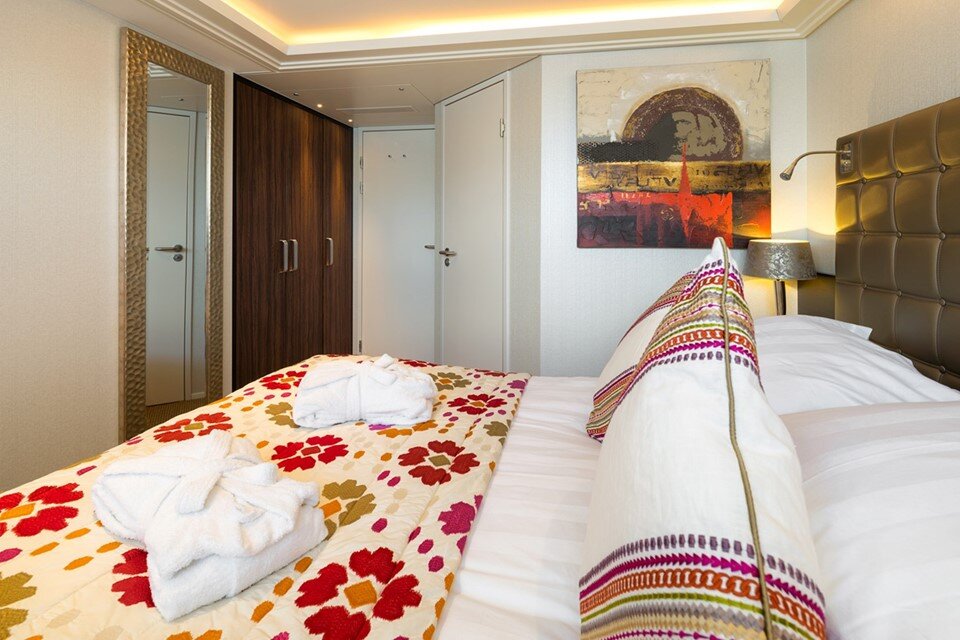
Category CB Staterooms
Balconies and Panoramic Views
Take in ever-changing scenery from your room, whether through a picture window, French balcony, or our signature twin balcony design. Each offers its own beautiful perspective of the river.
Comfort and Understated Luxury
Experience the art of subtle indulgence in every room. Soft fabrics, marble-tiled bathrooms, and thoughtful touches elevate each room into a sanctuary of effortless luxury.
- Violin Deck
- Category CB
- French Balcony
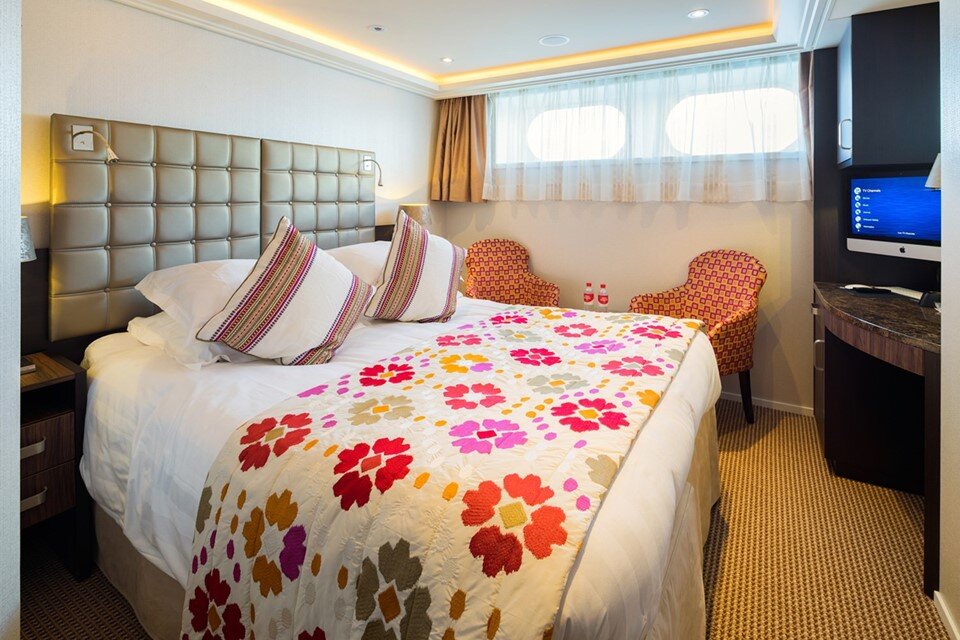
Category D Staterooms
Comfort and Understated Luxury
Experience the art of subtle indulgence in every room. Soft fabrics, marble-tiled bathrooms, and thoughtful touches elevate each room into a sanctuary of effortless luxury.
- Piano Deck
- Category D
- Fixed Window
Category E Staterooms
Comfort and Understated Luxury
Experience the art of subtle indulgence in every room. Soft fabrics, marble-tiled bathrooms, and thoughtful touches elevate each room into a sanctuary of effortless luxury.
- Piano Deck
- Category E
- Fixed Window
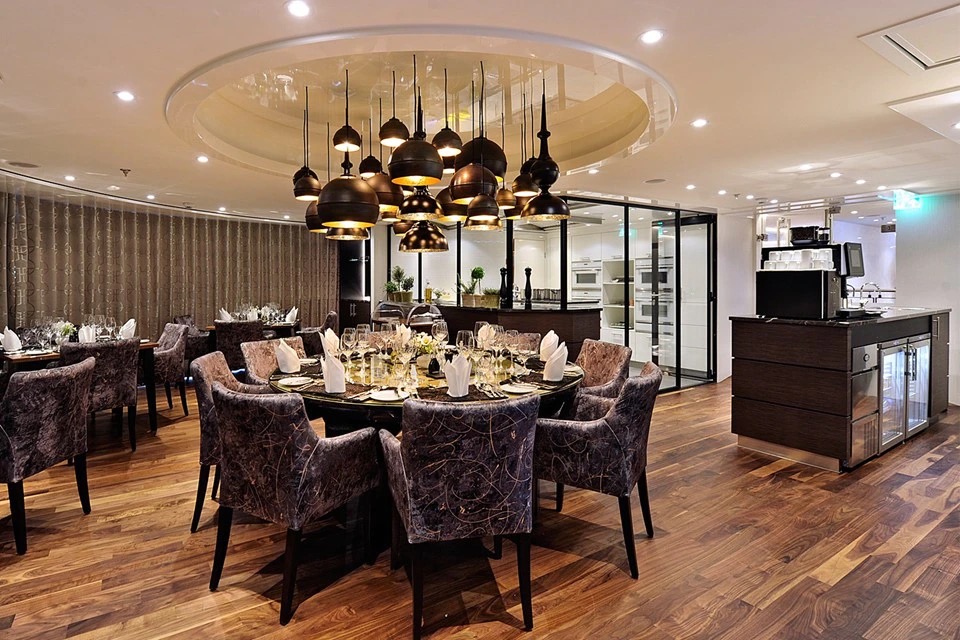
Journey Restaurant
Experience award-winning cuisine inspired by the regions you sail through. Every dish is crafted from the freshest local ingredients and presented with elegance, turning each meal into a celebration of flavor, artistry, and place.
Regional Flavors and Fresh Ingredients
Taste the essence of every destination through cuisine crafted from locally sourced ingredients and using regional traditions, bringing the authentic flavors of your travel destination directly to your table.
Perfectly Paired Wines and Beverages
Pair dishes with regional wines, beers, or handcrafted cocktails, thoughtfully chosen by our sommeliers to complement each dish and enhance your dining experience throughout the journey.
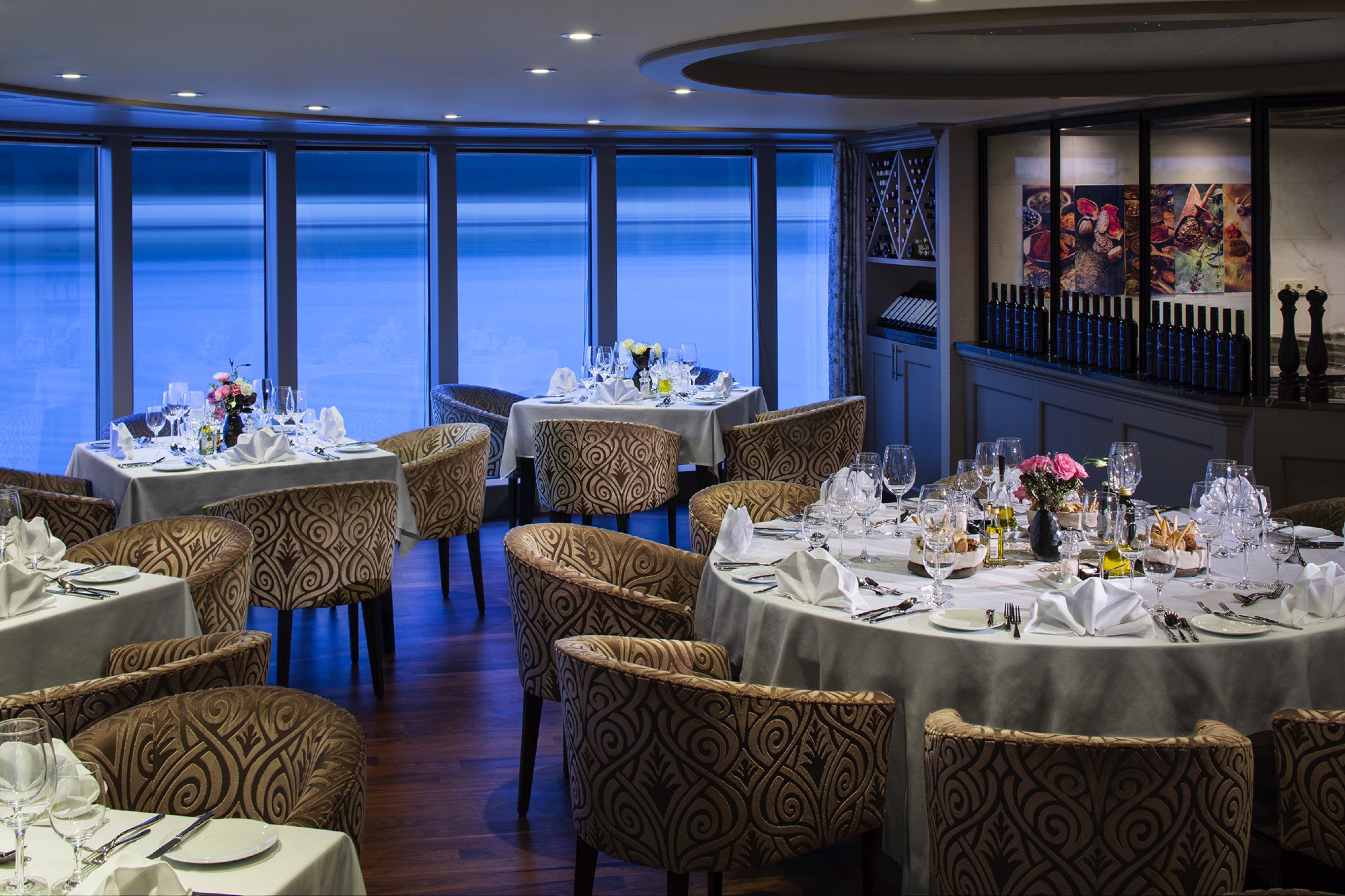
The Chef’s Table
Enjoy an intimate, multi-course dinner where culinary artistry shines at The Chef’s Table, available on select sailings. Watch as our chefs prepare each course before your eyes, pairing exquisite flavors with impeccable service.
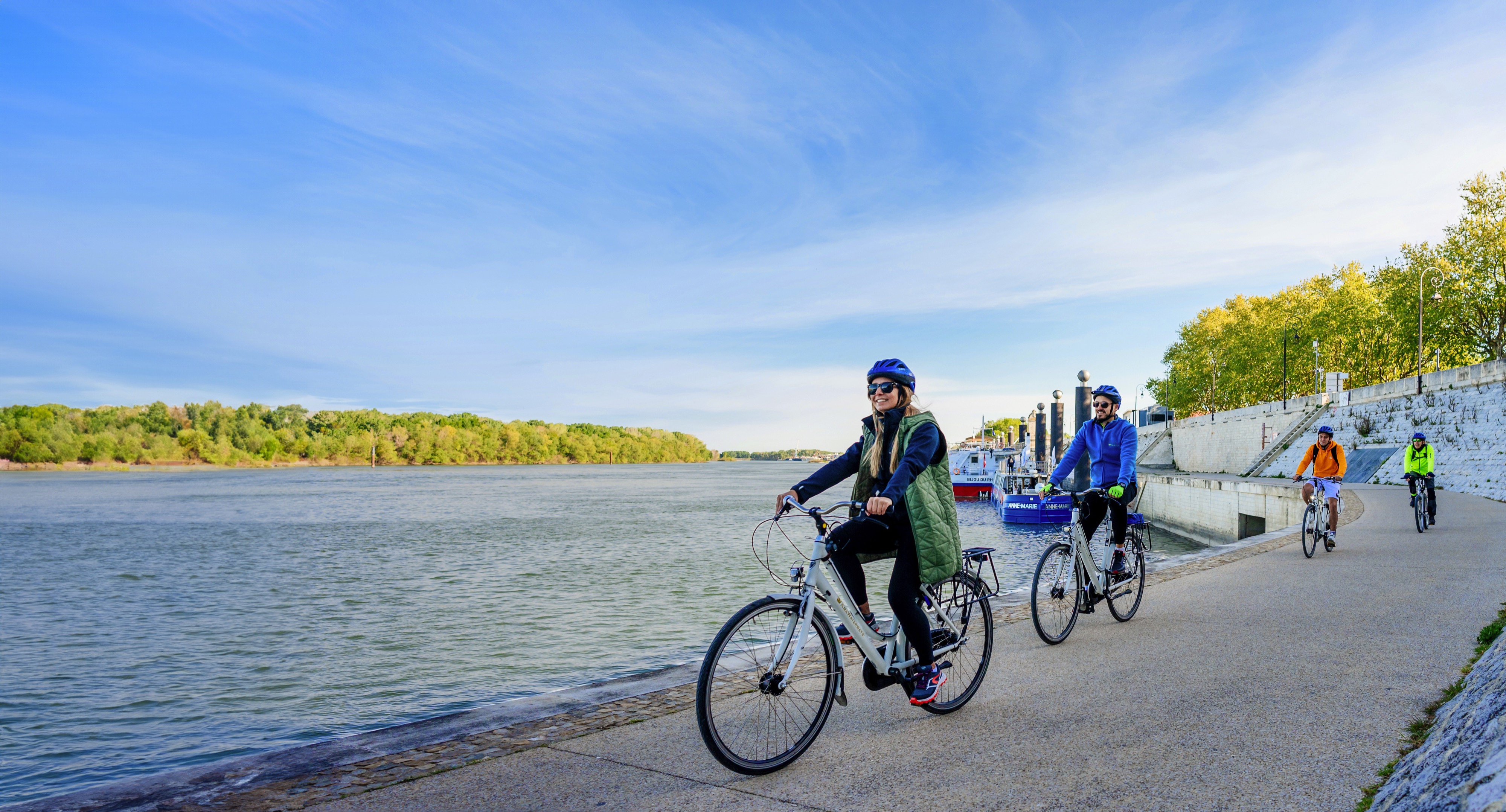
Included Biking Excursions
Take a more energetic route with guided cycling and hiking tours that blend scenic beauty, cultural insight, and a touch of adventure.
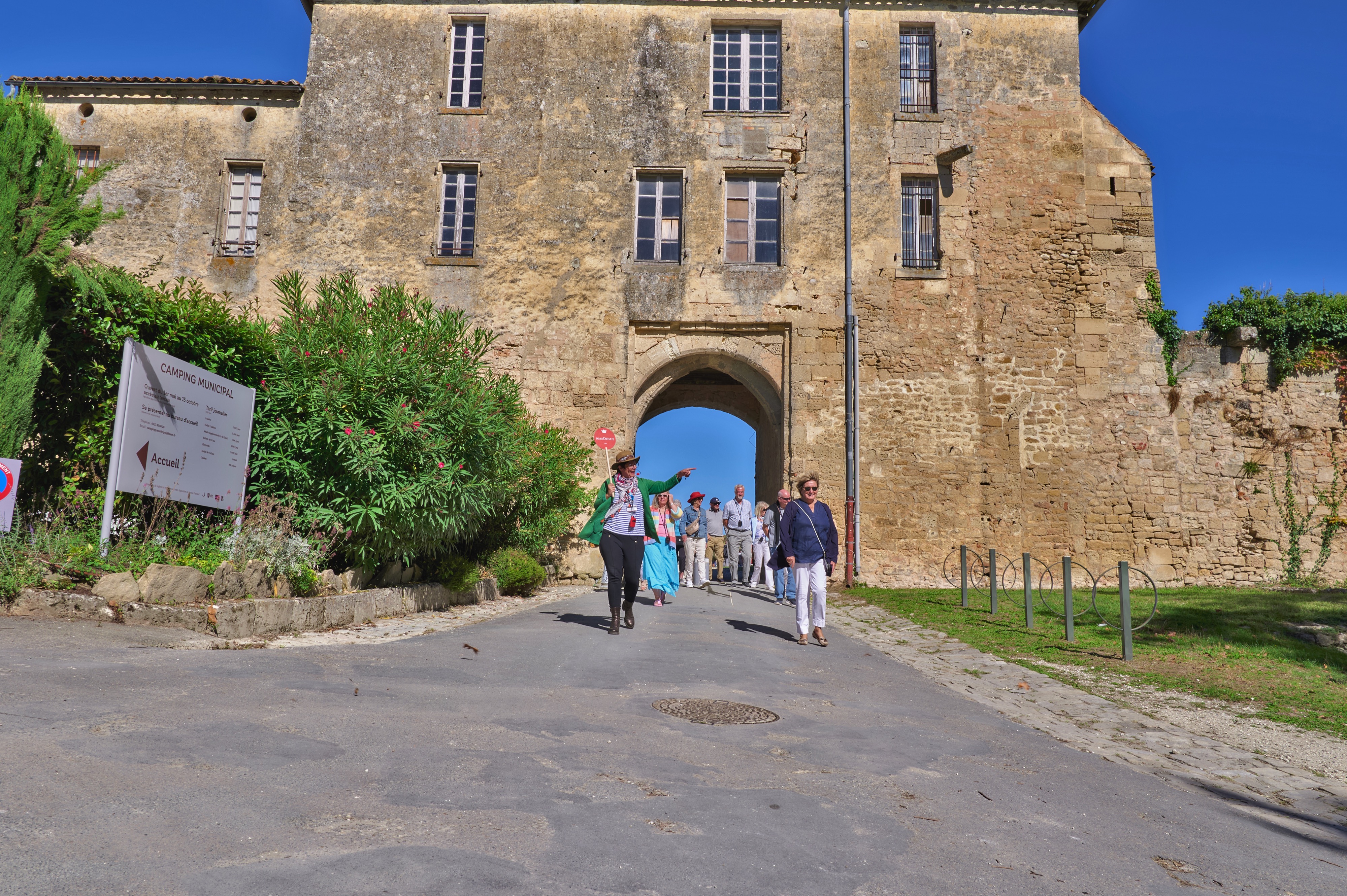
Included Hiking Excursions
See Europe from new heights with AmaWaterways’ guided hikes up castles, into national parks, and on scenic mountains. Each trail invites you to stretch your legs and discover destinations beyond the riverbank.
Hikes and Walks Guided by Experts
Every hike is led by an expert guide who brings the landscape to life through stories, cultural insight, and knowledge about the location.
A Range of Landscapes to Explore
From castle paths in Europe to riverside trails in Asia and nature walks in Africa, step off your ship and into remarkable settings.
Comfort and Care When You Return
After time on the trails, unwind aboard your ship with regionally inspired cuisine, a relaxing massage, or a glass of wine overlooking the scenery you explored on foot.
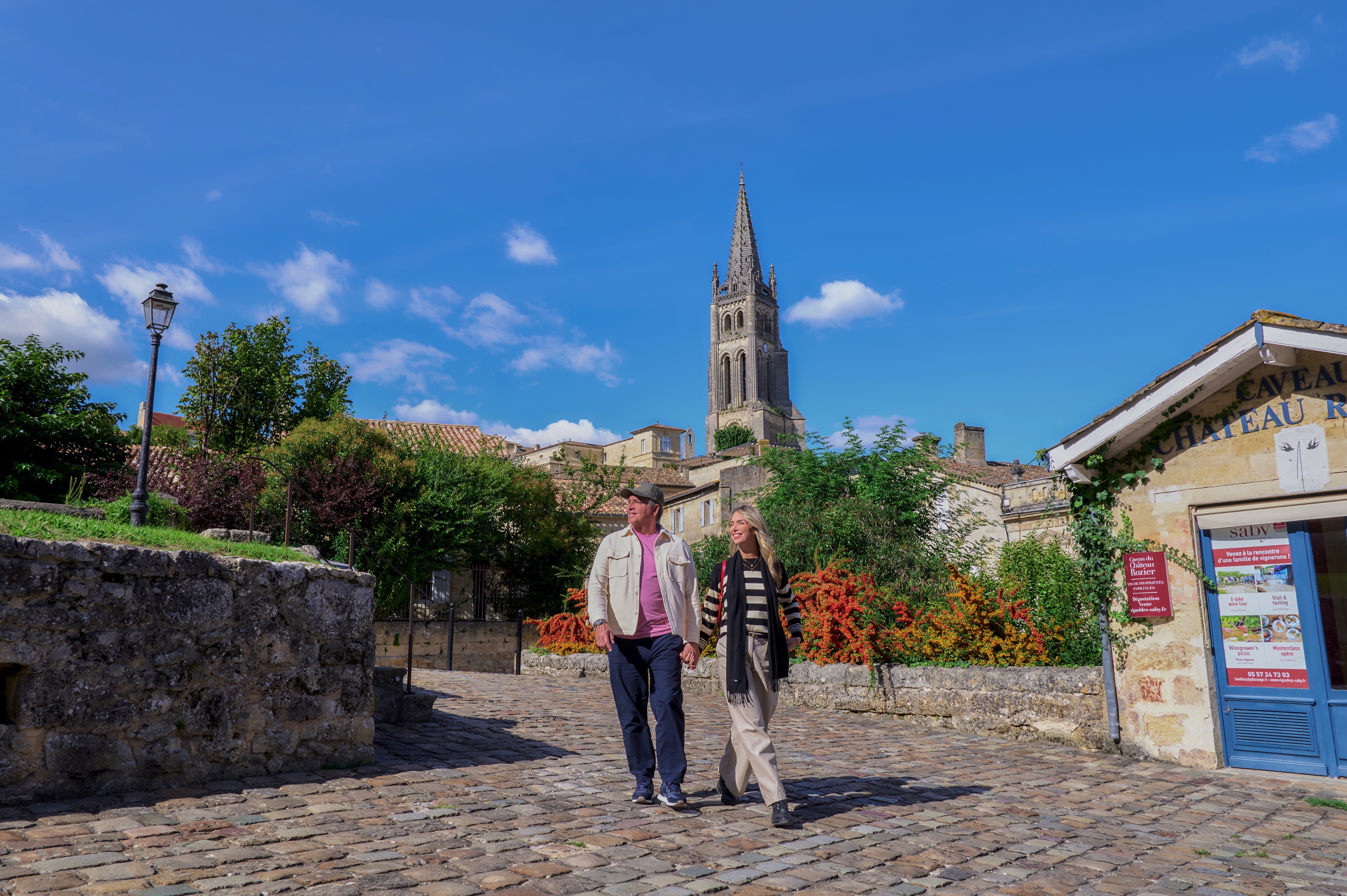
Special Interest Tours
AmaWaterways cruises invite you to explore your favorite interests during your trip. From wine-themed cruises with a dedicated sommelier on board to European adventures designed around visiting castles, there’s an itinerary for every passion.

Land Packages
Extend Your Journey
Stay and explore your destination a little longer before or after your cruise. AmaWaterways’ curated land extensions pair perfectly with your river itinerary, offering the same luxury, care, and sense of place found on board.
Seamless Travel from Ship to City
Your Cruise Manager continues with you on land, ensuring every detail—from transfers to luggage—runs smoothly so you can simply relax and enjoy the destination.
Hand-Selected Hotels in Prime Locations
Stay steps from world-famous landmarks in luxurious hotels chosen for their comfort, style, and connection to each destination.
Expertly Curated Experiences
Each extension includes activities like guided city tours, museum visits, and wine tastings designed to reveal the culture and character of every destination.
Daily Breakfast Included
Begin each morning with a satisfying breakfast at your hotel—an easy, thoughtful touch that adds comfort and convenience to your time on land.
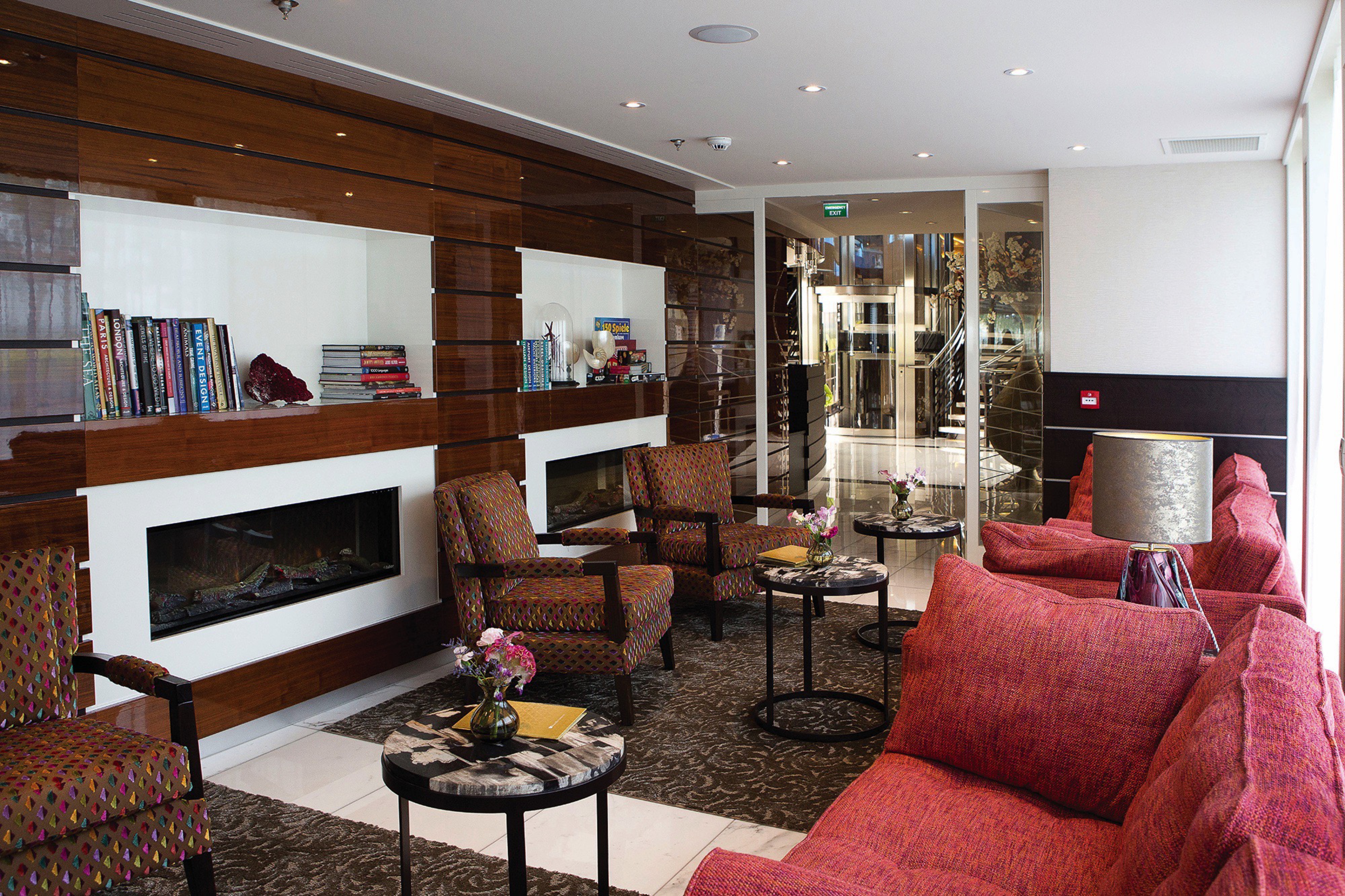
The Lark Lounge & Bar
This versatile space hosts a bar, dance floor, plenty of comfortable couches and big windows on three sides and is used for everything from the morning port talks, daytime reading and chatting to scenic cruising, afternoon tea and evening entertainment.
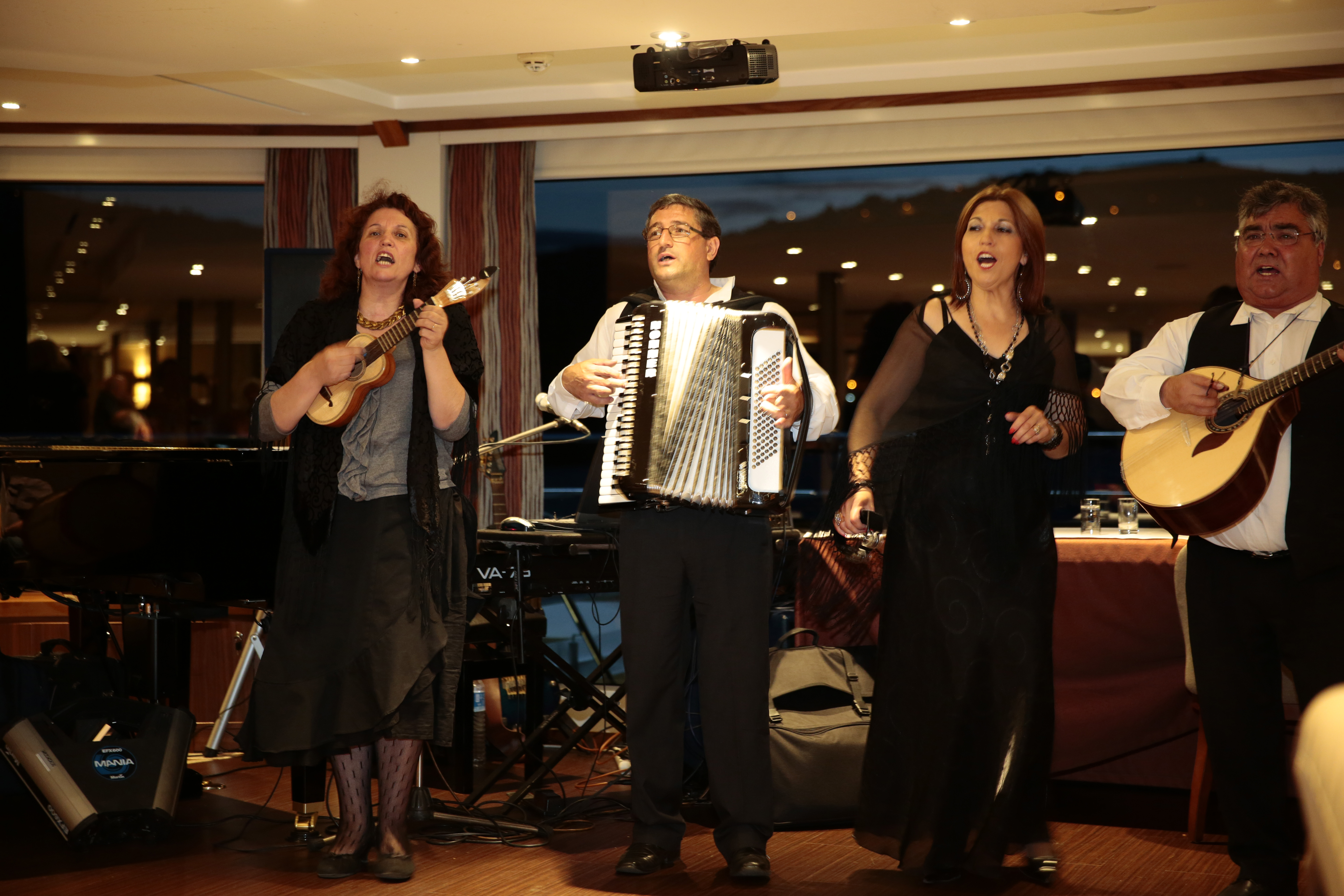
Onboard Entertainment
Onboard Performances and Musical Evenings
Throughout many voyages, the ship’s lounge transforms into a stage for local ensembles, jazz duos, and classical quartets
Select sailings have Music Hosts, conductors and musicians who guide you through historical context, lead onboard performances, and deepen your connection with the region’s musical heritage.
Live Regional Performances On Ship
Even on non-themed sailings, enjoy musical offerings like local performances, curated playlists, and connections to the musical stories of the rivers you traverse.
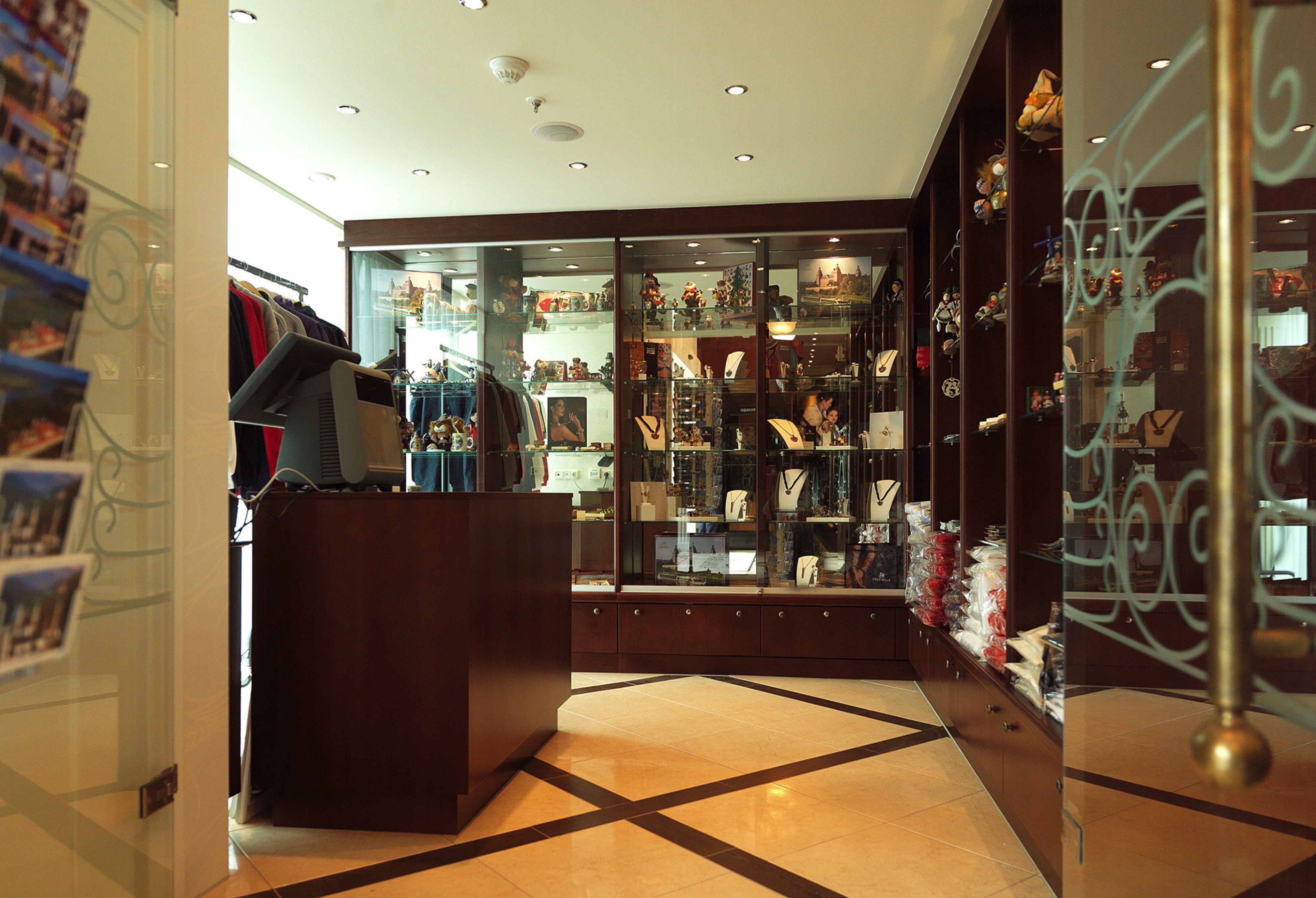
Boutique
The onboard boutique offers a variety of souvenirs for guests to purchase.
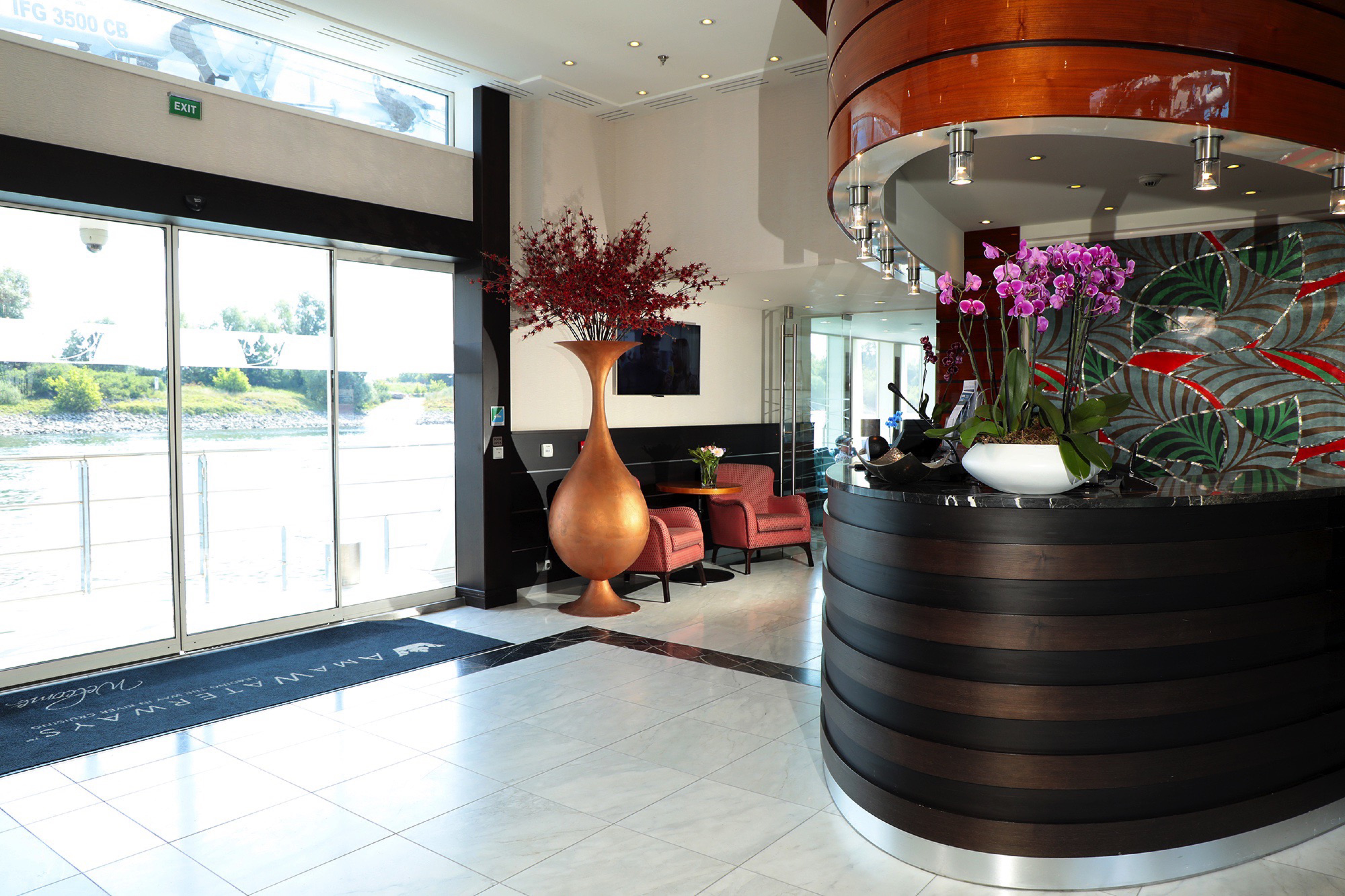
Reception
The Reception is located on the Violin Deck.
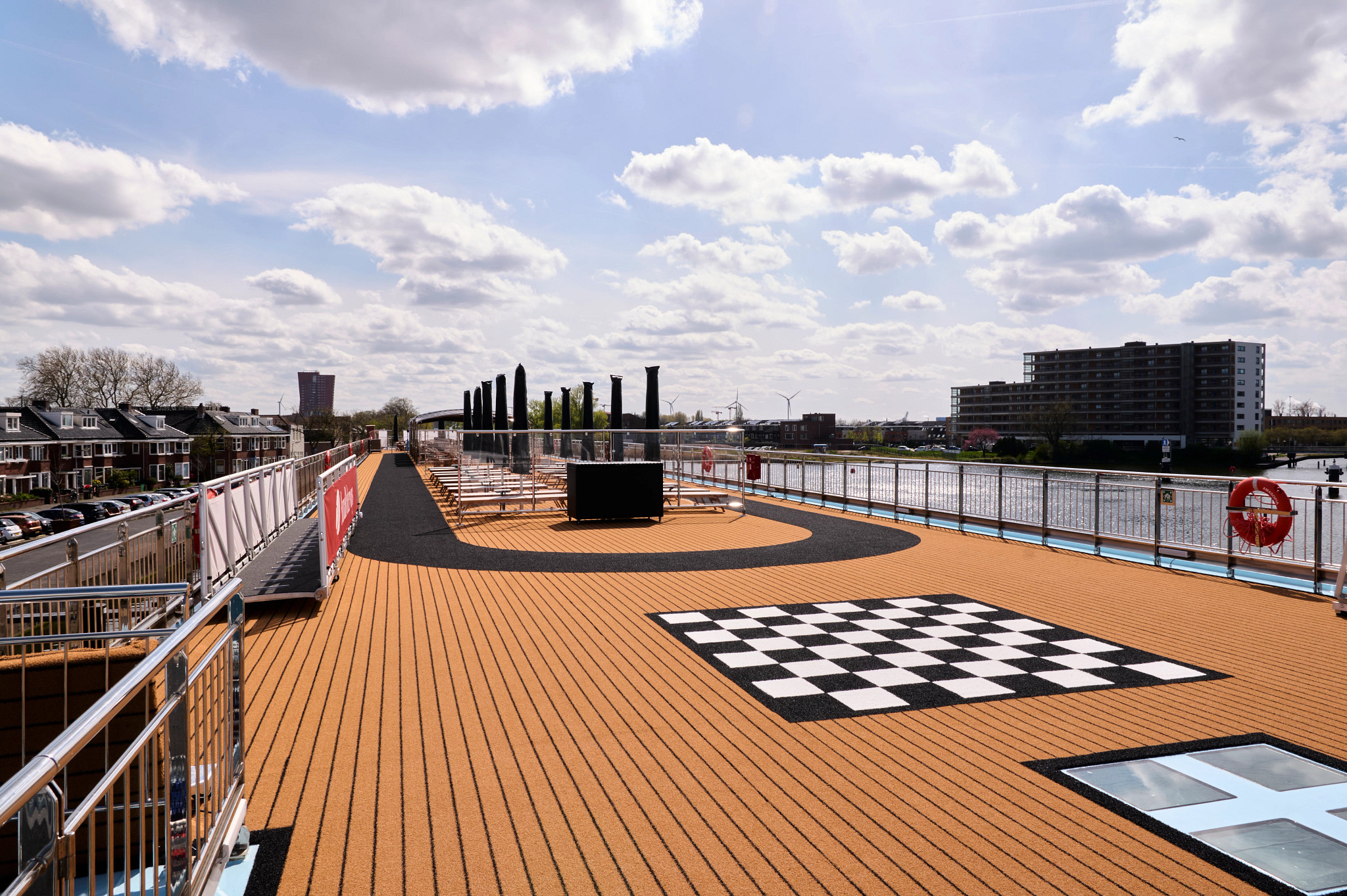
Sun Deck
Soak up some rays or take a dip in our refreshing pool with a swim-up bar as we pass by centuries-old castles, charming villages and other breathtaking scenery.
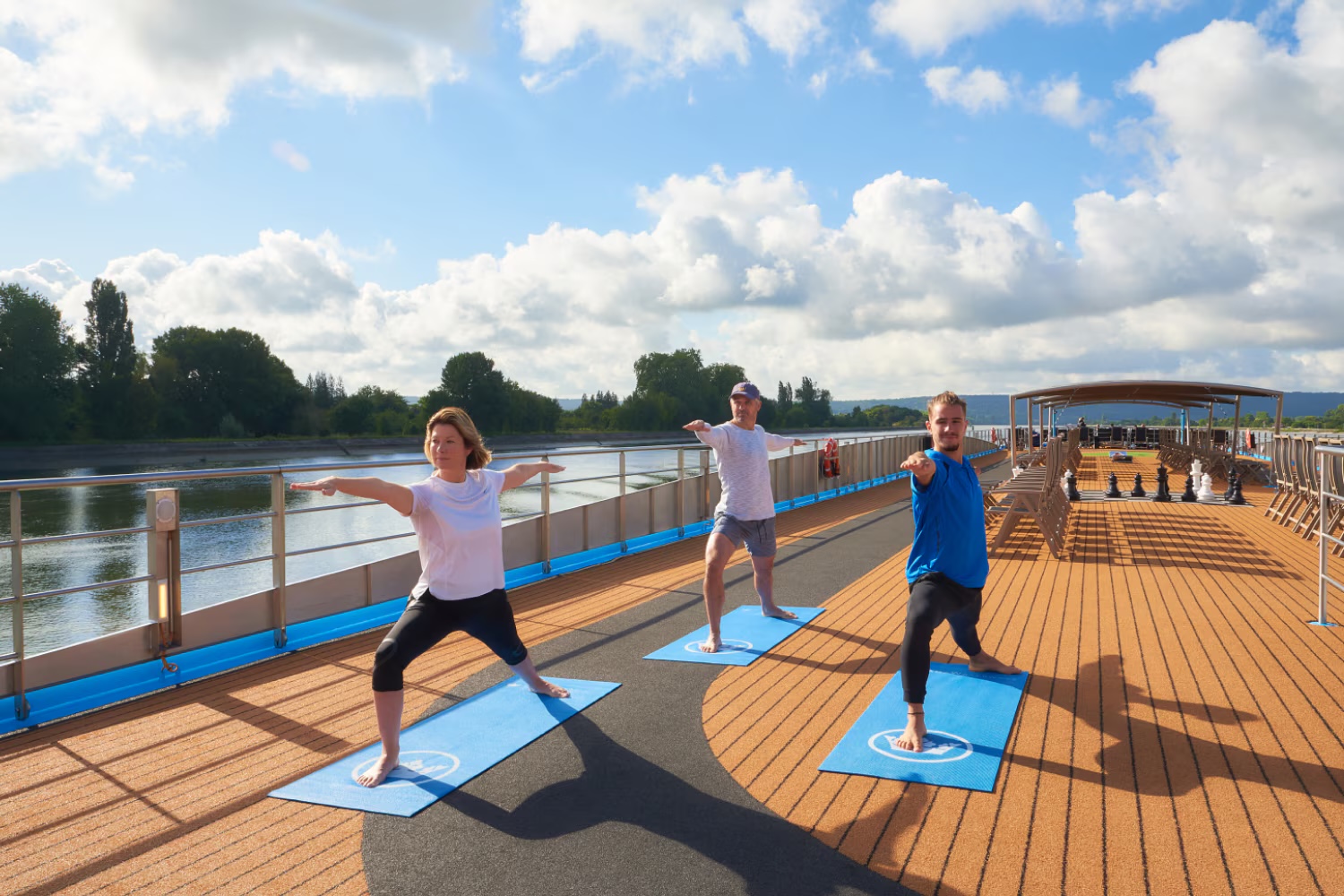
Fitness Classes
Start the day with intention through gentle stretching, yoga, or quiet moments on deck, surrounded by fresh air and flowing scenery.
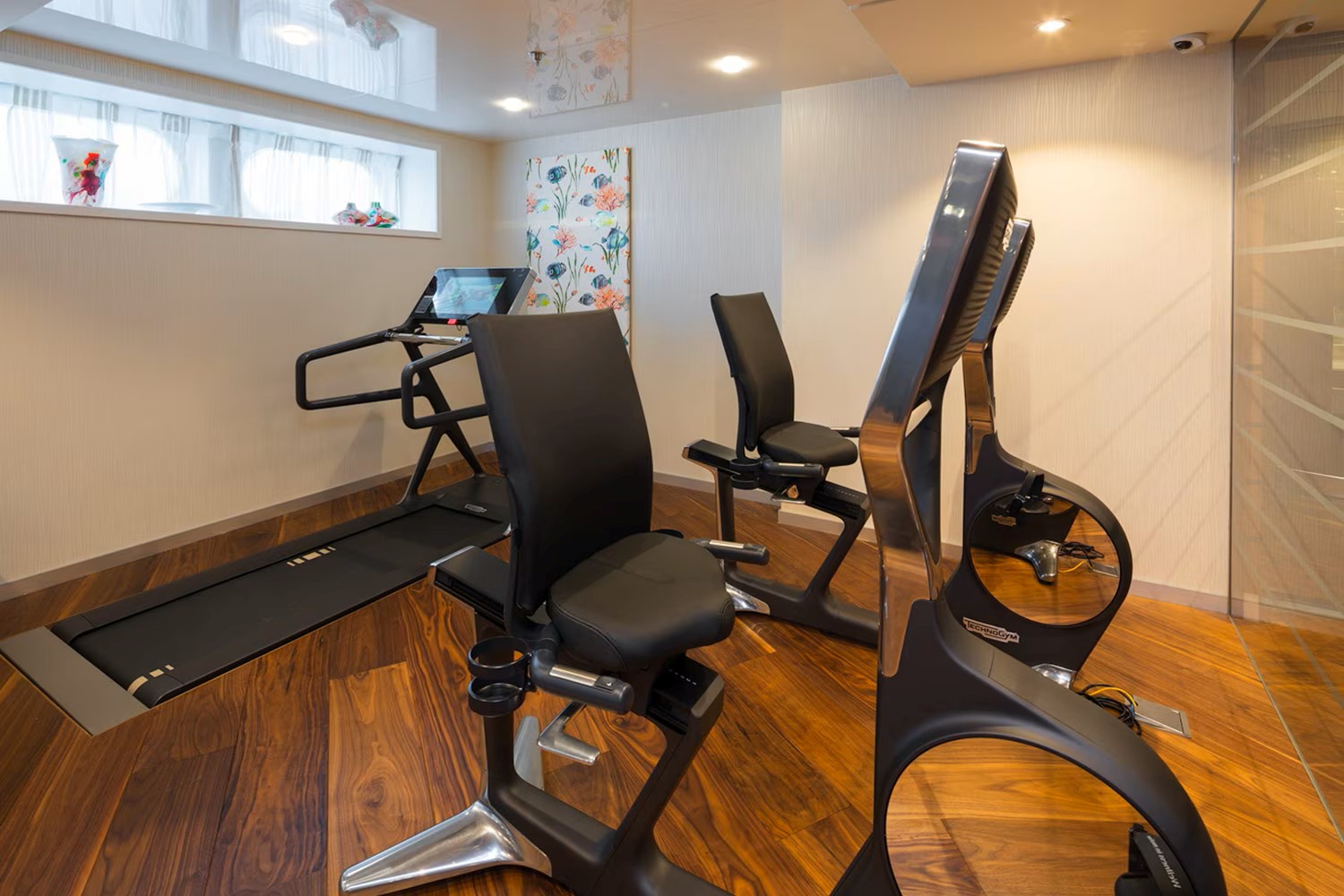
Fitness Room
Are you looking for a way to stay fit on vacation? Hit the treadmill or lift some weights while cruising from one destination to the next.
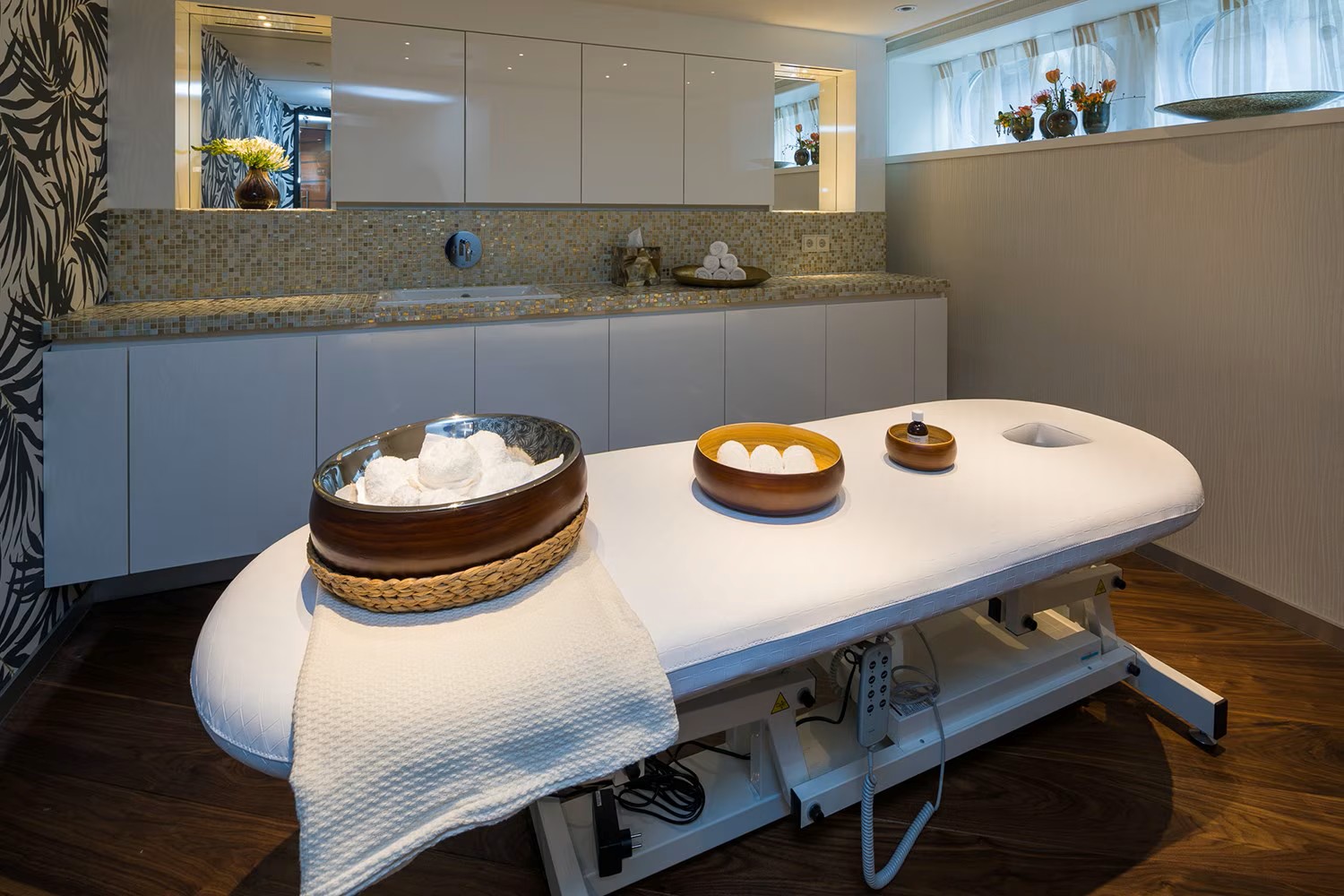
Massage Services and Hair Salon
Whether you’d like to dress up for the captain’s special dinner or a night out on the town, you can complete your look by getting your hair styled in our salon.
What's Included
Cruises include all meals, beer and wine with lunch and dinner, a daily Sip & Sail cocktail hour, Wi-Fi, and guided shore excursions in every port. Premium beverages, gratuities, and optional tours may be additional, but most of what you need for a seamless journey is already included.
All ships in Europe, Vietnam, Cambodia, and Egypt have a fitness center with exercise equipment (hours vary by ship).
Every ship also offers a gift shop with accessories, souvenirs, and essential items for your convenience.
Many ships include spa or salon services—Europe offers hair treatments, beauty services, and massages; Portugal and the AmaDara in Vietnam & Cambodia each feature an onboard spa; and Egypt offers similar massage services upon request.
Guests can also enjoy refreshing pools across destinations: whirlpools or heated pools in Europe (with saunas on select ships)
Limited Mobility
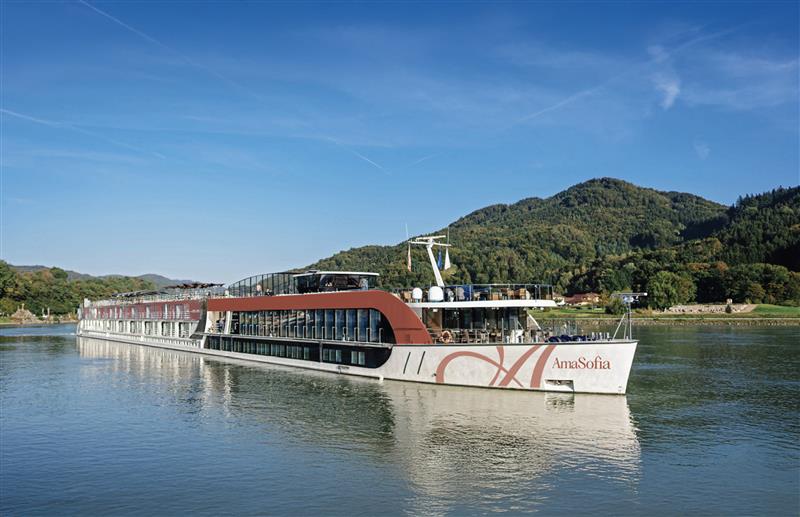
AmaSofia features an elevator* and wide public areas to make moving around easier. Some staterooms are specially designed for guests with mobility needs, and the crew is always available to offer assistance both on board and during shore excursions, ensuring you feel comfortable and supported throughout your trip.
Elevator reaches Violin, Cello and Piano Deck. Does not reach Sun Deck.
Internet Access
Complimentary high-speed Wi-Fi is available in your room and in all public areas, making it easy to stay connected, share photos, or check in with loved ones during your journey.
Dietary Requirements
AmaWaterways will do its best to accommodate most dietary needs and food allergies when advised in advance. While gluten-free, vegetarian, and other special requests can be arranged, kosher meals cannot be provided due to onboard preparation limitations. Please note that cross-contamination cannot be completely avoided.
Dress Code
Dress aboard AmaWaterways ships is comfortable and casually elegant. On all ships, something a little dressier is recommended for the Welcome and Farewell dinners. Guests sailing in warmer destinations such as Vietnam, Cambodia, Egypt, and Colombia should pack breathable fabrics, sun protection, and modest attire for temple visits.
Smoking Policy
Smoking is not permitted inside any AmaWaterways ship. It is only allowed in designated areas located at the aft of the Sun Deck. For the comfort and safety of all guests, we kindly ask that you observe this no-smoking policy while on board.
Medical Facilities
AmaWaterways ships do not have onboard medical facilities or medical staff. In the event that assistance is needed, appropriate medical services can be contacted from shore, though response times may vary depending on the ship’s location. In Europe, medical services can easily be called from shore if required. Response times elsewhere can vary. Guests are strongly encouraged to obtain comprehensive travel insurance that includes coverage for medical treatment and evacuation while overseas.
Sustainability
Environmentally-Friendly Ship Design
Our river cruise fleet has been thoughtfully designed with eco-friendly elements. These include energy-saving LED lights, special insulated windows that reduce energy needs for heating and cooling, power locks to plug into a port’s power supply instead of running generators, solar heating systems, water treatment plants that provide microfiltration and recycling of all water used on board. AmaMagna also has an innovative 10-engine configuration designed to reduce fuel consumption and solar panels have been installed on all stateroom balconies. In addition, the Zambezi Queen uses a water jet propulsion system that protects the Chobe riverbed, water-saving taps and showers, biodegradable detergents and soaps, and a five-stage water purification plant.
A Greener Onboard Experience
To reduce overall plastic consumption, we use paper straws (upon request), refillable glass water bottles in all staterooms, and hand out recyclable tetra-pak water containers for excursions across the fleet (where available). We have lessened unnecessary food waste from large-scale buffets by serving a la carte lunches on board our European fleet. For our personal audio devices used on excursions, we are proud to partner with Quietvox, which utilizes biodegradable rice paper bags and rechargeable batteries. In addition, our luggage tags and handy travel wallets are both made from recycled plastic bottle material and are now delivered to guest staterooms on board our ships in Europe, reducing our carbon footprint. The usage of our innovative myAmaCruise app and electronic travel documents has also significantly reduced paper consumption both pre-cruise and on board.
Excursions
AmaSofia will sail the Rhine in spring 2026 and the Danube in summer. These storied rivers carry guests past vineyard-lined valleys, medieval towns, and vibrant capitals, offering two distinct yet equally memorable ways to experience the heart of Europe.
Are audio headsets provided during excursions?
Guided shore excursions in Europe and on Mekong River cruises in Vietnam & Camobida include a personal audio headset system, allowing you to clearly hear your tour guide while exploring or taking photos.
Bicycles
Most AmaWaterways ships in Europe (excluding Portugal) offer complimentary bicycles and helmets for guests to use while the ship is docked. Guided bike excursions are also available on many sailings and can be reserved once on board. Bicycles come in three sizes—small, medium, and large. Bicycles are not available on ships in Portugal, Vietnam & Cambodia, Africa, or Egypt. Use of bicycles is at your own risk.
Payment Methods
Onboard payments vary by region. In Europe, charges are in euros and may be paid in cash or by credit card.
Solo Travellers
We warmly welcome solo travellers who wish to explore the world, meet kindred cruisers and become a part of our extended AmaWaterways family. With a variety of itineraries in fascinating destinations, you have every reason to take advantage of special savings reserved exclusively for solo travellers.
A Warm Welcome
Begin your river cruise with a guided ship tour created for solo travelers, offering a friendly introduction that helps you feel comfortable and confident from the very start.
Social Time, Your Way
Select invitations to cocktail gatherings or the Captain’s Table offer friendly ways to meet others, but you always have the freedom to enjoy time independently.
Small Groups, Big Connections
Our small onshore experience groups make it easier to meet fellow travelers and connect with knowledgeable local guides, creating meaningful opportunities to explore and learn at your own pace.
Dining That Feels Natural
Select dining tables are thoughtfully set for five, offering comfortable spaces that encourage easy conversation without the pressure of joining a larger group on your own.
Care That Feels Personal
Our Cruise Manager and crew offer thoughtful attention to solo travelers, providing warm guidance and support to ensure you feel comfortable and welcome throughout your journey.
Single Occupancy Staterooms
On select European ships like AmaCello, AmaDante, AmaDolce, and AmaLyra, enjoy our Waived Single Supplement. These ships feature a few specially designed single occupancy staterooms with French balconies (140 sq. ft.). Just pay the standard cruise fare, no extra fees.
Language
The official language on board all AmaWaterways ships is English, and most crew members, guides, and Cruise Managers are fluent. Announcements and lectures are conducted in English. On Latin Experience cruises, a bilingual atmosphere is offered, with both English and Spanish spoken.
Age Restrictions
Guests must be at least 4 years old to travel with AmaWaterways, unless otherwise approved. Children under 18 must share a stateroom with an adult and remain supervised at all times, as balcony staterooms may be unsafe for unattended minors. On Africa Safaris & Wildlife Cruises, the minimum age is 12 due to safety considerations. AmaWaterways does not provide child-specific programs or childcare services.

Sun Deck
- Wheelhouse
- The Deck Club
- Pool
- Sun Deck
- Walking Track

Violin Deck
- The Chefs Table
- The Lark Lounge & Bar
- Al Fresco
- Reception
- Boutique
- Suite
- Category AA
- Category BA
- Category CA
- Category CB
- Elevator

Cello Deck
- Journeys Restaurant
- Category AB Cabins
- Category BB Cabins
- Category CA Cabins
- Elevator

Piano Deck
- Massage & Hair Salon
- Fitness Room
- Category D Cabins
- Category E Cabins
- Crew Cabins