Itinerary
If you associate Puerto Rico’s capital with the colonial streets of Old San Juan, then you know only part of the picture. San Juan is a major metropolis, radiating out from the bay on the Atlantic Ocean that was discovered by Juan Ponce de León. More than a third of the island’s nearly 4 million citizens proudly call themselves sanjuaneros. The city may be rooted in the past, but it has its eye on the future. Locals go about their business surrounded by colonial architecture and towering modern structures.By 1508 the explorer Juan Ponce de León had established a colony in an area now known as Caparra, southeast of present-day San Juan. He later moved the settlement north to a more hospitable peninsular location. In 1521, after he became the first colonial governor, Ponce de León switched the name of the island—which was then called San Juan Bautista in honor of St. John the Baptist—with that of the settlement of Puerto Rico (“rich port”).Defended by the imposing Castillo San Felipe del Morro (El Morro) and Castillo San Cristóbal, Puerto Rico’s administrative and population center remained firmly in Spain’s hands until 1898, when it came under U.S. control after the Spanish-American War. Centuries of Spanish rule left an indelible imprint on the city, particularly in the walled area now known as Old San Juan. The area is filled with cobblestone streets and brightly painted, colonial-era structures, and its fortifications have been designated a UNESCO World Heritage Site.Old San Juan is a monument to the past, but most of the rest of the city is planted firmly in the 21st century and draws migrants island-wide and from farther afield to jobs in its businesses and industries. The city captivates residents and visitors alike with its vibrant lifestyle as well as its balmy beaches, pulsing nightclubs, globe-spanning restaurants, and world-class museums. Once you set foot in this city, you may never want to leave.
Cartagena’s magnificent city walls and fortresses, now a UNESCO World Heritage Site, enclose a well-restored historic center (the Cuidad Amurallada, or walled city) with plazas, churches, museums, and shops that have made it a lively coastal vacation spot for South Americans and others. New hotels and restaurants make the walled city a desirable place to stay, and the formerly down-at-the-heels Getsemaní neighborhood attracts those seeking a bohemian buzz. The historic center is a small section of Cartagena; many hotels are in the Bocagrande district, an elongated peninsula where high-rise hotels overlook a long, gray-sand beach.When it was founded in 1533 by Spanish conquistador Pedro de Heredia, Cartagena was the only port on the South American mainland. Gold and silver looted from indigenous peoples passed through here en route to Spain and attracted pirates, including Sir Francis Drake, who in 1586 torched 200 buildings. Cartagena’s walls protected the city’s riches as well as the New World’s most important African slave market.
Cartagena’s magnificent city walls and fortresses, now a UNESCO World Heritage Site, enclose a well-restored historic center (the Cuidad Amurallada, or walled city) with plazas, churches, museums, and shops that have made it a lively coastal vacation spot for South Americans and others. New hotels and restaurants make the walled city a desirable place to stay, and the formerly down-at-the-heels Getsemaní neighborhood attracts those seeking a bohemian buzz. The historic center is a small section of Cartagena; many hotels are in the Bocagrande district, an elongated peninsula where high-rise hotels overlook a long, gray-sand beach.When it was founded in 1533 by Spanish conquistador Pedro de Heredia, Cartagena was the only port on the South American mainland. Gold and silver looted from indigenous peoples passed through here en route to Spain and attracted pirates, including Sir Francis Drake, who in 1586 torched 200 buildings. Cartagena’s walls protected the city’s riches as well as the New World’s most important African slave market.
The San Blas archipelago is located off the Caribbean coast, east of Colon, and is made up of 365 islands that range in size from tiny ones with a few coconut palms to islands on which hundreds of Kuna Indians live. Only about fifty are inhabited. The Kuna rule the San Blas Territory with internal autonomy, and have tightly preserved their language and cultural traditions over the centuries despite influences from European colonies. In addition to their own language, Spanish is widely spoken and many men work on the mainland, but live on the islands. Women wear costumes with unique designs based on local themes, geometric patterns, and stylised fauna and flora. The island of El Porvenir is one of the main seats of government for the Kuna Indians. Many Kunas from the other islands came to settle on El Porvenir, bringing with them their traditional arts and crafts, including the famous molas. These intricately hand-sewn designs are made by the women of the tribes as part of their blouses and dresses. With the increased tourism, molas are now a favoured souvenir and craft item for visitors.
Expect incredible morning views as you arrive into the port for Panama City. Tinged with a silver pre-dawn light, the city will metamorphosise into a golden glow as the sun rises above it. And from then on expect one stunning view after another. Very interesting in its own right, Fuerte Amador is obviously overshadowed by its proximity to Panama City. So should the Miraflores museum of the Canal, which offers a comprehensive and immersive tour of the Canal including a 3-D experience, four exhibition halls, an observation deck, and a surprisingly good restaurant not interest you then there is always the option of lovely Casco Viejo – literally the old quartier of Panama. The grand old colonial houses, cobbled streets, independent boutiques and buzzing street scene make this a must stop on your itinerary. And if you like seafood, you will not want miss the many restaurants and market stalls serving different variations of so-fresh-it’s-still-practically-swimming ceviche. Best eaten like the Panamanians do, with salty crackers and a cold beer on the beach. And if money is no object, a cup of geisha coffee – supposedly the world’s best and definitely the world’s most expensive at $7 a shot is definitely a pick me up! Cool cosmopolitan capital aside, Panama has a skyscraper filled skyline that is worthy of some of its North American counterparts. But if urban utopia is not your scene then fear not, the sandy beaches and lush rainforests are never more than a short cab ride away.
Ship features

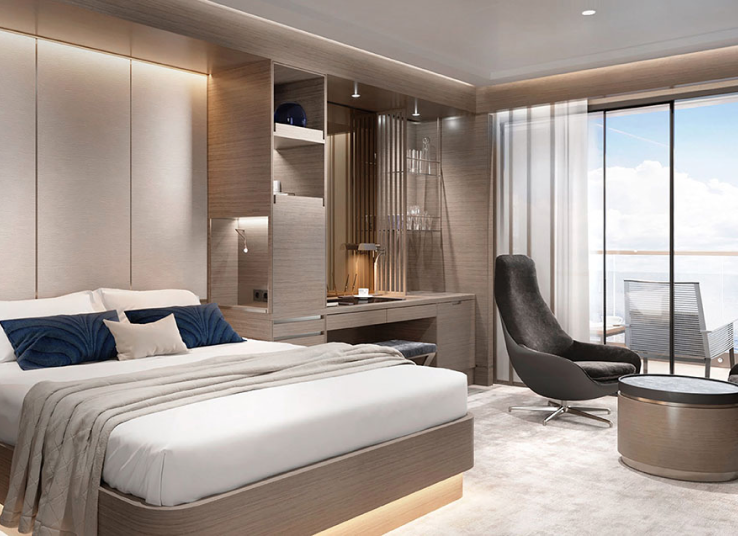
The Owners Suite
MAGNIFICENT OCEAN VIEWS
Private, spacious terrace overlooking the ocean with private whirlpool
SPACIOUS SUITE ACCOMMODATIONS
- Luxurious and modern living and dining area
- Luxury custom king bed sleep system
- Double vanity bathrooms
PERSONALIZED SERVICE AND AMENITIES
- Your Suite Ambassador delivers attentive, anticipatory service for a personalized in-suite experience tailored to your preferences, from unpacking assistance and garment pressing to in-suite dining and beverages.
- 24-hour in-suite dining, espresso machine, complimentary coffee and teas and a mini-bar provisioned to your preferences, upon request once on board

The View Suite
MAGNIFICENT OCEAN VIEWS
- Dramatic floor to ceiling glass throughout
- Private, spacious terrace overlooking the ocean
SPACIOUS SUITE ACCOMMODATIONS
- Luxurious and modern living and dining area
- Luxury custom king bed sleep system
- Double vanity bathroom
PERSONALIZED SERVICE AND AMENITIES
- Your Suite Ambassador delivers attentive, anticipatory service for a personalized in-suite experience tailored to your preferences, from unpacking assistance and garment pressing to in-suite dining and beverages.
- 24-hour in-suite dining, espresso machine, complimentary coffee and teas and a mini-bar provisioned to your preferences, upon request once on board

The 2-Story Loft Suite
SPACIOUS SUITE ACCOMMODATIONS
- Powder room on the upper level
- Double vanity master bathroom with soaking tub and separate shower on the lower level
- Innovative two-story suite with entry from both levels
- Luxury custom king bed sleep system on the lower level
- Luxurious and modern living and dining area on the upper level
MAGNIFICENT OCEAN VIEWS
- Private, spacious terrace overlooking the ocean on the upper level
- Picture window on the lower level
PERSONALIZED SERVICE AND ACCESSORIES
- Your Suite Ambassador delivers attentive, anticipatory service for a personalized in-suite experience tailored to your preferences, from unpacking assistance and garment pressing to in-suite dining and beverages.
- 24-hour in-suite dining, espresso machine, complimentary coffee and teas and a mini-bar provisioned to your preferences, upon request once on board
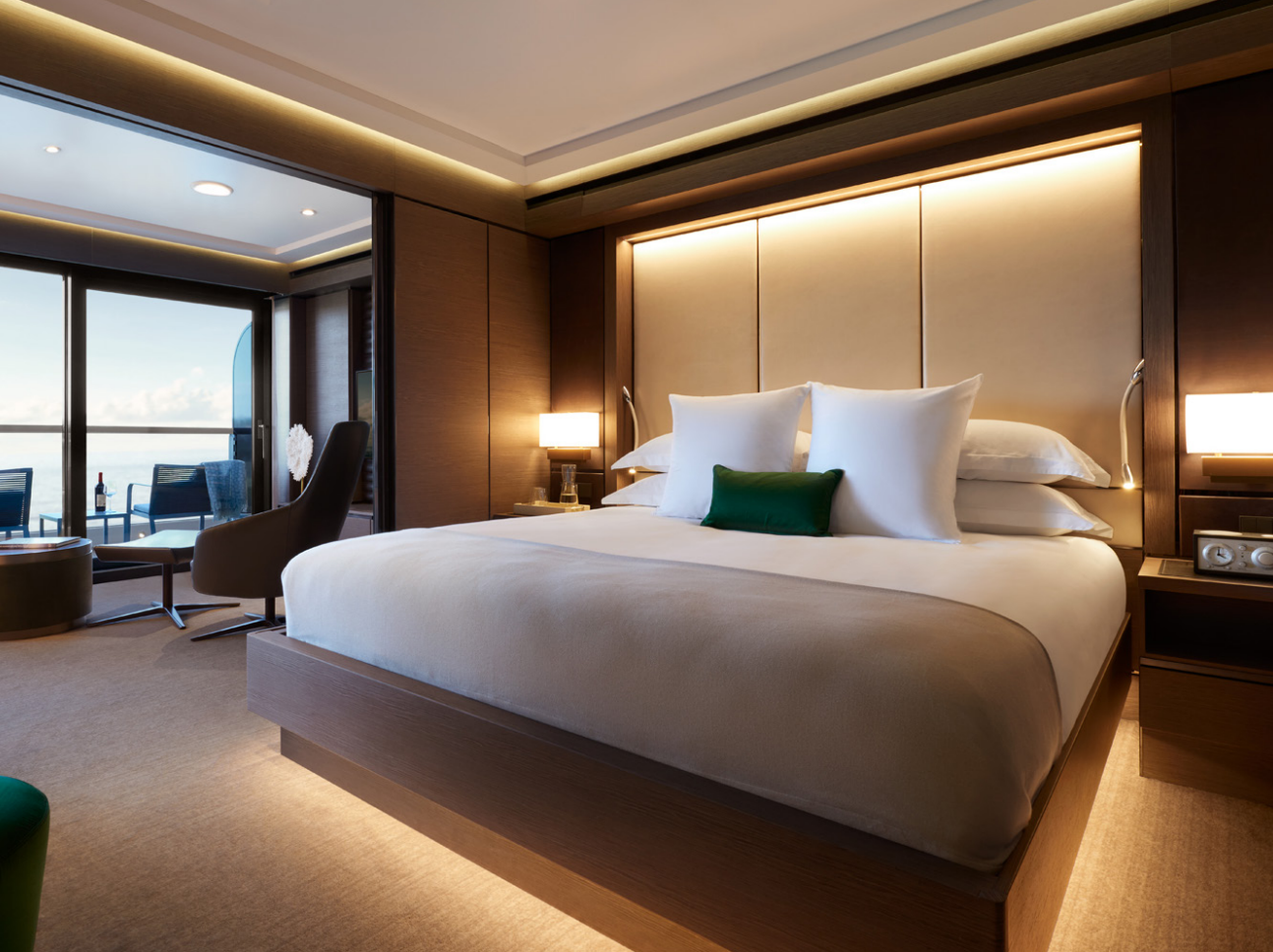
The Grand Suite
MAGNIFICENT OCEAN VIEWS
- Private, spacious terrace overlooking the ocean
SPACIOUS SUITE ACCOMMODATIONS
- Luxurious and modern living and dining area
- Luxury custom king bed sleep system
- Double vanity bathroom
PERSONALIZED SERVICE AND AMENITIES
- Your Suite Ambassador delivers attentive, anticipatory service for a personalized in-suite experience tailored to your preferences, from unpacking assistance and garment pressing to in-suite dining and beverages.
- 24-hour in-suite dining, espresso machine, complimentary coffee and teas and a mini-bar provisioned to your preferences, upon request once on board
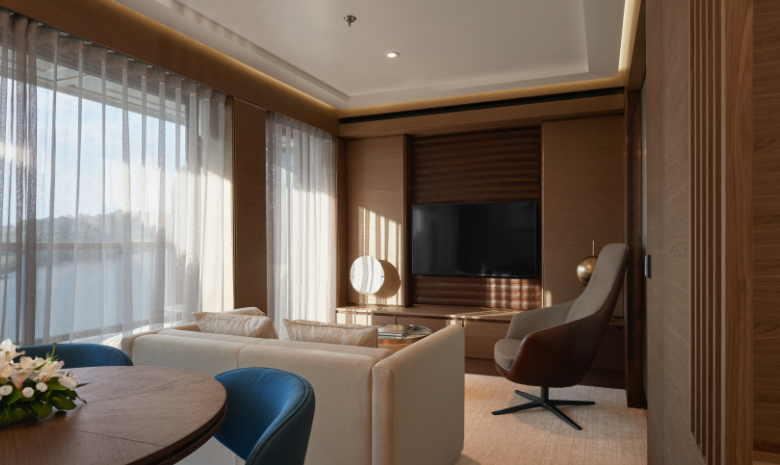
The Signature Suite
MAGNIFICENT OCEAN VIEWS
- Private, spacious terrace overlooking the ocean
SPACIOUS SUITE ACCOMMODATIONS
- Luxurious and modern living and dining area
- Luxury custom king bed sleep system
- Double vanity bathroom
PERSONALIZED SERVICE AND AMENITIES
- Your Suite Ambassador delivers attentive, anticipatory service for a personalized in-suite experience tailored to your preferences, from unpacking assistance and garment pressing to in-suite dining and beverages.
- 24-hour in-suite dining, espresso machine, complimentary coffee and teas and a mini-bar provisioned to your preferences, upon request once on board
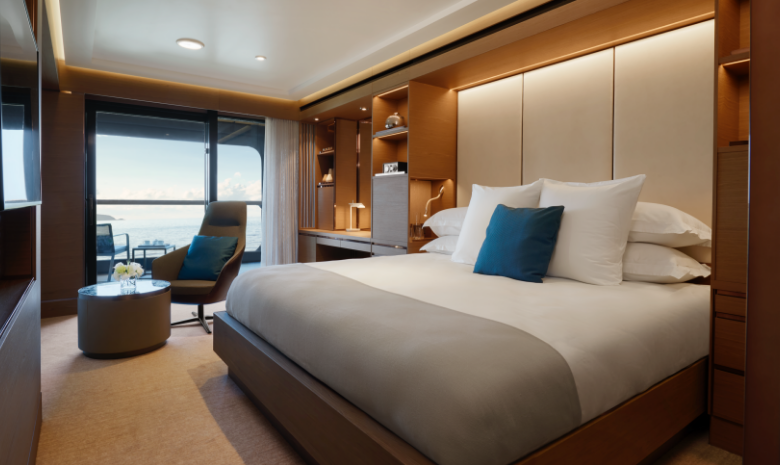
The Terrace Suite
MAGNIFICENT OCEAN VIEWS
- Private, spacious terrace overlooking the ocean
- SPACIOUS SUITE ACCOMMODATIONS
- Luxury custom king bed sleep system
- Double vanity bathroom
PERSONALIZED SERVICE AND AMENITIES
- Your Suite Ambassador delivers attentive, anticipatory service for a personalized in-suite experience tailored to your preferences, from unpacking assistance and garment pressing to in-suite dining and beverages.
- 24-hour in-suite dining, espresso machine, complimentary coffee and teas and a mini-bar provisioned to your preferences, upon request once on board
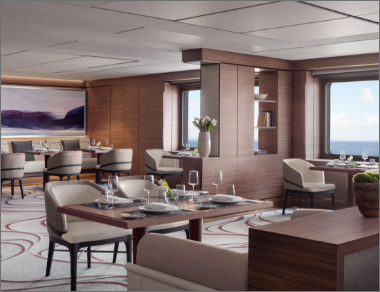
The Evrima Room
Designed with an inviting balance of privacy and connection, The Evrima Room is the spacious main restaurant aboard Evrima. Intimate seating, warm lighting and a relaxed sense of ease set the tone for quiet meals or shared moments. Evolving menus draw on regional flavors and seasonal ingredients for dining with connection to the destinations.
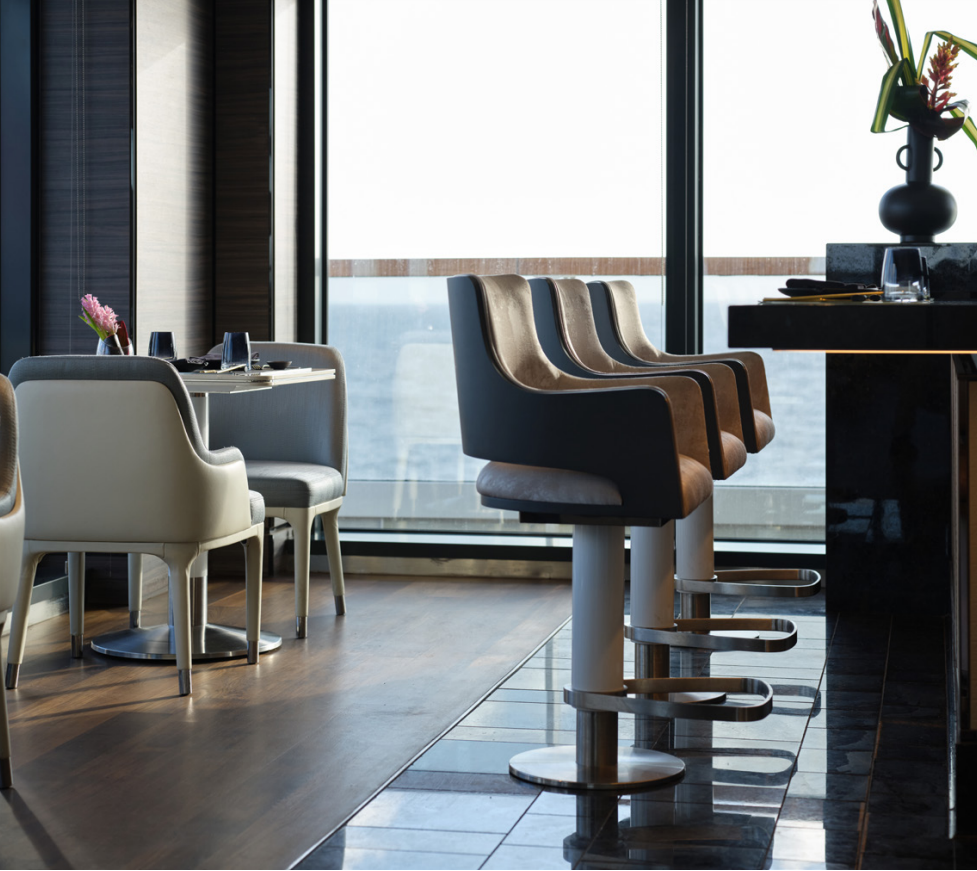
Talaat Nam
Talaat Nam offers a contemporary take on Southeast Asian cuisine, balancing vibrant flavors with a relaxed sense of ease. Its sleek, welcoming setting suits light bites or lingering dinners, with options ranging from the precision of the sushi bar to shared regional dishes, and outdoor dining as Evrima sails.
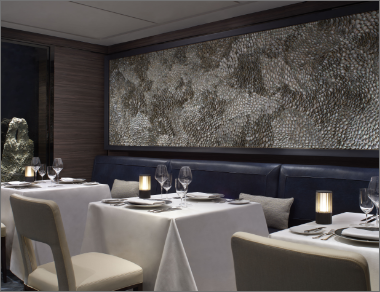
S.E.A
Created by Chef Sven Elverfeld of Aqua, the three-Michelin-starred restaurant formerly at The Ritz-Carlton® in Wolfsburg, Germany, S.E.A. reflects his precise, contemporary approach to European cuisine. A curated tasting menu unfolds through seasonal, expressive dishes in an intimate, elegantly modern setting designed for an elevated evening on board.
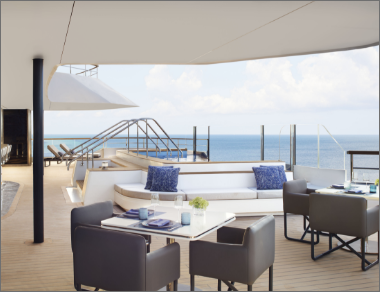
Mistral
Mistral welcomes guests for relaxed lunches or romantic dinners al fresco. Its Mediterranean-inspired menu highlights fresh local catches, handmade pastas, crisp salads, and grilled prime cuts. With spacious indoor and outdoor seating and views that mirror the surrounding sea and sky, it’s one of the yacht’s most inviting settings for dining.

The Living Room
The Living Room Café and Bar is a warm, inviting gathering place throughout the day. Mornings begin with freshly roasted coffee and pastries at the espresso counter, while daytime brings treats ideal for moments between activities. As evening settles in, the space offers a relaxed setting for a quiet drink or light bite.
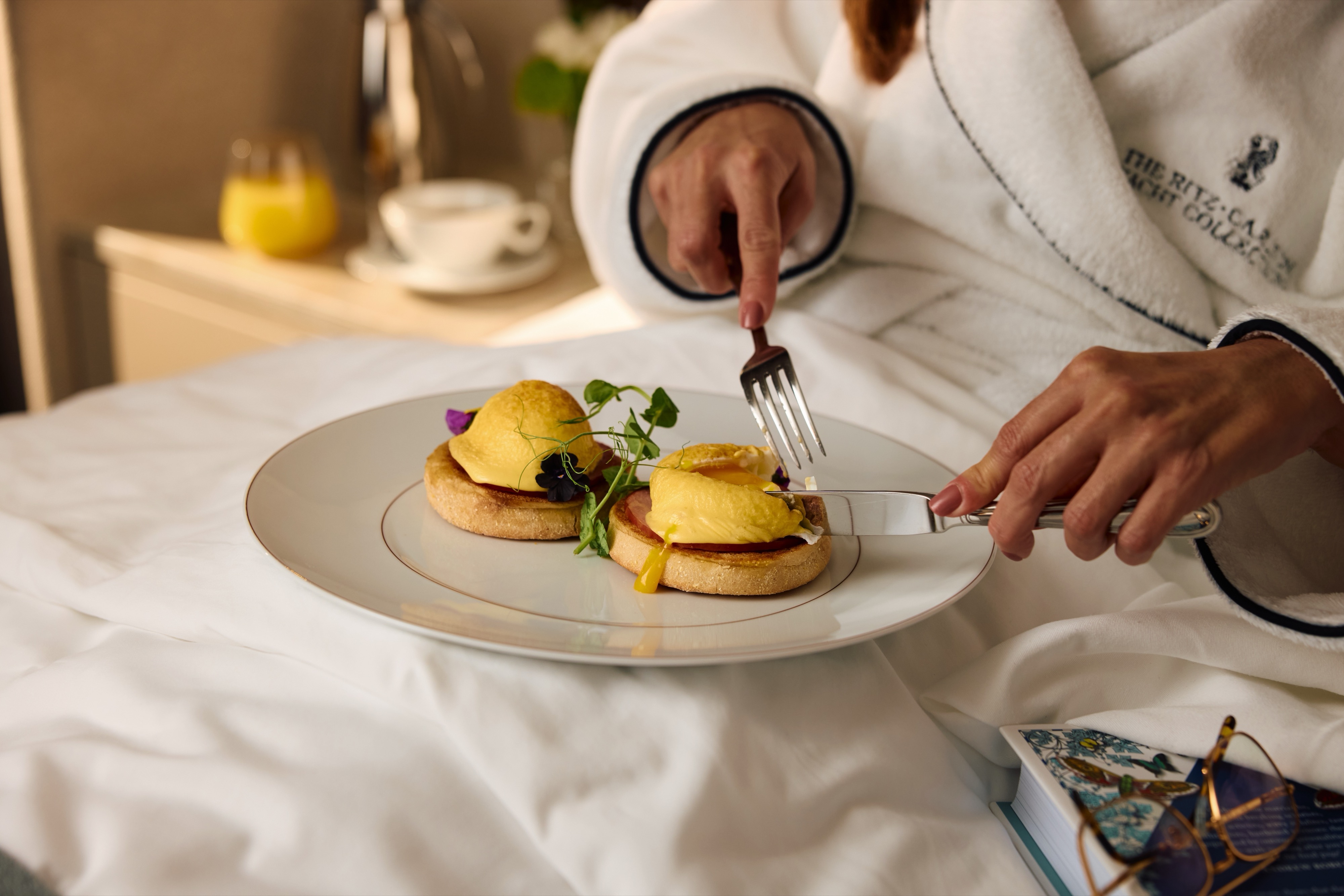
In-Suite Dining
In-suite dining offers the comfort and privacy of enjoying thoughtfully prepared dishes in your suite or on your private terrace. The all-day dining menu features favorites from across the yacht’s venues, delivered with attentive presentation. A late-night menu adds flexibility, creating a seamless, refined experience at any hour.
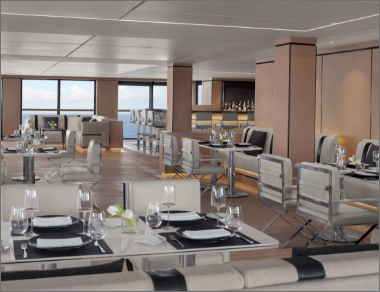
The Pool House
The Pool House offers a relaxed, open-air setting with fresh, à la minute dishes served throughout the day. From early breakfasts to late-night bites, the globally influenced menu suits any moment—whether returning from time ashore or pausing between hours by the water. Comfortable seating and shifting views create an effortless, welcoming atmosphere.
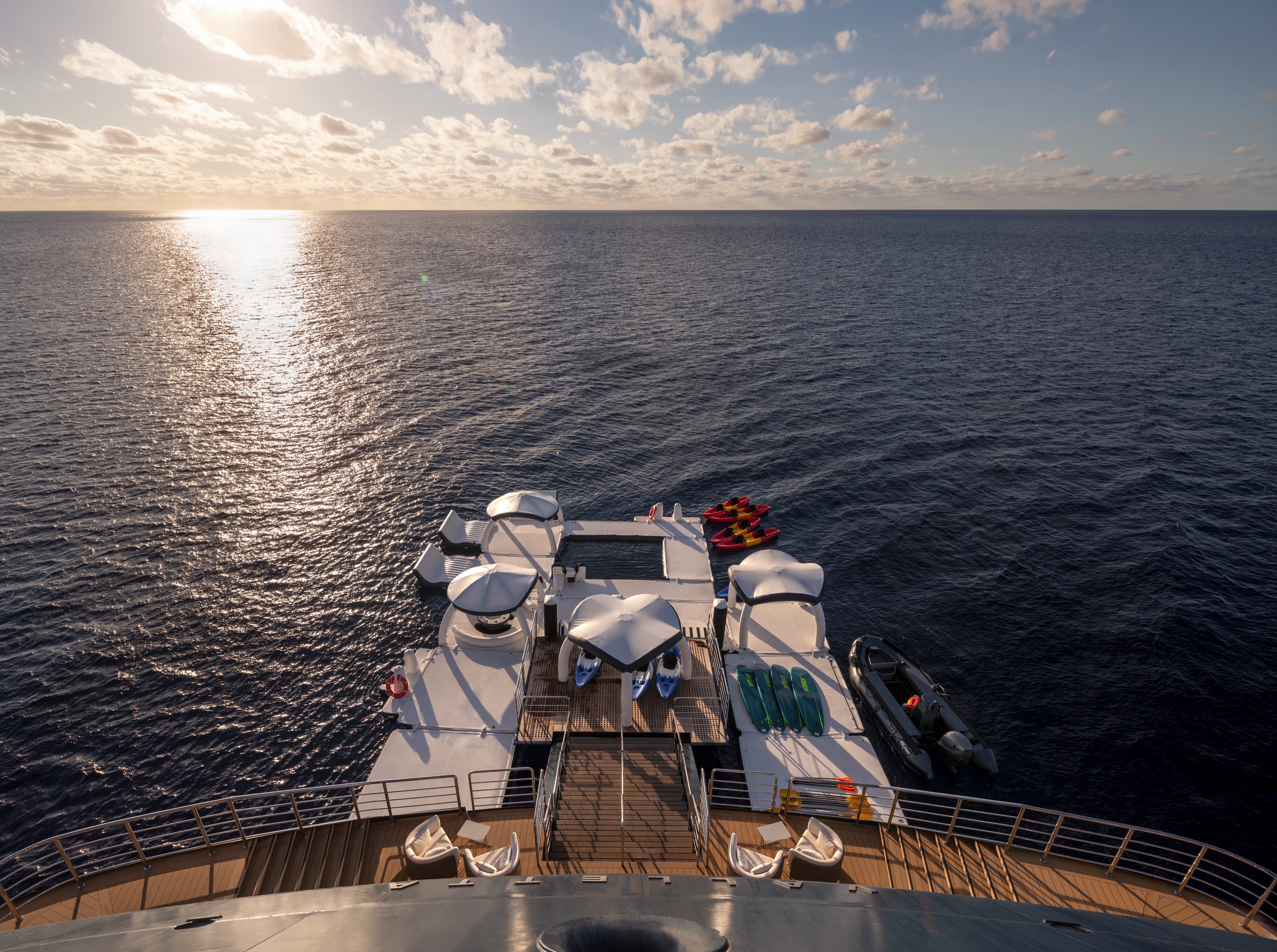
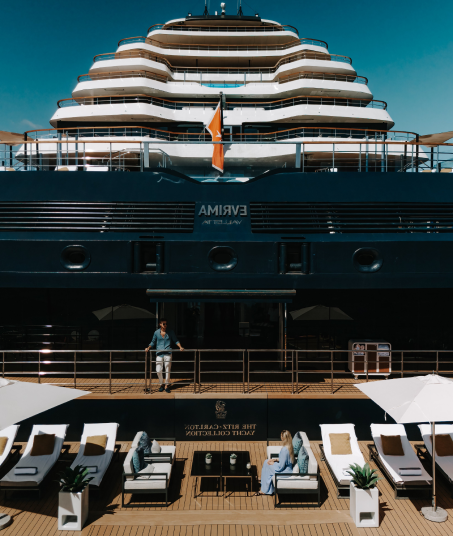
Marina and Marina Terrace
Nestled at the water’s edge, the Marina offers an inviting place to unwind while at anchor, with sun loungers and an exciting selection of water toys for time on the sea. Just above, the Marina Terrace provides a refined open-air setting for handcrafted cocktails and light bites, creating an effortless transition from water activities to leisurely afternoons looking to the horizon.

The Observation Lounge
The Observation Terrace offers panoramic views that blur the line between land and sea, creating an inspired setting for lounging, cocktails or quiet conversation. As twilight settles in, the atmosphere shifts into a relaxed venue with live entertainment that extends into the evening.
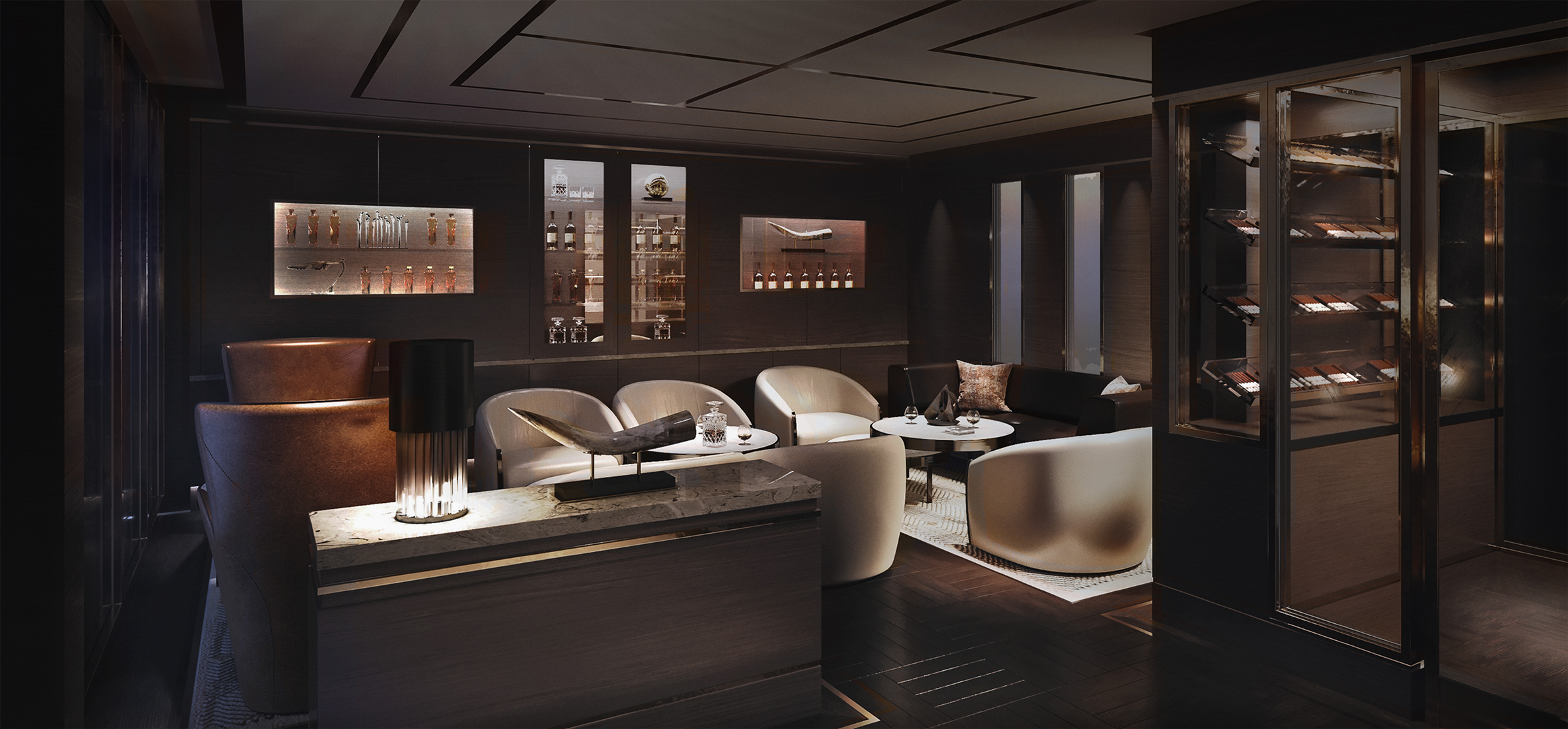
The Humidor
The Humidor is an intimate, quietly sophisticated setting for unhurried moments at day’s end. Guests can enjoy fine cognacs, single malts and other aged spirits while exploring a curated selection of hand-rolled cigars showcased in a state-of-the-art humidor. Warm and nuanced, it’s a welcoming place for reflection or relaxed conversation.
The Boutique
The Boutique features a curated selection of high-end sportswear, designer apparel, jewelry and leather goods, offering guests the opportunity to explore thoughtfully chosen pieces throughout their journey. On select voyages, the shopping experience is enhanced by exclusive collaborations with local artisans who share their craft and present distinctive creations inspired by the regions visited.
The Living Room
Bold shades of blue reflecting the sea provide a vibrant accent to the yacht’s gathering place, with its chic, comfortable furnishings and library with travel guides and best sellers. Diffused lighting transforms the space into a cocktail lounge with piano bar, dancing and live music later on, making The Living Room one of the most popular Ritz-Carlton Yacht Collection onboard features.
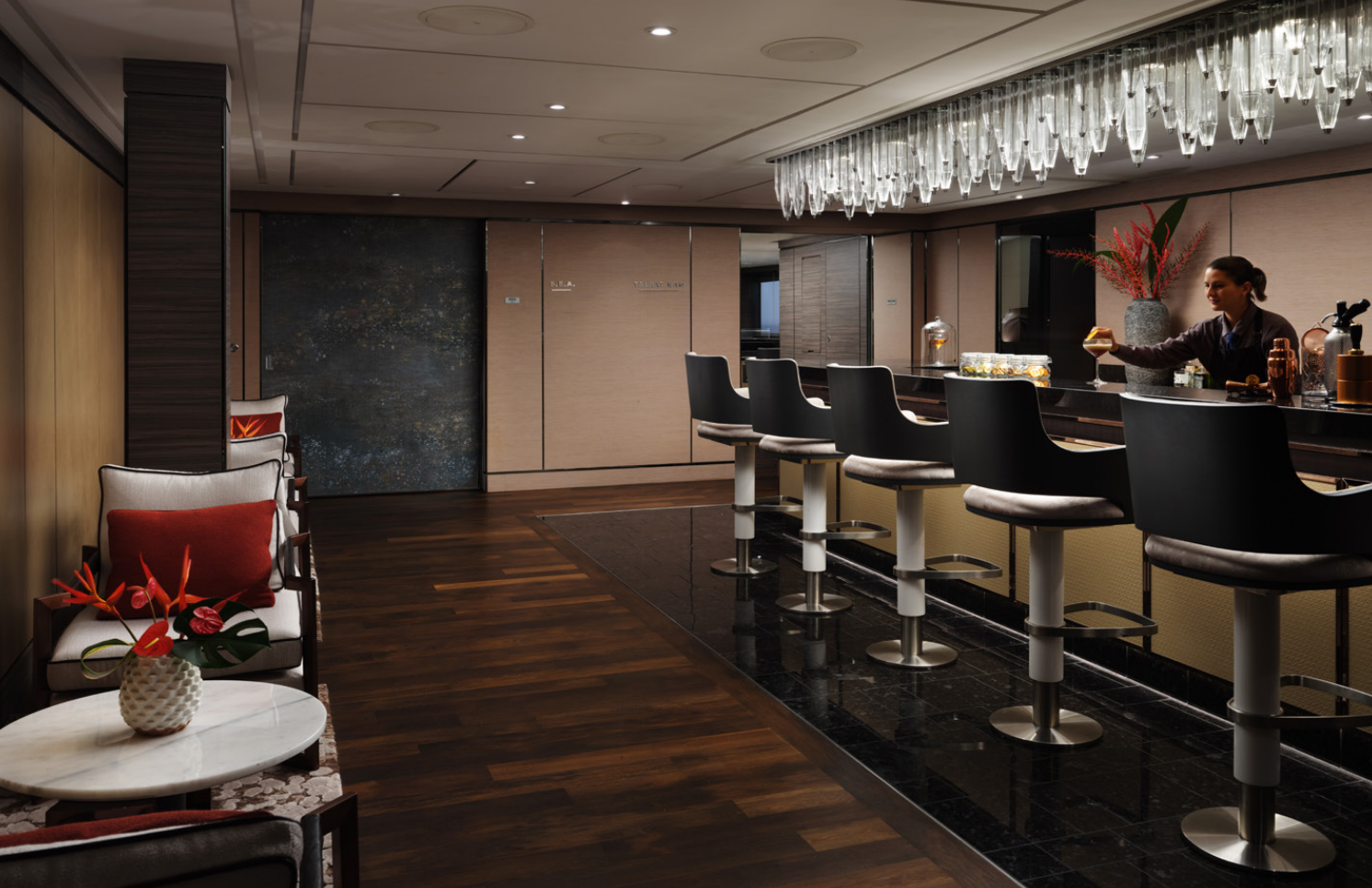
The Bar
This intimate lounge serves premium labels from around the world and also offers champagne and caviar pairings.
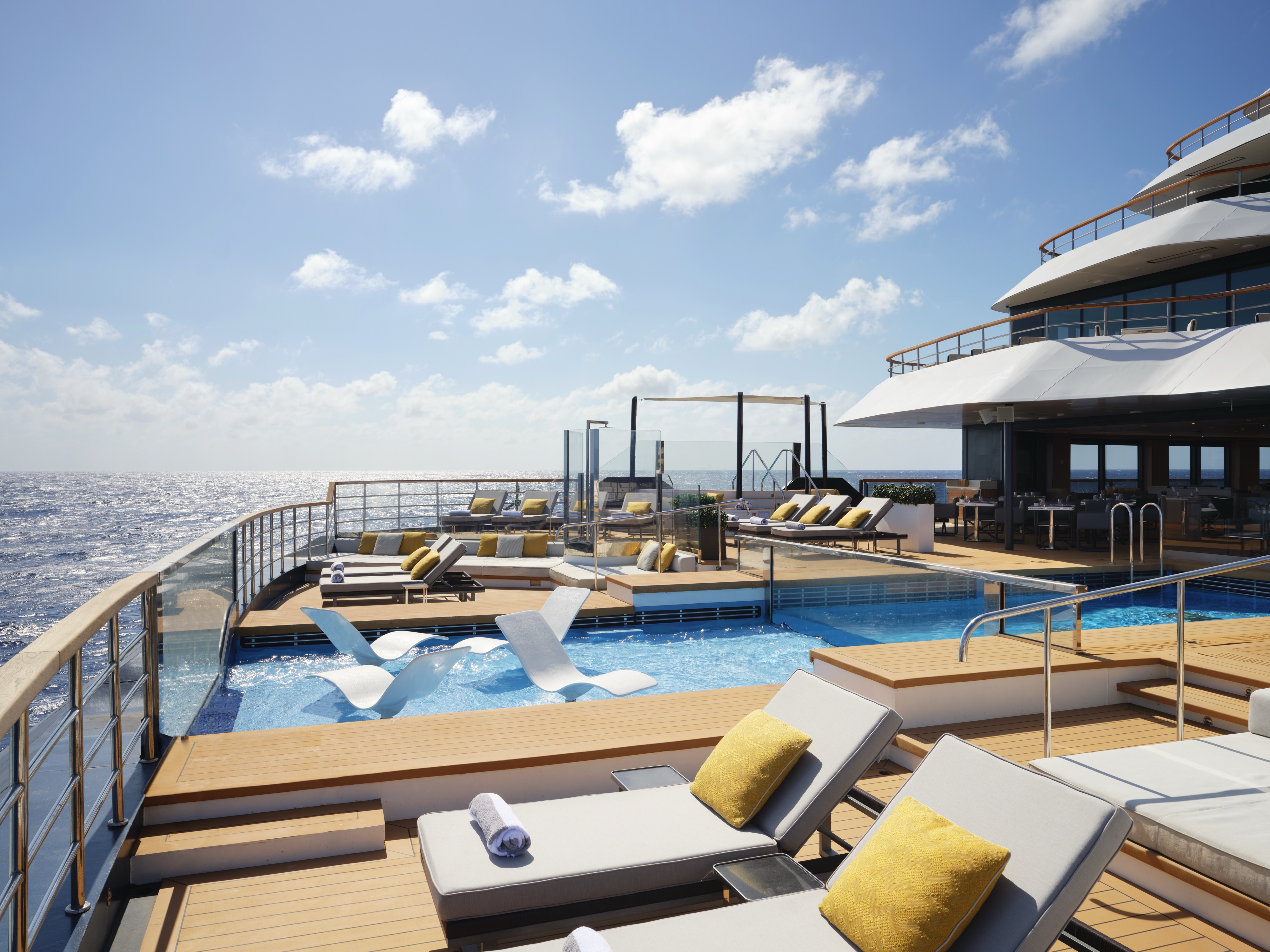
The Pool
The Pool offers panoramic views and a relaxed setting for unwinding throughout the day. Guests can enjoy all-day dining, frozen treats and drinks from the nearby bar, or settle into sunbeds, banquettes, tanning ledges and whirlpools. Gentle misting sprays add a cooling touch, while generous sundecks invite reading, resting or simply taking in the sea and sky.
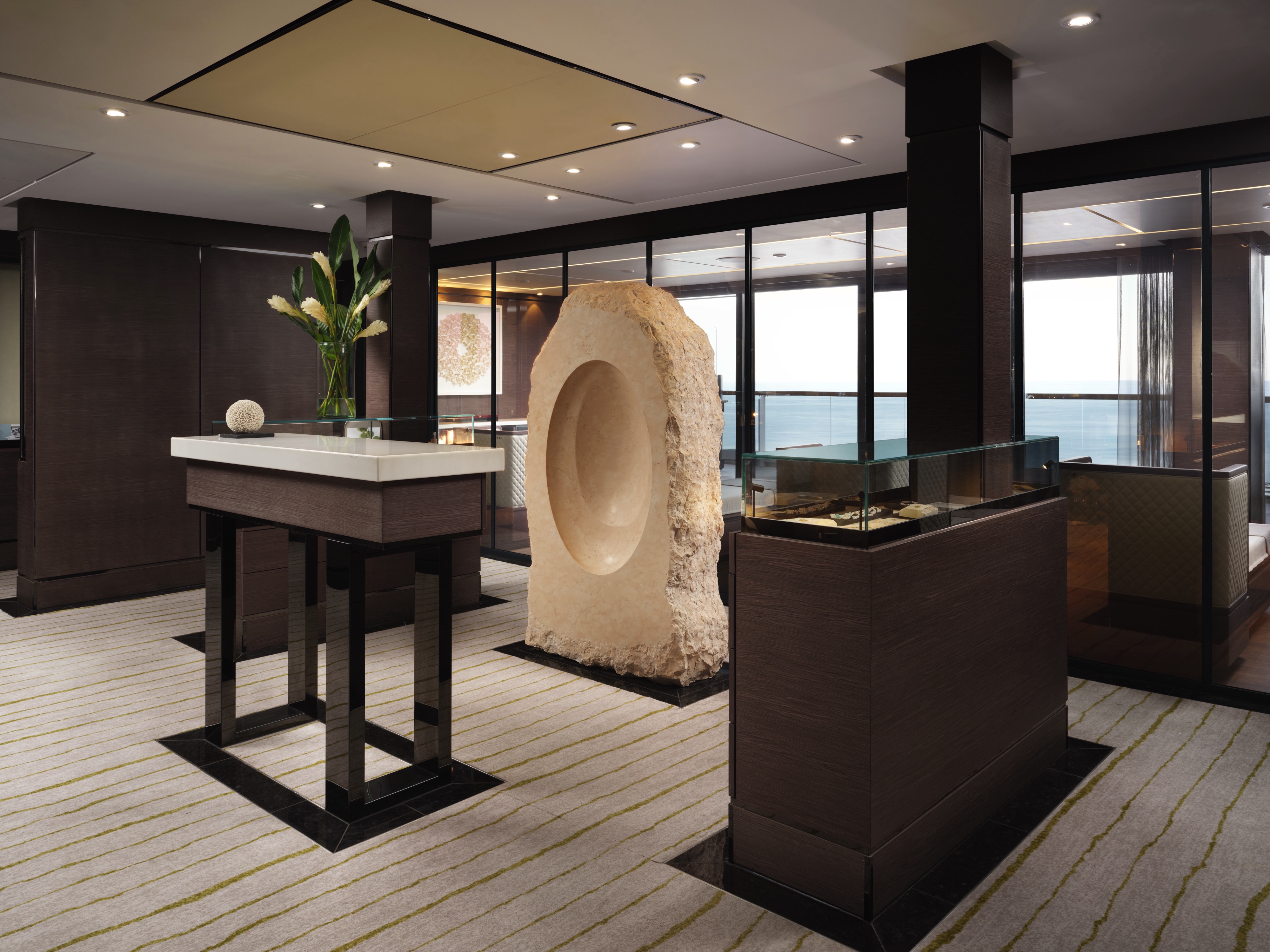
The Ritz-Carlton Spa
Unwind with expert massages, restorative facials and globally inspired treatments in a tranquil setting designed for ease and renewal. The spa invites guests to slow down, relax and immerse themselves in soothing aromas, calming rituals and thoughtful care that enhance every journey.
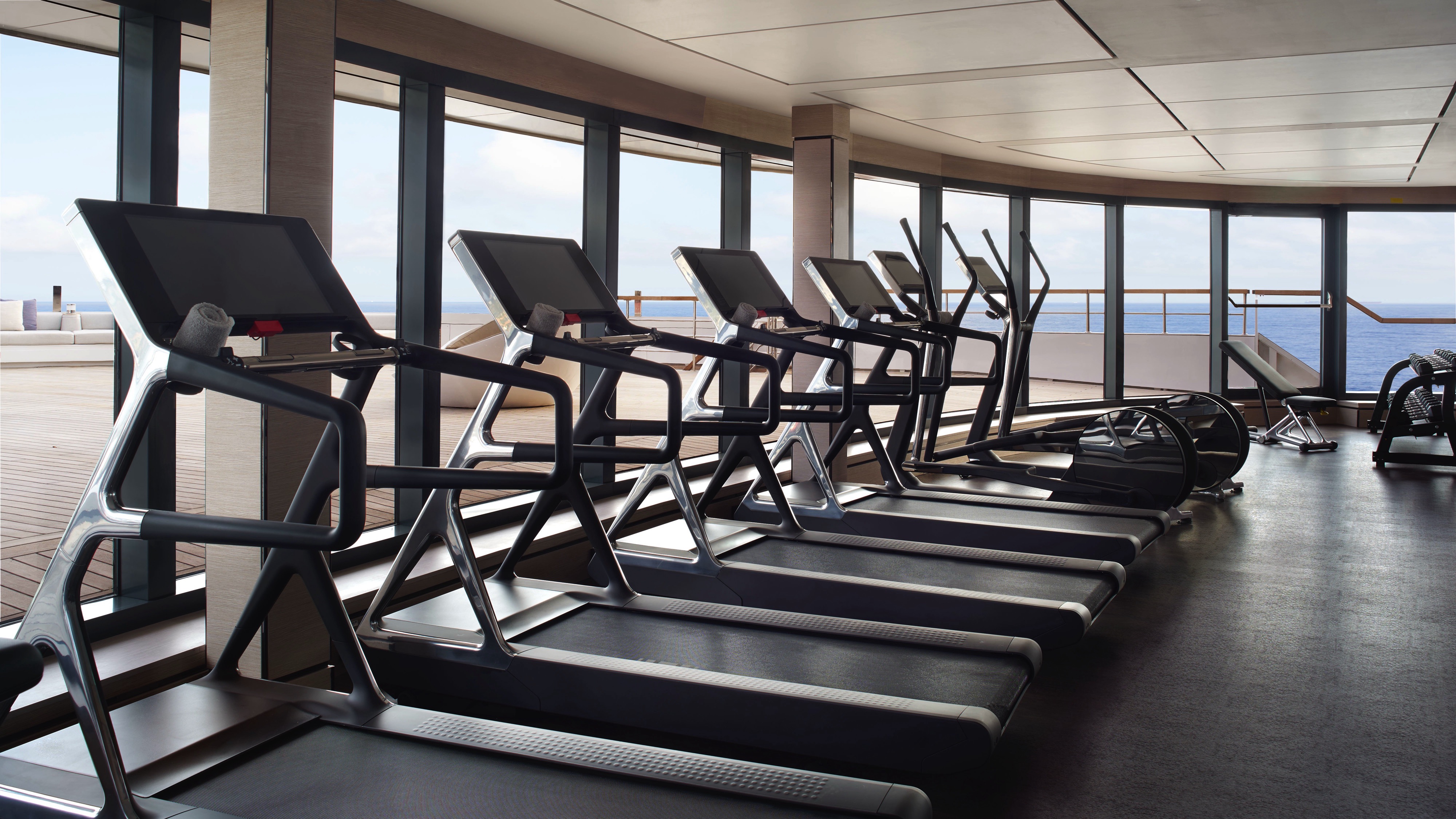
The Fitness Studio
The Fitness Studio offers a holistic approach to wellbeing, with personalized guidance, movement-focused programming and optional lectures that support a healthy voyage. A selection of Technogym equipment enables familiar routines or new forms of exercise, all within a calm, contemporary setting designed for strengthening, stretching and reconnecting with the body.
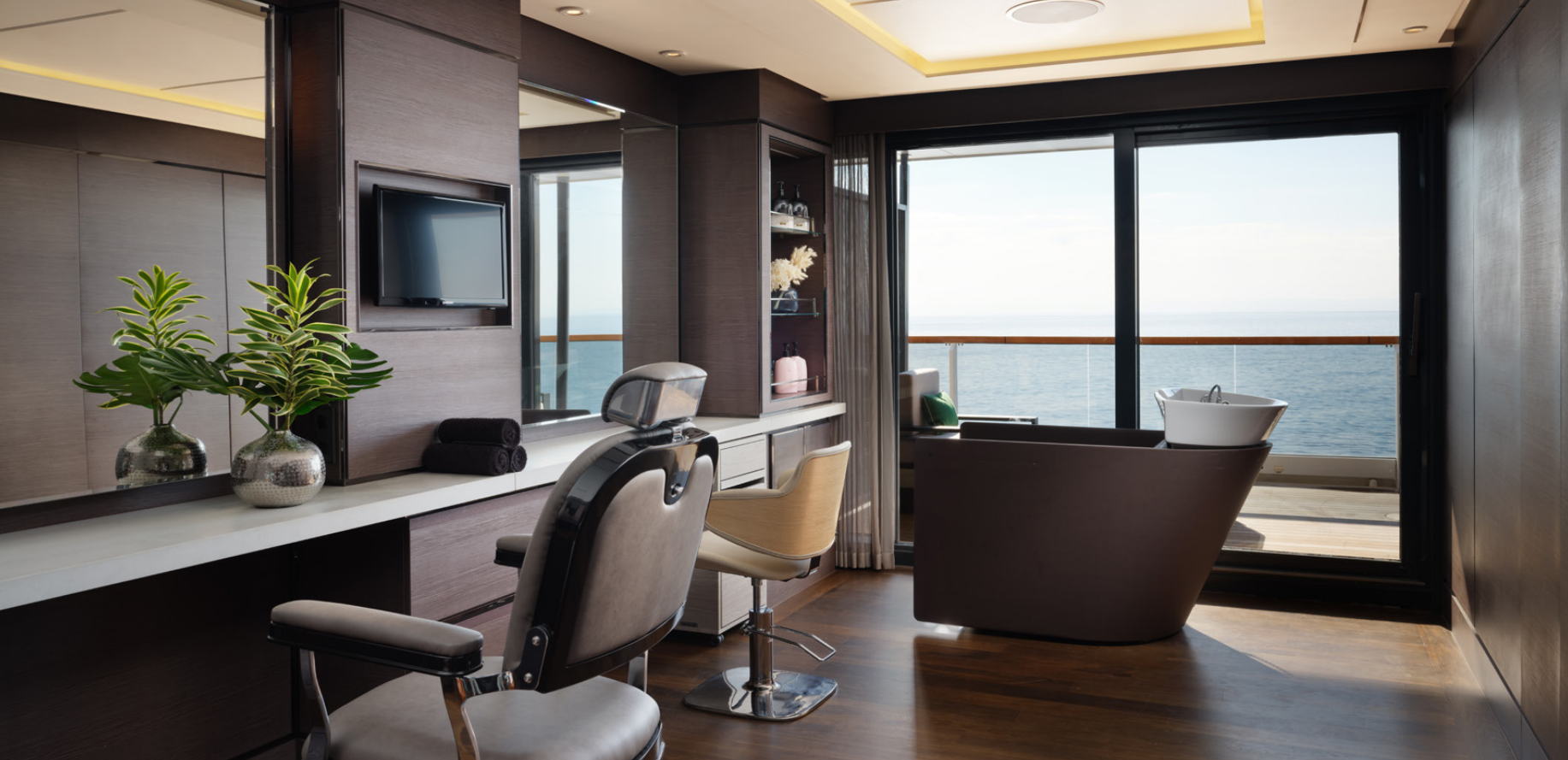
Barber & Salon Services
The Salon offers a variety of beauty and hair services including manicure and pedicure treatments, hair consultations, cutting, styling and blow drying. Next door at The Barber, gentlemen can enjoy a close shave or invigorating facial before heading ashore to explore the port feeling refreshed and revitalized.
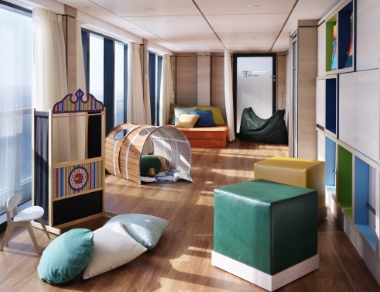
Ritz-Kids
Ritz Kids® is a dedicated program for families designed to inspire curiosity and creativity. Guided by engaging, age-appropriate activities, children can learn about the natural world and enjoy time with new friends. With its bright, inviting environment and attentive supervision, Ritz Kids® provides young travelers with a place to discover, play and connect.
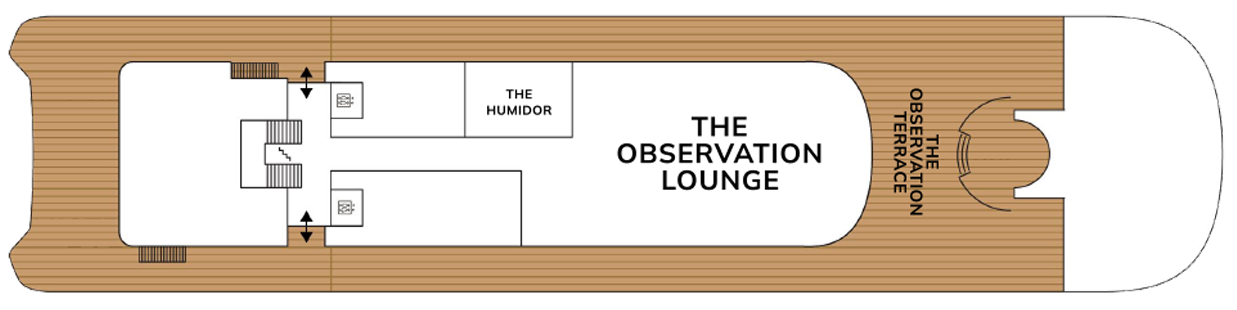
Deck 10
- The Observation Lounge
- The Observation Terrace
- The Humidor
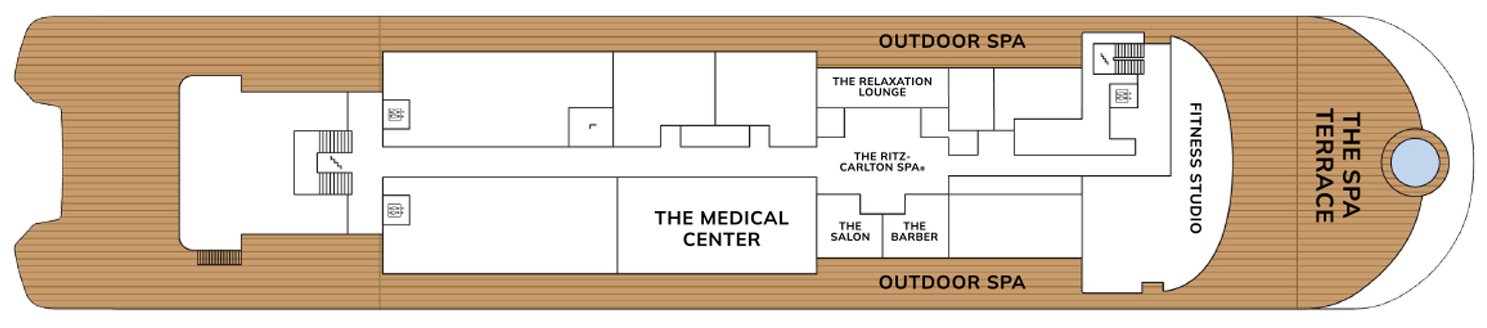
Deck 9
- The Gym
- Fitness Studio
- The Ritz-Carlton Spa
- Outdoor Spa
- The Spa Terrace
- The Barber/The Salon
- Launderette
- Men/Women’s Changing Rooms
- The Relaxation Lounge
- The Medical Centre
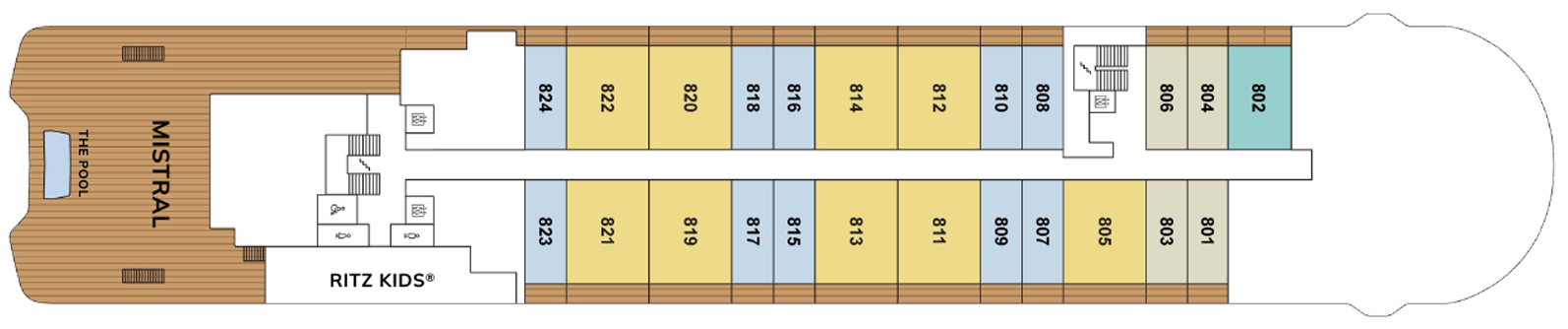
Deck 8
- Mistral
- Pool
- Ritz-Kids
- The Terrace Mid Suites
- The Grand Suites
- The Terrace Suites
- The Signature

Deck 7
- The Owner’s Suites
- The View Suites
- The Grand Suites
- The Terrace Mid Suites
- The Signature Mid Suites
- The Terrace Suites
- The Signature Suites

Deck 6
- The Bar
- S.E.A
- Talaat Nam
- The Terrace Suites
- The Signature Mid Suites
- The Terrace Mid Suites
- The Signature Suites

Deck 5
- The Pool House
- The Pool
- The Terrance Mid Suites
- The Terrace Suites
- The 2-Story Loft Suites

Deck 4
- The Meeting Rooms
- The Living Room
- The Boutique
- Wine Vault
- Wine Tasting Area
- The Evrima Room
- Dining Privée
- The 2-Story Loft Suites

Deck 3
- The Marina Terrace
- The Marina