Itinerary
Nuuk, meaning “the cape”, was Greenland’s first town (1728). Started as a fort and later mission and trading post some 240 kilometers south of the Arctic Circle, it is the current capital. Almost 30% of Greenland’s population lives in the town. Not only does Nuuk have great natural beauty in its vicinity, but there are Inuit ruins, Hans Egede’s home, the parliament, and the Church of our Saviour as well. The Greenlandic National Museum has an outstanding collection of Greenlandic traditional dresses, as well as the famous Qilakitsoq mummies. The Katuaq Cultural Center’s building was inspired by the undulating Northern Lights and can house 10% of Nuuk’s inhabitants.
Iqaluit is the capital of Canada’s newest territory, Nunavut, which is Inuktitut for “our land”. The community is located at the head of Frobisher Bay, an inlet of the North Atlantic extending into southeastern Baffin Island. The Bay is so long that it was first taken to be the possible entrance of a Northwest Passage. In Iqaluit, the Nunatta Sunakkutaangit Museum and the Nunavut Legislative Assembly Building both house incredible collections of Inuit artwork with interesting local prints for sale in the museum shop.
Akpatok Island is the largest island in the middle of Ungava Bay, south of Baffin Island and north of Quebec. Its name is the local name for the Thick-billed Murre, which nests here in vast numbers. In fact, the entire island is designated a Canadian Important Bird Area. Other common wildlife are Polar bears, seals, and walrus. One of the most distinctive features of the island is the steep limestone cliffs ringing the shore. They rise 490 to 820 feet straight up from the sea to a flat plateau. Although is uninhabited today, remains of a Dorset settlement have been documents at the southern end of the island.
The Torngat Mountains National Park is situated on the eastern side of Labrador’s northernmost point and features mountains sometimes described as the “Eastern Rocky Mountains”. The park covers an area of 9,700 km2 (over 6,000 mi2) and is dotted with remnants of several cirque glaciers. Saglek Fjord has an outstanding array of geological features and the steep cliffs provide some of the best exposures to the earth’s geologic history. The name of the national park goes back to Torngarsoak, who was believed to control the life of sea animals and took the form of a huge polar bear. Polar bears hunt seals on the ice here in the winter months, and herds of Torngat Mountain and George River caribou migrate to and from their calving grounds in the warmer months. Inuit use the area to hunt, fish and travel throughout the year and many still have a strong spiritual connection to this “Place of Spirits”.
Around the year 1000, Vikings from Greenland and Iceland founded the first European settlement in North America, near the northern tip of Newfoundland. They arrived in the New World 500 years before Columbus but stayed only a few years and were forgotten for centuries. Since the settlement’s rediscovery in the last century, the archaeological site has brought tourism to the area. Viking themes abound but so do views, whales, icebergs, fun dining experiences, and outdoor activities. L’Anse Aux Meadows on the northern tip of the island of Newfoundland is a remote community of just 40 people, with St Anthony, 40 minutes away, having a population of only 3,500. The region is locally famous for springtime polar bears, nesting eider ducks, the northern extreme of the Appalachians at nearby Belle Isle, numerous spring and summer icebergs, and a rich ocean fishery. L’Anse Aux Meadows National Historic Site is the UNESCO World Heritage Site that tells the story of Leif Erickson and the first Europeans in the new world. This site is often the keystone attraction for cruises themed around the Vikings. Discovered in 1960, it is the site of a Norse village, the only known one in North America outside of Greenland. The site remains the only widely-accepted instance of pre-Columbian trans-oceanic contact, and is notable for possible connections with the attempted colony of Vinland established by Leif Ericson around 1003, or more broadly with Norse exploration of the Americas. The root of the name “L’Anse aux Meadows” is believed to have originated with French fishermen in the area during the nineteenth and twentieth centuries, who named the site L’Anse aux Meduses, meaning ‘Jellyfish Bay’.
Twillingate is the self-proclaimed ‘Iceberg Capital of the World’, although icebergs will be a more likely occurrence in the winter months. The community is home to the “Prime Berth Museum”, which is best described as a commercial fishing heritage site highlighting the glory “salt fish days” before the cod fishery moratorium in the mid-1980s. Several historic buildings packed with artifacts are located near the shoreline, in addition to an impressive skeleton of a Sei whale and the two giant racks of its baleen on display.
Old meets new in the province’s capital (metro-area population a little more than 200,000), with modern office buildings surrounded by heritage shops and colorful row houses. St. John’s mixes English and Irish influences, Victorian architecture and modern convenience, and traditional music and rock and roll into a heady brew. The arts scene is lively, but overall the city moves at a relaxed pace.For centuries, Newfoundland was the largest supplier of salt cod in the world, and St. John’s Harbour was the center of the trade. As early as 1627, the merchants of Water Street—then known as the Lower Path—were doing a thriving business buying fish, selling goods, and supplying alcohol to soldiers and sailors.
By heading almost due east from Cap-aux-Meules in Canada, it is possible to reach France in about one day’s worth of steaming! With barely 6,000 inhabitants living on tiny St. Pierre, it is the smallest French Overseas Collective. The residents of St. Pierre are predominantly descendants of Normans, Basque and Bretons and the French spoken is closer to Metropolitan French than to Canadian French. Although Basque is not spoken any longer, the influence is still felt through sport and a Basque Festival. Interestingly, this small island has two museums in part dedicated to the Prohibition. The Musée Heritage is St. Pierre’s newest museum with a focus on medical artefacts from the 19th and 20th century. Another claim to fame is a guillotine, the only one ever used in North America. In this quirky village it is easy to find the Post Office; just look for the clock tower shaped like a praying monk.
Surrounded by natural treasures and glorious seascapes, Halifax is an attractive and vibrant hub with noteworthy historic and modern architecture, great dining and shopping, and a lively nightlife and festival scene. The old city manages to feel both hip and historic. Previous generations had the foresight to preserve the cultural and architectural integrity of the city, yet students from five local universities keep it lively and current. It’s a perfect starting point to any tour of the Atlantic provinces, but even if you don’t venture beyond its boundaries, you will get a real taste of the region.It was Halifax’s natural harbor—the second largest in the world after Sydney, Australia’s—that first drew the British here in 1749, and today most major sites are conveniently located either along it or on the Citadel-crowned hill overlooking it. That’s good news for visitors because this city actually covers quite a bit of ground.Since amalgamating with Dartmouth (directly across the harbor) and several suburbs in 1996, Halifax has been absorbed into the Halifax Regional Municipality, and the HRM, as it is known, has around 415,000 residents. That may not sound like a lot by U.S. standards, but it makes Nova Scotia’s capital the most significant Canadian urban center east of Montréal.There’s easy access to the water, and despite being the focal point of a busy commercial port, Halifax Harbour doubles as a playground, with one of the world’s longest downtown boardwalks. It’s a place where container ships, commuter ferries, cruise ships, and tour boats compete for space, and where workaday tugs and fishing vessels tie up beside glitzy yachts. Like Halifax as a whole, the harbor represents a blend of the traditional and the contemporary.
Ship features

Owner's Suite
Services provided
- 24-hour room service
- Inclusive Wifi internet access (availability dependent on navigation and latitude)
- Individually-controlled air conditioning
- Dressing room with shelves and closet
- Dressing table and hairdryer
- Dyptique Paris top-of-the-line bath products
- Minibar
- Nespresso coffee maker and boiler
- Electronic safe
- Direct line telephone
- Bose Bluetooth speaker
- Flat screen TV, international channels (availability dependent on navigation) and videos on demand
- 110V American (two flat pins)/220V European (round sockets with two round pins)
- Three ADA staterooms
In addition to the common services provided to all our suites and staterooms:
- Private return transfer
- Priority boarding (depending on port of embarkation)
- Champagne and fruit basket upon arrival
- Butler service
- A fruit basket every day
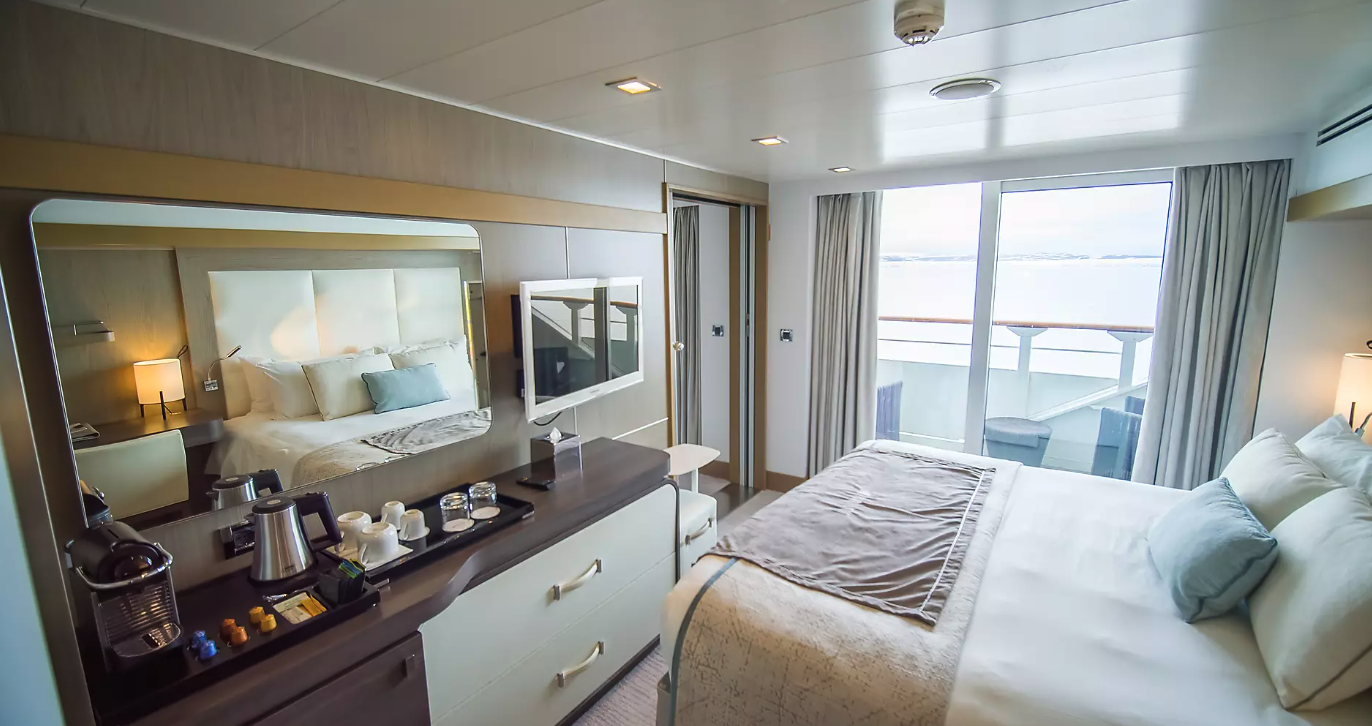
- A bedroom with one king-size bed (180 x 200 cm) or two single beds (90 x 200 cm)
- A living/dining room with a sofa, armchair, second TV, 4-seater table, and sliding courtesy door
- A bathroom with shower and Balneo bathtub
- A one-hour spa treatments per person (for 2 people) in the well-being space, chosen from the facial and body treatments on offer
- Included premium pass: access to a selection of premium spirits at the bar
- A private 9 m² balcony
- Two panoramic sliding bay windows
Prestige Suite
Services provided
- 24-hour room service
- Inclusive Wifi internet access (availability dependent on navigation and latitude)
- Individually-controlled air conditioning
- Dressing room with shelves and closet
- Dressing table and hairdryer
- Dyptique Paris top-of-the-line bath products
- Minibar
- Nespresso coffee maker and boiler
- Electronic safe
- Direct line telephone
- Bose Bluetooth speaker
- Flat screen TV, international channels (availability dependent on navigation) and videos on demand
- 110V American (two flat pins)/220V European (round sockets with two round pins)
- Three ADA staterooms
In addition to the common services provided to all our suites and staterooms:
- Priority boarding (depending on port of embarkation)
- Champagne and fruit basket upon arrival
- Butler service
- A fruit basket every day
- A bedroom with king-size bed (180 x 200 cm) or two single beds (90 x 200 cm)
- A lounge with convertible sofa to a king-size bed (180 x 200 cm) or two single beds (90 x 200 cm), armchairs, second TV, and sliding courtesy door
- Two bathrooms with showers
- A private 8 m² balcony
- Two panoramic sliding bay windows
Deluxe Suite
Services provided
- 24-hour room service
- Inclusive Wifi internet access (availability dependent on navigation and latitude)
- Individually-controlled air conditioning
- Dressing room with shelves and closet
- Dressing table and hairdryer
- Dyptique Paris top-of-the-line bath products
- Minibar
- Nespresso coffee maker and boiler
- Electronic safe
- Direct line telephone
- Bose Bluetooth speaker
- Flat screen TV, international channels (availability dependent on navigation) and videos on demand
- 110V American (two flat pins)/220V European (round sockets with two round pins)
- Three ADA staterooms
In addition to the common services provided to all our suites and staterooms:
- Priority boarding (depending on port of embarkation)
- Champagne and fruit basket upon arrival
- Butler service
- A fruit basket every day
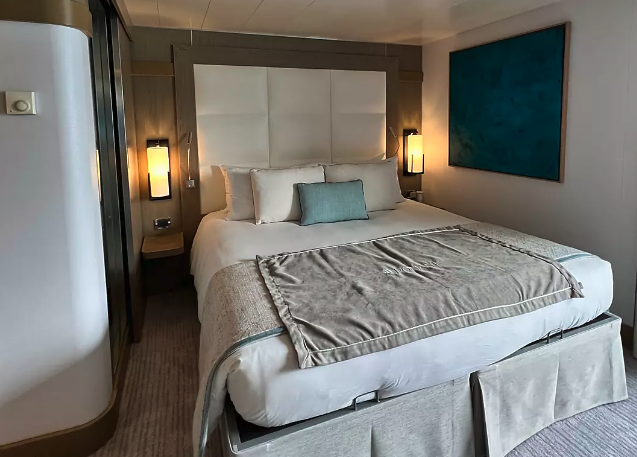
- One king-size bed (180 x 200 cm) or two single beds (90 x 200 cm)
- An armchair and sofa (167 x 70 cm)
- A bathroom with shower and small bathtub
- A private 5 m² balcony
- A panoramic sliding bay window
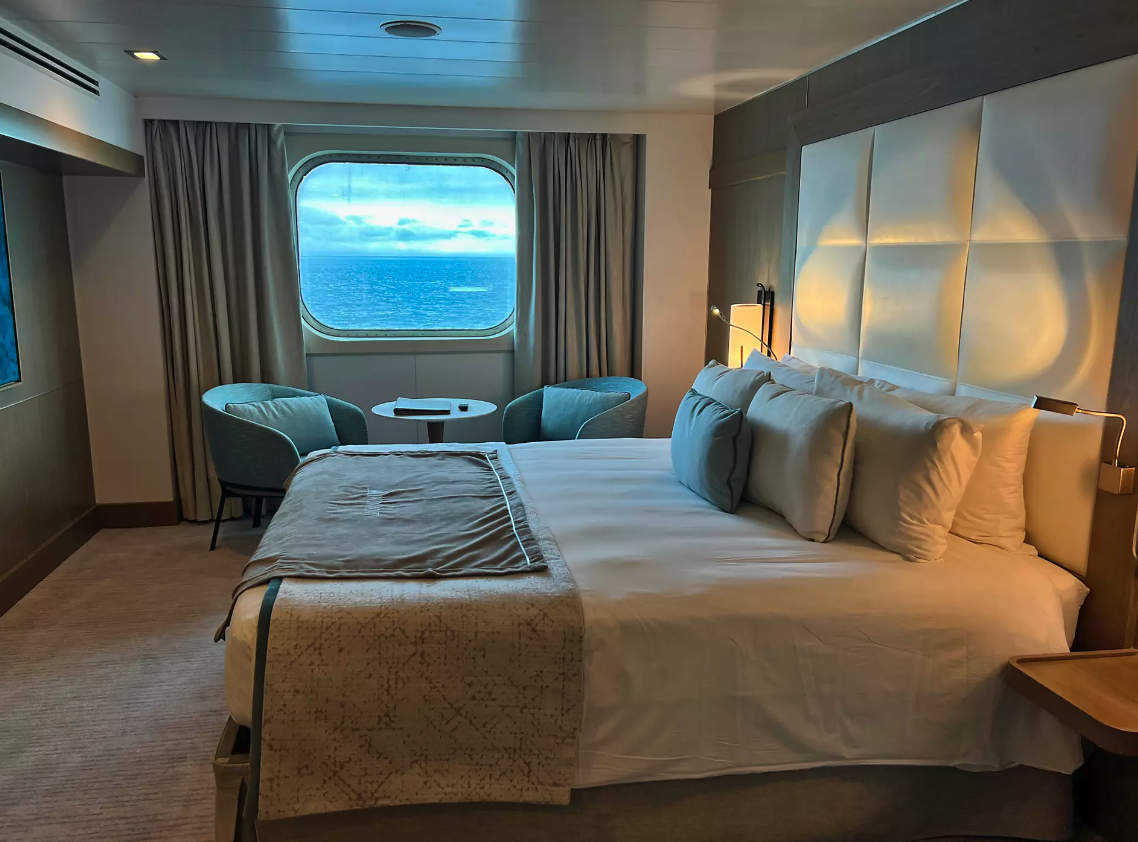
Superior Stateroom
Services provided
- 24-hour room service
- Inclusive Wifi internet access (availability dependent on navigation and latitude)
- Individually-controlled air conditioning
- Dressing room with shelves and closet
- Dressing table and hairdryer
- Dyptique Paris top-of-the-line bath products
- Minibar
- Nespresso coffee maker and boiler
- Electronic safe
- Direct line telephone
- Bose Bluetooth speaker
- Flat screen TV, international channels (availability dependent on navigation) and videos on demand
- 110V American (two flat pins)/220V European (round sockets with two round pins)
- Three ADA staterooms
In addition to the common services provided to all our suites and staterooms:
- One king-size bed or two single beds (180 x 200 cm)
- A bathroom with shower
- A window (except for stateroom 300: a round porthole only)
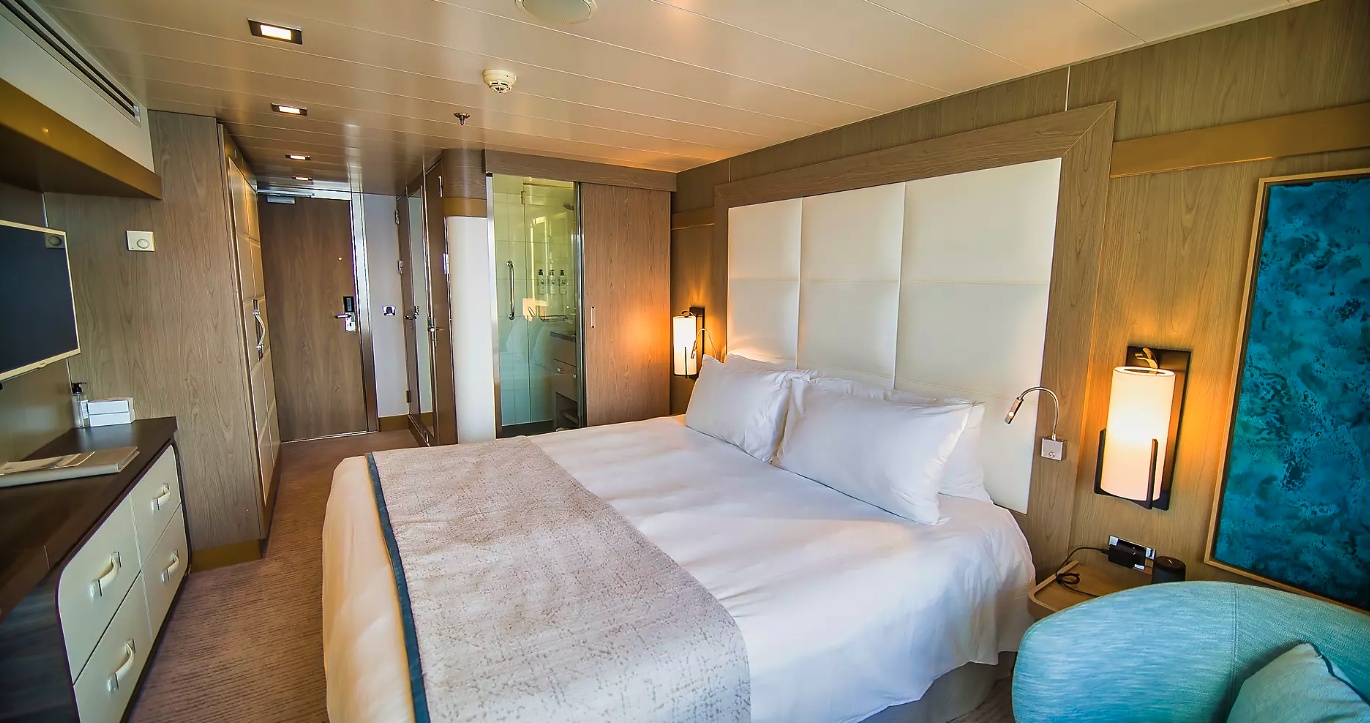
Prestige Stateroom
Services provided
- 24-hour room service
- Inclusive Wifi internet access (availability dependent on navigation and latitude)
- Individually-controlled air conditioning
- Dressing room with shelves and closet
- Dressing table and hairdryer
- Dyptique Paris top-of-the-line bath products
- Minibar
- Nespresso coffee maker and boiler
- Electronic safe
- Direct line telephone
- Bose Bluetooth speaker
- Flat screen TV, international channels (availability dependent on navigation) and videos on demand
- 110V American (two flat pins)/220V European (round sockets with two round pins)
- Three ADA staterooms
In addition to the common services provided to all our suites and staterooms:
- One king-size bed (180 x 200 cm) or two single beds (90 x 200 cm)
- A bathroom with bathtub (except staterooms 605 and 625: with shower)
- A private 4 m² balcony
- A panoramic sliding bay window

Deluxe Stateroom
Services provided
- 24-hour room service
- Inclusive Wifi internet access (availability dependent on navigation and latitude)
- Individually-controlled air conditioning
- Dressing room with shelves and closet
- Dressing table and hairdryer
- Dyptique Paris top-of-the-line bath products
- Minibar
- Nespresso coffee maker and boiler
- Electronic safe
- Direct line telephone
- Bose Bluetooth speaker
- Flat screen TV, international channels (availability dependent on navigation) and videos on demand
- 110V American (two flat pins)/220V European (round sockets with two round pins)
- Three ADA staterooms
In addition to the common services provided to all our suites and staterooms:
- One king-size bed (180 x 200 cm) or two single beds (90 x 200 cm)
- A bathroom with shower
- A private 4 m² balcony
- A window and panoramic glazed swing door
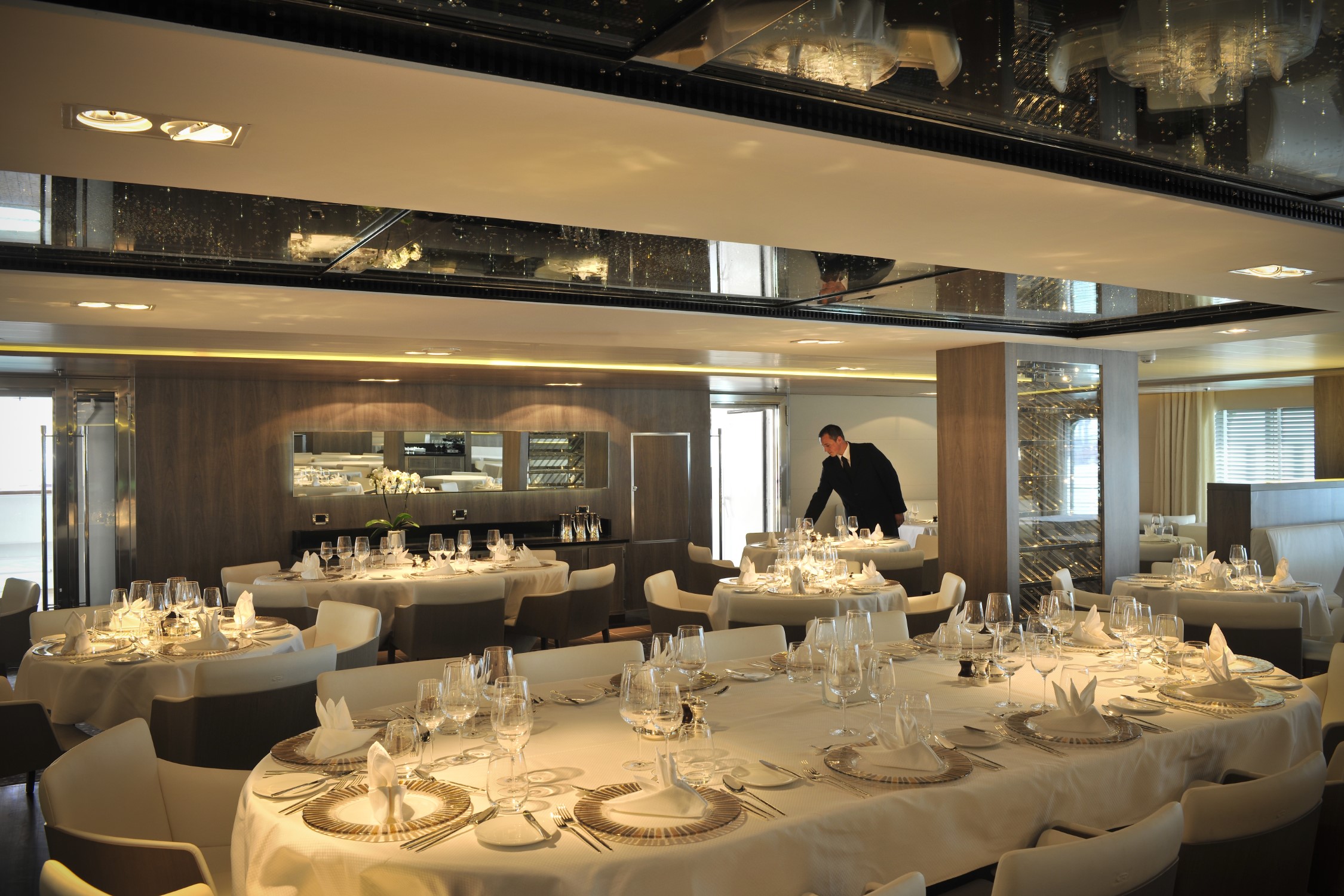
La Licorne
A la carte meals are served at the table in the gastronomic restaurant. At lunch, a selection of dishes inspired by contemporary French brasseries will be offered. At dinner, it is time to sample the grand traditions of French fine dining, with menus to go with one of the best wines from our cellar, as recommended by our sommelier.
To the rear of deck 2 you’ll find a gastronomic restaurant big enough to seat all passengers together at one sitting.
- 3,980 square feet
- Capacity: 268
- Breakfasts, lunches and dinners, French and international cuisine, elegance and refinement
- Wine cellar

La Boussole
The atmosphere is more casual at the grill restaurant with its set buffet menu. From breakfast to dinner, there is a range of healthy, gourmet, hearty and sophisticated buffet options to satisfy all tastes.
Enjoy breakfasts, buffet lunches and themed dinners in a relaxed atmosphere at the grill restaurant on Deck 6.
- 2,530 square feet
- Interior capacity: 150
- Exterior capacity: 60
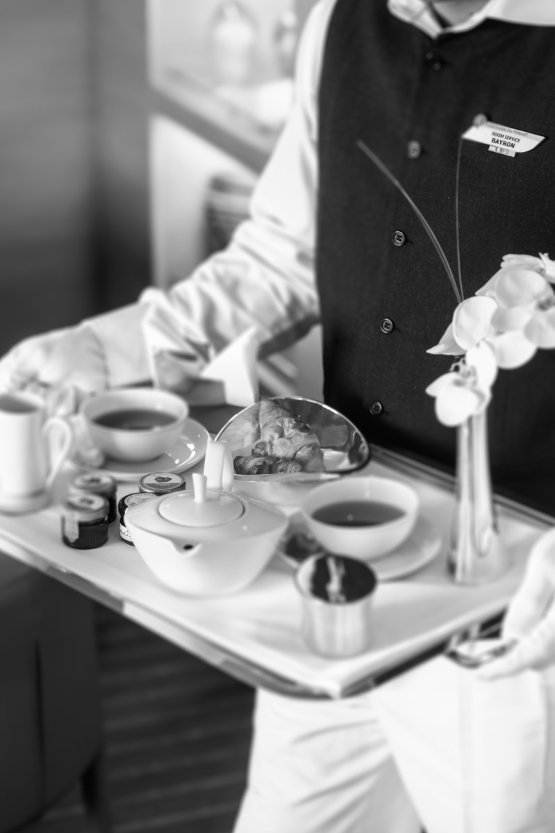
Room Service
Whether you wish to have breakfast in the privacy of your cabin, savour a snack in the middle of the day or enjoy your dinner in an intimate setting, our Room Service is available for you. Have a gourmet interlude and treat yourself from a varied menu at any time of day or night *.
Excursions
Excursions & land itineraries
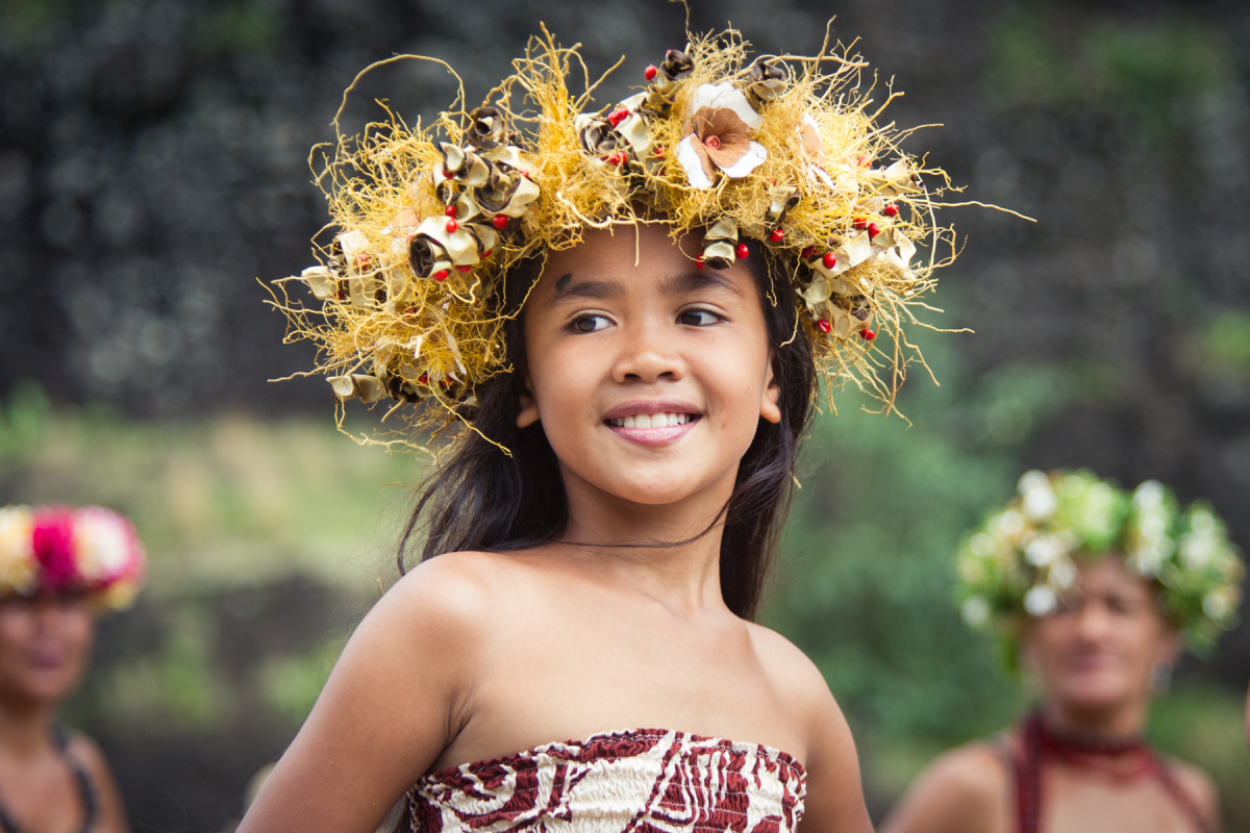
Each itinerary has been thoughtfully created by our teams to offer you a complete excursion experience. You can discover the hidden gems of the regions you visit in line with your interests.
Hidden creeks, ancient cities, UNESCO world heritage sites… the world reveals its hidden gems as you journey along the routes taken by travellers. In keeping with our ethos “Accessing the worlds treasures by sea”, we offer a wide choice of land excursions during all our cruises (except for expeditions). Chosen by our PONANT experts for their cultural value and historic interest, these excursions can last a few hours or a few days. If you need to stay on land overnight, we take care of your stay from start to finish, until you rejoin your ship. These longer excursions mean you can discover the unmissable sites of the region you are visiting, like Cuzco in Peru for example or the Mekong Delta in Vietnam.
You can access these trips by pre-booking two months before your departure date.
Main Lounge
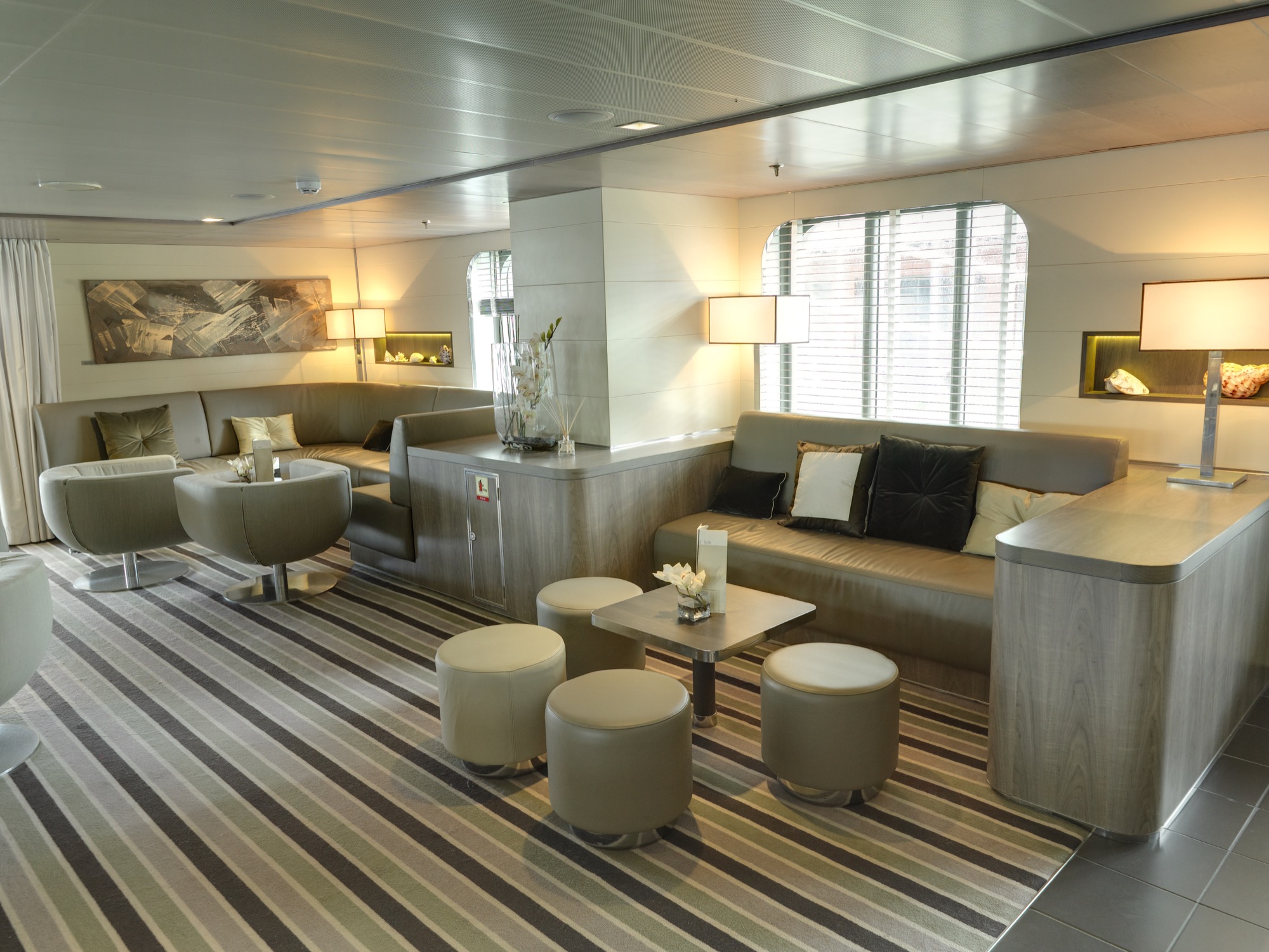
The main lounge is the ideal place to relax with a drink and enjoy the various activities that have been organised such as dancing classes or theme evenings.
- Deck 3
- 2,740 square feet
- Interior capacity: 110
- Exterior capacity: 30
- Tea rooms, bar, programme of live musical entertainment, dance floor
- Access to the exterior terrace
Panoramic Lounge
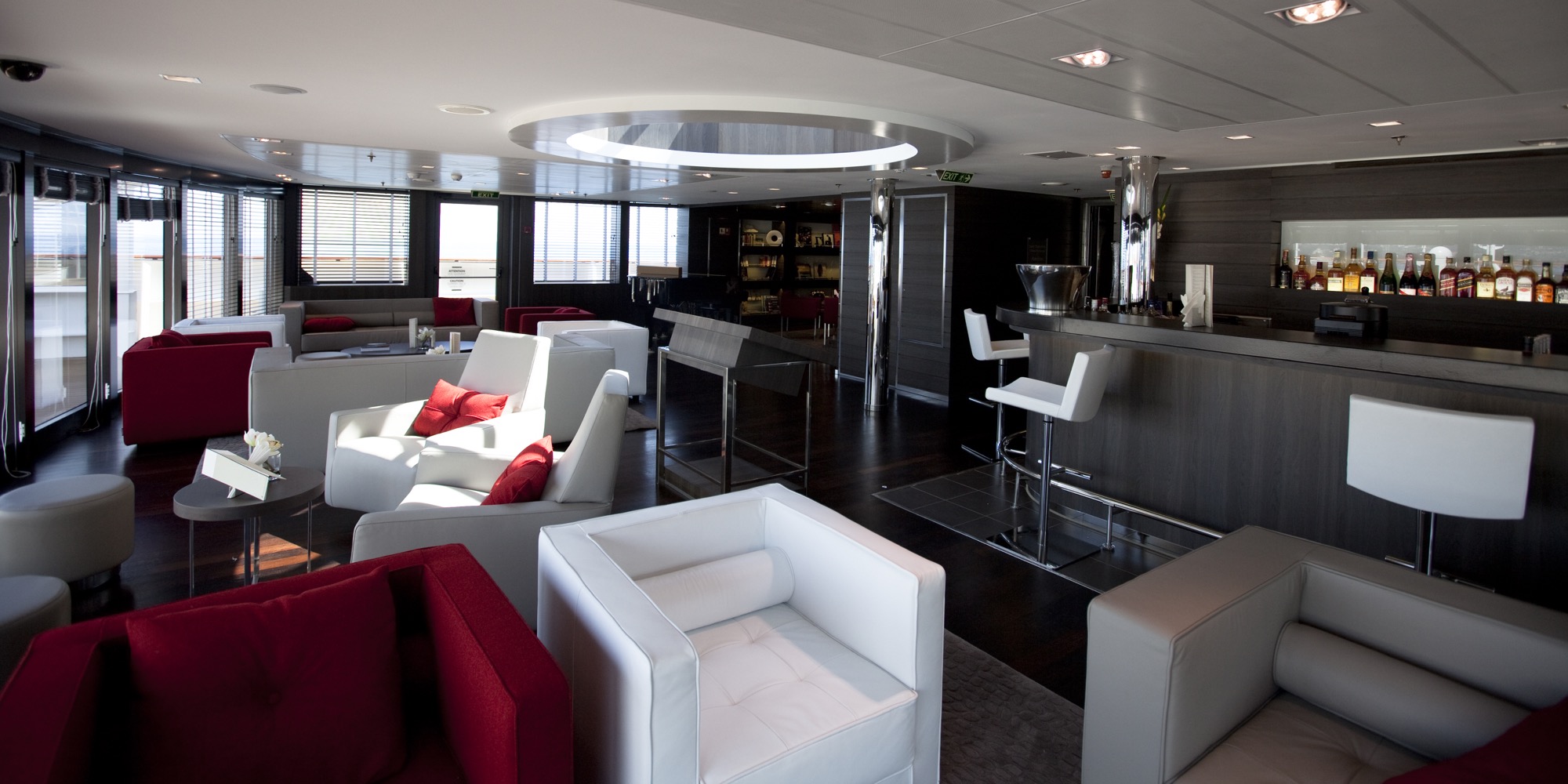
The cosy piano bar is a panorama lounge with breathtaking views of the horizon.
- Deck 6
- 1,185 square feet
- Library, internet space, bar, live entertainment on certain evenings
- Direct access to the panoramic terrace
Exterior Bar
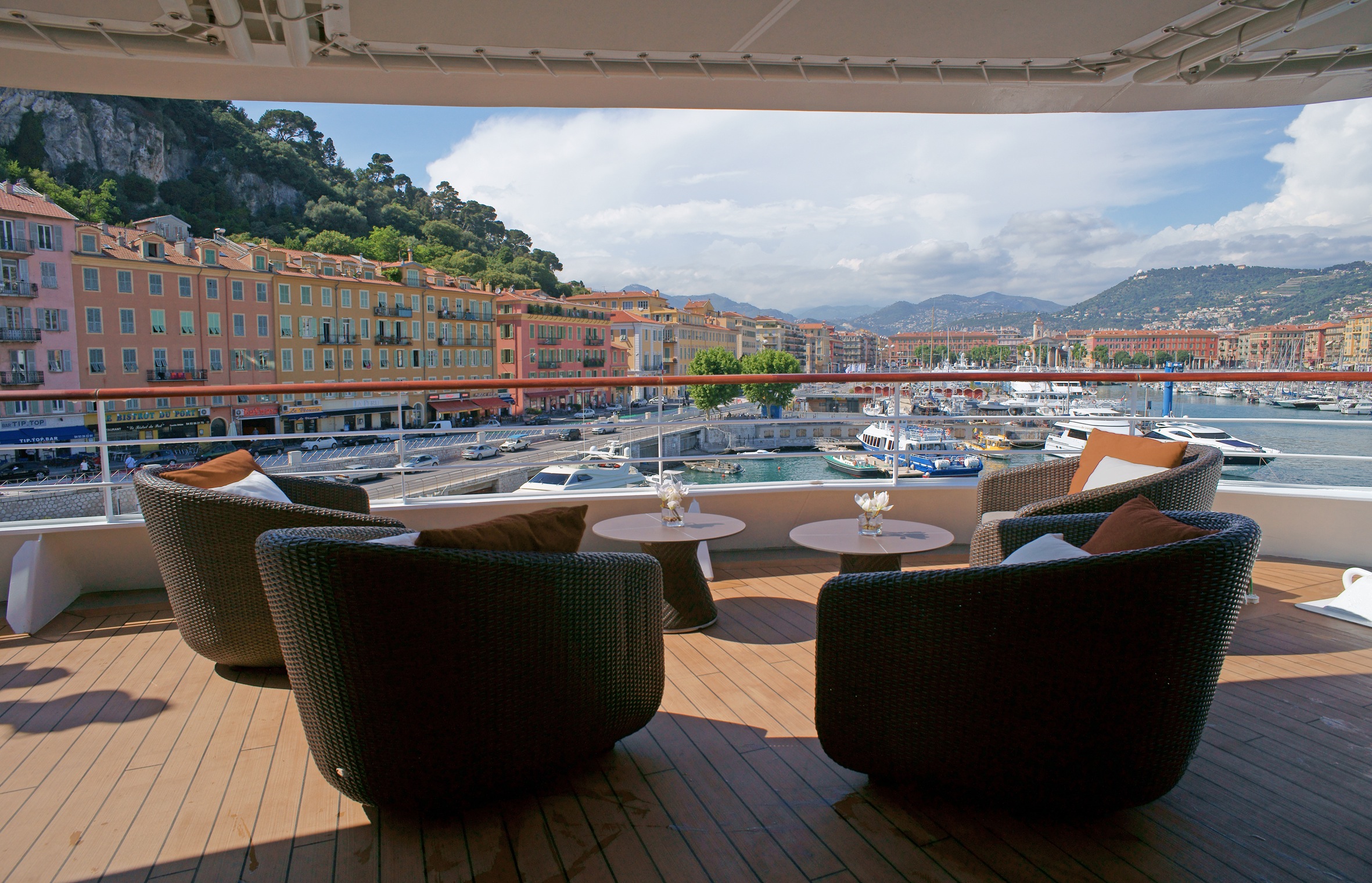
The outside bar is a great space for relaxing and is handy for accessing the swimming pool* and its solarium.
- Deck 6
- Lounge area with seating for 50
- Overlooking the pool deck
Theatre
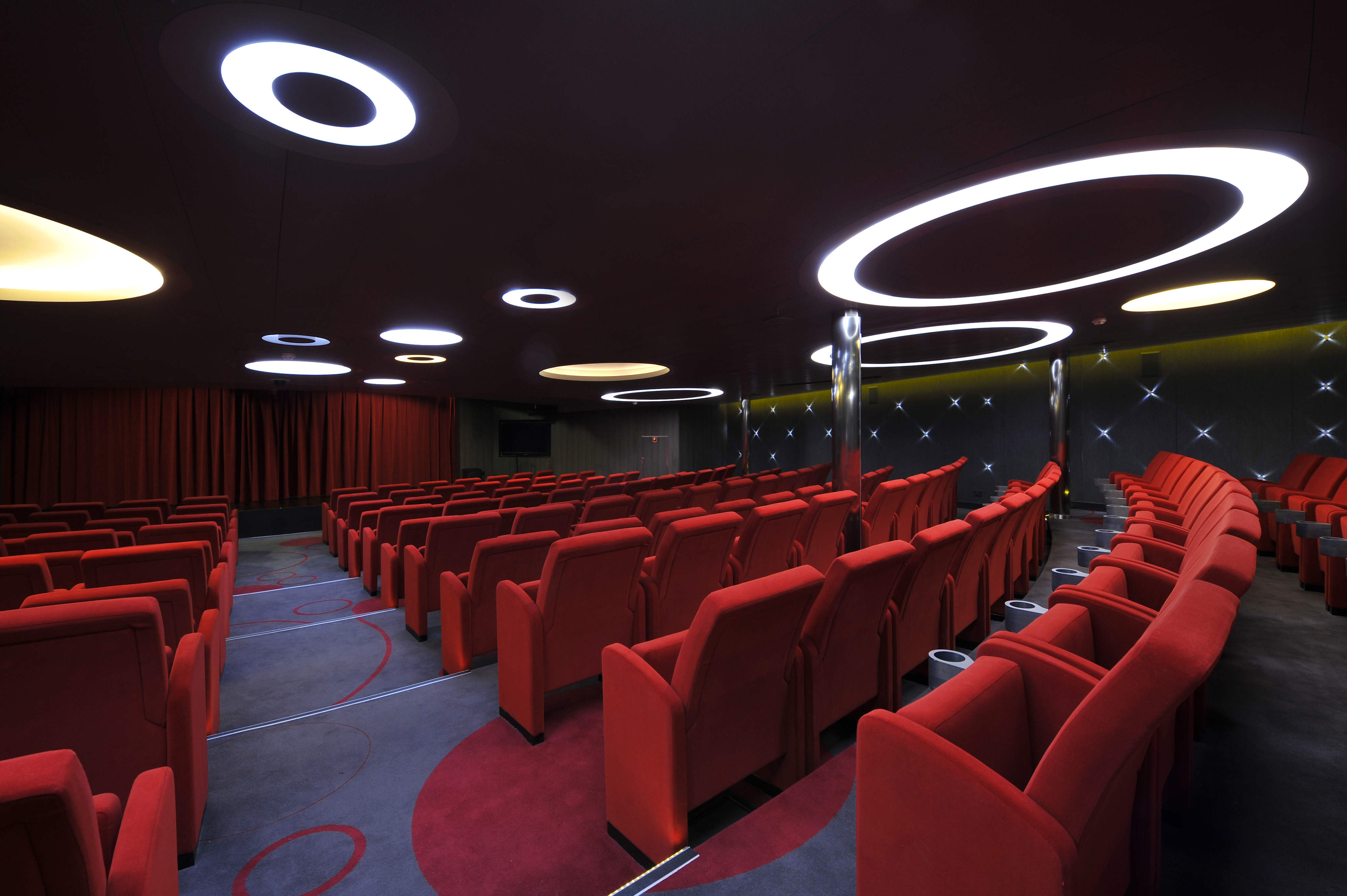
The Theatre* is the most unique meeting space on board. It’s the largest space on the ship and regularly accommodates all the passengers. It plays host to shows and entertainment as well as conferences from our experts, naturalist guides and guests of honours. The Theatre makes every cruise unique and enriching thanks to its constant and very accessible events.
There are performers on board all of our ships. Recruited for their talent in Paris and Rome, they star in multiple shows at the Theatre, after dinner. Throughout your voyage, they host the various entertainment events in the Grand Salon, with the support of our on-board musicians.
During Tea Time or before dinner, our musical duos consisting of a singer and an accompanying musician play classical repertoires for you. In the evening, they play in concert at the Theatere or invite you to show off your dance moves. Dance evenings are thus co-led by performance dancers who know just how to keep you in step, under the direction of the Cruise Director.
Films are regularly shown at the Theatre on giant screens. National Geographic features, documentaries related to our expedition route and feature films contribute to the cultural enrichment that is part of our cruise philosophy.
- Deck 4
- 2,690 square feet
- Capacity: 250
- Conference room, concert hall/multi-purpose auditorium
- Audiovisual equipment
On-board events
There are performers on board all of our ships. Recruited for their talent in Paris and Rome, they star in multiple shows at the Theatre, after dinner. Throughout your voyage, they host the various entertainment events in the Grand Salon, with the support of our on-board musicians.
During Tea Time or before dinner, our musical duos consisting of a singer and an accompanying musician play classical repertoires for you. In the evening, they play in concert at the Theatere or invite you to show off your dance moves. Dance evenings are thus co-led by performance dancers who know just how to keep you in step, under the direction of the Cruise Director.
There’s plenty of themed entertainment to enjoy in the evenings. Both a soirée blanche (dress-in-white party) and an officers’ evening are held on all long cruises. Other types of parties or evening events may also be on the programme, such as karaoke parties, a Casino parties or games evenings.
Films are regularly shown at the Theatre on giant screens. National Geographic features, documentaries related to our expedition route and feature films contribute to the cultural enrichment that is part of our cruise philosophy.
Leisure Areas
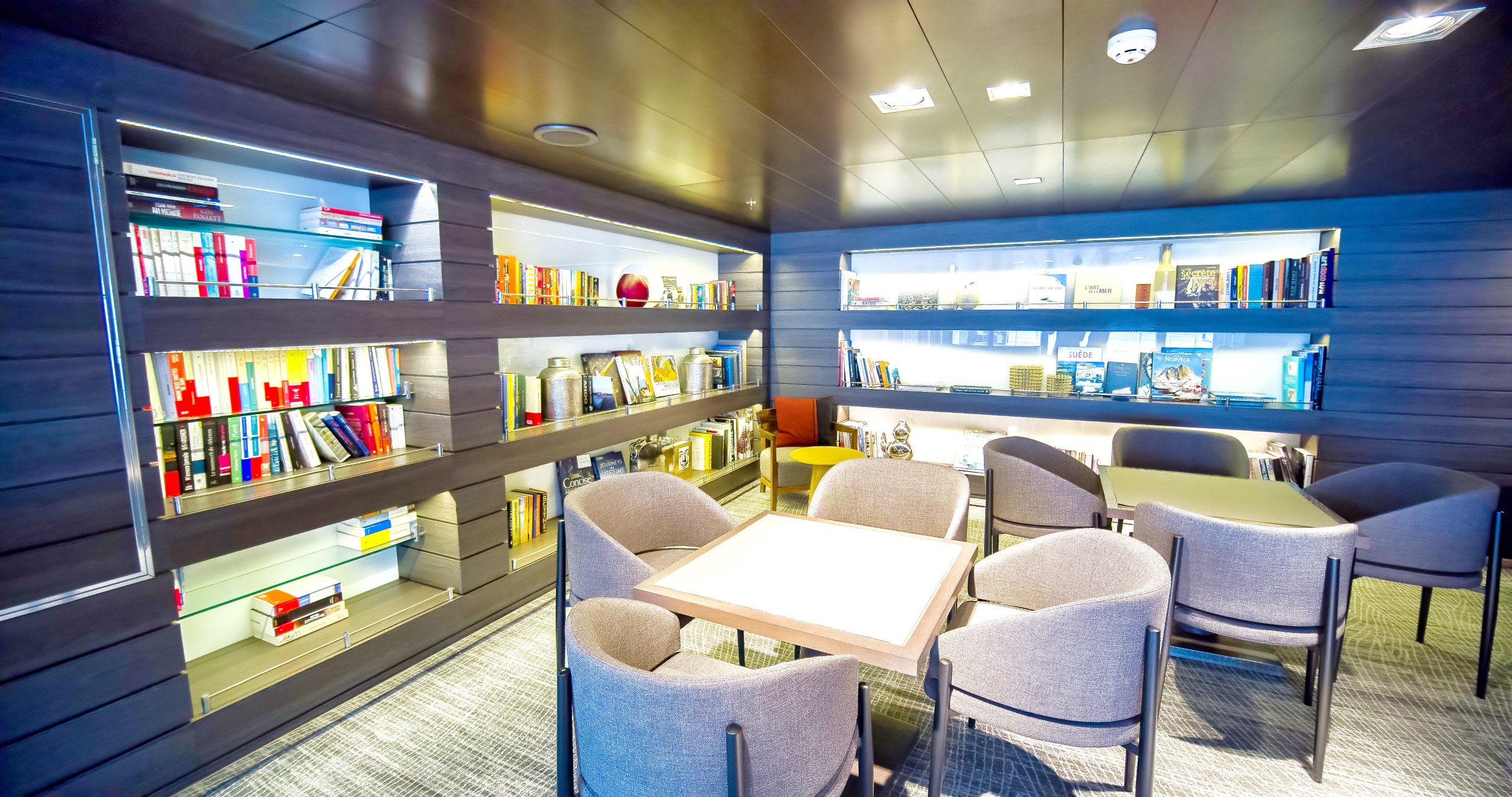
Dedicated to leisure and relaxation, the libraries onboard all our ships stock a range of books and board games. This space is also equipped with Wi-Fi connected computers.
All the ships have a special area for children onboard known as the Le Kids Club. Books, television, board games and consoles (PS4 or Wii™) are all provided for their use and enjoyment.
The Sun Deck
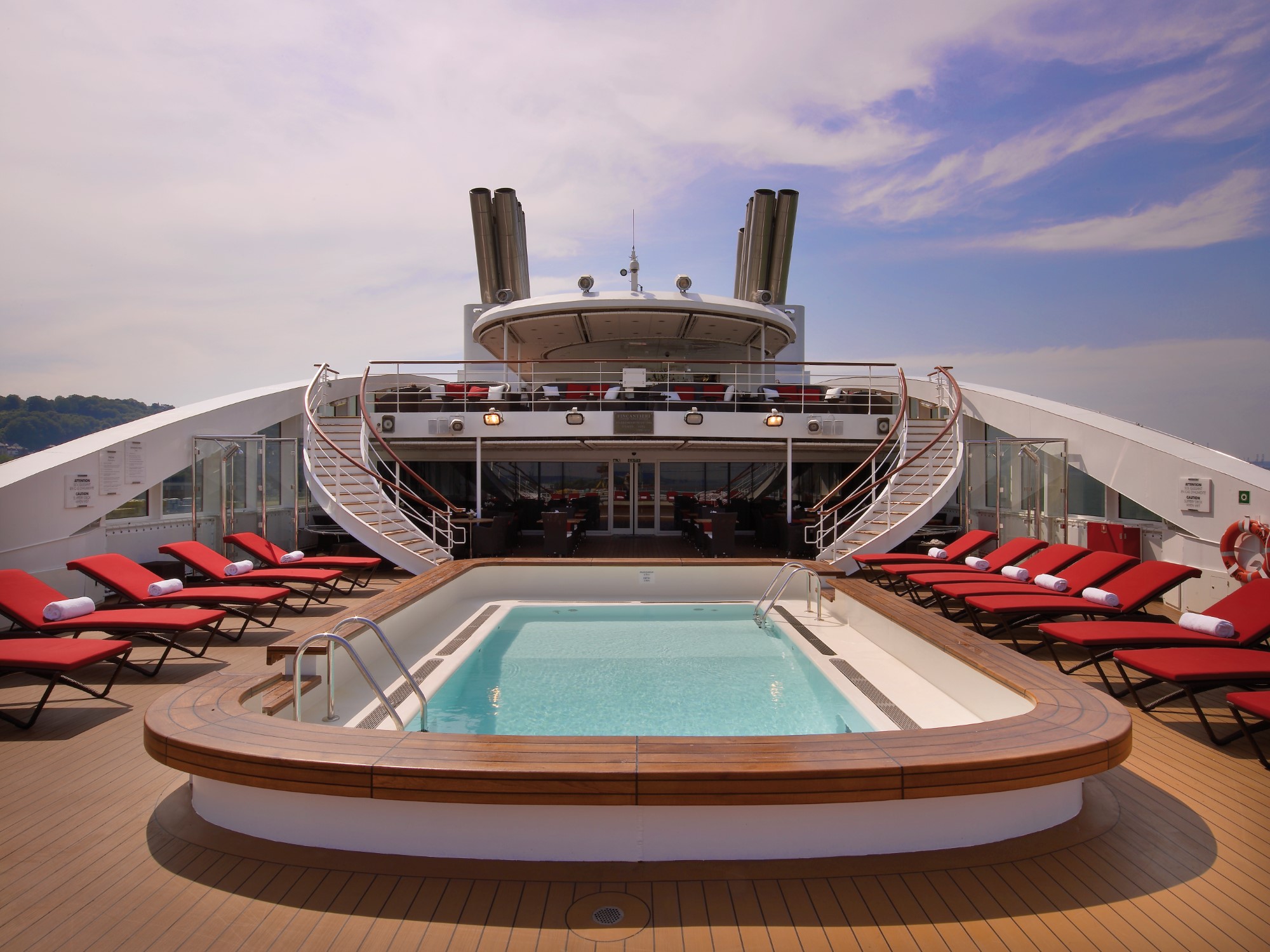
The outdoor areas on our ships, comfortable and conducive to relaxation, have been designed to merge into the sublime scenery and surroundings of the sea and horizon. There is a heated seawater pool featuring its own sun lounge on the top deck of our sister ships (Le Boréal, L’Austral, Le Soléal and Le Lyrial) and on the third deck of the PONANT EXPLORERS (Le Lapérouse, Le Champlain, Le Bougainville, Le Dumont-D’Urville, Le Jacques Cartier and Le Bellot). Le Ponant is equipped with a 400 m² (4,300 ft²) sun deck.
Excursion Reception and Office
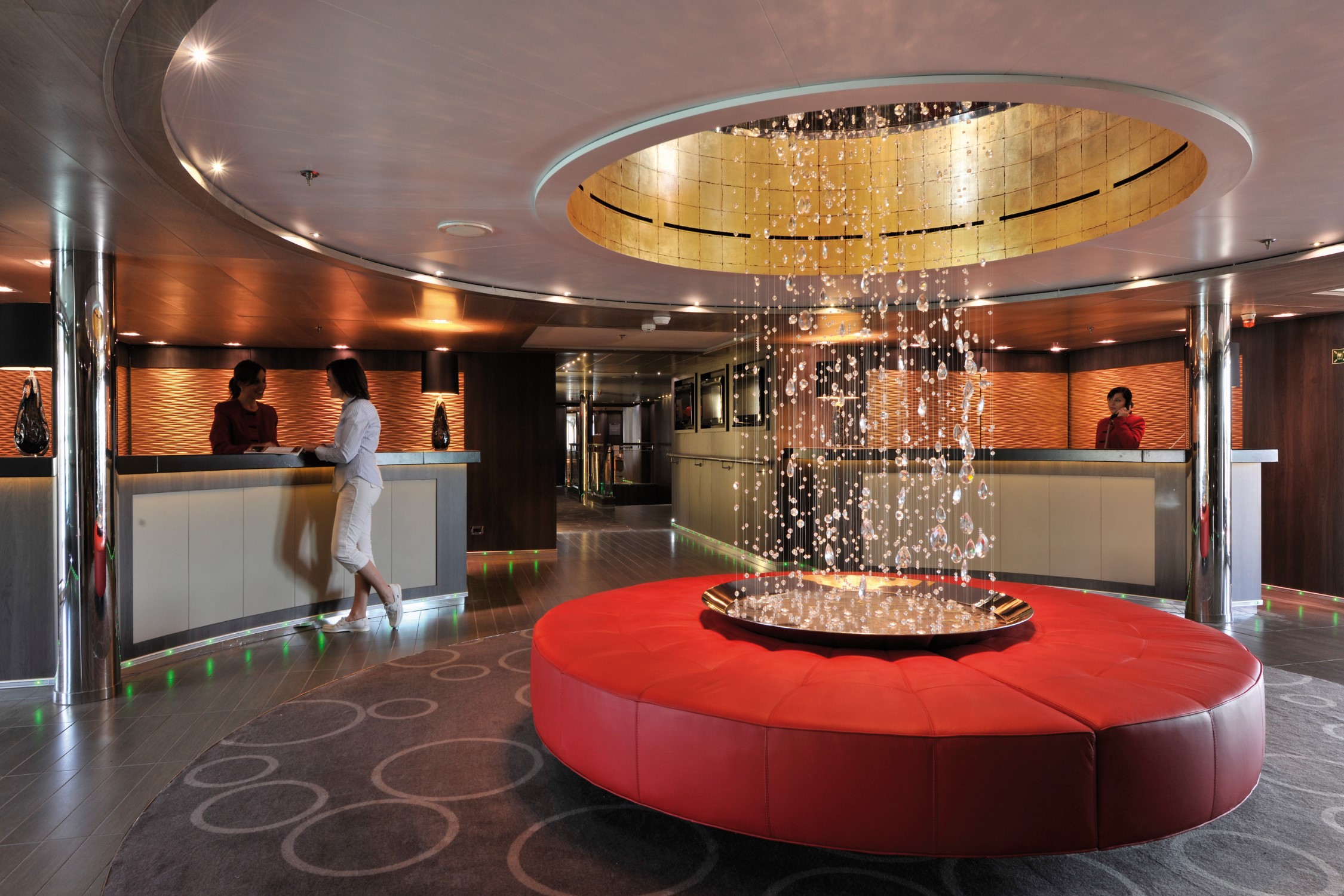
On board the sisterships (Le Boreal, L’Austral, Le Soléal and Le Lyrial) and PONANT EXPLORERS, the reception desk and the excursion desk are arranged side by side to facilitate all your requests.
Reception: our receptionists can accommodate you 24 hours a day on all our ships (from 7 a.m. to 11 p.m. on Le Ponant) to answer all your needs, such as room service, etc.
The excursion office: the excursion team is available at all times to tell you about the onshore programmes, organise group or private excursions and to manage transfers at the start or end of the cruise.
On Le Ponant, the receptionist will answer all your questions about excursions.
PONANT Studio
A photography and videography team escort you throughout your trip. These professionals capture the most beautiful moments of your cruise, which you can share with family and friends upon your return. Meet them on DECK 5 (DECK 6 on the PONANT Explorers ships) at the photo/video area, where you can also order souvenir pictures and videos.
The Spa
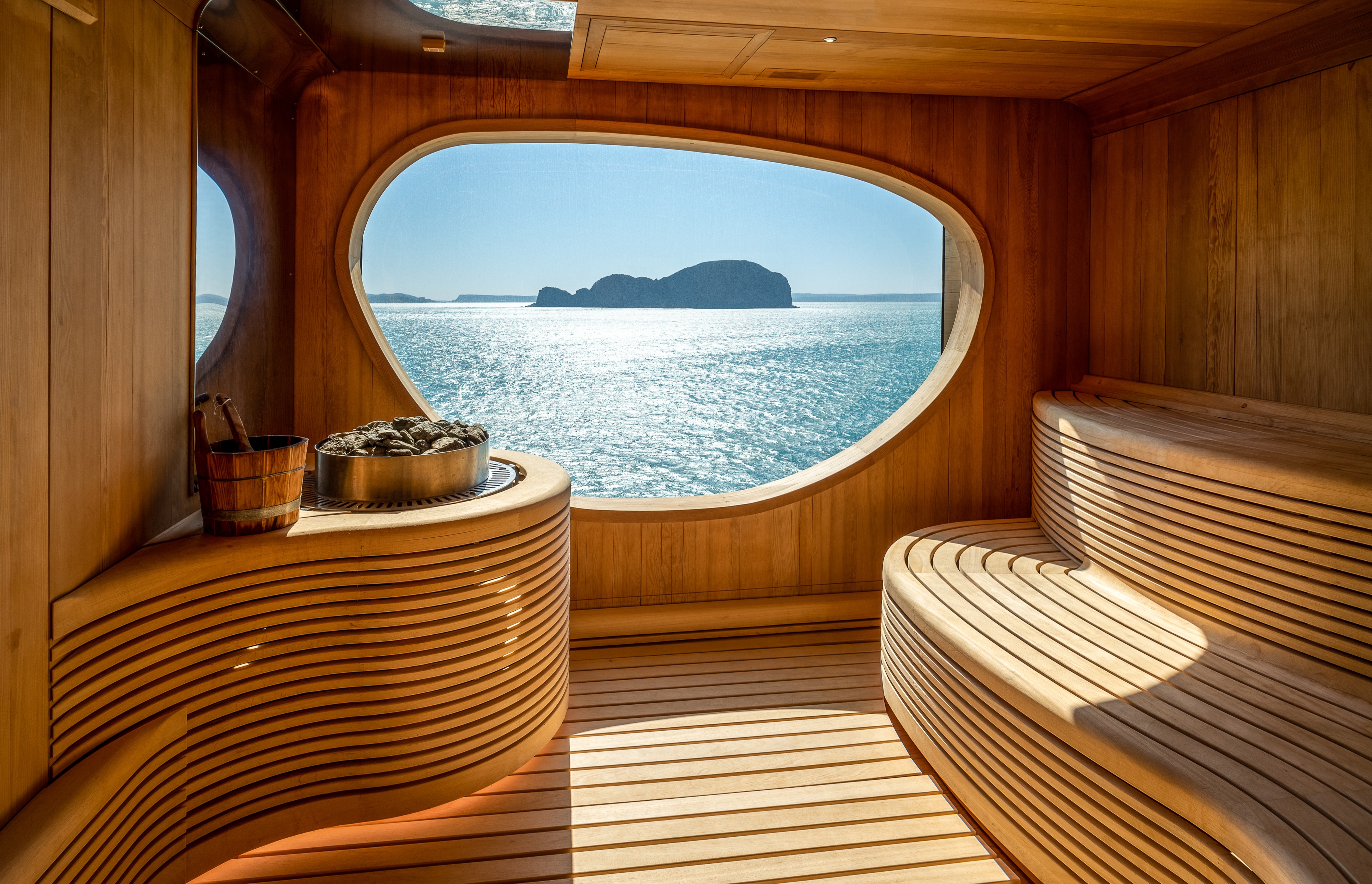
All our ships feature an onboard spa. Equipped with massage cabins and a Turkish bath (Sister ships) or a sauna (Explorers), the spa offers a wide choice of top-of-the-range treatments provided in association with SOTHYS™ or CLARINS (Le Bellot and Le Jacques-Cartier only), leading French spa and wellness centre brands.
Discover a range of facial treatments, aromatic baths, exfoliation and body massage treatments designed to provide moments of complete relaxation. You can also supplement your beauty ritual with additional services such as hair-removal, makeovers, manicures and pedicures.
The wellness area – Deck 5
- Spa in partnership with SOTHYS™: massage and treatment cubicles, beauty salon cubicle, balneotherapy cubicle
- KÉRASTASE / L’Oréal Paris hair salon
- Free access hammam (open during the day)
- Fitness studio (open during the day)

The Gym
The gyms on our ships are equipped with the very latest Technogym© equipment and machines. Treadmills, exercise bikes, Kinesis Wall© strength training machines and many other types of equipment are all provided in a laid-back relaxing environment. The wide floor-to-ceiling windows looking out over the sea add undeniable charm to the exercise sessions.
Each day also begins with organised morning workout sessions, either out in the open air or in the theatre. These are supplemented by water aerobics in the pool, or in the sea off the beach for PONANT passengers, when the situation allows it.
The Hairdressing Salon
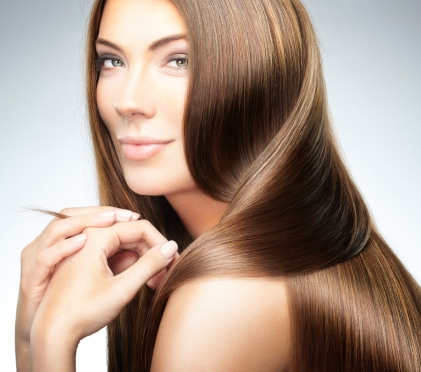
Provided in partnership with KÉRASTASE® and L’ORÉAL PROFESSIONNEL®, the hairdressing salon offers a complete range of top quality treatments designed to strengthen, nourish and reinvigorate hair’s shine and brilliance. Our stylists are available to serve all your styling, highlighting, colouring, cutting and tailored hair advice needs.
Laundry
Your stateroom Officer will be able to take care of your laundry**. The washing and ironing of your clothes will take between 24 and 48 hours. Only ironing** can be delivered on the same day. As dry-cleaning is not possible on the ship, please only give us clothes that can be washed in water.
** These services are not free of charge and are billed directly to your stateroom account.
Smoking Policy
PONANT ships are non-smoking, even on the stateroom balconies. Smoking is only allowed in the exterior parts of the ship designated for the purpose.
Power Adapters
Adapters are provided on board, they are available at the reception office of our ships.
European Standard Sockets
The 220 volt 50 hertz alternating current is distributed by sockets meeting European standards. Onboard power is 200 volt AC (European standard) and 110 volt AC (North American standard). For safety reasons, hair irons and clothes irons cannot be used in staterooms. Please note that on Le Ponant, 110 volt AC is only available in stateroom bathrooms.
Age Restrictions
Children under one year of age shall not be authorised to embark on the ships.
For children aged between 1 and 8 years old, an authorisation to board the ship must be made in writing to PONANT. Subject to agreement, a liability waiver must be completed and returned to the company to validate the registration.
On classic cruises (“yachting”), children are accepted from the age of one, with a maximum of 5 children between 1 and 6 years old on board.
On “expedition” cruises children are accepted from 6 years old (except cruises aboard Le Commandant Charcot) and must be fully independent during all the outside activities organised and during disembarkation in rubber boats, be sufficiently tall to sit on the inflatable sides of the boats, and old enough to understand, and immediately respond to the orders given by the persons in charge. As a result, children’s participation in any activity in an inflatable boat shall be subject to the agreement of the Captain and of the Expedition Head, depending on the sea conditions, and the difficulty of disembarking at each location visited. The ships do not carry Parka’s in children’s sizes. Parents must arrange to bring a suitable Parka for children. In all cases, children and young people under the age of 18 are at all times on board or on land under the full and total responsibility of their parents or carers.
Children aged 4 years or more can be welcomed in the Kid’s Club when the service is offered on board
Languages
The crew are bilingual in French and English. All signage and announcements made are in French and English. On certain cruises, crew members also speak other languages.
Telephone
A satellite telephone system is at your disposal for contacting anyone, anywhere in the world. The cost of the call is added to the stateroom account (€6/minute). Calls that you receive can be transferred directly to your stateroom or to any other communal area on the ship. To receive or send faxes, please see Reception.
Wi-Fi
Free Wi-Fi internet access is available on all of our ships, in both the staterooms and the communal areas. One or several computers are at your disposal in the recreation centres. Please note that the Wi-Fi connection may be discontinued depending on the navigation area and landscapes that may block the vessel from satellite coverage, especially at high latitudes (no connection possible beyond 80° North or South), or for technical reasons beyond our control.
Medical Facilities
All the ships have a doctor and a nurse available on board, except Le Ponant, on which there is a nurse and a telemedicine service available:
- The schedules of consultation are listed each day in the log book (emergency consultation 24/7).
- The Sisterships, PONANT Explorers and Le Commandant Charcot also have a hospital for any small surgery.
- During the excursions, the passengers are accompanied by a doctor or a nurse.
- There is a fee for consultations on board . The price may vary according to the time and place of the consultation (hospital or staterooms). You must also pay for medications.
- The doctor on board is not authorised to distribute sick leaves and prescriptions. Only accounts and invoices are provided which may be used by the passenger to obtain a refund from his/her health insurance if his/her contract allows.
Medical Consultations
There is a charge for medical consultations undertaken by the doctor or nurse on board. The price can vary according to the time and place of the consultation (hospital or stateroom). Any medication must also be paid for by the passenger. If using medications on a regular basis make sure to bring adequate supplies for the duration of your cruise.
Special Medical Treatment
If you have any special treatment, we ask you to inform the reservation service when you register for the cruise, to note it on the information sheet before departure, then inform the on-board crew at the moment of departure and always keep your medication with you for the duration of the cruise.
Seasickness
Our ships (except Le Ponant) have stabilisers equipped with dynamic fins which adapt to the movements of the ship. This system allows the ship to anticipate and compensate for the pitching and tossing of the sea to achieve greater stability. Passengers suffering from seasickness will see their symptoms alleviated and are pleasantly surprised to not feel uncomfortable during their journey. However it is wise to bring travel motion medication with you for peace of mind.
Guests with reduced mobility
Our Sisterships, PONANT EXPLORERS and Le Commandant Charcot were designed for people with reduced mobility in mind:
- Specially designed staterooms;
- Access ramps allowing easy movement in communal areas;
- Posters, signage and stateroom numbers are translated into Braille.
Despite these arrangements, each passenger should be able to be independent or travel with a close family member or friend who can give them whatever assistance they require during their trip.
If a person has not been judged suitably fit for travel in complete safety, the company reserves the right to refuse their embarkation. Disembarkation in difficult places or in a Zodiac® is subject to the approval of the Captain, who will always have the safety and wellbeing of the passenger in mind.
Packing Tips
Technical Accessories
We advise you to equip yourself with a ski mask, sunglasses, walking poles (available to purchase in the shop), a waterproof rucksack, binoculars, a technical watch, a mosquito head net (for the Arctic) and a waterproof pouch.
Dress Code
Dress Code
We recommend wearing elegant, casual clothes at your discretion, and for the gala evenings, a cocktail dress for ladies and a shirt and tie for gentlemen, and a white or black-and-white outfit for the Officers’ evening. Shorts/Bermudas are not permitted in the evening in the gastronomic restaurants.
Expedition Cruise
On an expedition cruise, be sure to bring practical clothes as well as comfortable shoes suitable for travelling in Zodiacs and disembarking on beaches or mud flats. On tropical expeditions be sure to bring a hat, sunglasses and long sleeved/legged clothing. For polar cruises, you will be given a polar parka in your size and suitable boots will be available for use when ashore.
Sustainable Development
Sustainable development is enshrined in the company’s articles of association and has been at the heart of the PONANT project since its inception. Founded over thirty years ago by committed sailors, the company was born out of a desire to share a passion for the oceans and the treasures of the Earth. This responsibility commits us to a respectful dialogue with the environment and the populations we meet and to investing in many fields related to the preservation and development of the natural and cultural heritage of the polar and oceanic regions.
Clean Ships
We were among the first cruise operators in the world to abandon the use of heavy fuels, and our ships are equipped with electric diesel engines and SCR catalytic converters, which enable a reduction in fuel consumption and emissions. Our polar exploration ship, Le Commandant Charcot, is a hybrid-electric vessel, propelled by liquefied natural gas (LNG). LNG enables a 25% reduction in carbon emissions, an 85% reduction in nitrogen oxide emissions and a 95% reduction in fine particle emissions. Each time we design a new ship, we equip it with the latest available eco-technologies, enabling us to maintain our position as the cruise industry’s environmental leader, ahead of international regulations in some areas. A commitment recognised by many independent organisations:
- Our entire fleet is Clean Ship certified by the Bureau Veritas. This certification guarantees that our ships fulfil very precise criteria: emissions levels, waste processing, waste water etc.
- In 2020, PONANT was recognised as “the cruise operator with the greenest fleet in the world in terms of airborne emissions” by the German NGO, NABU.
- PONANT was awarded the Prix des Palmes du Tourisme Durable 2020 (Prize for Sustainable Tourism) in the “Voyage” category for the elimination of heavy fuel oil in favour of LS MGO.
- In 2019, PONANT became the first European cruise company to obtain the North American Green Alliance certificate. This certifies that its members have adopted practices and technologies that are respectful towards the environment.
- PONANT is also a signatory of the Charte Bleue from Armateurs de France, which commits the maritime sector to act to protect the marine environment.
Wastewater
All of the wastewater is treated by means of processes that exclude the use of chemical products. The recycled water is used to clean the exterior of the ship. The water that is discharged into the sea is treated, drinkable water.
Waste
We have optimised our organisation in order to reduce waste at the source. Waste is nonetheless still produced on board. As of 2020, 60% of this is sorted and recycled, with an objective of 85% set for 2023. We ensure the complete traceability of this waste.
Single-use plastics
We have eliminated the use of single-use plastics (straws, cups, food serving trays, laundry bags etc.). A metallic flask is issued to each passenger on expedition cruises and water fountains are available in the common areas of the ships. We are also developing the bottling of our water in glass bottles.
Special Diets
And so that everyone’s tastes are catered to, special menus are available on request for guests with specific dietary requirements (low-fat, vegetarian, gluten-free, etc).

Deck 6
- Pool
- Grill Restaurant
- Internet Café
- Library
- Panoramic Lounge
- Panoramic Terrace
- Owner’s Suite
- Prestige Suite
- Deluxe Suites
- Prestige Staterooms

Deck 5
- Fitness Room
- Hammam
- Spa
- Hair Salon
- Image & Photo Desk
- Bridge
- Prestige Suites
- Prestige Staterooms

Deck 4
- Theatre
- Prestige Staterooms

Deck 3
- Main Lounge
- Excursion Desk
- Reception Desk
- Medical Centre
- Shop
- Superior Staterooms
- Deluxe Staterooms

Deck 2
- Gastronomic Restaurant
- Marina
Itinerary
Nuuk, meaning “the cape”, was Greenland’s first town (1728). Started as a fort and later mission and trading post some 240 kilometers south of the Arctic Circle, it is the current capital. Almost 30% of Greenland’s population lives in the town. Not only does Nuuk have great natural beauty in its vicinity, but there are Inuit ruins, Hans Egede’s home, the parliament, and the Church of our Saviour as well. The Greenlandic National Museum has an outstanding collection of Greenlandic traditional dresses, as well as the famous Qilakitsoq mummies. The Katuaq Cultural Center’s building was inspired by the undulating Northern Lights and can house 10% of Nuuk’s inhabitants.
Iqaluit is the capital of Canada’s newest territory, Nunavut, which is Inuktitut for “our land”. The community is located at the head of Frobisher Bay, an inlet of the North Atlantic extending into southeastern Baffin Island. The Bay is so long that it was first taken to be the possible entrance of a Northwest Passage. In Iqaluit, the Nunatta Sunakkutaangit Museum and the Nunavut Legislative Assembly Building both house incredible collections of Inuit artwork with interesting local prints for sale in the museum shop.
Akpatok Island is the largest island in the middle of Ungava Bay, south of Baffin Island and north of Quebec. Its name is the local name for the Thick-billed Murre, which nests here in vast numbers. In fact, the entire island is designated a Canadian Important Bird Area. Other common wildlife are Polar bears, seals, and walrus. One of the most distinctive features of the island is the steep limestone cliffs ringing the shore. They rise 490 to 820 feet straight up from the sea to a flat plateau. Although is uninhabited today, remains of a Dorset settlement have been documents at the southern end of the island.
The Torngat Mountains National Park is situated on the eastern side of Labrador’s northernmost point and features mountains sometimes described as the “Eastern Rocky Mountains”. The park covers an area of 9,700 km2 (over 6,000 mi2) and is dotted with remnants of several cirque glaciers. Saglek Fjord has an outstanding array of geological features and the steep cliffs provide some of the best exposures to the earth’s geologic history. The name of the national park goes back to Torngarsoak, who was believed to control the life of sea animals and took the form of a huge polar bear. Polar bears hunt seals on the ice here in the winter months, and herds of Torngat Mountain and George River caribou migrate to and from their calving grounds in the warmer months. Inuit use the area to hunt, fish and travel throughout the year and many still have a strong spiritual connection to this “Place of Spirits”.
Around the year 1000, Vikings from Greenland and Iceland founded the first European settlement in North America, near the northern tip of Newfoundland. They arrived in the New World 500 years before Columbus but stayed only a few years and were forgotten for centuries. Since the settlement’s rediscovery in the last century, the archaeological site has brought tourism to the area. Viking themes abound but so do views, whales, icebergs, fun dining experiences, and outdoor activities. L’Anse Aux Meadows on the northern tip of the island of Newfoundland is a remote community of just 40 people, with St Anthony, 40 minutes away, having a population of only 3,500. The region is locally famous for springtime polar bears, nesting eider ducks, the northern extreme of the Appalachians at nearby Belle Isle, numerous spring and summer icebergs, and a rich ocean fishery. L’Anse Aux Meadows National Historic Site is the UNESCO World Heritage Site that tells the story of Leif Erickson and the first Europeans in the new world. This site is often the keystone attraction for cruises themed around the Vikings. Discovered in 1960, it is the site of a Norse village, the only known one in North America outside of Greenland. The site remains the only widely-accepted instance of pre-Columbian trans-oceanic contact, and is notable for possible connections with the attempted colony of Vinland established by Leif Ericson around 1003, or more broadly with Norse exploration of the Americas. The root of the name “L’Anse aux Meadows” is believed to have originated with French fishermen in the area during the nineteenth and twentieth centuries, who named the site L’Anse aux Meduses, meaning ‘Jellyfish Bay’.
Twillingate is the self-proclaimed ‘Iceberg Capital of the World’, although icebergs will be a more likely occurrence in the winter months. The community is home to the “Prime Berth Museum”, which is best described as a commercial fishing heritage site highlighting the glory “salt fish days” before the cod fishery moratorium in the mid-1980s. Several historic buildings packed with artifacts are located near the shoreline, in addition to an impressive skeleton of a Sei whale and the two giant racks of its baleen on display.
Old meets new in the province’s capital (metro-area population a little more than 200,000), with modern office buildings surrounded by heritage shops and colorful row houses. St. John’s mixes English and Irish influences, Victorian architecture and modern convenience, and traditional music and rock and roll into a heady brew. The arts scene is lively, but overall the city moves at a relaxed pace.For centuries, Newfoundland was the largest supplier of salt cod in the world, and St. John’s Harbour was the center of the trade. As early as 1627, the merchants of Water Street—then known as the Lower Path—were doing a thriving business buying fish, selling goods, and supplying alcohol to soldiers and sailors.
By heading almost due east from Cap-aux-Meules in Canada, it is possible to reach France in about one day’s worth of steaming! With barely 6,000 inhabitants living on tiny St. Pierre, it is the smallest French Overseas Collective. The residents of St. Pierre are predominantly descendants of Normans, Basque and Bretons and the French spoken is closer to Metropolitan French than to Canadian French. Although Basque is not spoken any longer, the influence is still felt through sport and a Basque Festival. Interestingly, this small island has two museums in part dedicated to the Prohibition. The Musée Heritage is St. Pierre’s newest museum with a focus on medical artefacts from the 19th and 20th century. Another claim to fame is a guillotine, the only one ever used in North America. In this quirky village it is easy to find the Post Office; just look for the clock tower shaped like a praying monk.
Surrounded by natural treasures and glorious seascapes, Halifax is an attractive and vibrant hub with noteworthy historic and modern architecture, great dining and shopping, and a lively nightlife and festival scene. The old city manages to feel both hip and historic. Previous generations had the foresight to preserve the cultural and architectural integrity of the city, yet students from five local universities keep it lively and current. It’s a perfect starting point to any tour of the Atlantic provinces, but even if you don’t venture beyond its boundaries, you will get a real taste of the region.It was Halifax’s natural harbor—the second largest in the world after Sydney, Australia’s—that first drew the British here in 1749, and today most major sites are conveniently located either along it or on the Citadel-crowned hill overlooking it. That’s good news for visitors because this city actually covers quite a bit of ground.Since amalgamating with Dartmouth (directly across the harbor) and several suburbs in 1996, Halifax has been absorbed into the Halifax Regional Municipality, and the HRM, as it is known, has around 415,000 residents. That may not sound like a lot by U.S. standards, but it makes Nova Scotia’s capital the most significant Canadian urban center east of Montréal.There’s easy access to the water, and despite being the focal point of a busy commercial port, Halifax Harbour doubles as a playground, with one of the world’s longest downtown boardwalks. It’s a place where container ships, commuter ferries, cruise ships, and tour boats compete for space, and where workaday tugs and fishing vessels tie up beside glitzy yachts. Like Halifax as a whole, the harbor represents a blend of the traditional and the contemporary.
Ship features
Owner's Suite
In addition to the common services provided to all our suites and staterooms:
- A private 96 ft² balcony
- Two sliding panoramic windows
- A bathroom with shower and spa bath
- Priority boarding (depending on port of embarkation)
- A one-hour treatment per person (for 2 people) in the wellness area, including body and facial treatments
- A private return transfer
- Butler service
- Champagne and fruit on arrival
- A fruit basket every day
- One bedroom with king-size bed (180 x 190 cm) or two single beds (90 x 190 cm)
- A living-dining room with a sofa, armchair, second TV, a table for four, and a courtesy sliding door
- Included premium pass: access to a selection of premium spirits at the bar
Included in all staterooms
- Minibar
- Diptyque Paris top-of-the-line bath products
- Bose Bluetooth speaker
- Individually-controlled air conditioning
- Nespresso coffee maker and boiler
- Dressing room with shelves and closet
- 110V American / 220V European
- Dressing table and hairdryer
- Direct line telephone
- Three ADA staterooms
- 24-hour room service
- Flat screen TV, international channels and videos on demand
- Inclusive Wifi internet
Prestige Suite
In addition to the common services provided to all our suites and staterooms:
- A private 86 ft² balcony
- Two sliding panoramic windows
- Two bathrooms with showe
- Priority boarding, depending on port of embarkation (Prestige Suite Deck 6)
- Butler service (Prestige Suite Deck 6)
- Champagne and fruit on arrival and a fruit basket every day (Prestige Suite Deck 6)
- One bedroom with king-size bed (180 x 190 cm) or two single beds (90 x 190 cm)
- A living room with a convertible sofa into a king-size or two single beds, armchairs, second TV, and a courtesy sliding door
Included in all staterooms
- Minibar
- Diptyque Paris top-of-the-line bath products
- Bose Bluetooth speaker
- Individually-controlled air conditioning
- Nespresso coffee maker and boiler
- Dressing room with shelves and closet
- 110V American / 220V European
- Dressing table and hairdryer
- Direct line telephone
- Three ADA staterooms
- 24-hour room service
- Flat screen TV, international channels and videos on demand
- Inclusive Wifi internet
Deluxe Suite
In addition to the services available to all our suites and cabins :
- A private 5m2 balcony
- A bathroom with shower and small bathtub
- Butler service
- Priority boarding (depending on port of embarkation)
- Champagne and fruit on arrival
- A fruit basket every day
- One king-size bed (180 x 190 cm) or two single beds (90 x 190 cm)
- An armchair and sofa
Included in all staterooms
- Minibar
- Diptyque Paris top-of-the-line bath products
- Bose Bluetooth speaker
- Individually-controlled air conditioning
- Nespresso coffee maker and boiler
- Dressing room with shelves and closet
- 110V American / 220V European
- Dressing table and hairdryer
- Direct line telephone
- Three ADA staterooms
- 24-hour room service
- Flat screen TV, international channels and videos on demand
- Inclusive Wifi internet
Upper Decks Balcony Stateroom
In addition to the common services provided to all our suites and staterooms:
- A private 43 ft² balcony
- A sliding panoramic window
- Bathroom with shower
- One king-size bed (180 x 190 cm) or two single beds (90 x 190 cm)
Included in all staterooms
- Minibar
- Diptyque Paris top-of-the-line bath products
- Bose Bluetooth speaker
- Individually-controlled air conditioning
- Nespresso coffee maker and boiler
- Dressing room with shelves and closet
- 110V American / 220V European
- Dressing table and hairdryer
- Direct line telephone
- Three ADA staterooms
- 24-hour room service
- Flat screen TV, international channels and videos on demand
- Inclusive Wifi internet
Lower Decks Balcony Stateroom
In addition to the common services provided to all our suites and staterooms:
- A private 43 ft² balcony
- A porthole and glass door
- Bathroom with shower
- One king-size bed (180 x 190 cm) or two single beds (90 x 190 cm)
Included in all staterooms
- Minibar
- Diptyque Paris top-of-the-line bath products
- Bose Bluetooth speaker
- Individually-controlled air conditioning
- Nespresso coffee maker and boiler
- Dressing room with shelves and closet
- 110V American / 220V European
- Dressing table and hairdryer
- Direct line telephone
- Three ADA staterooms
- 24-hour room service
- Flat screen TV, international channels and videos on demand
- Inclusive Wifi internet
Window or Porthole Stateroom
In addition to the common services provided to all our suites and staterooms:
- One king-size bed or two single beds (180 x 200 cm)
- A bathroom with shower
- A window (except for stateroom 300: a round porthole only)
Included in all staterooms
- Minibar
- Diptyque Paris top-of-the-line bath products
- Bose Bluetooth speaker
- Individually-controlled air conditioning
- Nespresso coffee maker and boiler
- Dressing room with shelves and closet
- 110V American / 220V European
- Dressing table and hairdryer
- Direct line telephone
- Three ADA staterooms
- 24-hour room service
- Flat screen TV, international channels and videos on demand
- Inclusive Wifi internet
La Licorne
At the back of deck 2, you will find a gourmet restaurant with a wine cellar, offering French and international cuisine. It can accommodate all guests in a single service for breakfast, lunch and dinner.

La Boussole
In a relaxed atmosphere, the grill restaurant located on deck 6 welcomes you for breakfast and buffet lunches as well as themed dinners.
Room Service
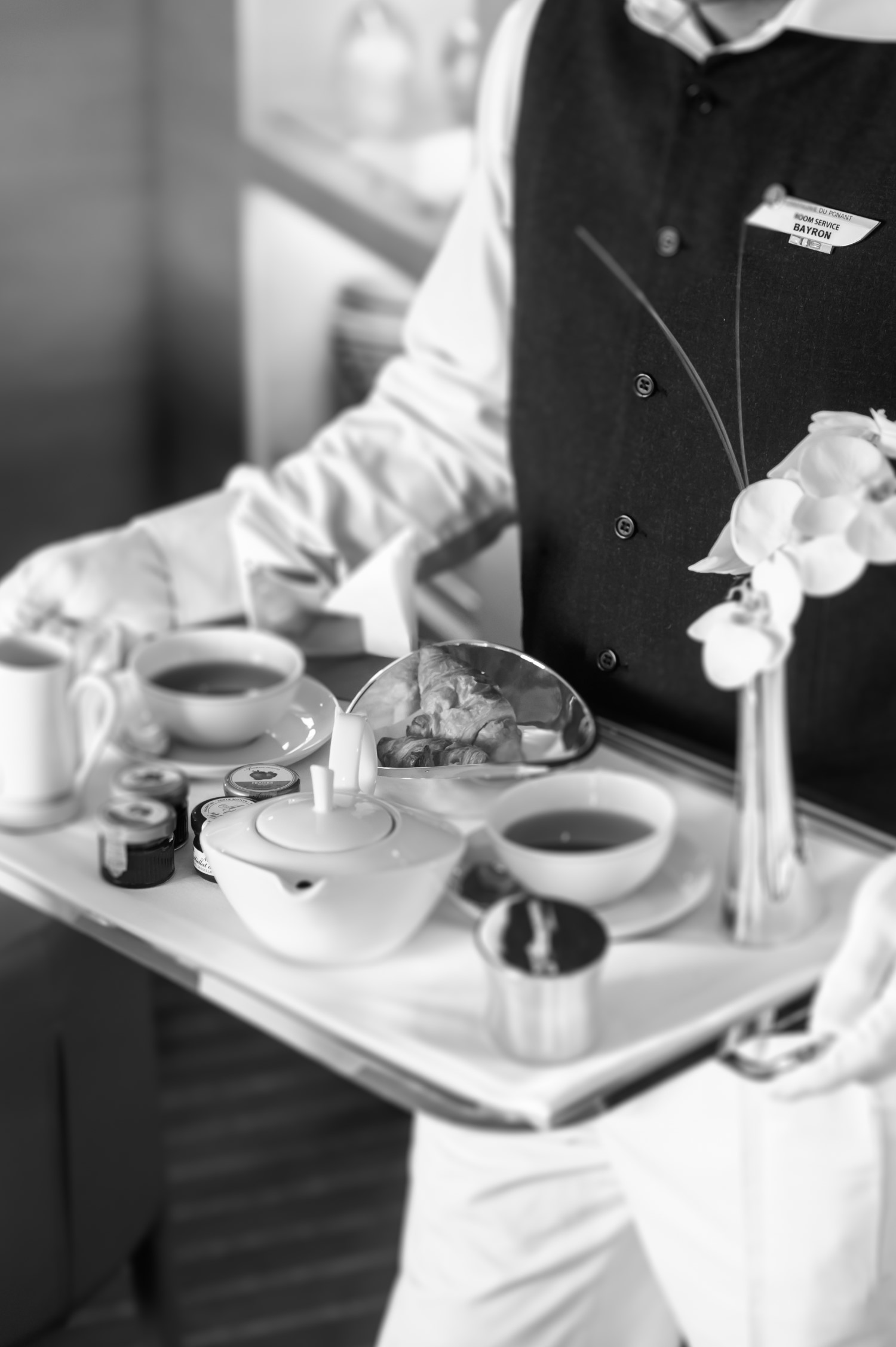
Whether you want to fully enjoy your cabin for breakfast, savor a peaceful snack in the middle of the day, or have your meal in complete privacy, room service is at your disposal. Treat yourself to a moment of indulgence and enjoy a diverse menu available at any time of day and night.
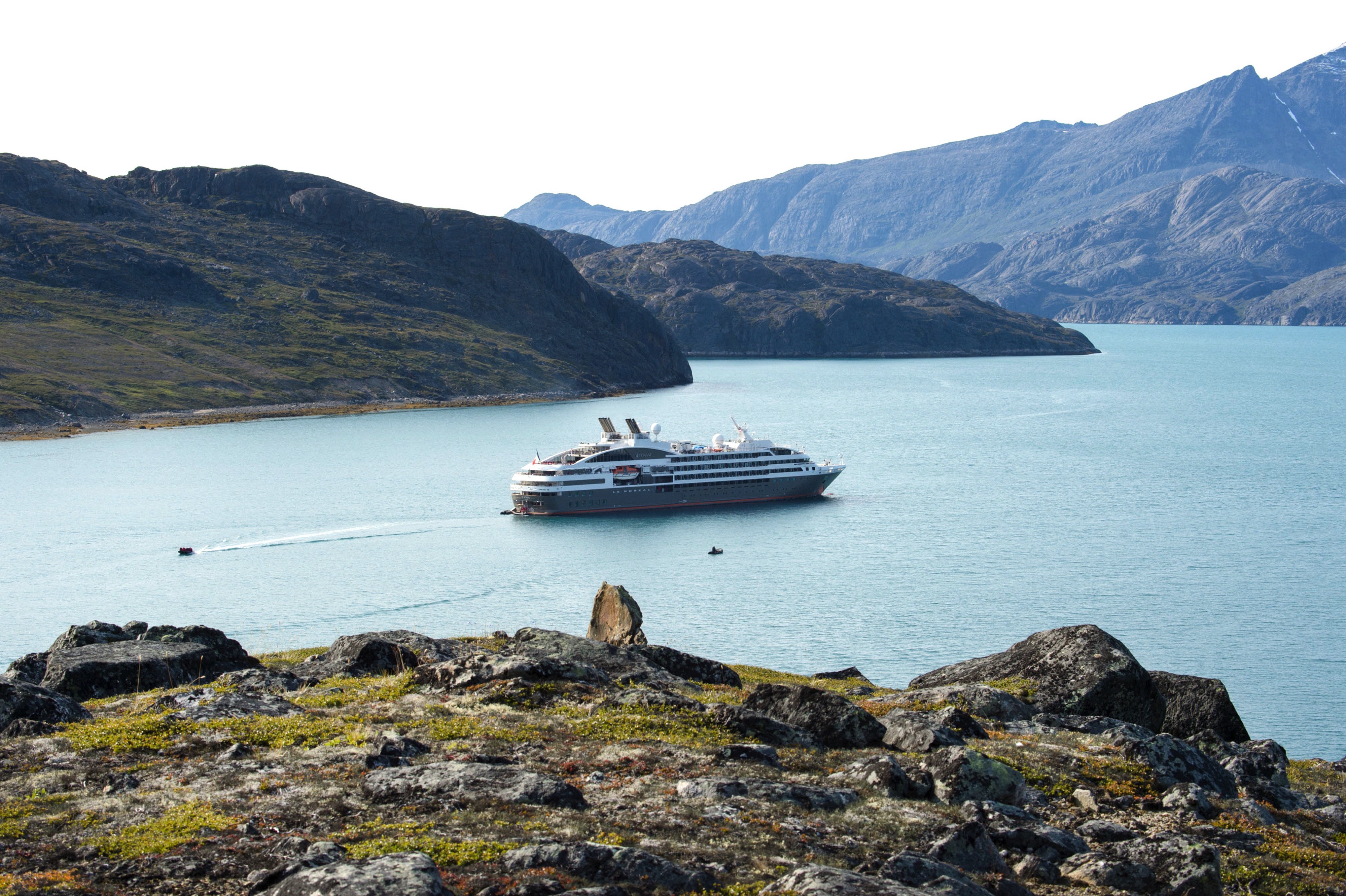
Excursions
There are many ways to see the world. But to truly discover it? Unexplored shores, authentic encounters, iconic wildlife… Our experts imagine the most beautiful travel stories for you.
Unforgettable moments
Holding your breath to better perceive that of a distant whale, stepping foot on Antarctica for the first time, watching through binoculars the passage of a polar bear in the Arctic, marvelling at the splendour of the Mediterranean architectural heritage… Moments of pure emotion as time seems to suspended.
Unique exchanges
Share the art of living, wisdom and hospitality of communities with strong ancestral traditions. Exchanges about their philosophy in connection with the environment are an endless source of teachings.
Explore further
Navigating close to the almost inaccessible coasts of Greenland, exploring the confidential shores of Oceania, reaching the most remote seas of Antarctica, taking new paths in the Mediterranean or Northern Europe: our experts are constantly seeking new travel experiences to offer you.

Experts by your side
Captains, expedition leaders, experienced naturalist guides, lecturers, wildlife photographers, personalities from the world of art, science, culture and gastronomy… Experts share their passions with you on board or on land.
Captains
Your captain is responsible for ensuring the smooth running of your journey on board. An expert in navigating polar or tropical waters, their announcements punctuate your day. And when wildlife appears on the horizon, do not hesitate to accept their invitation to join the outer decks for magnificent observations. Gala dinners are also unmissable opportunities to meet your captain and share with them your passion for travel.
Expedition leaders
Alongside the captain, the expedition leader conducts your exploration. They supervise the team of naturalist guides, ensure the safety of the proposed experiences, and adjust the highlights of your journey according to the navigation conditions, to reveal all the riches of these fascinating ecosystems.
Photo ambassadors
During some trips, having renowned photographers on board offers you the unique opportunity to participate in workshops, and conferences, and receive personalised advice to enhance your images.
Activity guides
Scuba diving, snorkelling, kayaking, polar hiking on foot or snowshoes, cross-country skiing, dog sledding… Whether it’s for an introduction or to deepen your practice, experience immersive activities led by certified guides, ambassadors of local cultures and communities.
Guests and partners
Dancers, musicians, writers, journalists, researchers, adventurers… Experts and prestigious partners share their passion, whether it is artistic or scientific.
Speakers
Art historians, journalists, ethnologists, naturalists… Every journey is a unique opportunity to learn more about the regions visited.
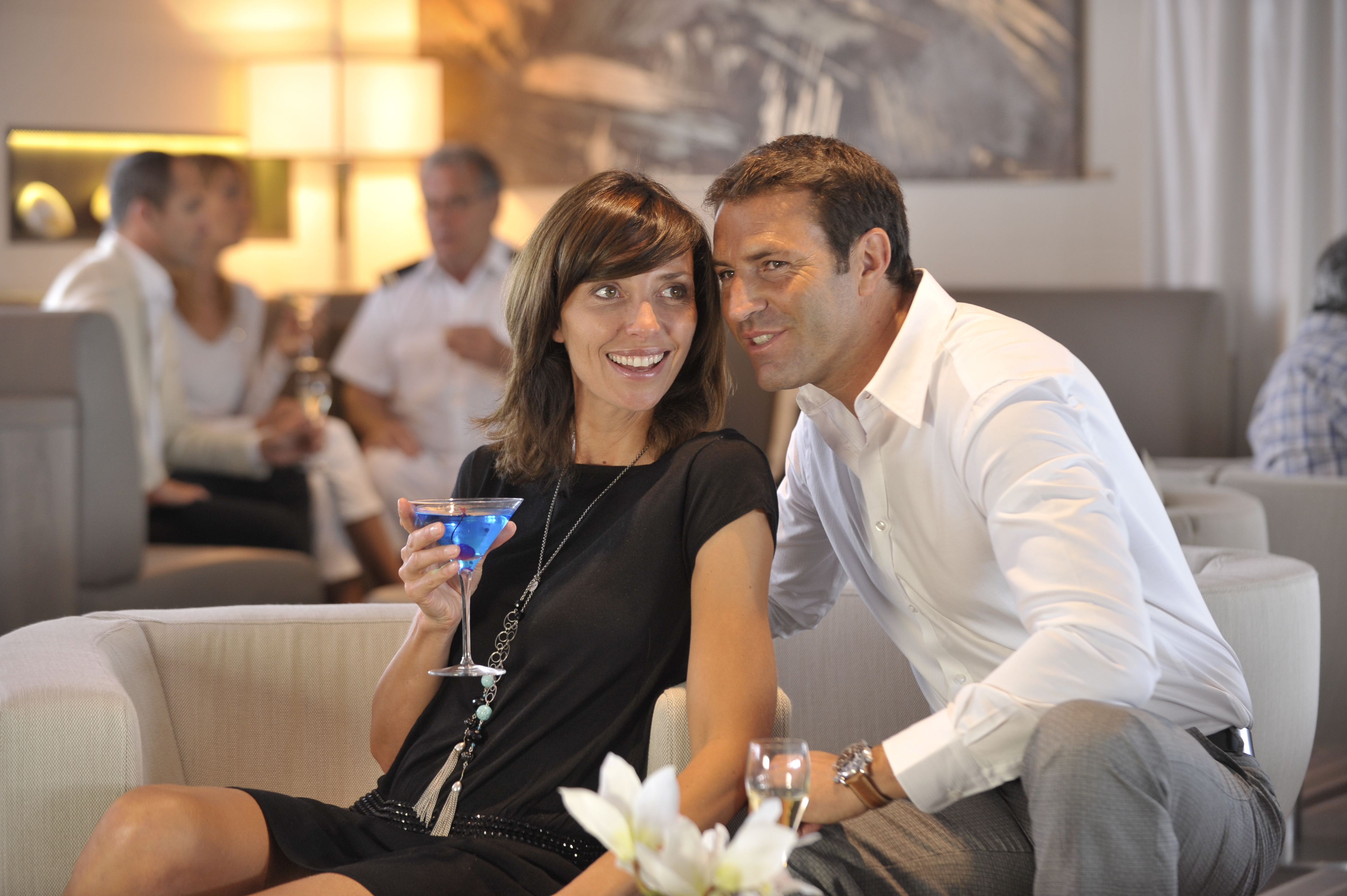
The Main Lounge Room
Tea room, bar, live music, dance floor, terrace: the main lounge is an essential meeting place throughout your journey.
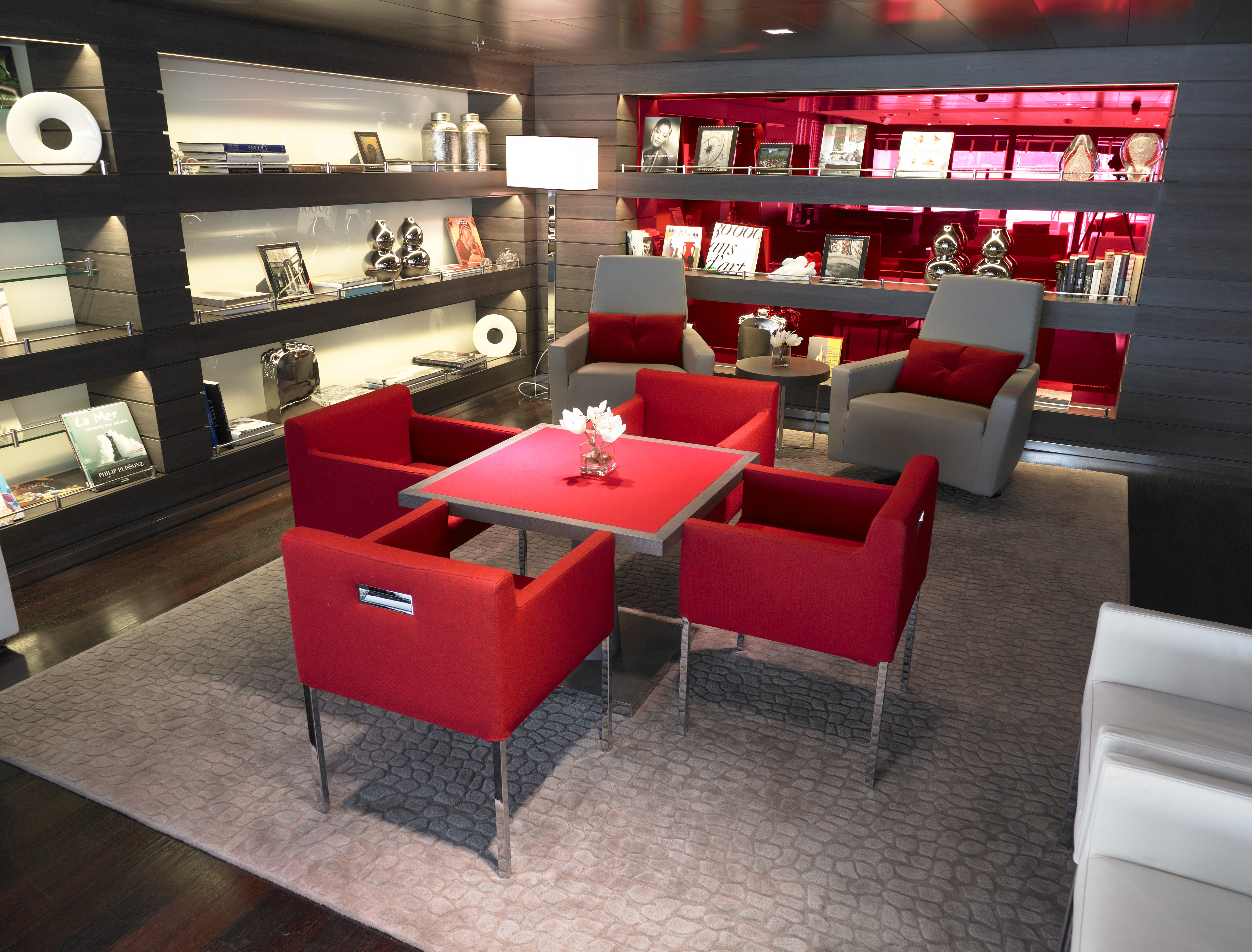
The Observatory Lounge
Library, internet space, bar, occasional live entertainment, terrace: enjoy a 180° panorama of the horizon from the observatory lounge.
The Outdoor Bar
Enjoy a drink in the outdoor lounge area with 50 seats and take in the view of the sea and the pool bridge.
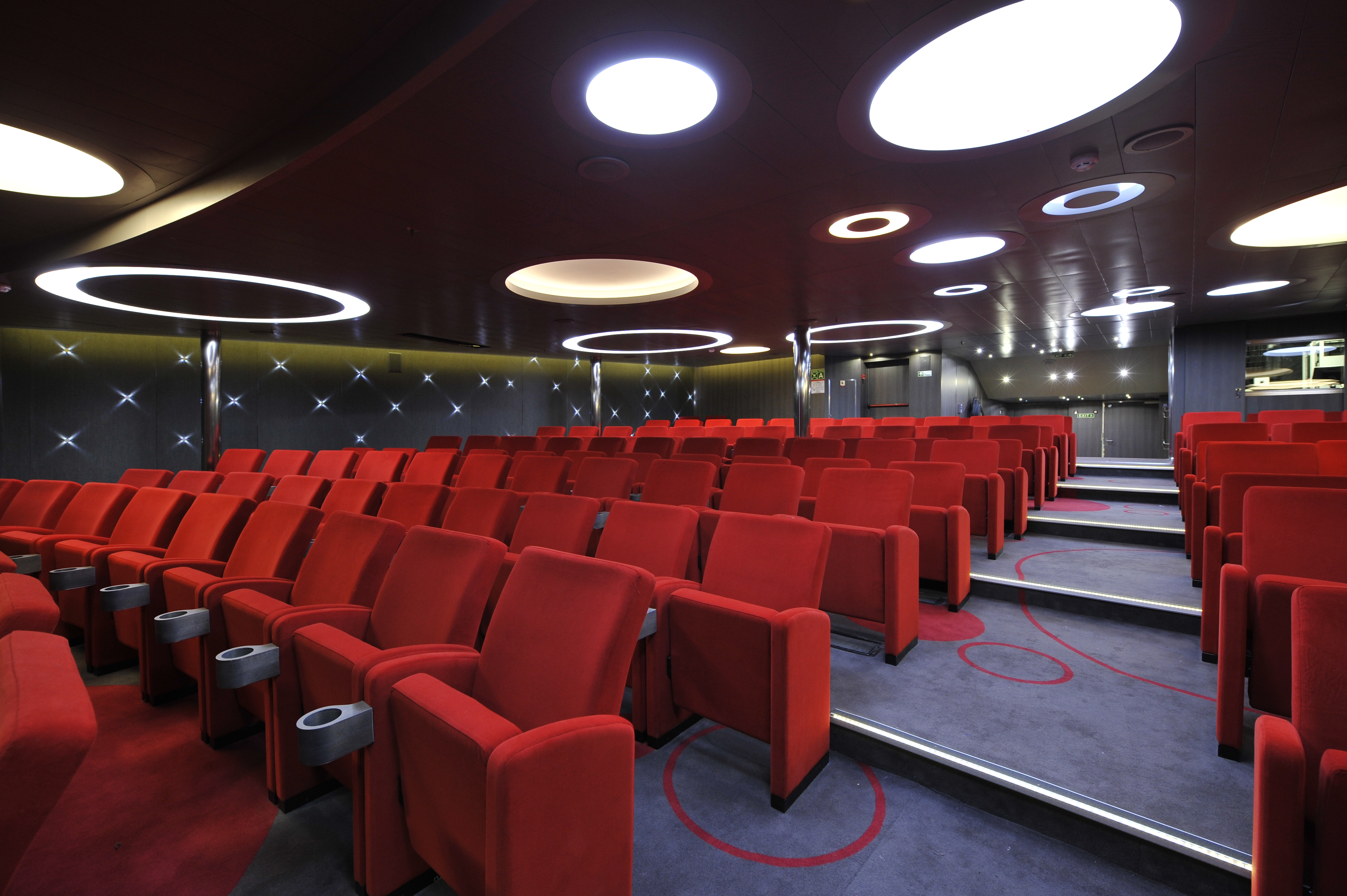
Theatre
Comfortably seated, you will attend the conferences given by the guests and teams of naturalists, as well as the various shows, concerts, and performances organised by professional dancers and musicians on board.
Music and dance
Opera, jazz, piano recitals, concerts or ballets at sea or on land: musical cruises and dance cruises offer privileged experiences, in small groups, alongside prestigious partners, such as Radio Classique or the Paris National Opera and talented artists of international renown.
Art and literature
Share high-quality moments and attend conferences by curators from national and international museums, women and men from the world of culture, renowned writers, actors and philosophers. They discuss their passion during conferences or private visits. Experience the opportunity to open up to new perspectives.
Swimming Pool
With its water blending into the surrounding landscapes, the pool is conducive to moments of relaxation in the sun.
Excursion Reception and Office
If you have not made a pre-booking before your cruise, you can book your excursions on board during one of the daily opening times of the excursion desk (timetables available in your daily program). It is only possible to pre-book one excursion per port day. If you would like to book a second excursion on the same day, please contact the excursion desk to check availability.
PONANT Studio
A photography and videography team escort you throughout your trip. These professionals capture the most beautiful moments of your cruise, which you can share with family and friends upon your return. Meet them on DECK 5 (DECK 6 on the PONANT Explorers ships) at the photo/video area, where you can also order souvenir pictures and videos.
Boutique
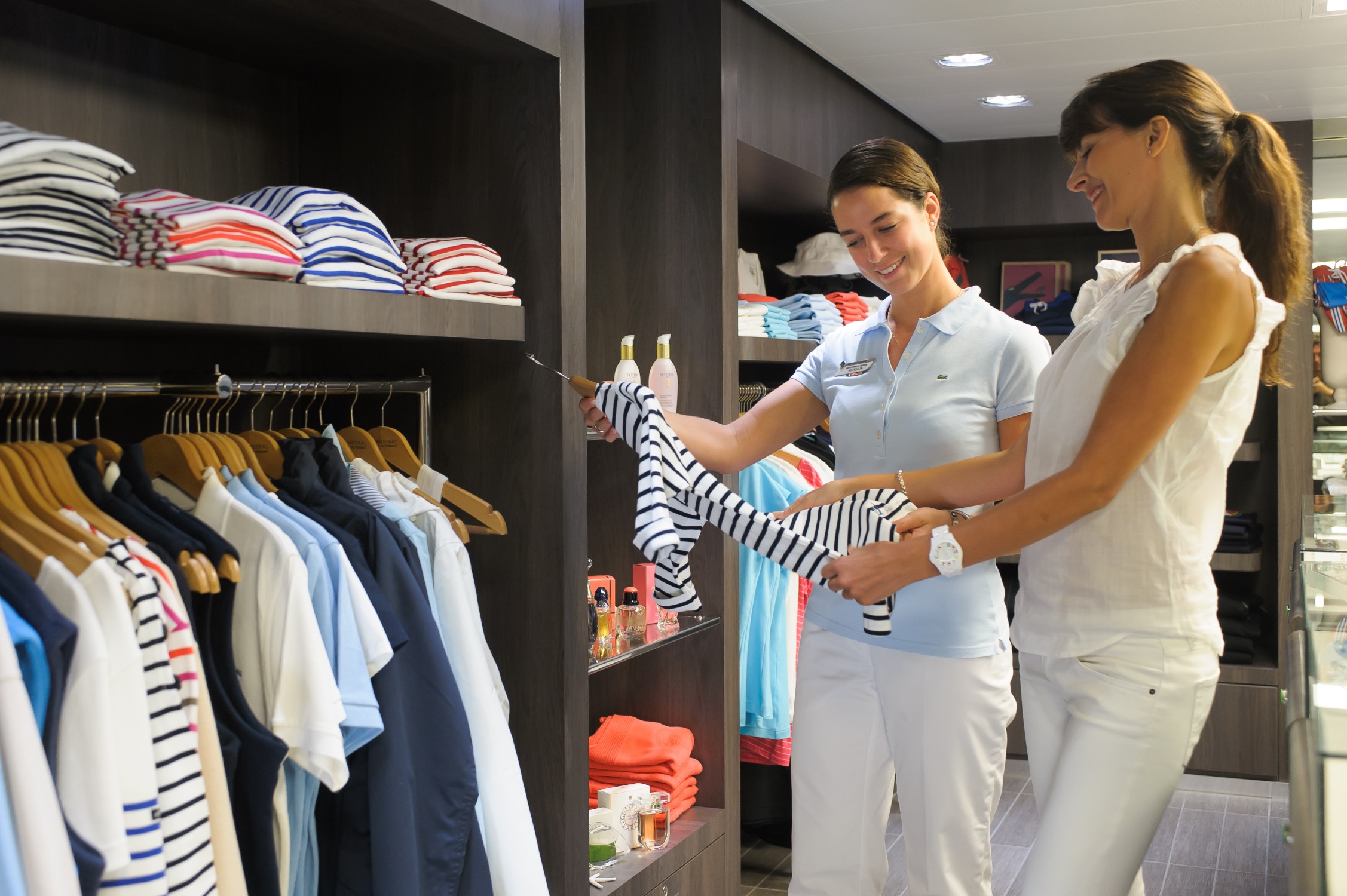
An extension of the journey and the ship, la Boutique offers an exclusive shopping experience with a wide range of technical and casual ready-to-wear and equipment, with or without PONANT personalization. It also features unique souvenirs to extend the journey back home, as well as jewelry, accessories and luxury items. Opening hours follow the voyage schedule, including days at sea, and all purchases on board are tax-free.
The Spa
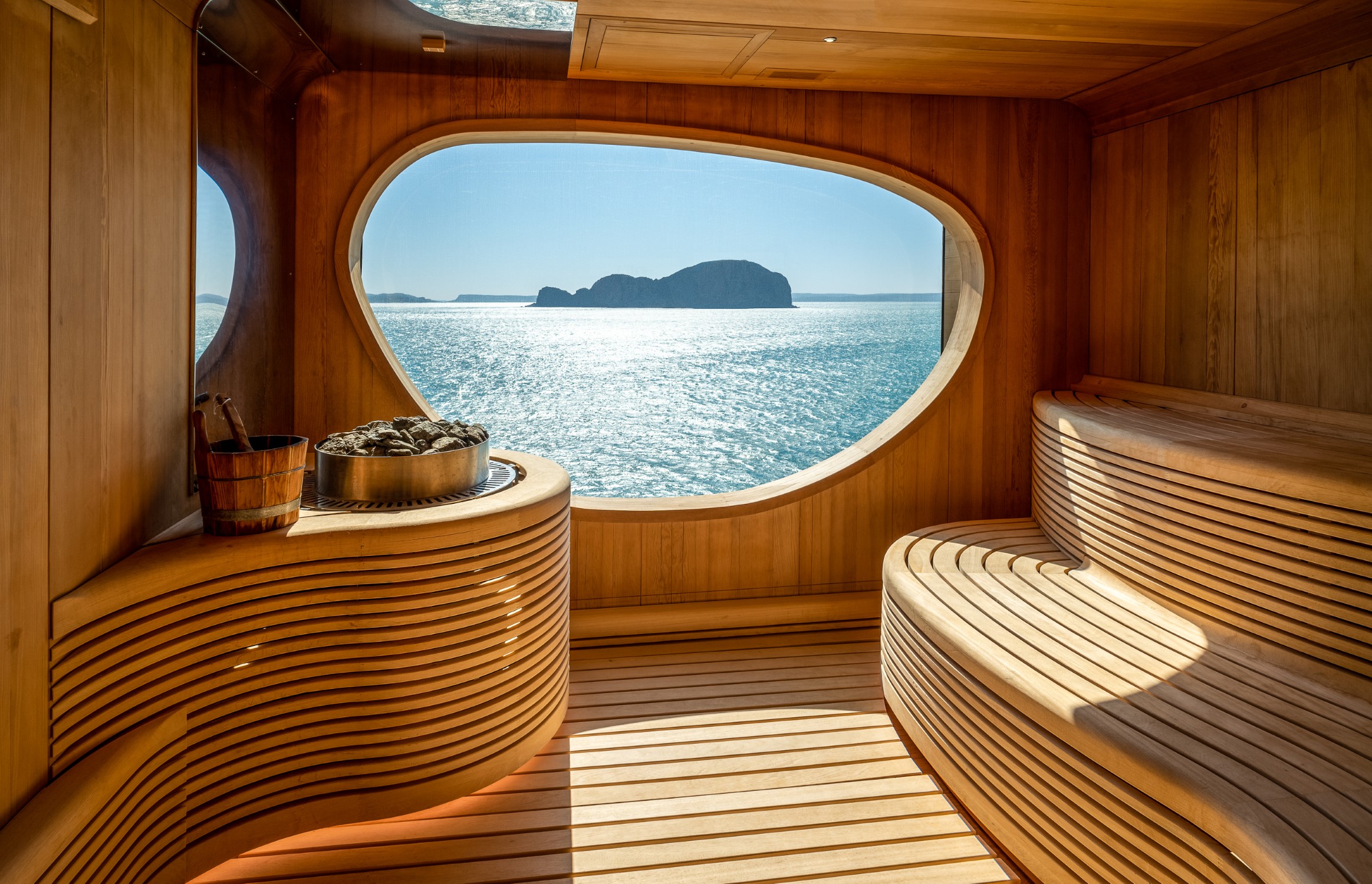
Onboard our ships, in the heart of an intimate and privileged environment with the ocean as your backdrop, discover a new way to enjoy the Spa experience.
In association with SOTHYS™ Paris, we are offering you a selection of expert face and body treatments. The “savoir-faire” and expertise of our hair professional partner DAVINES® will be able to satisfy all your expectations.
The Fitness Centre
The fitness room offers a wide range of exercises suitable for all levels to train facing magnificent views.
The Hairdressing Salon
Each product has been crafted using the most advanced cosmetic technologies and natural ingredients. Developed and packaged while minimising the environmental impact, Davines® products are inspired by the Sustainable Beauty ideal, an inseparable unit between Beauty and Being. During your cruise, treat your hair to a unique beauty experience. Our expert stylist will do an in-depth analysis of your hair and recommend the most appropriate treatment.
Laundry
Your staterllm attendant is at your disposal to provide a laundry service. It takes 24 to 48 hours to wash and iron your clothes. Only an ironing service can be provided on the same day. Dry cleaning is not possible, so we kindly ask you to only give us clothes that can be washed with water.
** These services are chargeable and billed directly to your cabin account.
Smoking Policy
Ships are non-smoking, even on accommodation balconies. Smoking is only allowed in designated outdoor areas of the ship.
Power Adapters
Electrical plug adapters are provided on board, they are available at the reception.
Are the electrical outlets on board compliant with European standards?
Yes, the alternating current 220 volts 50 Hertz is distributed through outlets compliant with European standards. The electricity on board is in 220 volts AC (European standard) and 110 volts AC (North American standard). For safety reasons, the use of hair straighteners and irons is not allowed in the staterooms. On board Le Ponant, the 110 volts AC is only distributed in the bathroom of the staterooms.
Age Restrictions
Children under one (1 year old / 12 months) are not permitted on PONANT EXPLORATIONS cruises.
On Classic cruises, children are permitted from one (1 year old), with a maximum of five children aged one to six (1 to 6 years old) on board each voyage.
Children aged four years and older are welcome at the Kids’ Club when the service is offered on board.
In all cases and at all times, both on board or on land, children and young minors are the full and total responsibility of their parents or accompanying adults.
Languages
The languages spoken on board are French and English. The signage is in French and English. On some cruises, crew members also speak other languages.
Wi-Fi
You have free Wi-Fi internet access on board all ships (cabins and common areas). On the Sisterships (L’Austral, Le Lyrial, The Boréal, Le Soléal), one or more computers are available to you in the leisure areas. Thanks to the Starlink network provided by Marlink, PONANT EXPLORATIONS GROUP guarantees you quality Wi-Fi access, regardless of the location and navigation conditions.
Medical Facilities
There is a doctor on board available to the passengers on all our ships:
- The schedules of consultation are listed each day in the log book (emergency consultation 24/7).
- The Sisterships, PONANT Explorers and Le Commandant Charcot also have a hospital for any small surgery.
- During the excursions, the passengers are accompanied by a doctor or a nurse.
- There is a fee for consultations on board . The price may vary according to the time and place of the consultation (hospital or staterooms). You must also pay for medications.
- The doctor on board is not authorised to distribute sick leaves and prescriptions. Only accounts and invoices are provided which may be used by the passenger to obtain a refund from his/her health insurance if his/her contract allows.
Medical Consultations
Consultations, medical and surgical procedures, laboratory tests or medical imaging examinations (radiology) carried out on board by the doctor or nurse are subject to charges. The price may vary depending on the time and location of the consultation (at the onboard hospital or in the cabin). The cost of all procedures is displayed in the waiting room. Guests are also required to pay for any medications.
The ship’s doctor is unable to provide medical certificates and prescriptions. Only reports and invoices are issued, which can be used by the guest to claim a refund from their health insurance if their policy allows it.
Special Medical Treatment
If you have a special treatment, please inform the reservation service at the time of your registration, indicate it on the information form filled out before departure, then inform the crew on board at the time of boarding and bring your specific medications for the duration of the cruise.
Seasickness
Our ships (with the exception of Le Ponant and the Spirit of Ponant) are equipped with stabilisers fitted with dynamic fins that adapt to the movements of the ship. This system allows for anticipation and compensation for pitch and roll to provide great stability. Guests anticipating seasickness experience reduced symptoms and are surprised not to be inconvenienced.
Guests with reduced mobility
Only the Sisterships, the PONANT Explorers, Paul Gauguin and Le Commandant Charcot have been designed to accommodate passengers with reduced mobility.
Staterooms specially designed on board the Sisterships, decks 3 (307), 4 (407) and 5 (509) 3 c for two people aged 18. in a wheelchair, with a double bed (180 x 200) cm) or two single beds (90 x 200 shower and toilet in the bathroom as well as a balcony of 4 2 (only for cabins on the decks 4 and 5) having a small ramp Wheelchair accessible,
on board the PONANT Explorers, decks 4 (431) and 5 (527) 2 cabins for two people each at 27.5 2in a wheelchair, with a double bed (180 x 200) cm) or two single beds (90 x 200 sink, shower, and toilet in the bathroom, as well as a balcony of 4 Wheelchair accessible,
on board the Commandant Charcot, points 6 (626 and 628) and 8 (818) 3 cabins for two people each of 28
2I’m accIin a wheelchair, with a double bed (180 x 200) cm) or two single beds (90 x 200 shower and toilet in the bathroom, as well as abalcony of 7.5.2 a small ramp Wheelchair accessible,
on board the Paul Gauguin, bridge 4 (415 and 416) 2 cabins for two people each aged 21 in a wheelchair, with a double queen size bed (160 x 200) cm) only for the 416, and a double queen size bed (160 x 200 cm) or two single beds (80 x 200 cm) for the 415, shower and toilet in the bathroom, as well as.a window with panoramic view.
Ramps providing easy access for movement in common areas.
Posters, signage, and cabin numbers translated into braille.
Despite these arrangements, each passenger must be able to be autonomous or travel with a companion who can provide all the necessary assistance during their journey. If a person is not deemed sufficiently fit to travel safely, the company reserves the right to refuse their boarding. Landings in difficult areas or on zodiacs are subject to the approval of the captain, always with the passenger’s well-being and safety in mind.
Packing Tips
Technical Accessories
We recommend that you bring a ski mask, sunglasses, walking sticks, a waterproof backpack, binoculars, a technical watch, a mosquito net for the face (in the Arctic), and a waterproof pouch. These accessories are also available for purchase at the onboard shop.
Dress Code
Dress Code
We recommend wearing casual and elegant outfits, cocktail attire for gala evenings, and white or black and white attire for the Officers’ evening. Shorts and bermudas are not allowed in the evening at gourmet restaurants.
Expedition Cruise
For an expedition cruise, pack practical clothing and comfortable shoes. During your polar cruises, a polar parka in your size will be provided and boots in your size will be loaned to you.
Sustainable Development
Sustainable development is enshrined in the company’s statutes and is at the heart of the PONANT EXPLORATIONS GROUP project. Founded over 30 years ago by committed sailors, the company was born out of a desire to share the passion for the oceans and the treasures of the Earth. This responsibility commits us to engage in a respectful dialogue with the environment and the populations encountered, and to invest in various areas related to the preservation and enhancement of the natural and cultural heritage of polar and oceanic regions.
To learn more about our commitments to sustainable development and about the PONANT Foundation, visit the page. Engagements.
Clean Ships
We were among the first in the world to abandon heavy fuel. Our ships are equipped with electric diesel engines and SCR catalytic converters, which help reduce our emissions and fuel consumption. Our high polar exploration ship, Le Commandant Charcot, is a hybrid electric ship, powered by liquefied natural gas (LNG) and light fuel. Thanks to LNG, there is a reduction of -25% in CO2 emissions, -85% in nitrogen oxide emissions, and -95% in fine particle emissions. Every time we design a new ship, we equip it with the latest eco-technologies available, allowing us to maintain our position as a leader in the cruise industry in terms of the environment, surpassing international regulations in some aspects. This commitment is recognised by numerous independent organisations. If you would like to learn more, please visit our section on ‘labels, certifications, and distinctions’ on the Engagements page.
Wastewater
Wastewater is treated using processes that exclude the use of chemicals. The treated water is sometimes reused on board for technical purposes (laundry, deck washing…) and is used for the external cleaning of the ship.
Waste
We have optimised our organisation to reduce waste at the source, waste is still produced on board. Equipment adapted for sorting each type of waste is in place. This equipment helps reduce the stored volume and facilitates their recovery. We ensure complete traceability of this waste and have a valuation rate of 80% by 2026.
Single-use plastics
We have eliminated single-use plastics (such as straws, cups, food portions, laundry bags, etc.). A metal water bottle is provided to each guests during expedition cruises, and water fountains are available in the common areas of the ships. We are also developing the bottling of our water in glass bottles.
Discover all our products in daily actions.
Special Diets
If you follow a specific diet (vegetarian, diabetic, low calorie, gluten-free, allergy…), it is essential to specify it when making your reservation. You will then receive adapted menus throughout your cruise.
Solo Travelling
Every season, we offer a wide range of cruises with ‘no single supplement’: you thus benefit from a double stateroom to yourself, at no extra cost. The onboard atmosphere is conducive to meeting and interacting with other guests, and the crew ensures your well-being and integration on board. Discover the cruises by consulting the single page offered.
PONANT App
Our app accompanies you in your preparations and during your stay on board. Find the services offered and the information that facilitates your journey.
Are you soon boarding with us?
Thanks to its app, PONANT accompanies you in your travel preparations, and then during your stay on board. Find our services and information that will make your cruise even easier.
Prepare your cruise with peace of mind
- Receive notifications to pre-book your programs before and after the cruise, as well as your excursions.
- Get a sneak peek of the captain and crew who will accompany you during your stay.
- Follow in real-time the positioning of the ship on which you will embark.
- Access your luggage checklist, the clothing outfits recommended by our experts for your destination, and the formalities to be expected before your departure.
- Check the steps of your journey and find out the details of the amenities in your cabin.
Once on board, the PONANT app makes all your procedures easier
- Use the guest mode to access onboard services without logging in.
- Find the highlights of your cruise, day by day.
- Add your favourite excursions to your wishlist.
- Check out the most beautiful photos from your cruise.
- Order your breakfast and room service from your smartphone.
- Conference schedules, spa relaxation sessions… All your important appointments on board are noted in your application.
Download the application
The companion of your next journey
Required Android version: 5.0 and later Required iOS version: 12.4 and later
Included on Every Cruise
A complete offer (excluding Spirit of PONANT and La Désirade¹)
SERVICES INCLUDED ON ALL OUR CRUISES
- Full board from arrival to departure day
- High-end gastronomy in all restaurants
- All drinks in restaurants, bars and minibars. All drinks are included² (selection of champagnes, wines and spirits, beers, cocktails, water, soft drinks, hot drinks)
- 24-hour room service
- Butler service for certain suites³
- Free and unlimited internet access on board
- Evenings, shows and other entertainment
- Access to the fitness area and the hammam or sauna, depending on the ship.
- All port and security fees
SERVICES INCLUDED DEPENDING ON THE TYPE OF CRUISE/SHIP
- Timeless: one included excursion⁴ per person, per day and per stopover, led by local guides (visits to monuments, tastings of local products, etc.)
- Discoveries: one included activity per person, per day and per stopover, which can be either an included excursion⁴ led by local guides or an included activity led by naturalist guides
- Expeditions: one activity included per person, per day, per port of call, led by naturalist guides (hiking, zodiac excursions, etc.).
- Some more secluded ports of call, with few or no facilities, will be offered for independent exploration. Passengers will thus have the freedom to explore the area and enjoy activities on their own (swimming at the beach, shopping, restaurants, shows, etc.).
- Lectures by our naturalist guides or our destination expert (excluding sea voyages)
- Non-motorized water sports activities (excluding diving), such as kayaking on the Commandant Charcot or stand-up paddleboarding depending on the ship, are subject to weather and safety conditions, local authorizations, and the Captain’s agreement.
- Taxes for national parks and protected areas
- The accompaniment of a team of naturalist guides is provided only on expedition and discovery cruises; on land or, depending on the destination, during excursions and/or landings by Zodiac.

Deck 7
- Pool Bar

Deck 6
- Pool
- Grill
- Bar
- Observatory Lounge
- Panoramic Terrace
- Library
- Owner’s Suite
- Deluxe Suite
- Prestige Suite
- Upper Decks Balcony Suite

Deck 5
- Fitness Room
- Hair Salon
- Spa
- Studio PONANT
- Bridge
- Prestige Suite
- Upper Decks Balcony Suite
- Accessible Suite

Deck 4
- Theatre
- Upper Decks Balcony Stateroom
- Accessible Room

Deck 3
- Main Lounge
- Bar
- Excursion Desk
- Reception Desk
- Medical Centre
- Shop
- Lower Deck Balcony Stateroom
- Window or Porthole Stateroom

Deck 2
- Gastronomic Restaurant
- Marina