

Itinerary
Venice is a city unlike any other. No matter how often you’ve seen it in photos and films, the real thing is more dreamlike than you could imagine. With canals where streets should be, water shimmers everywhere. The fabulous palaces and churches reflect centuries of history in what was a wealthy trading center between Europe and the Orient. Getting lost in the narrow alleyways is a quintessential part of exploring Venice, but at some point you’ll almost surely end up in Piazza San Marco, where tourists and locals congregate for a coffee or an aperitif.
One of the true jewels of the Mediterranean, Rovinj is a jaw-droppingly beautiful town, which juts out into sparkling Mediterranean. Dominated by the pencil-like bell tower of the Venetian Saint Euphemia Cathedral, pine tree forests flow to the borders of the quaint Old Town – which evokes the romantic, tangled backstreets of the Venice. Rovinj – or Rovino in Italian – is a city of split personalities, with two official languages – having been owned by the Kingdom of Italy between 1919 and 1947.
Dalmatia’s capital for more than 1,000 years, Zadar is all too often passed over by travelers on their way to Split or Dubrovnik. What they miss out on is a city of more than 73,000 that is remarkably lovely and lively despite—and, in some measure, because of—its tumultuous history. The Old Town, separated from the rest of the city on a peninsula some 4 km (2½ miles) long and just 1,640 feet wide, is bustling and beautiful: the marble pedestrian streets are replete with Roman ruins, medieval churches, palaces, museums, archives, and libraries. Parts of the new town are comparatively dreary, a testament to what a world war followed by decades of communism, not to mention a civil war, can do to the architecture of a city that is 3,000 years old. A settlement had already existed on the site of the present-day city for some 2,000 years when Rome finally conquered Zadar in the 1st century BC; the foundations of the forum can be seen today. Before the Romans came the Liburnians had made it a key center for trade with the Greeks and Romans for 800 years. In the 3rd century BC the Romans began to seriously pester the Liburnians, but required two centuries to bring the area under their control. During the Byzantine era, Zadar became the capital of Dalmatia, and this period saw the construction of its most famous church, the 9th-century St. Donat’s Basilica. It remained the region’s foremost city through the ensuing centuries. The city then experienced successive onslaughts and occupations—both long and short—by the Osogoths, the Croatian-Hungarian kings, the Venetians, the Turks, the Habsburgs, the French, the Habsburgs again, and finally the Italians before becoming part of Yugoslavia and, in 1991, the independent republic of Croatia. Zadar was for centuries an Italian-speaking city, and Italian is still spoken widely, especially by older people. Indeed, it was ceded to Italy in 1921 under the Treaty of Rapallo (and reverted to its Italian name of Zara). Its occupation by the Germans from 1943 led to intense bombing by the Allies during World War II, which left most of the city in ruins. Zadar became part of Tito’s Yugoslavia in 1947, prompting many Italian residents to leave. Zadar’s most recent ravages occurred during a three-month siege by Serb forces and months more of bombardment during the Croatian-Serbian war between 1991 and 1995. But you’d be hard-pressed to find outward signs of this today in what is a city to behold. There are helpful interpretive signs in English all around the Old Town, so you certainly won’t feel lost when trying to make sense of the wide variety of architectural sites you might otherwise pass by with only a cursory look.
Split’s ancient core is so spectacular and unusual that a visit is more than worth your time. The heart of the city lies within the walls of Roman emperor Diocletian’s retirement palace, which was built in the 3rd century AD. Diocletian, born in the nearby Roman settlement of Salona in AD 245, achieved a brilliant career as a soldier and became emperor at the age of 40. In 295 he ordered this vast palace to be built in his native Dalmatia, and when it was completed he stepped down from the throne and retired to his beloved homeland. Upon his death, he was laid to rest in an octagonal mausoleum, around which Split’s magnificent cathedral was built.In 615, when Salona was sacked by barbarian tribes, those fortunate enough to escape found refuge within the stout palace walls and divided up the vast imperial apartments into more modest living quarters. Thus, the palace developed into an urban center, and by the 11th century the settlement had expanded beyond the ancient walls.Under the rule of Venice (1420–1797), Split—as a gateway to the Balkan interior—became one of the Adriatic’s main trading ports, and the city’s splendid Renaissance palaces bear witness to the affluence of those times. When the Habsburgs took control during the 19th century, an overland connection to Central Europe was established by the construction of the Split–Zagreb–Vienna railway line.After World War II, the Tito years saw a period of rapid urban expansion: industrialization accelerated and the suburbs extended to accommodate high-rise apartment blocks. Today the historic center of Split is included on UNESCO’s list of World Heritage Sites.
The Croatian island of Hvar bills itself as the “sunniest island in the Adriatic.” Not only does it have the figures to back up this claim—an annual average of 2,724 hours of sunshine—but it also makes visitors a sporting proposition, offering them a money-back guarantee if there are seven consecutive days of snow (snow has been known to fall here; the last time being February 2012).
Off the coast of Croatia in the southern Adriatic Sea lie some thousand islands and the largest of them, Korçula, is considered the most beautiful. With an average of 3,000 hours of sunshine per annum, which guarantees a wide assortment of Mediterranean vegetation, it is not difficult to understand why seasoned travelers compare Korçula to a latter-day Eden. Separated from the mainland by a channel of only one mile, Korçula’s main town, named the same as the island, ranks among the best preserved medieval towns in the Mediterranean. It is the island’s main tourist, economic and cultural center. Thanks to its strategic location along the sea trade routes, Korçula has always attracted travelers and settlers. Korcula was founded by Greek colonists, who were followed by Illyrians, Romans and finally the Croats. The Korçula Statute of 1214 is one of the oldest legal documents to have been adopted in this part of Europe. The same century saw the birth of the famous world traveler, Marco Polo. The house said to be his birthplace can be seen in town. Korçulans have always been known as keen seafarers, excellent shipbuilders, stonemasons and artists. From their many voyages, sailors brought back new ideas, which eventually mixed with local customs. To this day, Korçula has maintained the tradition of performing knightly games such as the chivalrous Moreska dance, which has been in existence for more than 400 years. Visitors to Korçula enjoy its stunning location, natural beauty and medieval ambiance. And if that’s not enough, the town offers numerous attractions that are within walking distance from the pier, including the City Museum and the Bishop’s Treasury.
Backed by imposing mountains, tiny Kotor lies hidden from the open sea, tucked into the deepest channel of the Bokor Kotorska (Kotor Bay), which is Europe’s most southerly fjord. To many, this town is more charming than its sister UNESCO World Heritage Site, Dubrovnik, retaining more authenticity, but with fewer tourists and spared the war damage and subsequent rebuilding which has given Dubrovnik something of a Disney feel.Kotor’s medieval Stari Grad (Old Town) is enclosed within well-preserved defensive walls built between the 9th and 18th centuries and is presided over by a proud hilltop fortress. Within the walls, a labyrinth of winding cobbled streets leads through a series of splendid paved piazzas, rimmed by centuries-old stone buildings. The squares are now haunted by strains from buskers but although many now house trendy cafés and chic boutiques, directions are still given medieval-style by reference to the town’s landmark churches.In the Middle Ages, as Serbia’s chief port, Kotor was an important economic and cultural center with its own highly regarded schools of stonemasonry and iconography. From 1391 to 1420 it was an independent city-republic and later, it spent periods under Venetian, Austrian, and French rule, though it was undoubtedly the Venetians who left the strongest impression on the city’s architecture. Since the breakup of Yugoslavia, some 70% of the stone buildings in the romantic Old Town have been snapped up by foreigners, mostly Brits and Russians. Porto Montenegro, a new marina designed to accommodate some of the world’s largest super yachts, opened in nearby Tivat in 2011, and along the bay are other charming seaside villages, all with better views of the bay than the vista from Kotor itself where the waterside is congested with cruise ships and yachts. Try sleepy Muo or the settlement of Prčanj in one direction around the bay, or Perast and the Roman mosaics of Risan in the other direction.
Nothing can prepare you for your first sight of Dubrovnik. Lying 216 km (135 miles) southeast of Split and commanding a jaw-dropping coastal location, it is one of the world’s most beautiful fortified cities. Its massive stone ramparts and fortress towers curve around a tiny harbor, enclosing graduated ridges of sun-bleached orange-tiled roofs, copper domes, and elegant bell towers. Your imagination will run wild picturing what it looked like seven centuries ago when the walls were built, without any suburbs or highways around it, just this magnificent stone city rising out of the sea.In the 7th century AD, residents of the Roman city Epidaurum (now Cavtat) fled the Avars and Slavs of the north and founded a new settlement on a small rocky island, which they named Laus, and later Ragusa. On the mainland hillside opposite the island, the Slav settlement called Dubrovnik grew up. In the 12th century the narrow channel separating the two settlements was filled in (now the main street through the Old Town, called Stradun), and Ragusa and Dubrovnik became one. The city was surrounded by defensive walls during the 13th century, and these were reinforced with towers and bastions in the late 15th century.From 1358 to 1808 the city thrived as a powerful and remarkably sophisticated independent republic, reaching its golden age during the 16th century. In 1667 many of its splendid Gothic and Renaissance buildings were destroyed by an earthquake. The defensive walls survived the disaster, and the city was rebuilt in baroque style.Dubrovnik lost its independence to Napoléon in 1808, and in 1815 passed to Austria-Hungary. During the 20th century, as part of Yugoslavia, the city became a popular tourist destination, and in 1979 it was listed as a UNESCO World Heritage Site. During the war for independence, it came under heavy siege. Thanks to careful restoration, few traces of damage remain; however, there are maps inside the Pile and Ploče Gates illustrating the points around the city where damage was done. It’s only when you experience Dubrovnik yourself that you can understand what a treasure the world nearly lost
Ship features
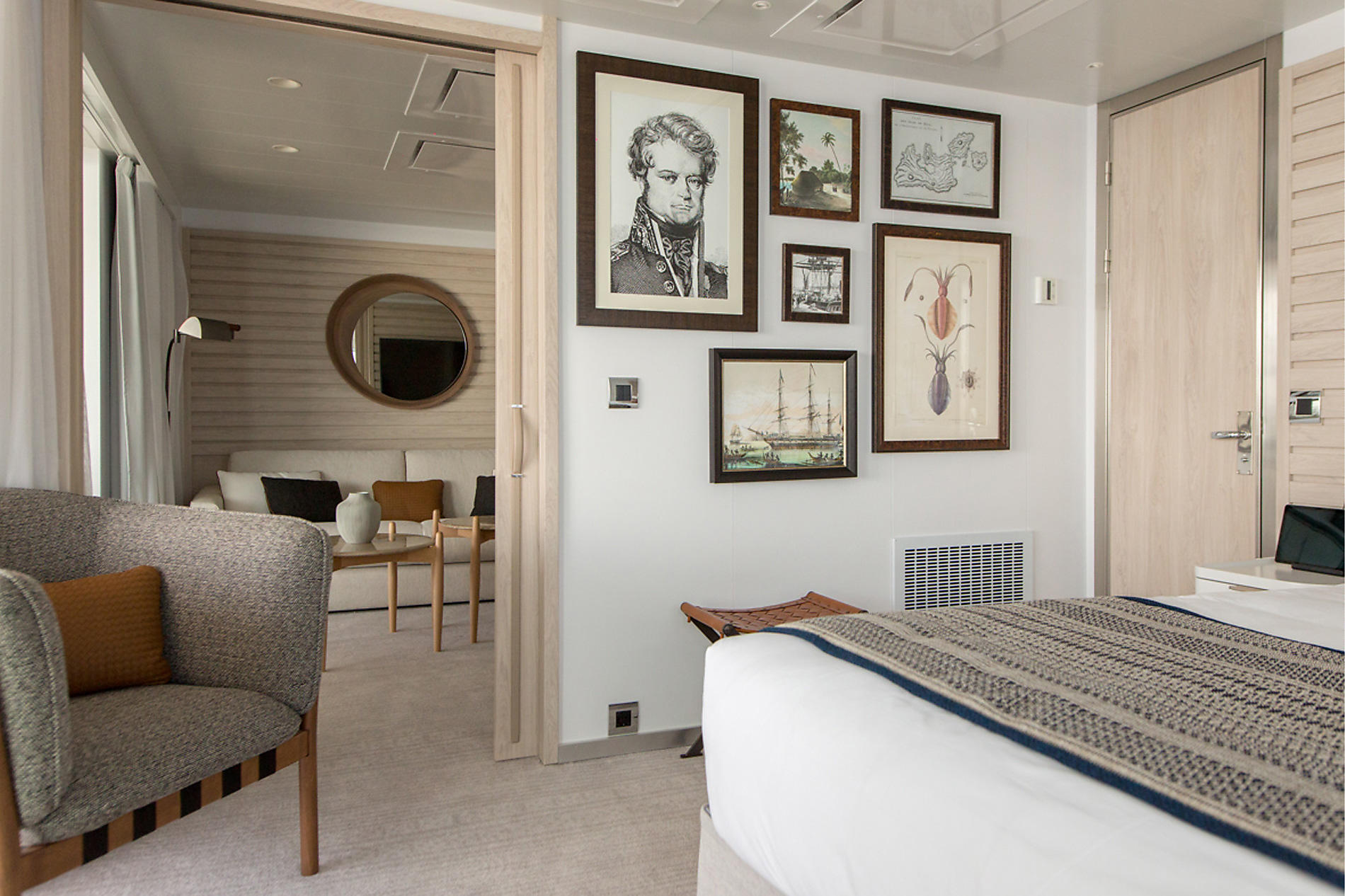
Owner's Suite
In addition to the common services provided to all our suites and staterooms:
- A private 430 ft² terrace with hot tub and lounge area with 2 deck chairs, sofa, and armchair
- Two sliding panoramic windows
- A bathroom with shower, spa bathtub, and smart mirror
- Butler service
- A one-hour treatment per person (for 2 people) in the wellness area, including body and facial treatments
- A private return transfer
- Priority boarding (depending on port of embarkation)
- Champagne and fruit on arrival
- A fruit basket every day
- A living room with a convertible sofa into a double bed, armchair, and TV
- One bedroom with king-size bed (180 x 190 cm) or two single beds (90 x 190 cm)
- Included premium pass: access to a selection of premium spirits at the bar
Included in all staterooms
- Minibar
- Diptyque Paris top-of-the-line bath products
- Bose Bluetooth speaker
- Individually-controlled air conditioning
- Nespresso coffee maker and boiler
- Dressing room with shelves and closet
- 110V American / 220V European
- Dressing table and hairdryer
- Direct line telephone
- 2 ADA stateroom
- 24-hour room service
- Electronic safe
- Flat screen TV, international channels and videos on demand
- Inclusive Wifi internet
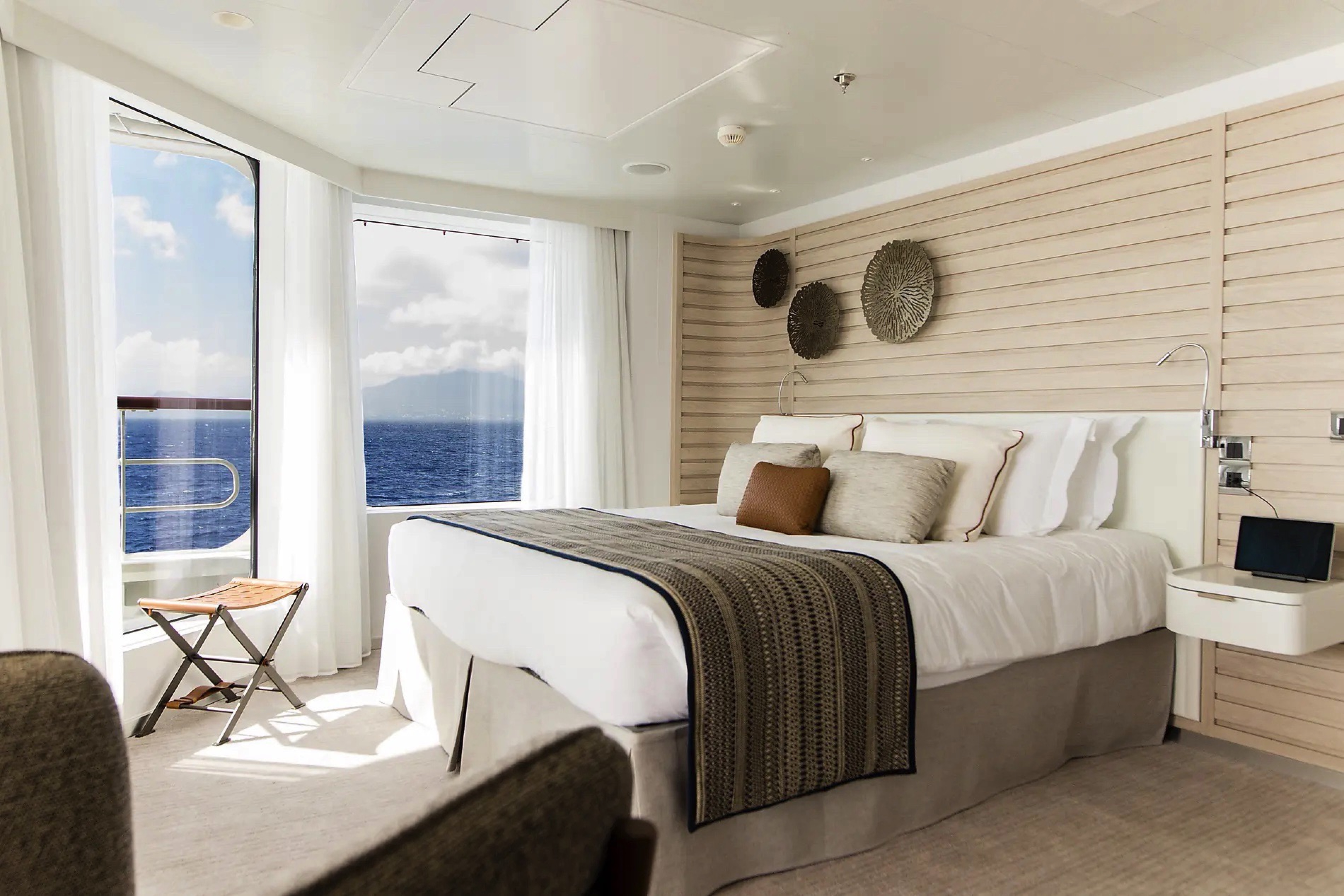
Grand Suite
In addition to the common services provided to all our suites and staterooms:
- A private 344 ft² terrace with two deck chairs and a dining table for four people
- Two sliding panoramic windows
- A bathroom with shower and spa bathtub
- Priority boarding (depending on port of embarkation)
- Butler service
- A fruit basket every day
- One bedroom with king-size bed (180 x 190 cm) or two single beds (90 x 190 cm)
- A living room with a convertible sofa into a double bed, armchair, and TV
- Champagne and fruit on arrival
Included in all staterooms
- Minibar
- Diptyque Paris top-of-the-line bath products
- Bose Bluetooth speaker
- Individually-controlled air conditioning
- Nespresso coffee maker and boiler
- Dressing room with shelves and closet
- 110V American / 220V European
- Dressing table and hairdryer
- Direct line telephone
- 2 ADA stateroom
- 24-hour room service
- Electronic safe
- Flat screen TV, international channels and videos on demand
- Inclusive Wifi internet
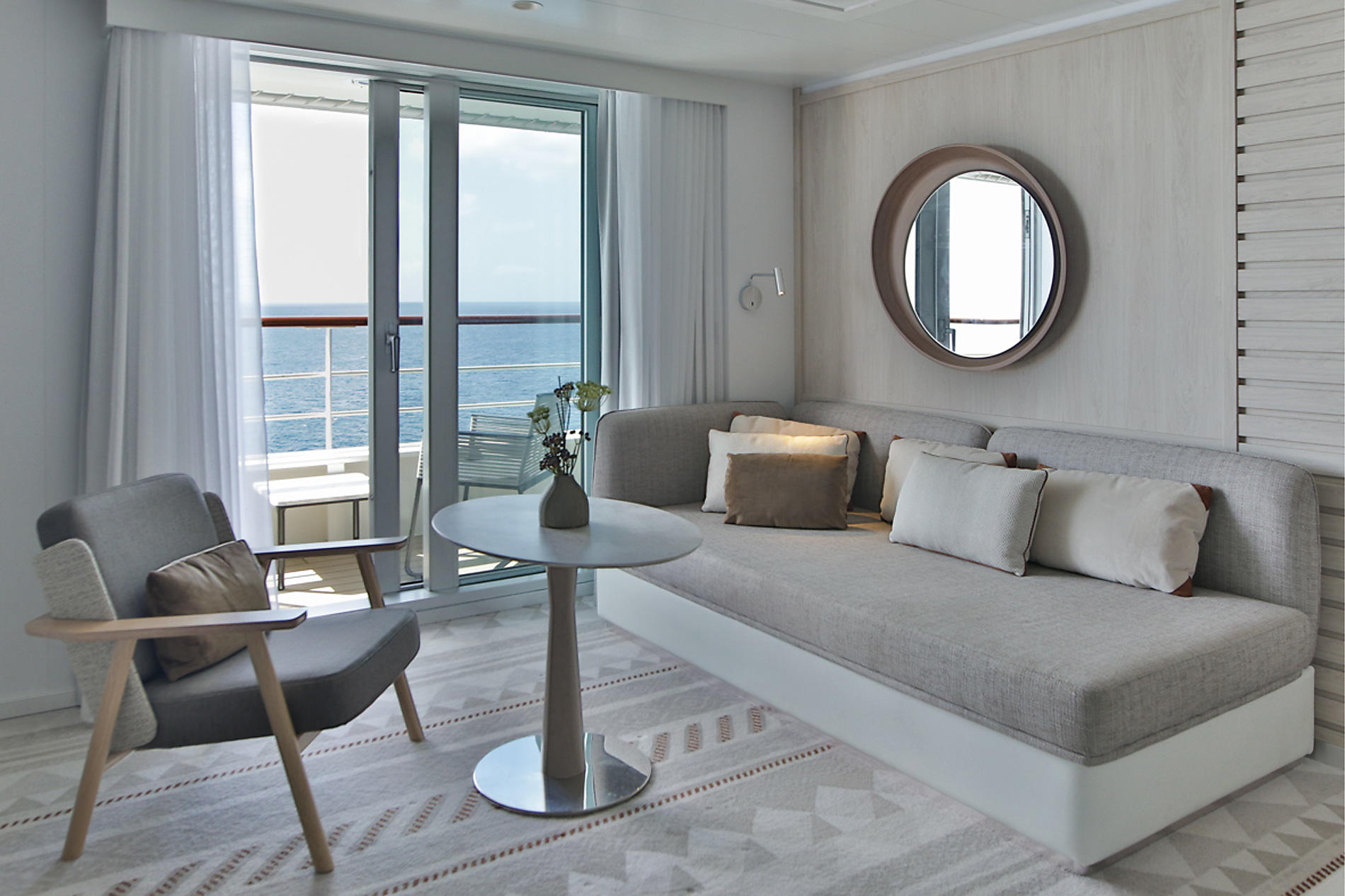
Privilege Suite
In addition to the common services provided to all our suites and staterooms:
- Priority boarding (depending on port of embarkation)
- Champagne and fruit basket on arrival
- Butler service
- A fruit basket every day
- One king-size bed (180 x 200 cm) or two single beds (90 x 200 cm)
- A lounge area with chaise longue and armchair
- A bathroom with shower
- A private 8 m² balcony with two armchairs
- A panoramic sliding bay window
Included in all staterooms
- Minibar
- Diptyque Paris top-of-the-line bath products
- Bose Bluetooth speaker
- Individually-controlled air conditioning
- Nespresso coffee maker and boiler
- Dressing room with shelves and closet
- 110V American / 220V European
- Dressing table and hairdryer
- Direct line telephone
- 2 ADA stateroom
- 24-hour room service
- Electronic safe
- Flat screen TV, international channels and videos on demand
- Inclusive Wifi internet
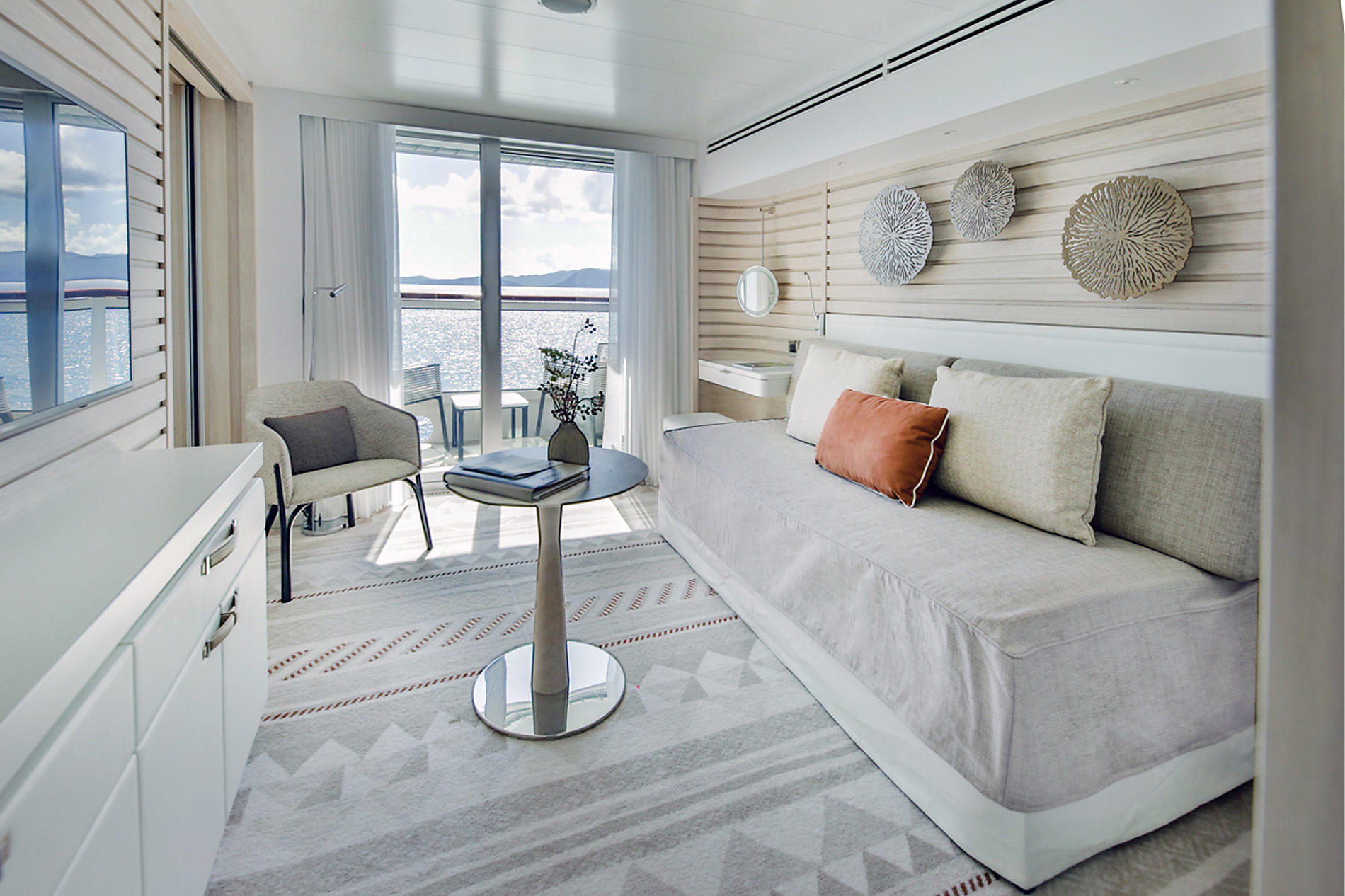
Prestige Suite
In addition to the common services provided to all our suites and staterooms:
- Priority boarding (depending on port of embarkation)
- Champagne and fruit basket on arrival
- Butler service
- A fruit basket every day
- A bedroom with king-size bed (180 x 200 cm) or two single beds (90 x 200 cm)
- A lounge with convertible sofa to a king-size bed (180 x 200 cm) or two single beds (90 x 200 cm), armchair, second TV, and sliding courtesy door
- Two bathrooms with shower
- A private 8 m² balcony with four armchairs
- Two panoramic sliding bay windows
Services provided
- 24-hour room service
- Inclusive Wifi internet access (availability dependent on navigation and latitude)
- Individually-controlled air conditioning
- Dressing room with shelves and closet
- Dressing table and hairdryer
- Diptyque Paris top-of-the-line bath products
- Minibar
- Nespresso coffee maker and boiler
- Electronic safe
- Direct line telephone
- Bose Bluetooth speaker
- Flat screen TV, international channels (availability dependent on navigation) and videos on demand
- 110V American (two flat pins)/220V European (round sockets with two round pins)
- Two ADA staterooms
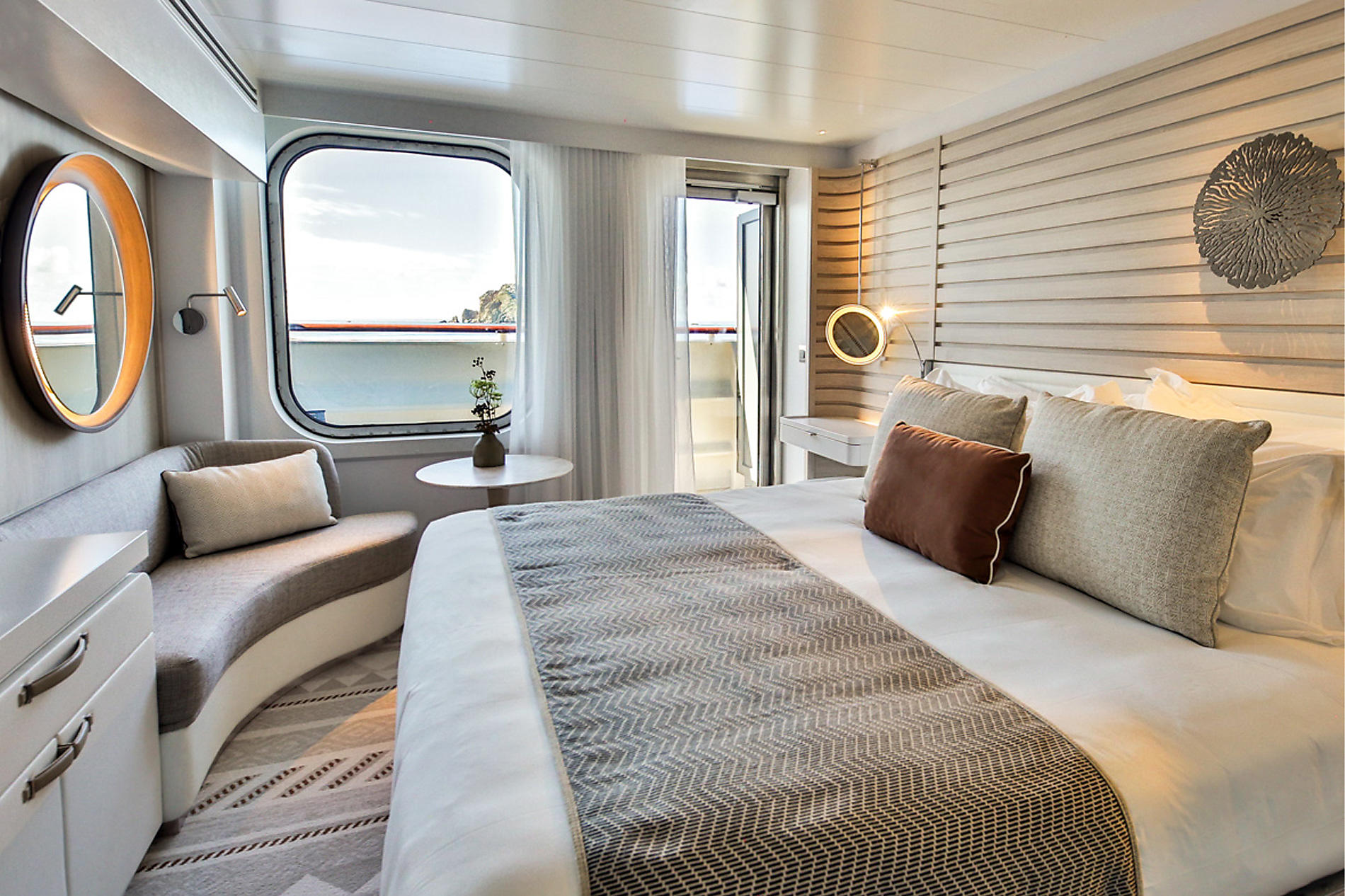
Deluxe Suite
In addition to the common services provided to all our suites and staterooms:
- Suites on Deck 6 have a 32 ft² private balcony with two armchairs Suites on Deck 5 have a 43 ft² private balcony with two armchairs Suites on Decks 3 and 4 have a private 64 ft² balcony with two armchairs
- Suites on Deck 3 have a panoramic glass door and porthole; suites on Decks 4, 5, and 6 have a sliding panoramic window
- One king-size bed (180 x 190 cm) or two single beds (90 x 190 cm)
- An armchair and sofa
- A bathroom with shower
- Champagne and fruit on arrival for suites on Decks 5 and 6
Included in all staterooms
- Minibar
- Diptyque Paris top-of-the-line bath products
- Bose Bluetooth speaker
- Individually-controlled air conditioning
- Nespresso coffee maker and boiler
- Dressing room with shelves and closet
- 110V American / 220V European
- Dressing table and hairdryer
- Direct line telephone
- 2 ADA stateroom
- 24-hour room service
- Electronic safe
- Flat screen TV, international channels and videos on demand
- Inclusive Wifi internet
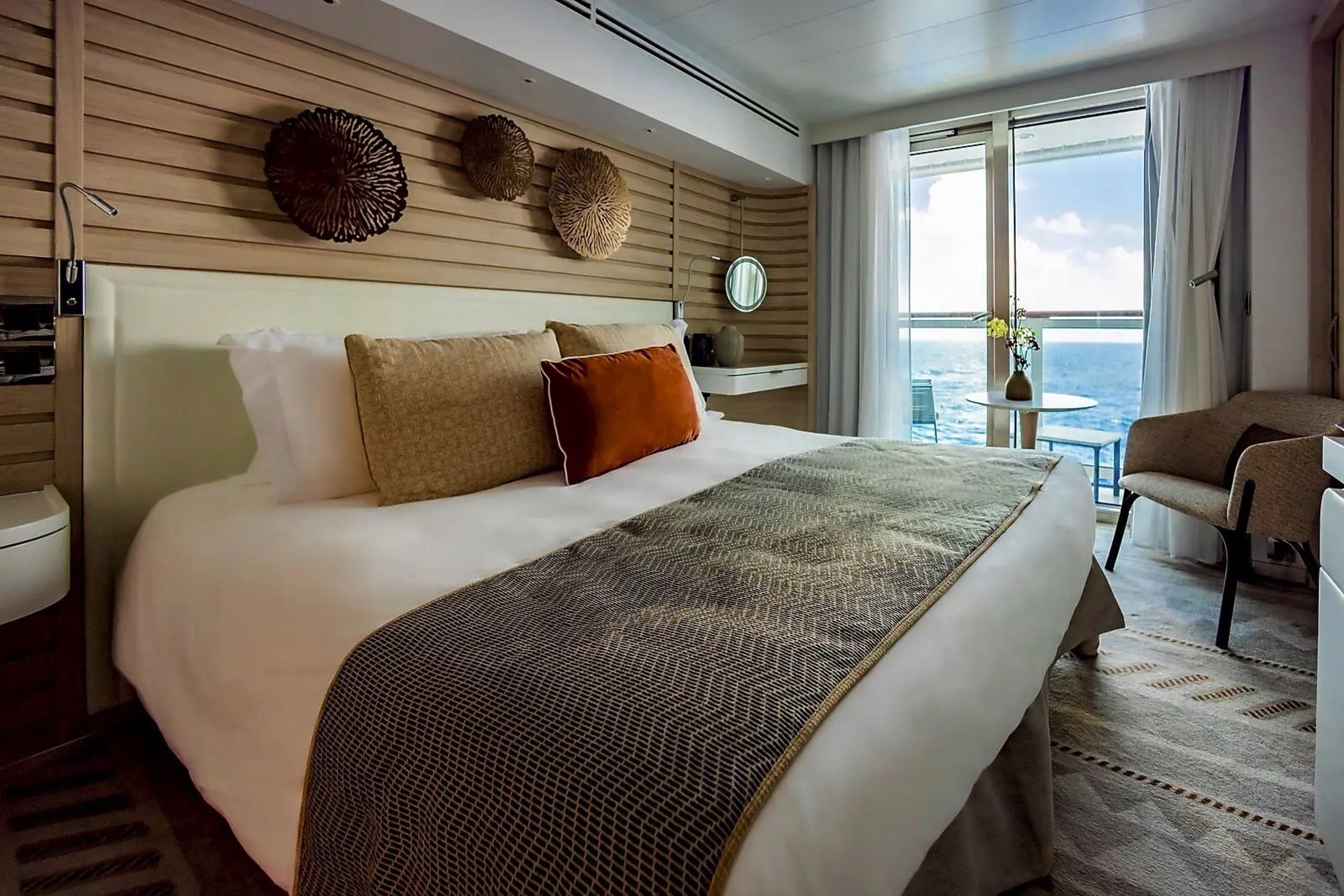
Upper Decks Balcony Stateroom
In addition to the common services provided to all our suites and staterooms:
- A private 4m² balcony with two armchairs
- Depending on the stateroom, either a sliding panoramic window or a glass door
- One king-size bed (180 x 190 cm) or two single beds (90 x 190 cm)
- A chaise lounge
- A bathroom with shower
Included in all staterooms
- Minibar
- Diptyque Paris top-of-the-line bath products
- Bose Bluetooth speaker
- Individually-controlled air conditioning
- Nespresso coffee maker and boiler
- Dressing room with shelves and closet
- 110V American / 220V European
- Dressing table and hairdryer
- Direct line telephone
- 2 ADA stateroom
- 24-hour room service
- Electronic safe
- Flat screen TV, international channels and videos on demand
- Inclusive Wifi internet
Lower Decks Balcony Stateroom
In addition to the common services provided to all our suites and staterooms:
- A private 4m² balcony with two armchairs
- Depending on the stateroom, either a sliding panoramic window or a glass door
- One king-size bed (180 x 190 cm) or two single beds (90 x 190 cm)
- A chaise lounge
- A bathroom with shower
Included in all staterooms
- Minibar
- Diptyque Paris top-of-the-line bath products
- Bose Bluetooth speaker
- Individually-controlled air conditioning
- Nespresso coffee maker and boiler
- Dressing room with shelves and closet
- 110V American / 220V European
- Dressing table and hairdryer
- Direct line telephone
- 2 ADA stateroom
- 24-hour room service
- Electronic safe
- Flat screen TV, international channels and videos on demand
- Inclusive Wifi internet

Le Nautilus
At the back of deck 4, you will find a gourmet restaurant complete with wine cellar, offering French and international cuisine. It can accommodate all guests in a single service for breakfast, lunch and dinner.

Grill Restaurant
In a relaxed atmosphere, the grill restaurant located on deck 3 welcomes you for breakfast and buffet lunches as well as themed dinners.
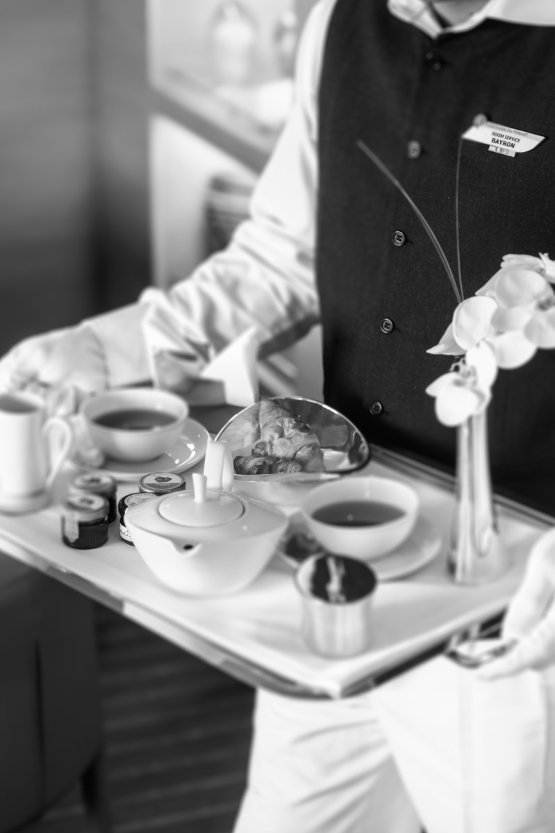
Room Service
Whether you want to fully enjoy your cabin for breakfast, savor a peaceful snack in the middle of the day, or have your meal in complete privacy, room service is at your disposal. Treat yourself to a moment of indulgence and enjoy a diverse menu available at any time of day and night.
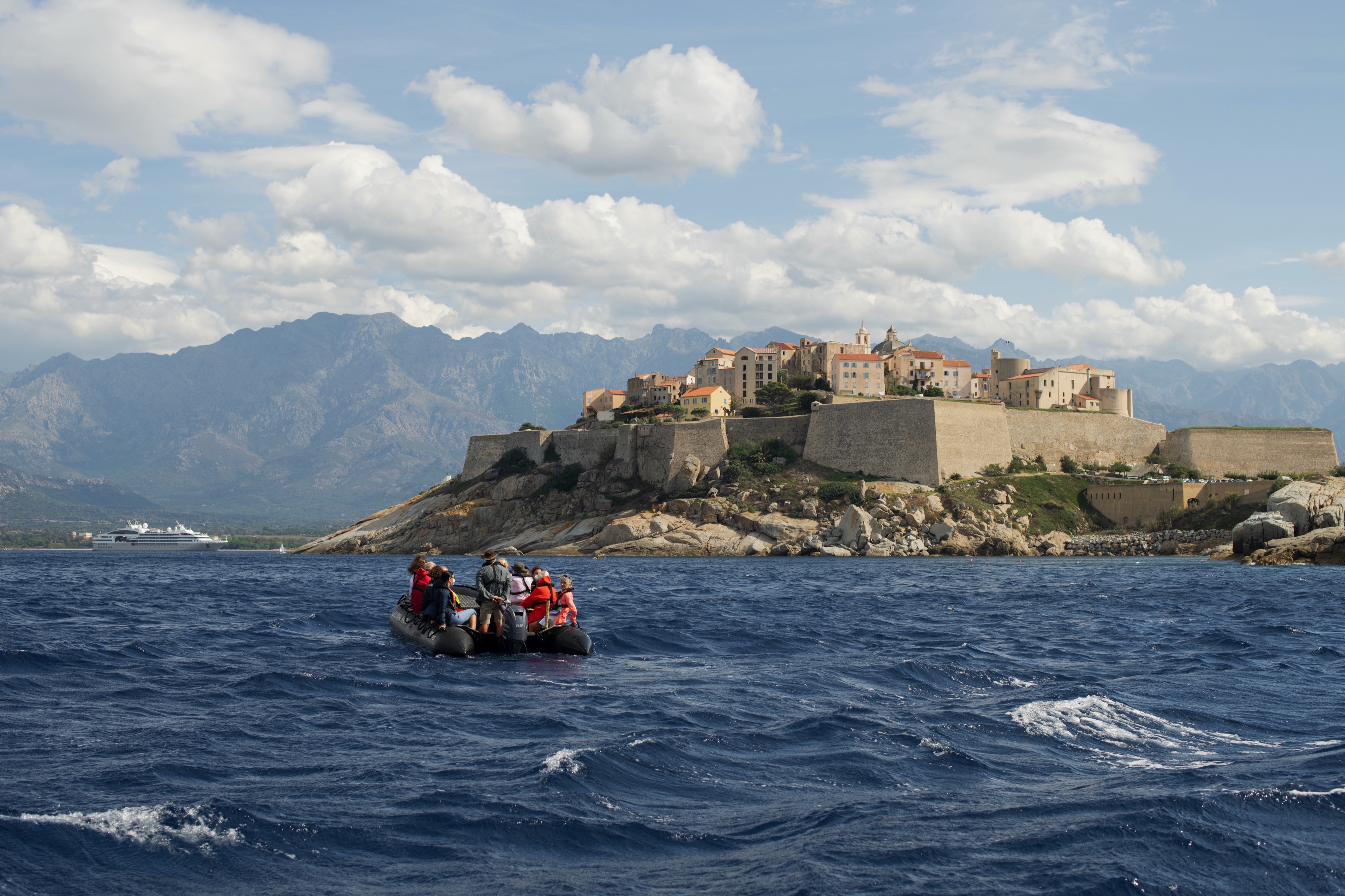
Explorations
Because your desires for escape are many, we offer a range of explorations, each promising unique experiences. Timeless, Discoveries, or Expeditions: each collection offers a distinct and tailored approach, allowing you to experience your chosen destination as closely as possible.
Timeless
Preserved and authentic towns and villages, iconic or more secluded sites… Discover the cultural and gastronomic riches of your destination through the eyes of inspiring local guides and your onboard lecturer, experts in the regions visited.
Timeless: your experiences
- Disembarkation at the dock or by tender, excursions by air-conditioned bus or local transport, depending on the destinations
- One excursion per day and per stopover, accompanied by local guides
- Optional paid excursions, available depending on the port of call, to further explore the destination
- Lectures led by expert guides or distinguished guests
- Activities supervised by Kids Club staff for children aged 4 to 13, depending on departure times.
Discoveries
Explore your destination in all its facets: cultural, natural, historical or even gastronomic… Each itinerary is designed to offer you the best of your stopovers thanks to the expertise of local guides or naturalist guides, depending on the destination.
Discoveries: your experiences
- Disembarkations at the dock, by tender or Zodiac, excursions by air-conditioned bus or local transport, depending on the destination
- One activity per day and per stopover, accompanied by local guides or naturalist guides
- Optional paid excursions, available depending on the port of call, to further explore the destination
- Lectures given by tour guides, naturalist guides, or distinguished guests
Shipments
Sail to the most secluded shores on the planet. An all-inclusive immersive experience, co-created with local communities, accompanied by a team of naturalist guides passionate about the world’s wildlife, flora, and cultures. These experts share their knowledge through inspiring onboard lectures, Zodiac excursions, walks or hikes in small groups, and opportunities to connect with peoples whose traditions are thousands of years old.
The program for all excursions, both included and optional, is available eight months before departure. Booking takes place approximately two months before departure.

Experts by your side
Captains, expedition leaders, experienced naturalist guides, lecturers, wildlife photographers, personalities from the world of art, science, culture and gastronomy… Experts share their passions with you on board or on land.
Captains
Your captain is responsible for ensuring the smooth running of your journey on board. An expert in navigating polar or tropical waters, their announcements punctuate your day. And when wildlife appears on the horizon, do not hesitate to accept their invitation to join the outer decks for magnificent observations. Gala dinners are also unmissable opportunities to meet your captain and share with them your passion for travel.
Expedition leaders
Alongside the captain, the expedition leader conducts your exploration. They supervise the team of naturalist guides, ensure the safety of the proposed experiences, and adjust the highlights of your journey according to the navigation conditions, to reveal all the riches of these fascinating ecosystems.
Photo ambassadors
During some trips, having renowned photographers on board offers you the unique opportunity to participate in workshops, and conferences, and receive personalised advice to enhance your images.
Activity guides
Scuba diving, snorkelling, kayaking, polar hiking on foot or snowshoes, cross-country skiing, dog sledding… Whether it’s for an introduction or to deepen your practice, experience immersive activities led by certified guides, ambassadors of local cultures and communities.
Guests and partners
Dancers, musicians, writers, journalists, researchers, adventurers… Experts and prestigious partners share their passion, whether it is artistic or scientific.
Speakers
Art historians, journalists, ethnologists, naturalists… Every journey is a unique opportunity to learn more about the regions visited.
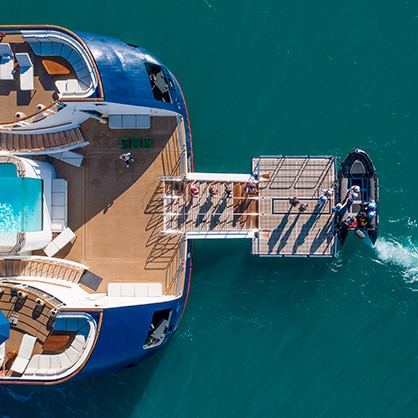
The Hydraulic Platform
- Deck 2
- Much easier onboard access than on any other cruise ship
- Easier disembarking and embarking by Zodiac when participating in expeditions
- Swimming and bathing in the sea and various nautical sports, such as kayaking and paddleboarding

The Observatory Lounge
Library, internet space, bar, occasional live entertainment, terrace: enjoy a 180° panorama of the horizon from the observatory lounge.
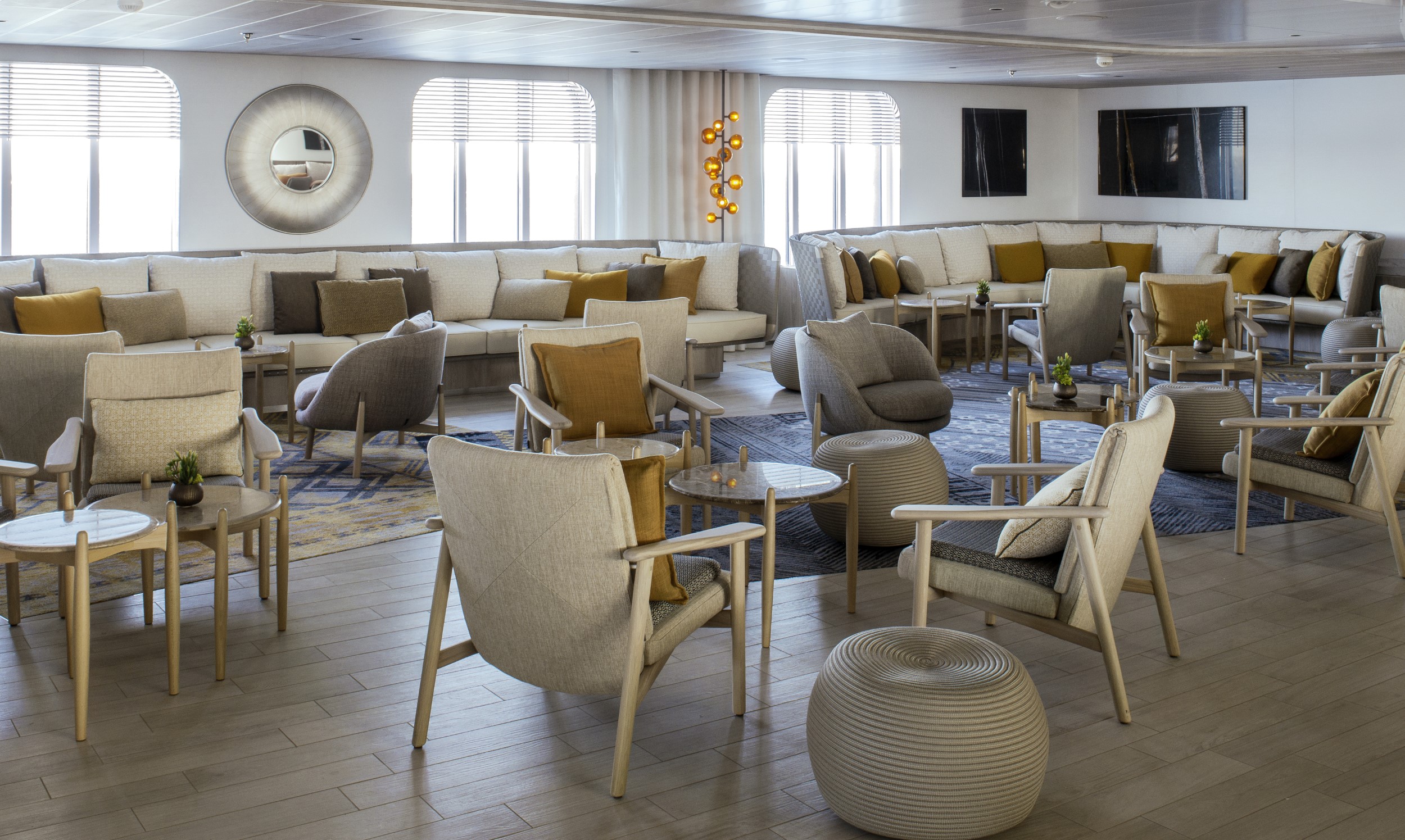
The Main Lounge Room
Tea room, bar, live music, dance floor, terrace: the main lounge is an essential meeting place throughout your journey.

Swimming Pool
With its water blending into the surrounding landscapes, the pool is perfect for relaxing in the sun. From the marina platform, embark on your sea excursions or water activities in complete tranquility.
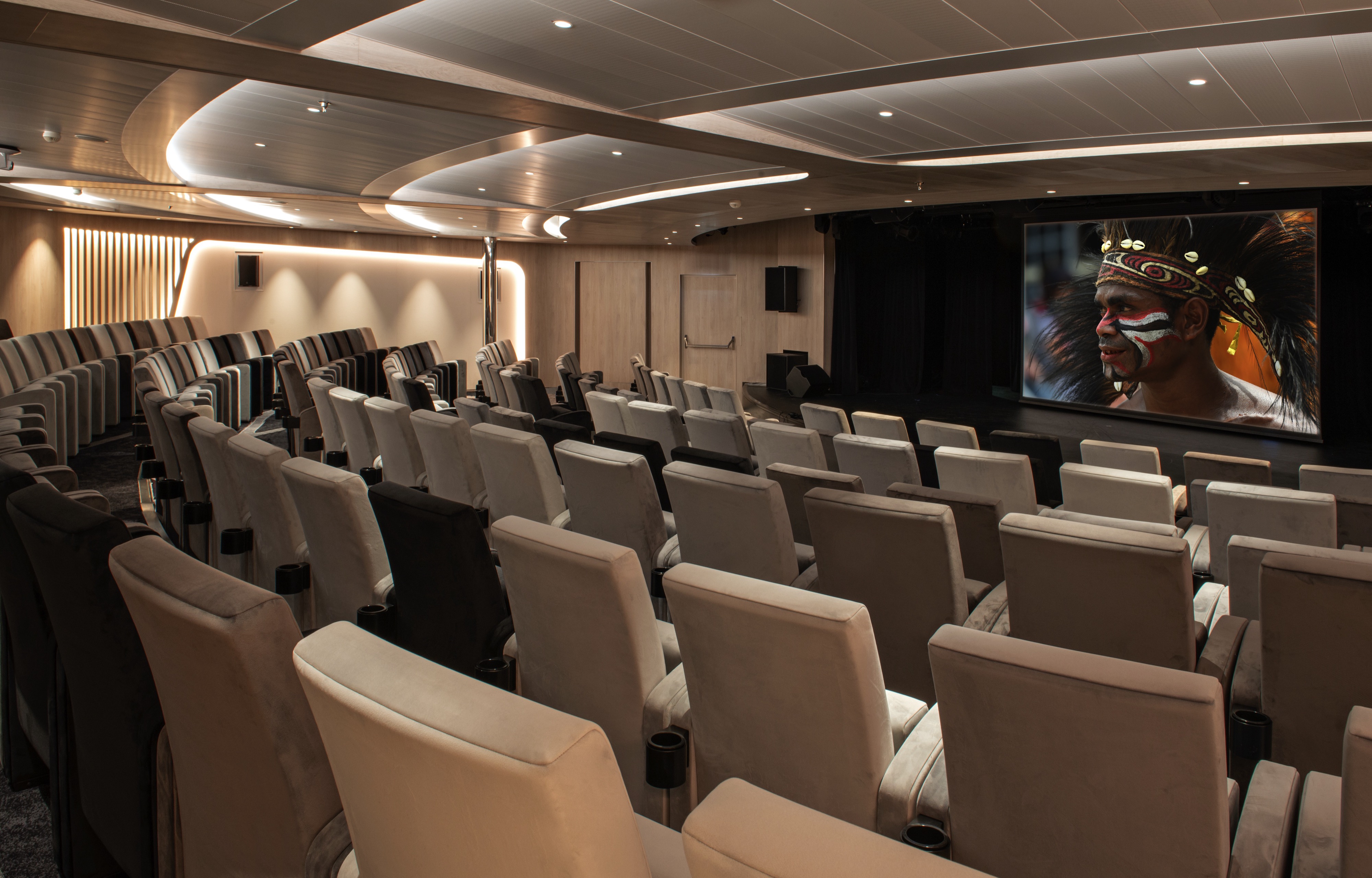
Theatre
Comfortably seated, you can attend conferences given by the guests and teams of naturalists, as well as the various shows, concerts, and performances organised by professional dancers and musicians.
When the night comes alive
Concerts, dance performances, or film screenings: every night on board is a promise of wonder and sharing of emotions.
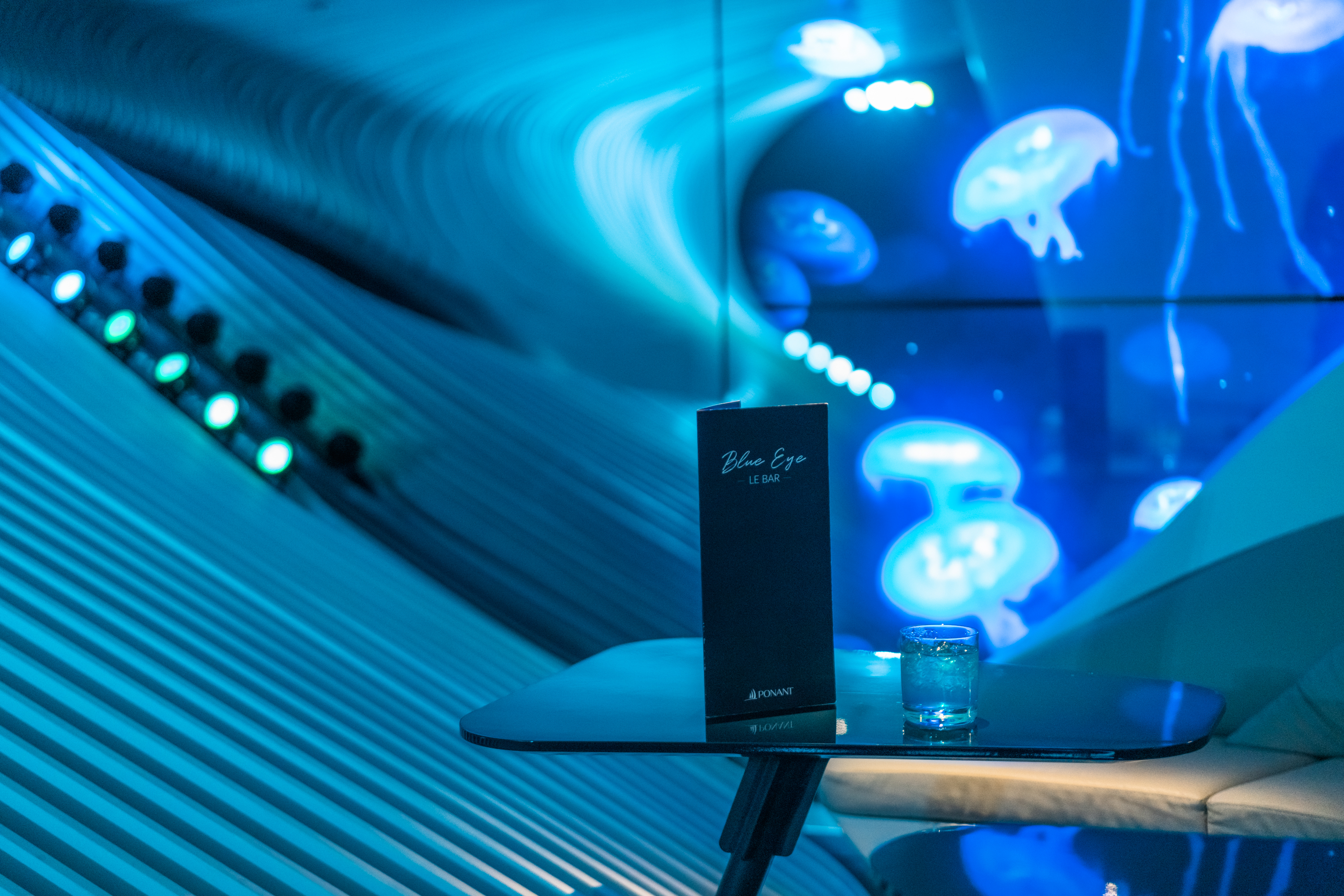
The Blue Eye
Located below the waterline of the ship, the Blue Eye is an innovative underwater lounge. Its design, inspired by the beauty of cetaceans, pays tribute to oceanographic environments.

Boutique
An extension of the journey and the ship, la Boutique offers an exclusive shopping experience with a wide range of technical and casual ready-to-wear and equipment, with or without PONANT personalization. It also features unique souvenirs to extend the journey back home, as well as jewelry, accessories and luxury items. Opening hours follow the voyage schedule, including days at sea, and all purchases on board are tax-free.
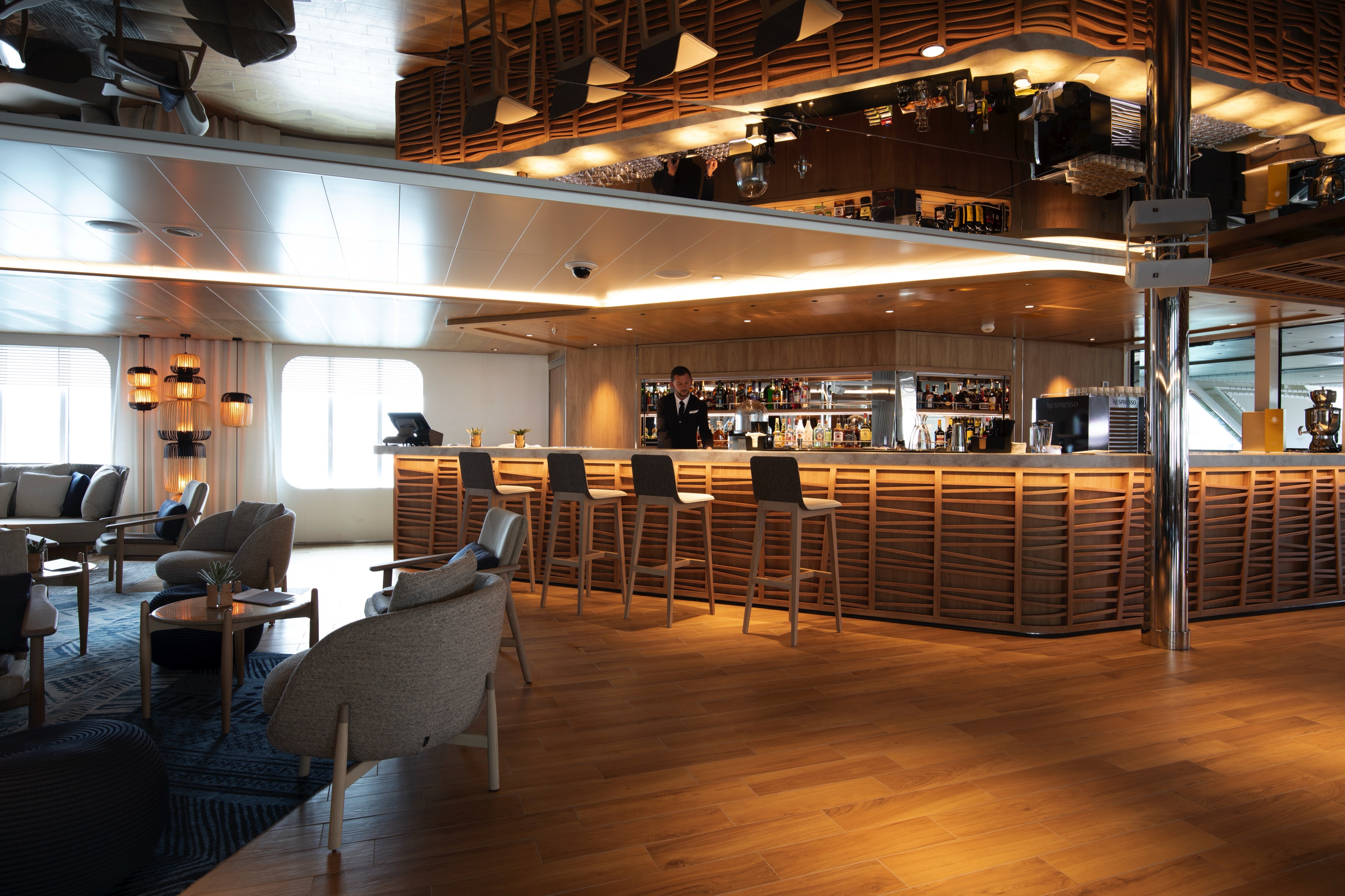
Open Bar
From the moment you board and throughout your cruise, your unlimited drinks are included*, at any time of the day. A drink with friends at the bar, refreshments on your return from an excursion or in the calm of your Stateroom’s balcony: enjoy a large selection of beverages (mineral waters, cold drinks, cruise wines, beer, champagne, spirits, coffee, tea). A selection of premium alcoholic drinks is also available “à la carte”.
*It doesn’t include premium alcoholic drinks indicated in the Bar Menu. It is valid only for individual personal consumption, without limitations.
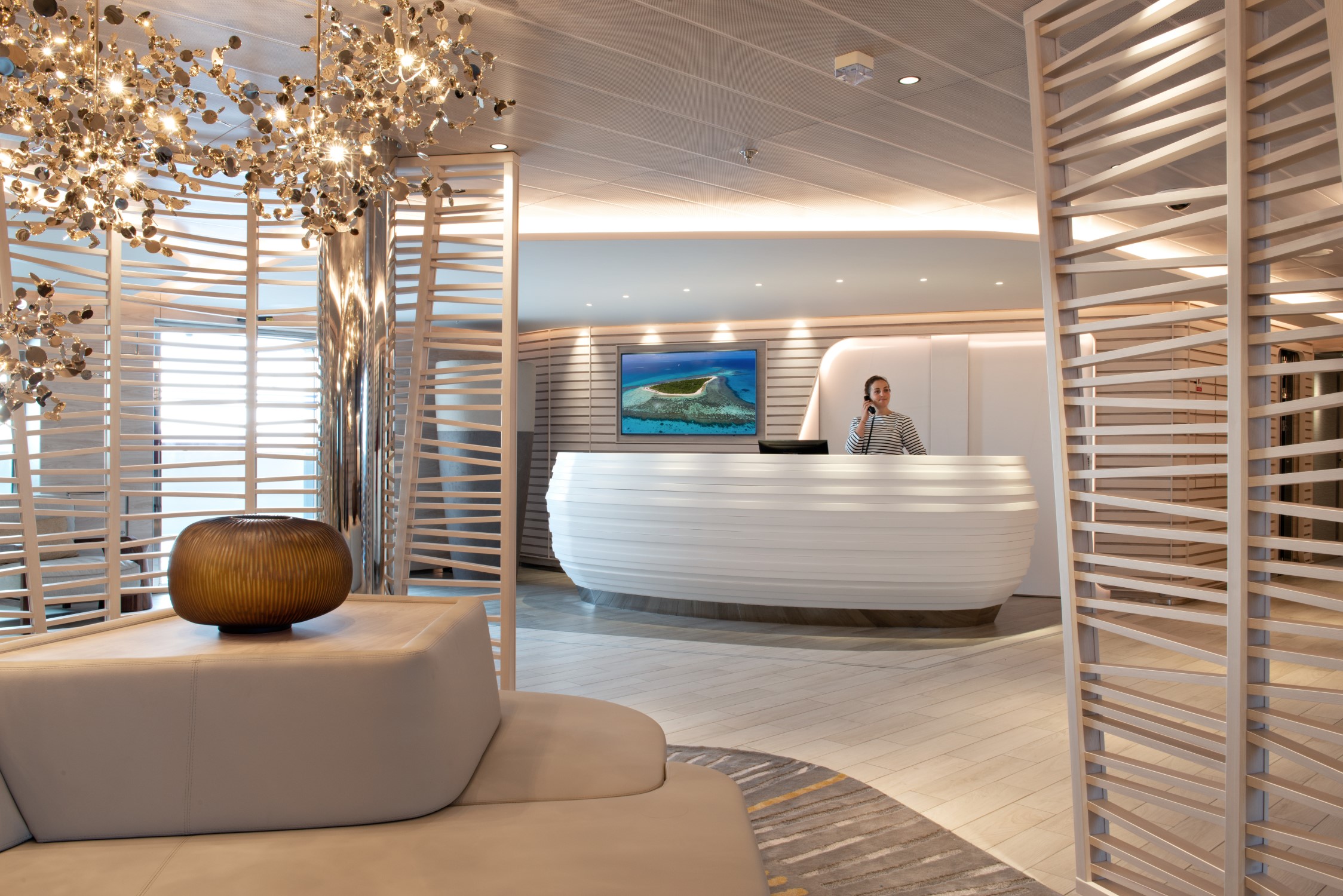
Excursion Reception and Office
If you have not made a pre-booking before your cruise, you can book your excursions on board during one of the daily opening times of the excursion desk (timetables available in your daily program). It is only possible to pre-book one excursion per port day. If you would like to book a second excursion on the same day, please contact the excursion desk to check availability.
PONANT Studio
A photography and videography team escort you throughout your trip. These professionals capture the most beautiful moments of your cruise, which you can share with family and friends upon your return.*
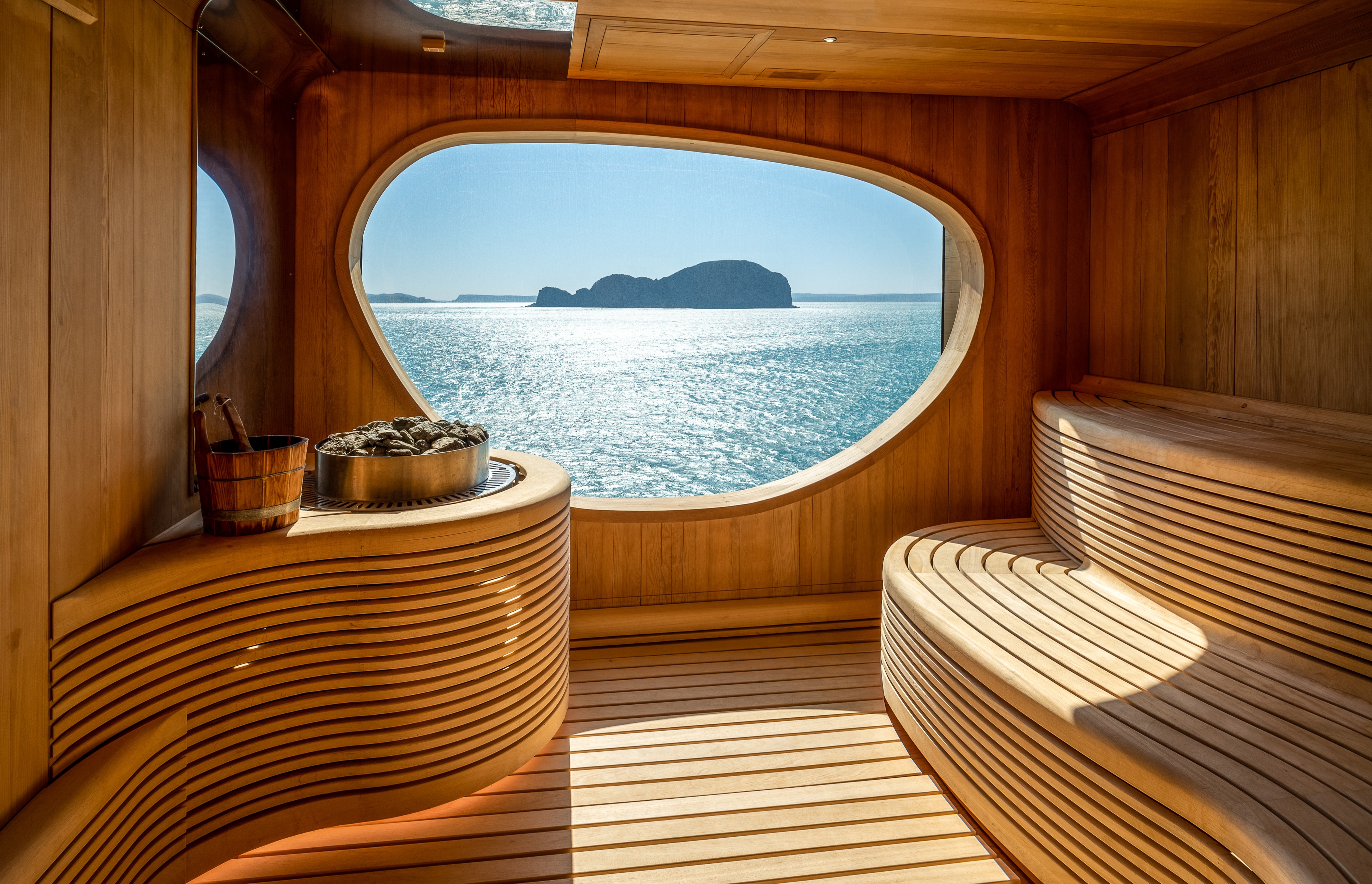
The Spa
In partnership with SOTHYS™ and Davines®, the spa offers a wide range of treatments, massages, hairdressing services, as well as a hammam and a fitness room perfect for self-care and well-being.

The Gym
The fitness room offers a wide range of exercises suitable for all levels to train facing magnificent views.
The Hairdressing Salon
Provided in partnership with KÉRASTASE® and L’ORÉAL PROFESSIONNEL®, the hairdressing salon offers a complete range of top quality treatments designed to strengthen, nourish and reinvigorate hair’s shine and brilliance. Our stylists are available to serve all your styling, highlighting, colouring, cutting and tailored hair advice needs.
The Kids Explorers Club
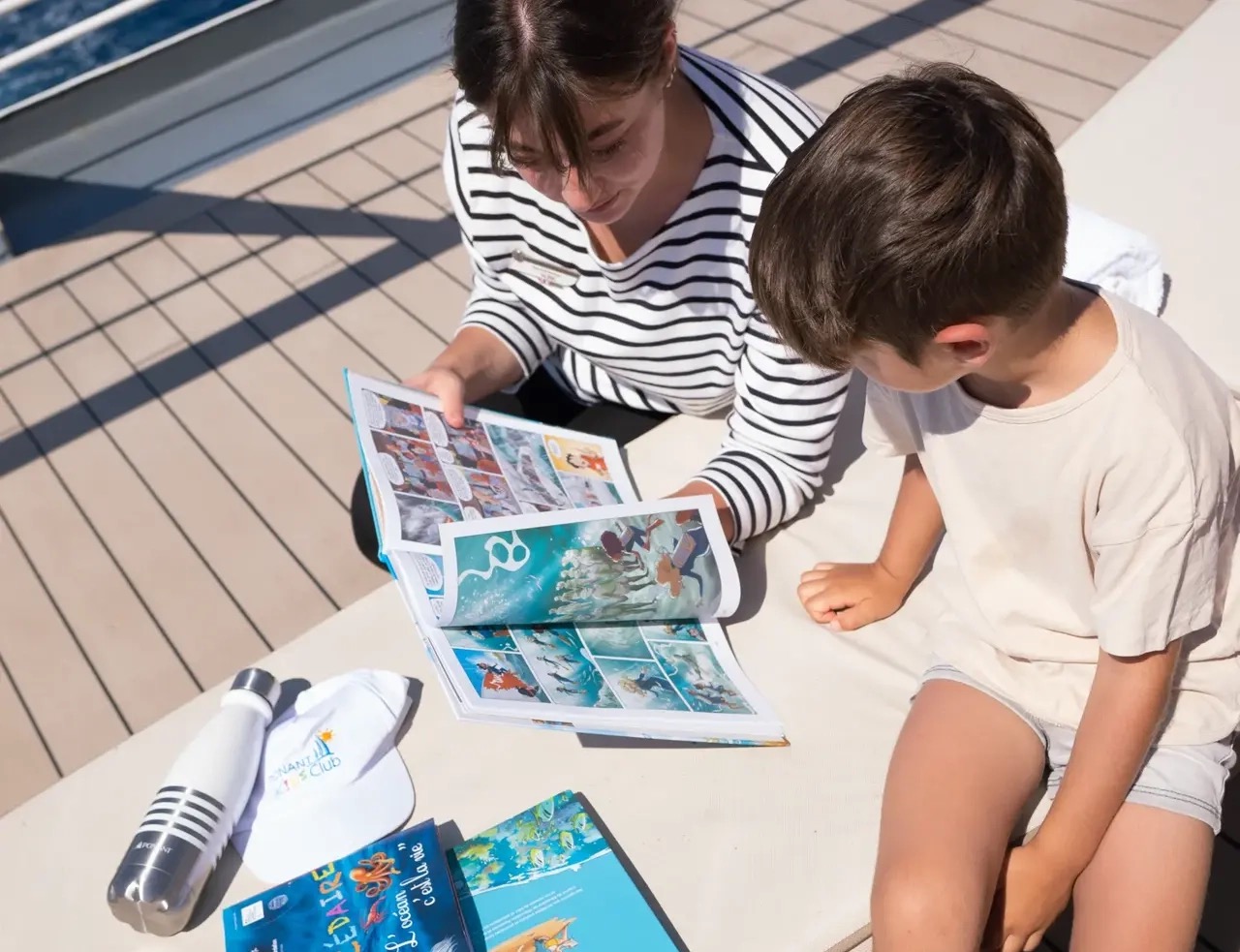
During your cruise, PONANT EXPLORATIONS offers a program of activities dedicated to children, from 4 to 13 years old on our entire fleet.
A team of experienced facilitators on board offers daily manual activities, educational workshops, board games, introductory meditation sessions, and much more, as well as content specific to each itinerary and the number of participants.
Kid Explorers have the opportunity to extend this experience on land with the possibility of enjoying a tailor-made excursion, swimming outings, walks and scavenger hunts.
This program of activities will be offered to children every day. (The exact times will be communicated to you by the activity leaders.)
To best meet your needs, the schedule is adapted to your cruise itinerary. For more information, please contact the entertainment team beforehand.
The program of entertainment and activities is communicated daily in the logbook.
A welcome kit with gifts is offered to each child on board.
Laundry
Your staterllm attendant is at your disposal to provide a laundry service. It takes 24 to 48 hours to wash and iron your clothes. Only an ironing service can be provided on the same day. Dry cleaning is not possible, so we kindly ask you to only give us clothes that can be washed with water.
** These services are chargeable and billed directly to your cabin account.
Smoking Policy
Ships are non-smoking, even on accommodation balconies. Smoking is only allowed in designated outdoor areas of the ship.
Power Adapters
Electrical plug adapters are provided on board, they are available at the reception.
European Standard Sockets
The 220 volt 50 hertz alternating current is distributed by sockets meeting European standards. Onboard power is 200 volt AC (European standard) and 110 volt AC (North American standard). For safety reasons, hair irons and clothes irons cannot be used in staterooms. Please note that on Le Ponant, 110 volt AC is only available in stateroom bathrooms.
Age Restrictions
Children under one (1 year old / 12 months) are not permitted on PONANT EXPLORATIONS cruises.
On Classic cruises, children are permitted from one (1 year old), with a maximum of five children aged one to six (1 to 6 years old) on board each voyage.
Children aged four years and older are welcome at the Kids’ Club when the service is offered on board.
In all cases and at all times, both on board or on land, children and young minors are the full and total responsibility of their parents or accompanying adults.
Languages
The languages spoken on board are French and English. The signage is in French and English. On some cruises, crew members also speak other languages.
Telephone
To reach a correspondent around the world, a satellite communication system is available to you. The cost of communications is charged directly to your account (pricing depends on the navigation zone). Calls from your correspondents can be transferred directly to your accommodation or to any common area on the ships. You can also send and receive faxes. Contacting reception.
Wi-Fi
You have free Wi-Fi internet access on board all ships (cabins and common areas). On the Sisterships (L’Austral, Le Lyrial, The Boréal, Le Soléal), one or more computers are available to you in the leisure areas. Thanks to the Starlink network provided by Marlink, PONANT EXPLORATIONS GROUP guarantees you quality Wi-Fi access, regardless of the location and navigation conditions.
Medical Facilities
There is a doctor on board available to the passengers on all our ships:
- The schedules of consultation are listed each day in the log book (emergency consultation 24/7).
- The Sisterships, PONANT Explorers and Le Commandant Charcot also have a hospital for any small surgery.
- During the excursions, the passengers are accompanied by a doctor or a nurse.
- There is a fee for consultations on board . The price may vary according to the time and place of the consultation (hospital or staterooms). You must also pay for medications.
- The doctor on board is not authorised to distribute sick leaves and prescriptions. Only accounts and invoices are provided which may be used by the passenger to obtain a refund from his/her health insurance if his/her contract allows.
Medical Consultations
Consultations, medical and surgical procedures, laboratory tests or medical imaging examinations (radiology) carried out on board by the doctor or nurse are subject to charges. The price may vary depending on the time and location of the consultation (at the onboard hospital or in the cabin). The cost of all procedures is displayed in the waiting room. Guests are also required to pay for any medications.
The ship’s doctor is unable to provide medical certificates and prescriptions. Only reports and invoices are issued, which can be used by the guest to claim a refund from their health insurance if their policy allows it.
Special Medical Treatment
If you have a special treatment, please inform the reservation service at the time of your registration, indicate it on the information form filled out before departure, then inform the crew on board at the time of boarding and bring your specific medications for the duration of the cruise.
Seasickness
Our ships (with the exception of Le Ponant and the Spirit of Ponant) are equipped with stabilisers fitted with dynamic fins that adapt to the movements of the ship. This system allows for anticipation and compensation for pitch and roll to provide great stability. Guests anticipating seasickness experience reduced symptoms and are surprised not to be inconvenienced.
Guests with reduced mobility
Only the Sisterships, the PONANT Explorers, Paul Gauguin and Le Commandant Charcot have been designed to accommodate passengers with reduced mobility.
- Staterooms specially designed on board the Sisterships, decks 3 (307), 4 (407) and 5 (509) 3 c for two people aged 18. in a wheelchair, with a double bed (180 x 200) cm) or two single beds (90 x 200 shower and toilet in the bathroom as well as a balcony of 4 2 (only for cabins on the decks 4 and 5) having a small ramp Wheelchair accessible,
- on board the PONANT Explorers, decks 4 (431) and 5 (527) 2 cabins for two people each at 27.5 2in a wheelchair, with a double bed (180 x 200) cm) or two single beds (90 x 200 sink, shower, and toilet in the bathroom, as well as a balcony of 4 Wheelchair accessible,
- 2I’m accIin a wheelchair, with a double bed (180 x 200) cm) or two single beds (90 x 200 shower and toilet in the bathroom, as well as abalcony of 7.5.2 a small ramp Wheelchair accessible,
- on board the Paul Gauguin, bridge 4 (415 and 416) 2 cabins for two people each aged 21 in a wheelchair, with a double queen size bed (160 x 200) cm) only for the 416, and a double queen size bed (160 x 200 cm) or two single beds (80 x 200 cm) for the 415, shower and toilet in the bathroom, as well as.a window with panoramic view.
- Ramps providing easy access for movement in common areas.
- Posters, signage, and cabin numbers translated into braille.
Despite these arrangements, each passenger must be able to be autonomous or travel with a companion who can provide all the necessary assistance during their journey. If a person is not deemed sufficiently fit to travel safely, the company reserves the right to refuse their boarding. Landings in difficult areas or on zodiacs are subject to the approval of the captain, always with the passenger’s well-being and safety in mind.
Packing Tips
Technical Accessories
We recommend that you bring a ski mask, sunglasses, walking sticks, a waterproof backpack, binoculars, a technical watch, a mosquito net for the face (in the Arctic), and a waterproof pouch. These accessories are also available for purchase at the onboard shop.
Dress Code
Dress Code
We recommend wearing casual and elegant outfits, cocktail attire for gala evenings, and white or black and white attire for the Officers’ evening. Shorts and bermudas are not allowed in the evening at gourmet restaurants.
Expedition Cruise
For an expedition cruise, pack practical clothing and comfortable shoes. During your polar cruises, a polar parka in your size will be provided and boots in your size will be loaned to you.
Sustainable Development
Sustainable development is enshrined in the company’s statutes and is at the heart of the PONANT EXPLORATIONS GROUP project. Founded over 30 years ago by committed sailors, the company was born out of a desire to share the passion for the oceans and the treasures of the Earth. This responsibility commits us to engage in a respectful dialogue with the environment and the populations encountered, and to invest in various areas related to the preservation and enhancement of the natural and cultural heritage of polar and oceanic regions.
To learn more about our commitments to sustainable development and about the PONANT Foundation, visit the page. Engagements.
Clean Ships
We were among the first in the world to abandon heavy fuel. Our ships are equipped with electric diesel engines and SCR catalytic converters, which help reduce our emissions and fuel consumption. Our high polar exploration ship, Le Commandant Charcot, is a hybrid electric ship, powered by liquefied natural gas (LNG) and light fuel. Thanks to LNG, there is a reduction of -25% in CO2 emissions, -85% in nitrogen oxide emissions, and -95% in fine particle emissions. Every time we design a new ship, we equip it with the latest eco-technologies available, allowing us to maintain our position as a leader in the cruise industry in terms of the environment, surpassing international regulations in some aspects. This commitment is recognised by numerous independent organisations. If you would like to learn more, please visit our section on ‘labels, certifications, and distinctions’ on the Engagements page.
Wastewater
Wastewater is treated using processes that exclude the use of chemicals. The treated water is sometimes reused on board for technical purposes (laundry, deck washing…) and is used for the external cleaning of the ship.
Waste
We have optimised our organisation to reduce waste at the source, waste is still produced on board. Equipment adapted for sorting each type of waste is in place. This equipment helps reduce the stored volume and facilitates their recovery. We ensure complete traceability of this waste and have a valuation rate of 80% by 2026.
Single-use plastics
We have eliminated single-use plastics (such as straws, cups, food portions, laundry bags, etc.). A metal water bottle is provided to each guests during expedition cruises, and water fountains are available in the common areas of the ships. We are also developing the bottling of our water in glass bottles.
Discover all our products in daily actions.
Special Diets
If you follow a specific diet (vegetarian, diabetic, low calorie, gluten-free, allergy…), it is essential to specify it when making your reservation. You will then receive adapted menus throughout your cruise.
Solo Travellers
Every season, we offer a wide range of cruises with ‘no single supplement’: you thus benefit from a double stateroom to yourself, at no extra cost. The onboard atmosphere is conducive to meeting and interacting with other guests, and the crew ensures your well-being and integration on board. Discover the cruises by consulting the single page offered.
Included on Every Cruise
A complete offer (excluding Spirit of PONANT and La Désirade¹)
SERVICES INCLUDED ON ALL OUR CRUISES
- Full board from arrival to departure day
- High-end gastronomy in all restaurants
- All drinks in restaurants, bars and minibars. All drinks are included² (selection of champagnes, wines and spirits, beers, cocktails, water, soft drinks, hot drinks)
- 24-hour room service
- Butler service for certain suites³
- Free and unlimited internet access on board
- Evenings, shows and other entertainment
- Access to the fitness area and the hammam or sauna, depending on the ship.
- All port and security fees
SERVICES INCLUDED DEPENDING ON THE TYPE OF CRUISE/SHIP
- Activities included, which may vary depending on the type of exploration:
- Timeless: one included excursion⁴ per person, per day and per stopover, led by local guides (visits to monuments, tastings of local products, etc.)
- Discoveries: one included activity per person, per day and per stopover, which can be either an included excursion⁴ led by local guides or an included activity led by naturalist guides
- Expeditions: one activity included per person, per day, per port of call, led by naturalist guides (hiking, zodiac excursions, etc.).
- Some more secluded ports of call, with few or no facilities, will be offered for independent exploration. Passengers will thus have the freedom to explore the area and enjoy activities on their own (swimming at the beach, shopping, restaurants, shows, etc.).
- Lectures by our naturalist guides or our destination expert (excluding sea voyages)
- Non-motorized water sports activities (excluding diving), such as kayaking on the Commandant Charcot or stand-up paddleboarding depending on the ship, are subject to weather and safety conditions, local authorizations, and the Captain’s agreement.
- Taxes for national parks and protected areas
- The accompaniment of a team of naturalist guides is provided only on expedition and discovery cruises; on land or, depending on the destination, during excursions and/or landings by Zodiac.
Butler Service
Attentive and discreet, your butler offers you a fully personalized service.
The butler service is reserved for passengers traveling in one of the suites located on deck 6 aboard the Sisterships, as well as in all suites of the Shipowner, Deluxe Suites, Privilege Suites, and Prestige Suites located on deck 6 aboard the PONANT EXPLORERS.
The PONANT app
Our app accompanies you in your preparations and during your stay on board. Find the services offered and the information that facilitates your journey.
Are you soon boarding with us?
Thanks to its app, PONANT accompanies you in your travel preparations, and then during your stay on board. Find our services and information that will make your cruise even easier.
Prepare your cruise with peace of mind
- Receive notifications to pre-book your programs before and after the cruise, as well as your excursions.
- Get a sneak peek of the captain and crew who will accompany you during your stay.
- Follow in real-time the positioning of the ship on which you will embark.
- Access your luggage checklist, the clothing outfits recommended by our experts for your destination, and the formalities to be expected before your departure.
- Check the steps of your journey and find out the details of the amenities in your cabin.
Once on board, the PONANT app makes all your procedures easier
- Use the guest mode to access onboard services without logging in.
- Find the highlights of your cruise, day by day.
- Add your favourite excursions to your wishlist.
- Check out the most beautiful photos from your cruise.
- Order your breakfast and room service from your smartphone.
- Conference schedules, spa relaxation sessions… All your important appointments on board are noted in your application.
Download the application
The companion of your next journey
Download on the App Store
Download on Google Play
Required Android version: 5.0 and later Required iOS version: 12.4 and later
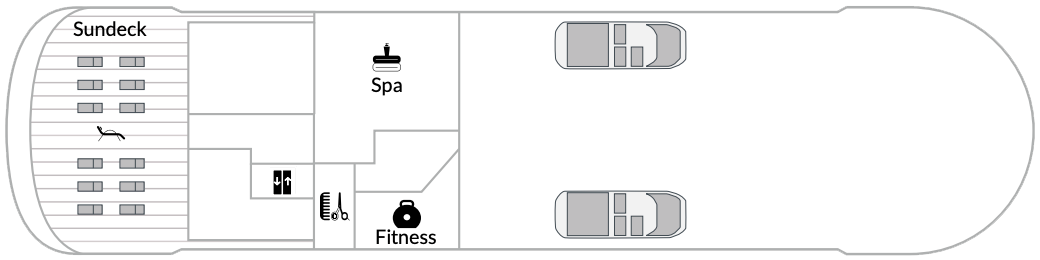
Deck 7
- Sun Deck
- Spa
- Fitness Centre
- Hair Salon
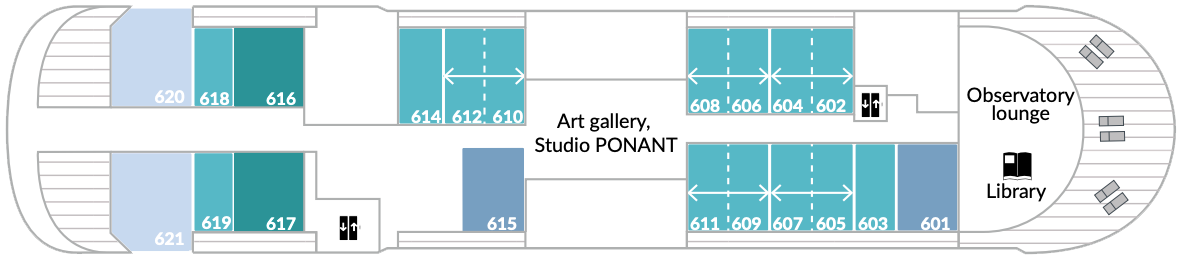
Deck 6
- Observatory Lounge
- Art Gallery/Studio Ponant
- Library
- Privilege Suites
- Grand Suites
- Deluxe Suites
- Prestige Suites
- Upper Decks Balcony Stateroom

Deck 5
- Bridge
- Owners Suite
- Prestige Suites
- Deluxe Suites
- Privilege Suites
- Upper Decks Balcony Stateroom
- Accessible Staterooms

Deck 4
- Restaurant
- Deluxe Suites
- Upper Decks Balcony Stateroom
- Accessible Staterooms

Deck 3
- Theatre
- Medical Centre
- Excursion Desk
- Reception Desk
- Shop
- Main Lounge
- Grill
- Pool
- Marina
- Deluxe Suites
- Lower Deck Balcony Stateroom