Itinerary
Approaching from Ruta 3, it’s hard to believe that the horizon line of buildings perched just beyond the windswept dunes and badlands is the most successful of all coastal Patagonia settlements. But once you get past the outskirts of town and onto the wide coastal road known as the Rambla, the picture begins to change. Ranged along the clear and tranquil Golfo Nuevo are restaurants, cafés, dive shops, and hotels, all busy—but not yet overcrowded—with tourists from around the world.Puerto Madryn is more a base for visiting nearby wildlife-watching sites like Península Valdés and Punta Tombo than a destination in its own right. The town’s architecture is unremarkable, and beyond a walk along the coast there isn’t much to do. Indeed, even the few museums serve mainly to introduce you to the fauna you’ll see elsewhere. The exception is the beginning of whale season (May through July), when the huge animals cavort right in the bay before heading north—you can even walk out alongside them on the pier. During these months it’s worth the extra expense for a room with a sea view.The many tour agencies and rental-car companies here make excursion planning easy. Aim to spend most of your time here on one- or two-day trips exploring the surroundings. Note that competition is fierce between tourism operators in destinations such as Puerto Madryn and Puerto Pirámides on Península Valdés. Take information that tour operators and even the tourism office give you about these with a grain of salt: they often exaggerate Madryn’s virtues and other areas’ flaws.
Day programme:
Arrive in Puerto Madryn and transfer independently to your hotel, which is included in the Charter Flight & Hotel Package. Depending on your arrival time, you may wish to explore this vibrant coastal city, known for its sweeping beaches and rich marine life along the shores of the Golfo Nuevo. Puerto Madryn offers a unique blend of nature and culture, with opportunities to observe diverse wildlife and enjoy the tranquil waters that define this Patagonian gateway.
Approaching from Ruta 3, it’s hard to believe that the horizon line of buildings perched just beyond the windswept dunes and badlands is the most successful of all coastal Patagonia settlements. But once you get past the outskirts of town and onto the wide coastal road known as the Rambla, the picture begins to change. Ranged along the clear and tranquil Golfo Nuevo are restaurants, cafés, dive shops, and hotels, all busy—but not yet overcrowded—with tourists from around the world.Puerto Madryn is more a base for visiting nearby wildlife-watching sites like Península Valdés and Punta Tombo than a destination in its own right. The town’s architecture is unremarkable, and beyond a walk along the coast there isn’t much to do. Indeed, even the few museums serve mainly to introduce you to the fauna you’ll see elsewhere. The exception is the beginning of whale season (May through July), when the huge animals cavort right in the bay before heading north—you can even walk out alongside them on the pier. During these months it’s worth the extra expense for a room with a sea view.The many tour agencies and rental-car companies here make excursion planning easy. Aim to spend most of your time here on one- or two-day trips exploring the surroundings. Note that competition is fierce between tourism operators in destinations such as Puerto Madryn and Puerto Pirámides on Península Valdés. Take information that tour operators and even the tourism office give you about these with a grain of salt: they often exaggerate Madryn’s virtues and other areas’ flaws.
Day programme:
Following breakfast at your hotel, you’ll board your vessel in Puerto Madryn and begin your expedition. Get ready for an unforgettable adventure ahead.
Day programme:
With extended time in the Falklands, we’ll seek opportunities to visit seldom explored sites renowned for birdlife and beauty. Our destinations will depend entirely on weather and marine forecasts, as the outer Falklands are exposed to oceanic swells. We’ll choose locations that offer the best—and safest—conditions for exploration. One such site is the small, slender Steeple Jason, one of the most northwesterly islands in the Falklands. Difficult to access, it has been featured in numerous wildlife documentaries for its prolific black-browed albatross colony—the largest in the world, with an estimated 100,000 to 180,000 breeding pairs. It’s truly a sight to behold. Their closely packed nests stretch for hundreds of meters along the shoreline, just beyond dense tussock grasses. Looking west to sea, you’ll likely see albatross riding the wind. The walk to the colony crosses uneven terrain and impressive tussock grass, which provides critical habitat for many other bird species. These vivid green grasses, rooted in rocky soil, create a striking contrast with the sharp ridgeline in the background. Largely untouched by humans, Steeple Jason is home to a small shepherd’s outpost and a research field station—overshadowed by vast wilderness. Steeple Jason offers a rare chance to feel truly remote amid a vast ecosystem alive with countless animals. Our explorations may also take us to New Island, just over thirty nautical miles south of Steeple Jason. A paradise for birders, this small island boasts coves with white sandy beaches sheltered from the open ocean, and is considered one of the most beautiful in the Falklands. Around 25,000 to 30,000 black-browed albatross nest here, joined by Magellanic, gentoo, and southern rockhopper penguins—each with its own distinct nesting style. Other common sightings include songbirds and the formidable striated caracara. Dolphins, including those in shallow waters, are frequently seen in the area, adding to the island’s remarkable wildlife encounters. Other wilderness destinations may include bird-rich West Point and Saunders Islands in the western Falklands. Saunders Island will amaze you with its long white-sand beaches, the northern shore stretching for kilometers and facing the open sea. It’s almost surreal— particularly if you’ve encountered penguins in ice-and snow-laden Antarctica on previous voyages—to watch gentoo, Magellanic, and southern rockhopper penguins making their way to the water along sandy stretches. There’s also a smaller colony of black-browed albatross nests on a nearby cliff, sharing the gently sloped, grassy island with grazing sheep tended by the warm-hearted Saunders family. Look for Commerson’s dolphins, often spotted in the shallow waters near Saunders’ sandy beaches. West Point Island is another Falkland gem, with vibrant green vegetation and blooming spring flowers. From the rocky beach, a gentle walk (with slight elevation) leads through a picturesque meadow to a cliff where black-browed albatross nest. West Point Island is home to 2,000 breeding pairs. We’ll visit a small section of the colony for intimate views of albatross in their nests and soaring above the waters. The walk passes through grassy fields dotted with wildflowers, blending the domestic with the wild. Energetic hikers may tackle Mt. Ararat for sweeping views, while others can travel by 4X4 to the colony and overlooks. Peale’s dolphins, Falkland steamer ducks, and striated caracara are often seen here. Carcass is also an exciting destination. Like Saunders and New islands, Carcass boasts stunning white-sand beaches meeting the cold, blue waters of the South Atlantic. Magellanic and gentoo penguins nest here, and the tussock grasses are especially impressive. Look overhead for peregrine falcons soaring high above. No visit to the Falklands is complete without a stop in its largest community—Stanley. Highlights include the museum (admission covered) and the striking arch monument built from the jaws of blue whales. Pop into a local restaurant or traditional British pub for Falkland fish and chips, or a pint while chatting with locals about life on this windswept sub-Antarctic island. Stanley has a distinct boundary—where residential streets end and open wilderness and sheep meadows begin to stretch into the horizon. We’ll set sail in early afternoon, allowing plenty of time to cover the 700+ nautical miles to our next destination: South Georgia.
Day programme:
With extended time in the Falklands, we’ll seek opportunities to visit seldom explored sites renowned for birdlife and beauty. Our destinations will depend entirely on weather and marine forecasts, as the outer Falklands are exposed to oceanic swells. We’ll choose locations that offer the best—and safest—conditions for exploration. One such site is the small, slender Steeple Jason, one of the most northwesterly islands in the Falklands. Difficult to access, it has been featured in numerous wildlife documentaries for its prolific black-browed albatross colony—the largest in the world, with an estimated 100,000 to 180,000 breeding pairs. It’s truly a sight to behold. Their closely packed nests stretch for hundreds of meters along the shoreline, just beyond dense tussock grasses. Looking west to sea, you’ll likely see albatross riding the wind. The walk to the colony crosses uneven terrain and impressive tussock grass, which provides critical habitat for many other bird species. These vivid green grasses, rooted in rocky soil, create a striking contrast with the sharp ridgeline in the background. Largely untouched by humans, Steeple Jason is home to a small shepherd’s outpost and a research field station—overshadowed by vast wilderness. Steeple Jason offers a rare chance to feel truly remote amid a vast ecosystem alive with countless animals. Our explorations may also take us to New Island, just over thirty nautical miles south of Steeple Jason. A paradise for birders, this small island boasts coves with white sandy beaches sheltered from the open ocean, and is considered one of the most beautiful in the Falklands. Around 25,000 to 30,000 black-browed albatross nest here, joined by Magellanic, gentoo, and southern rockhopper penguins—each with its own distinct nesting style. Other common sightings include songbirds and the formidable striated caracara. Dolphins, including those in shallow waters, are frequently seen in the area, adding to the island’s remarkable wildlife encounters. Other wilderness destinations may include bird-rich West Point and Saunders Islands in the western Falklands. Saunders Island will amaze you with its long white-sand beaches, the northern shore stretching for kilometers and facing the open sea. It’s almost surreal— particularly if you’ve encountered penguins in ice-and snow-laden Antarctica on previous voyages—to watch gentoo, Magellanic, and southern rockhopper penguins making their way to the water along sandy stretches. There’s also a smaller colony of black-browed albatross nests on a nearby cliff, sharing the gently sloped, grassy island with grazing sheep tended by the warm-hearted Saunders family. Look for Commerson’s dolphins, often spotted in the shallow waters near Saunders’ sandy beaches. West Point Island is another Falkland gem, with vibrant green vegetation and blooming spring flowers. From the rocky beach, a gentle walk (with slight elevation) leads through a picturesque meadow to a cliff where black-browed albatross nest. West Point Island is home to 2,000 breeding pairs. We’ll visit a small section of the colony for intimate views of albatross in their nests and soaring above the waters. The walk passes through grassy fields dotted with wildflowers, blending the domestic with the wild. Energetic hikers may tackle Mt. Ararat for sweeping views, while others can travel by 4X4 to the colony and overlooks. Peale’s dolphins, Falkland steamer ducks, and striated caracara are often seen here. Carcass is also an exciting destination. Like Saunders and New islands, Carcass boasts stunning white-sand beaches meeting the cold, blue waters of the South Atlantic. Magellanic and gentoo penguins nest here, and the tussock grasses are especially impressive. Look overhead for peregrine falcons soaring high above. No visit to the Falklands is complete without a stop in its largest community—Stanley. Highlights include the museum (admission covered) and the striking arch monument built from the jaws of blue whales. Pop into a local restaurant or traditional British pub for Falkland fish and chips, or a pint while chatting with locals about life on this windswept sub-Antarctic island. Stanley has a distinct boundary—where residential streets end and open wilderness and sheep meadows begin to stretch into the horizon. We’ll set sail in early afternoon, allowing plenty of time to cover the 700+ nautical miles to our next destination: South Georgia.
Day programme:
With extended time in the Falklands, we’ll seek opportunities to visit seldom explored sites renowned for birdlife and beauty. Our destinations will depend entirely on weather and marine forecasts, as the outer Falklands are exposed to oceanic swells. We’ll choose locations that offer the best—and safest—conditions for exploration. One such site is the small, slender Steeple Jason, one of the most northwesterly islands in the Falklands. Difficult to access, it has been featured in numerous wildlife documentaries for its prolific black-browed albatross colony—the largest in the world, with an estimated 100,000 to 180,000 breeding pairs. It’s truly a sight to behold. Their closely packed nests stretch for hundreds of meters along the shoreline, just beyond dense tussock grasses. Looking west to sea, you’ll likely see albatross riding the wind. The walk to the colony crosses uneven terrain and impressive tussock grass, which provides critical habitat for many other bird species. These vivid green grasses, rooted in rocky soil, create a striking contrast with the sharp ridgeline in the background. Largely untouched by humans, Steeple Jason is home to a small shepherd’s outpost and a research field station—overshadowed by vast wilderness. Steeple Jason offers a rare chance to feel truly remote amid a vast ecosystem alive with countless animals. Our explorations may also take us to New Island, just over thirty nautical miles south of Steeple Jason. A paradise for birders, this small island boasts coves with white sandy beaches sheltered from the open ocean, and is considered one of the most beautiful in the Falklands. Around 25,000 to 30,000 black-browed albatross nest here, joined by Magellanic, gentoo, and southern rockhopper penguins—each with its own distinct nesting style. Other common sightings include songbirds and the formidable striated caracara. Dolphins, including those in shallow waters, are frequently seen in the area, adding to the island’s remarkable wildlife encounters. Other wilderness destinations may include bird-rich West Point and Saunders Islands in the western Falklands. Saunders Island will amaze you with its long white-sand beaches, the northern shore stretching for kilometers and facing the open sea. It’s almost surreal— particularly if you’ve encountered penguins in ice-and snow-laden Antarctica on previous voyages—to watch gentoo, Magellanic, and southern rockhopper penguins making their way to the water along sandy stretches. There’s also a smaller colony of black-browed albatross nests on a nearby cliff, sharing the gently sloped, grassy island with grazing sheep tended by the warm-hearted Saunders family. Look for Commerson’s dolphins, often spotted in the shallow waters near Saunders’ sandy beaches. West Point Island is another Falkland gem, with vibrant green vegetation and blooming spring flowers. From the rocky beach, a gentle walk (with slight elevation) leads through a picturesque meadow to a cliff where black-browed albatross nest. West Point Island is home to 2,000 breeding pairs. We’ll visit a small section of the colony for intimate views of albatross in their nests and soaring above the waters. The walk passes through grassy fields dotted with wildflowers, blending the domestic with the wild. Energetic hikers may tackle Mt. Ararat for sweeping views, while others can travel by 4X4 to the colony and overlooks. Peale’s dolphins, Falkland steamer ducks, and striated caracara are often seen here. Carcass is also an exciting destination. Like Saunders and New islands, Carcass boasts stunning white-sand beaches meeting the cold, blue waters of the South Atlantic. Magellanic and gentoo penguins nest here, and the tussock grasses are especially impressive. Look overhead for peregrine falcons soaring high above. No visit to the Falklands is complete without a stop in its largest community—Stanley. Highlights include the museum (admission covered) and the striking arch monument built from the jaws of blue whales. Pop into a local restaurant or traditional British pub for Falkland fish and chips, or a pint while chatting with locals about life on this windswept sub-Antarctic island. Stanley has a distinct boundary—where residential streets end and open wilderness and sheep meadows begin to stretch into the horizon. We’ll set sail in early afternoon, allowing plenty of time to cover the 700+ nautical miles to our next destination: South Georgia.
South Georgia is a breathtaking destination of towering snow-covered mountains, mighty glaciers, and low-lying grasslands that attract an astounding concentration of wildlife. It is possible to find Southern fur seals, Southern elephant seals and a variety of albatross species including Black-browed, Light-mantled Sooty, Grey-headed and the spectacular Wandering Albatross, plus thousands of King and Macaroni Penguins. South Georgia is also linked to the early Antarctic explorers. Captain James Cook first stepped ashore in 1775, but perhaps more famous is Ernest Shackleton’s arrival in 1916 following the sinking of his ship Endurance. Shackleton’s grave and the whaling museum at Grytviken are highlights, as would be a visit to one of the King Penguin colonies at Salisbury Plain or Gold Harbour.
Day programme:
With extended time in the Falklands, we’ll seek opportunities to visit seldom explored sites renowned for birdlife and beauty. Destinations will depend on weather and marine forecasts, as the outer Falklands are exposed to oceanic swells. We’ll choose locations offering the best—and safest—conditions for exploration. One such site is Steeple Jason, a small, slender island among the northwesterly reaches of the Falklands. Difficult to access, it has been featured in numerous wildlife documentaries for its prolific black-browed albatross colony—the largest in the world, with an estimated 100,000 to 180,000 breeding pairs. Their closely packed nests stretch for hundreds of meters along the shoreline, just beyond dense tussock grasses. Looking west to sea, you’ll likely spot albatross riding the wind. The walk to the colony crosses uneven terrain and impressive tussock grass, which provides critical habitat for many bird species. These vivid green grasses, rooted in rocky soil, contrast sharply with the rugged ridgeline beyond. Largely untouched by humans, Steeple Jason is home to a small shepherd’s outpost and a research field station, dwarfed by vast wilderness—an ideal place to feel truly remote. Our explorations may also take us to New Island, just over thirty nautical miles south of Steeple Jason. A paradise for birders, it features sheltered coves with white sandy beaches and is considered one of the most beautiful in the Falklands. Around 25,000 to 30,000 black-browed albatross nest here, alongside Magellanic, gentoo, and southern rockhopper penguins. Songbirds and striated caracara are common, and dolphins— including those in shallow waters—are frequently seen. Other wilderness destinations may include West Point Island and Saunders Island in the western Falklands. Saunders Island impresses with long white-sand beaches, its northern shore stretching for kilometers along the open sea. It’s almost surreal to watch gentoo, Magellanic, and southern rockhopper penguins making their way to the water across sandy stretches. A smaller colony of black-browed albatross nests on a nearby cliff, while grazing sheep, tended by the Saunders family, roam the grassy slopes. Look for Commerson’s dolphins in the shallows. West Point Island is another highlight, with vibrant green vegetation and blooming spring flowers. A gentle walk leads to a cliffside colony of about 2,000 breeding pairs of blackbrowed albatross. Energetic hikers may tackle Mt. Ararat, while others can travel by 4×4. Peale’s dolphins, Falkland steamer ducks, and striated caracara are often seen here. Carcass is another excellent destination. Like Saunders Island and New Island, it features white-sand beaches meeting the cold, blue waters of the South Atlantic. Magellanic and gentoo penguins nest here, and peregrine falcons are often seen overhead. No visit to the Falklands is complete without time in Stanley, its largest community. Highlights include the museum and the striking arch monument built from the jaws of blue whales. Visit a local restaurant or traditional British pub for Falkland fish and chips, or enjoy a pint while chatting with locals. We’ll set sail in the early afternoon for the 700+ nautical mile journey to South Georgia.
South Georgia is a breathtaking destination of towering snow-covered mountains, mighty glaciers, and low-lying grasslands that attract an astounding concentration of wildlife. It is possible to find Southern fur seals, Southern elephant seals and a variety of albatross species including Black-browed, Light-mantled Sooty, Grey-headed and the spectacular Wandering Albatross, plus thousands of King and Macaroni Penguins. South Georgia is also linked to the early Antarctic explorers. Captain James Cook first stepped ashore in 1775, but perhaps more famous is Ernest Shackleton’s arrival in 1916 following the sinking of his ship Endurance. Shackleton’s grave and the whaling museum at Grytviken are highlights, as would be a visit to one of the King Penguin colonies at Salisbury Plain or Gold Harbour.
Day programme:
With extended time in the Falklands, we’ll seek opportunities to visit seldom explored sites renowned for birdlife and beauty. Destinations will depend on weather and marine forecasts, as the outer Falklands are exposed to oceanic swells. We’ll choose locations offering the best—and safest—conditions for exploration. One such site is Steeple Jason, a small, slender island among the northwesterly reaches of the Falklands. Difficult to access, it has been featured in numerous wildlife documentaries for its prolific black-browed albatross colony—the largest in the world, with an estimated 100,000 to 180,000 breeding pairs. Their closely packed nests stretch for hundreds of meters along the shoreline, just beyond dense tussock grasses. Looking west to sea, you’ll likely spot albatross riding the wind. The walk to the colony crosses uneven terrain and impressive tussock grass, which provides critical habitat for many bird species. These vivid green grasses, rooted in rocky soil, contrast sharply with the rugged ridgeline beyond. Largely untouched by humans, Steeple Jason is home to a small shepherd’s outpost and a research field station, dwarfed by vast wilderness—an ideal place to feel truly remote. Our explorations may also take us to New Island, just over thirty nautical miles south of Steeple Jason. A paradise for birders, it features sheltered coves with white sandy beaches and is considered one of the most beautiful in the Falklands. Around 25,000 to 30,000 black-browed albatross nest here, alongside Magellanic, gentoo, and southern rockhopper penguins. Songbirds and striated caracara are common, and dolphins— including those in shallow waters—are frequently seen. Other wilderness destinations may include West Point Island and Saunders Island in the western Falklands. Saunders Island impresses with long white-sand beaches, its northern shore stretching for kilometers along the open sea. It’s almost surreal to watch gentoo, Magellanic, and southern rockhopper penguins making their way to the water across sandy stretches. A smaller colony of black-browed albatross nests on a nearby cliff, while grazing sheep, tended by the Saunders family, roam the grassy slopes. Look for Commerson’s dolphins in the shallows. West Point Island is another highlight, with vibrant green vegetation and blooming spring flowers. A gentle walk leads to a cliffside colony of about 2,000 breeding pairs of blackbrowed albatross. Energetic hikers may tackle Mt. Ararat, while others can travel by 4×4. Peale’s dolphins, Falkland steamer ducks, and striated caracara are often seen here. Carcass is another excellent destination. Like Saunders Island and New Island, it features white-sand beaches meeting the cold, blue waters of the South Atlantic. Magellanic and gentoo penguins nest here, and peregrine falcons are often seen overhead. No visit to the Falklands is complete without time in Stanley, its largest community. Highlights include the museum and the striking arch monument built from the jaws of blue whales. Visit a local restaurant or traditional British pub for Falkland fish and chips, or enjoy a pint while chatting with locals. We’ll set sail in the early afternoon for the 700+ nautical mile journey to South Georgia.
South Georgia is a breathtaking destination of towering snow-covered mountains, mighty glaciers, and low-lying grasslands that attract an astounding concentration of wildlife. It is possible to find Southern fur seals, Southern elephant seals and a variety of albatross species including Black-browed, Light-mantled Sooty, Grey-headed and the spectacular Wandering Albatross, plus thousands of King and Macaroni Penguins. South Georgia is also linked to the early Antarctic explorers. Captain James Cook first stepped ashore in 1775, but perhaps more famous is Ernest Shackleton’s arrival in 1916 following the sinking of his ship Endurance. Shackleton’s grave and the whaling museum at Grytviken are highlights, as would be a visit to one of the King Penguin colonies at Salisbury Plain or Gold Harbour.
Day programme:
With extended time in the Falklands, we’ll seek opportunities to visit seldom explored sites renowned for birdlife and beauty. Destinations will depend on weather and marine forecasts, as the outer Falklands are exposed to oceanic swells. We’ll choose locations offering the best—and safest—conditions for exploration. One such site is Steeple Jason, a small, slender island among the northwesterly reaches of the Falklands. Difficult to access, it has been featured in numerous wildlife documentaries for its prolific black-browed albatross colony—the largest in the world, with an estimated 100,000 to 180,000 breeding pairs. Their closely packed nests stretch for hundreds of meters along the shoreline, just beyond dense tussock grasses. Looking west to sea, you’ll likely spot albatross riding the wind. The walk to the colony crosses uneven terrain and impressive tussock grass, which provides critical habitat for many bird species. These vivid green grasses, rooted in rocky soil, contrast sharply with the rugged ridgeline beyond. Largely untouched by humans, Steeple Jason is home to a small shepherd’s outpost and a research field station, dwarfed by vast wilderness—an ideal place to feel truly remote. Our explorations may also take us to New Island, just over thirty nautical miles south of Steeple Jason. A paradise for birders, it features sheltered coves with white sandy beaches and is considered one of the most beautiful in the Falklands. Around 25,000 to 30,000 black-browed albatross nest here, alongside Magellanic, gentoo, and southern rockhopper penguins. Songbirds and striated caracara are common, and dolphins— including those in shallow waters—are frequently seen. Other wilderness destinations may include West Point Island and Saunders Island in the western Falklands. Saunders Island impresses with long white-sand beaches, its northern shore stretching for kilometers along the open sea. It’s almost surreal to watch gentoo, Magellanic, and southern rockhopper penguins making their way to the water across sandy stretches. A smaller colony of black-browed albatross nests on a nearby cliff, while grazing sheep, tended by the Saunders family, roam the grassy slopes. Look for Commerson’s dolphins in the shallows. West Point Island is another highlight, with vibrant green vegetation and blooming spring flowers. A gentle walk leads to a cliffside colony of about 2,000 breeding pairs of blackbrowed albatross. Energetic hikers may tackle Mt. Ararat, while others can travel by 4×4. Peale’s dolphins, Falkland steamer ducks, and striated caracara are often seen here. Carcass is another excellent destination. Like Saunders Island and New Island, it features white-sand beaches meeting the cold, blue waters of the South Atlantic. Magellanic and gentoo penguins nest here, and peregrine falcons are often seen overhead. No visit to the Falklands is complete without time in Stanley, its largest community. Highlights include the museum and the striking arch monument built from the jaws of blue whales. Visit a local restaurant or traditional British pub for Falkland fish and chips, or enjoy a pint while chatting with locals. We’ll set sail in the early afternoon for the 700+ nautical mile journey to South Georgia.
South Georgia is a breathtaking destination of towering snow-covered mountains, mighty glaciers, and low-lying grasslands that attract an astounding concentration of wildlife. It is possible to find Southern fur seals, Southern elephant seals and a variety of albatross species including Black-browed, Light-mantled Sooty, Grey-headed and the spectacular Wandering Albatross, plus thousands of King and Macaroni Penguins. South Georgia is also linked to the early Antarctic explorers. Captain James Cook first stepped ashore in 1775, but perhaps more famous is Ernest Shackleton’s arrival in 1916 following the sinking of his ship Endurance. Shackleton’s grave and the whaling museum at Grytviken are highlights, as would be a visit to one of the King Penguin colonies at Salisbury Plain or Gold Harbour.
Day programme:
With extended time in the Falklands, we’ll seek opportunities to visit seldom explored sites renowned for birdlife and beauty. Destinations will depend on weather and marine forecasts, as the outer Falklands are exposed to oceanic swells. We’ll choose locations offering the best—and safest—conditions for exploration. One such site is Steeple Jason, a small, slender island among the northwesterly reaches of the Falklands. Difficult to access, it has been featured in numerous wildlife documentaries for its prolific black-browed albatross colony—the largest in the world, with an estimated 100,000 to 180,000 breeding pairs. Their closely packed nests stretch for hundreds of meters along the shoreline, just beyond dense tussock grasses. Looking west to sea, you’ll likely spot albatross riding the wind. The walk to the colony crosses uneven terrain and impressive tussock grass, which provides critical habitat for many bird species. These vivid green grasses, rooted in rocky soil, contrast sharply with the rugged ridgeline beyond. Largely untouched by humans, Steeple Jason is home to a small shepherd’s outpost and a research field station, dwarfed by vast wilderness—an ideal place to feel truly remote. Our explorations may also take us to New Island, just over thirty nautical miles south of Steeple Jason. A paradise for birders, it features sheltered coves with white sandy beaches and is considered one of the most beautiful in the Falklands. Around 25,000 to 30,000 black-browed albatross nest here, alongside Magellanic, gentoo, and southern rockhopper penguins. Songbirds and striated caracara are common, and dolphins— including those in shallow waters—are frequently seen. Other wilderness destinations may include West Point Island and Saunders Island in the western Falklands. Saunders Island impresses with long white-sand beaches, its northern shore stretching for kilometers along the open sea. It’s almost surreal to watch gentoo, Magellanic, and southern rockhopper penguins making their way to the water across sandy stretches. A smaller colony of black-browed albatross nests on a nearby cliff, while grazing sheep, tended by the Saunders family, roam the grassy slopes. Look for Commerson’s dolphins in the shallows. West Point Island is another highlight, with vibrant green vegetation and blooming spring flowers. A gentle walk leads to a cliffside colony of about 2,000 breeding pairs of blackbrowed albatross. Energetic hikers may tackle Mt. Ararat, while others can travel by 4×4. Peale’s dolphins, Falkland steamer ducks, and striated caracara are often seen here. Carcass is another excellent destination. Like Saunders Island and New Island, it features white-sand beaches meeting the cold, blue waters of the South Atlantic. Magellanic and gentoo penguins nest here, and peregrine falcons are often seen overhead. No visit to the Falklands is complete without time in Stanley, its largest community. Highlights include the museum and the striking arch monument built from the jaws of blue whales. Visit a local restaurant or traditional British pub for Falkland fish and chips, or enjoy a pint while chatting with locals. We’ll set sail in the early afternoon for the 700+ nautical mile journey to South Georgia.
South Georgia is a breathtaking destination of towering snow-covered mountains, mighty glaciers, and low-lying grasslands that attract an astounding concentration of wildlife. It is possible to find Southern fur seals, Southern elephant seals and a variety of albatross species including Black-browed, Light-mantled Sooty, Grey-headed and the spectacular Wandering Albatross, plus thousands of King and Macaroni Penguins. South Georgia is also linked to the early Antarctic explorers. Captain James Cook first stepped ashore in 1775, but perhaps more famous is Ernest Shackleton’s arrival in 1916 following the sinking of his ship Endurance. Shackleton’s grave and the whaling museum at Grytviken are highlights, as would be a visit to one of the King Penguin colonies at Salisbury Plain or Gold Harbour.
Day programme:
With extended time in the Falklands, we’ll seek opportunities to visit seldom explored sites renowned for birdlife and beauty. Destinations will depend on weather and marine forecasts, as the outer Falklands are exposed to oceanic swells. We’ll choose locations offering the best—and safest—conditions for exploration. One such site is Steeple Jason, a small, slender island among the northwesterly reaches of the Falklands. Difficult to access, it has been featured in numerous wildlife documentaries for its prolific black-browed albatross colony—the largest in the world, with an estimated 100,000 to 180,000 breeding pairs. Their closely packed nests stretch for hundreds of meters along the shoreline, just beyond dense tussock grasses. Looking west to sea, you’ll likely spot albatross riding the wind. The walk to the colony crosses uneven terrain and impressive tussock grass, which provides critical habitat for many bird species. These vivid green grasses, rooted in rocky soil, contrast sharply with the rugged ridgeline beyond. Largely untouched by humans, Steeple Jason is home to a small shepherd’s outpost and a research field station, dwarfed by vast wilderness—an ideal place to feel truly remote. Our explorations may also take us to New Island, just over thirty nautical miles south of Steeple Jason. A paradise for birders, it features sheltered coves with white sandy beaches and is considered one of the most beautiful in the Falklands. Around 25,000 to 30,000 black-browed albatross nest here, alongside Magellanic, gentoo, and southern rockhopper penguins. Songbirds and striated caracara are common, and dolphins— including those in shallow waters—are frequently seen. Other wilderness destinations may include West Point Island and Saunders Island in the western Falklands. Saunders Island impresses with long white-sand beaches, its northern shore stretching for kilometers along the open sea. It’s almost surreal to watch gentoo, Magellanic, and southern rockhopper penguins making their way to the water across sandy stretches. A smaller colony of black-browed albatross nests on a nearby cliff, while grazing sheep, tended by the Saunders family, roam the grassy slopes. Look for Commerson’s dolphins in the shallows. West Point Island is another highlight, with vibrant green vegetation and blooming spring flowers. A gentle walk leads to a cliffside colony of about 2,000 breeding pairs of blackbrowed albatross. Energetic hikers may tackle Mt. Ararat, while others can travel by 4×4. Peale’s dolphins, Falkland steamer ducks, and striated caracara are often seen here. Carcass is another excellent destination. Like Saunders Island and New Island, it features white-sand beaches meeting the cold, blue waters of the South Atlantic. Magellanic and gentoo penguins nest here, and peregrine falcons are often seen overhead. No visit to the Falklands is complete without time in Stanley, its largest community. Highlights include the museum and the striking arch monument built from the jaws of blue whales. Visit a local restaurant or traditional British pub for Falkland fish and chips, or enjoy a pint while chatting with locals. We’ll set sail in the early afternoon for the 700+ nautical mile journey to South Georgia.
South Georgia is a breathtaking destination of towering snow-covered mountains, mighty glaciers, and low-lying grasslands that attract an astounding concentration of wildlife. It is possible to find Southern fur seals, Southern elephant seals and a variety of albatross species including Black-browed, Light-mantled Sooty, Grey-headed and the spectacular Wandering Albatross, plus thousands of King and Macaroni Penguins. South Georgia is also linked to the early Antarctic explorers. Captain James Cook first stepped ashore in 1775, but perhaps more famous is Ernest Shackleton’s arrival in 1916 following the sinking of his ship Endurance. Shackleton’s grave and the whaling museum at Grytviken are highlights, as would be a visit to one of the King Penguin colonies at Salisbury Plain or Gold Harbour.
Day programme:
With extended time in the Falklands, we’ll seek opportunities to visit seldom explored sites renowned for birdlife and beauty. Destinations will depend on weather and marine forecasts, as the outer Falklands are exposed to oceanic swells. We’ll choose locations offering the best—and safest—conditions for exploration. One such site is Steeple Jason, a small, slender island among the northwesterly reaches of the Falklands. Difficult to access, it has been featured in numerous wildlife documentaries for its prolific black-browed albatross colony—the largest in the world, with an estimated 100,000 to 180,000 breeding pairs. Their closely packed nests stretch for hundreds of meters along the shoreline, just beyond dense tussock grasses. Looking west to sea, you’ll likely spot albatross riding the wind. The walk to the colony crosses uneven terrain and impressive tussock grass, which provides critical habitat for many bird species. These vivid green grasses, rooted in rocky soil, contrast sharply with the rugged ridgeline beyond. Largely untouched by humans, Steeple Jason is home to a small shepherd’s outpost and a research field station, dwarfed by vast wilderness—an ideal place to feel truly remote. Our explorations may also take us to New Island, just over thirty nautical miles south of Steeple Jason. A paradise for birders, it features sheltered coves with white sandy beaches and is considered one of the most beautiful in the Falklands. Around 25,000 to 30,000 black-browed albatross nest here, alongside Magellanic, gentoo, and southern rockhopper penguins. Songbirds and striated caracara are common, and dolphins— including those in shallow waters—are frequently seen. Other wilderness destinations may include West Point Island and Saunders Island in the western Falklands. Saunders Island impresses with long white-sand beaches, its northern shore stretching for kilometers along the open sea. It’s almost surreal to watch gentoo, Magellanic, and southern rockhopper penguins making their way to the water across sandy stretches. A smaller colony of black-browed albatross nests on a nearby cliff, while grazing sheep, tended by the Saunders family, roam the grassy slopes. Look for Commerson’s dolphins in the shallows. West Point Island is another highlight, with vibrant green vegetation and blooming spring flowers. A gentle walk leads to a cliffside colony of about 2,000 breeding pairs of blackbrowed albatross. Energetic hikers may tackle Mt. Ararat, while others can travel by 4×4. Peale’s dolphins, Falkland steamer ducks, and striated caracara are often seen here. Carcass is another excellent destination. Like Saunders Island and New Island, it features white-sand beaches meeting the cold, blue waters of the South Atlantic. Magellanic and gentoo penguins nest here, and peregrine falcons are often seen overhead. No visit to the Falklands is complete without time in Stanley, its largest community. Highlights include the museum and the striking arch monument built from the jaws of blue whales. Visit a local restaurant or traditional British pub for Falkland fish and chips, or enjoy a pint while chatting with locals. We’ll set sail in the early afternoon for the 700+ nautical mile journey to South Georgia.
At 55 degrees latitude south, Ushuaia (pronounced oo-swy-ah) is closer to the South Pole than to Argentina’s northern border with Bolivia. It is the capital and tourism base for Tierra del Fuego, the island at the southernmost tip of Argentina.Although its stark physical beauty is striking, Tierra del Fuego’s historical allure is based more on its mythical past than on rugged reality. The island was inhabited for 6,000 years by Yámana, Haush, Selk’nam, and Alakaluf Indians. But in 1902 Argentina, eager to populate Patagonia to bolster its territorial claims, moved to initiate an Ushuaian penal colony, establishing the permanent settlement of its most southern territories and, by implication, everything in between.When the prison closed in 1947, Ushuaia had a population of about 3,000, made up mainly of former inmates and prison staff. Today the Indians of Darwin’s “missing link” theory are long gone—wiped out by diseases brought by settlers and by indifference to their plight—and the 60,000 residents of Ushuaia are hitching their star to tourism.The city rightly (if perhaps too loudly) promotes itself as the southernmost city in the world (Puerto Williams, a few miles south on the Chilean side of the Beagle Channel, is a small town). You can make your way to the tourism office to get your clichéd, but oh-so-necessary, “Southernmost City in the World” passport stamp. Ushuaia feels like a frontier boomtown, at heart still a rugged, weather-beaten fishing village, but exhibiting the frayed edges of a city that quadrupled in size in the ’70s and ’80s and just keeps growing. Unpaved portions of Ruta 3, the last stretch of the Pan-American Highway, which connects Alaska to Tierra del Fuego, are finally being paved. The summer months (December through March) draw more than 120,000 visitors, and dozens of cruise ships. The city is trying to extend those visits with events like March’s Marathon at the End of the World and by increasing the gamut of winter activities buoyed by the excellent snow conditions.A terrific trail winds through the town up to the Martial Glacier, where a ski lift can help cut down a steep kilometer of your journey. The chaotic and contradictory urban landscape includes a handful of luxury hotels amid the concrete of public housing projects. Scores of “sled houses” (wooden shacks) sit precariously on upright piers, ready for speedy displacement to a different site. But there are also many small, picturesque homes with tiny, carefully tended gardens. Many of the newer homes are built in a Swiss-chalet style, reinforcing the idea that this is a town into which tourism has breathed new life. At the same time, the weather-worn pastel colors that dominate the town’s landscape remind you that Ushuaia was once just a tiny fishing village, snuggled at the end of the Earth.As you stand on the banks of the Canal Beagle (Beagle Channel) near Ushuaia, the spirit of the farthest corner of the world takes hold. What stands out is the light: at sundown the landscape is cast in a subdued, sensual tone; everything feels closer, softer, and more human in dimension despite the vastness of the setting. The snowcapped mountains reflect the setting sun back onto a stream rolling into the channel, as nearby peaks echo their image—on a windless day—in the still waters.Above the city rise the last mountains of the Andean Cordillera, and just south and west of Ushuaia they finally vanish into the often-stormy sea. Snow whitens the peaks well into summer. Nature is the principal attraction here, with trekking, fishing, horseback riding, wildlife spotting, and sailing among the most rewarding activities, especially in the Parque Nacional Tierra del Fuego (Tierra del Fuego National Park).
Day programme:
Once the ship has docked in Ushuaia, you will bid farewell to your Expedition Team and shipmates before completing your disembarkation. You are then free to continue your onward journey.
Ship features
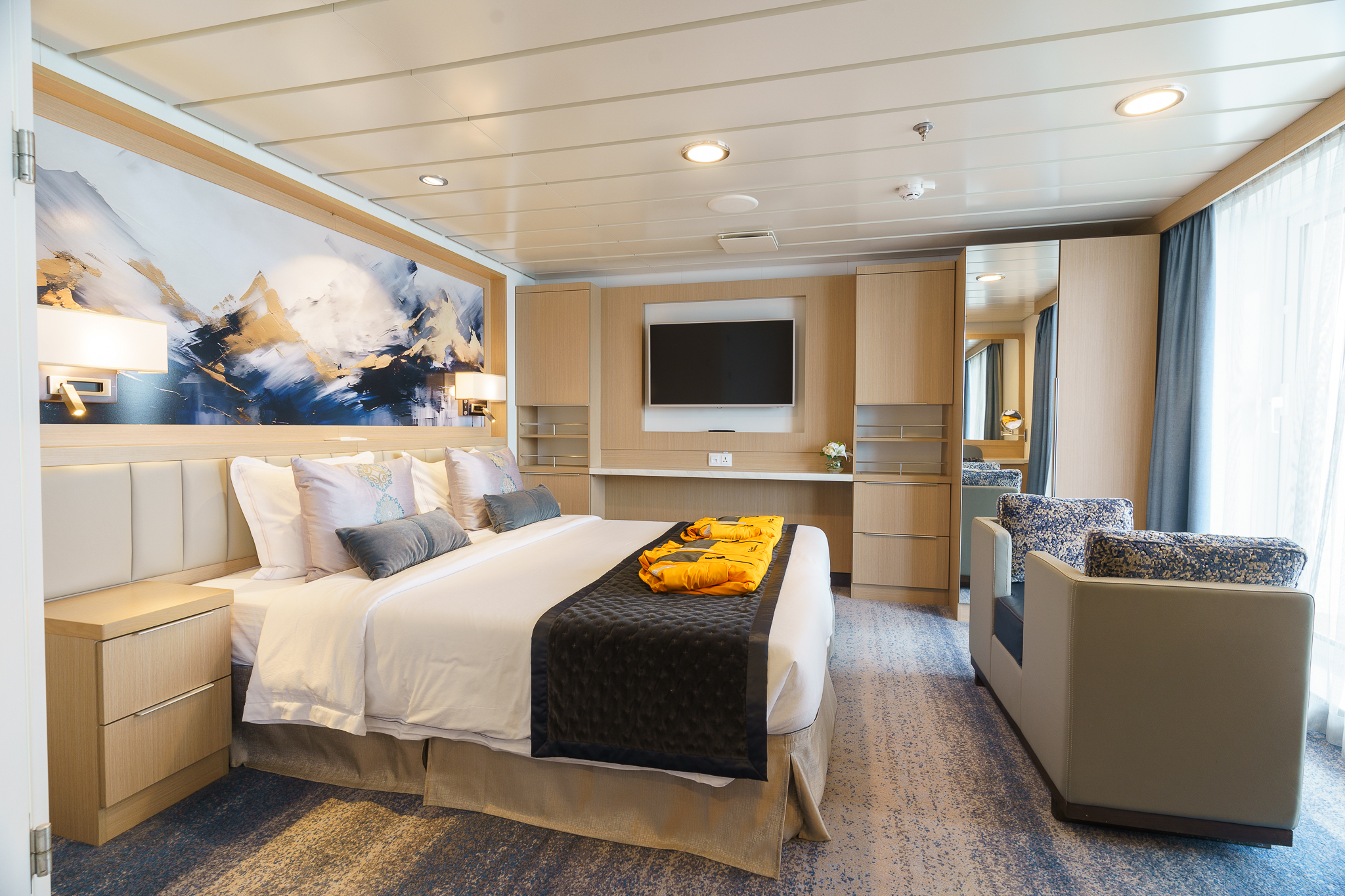
Owners Suite
This palatial, airy apartment offers stunning views from its large private veranda on the highest cabin level. The luxurious suite features a large master bedroom, living room and dining area and two large master bathrooms, among other amenities.
Bed Config.
Two rooms. One double bed made up of two twin berths fold out sofa bed
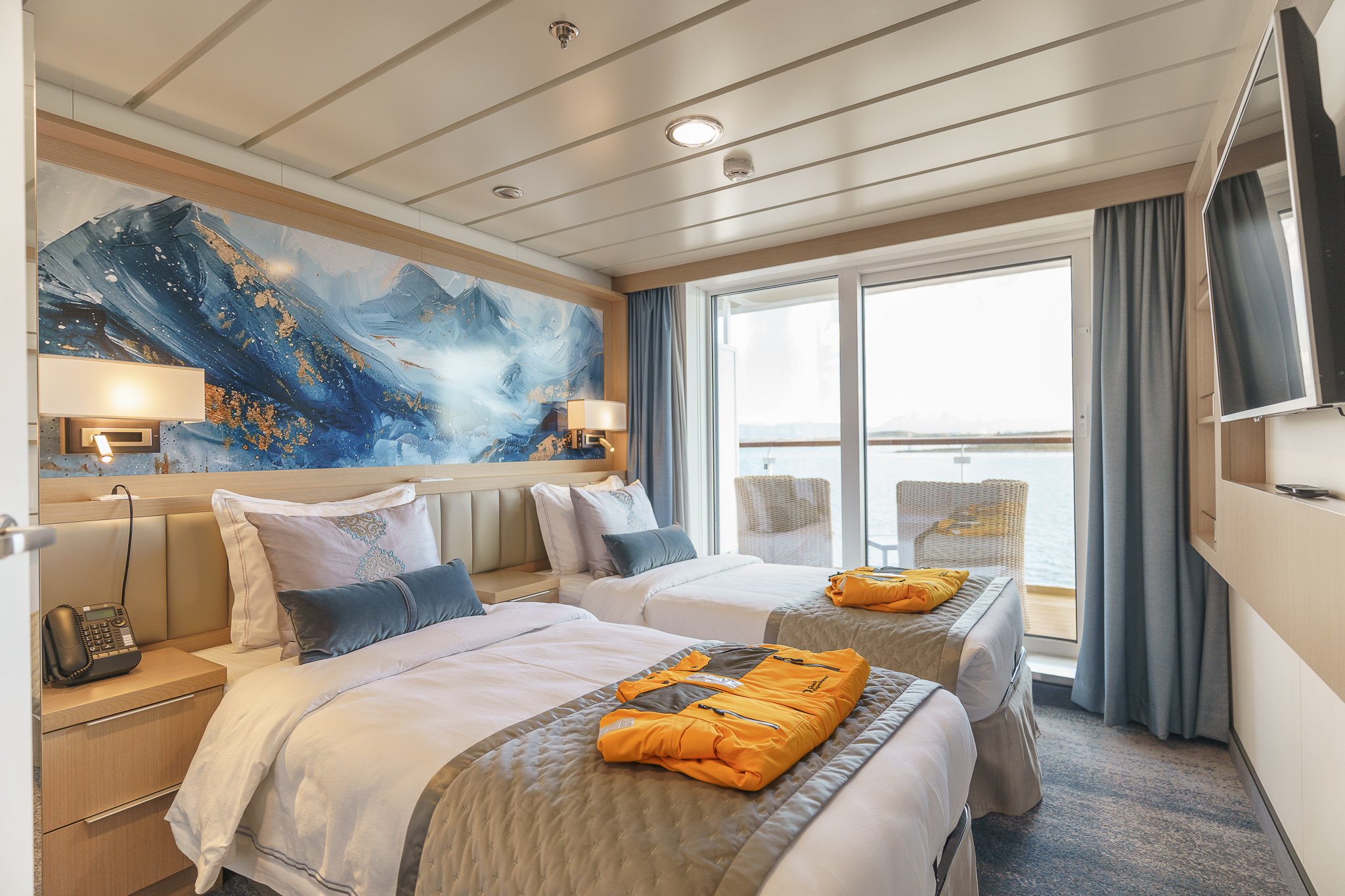
Junior Suite
Located on Deck 6 and approximately 298 sq. f. (27.7 sq. m,) in size. These 2-room suites have one double bed that can be configured into two singles in the inner bedroom and an outer sitting room furnished with a sofa-bed, and activity table for two. From the bedroom there a floor to ceiling glass view that opens to a double sized walkout balcony. There are also 2 TV’s, state of the art ‘infotainment’ system and private bathroom with bathtub, vanity and heated floor.
Bed Config.
Two rooms. One double bed made up of two twin berths fold out sofa bed
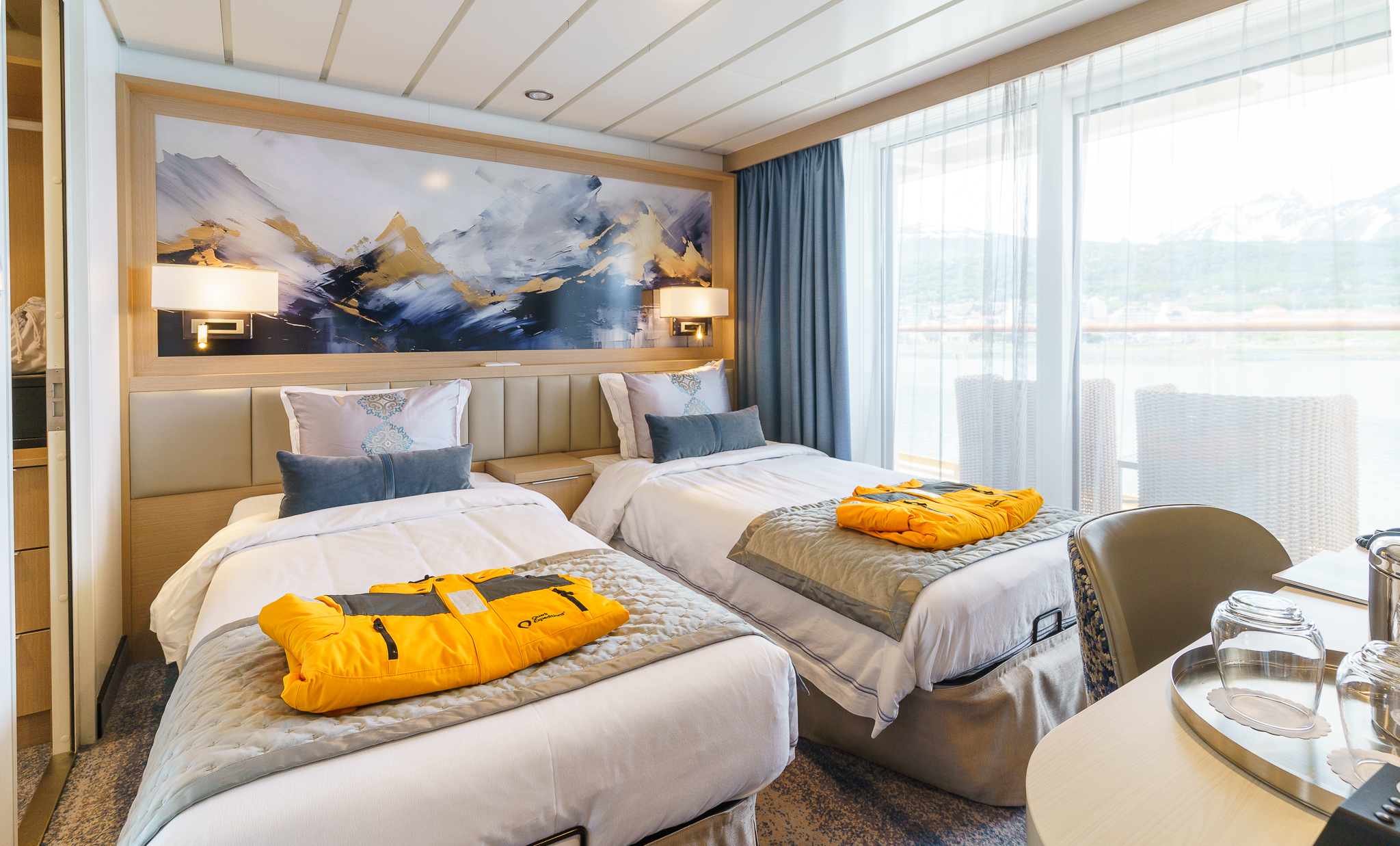
Penthouse Suite
This unique 2-room suite is located on Deck 7 and is approximately 269 sq. f (25.0 sq. m.) in size. It has one double bed that can be configured into two singles in the inner bedroom.and the outer sitting area is furnished with a sofa-bed. Walk-out from either room to a double sized balcony . There are also 2 TV’s, state of the art ‘infotainment’ system and private bathroom with shower, vanity and heated floor. And an additional powder room in the outside sitting area.
Bed Config.
Two rooms. One double bed made up of two twin berths fold out sofa bed
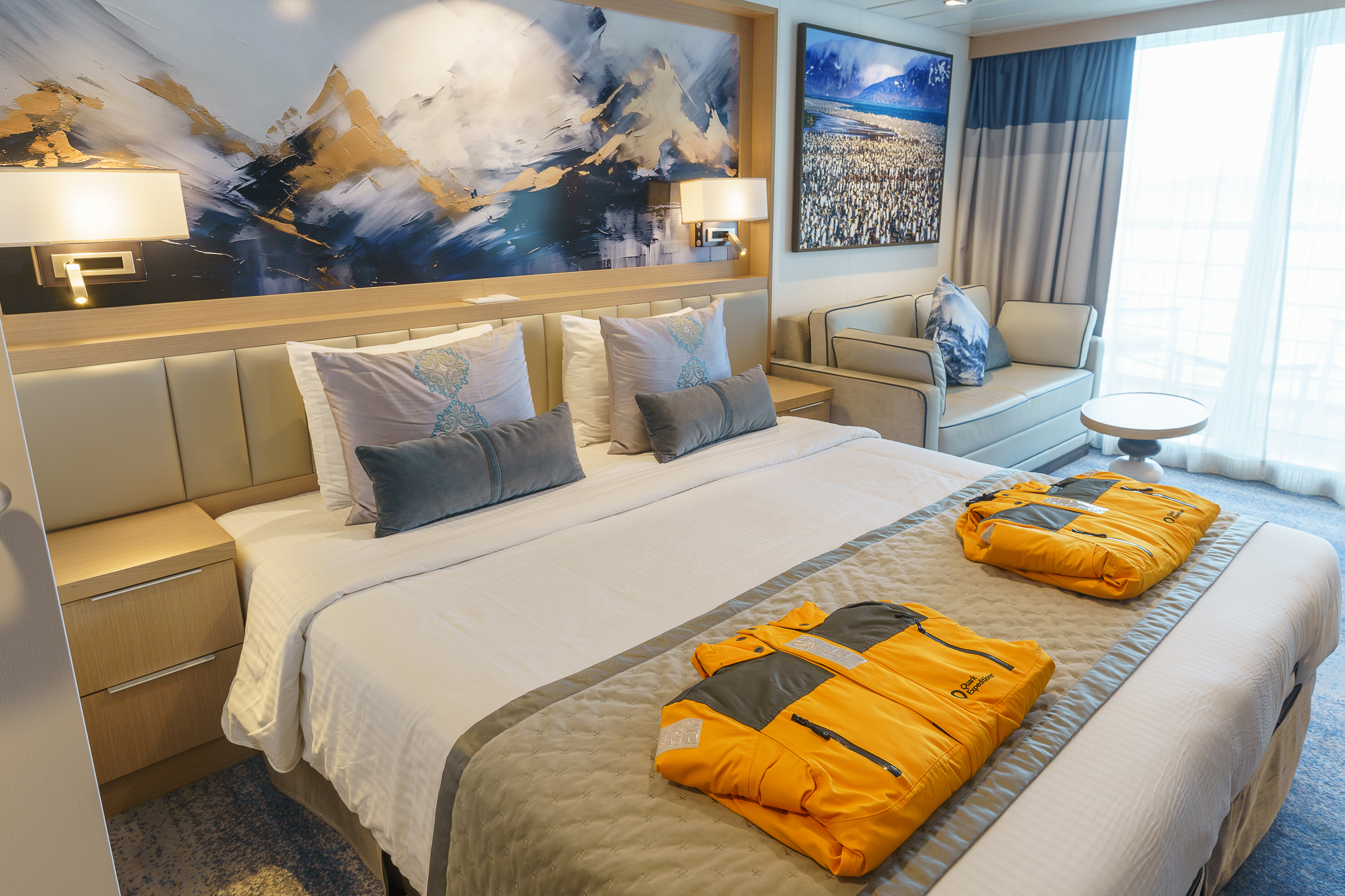
Veranda Suite
Located throughout the ship and approximately 205 sq. ft. (19.2 sq. m,) in size, these cabins have one double bed that can be configured into two singles, and seperate sitting area furnished with a sofa-bed. There is a floor to ceiling glass view that opens to a walkout balcony. There is also a desk and chair, TV, state of the art ‘infotainment’ system and private bathroom with shower, vanity and heated floor.
Bed Config.
One double bed made up of two twin berths and fold out sofa bed
Veranda Stateroom
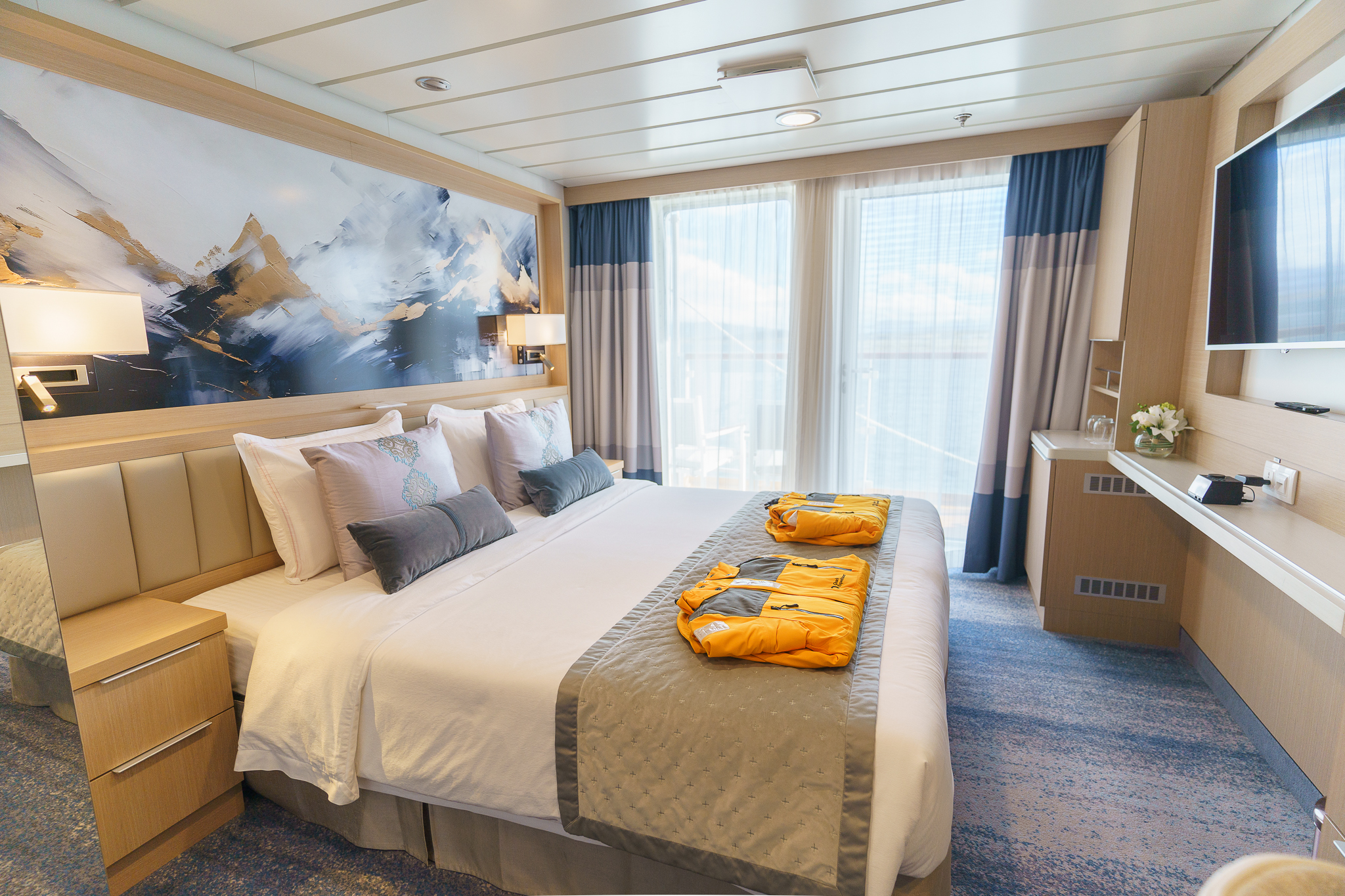
Located throughout the ship and approximately 208 sq. f. (19.3 sq. m,) in size, these cabins have one double bed that can be configured into two singles, and seperate sitting area furnished with two club chairs and a reading table. There is a floor to ceiling glass view that opens to a walkout balcony. There is also a desk and chair, TV, state of the art ‘infotainment’ system and private bathroom with shower, vanity and heated floor. Note: 611 and 612 do not have the club chairs and a reading table.
Bed Config.
One double bed made up of two twin berths
Deluxe Veranda Forward
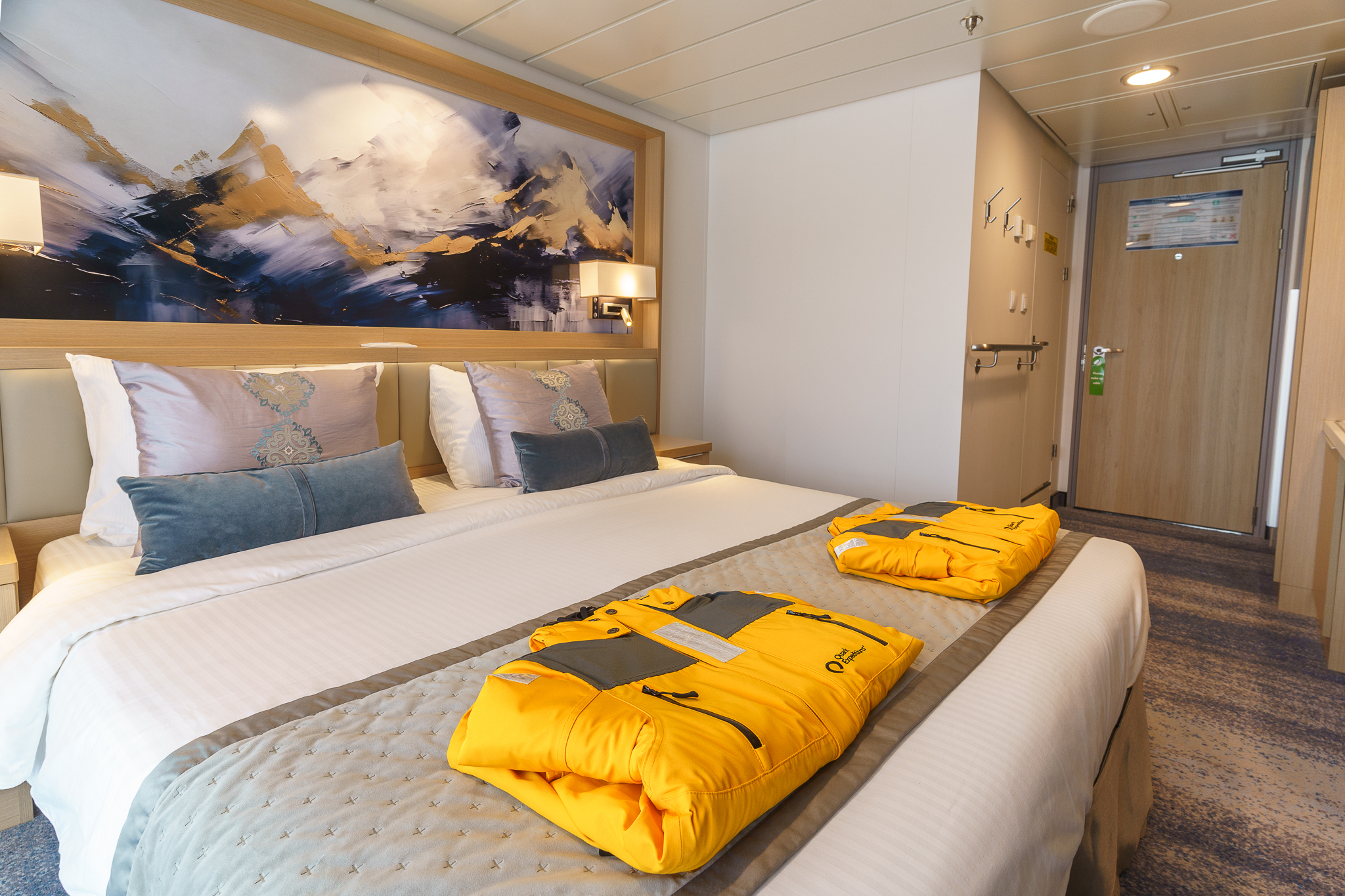
Located on Deck 4 and approximately 182 sq. f. (16.9 sq. m,) in size, these cabins have one double bed that can be configured into two singles. There is a floor to ceiling glass view that opens to a walkout balcony. There is also a desk and chair, TV, state of the art ‘infotainment’ system and private bathroom with shower, vanity and heated floor.
Bed Config.
One double bed made up of two twin berths
Studio Veranda Single
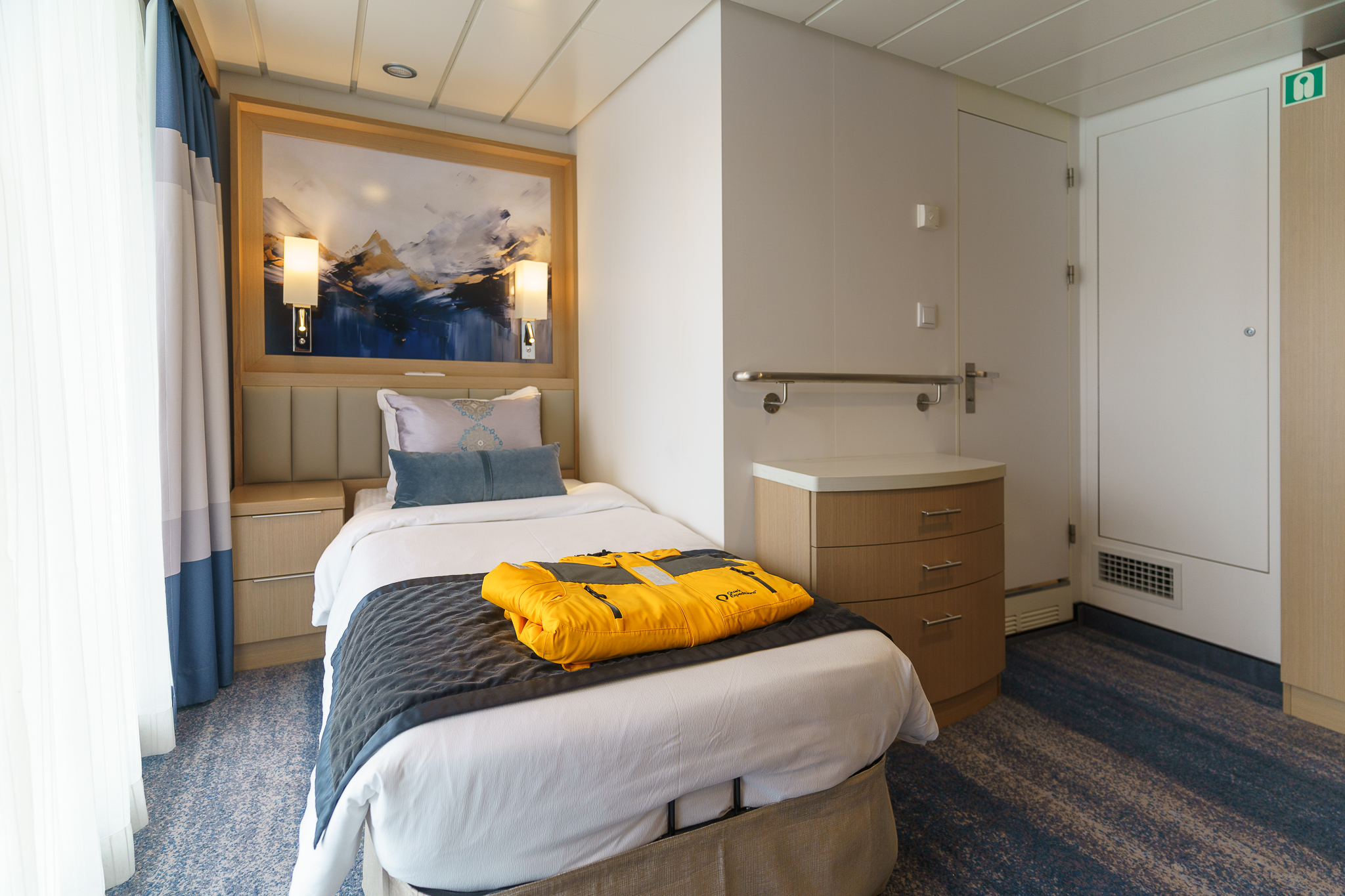
Designed for one. This unique cabin is located on Deck 7 and approximately 162 sq. f. (15.1 sq. m.). It has one twin bed with a floor to ceiling glass view that opens to a generous walkout balcony. There is also TV, state of the art ‘infotainment’ system and private bathroom with shower, vanity and heated floor.
Bed Config.
One twin single

Studio Single
Designed for one. These cabins are located on Deck 3 and approximately 166 sq. ft. (15,4 sq. m,) in size, with one double bed and a porthole view. There is also a desk and chair, TV, state of the art ‘infotainment’ system and private bathroom with shower, vanity and heated floor.
Bed Config.
One double bed made up of two twin berths
Main Dining Room
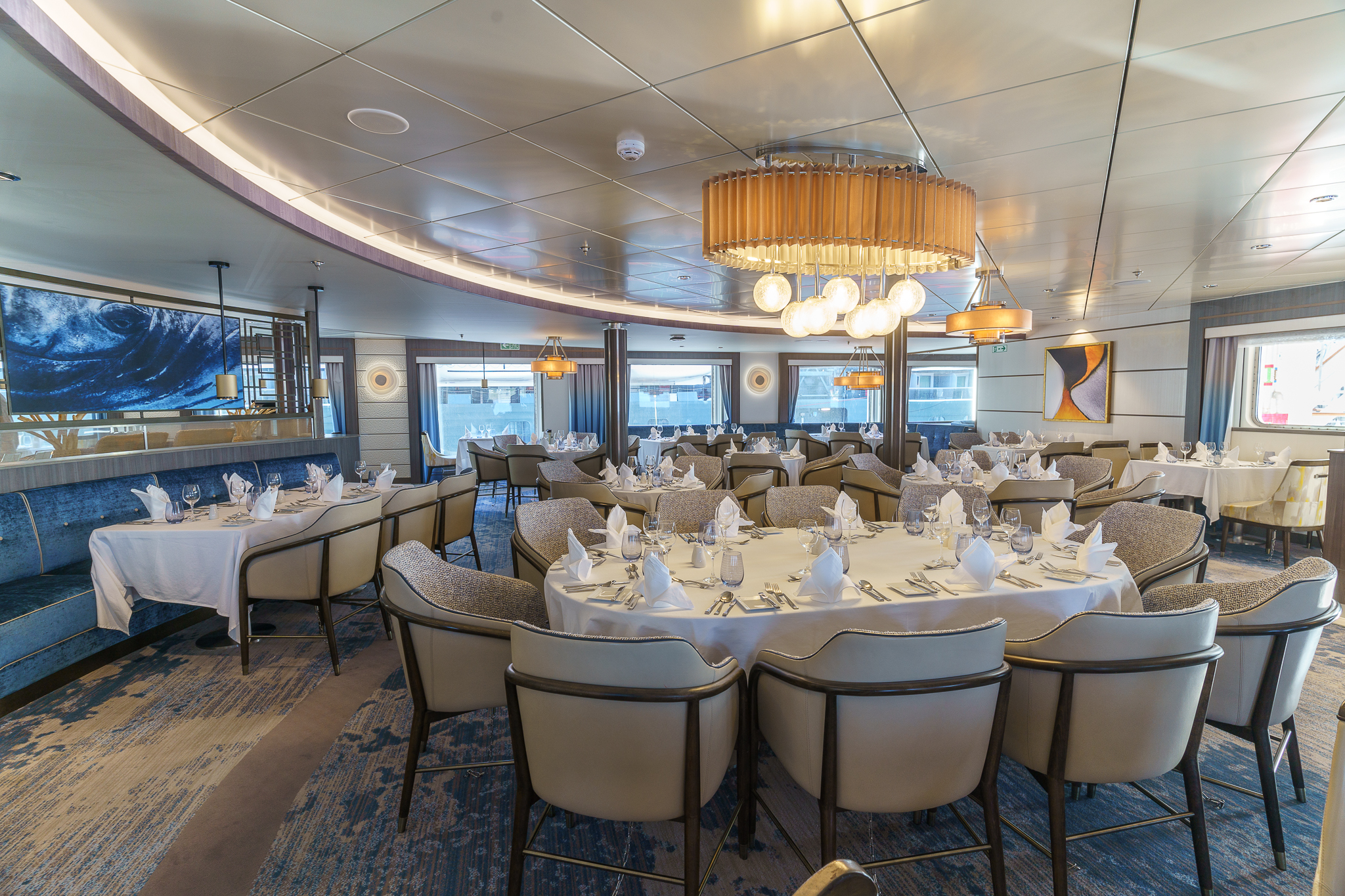
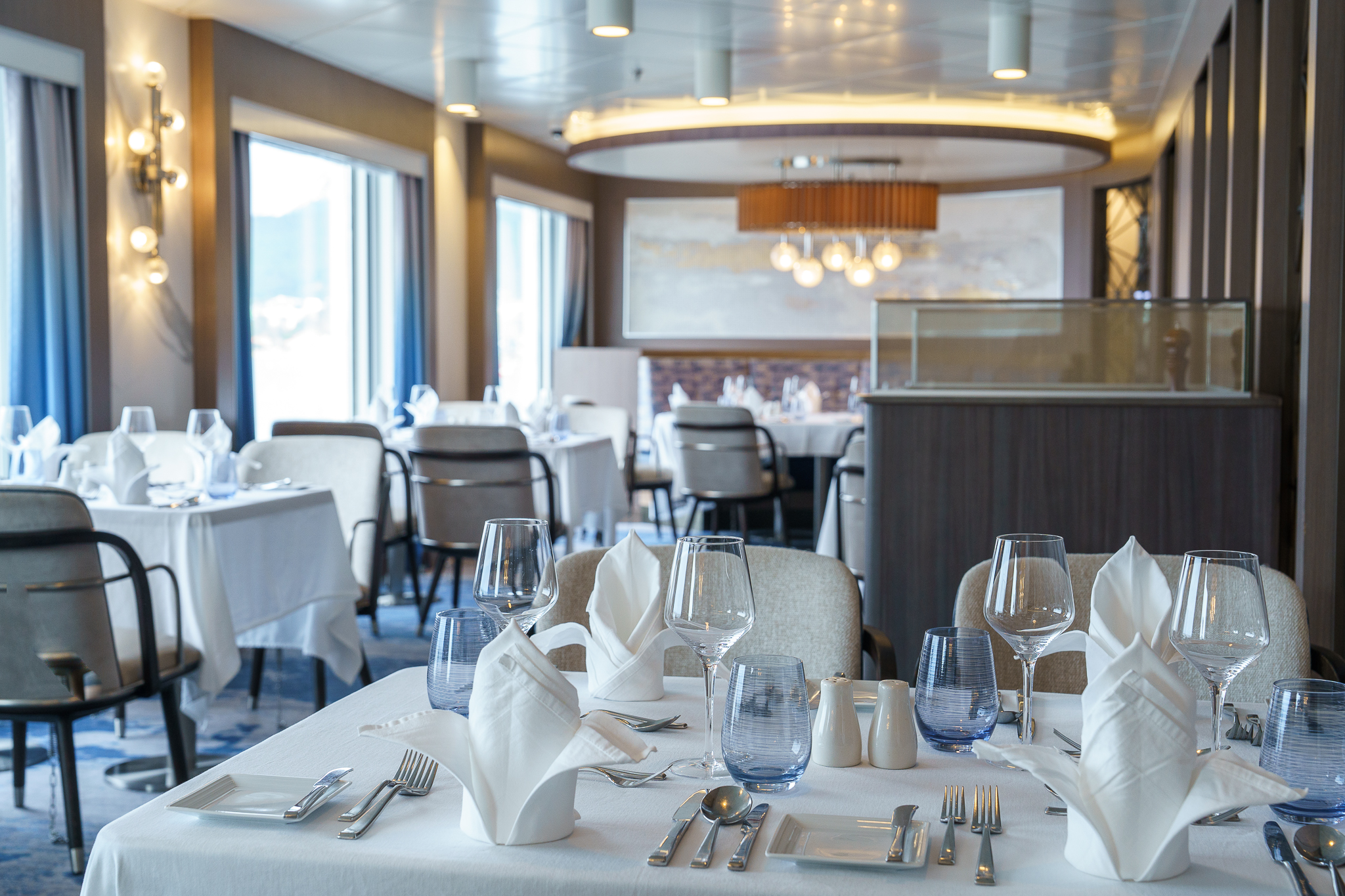
Contemporary meets cozy in this modern dining room with its stylish lighting and contemporary art. Located on Deck 5, the Main Dining Room seats 144 guests, and features expansive floor-to-ceiling windows that open onto the spectacular polar wilderness.
Private Dining Room
Tasteful and intimate. This stylish, private dining room on deck 5 provides a relaxed dining experience—with views of the polar landscape—for up to 36 guests.
Observation Bistro
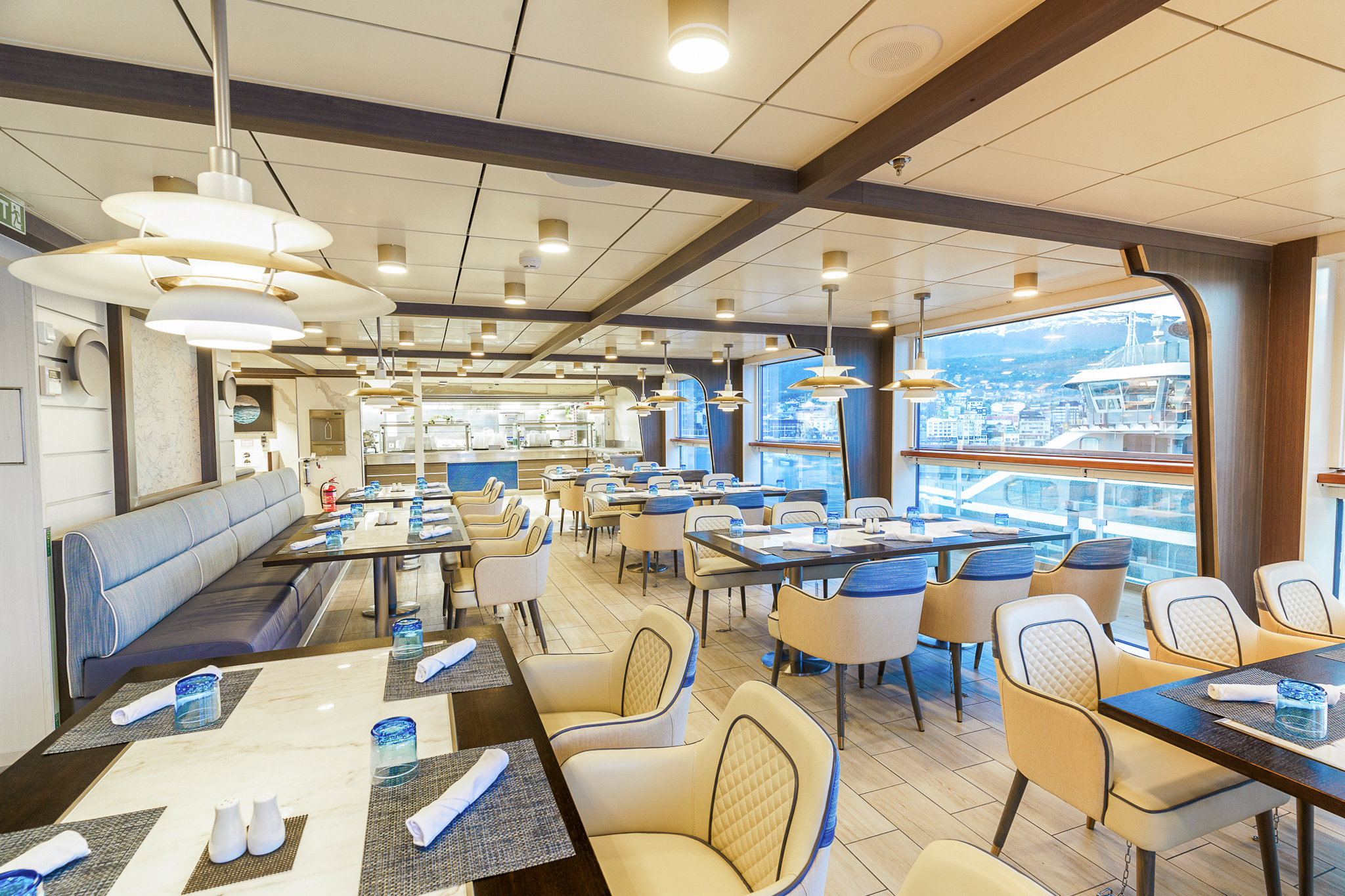
With its marine blue and off-white colors—is your go-to spot for lighter fare and graband-go snacks. This relaxed eatery seats up to 44 guests, who can take in full views of their polar surroundings and wildlife while enjoying a light bite.
Off-Ship Adventures
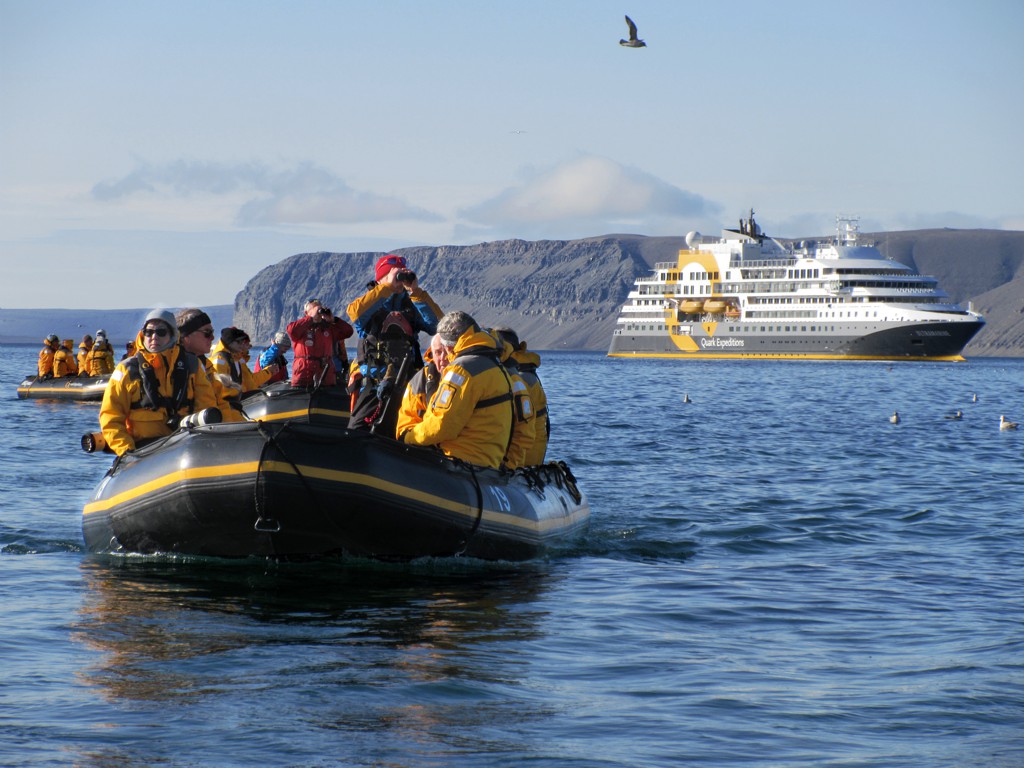
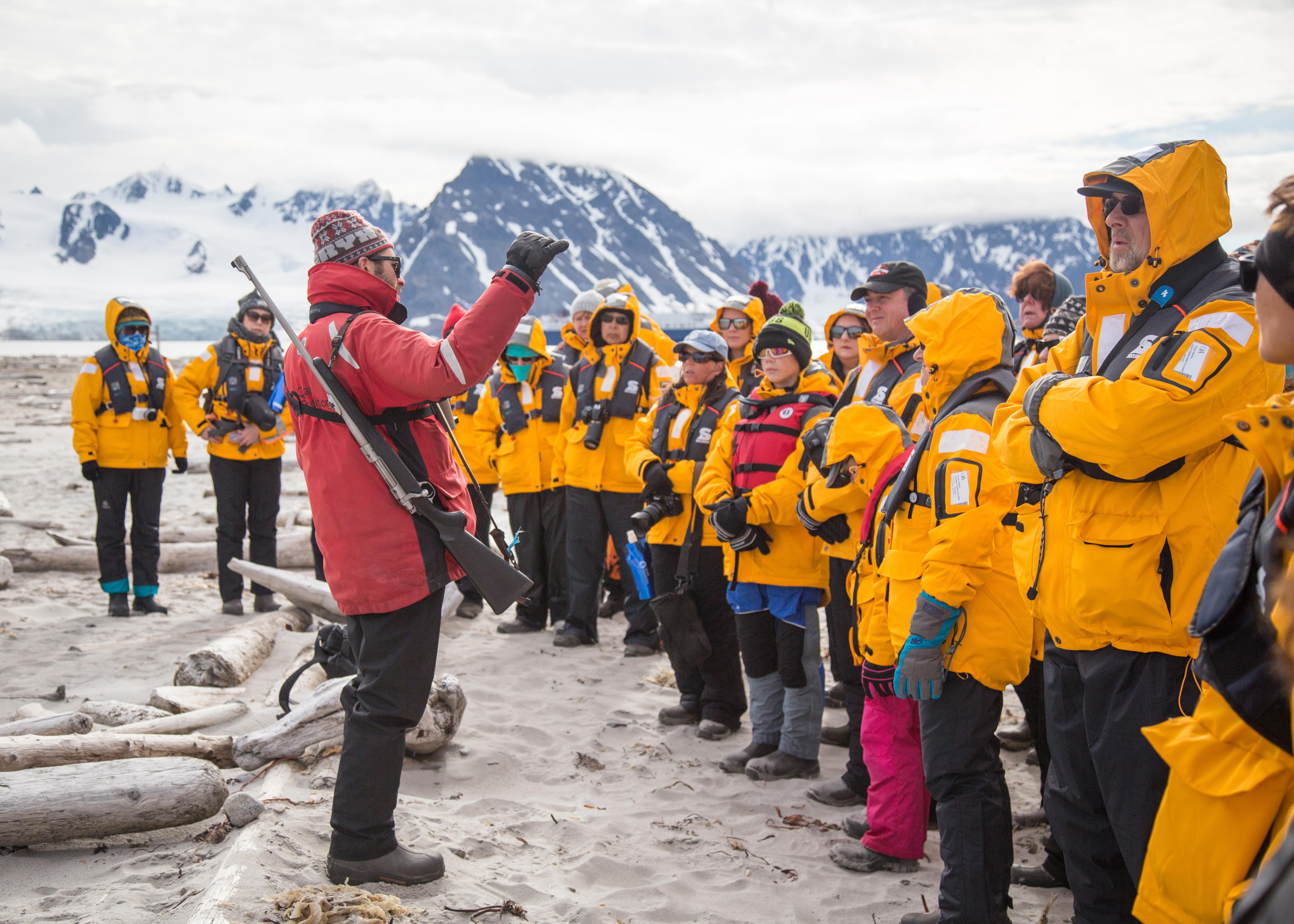
With four separate sea-level embarkation points and a fleet of 15 Zodiacs, Ocean Explorer offers a comprehensive breadth of off-ship activities including Zodiac cruising and paddling, allowing you to intimately connect with the polar wilderness.
Expedition Team
The perfect polar expedition doesn’t just happen. It takes a team of talented, knowledgeable and experienced professionals to bring it all together. Our Expedition Team is comprised of seasoned veterans with rich backgrounds in marine biology, history, glaciology, geology and more. With the highest staff-to-guest ratio in the industry, our Expedition Teams safely deliver your trip-of-a-lifetime to maximize your polar adventure every step of the way.
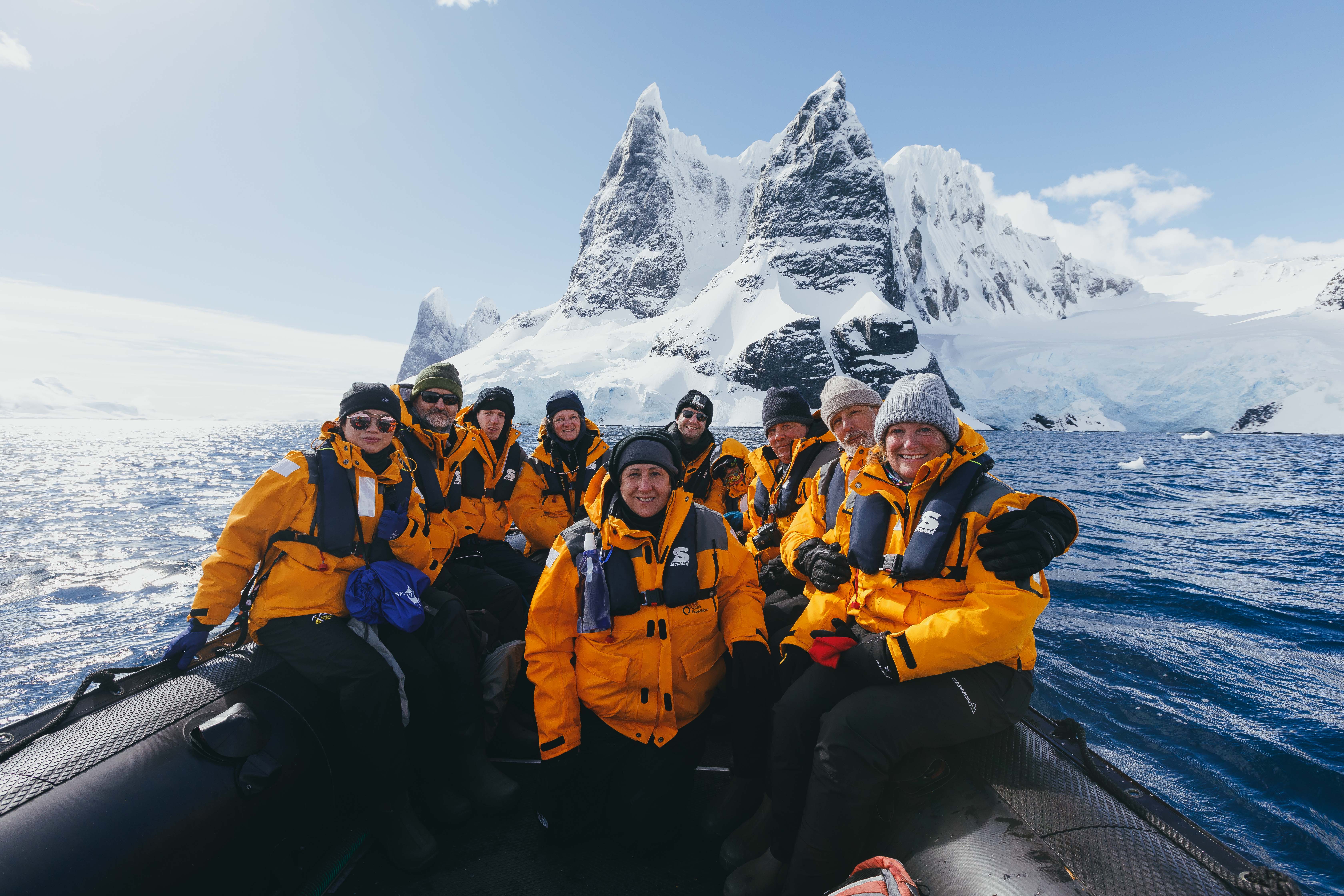
Zodiac Cruising
Zodiacs are used for transferring you ashore, transporting your luggage when necessary and for taking you ocean-level cruising among icebergs, whales and seabirds. During the expedition, you will visit remote and isolated sites that are accessible only by Zodiac.
These large, heavy-duty inflatable vessels are extremely safe and were specially designed for expedition work. Zodiacs are the workhorses of Polar expeditions. Separate air compartments retain a large reserve of buoyancy even if these sturdy boats are damaged. Their flat bottom design permits the craft to land directly onto the cobble and ice-strewn beaches that you will encounter on your Polar expedition.
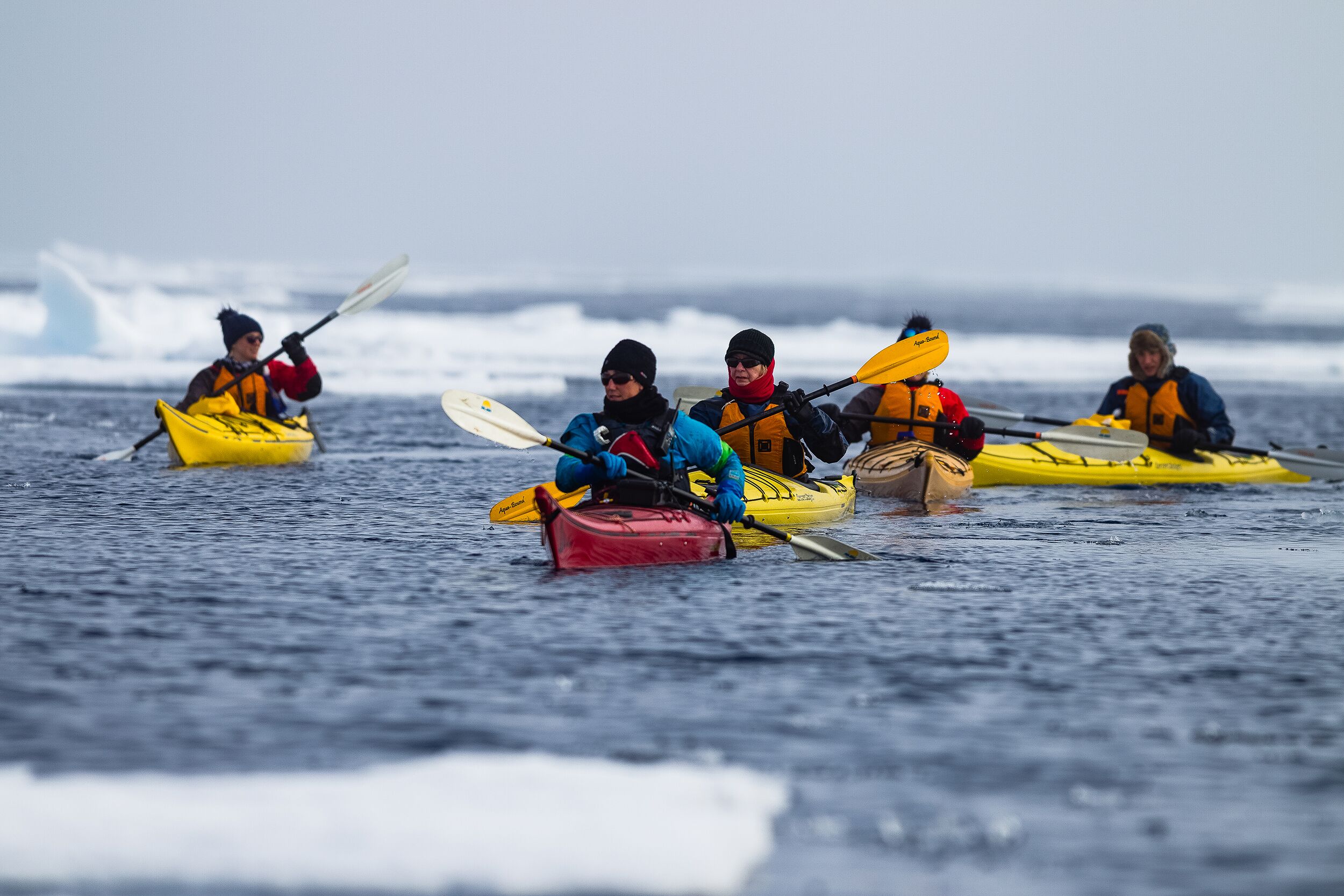
Sea Kayaking
The kayak adventure option is open to all levels of experience. However, it is highly recommended that you have some sea kayaking related experience prior to kayaking in the polar regions with Quark Expeditions. Our sea kayaks are the ideal means by which to slow down and connect with the pristine natural environments and surroundings.
Positioning yourself in the seat of a kayak is one of the most intimate ways travelers can connect with the polar regions—at water level, up close, where you can touch and feel every polar sensation imaginable. The Sea Kayak Program enables a small group of like-minded individuals to forge bonds as they explore fjords, glacial faces or mazes of sea ice.
Conditions and logistics permitting, your kayak guide(s) will endeavor to have you paddling as often as possible throughout the voyage. Typically, sea kayakers are shuttled by Zodiac from the ship to an ideal starting point, where the kayak excursion begins. Guests return to the ship by Zodiac at the end of their paddling experience. Some kayak excursions are designed so guests can go ashore and explore.
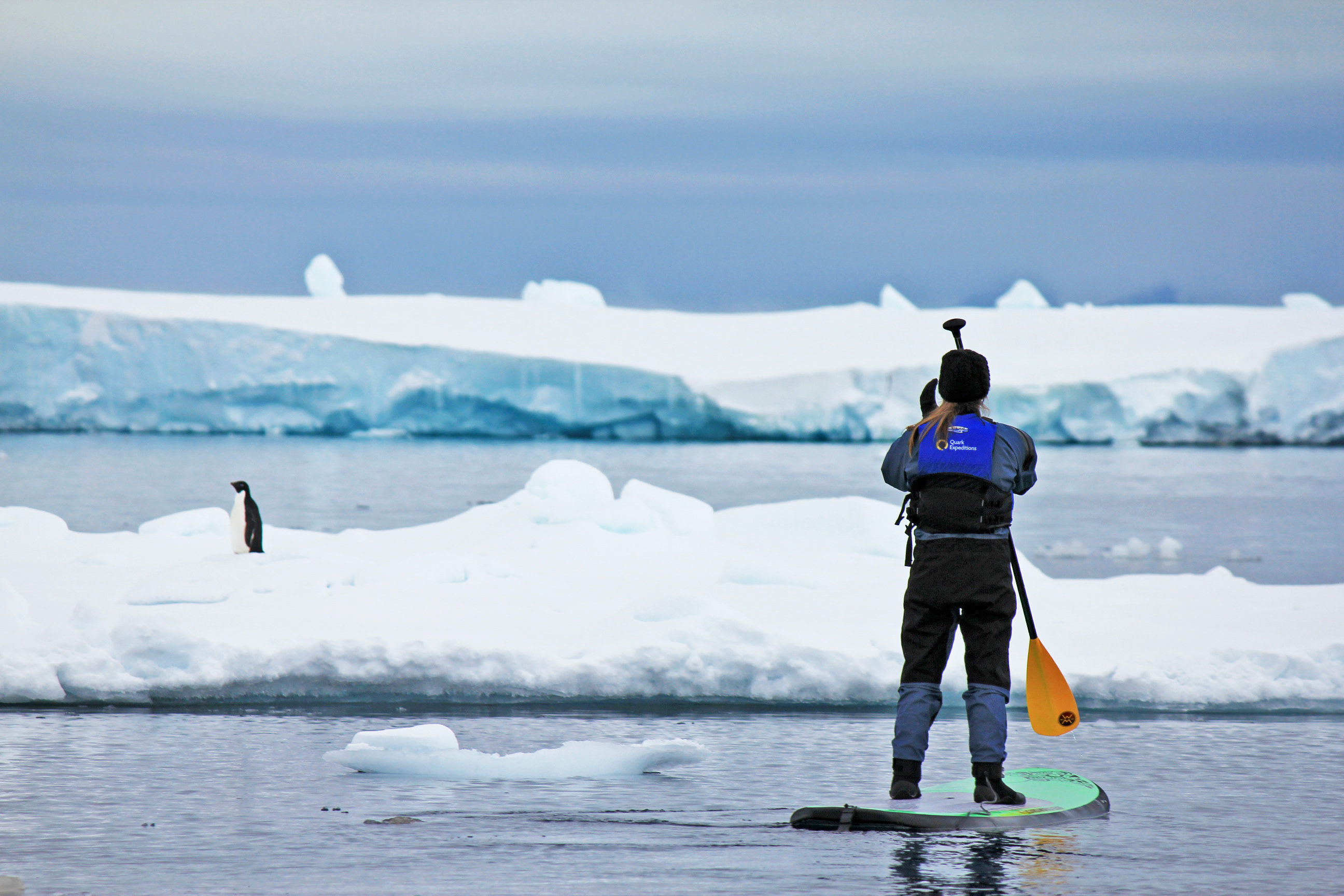
Stand-up Paddleboarding
Stand-up Paddleboarding, popularly known as SUPing, originated in Hawaii. Quark Expeditions is the first company to bring this watersport all the way to Antarctica.
SUPing combines the immersive experience of kayaking but in a standing position. Participants, if they prefer, can kneel, sit or even lie down and stare up at the azure Antarctic sky. Because of their wide base and tail fins, SUP boards are quite stable, enabling participants – after a bit of practice – to stop staring at their feet and admire the surrounding scenery. Imagine seeing Gentoo penguins gliding below you, or making eye contact with a Weddell seal lying on a piece of ice as you paddle by.
Guests receive on-ship and on-water instruction from a qualified SUP guide. In addition, a safety driver (in a Zodiac) stays within range to offer assistance.
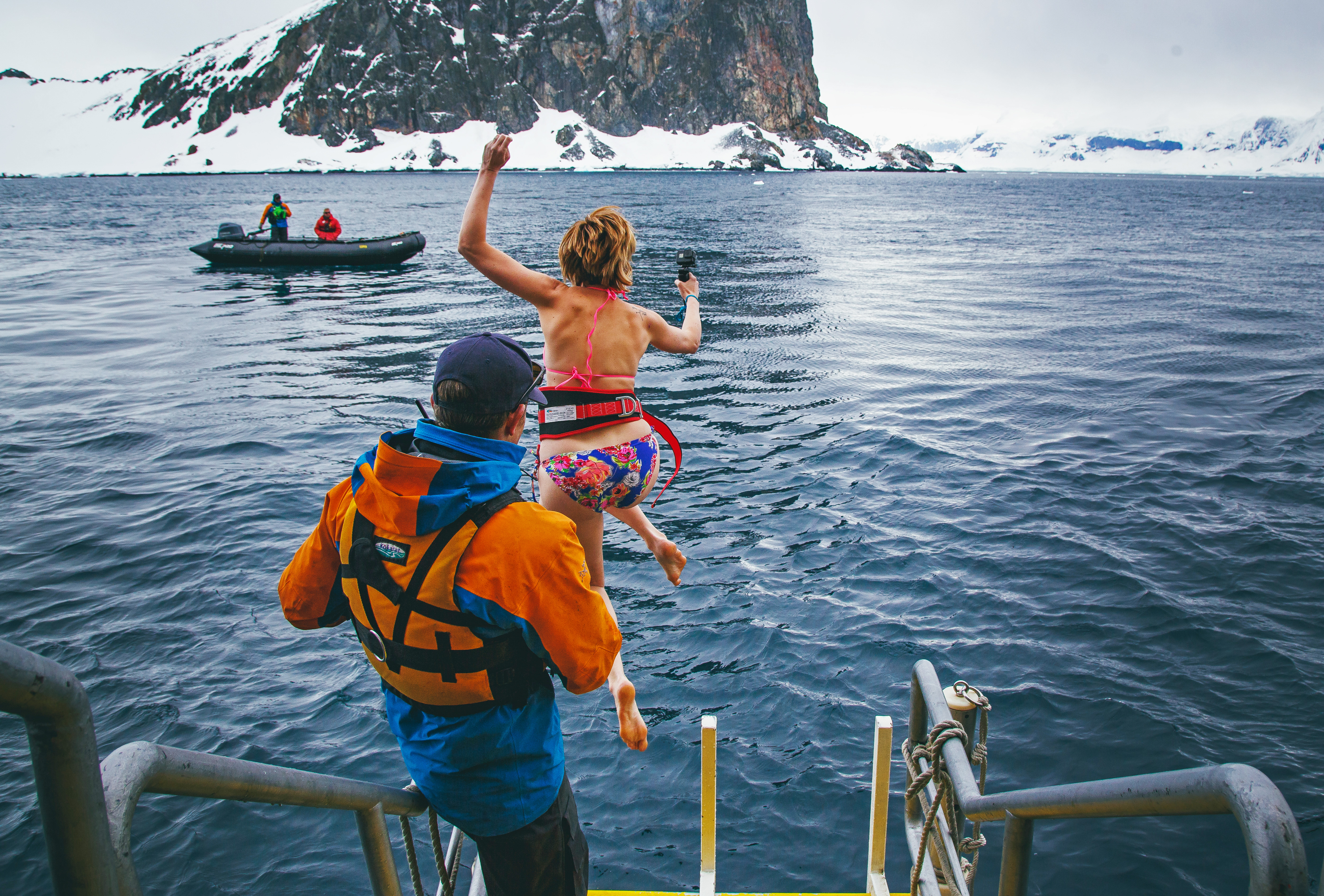
Polar Plunge
The Polar Plunge is scheduled once during each voyage. Throughout the journey, the Expedition Leader and Captain constantly monitor conditions in order to choose the optimal time and location. The Polar Plunge sometimes takes place onshore or, in many cases, from the gangway or Zodiac. All participants wear a tethered harness and plunge into the polar waters from the side of Zodiac or safety of the gangplank cheered on, of course, by fellow passengers and Expedition Team.
Safety is paramount—the onboard physician always attends the Polar Plunge. Guides in survival gear circle the area in Zodiacs as guests take their turn jumping or cannon-balling into the polar waters.
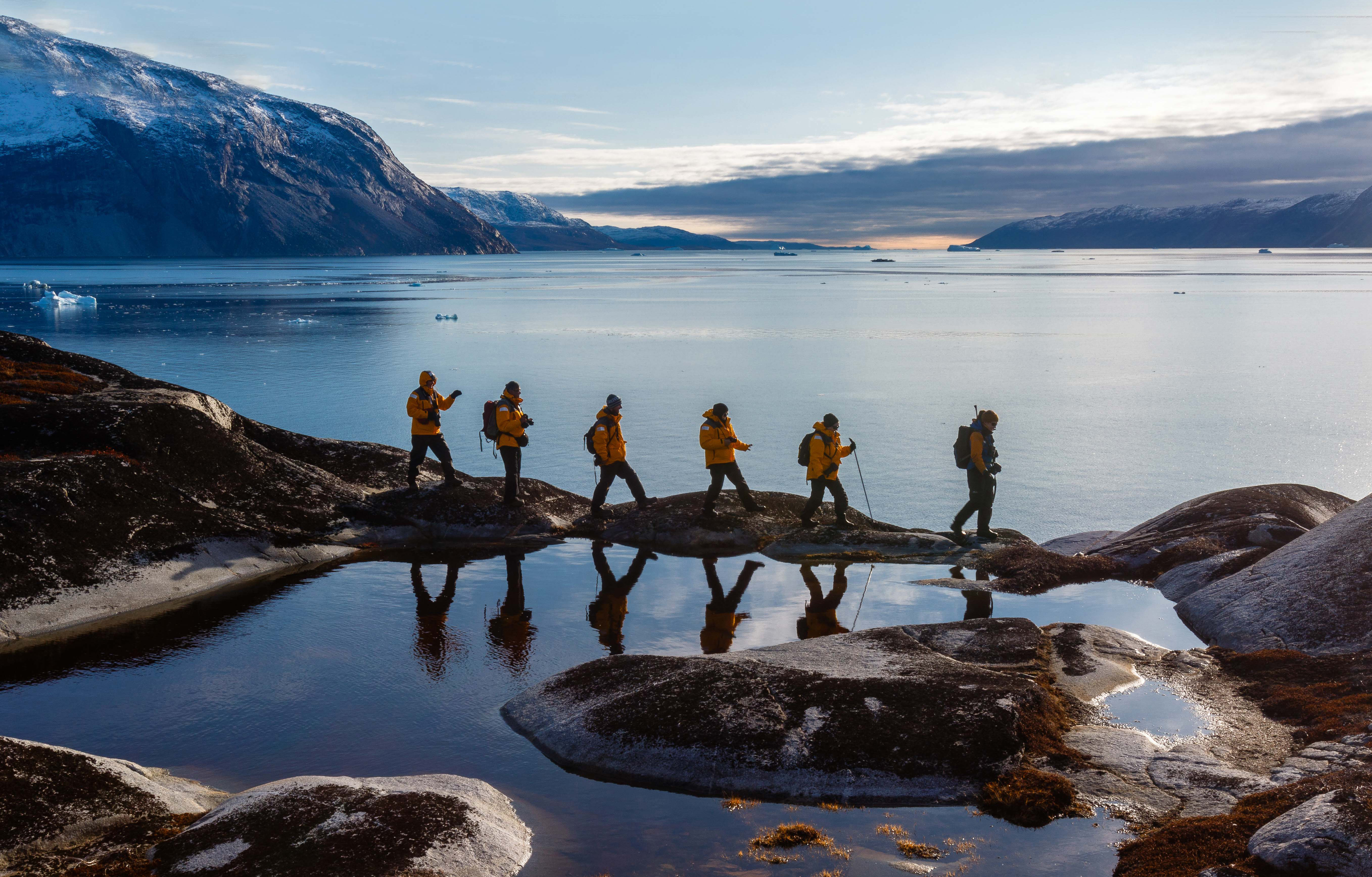
Hiking
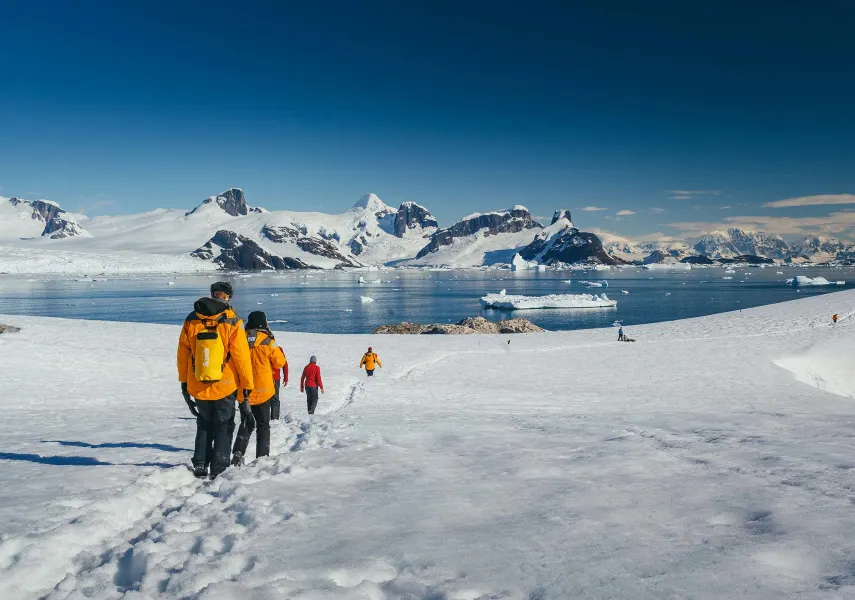
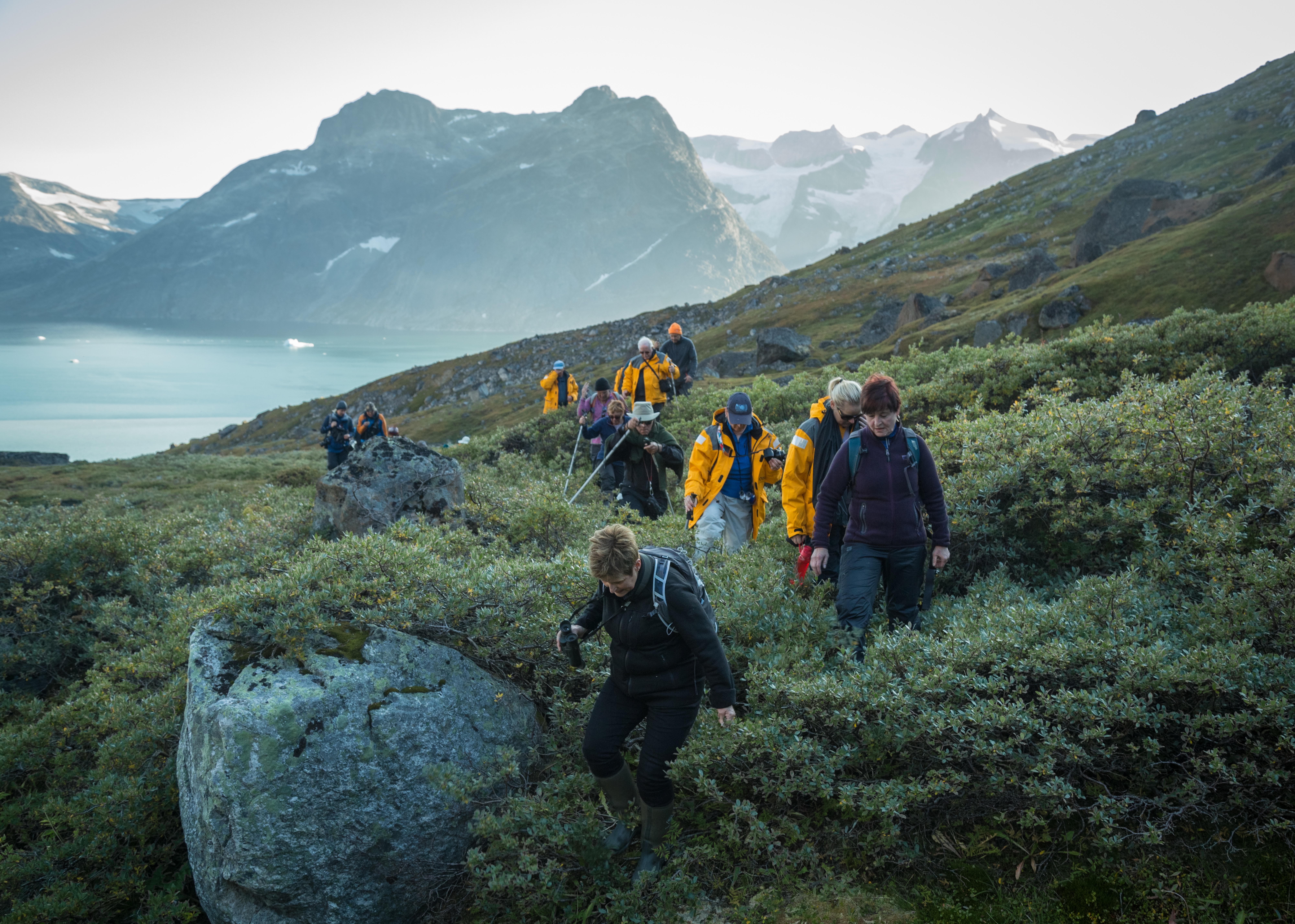
Hiking in the polar regions differs from your typical trail experience. Here, in a tree-less terrain, you are the tallest figure on the landscape as you walk over spongy tundra, crusty snow or sandy beaches in remotes parts of the Arctic and Antarctica. Stepping ashore anywhere in the polar regions means you’re not a distant observer.
Our organized hikes range from short jaunts to the top of lookouts or visits to see wildlife or longer walks of several kilometers over ice and rock and snow. Hiking excursions may last from two to three hours with plenty of time for photographs of wildlife, learning moments from your experienced guides, or just time to stand back and admire the incredible polar surroundings.
No experience is necessary but participants should be able to get in and out of a Zodiac and walk on uneven terrain. Hiking options are tailored to all interests and abilities, from those who want to contemplate the landscape in silence to photographers who want that perfect image to energetic travelers who want to summit a peak in the hopes of seeing wildlife in their natural habitat.
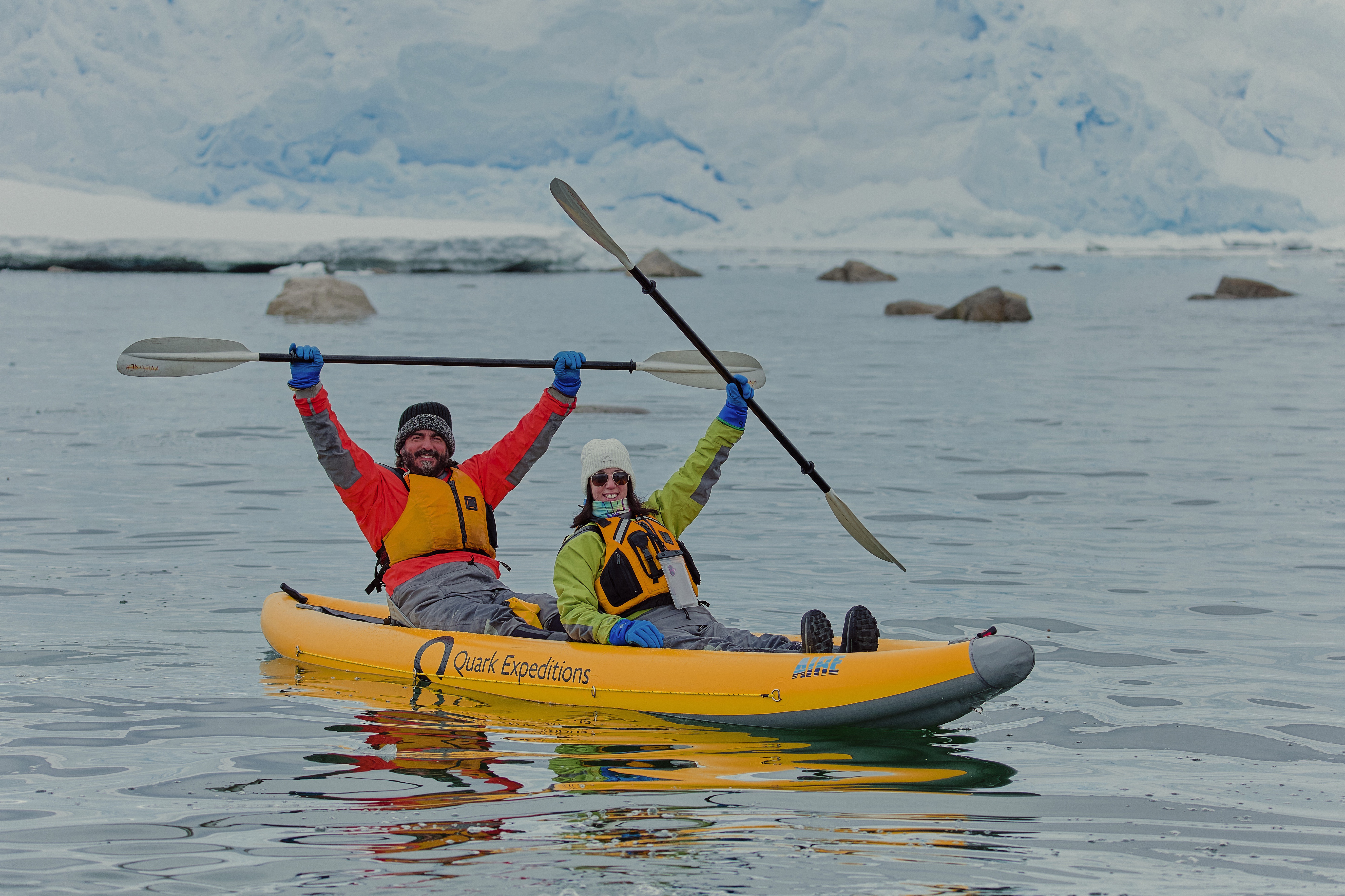
Paddling Excursion
Explore the ocean from a more intimate vantage point on a sit-on-top kayak. No experience is required to manoeuvre these very stable kayaks, allowing you to enjoy an unforgettable experience on the water, taking in breathtaking landscapes and wildlife. Whether it’s your first time in a kayak or you want greater flexibility to try other Adventure options, this shorter excursion is for you.
Paddling in the Polar Regions is highly weather-dependent and a one-time experience. Your kayak guides will attempt to take you out on the water for 1-1.5 hours of paddling. Offered on most voyages, spaces are limited. All equipment, guides and instructions are provided by Quark.
Pricing subject to change based on season. Please proceed to checkout or contact a Polar Travel Adviser for more details.
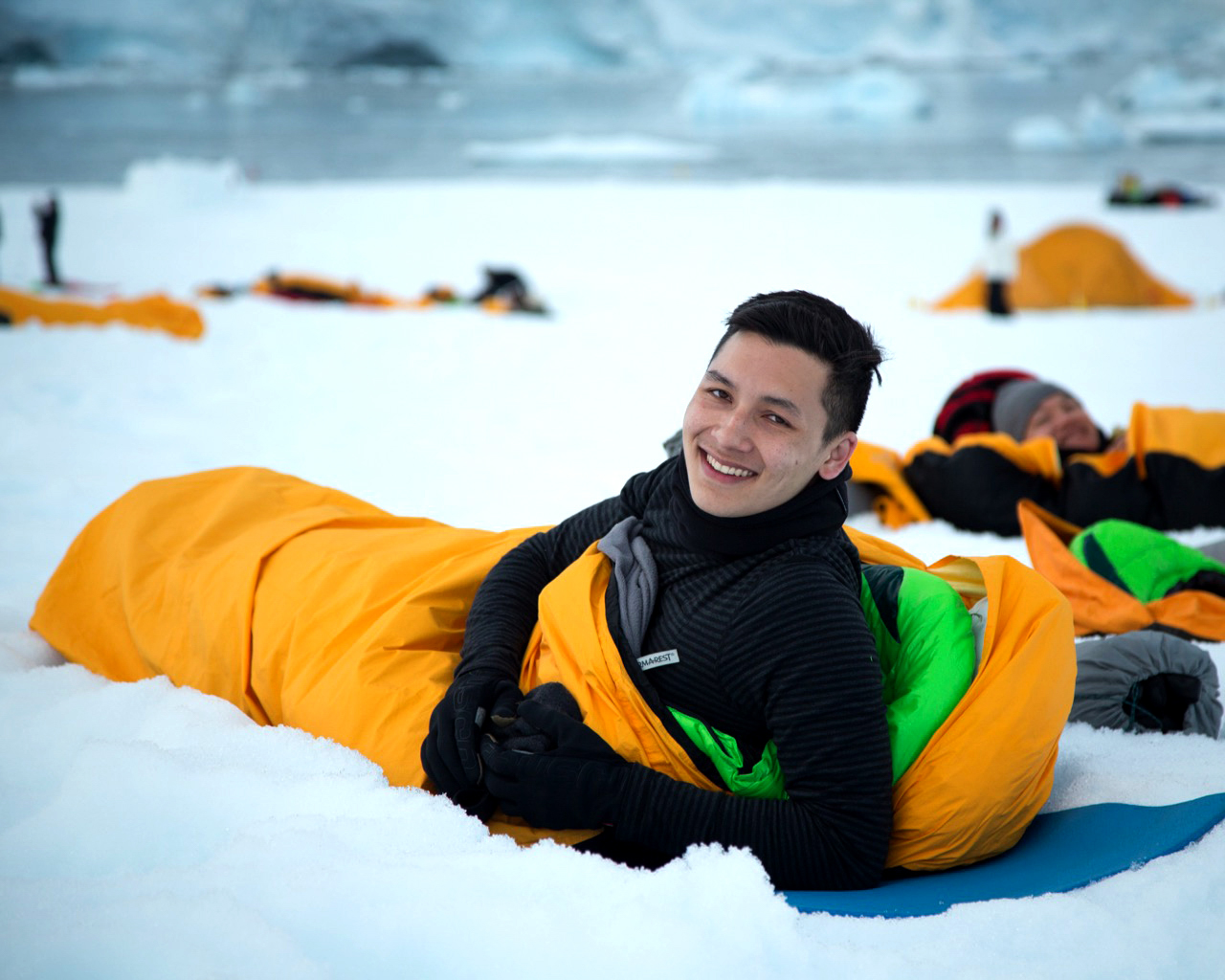
Camping
Imagine for a moment, staring at the stars in the indigo glow of an Antarctic night as you bed down for the night outside in the elements. The buzz of your daily life becomes a distant memory as you listen to the bray of penguin, the ethereal calls of the Weddell sea – even the exhalation of a humpback whale. And then you fall asleep.
Antarctic Camping with Quark Expeditions is an unforgettable experience. After dinner onboard, you’ll be escorted ashore by Zodiac to camp out on the snow for the night in your ready-to-roll bivy sack (tents can be used upon request). Once you decide on your spot, you set up camp and enjoy the peace as the Antarctic night unfolds.
Camping in Antarctica is limited to 50 participants, all of whom will be briefed beforehand on the principals of basic camping. Prior to you settling down for the night, Quark Expeditions staff will prepare the site, including setting up a perimeter in safe, flat to gently-sloping and beautiful site. You’re free to choose where (within the perimeters) you want to settle down for the night.
You’ll be equipped with the following:
- Mummy-style sleeping bag
- Bivy sack
- Insulated sleeping pad
- Sleeping bag liner
- 3 or 4 season tent provided upon request (pending availability)
- Quark Expeditions Parka
- Waterbottle (Small collapsible reusable water bottles provided onboard upon embarkation)
- Muck Boots (insulated waterproof boots provided onboard upon embarkation)
Other recommended gear:
- Base and mid-layer clothing
- Warm hat
- Warm gloves
- Hand-warmers
- Camera and accessories
- Backpack
- Eye mask if you wish complete darkness
- Need a pillow? Roll up your parka!
- Essential medication and or supplements
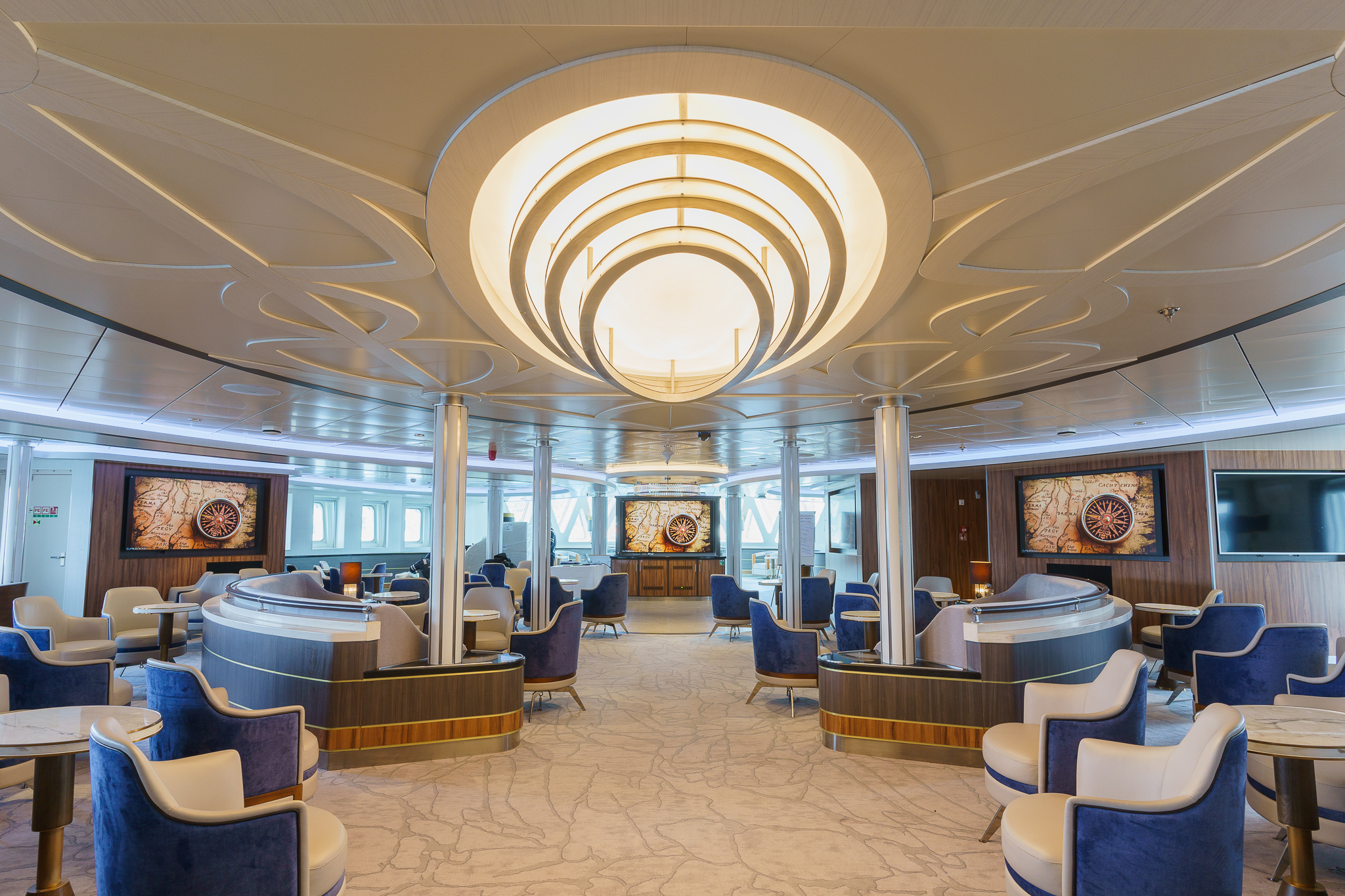
Explorer Lecture Lounge
Enjoy daily chats with and presentations by our world-class onboard polar experts—expedition guides, specialists, photography guides and other special guests who will introduce you to the fascinating history, biology, ornithology, glaciology and geology of the region, and much, much more.
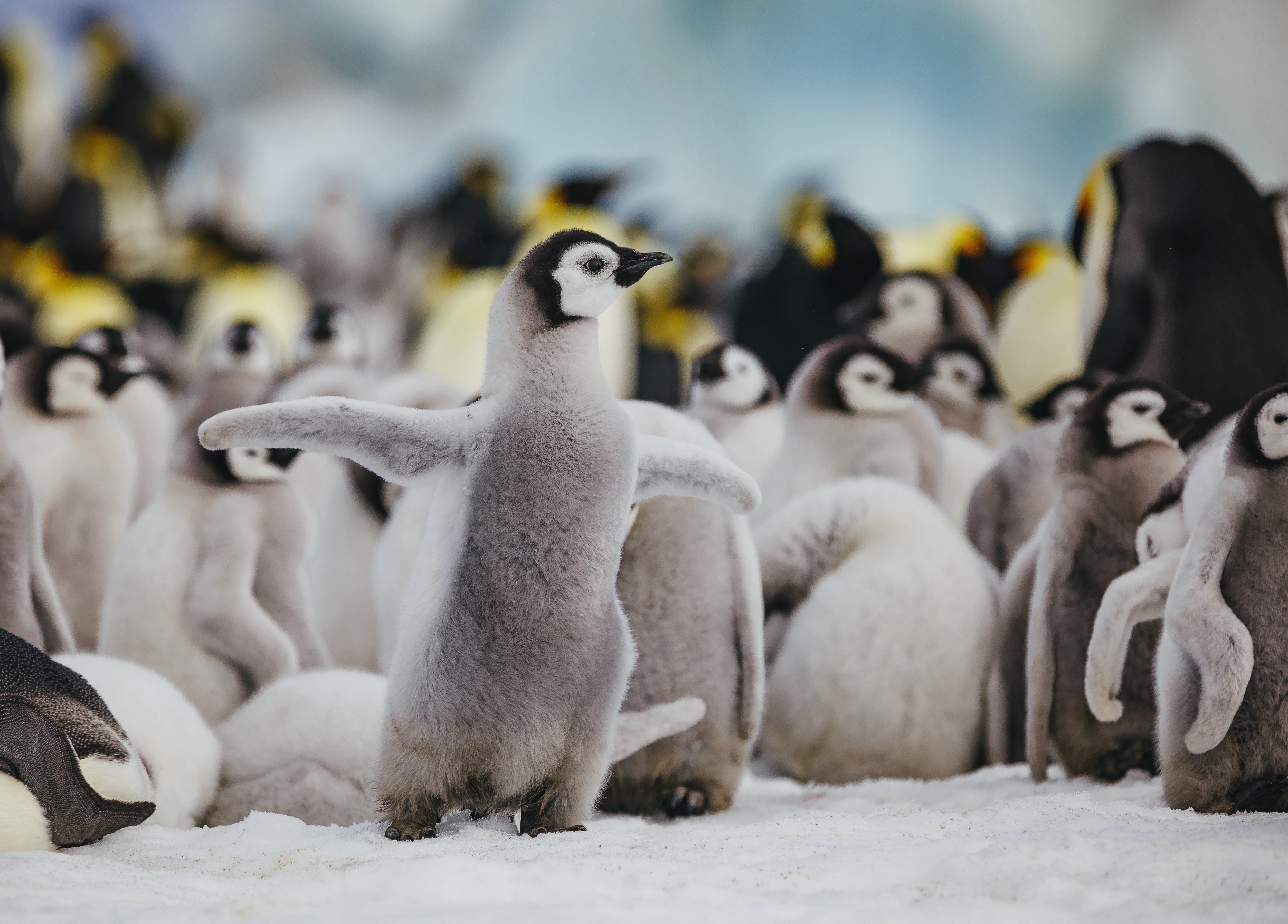
Photography
Documenting your voyage so you can take the memories home is a rewarding experience. Our photography guides will help you hone your skills to capture the beauty of the polar regions.
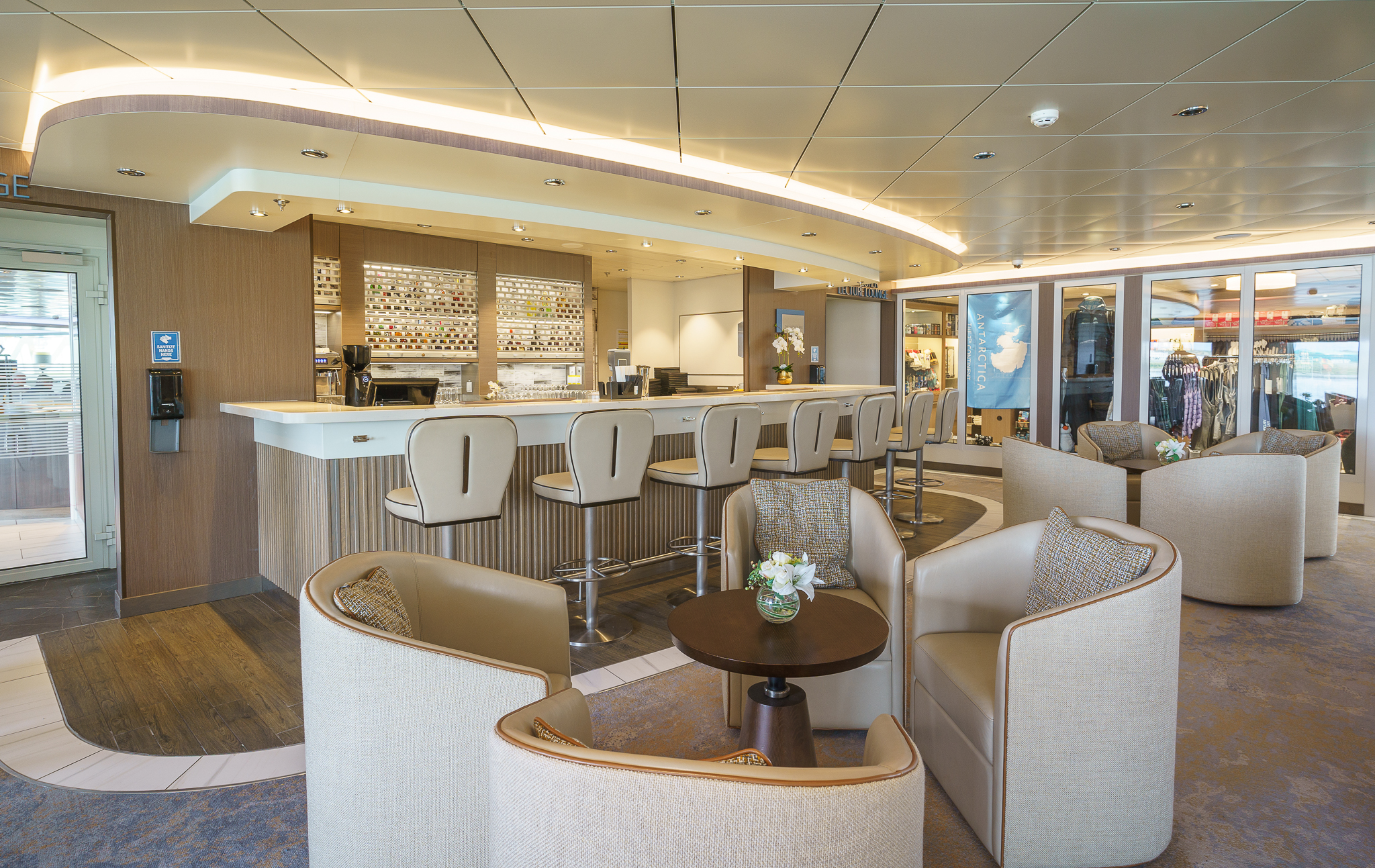
The Latitude Bar
A popular social hub on Deck 5, the beautifully-lit Latitude Bar—with its lush sofas and faux marble-topped end tables—is large enough to seat 46 and is ideal for enjoying a quiet drink on your own or hanging out with friends.
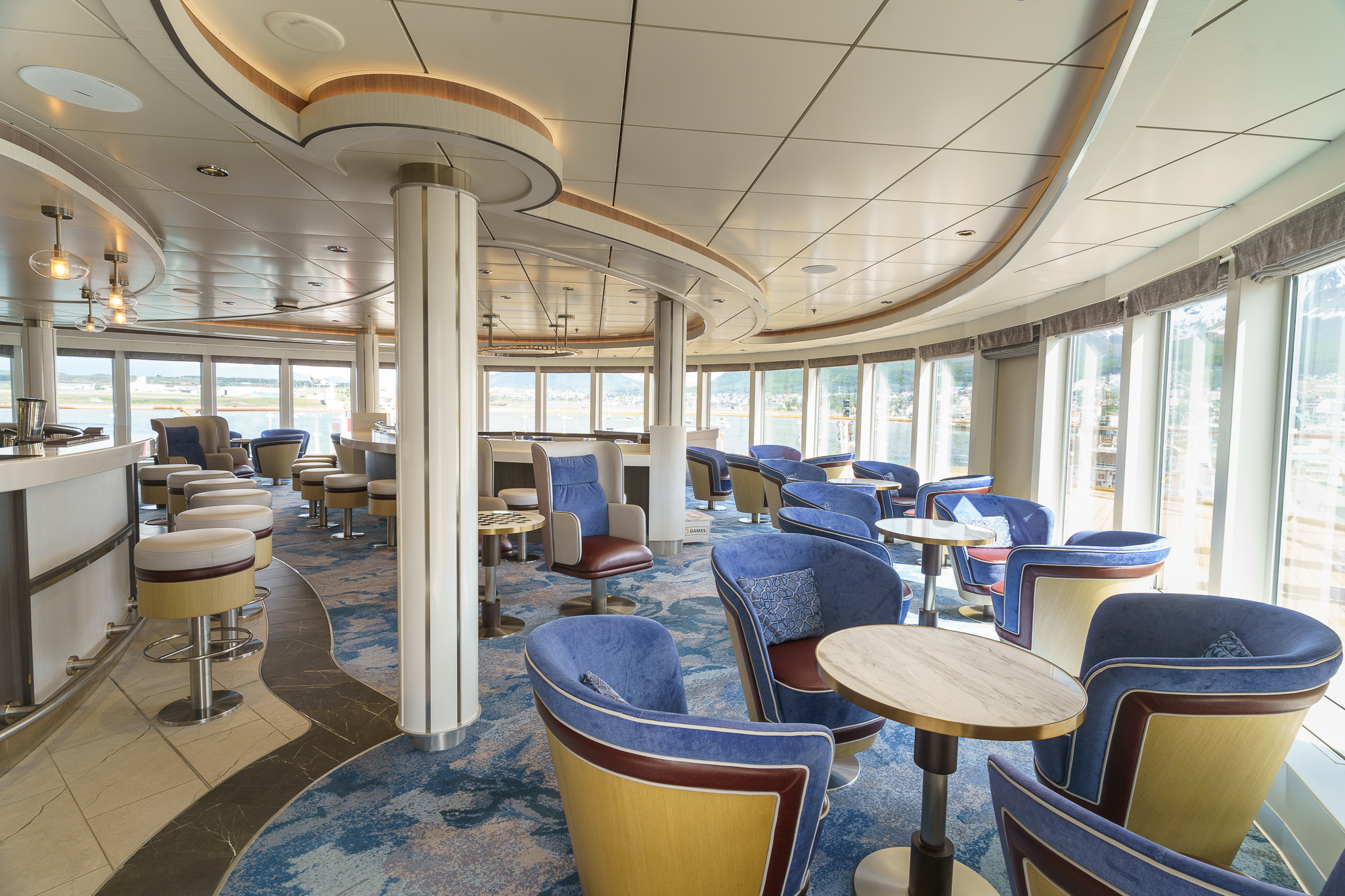
Observation Lounge
This stylish lounge at the top of the ship guarantees incredible views. Guests also frequent this spacious lookout on Deck 8 to enjoy cocktails and conversation with fellow travelers. Seats 63.

Discovery Library
Located on Deck 6 at the top of the gorgeous atrium staircase, this beautiful Library with floor-to-ceiling glass, accommodates up to 47 people
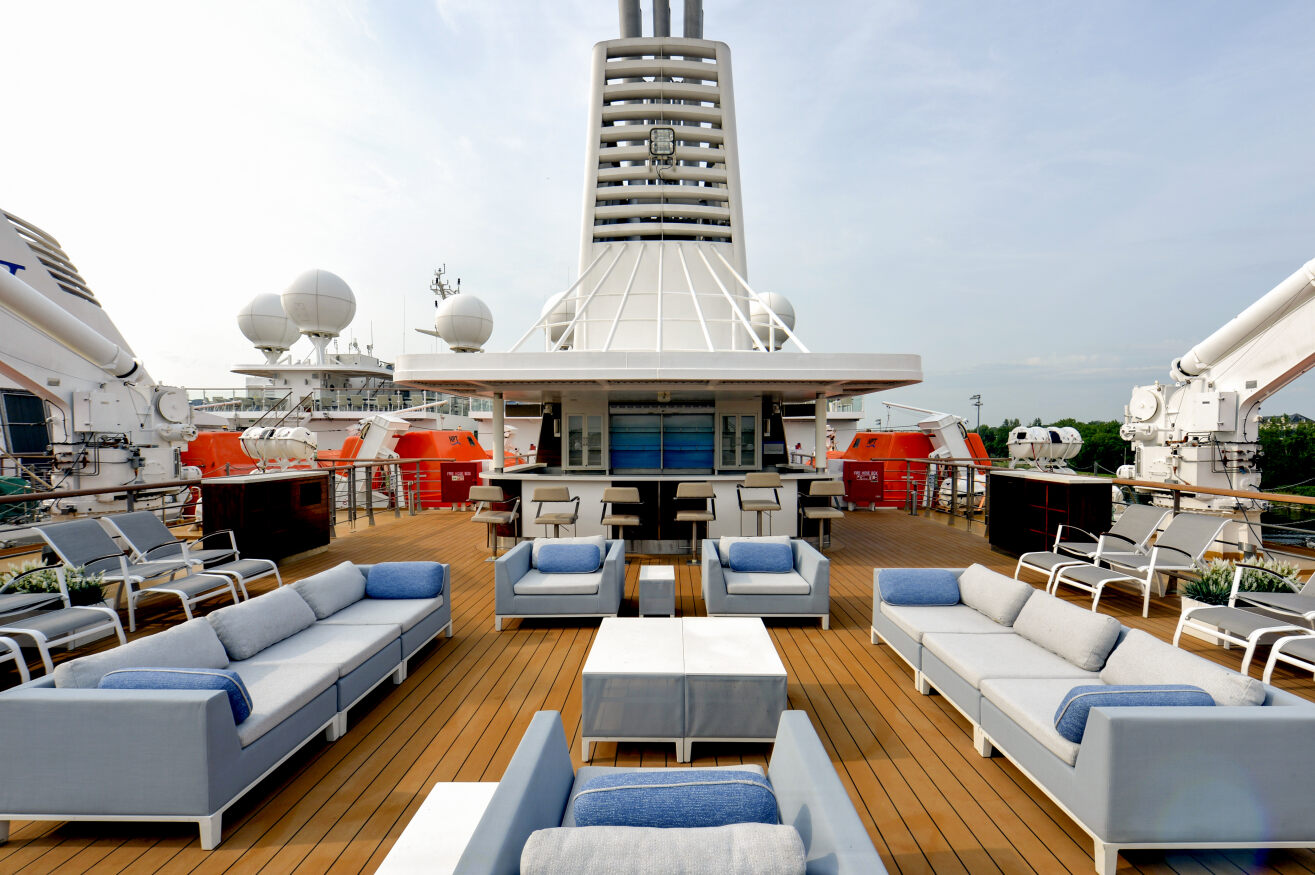
Sun Deck and Bar
More information coming soon.
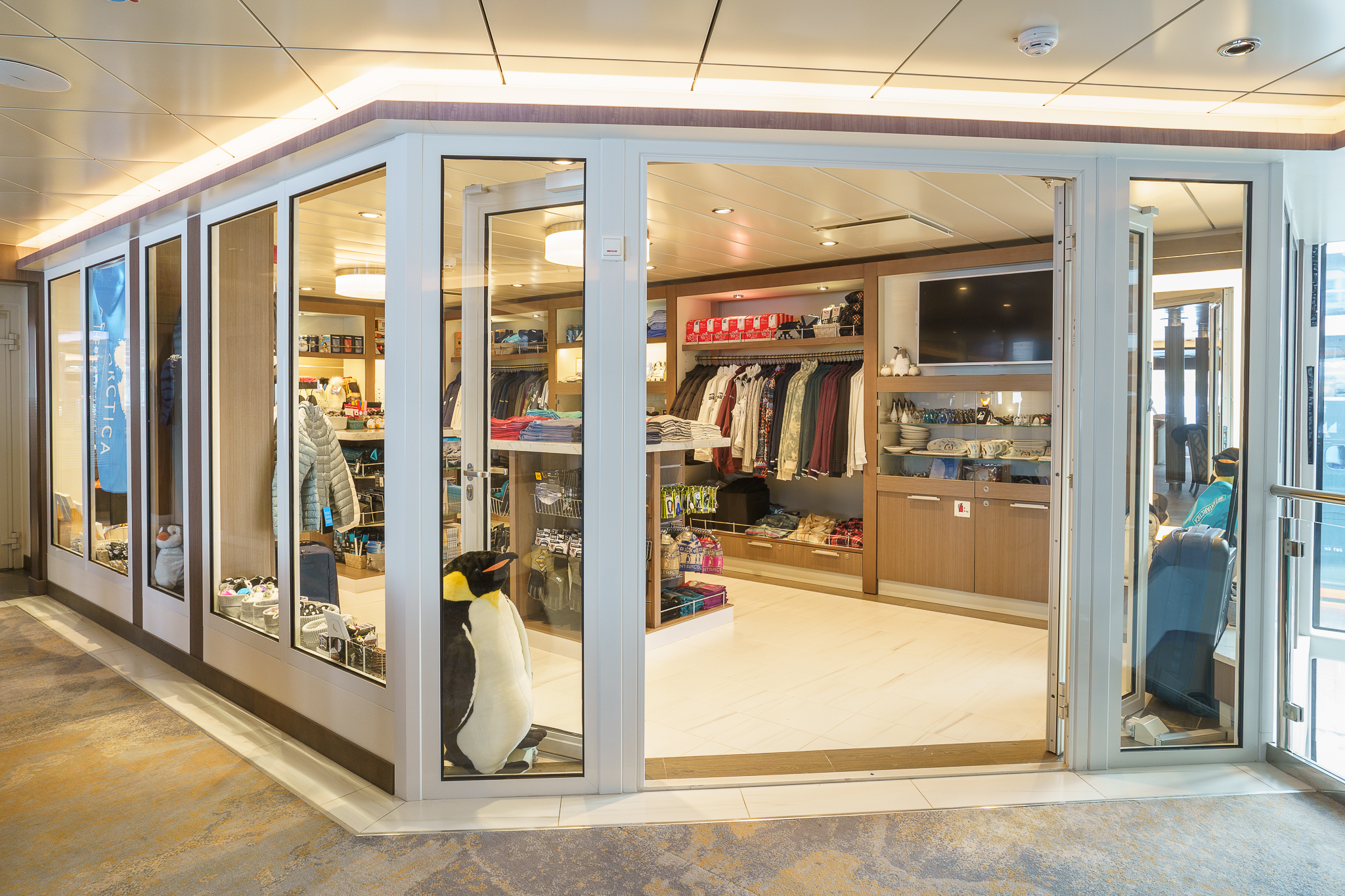
Polar Boutique
The Polar Boutique can be located on Deck 5.
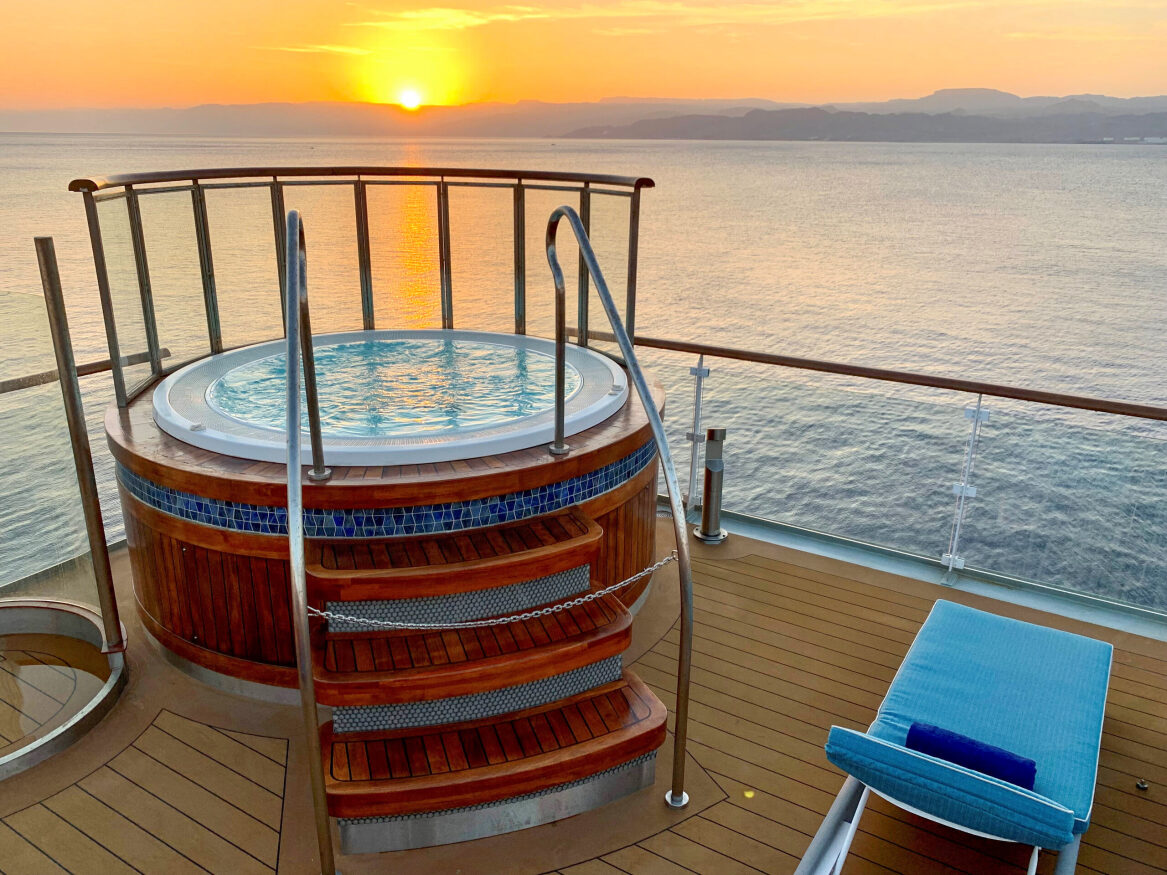
Jacuzzis
Two outdoor Jacuzzis on deck 7, at the ship’s stern, mean you can relax alfresco while soaking up the breath-taking polar views.
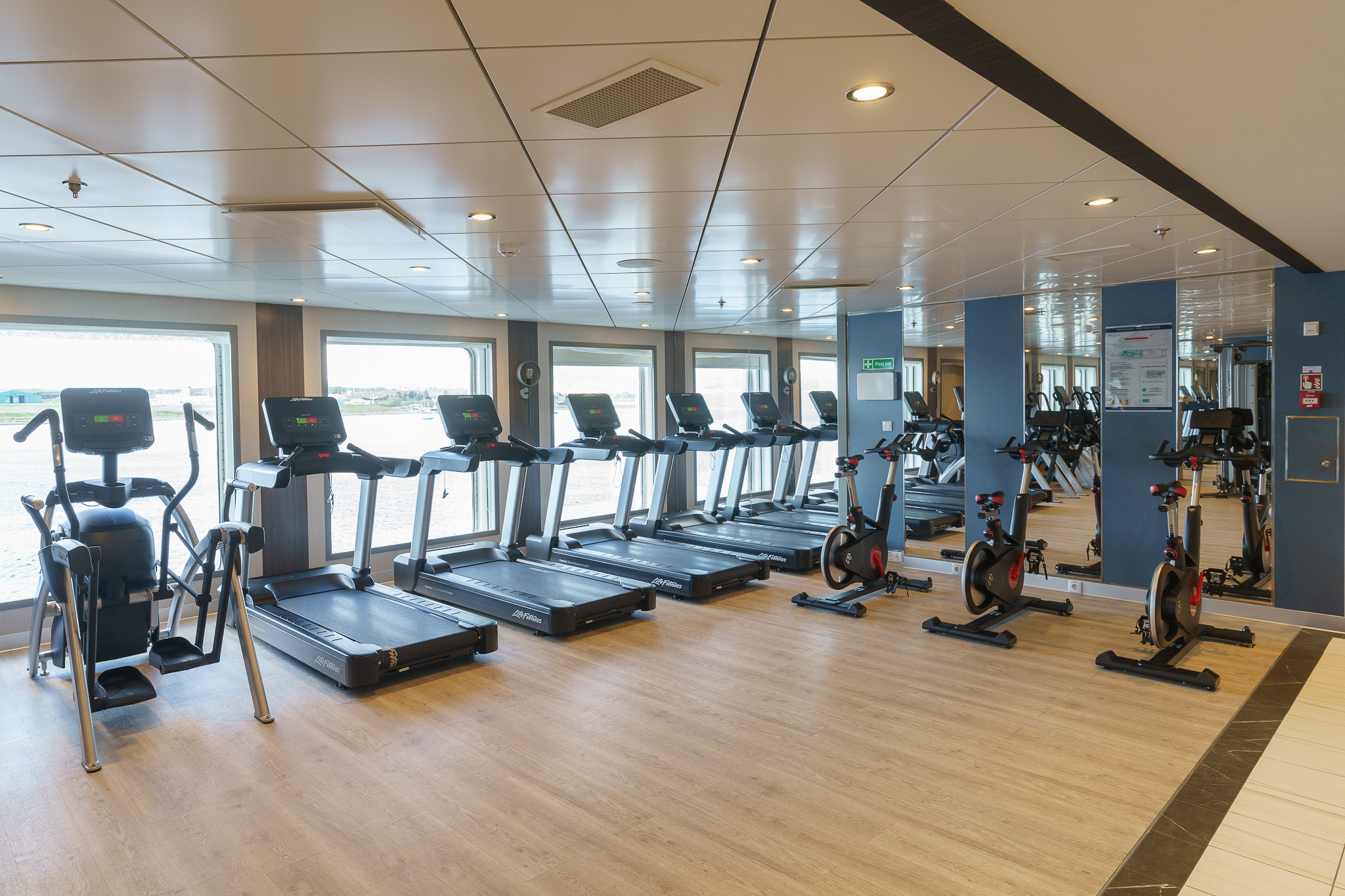
Fitness Centre
Stay fit with the latest work-out equipment in the Fitness Center on Deck 7.
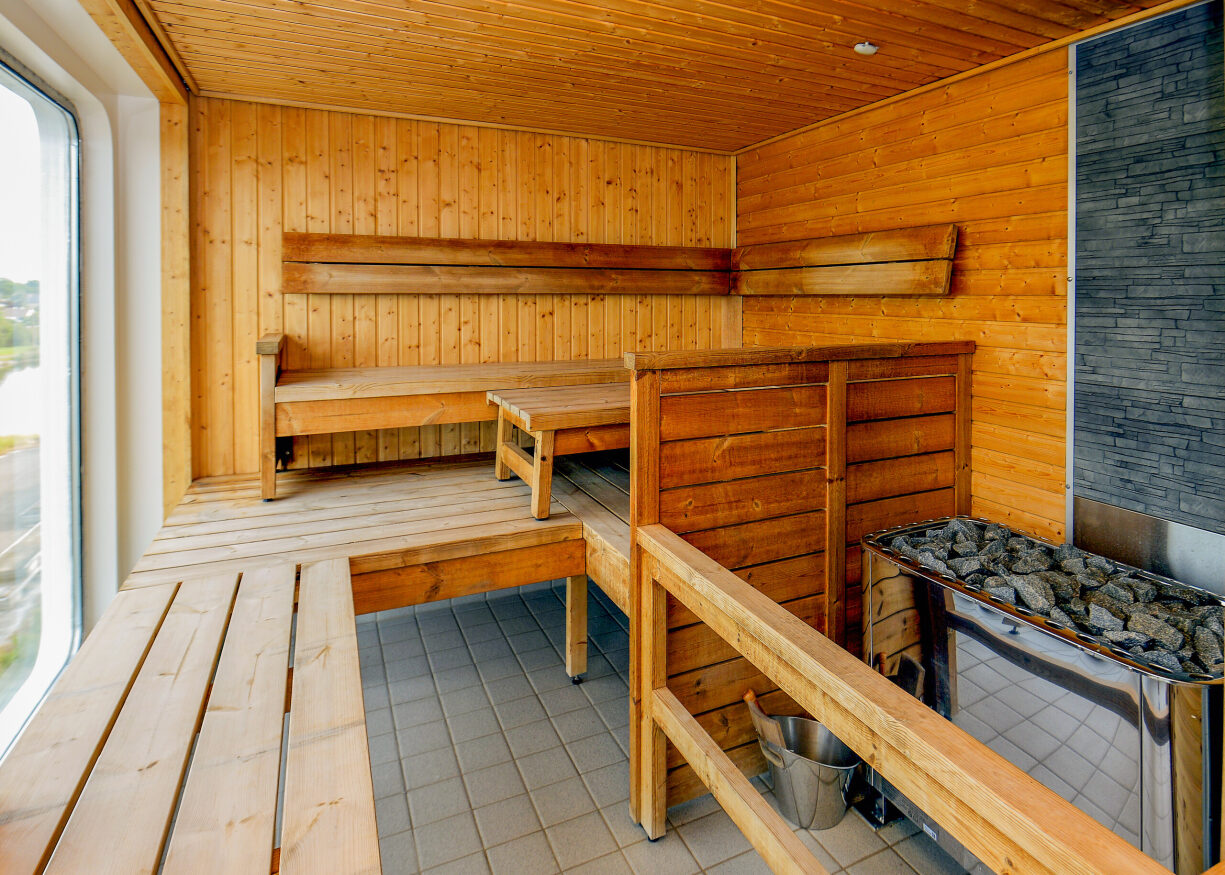
Dry Sauna
After a day of exciting off-ship adventure, guests can relax on the sauna’s traditional wood benches while gazing at the polar wilderness just outside the large sauna windows. Accommodates 15 people on Deck 7.
Leading Edge Sustainability
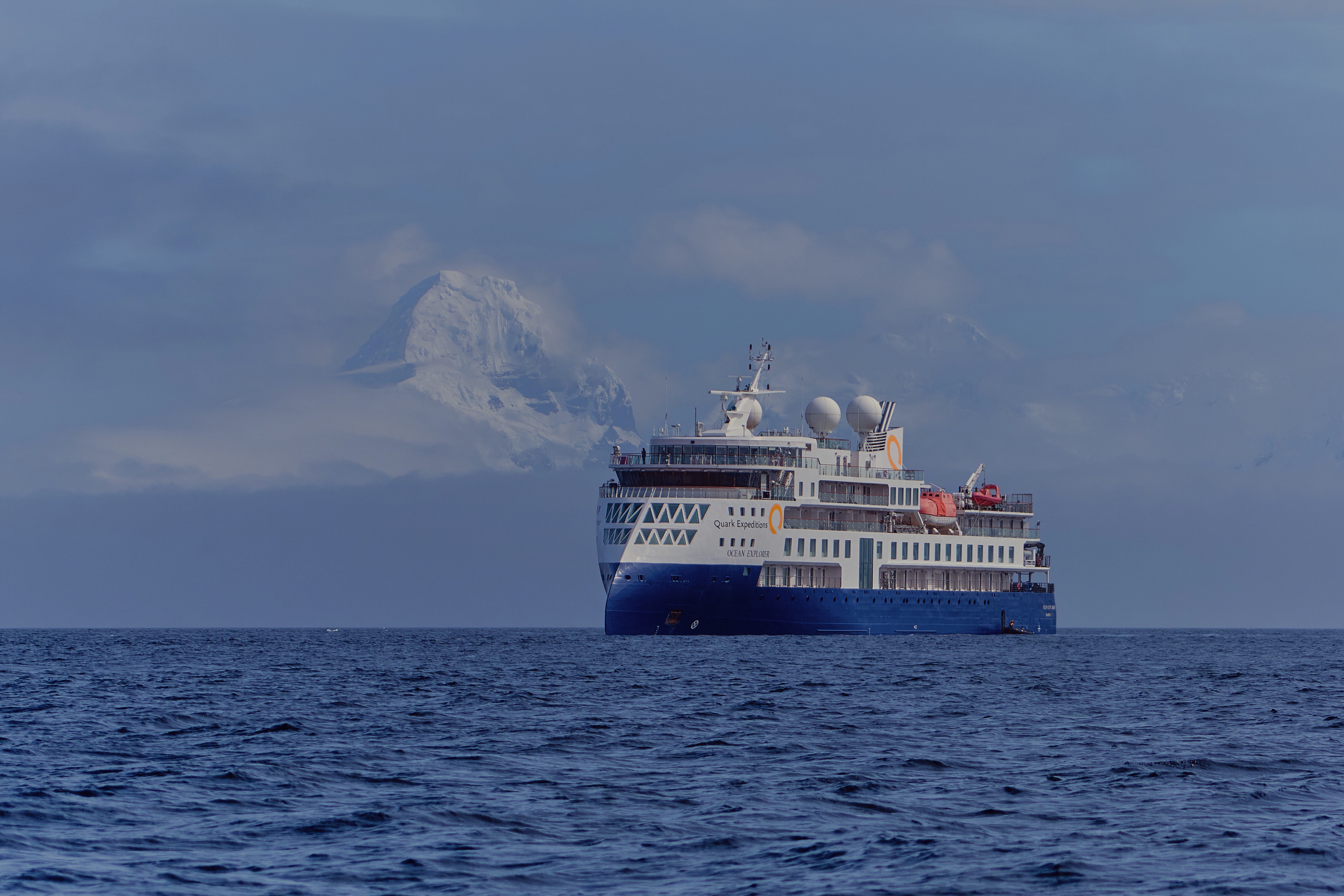
With the latest sustainability technology in polar expedition, the ship features fuel-efficient Rolls-Royce engines and the ground-breaking MAGS gasification system that converts waste into energy, eliminating the environmental impact of waste transportation.
Medical Facilities
Quark Expeditions provides an English-speaking doctor on board who manages a medical clinic stocked with a supply of common prescription medicines and basic first aid equipment.
If you are under regular treatment for any ailment, you must bring a sufficient supply of medicine. We recommend that you pack an extra two weeks’ supply of medication in case of emergency. We cannot accept responsibility for not having a specific brand or type of drug on board. Should you fall ill, the doctor will refer to the medical forms that you completed and returned to us; therefore it is vital that the information you provide is complete and accurate
Dress Code
To Wear on Board
- Comfortable casual clothing like lighter shirts, pants or jeans, etc. (in case the ship gets warm)
- Comfortable non-slip closed-toed, heelless shoes (flip flops, sandals or slip-on shoes should not be worn on board due to safety concerns)
- Workout attire (for the fitness center and other indoor activities)
- Swimsuit (for the Polar Plunge! Some vessels may also have a pool, hot tub, sauna and/or steam room. See your ship book for details.)
Just a reminder: no formal evening wear required on our voyages! (but if you want to you can bring a little something more dressy for the Captain’s Welcome and Farewell cocktail parties)
Additional Items
- Passport, visas, immunization records, travel documents, etc. as required
- Camera gear complete with charger, storage medium, transport & cleaning kit (lens cloth etc.) and extra batteries
- Waterproof cell phone case or rain sleeve for camera
- Earplugs and eye masks for sleeping
- Voltage converters and plug adapters (see ship book for details)
- Moisturizer for face and hands (skin dryness due to wind and temperature changes)
- Seasickness, indigestion, headache, or other medications
- Small amount of local currency (see pre-departure book for more details)
- Insect repellant
- Mosquito netting
For Shore Excursions & Hiking
In addition to the mandatory gear requirements (as above) for the transit from ship to shore, it is recommended to bring:
- Worn-in Hiking footwear: While Muck-boots are provided and encouraged for most shore excursions, additional hiking footwear (Goretex-lined boots or similar water-proof hiking boots) can add to your hiking comfort, especially if you are a keen hiker
- (Smart) Wool or synthetic hiking socks for above footwear (bring an extra pair)
- Lightweight and quick-dry, trekking pants that may or may not convert to zip-off shorts* (*depending on your thermo-regulation)
- Breathable waterproof pants* and rain jacket** for outdoor activities in inclement weather (*can be the same pair you use for Zodiac operations / ** can be outer shell of complimentary Quark 3in1 Parka)
- Comfortable long or short-sleeve shirt for hiking either synthetic/quick-dry or merino (smart) wool
- (Hiking) gloves (medium thickness, waterproof preferred)
- Hat, buff or scarf (for wind and weather protection)
- UV protection (hat, polarized sun glasses, sun block, lip balm)
- Collapsible Walking stick for hikes (if required). Quantities are available on every vessel to borrow.
- Additional reusable thermos or water bottle (in addition to the reusable collapsible water bottle provided)
By Sea & Air
All transfers ship to shore, helicopter flights & Zodiac/ship cruising
- Waterproof Pants (Mandatory for every Zodiac and helicopter ride. For Ultramarine guests who are participating in Helicopter flights, we recommend packing loose fitting rain pant style waterproof pants, rather than fitted ski pants. You will also be required to wear a drysuit, which our team will help you prepare for on the ship.)
- Base-layer wool or synthetic top*
- Base-layer wool or synthetic bottom*
- Mid-layer warm or fleece top*
- Mid-layer warm or fleece bottom*
- Warm hat that covers ears (bring an extra)
- Scarf, buff, or other face protection
- Warm wool or synthetic socks (keep a dry pair in your bag, and bring extras for layering)
- Waterproof gloves or mitts (bring an extra, lighter pair for hiking)
- Glove liners*
- Hand and feet warmers*
- Binoculars
- Polarized sunglasses with UV protection (bring an extra pair)
- Sunscreen
- Ski goggles (for Zodiac cruising on snowy or windy days)
- Waterproof, lightweight backpack or dry sack &/or rain sleeve for camera or a waterproof phone case (to keep camera & gear dry)
Smoking Policy
To protect the health and safety of its guests, Quark Expeditions® maintains a no smoking policy in the interior of the ship including cabins, near Zodiacs and on landings. Smoking on the ship is permitted in the designated smoking area only, which your Expedition∘ Team members will be happy to point out for you. Always make sure to extinguish cigarettes properly and dispose of them in the proper receptacle. Please, never throw cigarettes overboard.
Dietary Requirements and Allergies
All guests—including vegetarians, meat-eaters, as well as those who follow a gluten-free diet—will be equally impressed with the dining options on our ships. Quark Expeditions® is able to cater to most special dietary requests, as long as you clearly indicate your needs on the required expedition forms when you book your voyage. Menus will be clearly labeled for vegetarian and gluten free options, but please do notify your server of the dietary restrictions you indicated on your form. We regret that kosher food cannot be prepared.
Laundry
A complete list of laundry fees will be provided on board. Laundry is collected each morning; please allow 48 hours for your laundry to be returned. Ironing services are also available at a minimal charge. We encourage you to take advantage of the laundry services, as it will mean you can pack fewer articles of clothing. If you prefer to hand wash small items in your cabin, please remember to bring environmentally friendly detergent.
Wi-Fi & Communications
When you are not busy exploring the natural beauty of the Polar Regions, you may wish to connect with family and friends back home to share some of your voyage highlights. Guests on Quark Expeditions can now enjoy free Wi-Fi as part of our “Raise a Glass and Stay Connected Free” program. This complementary Wi-Fi service permits basic Internet browsing and voice applications.
Please note that we travel to some of the most remote parts of the world. As we utilize satellite equipment for our connection, Wi-Fi signal may be intermittent.
To access email or internet on your personal computer, tablet or smart phone, connect to the network on your device, where you can access our complimentary plan, or purchase Priority Wi-Fi.
Complimentary Wi-Fi
- Lower speeds
- Suitable for basic internet browsing, texting and voice calling using text and voice apps
- Some site filtering
- No charge
- One device logged in at a time
Priority Wi-Fi
- Higher speeds
- Suitable for larger data volume apps, video calling, video streaming (in lower resolutions) etc.
- See rates by logging in
- One device logged in at a time
Expedition Brochures
Find Ocean Explorers itineraries here.

Deck 9
- Top Deck

Deck 8
- Observation Deck
- Observation Bistro
- Observation Lounge & Bar
- Elevator

Deck 7
- Penthouse Suite
- Owners Suite
- Veranda Stateroom
- Studio Veranda Single
- Polar Deck and Bar
- Jacuzzis
- Gym
- Tundra Spa & Sauna
- Bridge
- Bridge Deck
- Elevator

Deck 6
- The Discovery Library
- Junior Suite
- Veranda Suite
- Veranda Stateroom
- Elevator

Deck 5
- Main Dining Room
- Private Dining Room
- Reception
- Polar Boutique
- Latitude Bar & Lounge
- Explorer Lecture Lounge
- Elevator

Deck 4
- Deluxe Veranda Forward
- Veranda Suite
- Veranda Stateroom
- Expedition Desk
- Elevator

Deck 3
- Ready Room
- Medical Facilities
- Zodiac Embarkation Points
- Studio Single
- Elevator