
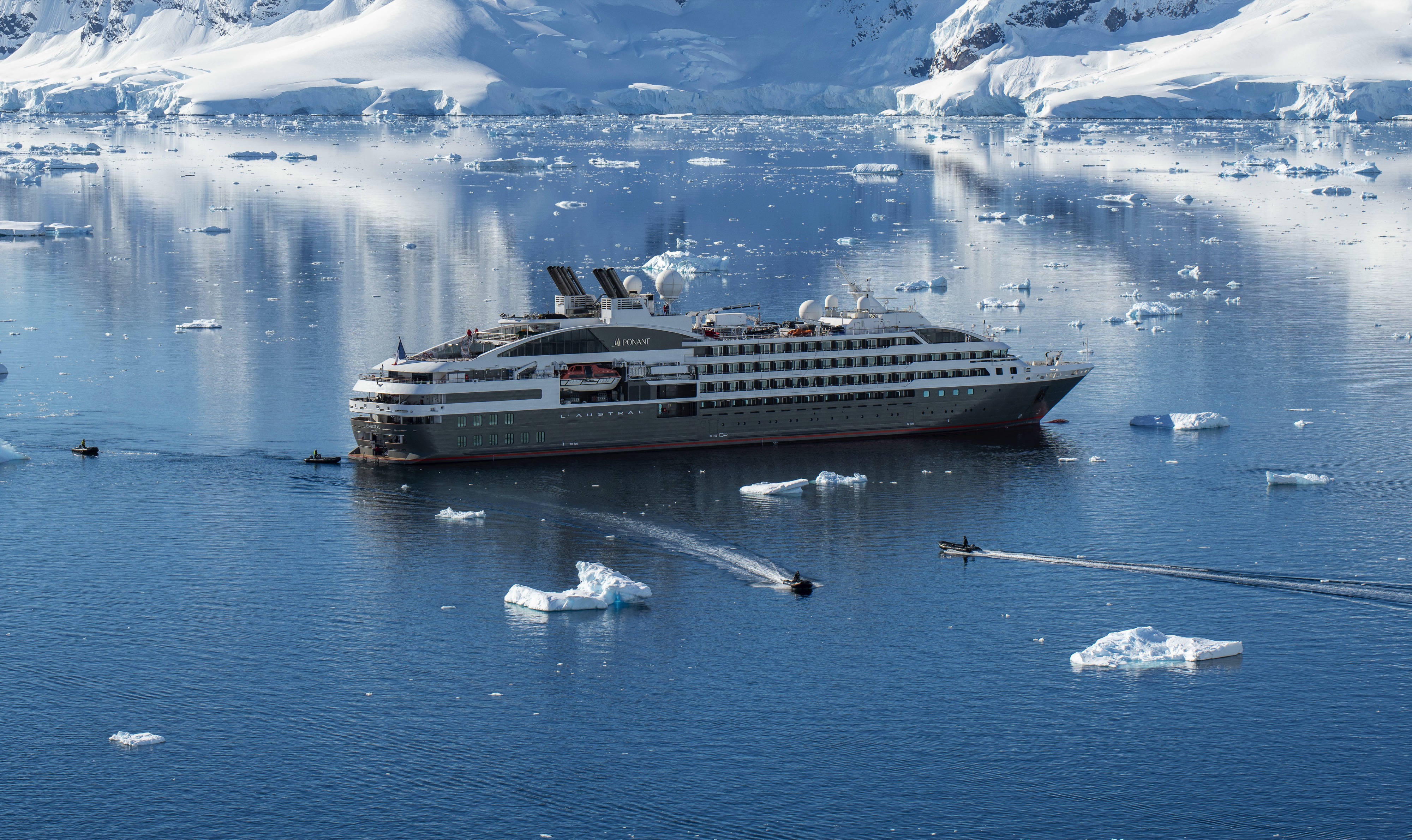
Itinerary
United with France only since 1860, Nice has its own history and atmosphere, which dates back 230,000 years. It was on Colline du Château (now château-less) and at the Plage des Ponchettes, in front of the Old Town, that the Greeks established a market-port in 350 BC and named it Nikaia, which would become Marseilles’ chief coastal rival. The Romans established themselves a little later on the hills of Cimiez (Cemenelum), already previously occupied by Ligurians and Celts, and quickly overshadowed the waterfront port. After falling to the Saracen invasions, Nice regained power as an independent state, becoming an important port in the early Middle Ages.So cocksure did it become that in 1388, Nice, along with the hill towns behind, effectively seceded from the county of Provence, under Louis d’Anjou, and allied itself with Savoie. Thus began its liaison with the House of Savoy, and through it with Piedmont and Sardinia, it was the Comté de Nice (Nice County). This relationship lasted some 500 years, tinting the culture, architecture, and dialect in rich Italian hues.By the 19th century Nice was flourishing commercially, locked in rivalry with the neighboring shipping port of Genoa. Another source of income: the dawning of tourism, as first the English, then the Russian nobility, discovered its extraordinary climate and superb waterfront position. A parade of fine stone mansions and hotels closed into a nearly solid wall of masonry, separated from the smooth-round rocks of the beach by what was originally named Camin deis Anglés (the English Way), which of course is now the famous Promenade des Anglais. This magnificent crescent, which is seeking UNESCO recognition, is one of the noblest in France. Many of Nice’s most delightful attractions—the Cours Saleya market, the Old Town streets, the Hotel Negresco, and the Palais Masséna—are on or close to this 10-km (6-mile) waterfront, making it the first stop for most visitors, while the redevelopment of Nice’s port, around the other side of the Colline du Château, makes it easier for amblers who want to take in the Genoese architecture or peruse the antiques at the Puces de Nice, now part of the Promenade des 100 Antiquaires, along Quai Papacino. Nice also has the distinction of the “Family Plus” label, with free strollers, play areas, and restaurants with child-friendly activities.
Located in the South of Corsica, Bonifacio is one of the island’s most beautiful destinations. From its breathtaking views and sandy white islands to its historic citadel, the city is a must visit for anyone travelling to the island.
Sorrento may have become a jumping-off point for visitors to Pompeii, Capri, and Amalfi, but you can find countless reasons to love it for itself. The Sorrentine people are fair-minded and hardworking, bubbling with life and warmth. The tuff cliff on which the town rests is spread over the bay, absorbing sunlight, while orange and lemon trees waft their perfume in spring. Winding along a cliff above a small beach and two harbors, the town is split in two by a narrow ravine formed by a former mountain stream. To the east, dozens of hotels line busy Via Correale along the cliff—many have “grand” included in their names, and some indeed still are. To the west, however, is the historic sector, which still enchants. It’s a relatively flat area, with winding, stone-paved lanes bordered by balconied buildings, some joined by medieval stone arches. The central piazza is named after the poet Torquato Tasso, born here in 1544. This part of town is a delightful place to walk through. Craftspeople are often at work in their stalls and shops and are happy to let you watch; in fact, that’s the point. Music spots and bars cluster in the side streets near Piazza Tasso.
The medieval cliff-hanging town of Taormina is overrun with tourists, yet its natural beauty is still hard to dispute. The view of the sea and Mt. Etna from its jagged cactus-covered cliffs is as close to perfection as a panorama can get—especially on clear days, when the snowcapped volcano’s white puffs of smoke rise against the blue sky. Writers have extolled Taormina’s beauty almost since it was founded in the 6th century BC by Greeks from nearby Naxos; Goethe and D. H. Lawrence were among its well-known enthusiasts. The town’s boutique-lined main streets get old pretty quickly, but the many hiking paths that wind through the beautiful hills surrounding Taormina promise a timeless alternative. A trip up to stunning Castelmola (whether on foot or by car) should also be on your itinerary.
Kalè polis, meaning beautiful city, is the name ancient Greek mariners bestowed on Gallipoli, with good reason. Situated on a mound, the Old Town with its labyrinth of winding lanes, emerges from the Ionian Sea. It is connected to the mainland and modern Gallipoli via a 17th-century bridge. The area lies on the Salentina Peninsula in the extreme southeast end of Italy, commonly referred to as the heel of the boot. The Salento region was inhabited already in prehistoric times; later centuries were marked by Greek, Norman, Byzantine and Baroque cultures. It is a land of farms, castles, works of art, myths and legends. Many heroic battles were fought; fierce resistance was shown by Gallipoli’s citizens against numerous invaders that included Romans, Vandals, Swabians, Venetians, French and lastly the English in 1809. In addition to its tumultuous history and natural beauty, the city’s claim to fame rests in its art treasures, most notably, the Basilica of Sant’Agata with its majestic 17th-century façade. Inside, the church contains a rich and important art collection with numerous works by its great native son, Giovanni Andrea Coppola.
Nothing can prepare you for your first sight of Dubrovnik. Lying 216 km (135 miles) southeast of Split and commanding a jaw-dropping coastal location, it is one of the world’s most beautiful fortified cities. Its massive stone ramparts and fortress towers curve around a tiny harbor, enclosing graduated ridges of sun-bleached orange-tiled roofs, copper domes, and elegant bell towers. Your imagination will run wild picturing what it looked like seven centuries ago when the walls were built, without any suburbs or highways around it, just this magnificent stone city rising out of the sea.In the 7th century AD, residents of the Roman city Epidaurum (now Cavtat) fled the Avars and Slavs of the north and founded a new settlement on a small rocky island, which they named Laus, and later Ragusa. On the mainland hillside opposite the island, the Slav settlement called Dubrovnik grew up. In the 12th century the narrow channel separating the two settlements was filled in (now the main street through the Old Town, called Stradun), and Ragusa and Dubrovnik became one. The city was surrounded by defensive walls during the 13th century, and these were reinforced with towers and bastions in the late 15th century.From 1358 to 1808 the city thrived as a powerful and remarkably sophisticated independent republic, reaching its golden age during the 16th century. In 1667 many of its splendid Gothic and Renaissance buildings were destroyed by an earthquake. The defensive walls survived the disaster, and the city was rebuilt in baroque style.Dubrovnik lost its independence to Napoléon in 1808, and in 1815 passed to Austria-Hungary. During the 20th century, as part of Yugoslavia, the city became a popular tourist destination, and in 1979 it was listed as a UNESCO World Heritage Site. During the war for independence, it came under heavy siege. Thanks to careful restoration, few traces of damage remain; however, there are maps inside the Pile and Ploče Gates illustrating the points around the city where damage was done. It’s only when you experience Dubrovnik yourself that you can understand what a treasure the world nearly lost
Split’s ancient core is so spectacular and unusual that a visit is more than worth your time. The heart of the city lies within the walls of Roman emperor Diocletian’s retirement palace, which was built in the 3rd century AD. Diocletian, born in the nearby Roman settlement of Salona in AD 245, achieved a brilliant career as a soldier and became emperor at the age of 40. In 295 he ordered this vast palace to be built in his native Dalmatia, and when it was completed he stepped down from the throne and retired to his beloved homeland. Upon his death, he was laid to rest in an octagonal mausoleum, around which Split’s magnificent cathedral was built.In 615, when Salona was sacked by barbarian tribes, those fortunate enough to escape found refuge within the stout palace walls and divided up the vast imperial apartments into more modest living quarters. Thus, the palace developed into an urban center, and by the 11th century the settlement had expanded beyond the ancient walls.Under the rule of Venice (1420–1797), Split—as a gateway to the Balkan interior—became one of the Adriatic’s main trading ports, and the city’s splendid Renaissance palaces bear witness to the affluence of those times. When the Habsburgs took control during the 19th century, an overland connection to Central Europe was established by the construction of the Split–Zagreb–Vienna railway line.After World War II, the Tito years saw a period of rapid urban expansion: industrialization accelerated and the suburbs extended to accommodate high-rise apartment blocks. Today the historic center of Split is included on UNESCO’s list of World Heritage Sites.
Up until the end of World War I, Trieste was the only port of the vast Austro-Hungarian Empire and therefore a major industrial and financial center. In the early years of the 20th century, Trieste and its surroundings also became famous by their association with some of the most important names of Italian literature, such as Italo Svevo, and English and German letters. James Joyce drew inspiration from the city’s multiethnic population, and Rainer Maria Rilke was inspired by the seacoast west of the city. Although it has lost its importance as a port and a center of finance, it has never fully lost its roll as an intellectual center. The streets hold a mix of monumental, neoclassical, and art-nouveau architecture built by the Austrians during Trieste’s days of glory, granting an air of melancholy stateliness to a city that lives as much in the past as the present.
Venice is a city unlike any other. No matter how often you’ve seen it in photos and films, the real thing is more dreamlike than you could imagine. With canals where streets should be, water shimmers everywhere. The fabulous palaces and churches reflect centuries of history in what was a wealthy trading center between Europe and the Orient. Getting lost in the narrow alleyways is a quintessential part of exploring Venice, but at some point you’ll almost surely end up in Piazza San Marco, where tourists and locals congregate for a coffee or an aperitif.
Venice is a city unlike any other. No matter how often you’ve seen it in photos and films, the real thing is more dreamlike than you could imagine. With canals where streets should be, water shimmers everywhere. The fabulous palaces and churches reflect centuries of history in what was a wealthy trading center between Europe and the Orient. Getting lost in the narrow alleyways is a quintessential part of exploring Venice, but at some point you’ll almost surely end up in Piazza San Marco, where tourists and locals congregate for a coffee or an aperitif.
Venice is a city unlike any other. No matter how often you’ve seen it in photos and films, the real thing is more dreamlike than you could imagine. With canals where streets should be, water shimmers everywhere. The fabulous palaces and churches reflect centuries of history in what was a wealthy trading center between Europe and the Orient. Getting lost in the narrow alleyways is a quintessential part of exploring Venice, but at some point you’ll almost surely end up in Piazza San Marco, where tourists and locals congregate for a coffee or an aperitif.
Ship features
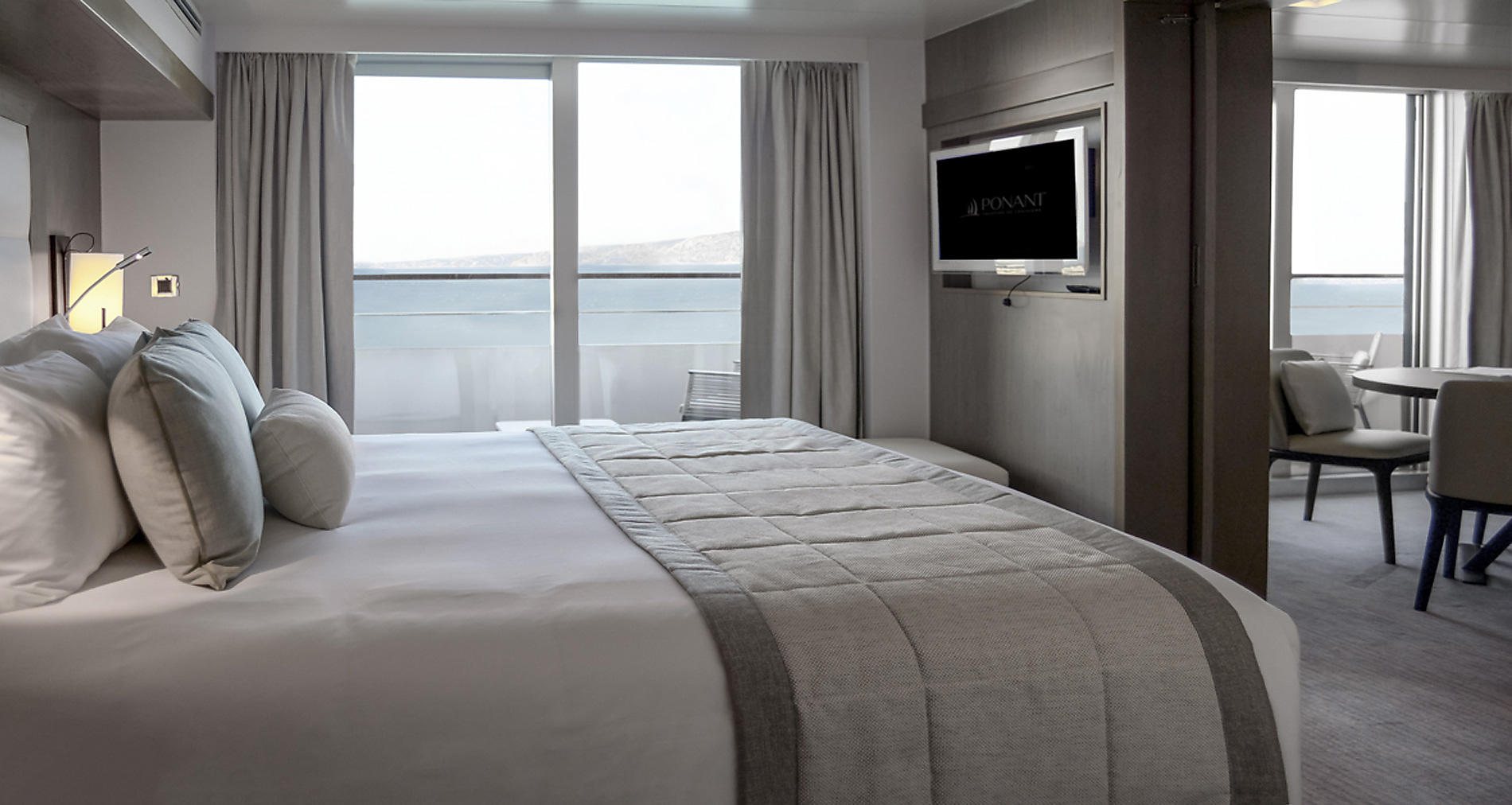
Owner's Suite
In addition to the common services provided to all our suites and staterooms:
- A private 96 ft² balcony
- Two sliding panoramic windows
- A bathroom with shower and spa bath
- Butler service
- A one-hour treatment per person (for 2 people) in the wellness area, including body and facial treatments
- Private return transfer
- Priority boarding (depending on port of embarkation)
- Champagne and fruit on arrival
- A fruit basket every day
- One bedroom with king-size bed (180 x 190 cm) or two single beds (90 x 190 cm)
- A living-dining room with a sofa, armchair, TV, a table for four, and a courtesy sliding door
- Included premium pass: access to a selection of premium spirits at the bar
Included in all staterooms
- Minibar
- Diptyque Paris top-of-the-line bath products
- Bose Bluetooth speaker
- Individually-controlled air conditioning
- Nespresso coffee maker and boiler
- Dressing room with shelves and closet
- 110V American / 220V European
- Dressing table and hairdryer
- Direct line telephone
- Three ADA staterooms
- 24-hour room service
- Electronic safe
- Flat screen TV, international channels and videos on demand
- Inclusive Wifi internet
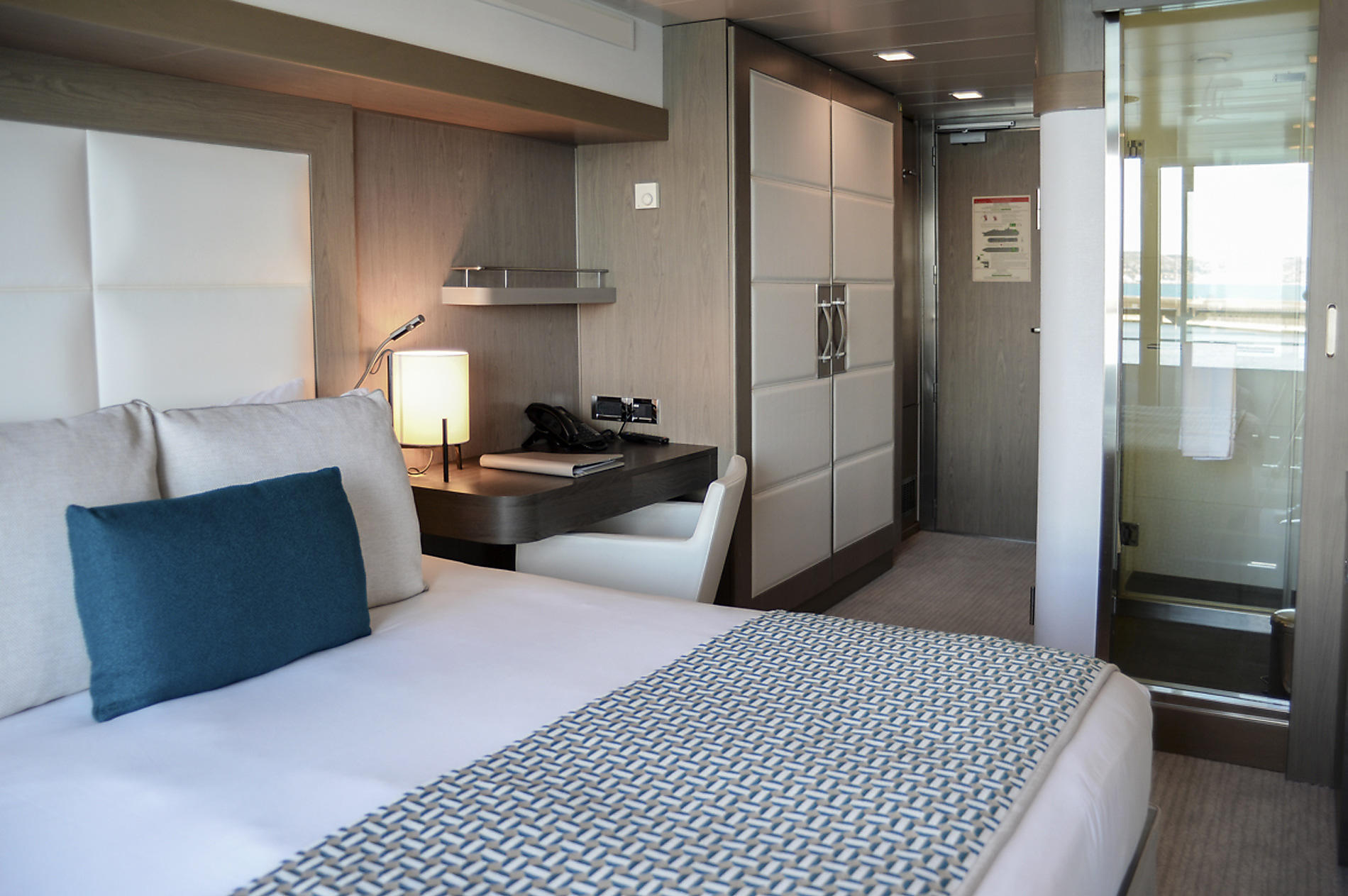
Prestige Suite
In addition to the common services provided to all our suites and staterooms:
- A private 86 ft² balcony
- Two sliding panoramic windows
- Two bathrooms with showers
- Priority boarding, depending on port of embarkation (Prestige Suite deck 6)
- Butler service (Prestige Suite deck 6)
- Champagne and fruit on arrival and a fruit basket every day (Prestige Suite deck 6)
- One bedroom with king-size bed (180 x 190 cm) or two single beds (90 x 190 cm)
- A living room with a convertible sofa into a king-size or two single beds, armchairs, second TV, and a courtesy sliding door
Included in all staterooms
- Minibar
- Diptyque Paris top-of-the-line bath products
- Bose Bluetooth speaker
- Individually-controlled air conditioning
- Nespresso coffee maker and boiler
- Dressing room with shelves and closet
- 110V American / 220V European
- Dressing table and hairdryer
- Direct line telephone
- Three ADA staterooms
- 24-hour room service
- Electronic safe
- Flat screen TV, international channels and videos on demand
- Inclusive Wifi internet
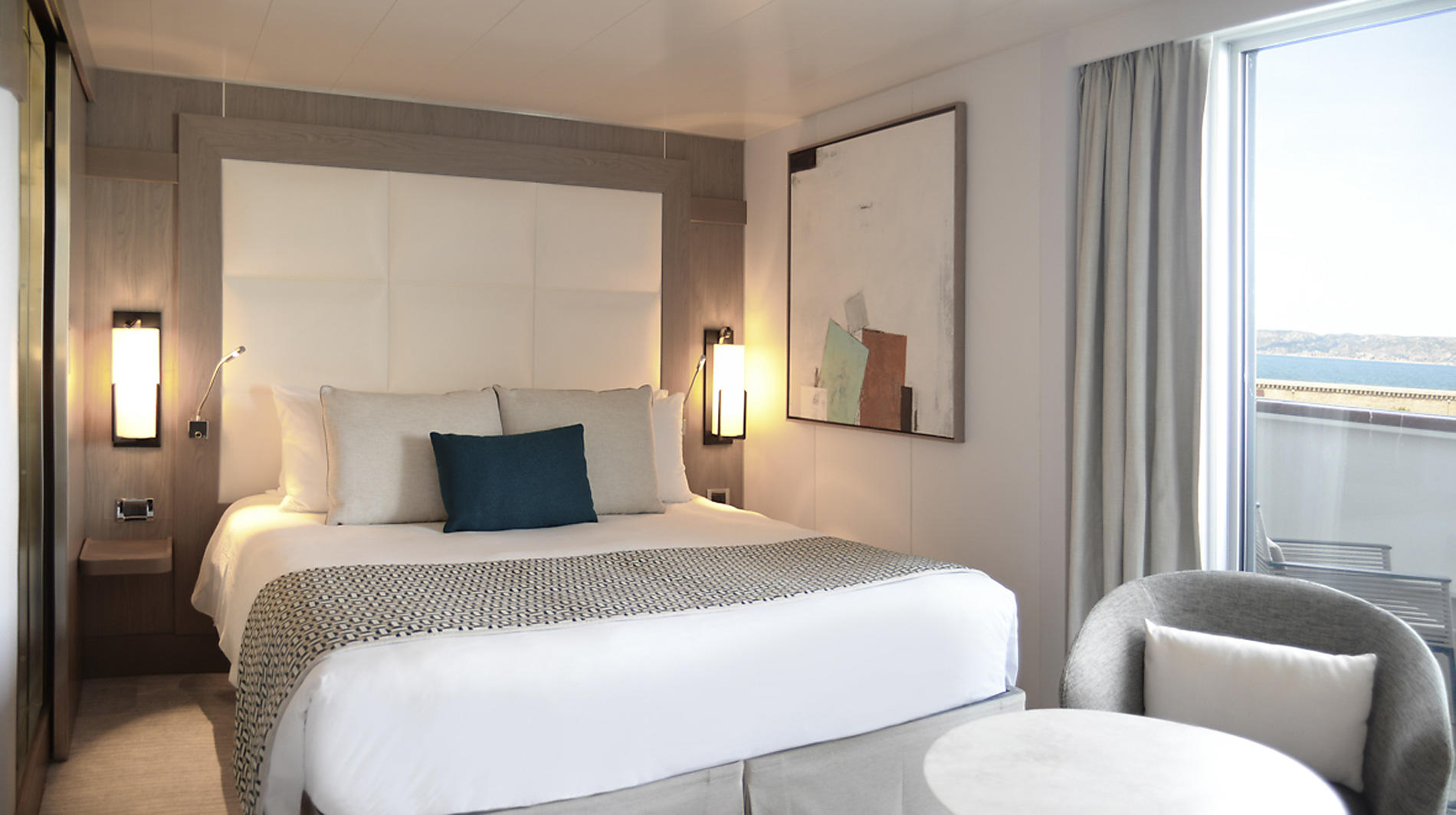
Deluxe Suite
In addition to the common services provided to all our suites and staterooms:
- A private 53 ft² balcony
- Sliding panoramic window
- Butler service
- Priority boarding (depending on port of embarkation)
- Champagne and fruit on arrival
- A fruit basket every day
- One king-size bed (180 x 190 cm) or two single beds (90 x 190 cm)
- An armchair and sofa
- Bathroom with shower
Included in all staterooms
- Minibar
- Diptyque Paris top-of-the-line bath products
- Bose Bluetooth speaker
- Individually-controlled air conditioning
- Nespresso coffee maker and boiler
- Dressing room with shelves and closet
- 110V American / 220V European
- Dressing table and hairdryer
- Direct line telephone
- Three ADA staterooms
- 24-hour room service
- Electronic safe
- Flat screen TV, international channels and videos on demand
- Inclusive Wifi internet
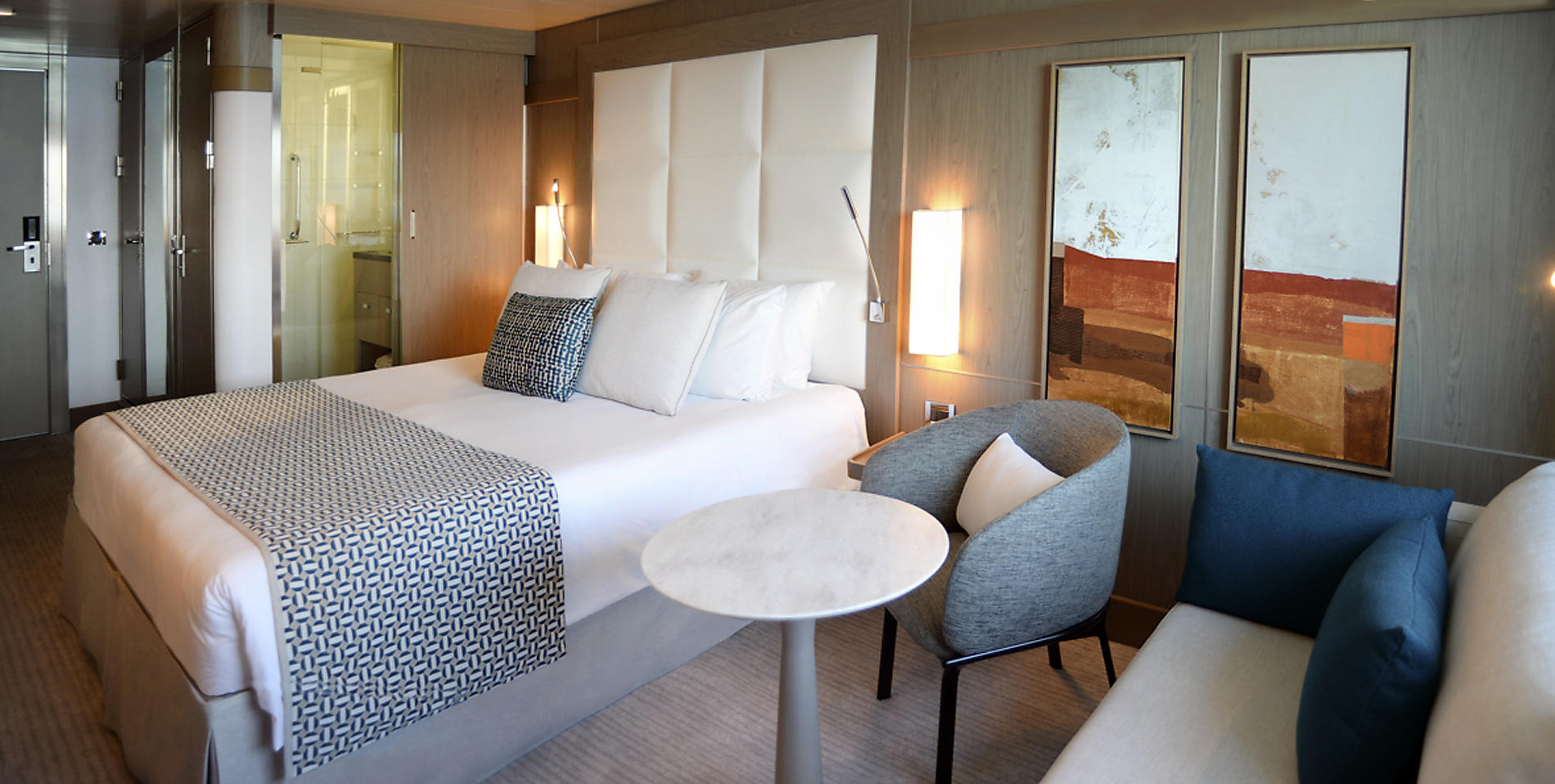
Window or Porthole Stateroom
In addition to the common services provided to all our suites and staterooms:
- Window (except stateroom 300 : porthole)
- One king-size bed (180 x 190 cm) or two single beds (90 x 190 cm)
- Bathroom with shower
Included in all staterooms
- Minibar
- Diptyque Paris top-of-the-line bath products
- Bose Bluetooth speaker
- Individually-controlled air conditioning
- Nespresso coffee maker and boiler
- Dressing room with shelves and closet
- 110V American / 220V European
- Dressing table and hairdryer
- Direct line telephone
- Three ADA staterooms
- 24-hour room service
- Electronic safe
- Flat screen TV, international channels and videos on demand
- Inclusive Wifi internet
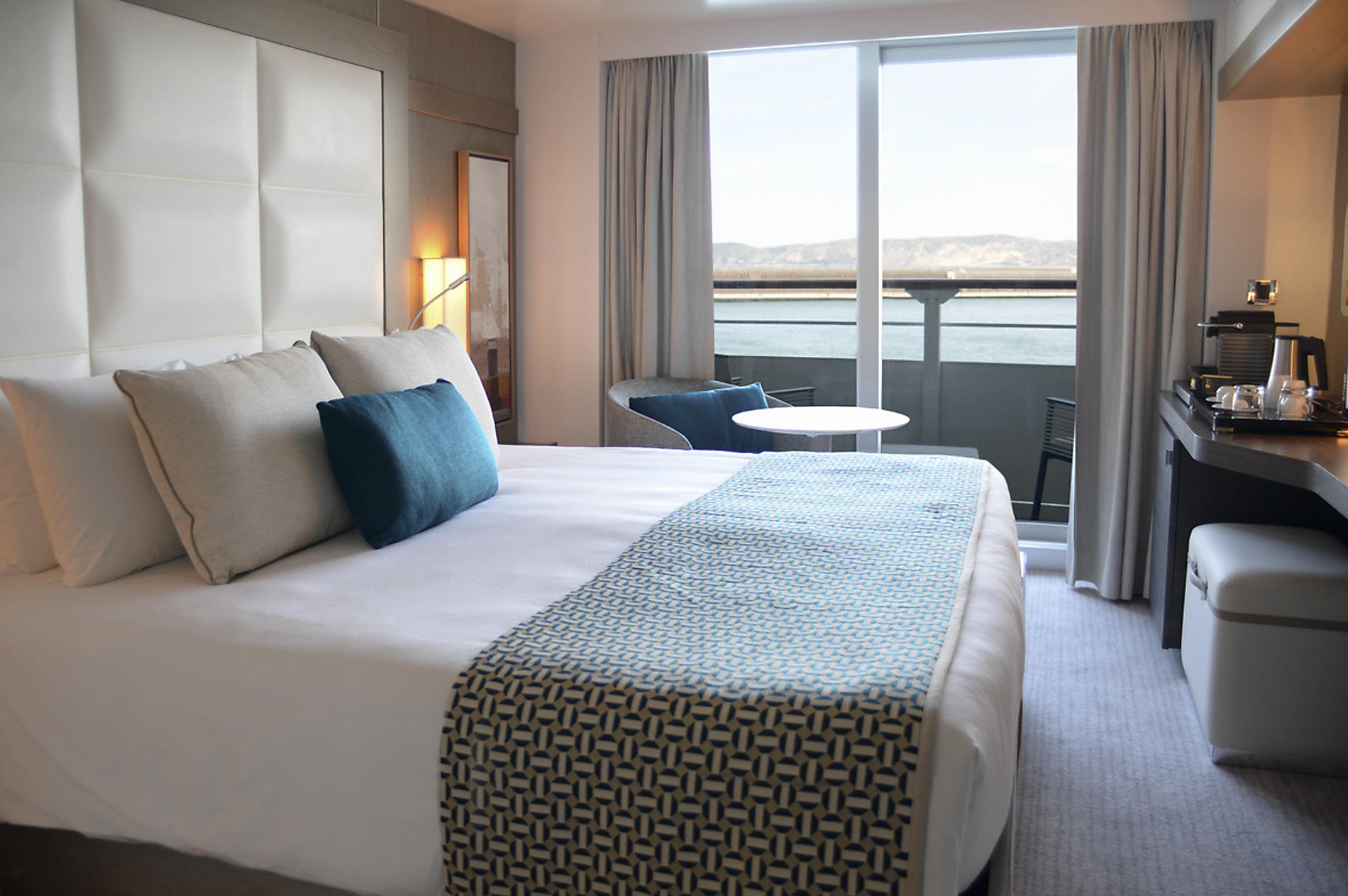
Upper Decks Balcony Stateroom
In addition to the common services provided to all our suites and staterooms:
- A private 43 ft² balcony
- A sliding panoramic window
- One king-size bed (180 x 190 cm) or two single beds (90 x 190 cm)
- Bathroom with shower
Included in all staterooms
- Minibar
- Diptyque Paris top-of-the-line bath products
- Bose Bluetooth speaker
- Individually-controlled air conditioning
- Nespresso coffee maker and boiler
- Dressing room with shelves and closet
- 110V American / 220V European
- Dressing table and hairdryer
- Direct line telephone
- Three ADA staterooms
- 24-hour room service
- Electronic safe
- Flat screen TV, international channels and videos on demand
- Inclusive Wifi internet
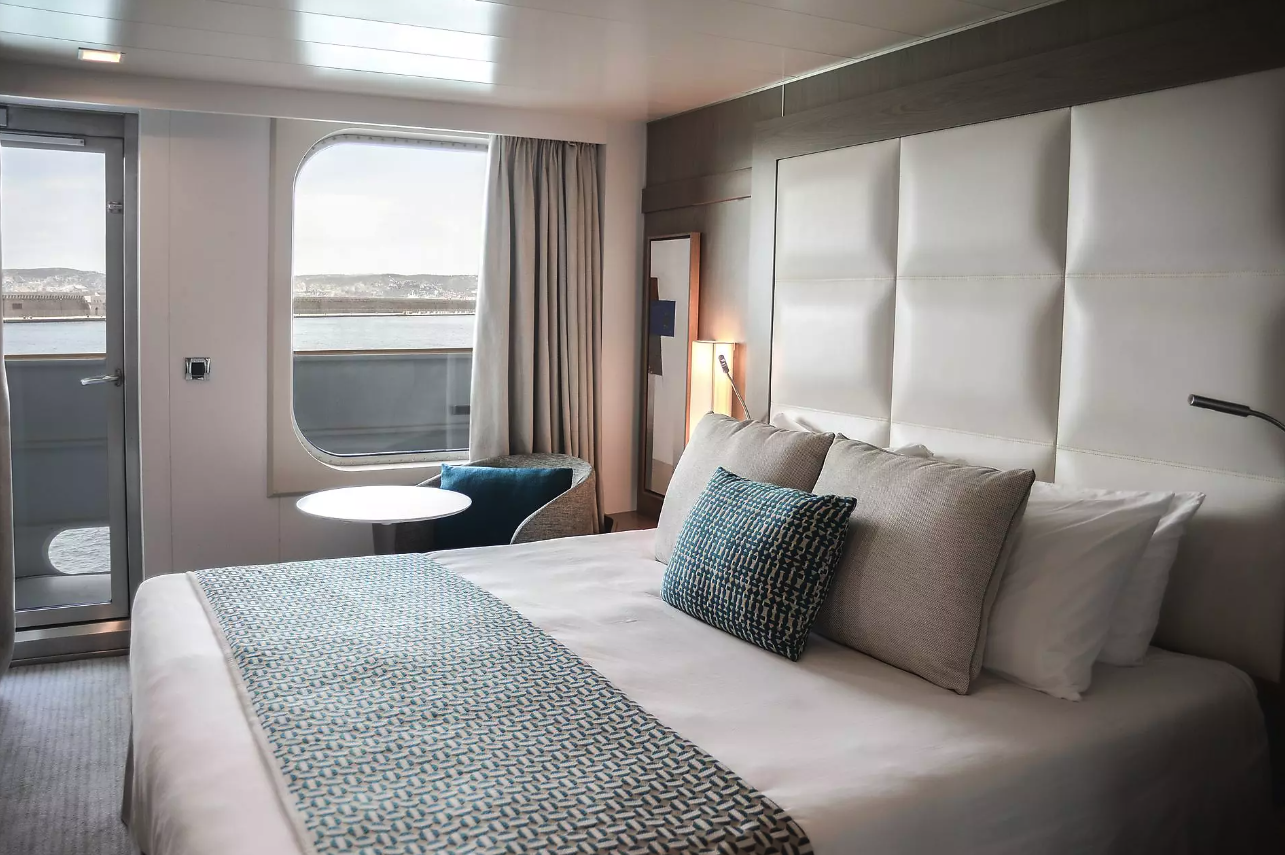
Lower Deck Balcony Stateroom
In addition to the common services provided to all our suites and staterooms:
- A private 43 ft² balcony
- One king-size bed (180 x 190 cm) or two single beds (90 x 190 cm)
- Bathroom with shower
- A porthole and glass door
Included in all staterooms
- Minibar
- Diptyque Paris top-of-the-line bath products
- Bose Bluetooth speaker
- Individually-controlled air conditioning
- Nespresso coffee maker and boiler
- Dressing room with shelves and closet
- 110V American / 220V European
- Dressing table and hairdryer
- Direct line telephone
- Three ADA staterooms
- 24-hour room service
- Electronic safe
- Flat screen TV, international channels and videos on demand
- Inclusive Wifi internet

Le Coromandel
At the back of deck 2, you will find a 370 m² gourmet restaurant offering French and international cuisine. It can accommodate all guests in a single service for breakfast, lunch and dinner.

Le Rodrigues
In a relaxed atmosphere, a 235 m² grill restaurant located on deck 6 welcomes you for breakfast, buffet lunches and themed dinners.
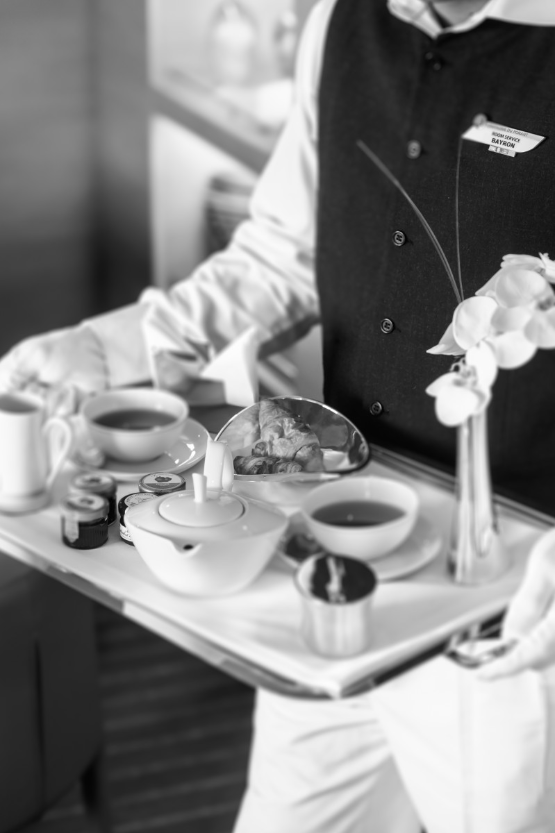
Room Service
Whether you want to fully enjoy your cabin for breakfast, savor a peaceful snack in the middle of the day, or have your meal in complete privacy, room service is at your disposal. Treat yourself to a moment of indulgence and enjoy a diverse menu available at any time of day and night.
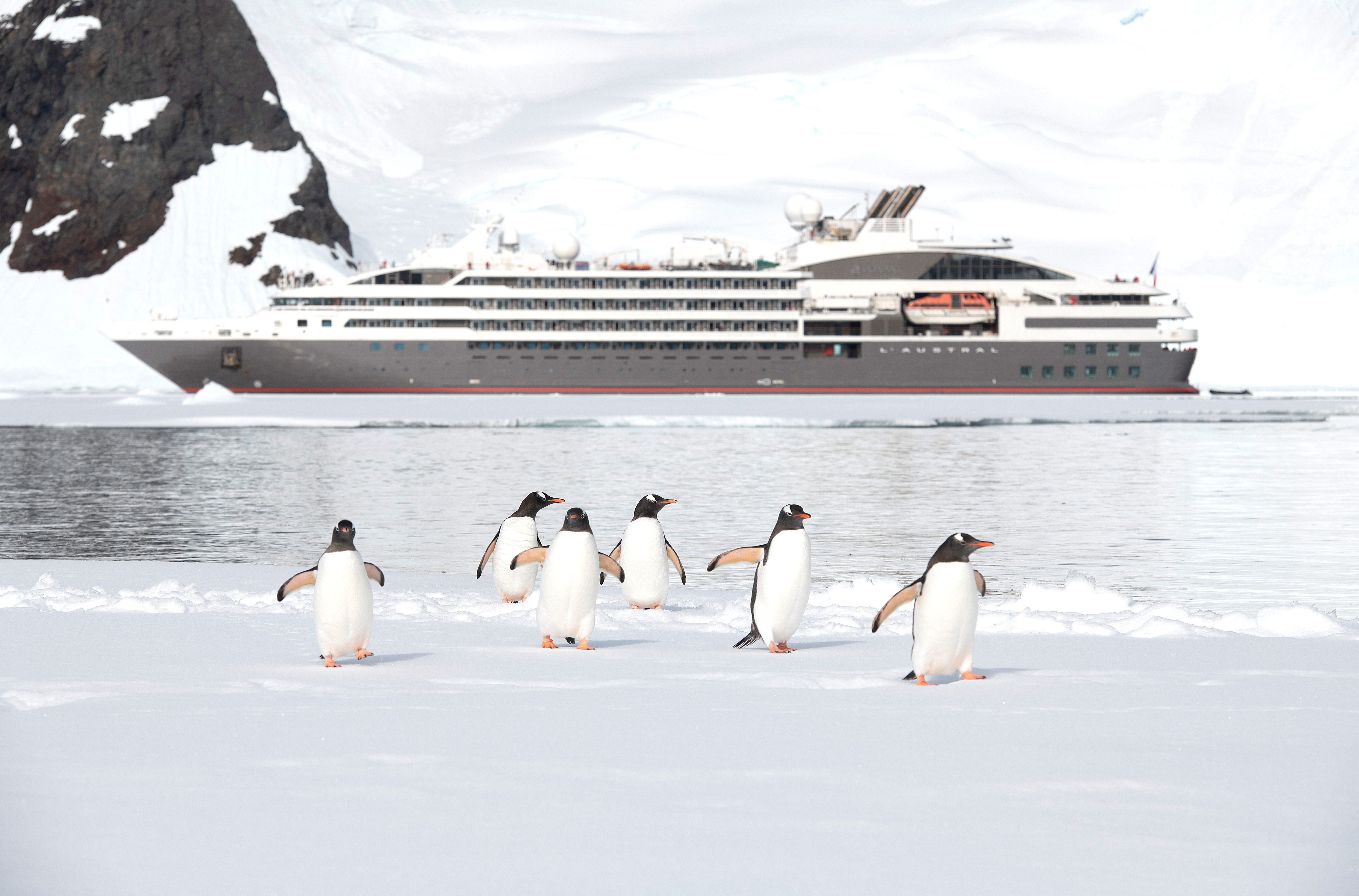
Explorations
Because your desires for escape are many, we offer a range of explorations, each promising unique experiences. Timeless, Discoveries, or Expeditions: each collection offers a distinct and tailored approach, allowing you to experience your chosen destination as closely as possible.
Timeless
Preserved and authentic towns and villages, iconic or more secluded sites… Discover the cultural and gastronomic riches of your destination through the eyes of inspiring local guides and your onboard lecturer, experts in the regions visited.
Timeless: your experiences
- Disembarkation at the dock or by tender, excursions by air-conditioned bus or local transport, depending on the destinations
- One excursion per day and per stopover, accompanied by local guides
- Optional paid excursions, available depending on the port of call, to further explore the destination
- Lectures led by expert guides or distinguished guests
- Activities supervised by Kids Club staff for children aged 4 to 13, depending on departure times.
Discoveries
Explore your destination in all its facets: cultural, natural, historical or even gastronomic… Each itinerary is designed to offer you the best of your stopovers thanks to the expertise of local guides or naturalist guides, depending on the destination.
Discoveries: your experiences
- Disembarkations at the dock, by tender or Zodiac, excursions by air-conditioned bus or local transport, depending on the destination
- One activity per day and per stopover, accompanied by local guides or naturalist guides
- Optional paid excursions, available depending on the port of call, to further explore the destination
- Lectures given by tour guides, naturalist guides, or distinguished guests
Shipments
Sail to the most secluded shores on the planet. An all-inclusive immersive experience, co-created with local communities, accompanied by a team of naturalist guides passionate about the world’s wildlife, flora, and cultures. These experts share their knowledge through inspiring onboard lectures, Zodiac excursions, walks or hikes in small groups, and opportunities to connect with peoples whose traditions are thousands of years old.
The program for all excursions, both included and optional, is available eight months before departure. Booking takes place approximately two months before departure.
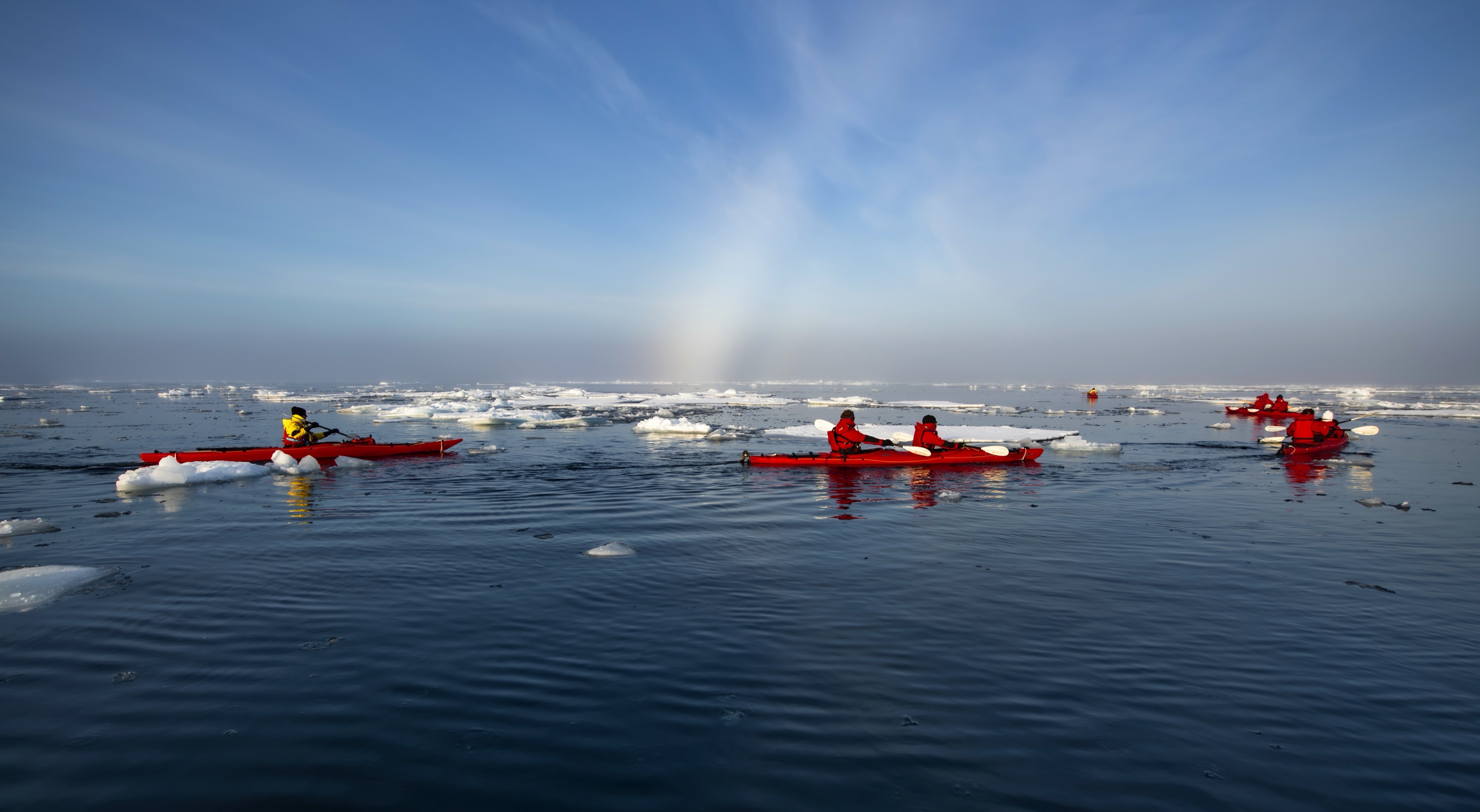
Kayaking
Get as up close to the natural environment as possible with an excursion aboard a two-person sea kayak, during one 1h30 session.
Guided by a state-registered polar navigation specialist, you’ll discover and explore breathtakingly scenic polar landscapes and scenery.
All the necessary equipment will be provided for you on board.
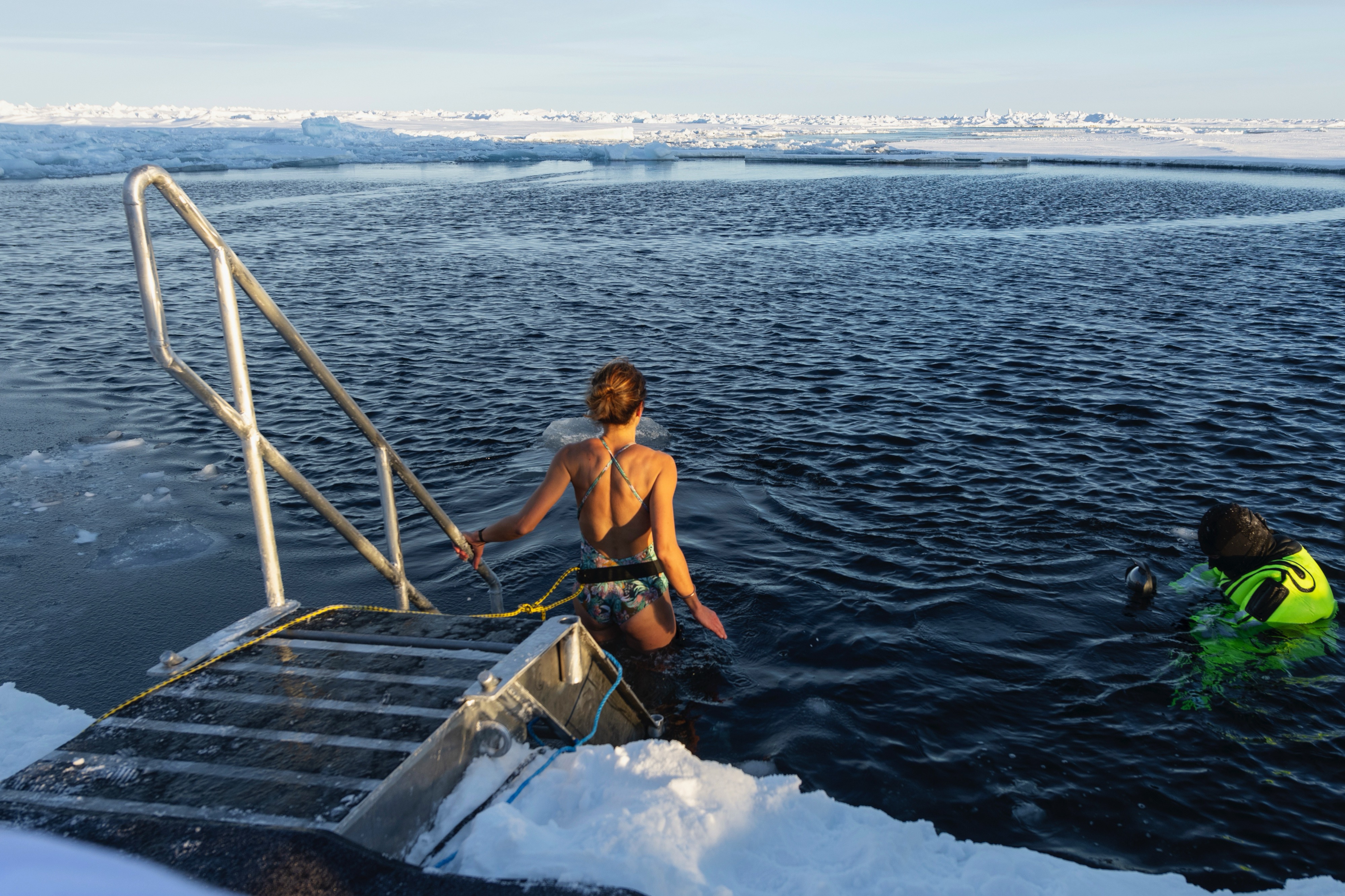
Polar plunge
Let yourself be seduced by the unrivalled sensations of being surrounded by cold water. When weather and environmental conditions permit, enjoy an invigorating cold-water immersion in a swimsuit directly from the ship’s marina. An intense and stimulating experience, perfect for seeking thrills and enjoying the energizing sensation that follows the body’s warming up after the swim.

Experts by your side
Captains, expedition leaders, experienced naturalist guides, lecturers, wildlife photographers, personalities from the world of art, science, culture and gastronomy… Experts share their passions with you on board or on land.
Captains
Your captain is responsible for ensuring the smooth running of your journey on board. An expert in navigating polar or tropical waters, their announcements punctuate your day. And when wildlife appears on the horizon, do not hesitate to accept their invitation to join the outer decks for magnificent observations. Gala dinners are also unmissable opportunities to meet your captain and share with them your passion for travel.
Expedition leaders
Alongside the captain, the expedition leader conducts your exploration. They supervise the team of naturalist guides, ensure the safety of the proposed experiences, and adjust the highlights of your journey according to the navigation conditions, to reveal all the riches of these fascinating ecosystems.
Photo ambassadors
During some trips, having renowned photographers on board offers you the unique opportunity to participate in workshops, and conferences, and receive personalised advice to enhance your images.
Activity guides
Scuba diving, snorkelling, kayaking, polar hiking on foot or snowshoes, cross-country skiing, dog sledding… Whether it’s for an introduction or to deepen your practice, experience immersive activities led by certified guides, ambassadors of local cultures and communities.
Guests and partners
Dancers, musicians, writers, journalists, researchers, adventurers… Experts and prestigious partners share their passion, whether it is artistic or scientific.
Speakers
Art historians, journalists, ethnologists, naturalists… Every journey is a unique opportunity to learn more about the regions visited.

The Observatory Lounge
Library, internet space, bar, occasional live entertainment, terrace: enjoy a 180° panorama of the horizon from the observatory lounge.
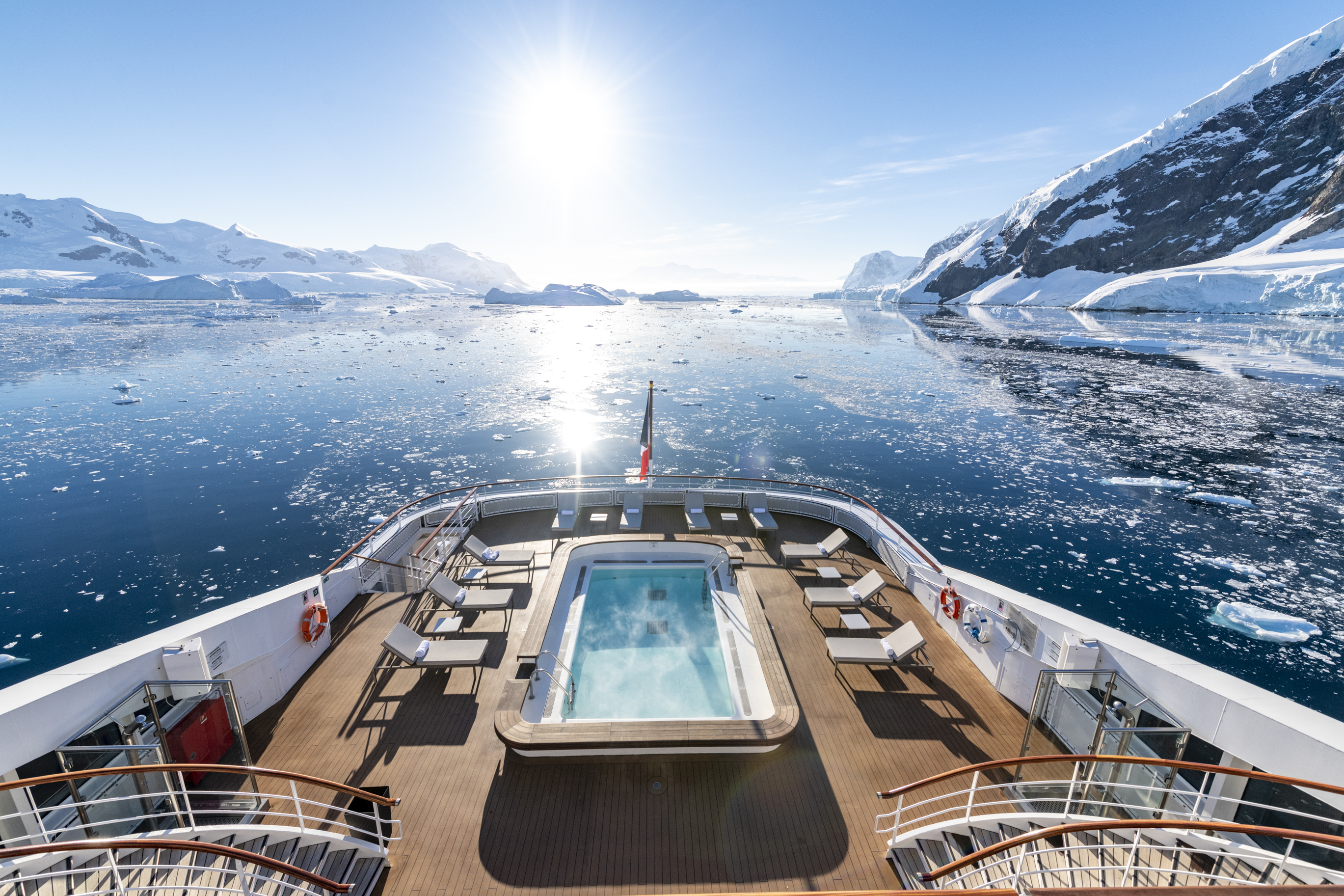
Swimming Pool
With its water blending into the surrounding landscapes, the pool is perfect for relaxing in the sun.
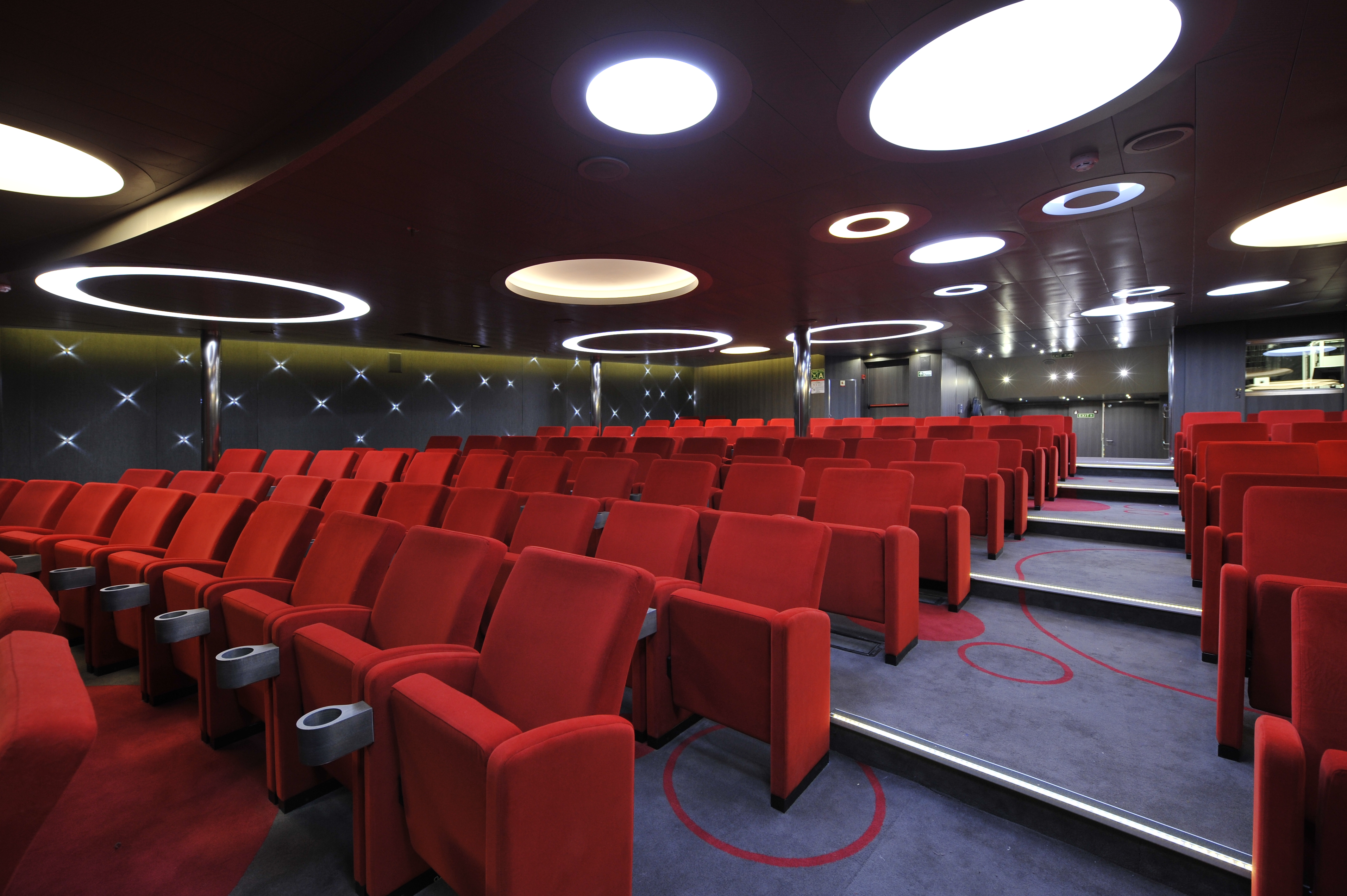
Theatre
Comfortably seated, you can attend conferences given by the guests and teams of naturalists, as well as enjoy a variety of shows, concerts and performances by professional dancers and musicians.
When the night comes alive
Concerts, dance performances, or film screenings: every night on board is a promise of wonder and sharing of emotions.

The Outdoor Bar
Enjoy a drink in our outdoor lounge area with 50 seats and a view of the sea and the pool bridge.
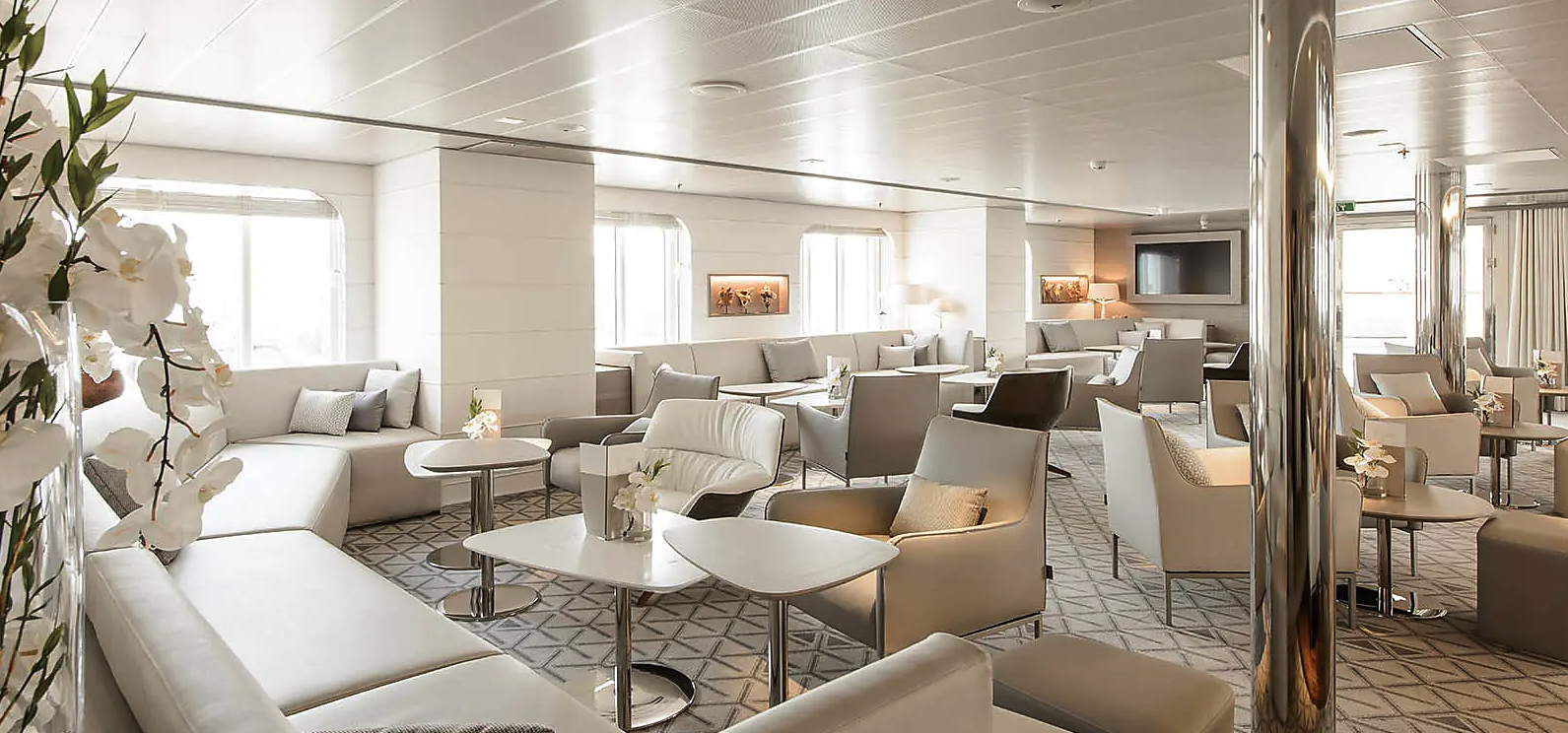
The Main Lounge
Tea room, bar, live music, dance floor, terrace: the main lounge is an essential meeting place throughout your journey.
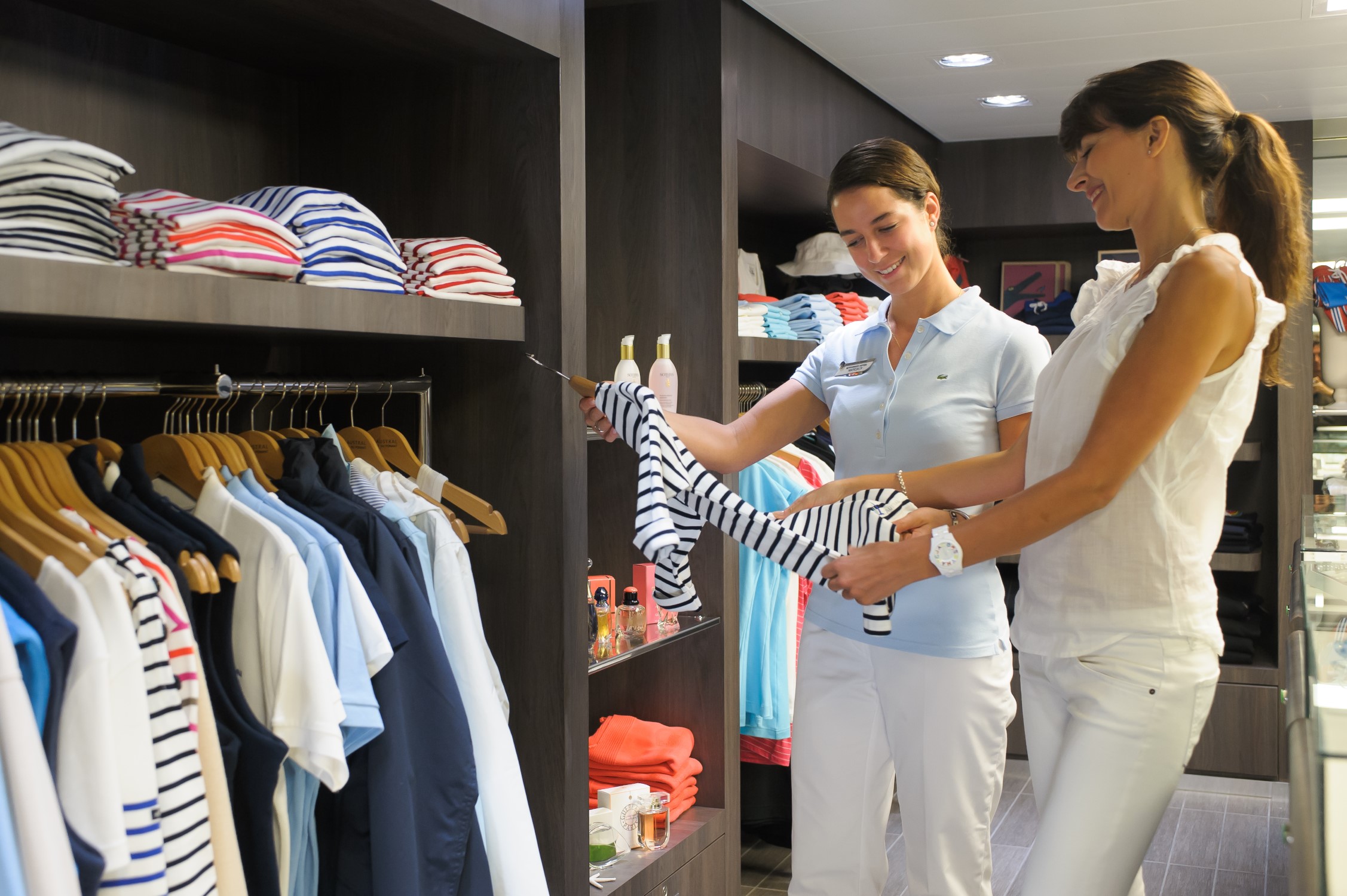
Boutique
An extension of the journey and the ship, la Boutique offers an exclusive shopping experience with a wide range of technical and casual ready-to-wear and equipment, with or without PONANT personalization. It also features unique souvenirs to extend the journey back home, as well as jewelry, accessories and luxury items. Opening hours follow the voyage schedule, including days at sea, and all purchases on board are tax-free.

Excursion Reception and Office
On board the sister ships (Le Boreal, L’Austral, Le Soléal and Le Lyrial) and PONANT EXPLORERS, the reception desk and the excursion desk are arranged side by side to facilitate all your requests.
Reception: our receptionists can accommodate you 24 hours a day on all our ships (from 7 a.m. to 11 p.m. on Le Ponant) to answer all your needs, such as room service, etc.
The excursion office: the excursion team is available at all times to tell you about the onshore programmes, organise group or private excursions and to manage transfers at the start or end of the cruise.
On Le Ponant, the receptionist will answer all your questions about excursions.
PONANT Studio
A photography and videography team escort you throughout your trip. These professionals capture the most beautiful moments of your cruise, which you can share with family and friends upon your return. Meet them on DECK 5 (DECK 6 on the PONANT Explorers ships) at the photo/video area, where you can also order souvenir pictures and videos.
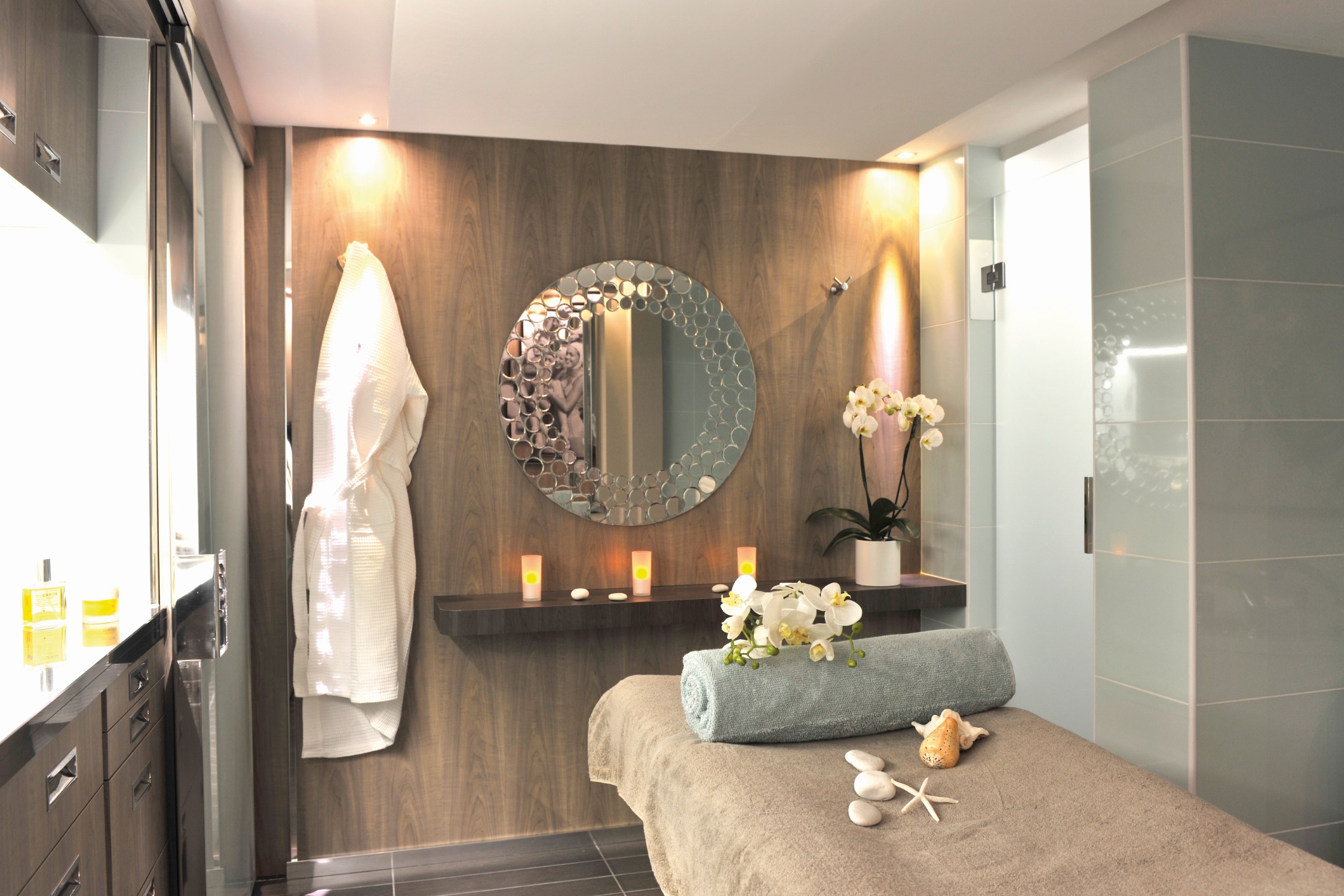
The Spa
In partnership with SOTHYS™ and Davines®, the spa offers a wide range of treatments, massages, hairdressing services, as well as a sauna and a fitness room perfect for self-care and well-being.

The Gym
The fitness room offers a wide range of exercises suitable for all levels to train facing magnificent views.
The Hairdressing Salon
Provided in partnership with KÉRASTASE®, L’ORÉAL PROFESSIONNEL® or DAVINES®, our hairdressing salons offer a complete range of top quality treatments designed to strengthen, nourish and reinvigorate hair’s shine and brilliance. Our stylists are available to serve all your styling, highlighting, colouring, cutting and tailored hair advice needs.
Laundry
Your staterllm attendant is at your disposal to provide a laundry service. It takes 24 to 48 hours to wash and iron your clothes. Only an ironing service can be provided on the same day. Dry cleaning is not possible, so we kindly ask you to only give us clothes that can be washed with water.
** These services are chargeable and billed directly to your cabin account.
Smoking Policy
Ships are non-smoking, even on accommodation balconies. Smoking is only allowed in designated outdoor areas of the ship.
Power Adapters
Electrical plug adapters are provided on board, they are available at the reception.
European Standard Sockets
The 220 volt 50 hertz alternating current is distributed by sockets meeting European standards. Onboard power is 200 volt AC (European standard) and 110 volt AC (North American standard). For safety reasons, hair irons and clothes irons cannot be used in staterooms. Please note that on Le Ponant, 110 volt AC is only available in stateroom bathrooms.
Age Restrictions
Children under one (1 year old / 12 months) are not permitted on PONANT EXPLORATIONS cruises.
On Classic cruises, children are permitted from one (1 year old), with a maximum of five children aged one to six (1 to 6 years old) on board each voyage.
Children aged four years and older are welcome at the Kids’ Club when the service is offered on board.
In all cases and at all times, both on board or on land, children and young minors are the full and total responsibility of their parents or accompanying adults.
Languages
The languages spoken on board are French and English. The signage is in French and English. On some cruises, crew members also speak other languages.
Telephone
To reach a correspondent around the world, a satellite communication system is available to you. The cost of communications is charged directly to your account (pricing depends on the navigation zone). Calls from your correspondents can be transferred directly to your accommodation or to any common area on the ships. You can also send and receive faxes. Contacting reception.
Wi-Fi
You have free Wi-Fi internet access on board all ships (cabins and common areas). On the Sisterships (L’Austral, Le Lyrial, The Boréal, Le Soléal), one or more computers are available to you in the leisure areas. Thanks to the Starlink network provided by Marlink, PONANT EXPLORATIONS GROUP guarantees you quality Wi-Fi access, regardless of the location and navigation conditions.
Medical Facilities
There is a doctor on board available to the passengers on all our ships:
- The schedules of consultation are listed each day in the log book (emergency consultation 24/7).
- The Sisterships, PONANT Explorers and Le Commandant Charcot also have a hospital for any small surgery.
- During the excursions, the passengers are accompanied by a doctor or a nurse.
- There is a fee for consultations on board . The price may vary according to the time and place of the consultation (hospital or staterooms). You must also pay for medications.
- The doctor on board is not authorised to distribute sick leaves and prescriptions. Only accounts and invoices are provided which may be used by the passenger to obtain a refund from his/her health insurance if his/her contract allows.
Medical Consultations
Consultations, medical and surgical procedures, laboratory tests or medical imaging examinations (radiology) carried out on board by the doctor or nurse are subject to charges. The price may vary depending on the time and location of the consultation (at the onboard hospital or in the cabin). The cost of all procedures is displayed in the waiting room. Guests are also required to pay for any medications.
The ship’s doctor is unable to provide medical certificates and prescriptions. Only reports and invoices are issued, which can be used by the guest to claim a refund from their health insurance if their policy allows it.
Special Medical Treatment
If you have a special treatment, please inform the reservation service at the time of your registration, indicate it on the information form filled out before departure, then inform the crew on board at the time of boarding and bring your specific medications for the duration of the cruise.
Seasickness
Our ships (with the exception of Le Ponant and the Spirit of Ponant) are equipped with stabilisers fitted with dynamic fins that adapt to the movements of the ship. This system allows for anticipation and compensation for pitch and roll to provide great stability. Guests anticipating seasickness experience reduced symptoms and are surprised not to be inconvenienced.
Packing Tips
Technical Accessories
We recommend that you bring a ski mask, sunglasses, walking sticks, a waterproof backpack, binoculars, a technical watch, a mosquito net for the face (in the Arctic), and a waterproof pouch. These accessories are also available for purchase at the onboard shop.
Dress Code
Dress Code
We recommend wearing casual and elegant outfits, cocktail attire for gala evenings, and white or black and white attire for the Officers’ evening. Shorts and bermudas are not allowed in the evening at gourmet restaurants.
Expedition Cruise
For an expedition cruise, pack practical clothing and comfortable shoes. During your polar cruises, a polar parka in your size will be provided and boots in your size will be loaned to you.
Special Diets
If you follow a specific diet (vegetarian, diabetic, low calorie, gluten-free, allergy…), it is essential to specify it when making your reservation. You will then receive adapted menus throughout your cruise.
Guests with reduced mobility
Only the Sisterships, the PONANT Explorers, Paul Gauguin and Le Commandant Charcot have been designed to accommodate passengers with reduced mobility.
- Staterooms specially designed on board the Sisterships, decks 3 (307), 4 (407) and 5 (509) 3 c for two people aged 18. in a wheelchair, with a double bed (180 x 200) cm) or two single beds (90 x 200 shower and toilet in the bathroom as well as a balcony of 4 2 (only for cabins on the decks 4 and 5) having a small ramp Wheelchair accessible,
- on board the PONANT Explorers, decks 4 (431) and 5 (527) 2 cabins for two people each at 27.5 2in a wheelchair, with a double bed (180 x 200) cm) or two single beds (90 x 200 sink, shower, and toilet in the bathroom, as well as a balcony of 4 Wheelchair accessible,
- 2I’m accIin a wheelchair, with a double bed (180 x 200) cm) or two single beds (90 x 200 shower and toilet in the bathroom, as well as abalcony of 7.5.2 a small ramp Wheelchair accessible,
- on board the Paul Gauguin, bridge 4 (415 and 416) 2 cabins for two people each aged 21 in a wheelchair, with a double queen size bed (160 x 200) cm) only for the 416, and a double queen size bed (160 x 200 cm) or two single beds (80 x 200 cm) for the 415, shower and toilet in the bathroom, as well as.a window with panoramic view.
- Ramps providing easy access for movement in common areas.
- Posters, signage, and cabin numbers translated into braille.
Despite these arrangements, each passenger must be able to be autonomous or travel with a companion who can provide all the necessary assistance during their journey. If a person is not deemed sufficiently fit to travel safely, the company reserves the right to refuse their boarding. Landings in difficult areas or on zodiacs are subject to the approval of the captain, always with the passenger’s well-being and safety in mind.
Solo Travellers
Every season, we offer a wide range of cruises with ‘no single supplement’: you thus benefit from a double stateroom to yourself, at no extra cost. The onboard atmosphere is conducive to meeting and interacting with other guests, and the crew ensures your well-being and integration on board. Discover the cruises by consulting the single page offered.
Included on Every Cruise
A complete offer (excluding Spirit of PONANT and La Désirade¹)
SERVICES INCLUDED ON ALL OUR CRUISES
- Full board from arrival to departure day
- High-end gastronomy in all restaurants
- All drinks in restaurants, bars and minibars. All drinks are included² (selection of champagnes, wines and spirits, beers, cocktails, water, soft drinks, hot drinks)
- 24-hour room service
- Butler service for certain suites³
- Free and unlimited internet access on board
- Evenings, shows and other entertainment
- Access to the fitness area and the hammam or sauna, depending on the ship.
- All port and security fees
SERVICES INCLUDED DEPENDING ON THE TYPE OF CRUISE/SHIP
- Activities included, which may vary depending on the type of exploration:
- Timeless: one included excursion⁴ per person, per day and per stopover, led by local guides (visits to monuments, tastings of local products, etc.)
- Discoveries: one included activity per person, per day and per stopover, which can be either an included excursion⁴ led by local guides or an included activity led by naturalist guides
- Expeditions: one activity included per person, per day, per port of call, led by naturalist guides (hiking, zodiac excursions, etc.).
- Some more secluded ports of call, with few or no facilities, will be offered for independent exploration. Passengers will thus have the freedom to explore the area and enjoy activities on their own (swimming at the beach, shopping, restaurants, shows, etc.).
- Lectures by our naturalist guides or our destination expert (excluding sea voyages)
- Non-motorized water sports activities (excluding diving), such as kayaking on the Commandant Charcot or stand-up paddleboarding depending on the ship, are subject to weather and safety conditions, local authorizations, and the Captain’s agreement.
- Taxes for national parks and protected areas
- The accompaniment of a team of naturalist guides is provided only on expedition and discovery cruises; on land or, depending on the destination, during excursions and/or landings by Zodiac.
Butler Service
Attentive and discreet, your butler offers you a fully personalized service.
The butler service is reserved for passengers traveling in one of the suites located on deck 6 aboard the Sisterships, as well as in all suites of the Shipowner, Deluxe Suites, Privilege Suites, and Prestige Suites located on deck 6 aboard the PONANT EXPLORERS.
The PONANT app
Our app accompanies you in your preparations and during your stay on board. Find the services offered and the information that facilitates your journey.
Are you soon boarding with us?
Thanks to its app, PONANT accompanies you in your travel preparations, and then during your stay on board. Find our services and information that will make your cruise even easier.
Prepare your cruise with peace of mind
- Receive notifications to pre-book your programs before and after the cruise, as well as your excursions.
- Get a sneak peek of the captain and crew who will accompany you during your stay.
- Follow in real-time the positioning of the ship on which you will embark.
- Access your luggage checklist, the clothing outfits recommended by our experts for your destination, and the formalities to be expected before your departure.
- Check the steps of your journey and find out the details of the amenities in your cabin.
Once on board, the PONANT app makes all your procedures easier
- Use the guest mode to access onboard services without logging in.
- Find the highlights of your cruise, day by day.
- Add your favourite excursions to your wishlist.
- Check out the most beautiful photos from your cruise.
- Order your breakfast and room service from your smartphone.
- Conference schedules, spa relaxation sessions… All your important appointments on board are noted in your application.
Download the application
The companion of your next journey
Download on the App Store
Download on Google Play
Required Android version: 5.0 and later Required iOS version: 12.4 and later

Deck 7
- Pool Bar

Deck 6
- Pool
- Grill Restaurant
- Library
- Observation Lounge
- Panoramic Terrace
- Owner’s Suite
- Deluxe Suites
- Prestige Staterooms
- Upper Decks Balcony Staterooms

Deck 5
- Fitness Room
- Spa
- Hair Salon
- Studio Ponant
- Bridge
- Prestige Suite
- Upper Decks Balcony Staterooms

Deck 4
- Theatre
- Upper Decks Balcony Staterooms

Deck 3
- Main Lounge
- Shop
- Bar
- Excursion Desk
- Reception Desk
- Medical Centre
- Lower Deck Balcony Staterooms
- Window or Porthole Staterooms

Deck 2
- Gastronomic Restaurant
- Marina