Itinerary
Amsterdam combines the unrivaled beauty of the 17th-century Golden Age city center with plenty of museums and art of the highest order, not to mention a remarkably laid-back atmosphere. It all comes together to make this one of the world’s most appealing and offbeat metropolises in the world. Built on a latticework of concentric canals like an aquatic rainbow, Amsterdam is known as the City of Canals—but it’s no Venice, content to live on moonlight serenades and former glory. Quite the contrary: on nearly every street here you’ll find old and new side by side—quiet corners where time seems to be holding its breath next to streets like neon-lit Kalverstraat, and Red Light ladies strutting by the city’s oldest church. Indeed, Amsterdam has as many lovely facets as a 40-carat diamond polished by one of the city’s gem cutters. It’s certainly a metropolis, but a rather small and very accessible one. Locals tend to refer to it as a big village, albeit one that happens to pack the cultural wallop of a major world destination. There are scores of concerts every day, numerous museums, summertime festivals, and, of course, a legendary year-round party scene. It’s pretty much impossible to resist Amsterdam’s charms. With 7,000 registered monuments, most of which began as the residences and warehouses of humble merchants, set on 160 man-made canals, and traversed by 1,500 or so bridges, Amsterdam has the largest historical inner city in Europe. Its famous circle of waterways, the grachtengordel, was a 17th-century urban expansion plan for the rich and is a lasting testament to the city’s Golden Age. This town is endearing because of its kinder, gentler nature—but a reputation for championing sex, drugs, and rock ’n’ roll does not alone account for Amsterdam’s being one of the most popular destinations in Europe: consider that within a single square mile the city harbors some of the greatest achievements in Western art, from Rembrandt to Van Gogh. Not to mention that this is one of Europe’s great walking cities, with so many of its treasures in the untouted details: tiny alleyways barely visible on the map, hidden garden courtyards, shop windows, floating houseboats, hidden hofjes(courtyards with almshouses), sudden vistas of church spires, and gabled roofs that look like so many unframed paintings. And don’t forget that the joy lies in details: elaborate gables and witty gable stones denoting the trade of a previous owner. Keep in mind that those XXX symbols you see all over town are not a mark of the city’s triple-X reputation. They’re part of Amsterdam’s official coat of arms—three St. Andrew’s crosses, believed to represent the three dangers that have traditionally plagued the city: flood, fire, and pestilence. The coat’s motto (“Valiant, determined, compassionate”) was introduced in 1947 by Queen Wilhelmina in remembrance of the 1941 February Strike in Amsterdam—the first time in Europe that non-Jewish people protested against the persecution of Jews by the Nazi regime.
Day programme:
AMSTERDAM – EMBARKATION. Embark your ship in Amsterdam for your 7-night cruise. (D)
Amsterdam combines the unrivaled beauty of the 17th-century Golden Age city center with plenty of museums and art of the highest order, not to mention a remarkably laid-back atmosphere. It all comes together to make this one of the world’s most appealing and offbeat metropolises in the world. Built on a latticework of concentric canals like an aquatic rainbow, Amsterdam is known as the City of Canals—but it’s no Venice, content to live on moonlight serenades and former glory. Quite the contrary: on nearly every street here you’ll find old and new side by side—quiet corners where time seems to be holding its breath next to streets like neon-lit Kalverstraat, and Red Light ladies strutting by the city’s oldest church. Indeed, Amsterdam has as many lovely facets as a 40-carat diamond polished by one of the city’s gem cutters. It’s certainly a metropolis, but a rather small and very accessible one. Locals tend to refer to it as a big village, albeit one that happens to pack the cultural wallop of a major world destination. There are scores of concerts every day, numerous museums, summertime festivals, and, of course, a legendary year-round party scene. It’s pretty much impossible to resist Amsterdam’s charms. With 7,000 registered monuments, most of which began as the residences and warehouses of humble merchants, set on 160 man-made canals, and traversed by 1,500 or so bridges, Amsterdam has the largest historical inner city in Europe. Its famous circle of waterways, the grachtengordel, was a 17th-century urban expansion plan for the rich and is a lasting testament to the city’s Golden Age. This town is endearing because of its kinder, gentler nature—but a reputation for championing sex, drugs, and rock ’n’ roll does not alone account for Amsterdam’s being one of the most popular destinations in Europe: consider that within a single square mile the city harbors some of the greatest achievements in Western art, from Rembrandt to Van Gogh. Not to mention that this is one of Europe’s great walking cities, with so many of its treasures in the untouted details: tiny alleyways barely visible on the map, hidden garden courtyards, shop windows, floating houseboats, hidden hofjes(courtyards with almshouses), sudden vistas of church spires, and gabled roofs that look like so many unframed paintings. And don’t forget that the joy lies in details: elaborate gables and witty gable stones denoting the trade of a previous owner. Keep in mind that those XXX symbols you see all over town are not a mark of the city’s triple-X reputation. They’re part of Amsterdam’s official coat of arms—three St. Andrew’s crosses, believed to represent the three dangers that have traditionally plagued the city: flood, fire, and pestilence. The coat’s motto (“Valiant, determined, compassionate”) was introduced in 1947 by Queen Wilhelmina in remembrance of the 1941 February Strike in Amsterdam—the first time in Europe that non-Jewish people protested against the persecution of Jews by the Nazi regime.
Day programme:
AMSTERDAM – LELYSTAD. Enjoy a scenic cruise through the IJsselmeer to Lelystad. Venture to the charming, canal-laden village of Giethoorn, nicknamed the “Dutch Venice.” Capture wonderful photos of the picturesque thatched-roof farmhouses, which are seemingly lifted straight from the pages of a fairytale. In the afternoon, go for a guided bike ride through the Dutch countryside or visit Flevoland’s vibrant tulip fields. (B,L,D)
Day programme:
BRUINISSE. After enjoying a scenic cruise through the Delta, join a guided tour to the medieval harbor town of Zierikzee, brimming with delights, from its 16th-century stone-built Gravesteen to its lovely harborside shops and cafes. This excursion includes a photo stop at the Oosterschelde Kering, the largest storm surge barrier of the Delta Works. Alternatively, focus your tour on the history of the Delta Works at Neeltje Jans, one of the world’s most impressive storm surge barriers. More than half of the Netherlands lies below sea level and the Delta Works were built to prevent a recurrence of the 1953 flood disaster. Prefer discovering Bruinisse on two wheels? Join our guide for an exhilarating bike tour. (B,L,D)
Day programme:
GHENT – BRUGES, BELGIUM. Admire Ghent’s canal-side architecture and some of its famous sights, including the Castle of the Counts and St. Bavo’s Cathedral and its Adoration of the Mystic Lamb. Those with a sweet tooth can visit a chocolate maker’s shop. After being greeted with a glass of champagne, a master chocolatier will brief you on the history of chocolate. You will also have the opportunity to taste different types of pralines – and try your hand at making your own. Alternatively, take a full-day tour of Bruges, one of the best-preserved medieval cities in Europe and a UNESCO World Heritage Site. Stroll through Grote Markt and Burg Square, visit the centuries-old Church of Our Lady with its prominent spire, and, if you choose, sample some of the local specialties, from Belgian fries to waffles to chocolate, before returning to the ship. (B,L,D)
Explore Antwerp, Belgium’s second city. Known for its diamond cutting industry, fashion and the many great artists that lived in its vicinity, Antwerp is a city focused on art and culture.
Day programme:
ANTWERP. Explore this trendy city on a walking tour where you’ll see Antwerp’s Steen Castle, Grote Market and Brabo Fountain, along with the UNESCO-designated Cathedral of Our Lady. For a more active exploration of the area, join a guided bike tour. Later in the afternoon, you have a choice of two excursions. Foodies will want to go on a culinary tour to indulge in chocolate, waffles and beer. Flower lovers and gardeners can roam through the Floralia, an annual spring flower show featuring approximately one million bulbs that are hand-planted each year by the castle staff. (B,L,D)
Day programme:
DORDRECHT, THE NETHERLANDS – ROTTERDAM. In the morning, venture to the UNESCO World Heritage Site of Kinderdijk, a lovely village renowned for having the country’s greatest concentration of windmills, all dating from the 18th century. Visit a private windmill via electric boat. You may also pedal past the windmills from the seat of a bike. Then, cruise to Rotterdam, where you can go on a walking tour of this city, nicknamed the “Gateway to Europe,” and get a taste of a local specialty at the market hall. Alternatively, go on an excursion to Delft to visit the Royal Delft Porcelain Factory and Museum. If you prefer a more active adventure, then go on a bike ride through Rotterdam and past some of its famous landmarks and architecture. Or, if you wish to explore the history of US immigration, join us on an excursion that visits Delfshaven, where, on August 1, 1620, the Pilgrim fathers departed on their epic journey aboard the Speedwell, plus tour the FENIX Museum of Migration, a former harbor warehouse that has been transformed into a unique educational experience. (B,L,D)
Rotterdam is a city that’s a long way removed from most people’s stereotypical notion of the Netherlands. There are few, if any, canals to be found here nor are there any quaint windmills. There is, however, a thriving modern city which is one of the busiest ports in the entire world.
Amsterdam combines the unrivaled beauty of the 17th-century Golden Age city center with plenty of museums and art of the highest order, not to mention a remarkably laid-back atmosphere. It all comes together to make this one of the world’s most appealing and offbeat metropolises in the world. Built on a latticework of concentric canals like an aquatic rainbow, Amsterdam is known as the City of Canals—but it’s no Venice, content to live on moonlight serenades and former glory. Quite the contrary: on nearly every street here you’ll find old and new side by side—quiet corners where time seems to be holding its breath next to streets like neon-lit Kalverstraat, and Red Light ladies strutting by the city’s oldest church. Indeed, Amsterdam has as many lovely facets as a 40-carat diamond polished by one of the city’s gem cutters. It’s certainly a metropolis, but a rather small and very accessible one. Locals tend to refer to it as a big village, albeit one that happens to pack the cultural wallop of a major world destination. There are scores of concerts every day, numerous museums, summertime festivals, and, of course, a legendary year-round party scene. It’s pretty much impossible to resist Amsterdam’s charms. With 7,000 registered monuments, most of which began as the residences and warehouses of humble merchants, set on 160 man-made canals, and traversed by 1,500 or so bridges, Amsterdam has the largest historical inner city in Europe. Its famous circle of waterways, the grachtengordel, was a 17th-century urban expansion plan for the rich and is a lasting testament to the city’s Golden Age. This town is endearing because of its kinder, gentler nature—but a reputation for championing sex, drugs, and rock ’n’ roll does not alone account for Amsterdam’s being one of the most popular destinations in Europe: consider that within a single square mile the city harbors some of the greatest achievements in Western art, from Rembrandt to Van Gogh. Not to mention that this is one of Europe’s great walking cities, with so many of its treasures in the untouted details: tiny alleyways barely visible on the map, hidden garden courtyards, shop windows, floating houseboats, hidden hofjes(courtyards with almshouses), sudden vistas of church spires, and gabled roofs that look like so many unframed paintings. And don’t forget that the joy lies in details: elaborate gables and witty gable stones denoting the trade of a previous owner. Keep in mind that those XXX symbols you see all over town are not a mark of the city’s triple-X reputation. They’re part of Amsterdam’s official coat of arms—three St. Andrew’s crosses, believed to represent the three dangers that have traditionally plagued the city: flood, fire, and pestilence. The coat’s motto (“Valiant, determined, compassionate”) was introduced in 1947 by Queen Wilhelmina in remembrance of the 1941 February Strike in Amsterdam—the first time in Europe that non-Jewish people protested against the persecution of Jews by the Nazi regime.
Day programme:
AMSTERDAM. Enjoy a morning of scenic cruising before venturing out in the afternoon on a smaller boat specially designed to glide beneath the many bridges of Amsterdam. Admire the city’s historic harbor and canals, where you’ll see beautiful homes lining the water and the fabled Skinny Bridge. Alternatively, marvel at one of the most impressive public gardens in the world, Keukenhof**, which presents a spectacular display of millions of flowering tulips spread out over 70 acres. Spend time ambling through this legendary garden, open only nine weeks a year and sometimes referred to as the “Garden of Europe.” (B,L,D) **Note: Included on most departures; An alternative tour will operate on sailings that visit Amsterdam outside of Keukenhof’s open dates.
Amsterdam combines the unrivaled beauty of the 17th-century Golden Age city center with plenty of museums and art of the highest order, not to mention a remarkably laid-back atmosphere. It all comes together to make this one of the world’s most appealing and offbeat metropolises in the world. Built on a latticework of concentric canals like an aquatic rainbow, Amsterdam is known as the City of Canals—but it’s no Venice, content to live on moonlight serenades and former glory. Quite the contrary: on nearly every street here you’ll find old and new side by side—quiet corners where time seems to be holding its breath next to streets like neon-lit Kalverstraat, and Red Light ladies strutting by the city’s oldest church. Indeed, Amsterdam has as many lovely facets as a 40-carat diamond polished by one of the city’s gem cutters. It’s certainly a metropolis, but a rather small and very accessible one. Locals tend to refer to it as a big village, albeit one that happens to pack the cultural wallop of a major world destination. There are scores of concerts every day, numerous museums, summertime festivals, and, of course, a legendary year-round party scene. It’s pretty much impossible to resist Amsterdam’s charms. With 7,000 registered monuments, most of which began as the residences and warehouses of humble merchants, set on 160 man-made canals, and traversed by 1,500 or so bridges, Amsterdam has the largest historical inner city in Europe. Its famous circle of waterways, the grachtengordel, was a 17th-century urban expansion plan for the rich and is a lasting testament to the city’s Golden Age. This town is endearing because of its kinder, gentler nature—but a reputation for championing sex, drugs, and rock ’n’ roll does not alone account for Amsterdam’s being one of the most popular destinations in Europe: consider that within a single square mile the city harbors some of the greatest achievements in Western art, from Rembrandt to Van Gogh. Not to mention that this is one of Europe’s great walking cities, with so many of its treasures in the untouted details: tiny alleyways barely visible on the map, hidden garden courtyards, shop windows, floating houseboats, hidden hofjes(courtyards with almshouses), sudden vistas of church spires, and gabled roofs that look like so many unframed paintings. And don’t forget that the joy lies in details: elaborate gables and witty gable stones denoting the trade of a previous owner. Keep in mind that those XXX symbols you see all over town are not a mark of the city’s triple-X reputation. They’re part of Amsterdam’s official coat of arms—three St. Andrew’s crosses, believed to represent the three dangers that have traditionally plagued the city: flood, fire, and pestilence. The coat’s motto (“Valiant, determined, compassionate”) was introduced in 1947 by Queen Wilhelmina in remembrance of the 1941 February Strike in Amsterdam—the first time in Europe that non-Jewish people protested against the persecution of Jews by the Nazi regime.
Day programme:
DISEMBARKATION – DEPART AMSTERDAM. Disembark the ship and prepare for your flight home. (B)(B,L,D) – Indicates Breakfast, Lunch, and Dinner are included on this day.
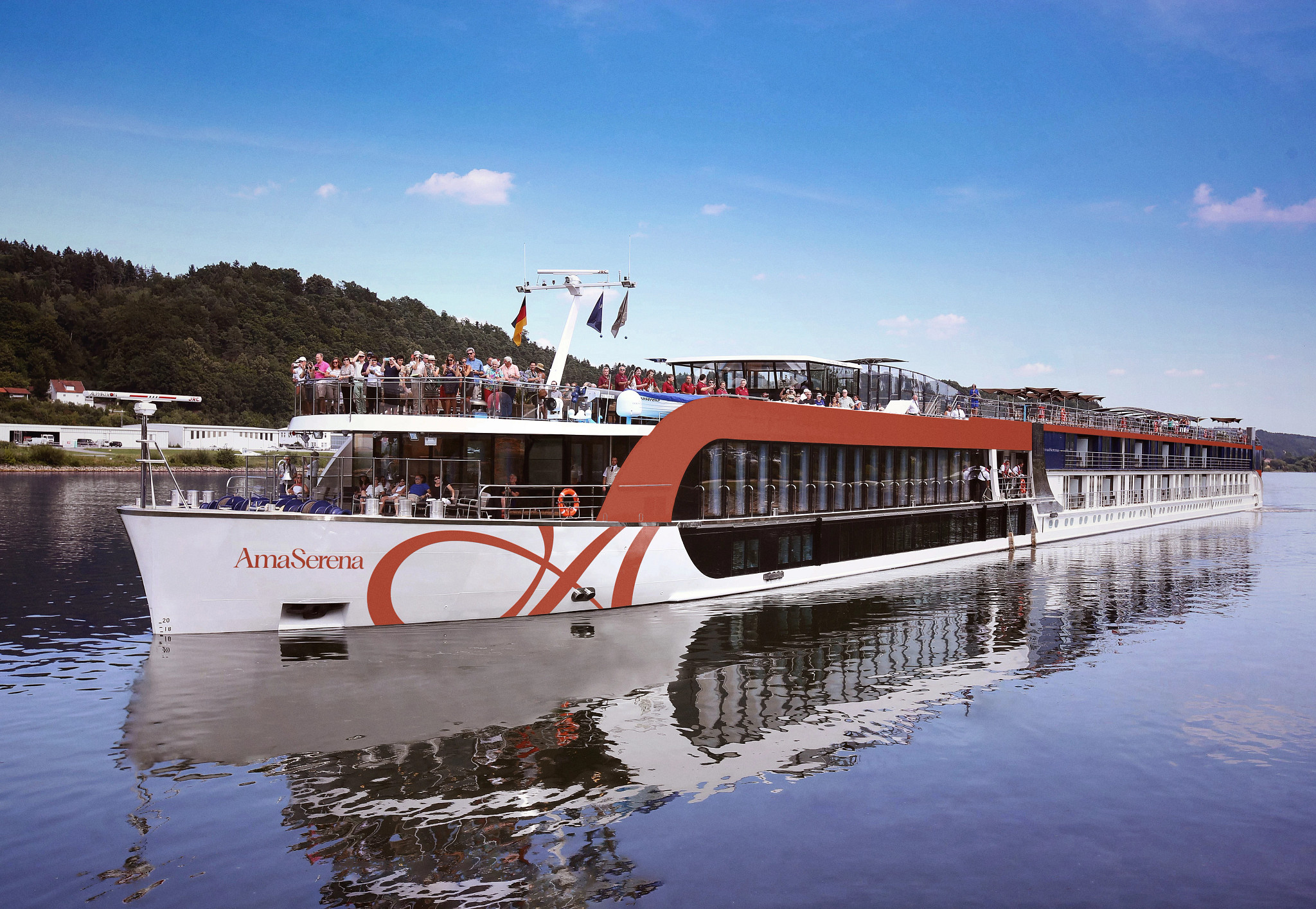
Ship features
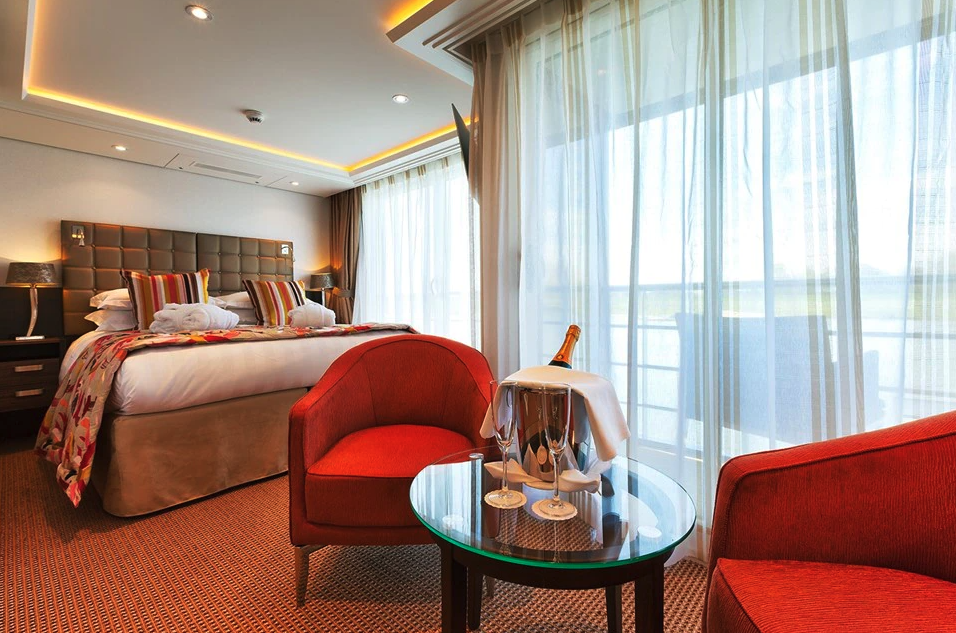
Suite
Suite Features Include:
- In-room temperature control
- Deluxe hotel-style bedding with Egyptian linen, down pillows and duvet
- Spacious bathrooms with multi-jet showerheads
- Large wardrobe, full-length mirror, hair dryer, safe and direct-dial telephone
- Flat-screen TV
- Entertainment on Demand system providing complimentary TV, movies and music library
- Complimentary internet and Wi-Fi
- Complimentary bottled water replenished daily
- Desk and chair
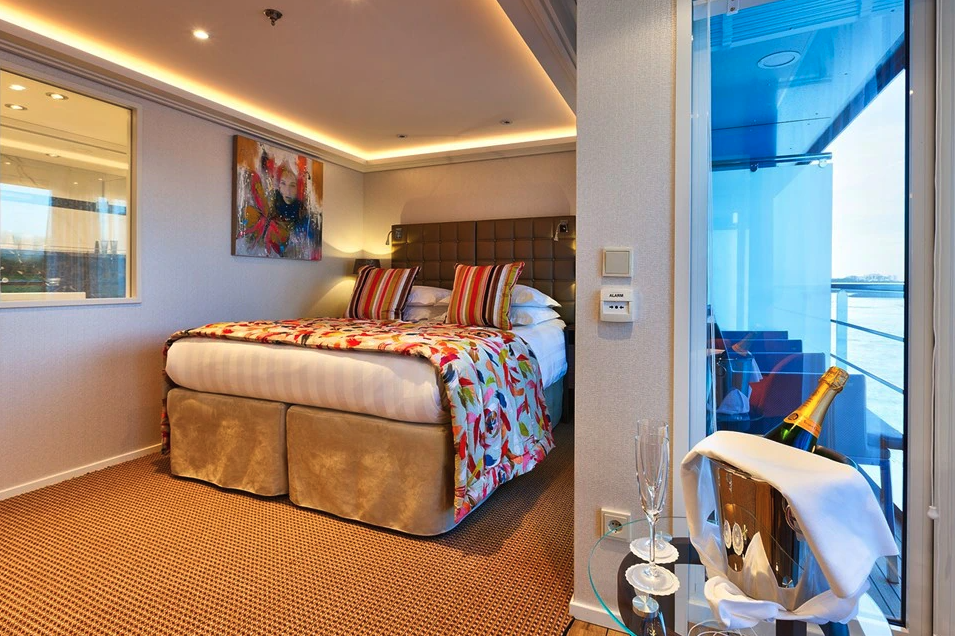
Category AA Staterooms
Stateroom Features Include:
- In-room temperature control
- Deluxe hotel-style bedding with Egyptian linen, down pillows and duvet
- Spacious bathrooms with multi-jet showerheads
- Large wardrobe, full-length mirror, hair dryer, safe and direct-dial telephone
- Flat-screen TV
- Entertainment on Demand system providing complimentary TV, movies and music library
- Complimentary internet and Wi-Fi
- Complimentary bottled water replenished daily
- Desk and chair
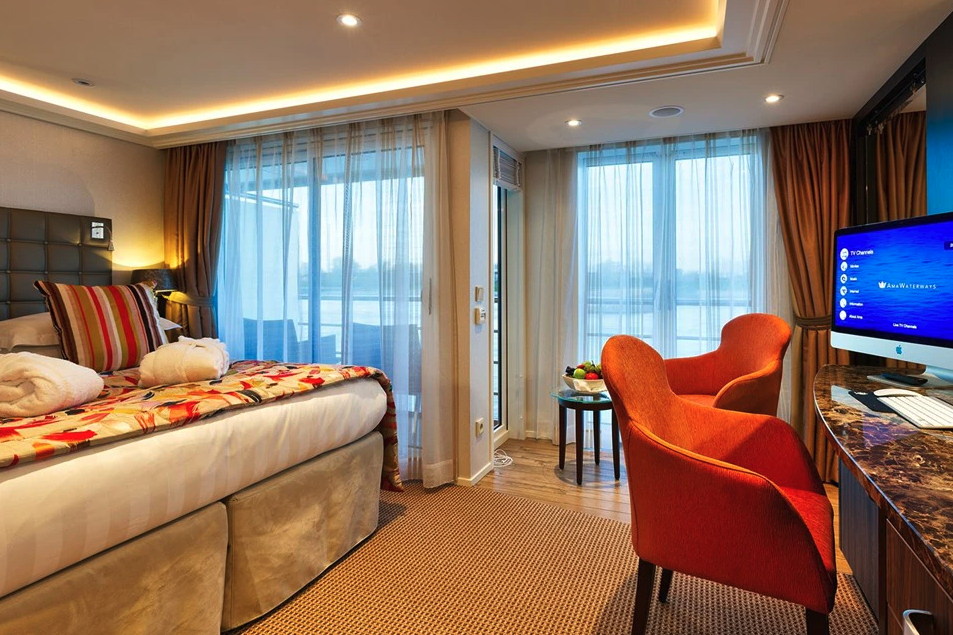
Category AB Staterooms
Stateroom Features Include:
- In-room temperature control
- Deluxe hotel-style bedding with Egyptian linen, down pillows and duvet
- Spacious bathrooms with multi-jet showerheads
- Large wardrobe, full-length mirror, hair dryer, safe and direct-dial telephone
- Flat-screen TV
- Entertainment on Demand system providing complimentary TV, movies and music library
- Complimentary internet and Wi-Fi
- Complimentary bottled water replenished daily
- Desk and chair
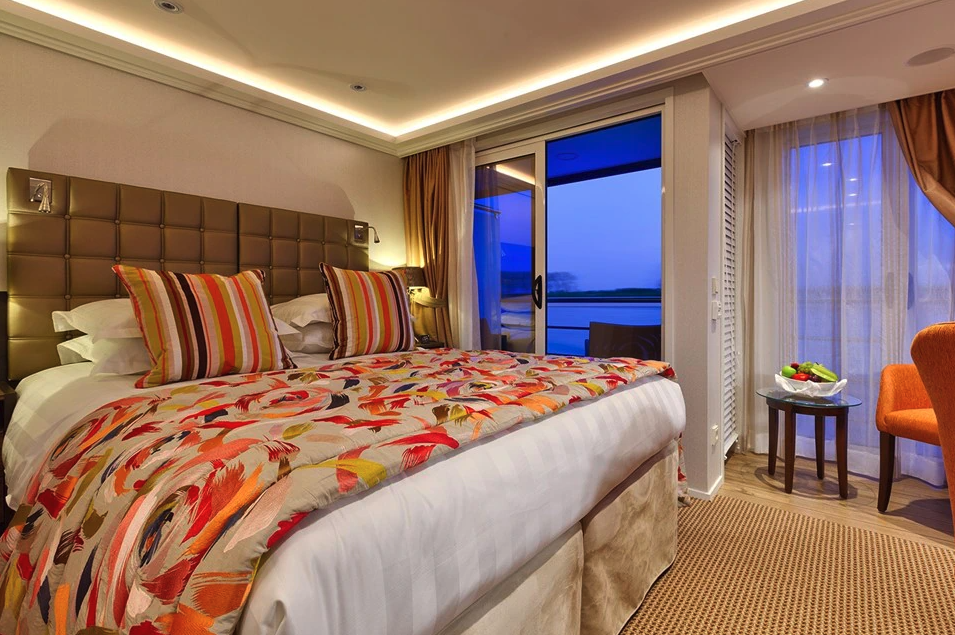
Category BA Staterooms
Stateroom Features Include:
- In-room temperature control
- Deluxe hotel-style bedding with Egyptian linen, down pillows and duvet
- Spacious bathrooms with multi-jet showerheads
- Large wardrobe, full-length mirror, hair dryer, safe and direct-dial telephone
- Flat-screen TV
- Entertainment on Demand system providing complimentary TV, movies and music library
- Complimentary internet and Wi-Fi
- Complimentary bottled water replenished daily
- Desk and chair
Category BB Staterooms
Stateroom Features Include:
- In-room temperature control
- Deluxe hotel-style bedding with Egyptian linen, down pillows and duvet
- Spacious bathrooms with multi-jet showerheads
- Large wardrobe, full-length mirror, hair dryer, safe and direct-dial telephone
- Flat-screen TV
- Entertainment on Demand system providing complimentary TV, movies and music library
- Complimentary internet and Wi-Fi
- Complimentary bottled water replenished daily
- Desk and chair
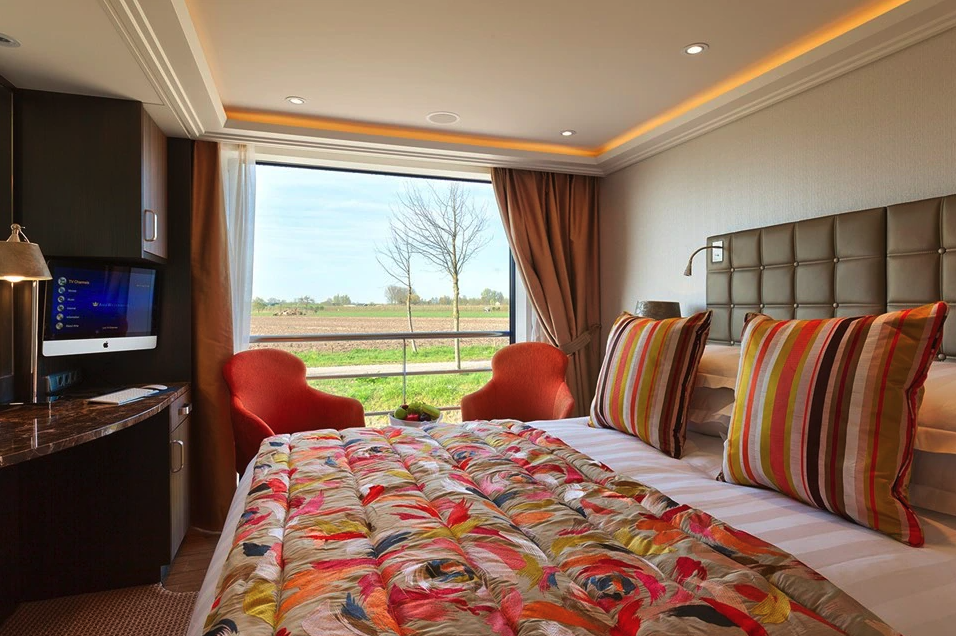
Category C Staterooms
Stateroom Features Include:
- In-room temperature control
- Deluxe hotel-style bedding with Egyptian linen, down pillows and duvet
- Spacious bathrooms with multi-jet showerheads
- Large wardrobe, full-length mirror, hair dryer, safe and direct-dial telephone
- Flat-screen TV
- Entertainment on Demand system providing complimentary TV, movies and music library
- Complimentary internet and Wi-Fi
- Complimentary bottled water replenished daily
- Desk and chair
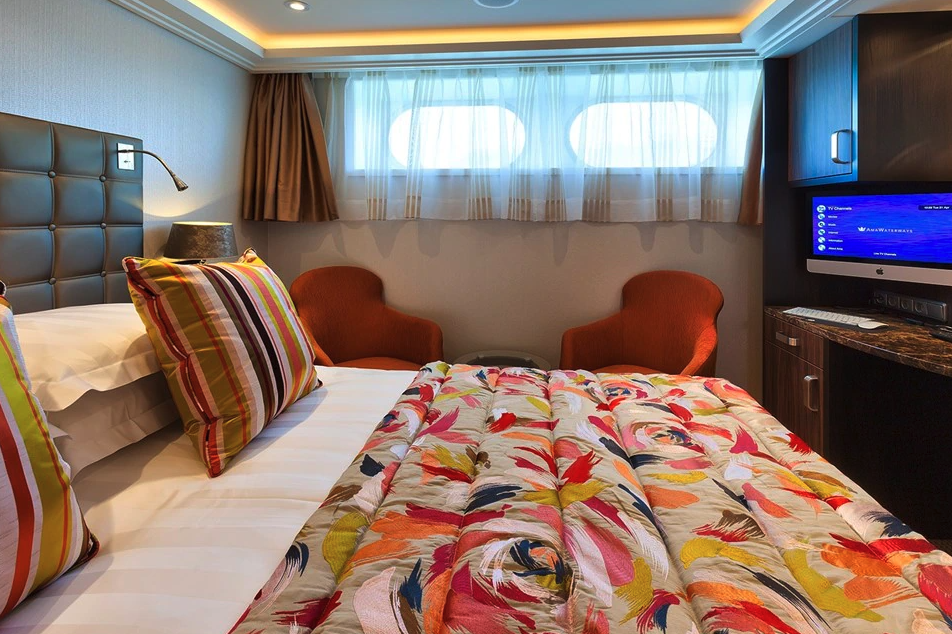
Category D Staterooms
Stateroom Features Include:
- In-room temperature control
- Deluxe hotel-style bedding with Egyptian linen, down pillows and duvet
- Spacious bathrooms with multi-jet showerheads
- Large wardrobe, full-length mirror, hair dryer, safe and direct-dial telephone
- Flat-screen TV
- Entertainment on Demand system providing complimentary TV, movies and music library
- Complimentary internet and Wi-Fi
- Complimentary bottled water replenished daily
- Desk and chair
Category E Staterooms
Stateroom Features Include:
- In-room temperature control
- Deluxe hotel-style bedding with Egyptian linen, down pillows and duvet
- Spacious bathrooms with multi-jet showerheads
- Large wardrobe, full-length mirror, hair dryer, safe and direct-dial telephone
- Flat-screen TV
- Entertainment on Demand system providing complimentary TV, movies and music library
- Complimentary internet and Wi-Fi
- Complimentary bottled water replenished daily
- Desk and chair
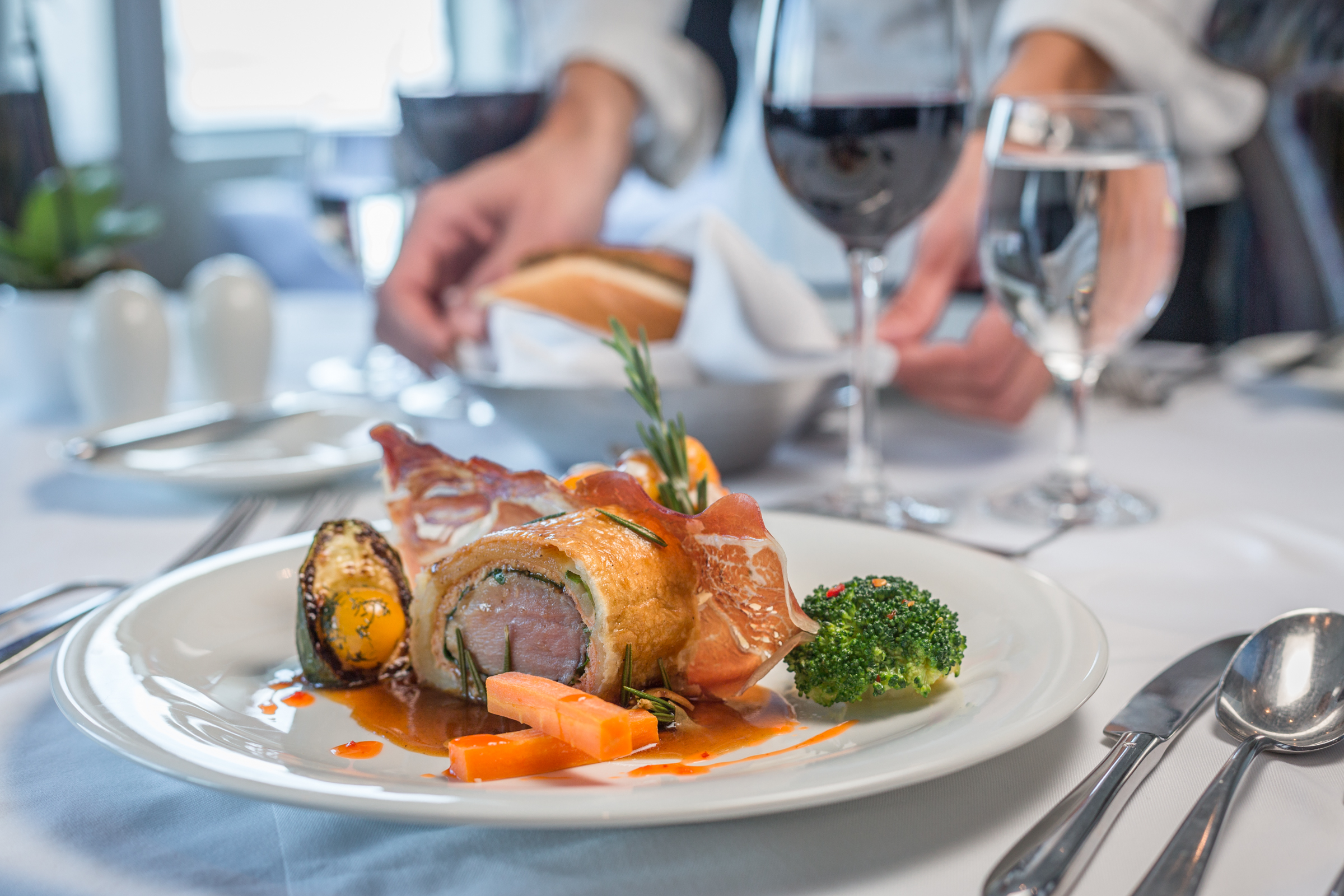
Main Restaurant
Farm-to-Table Gastronomy
For years we have sourced all our fresh produce, herbs and freshwater fish from local farmers, many of whose families have been cultivating the soil along the banks of the Danube for generations. Our shared commitment to sustainability, family and personal connection makes us proud to support these farms – guaranteeing fresh and flavorful ingredients while reducing the distance each item travels to our ships. Incorporating the highest quality seasonal ingredients, such as Marchfeld asparagus in the spring and Wachau Valley apricots in summer, our expert chefs bring the taste of the country from the fields, orchards, farms and docks to your plate at every meal.
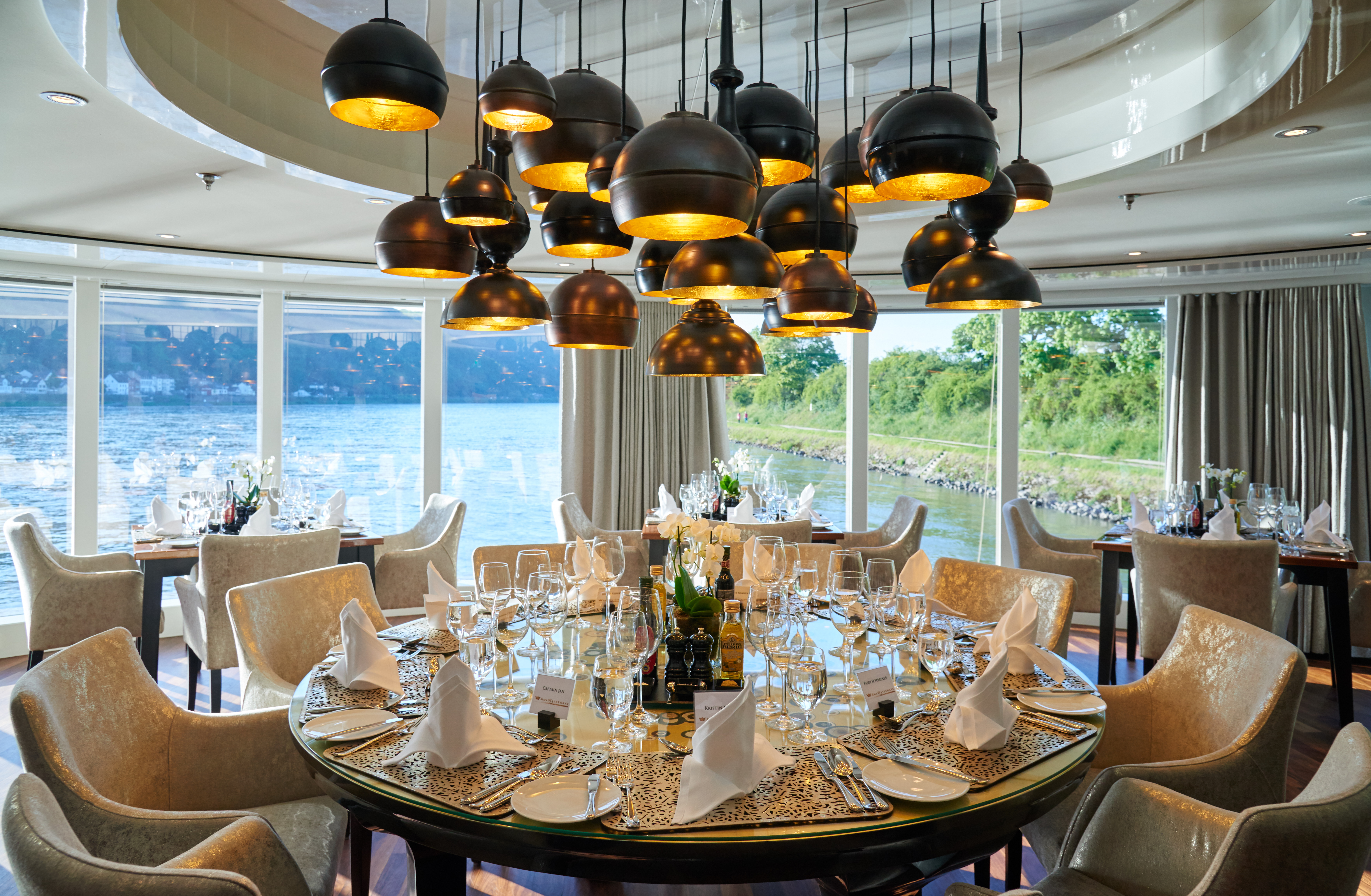
The Chef's Table
Enjoy an intimate, multi-course dinner where culinary artistry shines at The Chef’s Table, available on select sailings. Watch as our chefs prepare each course before your eyes, pairing exquisite flavors with impeccable service.

Wellness Recipes
Our skilled chefs ensure that our menus always have healthy choices prepared with the freshest locally-sourced ingredients. We are also able to accommodate dietary needs such as low-sodium, vegetarian and gluten-free. Below are some of our favorite recipes for health-conscious guests.
- Beetroot Salad – This vegetarian recipe brings vivid colors and flavors to life.
- Avocado Chocolate Mousse – An indulgent yet low-carb and sugar-free treat
- Gluten-Free Almond Cake Recipe – A delicious gluten-free way to indulge worry-free.
- Gluten-Free Pizza Recipe – An onboard gluten-free favorite you can easily make at home.
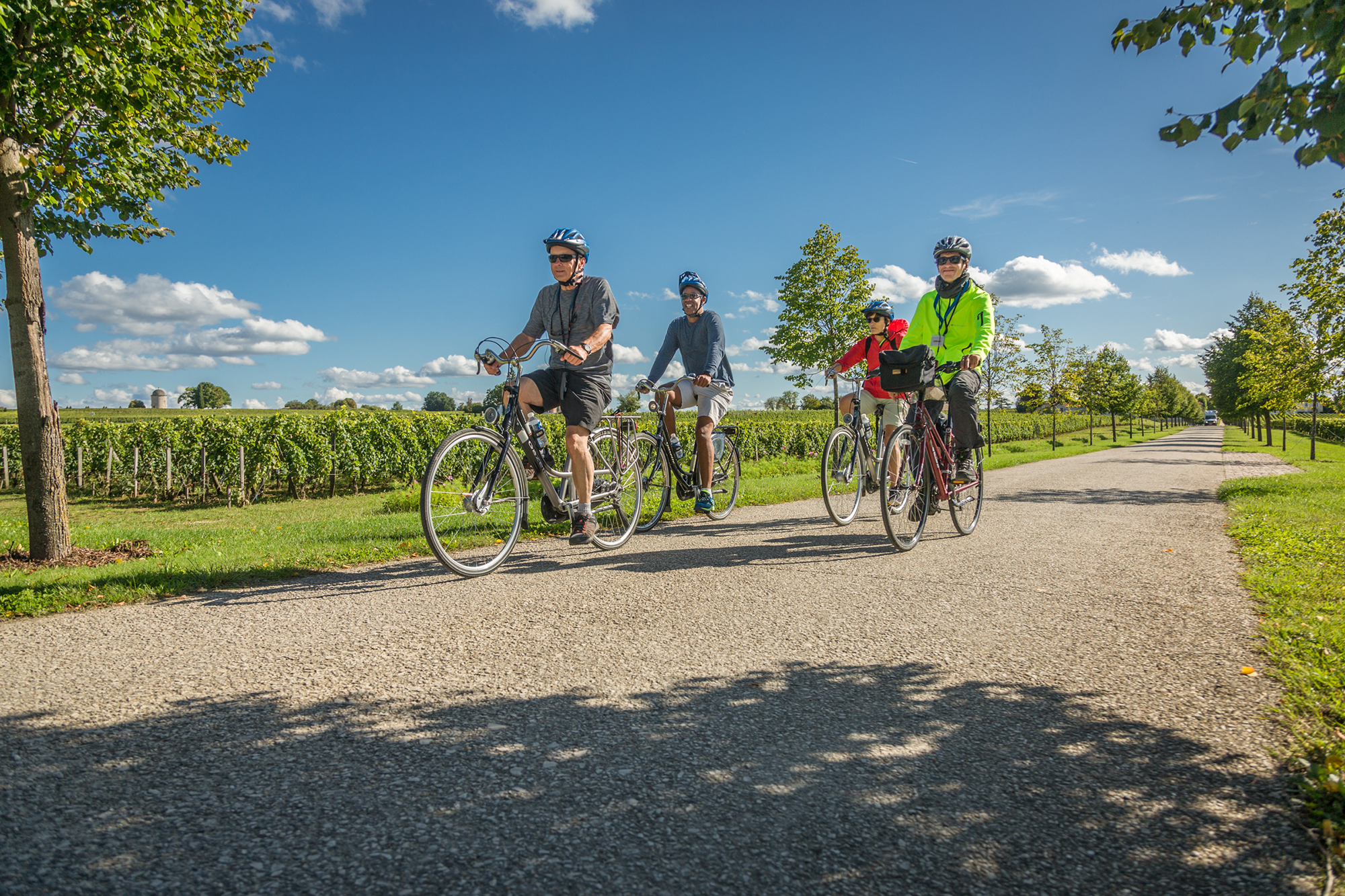
Guided Bike Tours
We are proud to have been the first river cruise line to carry an entire fleet of complimentary state-of-the-art bicycles on board, so you can pedal alongside enchanting riverside pathways and in city centers on a variety of included excursions throughout Europe. Whether you feel like joining one of our exclusive guided bike tours, or you want to reserve a bike to discover a destination on your own, there are many ways for you to explore on two wheels during your river cruise. From lighter five-mile bike tours to rides that stretch over 20 miles, we offer excursions for guests at any level.
Bike Tour Guides
Your guide will be sure to stop and point out highlights along the way, providing interesting facts and history, as well as much-needed water breaks! Often, there is some built-in free time for you to explore off your bike. And best of all, to ensure no guests are left behind, there is typically a guide both at the front and back of the tour group, so whatever pace you pedal, you will have peace of mind you will be taken care of and find your way back to the ship.
Child-sized Bikes
There are a limited number of child-size bicycles available on board as well. This enables you to enjoy family-friendly active excursions in many destinations along the rivers.
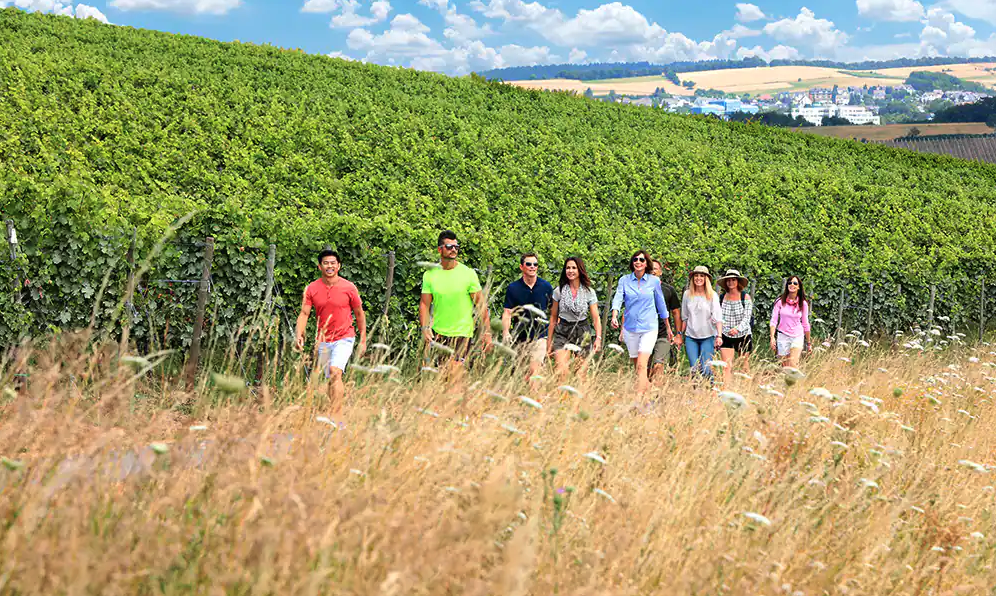
Guided Hiking Tours
The beauty of Europe does not simply lie in its architecture and landmarks – there are also breathtaking sights when you venture out into nature. That’s why we have designed special included hikes that will take you a bit off the beaten path, showing you incredible destinations from a unique perspective and giving you a chance to revel in the fresh air. With hikes ranging anywhere from two to seven miles and varying from extended city walks to hilltop castle treks, you are sure to find a wonderful hike that suits your style.
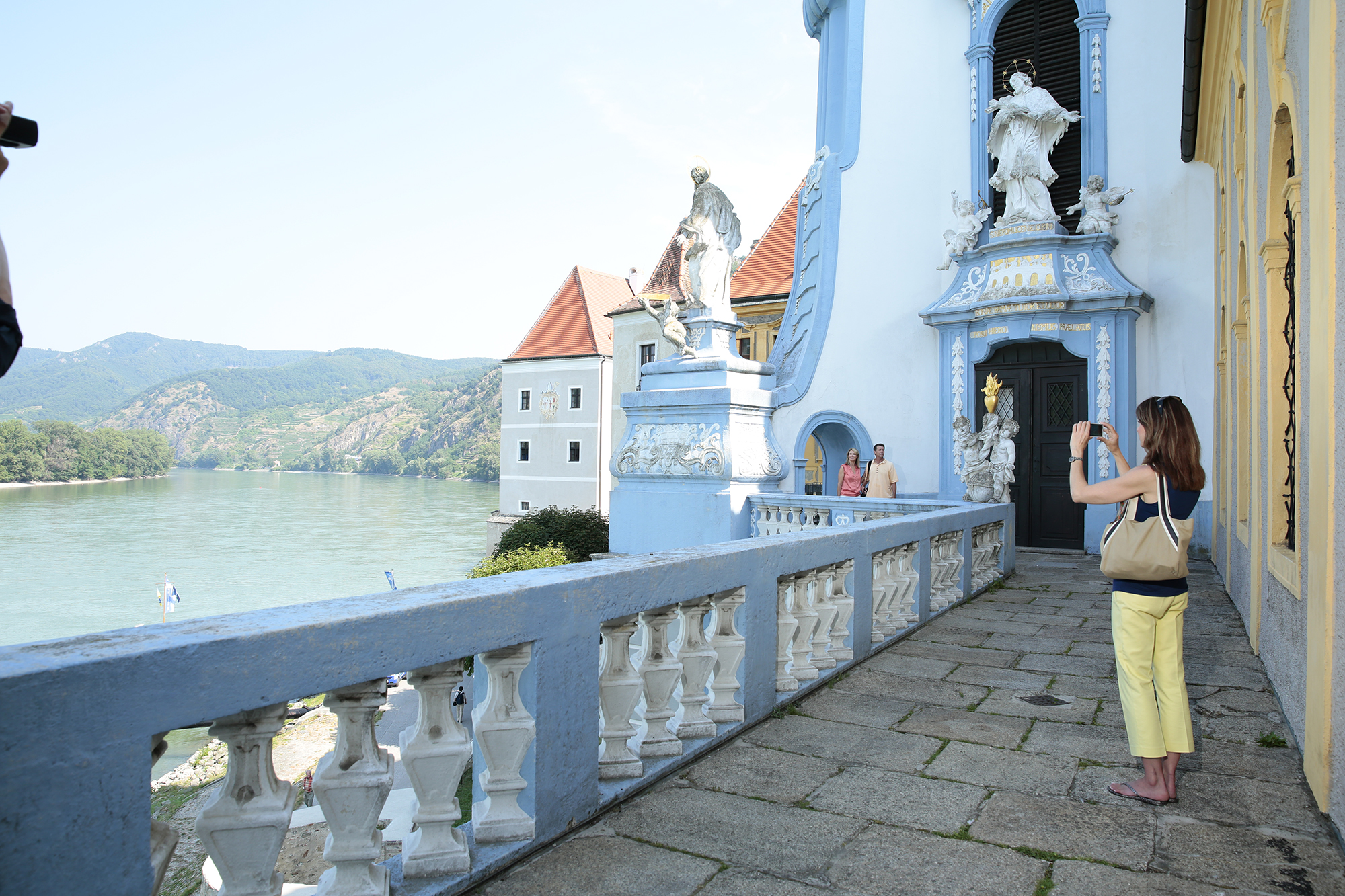
Special Interest Tours
We offer a variety of included tours specially curated with your individual passions in mind. Enjoy exploring the world through your tastebuds? Indulge in authentic Belgian waffles and chocolate in Antwerp or learn the art of French breadmaking in Libourne. Are you interested in engineering? Venture through the immense aerospace and locomotive collections at Speyer’s Technik Museum. Do you love music? Browse the antique music boxes and organs at Siegfried’s Mechanical Instrument Cabinet while cruising the Rhine.
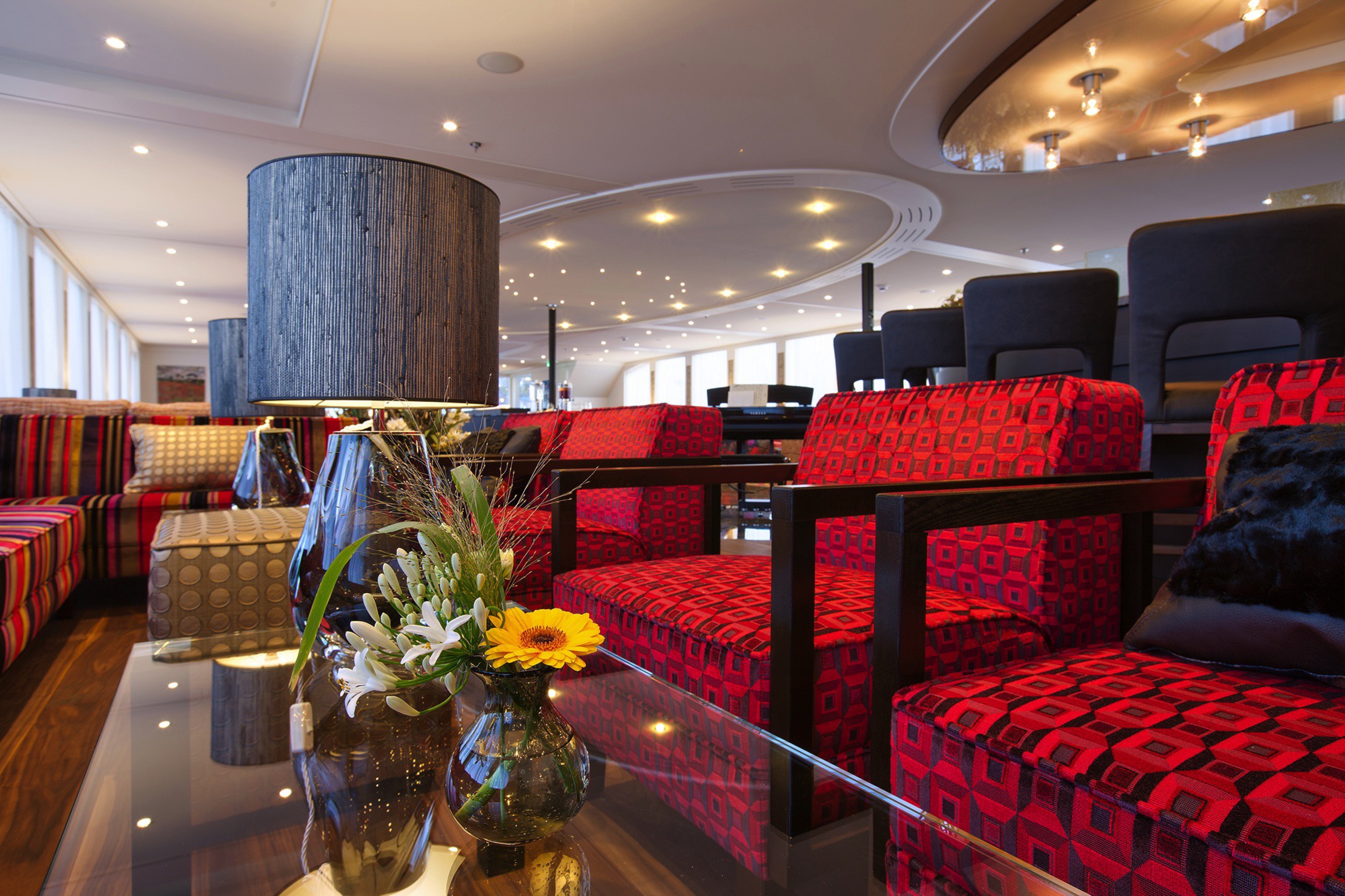
Main Lounge & Bar
This versatile space hosts a bar, dance floor, plenty of comfortable couches and big windows on three sides and is used for everything from the morning port talks, daytime reading and chatting to scenic cruising, afternoon tea and evening entertainment.
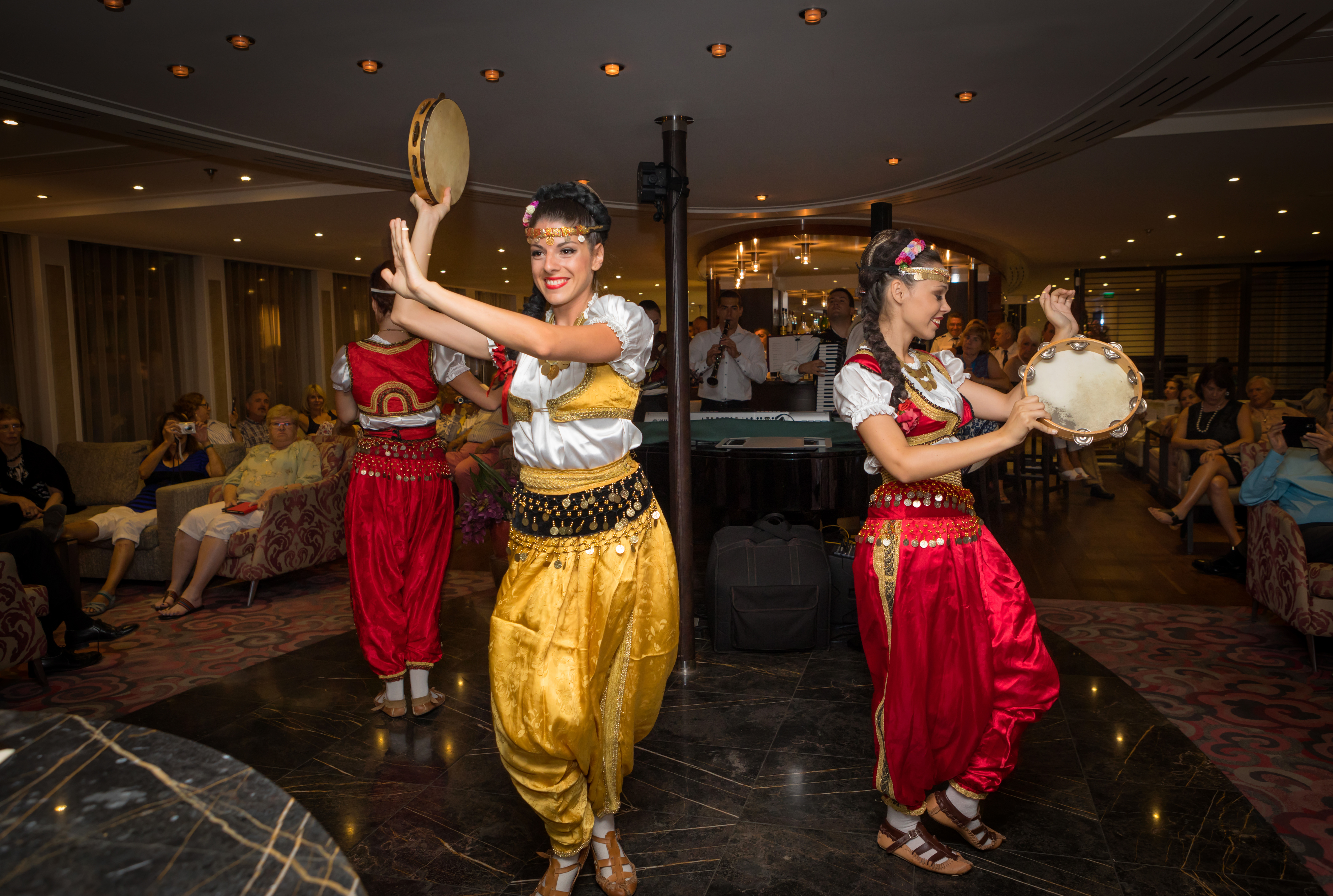
Onboard Entertainment
Whether it’s traditional Bavarian music, a local quartet or modern piano favorites, there is an eclectic schedule of entertainment on board.
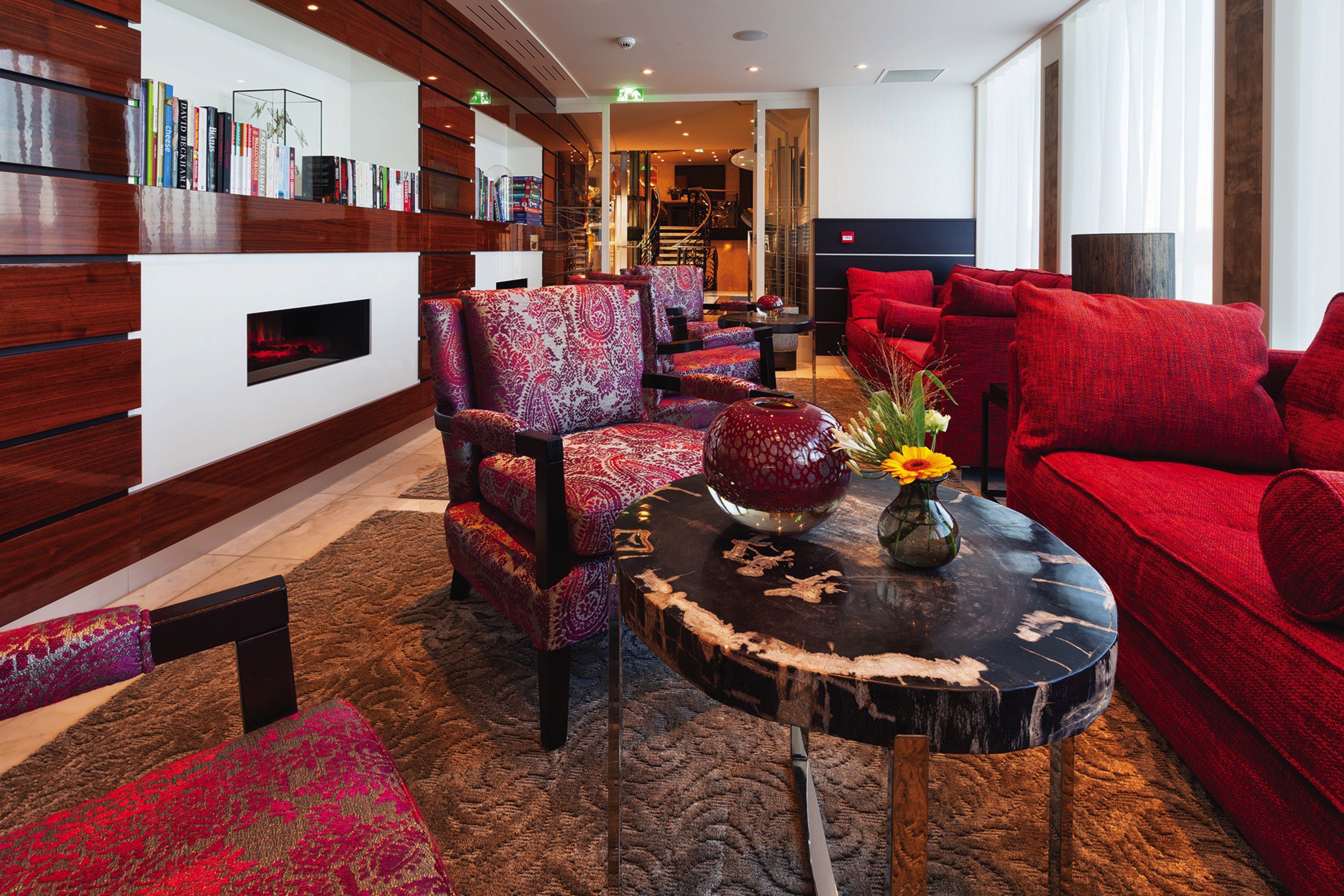
Library
The Library can be found on the Violin Deck.
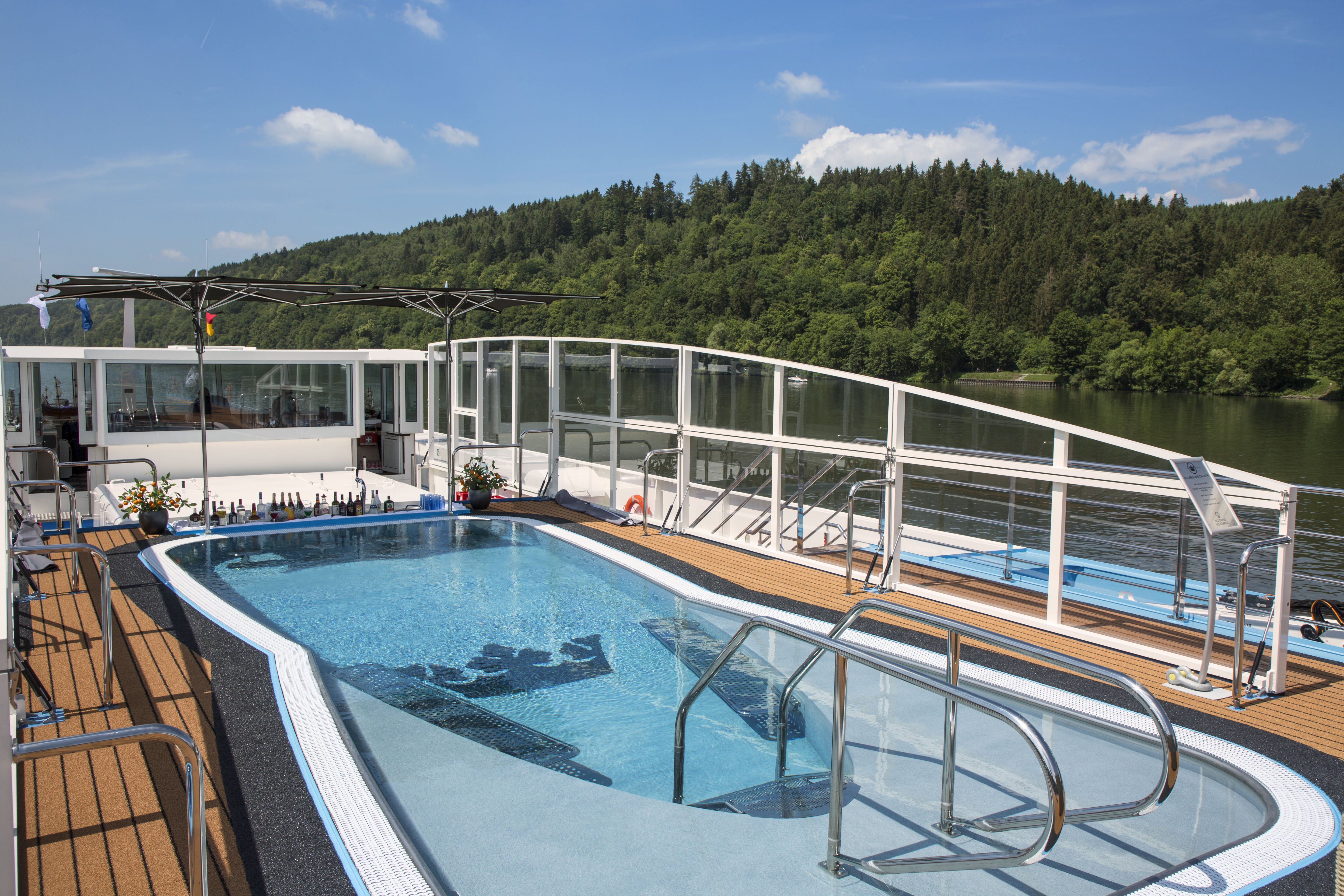
Sun Deck
Soak up some rays or take a dip in our refreshing pool with a swim-up bar as we pass by centuries-old castles, charming villages and other breathtaking scenery.
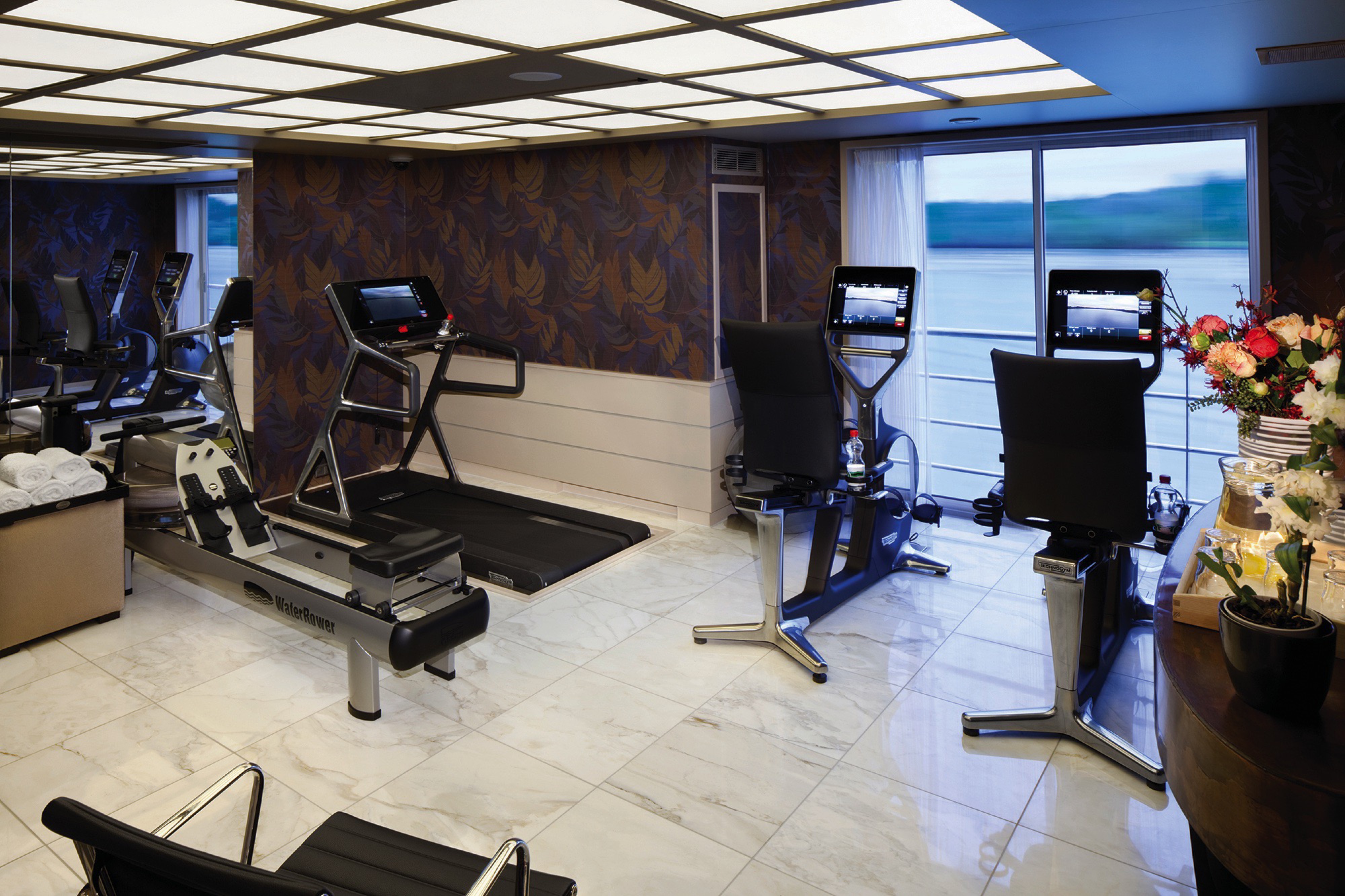
Fitness Room
Are you looking for a way to stay fit on vacation? Hit the treadmill or lift some weights while cruising from one destination to the next.
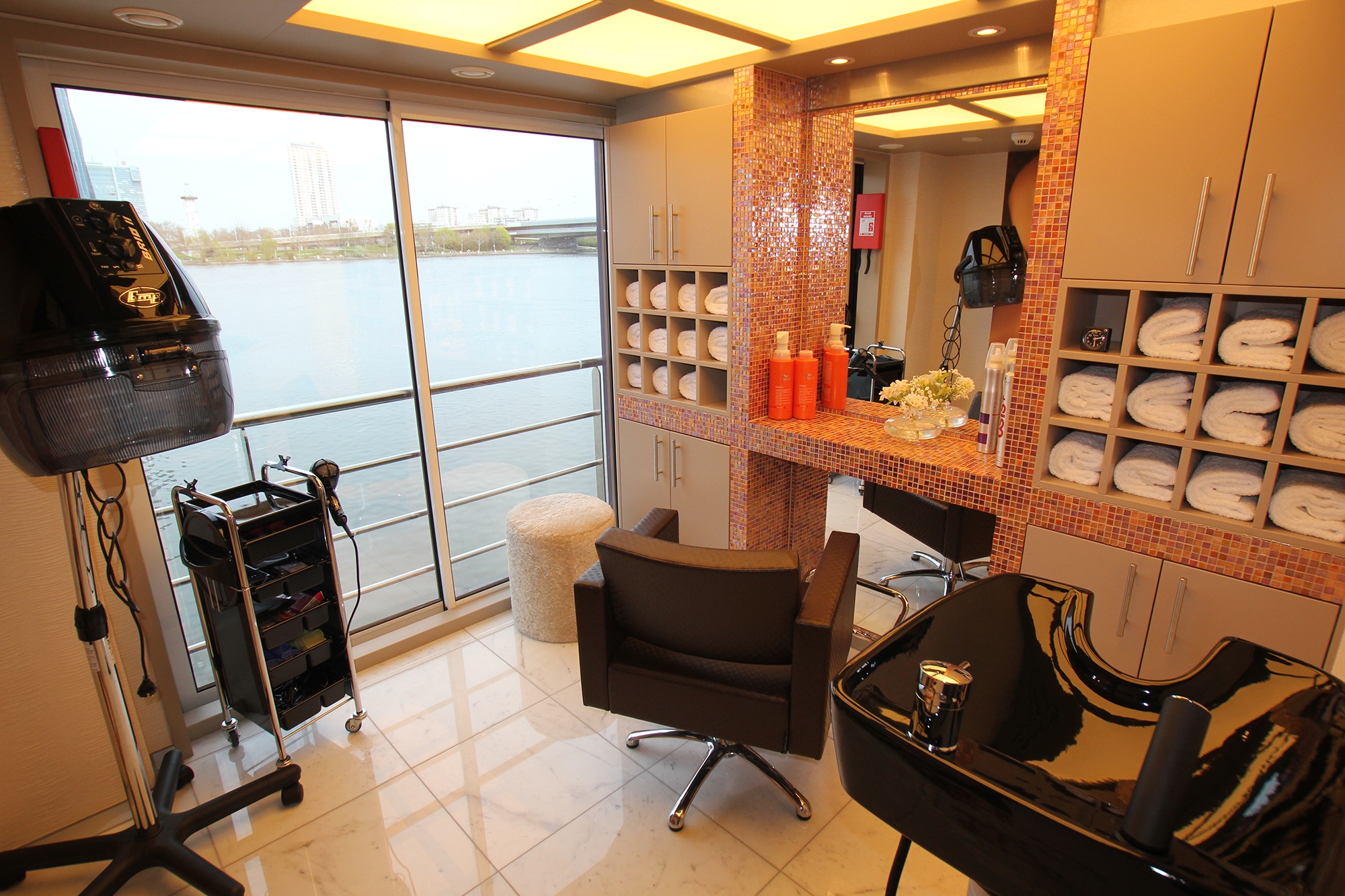
Beauty & Hair Salon
Whether you’d like to dress up for the captain’s special dinner or a night out on the town, you can complete your look by getting your hair styled in our salon.
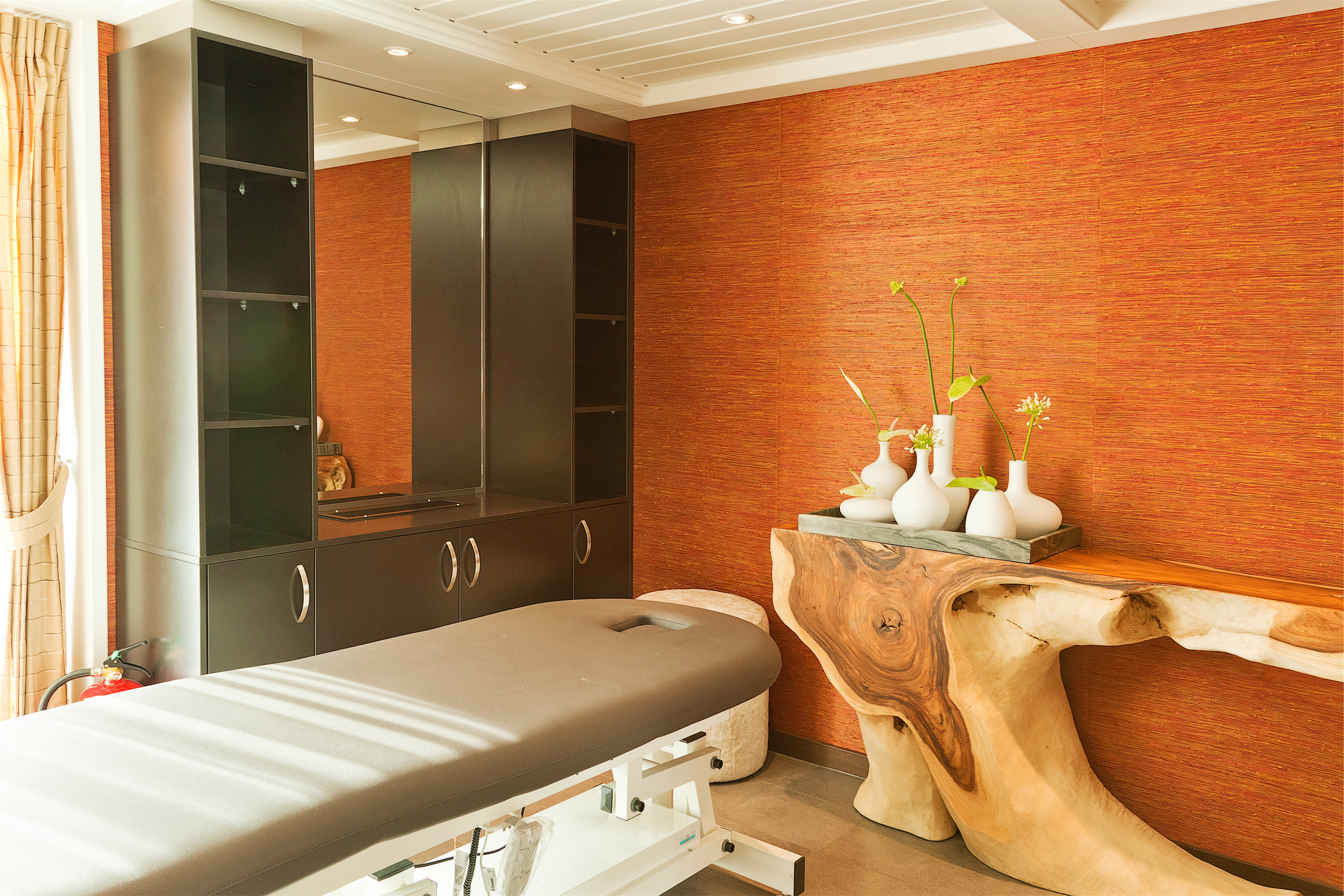
Massage Services
After a marvellous day of immersive shore excursions, return to the ship and treat yourself to a bit of pampering with a soothing massage.
**Massage services available for a nominal fee.
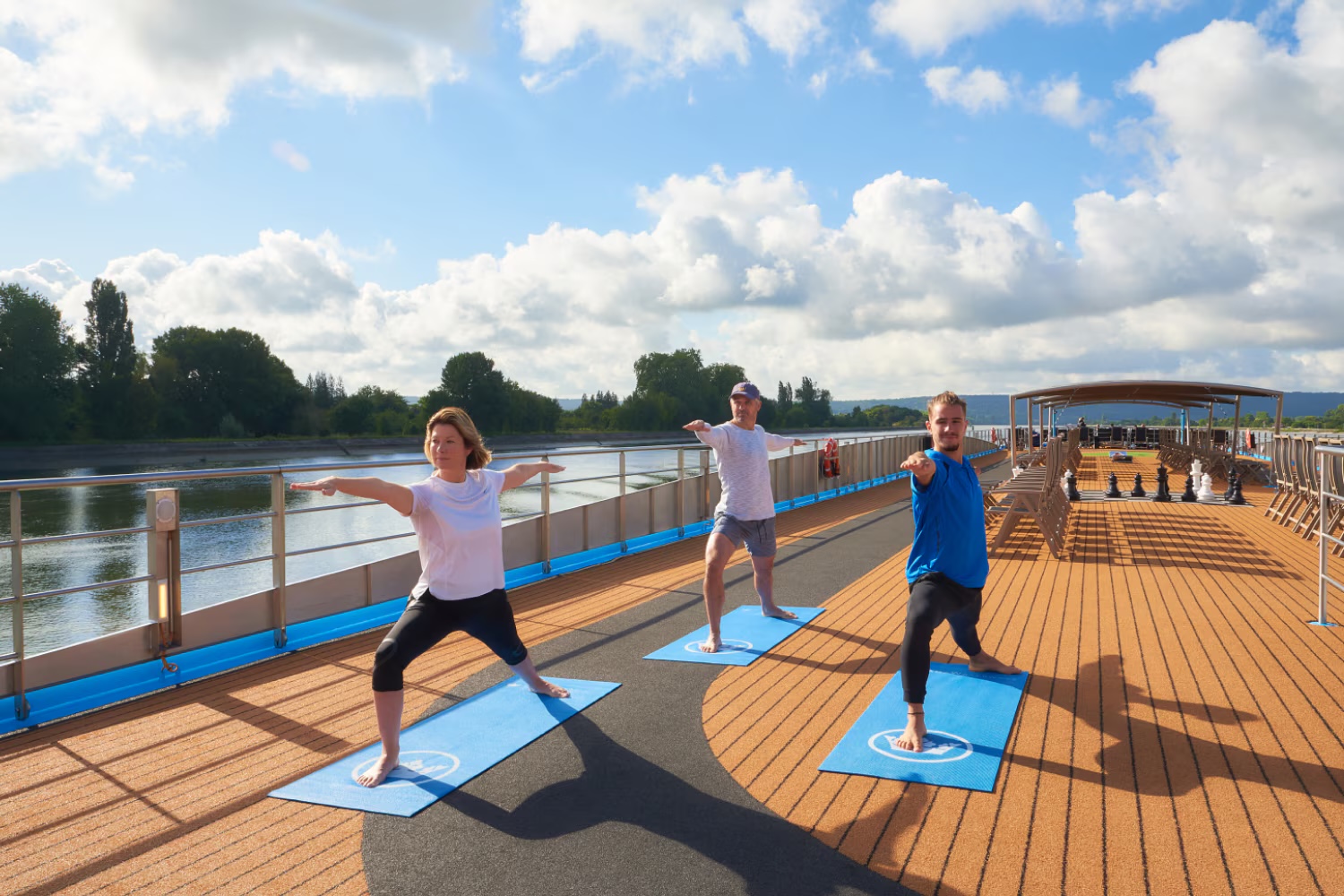
Fitness Classes
A variety of daily activities are available for guests, with group classes such as pilates, resistance band stretching, cardio, active wellness walks and dance, based on each individual Wellness Host’s expertise. Guests of all ages and activity levels are encouraged to participate and simple modifications are offered for guests with mobility limitations.
Age Restrictions
Guests must be at least 4 years old to travel with AmaWaterways, unless otherwise approved. Children under 18 must share a stateroom with an adult and remain supervised at all times, as balcony staterooms may be unsafe for unattended minors. On Africa Safaris & Wildlife Cruises, the minimum age is 12 due to safety considerations. AmaWaterways does not provide child-specific programs or childcare services.
Disabled Facilities
Reasonable efforts are made to accommodate the special needs of disabled cruise participants, but no responsibility will be undertaken for any denial of services by carriers, hotels, restaurants, or other independent suppliers. Tour buses are not equipped with wheelchair ramps and cabin doors are not wide enough to allow access by standard wheelchairs.
Wheelchairs and walkers cannot be carried on tour buses, due to space limitations. Wheelchair passengers should be aware of these limitations. For safety reasons, passengers in wheelchairs cannot be carried on ramps in ports where the ship is at anchor. We regret that we cannot provide individual assistance to a tour member for walking, getting on/off tour busses and other transportation vehicles, or other personal needs. A qualified travel companion must accompany travellers who need assistance.
Smoking Policy
Smoking is not permitted inside any AmaWaterways ship. It is only allowed in designated areas located at the aft of the Sun Deck. For the comfort and safety of all guests, we kindly ask that you observe this no-smoking policy while on board.
Dietary Requirements
AmaWaterways will do its best to accommodate most dietary needs and food allergies when advised in advance. While gluten-free, vegetarian, and other special requests can be arranged, kosher meals cannot be provided due to onboard preparation limitations. Please note that cross-contamination cannot be completely avoided.
Dress Code
Dress aboard AmaWaterways ships is comfortable and casually elegant. On all ships, something a little dressier is recommended for the Welcome and Farewell dinners. In Europe, lightweight layers and comfortable shoes are recommended for excursions, with something dressier for special dinners or concerts.
Guests sailing in warmer destinations such as Vietnam, Cambodia, Egypt, and Colombia should pack breathable fabrics, sun protection, and modest attire for temple visits.
In primarily Muslim countries like Egypt, Jordan, and the UAE, guests should dress respectfully, with women covering shoulders and arms and men wearing collared shirts and lightweight pants.
Medical Facilities
AmaWaterways ships do not have onboard medical facilities or medical staff. In the event that assistance is needed, appropriate medical services can be contacted from shore, though response times may vary depending on the ship’s location. In Europe, medical services can easily be called from shore if required. Response times elsewhere can vary. Guests are strongly encouraged to obtain comprehensive travel insurance that includes coverage for medical treatment and evacuation while overseas.
Internet Access
Complimentary Wi-Fi is available on all AmaWaterways ships, though signal strength can vary by region. In Europe and Egypt, guests enjoy access throughout the ship, while service in Vietnam, Cambodia, and Africa may be limited or intermittent due to remote locations. AmaWaterways continually enhances connectivity to ensure the best possible onboard experience.
Excursions
Each itinerary features a variety of guided excursions designed to showcase local culture, history, and cuisine. Choose from gentle walking tours, active hikes or bike rides, and immersive experiences such as wine or beer tastings, cooking classes, and visits to local artisans.
Laundry
Yes. Laundry services are available on all AmaWaterways ships for an additional fee, with price lists provided in your stateroom. Please note that dry cleaning is not available on board.
Bicycles
Most AmaWaterways ships in Europe (excluding Portugal) offer complimentary bicycles and helmets for guests to use while the ship is docked. Guided bike excursions are also available on many sailings and can be reserved once on board. Bicycles come in three sizes—small, medium, and large. Bicycles are not available on ships in Portugal, Vietnam & Cambodia, Africa, or Egypt. Use of bicycles is at your own risk.

Sun Deck
- Lower Sun Deck
- Navigation Bridge
- Bicycles
- Heated Pool
- Sun Deck
- Walking Track

Violin Deck
- Al Fresco Dining Terrace
- Observation Lounge
- Main Lounge & Bar
- Gift Shop
- Reception
- Fitness Room
- Massage & Hair Salon
- The Chef’s Table Restaurant
- Suite Staterooms
- Cat AA Staterooms
- Cat BA Staterooms
- Cat C Staterooms
- Elevator

Cello Deck
- Main Restaurant
- Elevator
- Cat BB Staterooms
- Cat AB Staterooms
- Cat C Staterooms

Piano Deck
- Cat D Staterooms
- Cat E Staterooms
- Crew Cabins