Itinerary
The infinite variety of street life, the nooks and crannies of the medieval Barri Gòtic, the ceramic tile and stained glass of Art Nouveau facades, the art and music, the throb of street life, the food (ah, the food!)—one way or another, Barcelona will find a way to get your full attention. The capital of Catalonia is a banquet for the senses, with its beguiling mix of ancient and modern architecture, tempting cafés and markets, and sun-drenched Mediterranean beaches. A stroll along La Rambla and through waterfront Barceloneta, as well as a tour of Gaudí’s majestic Sagrada Famíliaand his other unique creations, are part of a visit to Spain’s second-largest city. Modern art museums and chic shops call for attention, too. Barcelona’s vibe stays lively well into the night, when you can linger over regional wine and cuisine at buzzing tapas bars.
If you look north of the cathedral (La Seu, or the seat of the bishopric, to Mallorcans) on a map of the city of Palma, you can see around the Plaça Santa Eulàlia a jumble of tiny streets that made up the earliest settlement. Farther out, a ring of wide boulevards traces the fortifications built by the Moors to defend the larger city that emerged by the 12th century. The zigzags mark the bastions that jutted out at regular intervals. By the end of the 19th century, most of the walls had been demolished; the only place where you can still see the massive defenses is at Ses Voltes, along the seafront west of the cathedral.A torrent (streambed) used to run through the middle of the old city, dry for most of the year but often a raging flood in the rainy season. In the 17th century it was diverted to the east, along the moat that ran outside the city walls. Two of Palma’s main arteries, La Rambla and the Passeig d’es Born, now follow the stream’s natural course. The traditional evening paseo (promenade) takes place on the Born.If you come to Palma by car, park in the garage beneath the Parc de la Mar (the ramp is just off the highway from the airport, as you reach the cathedral) and stroll along the park. Beside it run the huge bastions guarding the Almudaina Palace; the cathedral, golden and massive, rises beyond. Where you exit the garage, there’s a ceramic mural by the late Catalan artist and Mallorca resident Joan Miró, facing the cathedral across the pool that runs the length of the park.If you begin early enough, a walk along the ramparts at Ses Voltes from the mirador beside the cathedral is spectacular. The first rays of the sun turn the upper pinnacles of La Seu bright gold and then begin to work their way down the sandstone walls. From the Parc de la Mar, follow Avinguda Antoni Maura past the steps to the palace. Just below the Plaça de la Reina, where the Passeig d’es Born begins, turn left on Carrer de la Boteria into the Plaça de la Llotja (if the Llotja itself is open, don’t miss a chance to visit—it’s the Mediterranean’s finest Gothic-style civic building). From there stroll through the Plaça Drassana to the Museu d’Es Baluard, at the end of Carrer Sant Pere. Retrace your steps to Avinguda Antoni Maura. Walk up the Passeig d’es Born to Plaça Joan Carles I, then right on Avenida de La Unió.
Hedonistic and historic, Eivissa (Ibiza, in Castilian) is a city jam-packed with cafés, nightspots, and trendy shops; looming over it are the massive stone walls of Dalt Vila —the medieval city declared a UNESCO World Heritage site in 1999—and its Gothic cathedral. Squeezed between the north walls of the old city and the harbor is Sa Penya, a long labyrinth of stone-paved streets that offer some of the city’s best offbeat shopping, snacking, and exploring. The tourist information office on Vara de Rey has a useful map of walks through the old city.
A Mediterranean city and naval station located in the Region of Murcia, southeastern Spain, Cartagena’s sheltered bay has attracted sailors for centuries. The Carthaginians founded the city in 223BC and named it Cartago Nova; it later became a prosperous Roman colony, and a Byzantine trading centre. The city has been the main Spanish Mediterranean naval base since the reign of King Philip II, and is still surrounded by walls built during this period. Cartagena’s importance grew with the arrival of the Spanish Bourbons in the 18th century, when the Navidad Fortress was constructed to protect the harbour. In recent years, traces of the city’s fascinating past have been brought to light: a well-preserved Roman Theatre was discovered in 1988, and this has now been restored and opened to the public. During your free time, you may like to take a mini-cruise around Cartagena’s historic harbour: these operate several times a day, take approximately 40 minutes and do not need to be booked in advance. Full details will be available at the port.
As you sail into Malaga you will notice what an idyllic setting the city enjoys on the famous Costa del Sol. To the east of this provincial capital, the coast along the region of La Axarqua is scattered with villages, farmland and sleepy fishing hamlets – the epitome of traditional rural Spain. To the west stretches a continuous city where the razzmatazz and bustle creates a colourful contrast that is easily recognisable as the Costa del Sol. Surrounding the region, the Penibéetica Mountains provide an attractive backdrop overlooking the lower terraced slopes which yield olives and almonds. This spectacular mountain chain shelters the province from cold northerly winds, giving it a reputation as a therapeutic and exotic place in which to escape from cold northern climes. Malaga is also the gateway to many of Andalusia’s enchanting historic villages, towns and cities.
Tangier can trace its origins back to the Phoenicians and ancient Greeks. It was named after Tinge, the mother of Hercules’ son, and its beginnings are embedded in mythology. It was subsequently a Roman province, and after Vandal and Byzantine influences, was occupied by the Arabs with Spain, Portugal, France and England also playing a part in the city’s history. With such a diverse past it is perhaps not surprising that Tangier is such an individual city. Overlooking the Straits of Gibraltar, the city lies on a bay between two promontories. With its old Kasbah, panoramic views, elegant buildings, squares and places of interest, there is much to discover in both the new and old parts of the city.
Set on seven hills on the banks of the River Tagus, Lisbon has been the capital of Portugal since the 13th century. It is a city famous for its majestic architecture, old wooden trams, Moorish features and more than twenty centuries of history. Following disastrous earthquakes in the 18th century, Lisbon was rebuilt by the Marques de Pombal who created an elegant city with wide boulevards and a great riverfront and square, Praça do Comércio. Today there are distinct modern and ancient sections, combining great shopping with culture and sightseeing in the Old Town, built on the city’s terraced hillsides. The distance between the ship and your tour vehicle may vary. This distance is not included in the excursion grades.
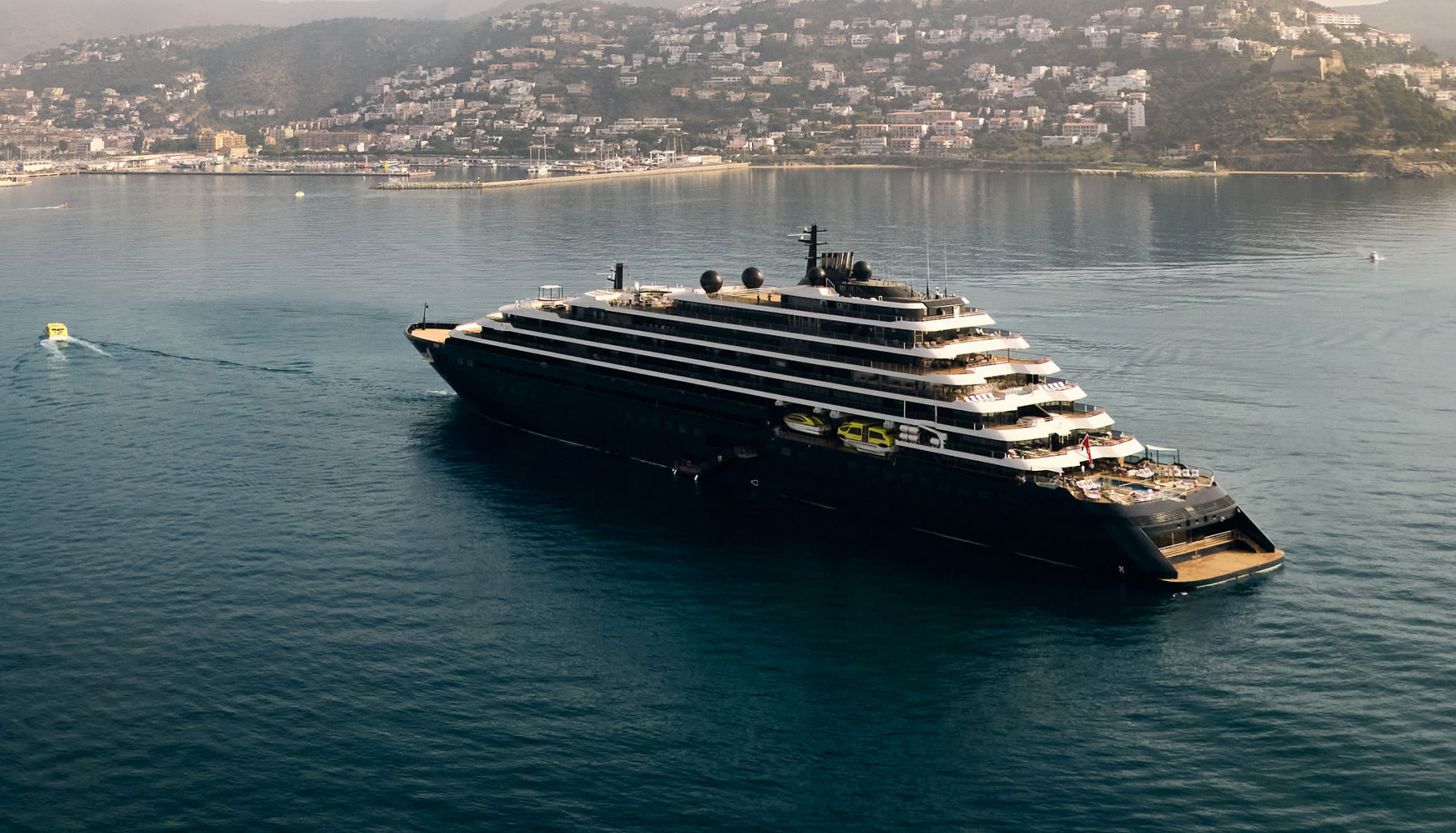
Ship features

The Owners Suite
MAGNIFICENT OCEAN VIEWS
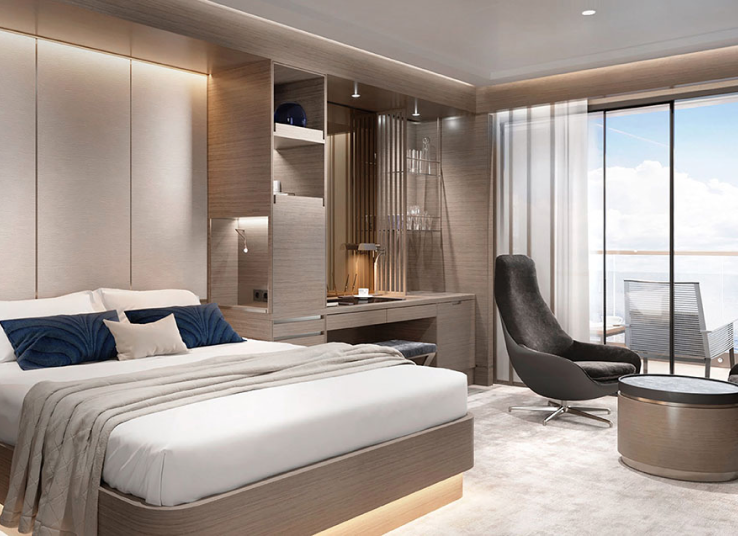
Private, spacious terrace overlooking the ocean with private whirlpool
SPACIOUS SUITE ACCOMMODATIONS
- Luxurious and modern living and dining area
- Luxury custom king bed sleep system
- Double vanity bathrooms
PERSONALIZED SERVICE AND AMENITIES
- Your Suite Ambassador delivers attentive, anticipatory service for a personalized in-suite experience tailored to your preferences, from unpacking assistance and garment pressing to in-suite dining and beverages.
- 24-hour in-suite dining, espresso machine, complimentary coffee and teas and a mini-bar provisioned to your preferences, upon request once on board

The View Suite
MAGNIFICENT OCEAN VIEWS
- Dramatic floor to ceiling glass throughout
- Private, spacious terrace overlooking the ocean
SPACIOUS SUITE ACCOMMODATIONS
- Luxurious and modern living and dining area
- Luxury custom king bed sleep system
- Double vanity bathroom
PERSONALIZED SERVICE AND AMENITIES
- Your Suite Ambassador delivers attentive, anticipatory service for a personalized in-suite experience tailored to your preferences, from unpacking assistance and garment pressing to in-suite dining and beverages.
- 24-hour in-suite dining, espresso machine, complimentary coffee and teas and a mini-bar provisioned to your preferences, upon request once on board

The 2-Story Loft Suite
SPACIOUS SUITE ACCOMMODATIONS
- Powder room on the upper level
- Double vanity master bathroom with soaking tub and separate shower on the lower level
- Innovative two-story suite with entry from both levels
- Luxury custom king bed sleep system on the lower level
- Luxurious and modern living and dining area on the upper level
MAGNIFICENT OCEAN VIEWS
- Private, spacious terrace overlooking the ocean on the upper level
- Picture window on the lower level
PERSONALIZED SERVICE AND ACCESSORIES
- Your Suite Ambassador delivers attentive, anticipatory service for a personalized in-suite experience tailored to your preferences, from unpacking assistance and garment pressing to in-suite dining and beverages.
- 24-hour in-suite dining, espresso machine, complimentary coffee and teas and a mini-bar provisioned to your preferences, upon request once on board
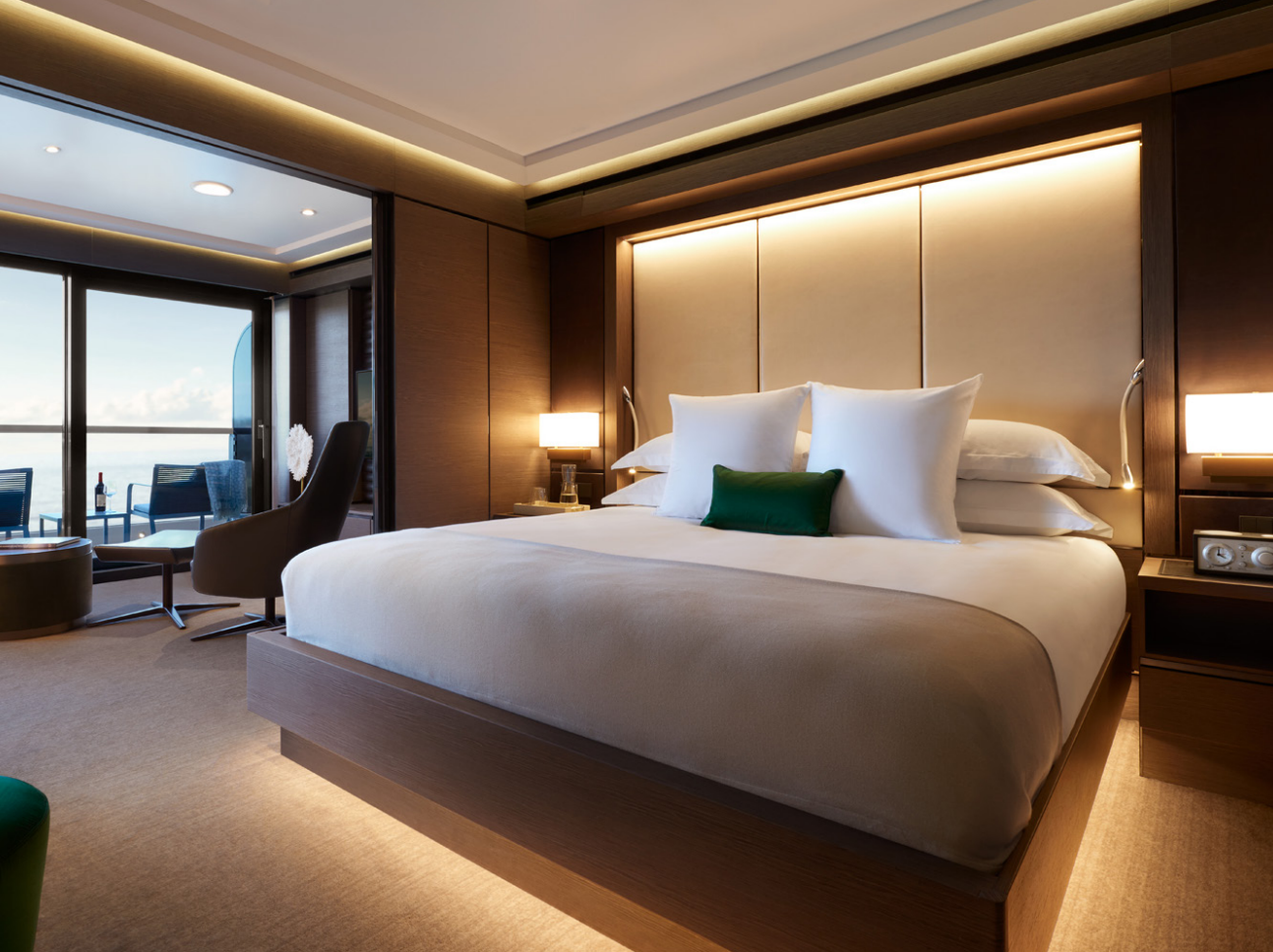
The Grand Suite
MAGNIFICENT OCEAN VIEWS
- Private, spacious terrace overlooking the ocean
SPACIOUS SUITE ACCOMMODATIONS
- Luxurious and modern living and dining area
- Luxury custom king bed sleep system
- Double vanity bathroom
PERSONALIZED SERVICE AND AMENITIES
- Your Suite Ambassador delivers attentive, anticipatory service for a personalized in-suite experience tailored to your preferences, from unpacking assistance and garment pressing to in-suite dining and beverages.
- 24-hour in-suite dining, espresso machine, complimentary coffee and teas and a mini-bar provisioned to your preferences, upon request once on board
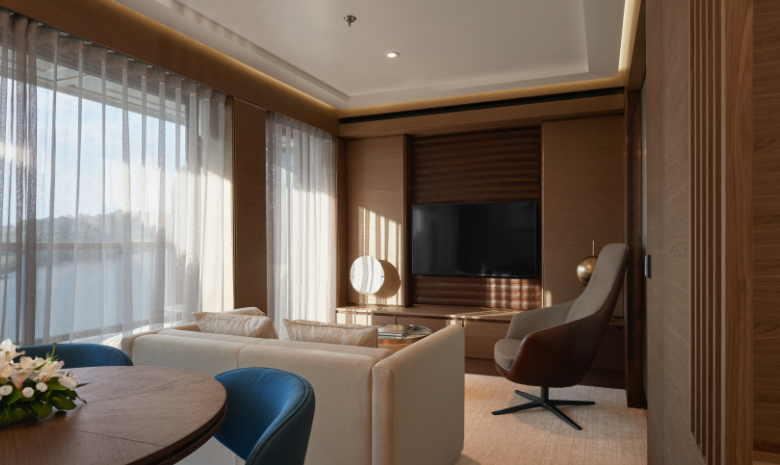
The Signature Suite
MAGNIFICENT OCEAN VIEWS
- Private, spacious terrace overlooking the ocean
SPACIOUS SUITE ACCOMMODATIONS
- Luxurious and modern living and dining area
- Luxury custom king bed sleep system
- Double vanity bathroom
PERSONALIZED SERVICE AND AMENITIES
- Your Suite Ambassador delivers attentive, anticipatory service for a personalized in-suite experience tailored to your preferences, from unpacking assistance and garment pressing to in-suite dining and beverages.
- 24-hour in-suite dining, espresso machine, complimentary coffee and teas and a mini-bar provisioned to your preferences, upon request once on board
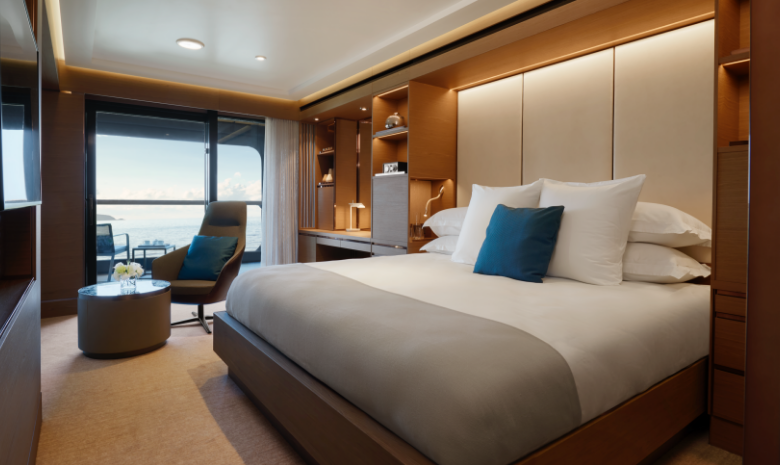
The Terrace Suite
MAGNIFICENT OCEAN VIEWS
- Private, spacious terrace overlooking the ocean
- SPACIOUS SUITE ACCOMMODATIONS
- Luxury custom king bed sleep system
- Double vanity bathroom
PERSONALIZED SERVICE AND AMENITIES
- Your Suite Ambassador delivers attentive, anticipatory service for a personalized in-suite experience tailored to your preferences, from unpacking assistance and garment pressing to in-suite dining and beverages.
- 24-hour in-suite dining, espresso machine, complimentary coffee and teas and a mini-bar provisioned to your preferences, upon request once on board
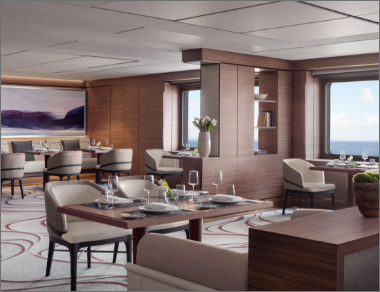
The Evrima Room
Designed with an inviting balance of privacy and connection, The Evrima Room is the spacious main restaurant aboard Evrima. Intimate seating, warm lighting and a relaxed sense of ease set the tone for quiet meals or shared moments. Evolving menus draw on regional flavors and seasonal ingredients for dining with connection to the destinations.
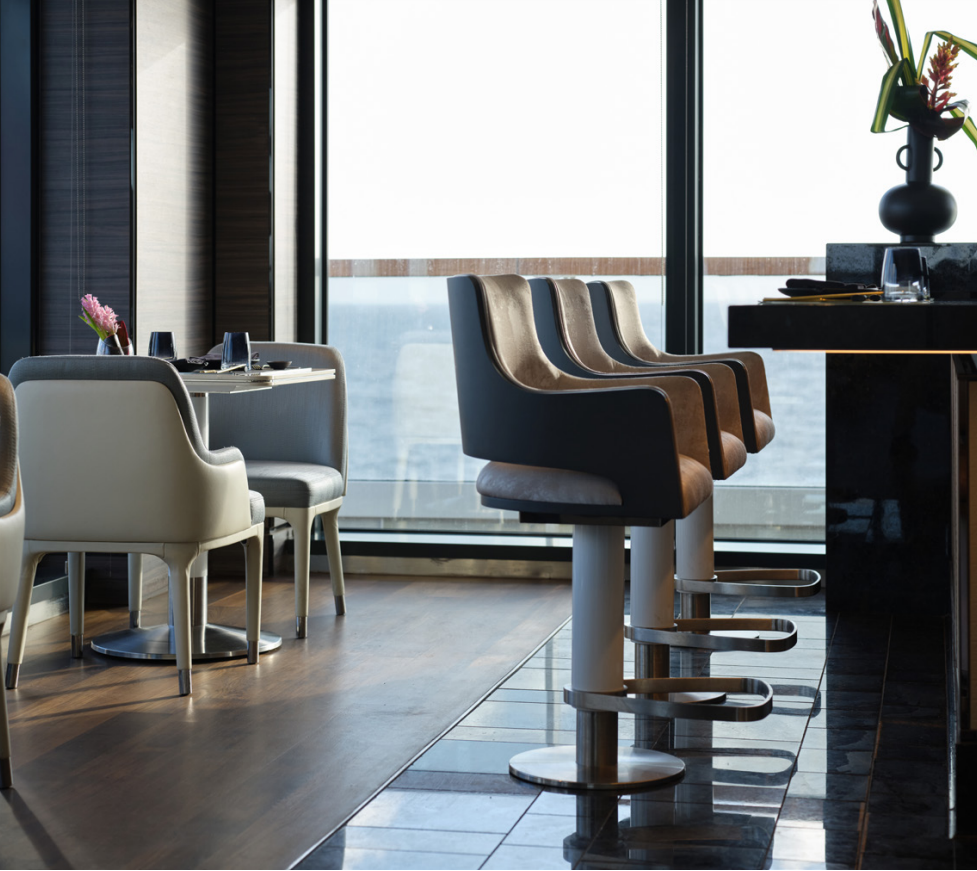
Talaat Nam
Talaat Nam offers a contemporary take on Southeast Asian cuisine, balancing vibrant flavors with a relaxed sense of ease. Its sleek, welcoming setting suits light bites or lingering dinners, with options ranging from the precision of the sushi bar to shared regional dishes, and outdoor dining as Evrima sails.
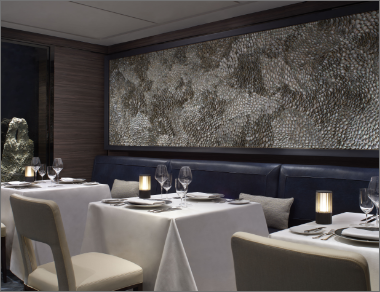
S.E.A
Created by Chef Sven Elverfeld of Aqua, the three-Michelin-starred restaurant formerly at The Ritz-Carlton® in Wolfsburg, Germany, S.E.A. reflects his precise, contemporary approach to European cuisine. A curated tasting menu unfolds through seasonal, expressive dishes in an intimate, elegantly modern setting designed for an elevated evening on board.
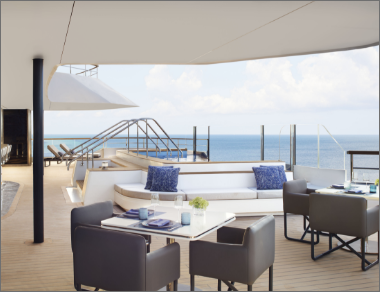
Mistral
Mistral welcomes guests for relaxed lunches or romantic dinners al fresco. Its Mediterranean-inspired menu highlights fresh local catches, handmade pastas, crisp salads, and grilled prime cuts. With spacious indoor and outdoor seating and views that mirror the surrounding sea and sky, it’s one of the yacht’s most inviting settings for dining.

The Living Room
The Living Room Café and Bar is a warm, inviting gathering place throughout the day. Mornings begin with freshly roasted coffee and pastries at the espresso counter, while daytime brings treats ideal for moments between activities. As evening settles in, the space offers a relaxed setting for a quiet drink or light bite.

In-Suite Dining
In-suite dining offers the comfort and privacy of enjoying thoughtfully prepared dishes in your suite or on your private terrace. The all-day dining menu features favorites from across the yacht’s venues, delivered with attentive presentation. A late-night menu adds flexibility, creating a seamless, refined experience at any hour.
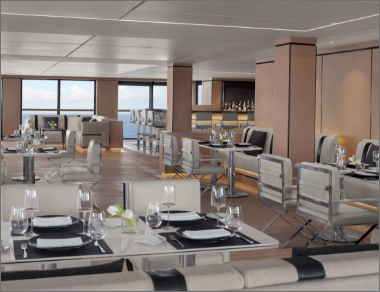
The Pool House
The Pool House offers a relaxed, open-air setting with fresh, à la minute dishes served throughout the day. From early breakfasts to late-night bites, the globally influenced menu suits any moment—whether returning from time ashore or pausing between hours by the water. Comfortable seating and shifting views create an effortless, welcoming atmosphere.
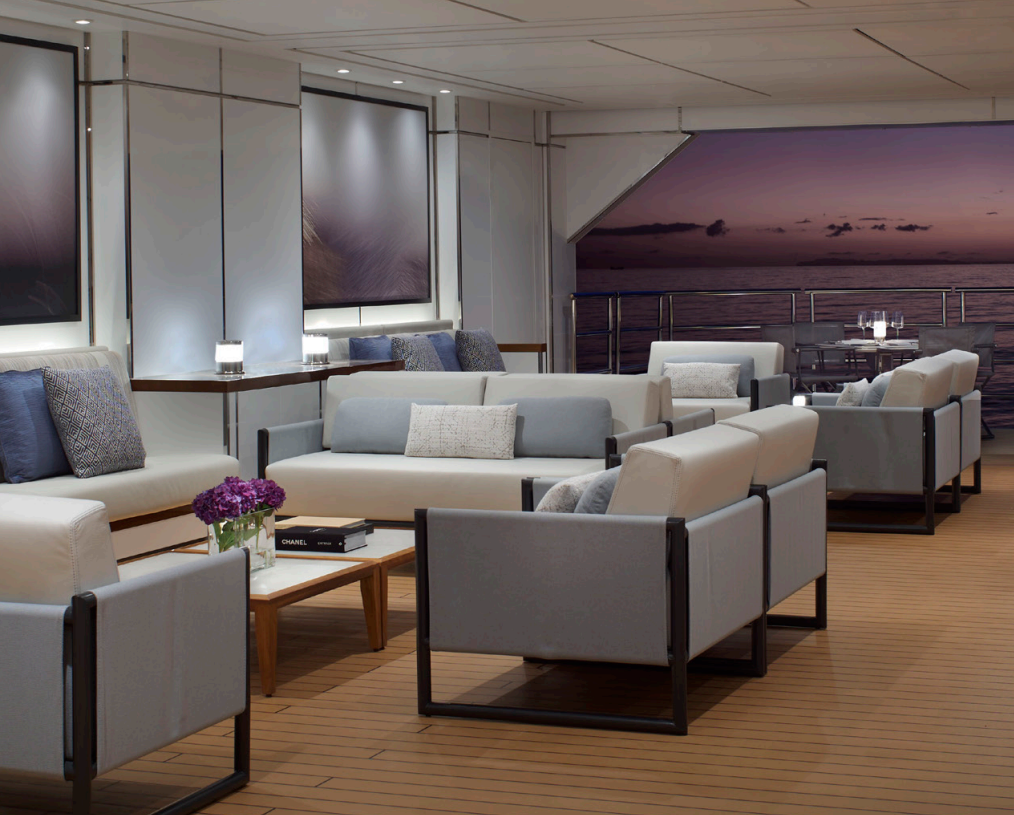
Marina and Marina Terrace
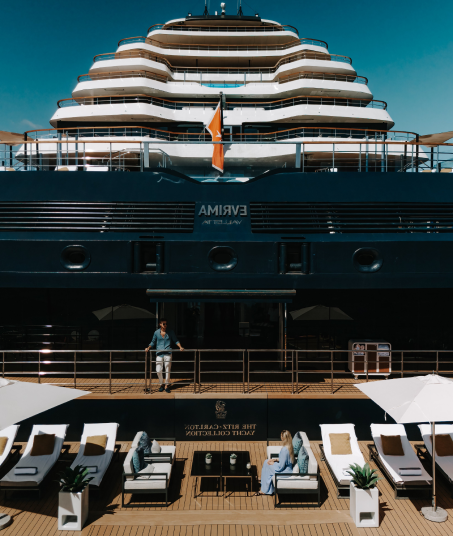
Nestled at the water’s edge, the Marina offers an inviting place to unwind while at anchor, with sun loungers and an exciting selection of water toys for time on the sea. Just above, the Marina Terrace provides a refined open-air setting for handcrafted cocktails and light bites, creating an effortless transition from water activities to leisurely afternoons looking to the horizon.

The Observation Lounge
The Observation Terrace offers panoramic views that blur the line between land and sea, creating an inspired setting for lounging, cocktails or quiet conversation. As twilight settles in, the atmosphere shifts into a relaxed venue with live entertainment that extends into the evening.
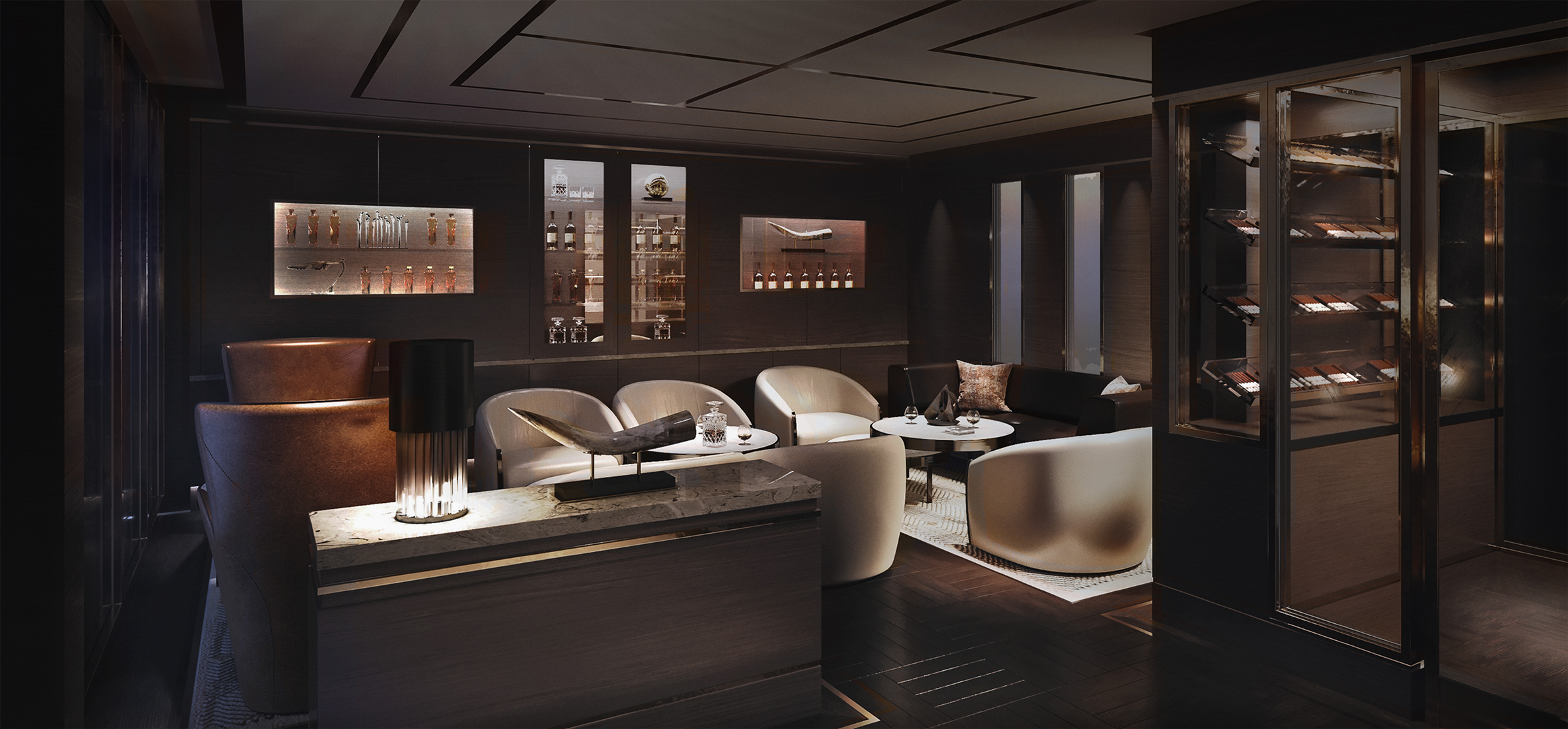
The Humidor
The Humidor is an intimate, quietly sophisticated setting for unhurried moments at day’s end. Guests can enjoy fine cognacs, single malts and other aged spirits while exploring a curated selection of hand-rolled cigars showcased in a state-of-the-art humidor. Warm and nuanced, it’s a welcoming place for reflection or relaxed conversation.
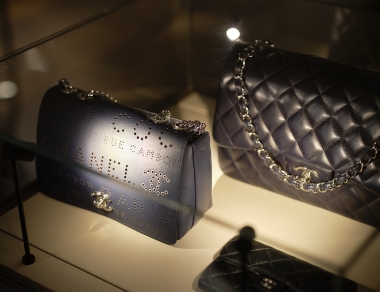
The Boutique
The Boutique features a curated selection of high-end sportswear, designer apparel, jewelry and leather goods, offering guests the opportunity to explore thoughtfully chosen pieces throughout their journey. On select voyages, the shopping experience is enhanced by exclusive collaborations with local artisans who share their craft and present distinctive creations inspired by the regions visited.
The Living Room
Bold shades of blue reflecting the sea provide a vibrant accent to the yacht’s gathering place, with its chic, comfortable furnishings and library with travel guides and best sellers. Diffused lighting transforms the space into a cocktail lounge with piano bar, dancing and live music later on, making The Living Room one of the most popular Ritz-Carlton Yacht Collection onboard features.
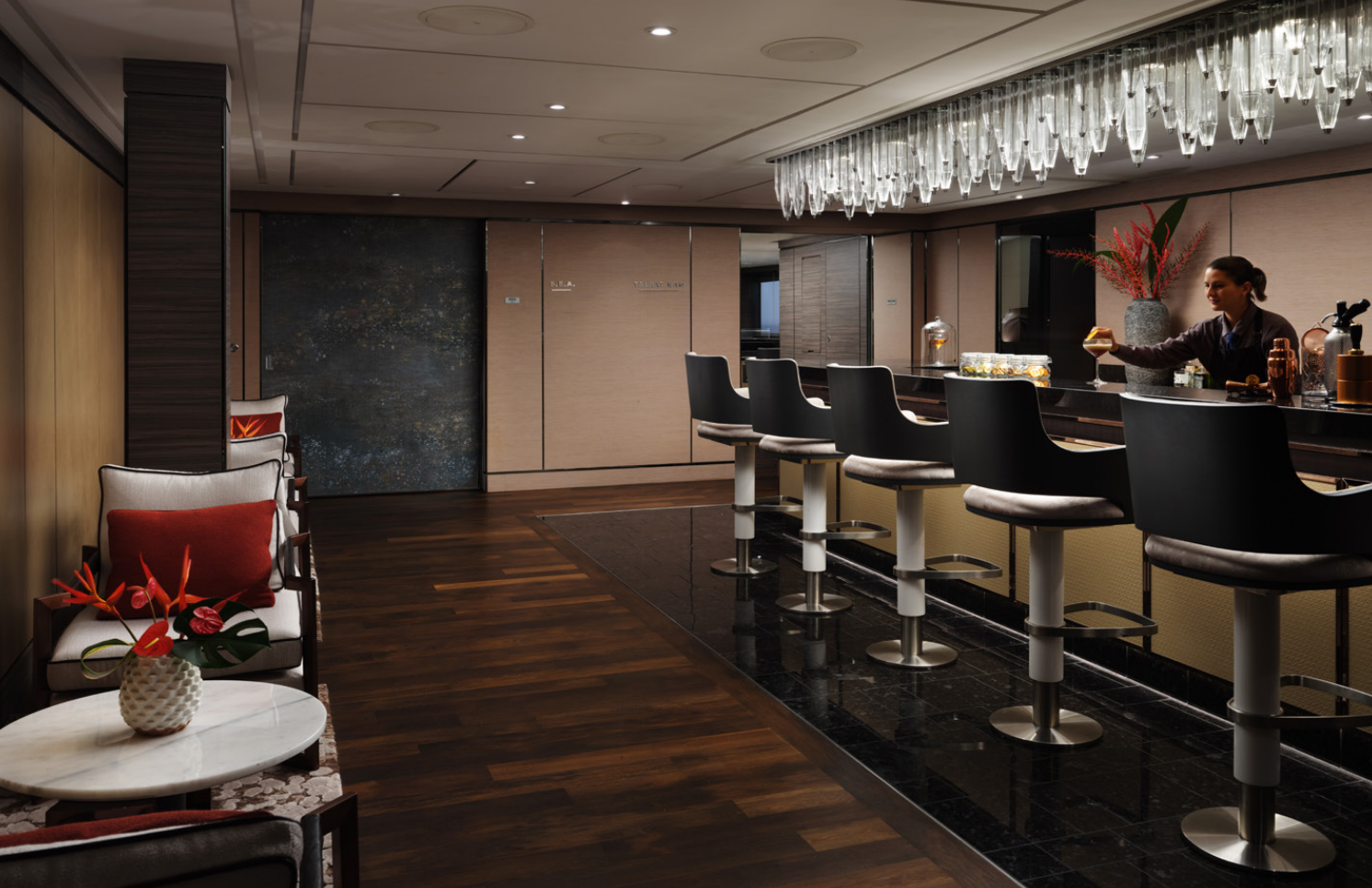
The Bar
This intimate lounge serves premium labels from around the world and also offers champagne and caviar pairings.
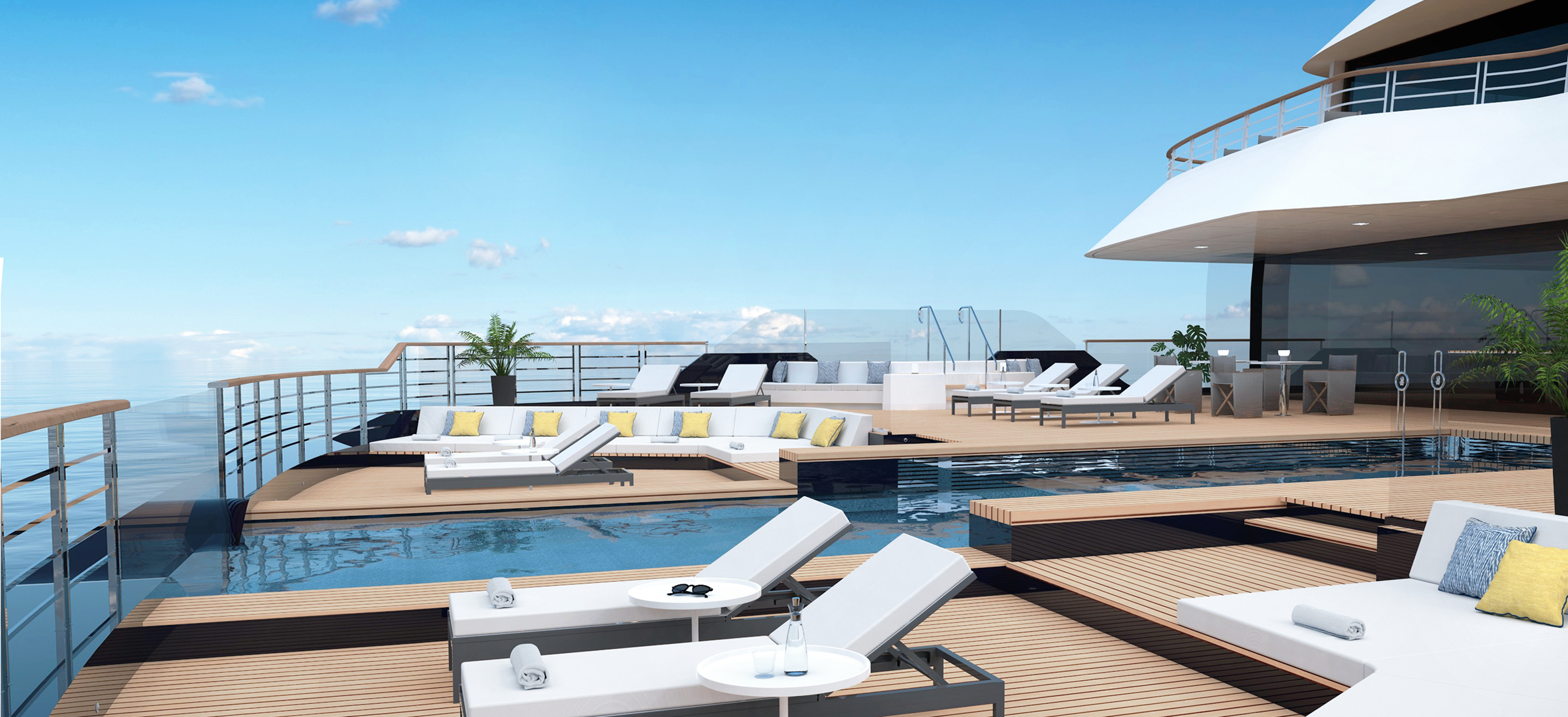
The Pool
The Pool offers panoramic views and a relaxed setting for unwinding throughout the day. Guests can enjoy all-day dining, frozen treats and drinks from the nearby bar, or settle into sunbeds, banquettes, tanning ledges and whirlpools. Gentle misting sprays add a cooling touch, while generous sundecks invite reading, resting or simply taking in the sea and sky.
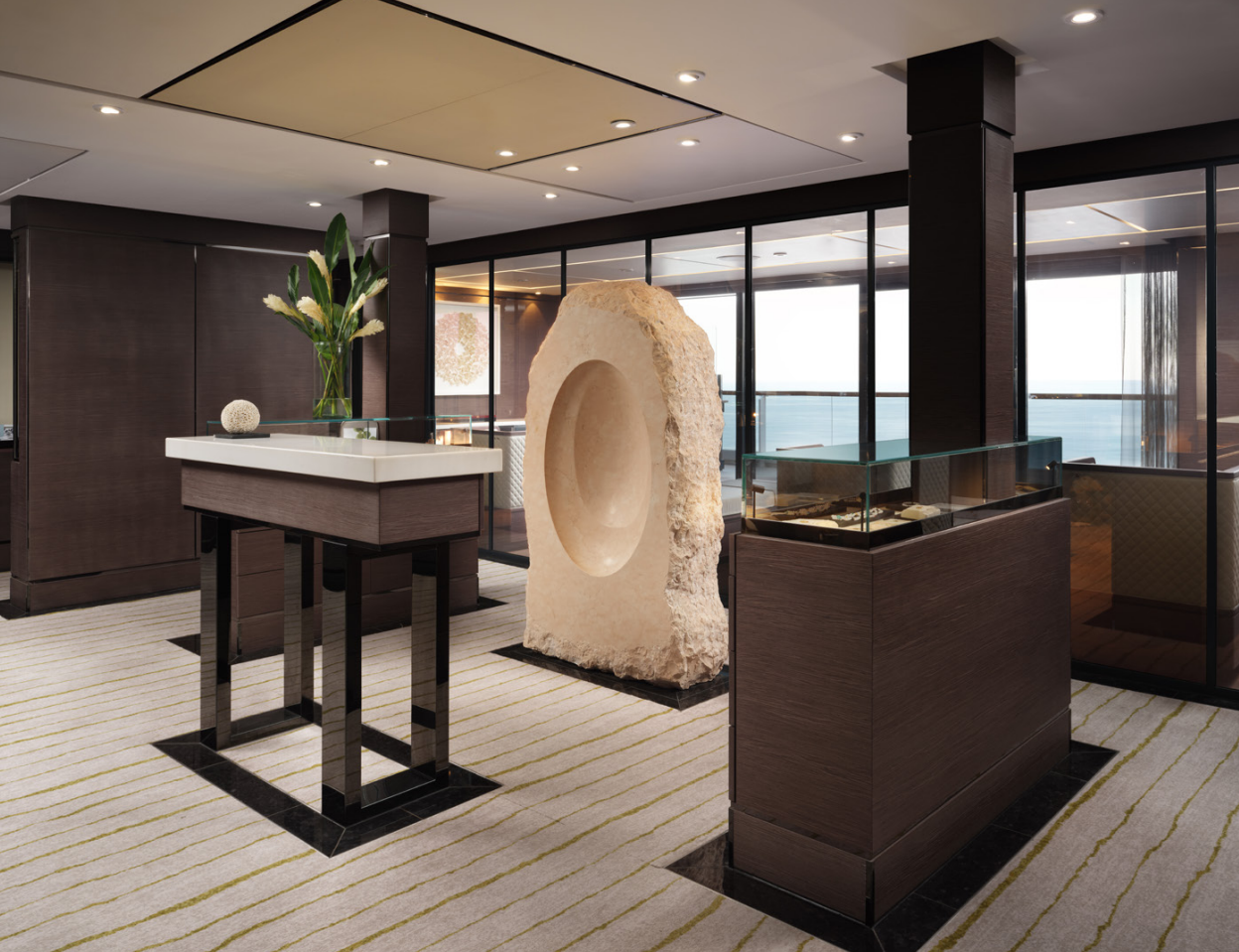
The Ritz-Carlton Spa
Unwind with expert massages, restorative facials and globally inspired treatments in a tranquil setting designed for ease and renewal. The spa invites guests to slow down, relax and immerse themselves in soothing aromas, calming rituals and thoughtful care that enhance every journey.
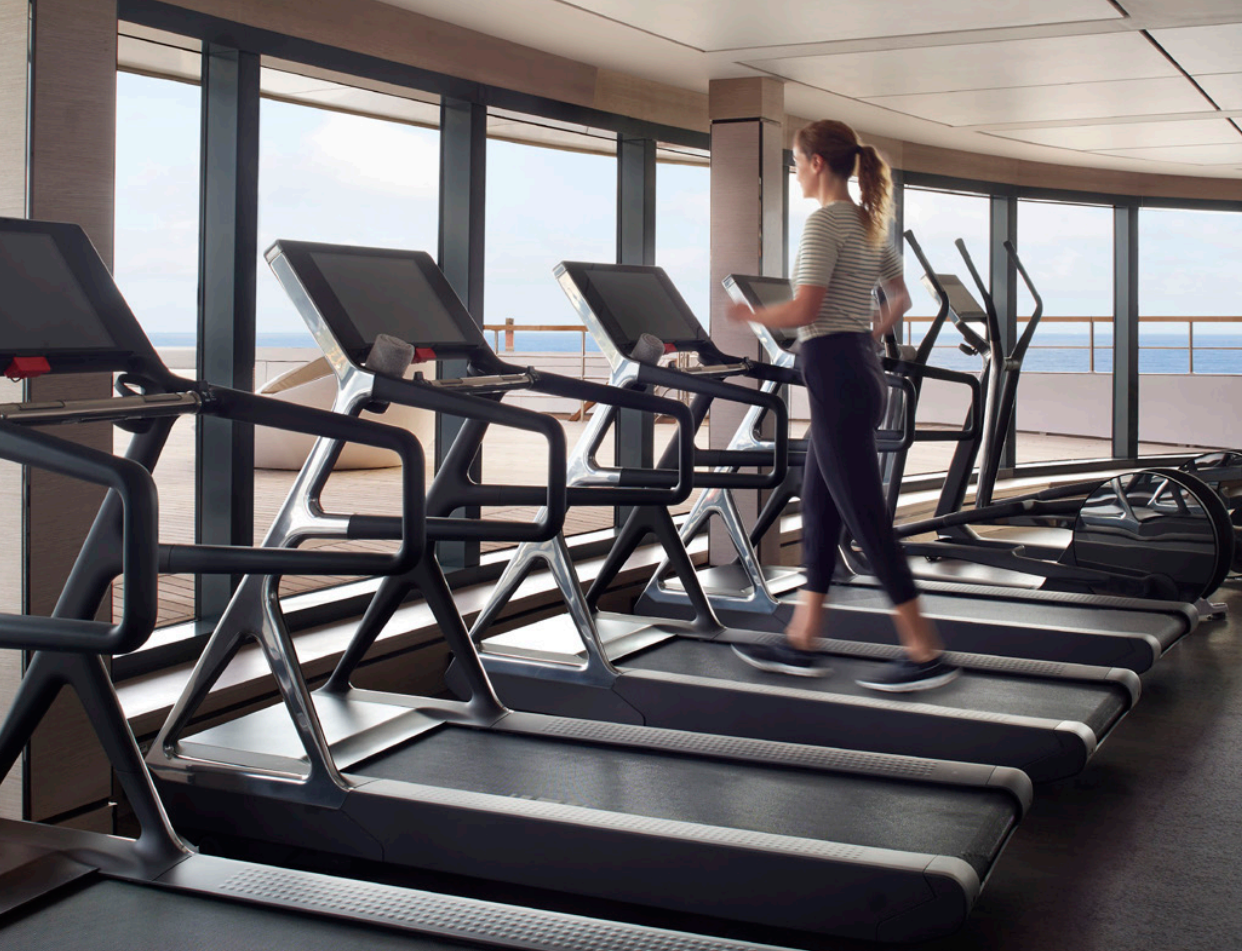
The Fitness Studio
The Fitness Studio offers a holistic approach to wellbeing, with personalized guidance, movement-focused programming and optional lectures that support a healthy voyage. A selection of Technogym equipment enables familiar routines or new forms of exercise, all within a calm, contemporary setting designed for strengthening, stretching and reconnecting with the body.
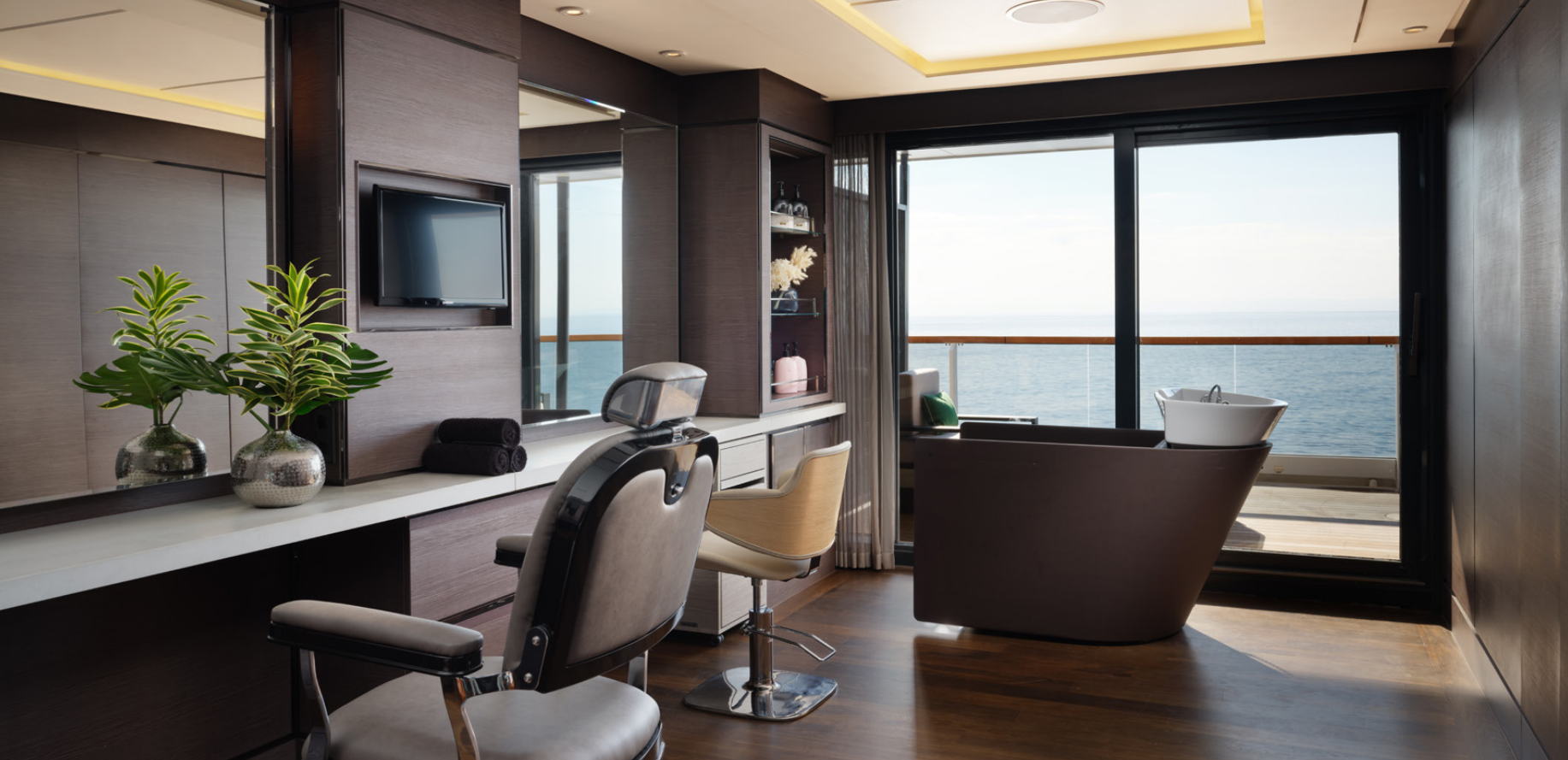
Barber & Salon Services
The Salon offers a variety of beauty and hair services including manicure and pedicure treatments, hair consultations, cutting, styling and blow drying. Next door at The Barber, gentlemen can enjoy a close shave or invigorating facial before heading ashore to explore the port feeling refreshed and revitalized.
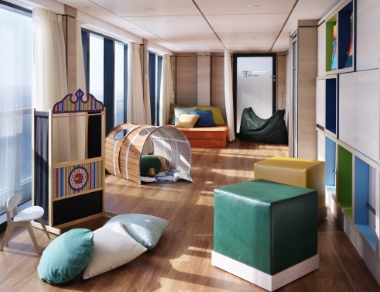
Ritz-Kids
Ritz Kids® is a dedicated program for families designed to inspire curiosity and creativity. Guided by engaging, age-appropriate activities, children can learn about the natural world and enjoy time with new friends. With its bright, inviting environment and attentive supervision, Ritz Kids® provides young travelers with a place to discover, play and connect.
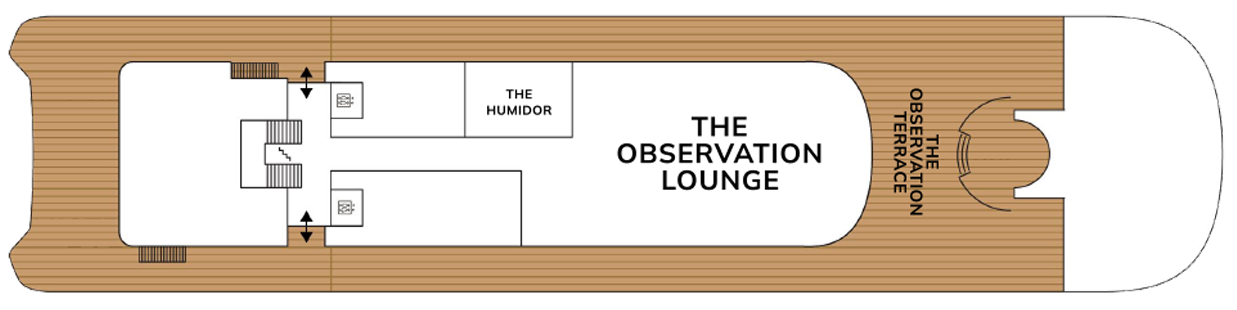
Deck 10
- The Observation Lounge
- The Observation Terrace
- The Humidor
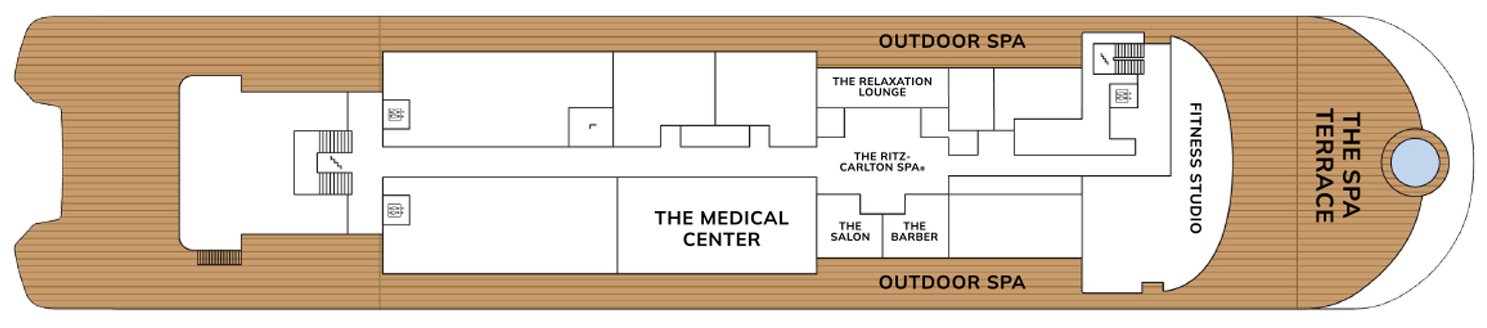
Deck 9
- The Gym
- Fitness Studio
- The Ritz-Carlton Spa
- Outdoor Spa
- The Spa Terrace
- The Barber/The Salon
- Launderette
- Men/Women’s Changing Rooms
- The Relaxation Lounge
- The Medical Centre
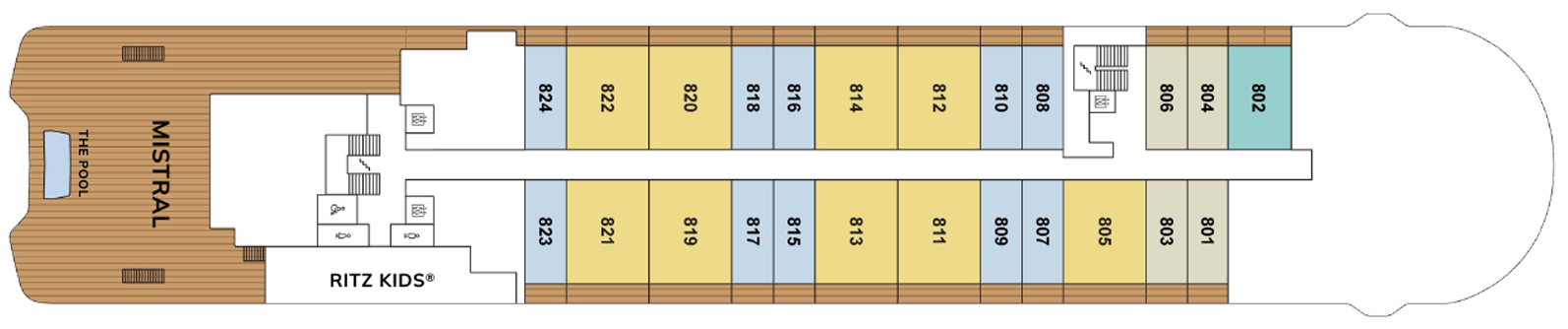
Deck 8
- Mistral
- Pool
- Ritz-Kids
- The Terrace Mid Suites
- The Grand Suites
- The Terrace Suites
- The Signature

Deck 7
- The Owner’s Suites
- The View Suites
- The Grand Suites
- The Terrace Mid Suites
- The Signature Mid Suites
- The Terrace Suites
- The Signature Suites

Deck 6
- The Bar
- S.E.A
- Talaat Nam
- The Terrace Suites
- The Signature Mid Suites
- The Terrace Mid Suites
- The Signature Suites

Deck 5
- The Pool House
- The Pool
- The Terrance Mid Suites
- The Terrace Suites
- The 2-Story Loft Suites

Deck 4
- The Meeting Rooms
- The Living Room
- The Boutique
- Wine Vault
- Wine Tasting Area
- The Evrima Room
- Dining Privée
- The 2-Story Loft Suites

Deck 3
- The Marina Terrace
- The Marina