Itinerary
Amsterdam combines the unrivaled beauty of the 17th-century Golden Age city center with plenty of museums and art of the highest order, not to mention a remarkably laid-back atmosphere. It all comes together to make this one of the world’s most appealing and offbeat metropolises in the world. Built on a latticework of concentric canals like an aquatic rainbow, Amsterdam is known as the City of Canals—but it’s no Venice, content to live on moonlight serenades and former glory. Quite the contrary: on nearly every street here you’ll find old and new side by side—quiet corners where time seems to be holding its breath next to streets like neon-lit Kalverstraat, and Red Light ladies strutting by the city’s oldest church. Indeed, Amsterdam has as many lovely facets as a 40-carat diamond polished by one of the city’s gem cutters. It’s certainly a metropolis, but a rather small and very accessible one. Locals tend to refer to it as a big village, albeit one that happens to pack the cultural wallop of a major world destination. There are scores of concerts every day, numerous museums, summertime festivals, and, of course, a legendary year-round party scene. It’s pretty much impossible to resist Amsterdam’s charms. With 7,000 registered monuments, most of which began as the residences and warehouses of humble merchants, set on 160 man-made canals, and traversed by 1,500 or so bridges, Amsterdam has the largest historical inner city in Europe. Its famous circle of waterways, the grachtengordel, was a 17th-century urban expansion plan for the rich and is a lasting testament to the city’s Golden Age. This town is endearing because of its kinder, gentler nature—but a reputation for championing sex, drugs, and rock ’n’ roll does not alone account for Amsterdam’s being one of the most popular destinations in Europe: consider that within a single square mile the city harbors some of the greatest achievements in Western art, from Rembrandt to Van Gogh. Not to mention that this is one of Europe’s great walking cities, with so many of its treasures in the untouted details: tiny alleyways barely visible on the map, hidden garden courtyards, shop windows, floating houseboats, hidden hofjes(courtyards with almshouses), sudden vistas of church spires, and gabled roofs that look like so many unframed paintings. And don’t forget that the joy lies in details: elaborate gables and witty gable stones denoting the trade of a previous owner. Keep in mind that those XXX symbols you see all over town are not a mark of the city’s triple-X reputation. They’re part of Amsterdam’s official coat of arms—three St. Andrew’s crosses, believed to represent the three dangers that have traditionally plagued the city: flood, fire, and pestilence. The coat’s motto (“Valiant, determined, compassionate”) was introduced in 1947 by Queen Wilhelmina in remembrance of the 1941 February Strike in Amsterdam—the first time in Europe that non-Jewish people protested against the persecution of Jews by the Nazi regime.
Day programme:
AMSTERDAM – EMBARKATION. Check out of your hotel and, before transferring to your ship, enjoy an enchanting cruise along the canal in Haarlem outside of Amsterdam, passing historic architecture, bridges and even a windmill iconic of the region. Later in the day, transfer to your ship. (B,D)
Amsterdam combines the unrivaled beauty of the 17th-century Golden Age city center with plenty of museums and art of the highest order, not to mention a remarkably laid-back atmosphere. It all comes together to make this one of the world’s most appealing and offbeat metropolises in the world. Built on a latticework of concentric canals like an aquatic rainbow, Amsterdam is known as the City of Canals—but it’s no Venice, content to live on moonlight serenades and former glory. Quite the contrary: on nearly every street here you’ll find old and new side by side—quiet corners where time seems to be holding its breath next to streets like neon-lit Kalverstraat, and Red Light ladies strutting by the city’s oldest church. Indeed, Amsterdam has as many lovely facets as a 40-carat diamond polished by one of the city’s gem cutters. It’s certainly a metropolis, but a rather small and very accessible one. Locals tend to refer to it as a big village, albeit one that happens to pack the cultural wallop of a major world destination. There are scores of concerts every day, numerous museums, summertime festivals, and, of course, a legendary year-round party scene. It’s pretty much impossible to resist Amsterdam’s charms. With 7,000 registered monuments, most of which began as the residences and warehouses of humble merchants, set on 160 man-made canals, and traversed by 1,500 or so bridges, Amsterdam has the largest historical inner city in Europe. Its famous circle of waterways, the grachtengordel, was a 17th-century urban expansion plan for the rich and is a lasting testament to the city’s Golden Age. This town is endearing because of its kinder, gentler nature—but a reputation for championing sex, drugs, and rock ’n’ roll does not alone account for Amsterdam’s being one of the most popular destinations in Europe: consider that within a single square mile the city harbors some of the greatest achievements in Western art, from Rembrandt to Van Gogh. Not to mention that this is one of Europe’s great walking cities, with so many of its treasures in the untouted details: tiny alleyways barely visible on the map, hidden garden courtyards, shop windows, floating houseboats, hidden hofjes(courtyards with almshouses), sudden vistas of church spires, and gabled roofs that look like so many unframed paintings. And don’t forget that the joy lies in details: elaborate gables and witty gable stones denoting the trade of a previous owner. Keep in mind that those XXX symbols you see all over town are not a mark of the city’s triple-X reputation. They’re part of Amsterdam’s official coat of arms—three St. Andrew’s crosses, believed to represent the three dangers that have traditionally plagued the city: flood, fire, and pestilence. The coat’s motto (“Valiant, determined, compassionate”) was introduced in 1947 by Queen Wilhelmina in remembrance of the 1941 February Strike in Amsterdam—the first time in Europe that non-Jewish people protested against the persecution of Jews by the Nazi regime.
Day programme:
AMSTERDAM – KAMPEN, NETHERLANDS. There are 165 canals in Amsterdam, and you’ll get to enjoy some of them on your canal cruise. Later in the day, enjoy a scenic cruise through the IJsselmeer to Kampen. From this port, you may venture to the charming, canal-laden village of Giethoorn, nicknamed the “Dutch Venice.” Capture wonderful photos of the picturesque thatched-roof farmhouses, which are seemingly lifted straight from the pages of a fairytale. Alternatively, go for a guided bike ride through the Dutch countryside. (B,L,D)
Day programme:
UTRECHT, NETHERLANDS. Enjoy a scenic morning cruise through the delta before arriving in Utrecht. This city has served as the religious center of the Netherlands since the 8th century and a far-reaching city boasting a medieval old town, canals and a beautiful Gothic cathedral, some of which you may see on your walking tour, which includes a visit to the whimsical collection of automatically playing musical instruments at Museum Speelklok. Alternatively, marvel at the largest castle in Holland, De Haar. Straight out of your fairytale dreams, this castle inspires awe with its turrets, moats and suspension bridges as well as its luxurious interior. For more active exploration, cycle with your bike guide and make your way through the city along canals and historic streets.
Day programme:
GHENT, BELGIUM. There are several choices of excursions in Ghent, depending on your interests. Stroll through the Capital of East Flanders, learning about its unique history on your walking tour, or pedal through the spellbinding town on a guided bike tour. Alternatively, visit Bruges, one of the best preserved medieval cities in Europe, on a full-day excursion that includes the renowned Church of Our Lady, home to the beautiful Carrara marble Madonna and Child sculpture by Michelangelo. If you prefer a shorter excursion in Bruges, visit the town later in the day or spend your afternoon at Ghent’s moated Castle of the Counts, which boasts an eye-catching design as well as a ghoulishly interesting collection of medieval torture devices. (B,L,D)
Day programme:
BRUSSELS, BELGIUM. Explore Belgium’s captivating capital on your guided walking tour or pedal through Brussels on a guided bike ride that takes you into Laeken Park, where you will see the unique architecture of the Far East Museums as well as the jaw-dropping iron molecule sculpture known as the Atomium. Alternatively, delight your palate with a Belgian chocolate tasting. In the afternoon, visit Gaasbeek Castle, a 13th-century fortified castle built to defend the Duchy of Brabant against the County of Flanders. (B,L,D)
Explore Antwerp, Belgium’s second city. Known for its diamond cutting industry, fashion and the many great artists that lived in its vicinity, Antwerp is a city focused on art and culture.
Day programme:
ANTWERP, BELGIUM. Explore Belgium’s trendy “City of Diamonds” on a walking tour where you’ll see Antwerp’s Steen Castle, Grote Market and Brabo Fountain, along with the UNESCO-designated Cathedral of Our Lady. Active travelers may prefer instead to bike through Antwerp. Later in the day, beer enthusiasts will appreciate a tasting of the local brew while foodies may prefer our excursion to sample some of Belgium’s culinary delights such as its fresh and fluffy waffles. An afternoon bike tour is also available for those who prefer to get their heart beating later in the day, and it includes an opportunity to visit the Red Star Line Museum, highlighting the historic shipping line responsible for transporting three million immigrants to America. (B,L,D)
Day programme:
DORDRECHT, NETHERLANDS. Established in 1220, Holland’s oldest city was virtually destroyed by a devastating flood in the 15th century that essentially created the city’s wetlands. Learn more about Dordrecht’s fascinating history on your walking tour, or visit Rotterdam, the “Gateway to Europe,” as well as Delfshaven, where, on August 1, 1620, the Pilgrim fathers departed on their epic journey aboard the Speedwell. Stopping in Southampton, many then boarded the Mayflower and concluded their journey at Plymouth Rock in Massachusetts. If you prefer to venture off the beaten path, go on an architectural bike tour through Rotterdam. In the afternoon, venture to the UNESCO World Heritage Site of Kinderdijk, a lovely village renowned for having the country’s greatest concentration of windmills, all dating from the 18th century. You may also pedal past the windmills from the seat of a bike. (B,L,D)
Amsterdam combines the unrivaled beauty of the 17th-century Golden Age city center with plenty of museums and art of the highest order, not to mention a remarkably laid-back atmosphere. It all comes together to make this one of the world’s most appealing and offbeat metropolises in the world. Built on a latticework of concentric canals like an aquatic rainbow, Amsterdam is known as the City of Canals—but it’s no Venice, content to live on moonlight serenades and former glory. Quite the contrary: on nearly every street here you’ll find old and new side by side—quiet corners where time seems to be holding its breath next to streets like neon-lit Kalverstraat, and Red Light ladies strutting by the city’s oldest church. Indeed, Amsterdam has as many lovely facets as a 40-carat diamond polished by one of the city’s gem cutters. It’s certainly a metropolis, but a rather small and very accessible one. Locals tend to refer to it as a big village, albeit one that happens to pack the cultural wallop of a major world destination. There are scores of concerts every day, numerous museums, summertime festivals, and, of course, a legendary year-round party scene. It’s pretty much impossible to resist Amsterdam’s charms. With 7,000 registered monuments, most of which began as the residences and warehouses of humble merchants, set on 160 man-made canals, and traversed by 1,500 or so bridges, Amsterdam has the largest historical inner city in Europe. Its famous circle of waterways, the grachtengordel, was a 17th-century urban expansion plan for the rich and is a lasting testament to the city’s Golden Age. This town is endearing because of its kinder, gentler nature—but a reputation for championing sex, drugs, and rock ’n’ roll does not alone account for Amsterdam’s being one of the most popular destinations in Europe: consider that within a single square mile the city harbors some of the greatest achievements in Western art, from Rembrandt to Van Gogh. Not to mention that this is one of Europe’s great walking cities, with so many of its treasures in the untouted details: tiny alleyways barely visible on the map, hidden garden courtyards, shop windows, floating houseboats, hidden hofjes(courtyards with almshouses), sudden vistas of church spires, and gabled roofs that look like so many unframed paintings. And don’t forget that the joy lies in details: elaborate gables and witty gable stones denoting the trade of a previous owner. Keep in mind that those XXX symbols you see all over town are not a mark of the city’s triple-X reputation. They’re part of Amsterdam’s official coat of arms—three St. Andrew’s crosses, believed to represent the three dangers that have traditionally plagued the city: flood, fire, and pestilence. The coat’s motto (“Valiant, determined, compassionate”) was introduced in 1947 by Queen Wilhelmina in remembrance of the 1941 February Strike in Amsterdam—the first time in Europe that non-Jewish people protested against the persecution of Jews by the Nazi regime.
Day programme:
DISEMBARKATION – DEPART AMSTERDAM. Disembark your ship and bid farewell to Amsterdam as you prepare for your return flight home. (B)
Ship features

Suite
More Information coming soon.
Category AA
More Information coming soon.
Category AB
More Information coming soon.
Category BA
More Information coming soon.
Category BB
More Information coming soon.
Category CA
More Information coming soon.
Category CB
More Information coming soon.
Category D
More Information coming soon.
Category E
More Information coming soon.
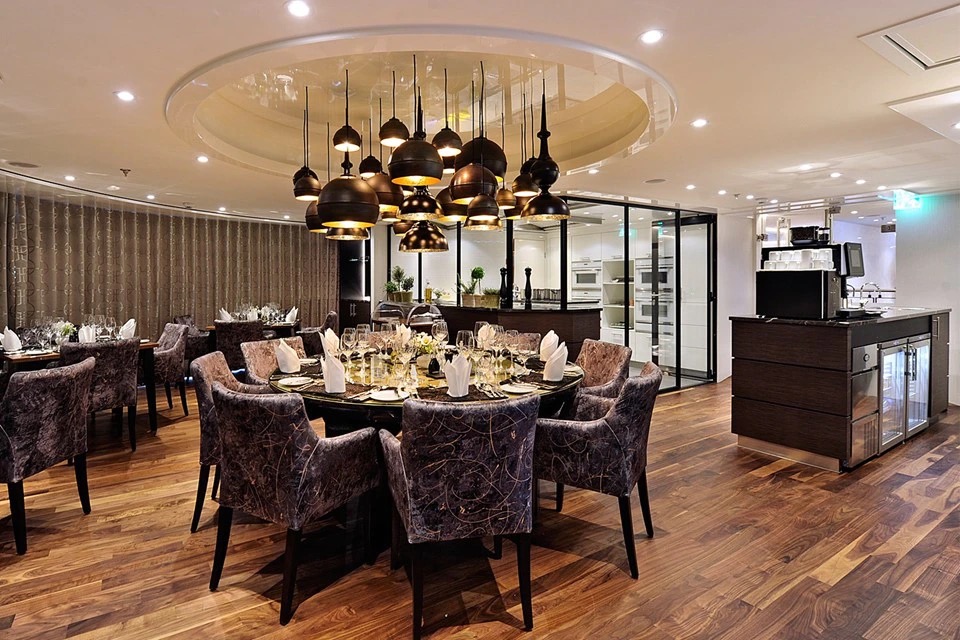
Main Restaurant
Savor exquisite cuisine at a variety of dining venues, like the Main Restaurant and The Chef’s Table. You can also order delicious tapas between meals in the Main Lounge.

Wellness Recipes
Our skilled chefs ensure that our menus always have healthy choices prepared with the freshest locally-sourced ingredients. We are also able to accommodate dietary needs such as low-sodium, vegetarian and gluten-free. Below are some of our favorite recipes for health-conscious guests.
- Beetroot Salad – This vegetarian recipe brings vivid colors and flavors to life.
- Avocado Chocolate Mousse – An indulgent yet low-carb and sugar-free treat
- Gluten-Free Almond Cake Recipe – A delicious gluten-free way to indulge worry-free.
- Gluten-Free Pizza Recipe – An onboard gluten-free favorite you can easily make at home.
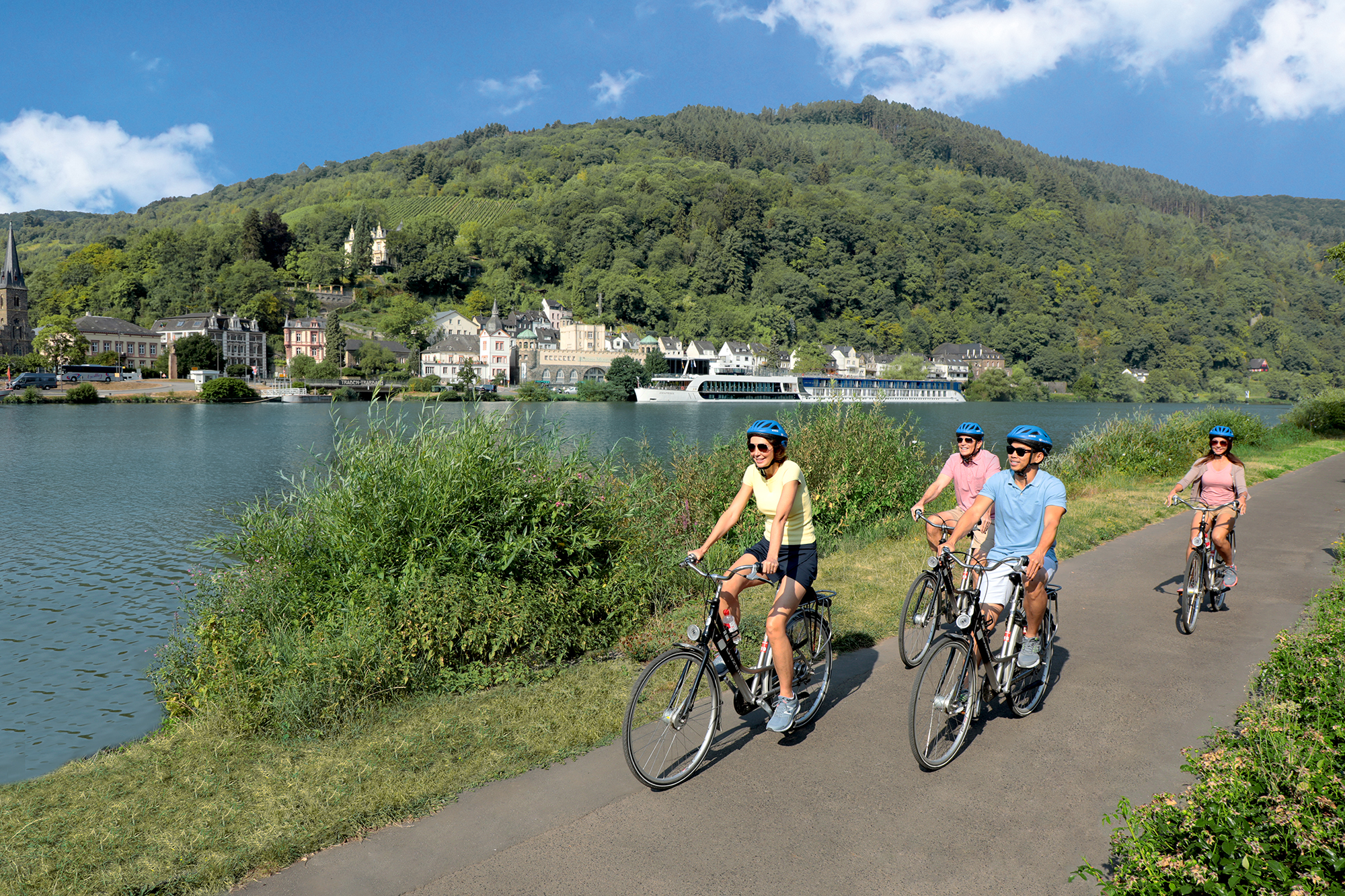
Guided Bike Tours
We are proud to have been the first river cruise line to carry an entire fleet of complimentary state-of-the-art bicycles on board, so you can pedal alongside enchanting riverside pathways and in city centers on a variety of included excursions throughout Europe. Whether you feel like joining one of our exclusive guided bike tours, or you want to reserve a bike to discover a destination on your own, there are many ways for you to explore on two wheels during your river cruise. From lighter five-mile bike tours to rides that stretch over 20 miles, we offer excursions for guests at any level.
Bike Tour Guides
Your guide will be sure to stop and point out highlights along the way, providing interesting facts and history, as well as much-needed water breaks! Often, there is some built-in free time for you to explore off your bike. And best of all, to ensure no guests are left behind, there is typically a guide both at the front and back of the tour group, so whatever pace you pedal, you will have peace of mind you will be taken care of and find your way back to the ship.
Child-sized Bikes
There are a limited number of child-size bicycles available on board as well. This enables you to enjoy family-friendly active excursions in many destinations along the rivers.
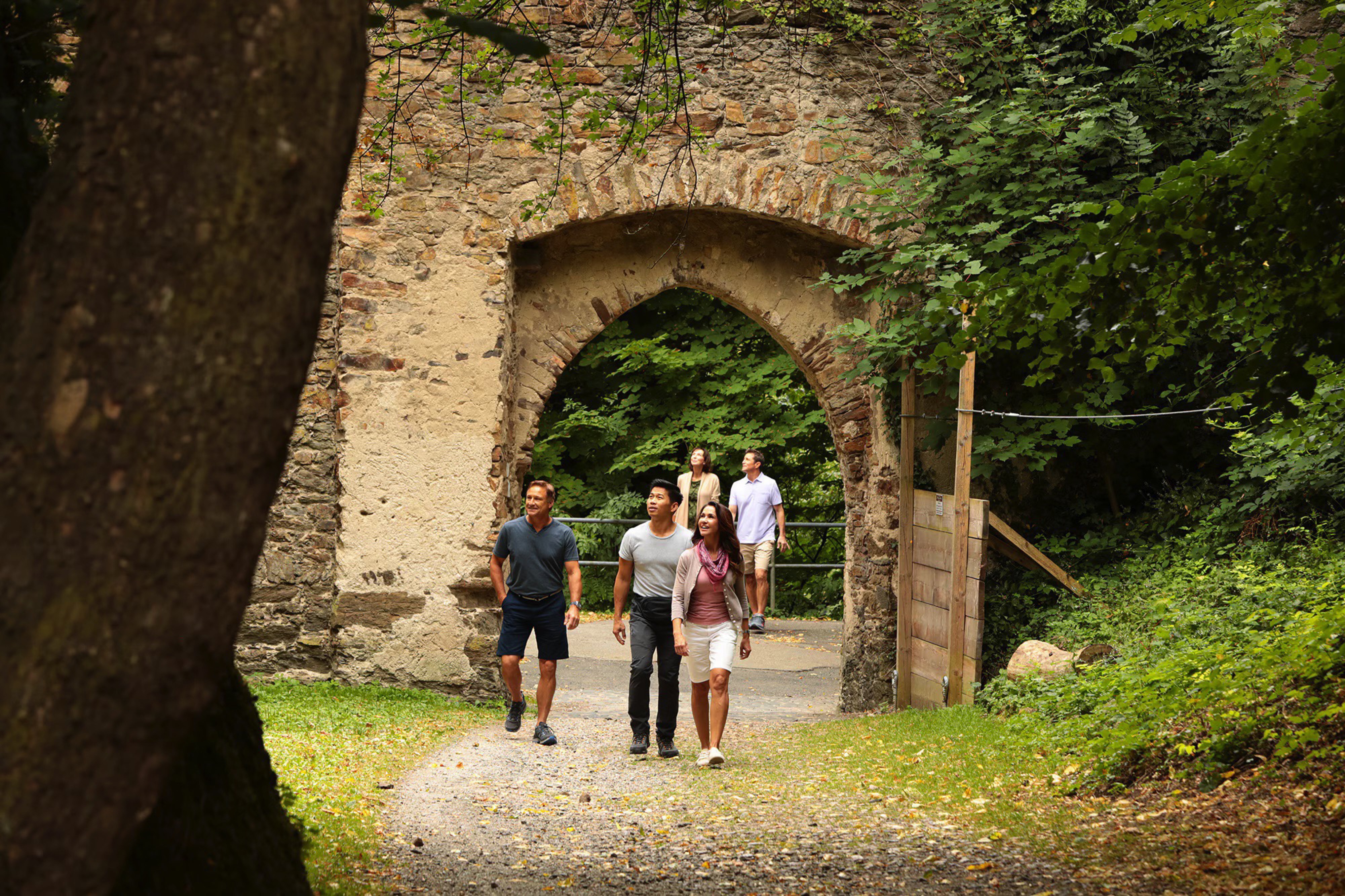
Guided Hiking Tours
The beauty of Europe does not simply lie in its architecture and landmarks – there are also breathtaking sights when you venture out into nature. That’s why we have designed special included hikes that will take you a bit off the beaten path, showing you incredible destinations from a unique perspective and giving you a chance to revel in the fresh air. With hikes ranging anywhere from two to seven miles and varying from extended city walks to hilltop castle treks, you are sure to find a wonderful hike that suits your style.
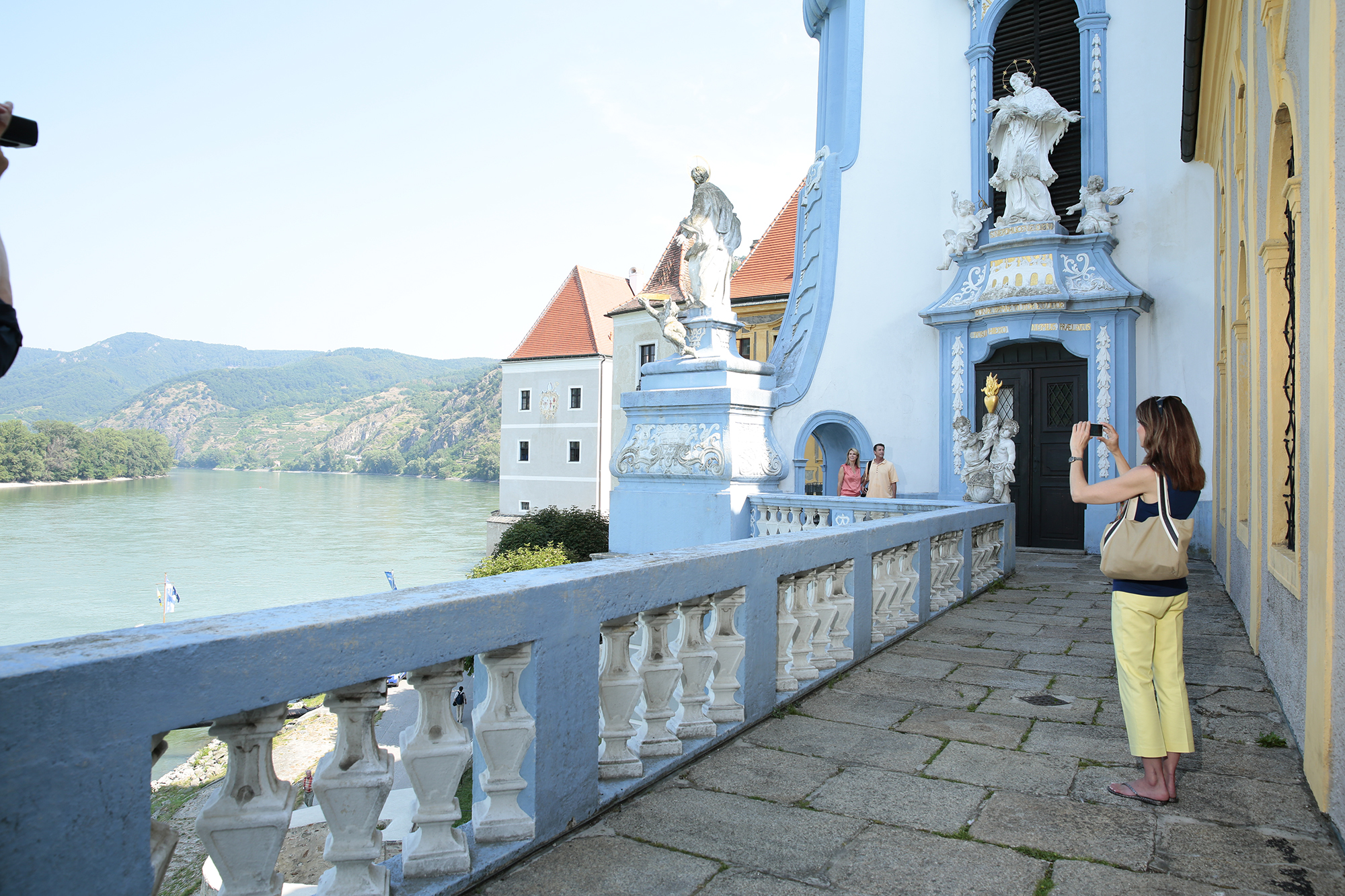
Special Interest Tours
We offer a variety of included tours specially curated with your individual passions in mind. Enjoy exploring the world through your tastebuds? Indulge in authentic Belgian waffles and chocolate in Antwerp or learn the art of French breadmaking in Libourne. Are you interested in engineering? Venture through the immense aerospace and locomotive collections at Speyer’s Technik Museum. Do you love music? Browse the antique music boxes and organs at Siegfried’s Mechanical Instrument Cabinet while cruising the Rhine.
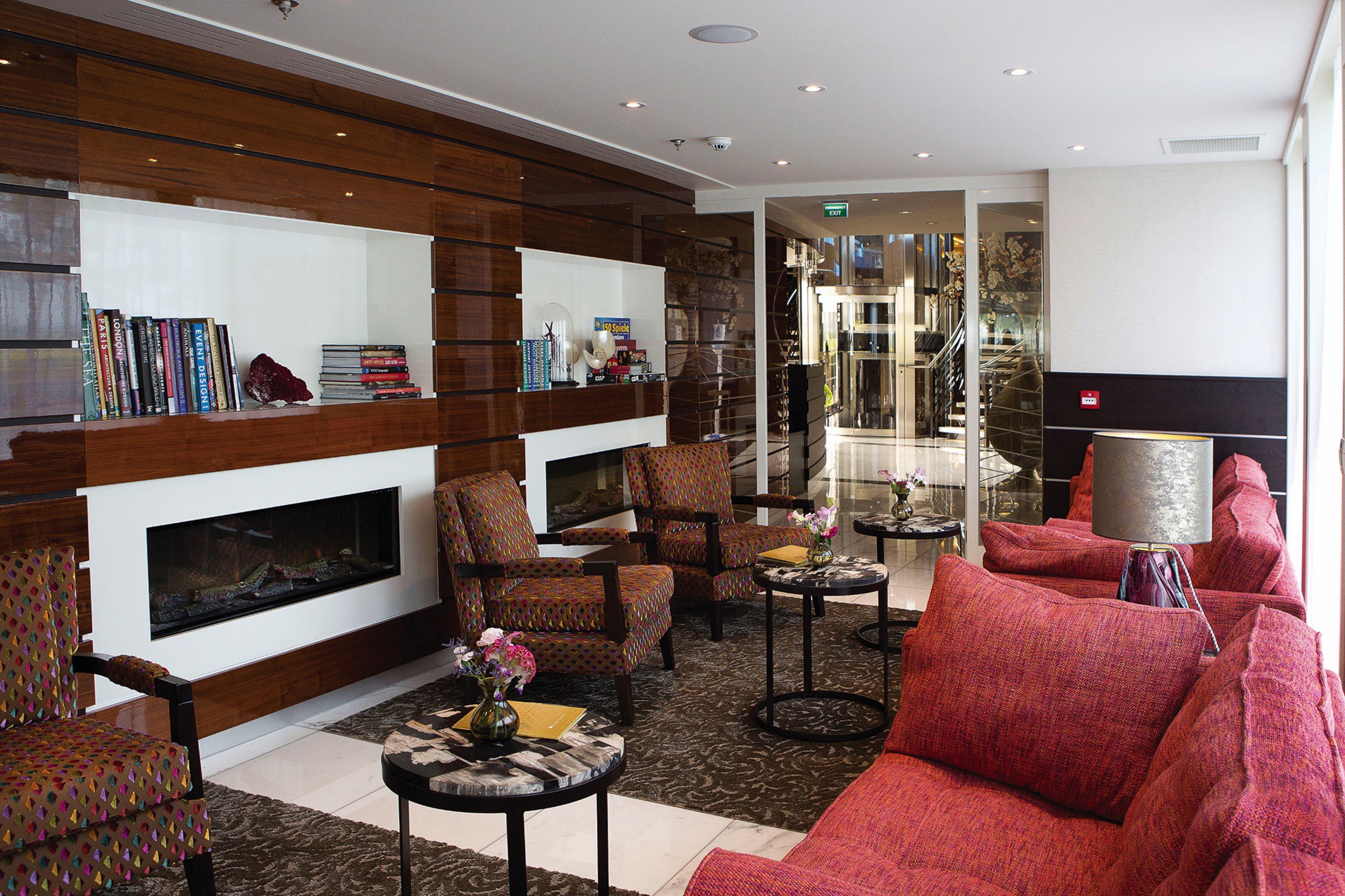
Main Lounge & Bar
This versatile space hosts a bar, dance floor, plenty of comfortable couches and big windows on three sides and is used for everything from the morning port talks, daytime reading and chatting to scenic cruising, afternoon tea and evening entertainment.
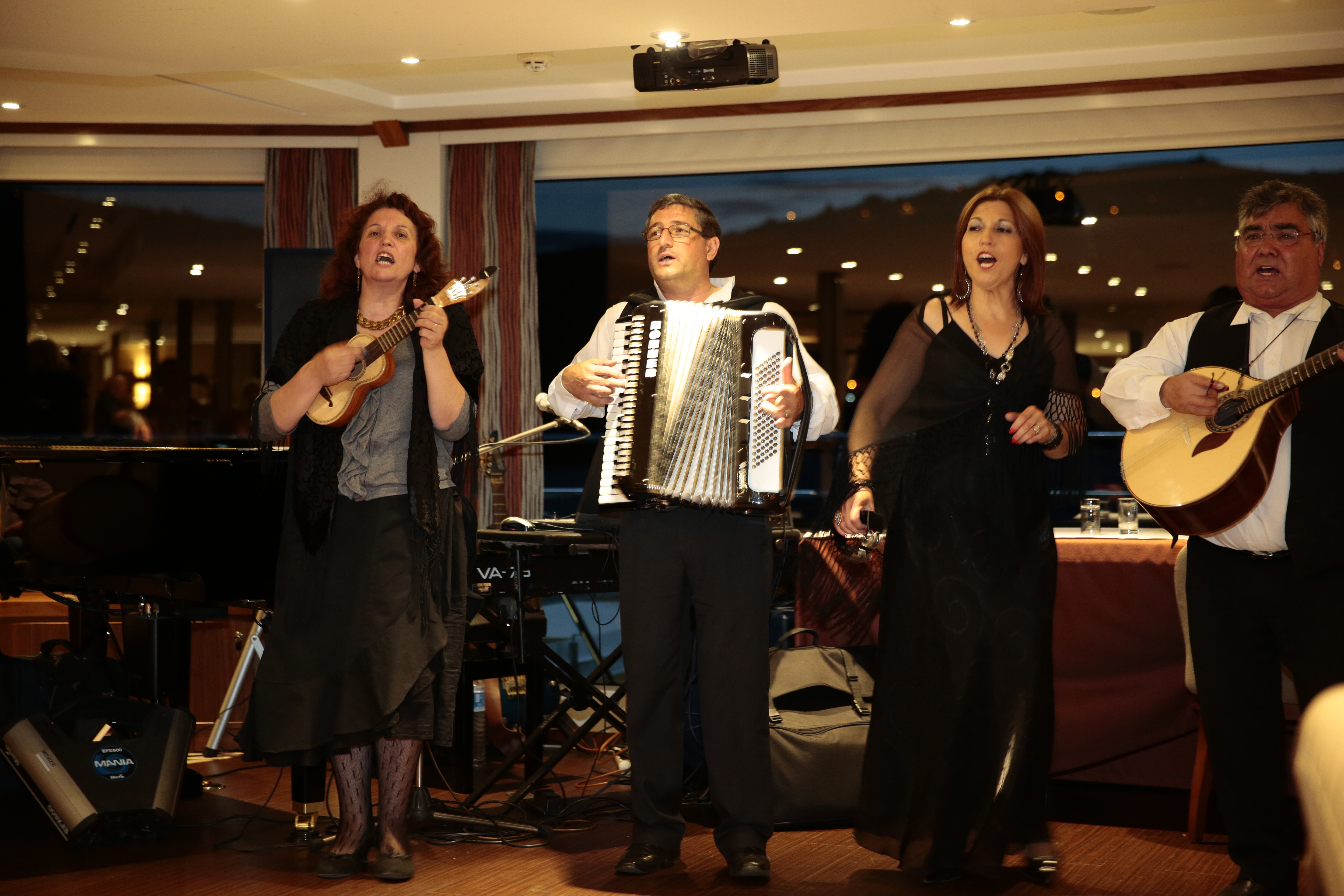
Onboard Entertainment
Whether it’s traditional Bavarian music, a local quartet or contemporary piano favourites, you will enjoy an eclectic schedule of onboard entertainment every night.
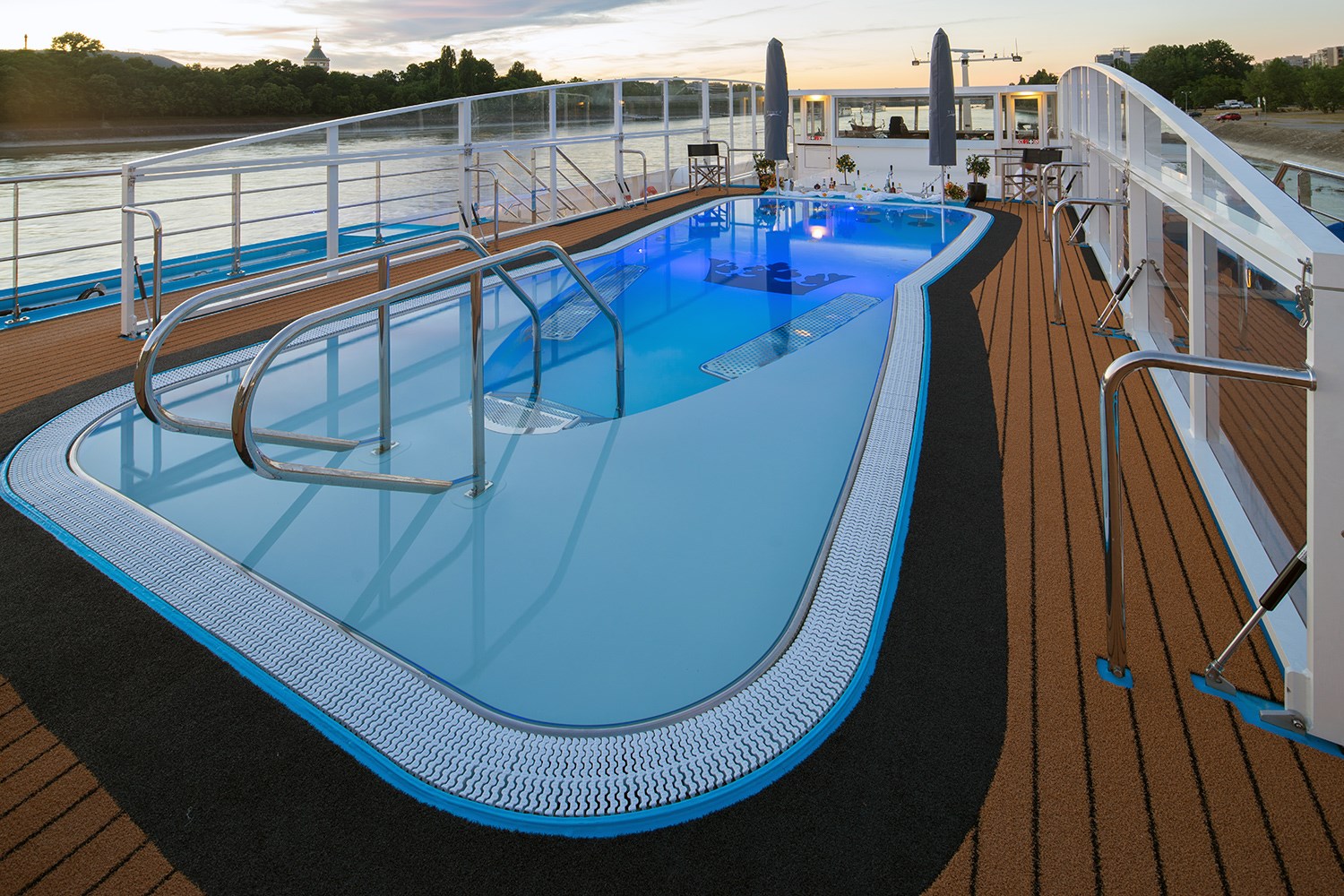
Sun Deck
Soak up some rays or take a dip in our refreshing pool with a swim-up bar as we pass by centuries-old castles, charming villages and other breathtaking scenery.
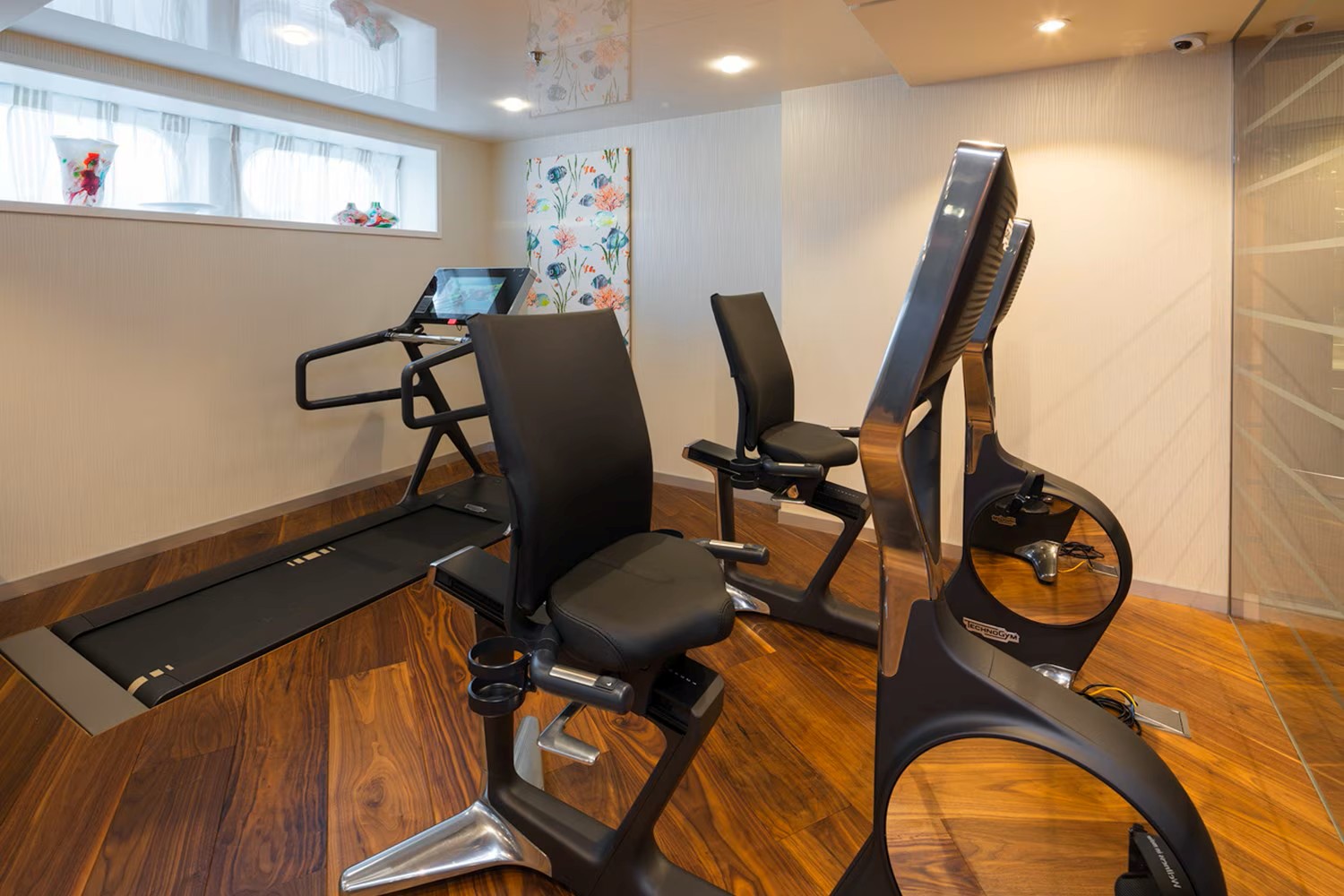
Fitness Room
Are you looking for a way to stay fit on vacation? Hit the treadmill or lift some weights while cruising from one destination to the next.
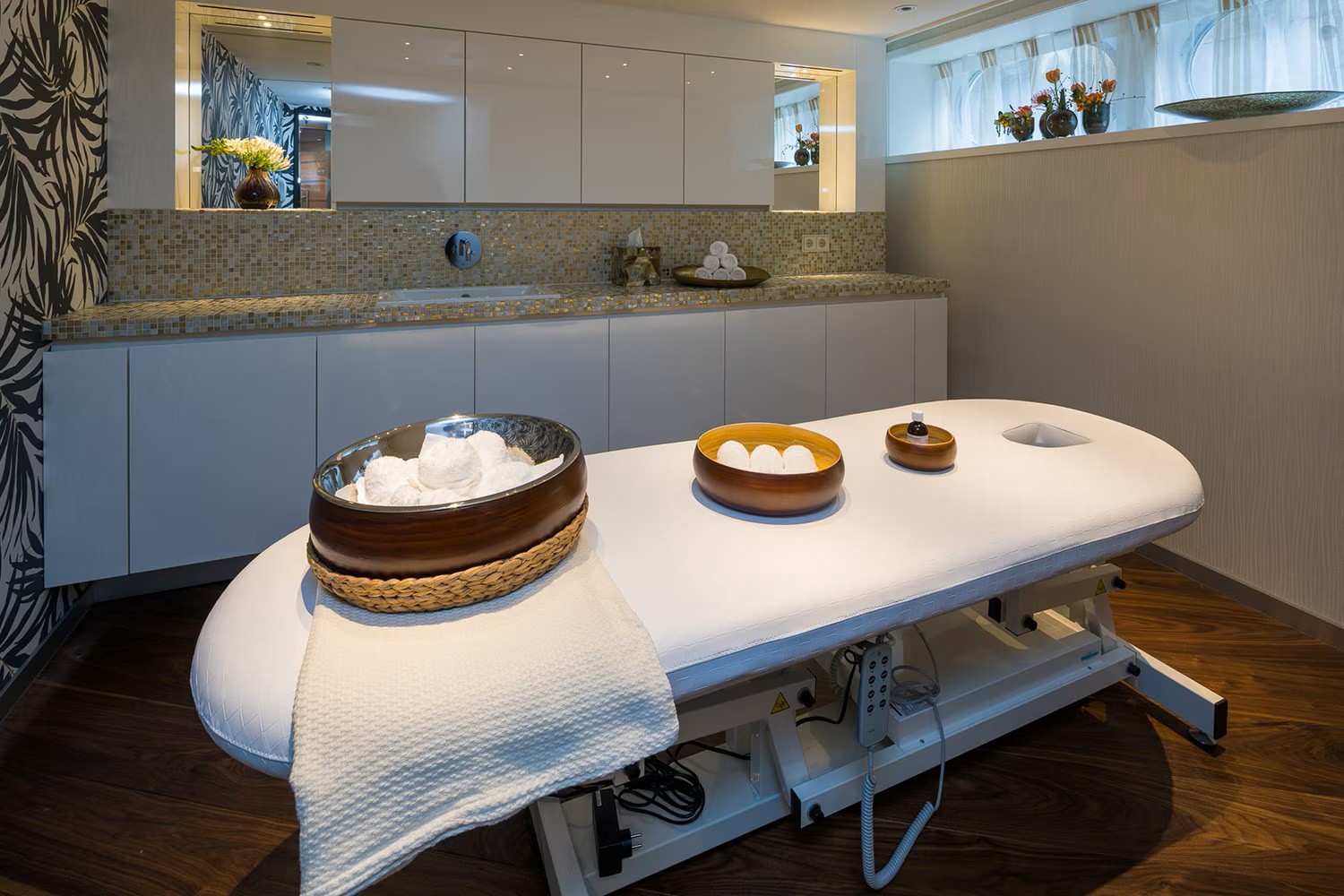
Massage Services and Hair Salon
After a marvelous day of immersive shore excursions, return to the ship and treat yourself to a bit of pampering with a soothing massage.
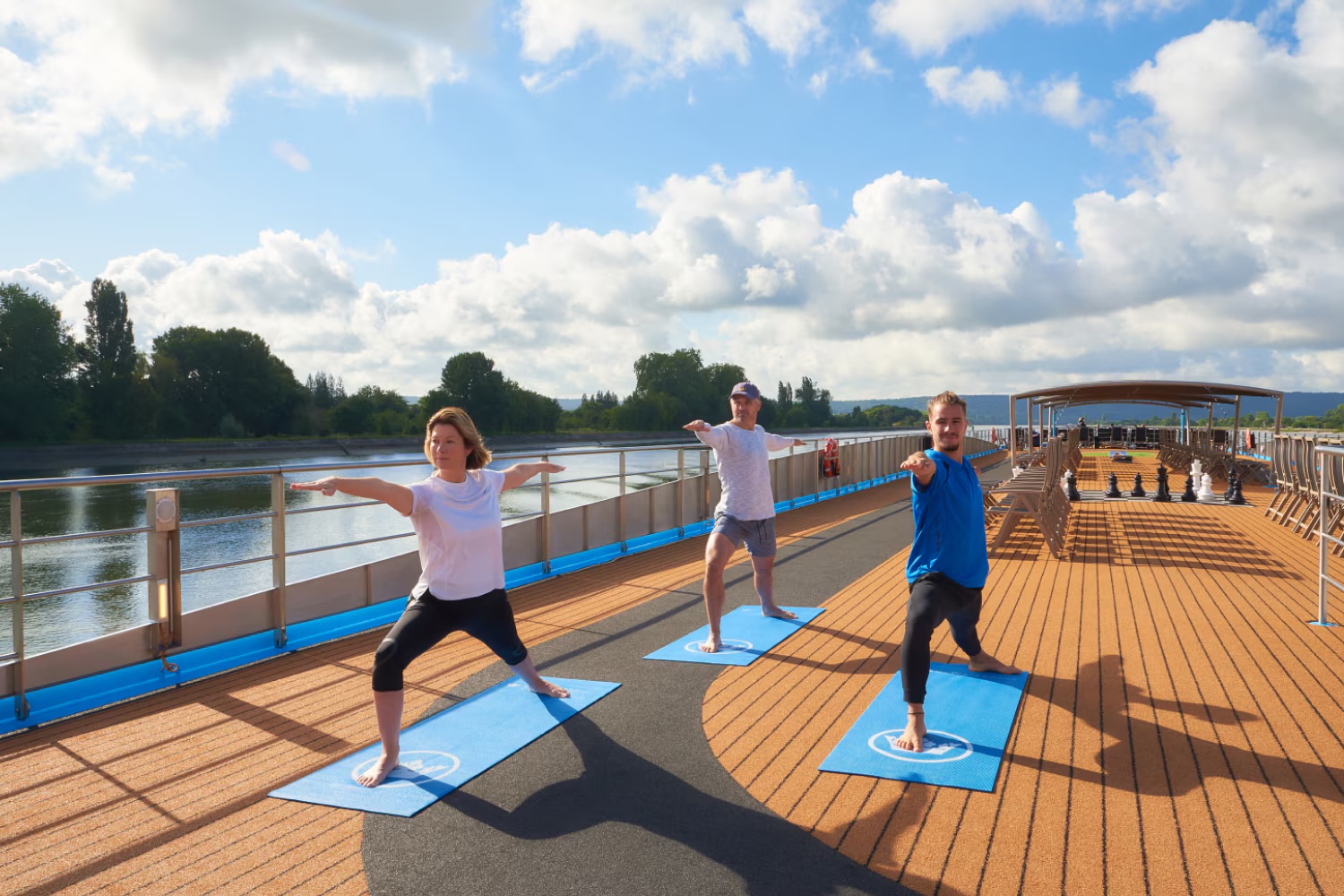
Fitness Classes
A variety of daily activities are available for guests, with group classes such as pilates, resistance band stretching, cardio, active wellness walks and dance, based on each individual Wellness Host’s expertise. Guests of all ages and activity levels are encouraged to participate and simple modifications are offered for guests with mobility limitations.
Age Restrictions
All guests under the age of 18 are to be in a stateroom with an adult and must remain supervised at all times; their safety is the responsibility of the accompanying adult(s). In the case where a triple or quad occupancy stateroom is not available or not selected, children under the age of 10 at the time of embarkation may share a stateroom with two adults only in circumstances where the child is able to share the bed with the adults – no additional bed will be provided. Please be aware that balcony staterooms of any kind may be unsafe for minors if left unsupervised. There is a minimum age limit of 4 years old, unless otherwise agreed upon by AmaWaterways.
On our Africa Safaris & Wildlife Cruise program, due to safety precautions, there is a minimum age limit of 12 years old, unless otherwise agreed upon by AmaWaterways.
AmaWaterways does not provide child-specific programs or child-minding facilities. Please reach out to us if you have any further questions regarding our child policy.
Smoking Policy
Smoking is not permitted anywhere inside any of the ships. Smoking is only permitted on the Sun Deck. For the safety and comfort of all passengers on board, your cooperation in observing the no-smoking policy is greatly appreciated.
Dietary Requirements
Please advise your Travel Agent or call us directly to advise if you have any dietary restrictions or allergies prior to embarkation. In most cases, we will do our best to accommodate special dietary requests and food allergies, but with one exception: Kosher. This diet has specific rules regarding food and its preparation and the shipboard environment does have limitations that prevent us from being able to adequately cater to this dietary need. Please note, though we can provide options to accommodate food allergies and sensitivities, we cannot guarantee there will not be any cross-contamination.
Dress Code
Comfortable, layered clothing adaptable to changing weather conditions is always advisable for daytime excursions. For the evening, “Casually elegant” attire is recommended and you may want to pack something a little dressier for the Captain’s night/Farewell Dinner – similar to how one would dress to dine at a 5-star restaurant. Comfortable shoes are recommended for excursions and workout clothing if you plan to take part in any wellness activities, active tours or use the onboard gym. Depending on the time of year, clothing that can be layered is highly recommended.
Medical Facilities
Europe: There are no medical facilities on board. However medical services can easily be called from shore if required.
Vietnam & Cambodia: We do not employ doctors or nurses on board the ships. In the event medical assistance is needed, appropriate medical facilities will be contacted. Note that response time can vary.
Africa: We do not employ doctors or nurses on board the Zambezi Queen. In the event medical assistance is needed, appropriate medical facilities will be contacted. Note that response time can vary.
Internet Access
High-speed Internet service is available free of charge as part of the in-stateroom “Entertainment-On-Demand.” Additionally, AmaWaterways offers complimentary Wi-Fi throughout the ship.
Sustainability
Environmentally-Friendly Ship Design
Our river cruise fleet has been thoughtfully designed with eco-friendly elements. These include energy-saving LED lights, special insulated windows that reduce energy needs for heating and cooling, power locks to plug into a port’s power supply instead of running generators, solar heating systems, water treatment plants that provide microfiltration and recycling of all water used on board. AmaMagna also has an innovative 10-engine configuration designed to reduce fuel consumption and solar panels have been installed on all stateroom balconies. In addition, the Zambezi Queen uses a water jet propulsion system that protects the Chobe riverbed, water-saving taps and showers, biodegradable detergents and soaps, and a five-stage water purification plant.
A Greener Onboard Experience
To reduce overall plastic consumption, we use paper straws (upon request), refillable glass water bottles in all staterooms, and hand out recyclable tetra-pak water containers for excursions across the fleet (where available). We have lessened unnecessary food waste from large-scale buffets by serving a la carte lunches on board our European fleet. For our personal audio devices used on excursions, we are proud to partner with Quietvox, which utilizes biodegradable rice paper bags and rechargeable batteries. In addition, our luggage tags and handy travel wallets are both made from recycled plastic bottle material and are now delivered to guest staterooms on board our ships in Europe, reducing our carbon footprint. The usage of our innovative myAmaCruise app and electronic travel documents has also significantly reduced paper consumption both pre-cruise and on board.