Itinerary
Day itinerary:
Losing none of its allure over the years, this floating city of canals, bridges and masks is a place of eternal beauty and enduring elegance. The lagoon of more than 100 islands is a heavenly sight, transporting visitors on a journey through time – from its Roman inception, through centuries of trade to the modern face we see today. Navigate Venice’s sparkling waterways by romantic gondola, or on cruises along wide canal boulevards. Span the Grand Canal over its iconic original crossing, the Rialto Bridge, which – with its parade of tiny shops – gives some of the city’s most endearing views. If the crowds unsettle you at any point, take two turns away from the main thoroughfares to find peace alone, amid the city’s labyrinth of tiny streets. Hurry to Piazza San Marco to be immersed in Venice’s elegant glory. Basilica San Marco transports you back to the wealthy days of the Doges, who ruled for over 1,000 years. Initially their private chapel, it’s now decorated with beautiful Byzantine mosaics. Nearby the Campanile di San Marco bell tower offers views over the higgledy-piggledy rooftops of times gone by. Just a hop skip and a jump around the corner is the Doge’s Palace, where the levels of opulence ramp up even further. Justice was meted out in this stunning Palace, with the guilty walking to the cells across the covered Bridge of Sighs. Vaporetto trips to local islands offer even more adventures to float your boat, whether it’s Murano with its world-famous glass, Torcello with its amazing Cathedrals, or Burano with its handmade lace and delightfully colourful painted houses.
Today a port town surrounded by industrial suburbs, Koper nevertheless warrants a visit. The Republic of Venice made Koper the regional capital during the 15th and 16th centuries, and the magnificent architecture of the Old Town bears witness to the spirit of those times.The most important buildings are clustered around Titov trg, the central town square. Here stands the Cathedral, which can be visited daily from 7 to noon and 3 to 7, with its fine Venetian Gothic facade and bell tower dating back to 1664. Across the square the splendid Praetor’s Palace, formerly the seat of the Venetian Grand Council, combines Gothic and Renaissance styles. From the west side of Titov trg, the narrow, cobbled Kidriceva ulica brings you down to the seafront.
Day itinerary:
With a sweeping old town of Venetian architecture sing-song Italian emanating from its cafes and even a fountain that honours the Rialto Bridge – you could be forgiven for thinking that you’d stepped off the boat into the Floating City itself while exploring Koper. Formerly an island Koper was linked artificially to the Slovenian mainland in 1825. It now serves as the only major port of Slovenia and basks in the sun of the Istrian coast which offers an alluring blend of the best of Croatian Slovenian and Italian. The nation’s capital Ljubljana also lies within easy reach. A working city with plenty of charm below its sea of terracotta roofs the picturesque Tito square lies at Koper’s heart. The Cathedral of Assumption rises above the square and towers over the narrow streets nearby. Take a deep breath and climb the 200 steps for a stunning panorama of the city. Or simply soak up the atmosphere with a wander through Čevljarska Ulica – a set of cobbled streets adorned with artisan shops small bars and restaurants. Soak up the sights of Koper the country’s oldest town or make for the Slovenian capital Ljubljana – to discover a lively city of green parks leafy open spaces and pedestrianised boulevards. The pretty Ljubljana River stretches through the city’s heart providing casual strolls and charming bike rides. Nearby encounter a scene from a fairy-tale as you see the breathlessly picturesque Bled Castle emerging from a tiny island in the centre of a cloudy-blue alpine lake.
Dalmatia’s capital for more than 1,000 years, Zadar is all too often passed over by travelers on their way to Split or Dubrovnik. What they miss out on is a city of more than 73,000 that is remarkably lovely and lively despite—and, in some measure, because of—its tumultuous history. The Old Town, separated from the rest of the city on a peninsula some 4 km (2½ miles) long and just 1,640 feet wide, is bustling and beautiful: the marble pedestrian streets are replete with Roman ruins, medieval churches, palaces, museums, archives, and libraries. Parts of the new town are comparatively dreary, a testament to what a world war followed by decades of communism, not to mention a civil war, can do to the architecture of a city that is 3,000 years old. A settlement had already existed on the site of the present-day city for some 2,000 years when Rome finally conquered Zadar in the 1st century BC; the foundations of the forum can be seen today. Before the Romans came the Liburnians had made it a key center for trade with the Greeks and Romans for 800 years. In the 3rd century BC the Romans began to seriously pester the Liburnians, but required two centuries to bring the area under their control. During the Byzantine era, Zadar became the capital of Dalmatia, and this period saw the construction of its most famous church, the 9th-century St. Donat’s Basilica. It remained the region’s foremost city through the ensuing centuries. The city then experienced successive onslaughts and occupations—both long and short—by the Osogoths, the Croatian-Hungarian kings, the Venetians, the Turks, the Habsburgs, the French, the Habsburgs again, and finally the Italians before becoming part of Yugoslavia and, in 1991, the independent republic of Croatia. Zadar was for centuries an Italian-speaking city, and Italian is still spoken widely, especially by older people. Indeed, it was ceded to Italy in 1921 under the Treaty of Rapallo (and reverted to its Italian name of Zara). Its occupation by the Germans from 1943 led to intense bombing by the Allies during World War II, which left most of the city in ruins. Zadar became part of Tito’s Yugoslavia in 1947, prompting many Italian residents to leave. Zadar’s most recent ravages occurred during a three-month siege by Serb forces and months more of bombardment during the Croatian-Serbian war between 1991 and 1995. But you’d be hard-pressed to find outward signs of this today in what is a city to behold. There are helpful interpretive signs in English all around the Old Town, so you certainly won’t feel lost when trying to make sense of the wide variety of architectural sites you might otherwise pass by with only a cursory look.
Day itinerary:
Croatia’s Capital of Cool Zadar is a dazzling mesh of influences and creativity. Glorious turquoise-water beaches and heavenly waterfalls also lie within easy reach of this energetic city of festivals and outdoor fun. See the old town with its robust city walls boasting decorative stone gateways and marble streets. The church of St Donatus was built from stones pillaged from the Roman forum while Zadar Cathedral – Dalmatia’s biggest – stands among the many architectural treats of this city which was once an impenetrable stronghold of Venice’s republic. Head for the ‘pillar of shame’ with its chains to humiliate the criminals of a bygone time – or succumb to the tempting treats of shopping in the market. The sparkling Adriatic’s waters calls you and Kolovare Beach is a mere ten-minute stroll from the old town. A day trip to Kornat National Park – which incorporates the Zadar Archipelago’s immaculate scattering of beach-fringed islands – or to the divine waterfalls of Plitvice Lakes National Park will introduce you to more of Croatia’s thrilling natural beauty. The sea truly does sing here in Zadar thanks to a unique waterfront artwork which encapsulates the city’s playful spirit. Designed to make music when the waves wash over it the ebb and flow of the Adriatic plays the Sea Organ instrument like a maestro. Not far away the Monument to the Sun is a 22-metre-wide disc which gathers the sun’s rays during the sunny days and releases the solar energy in the form of a magical light show after dark.
Nothing can prepare you for your first sight of Dubrovnik. Lying 216 km (135 miles) southeast of Split and commanding a jaw-dropping coastal location, it is one of the world’s most beautiful fortified cities. Its massive stone ramparts and fortress towers curve around a tiny harbor, enclosing graduated ridges of sun-bleached orange-tiled roofs, copper domes, and elegant bell towers. Your imagination will run wild picturing what it looked like seven centuries ago when the walls were built, without any suburbs or highways around it, just this magnificent stone city rising out of the sea.In the 7th century AD, residents of the Roman city Epidaurum (now Cavtat) fled the Avars and Slavs of the north and founded a new settlement on a small rocky island, which they named Laus, and later Ragusa. On the mainland hillside opposite the island, the Slav settlement called Dubrovnik grew up. In the 12th century the narrow channel separating the two settlements was filled in (now the main street through the Old Town, called Stradun), and Ragusa and Dubrovnik became one. The city was surrounded by defensive walls during the 13th century, and these were reinforced with towers and bastions in the late 15th century.From 1358 to 1808 the city thrived as a powerful and remarkably sophisticated independent republic, reaching its golden age during the 16th century. In 1667 many of its splendid Gothic and Renaissance buildings were destroyed by an earthquake. The defensive walls survived the disaster, and the city was rebuilt in baroque style.Dubrovnik lost its independence to Napoléon in 1808, and in 1815 passed to Austria-Hungary. During the 20th century, as part of Yugoslavia, the city became a popular tourist destination, and in 1979 it was listed as a UNESCO World Heritage Site. During the war for independence, it came under heavy siege. Thanks to careful restoration, few traces of damage remain; however, there are maps inside the Pile and Ploče Gates illustrating the points around the city where damage was done. It’s only when you experience Dubrovnik yourself that you can understand what a treasure the world nearly lost
Day itinerary:
Croatia’s crowning glory rears up vertically from the tranquil waters of the Adriatic and Dubrovnik’s daunting fortresses town is a truly imposing sight to behold. Encircled by chunky stone walls so thick and dramatic they could have been purpose-built as a film set this city’s unmatched old town is the setting for countless films and shows – from Star Wars to Robin Hood Game of Thrones and every production in-between seeking a truly authentic medieval flavour. Fully restored now the stone streets of the city take you through a beautiful mosaic of architectural splendour baroque churches and splashing fountains. Tapering alleys rocket up from the central boulevard of Stradun offering spectacular views down but you’ll need to walk the city walls to appreciate the fortress city’s full scale. Visit the neighbouring fort of Lovrijenac for another perspective or swing up to Srd fortress’s glorious panorama on a cable car. Dubrovnik’s streets are crammed with eateries and candlelit tables where couples splash wine into glasses and enjoy gnocchi mixed with creamy truffle sauces. Nearby beaches like Banje are also close by and hidden bays reward the intrepid who venture out beyond the old town. Take sunset drinks to sit back and watch as flotillas of sea kayaks roll by or sail on the pristine waters to explore island gems like Lokrum – where peacocks are the only permanent residents.
Split’s ancient core is so spectacular and unusual that a visit is more than worth your time. The heart of the city lies within the walls of Roman emperor Diocletian’s retirement palace, which was built in the 3rd century AD. Diocletian, born in the nearby Roman settlement of Salona in AD 245, achieved a brilliant career as a soldier and became emperor at the age of 40. In 295 he ordered this vast palace to be built in his native Dalmatia, and when it was completed he stepped down from the throne and retired to his beloved homeland. Upon his death, he was laid to rest in an octagonal mausoleum, around which Split’s magnificent cathedral was built.In 615, when Salona was sacked by barbarian tribes, those fortunate enough to escape found refuge within the stout palace walls and divided up the vast imperial apartments into more modest living quarters. Thus, the palace developed into an urban center, and by the 11th century the settlement had expanded beyond the ancient walls.Under the rule of Venice (1420–1797), Split—as a gateway to the Balkan interior—became one of the Adriatic’s main trading ports, and the city’s splendid Renaissance palaces bear witness to the affluence of those times. When the Habsburgs took control during the 19th century, an overland connection to Central Europe was established by the construction of the Split–Zagreb–Vienna railway line.After World War II, the Tito years saw a period of rapid urban expansion: industrialization accelerated and the suburbs extended to accommodate high-rise apartment blocks. Today the historic center of Split is included on UNESCO’s list of World Heritage Sites.
Day itinerary:
Bathing in the Dalmatian Coast’s generous sunshine and overlooking sparkling island-studded waters Split is a city of romantic beauty built around an extraordinary – still beating – historical heart. The setting may be spectacular but it’s the Diocletian’s Palace – a Roman remain of incredible scale and detail that is truly bewitching. With a natural backdrop of dramatic limestone mountains and Croatia’s trademark scenic wonders all around Split is a true heavyweight of the Adriatic. To enter Split’s Diocletian’s Palace is to step into a beautiful time warp. Head first to the Cathedral of Saint Domnius where a hollow bell tower rockets up puncturing the sky. The perfume of lavender hangs heavy wherever you walk in the old town where tucked shops offer artisan chocolates dried figs and freshly-ground coffees. The expansive seafront promenade is all palm trees buzzing bars and eateries and further out you’ll find the peace of Marion Hill – where you can climb to some of the best views in town. Or take the far less exerting wander to Sustipan cemetery’s breathtaking panorama of sea city and distant islands. Trips to island paradises like Hvar and Brac are tempting as are longer excursions to sites like Krka National Park’s Waterfalls – where wide terraces of frothing water thunder into cooling swimmable splash pools below. Nearby Trogir is another UNESCO World Heritage Site offering a cosier no less charming old town and historic port.
Backed by imposing mountains, tiny Kotor lies hidden from the open sea, tucked into the deepest channel of the Bokor Kotorska (Kotor Bay), which is Europe’s most southerly fjord. To many, this town is more charming than its sister UNESCO World Heritage Site, Dubrovnik, retaining more authenticity, but with fewer tourists and spared the war damage and subsequent rebuilding which has given Dubrovnik something of a Disney feel.Kotor’s medieval Stari Grad (Old Town) is enclosed within well-preserved defensive walls built between the 9th and 18th centuries and is presided over by a proud hilltop fortress. Within the walls, a labyrinth of winding cobbled streets leads through a series of splendid paved piazzas, rimmed by centuries-old stone buildings. The squares are now haunted by strains from buskers but although many now house trendy cafés and chic boutiques, directions are still given medieval-style by reference to the town’s landmark churches.In the Middle Ages, as Serbia’s chief port, Kotor was an important economic and cultural center with its own highly regarded schools of stonemasonry and iconography. From 1391 to 1420 it was an independent city-republic and later, it spent periods under Venetian, Austrian, and French rule, though it was undoubtedly the Venetians who left the strongest impression on the city’s architecture. Since the breakup of Yugoslavia, some 70% of the stone buildings in the romantic Old Town have been snapped up by foreigners, mostly Brits and Russians. Porto Montenegro, a new marina designed to accommodate some of the world’s largest super yachts, opened in nearby Tivat in 2011, and along the bay are other charming seaside villages, all with better views of the bay than the vista from Kotor itself where the waterside is congested with cruise ships and yachts. Try sleepy Muo or the settlement of Prčanj in one direction around the bay, or Perast and the Roman mosaics of Risan in the other direction.
Day itinerary:
Embedded into the slopes of the steep Lovćen mountain and overlooking the deep blue Adriatic the fortified town of Kotor boasts a spectacular imposing staging that few can match. Sq Squeezing in through the tight Bay of Kotor is a daunting and impressive approach in itself as you arrive via one of Europe’s most stunning waterways. A pearl of Montenegro and the Adriatic Kotor’s warren-like streets drip with history and authenticity. Under Venetian influence for four centuries the city’s UNESCO World Heritage Site old town invites you to wander amid atmospheric stone-clad streets overlooked by a sea of terracotta roofs and the double towers of the cathedral. Many favour Kotor for its compact layout smaller crowds and authenticity however – having been spared from shelling during Yugoslavia’s breakup. The tightknit streets here are patrolled by a slinking population of feline residents who were adopted as the town’s mascots after being left behind by transient trader ships. Learn of the city’s extensive heritage on the waves in the dedicated maritime museum that is contained within Grgurina Palace. Pick your way through tight alleys of workshops and studios walking below fresh laundry strung from windows before settling into shiny paved piazzas for an afternoon coffee or seafood meal. If you’re up for an aerobic challenge tackle the 1 350 steps up the steep walls to St John’s fortress. The views over the gorgeous bay make the arduous slog worth it.
Bari, capital of the province of Apulia, lies on southern Italy’s Adriatic coast. Its busy port is a leading commercial and industrial centre as well as a transit point for travellers catching ferries across the Adriatic to Greece. Bari comprises a new and an old town. To the north, on a promontory between the old and new harbours, lies the picturesque old town, or Citta Vecchia, with a maze of narrow, crooked streets. To the south is the spacious and regularly planned new town, which has developed considerably since 1930, when the Levant Fair was first held here. The heart of the modern town is Piazza della Liberta. The busy thoroughfare, Corso Vittorio Emanuele II, separates the new town from the old. At the eastern end of the Corso begins the Lungomare Nazario Sauro, a magnificent seafront promenade that runs along the old harbour. Bari and the Apulian region were long recognized for their strategic location, attracting a succession of colonizers such as the Normans, Moors and Spaniards, each leaving their mark.
Day itinerary:
Explore further afield to immerse yourself in Puglia’s beauty and cultural wonders – or simply soak up the atmosphere roaming the crooked streets of Bari’s old town – Bari Vecchia – where matriarchs roll out sheets of pasta in open doorways footballs rattle along dusty streets and sun-wrinkled old men lay out hands of cards. The photogenic old town’s streets are crowned by the chalky white Cattedrale di San Sabino where vaulted archways pretty mosaics and a large rose window await. Wander along the ruler-straight Lungomare Promenade to breathe in fresh salty air and look up at the slowly twirling ferris wheel – take a ride for some of the best views out over Bari’s waterfront. Feeling hungry? Enjoy some local cucina povera – cooking of the poor – deeply traditional food that is simple and rich in elemental flavours. Warm focaccia bread pasted with fruity local olive oil and ear-shaped orecchiette pasta tangled with sun-gorged cherry tomatoes and creamy ricotta cheese is all on the menu. Puglia’s whitewashed ancient villages stunning beaches and laid-back down-to-earth approach to life means you’ll most likely want to explore further than just Bari. Powdery white sand beaches await at Salento – punctuated by arching rock formations. The incredible cave dwellings of Matera – 2019’s European Capital of Culture – are also easily within your grasp as is Polignano a Mare’s spectacularly scenic narrow wedge of urban beach.
Naples, in the Campania region, is Italy’s third largest city. Its claim to fame is the spectacular location along one of the world’s most splendid bays, backed by the perfect cone of Mount Vesuvius. In addition to its beautiful setting, Naples’ surprises with other outstanding attractions such as the Royal Palace, San Carlos Opera House, the impressive National Archaeological Museum and the Castel Nuovo, dating from the 13th-century. The city’s central area is best explored on foot. Chaotic traffic conditions make driving around the city a very frustrating experience. Naples provides a convenient starting point for trips to such favored destinations as Pompeii, Herculaneum and Mount Vesuvius. The Isle of Capri can be reached via a 45-minute hydrofoil service. The region of Campania was home to Greeks settlers some 300 years before Rome was founded. Pompeii, too, was a Greek town before being conquered by the Romans during the 5th century BC. It was under the Romans that Pompeii flourished and grew prosperous. When Mount Vesuvius erupted in 79 AD, the population of 20,000 was wiped out, but dozens of buildings were preserved under layers of cinder more than 20 feet deep. The most important finds from Pompeii are displayed in Naples’ National Archaeological Museum. A visit here will no doubt enhance a visit to ancient Pompeii.
Day itinerary:
Raw, unvarnished and refreshingly authentic, Naples is Italy’s third-largest city and a place like nowhere else. They say ‘see Naples and die,’ and you’ll soon discover the unique energy and exuberance of this sprawling city, which balances urban grit and timeless wonder like no other. Set on the breathtaking Bay of Naples, with the looming cone of Mount Vesuvius puncturing the blue sky close by, it can take a little time for Naples to work its way under your skin – but once you attune to its rhythms, you’ll be hopelessly under its spell. Naples’ densely packed, towering streets lend a claustrophobic, canyon-like feel to the UNESCO World Heritage Site city centre. Here, overflowing market stalls sell handcrafted goods along tight alleyways, and hidden courtyards serve up glasses of glowing Aperol Spritz. The smell of freshly-baked focaccias and drying washing hang over the thoroughly lived-in streets, while stunning baroque churches rise out of nowhere. Wherever you wander, this is a city sprinkled with immense cultural treasures and artistry – from palaces to fortresses and ruins from antiquity. Unpretentious food, made from simple, flavourful ingredients is a feature of Naples’ revered cuisine, and the birthplace of pizza is the perfect city to taste fire-baked, shockingly under-priced, margherita. Wash it down with a bottle of wine perfected by the fertile slopes of Vesuvius. A sharp espresso is always welcome to punctuate your time exploring. Mount Vesuvius’s destructive impulses destroyed and conserved the ancient city of Pompeii in the blink of an eye, and the town is one of the best-preserved Roman ruins in the world. Naples’ National Archaeological Museum displays many magnificent finds should you wish to stay in the city. The Amalfi coast’s immeasurable beauty also stretches out close by, while Capri’s glorious island glamorously luxuriates just offshore.
Naples, in the Campania region, is Italy’s third largest city. Its claim to fame is the spectacular location along one of the world’s most splendid bays, backed by the perfect cone of Mount Vesuvius. In addition to its beautiful setting, Naples’ surprises with other outstanding attractions such as the Royal Palace, San Carlos Opera House, the impressive National Archaeological Museum and the Castel Nuovo, dating from the 13th-century. The city’s central area is best explored on foot. Chaotic traffic conditions make driving around the city a very frustrating experience. Naples provides a convenient starting point for trips to such favored destinations as Pompeii, Herculaneum and Mount Vesuvius. The Isle of Capri can be reached via a 45-minute hydrofoil service. The region of Campania was home to Greeks settlers some 300 years before Rome was founded. Pompeii, too, was a Greek town before being conquered by the Romans during the 5th century BC. It was under the Romans that Pompeii flourished and grew prosperous. When Mount Vesuvius erupted in 79 AD, the population of 20,000 was wiped out, but dozens of buildings were preserved under layers of cinder more than 20 feet deep. The most important finds from Pompeii are displayed in Naples’ National Archaeological Museum. A visit here will no doubt enhance a visit to ancient Pompeii.
Day itinerary:
Raw, unvarnished and refreshingly authentic, Naples is Italy’s third-largest city and a place like nowhere else. They say ‘see Naples and die,’ and you’ll soon discover the unique energy and exuberance of this sprawling city, which balances urban grit and timeless wonder like no other. Set on the breathtaking Bay of Naples, with the looming cone of Mount Vesuvius puncturing the blue sky close by, it can take a little time for Naples to work its way under your skin – but once you attune to its rhythms, you’ll be hopelessly under its spell. Naples’ densely packed, towering streets lend a claustrophobic, canyon-like feel to the UNESCO World Heritage Site city centre. Here, overflowing market stalls sell handcrafted goods along tight alleyways, and hidden courtyards serve up glasses of glowing Aperol Spritz. The smell of freshly-baked focaccias and drying washing hang over the thoroughly lived-in streets, while stunning baroque churches rise out of nowhere. Wherever you wander, this is a city sprinkled with immense cultural treasures and artistry – from palaces to fortresses and ruins from antiquity. Unpretentious food, made from simple, flavourful ingredients is a feature of Naples’ revered cuisine, and the birthplace of pizza is the perfect city to taste fire-baked, shockingly under-priced, margherita. Wash it down with a bottle of wine perfected by the fertile slopes of Vesuvius. A sharp espresso is always welcome to punctuate your time exploring. Mount Vesuvius’s destructive impulses destroyed and conserved the ancient city of Pompeii in the blink of an eye, and the town is one of the best-preserved Roman ruins in the world. Naples’ National Archaeological Museum displays many magnificent finds should you wish to stay in the city. The Amalfi coast’s immeasurable beauty also stretches out close by, while Capri’s glorious island glamorously luxuriates just offshore.
Day itinerary:
A summer escape for Rome’s historic elite the stacked waterfront of Porto Santo Stefano is a secluded taste of idyllic southern Tuscany. Physically closer to Rome than Florence the city is strung to Italy’s western coast by two sandy harnesses and sits on the unqiue peninsula of Monte Argentario – which was once an island. Flamboyant pink flamingos and herons stroll through the encased lagoon while Porto Santo Stefano’s waterfront hums with clinking cafes and strolling visitors. The luxury yachts in the harbour show that Porto Santo Stefano has lost none of its luxury appeals and with beaches wild hikes and waterfront beauty it continues to lure visitors to this secluded escape. Known for its fishing and cuisine – which is based around heavy use of the Tyrrhenian Sea’s juicy bounty. Stroll to Piazza dei Rioni for a dripping lemon gelato or wander the streets noticing the lingering World War II damage – the city was heavily bombed during the conflict. Fortunately the historic star-shaped Spanish fort was spared and it still watches out resolutely over the waters. Rugged coastline falls to secluded beaches with a wilder unkempt charm. Sail the coves – seeing cascading olive groves – or island-hop to Giglio and Giannuti which lie 12 miles from shore and can be seen from the monastery topped Argentario mountain. On the other side of the promontory you’ll find Porto Ercole – where the lifeless body of the Old Master Caravaggio was discovered.
Livorno is a gritty city with a long and interesting history. In the early Middle Ages it alternately belonged to Pisa and Genoa. In 1421 Florence, seeking access to the sea, bought it. Cosimo I (1519–74) started construction of the harbor in 1571, putting Livorno on the map. After Ferdinando I de’ Medici (1549–1609) proclaimed Livorno a free city, it became a haven for people suffering from religious persecution; Roman Catholics from England and Jews and Moors from Spain and Portugal, among others, settled here. The Quattro Mori (Four Moors), also known as the Monument to Ferdinando I, commemorates this. (The statue of Ferdinando I dates from 1595, the bronze Moors by Pietro Tacca from the 1620s.)In the following centuries, and particularly in the 18th, Livorno boomed as a port. In the 19th century the town drew a host of famous Britons passing through on their grand tours. Its prominence continued up to World War II, when it was heavily bombed. Much of the town’s architecture, therefore, postdates the war, and it’s somewhat difficult to imagine what it might have looked like before. Livorno has recovered from the war, however, as it’s become a huge point of departure for container ships, as well as the only spot in Tuscany for cruise ships to dock for the day.Most of Livorno’s artistic treasures date from the 17th century and aren’t all that interesting unless you dote on obscure baroque artists. Livorno’s most famous native artist, Amedeo Modigliani (1884–1920), was of much more recent vintage. Sadly, there’s no notable work by him in his hometown.There may not be much in the way of art, but it’s still worth strolling around the city. The Mercato Nuovo, which has been around since 1894, sells all sorts of fruits, vegetables, grains, meat, and fish. Outdoor markets nearby are also chock-full of local color. The presence of Camp Darby, an American military base just outside town, accounts for the availability of many American products.If you have time, Livorno is worth a stop for lunch or dinner at the very least.
Day itinerary:
There are few more elegant places to salute the sunset than Terrazza Mascagni, Livorno’s refined chessboard piazza. A historic port, and a beachy gateway to Tuscany, Livorno welcomes you ashore to explore this enchanted Italian region’s sun-soaked beauty, rich flavours and world-renowned fine art. Stay in Livorno to explore ‘Piccolo Venezia’, or ‘Little Venice’ – a quarter of the town that’s laced with canals, little marble bridges and plenty of tempting eateries. With its bustling market, fortresses and iconic waterfront, there’s plenty to keep you busy here, but most will be tempted to venture inland to explore more of Tuscany’s many charms and artistic wonders. Test your nose, as you breathe in the subtleties of Tuscany’s vineyard-draped scenery, and visit wineries showcasing the best of the renowned flavours of the Bolgheri wine-growing area. Or head out to Prato, where you’ll find tightly-woven textile history. Pisa’s showpiece tower is within reach, as is Florence’s city of immense and imaginative renaissance beauty. Admire the delicate carving of Michelangelo’s masterpiece, the David statue, and note the provocative stance as he casts a dismissive glance towards Rome. Stand before the city’s majestic black and white cathedral – the Cathedral of Santa Maria del Fiore – with its colossal brick dome. The view down over Florence’s river and grand dome from Piazzale Michelangelo, meanwhile, is one of Italy’s finest. However you choose to spend your time in Tuscany, you’ll discover an artistic region, filled with beauty designed to appeal to every sense.
On one of the best stretches of the Mediterranean, this classic luxury destination is one of the most sought-after addresses in the world. With all the high-rise towers you have to look hard to find the Belle Époque grace of yesteryear. But if you head to the town’s great 1864 landmark Hôtel de Paris—still a veritable crossroads of the buffed and befurred Euro-gentry—or enjoy a grand bouffe at its famous Louis XV restaurant, or attend the opera, or visit the ballrooms of the casino, you may still be able to conjure up Monaco’s elegant past. Prince Albert II, a political science graduate from Amherst College, traces his ancestry to Otto Canella, who was born in 1070. The Grimaldi dynasty began with Otto’s great-great-great-grandson, Francesco Grimaldi, also known as Frank the Rogue. Expelled from Genoa, Frank and his cronies disguised themselves as monks and in 1297 seized the fortified medieval town known today as Le Rocher (the Rock). Except for a short break under Napoléon, the Grimaldis have been here ever since, which makes them the oldest reigning family in Europe. In the 1850s a Grimaldi named Charles III made a decision that turned the Rock into a giant blue chip. Needing revenue but not wanting to impose additional taxes on his subjects, he contracted with a company to open a gambling facility. The first spin of the roulette wheel was on December 14, 1856. There was no easy way to reach Monaco then—no carriage roads or railroads—so no one came. Between March 15 and March 20, 1857, one person entered the casino—and won two francs. In 1868, however, the railroad reached Monaco, and it was filled with Englishmen who came to escape the London fog. The effects were immediate. Profits were so great that Charles eventually abolished all direct taxes. Almost overnight, a threadbare principality became an elegant watering hole for European society. Dukes (and their mistresses) and duchesses (and their gigolos) danced and dined their way through a world of spinning roulette wheels and bubbling champagne—preening themselves for nights at the opera, where such artists as Vaslav Nijinsky, Sarah Bernhardt, and Enrico Caruso came to perform. Along with the tax system, its sensational position on a broad, steep peninsula that bulges into the Mediterranean—its harbor sparkling with luxury cruisers, its posh mansions angling awnings toward the nearly perpetual sun—continues to draw the rich and famous. One of the latest French celebrities to declare himself “Monégasque,” thus giving up his French passport, is superchef Alain Ducasse, who said that he made the choice out of affection for Monaco rather than tax reasons. Pleasure boats vie with luxury cruisers in their brash beauty and Titanic scale, and teams of handsome young men—themselves dyed blond and tanned to match—scour and polish every gleaming surface. As you might expect, all this glitz doesn’t come cheap. Eating is expensive, and even the most modest hotels cost more here than in nearby Nice or Menton. As for taxis, they don’t even have meters so you are completely at the driver’s mercy (with prices skyrocketing during events such as the Grand Prix). For the frugal, Monaco is the ultimate day-trip, although parking is as coveted as a room with a view. At the very least you can afford a coffee at Starbucks. The harbor district, known as La Condamine, connects the new quarter, officially known as Monte Carlo with Monaco-Ville (or Le Rocher), a medieval town on the Rock, topped by the palace, the cathedral, and the Oceanography Museum. Have no fear that you’ll need to climb countless steps to get to Monaco-Ville, as there are plenty of elevators and escalators climbing the steep cliffs. But shuttling between the lovely casino grounds of Monte Carlo and Old Monaco, separated by a vast port, is a daunting proposition for ordinary mortals without wings, so hop on the No. 1 bus from Saint Roman, or No. 2 from the Jardin Exotique – Both stop at Place du Casino and come up to Monaco Ville.
Day itinerary:
Glitzy glamorous and unashamedly luxurious – live the high life in Monte Carlo. From the super-yachts jostling for position in the harbour to the lavish bars splashing out iced champagne tiny Monaco’s only city is a high rolling decadent affair – and a gloriously indulgent sun-soaked taste of the good life. Famed for its low tax status – and the Formula One race that roars through its hairpin bends and tight streets each year – Monaco is the ultimate playground of the rich and famous. Monaco may be the world’s second-smallest country – only the Vatican has a smaller footprint – but Monte Carlo has a confidence impact and appeal that few can match. The gilded Royal Palace adds an air of regal glory and whether you want to soak up the culture at the opera or raise the stakes at a casino – doing your finest 007 impressions – you’ll feel very much at home here. Soar above the high-rise hotels and glorious casinos in a helicopter to see the city from above and admire landmarks like the cathedral where Grace Kelly married the Prince of Monaco in 1956. High-end fashion fragrances and fancy adornments await in the gold-label shops of Monte Carlo’s lavish shopping streets while the old town’s pink and lemon floral facades offer an authentic balance of historic character to counterpoint the well-heeled excesses. A wonderful escape revel in old-world glitz and glam as you admire twinkling chandeliers and wander between palatial architecture while enjoying your time in Monte Carlo’s abundant wonderland.
Ship features
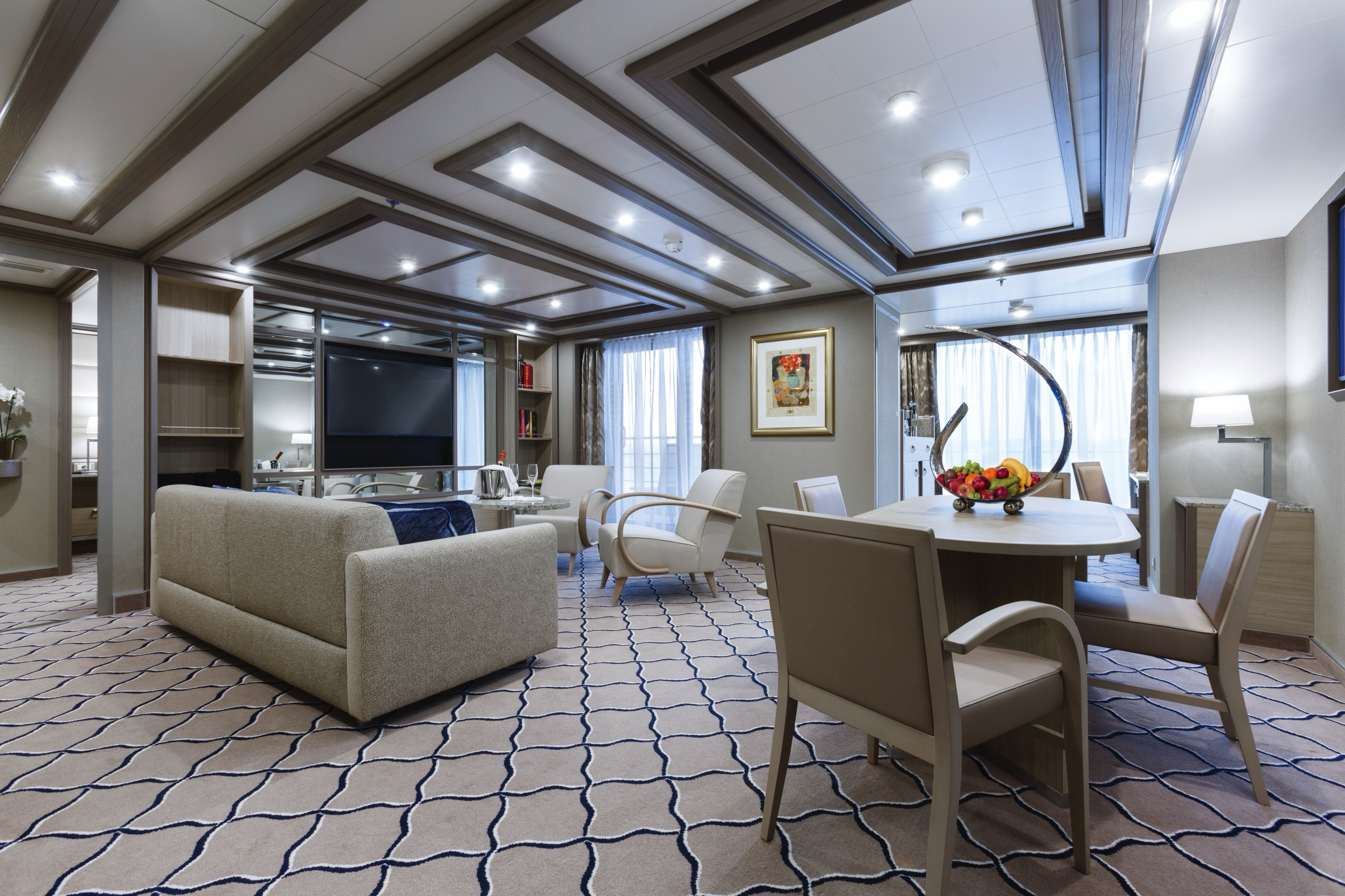
Owner's Suite
Available in a one- or two-bedroom configuration (so perfect for families), the Owner’s suite is the epitome of elegance at sea. A large seating area is the hub of the suite, equipped with all modern conveniences—think a Bose sound system, an interactive 55″ TV, and even an Illy coffee machine! Whether you are inside or relaxing on the large teak veranda, the Owner’s suite offers supreme comfort every hour of the day!
- One bedroom: up to 98 sq m (12 sq m)
- Two bedrooms: 119–129 sq m (12 sq m )
Essentials
- Deck(s): 9
- Section: Mid-Ship
Characteristics
- Veranda
- Separate dining area
- Living room with sitting area
- Double vanity
- Separate shower
- Whirlpool bath
- Walk-in wardrobe with personal safe
Furniture
- King size bed
- Writing desk
- Vanity table
- Luxury bed mattresses
Media & Communication
- Unlimited Premium Wi-Fi
- 2 large flat screen TVs with Interactive Media Library
- Sound system with bluetooth connectivity
- Direct dial telephone
- Wall mounted USB-C mobile device chargers
- Dual voltage 110/220 outlets
Onboard Services
- Butler service
- Complimentary laundry, pressing & wet cleaning
- Dinner for two in La Dame, one evening per voyage,
- Two hours of worldwide phone use, per voyage segment
- Champagne on arrival
Amenities
- Espresso machine
- Pillow menu
- Refrigerator and bar setup stocked with your preferences
- Plush bathrobe
- Luxury bath amenities
- Umbrella
- Hair Dryer
- Slippers
*The difference in size is largely due to a larger entry corridor and does not affect the living or sleeping area.
Images are intended as a general reference. Features, materials, finishes and layout may be different than shown.
Please note that the third guest will sleep on a comfortable sofa bed in the reception area of the suite.
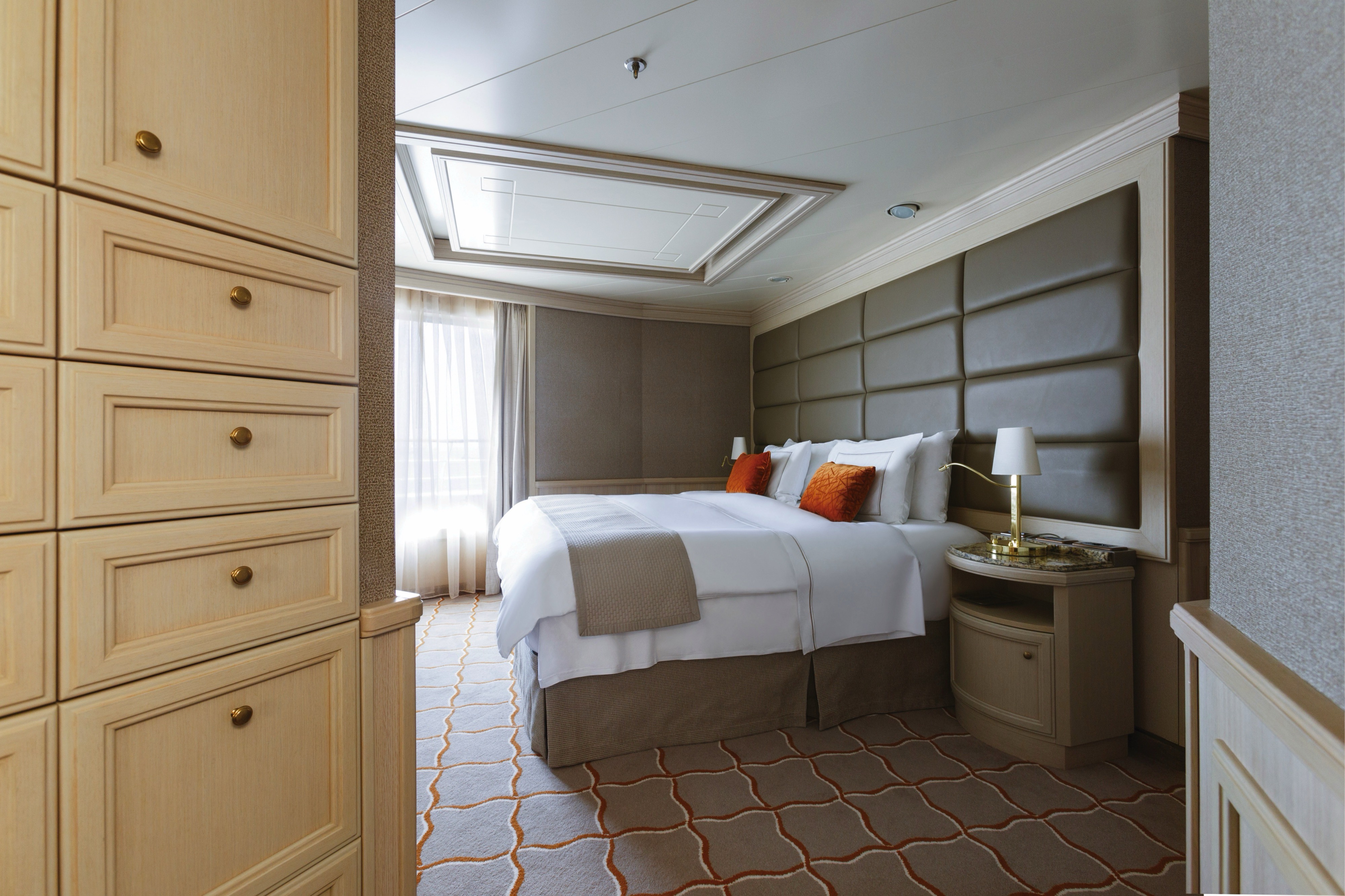
Grand Suite
A grand traveler needs a grand suite, and we are happy to oblige! Get ready to scale new heights of comfort in our ultra-luxury Grand Suite. Situated at the front of the ship for the most spectacular views, the Grand Suite is for travelers who like the finer things in life. A large veranda, furnished with sun beds, makes for perfect memories. Indoors, the sumptuous seating area and cozy bedrooms are the very definition of relaxing in style.
- One bedroom: 137–146 sq m including veranda (44–53 sq m)
- Two bedrooms: 174–183 sq m including veranda (50–59 sq m)
Essentials
- Deck(s): 8, 9
- Section: Forward
Characteristics
- Veranda
- Separate dining area
- Living room with sitting area
- Double vanity
- Separate shower
- Whirlpool bath
- Walk-in wardrobe with personal safe
Furniture
- King size bed
- Writing desk
- Vanity table
- Luxury bed mattresses
Media & Communication
- Unlimited Premium Wi-Fi
- 2 large flat screen TVs with Interactive Media Library
- Sound system with bluetooth connectivity
- Direct dial telephone
- Wall mounted USB-C mobile device chargers
- Dual voltage 110/220 outlets
Onboard Services
- Butler service
- Complimentary laundry, pressing & wet cleaning
- Dinner for two in La Dame, one evening per voyage,
- Two hours of worldwide phone use, per voyage segment
- Champagne on arrival
Amenities
- Espresso machine
- Pillow menu
- Refrigerator and bar setup stocked with your preferences
- Plush bathrobe
- Luxury bath amenities
- Umbrella
- Hair Dryer
- Slippers
Images are intended as a general reference. Features, materials, finishes and layout may be different than shown.
Please note that the 3rd guest will sleep on a comfortable sofa bed in the reception area of the suite.
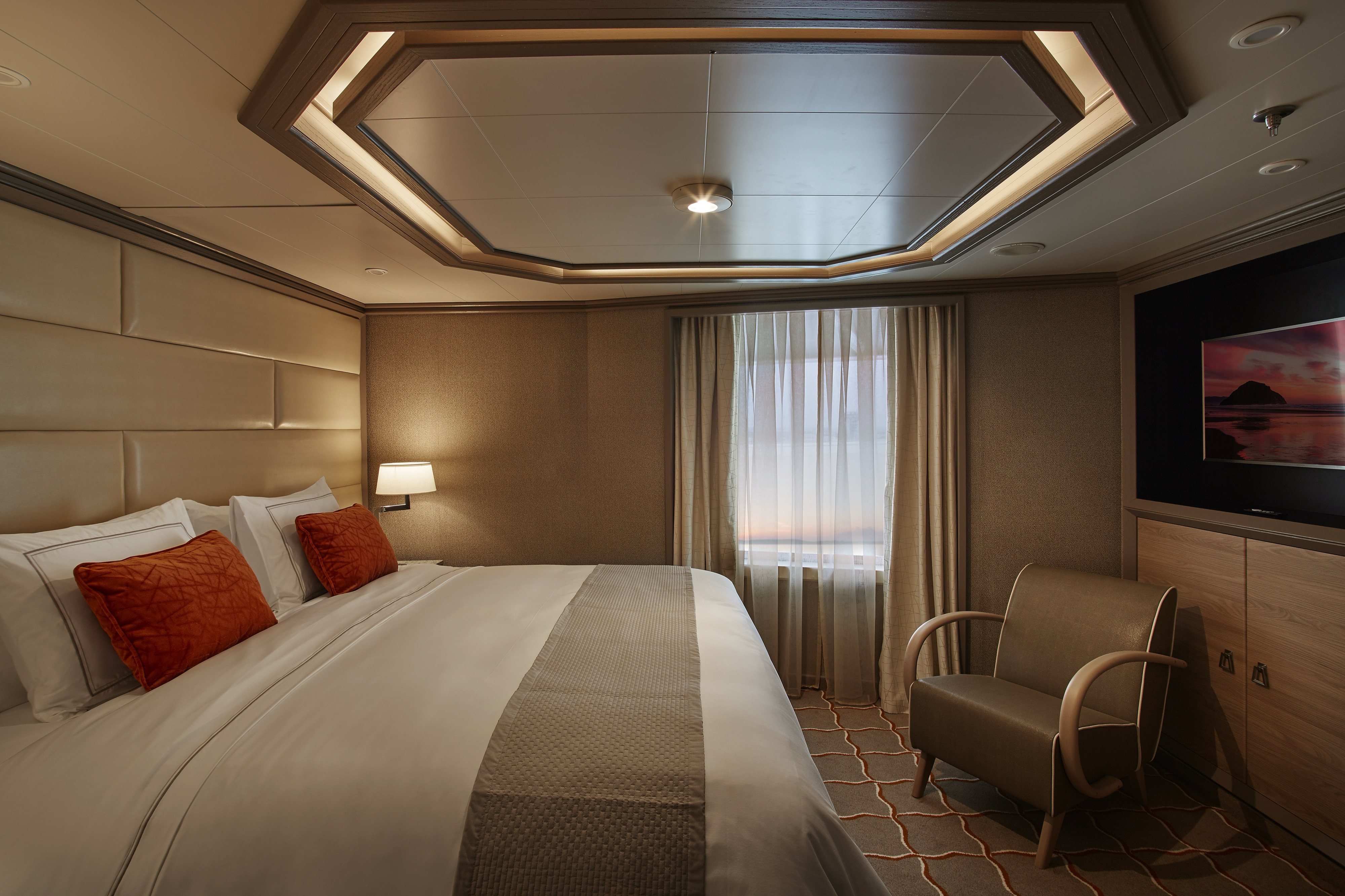
Royal Suite
With just two Royal Suites on board, this stateroom is in a class all of its own! Spacious and dignified, commanding and majestic, there’s no secret to why we named this the Royal Suite. Ample indoor space with a living room (including state-of-the-art entertainment systems), twin beds that can be joined upon demand, and even an adjoining bedroom if required—the Royal Suite is the answer when traveling with the family! Not to mention unlimited Wi-Fi, a sumptuous marble bathroom, and spacious teak veranda—the Royal Suite is fit for a king!
- One bedroom: 105 sq m including veranda (12 sq m)
- Two bedrooms: 142 sq m including veranda (18 sq m )
Essentials
- Deck(s): 7
- Section: Forward
Characteristics
- Veranda
- Separate dining area
- Living room with sitting area
- Double vanity
- Separate shower
- Whirlpool bath
- Walk-in wardrobe with personal safe
Furniture
- King size bed
- Writing desk
- Vanity table
- Luxury bed mattresses
Media & Communication
- Unlimited Premium Wi-Fi
- 2 large flat screen TVs with Interactive Media Library
- Sound system with bluetooth connectivity
- Direct dial telephone
- Wall mounted USB-C mobile device chargers
- Dual voltage 110/220 outlets
Onboard Services
- Butler service
- Complimentary laundry, pressing & wet cleaning
- Dinner for two in La Dame, one evening per voyage,
- Two hours of worldwide phone use, per voyage segment
- Champagne on arrival
Amenities
- Espresso machine
- Pillow menu
- Refrigerator and bar setup stocked with your preferences
- Plush bathrobe
- Luxury bath amenities
- Umbrella
- Hair Dryer
- Slippers
Images are intended as a general reference. Features, materials, finishes and layout may be different than shown.
Please note that the 3rd guest will sleep on a comfortable sofa bed in the reception area of the suite.
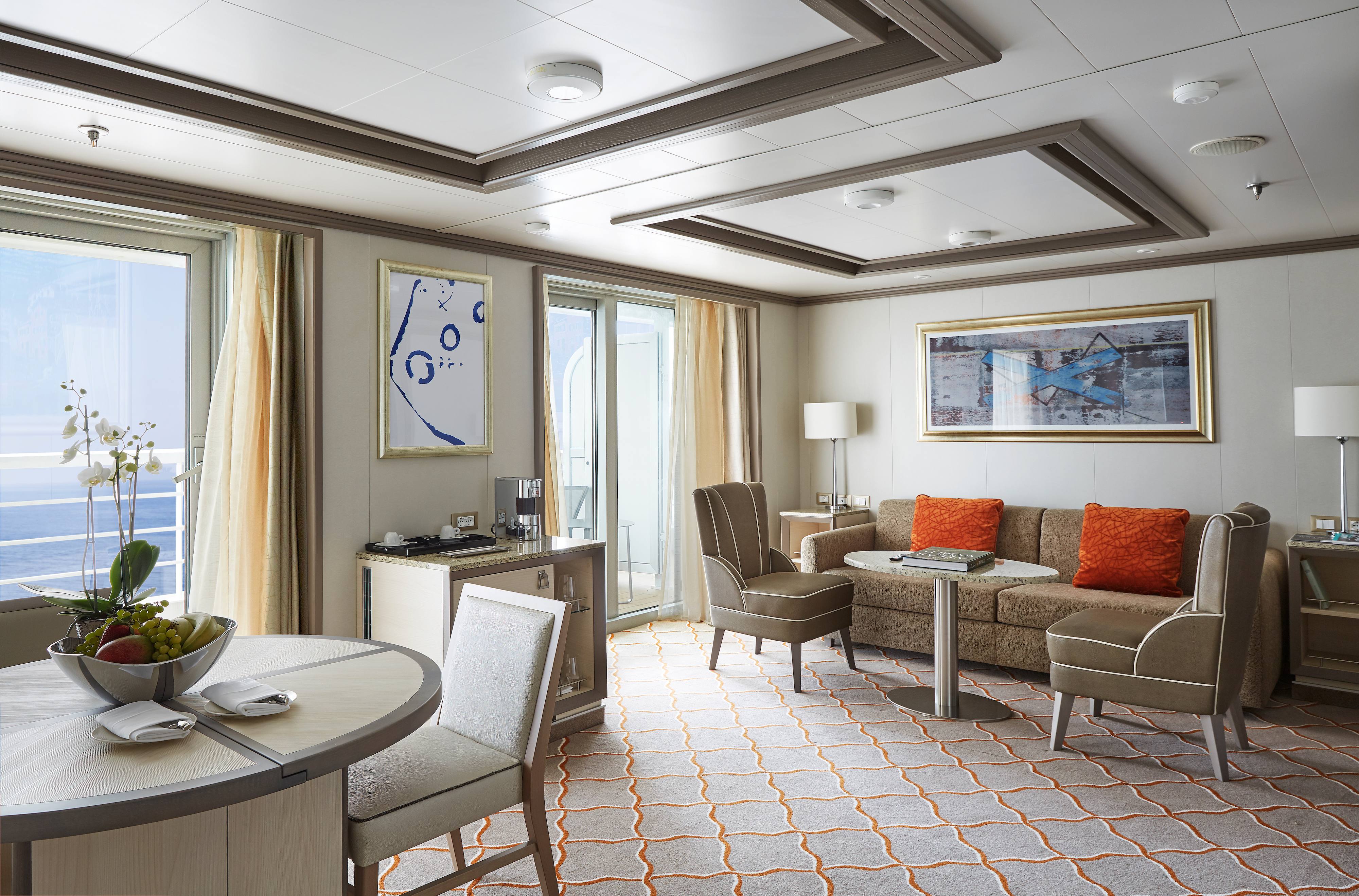
Silver Suite
A Silversea favorite and by far our best-selling suite! The Silver Suite is one of the foundations of ultra-luxury cruising. Take traveling to a whole new level with the Silver Suite’s unparalleled levels of service, comfort, and of course, style! Available in either a one-bedroom, a two-bedroom, or wheelchair accessible configuration, Silver Suites are fully equipped for the discerning traveler. Whether enjoying the spectacular views from the veranda or relaxing in the large sitting room, Silver Suites offer a comfortable haven on the high seas.
- One bedroom: 73 sq m including veranda (12 sq m)
- Two bedrooms: 104 sq m including veranda (12 sq m)
Essentials
- Deck(s): 9, 10, 11
- Section: Forward, Mid-Ship
Characteristics
- Veranda
- Living room with sitting area
- Double vanity
- Separate shower
- Whirlpool bath
- Walk-in wardrobe with personal safe
Furniture
- King size bed
- Writing desk
- Vanity table
- Luxury bed mattresses
Media & Communication
- Unlimited Premium Wi-Fi
- 2 large flat screen TVs with Interactive Media Library
- Sound system with bluetooth connectivity
- Direct dial telephone
- Wall mounted USB-C mobile device chargers
- Dual voltage 110/220 outlets
Onboard Services
- Butler service
- Complimentary laundry, pressing & wet cleaning
- Champagne on arrival
Amenities
- Espresso machine
- Pillow menu
- Refrigerator and bar setup stocked with your preferences
- Plush bathrobe
- Luxury bath amenities
- Umbrella
- Hair Dryer
- Slippers
Wheelchair accessible suite: 931
Images are intended as a general reference. Features, materials, finishes and layout may be different than shown.
Please note that the 3rd guest will sleep on a comfortable sofa bed in the reception area of the suite.
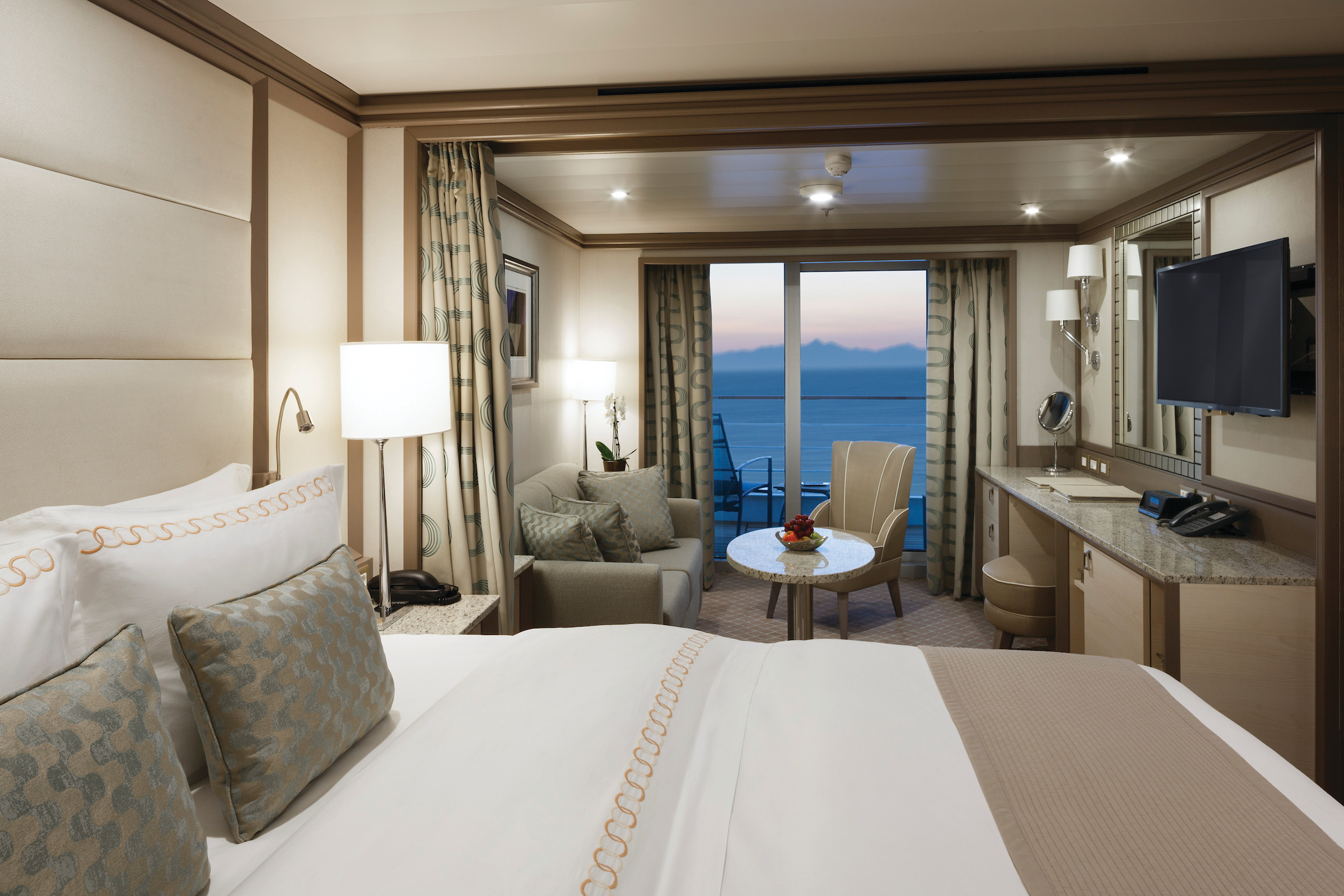
Deluxe Veranda Suite
After a busy day of onshore exploring, the Deluxe Veranda Suite is the perfect home away from home. Spacious and well-situated, enjoy ultra-luxury amenities from the 24-hour butler service to the well-stocked mini-bar (and yes, they’re all included!). Not forgetting the teak veranda from which the suite takes her name, the Deluxe Veranda is the perfect setting for making perfect memories.
- One bedroom: 36 sq m including veranda (6 sq m)
Essentials
- Deck(s): 6, 7, 8
- Section: Mid-Ship
Characteristics
- Veranda
- Sitting area
- Standard vanity
- Separate shower
- Full-size bath
- Walk-in wardrobe with personal safe
Furniture
- Queen size bed
- Writing desk
- Luxury bed mattresses
Media & Communication
- Unlimited Standard Wi-Fi
- 1 large flat screen TV with Interactive Media Library
- Direct dial telephone
- Wall mounted USB-C mobile device chargers
- Dual voltage 110/220 outlets
Onboard Services
- Butler service
- Champagne on arrival
Amenities
- Pillow menu
- Refrigerator and bar setup stocked with your preferences
- Plush bathrobe
- Luxury bath amenities
- Umbrella
- Hair Dryer
- Slippers
Images are intended as a general reference. Features, materials, finishes and layout may be different than shown.
Please note that the 3rd guest will sleep on a comfortable sofa bed in the reception area of the suite.
Superior Veranda Suite
A superior location makes the Superior Veranda Suite, well … superior! From the sumptuous views from the teak veranda to the spacious sitting room and large marble bathroom, everything about the Superior Veranda has been designed for your comfort. So settle in and get comfortable, order some 24-hour room service from your butler and enjoy a bit of R&R. We guarantee you won’t want to leave.
- One bedroom: 36 sq ft including veranda (6 sq m)
Essentials
- Deck(s): 7, 8, 9
- Section: Forward
Characteristics
- Veranda
- Sitting area
- Standard vanity
- Separate shower
- Full-size bath
- Walk-in wardrobe with personal safe
Furniture
- Queen size bed
- Writing desk
- Luxury bed mattresses
Media & Communication
- Unlimited Standard Wi-Fi
- 1 large flat screen TV with Interactive Media Library
- Direct dial telephone
- Wall mounted USB-C mobile device chargers
- Dual voltage 110/220 outlets
Onboard Services
- Butler service
- Champagne on arrival
Amenities
- Pillow menu
- Refrigerator and bar setup stocked with your preferences
- Plush bathrobe
- Luxury bath amenities
- Umbrella
- Hair Dryer
- Slippers
Images are intended as a general reference. Features, materials, finishes and layout may be different than shown.
Please note that the third guest will sleep on a comfortable sofa bed in the reception area of the suite.
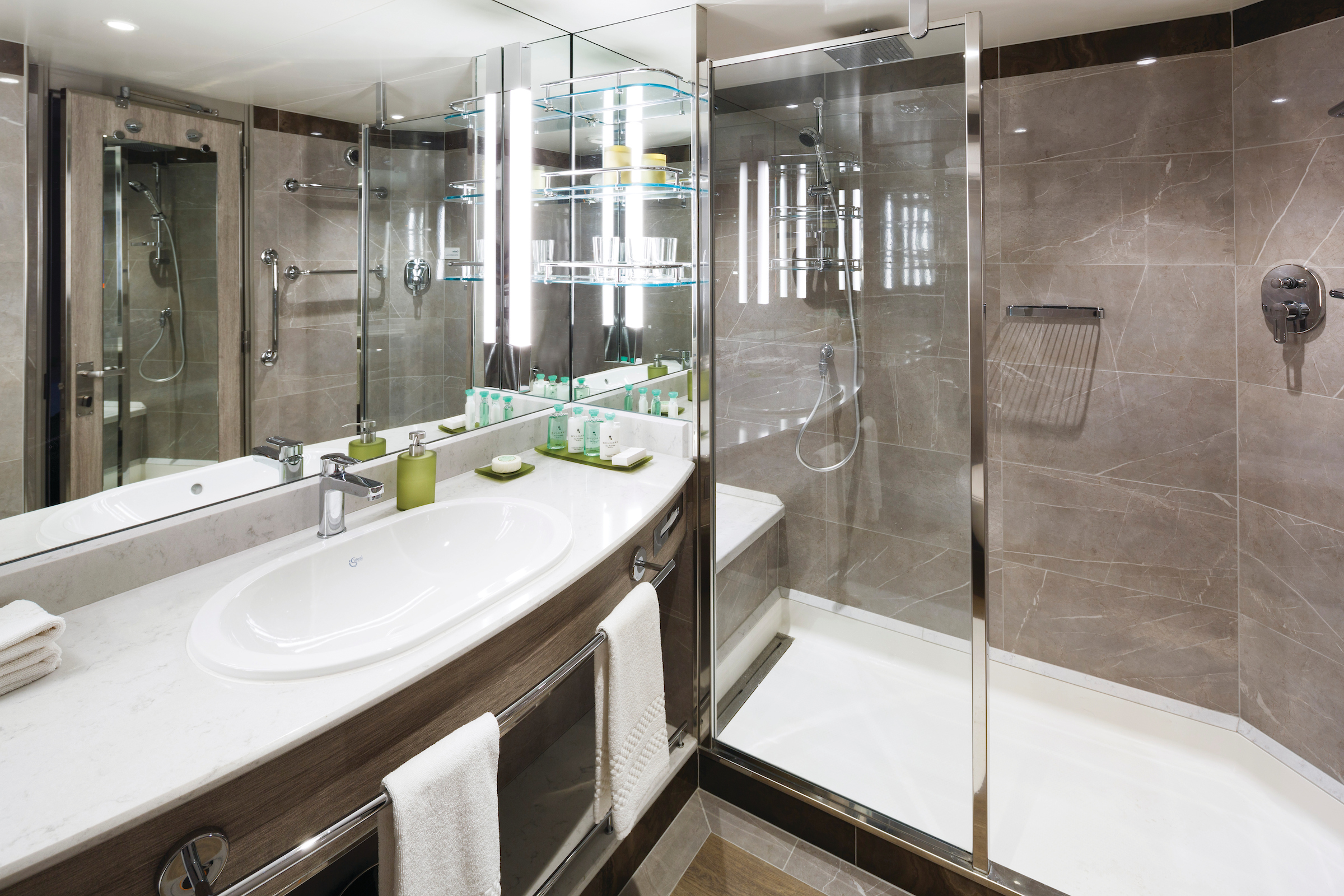
Classic Veranda Suite
A lower-bow location makes the Classic Veranda Suite a comfortable choice for travelers. A lovely, comfortable bed—available in a twin- or queen-bed configuration—with a choice of mattress ensures that you enjoy the best night’s sleep of your life while the seating area is perfect for in-suite dining. But perhaps the Classic Veranda’s best feature lies outside the suite—with the 6-m2 (64-sq-ft) veranda for which the suite was named.
- One bedroom: 36 sq m including veranda (6 sq m)
Essentials
- Deck(s): 5, 6
- Section: Forward
Characteristics
- Veranda
- Sitting area
- Standard vanity
- Separate shower
- Full-size bath
- Walk-in wardrobe with personal safe
Furniture
- Queen size bed
- Writing desk
- Luxury bed mattresses
Media & Communication
- Unlimited Standard Wi-Fi
- 1 large flat screen TV with Interactive Media Library
- Direct dial telephone
- Wall mounted USB-C mobile device chargers
- Dual voltage 110/220 outlets
Onboard Services
- Butler service
- Champagne on arrival
Amenities
- Pillow menu
- Refrigerator and bar setup stocked with your preferences
- Plush bathrobe
- Luxury bath amenities
- Umbrella
- Hair Dryer
- Slippers
Images are intended as a general reference. Features, materials, finishes and layout may be different than shown.
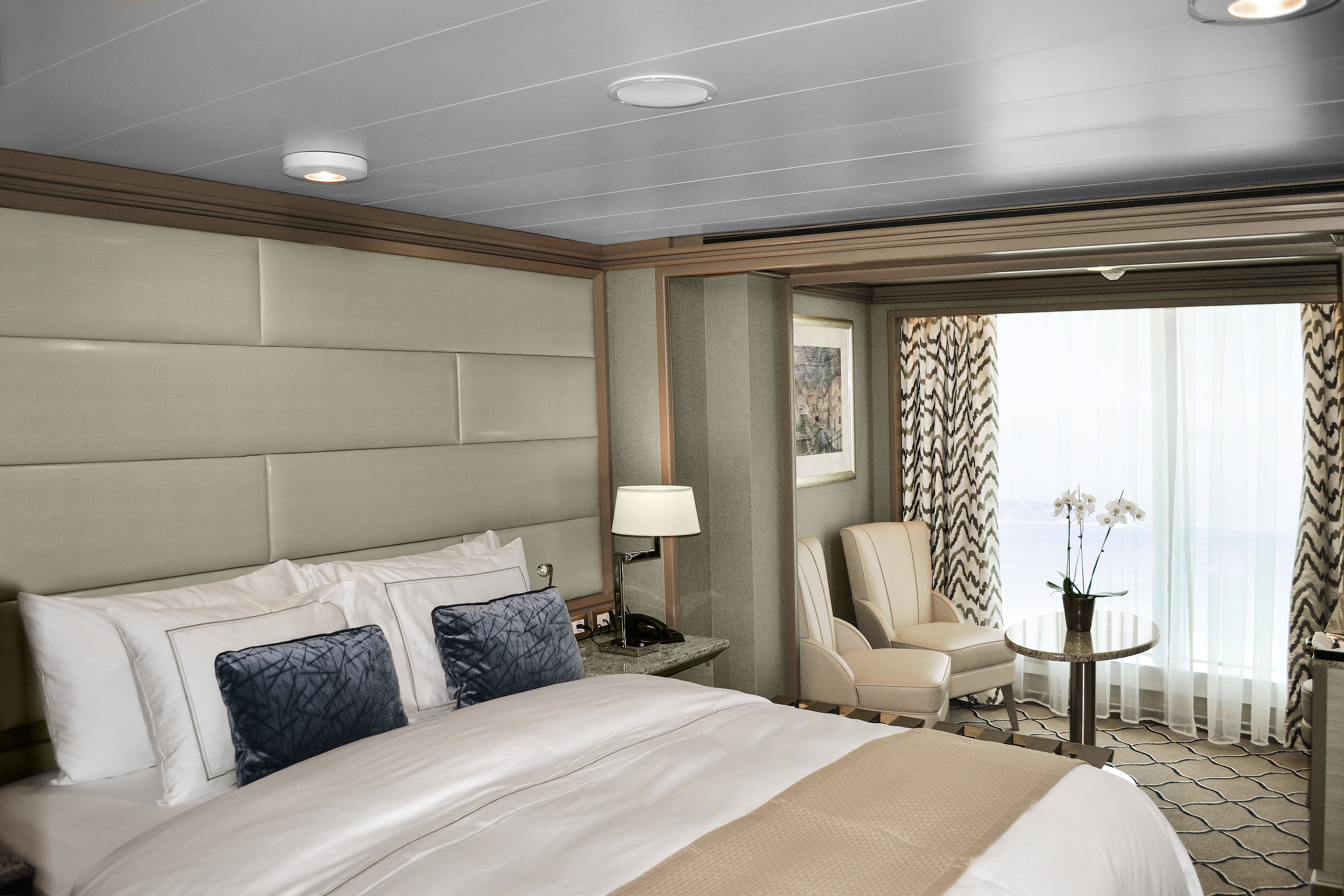
Panorama Suite
Beautiful elegant furnishings are the perfect choice to soothe and relax as you sail from one destination to the next. Large windows flood the room with light, making for luxurious ocean views whether it’s morning, noon, or night! Panorama Suites are the perfect accompaniment to a Silver Suite for larger parties, or just perfect on their own. With all the modern conveniences that you would expect from an ultra-luxury cruise line, Panorama Suites offer comfort, space, and style!
- One bedroom: 31 sq m
Essentials
- Deck(s): 9
- Section: Forward
Characteristics
- Floor-to ceiling window
- Sitting area
- Standard vanity
- Separate shower
- Full-size bath
- Walk-in wardrobe with personal safe
Furniture
- Queen size bed
- Writing desk
- Luxury bed mattresses
Media & Communication
- Unlimited Standard Wi-Fi
- 1 large flat screen TV with Interactive Media Library
- Direct dial telephone
- Wall mounted USB-C mobile device chargers
- Dual voltage 110/220 outlets
Onboard Services
- Butler service
- Champagne on arrival
Amenities
- Pillow menu
- Refrigerator and bar setup stocked with your preferences
- Plush bathrobe
- Luxury bath amenities
- Umbrella
- Hair Dryer
- Slippers
Images are intended as a general reference. Features, materials, finishes and layout may be different than shown.
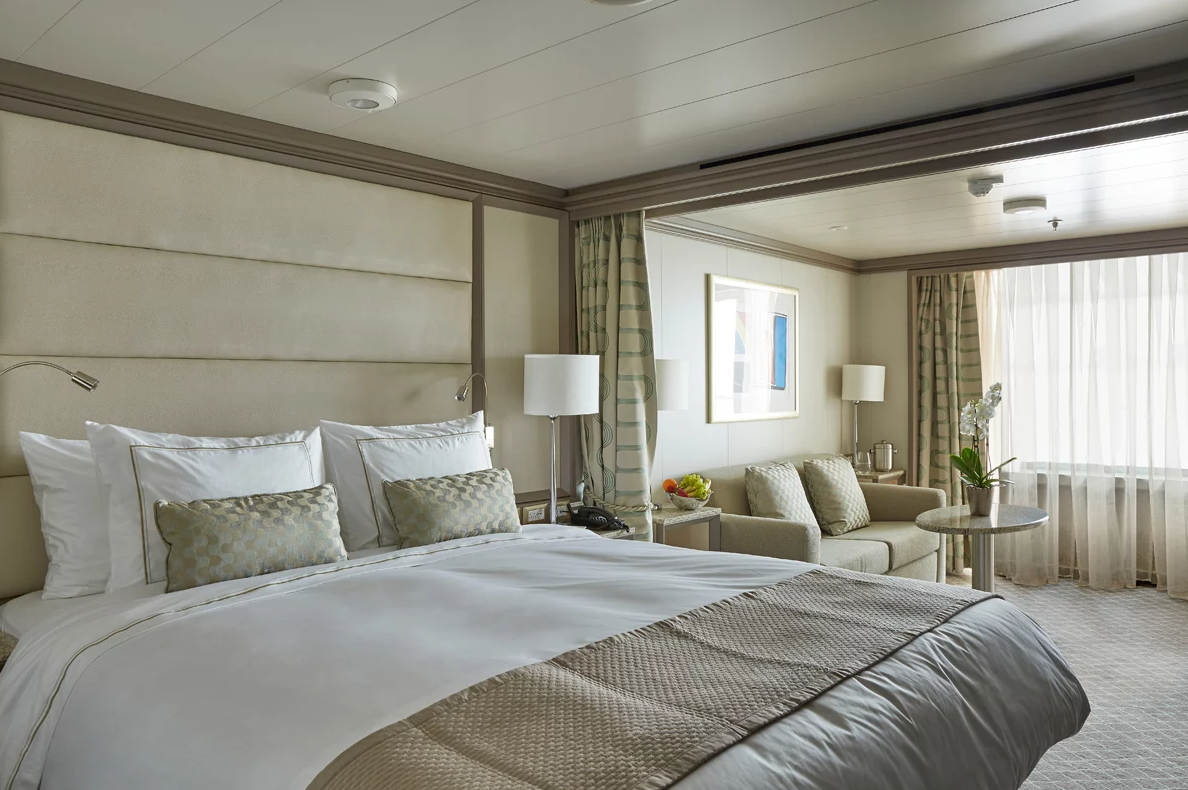
Vista Suite
Comfortable, spacious, and offering stupendous ocean views, the Vista Suite carries its name very well! Wake up to wide ocean views, eat breakfast to the sound of the waves lapping at the side of the ship, or simply relax with the in-suite entertainment system and comfy sofas. Some Vista Suites are a little larger than standard—perfect for our guests with limited mobility. If you have ever wanted a home away from home on the high seas, the Vista Suite is it.
- One bedroom: 32 sq m
Essentials
- Deck(s): 4
- Section: Forward
Characteristics
- Window
- Sitting area
- Standard vanity
- Separate shower
- Full-size bath
- Walk-in wardrobe with personal safe
Furniture
- Queen size bed
- Writing desk
- Luxury bed mattresses
Media & Communication
- Unlimited Standard Wi-Fi
- 1 large flat screen TV with Interactive Media Library
- Direct dial telephone
- Wall mounted USB-C mobile device chargers
- Dual voltage 110/220 outlets
Onboard Services
- Butler service
- Champagne on arrival
Amenities
- Pillow menu
- Refrigerator and bar setup stocked with your preferences
- Plush bathrobe
- Luxury bath amenities
- Umbrella
- Hair Dryer
- Slippers
Wheelchair accessible suites: 407, 409, 417
Images are intended as a general reference. Features, materials, finishes and layout may be different than shown.
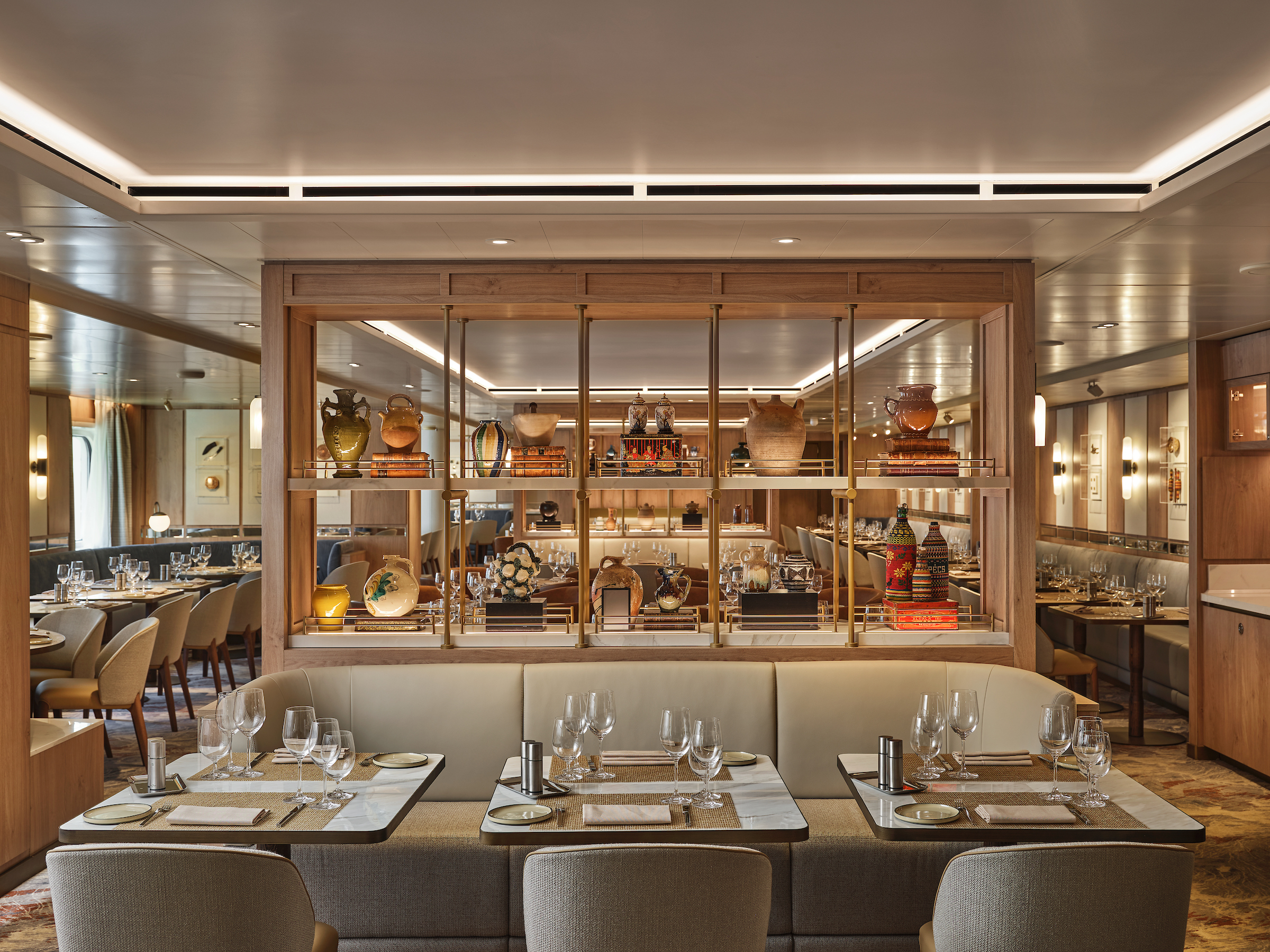
S.A.L.T. Kitchen
S.A.L.T. Kitchen transforms dining into discovery with menus that reflect the cuisines of the places you’ll visit. This complimentary venue is the only restaurant at sea with an ever-changing menu based on destination. Plus, a standing menu focuses on broader regional specialties, complemented by a menu featuring hyperlocal fare. Dishes are inspired by local flavors and prepared with responsibly sourced ingredients. Accompanied by a curated selection of over 160 regional wines, S.A.L.T. Kitchen delivers an immersive taste of place without ever leaving the ship.
Location: Deck 4
Capacity: 154 guests
Opening hours: Dinner only (18:30 – 21:00)
Images are intended as a general reference. Features, materials, finishes and layout may be different than shown. Opening hours and menu are for reference only.
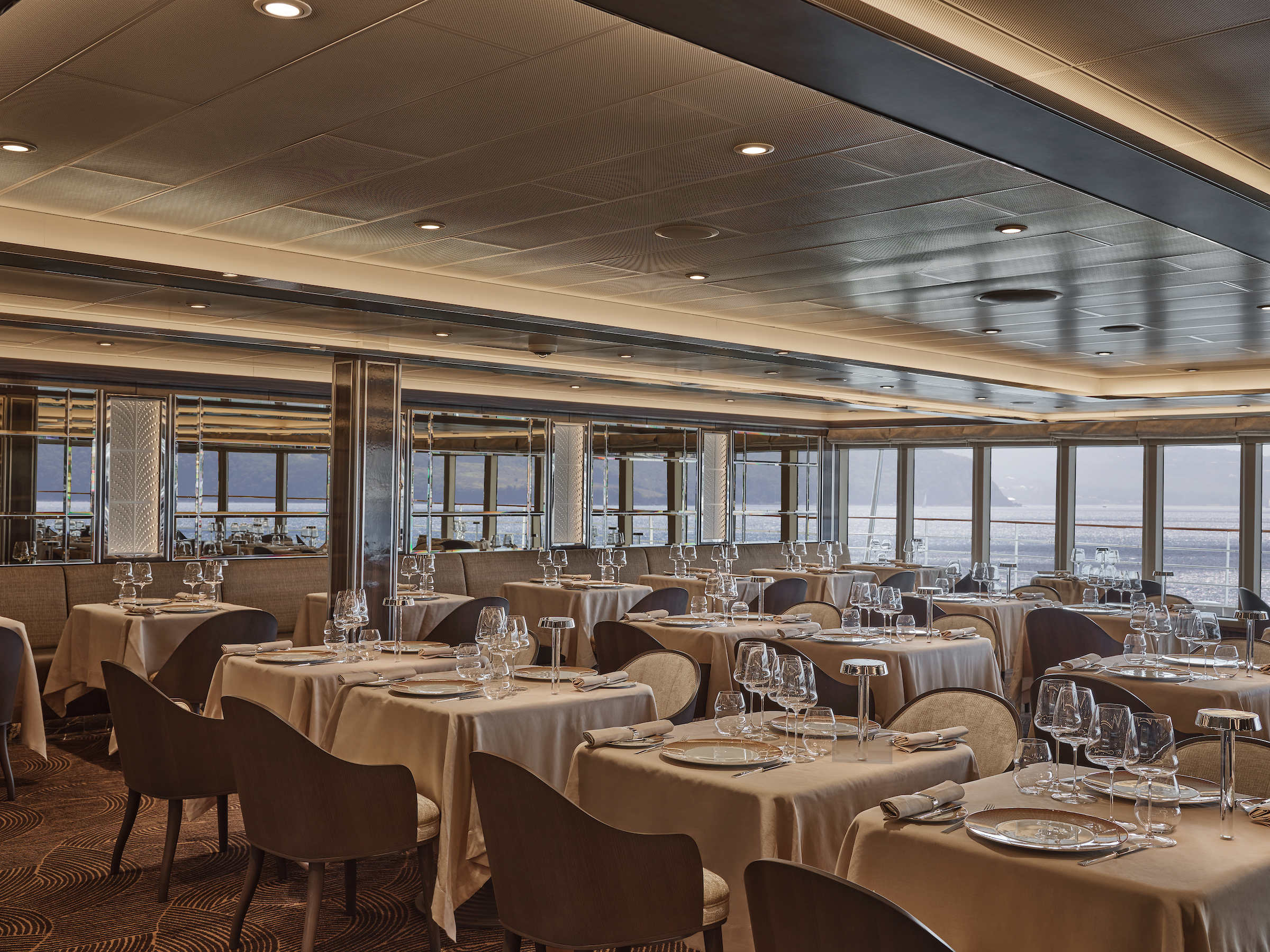
La Dame
Silversea’s signature French restaurant, La Dame, is the epitome of fine dining. Featuring the rich, smooth flavors of France, La Dame’s reputation for gastronomic excellence is fully upheld aboard Silver Dawn. Expect only the very best: chic, contemporary style, vast ocean-view windows, crisp, white table linens, and impeccable white-gloved service with a smile. Decorated with custom-made interior panel compositions created by Lalique, there is no better place to feel the culinary soul of France than in La Dame.
Location: Deck 8
Capacity: 66 guests
Opening hours: hours: Dinner only (19:00 – 21:00)
Fee: USD 60 per person
Reservation is required
Images are intended as a general reference. Features, materials, finishes and layout may be different than shown. Opening hours and menu are for reference only.
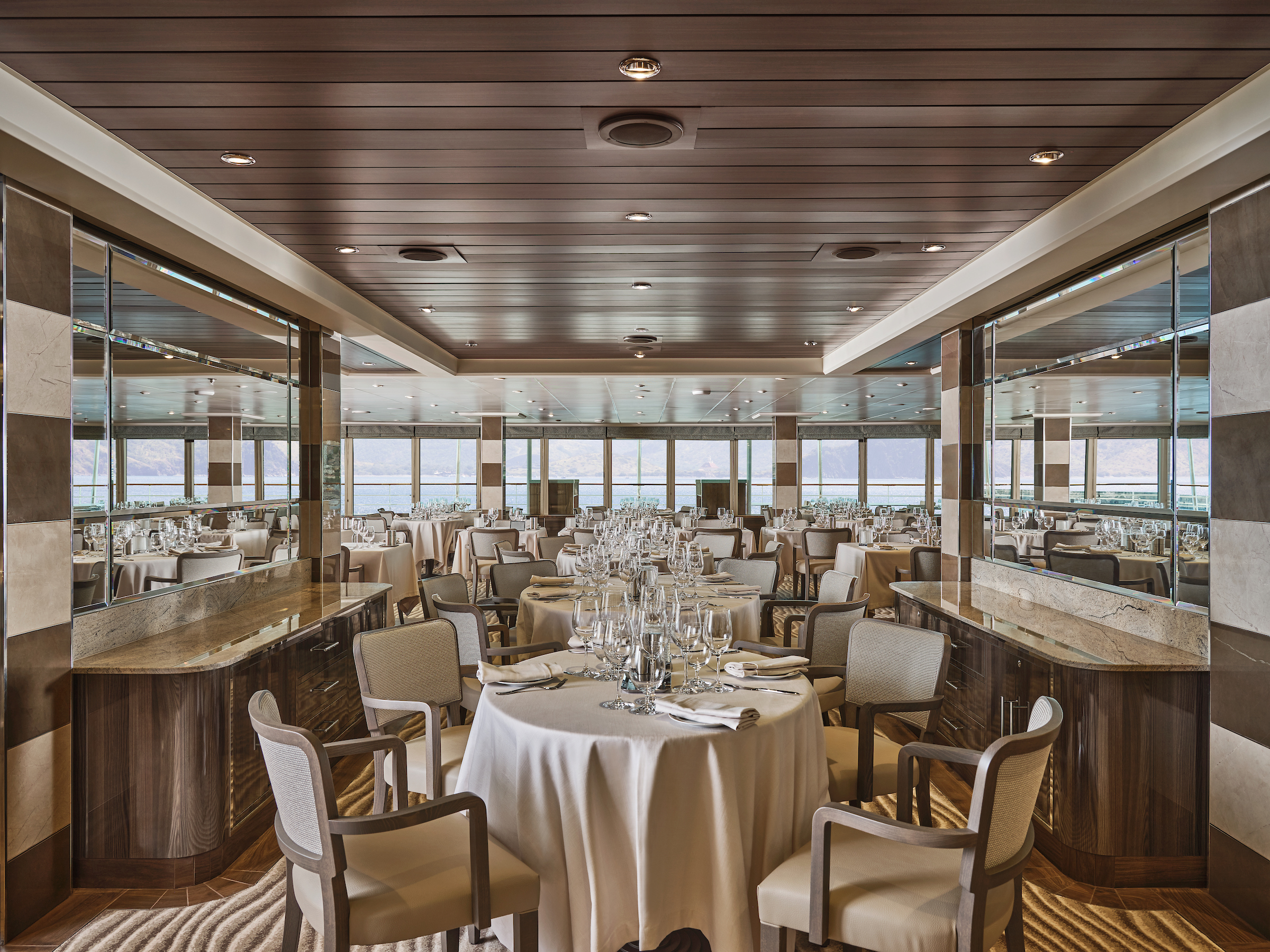
La Terraza
La Terrazza elevates casual dining by day and delivers an authentic Italian experience by night. During the breakfast and lunch buffets, our master chefs prepare global favorites at live stations. As evening falls, handmade pastas and classic seafood dishes are the centerpiece — every impeccable bite paired with fine wines from around the world.
Breakfast* (Buffet) – Open seating
Opening hours: 7:00 AM – 10:00 AM
Day at sea: 7:30 AM – 10:00 AM
Lunch* (Buffet) – Open seating
Opening Hours: 12:00 PM – 2:00 PM
Dinner – Reservations required
Location: Deck 7
Capacity: 208 guests (140 guests for dinner)
Images are intended as a general reference. Features, materials, finishes and layout may be different than shown. Opening hours and menu are for reference only.
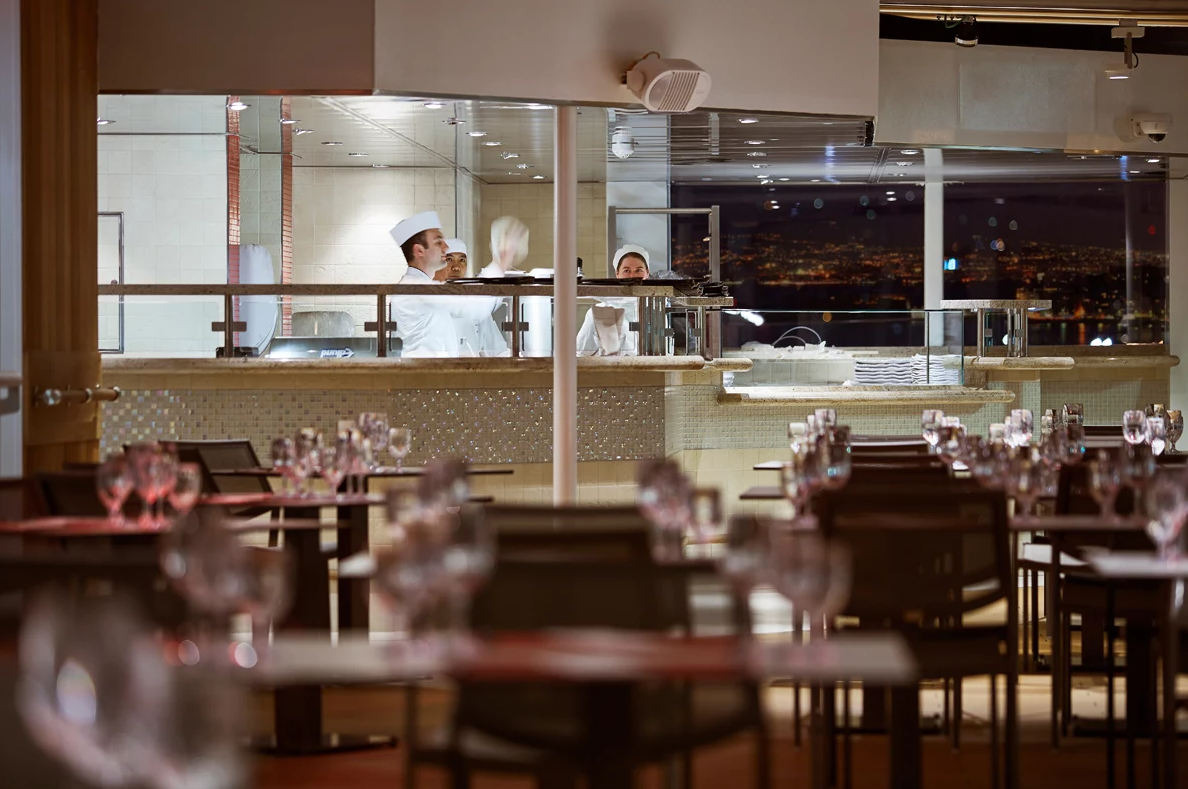
The Grill
A poolside al fresco favorite, The Grill is casual by day and captivating by night. Dig in to crisp salads and grilled classics during lunch, then return after sunset for masterfully seasoned and seared cuts paired with balmy sea breezes.
Lunch – Open seating
Opening Hours: 12:00 PM – 3:30 PM
Dinner – Reservations required
Opening Hours: 7:00 PM – 10:00 PM
Location: Deck 10
Capacity: 62
Images are intended as a general reference. Features, materials, finishes, and layout may be different than shown. Opening hours and menu are for reference only.
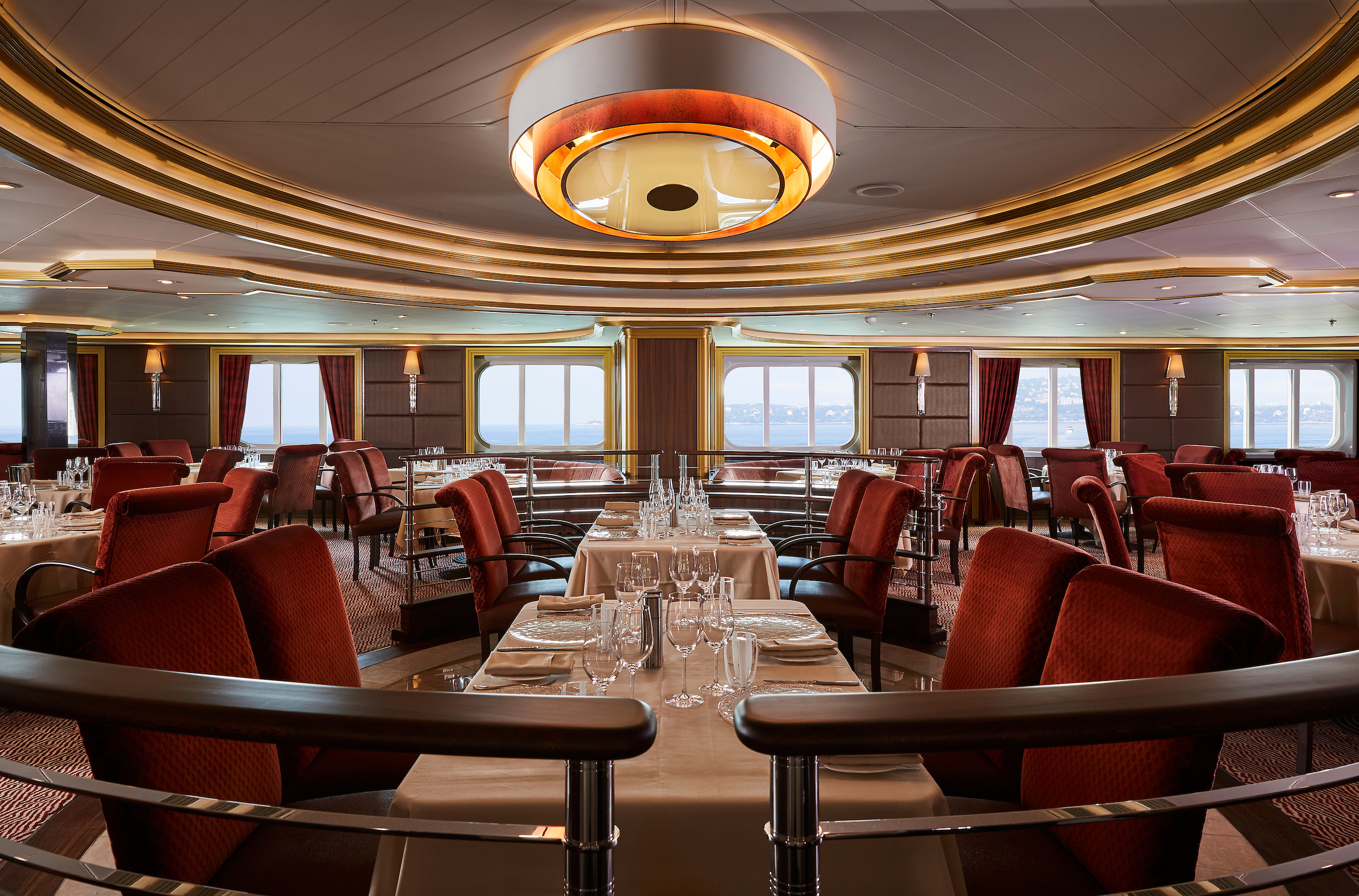
Atlantide
Refined global fare and grilled classics take center stage at Atlantide. Drop in for an indulgent à la carte breakfast, a leisurely lunch, or an elegant dinner among family and new friends, served in a timeless and sophisticated setting.
Location: Deck 4
Capacity: 220 guests
Opening hours: Opening hours: Breakfast, lunch and dinner (dinner:
18:00 – 20:30)
Images are intended as a general reference. Features, materials, finishes and layout may be different than shown. Opening hours and menu are for reference only.
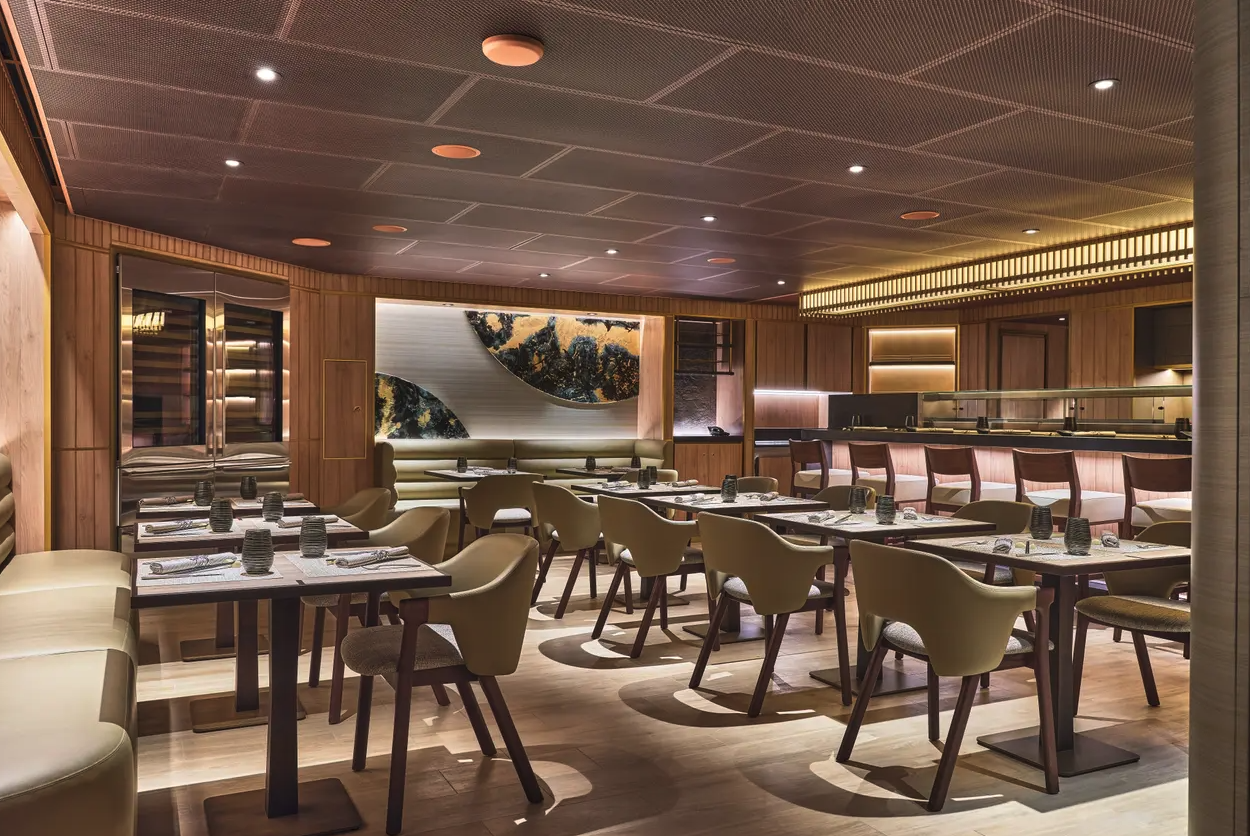
Kaiseki
Meals at Kaiseki are rooted in the Japanese philosophy of balance and precision. By day, refreshing sushi, sashimi, and izakaya-style dishes guide the menu. During dinner, specialties like miso black cod and wagyu teriyaki nod to Japan’s enduring culinary legacy, while fine sake, whiskies, and teas enhance every course.
Lunch – Open seating
Opening Hours: 12:00 PM – 2:30 PM
Dinner – Reservations required*
Opening Hours: 7:00 PM – 9:30 PM
Location: Deck 4
Capacity: 32 guests
Lunch is part of our all-inclusive dining experiences.
Dinner fee: Menu or à la carte: USD 40 per person
Learn more about the Epicurean Experience, which includes dining in three specialty restaurants with preferential rates.
Images are intended as a general reference. Features, materials, finishes and layout may be different than shown. Opening hours and menu are for reference only.

Silver Note
As the stars come out, Silver Note comes alive with the rhythm of jazz and the artistry of small-plate fine dining. This intimate supper-club experience pairs soulful live performances with inventive, international cuisine in a chic, lounge-style setting — one of the most exclusive dining concepts at sea.
Dinner – Reservations required
Opening Hours: 8:00 PM – 10:00 PM
Location: Deck 7
Capacity: 64 guests
Learn more about the Epicurean Experience, which includes dining in three specialty restaurants with preferential rates.
Images are intended as a general reference. Features, materials, finishes and layout may be different than shown. Opening hours and menu are for reference only.
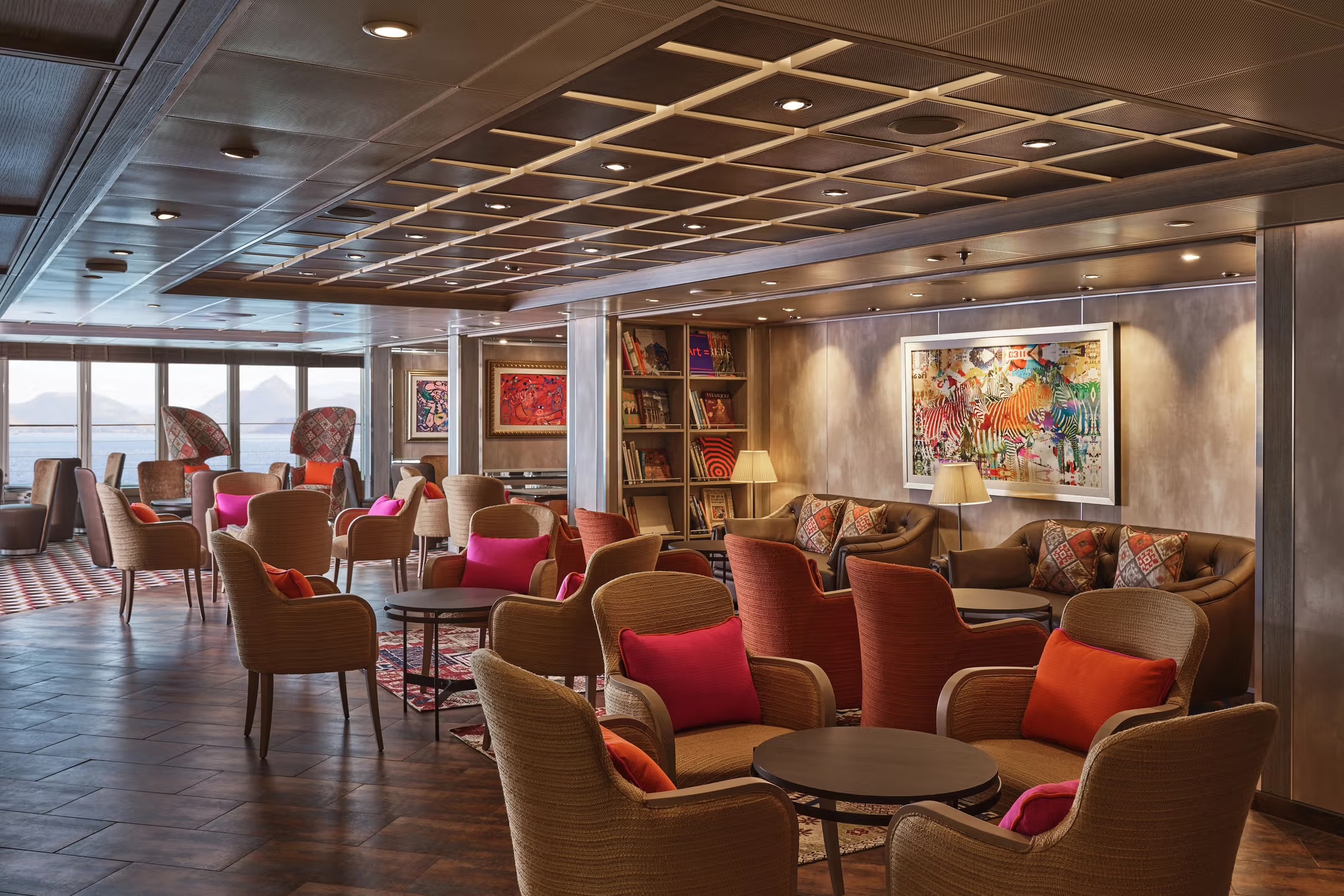
Arts Café
Arts Café is a vibrant, light-filled haven for conversation, connection, and indulgence. Snack on creative canapés and decadent pastries paired with perfectly pulled espressos, fresh squeezed juices, and artisanal teas. Open all day, this inviting space provides a dynamic backdrop for unwinding, recharging, or catching up with fellow travelers.
Location: Deck 8
Capacity: 26 guests
Images are intended as a general reference. Features, materials, finishes and layout may be different than shown.
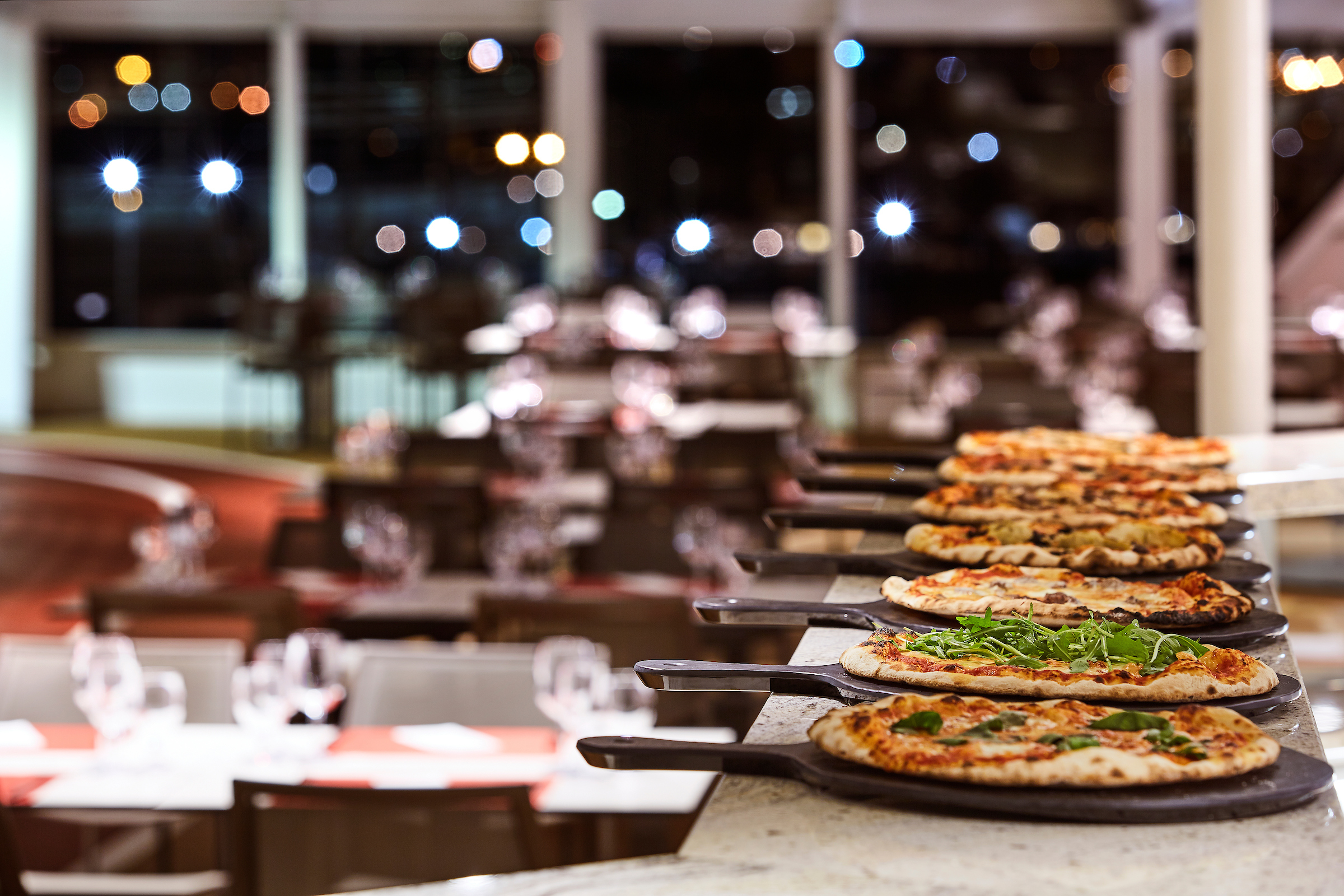
Spaccanapoli
Reflecting Silversea’s Italian heritage, this emblematic street in Naples divides the city in two and is renowned for its pizzerias. No visit to the city is complete without a journey to Spaccanapoli. Therefore, it is unsurprising that Spaccanapoli aboard Silver Dawn reflects the true Italian way of life: the freshest ingredients, authentic dough, and a perfect sense of the fabled Italian lust for life. The simplicity of la dolce vita is reflected in the relaxed dining style of the restaurant.
Lunch – Open seating
Opening Hours: 12:00 PM – 2:30 PM
Dinner – Open seating
Opening Hours: 6:00 PM – 9:00 PM
Location: Deck 11
Capacity: 72
Images are intended as a general reference. Features, materials, finishes and layout may be different than shown.
Opening hours and menu are for reference only.
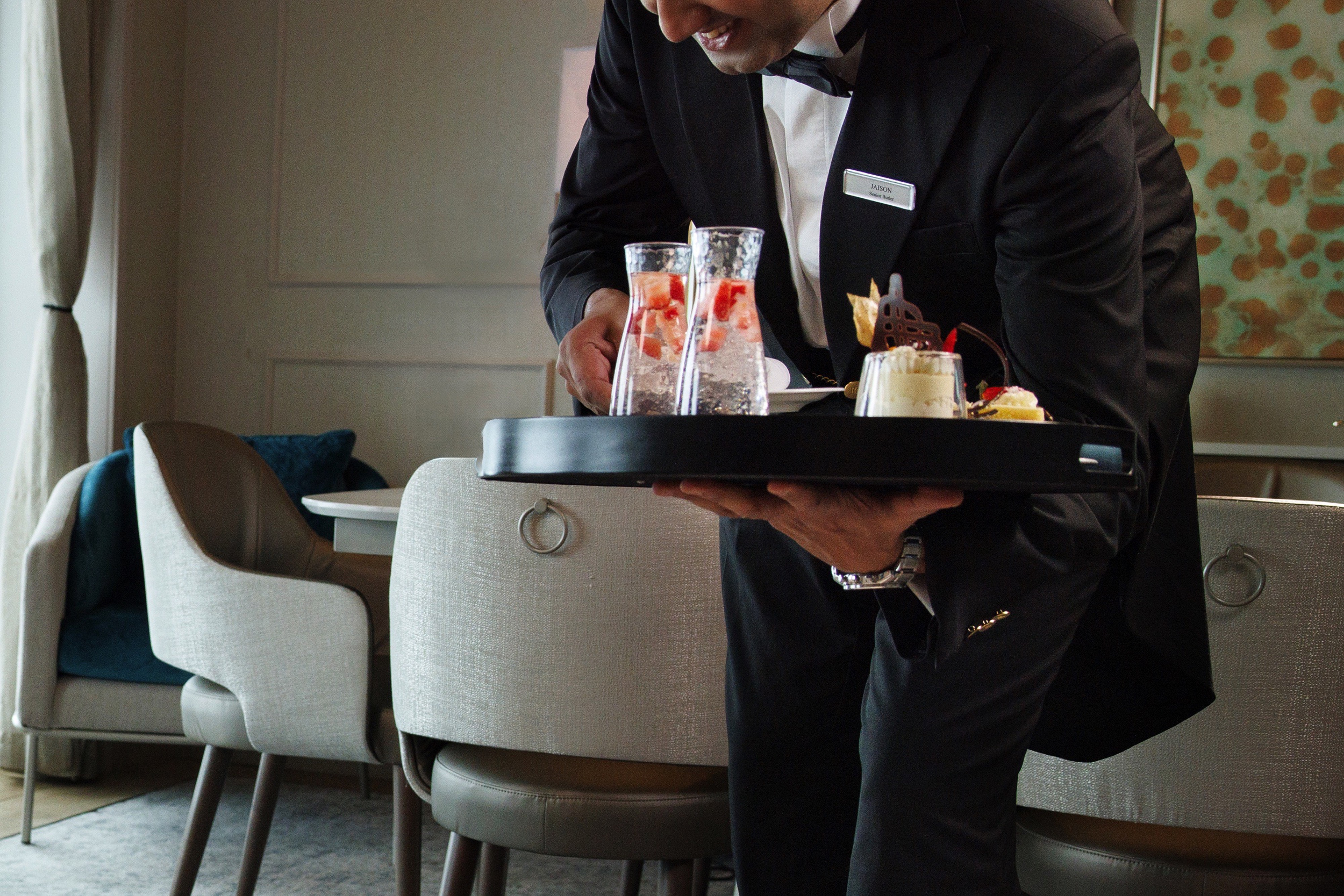
In-Suite Dining
You can order from our Room Service menu 24 hours a day.
Opening hours are for reference only. For precise opening hours, please refer to the Daily Chronicles provided on board.
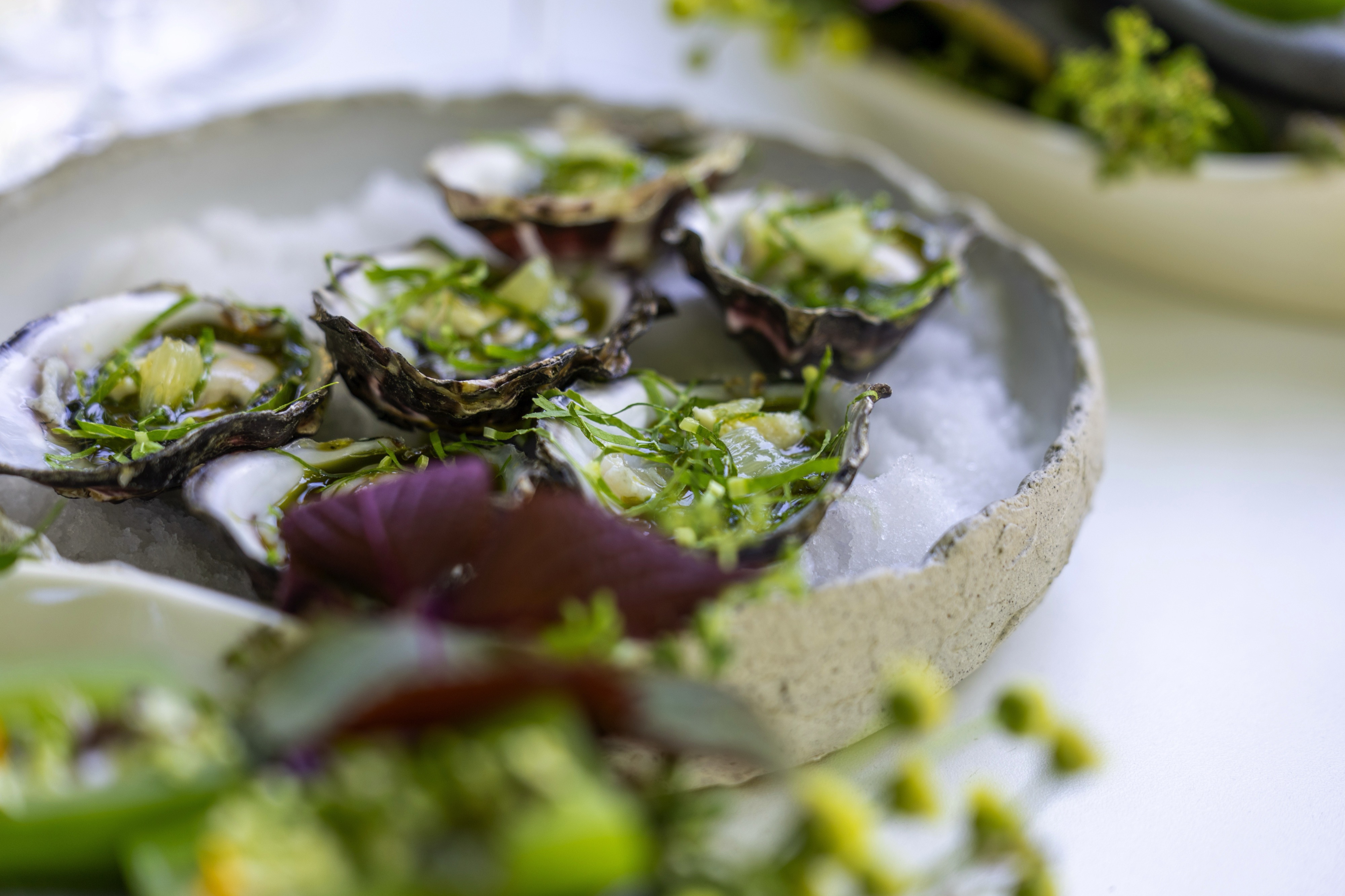
S.A.L.T. Experiences
S.A.L.T. Experiences take you on deliciously immersive journeys that delve into the personality of each destination. These thoughtfully designed Shore Excursions grant privileged access to local food cultures — from Michelin starred restaurants to familyrun farms and bustling markets to private kitchens — always led by those who know the region best. Whether harvesting vegetables from biodynamic gardens, learning ancestral techniques from village cooks, or savoring wines with renowned vintners, these optional journeys invite you into culinary adventures where strangers become friends, recipes become stories, flavors become memories.
Available on all Classic ships, with experiences tailored to each region’s unique culinary heritage.
Northern Europe
From Russian caviar to the smokehouses dotting the Swedish countryside, there is much to recommend for a culinary tour of Northern Europe. Discover expertly guided shore excursions that uncover the history, stories and personalities behind the well-known dishes, as well as shine a light on lesser-known culinary treasures. Think of anything from an exploration of the world-class restaurant culture of Copenhagen to the preserving methods of Iceland, to foraging for flavors the New Nordic way.
Mediterranean
In the Mediterranean, S.A.L.T. Experiences invite you to discover the region’s rich cultural tapestry through privileged access to local food artisans and traditions. On these highly curated Shore Excursions, you can ascend Portofino’s famous Monte for an exclusive eco-farm picnic featuring wood-fired focaccia and panoramic views. Learn about time-honored cheese-making traditions in Mykonos or immerse yourself in Croatian cooking methods at the Miloslavic family homestead in Dubrovnik. Each Mediterranean S.A.L.T. Experience reveals centuries of culinary wisdom — shared by the people who continue to preserve traditions.
Images are intended as a general reference.
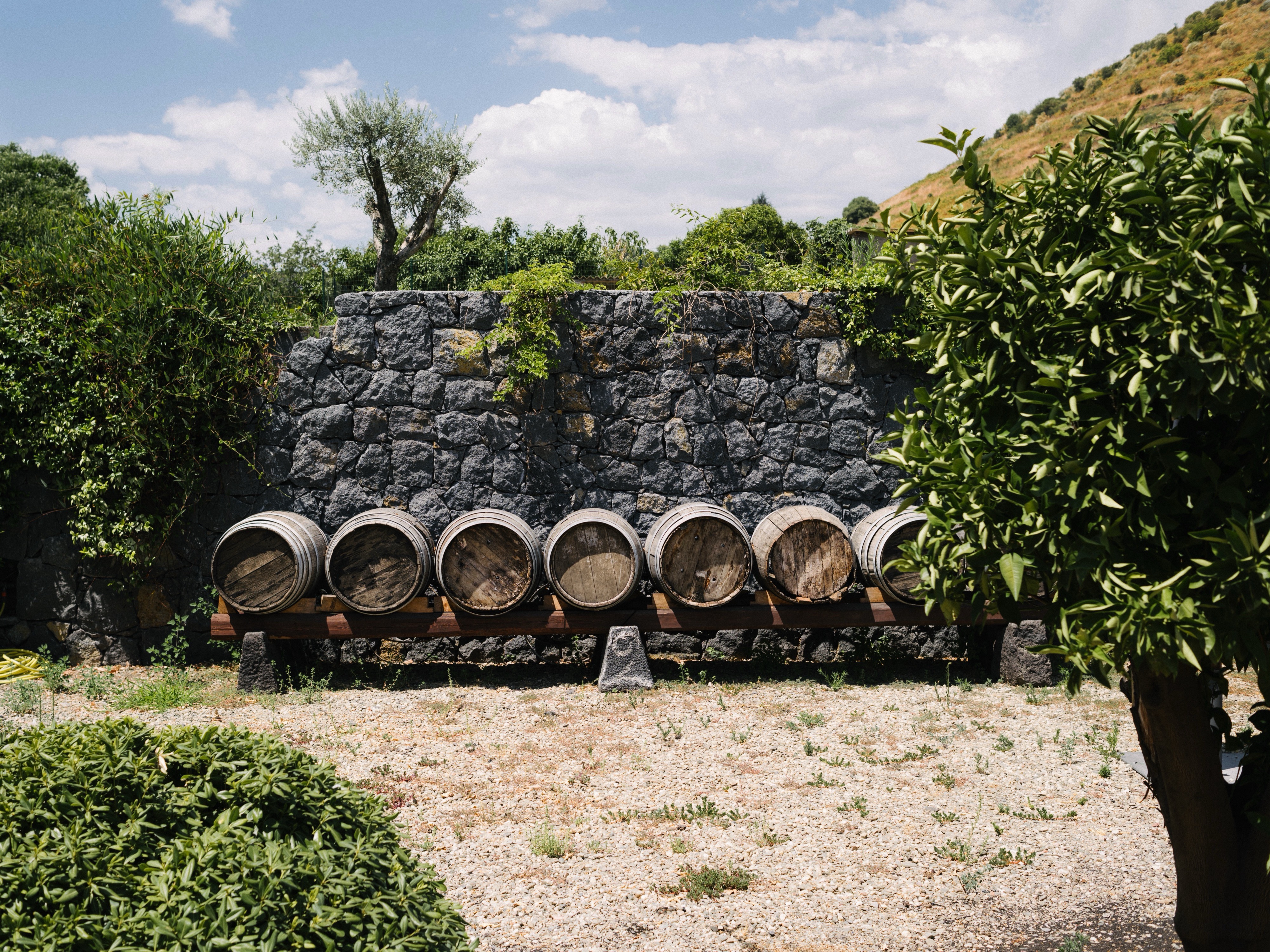
S.A.L.T. Land Programs
Unearth the roots of every place with S.A.L.T. Land Programs — a multi-day culinary and cultural journey, before or after your cruise. Savour regional specialties, indulge in private tastings, and take part in immersive, hands on classes. Every moment is thoughtfully designed by the team behind the S.A.L.T. culinary program, in close collaboration with local partners. Relish the Silversea signature quality from first taste to final toast, as we reveal the essence of each destination through its most authentic dishes. Meet the people that proudly preserve culinary heritage. Join rituals that unite communities. And with every meal, discover the depth of each locale as you create new memories among newfound friends
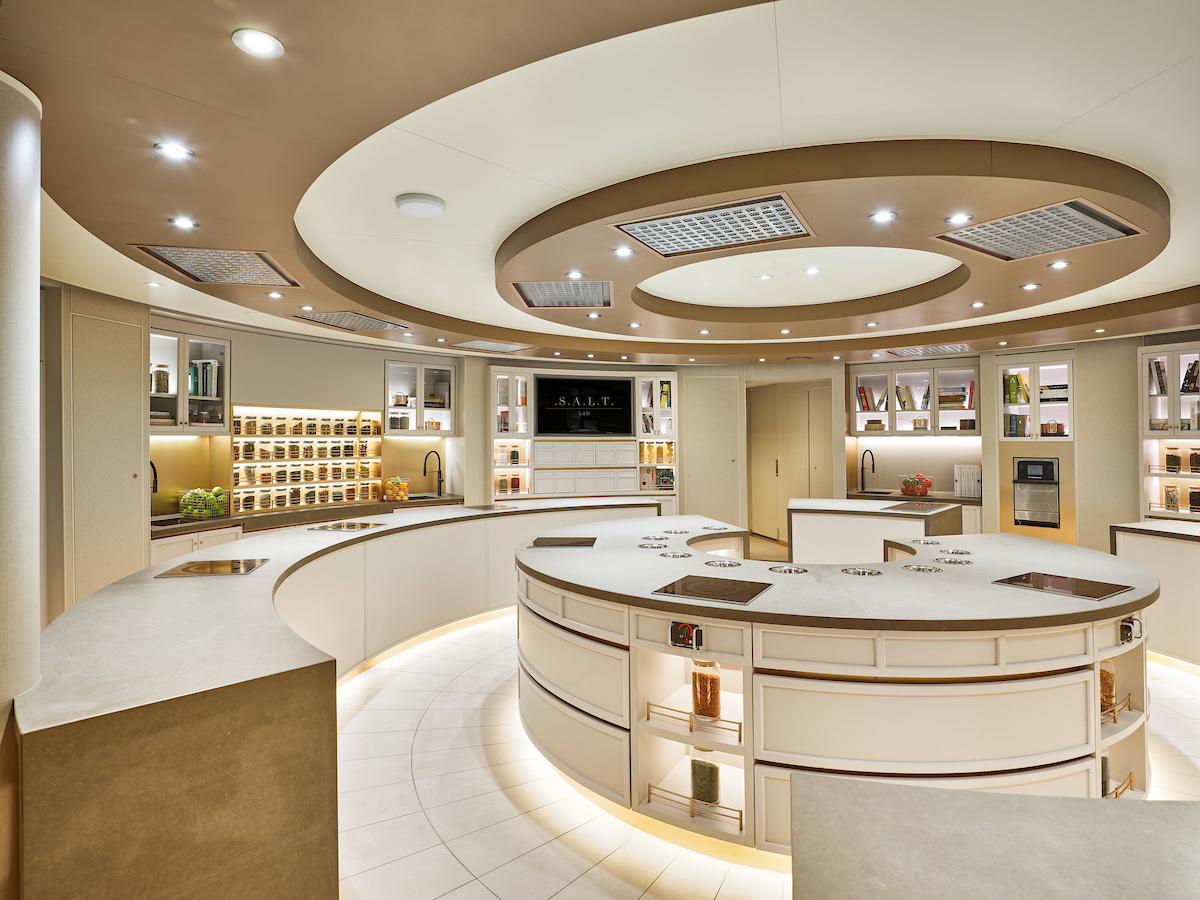
S.A.L.T. Lab
Welcome to the S.A.L.T. Lab, an interactive space where guests can take a deep dive into local culinary heritage and techniques. Join our talented chefs and learn how your region’s food is central to its culture. Engage in your destination through workshops, lectures, and cooking demonstrations for an authentic souvenir not available in any shop. The S.A.L.T. Lab is not just about food and flavor; it is a unique place where holistic destination immersion gives an entirely new dimension to traveling. This is where the magic happens!
Images are intended as a general reference. Features, materials, finishes and layout may be different than shown.
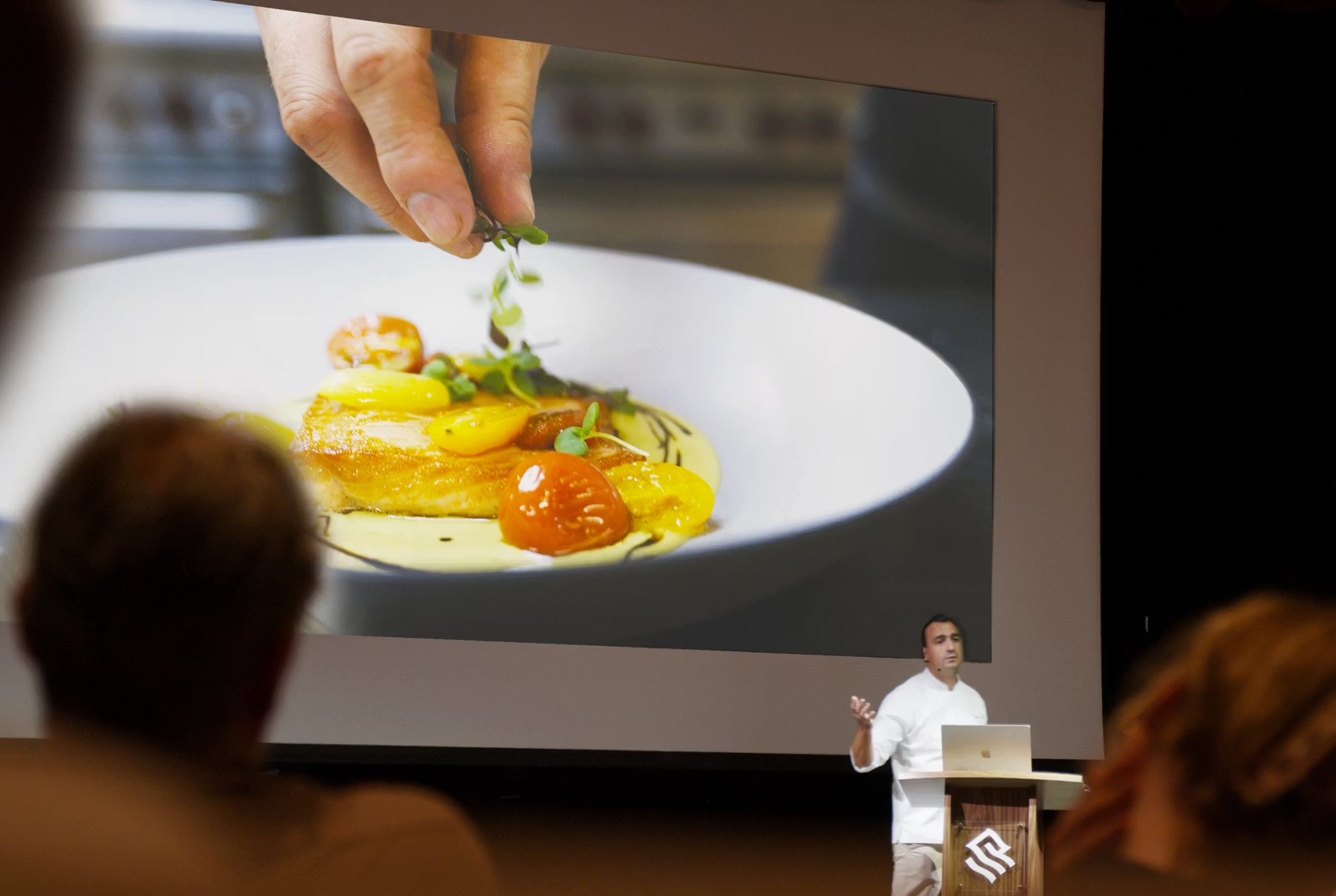
S.A.L.T. Talks
S.A.L.T. Talks illuminate the deep connections between food and culture through engaging presentations on board. Led by our knowledgeable S.A.L.T. Lab Hosts, these complimentary lectures and live cooking demonstrations reveal how regional dishes reflect centuries of tradition, migration, and innovation. Through enlightening narratives and sensory experiences, you’ll enjoy fascinating insight into the cultural significance behind local ingredients and techniques, enhancing appreciation of both on board dining and shoreside explorations. Feed your curiosity along with your appetite.
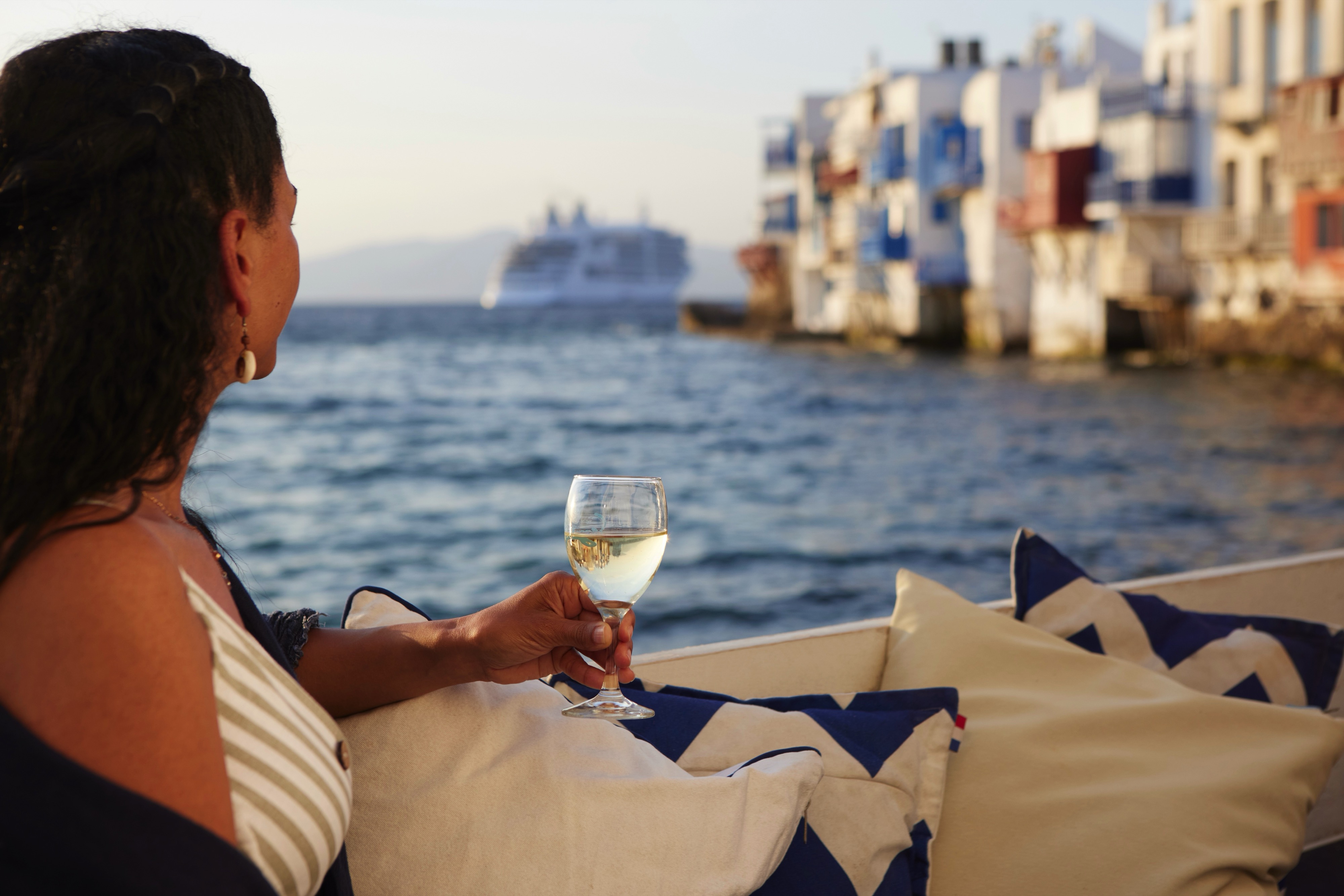
Shore Excursions
Highlight Experiences
Seamless tours of iconic sites
Explore iconic landmarks and cultural treasures with our Highlight Experiences, half or full-day adventures led by expert guides. Enjoy seamless, hassle-free journeys to must- see attractions — perfect for guests seeking a convenient, turnkey experience.
Signature Experiences
Smaller tours, crafted by Silversea
These immersive Signature Experiences offer privileged access and personalized interactions with local experts. These experiences are perfect for those seeking meaningful, social exploration who want to connect with destinations through authentic dining and slow travel.
Private Experiences
Exclusive tours for your group
Create your own exclusive adventure with a dedicated vehicle, driver, and guide. Explore at your pace, linger, or spontaneously discover new sites. Available at most ports for half- or full-day bookings, Private Experiences are ideal for families seeking privacy and flexibility.
Custom Experiences
Tailor-made tours designed for you
Enjoy personalized Custom Experiences tailored to your interests, with exclusive access and specialized guides. Our team handles every detail, ensuring unforgettable moments that exceed your expectations—crafted entirely around your pace and preferences.
Overland Experiences
Mid-cruise, inland tours
Venture inland on two- to three-day journeys to iconic sites like the Taj Mahal or Angkor Wat. Vith flights, stays, and guided access included, these immersive journeys offer rare experiences beyond the coast — all with the signature Silversea service.
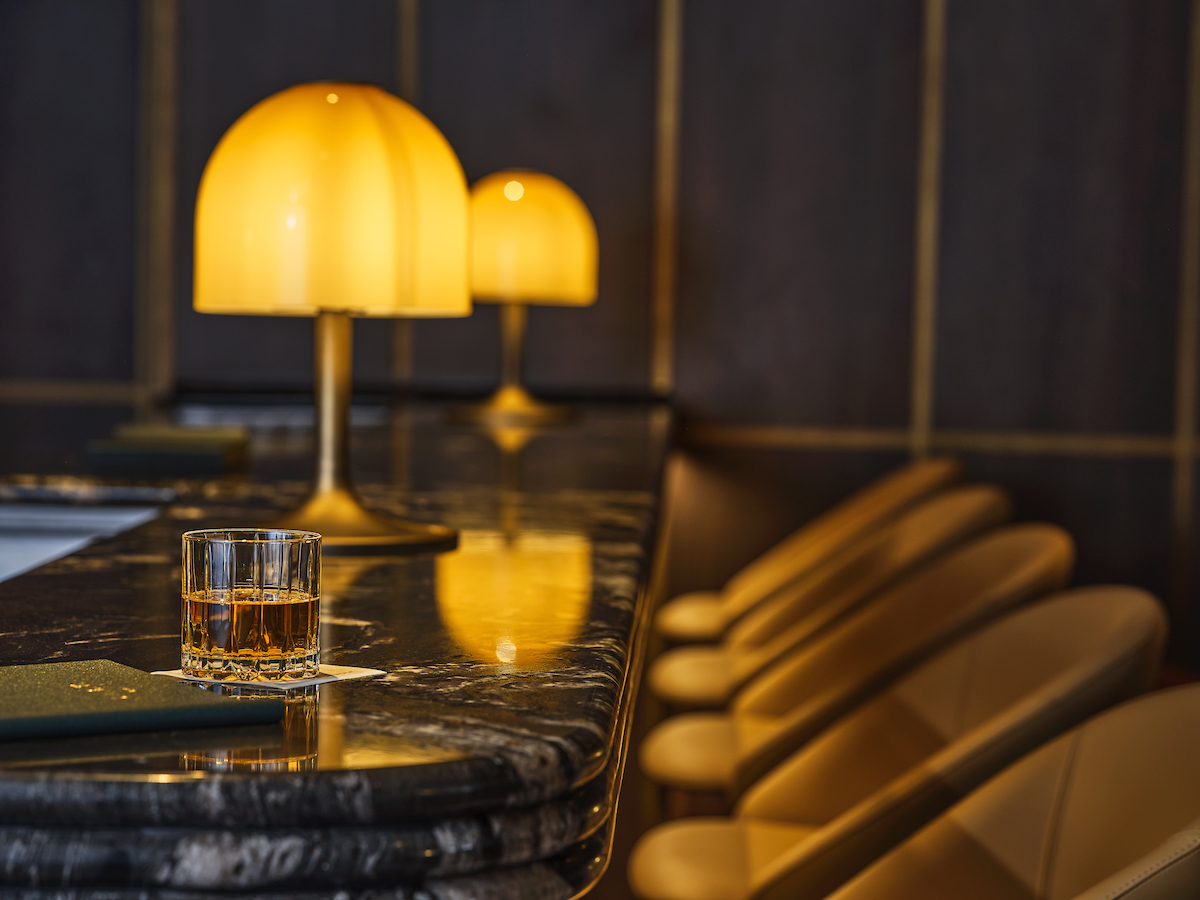
S.A.L.T Bar
S.A.L.T. Bar crafts authentic cultural connections through expertly prepared cocktails that tell the story of each region. A welcoming atmosphere invites you to indulge in regionally inspired libations prepared with local ingredients and traditional spirits.
Each perfectly balanced pour serves as your passport to the shores you’re exploring.
Images are intended as a general reference. Features, materials, finishes, and layout may be different than shown.
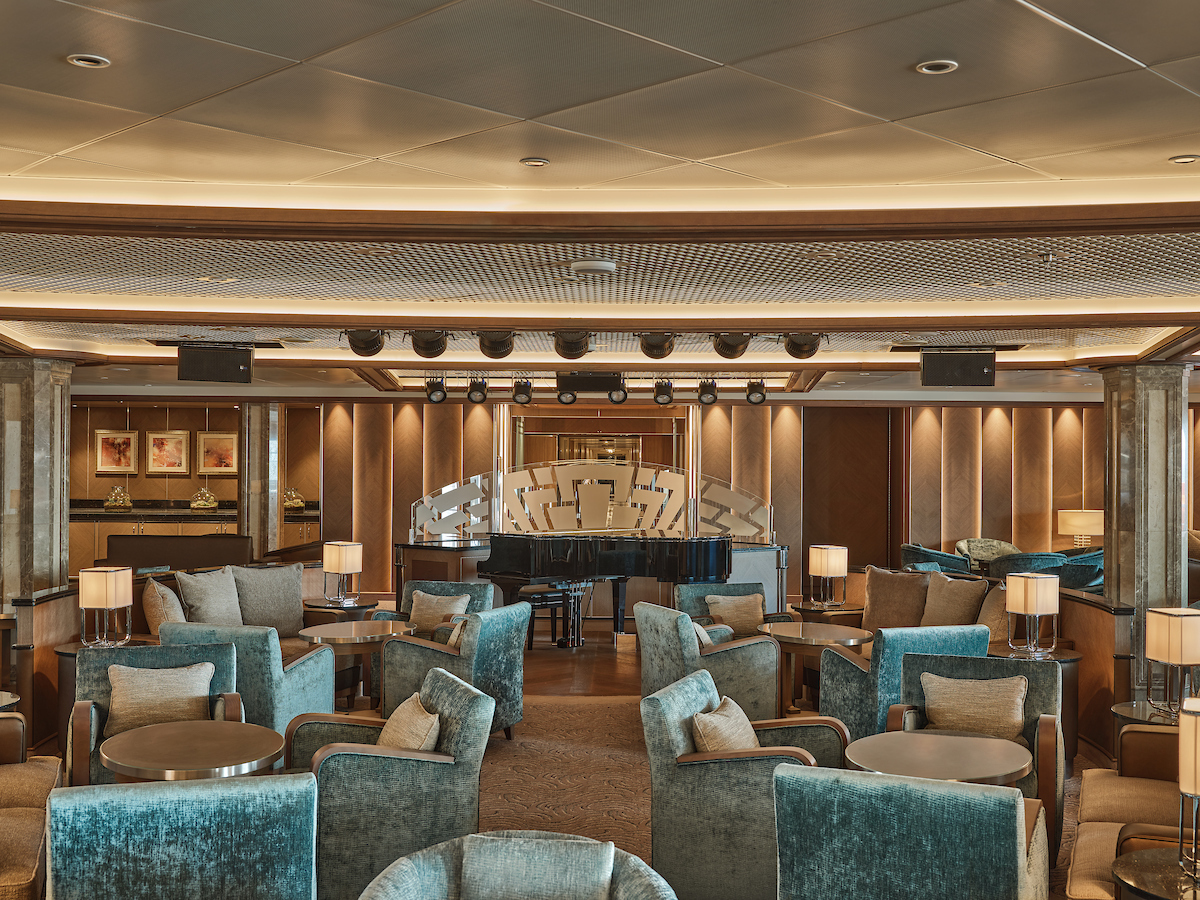
Dolce Vita
Surrender to a world of Italian elegance where the art of aperitivo takes pride of place. Ideal for connecting over spritzes, negronis, and light bites, here each evening feels like a celebration. As laughter lingers, crystal glasses clink, and live piano notes ripple through the air, Dolce Vita compels you to savor the sweetness of life on board.
Images are intended as a general reference. Features, materials, finishes and layout may be different than shown.
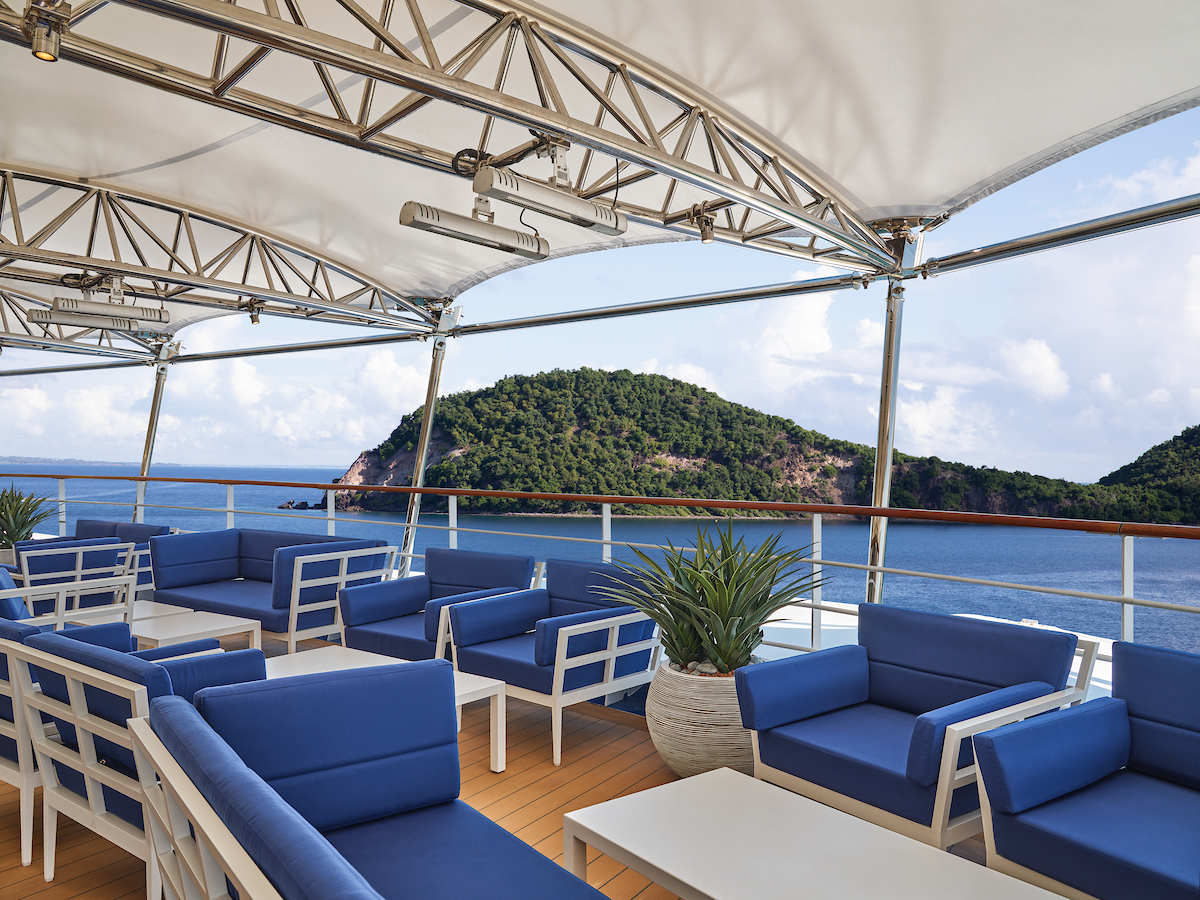
Panorama Lounge
From early morning to late at night, the Panorama Lounge offers everything you could wish for. A peaceful retreat that is the perfect place to take a break, a social place to meet and greet old friends, or an evening venue to partake in a cocktail as you sit back and watch the world go by. Sink into the plush seats, and come evening, enjoy listening to the gentle sounds of a pianist or the invigorating beats of our in-house DJ.
Images are intended as a general reference. Features, materials, finishes and layout may be different than shown.
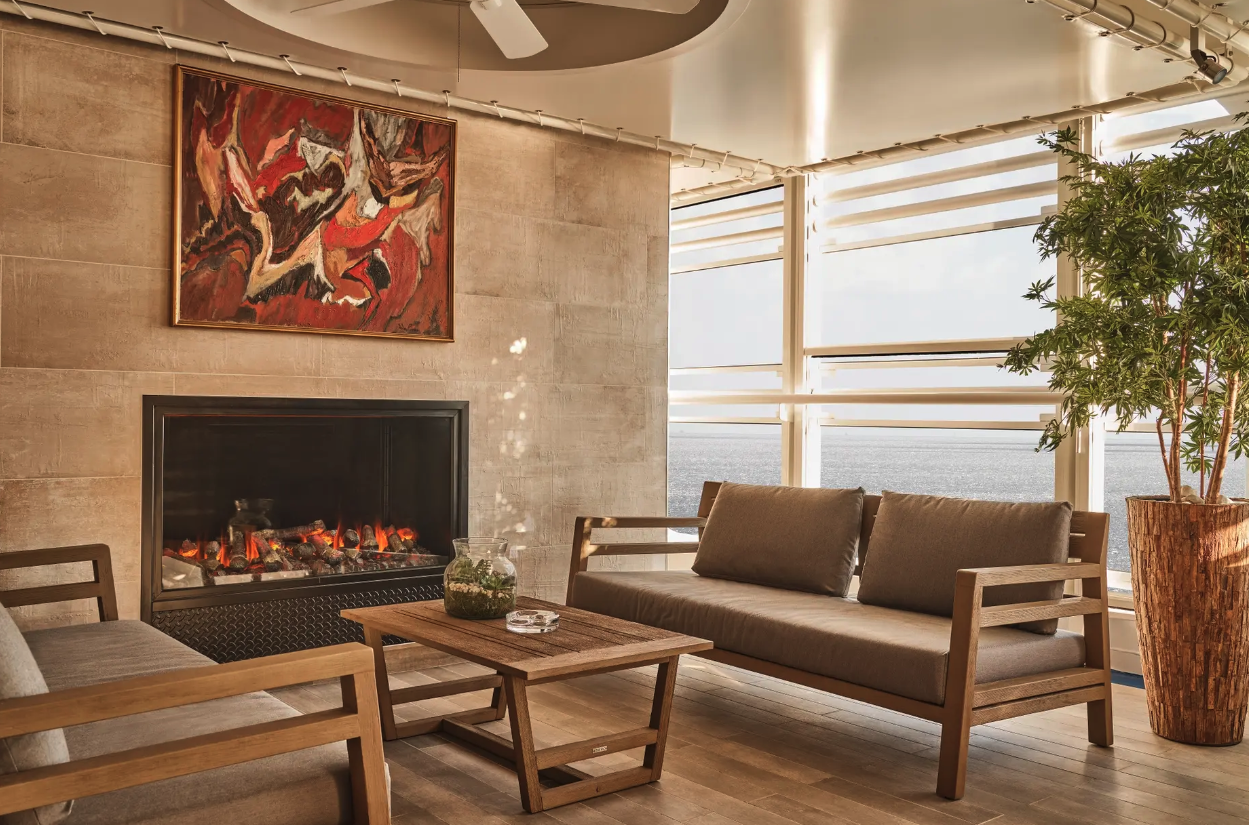
Connoisseur's Corner
As evening stretches into night, Connoisseur’s Corner offers a stylish refuge for those who appreciate the time-honored rituals of smoke and spirit. Sink into tufted leather chairs with a hand-rolled cigar and a glass of one of our finest cognacs or whiskeys. Indoors or under the stars, every moment is marked by pure indulgence.
Images are intended as a general reference. Features, materials, finishes and layout may be different than shown.
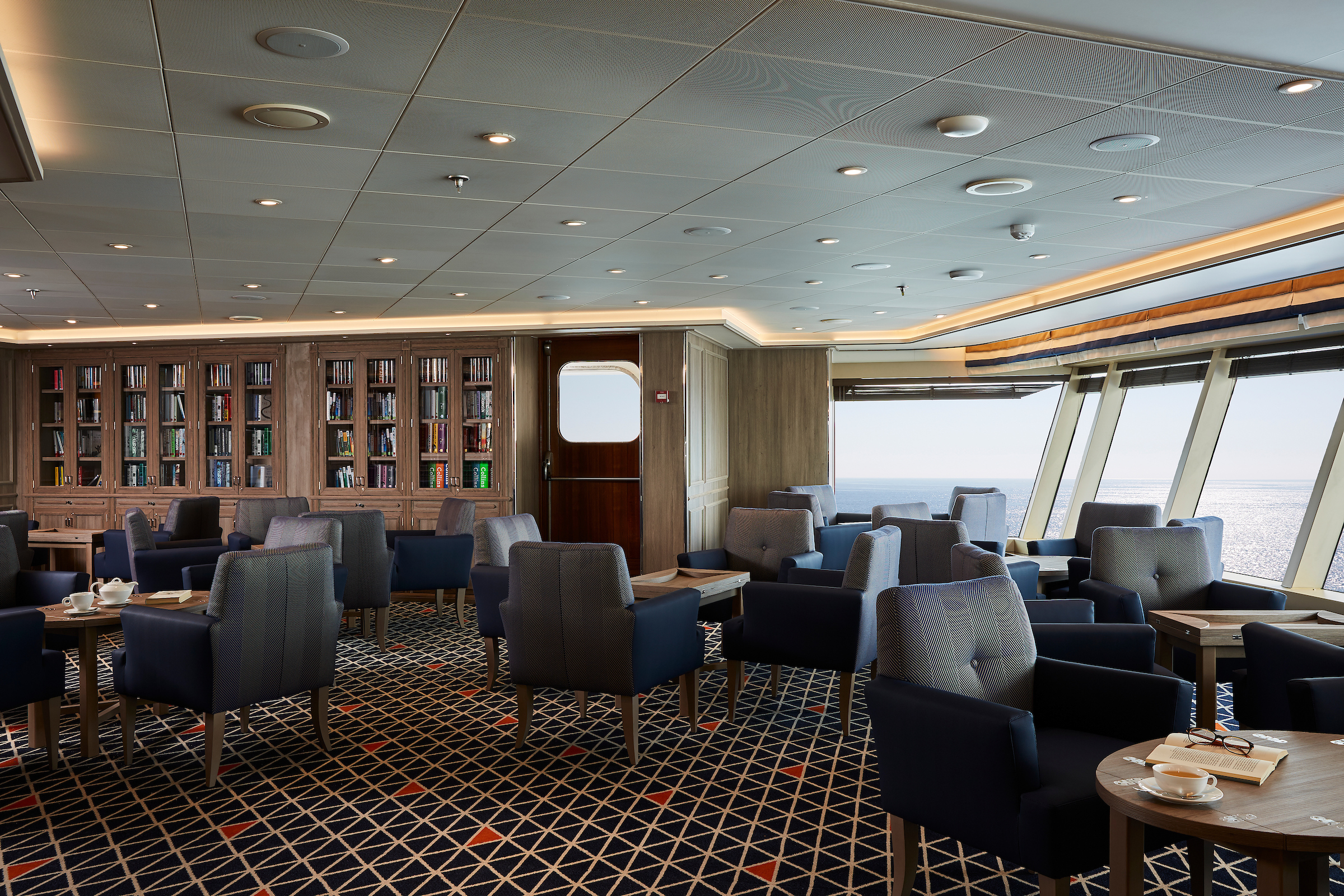
Observation Library
Wrapped in glass and bathed in light, the Observation Lounge offers a serene escape high above the sea. Borrow a book from the in-house library, pour yourself a coffee or tea from the self-service bar, and curl into an armchair to watch the world drift by. This is a sanctuary for reflection, relaxation, and stories — both written and still in the making.
Images are intended as a general reference. Features, materials, finishes and layout may be different than shown.
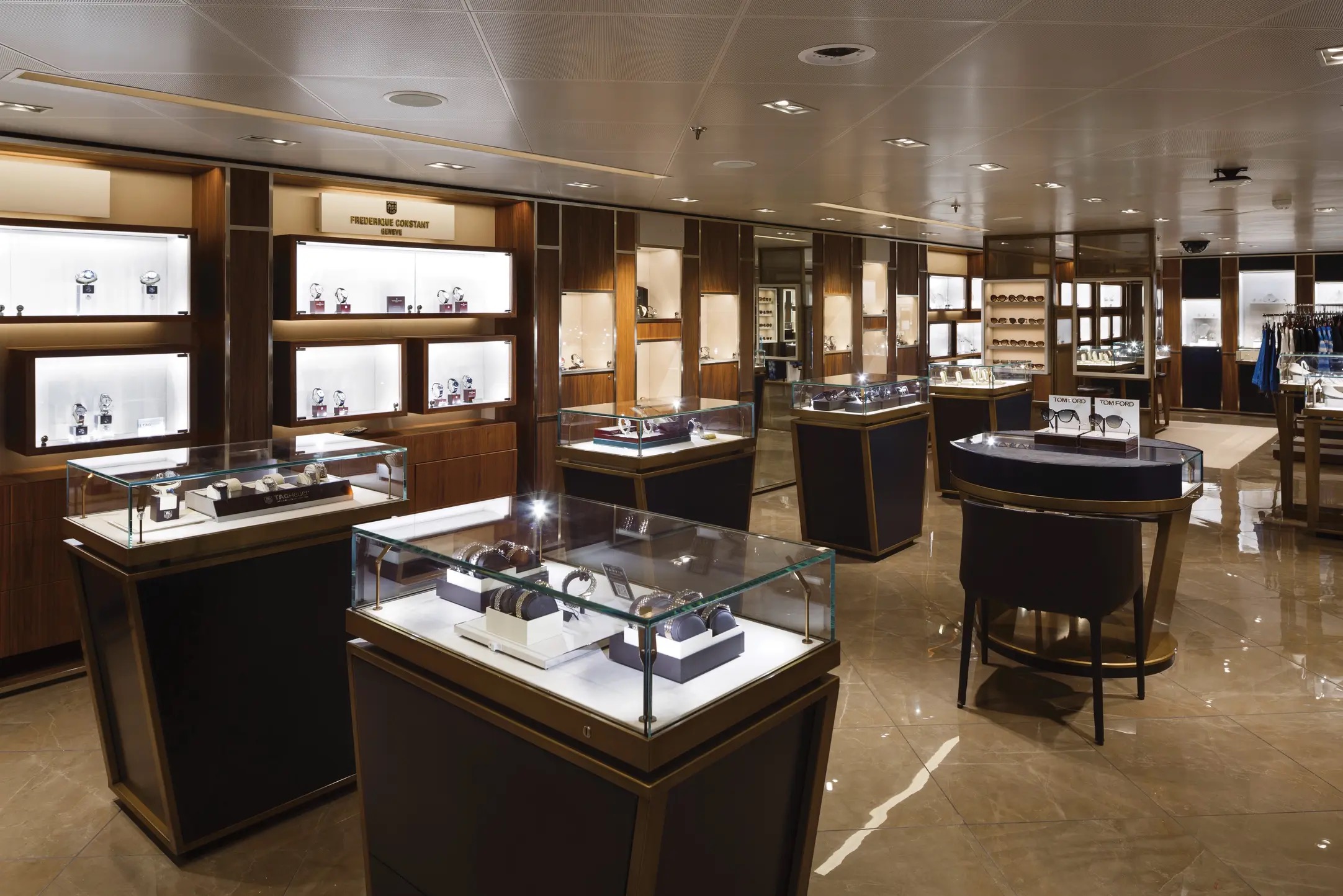
Boutique
Exceptional shopping experiences do not end in the cosmopolitan cities we visit. Silversea’s striking new shipboard boutiques, reimagined and redesigned, are stunning modern design spaces befitting the finest creations from legendary designers. Carefully selected partners on board Silversea’s duty-free boutiques offer our guests a carefully curated selection of cutting-edge fashions, jewelry, accessories, fine perfumes, cosmetics, and Silversea Logo collection, all at duty-free prices.
Images are intended as a general reference. Features, materials, finishes and layout may be different than shown.
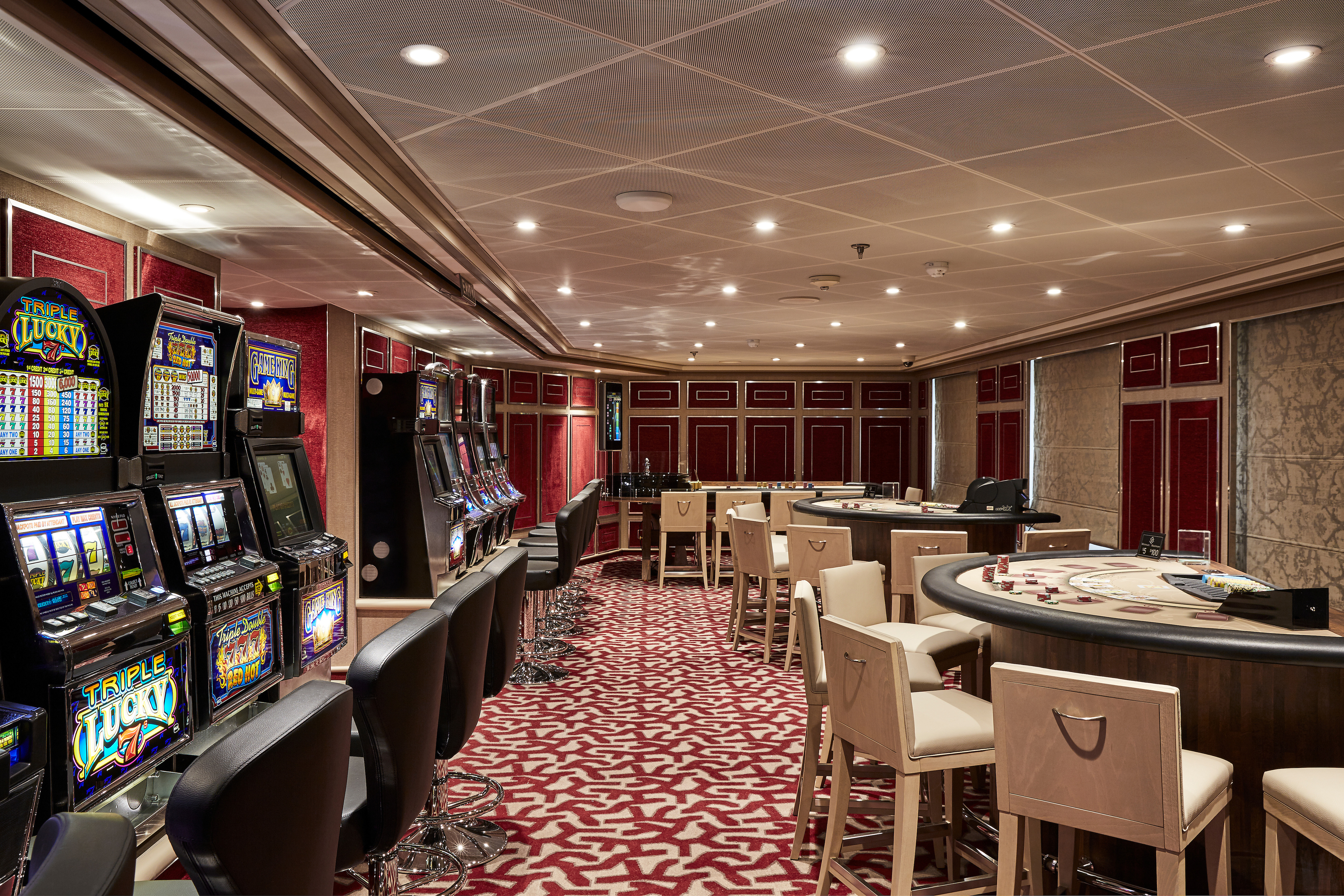
Casino
Let the fun begin! Channel your inner James Bond and place a bet at a variety of table games, including American Roulette, Blackjack, and Ocean Poker, as Silver Dawn glides silently through the waves. An assortment of multi-game, multi-denominational reel and video slot machines are also available. Prepare yourself for a luxurious and exhilarating experience with every turn of a card and spin of the wheel. Game on!
Images are intended as a general reference. Features, materials, finishes and layout may be different than shown.
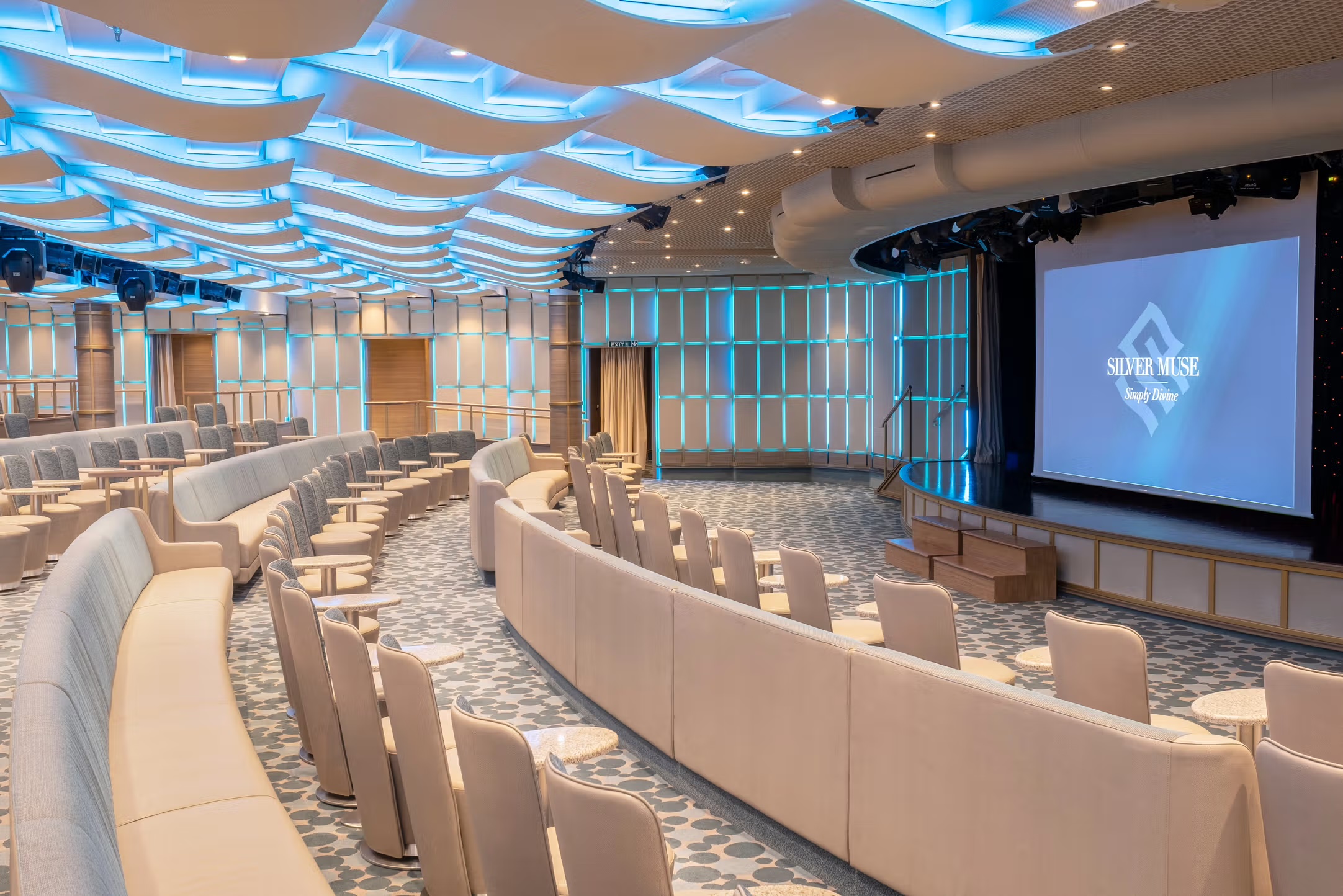
Venetian Lounge
Step inside The Venetian Lounge, a cabaret-style theater draped in gilded glamour and Belle Époque charm. Cozy seating and intimate tables invite you to bask in the glow of live productions and cinematic screenings, complemented with Champagne, fine wines, and classic cocktails. In a setting this grand, every night feels like opening night.
Images are intended as a general reference. Features, materials, finishes and layout may be different than shown.
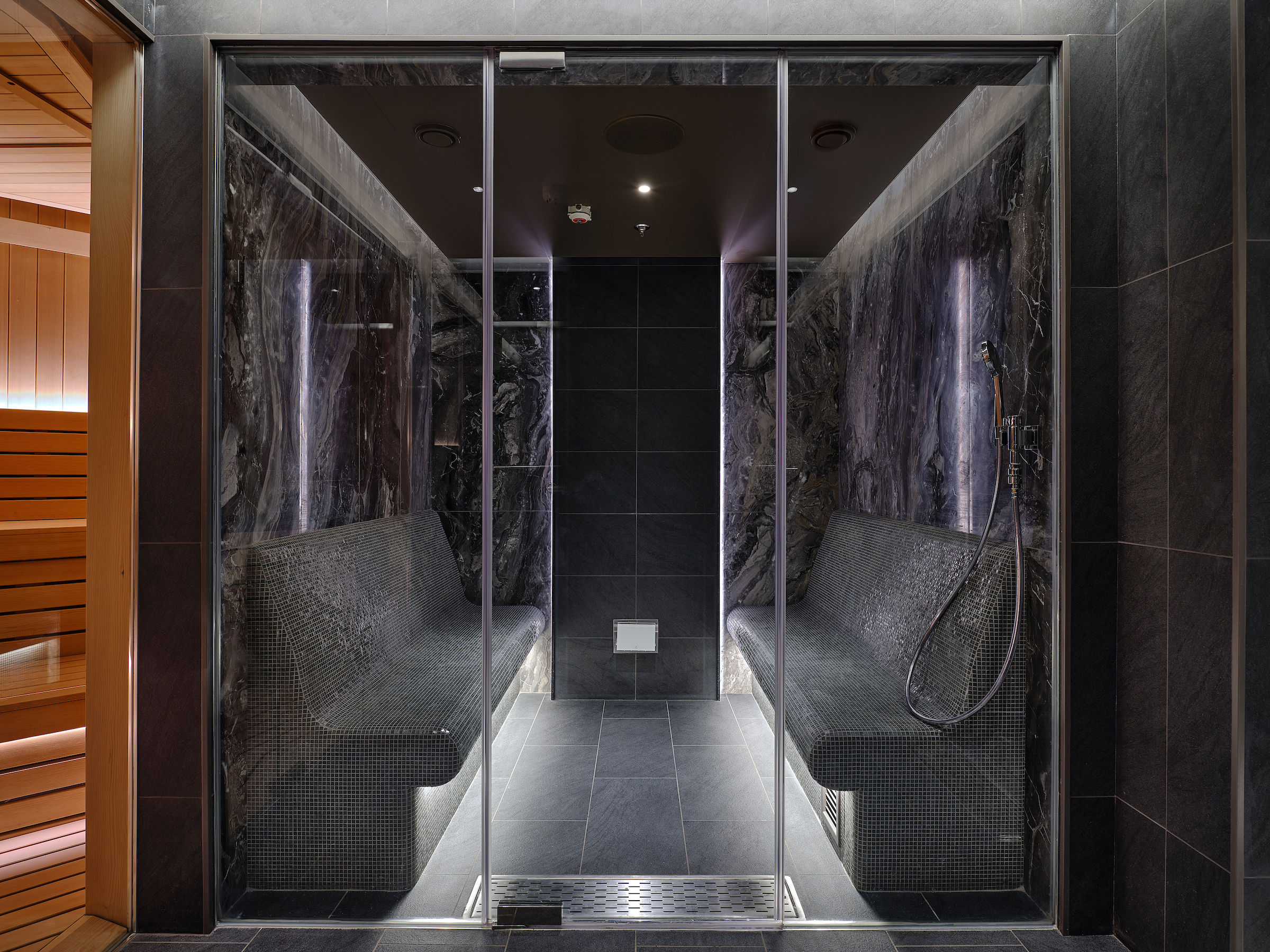
Otium Spa
Inspired by the traditions of Ancient Rome, Otium creates a world of combined leisure and pleasure. Otium is based on the concept where everything from sumptuous food to spa experiences to socializing became a part of daily life for the elite. Otium takes this concept and introduces it to our onboard guests. From curated signature experiences that go from spa to suite to wellness treatments that will have you looking good and feeling better, we guarantee our memorable sensory journeys will take you away from the every day. Join the Otium revolution of leisure and luxury, where living well and being well are never mutually exclusive.
Designed to Indulge
Our Spa’s space has been designed to complement your wellness experience. This begins in the central relaxation area, truly the hub of the spa, and permeates the space. A visit here offers far more than simple treatments: Otium is a sensorial experience too. A soothing color palette creates the perfect ambiance for each area while sophisticated materials heighten the feeling of holistic luxury. What’s more, bespoke artworks inspired by Ancient Rome are featured throughout the Spa, Beauty Salon, and Fitness Center. Otium’s design creates a magical atmosphere that fuses 2,000 years of culture with innovative design.
Experience the Unforgettable
Few things are more enjoyable than indulging in a wellness treatment, and at Otium Spa, luxury awaits you. From completely customized treatments to traditional favorites that turn back the clock, we offer the best for looking good and feeling better. Enjoy supercharged facials to revitalize tired-looking skin, blissful massages using Mediterranean-inspired products, and sumptuous treatments to soothe both body and mind. Personal training sessions, yoga, and Pilates complete the universal experience.
Location: Deck 6
Opening hours: from 8 am to 8 pm. Later appointments until 10 pm
are available on request.
Reservation is required. Additional charges apply
Images are intended as a general reference. Features, materials, finishes and layout may be different than shown.
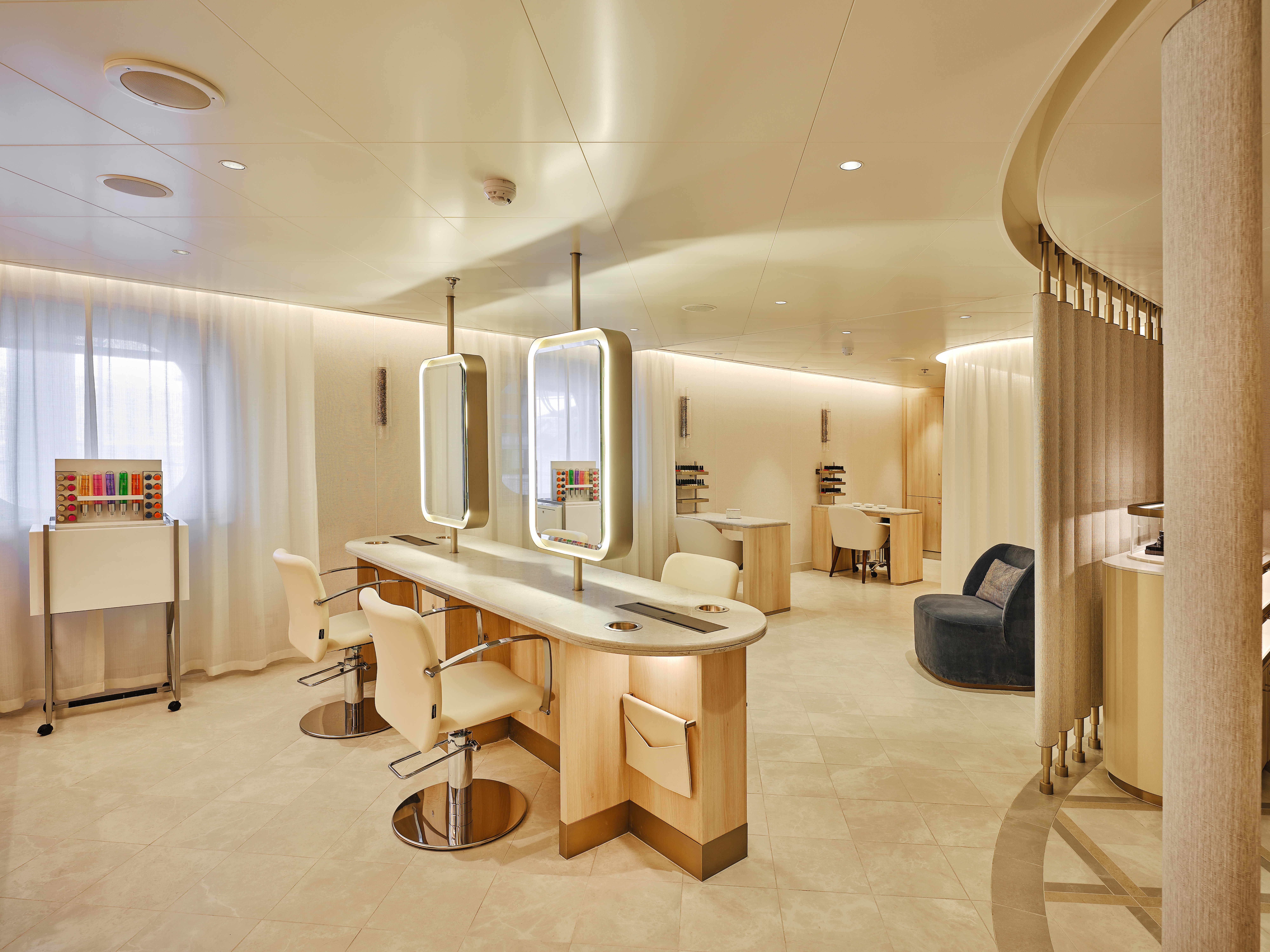
Otium Beauty Salon
A full range of salon services, including hairstyling, manicures, and pedicures, is available on board this luxury cruise ship for both men and women. Appointments for these chargeable services may be made on board the ship, or in advance via My Silversea. Maintain the look of prestige travel while you cruise.
Location: Deck 6
Opening hours: from 8 am to 8 pm
Images are intended as a general reference. Features, materials, finishes and layout may be different than shown.
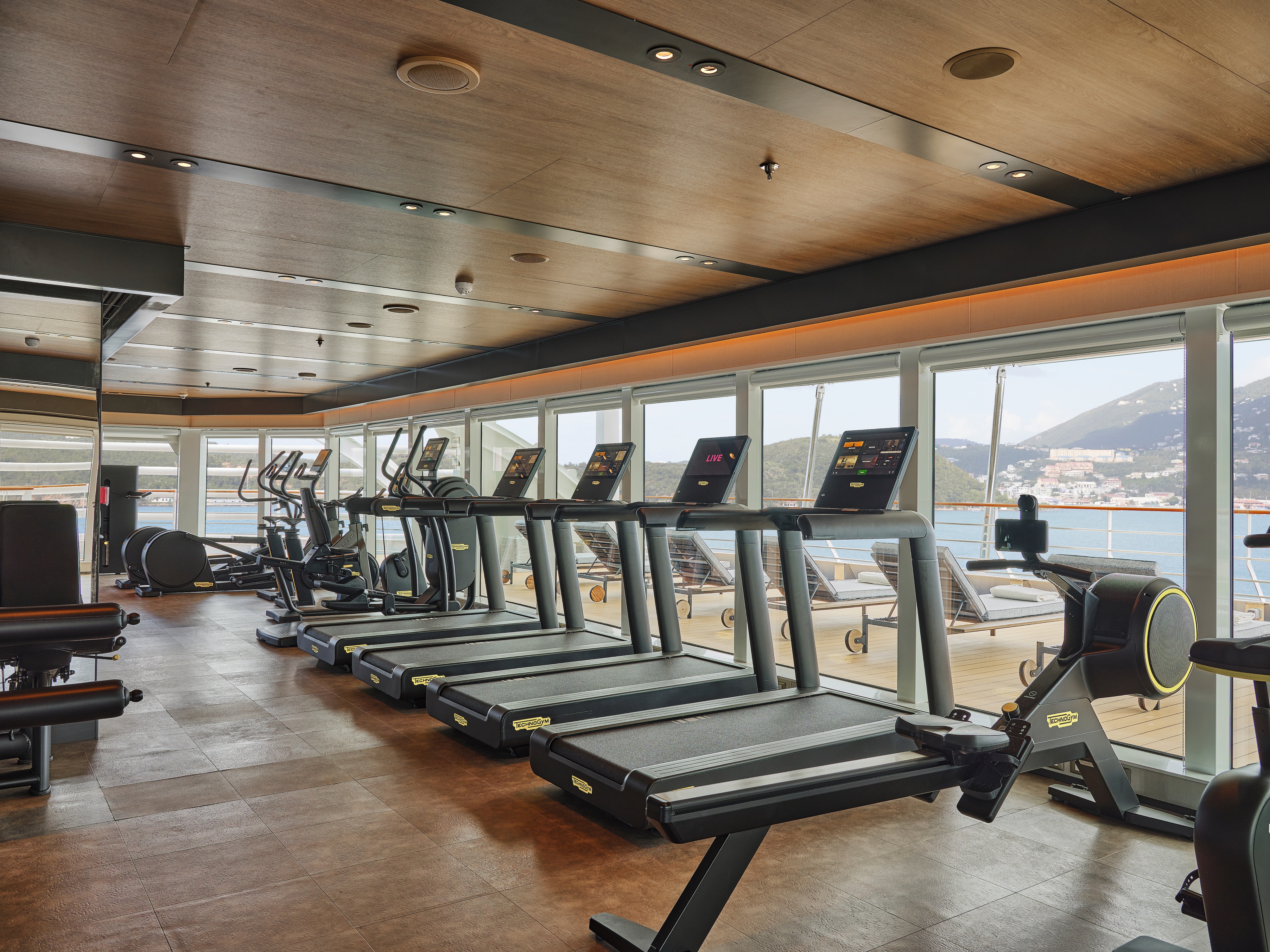
Fitness Centre
With state-of-the-art Technogym® equipment, free weights, and specialty classes, the Fitness Center brings together elite design with programs that are specifically created for your body type and needs. With personal trainers available for individual sessions, training here is a five-star experience for all levels of fitness and experience. And with the best view that you’ll ever have while working out, there are definitely no more excuses …
Location: Deck 6
Opening hours: from 6:30 am to 8 pm
Images are intended as a general reference. Features, materials, finishes and layout may be different than shown.
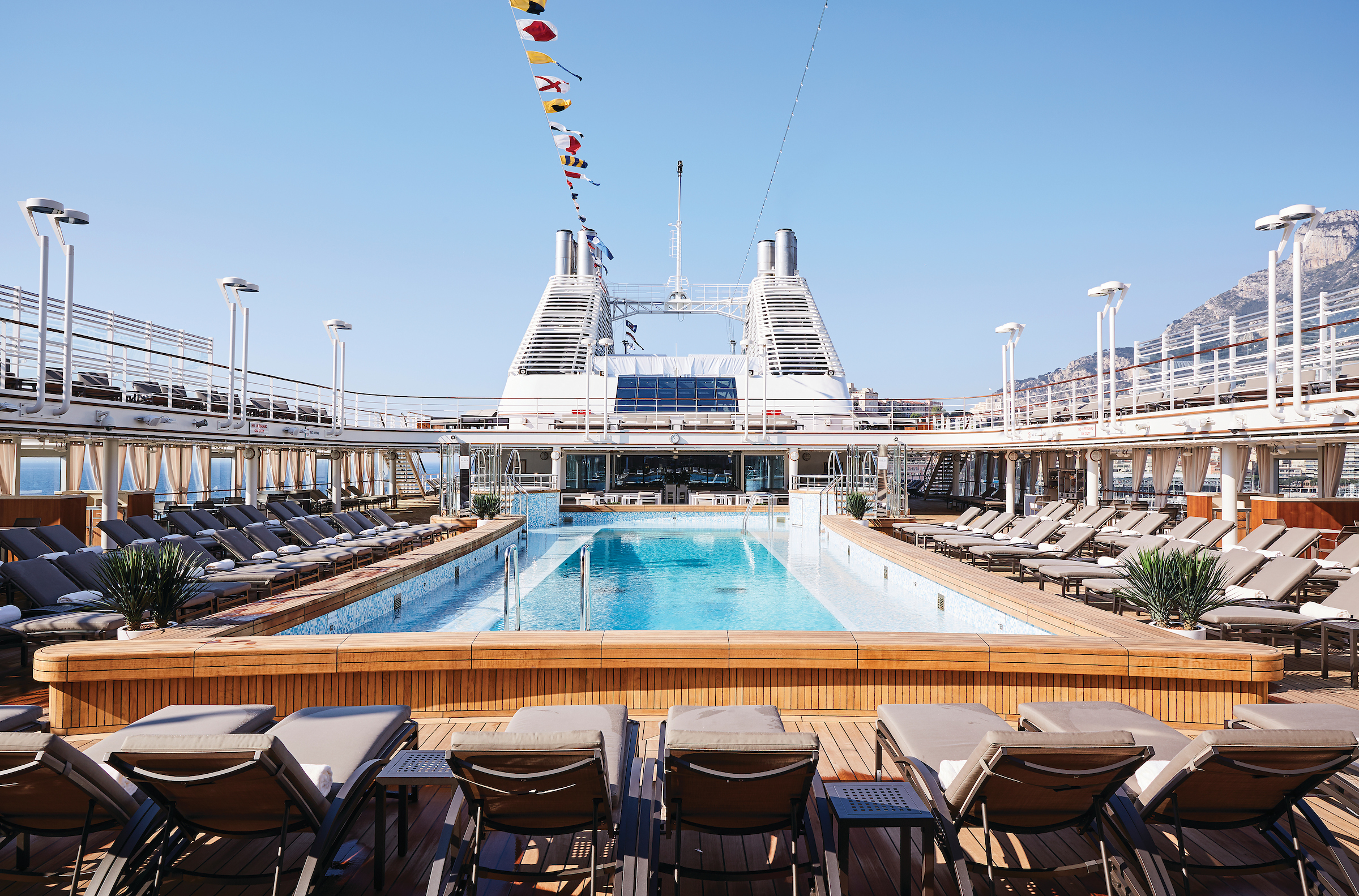
Pool Deck & Jacuzzi Area
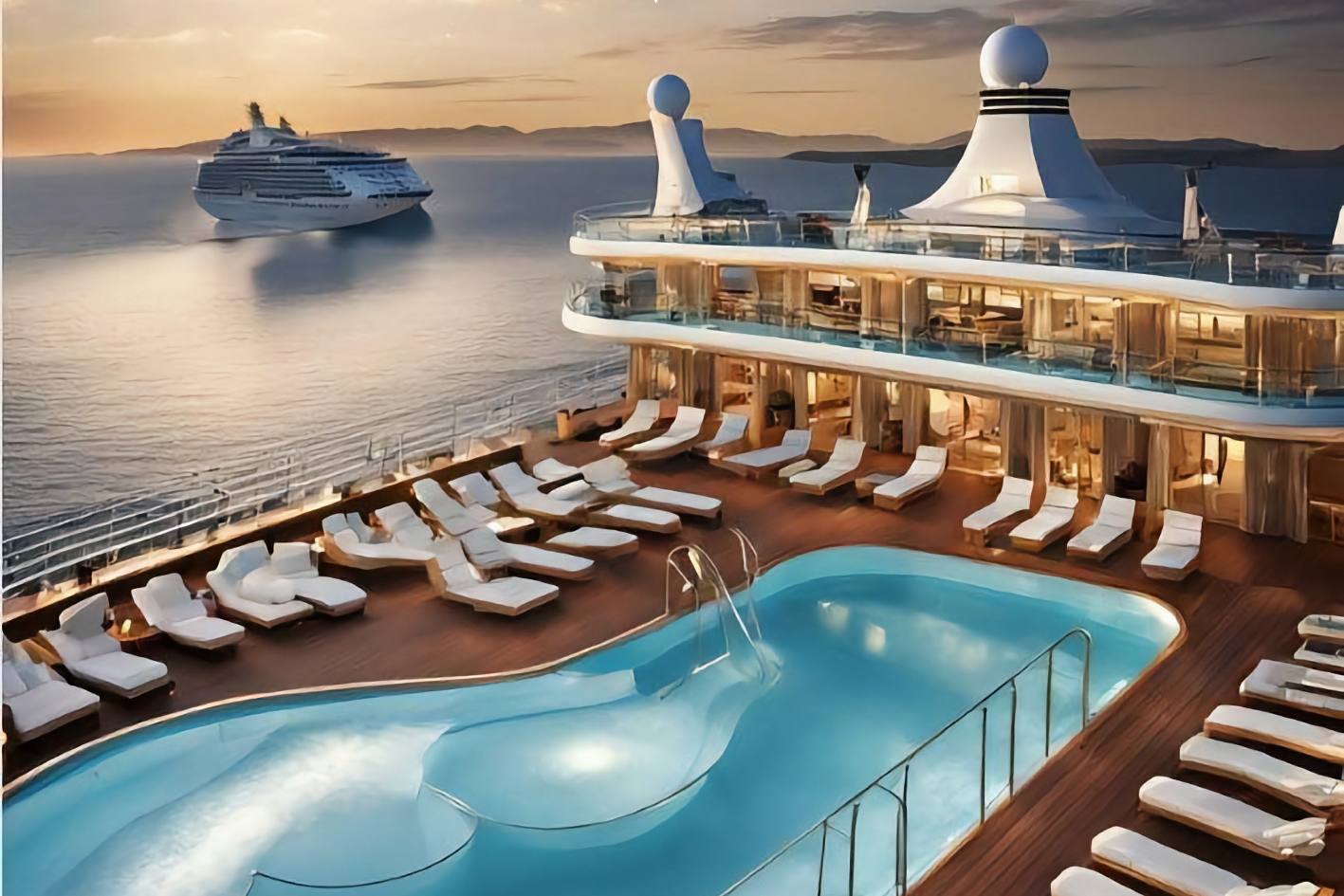
The epitome of open-air living—defining how you enjoy the outdoors—this is the place to cool off, unwind, and enjoy the sunshine. Take a dip in the pool, relax in one of the whirlpools, or simply soak up the view from one of the sun beds while your pool attendant anticipates your every whim. A little more ice? Certainly. A plush towel to dry off with? Of course. With breathtaking landmarks gliding by, dive into the clear waters in a setting that is so idyllic that you will not want to disembark.
Images are intended as a general reference. Features, materials, finishes and layout may be different than shown.
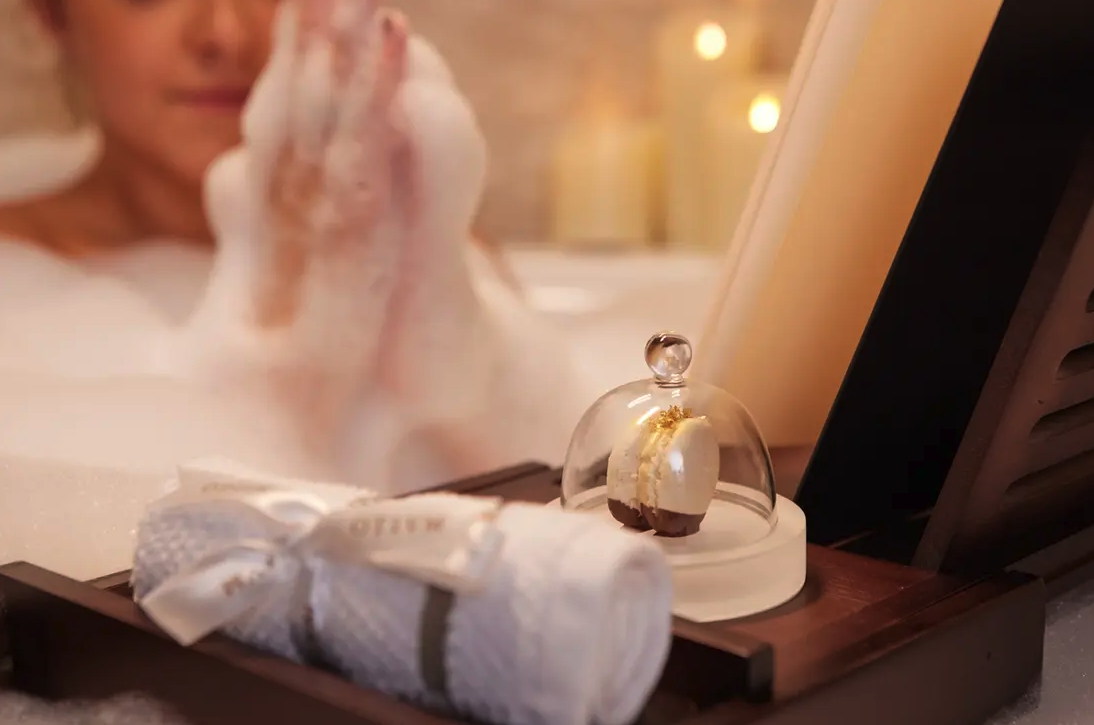
Otium In-Suite Experiences
Enjoy Otium. Enjoy relaxation and wellness that go from spa to suite. Enjoy the relaxing and indulgent world that makes every moment matter. At Otium, we believe that wellness and relaxation do not end in the spa, so we have extended our unique concept to all suites. Four tailor-made in-suite experiences offer luxurious possibilities for relaxation that are the embodiment of leisure and pleasure. Otium is far more than your average spa offering. Featured exclusively on board Silver Dawn and Silver Nova, with Otium, you can dive deep or float on the surface—it’s up to you.
The Otium Bathing Experience
Dissolve into the Otium bathing experience. Treat yourself to some well-deserved solitude with this indulgent addition to your voyage. No words can accurately describe this opulent experience. Bath water at the perfect temperature, comfortable back and neck pillows, and bespoke bath salts from the Otium menu are just the beginning. Add candles, low lighting, a delicious selection of delicacies to pamper the taste buds, and the Otium music menu and we think you’ll agree that we have designed a superlative experience to soothe both body and mind.
The Otium Balcony Experience
We have curated three superb moments that promise deep immersion in your destination, from the comfort of your very own veranda. Each of the three moments is destination driven, depending on where you find yourself in the world. For sun lovers, enjoy “Under the Sun”—an enhanced sunbathing session that will pamper and protect in equal measure! “Baby it’s cold outside” will bring extra warmth during cold evenings in chilly climates with cashmere blankets and the first hot chocolate menu at sea. Finally, make your balcony your own, with personalized food and snacks courtesy of your butler.
The Otium Comfort Food Experience
“Food and Chill” takes our in-suite dining menu to a whole new level. Not only will the Otium Food and Chill experience feature all your favorite dishes from the onboard restaurants—ideal for those who want to dine out while staying in—but this experience will also feature a selection of dining options designed to tempt your taste buds. Finally, the Movie experience will add a touch of class to your after-dinner relaxation. Have luxury popcorn and nibbles delivered to your suite for an indulgent snack as you enjoy your in-suite movie menu.
The Otium Sleeping Experience
Isn’t it time you became a successful sleeper? With the Otium Sleeping experience, you can choose a pillow from our vast pillow menu, curl up on 400-thread-count Egyptian cotton linens crafted exclusively for Silversea by Rivolta Carmignani, and melt into a bespoke Otium mattress, designed exclusively for the ultimate sleeping experience at sea. What’s more, you can even ask your butler for our signature Otium sleeping scent to ensure that you have the most restorative rest possible. Take a break from your alarm clock and enjoy the best night’s sleep of your life.
Images are intended as a general reference. Features, materials, finishes and layout may be different than shown.
S.A.L.T.
Sea And Land Taste: Culture Through Cuisine
Unique to Silversea, S.A.L.T. Sea And Land Taste® is a multifaceted culinary program that allows you to explore a destination’s cultural identity through food, even when you are on board. S.A.L.T. Kitchen offers an ever-changing menu inspired by local cuisine, while S.A.L.T. Bar serves regionally crafted cocktails*. Enjoy hands-on classes at S.A.L.T. Lab during the day and nightly showcases at S.A.L.T. Chef’s Table. The enrichment continues with S.A.L.T. Experiences and S.A.L.T. Talks — ashore tastings and onboard lectures celebrating culinary artistry and culture.
A New Definition of Traveling with Taste
From market trips and special dinners to cooking demos with award-winning local guest chefs, S.A.L.T. will intensify your voyage, flavor your journey, and preserve your vacation memories for months, and yes, hopefully years.
S.A.L.T. Experiences: S.A.L.T. Experiences take you on deliciously immersive journeys that delve into the personality of each destination. These thoughtfully designed Shore Excursions grant privileged access to local food cultures — from Michelin starred restaurants to familyrun farms and bustling markets to private kitchens — always led by those who know the region best. Whether harvesting vegetables from biodynamic gardens, learning ancestral techniques from village cooks, or savoring wines with renowned vintners, these optional journeys invite you into culinary adventures where strangers become friends, recipes become stories, flavors become memories.
S.A.L.T. Kitchen: S.A.L.T. Kitchen transforms dining into discovery with menus that reflect the cuisines of the places you’ll visit. This complimentary venue is the only restaurant at sea with an ever-changing menu based on destination. Plus, a standing menu focuses on broader regional specialties, complemented by a menu featuring hyperlocal fare. Dishes are inspired by local flavors and prepared with responsibly sourced ingredients. Accompanied by a curated selection of over 160 regional wines, S.A.L.T. Kitchen delivers an immersive taste of place without ever leaving the ship.
S.A.L.T. Lab: S.A.L.T. Lab elevates a curious traveler to a culinary insider through intimate, hands-on cooking classes focused on regional techniques and traditions. In this professional-grade teaching kitchen, you’ll gather in small groups to prepare local dishes under the guidance of a knowledgeable S.A.L.T. Lab Host — learning not just recipes but the cultural heritage behind each ingredient. Created in collaboration with respected experts, these complimentary experiences invite you to transform your home kitchen into your favorite destination, where every meal becomes a delicious encore of your journey.
S.A.L.T. Talks: S.A.L.T. Talks illuminate the deep connections between food and culture through engaging presentations on board. Led by our knowledgeable S.A.L.T. Lab Hosts, these complimentary lectures and live cooking demonstrations reveal how regional dishes reflect centuries of tradition, migration, and innovation. Through enlightening narratives and sensory experiences, you’ll enjoy fascinating insight into the cultural significance behind local ingredients and techniques, enhancing appreciation of both on board dining and shoreside explorations. Feed your curiosity along with your appetite.
S.A.L.T. Land Programs: Unearth the roots of every place with S.A.L.T. Land Programs — a multi-day culinary and cultural journey, before or after your cruise. Savor regional specialties, indulge in private tastings, and take part in immersive, hands on classes. Every moment is thoughtfully designed by the team behind the S.A.L.T. culinary program, in close collaboration with local partners. Relish the Silversea signature quality from first taste to final toast, as we reveal the essence of each destination through its most authentic dishes. Meet the people that proudly preserve culinary heritage. Join rituals that unite communities. And with every meal, discover the depth of each locale as you create new memories among newfound friends
Everything That Matters, Included.
All-inclusive means more with Silversea. Destination-inspired dining, premium beverages, complimentary Wi-Fi, a cutting-edge fitness center and spa, and engaging experiences that inspire and entertain are all part of your voyage. Unwind in Otium Spa’s sauna as you glide past glaciers. Expand your perspective with guest lectures after exploring ruins. Delight in brilliant performances that bring local culture from shore to ship. Every comfort you could imagine is included — along with countless touches you’d never expect.
Butler service in every suite: All guests are pampered equally aboard our ships. We are the only cruise line worldwide to include butler service in every suite and category. A staff-to-guest ratio of nearly one to one ensures that your every wish is fulfilled with earnest precision, from the concierge who can customize your voyage to the butler who serves your breakfast in suite.
Complimentary beverages everywhere: Enjoy a glass or bottle of champagne, wine, beer, or premium spirits on the house. We’ll also ensure you’re well stocked with water, juices and soft drinks in the public bars and your suite. Our Silversea promise is to keep your mini-bar full of your favorite drinks—alcoholic beverages (including wine, spirits and mixers) or cold bottles of water for hot, sunny days! Your butler will replenish daily, but if you want a little extra, ask, and we’ll ensure you get exactly what you want.
Culinary innovation: Enjoy breakfast in your suite or lunch and dinner in one of our specialty restaurants. Our gourmet dining options welcome you for an unforgettable meal. Our regionally inspired S.A.L.T. Bar, Kitchen and Laboratory concept offers a deep-dive culinary immersion beyond anything you have ever experienced aboard a cruise ship. Our specialty dining options include local and international dishes for those who take their dining seriously.
Gratuities and personalized service on board: Setting sail on Silversea promises peace of mind from start to finish. That means no worrying about tipping the butlers or staff. Our crew-to-guest ratio of almost 1:1 ensures flawless service from pole to pole, but with us, you never have to think about who should get a tip, how much you should give and when. It’s all included! We believe that not having to deal with tipping helps make your luxury cruise even more special and stress-free. And that is worth every penny.
Shore excursion credit: Unlock meaningful moments in port with a Shore Excursion Credit, available on Classic voyages with the All-Inclusive Plus Fare. Whether you’re seeking cultural immersion, experiences in nature, or local flavors — the Shore Excursion Credit is your key to deeper, more personalized exploration in every port. Designed to enrich your shoreside discovery, the credit value varies by voyage. Explore on your terms, with the flexibility to choose the adventures that speak to you.
Minors & Childcare
Silversea cruise guidelines state that children under the age of 18 must be accompanied by a parent or other responsible adult aged 21 or over, in the same or a connecting suite, for the duration of the voyage. Each suite that includes a minor must have at least one adult aged 21 or over present. If the adult accompanying the minor is not their parent, a Parental Consent Guardianship Form must be signed by a parent or legal guardian and received by Silversea prior to sailing. Please contact our Special Services Department at SpecialServices@Silversea.com for a Parental Consent Form.
Guests must be 21 years of age or older to purchase or consume alcohol. Silversea reserves the right to refuse service to anyone who, in its sole judgment, may be under the influence of alcohol or in any circumstance necessary to preserve the health and safety of guests and crew.
Silversea cannot accommodate infants less than six months of age and reserves the right to limit the number of children less than three years of age. Parents are required to sign a notarized waiver prior to sailing to grant a valid booking for children ages between 6 months and 1 year old. A signed and notarized waiver will be required for all children of these ages.
Although Silversea accepts guests over the age of 6 months (over the age of 5 years for Silversea Expeditions), there are no special programs for children on board our ships, and Silversea does not provide childcare, entertainment, or supervision. Silversea reserves the right to limit the number of children less than 3 years of age.
Children under the age of 8 years are permitted to participate in suitable Shore Excursions or shuttle services only if the vehicles are equipped with the correct safety harness and seating equipment. Child harnesses and secure seating cannot be guaranteed. Silversea reserves the right to refuse children under 8 years old on any tour on the basis of safety. Guests may use their own approved safety seat, booster seat, or harness, provided it is compatible with the local touring vehicle and can properly secure the child.
To ensure guest safety and comfort, the following minimum ages apply to expedition activities:
- Zodiac Cruises: Minimum age 5 years, accompanied by an adult.
- Snorkeling: Minimum age 12 years, accompanied by an adult.
- Kayaking: Minimum age 14 years when accompanied by an adult, or 16 years to participate solo.
As Silversea does not provide childcare services, an adult family member must remain onboard with any child who does not meet the minimum age requirements.
Pets
Pets cannot be accommodated on any Silversea cruise.
Medical Information
Inoculations
Generally, inoculations are not required in most areas where Silversea travels. These requirements are subject to change and it is recommended that you verify current guidelines with your travel professional prior to departure. Please note that when travelling to countries that do require inoculations, written verification will be necessary. Before taking any trip overseas, it is wise to check with your doctor, particularly if you are under a doctor’s care.
Medical Services On Board
Each Silversea ship is equipped with a Medical Centre, which is customarily staffed by a doctor and nurse on 24-hour call when at sea. When docked, supplementary emergency care may also be obtained through local medical facilities. Guests may be charged for medical services and for medications used for their medical treatment. The Medical Centre is not intended or designed to provide ongoing treatment of pre-existing conditions or for extended critical care, and Silversea is not responsible for the diagnosis, treatment or services furnished by shipboard medical personnel. Guests requiring oxygen for medical reasons are welcome to bring an oxygen concentrator onboard. Guests wishing to bring their own portable oxygen tanks must obtain prior written authorisation from Silversea, as restrictions may apply.
Pregnancy
Silversea policy regarding pregnancy is derived from the Cruise Lines International Association endorsement of the American College of Emergency Physicians Health Care Guidelines for Cruise Ship Medical Facilities, which can be found at https://www.acep.org/. This includes the guideline that “Pregnant women who have entered the 24th week of estimated fetal gestational age at any time during the cruise should not be eligible to sail with the ship. It is Silversea policy that any Guest who will have entered her 24th week of pregnancy or greater, at any time during the cruise, will be prohibited from sailing.The Guest and treating physician should consider before any cruise that there is no Obstetrician/Gynecologist available on the ship, and that pregnancies, when unstable and poorly controlled, are potentially life-threatening, especially without back up. A Guest may be at sea for several days without any immediate hospital and/or specialist back up, and that since the proposed itinerary is not within the U.S., and the availability of specialized shore side facilities can be problematic. All guests are required to sign a health questionnaire at check-in to ensure they are aware of our pregnancy policy. If you have already booked a cruise or cruise tour and do not meet this requirement, please contact your travel agent or airline.
Prescription Medication
For your convenience and wellbeing, it is important that you bring a sufficient supply of any prescription medicine you may need. Prescriptions cannot be refilled onboard, and usually cannot be refilled overseas. To prevent delays in clearing Customs, it is also a good idea to travel with a doctor’s letter explaining that your prescription medication is required for your continued health. It is also recommended that the medicine remain in its original container with the original pharmacy label intact.
Special Medical Conditions
If you have any existing medical condition that may require attention, or should you require oxygen for medical reasons whilst onboard, please send written notification prior to your voyage to specialservices@silversea.com or via fax to 954-759-5049. Please note that an oxygen concentrator is the only form of oxygen equipment that the Silversea ships can accommodate. Guests who rely upon wheelchairs must bring their own. Please note that not all shore excursions are suitable for guests with impaired mobility.
Health & Medical Requirements
All guests are required to report in writing to Silversea at the time their reservation is made:
- Any physical or mental condition that may require medical or professional treatment or attention during the voyage.
- Any condition that may render the guest unfit for travel, or that may require special care or assistance.
- Any condition that may pose a risk or danger to the guest or anyone else onboard the ship.
- Any condition that may require oxygen for medical reasons.
- Any intention or need to use a wheelchair cart, other mobility device or a service or assistance animal aboard ship.
By booking passage and by boarding the ship, the guest represents and warrants that he / she is physically and otherwise fit to travel, and that the guest will comply at all times with applicable rules and regulations of the ship and orders and instructions of the ship’s officers and medical staff. Silversea reserves the right without liability to require a guest to disembark and / or to refuse to board and transport a guest who, in the judgment of Silversea or the ship’s Master, is unfit to travel or may require care beyond that which Silversea is reasonably able to provide. Silversea strongly recommends wheelchair guests travel with someone who is able to assist them both ashore and at sea as Silversea may be unable to offer special assistance. Please note that wheel-on and / or wheel-off access may not be available at some ports-of-call. Wheelchair guests must bring their own collapsible wheelchair.
For guests travelling aboard Expedition Fleet vessels, Silversea strongly recommends wheelchair guests travel with someone who is able
to assist them both ashore and at sea as Silversea may be unable to offer special assistance. Please note that wheel-on and / or wheel-off access may not be available at some ports-of-call. Wheelchair guests must bring their own collapsible wheelchair.
Laundry / Valet Services
Complete valet services, including laundry, pressing and wet cleaning, are available at an additional charge and may be arranged through your butler. Customary charges will apply. A self-service launderette (excluding Silver Origin) offers washing machines, dryers, irons and laundry supplies, allowing you to limit the amount of cruise luggage needed, especially for longer voyages.
I have allergies. Can special detergent be used to wash my sheets and towels?
Silversea can notify Housekeeping Services of your preferences. Please email specialservices@silversea.com in advance of your cruise.
Dress Code
During the day, guests are welcome to dress in relaxed attire comparable to five-star resort wear. Lightweight, comfortable clothing and flat or low-heeled shoes are recommended for time spent on outdoor decks.
Starting at 6:00 p.m. each evening, Silversea maintains a dress code of modern luxury. Evening wear falls into different categories, and a detailed dress code policy is provided here.
Baggage Allowance
A reasonable amount of cruise luggage may be brought aboard the ship without charge. For Silversea guests or guests on land programmes, luggage must be handled in accordance with regulations and tariffs of airlines and/or ground operators.
Luggage allowance policies may vary by airline, destination and class of service. Most, if not all, airlines strictly enforce their carry-on and checked luggage policies and you may be required to pay additional fees should the weight and size of your luggage be outside the airline’s set policy and/or the number of pieces exceed the free luggage allowance. Since the airlines’ policies change frequently, it is strongly recommended that you or your travel professional obtain current baggage allowance restrictions via the airline’s website or by contacting the air carriers directly.
Please note that guests are, at all times, fully responsible for any/all airline baggage fees. For travel to/from and within the United States, please visit https://bags.amadeus.com/ or the individual air carriers’ website for a complete listing of baggage fees.
Silver Shore Land Adventures may impose additional baggage limitations. Your final travel documents include the details of your Land Adventure’s baggage limitations, if applicable. All luggage must be securely packed and tagged with the supplied pre-printed cruise luggage tags supplied as part of your documentation package. In accordance with airport security restrictions for carry-on baggage, it is recommended that you hand carry travel documents (passports, visas, inoculation verification, cruise and air tickets), medications and valuables. Liquid, fragile, perishable and other articles not suitably packed are transported at your own risk. Under no circumstances may dangerous items (including but not limited to: explosives, firearms, combustible or illegal substances) be taken aboard the ship.
Items prohibited on board include:
- Firearms and ammunition, including realistic replicas
- Sharp objects, including all knives and scissors (Please note that personal grooming items, such as safety razors and scissors with a blade length less than 4 inches / 10 cm, are allowed)
- Illegal drugs and substances
- CBD Oil / CBD products
- Candles, incense, coffee makers, clothes irons, travel steamers and hot plates (i.e. items that generate heat or produce an open flame, or any other item that may create a fire hazard). Exceptions include curling irons, hair straighteners, matches and normal lighter. However, “torch lighters” that emit a powerful concentrated flame, and novelty lighters that look like guns, are not allowed
- Hoverboards
- Martial arts, self defense, and sports gear, including handcuffs, pepper spray, and night sticks
- Flammable liquids and explosives, including lighter fluid and fireworks
- Hookahs and water hookah pipes
- HAM radios
- Electrical extension cords, including power strips and/or surge protected strips
- Dangerous chemicals, including bleach and paint
- Perishable food and meat products
- Drones, including toy flying device
There are limits to where smart glasses can be worn onboard. Smart glasses cannot be worn in the casino, spa service areas, restrooms, locker rooms, medical facilities, security screening locations, during back-of-house tours, in crew areas, or anywhere there is a reasonable expectation for guest and crew privacy.
Smart glasses users who are seen violating this policy will have the glasses confiscated by the Chief Security Officer or Staff Captain.
If such items are found, they may be confiscated and returned on the last day of the voyage prior to disembarkation.
Silversea is not responsible for loss or damage to luggage or any other personal item that may occur, or while participating in hotel and/or land programmes or shore excursions. To avoid the possibility of losing cruise luggage en route to the port of embarkation, it is recommended to ship your cruise luggage ahead of you via Silversea’s Silver Shore Baggage Valet programme or other service.
Upon embarkation, Silversea will make every effort to deliver your cruise luggage in a timely manner; however delivery may be delayed due to strict customs formalities that are beyond the ship’s control, so please remember to pack all essentials in your carry-on bag.
Smoking Policy
At Silversea, the safety of all guests is paramount. To ensure a comfortable environment for all, smoking is prohibited in most public areas, guest suites, and suite balconies. However, cigarette, e-cigarette, cigar, pipe, and vaporizer smoking is permitted in the Connoisseur’s Corner — both indoors and outdoors where applicable. In addition, cigarette, e-cigarette, and vaporizer smoking is only permitted in designated outside areas.
Silversea kindly requests that all guests respect the non-smoking areas.
Religious Services
Non-denominational services are held aboard ship on Sundays. Catholic, Protestant and/or Jewish clergy will be onboard during select holidays, when possible.
Internet
All Silversea ships are equipped to offer wireless (Wi-Fi) Internet access. You can use your own laptop to surf the Internet and check emails at Wi-Fi locations throughout the ship, or from the comfort and privacy of your suite. Computers, email and Internet access are also available on board at the Internet Café. However, it is important to understand that telecommunication services while at sea are via satellite and significantly different than high-speed connections on land back home. The signal travels in a similar manner to radio waves but at much greater distances. Therefore, onboard Internet access is not guaranteed at all times. Satellite communications are also affected by weather and the ship’s location. In particular, Internet service is extremely sporadic while in the Arctic. Guests aboard expedition cruises to/from Svalbard should be prepared to be out of communication for the duration of their time on board.
Wheelchair Accessibility & Mobility Assistance
BEFORE BOOKING
Do guests need to notify Silversea in advance about mobility needs?
Yes, guests should inform Silversea of any special assistance or mobility equipment requirements before sailing. This can be done via My Silversea under Guest Information / Special Request, or by contacting specialservices@silversea.com.
Does Silversea provide wheelchairs?
Yes, each vessel has wheelchairs available at the reception for temporary use, such as embarkation and disembarkation. Guests who require a wheelchair for the entire cruise should bring their own.
Can guests bring their own mobility equipment?
Yes, personal wheelchairs, scooters, and other mobility aids are allowed. However, guests staying in standard (non-ADA) suites should note that electric scooters may not fit through the doors.
Therefore, guests traveling with a wheelchair, scooter, or ECV are always highly suggested to book a wheelchair-accessible suite with a wider entrance door and an appropriate path of travel inside the room and accommodate the equipment. Regular Suites have a narrower entrance door and may not have the necessary interior space to accommodate wheelchairs and scooters.
What features do wheelchair-accessible suites offer?
Silversea ships offer specially designed suites for guests who require mobility assistance. These suites are equipped with wider entrance doors and appropriate paths of travel to accommodate wheelchairs, scooters, and other mobility equipment. All areas within these suites are reachable without the need for additional ramps, except for Silver Suites onboard Silver Moon and Silver Dawn and Classic Veranda onboard Silver Endeavour. In these suites Silversea offer ramp to go outside the balcony. The vessels also have wheelchairs available at the reception for guest use.
EMBARKATION & DISEMBARKATION
How do guests get on and off the ship with mobility equipment?
Silversea vessels have procedures in place to assist guests with mobility equipment during embarkation and disembarkation. When the gangway is flat, guests can drive their wheelchair off the ship. However, if the gangway involves stairs, our staff will provide assistance. The Safety Officer or Bridge must be informed whenever a wheelchair is involved in disembarkation or boarding, and our crew members are available to assist guests in need.
Is assistance available for boarding?
Yes, but guests who require full-time assistance should travel with a companion, as Silversea does not provide dedicated personal caregivers. Butlers can assist with getting to the gangway or dining venues but do not provide continuous mobility assistance.
ONBOARD
Silversea’s ships are designed for accessibility, featuring:
- Wide gangways to accommodate most wheelchairs and scooters
- Accessible public restrooms
- Wheelchair seating in dining venues, bars, and the Venetian Lounge
- Braille/tactile signage for visually impaired guests in elevators, stateroom numbers, and staircases
How does Silversea assist disabled guests in their suites?
Silversea butler can provide reasonable assistance to guest getting to and from the gangway, and to and from a restaurant, however Silversea does not offer full-time wheelchair service and/or staff fully dedicated to providing Guests with wheelchair assistance. Guests traveling on their own wheelchair should be assisted only when requested and are recommended to travel with an able bodily companion.
GOING ASHORE
Are all ports wheelchair accessible?
Not all ports have wheelchair-friendly infrastructure. In some destinations, tender boats or on Silversea Expeditions Zodiacs are required for disembarkation, and wheelchairs or mobility scooters cannot be accommodated in these cases.
Can guests arrange private accessible transportation in port?
If available, private wheelchair-accessible vehicles can be arranged. In some ports, shuttle buses may be wheelchair accessible, but availability is not guaranteed.
Does Silversea offer wheelchair-accessible shore excursions?
Until now we have been offering dedicated “Wheelchair Accessible Excursions” in some areas of the world., These tours are operated by wheelchair accessible vehicles and include only wheelchair accessible venues. These tours are mainly offered in Europe and the US. If you have any questions or concerns regarding shore excursion suitability, please contact the Shore Concierge (shoreconcierge@silversea.com) before your voyage or visit the Shore Concierge desk for more detailed information once onboard.
Wheelchair accessible shore excursions are indicated on the website with the universal accessibility icon.
Are there alternatives for guests with limited mobility?
In almost every port, Silversea offers low-activity excursions specially designed for mobility challenged guests, who can negotiate the steps on and off the coaches.
Is there any destination that is not recommend to guests with disabilities?
The more exotic destinations, like Asia, South Africa and South America it is recommended to guest to book a private vehicle due to the lack of infrastructure, for example wheelchair accessible vehicles are very rare to find and museums, restaurants and popular attractions are not often completely accessible.
Does Silversea offer wheelchair-accessible transportation between the ship and visiting site?
If available in the port yes, however this is not often available.
How Silversea assist disabled guests during excursions?
If wheelchair accessible excursions are not available, it is recommended to guests to book a private vehicle where they can have a dedicated guide and driver who can give them full attention. On regular shore excursions, the guide must look after all guests and may not be able to fully assist disabled guests.
Visitors Onboard
If you would like to make arrangements for visitors to board the vessel, please have your travel agent contact Silversea Special Services. Requests should be made in writing no later than 14 days before departure. Silversea may limit the number of visitors permitted onboard or not allow visitors in certain destinations.
Shoeshine Service
Complimentary shoeshine service is available to all guests upon request.
Special Dietary Requirements
Silversea will make every attempt to accommodate guests with special dietary requirements. If you have any special needs, please note them on the Guest Information Form or have your travel agent fax Silversea Special Services (+ 1 954-759-5049) or email: specialservices@silversea.com at least 120 days before sailing. Extra charges might apply
Tendering
Many ports of call require guests on the vessels to go to shore by tender craft. If you choose to participate in an excursion which includes tendering, you must be able to negotiate narrow stairs to enter and exit the tenders with limited assistance. When the vessel is required to tender guests, the vessel will not be moored, and a gangway will not be available. During tendering, Silversea is unable to transport wheelchairs or mobility scooters with guests.

Deck 11
- Observation Library
- Spaccanapoli
- Jogging Track
- Silver Suites
- Elevator

Deck 10
- Pool Deck
- Pool Bar
- Launderette
- The Grill
- Whirlpool Area
- Silver Suite
- Elevator

Deck 9
- Panorama Lounge
- Connoisseur’s Corner
- Launderette
- Owner’s Suite
- Panorama Suite
- Silver Suite
- Superior Veranda Suite
- Grand Suite
- Elevator

Deck 8
- Arts Café
- Boutique
- La Dame
- Launderette
- Deluxe Veranda Suite
- Superior Veranda suite
- Grand Suite
- Elevator

Deck 7
- La Terrazza
- Silver Note
- Casino
- Launderette
- Royal Suite
- Superior Veranda Suite
- Deluxe Veranda Suite
- Elevator

Deck 6
- Otium Spa
- Fitness Centre
- Relaxation Area
- Beauty Salon
- Launderette
- Deluxe Veranda Suite
- Classic Veranda Suite
- Elevator

Deck 5
- Reception/Guest Relations
- Shore Concierge
- Dolce Vita
- Venetian Lounge
- Future Cruise Sales
- Launderette
- Cruise Consultant
- Classic Veranda Suite
- Elevator

Deck 4
- Atlantide
- Kaiseki
- S.A.L.T Kitchen
- S.A.L.T Bar
- S.A.L.T Lab
- Vista Suite (3x Accessible)
- Elevator