
Itinerary
The main island of Singapore is shaped like a flattened diamond, 42 km (26 miles) east to west and 23 km (14 miles) north to south. Near the northern peak is the causeway leading to West Malaysia—Kuala Lumpur is less than four hours away by car. It is at the southern foot where you will find most of the city-state’s action, with its gleaming office towers, working docks, and futuristic “supertrees,” which are solar-powered and serve as vertical gardens. Offshore are Sentosa and over 60 smaller islands, most uninhabited, that serve as bases for oil refining or as playgrounds and beach escapes from the city. To the east is Changi International Airport, connected to the city by metro, bus, and a tree-lined parkway. Of the island’s total land area, more than half is built up, with the balance made up of parkland, farmland, plantations, swamp areas, and rain forest. Well-paved roads connect all parts of the island, and Singapore city has an excellent, and constantly expanding, public transportation system. The heart of Singapore’s history and its modern wealth are in and around the Central Business District. The area includes the skyscrapers in the Central Business District, the 19th-century Raffles Hotel, the convention centers of Marina Square, on up to the top of Ft. Canning. Although most of old Singapore has been knocked down to make way for the modern city, most colonial landmarks have been preserved in the CBD, including early-19th-century buildings designed by the Irish architect George Coleman.
Day itinerary:
Advanced, airy and elevated, Singapore is a spectacular, futuristic vision of utopian city life. A healthy population of almost six million call it home, but this is a city designed with space to breathe, and gorgeous outdoor parks, massive indoor greenhouses and beautiful recreational spaces spread between the City of Gardens’ skyscrapers and soaring structures. Once a quiet fishing village, now a glistening island city-state and an international beacon of science, education and technology. Singapore is almost intimidatingly clean – and the hyper-efficient public transport system whips residents and visitors across the city’s neighbourhoods in a heartbeat. Glorious fountains and audacious skyscrapers loom up – nodding to traditional feng shui beliefs – and putting on dazzling illuminated displays after dark. The lush green botanical gardens are a spectacular UNESCO World Heritage Site, covering 52 hectares and decorated with impressive colourful orchids. Or breathe in more of the freshest air by heading up to wander the canopy strung bridges of MacRitchie Reservoir Park. Head for the iconic Marina Bay – a landmark of the city crowned by three interconnected towers, which watch out over island sprinkled waters. Jaunt between Little India and the atmospheric Chinatown in minutes, where beautiful temples – like the Chinese Thian Hock Keng Temple and Hindu Sri Mariamman Temple add rich cultural intrigue. Singapore’s cuisine is a mouthwatering fusion of its Indian, Chinese, Indonesian, and Malay influences, taking and enhancing the best of each. Enjoy dishes in towering restaurants, or toast the glowing skyline with the city’s eponymous gin-soaked cocktail – a Singapore Sling.
Romantically referred to by the French as the Pearl of the Orient, Ho Chi Minh City today is a super-charged city of sensory overload. Motorbikes zoom day and night along the wide boulevards, through the narrow back alleys and past vendors pushing handcarts hawking goods of all descriptions. Still called Saigon by most residents, this is Vietnam’s largest city and the engine driving the country’s current economic resurgence, but despite its frenetic pace, it’s a friendlier place than Hanoi and locals will tell you the food—simple, tasty, and incorporating many fresh herbs—is infinitely better than in the capital.This is a city full of surprises. The madness of the city’s traffic—witness the oddball things that are transported on the back of motorcycles—is countered by tranquil pagodas, peaceful parks, quirky coffee shops, and whole neighborhoods hidden down tiny alleyways, although some of these quiet spots can be difficult to track down. Life in Ho Chi Minh City is lived in public: on the back of motorcycles, on the sidewalks, and in the parks. Even when its residents are at home, they’re still on display. With many living rooms opening onto the street, grandmothers napping, babies being rocked, and food being prepared, are all in full view of passersby.Icons of the past endure in the midst of the city’s headlong rush into capitalism. The Hotel Continental, immortalized in Graham Greene’s The Quiet American, continues to stand on the corner of old Indochina’s most famous thoroughfare, the rue Catinat, known to American G.I.s during the Vietnam War as Tu Do (Freedom) Street and renamed Dong Khoi (Uprising) Street by the Communists. The city still has its ornate opera house and its old French city hall, the Hôtel de Ville. The broad colonial boulevards leading to the Saigon River and the gracious stucco villas are other remnants of the French colonial presence. Grisly reminders of the more recent past can be seen at the city’s war-related museums. Residents, however, prefer to look forward rather than back and are often perplexed by tourists’ fascination with a war that ended 40 years ago.The Chinese influence on the country is still very much in evidence in the Cholon district, the city’s Chinatown, but the modern office towers and international hotels that mark the skyline symbolize Vietnam’s fixation on the future.
Day itinerary:
A chaotic enchanting swirl of sensory stimulation – Ho Chi Minh City is a place of incense-infused temples colonial architecture warm people and delicious street food. Formerly known as Saigon the city was affectionately-labelled the Pearl of the Orient by the French. Afternoons here drift by lazily on the gentle chaos of the River Saigon as taxi boats and motor canoes flit up and down and parks fill out with locals playing jianzi kicking shuttlecocks back and forth. Just across the road you’ll also find the celebrated Ho Chi Minh Post office which was erroneously credited as a Gustav Eifel creation. In reality the architect was another Frenchman Alfred Foulhoux. Taste the street food to get under Ho Chi Minh City’s skin with humble restaurants serving up rich flavours – from the Vietnamese take on the baguette a banh mi sandwich – to the local staple of pho a delicious noodle soup. The Tortoise pagoda is a tranquil escape and a serene place of worship for Vietnamese who practice Buddhism and Taoism while the Vietnamese medical museum has a fascinating collection of remedies and potions – some dating back to Stone Age. Journey out to learn more of the Vietnam War at the Remnants Museum and Cu Chi tunnels. Offering a vivid glimpse of conditions and the ingenuity and resilience of the soldiers you’ll learn of the guerrilla war campaign raged from within this claustrophobic 70-mile network of war tunnels.
Romantically referred to by the French as the Pearl of the Orient, Ho Chi Minh City today is a super-charged city of sensory overload. Motorbikes zoom day and night along the wide boulevards, through the narrow back alleys and past vendors pushing handcarts hawking goods of all descriptions. Still called Saigon by most residents, this is Vietnam’s largest city and the engine driving the country’s current economic resurgence, but despite its frenetic pace, it’s a friendlier place than Hanoi and locals will tell you the food—simple, tasty, and incorporating many fresh herbs—is infinitely better than in the capital.This is a city full of surprises. The madness of the city’s traffic—witness the oddball things that are transported on the back of motorcycles—is countered by tranquil pagodas, peaceful parks, quirky coffee shops, and whole neighborhoods hidden down tiny alleyways, although some of these quiet spots can be difficult to track down. Life in Ho Chi Minh City is lived in public: on the back of motorcycles, on the sidewalks, and in the parks. Even when its residents are at home, they’re still on display. With many living rooms opening onto the street, grandmothers napping, babies being rocked, and food being prepared, are all in full view of passersby.Icons of the past endure in the midst of the city’s headlong rush into capitalism. The Hotel Continental, immortalized in Graham Greene’s The Quiet American, continues to stand on the corner of old Indochina’s most famous thoroughfare, the rue Catinat, known to American G.I.s during the Vietnam War as Tu Do (Freedom) Street and renamed Dong Khoi (Uprising) Street by the Communists. The city still has its ornate opera house and its old French city hall, the Hôtel de Ville. The broad colonial boulevards leading to the Saigon River and the gracious stucco villas are other remnants of the French colonial presence. Grisly reminders of the more recent past can be seen at the city’s war-related museums. Residents, however, prefer to look forward rather than back and are often perplexed by tourists’ fascination with a war that ended 40 years ago.The Chinese influence on the country is still very much in evidence in the Cholon district, the city’s Chinatown, but the modern office towers and international hotels that mark the skyline symbolize Vietnam’s fixation on the future.
Day itinerary:
A chaotic enchanting swirl of sensory stimulation – Ho Chi Minh City is a place of incense-infused temples colonial architecture warm people and delicious street food. Formerly known as Saigon the city was affectionately-labelled the Pearl of the Orient by the French. Afternoons here drift by lazily on the gentle chaos of the River Saigon as taxi boats and motor canoes flit up and down and parks fill out with locals playing jianzi kicking shuttlecocks back and forth. Just across the road you’ll also find the celebrated Ho Chi Minh Post office which was erroneously credited as a Gustav Eifel creation. In reality the architect was another Frenchman Alfred Foulhoux. Taste the street food to get under Ho Chi Minh City’s skin with humble restaurants serving up rich flavours – from the Vietnamese take on the baguette a banh mi sandwich – to the local staple of pho a delicious noodle soup. The Tortoise pagoda is a tranquil escape and a serene place of worship for Vietnamese who practice Buddhism and Taoism while the Vietnamese medical museum has a fascinating collection of remedies and potions – some dating back to Stone Age. Journey out to learn more of the Vietnam War at the Remnants Museum and Cu Chi tunnels. Offering a vivid glimpse of conditions and the ingenuity and resilience of the soldiers you’ll learn of the guerrilla war campaign raged from within this claustrophobic 70-mile network of war tunnels.
Romantically referred to by the French as the Pearl of the Orient, Ho Chi Minh City today is a super-charged city of sensory overload. Motorbikes zoom day and night along the wide boulevards, through the narrow back alleys and past vendors pushing handcarts hawking goods of all descriptions. Still called Saigon by most residents, this is Vietnam’s largest city and the engine driving the country’s current economic resurgence, but despite its frenetic pace, it’s a friendlier place than Hanoi and locals will tell you the food—simple, tasty, and incorporating many fresh herbs—is infinitely better than in the capital.This is a city full of surprises. The madness of the city’s traffic—witness the oddball things that are transported on the back of motorcycles—is countered by tranquil pagodas, peaceful parks, quirky coffee shops, and whole neighborhoods hidden down tiny alleyways, although some of these quiet spots can be difficult to track down. Life in Ho Chi Minh City is lived in public: on the back of motorcycles, on the sidewalks, and in the parks. Even when its residents are at home, they’re still on display. With many living rooms opening onto the street, grandmothers napping, babies being rocked, and food being prepared, are all in full view of passersby.Icons of the past endure in the midst of the city’s headlong rush into capitalism. The Hotel Continental, immortalized in Graham Greene’s The Quiet American, continues to stand on the corner of old Indochina’s most famous thoroughfare, the rue Catinat, known to American G.I.s during the Vietnam War as Tu Do (Freedom) Street and renamed Dong Khoi (Uprising) Street by the Communists. The city still has its ornate opera house and its old French city hall, the Hôtel de Ville. The broad colonial boulevards leading to the Saigon River and the gracious stucco villas are other remnants of the French colonial presence. Grisly reminders of the more recent past can be seen at the city’s war-related museums. Residents, however, prefer to look forward rather than back and are often perplexed by tourists’ fascination with a war that ended 40 years ago.The Chinese influence on the country is still very much in evidence in the Cholon district, the city’s Chinatown, but the modern office towers and international hotels that mark the skyline symbolize Vietnam’s fixation on the future.
Day itinerary:
A chaotic enchanting swirl of sensory stimulation – Ho Chi Minh City is a place of incense-infused temples colonial architecture warm people and delicious street food. Formerly known as Saigon the city was affectionately-labelled the Pearl of the Orient by the French. Afternoons here drift by lazily on the gentle chaos of the River Saigon as taxi boats and motor canoes flit up and down and parks fill out with locals playing jianzi kicking shuttlecocks back and forth. Just across the road you’ll also find the celebrated Ho Chi Minh Post office which was erroneously credited as a Gustav Eifel creation. In reality the architect was another Frenchman Alfred Foulhoux. Taste the street food to get under Ho Chi Minh City’s skin with humble restaurants serving up rich flavours – from the Vietnamese take on the baguette a banh mi sandwich – to the local staple of pho a delicious noodle soup. The Tortoise pagoda is a tranquil escape and a serene place of worship for Vietnamese who practice Buddhism and Taoism while the Vietnamese medical museum has a fascinating collection of remedies and potions – some dating back to Stone Age. Journey out to learn more of the Vietnam War at the Remnants Museum and Cu Chi tunnels. Offering a vivid glimpse of conditions and the ingenuity and resilience of the soldiers you’ll learn of the guerrilla war campaign raged from within this claustrophobic 70-mile network of war tunnels.
Day itinerary:
Set against a stunning backdrop of white sandy beaches, emerald hills and distant islands, the Vietnamese city of Nha Trang balances boho beach life with historical heritage. The city is all things to all people; history buffs will enjoy the remnants of the impressive Cham Towers and its well-known pagoda. Those who like to discover a city through the finer things in life will no doubt enjoy the traditional hot spa treatments (the city is famous for them). Urbanites will want to jump in a pedi-cab and quickly immerse themselves in the frenetic, cacophonic street life. Finally, if drinking in miles beautiful Vietnamese countryside, gazing at one of the world’s most beautiful bays, climbing cascading waterfalls and learning about local village life is more your cup of tea then look no further – Nah Trang is more than a sum of its parts. Nha Trang’s rich and storied history dates back to at least the 2nd century, when it was known as Kauthara and was a part of the ancient Champa Empire. The Empire lasted 1,500 years, during which Nha Trang gained massive political clout as coastal and southern Vietnam’s maritime centre, even stretching into China. As the Cham Empire fell into decline and eventual collapse, the area became deserted, allowing it to become a veritable paradise for wildlife including tigers, which still roam the highlands. The region became to be the de facto capital of Indochina, during the 19th century. Independence came to the area in 1954, after an eight-year independent war.
Hue (pronounced hway), bisected by the Perfume River and 13 km (8 mi) inland from the South China Sea, in the foothills of the Annamite Mountains (Truong Son Mountains), stands as a reminder of Vietnam’s imperial past. The seat of 13 Nguyen-dynasty emperors between 1802 and 1945, Hue was once Vietnam’s splendid Imperial City. Although it was devastated by the French in the 19th century and again by fighting between the Vietnamese Communists and the Americans in the 20th, the monument-speckled former capital has a war-ravaged beauty. One can still imagine its former splendor, despite gaping holes in its silhouette. Hue is a UNESCO World Heritage Site, and the city’s gems are slowly being restored.
Day itinerary:
Experience the rich imperial past, stoic resilience, and blissful beaches of central Vietnam, as you delve deep into this fascinating country’s past and present. The sheer beauty and vitality of the scenery will amaze you, as you explore the stories this now tranquil land has to tell – all the while surrounded by rolling rice paddies, freely grazing water buffalo and soaring limestone scenery. Cut in half by the evocatively named Perfume River, and home to a spectacular sprawling citadel, Hue is a true experience for the senses. Vietnam’s timeless beauty outshines the shadows of its past, but Hue still bears the heavy scars of war – whether it’s from American bombs, or harrowing events like those of Hue Jungle Crevice – where the Viet Cong pushed 3,000 civilians to their deaths. Hue’s Old City was once the jewel of Vietnam, standing proudly as its Imperial Capital. Lotus flowers now twirl peacefully in the grand moat around its mighty walls, which encase a spectacular array of charred palaces, temples and regal residences. Danang’s Marble Mountains rise dramatically close by, and they are scattered with Buddhist shrines and plunging caves. While there is an endless treasure trove of rich cultural experiences waiting here, it’s hard to resist the call of Danang’s idyllic beaches, where white sand gives way to a fringe of palm trees. The undulating humps of the city’s Dragon Bridge soar across the wide River Han, and this ambitious structure comes alive at night, when strobing light shows illuminate its flowing form, and the bridge’s dragon head rasps fire into the dusk.
A visit to the north is not complete without a trip to Halong Bay, where placid waters give way to more than 3,000 limestone karsts and wind-sculpted limestone formations that jut from foggy lagoons. Dotting the bay are tiny islands bordered by white sandy coves and hidden caves, adding to the majestic landscape of this UNESCO World Heritage Site. Adding to this naturalist’s dream is the biodiversity of islets, grottos, and Cat Ba Island National Park. The bay, however, shows tourism’s impact: the clearing of mangrove forests to make way for jetties and piers, marine life threatened by game fishing, and garbage from passenger boats and fishing villages washed up on the shores.Beyond its geological uniqueness are activities like hiking, kayaking, rock climbing, or exploring one of the many floating villages where fishermen bring in their daily catch. The downside to all this allure is the large number of unlicensed boats it draws to the bay each day.Boat trips out onto the bay are the main tourism stock in trade farther north, but a more multifaceted side of the area can be experienced at Cat Ba Island. The largest island in Halong Bay, Cat Ba is very much its own entity. Its national park offers incredible biodiversity, with more than a thousand species of plants having been recorded here. Animal life is slightly thinner on the ground, but alert visitors may spy inhabitants such as the endangered golden-headed langur, wild boar, deer, civets, and several species of squirrel. Trekking through the wilderness is a highlight with a number of fascinating trails to follow.Cat Ba Island has also become a firm favorite with the adventure sports set. Indeed, along with Railay Beach in Thailand, it is recognized as one of the top spots in the region for rock climbing. Other outdoor pursuits include sailing and kayaking around the karsts. Although Halong Bay has arguably been tainted by over-exposure, Bai Tu Long Bay farther east toward China, retains all the majesty of Vietnam’s premier bucket-list natural attraction but sees a fraction of the traffic of its immediate neighbor to the west. Here, visitors will find islands of substantial size with deserted beaches and untamed jungle. Halong Bay’s 3,000 islands of dolomite and limestone cover a 1,500-square-km (580-square-mile) area, extending across the Gulf of Tonkin nearly to the Chinese border. According to legend, this breathtaking land- and seascape was formed by a giant dragon that came barreling out of the mountains toward the ocean—hence the name (Halong translates into “descent of the dragon”). Geologists are more likely to attribute the formations to sedimentary limestone that formed here between 300 and 500 million years ago, in the Paleozoic Era. Over millions of years water receded and exposed the limestone to wind, rain, and tidal erosion.Today the limestone formations are exposed to hordes of tourists—but don’t let that discourage you. Hundreds of fishing trawlers and tour boats share space on these crystal waters, yet there seems to be room for everyone. Most people use the main population center, Halong City, as a base from which to venture into the bay. Although it’s now officially one municipality, Halong City was, until 1996, two separate towns: Bai Chay is now Halong City West, where Halong Road winds its way around the coast and past the lifeless central beach; Hon Gai is the grimier Halong City East, where a coal transportation depot dominates the center of town and covers nearby roads and buildings with a sooty film. Locals still refer to the towns by their old names, but they are now inexorably lassoed together by a bridge. Boat trips through Halong Bay are the main attraction. Little of the majesty of this region can be found in the city, so head out onto the water and start exploring. Countless 10- and 30-foot fishing boats have been converted into Halong Bay’s formidable tourist-boat fleet. Hotels or travel agencies in Halong City or Hanoi can arrange boat trips for you (often they are part of organized tours from Hanoi). It is still possible to go down to the wharf and bargain yourself onto a boat for the day, but you are likely to be charged (sometimes significantly) more than you would pay for a prebooked tour, so this is not advised. Self-sufficient travelers have fallen victim to the old bait-and-switch: they’ve arranged a next-day boat tour with local fishermen, only to be told in no uncertain terms the following morning that they could not board their chosen boat, but they could take a different one for quite a bit more money. You may have no choice in the end. Usually travel agencies, however, have their tried-and-true favorites.
Day itinerary:
A visit to the north is not complete without a trip to Halong Bay, where placid waters give way to more than 3,000 limestone karsts and wind-sculpted limestone formations that jut from foggy lagoons. Dotting the bay are tiny islands bordered by white sandy coves and hidden caves, adding to the majestic landscape of this UNESCO World Heritage Site. Adding to this naturalist’s dream is the biodiversity of islets, grottos, and Cat Ba Island National Park. The bay, however, shows tourism’s impact: the clearing of mangrove forests to make way for jetties and piers, marine life threatened by game fishing, and garbage from passenger boats and fishing villages washed up on the shores.Beyond its geological uniqueness are activities like hiking, kayaking, rock climbing, or exploring one of the many floating villages where fishermen bring in their daily catch. The downside to all this allure is the large number of unlicensed boats it draws to the bay each day.Boat trips out onto the bay are the main tourism stock in trade farther north, but a more multifaceted side of the area can be experienced at Cat Ba Island. The largest island in Halong Bay, Cat Ba is very much its own entity. Its national park offers incredible biodiversity, with more than a thousand species of plants having been recorded here. Animal life is slightly thinner on the ground, but alert visitors may spy inhabitants such as the endangered golden-headed langur, wild boar, deer, civets, and several species of squirrel. Trekking through the wilderness is a highlight with a number of fascinating trails to follow.Cat Ba Island has also become a firm favorite with the adventure sports set. Indeed, along with Railay Beach in Thailand, it is recognized as one of the top spots in the region for rock climbing. Other outdoor pursuits include sailing and kayaking around the karsts. Although Halong Bay has arguably been tainted by over-exposure, Bai Tu Long Bay farther east toward China, retains all the majesty of Vietnam’s premier bucket-list natural attraction but sees a fraction of the traffic of its immediate neighbor to the west. Here, visitors will find islands of substantial size with deserted beaches and untamed jungle. Halong Bay’s 3,000 islands of dolomite and limestone cover a 1,500-square-km (580-square-mile) area, extending across the Gulf of Tonkin nearly to the Chinese border. According to legend, this breathtaking land- and seascape was formed by a giant dragon that came barreling out of the mountains toward the ocean—hence the name (Halong translates into “descent of the dragon”). Geologists are more likely to attribute the formations to sedimentary limestone that formed here between 300 and 500 million years ago, in the Paleozoic Era. Over millions of years water receded and exposed the limestone to wind, rain, and tidal erosion.Today the limestone formations are exposed to hordes of tourists—but don’t let that discourage you. Hundreds of fishing trawlers and tour boats share space on these crystal waters, yet there seems to be room for everyone. Most people use the main population center, Halong City, as a base from which to venture into the bay. Although it’s now officially one municipality, Halong City was, until 1996, two separate towns: Bai Chay is now Halong City West, where Halong Road winds its way around the coast and past the lifeless central beach; Hon Gai is the grimier Halong City East, where a coal transportation depot dominates the center of town and covers nearby roads and buildings with a sooty film. Locals still refer to the towns by their old names, but they are now inexorably lassoed together by a bridge. Boat trips through Halong Bay are the main attraction. Little of the majesty of this region can be found in the city, so head out onto the water and start exploring. Countless 10- and 30-foot fishing boats have been converted into Halong Bay’s formidable tourist-boat fleet. Hotels or travel agencies in Halong City or Hanoi can arrange boat trips for you (often they are part of organized tours from Hanoi). It is still possible to go down to the wharf and bargain yourself onto a boat for the day, but you are likely to be charged (sometimes significantly) more than you would pay for a prebooked tour, so this is not advised. Self-sufficient travelers have fallen victim to the old bait-and-switch: they’ve arranged a next-day boat tour with local fishermen, only to be told in no uncertain terms the following morning that they could not board their chosen boat, but they could take a different one for quite a bit more money. You may have no choice in the end. Usually travel agencies, however, have their tried-and-true favorites.
A visit to the north is not complete without a trip to Halong Bay, where placid waters give way to more than 3,000 limestone karsts and wind-sculpted limestone formations that jut from foggy lagoons. Dotting the bay are tiny islands bordered by white sandy coves and hidden caves, adding to the majestic landscape of this UNESCO World Heritage Site. Adding to this naturalist’s dream is the biodiversity of islets, grottos, and Cat Ba Island National Park. The bay, however, shows tourism’s impact: the clearing of mangrove forests to make way for jetties and piers, marine life threatened by game fishing, and garbage from passenger boats and fishing villages washed up on the shores.Beyond its geological uniqueness are activities like hiking, kayaking, rock climbing, or exploring one of the many floating villages where fishermen bring in their daily catch. The downside to all this allure is the large number of unlicensed boats it draws to the bay each day.Boat trips out onto the bay are the main tourism stock in trade farther north, but a more multifaceted side of the area can be experienced at Cat Ba Island. The largest island in Halong Bay, Cat Ba is very much its own entity. Its national park offers incredible biodiversity, with more than a thousand species of plants having been recorded here. Animal life is slightly thinner on the ground, but alert visitors may spy inhabitants such as the endangered golden-headed langur, wild boar, deer, civets, and several species of squirrel. Trekking through the wilderness is a highlight with a number of fascinating trails to follow.Cat Ba Island has also become a firm favorite with the adventure sports set. Indeed, along with Railay Beach in Thailand, it is recognized as one of the top spots in the region for rock climbing. Other outdoor pursuits include sailing and kayaking around the karsts. Although Halong Bay has arguably been tainted by over-exposure, Bai Tu Long Bay farther east toward China, retains all the majesty of Vietnam’s premier bucket-list natural attraction but sees a fraction of the traffic of its immediate neighbor to the west. Here, visitors will find islands of substantial size with deserted beaches and untamed jungle. Halong Bay’s 3,000 islands of dolomite and limestone cover a 1,500-square-km (580-square-mile) area, extending across the Gulf of Tonkin nearly to the Chinese border. According to legend, this breathtaking land- and seascape was formed by a giant dragon that came barreling out of the mountains toward the ocean—hence the name (Halong translates into “descent of the dragon”). Geologists are more likely to attribute the formations to sedimentary limestone that formed here between 300 and 500 million years ago, in the Paleozoic Era. Over millions of years water receded and exposed the limestone to wind, rain, and tidal erosion.Today the limestone formations are exposed to hordes of tourists—but don’t let that discourage you. Hundreds of fishing trawlers and tour boats share space on these crystal waters, yet there seems to be room for everyone. Most people use the main population center, Halong City, as a base from which to venture into the bay. Although it’s now officially one municipality, Halong City was, until 1996, two separate towns: Bai Chay is now Halong City West, where Halong Road winds its way around the coast and past the lifeless central beach; Hon Gai is the grimier Halong City East, where a coal transportation depot dominates the center of town and covers nearby roads and buildings with a sooty film. Locals still refer to the towns by their old names, but they are now inexorably lassoed together by a bridge. Boat trips through Halong Bay are the main attraction. Little of the majesty of this region can be found in the city, so head out onto the water and start exploring. Countless 10- and 30-foot fishing boats have been converted into Halong Bay’s formidable tourist-boat fleet. Hotels or travel agencies in Halong City or Hanoi can arrange boat trips for you (often they are part of organized tours from Hanoi). It is still possible to go down to the wharf and bargain yourself onto a boat for the day, but you are likely to be charged (sometimes significantly) more than you would pay for a prebooked tour, so this is not advised. Self-sufficient travelers have fallen victim to the old bait-and-switch: they’ve arranged a next-day boat tour with local fishermen, only to be told in no uncertain terms the following morning that they could not board their chosen boat, but they could take a different one for quite a bit more money. You may have no choice in the end. Usually travel agencies, however, have their tried-and-true favorites.
Day itinerary:
A visit to the north is not complete without a trip to Halong Bay, where placid waters give way to more than 3,000 limestone karsts and wind-sculpted limestone formations that jut from foggy lagoons. Dotting the bay are tiny islands bordered by white sandy coves and hidden caves, adding to the majestic landscape of this UNESCO World Heritage Site. Adding to this naturalist’s dream is the biodiversity of islets, grottos, and Cat Ba Island National Park. The bay, however, shows tourism’s impact: the clearing of mangrove forests to make way for jetties and piers, marine life threatened by game fishing, and garbage from passenger boats and fishing villages washed up on the shores.Beyond its geological uniqueness are activities like hiking, kayaking, rock climbing, or exploring one of the many floating villages where fishermen bring in their daily catch. The downside to all this allure is the large number of unlicensed boats it draws to the bay each day.Boat trips out onto the bay are the main tourism stock in trade farther north, but a more multifaceted side of the area can be experienced at Cat Ba Island. The largest island in Halong Bay, Cat Ba is very much its own entity. Its national park offers incredible biodiversity, with more than a thousand species of plants having been recorded here. Animal life is slightly thinner on the ground, but alert visitors may spy inhabitants such as the endangered golden-headed langur, wild boar, deer, civets, and several species of squirrel. Trekking through the wilderness is a highlight with a number of fascinating trails to follow.Cat Ba Island has also become a firm favorite with the adventure sports set. Indeed, along with Railay Beach in Thailand, it is recognized as one of the top spots in the region for rock climbing. Other outdoor pursuits include sailing and kayaking around the karsts. Although Halong Bay has arguably been tainted by over-exposure, Bai Tu Long Bay farther east toward China, retains all the majesty of Vietnam’s premier bucket-list natural attraction but sees a fraction of the traffic of its immediate neighbor to the west. Here, visitors will find islands of substantial size with deserted beaches and untamed jungle. Halong Bay’s 3,000 islands of dolomite and limestone cover a 1,500-square-km (580-square-mile) area, extending across the Gulf of Tonkin nearly to the Chinese border. According to legend, this breathtaking land- and seascape was formed by a giant dragon that came barreling out of the mountains toward the ocean—hence the name (Halong translates into “descent of the dragon”). Geologists are more likely to attribute the formations to sedimentary limestone that formed here between 300 and 500 million years ago, in the Paleozoic Era. Over millions of years water receded and exposed the limestone to wind, rain, and tidal erosion.Today the limestone formations are exposed to hordes of tourists—but don’t let that discourage you. Hundreds of fishing trawlers and tour boats share space on these crystal waters, yet there seems to be room for everyone. Most people use the main population center, Halong City, as a base from which to venture into the bay. Although it’s now officially one municipality, Halong City was, until 1996, two separate towns: Bai Chay is now Halong City West, where Halong Road winds its way around the coast and past the lifeless central beach; Hon Gai is the grimier Halong City East, where a coal transportation depot dominates the center of town and covers nearby roads and buildings with a sooty film. Locals still refer to the towns by their old names, but they are now inexorably lassoed together by a bridge. Boat trips through Halong Bay are the main attraction. Little of the majesty of this region can be found in the city, so head out onto the water and start exploring. Countless 10- and 30-foot fishing boats have been converted into Halong Bay’s formidable tourist-boat fleet. Hotels or travel agencies in Halong City or Hanoi can arrange boat trips for you (often they are part of organized tours from Hanoi). It is still possible to go down to the wharf and bargain yourself onto a boat for the day, but you are likely to be charged (sometimes significantly) more than you would pay for a prebooked tour, so this is not advised. Self-sufficient travelers have fallen victim to the old bait-and-switch: they’ve arranged a next-day boat tour with local fishermen, only to be told in no uncertain terms the following morning that they could not board their chosen boat, but they could take a different one for quite a bit more money. You may have no choice in the end. Usually travel agencies, however, have their tried-and-true favorites.
The Hong Kong Island skyline, with its ever-growing number of skyscrapers, speaks to ambition and money. Paris, London, even New York were centuries in the making, while Hong Kong’s towers, bright lights, and glitzy shopping emporia weren’t yet part of the urban scene when many of the young investment bankers who fuel one of the world’s leading financial centers were born. Commerce is concentrated in the glittering high-rises of Central, tucked between Victoria Harbor and forested peaks on Hong Kong Island’s north shore. While it’s easy to think all the bright lights are the sum of today’s Hong Kong, you need only walk or board a tram for the short jaunt west into Western to discover a side of Hong Kong that is more traditionally Chinese but no less high-energy. You’ll discover the real Hong Kong to the east of Central, too, in Wan Chai, Causeway Bay, and beyond. Amid the residential towers are restaurants, shopping malls, bars, convention centers, a nice smattering of museums, and—depending on fate and the horse you wager on—one of Hong Kong’s luckiest or unluckiest spots, the Happy Valley Racecourse. Kowloon sprawls across a generous swath of the Chinese mainland across Victoria Harbour from Central. Tsim Sha Tsui, at the tip of Kowloon peninsula, is packed with glitzy shops, first-rate museums, and eye-popping views of the skyline across the water. Just to the north are the teeming market streets of Mong Kok and in the dense residential neighborhoods beyond, two of Hong Kong’s most enchanting spiritual sights, Wong Tai Sin Temple and Chi Lin Nunnery. As you navigate this huge metropolis (easy to do on the excellent transportation network), keep in mind that streets are usually numbered odd on one side, even on the other. There’s no baseline for street numbers and no block-based numbering system, but street signs indicate building numbers for any given block.
Day itinerary:
A spectacular, serrated skyline of soaring towers and neon lights, Hong Kong is a vibrant, immersive metropolis and cultural hub. Dramatic harbour-front light shows transform the waterfront’s gleaming buildings into a colourful canvas – best seen from the Star Ferry, when the Symphony of Lights blares into life each evening. A city where future and tradition collides – perhaps best illustrated by the skyscrapers that feature gaping holes, designed to allow spirit dragons to soar from the hills to the waterfront unimpeded. Wander flowing shopping streets, wade through sprawling markets and soak up the neon glory of this one-of-a-kind city – which continues to reach for the sky. Hong Kong’s dense jumble of activity is one of its main appeals, but once you’ve felt the thrill of rising to towering observation decks, to see the soaring city from above, it’s surprisingly easy to find peace among Hong Kong’s intense urban wonders. Victoria Peak is the highest point and it offers staggering views down over the city and harbour. The Peak Tram funicular can ferry you to the top, to the vantage point which was historically adored by the rich for the cooler air found here, away from the busy bustle of the city streets. Many elaborate temples add a tranquil element to Hong Kong’s whirr, and Tin Hau temple has a surprisingly urban location, considering its dedication to the Goddess of the Sea. It did once occupy the shorefront, but the city’s growth saw land reclaimed from the sea around it, leaving the temple marooned inland. Having been leased to the British for 99 years, milky tea is a revered tradition here – enjoy your cup with a serving of local dim sum.While it’s easy to think all the bright lights are the sum of today’s Hong Kong, you need only walk or board a tram for the short jaunt west into Western to discover a side of Hong Kong that is more traditionally Chinese but no less high-energy. You’ll discover the real Hong Kong to the east of Central, too, in Wan Chai, Causeway Bay, and beyond. Amid the residential towers are restaurants, shopping malls, bars, convention centers, a nice smattering of museums, and—depending on fate and the horse you wager on—one of Hong Kong’s luckiest or unluckiest spots, the Happy Valley Racecourse. Kowloon sprawls across a generous swath of the Chinese mainland across Victoria Harbour from Central. Tsim Sha Tsui, at the tip of Kowloon peninsula, is packed with glitzy shops, first-rate museums, and eye-popping views of the skyline across the water. Just to the north are the teeming market streets of Mong Kok and in the dense residential neighborhoods beyond, two of Hong Kong’s most enchanting spiritual sights, Wong Tai Sin Temple and Chi Lin Nunnery. As you navigate this huge metropolis (easy to do on the excellent transportation network), keep in mind that streets are usually numbered odd on one side, even on the other. There’s no baseline for street numbers and no block-based numbering system, but street signs indicate building numbers for any given block.
The Hong Kong Island skyline, with its ever-growing number of skyscrapers, speaks to ambition and money. Paris, London, even New York were centuries in the making, while Hong Kong’s towers, bright lights, and glitzy shopping emporia weren’t yet part of the urban scene when many of the young investment bankers who fuel one of the world’s leading financial centers were born. Commerce is concentrated in the glittering high-rises of Central, tucked between Victoria Harbor and forested peaks on Hong Kong Island’s north shore. While it’s easy to think all the bright lights are the sum of today’s Hong Kong, you need only walk or board a tram for the short jaunt west into Western to discover a side of Hong Kong that is more traditionally Chinese but no less high-energy. You’ll discover the real Hong Kong to the east of Central, too, in Wan Chai, Causeway Bay, and beyond. Amid the residential towers are restaurants, shopping malls, bars, convention centers, a nice smattering of museums, and—depending on fate and the horse you wager on—one of Hong Kong’s luckiest or unluckiest spots, the Happy Valley Racecourse. Kowloon sprawls across a generous swath of the Chinese mainland across Victoria Harbour from Central. Tsim Sha Tsui, at the tip of Kowloon peninsula, is packed with glitzy shops, first-rate museums, and eye-popping views of the skyline across the water. Just to the north are the teeming market streets of Mong Kok and in the dense residential neighborhoods beyond, two of Hong Kong’s most enchanting spiritual sights, Wong Tai Sin Temple and Chi Lin Nunnery. As you navigate this huge metropolis (easy to do on the excellent transportation network), keep in mind that streets are usually numbered odd on one side, even on the other. There’s no baseline for street numbers and no block-based numbering system, but street signs indicate building numbers for any given block.
Day itinerary:
A spectacular, serrated skyline of soaring towers and neon lights, Hong Kong is a vibrant, immersive metropolis and cultural hub. Dramatic harbour-front light shows transform the waterfront’s gleaming buildings into a colourful canvas – best seen from the Star Ferry, when the Symphony of Lights blares into life each evening. A city where future and tradition collides – perhaps best illustrated by the skyscrapers that feature gaping holes, designed to allow spirit dragons to soar from the hills to the waterfront unimpeded. Wander flowing shopping streets, wade through sprawling markets and soak up the neon glory of this one-of-a-kind city – which continues to reach for the sky. Hong Kong’s dense jumble of activity is one of its main appeals, but once you’ve felt the thrill of rising to towering observation decks, to see the soaring city from above, it’s surprisingly easy to find peace among Hong Kong’s intense urban wonders. Victoria Peak is the highest point and it offers staggering views down over the city and harbour. The Peak Tram funicular can ferry you to the top, to the vantage point which was historically adored by the rich for the cooler air found here, away from the busy bustle of the city streets. Many elaborate temples add a tranquil element to Hong Kong’s whirr, and Tin Hau temple has a surprisingly urban location, considering its dedication to the Goddess of the Sea. It did once occupy the shorefront, but the city’s growth saw land reclaimed from the sea around it, leaving the temple marooned inland. Having been leased to the British for 99 years, milky tea is a revered tradition here – enjoy your cup with a serving of local dim sum.While it’s easy to think all the bright lights are the sum of today’s Hong Kong, you need only walk or board a tram for the short jaunt west into Western to discover a side of Hong Kong that is more traditionally Chinese but no less high-energy. You’ll discover the real Hong Kong to the east of Central, too, in Wan Chai, Causeway Bay, and beyond. Amid the residential towers are restaurants, shopping malls, bars, convention centers, a nice smattering of museums, and—depending on fate and the horse you wager on—one of Hong Kong’s luckiest or unluckiest spots, the Happy Valley Racecourse. Kowloon sprawls across a generous swath of the Chinese mainland across Victoria Harbour from Central. Tsim Sha Tsui, at the tip of Kowloon peninsula, is packed with glitzy shops, first-rate museums, and eye-popping views of the skyline across the water. Just to the north are the teeming market streets of Mong Kok and in the dense residential neighborhoods beyond, two of Hong Kong’s most enchanting spiritual sights, Wong Tai Sin Temple and Chi Lin Nunnery. As you navigate this huge metropolis (easy to do on the excellent transportation network), keep in mind that streets are usually numbered odd on one side, even on the other. There’s no baseline for street numbers and no block-based numbering system, but street signs indicate building numbers for any given block.
Ship features
Owner's Suite
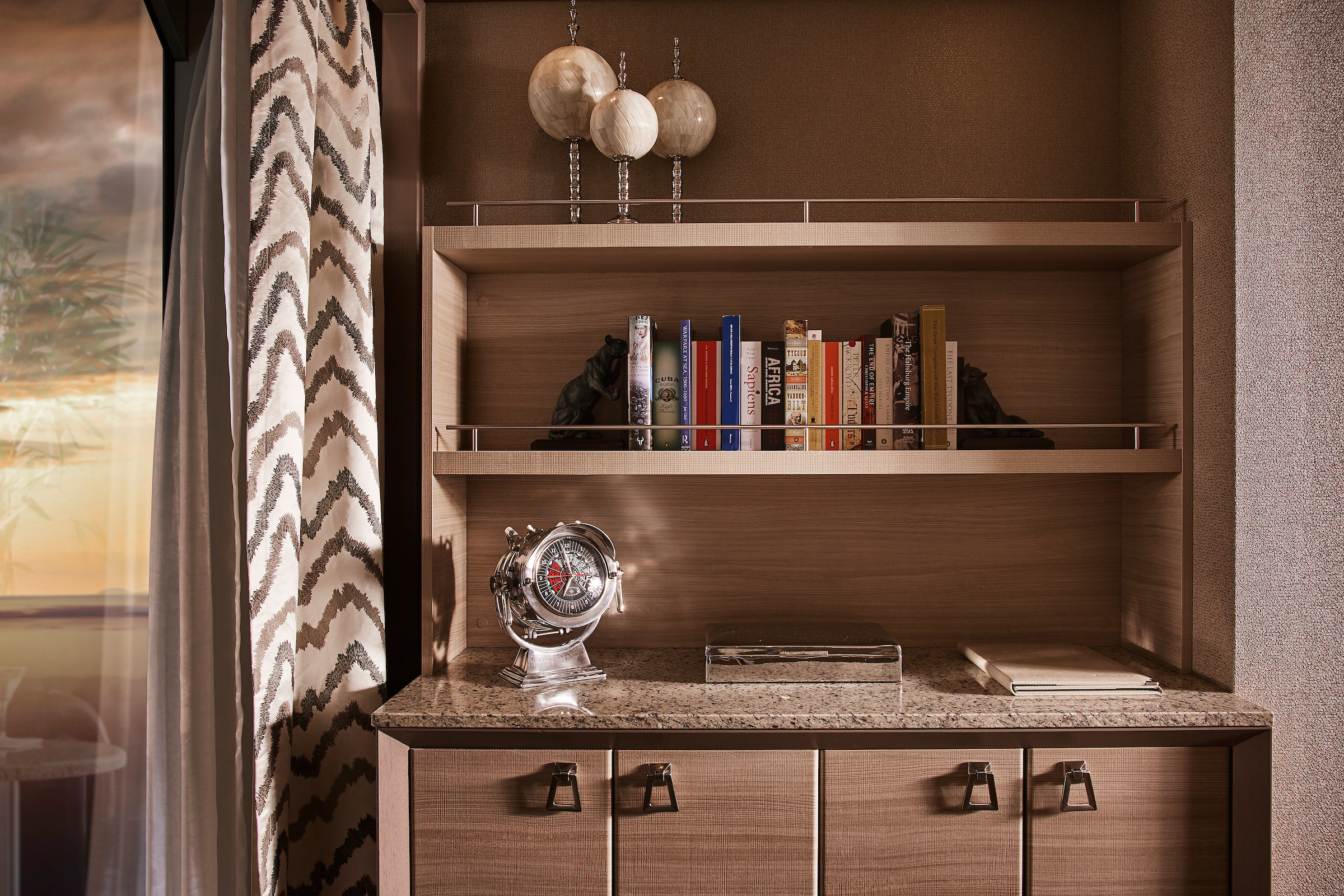
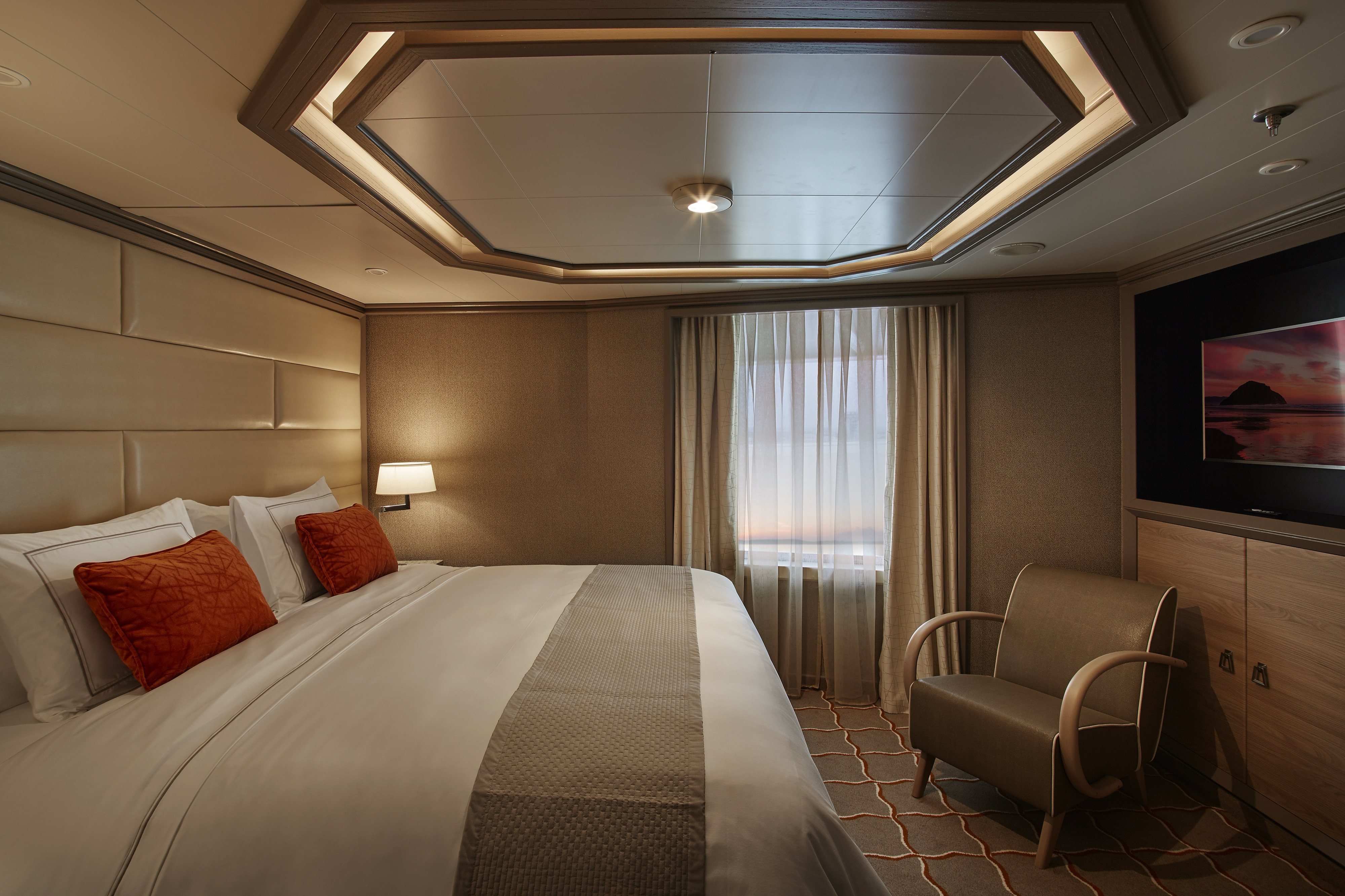
Picture yourself enjoying a delicious breakfast on your private veranda. Imagine watching the sun set, a flute of chilled champagne in hand, setting sail for your next destination. Prestigious, classic, and sophisticated, this stylish apartment suite offers the ultimate in fine accommodation on board. Set aside for those who seek a superlative level of space, comfort, and service, the Owner’s Suite has it all. The adjoining bedroom, with its en suite bathroom, offers its own spectacular ocean views.
One bedroom: up 98 sq m (12 sq m)
Two bedrooms: 119–129 sq m including veranda* (12 sq m)
Essentials
- Deck(s): 9
- Section: Mid-Ship
Characteristics
- Veranda
- Separate dining area
- Living room with sitting area
- Double vanity
- Separate shower
- Whirlpool bath
- Walk-in wardrobe with personal safe
Furniture
- King size bed
- Writing desk
- Vanity table
- Luxury bed mattresses
Media & Communication
- Unlimited Premium Wi-Fi
- 2 large flat screen TVs with Interactive Media Library
- Sound system with bluetooth connectivity
- Direct dial telephone
- Dual voltage 110/220 outlets
Onboard Services
- Butler service
- Complimentary laundry, pressing & wet cleaning
- Dinner for two in La Dame, one evening per voyage,
- Two hours of worldwide phone use, per voyage segment
- Champagne on arrival
Amenities
- Espresso machine
- Tea kettles
- Pillow menu
- Refrigerator and bar setup stocked with your preferences
- Plush bathrobe
- Luxury bath amenities
- Umbrella
- Hair Dryer
- Slippers
*The difference in size is largely due to a larger entry corridor and does not affect the living or sleeping area.
Images are intended as a general reference. Features, materials, finishes and layout may be different than shown.
Please note that the third guest will sleep on a comfortable sofa bed in the reception area of the suite.
Grand Suite
Indulge in the epitome of ultra-luxury cruising. The Grand Suite is for those who want to experience sailing in style. The sophistication of the Silversea philosophy coupled with ample interior and exterior space makes this the perfect choice for serious travelers. With the biggest verandas on board, enjoy entertaining new friends or simply share intimate meals while contemplating spectacular sunsets. Savor the sense of well-being offered by the luxurious furnishings and modern amenities. Offering an unprecedented level of relaxation, the Grand Suite is the perfect romantic getaway.
One bedroom: up to 146 sq m (44–53 sq m)
Two bedrooms: up to 146 sq m (50-59 sq m)
Essentials
- Deck(s): 8, 9
- Section: Forward
Characteristics
- Veranda
- Separate dining area
- Living room with sitting area
- Double vanity
- Separate shower
- Whirlpool bath
- Walk-in wardrobe with personal safe
Furniture
- King size bed
- Writing desk
- Vanity table
- Luxury bed mattresses
Media & Communication
-
Unlimited Premium Wi-Fi
- 2 large flat screen TVs with Interactive Media Library
- Sound system with bluetooth connectivity
- Direct dial telephone
- Dual voltage 110/220 outlets
Onboard Services
-
Butler service
- Complimentary laundry, pressing & wet cleaning
- Dinner for two in La Dame, one evening per voyage,
- Two hours of worldwide phone use, per voyage segment
- Champagne on arrival
Amenities
-
Espresso machine
- Tea kettles
- Pillow menu
- Refrigerator and bar setup stocked with your preferences
- Plush bathrobe
- Luxury bath amenities
- Umbrella
- Hair Dryer
- Slippers
Images are intended as a general reference. Features, materials, finishes and layout may be different than shown.
Please note that the 3rd guest will sleep on a comfortable sofa bed in the reception area of the suite.
Royal Suite
Designed with the values of the culture of living in mind, the Royal Suite offers a vast, elegant space. Precise lines, authentic Italian craftsmanship, and fine materials make up just some of the details of this stunning suite. Commanding and majestic, the Royal Suite boasts a lavish living area perfect for entertaining, plush interior furnishings, and sweeping seascapes from the private terrace. The comfort of the spacious apartment makes this the ideal space for those wanting to feel the true comfort and luxury of the Silversea philosophy.
One bedroom: 105 sq m including veranda (12 sq m)
Two bedroom: 142 sq m including veranda (18 sq m)
Essentials
- Deck(s): 7
- Section: Forward
Characteristics
- Veranda
- Separate dining area
- Living room with sitting area
- Double vanity
- Separate shower
- Whirlpool bath
- Walk-in wardrobe with personal safe
Furniture
- King size bed
- Writing desk
- Vanity table
- Luxury bed mattresses
Media & Communication
- Unlimited Premium Wi-Fi
- 2 large flat screen TVs with Interactive Media Library
- Sound system with bluetooth connectivity
- Direct dial telephone
- Wall mounted USB-C mobile device chargers
- Dual voltage 110/220 outlets
Onboard Services
- Butler service
- Complimentary laundry, pressing & wet cleaning
- Dinner for two in La Dame, one evening per voyage,
- Two hours of worldwide phone use, per voyage segment
- Champagne on arrival
Amenities
- Espresso machine
- Tea Kettles
- Pillow menu
- Refrigerator and bar setup stocked with your preferences
- Plush bathrobe
- Luxury bath amenities
- Umbrella
- Hair Dryer
- Slippers
Images are intended as a general reference. Features, materials, finishes and layout may be different than shown. Front bedroom windows partially obstructed by deck equipment.
Please note that the third guest will sleep on a comfortable sofa bed in the reception area of the suite.
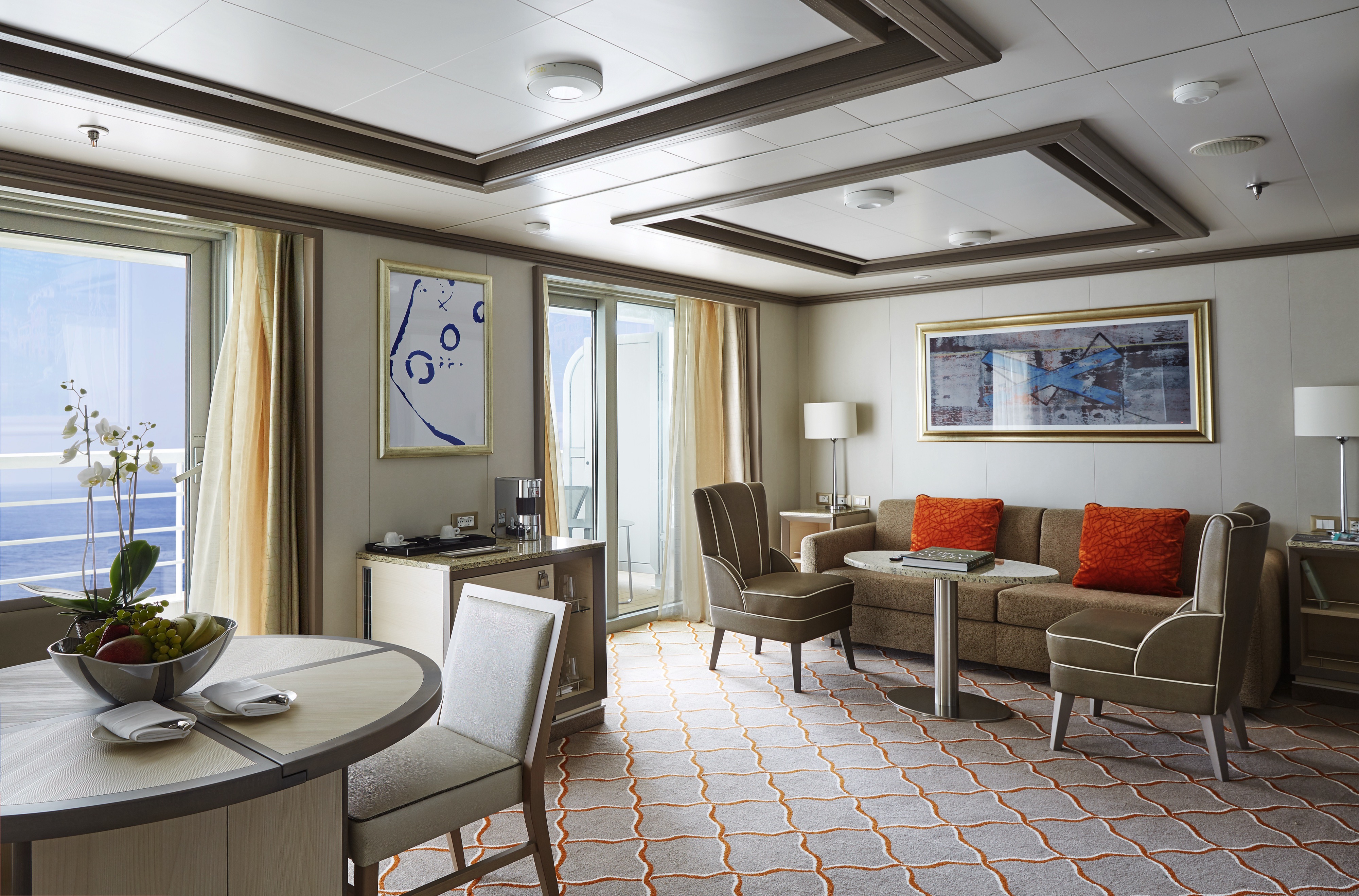
Silver Suite
Step onto your terrace and bask in the calm feeling of the ocean breeze. Dissolve into the comfort of your king-size bed. Prepare for the evening in the beautiful marble bathroom. The upper deck location gives the most spectacular of ocean views while the spacious living area allows for comfortable relaxing, where cozy nights in become veritable experiences in themselves. This suite is also available in a two-bedroom configuration for an additional charge, making it an ideal option for families. Connecting suites are indicated on the deck plan with an arrow pointing to the two adjacent suites.
One bedroom: 73 sq m including veranda (12 sq m)
Essentials
- Deck(s): 9, 10, 11
- Section: Forward, Mid-Ship
Characteristics
- Veranda
- Living room with sitting area
- Double vanity
- Separate shower
- Whirlpool bath
- Walk-in wardrobe with personal safe
Furniture
- King size bed
- Writing desk
- Vanity table
- Luxury bed mattresses
Media & Communication
- Unlimited Premium Wi-Fi
- 2 large flat screen TVs with Interactive Media Library
- Sound system with bluetooth connectivity
- Direct dial telephone
- Wall mounted USB-C mobile device chargers
- Dual voltage 110/220 outlets
Onboard Services
- Butler service
- Complimentary laundry, pressing & wet cleaning
- Champagne on arrival
Amenities
- Espresso machine
- Tea Kettles
- Pillow menu
- Refrigerator and bar setup stocked with your preferences
- Plush bathrobe
- Luxury bath amenities
- Umbrella
- Hair Dryer
- Slippers
Images are intended as a general reference. Features, materials, finishes and layout may be different than shown.
Please note that the 3rd guest will sleep on a comfortable sofa bed in the reception area of the suite.
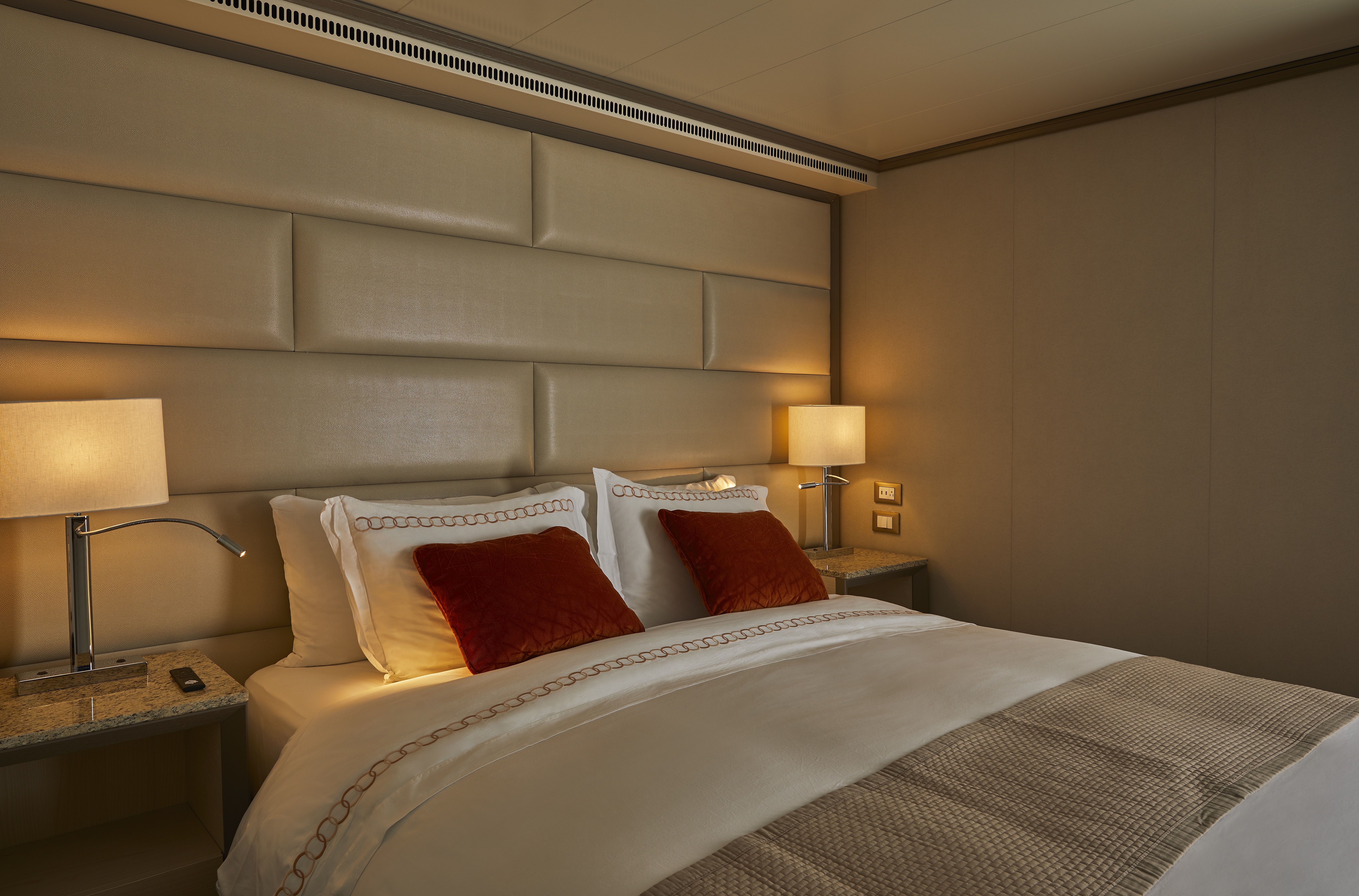
Medallion Suite
Inspired by the successful layout on our Nova Class ships, the new Medallion suite on board Silver Muse offers spacious comfort with a generous living area, a private veranda that overlooks an endless ocean horizon, and a lavish bathroom with a soaking tub. After a day of exploration, nestle under the plush bed linens of your suite and unwind in complete ease — with deliberate details to elevate even the simplest moments of your stay.
One bedroom: 50 sq m including veranda (9 sq m)
Essentials
- Deck(s): 10, 11
Characteristics
- Floor-to ceiling window
- Living room with sitting area
- Standard vanity
- Separate shower
- Full-size bath
- Walk-in wardrobe with personal safe
Furniture
- Queen size bed or Twin beds
- Writing desk
- Vanity table
Media & Communication
- Unlimited Premium Wi-Fi
- 2 large flat screen TVs with Interactive Media Library
- Sound system with bluetooth connectivity
- Direct dial telephone
- Wall mounted USB-C mobile device chargers
- Dual voltage 110/220 outlets
Onboard Services
- Butler service
- Complimentary laundry, pressing & wet cleaning
- Champagne on arrival
Amenities
- Espresso machine
- Tea kettles
- Pillow menu
- Refrigerator and bar setup stocked with your preferences
- Plush bathrobe
- Luxury bath amenities
- Umbrella
- Hair Dryer
- Slippers
Images are intended as a general reference. Features, materials, finishes and layout may be different than shown.
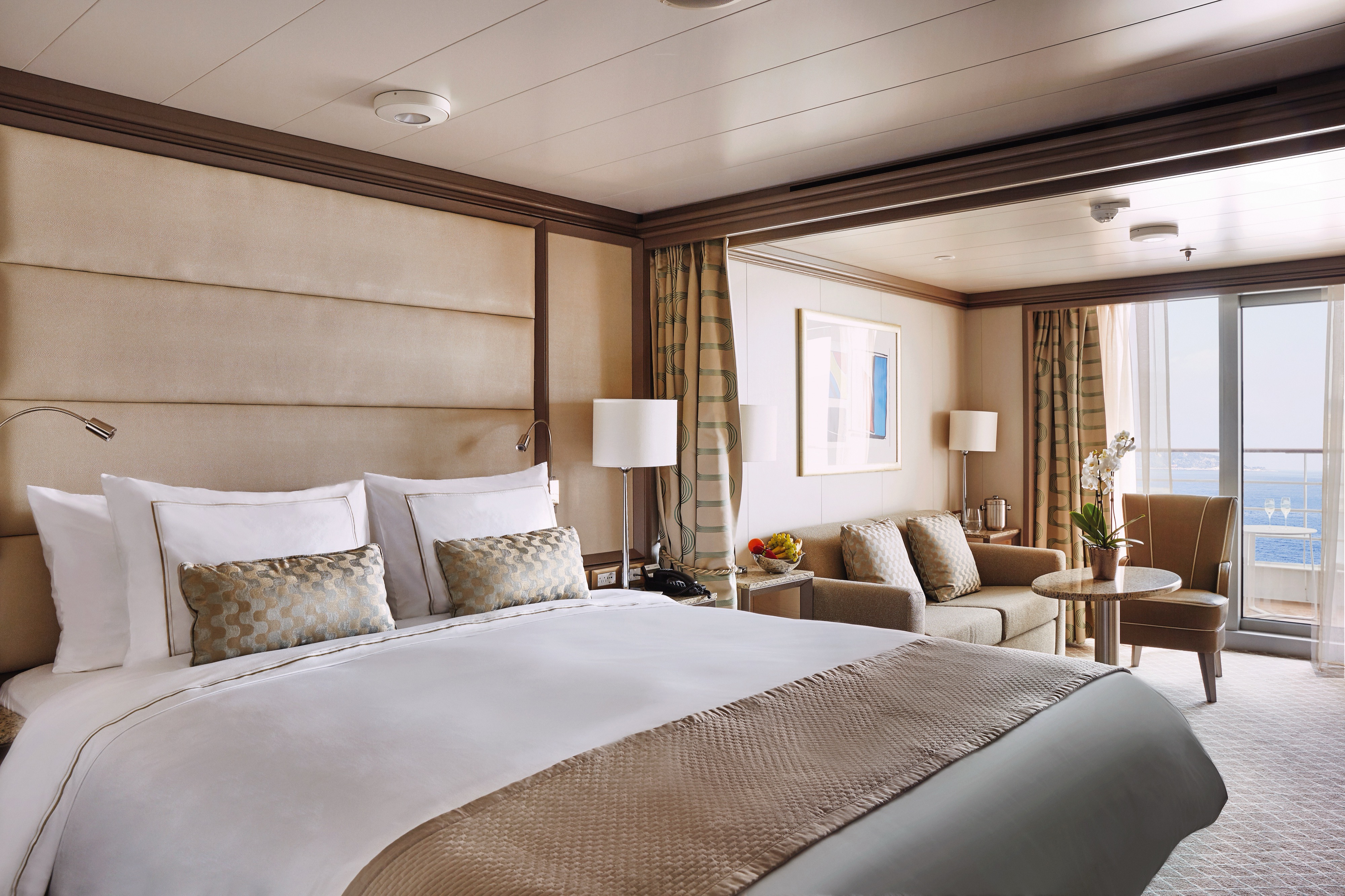
Deluxe Veranda Suite
The Deluxe Veranda Suite offers a comfortable living space, close to the heart of the ship. With its preferred midship location and all the comfort and attention to detail that you can expect aboard, the Deluxe Veranda Suite is the savvy traveler’s paradise—both inside and out. Elegant decor, a stunning marble bathroom, and an ample seating area make this a cozy home away from home. But perhaps this suite’s finest asset lies just outside, as floor-to-ceiling glass doors open onto a private veranda, making every sunset feel as if it is yours alone.
One bedroom: 36 sq m including veranda (6 sq m)
Essentials
- Deck(s): 6, 7, 8
- Section: Mid-Ship
Characteristics
- Veranda
- Sitting area
- Standard vanity
- Separate shower
- Full-size bath
- Walk-in wardrobe with personal safe
Furniture
- Queen size bed
- Writing desk
- Luxury bed mattresses
Media & Communication
- Unlimited Standard Wi-Fi
- 1 large flat screen TV with Interactive Media Library
- Direct dial telephone
- Wall mounted USB-C mobile device chargers
- Dual voltage 110/220 outlets
Onboard Services
- Butler service
- Champagne on arrival
Amenities
- Pillow menu
- Tea Kettles
- Refrigerator and bar setup stocked with your preferences
- Plush bathrobe
- Luxury bath amenities
- Umbrella
- Hair Dryer
- Slippers
Images are intended as a general reference. Features, materials, finishes and layout may be different than shown.
Please note that the 3rd guest will sleep on a comfortable sofa bed in the reception area of the suite.
Superior Veranda Suite
Located on the upper deck and offering spectacular sunset views, the Superior Veranda Suite has all the comforts and luxury that you can expect aboard. A comfortable living space, attention to detail, and a generous expanse of amenities make this stunning suite a cozy home while on the seas. But perhaps this suite’s finest asset lies just outside, as floor-to-ceiling glass doors open onto a private veranda, making every sunset feel as if it is yours alone.
One bedroom: 36 sq m including veranda (6 sq m)
Essentials
- Deck(s): 7, 8, 9
- Section: Forward
Characteristics
- Veranda
- Sitting area
- Standard vanity
- Separate shower
- Full-size bath
- Walk-in wardrobe with personal safe
Furniture
- Queen size bed
- Writing desk
- Luxury bed mattresses
Media & Communication
- Unlimited Standard Wi-Fi
- 1 large flat screen TV with Interactive Media Library
- Direct dial telephone
- Wall mounted USB-C mobile device chargers
- Dual voltage 110/220 outlets
Onboard Services
- Butler service
- Champagne on arrival
Amenities
- Pillow menu
- Tea Kettles
- Refrigerator and bar setup stocked with your preferences
- Plush bathrobe
- Luxury bath amenities
- Umbrella
- Hair Dryer
- Slippers
Images are intended as a general reference. Features, materials, finishes and layout may be different than shown.
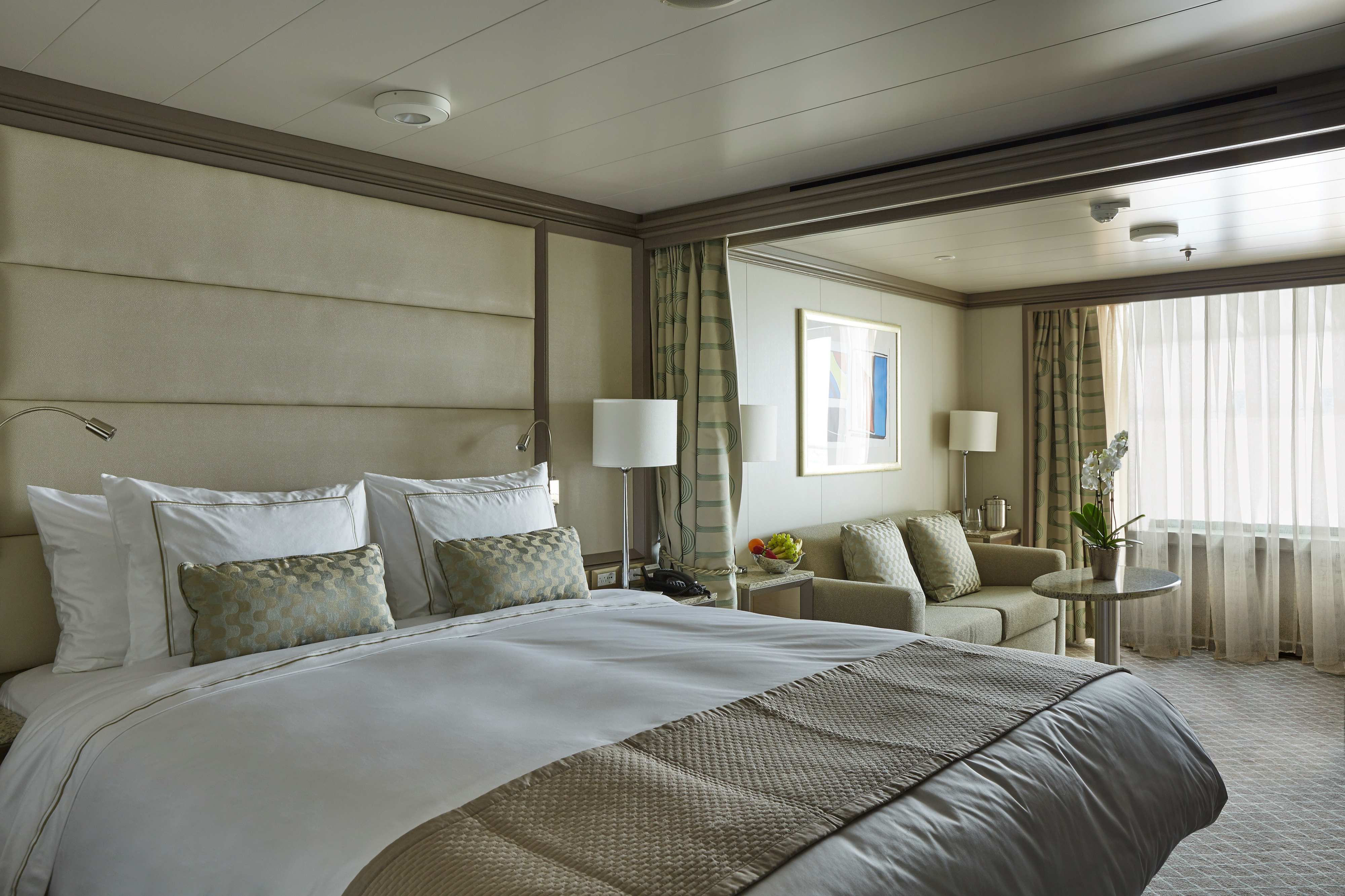
Classic Veranda Suite
The Classic Veranda Suite provides generous living space for voyagers. Located on the lower decks in the bow, the Classic Veranda Suite offers all the comfort and attention to detail that you can expect aboard—both inside and out. A generous expanse of interior comforts—elegant decor, a stunning marble bathroom, and an ample seating area make this a cozy home away from home. But perhaps this suite’s finest asset lies just outside, as floor-to-ceiling glass doors open onto a private veranda, making every sunset feel as if it is yours alone.
One bedroom: 36 sq m including veranda (6 sq m)
Essentials
- Deck(s): 5, 6
- Section: Forward
Characteristics
- Veranda
- Sitting area
- Standard vanity
- Separate shower
- Full-size bath
- Walk-in wardrobe with personal safe
Furniture
- Queen size bed
- Writing desk
- Luxury bed mattresses
Media & Communication
- Unlimited Standard Wi-Fi
- 1 large flat screen TV with Interactive Media Library
- Direct dial telephone
- Wall mounted USB-C mobile device chargers
- Dual voltage 110/220 outlets
Onboard Services
- Butler service
- Champagne on arrival
Amenities
- Pillow menu
- Refrigerator and bar setup stocked with your preferences
- Plush bathrobe
- Luxury bath amenities
- Umbrella
- Hair Dryer
- Slippers
Images are intended as a general reference. Features, materials, finishes and layout may be different than shown.
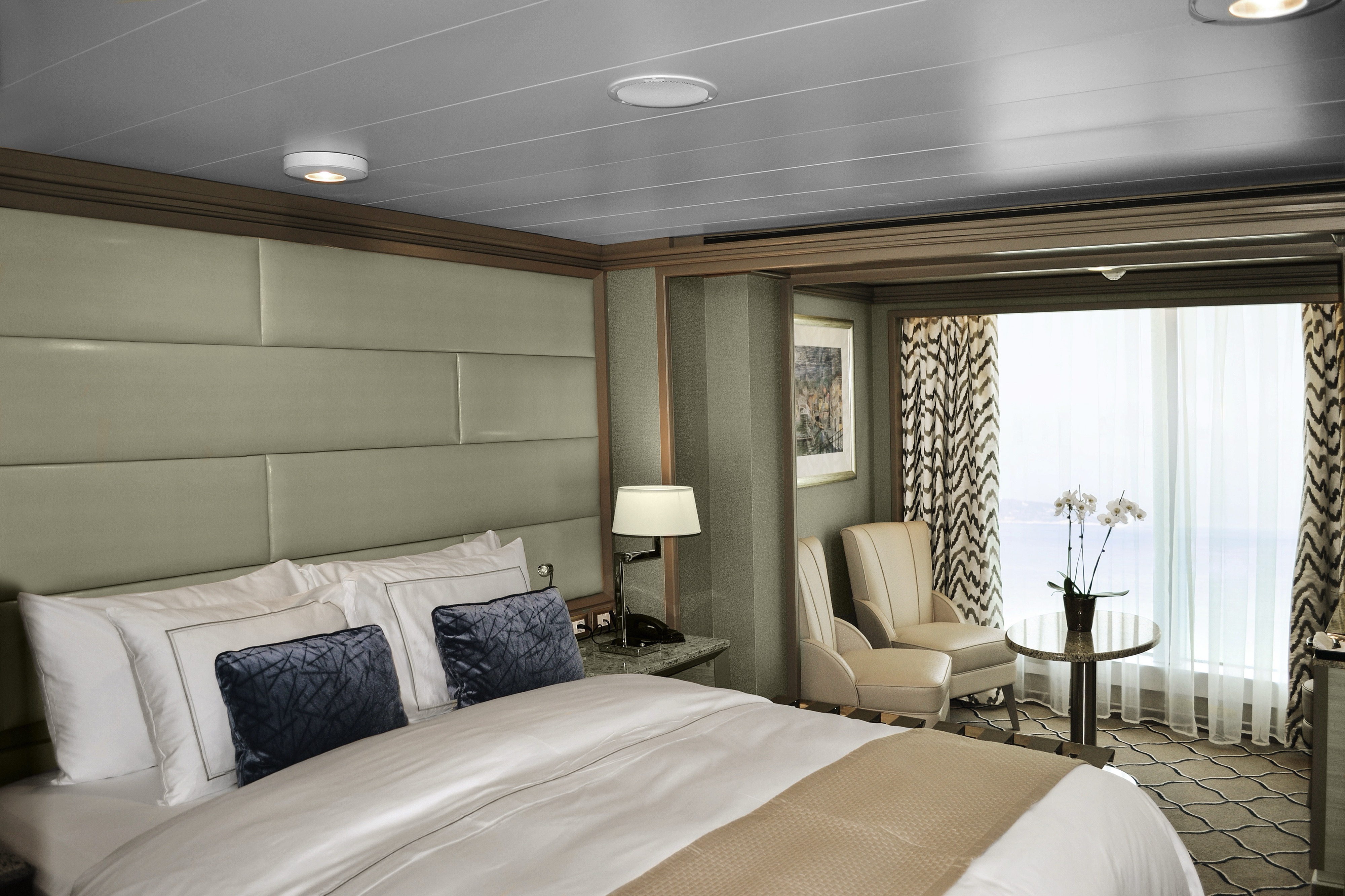
Panorama Suite
The Panorama Suite provides generous living space for voyagers. Located on deck 9, the Panorama offers all the comfort and attention to detail that you can expect aboard. A generous expanse of interior comforts—elegant decor, a stunning marble bathroom, and an ample seating area make this a cozy home away from home. The seating area of the Panorama Suite has plenty of room to relax while large picture windows frame panoramic ocean views.
One bedroom: 31 sq.m.
Essentials
- Deck(s): 9
- Section: Forward
Characteristics
- Floor-to ceiling window
- Sitting area
- Standard vanity
- Separate shower
- Full-size bath
- Walk-in wardrobe with personal safe
Furniture
- Queen size bed
- Writing desk
- Luxury bed mattresses
Media & Communication
- Unlimited Standard Wi-Fi
- 1 large flat screen TV with Interactive Media Library
- Direct dial telephone
- Wall mounted USB-C mobile device chargers
- Dual voltage 110/220 outlets
Onboard Services
- Butler service
- Champagne on arrival
Amenities
- Pillow menu
- Refrigerator and bar setup stocked with your preferences
- Plush bathrobe
- Luxury bath amenities
- Umbrella
- Hair Dryer
- Slippers
Images are intended as a general reference. Features, materials, finishes and layout may be different than shown.
Vista Suite
The Vista Suite provides generous living space for all travelers. The Vista Suite offers all the comfort and attention to detail that you can expect aboard. A generous expanse of interior comforts—elegant decor, a stunning marble bathroom, and an ample seating area make this a cozy home away from home. The seating area of the Vista Suite has plenty of room to relax while large picture windows frame panoramic ocean views—the perfect backdrop for breakfast in bed! Three Wheelchair Accessible Suites (407, 409, 417)
One bedroom: 32 sq m
Essentials
- Deck(s): 4
- Section: Forward
Characteristics
- Window
- Sitting area
- Standard vanity
- Separate shower
- Full-size bath
- Walk-in wardrobe with personal safe
Furniture
- Queen size bed
- Writing desk
- Luxury bed mattresses
Media & Communication
- Unlimited Standard Wi-Fi
- 1 large flat screen TV with Interactive Media Library
- Direct dial telephone
- Wall mounted USB-C mobile device chargers
- Dual voltage 110/220 outlets
Onboard Services
- Butler service
- Champagne on arrival
Amenities
- Pillow menu
- Refrigerator and bar setup stocked with your preferences
- Plush bathrobe
- Luxury bath amenities
- Umbrella
- Hair Dryer
- Slippers
Images are intended as a general reference. Features, materials, finishes and layout may be different than shown.
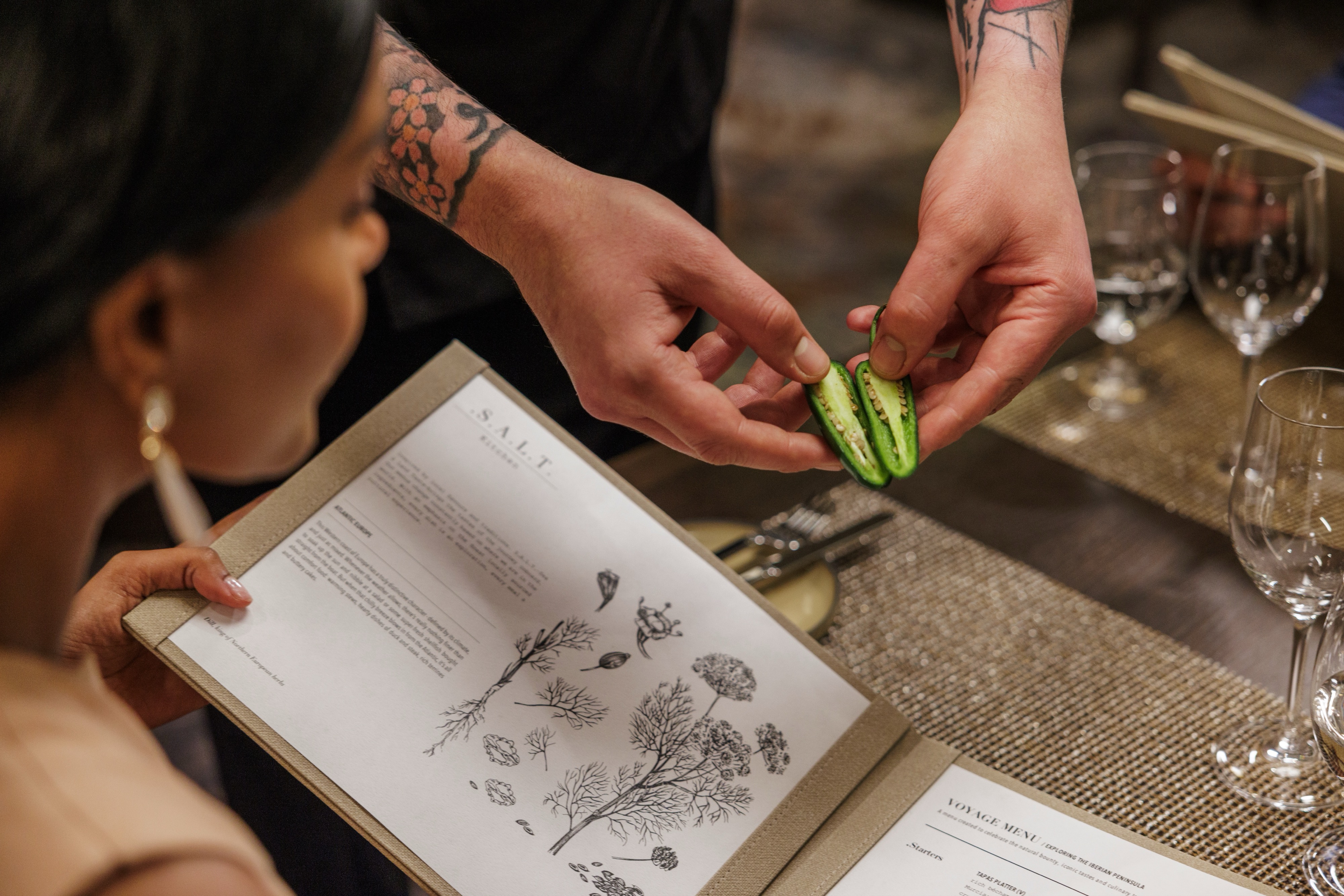
S.A.L.T. Kitchen
S.A.L.T. Kitchen transforms dining into discovery with menus that reflect the cuisines of the places you’ll visit. This complimentary venue is the only restaurant at sea with an ever-changing menu based on destination. Plus, a standing menu focuses on broader regional specialties, complemented by a menu featuring hyperlocal fare. Dishes are inspired by local flavors and prepared with responsibly sourced ingredients. Accompanied by a curated selection of over 160 regional wines, S.A.L.T. Kitchen delivers an immersive taste of place without ever leaving the ship.
Images are intended as a general reference. Features, materials, finishes and layout may be different than shown.
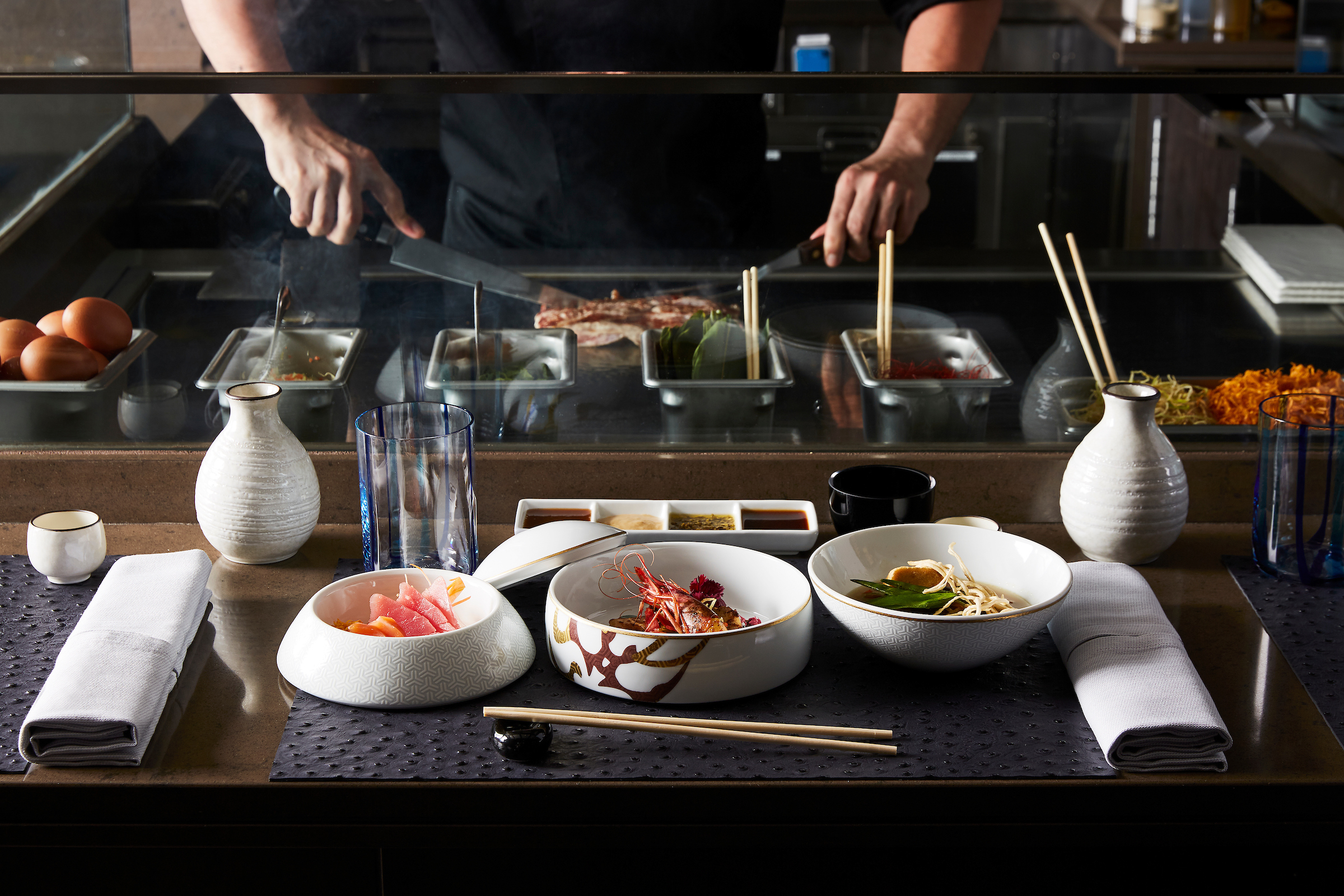
Kaiseki
Meals at Kaiseki are rooted in the Japanese philosophy of balance and precision. By day, refreshing sushi, sashimi, and izakaya-style dishes guide the menu. During dinner, specialties like miso black cod and wagyu teriyaki nod to Japan’s enduring culinary legacy, while fine sake, whiskies, and teas enhance every course.
Lunch – Open seating
Opening Hours: 12:00 PM – 2:30 PM
Dinner – Reservations required*
Opening Hours: 7:00 PM – 9:30 PM
Per guest reservation fee of US$40. Please visit My Silversea to make your reservations.
Learn more about the Epicurean Experience, which includes dining in three specialty restaurants with preferential rates.
Images are intended as a general reference. Features, materials, finishes and layout may be different than shown.
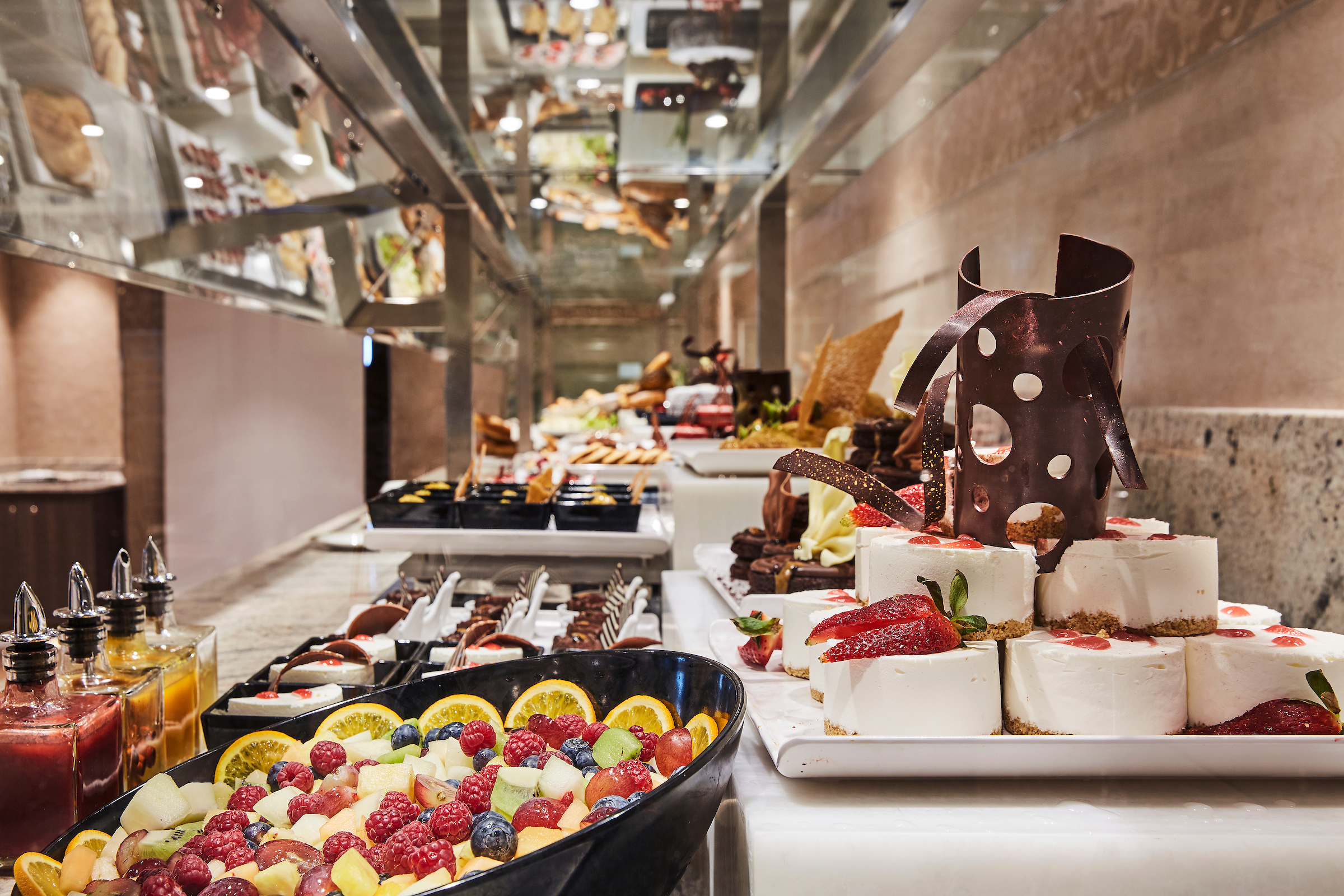
La Terrazza
La Terrazza elevates casual dining by day and delivers an authentic Italian experience by night. During the breakfast and lunch buffets, our master chefs prepare global favorites at live stations. As evening falls, handmade pastas and classic seafood dishes are the centerpiece — every impeccable bite paired with fine wines from around the world.
Images are intended as a general reference. Features, materials, finishes and layout may be different than shown.
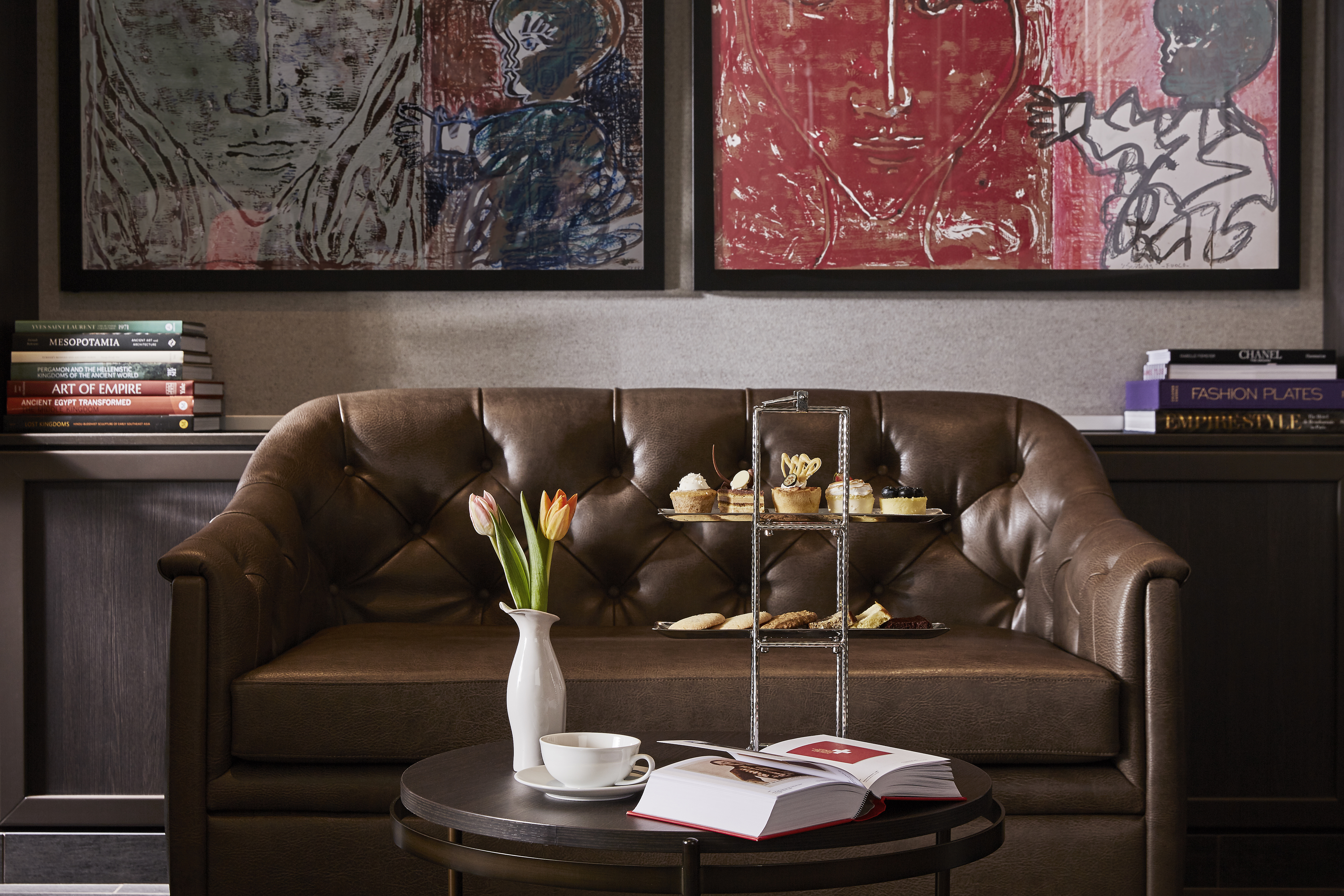
Arts Café
Arts Café is a vibrant, light-filled haven for conversation, connection, and indulgence. Snack on creative canapés and decadent pastries paired with perfectly pulled espressos, fresh squeezed juices, and artisanal teas. Open all day, this inviting space provides a dynamic backdrop for unwinding, recharging, or catching up with fellow travelers.
Images are intended as a general reference. Features, materials, finishes and layout may be different than shown.
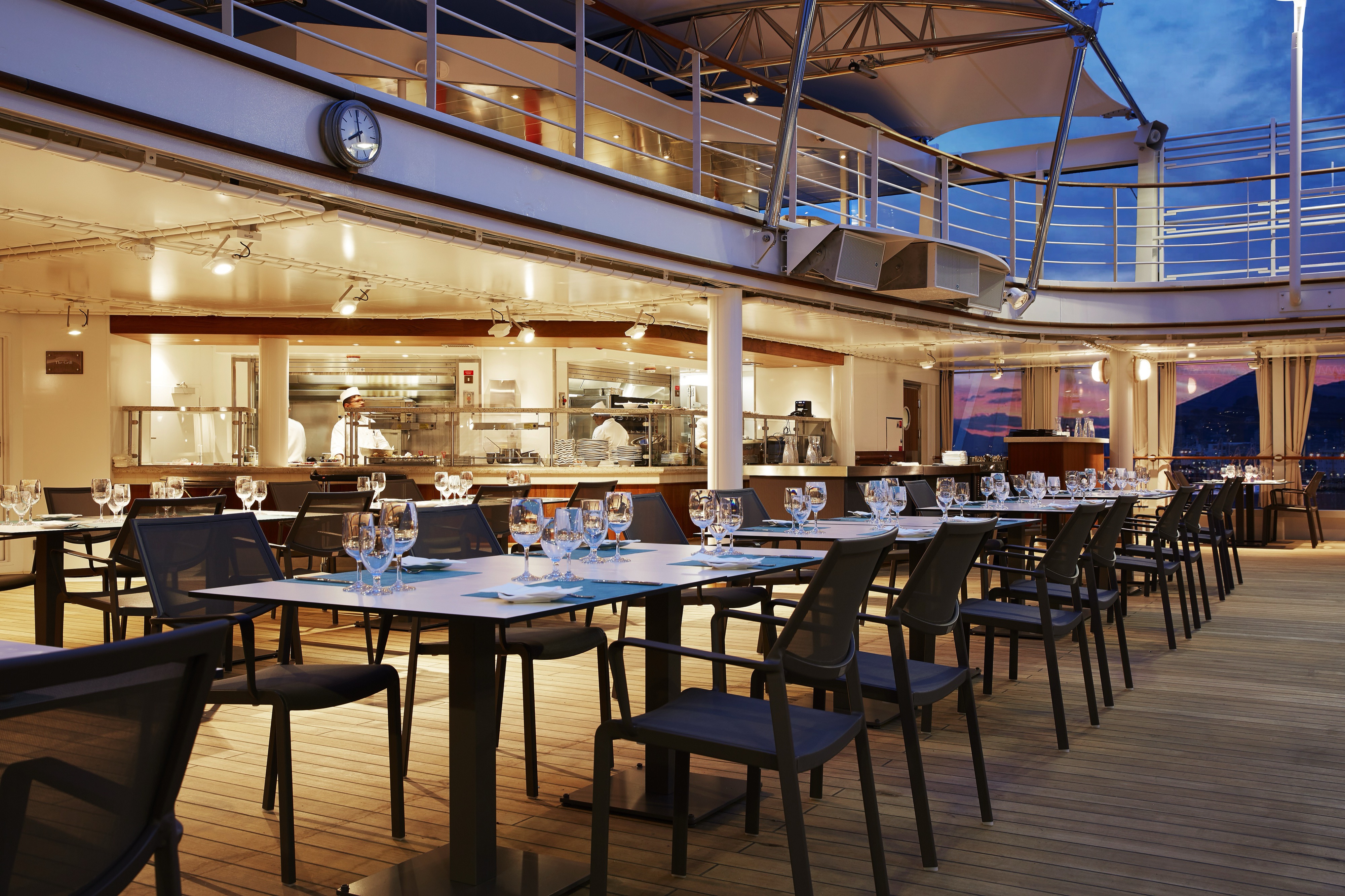
The Grill
A poolside al fresco favorite, The Grill is casual by day and captivating by night. Dig in to crisp salads and grilled classics during lunch, then return after sunset for masterfully seasoned and seared cuts paired with balmy sea breezes.
Images are intended as a general reference. Features, materials, finishes and layout may be different than shown.
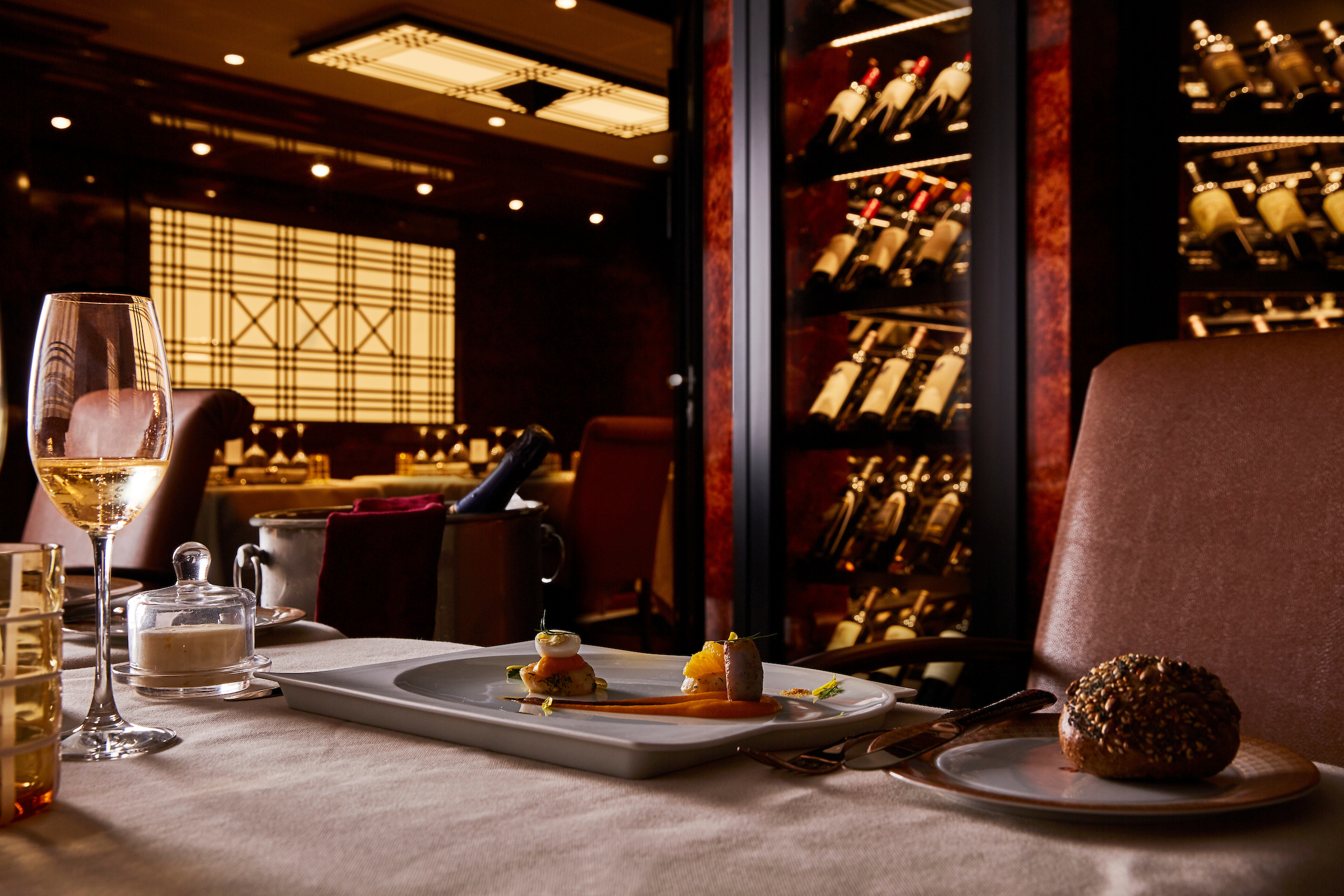
La Dame
Experience the pinnacle of French gastronomy at La Dame, where sophistication meets tradition. Here, an exclusive tasting menu unfolds course by course — each plate a study in masterful technique, seasonal ingredients, and modern refinement. From classic Kir Royales to exquisite signatures such as Dover sole à la Grenobloise, this is haute cuisine at its finest.
Per guest reservation fee of US$60. Please visit My Silversea to make your reservations.
Learn more about the Epicurean Experience, which includes dining in three specialty restaurants with preferential rates.
Images are intended as a general reference. Features, materials, finishes and layout may be different than shown.
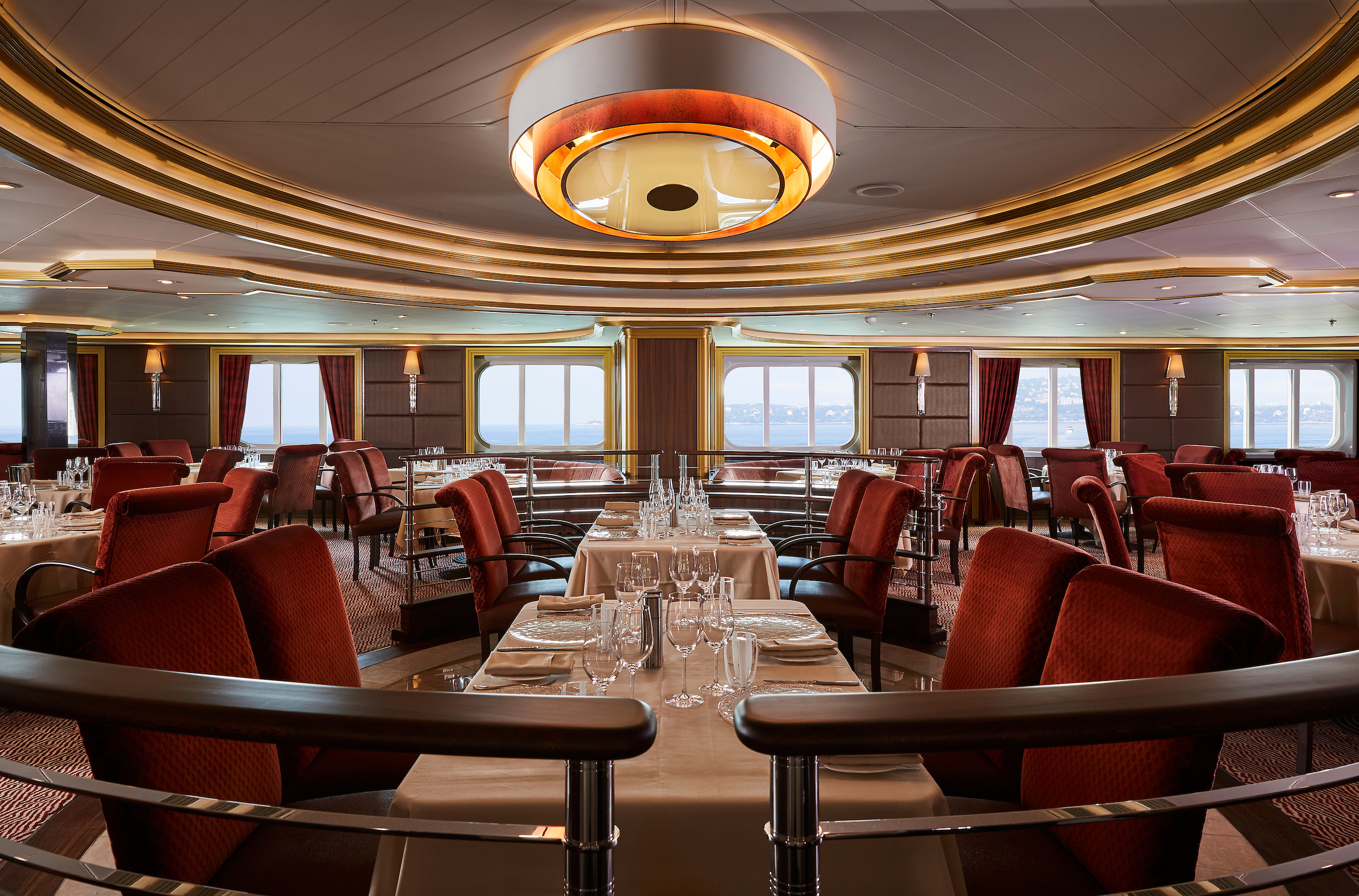
Atlantide
Refined global fare and grilled classics take center stage at Atlantide. Drop in for an indulgent à la carte breakfast, a leisurely lunch, or an elegant dinner among family and new friends, served in a timeless and sophisticated setting.
Images are intended as a general reference. Features, materials, finishes and layout may be different than shown.
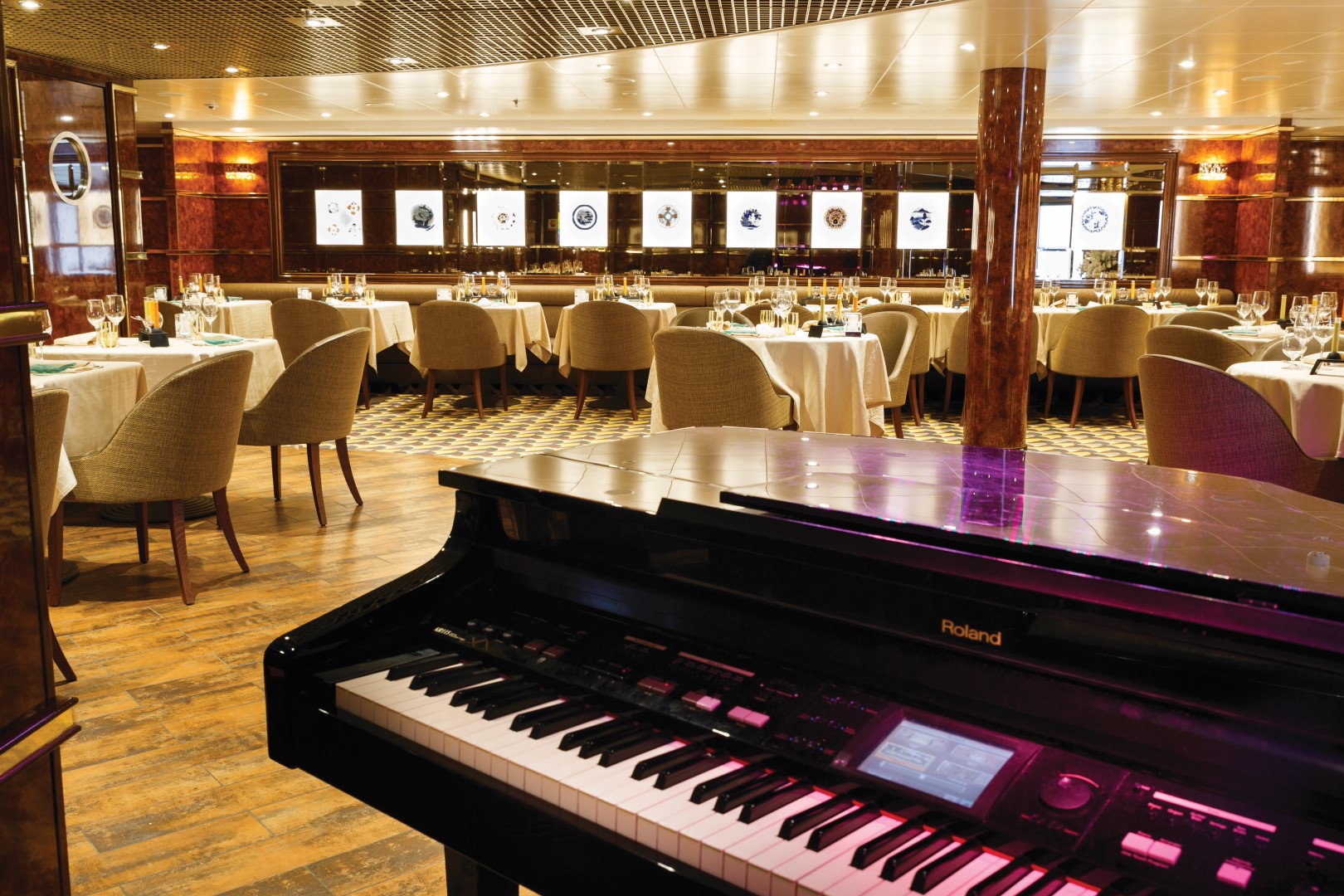
Silver Note
As the stars come out, Silver Note comes alive with the rhythm of jazz and the artistry of small-plate fine dining. This intimate supper-club experience pairs soulful live performances with inventive, international cuisine in a chic, lounge-style setting — one of the most exclusive dining concepts at sea.
Learn more about the Epicurean Experience, which includes dining in three specialty restaurants with preferential rates.
Images are intended as a general reference. Features, materials, finishes and layout may be different than shown.
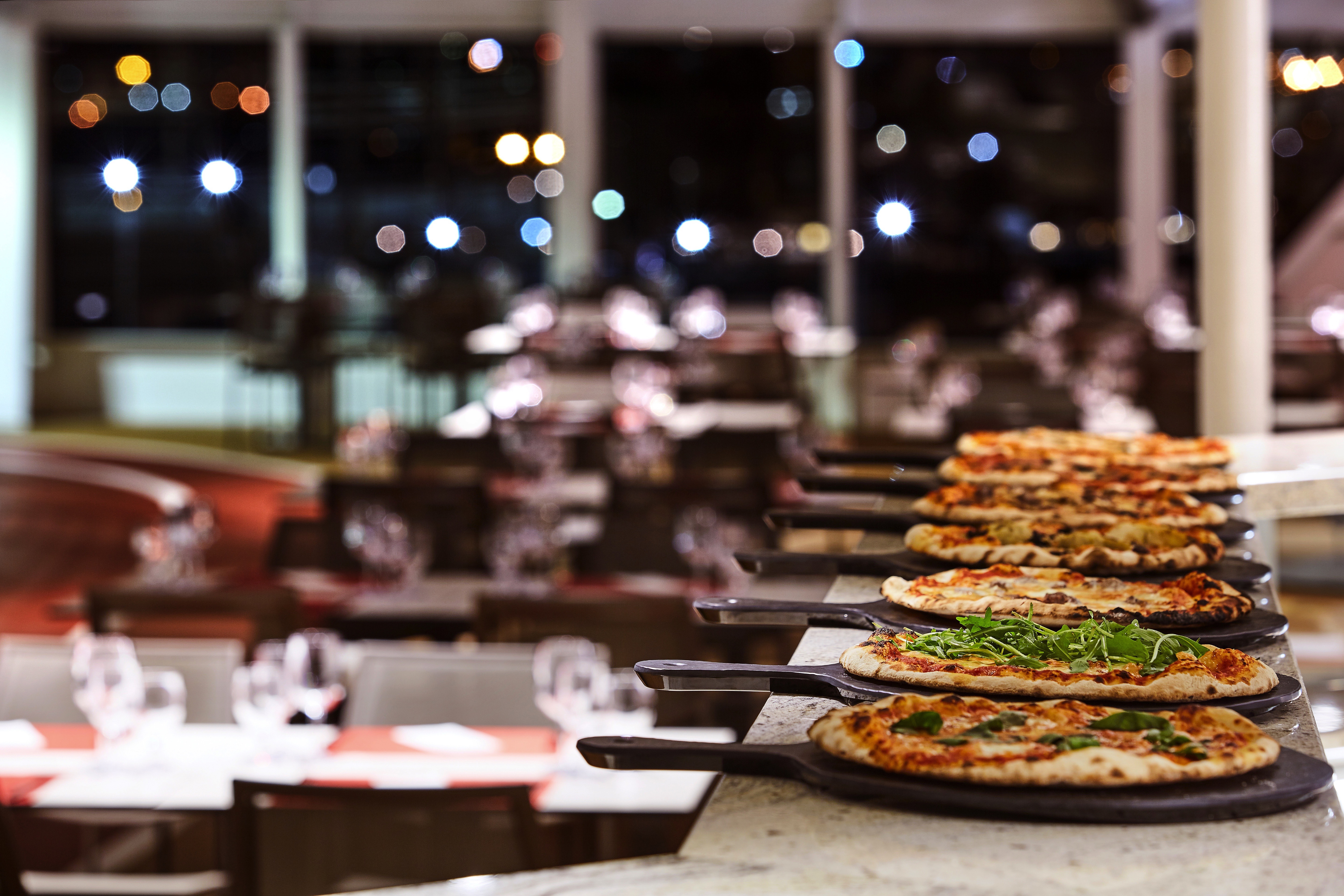
Spaccanapoli
Spaccanapoli honors southern Italy’s culinary heritage with handcrafted pies tossed, topped, and baked to perfection. This signature pizzeria captures true Neapolitan flavor — from golden, blistered crusts to the irresistible aromas that drift from the custom-built oven.
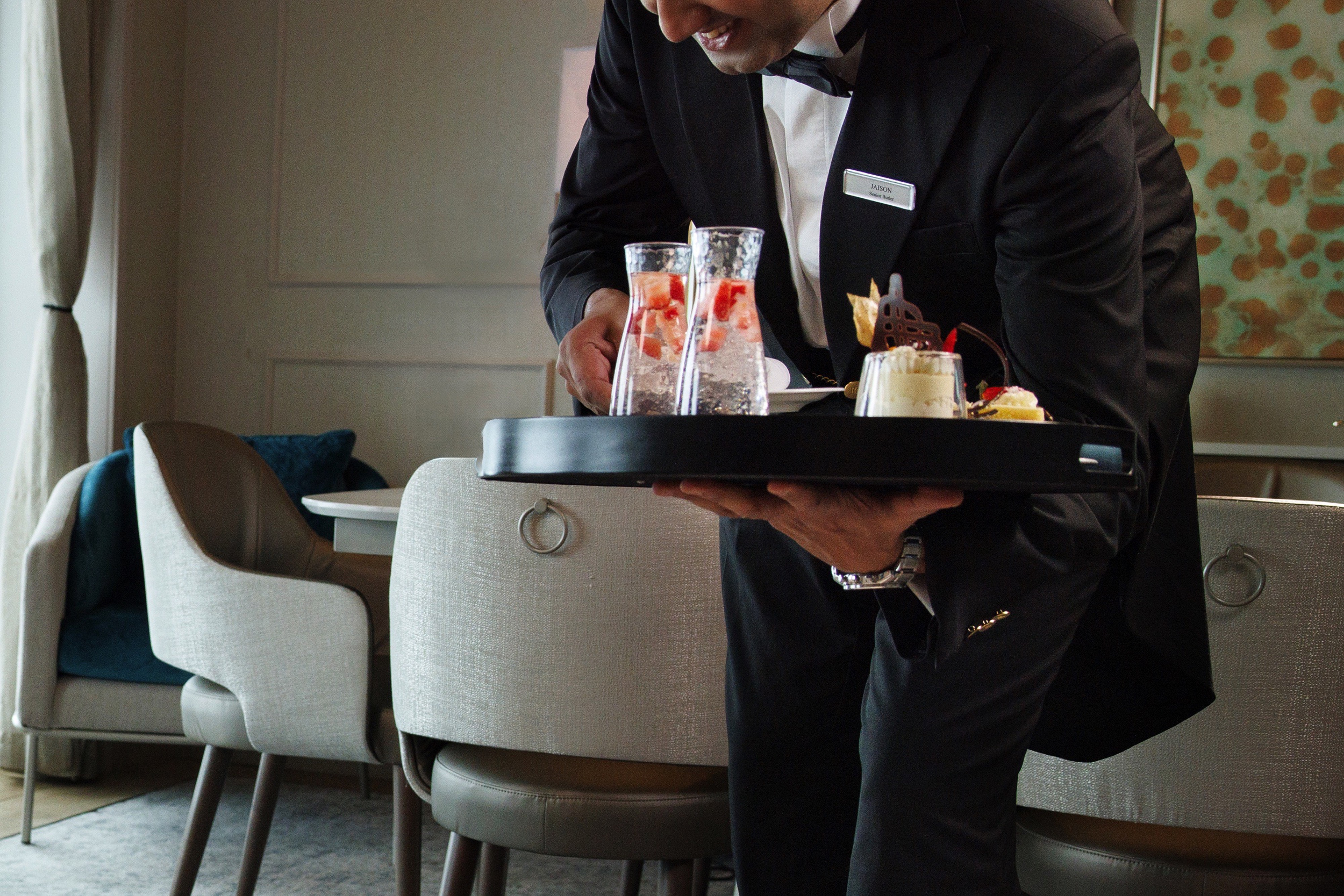
In-Suite Dining
You can order from our Room Service menu 24 hours a day.
Opening hours are for reference only. For precise opening hours, please refer to the Daily Chronicles provided on board.
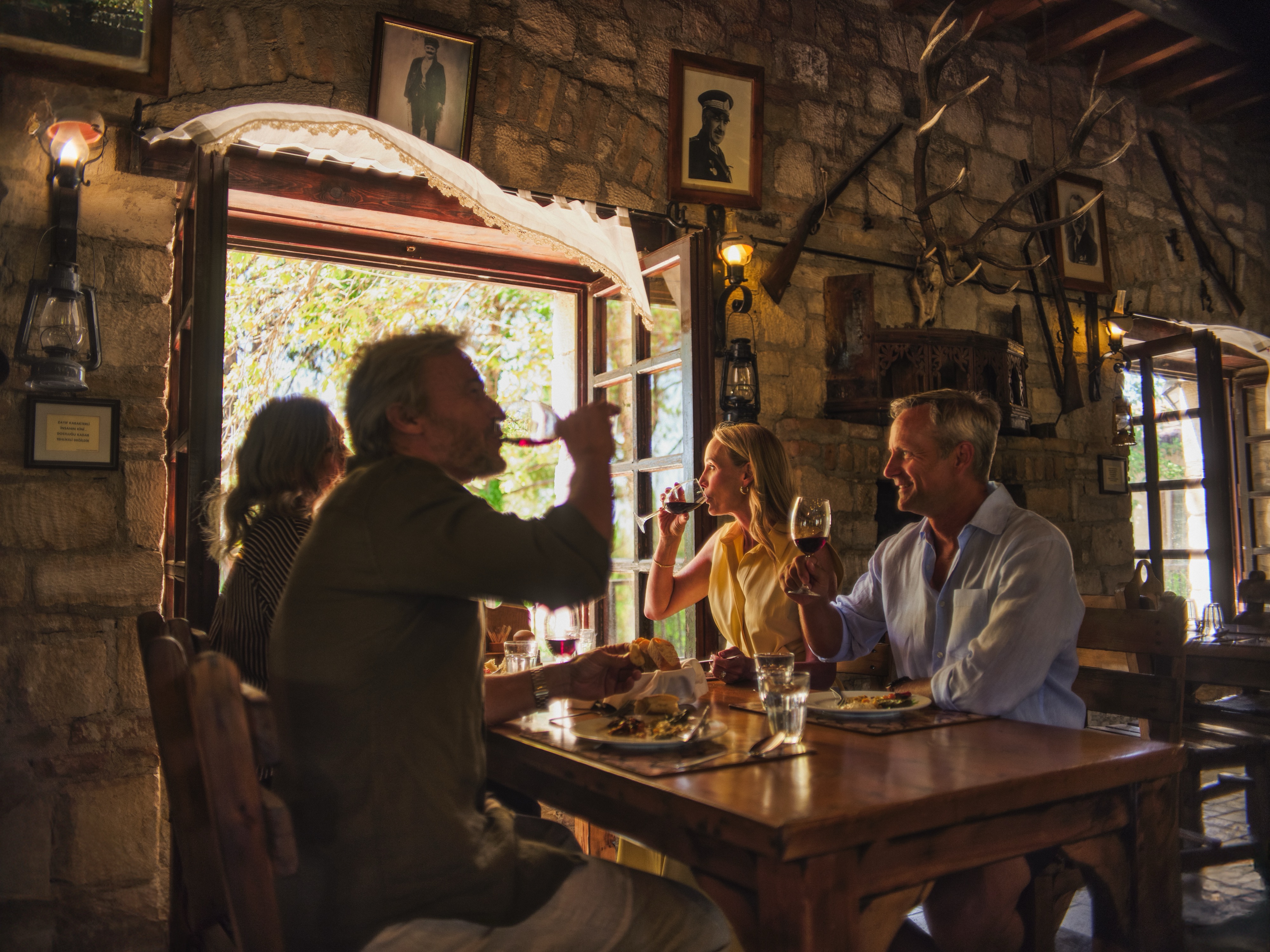
S.A.L.T. Land Programs
Unearth the roots of every place with S.A.L.T. Land Programs — a multi-day culinary and cultural journey, before or after your cruise. Savour regional specialties, indulge in private tastings, and take part in immersive, hands on classes. Every moment is thoughtfully designed by the team behind the S.A.L.T. culinary program, in close collaboration with local partners. Relish the Silversea signature quality from first taste to final toast, as we reveal the essence of each destination through its most authentic dishes. Meet the people that proudly preserve culinary heritage. Join rituals that unite communities. And with every meal, discover the depth of each locale as you create new memories among newfound friends
S.A.L.T. Talks
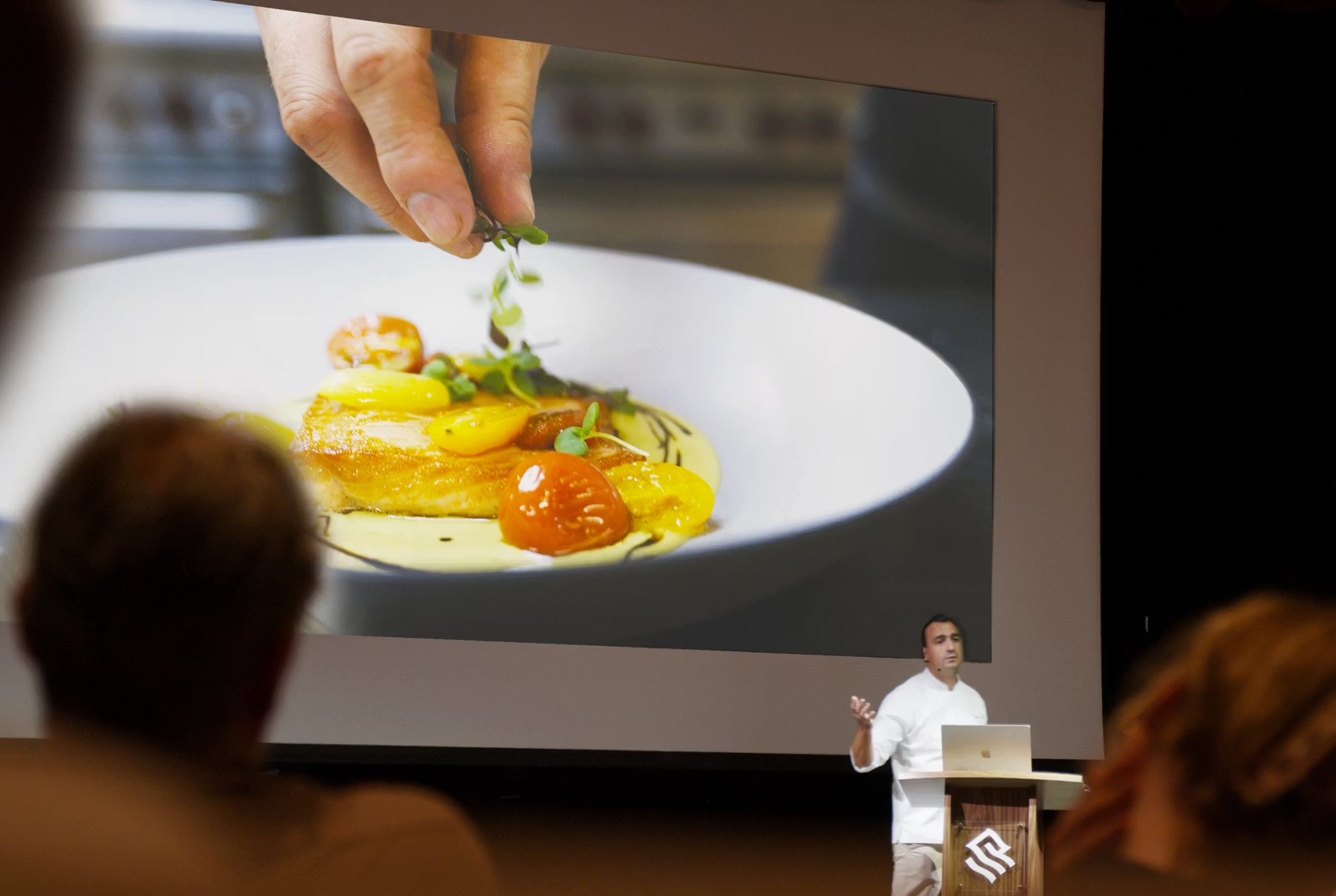
S.A.L.T. Talks illuminate the deep connections between food and culture through engaging presentations on board. Led by our knowledgeable S.A.L.T. Lab Hosts, these complimentary lectures and live cooking demonstrations reveal how regional dishes reflect centuries of tradition, migration, and innovation. Through enlightening narratives and sensory experiences, you’ll enjoy fascinating insight into the cultural significance behind local ingredients and techniques, enhancing appreciation of both on board dining and shoreside explorations. Feed your curiosity along with your appetite.
S.A.L.T. Experiences
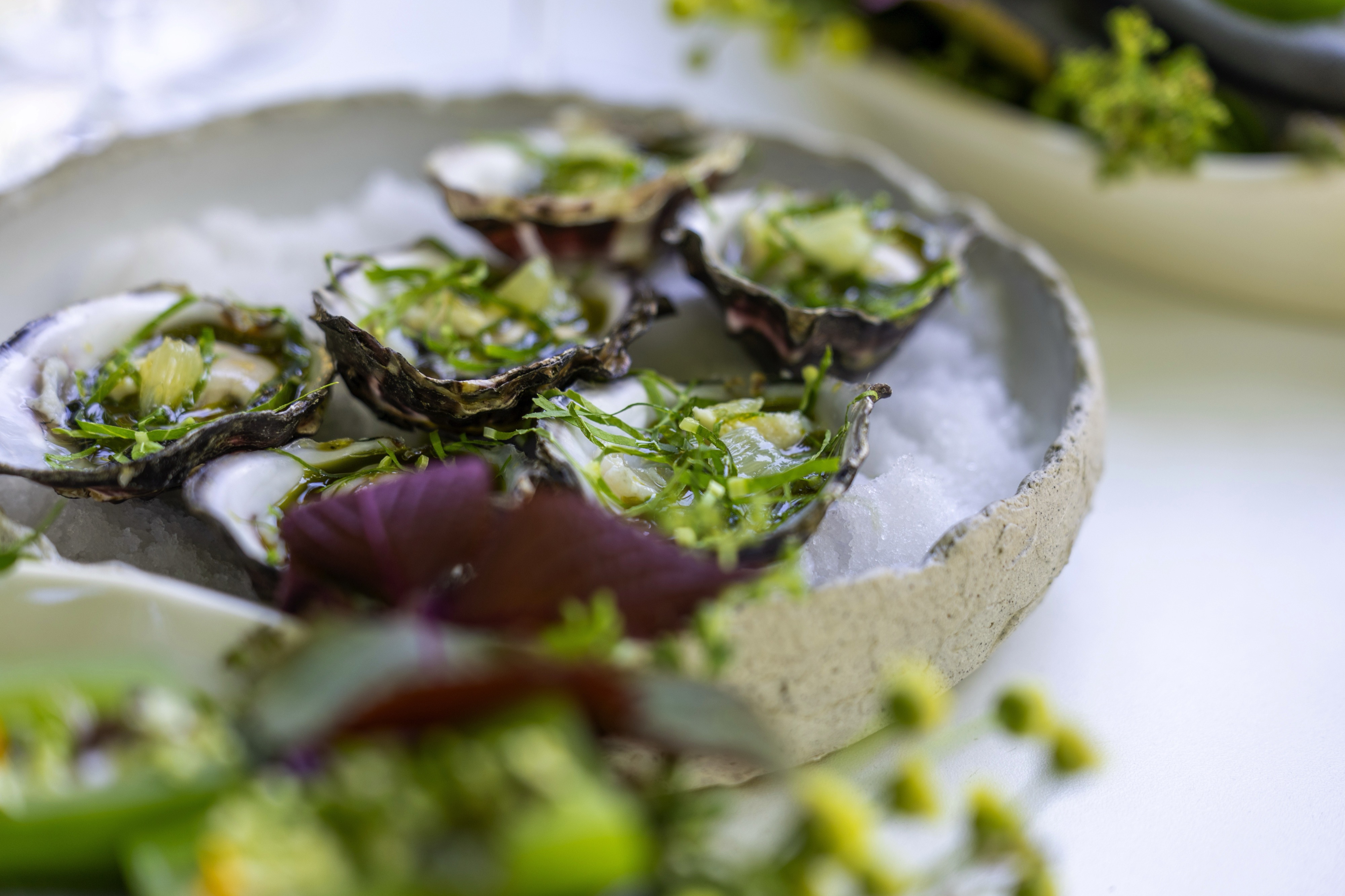
S.A.L.T. Experiences take you on deliciously immersive journeys that delve into the personality of each destination. These thoughtfully designed Shore Excursions grant privileged access to local food cultures — from Michelin starred restaurants to familyrun farms and bustling markets to private kitchens — always led by those who know the region best. Whether harvesting vegetables from biodynamic gardens, learning ancestral techniques from village cooks, or savoring wines with renowned vintners, these optional journeys invite you into culinary adventures where strangers become friends, recipes become stories, flavors become memories.
Available on all Classic ships, with experiences tailored to each region’s unique culinary heritage.
Northern Europe
From Russian caviar to the smokehouses dotting the Swedish countryside, there is much to recommend for a culinary tour of Northern Europe. Discover expertly guided shore excursions that uncover the history, stories and personalities behind the well-known dishes, as well as shine a light on lesser-known culinary treasures. Think of anything from an exploration of the world-class restaurant culture of Copenhagen to the preserving methods of Iceland, to foraging for flavors the New Nordic way.
Mediterranean
In the Mediterranean, S.A.L.T. Experiences invite you to discover the region’s rich cultural tapestry through privileged access to local food artisans and traditions. On these highly curated Shore Excursions, you can ascend Portofino’s famous Monte for an exclusive eco-farm picnic featuring wood-fired focaccia and panoramic views. Learn about time-honored cheese-making traditions in Mykonos or immerse yourself in Croatian cooking methods at the Miloslavic family homestead in Dubrovnik. Each Mediterranean S.A.L.T. Experience reveals centuries of culinary wisdom — shared by the people who continue to preserve traditions.
Images are intended as a general reference.
Shore Excursions
Highlight Experiences
Seamless tours of iconic sites
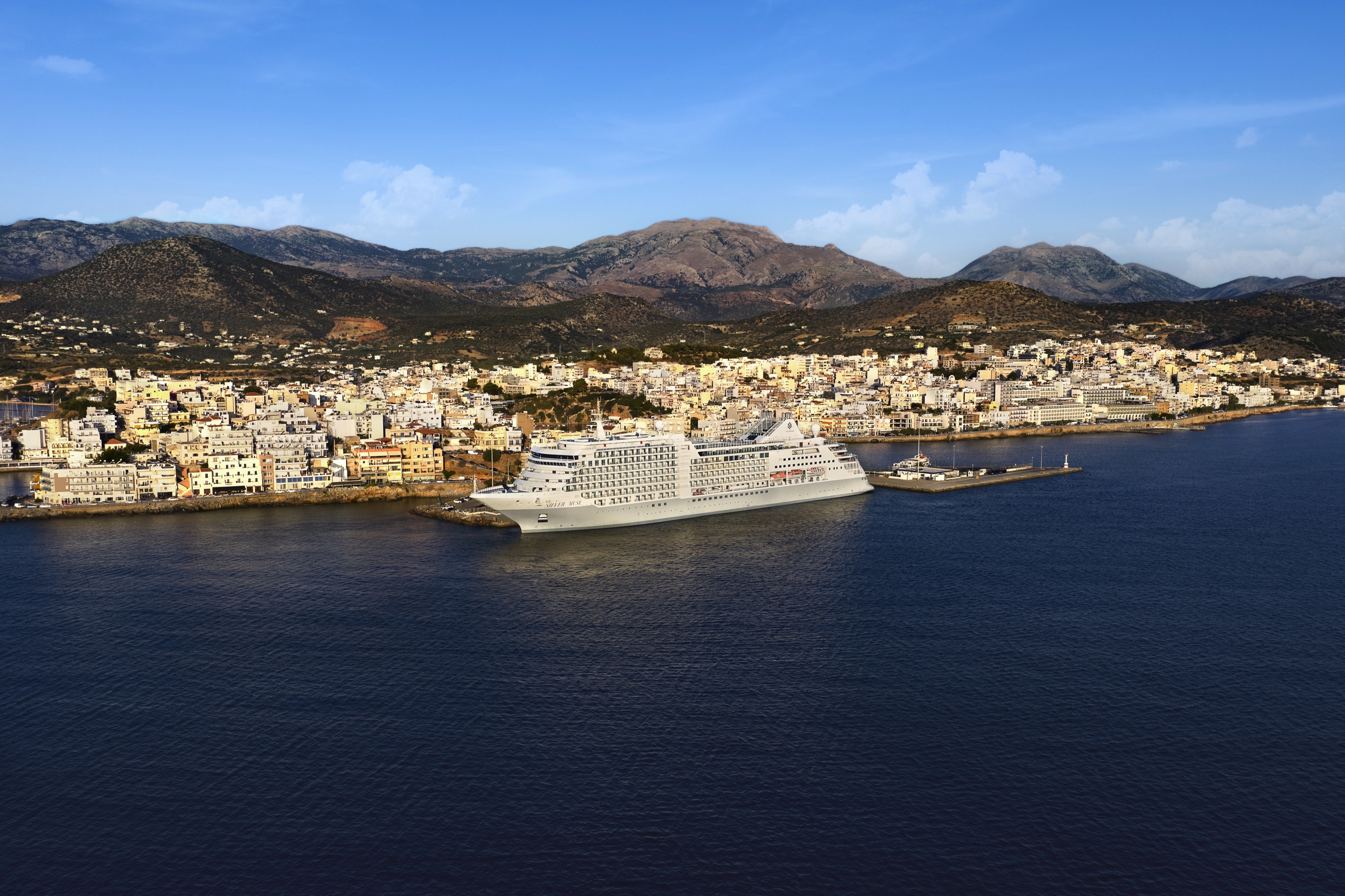
Explore iconic landmarks and cultural treasures with our Highlight Experiences, half or full-day adventures led by expert guides. Enjoy seamless, hassle-free journeys to must- see attractions — perfect for guests seeking a convenient, turnkey experience.
Signature Experiences
Smaller tours, crafted by Silversea
These immersive Signature Experiences offer privileged access and personalized interactions with local experts. These experiences are perfect for those seeking meaningful, social exploration who want to connect with destinations through authentic dining and slow travel.
Private Experiences
Exclusive tours for your group
Create your own exclusive adventure with a dedicated vehicle, driver, and guide. Explore at your pace, linger, or spontaneously discover new sites. Available at most ports for half- or full-day bookings, Private Experiences are ideal for families seeking privacy and flexibility.
Custom Experiences
Tailor-made tours designed for you
Enjoy personalized Custom Experiences tailored to your interests, with exclusive access and specialized guides. Our team handles every detail, ensuring unforgettable moments that exceed your expectations—crafted entirely around your pace and preferences.
Overland Experiences
Mid-cruise, inland tours
Venture inland on two- to three-day journeys to iconic sites like the Taj Mahal or Angkor Wat. Vith flights, stays, and guided access included, these immersive journeys offer rare experiences beyond the coast — all with the signature Silversea service.
S.A.L.T. Bar
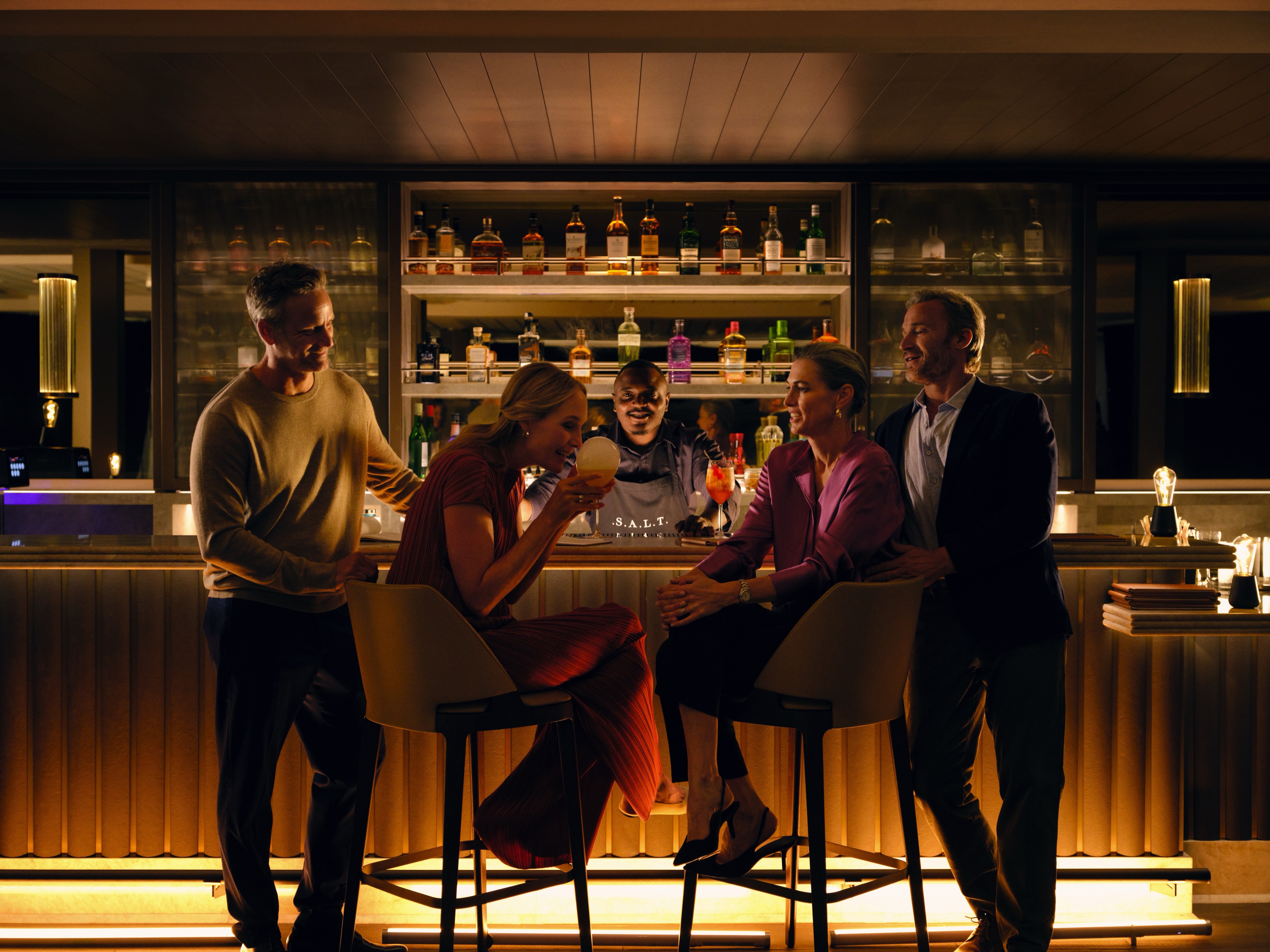
S.A.L.T. Bar crafts authentic cultural connections through expertly prepared cocktails that tell the story of each region. A welcoming atmosphere invites you to indulge in regionally inspired libations prepared with local ingredients and traditional spirits. Each perfectly balanced pour serves as your passport to the shores you’re exploring.
Images are intended as a general reference. Features, materials, finishes and layout may be different than shown.
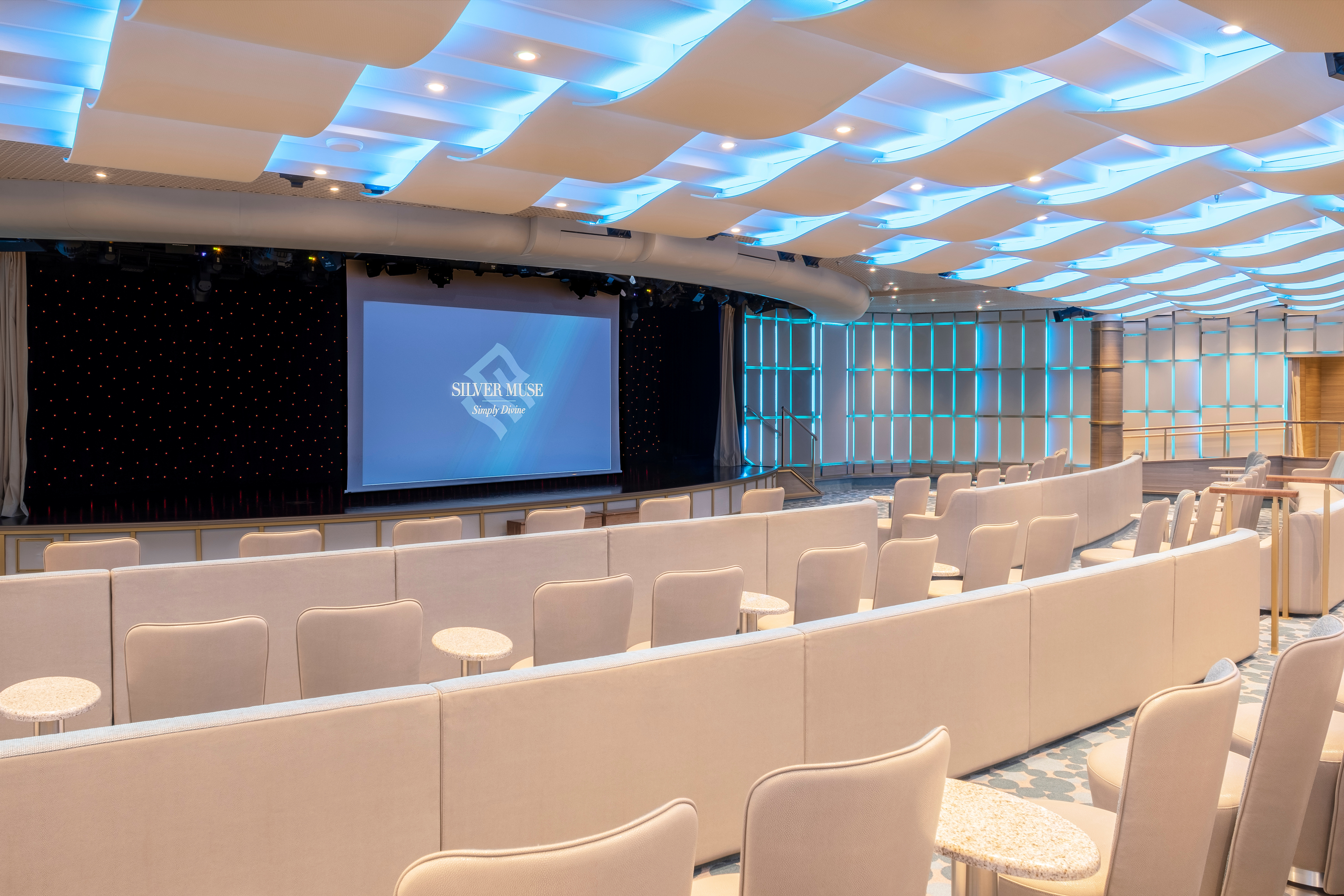
Venetian Lounge
Step inside The Venetian Lounge, a cabaret-style theater draped in gilded glamour and Belle Époque charm. Cozy seating and intimate tables invite you to bask in the glow of live productions and cinematic screenings, complemented with Champagne, fine wines, and classic cocktails. In a setting this grand, every night feels like opening night.
Images are intended as a general reference. Features, materials, finishes and layout may be different than shown.
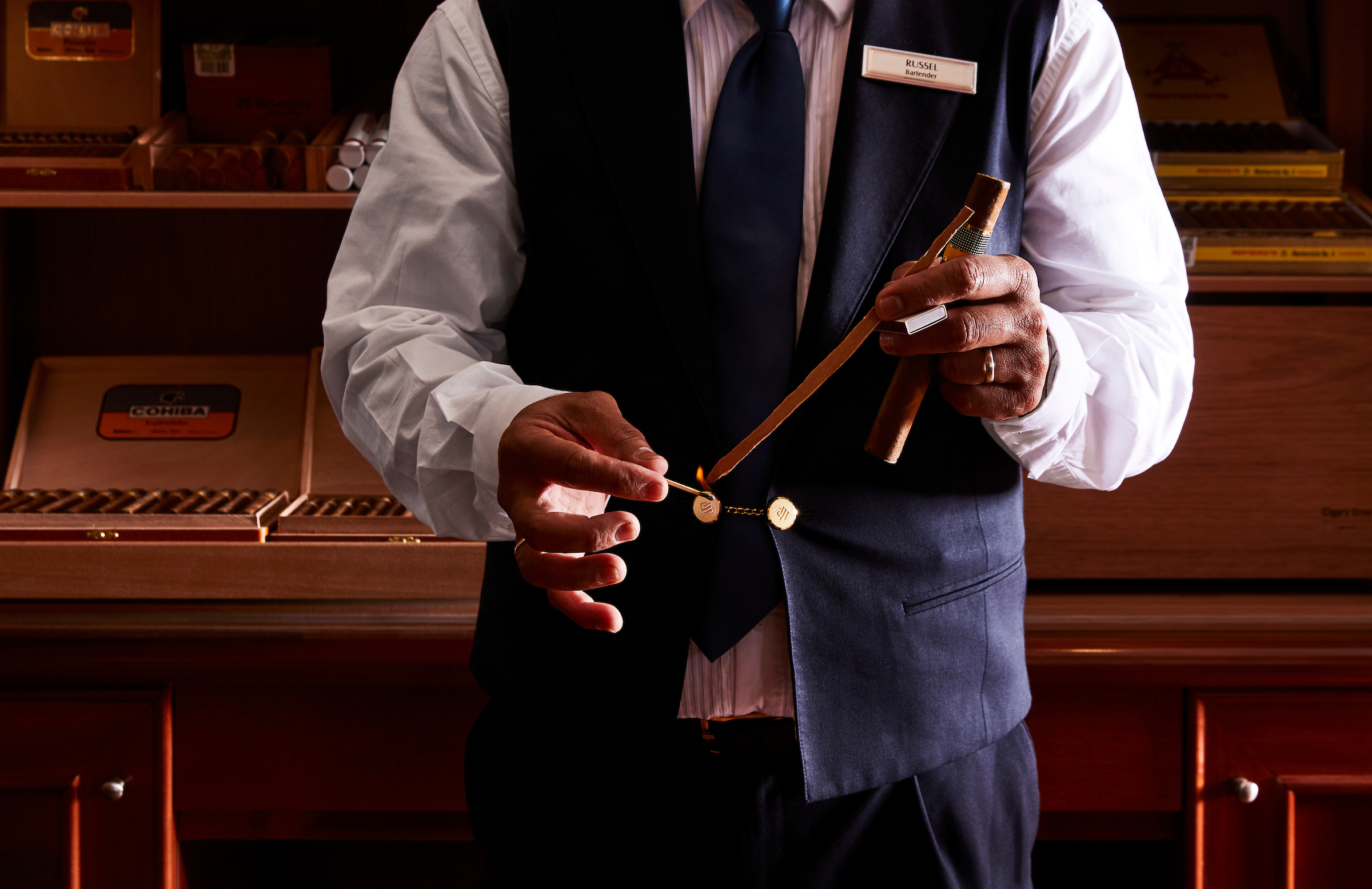
Connoisseur’s Corner
As evening stretches into night, Connoisseur’s Corner offers a stylish refuge for those who appreciate the time-honored rituals of smoke and spirit. Sink into tufted leather chairs with a hand-rolled cigar and a glass of one of our finest cognacs or whiskeys. Indoors or under the stars, every moment is marked by pure indulgence.
Images are intended as a general reference. Features, materials, finishes and layout may be different than shown.
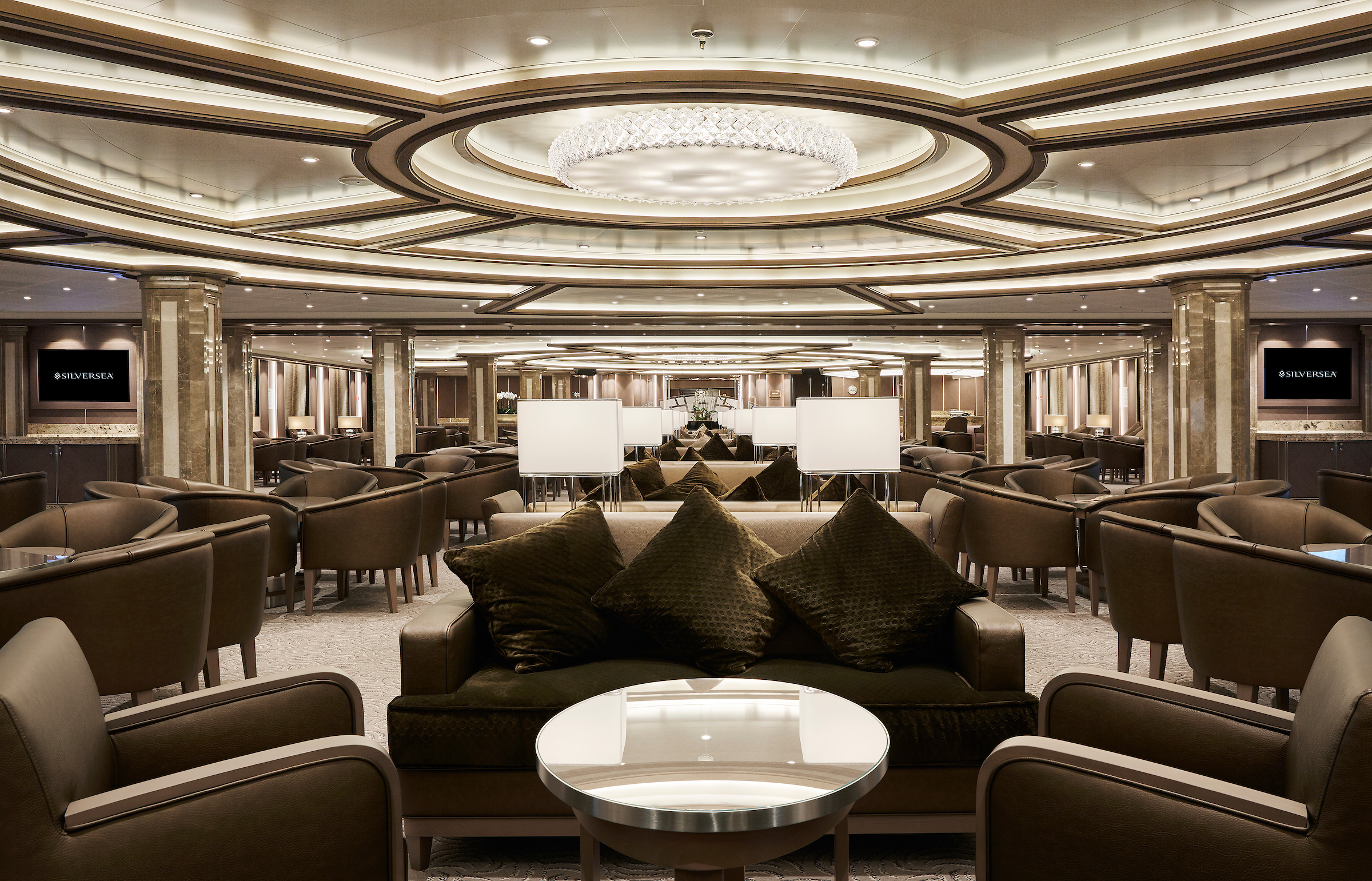
Dolce Vita
Surrender to a world of Italian elegance where the art of aperitivo takes pride of place. Ideal for connecting over spritzes, negronis, and light bites, here each evening feels like a celebration. As laughter lingers, crystal glasses clink, and live piano notes ripple through the air, Dolce Vita compels you to savor the sweetness of life on board.
Images are intended as a general reference. Features, materials, finishes and layout may be different than shown.
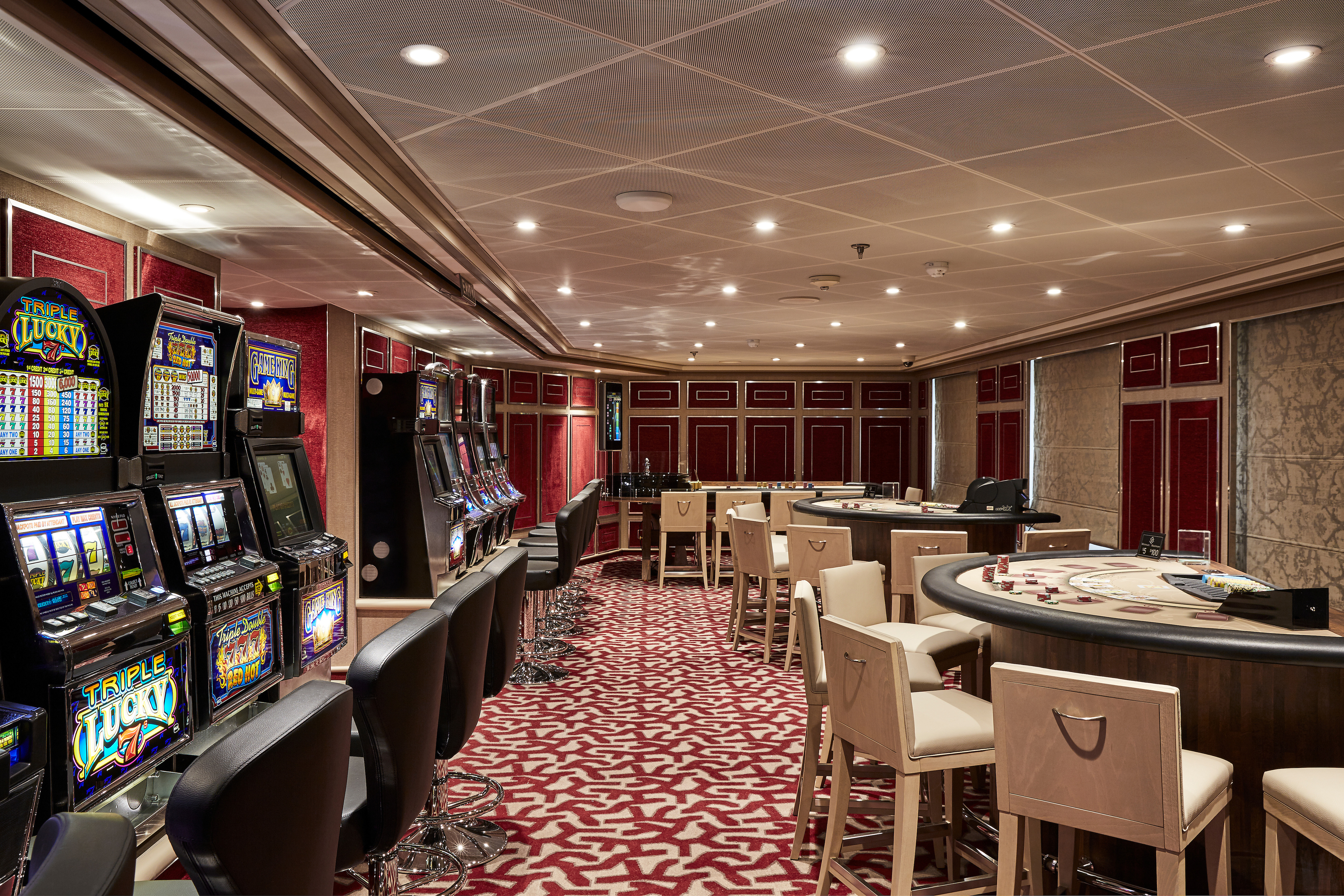
Casino
Let the fun begin! Channel your inner James Bond and place a bet at a variety of table games, including American Roulette, Blackjack, and Ocean Poker, as Silver Muse glides silently through the waves. An assortment of multi-game, multi-denominational reel and video slot machines are also available. Prepare yourself for a luxurious and exhilarating experience with every turn of a card and spin of the wheel. Game on!
Images are intended as a general reference. Features, materials, finishes and layout may be different than shown.
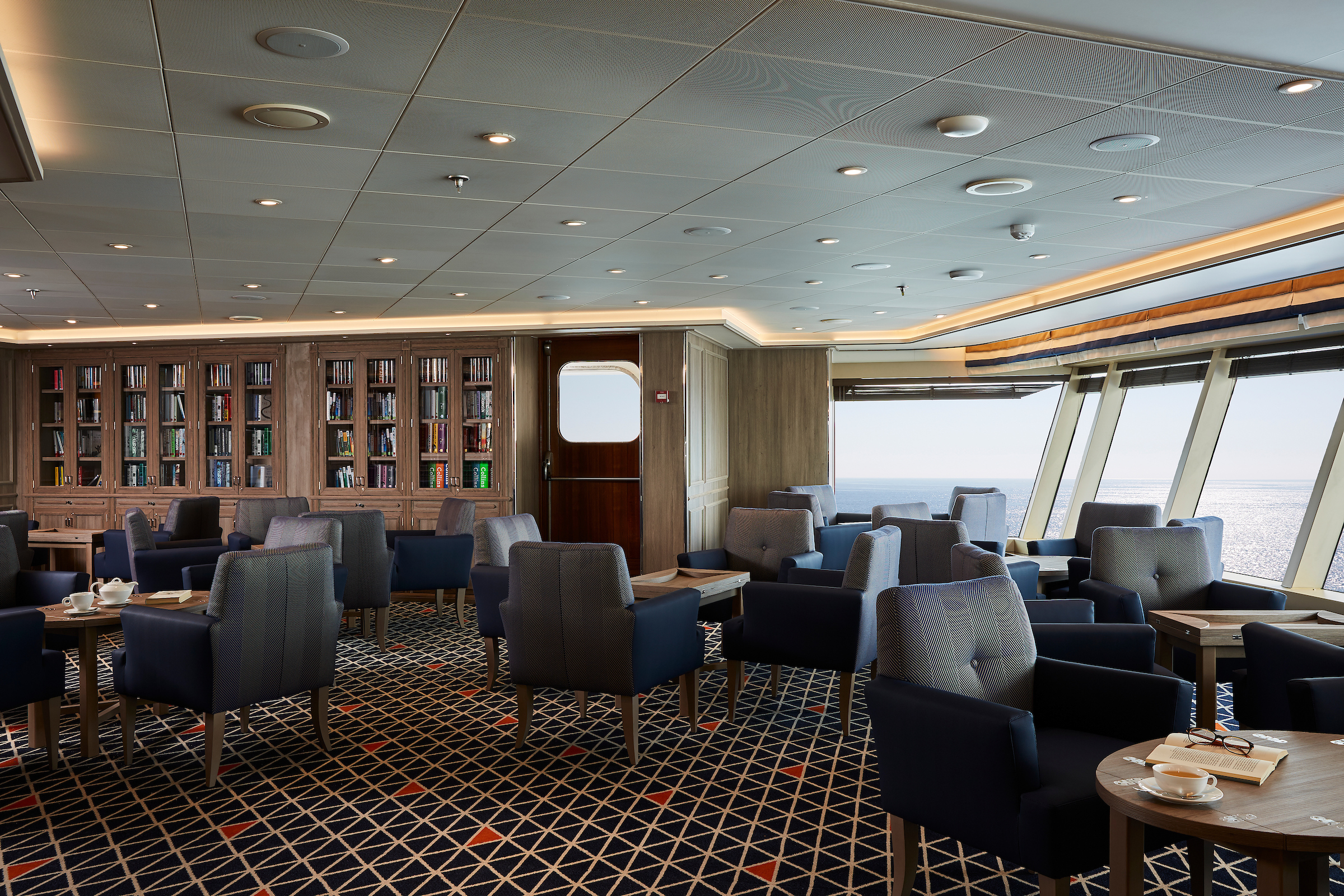
Observation Library
The eponymous lounge carries its name well. Set on the highest level at the very top of the ship, this is a quiet space for reading and reflection while being dazzled by the undulating seascapes that are part of life on board. Borrow a book from the in-house library, read the papers, or just embrace the tranquility of being at sea.
Images are intended as a general reference. Features, materials, finishes and layout may be different than shown.
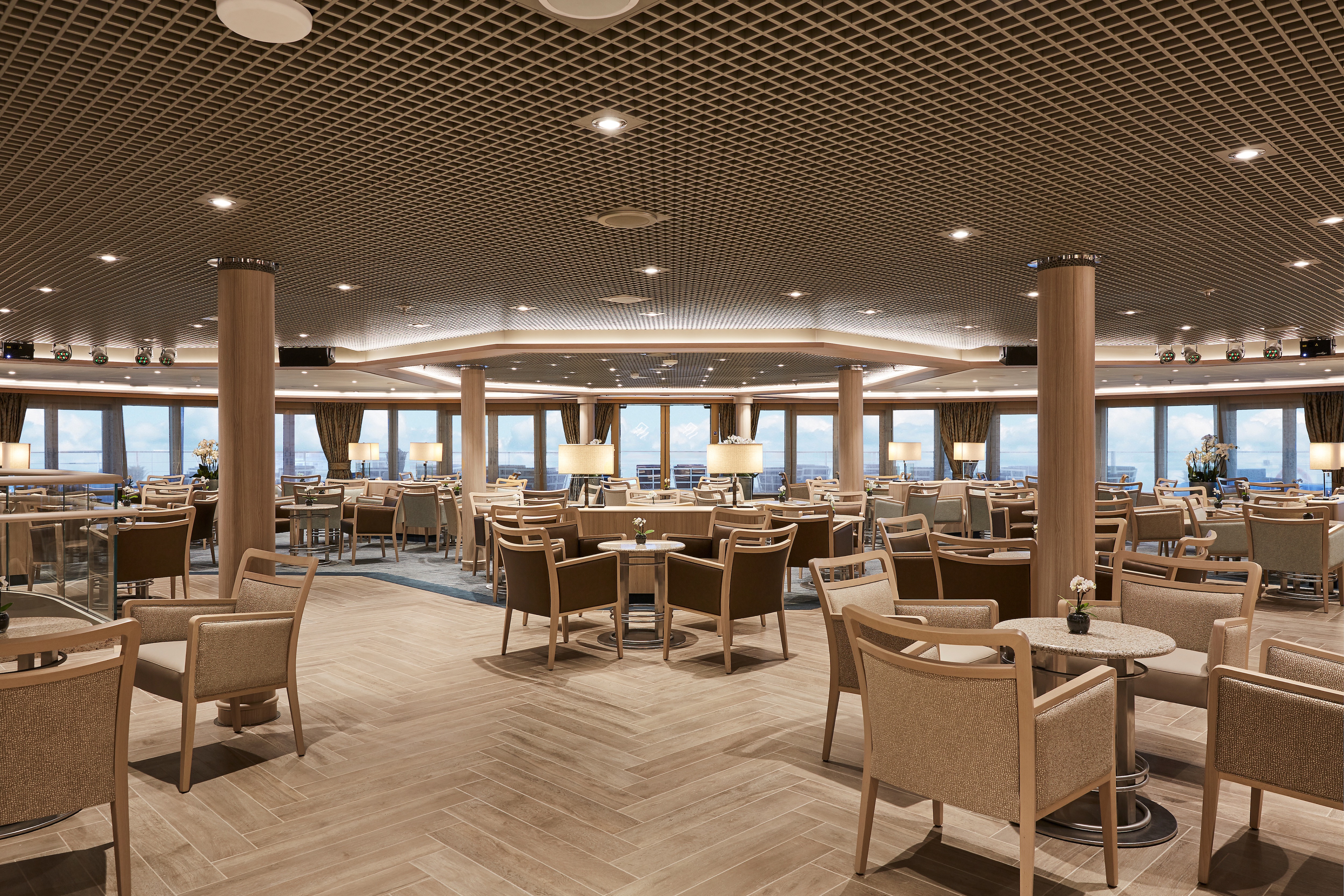
Panorama Lounge
True to its name, Panorama Lounge surrounds you with sweeping views from every angle. Sunlight pours through wraparound windows by day, framing horizons that shift like watercolors. Evenings hum with piano chords and DJ beats that carry you late into the night. And all of it pairs wonderfully with cocktails handcrafted to match your mood.
Images are intended as a general reference. Features, materials, finishes and layout may be different than shown.
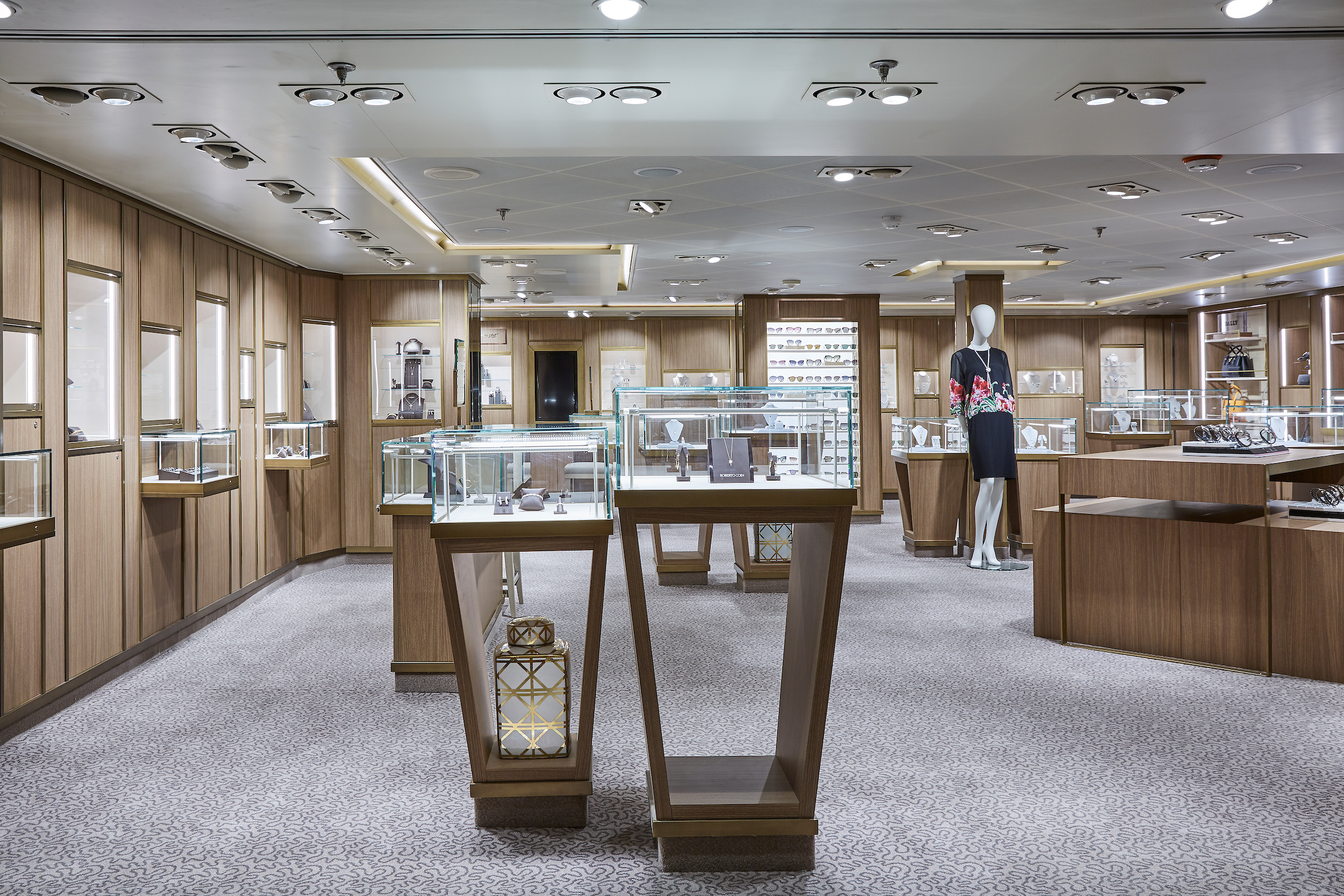
Boutique
Exceptional shopping experiences do not end in the cosmopolitan cities we visit. Silversea’s striking new shipboard boutiques, reimagined and redesigned, are stunning modern design spaces befitting the finest creations from legendary designers. Carefully selected partners on board Silversea’s duty-free boutiques offer our guests a carefully curated selection of cutting-edge fashions, jewelry, accessories, fine perfumes, cosmetics, and Silversea Logo collection, all at duty-free prices.
Images are intended as a general reference. Features, materials, finishes and layout may be different than shown.
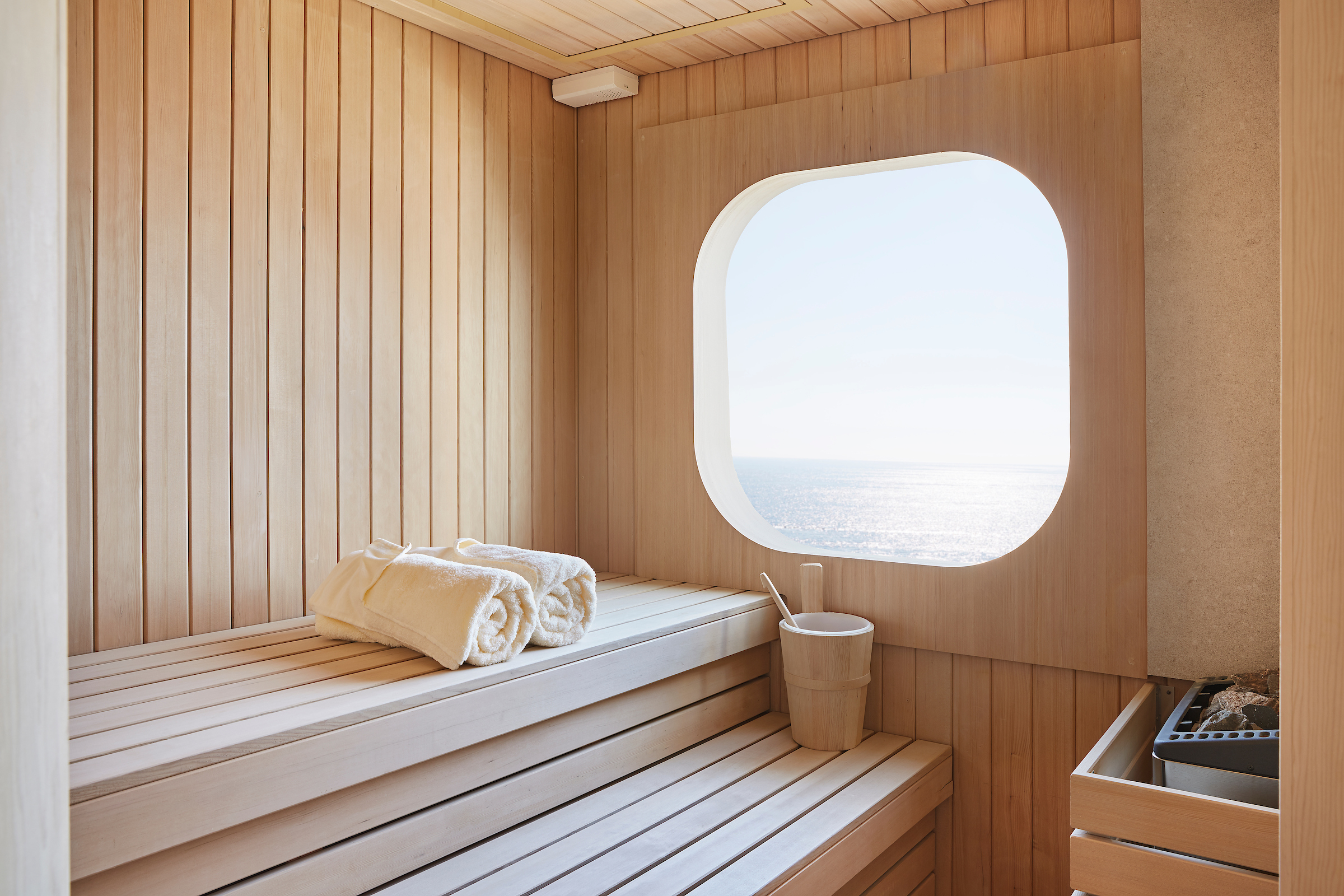
Zagara Beauty Spa
Relax, rejuvenate, and renew all your senses. The Zagara Beauty Spa by Silversea is a sanctuary of pure bliss … Sweeping ocean views from the floor-to-ceiling windows, nine treatment rooms, an acupuncture suite, relaxation areas, and a dedicated outdoor whirlpool allow delectable indulgence on board. Invigorating therapies including facials, body wraps, and massages, plus men’s and women’s saunas and steam rooms, are perfect for relaxing before your spa treatment or after your workout.
Images are intended as a general reference. Features, materials, finishes and layout may be different than shown.
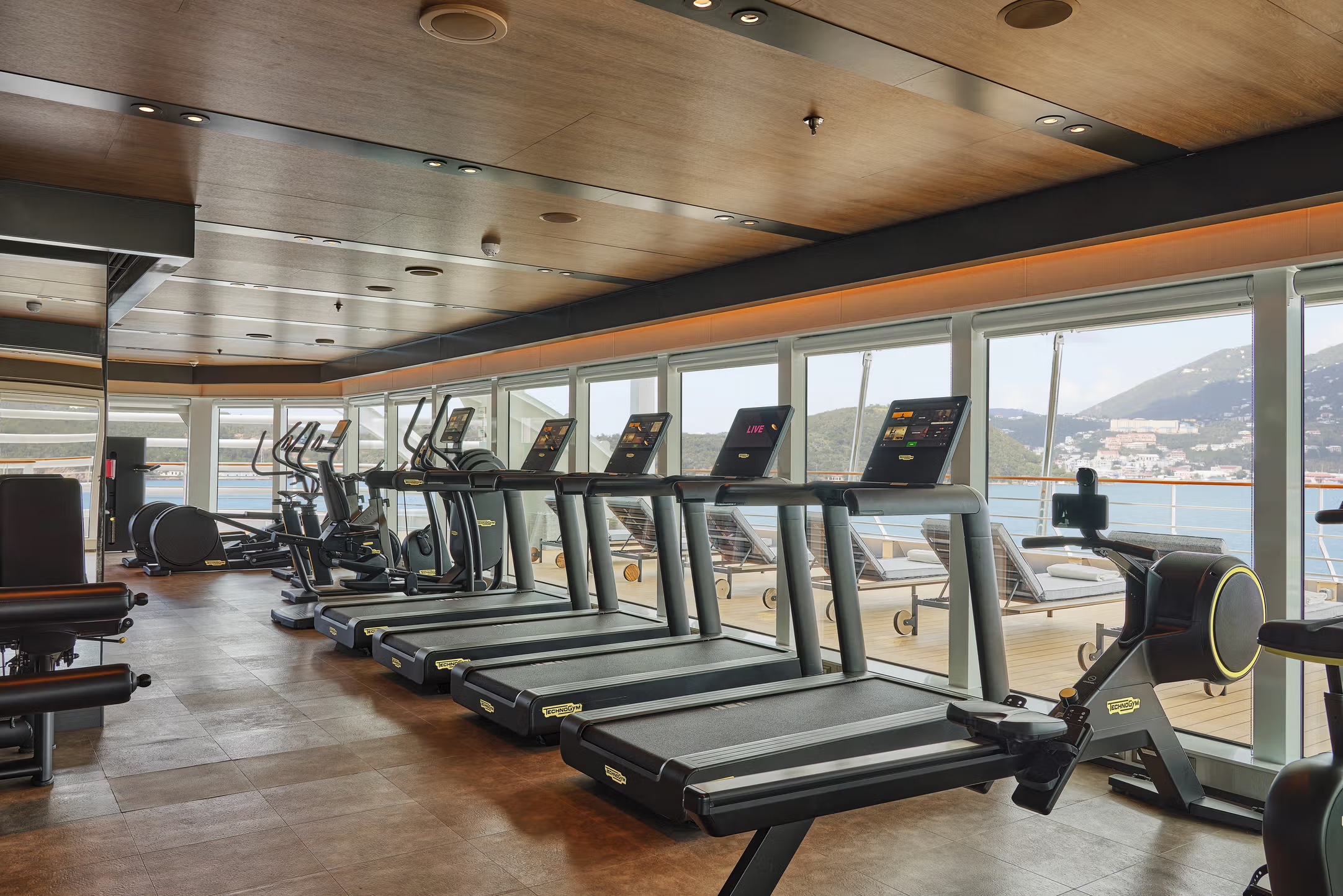
Fitness Centre
With state-of-the-art Technogym® equipment, free weights, and specialty classes, the Fitness Center brings together elite design with programs that are specifically created for your body type and needs. With personal trainers available for individual sessions, training here is a five-star experience for all levels of fitness and experience. And with the best view that you’ll ever have while working out, there are definitely no more excuses …
Images are intended as a general reference. Features, materials, finishes and layout may be different than shown.
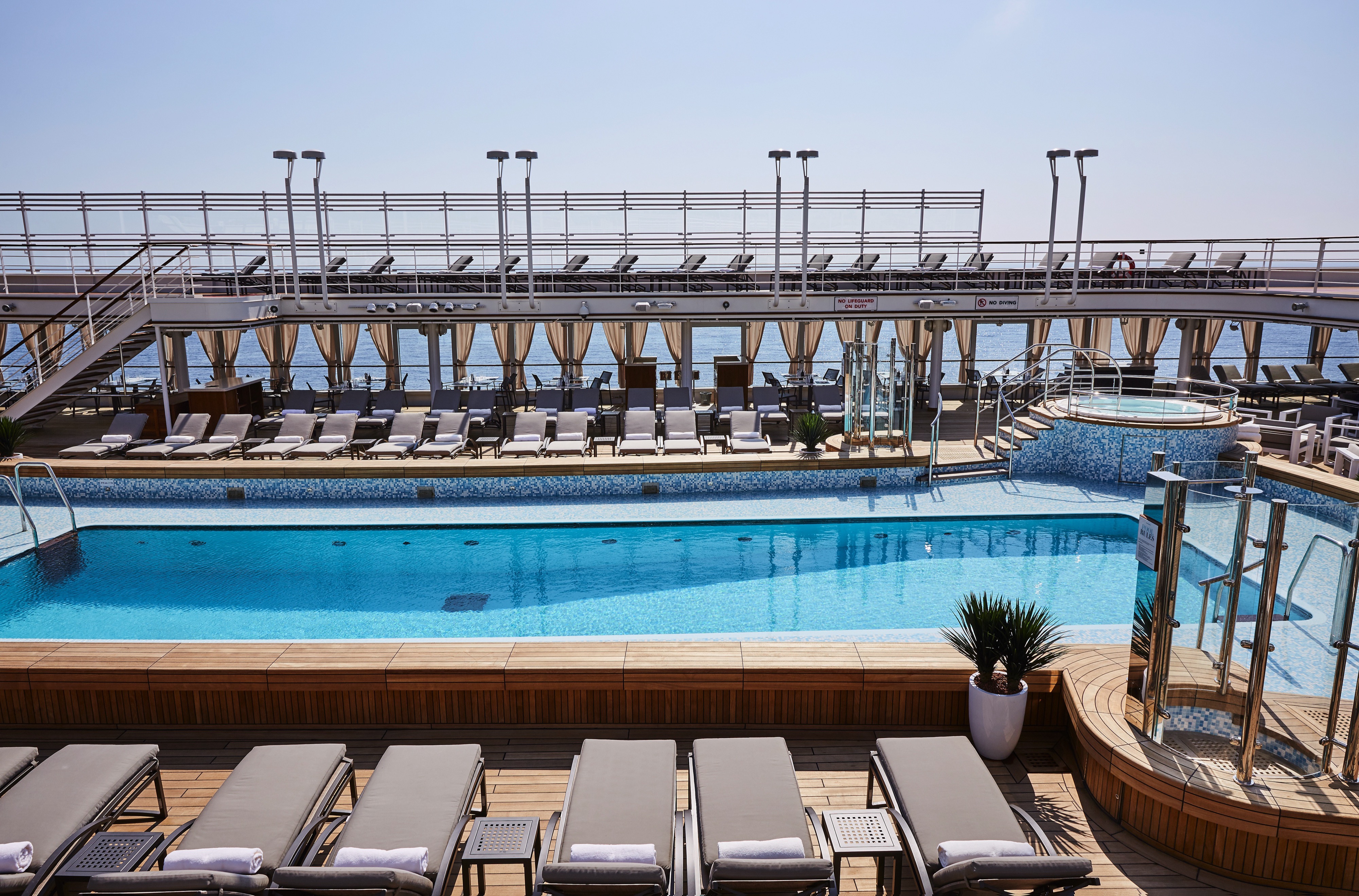
Pool Deck & Jacuzzi Area
The epitome of open-air living—defining how you enjoy the outdoors—this is the place to cool off, unwind, and enjoy the sunshine. Take a dip in the pool, relax in one of the whirlpools, or simply soak up the view from one of the sun beds while your pool attendant anticipates your every whim. A little more ice? Certainly. A plush towel to dry off with? Of course. With breathtaking landmarks gliding by, dive into the clear waters in a setting that is so idyllic that you will not want to disembark.
Images are intended as a general reference. Features, materials, finishes and layout may be different than shown.
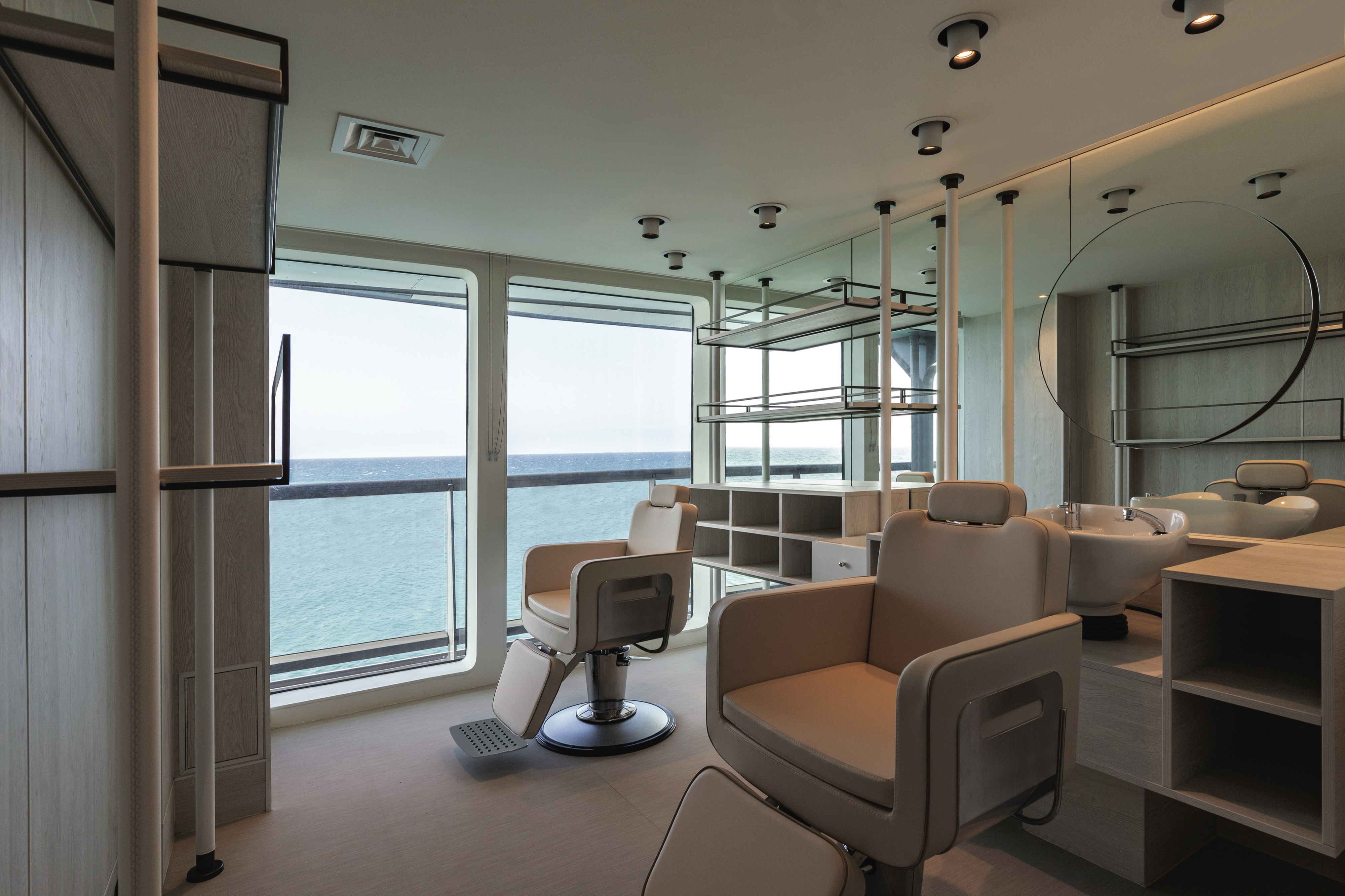
Zagara Beauty Salon
A full range of salon services, including hairstyling, manicures, and pedicures, is available on board this luxury cruise ship for both men and women. Appointments for these chargeable services may be made on board the ship, or in advance via My Silversea. Maintain the look of prestige travel while you cruise.
Images are intended as a general reference. Features, materials, finishes and layout may be different than shown.
S.A.L.T.
Sea And Land Taste: Culture Through Cuisine
Unique to Silversea, S.A.L.T. Sea And Land Taste® is a multifaceted culinary program that allows you to explore a destination’s cultural identity through food, even when you are on board. S.A.L.T. Kitchen offers an ever-changing menu inspired by local cuisine, while S.A.L.T. Bar serves regionally crafted cocktails*. Enjoy hands-on classes at S.A.L.T. Lab during the day and nightly showcases at S.A.L.T. Chef’s Table. The enrichment continues with S.A.L.T. Experiences and S.A.L.T. Talks — ashore tastings and onboard lectures celebrating culinary artistry and culture.
A New Definition of Traveling with Taste
From market trips and special dinners to cooking demos with award-winning local guest chefs, S.A.L.T. will intensify your voyage, flavor your journey, and preserve your vacation memories for months, and yes, hopefully years.
S.A.L.T. Experiences
S.A.L.T. Experiences take you on deliciously immersive journeys that delve into the personality of each destination. These thoughtfully designed Shore Excursions grant privileged access to local food cultures — from Michelin starred restaurants to familyrun farms and bustling markets to private kitchens — always led by those who know the region best. Whether harvesting vegetables from biodynamic gardens, learning ancestral techniques from village cooks, or savoring wines with renowned vintners, these optional journeys invite you into culinary adventures where strangers become friends, recipes become stories, flavors become memories.
S.A.L.T. Kitchen
S.A.L.T. Kitchen transforms dining into discovery with menus that reflect the cuisines of the places you’ll visit. This complimentary venue is the only restaurant at sea with an ever-changing menu based on destination. Plus, a standing menu focuses on broader regional specialties, complemented by a menu featuring hyperlocal fare. Dishes are inspired by local flavors and prepared with responsibly sourced ingredients. Accompanied by a curated selection of over 160 regional wines, S.A.L.T. Kitchen delivers an immersive taste of place without ever leaving the ship.
S.A.L.T. Talks
S.A.L.T. Talks illuminate the deep connections between food and culture through engaging presentations on board. Led by our knowledgeable S.A.L.T. Lab Hosts, these complimentary lectures and live cooking demonstrations reveal how regional dishes reflect centuries of tradition, migration, and innovation. Through enlightening narratives and sensory experiences, you’ll enjoy fascinating insight into the cultural significance behind local ingredients and techniques, enhancing appreciation of both on board dining and shoreside explorations. Feed your curiosity along with your appetite.
S.A.L.T. Land Programs
Unearth the roots of every place with S.A.L.T. Land Programs — a multi-day culinary and cultural journey, before or after your cruise. Savor regional specialties, indulge in private tastings, and take part in immersive, hands on classes. Every moment is thoughtfully designed by the team behind the S.A.L.T. culinary program, in close collaboration with local partners. Relish the Silversea signature quality from first taste to final toast, as we reveal the essence of each destination through its most authentic dishes. Meet the people that proudly preserve culinary heritage. Join rituals that unite communities. And with every meal, discover the depth of each locale as you create new memories among newfound friends
Everything That Matters, Included.
All-inclusive means more with Silversea. Destination-inspired dining, premium beverages, complimentary Wi-Fi, a cutting-edge fitness center and spa, and engaging experiences that inspire and entertain are all part of your voyage. Unwind in Otium Spa’s sauna as you glide past glaciers. Expand your perspective with guest lectures after exploring ruins. Delight in brilliant performances that bring local culture from shore to ship. Every comfort you could imagine is included — along with countless touches you’d never expect.
Butler service in every suite: All guests are pampered equally aboard our ships. We are the only cruise line worldwide to include butler service in every suite and category. A staff-to-guest ratio of nearly one to one ensures that your every wish is fulfilled with earnest precision, from the concierge who can customize your voyage to the butler who serves your breakfast in suite.
Complimentary beverages everywhere: Enjoy a glass or bottle of champagne, wine, beer, or premium spirits on the house. We’ll also ensure you’re well stocked with water, juices and soft drinks in the public bars and your suite. Our Silversea promise is to keep your mini-bar full of your favorite drinks—alcoholic beverages (including wine, spirits and mixers) or cold bottles of water for hot, sunny days! Your butler will replenish daily, but if you want a little extra, ask, and we’ll ensure you get exactly what you want.
Culinary innovation: Enjoy breakfast in your suite or lunch and dinner in one of our specialty restaurants. Our gourmet dining options welcome you for an unforgettable meal. Our regionally inspired S.A.L.T. Bar, Kitchen and Laboratory concept offers a deep-dive culinary immersion beyond anything you have ever experienced aboard a cruise ship. Our specialty dining options include local and international dishes for those who take their dining seriously.
Gratuities and personalized service on board: Setting sail on Silversea promises peace of mind from start to finish. That means no worrying about tipping the butlers or staff. Our crew-to-guest ratio of almost 1:1 ensures flawless service from pole to pole, but with us, you never have to think about who should get a tip, how much you should give and when. It’s all included! We believe that not having to deal with tipping helps make your luxury cruise even more special and stress-free. And that is worth every penny.
Shore excursion credit: Unlock meaningful moments in port with a Shore Excursion Credit, available on Classic voyages with the All-Inclusive Plus Fare. Whether you’re seeking cultural immersion, experiences in nature, or local flavors — the Shore Excursion Credit is your key to deeper, more personalized exploration in every port. Designed to enrich your shoreside discovery, the credit value varies by voyage. Explore on your terms, with the flexibility to choose the adventures that speak to you.
Minors & Childcare
Silversea cruise guidelines state that children under the age of 18 must be accompanied by a parent or other responsible adult aged 21 or over, in the same or a connecting suite, for the duration of the voyage. Each suite that includes a minor must have at least one adult aged 21 or over present. If the adult accompanying the minor is not their parent, a Parental Consent Guardianship Form must be signed by a parent or legal guardian and received by Silversea prior to sailing. Please contact our Special Services Department at SpecialServices@Silversea.com for a Parental Consent Form.
Guests must be 21 years of age or older to purchase or consume alcohol. Silversea reserves the right to refuse service to anyone who, in its sole judgment, may be under the influence of alcohol or in any circumstance necessary to preserve the health and safety of guests and crew.
Silversea cannot accommodate infants less than six months of age and reserves the right to limit the number of children less than three years of age. Parents are required to sign a notarized waiver prior to sailing to grant a valid booking for children ages between 6 months and 1 year old. A signed and notarized waiver will be required for all children of these ages.
Although Silversea accepts guests over the age of 6 months (over the age of 5 years for Silversea Expeditions), there are no special programs for children on board our ships, and Silversea does not provide childcare, entertainment, or supervision. Silversea reserves the right to limit the number of children less than 3 years of age.
Children under the age of 8 years are permitted to participate in suitable Shore Excursions or shuttle services only if the vehicles are equipped with the correct safety harness and seating equipment. Child harnesses and secure seating cannot be guaranteed. Silversea reserves the right to refuse children under 8 years old on any tour on the basis of safety. Guests may use their own approved safety seat, booster seat, or harness, provided it is compatible with the local touring vehicle and can properly secure the child.
To ensure guest safety and comfort, the following minimum ages apply to expedition activities:
- Zodiac Cruises: Minimum age 5 years, accompanied by an adult.
- Snorkeling: Minimum age 12 years, accompanied by an adult.
- Kayaking: Minimum age 14 years when accompanied by an adult, or 16 years to participate solo.
As Silversea does not provide childcare services, an adult family member must remain onboard with any child who does not meet the minimum age requirements.
Pets
Pets cannot be accommodated on any Silversea cruise.
Medical Information
Inoculations
Generally, inoculations are not required in most areas where Silversea travels. These requirements are subject to change and it is recommended that you verify current guidelines with your travel professional prior to departure. Please note that when travelling to countries that do require inoculations, written verification will be necessary. Before taking any trip overseas, it is wise to check with your doctor, particularly if you are under a doctor’s care.
Medical Services On Board
Each Silversea ship is equipped with a Medical Centre, which is customarily staffed by a doctor and nurse on 24-hour call when at sea. When docked, supplementary emergency care may also be obtained through local medical facilities. Guests may be charged for medical services and for medications used for their medical treatment. The Medical Centre is not intended or designed to provide ongoing treatment of pre-existing conditions or for extended critical care, and Silversea is not responsible for the diagnosis, treatment or services furnished by shipboard medical personnel. Guests requiring oxygen for medical reasons are welcome to bring an oxygen concentrator onboard. Guests wishing to bring their own portable oxygen tanks must obtain prior written authorisation from Silversea, as restrictions may apply.
Pregnancy
Silversea policy regarding pregnancy is derived from the Cruise Lines International Association endorsement of the American College of Emergency Physicians Health Care Guidelines for Cruise Ship Medical Facilities, which can be found at https://www.acep.org/. This includes the guideline that “Pregnant women who have entered the 24th week of estimated fetal gestational age at any time during the cruise should not be eligible to sail with the ship. It is Silversea policy that any Guest who will have entered her 24th week of pregnancy or greater, at any time during the cruise, will be prohibited from sailing.The Guest and treating physician should consider before any cruise that there is no Obstetrician/Gynecologist available on the ship, and that pregnancies, when unstable and poorly controlled, are potentially life-threatening, especially without back up. A Guest may be at sea for several days without any immediate hospital and/or specialist back up, and that since the proposed itinerary is not within the U.S., and the availability of specialized shore side facilities can be problematic. All guests are required to sign a health questionnaire at check-in to ensure they are aware of our pregnancy policy. If you have already booked a cruise or cruise tour and do not meet this requirement, please contact your travel agent or airline.
Prescription Medication
For your convenience and wellbeing, it is important that you bring a sufficient supply of any prescription medicine you may need. Prescriptions cannot be refilled onboard, and usually cannot be refilled overseas. To prevent delays in clearing Customs, it is also a good idea to travel with a doctor’s letter explaining that your prescription medication is required for your continued health. It is also recommended that the medicine remain in its original container with the original pharmacy label intact.
Special Medical Conditions
If you have any existing medical condition that may require attention, or should you require oxygen for medical reasons whilst onboard, please send written notification prior to your voyage to specialservices@silversea.com or via fax to 954-759-5049. Please note that an oxygen concentrator is the only form of oxygen equipment that the Silversea ships can accommodate. Guests who rely upon wheelchairs must bring their own. Please note that not all shore excursions are suitable for guests with impaired mobility.
Health & Medical Requirements
All guests are required to report in writing to Silversea at the time their reservation is made:
- Any physical or mental condition that may require medical or professional treatment or attention during the voyage.
- Any condition that may render the guest unfit for travel, or that may require special care or assistance.
- Any condition that may pose a risk or danger to the guest or anyone else onboard the ship.
- Any condition that may require oxygen for medical reasons.
- Any intention or need to use a wheelchair cart, other mobility device or a service or assistance animal aboard ship.
By booking passage and by boarding the ship, the guest represents and warrants that he / she is physically and otherwise fit to travel, and that the guest will comply at all times with applicable rules and regulations of the ship and orders and instructions of the ship’s officers and medical staff. Silversea reserves the right without liability to require a guest to disembark and / or to refuse to board and transport a guest who, in the judgment of Silversea or the ship’s Master, is unfit to travel or may require care beyond that which Silversea is reasonably able to provide. Silversea strongly recommends wheelchair guests travel with someone who is able to assist them both ashore and at sea as Silversea may be unable to offer special assistance. Please note that wheel-on and / or wheel-off access may not be available at some ports-of-call. Wheelchair guests must bring their own collapsible wheelchair.
For guests travelling aboard Expedition Fleet vessels, Silversea strongly recommends wheelchair guests travel with someone who is able
to assist them both ashore and at sea as Silversea may be unable to offer special assistance. Please note that wheel-on and / or wheel-off access may not be available at some ports-of-call. Wheelchair guests must bring their own collapsible wheelchair.
Laundry / Valet Services
Complete valet services, including laundry, pressing and wet cleaning, are available at an additional charge and may be arranged through your butler. Customary charges will apply. A self-service launderette (excluding Silver Origin) offers washing machines, dryers, irons and laundry supplies, allowing you to limit the amount of cruise luggage needed, especially for longer voyages.
I have allergies. Can special detergent be used to wash my sheets and towels?
Silversea can notify Housekeeping Services of your preferences. Please email specialservices@silversea.com in advance of your cruise.
Dress Code
During the day, guests are welcome to dress in relaxed attire comparable to five-star resort wear. Lightweight, comfortable clothing and flat or low-heeled shoes are recommended for time spent on outdoor decks.
Starting at 6:00 p.m. each evening, Silversea maintains a dress code of modern luxury. Evening wear falls into different categories, and a detailed dress code policy is provided here.
Baggage Allowance
A reasonable amount of cruise luggage may be brought aboard the ship without charge. For Silversea guests or guests on land programmes, luggage must be handled in accordance with regulations and tariffs of airlines and/or ground operators.
Luggage allowance policies may vary by airline, destination and class of service. Most, if not all, airlines strictly enforce their carry-on and checked luggage policies and you may be required to pay additional fees should the weight and size of your luggage be outside the airline’s set policy and/or the number of pieces exceed the free luggage allowance. Since the airlines’ policies change frequently, it is strongly recommended that you or your travel professional obtain current baggage allowance restrictions via the airline’s website or by contacting the air carriers directly.
Please note that guests are, at all times, fully responsible for any/all airline baggage fees. For travel to/from and within the United States, please visit https://bags.amadeus.com/ or the individual air carriers’ website for a complete listing of baggage fees.
Silver Shore Land Adventures may impose additional baggage limitations. Your final travel documents include the details of your Land Adventure’s baggage limitations, if applicable. All luggage must be securely packed and tagged with the supplied pre-printed cruise luggage tags supplied as part of your documentation package. In accordance with airport security restrictions for carry-on baggage, it is recommended that you hand carry travel documents (passports, visas, inoculation verification, cruise and air tickets), medications and valuables. Liquid, fragile, perishable and other articles not suitably packed are transported at your own risk. Under no circumstances may dangerous items (including but not limited to: explosives, firearms, combustible or illegal substances) be taken aboard the ship.
Items prohibited on board include:
- Firearms and ammunition, including realistic replicas
- Sharp objects, including all knives and scissors (Please note that personal grooming items, such as safety razors and scissors with a blade length less than 4 inches / 10 cm, are allowed)
- Illegal drugs and substances
- CBD Oil / CBD products
- Candles, incense, coffee makers, clothes irons, travel steamers and hot plates (i.e. items that generate heat or produce an open flame, or any other item that may create a fire hazard). Exceptions include curling irons, hair straighteners, matches and normal lighter. However, “torch lighters” that emit a powerful concentrated flame, and novelty lighters that look like guns, are not allowed
- Hoverboards
- Martial arts, self defense, and sports gear, including handcuffs, pepper spray, and night sticks
- Flammable liquids and explosives, including lighter fluid and fireworks
- Hookahs and water hookah pipes
- HAM radios
- Electrical extension cords, including power strips and/or surge protected strips
- Dangerous chemicals, including bleach and paint
- Perishable food and meat products
- Drones, including toy flying device
There are limits to where smart glasses can be worn onboard. Smart glasses cannot be worn in the casino, spa service areas, restrooms, locker rooms, medical facilities, security screening locations, during back-of-house tours, in crew areas, or anywhere there is a reasonable expectation for guest and crew privacy.
Smart glasses users who are seen violating this policy will have the glasses confiscated by the Chief Security Officer or Staff Captain.
If such items are found, they may be confiscated and returned on the last day of the voyage prior to disembarkation.
Silversea is not responsible for loss or damage to luggage or any other personal item that may occur, or while participating in hotel and/or land programmes or shore excursions. To avoid the possibility of losing cruise luggage en route to the port of embarkation, it is recommended to ship your cruise luggage ahead of you via Silversea’s Silver Shore Baggage Valet programme or other service.
Upon embarkation, Silversea will make every effort to deliver your cruise luggage in a timely manner; however delivery may be delayed due to strict customs formalities that are beyond the ship’s control, so please remember to pack all essentials in your carry-on bag.
Smoking Policy
At Silversea, the safety of all guests is paramount. To ensure a comfortable environment for all, smoking is prohibited in most public areas, guest suites, and suite balconies. However, cigarette, e-cigarette, cigar, pipe, and vaporizer smoking is permitted in the Connoisseur’s Corner — both indoors and outdoors where applicable. In addition, cigarette, e-cigarette, and vaporizer smoking is only permitted in designated outside areas.
Silversea kindly requests that all guests respect the non-smoking areas.
Religious Services
Non-denominational services are held aboard ship on Sundays. Catholic, Protestant and/or Jewish clergy will be onboard during select holidays, when possible.
Internet
All Silversea ships are equipped to offer wireless (Wi-Fi) Internet access. You can use your own laptop to surf the Internet and check emails at Wi-Fi locations throughout the ship, or from the comfort and privacy of your suite. Computers, email and Internet access are also available on board at the Internet Café. However, it is important to understand that telecommunication services while at sea are via satellite and significantly different than high-speed connections on land back home. The signal travels in a similar manner to radio waves but at much greater distances. Therefore, onboard Internet access is not guaranteed at all times. Satellite communications are also affected by weather and the ship’s location. In particular, Internet service is extremely sporadic while in the Arctic. Guests aboard expedition cruises to/from Svalbard should be prepared to be out of communication for the duration of their time on board.
Wheelchair Accessibility & Mobility Assistance
BEFORE BOOKING
Do guests need to notify Silversea in advance about mobility needs?
Yes, guests should inform Silversea of any special assistance or mobility equipment requirements before sailing. This can be done via My Silversea under Guest Information / Special Request, or by contacting specialservices@silversea.com.
Does Silversea provide wheelchairs?
Yes, each vessel has wheelchairs available at the reception for temporary use, such as embarkation and disembarkation. Guests who require a wheelchair for the entire cruise should bring their own.
Can guests bring their own mobility equipment?
Yes, personal wheelchairs, scooters, and other mobility aids are allowed. However, guests staying in standard (non-ADA) suites should note that electric scooters may not fit through the doors.
Therefore, guests traveling with a wheelchair, scooter, or ECV are always highly suggested to book a wheelchair-accessible suite with a wider entrance door and an appropriate path of travel inside the room and accommodate the equipment. Regular Suites have a narrower entrance door and may not have the necessary interior space to accommodate wheelchairs and scooters.
What features do wheelchair-accessible suites offer?
Silversea ships offer specially designed suites for guests who require mobility assistance. These suites are equipped with wider entrance doors and appropriate paths of travel to accommodate wheelchairs, scooters, and other mobility equipment. All areas within these suites are reachable without the need for additional ramps, except for Silver Suites onboard Silver Moon and Silver Dawn and Classic Veranda onboard Silver Endeavour. In these suites Silversea offer ramp to go outside the balcony. The vessels also have wheelchairs available at the reception for guest use.
EMBARKATION & DISEMBARKATION
How do guests get on and off the ship with mobility equipment?
Silversea vessels have procedures in place to assist guests with mobility equipment during embarkation and disembarkation. When the gangway is flat, guests can drive their wheelchair off the ship. However, if the gangway involves stairs, our staff will provide assistance. The Safety Officer or Bridge must be informed whenever a wheelchair is involved in disembarkation or boarding, and our crew members are available to assist guests in need.
Is assistance available for boarding?
Yes, but guests who require full-time assistance should travel with a companion, as Silversea does not provide dedicated personal caregivers. Butlers can assist with getting to the gangway or dining venues but do not provide continuous mobility assistance.
ONBOARD
Silversea’s ships are designed for accessibility, featuring:
- Wide gangways to accommodate most wheelchairs and scooters
- Accessible public restrooms
- Wheelchair seating in dining venues, bars, and the Venetian Lounge
- Braille/tactile signage for visually impaired guests in elevators, stateroom numbers, and staircases
How does Silversea assist disabled guests in their suites?
Silversea butler can provide reasonable assistance to guest getting to and from the gangway, and to and from a restaurant, however Silversea does not offer full-time wheelchair service and/or staff fully dedicated to providing Guests with wheelchair assistance. Guests traveling on their own wheelchair should be assisted only when requested and are recommended to travel with an able bodily companion.
GOING ASHORE
Are all ports wheelchair accessible?
Not all ports have wheelchair-friendly infrastructure. In some destinations, tender boats or on Silversea Expeditions Zodiacs are required for disembarkation, and wheelchairs or mobility scooters cannot be accommodated in these cases.
Can guests arrange private accessible transportation in port?
If available, private wheelchair-accessible vehicles can be arranged. In some ports, shuttle buses may be wheelchair accessible, but availability is not guaranteed.
Does Silversea offer wheelchair-accessible shore excursions?
Until now we have been offering dedicated “Wheelchair Accessible Excursions” in some areas of the world., These tours are operated by wheelchair accessible vehicles and include only wheelchair accessible venues. These tours are mainly offered in Europe and the US. If you have any questions or concerns regarding shore excursion suitability, please contact the Shore Concierge (shoreconcierge@silversea.com) before your voyage or visit the Shore Concierge desk for more detailed information once onboard.
Wheelchair accessible shore excursions are indicated on the website with the universal accessibility icon.
Are there alternatives for guests with limited mobility?
In almost every port, Silversea offers low-activity excursions specially designed for mobility challenged guests, who can negotiate the steps on and off the coaches.
Is there any destination that is not recommend to guests with disabilities?
The more exotic destinations, like Asia, South Africa and South America it is recommended to guest to book a private vehicle due to the lack of infrastructure, for example wheelchair accessible vehicles are very rare to find and museums, restaurants and popular attractions are not often completely accessible.
Does Silversea offer wheelchair-accessible transportation between the ship and visiting site?
If available in the port yes, however this is not often available.
How Silversea assist disabled guests during excursions?
If wheelchair accessible excursions are not available, it is recommended to guests to book a private vehicle where they can have a dedicated guide and driver who can give them full attention. On regular shore excursions, the guide must look after all guests and may not be able to fully assist disabled guests.
Tendering
Many ports of call require guests on the vessels to go to shore by tender craft. If you choose to participate in an excursion which includes tendering, you must be able to negotiate narrow stairs to enter and exit the tenders with limited assistance. When the vessel is required to tender guests, the vessel will not be moored, and a gangway will not be available. During tendering, Silversea is unable to transport wheelchairs or mobility scooters with guests.
Special Dietary Requirements
Silversea will make every attempt to accommodate guests with special dietary requirements. If you have any special needs, please note them on the Guest Information Form or have your travel agent fax Silversea Special Services (+ 1 954-759-5049) or email: specialservices@silversea.com at least 120 days before sailing. Extra charges might apply
Shoeshine Service
Complimentary shoeshine service is available to all guests upon request.
Visitors Onboard
If you would like to make arrangements for visitors to board the vessel, please have your travel agent contact Silversea Special Services. Requests should be made in writing no later than 14 days before departure. Silversea may limit the number of visitors permitted onboard or not allow visitors in certain destinations.

Deck 12
- Golf Putting Green
- Golf Hitting Bay(access via Observation Library)

Deck 11
- Observation Library
- Silver Suites
- Medallion Suite
- Deluxe Veranda Suites
- Spaccanapoli
- Jogging Track
- Launderette

Deck 10
- Pool Deck
- Pool Bar
- The Grill
- Whirlpool Area
- Silver Suites
- Medallion Suite
- Deluxe Veranda Suites
- Launderette

Deck 9
- Panorama Lounge
- Activities Room & Outdoor Area
- Superior Veranda Suites
- Silver Suites (x1 Accessible Suite)
- Grand Suites
- Owner’s Suites
- Panorama Suites
- Deluxe Veranda Suites
- Launderette

Deck 8
- Connoisseur’s Corner
- Boutique
- Arts Café
- Conference/Card Room
- Launderette
- Grand Suites
- Superior Veranda Suites
- Deluxe Veranda Suites
- Elevator

Deck 7
- La Terrazza
- Silver Note
- Casino
- Launderette
- Royal Suites
- Deluxe Verandah Suites
- Superior Verandah Suites
- Elevator

Deck 6
- Zagara Beauty Spa
- Steam Rooms and Saunas
- Fitness Centre
- Aerobic Studios
- Thermal Suite
- Whirlpool
- Launderette
- Classic Veranda Suites
- Deluxe Veranda Suites

Deck 5
- Reception/Guest Relations
- Shore Concierge
- Dolce Vita
- Launderette
- Venetian Lounge
- Future Cruise Manager
- Classic Veranda Suites

Deck 4
- Atlantide
- S.A.L.T. Kitchen
- S.A.L.T. Bar
- Kaiseki
- La Dame
- Launderette
- Vista Suites
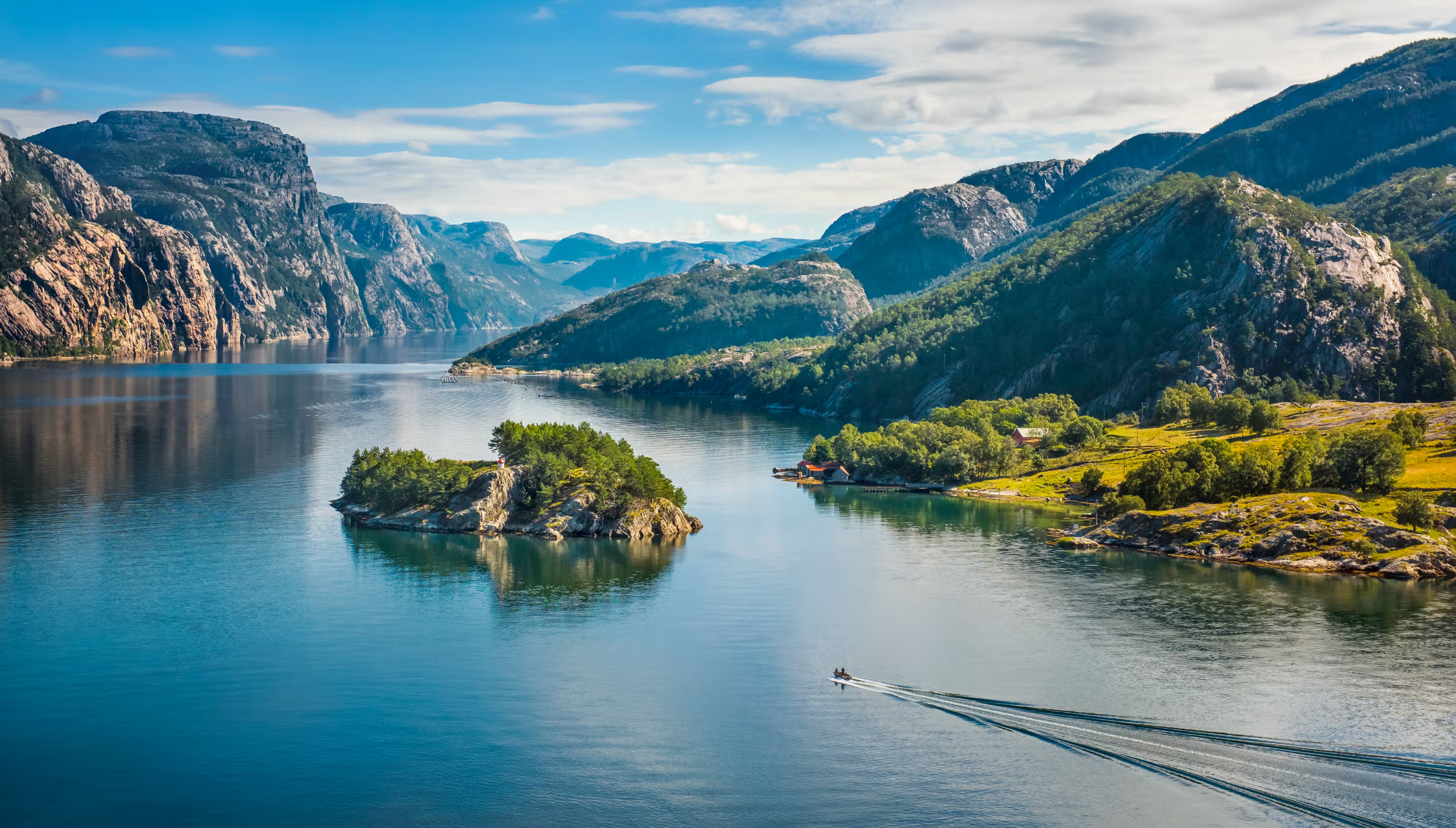
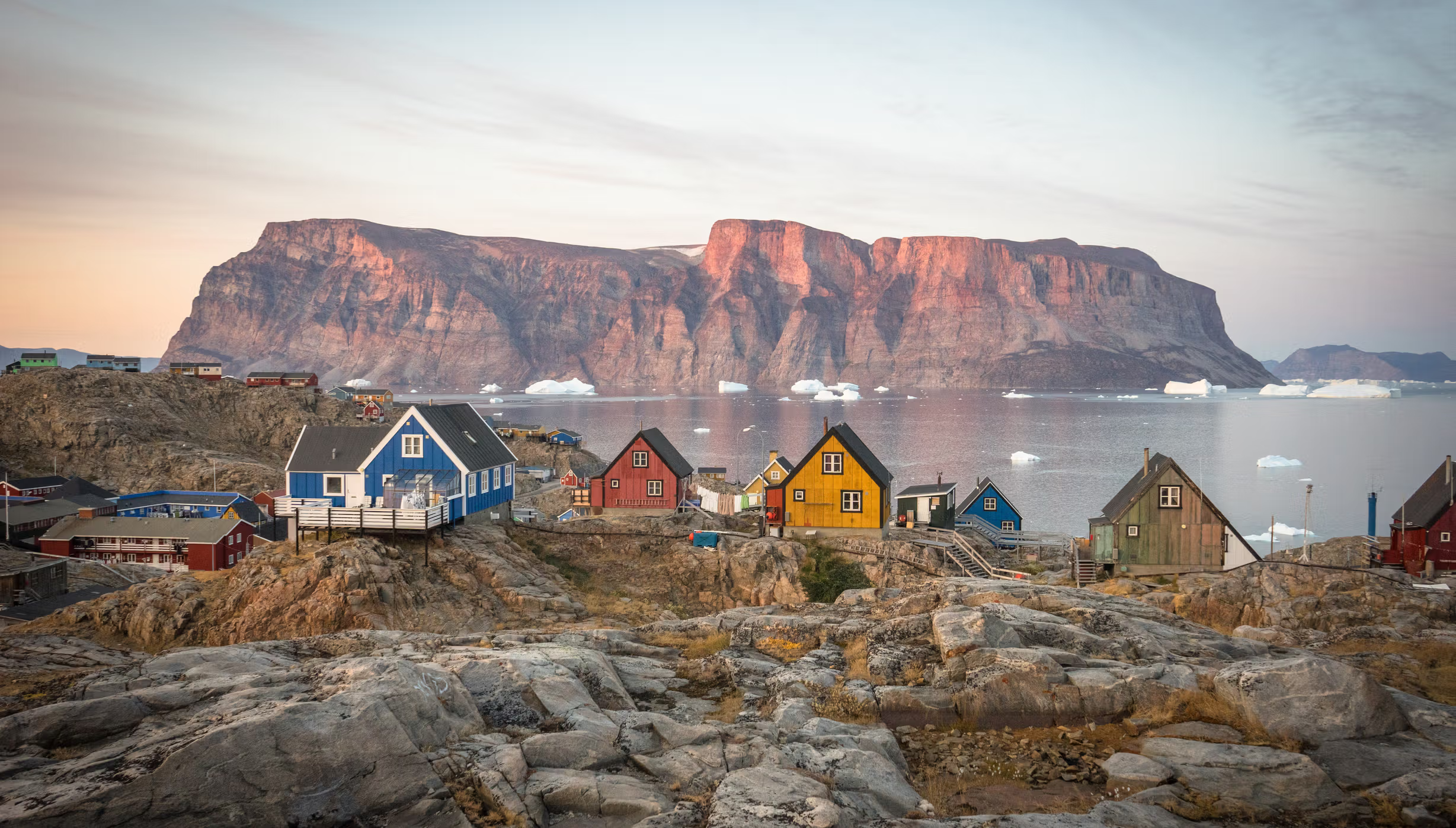
Itinerary
The main island of Singapore is shaped like a flattened diamond, 42 km (26 miles) east to west and 23 km (14 miles) north to south. Near the northern peak is the causeway leading to West Malaysia—Kuala Lumpur is less than four hours away by car. It is at the southern foot where you will find most of the city-state’s action, with its gleaming office towers, working docks, and futuristic “supertrees,” which are solar-powered and serve as vertical gardens. Offshore are Sentosa and over 60 smaller islands, most uninhabited, that serve as bases for oil refining or as playgrounds and beach escapes from the city. To the east is Changi International Airport, connected to the city by metro, bus, and a tree-lined parkway. Of the island’s total land area, more than half is built up, with the balance made up of parkland, farmland, plantations, swamp areas, and rain forest. Well-paved roads connect all parts of the island, and Singapore city has an excellent, and constantly expanding, public transportation system. The heart of Singapore’s history and its modern wealth are in and around the Central Business District. The area includes the skyscrapers in the Central Business District, the 19th-century Raffles Hotel, the convention centers of Marina Square, on up to the top of Ft. Canning. Although most of old Singapore has been knocked down to make way for the modern city, most colonial landmarks have been preserved in the CBD, including early-19th-century buildings designed by the Irish architect George Coleman.
Day itinerary:
Advanced, airy and elevated, Singapore is a spectacular, futuristic vision of utopian city life. A healthy population of almost six million call it home, but this is a city designed with space to breathe, and gorgeous outdoor parks, massive indoor greenhouses and beautiful recreational spaces spread between the City of Gardens’ skyscrapers and soaring structures. Once a quiet fishing village, now a glistening island city-state and an international beacon of science, education and technology. Singapore is almost intimidatingly clean – and the hyper-efficient public transport system whips residents and visitors across the city’s neighbourhoods in a heartbeat. Glorious fountains and audacious skyscrapers loom up – nodding to traditional feng shui beliefs – and putting on dazzling illuminated displays after dark. The lush green botanical gardens are a spectacular UNESCO World Heritage Site, covering 52 hectares and decorated with impressive colourful orchids. Or breathe in more of the freshest air by heading up to wander the canopy strung bridges of MacRitchie Reservoir Park. Head for the iconic Marina Bay – a landmark of the city crowned by three interconnected towers, which watch out over island sprinkled waters. Jaunt between Little India and the atmospheric Chinatown in minutes, where beautiful temples – like the Chinese Thian Hock Keng Temple and Hindu Sri Mariamman Temple add rich cultural intrigue. Singapore’s cuisine is a mouthwatering fusion of its Indian, Chinese, Indonesian, and Malay influences, taking and enhancing the best of each. Enjoy dishes in towering restaurants, or toast the glowing skyline with the city’s eponymous gin-soaked cocktail – a Singapore Sling.
There are two Bangkoks, the ancient soul of Thailand with its long and fascinating history and the frantic, modern metropolis that embraces the latest trends both Eastern and Western. The two blend together remarkably well—even the most jarring juxtapositions of old and new somehow make sense. Bangkok is not only the biggest city in Thailand, but also the most mesmerizing, with some of the country’s most beautiful temples and shrines. The city’s energy is palpable, especially at night, when traffic opens up a bit, its famous markets get going, and everything seems lit up—from its proudest monuments to its seediest streets. When Ayutthaya was besieged and pillaged by the Burmese in 1766, Thonburi became Thailand’s capital. The Thais call Bangkok Krung Thep (City of Angels), and in 1782 King Rama I moved his capital here, just across the Chao Praya River. Laem Chabang is approximately 130 km (81 mi) from Bangkok.
Day itinerary:
A voyage of flavour and an all-out sensory assault Bangkok is one of the world’s most fascinating cities and a place to plunge right in at the deep end. Immense tradition and relentless modernity combines and it’s these contrasts and collisions that make Bangkok the remarkable all-encompassing experience it is. Ornate towers and places of worship blend in alongside cathedral-like shopping malls and skyscrapers while the streets hum with bartering from the markets that spill out wherever you walk. Part of Bangkok’s allure is that Iife is well and truly played out on its streets. Stalls of flowers spices and silk fabrics fill bustling alleyways with colour and exotic fragrances. You can find fine dining hidden away here – including Michellin-starred restaurants – but the real Bangkok is the feast of flavours on street level – where authentic Pad Thai is cooked up alongside spicy papaya salad. To truly know Bangkok you must sail the waters of the Chao Phraya river which provides a cooling thoroughfare through the city. You’ll sail through Bangkok’s soul with glorious temples leaning up against the river’s banks filled with intricately decorated Buddha statues. One of the country’s most sacred sites – the Temple of the Emerald Buddha – rises in a river bend while the beautiful Grand Palace and the skyscraper-like tower of the colourful Wat Arun temple also watch out over the water.
There are two Bangkoks, the ancient soul of Thailand with its long and fascinating history and the frantic, modern metropolis that embraces the latest trends both Eastern and Western. The two blend together remarkably well—even the most jarring juxtapositions of old and new somehow make sense. Bangkok is not only the biggest city in Thailand, but also the most mesmerizing, with some of the country’s most beautiful temples and shrines. The city’s energy is palpable, especially at night, when traffic opens up a bit, its famous markets get going, and everything seems lit up—from its proudest monuments to its seediest streets. When Ayutthaya was besieged and pillaged by the Burmese in 1766, Thonburi became Thailand’s capital. The Thais call Bangkok Krung Thep (City of Angels), and in 1782 King Rama I moved his capital here, just across the Chao Praya River. Laem Chabang is approximately 130 km (81 mi) from Bangkok.
Day itinerary:
A voyage of flavour and an all-out sensory assault Bangkok is one of the world’s most fascinating cities and a place to plunge right in at the deep end. Immense tradition and relentless modernity combines and it’s these contrasts and collisions that make Bangkok the remarkable all-encompassing experience it is. Ornate towers and places of worship blend in alongside cathedral-like shopping malls and skyscrapers while the streets hum with bartering from the markets that spill out wherever you walk. Part of Bangkok’s allure is that Iife is well and truly played out on its streets. Stalls of flowers spices and silk fabrics fill bustling alleyways with colour and exotic fragrances. You can find fine dining hidden away here – including Michellin-starred restaurants – but the real Bangkok is the feast of flavours on street level – where authentic Pad Thai is cooked up alongside spicy papaya salad. To truly know Bangkok you must sail the waters of the Chao Phraya river which provides a cooling thoroughfare through the city. You’ll sail through Bangkok’s soul with glorious temples leaning up against the river’s banks filled with intricately decorated Buddha statues. One of the country’s most sacred sites – the Temple of the Emerald Buddha – rises in a river bend while the beautiful Grand Palace and the skyscraper-like tower of the colourful Wat Arun temple also watch out over the water.
Romantically referred to by the French as the Pearl of the Orient, Ho Chi Minh City today is a super-charged city of sensory overload. Motorbikes zoom day and night along the wide boulevards, through the narrow back alleys and past vendors pushing handcarts hawking goods of all descriptions. Still called Saigon by most residents, this is Vietnam’s largest city and the engine driving the country’s current economic resurgence, but despite its frenetic pace, it’s a friendlier place than Hanoi and locals will tell you the food—simple, tasty, and incorporating many fresh herbs—is infinitely better than in the capital.This is a city full of surprises. The madness of the city’s traffic—witness the oddball things that are transported on the back of motorcycles—is countered by tranquil pagodas, peaceful parks, quirky coffee shops, and whole neighborhoods hidden down tiny alleyways, although some of these quiet spots can be difficult to track down. Life in Ho Chi Minh City is lived in public: on the back of motorcycles, on the sidewalks, and in the parks. Even when its residents are at home, they’re still on display. With many living rooms opening onto the street, grandmothers napping, babies being rocked, and food being prepared, are all in full view of passersby.Icons of the past endure in the midst of the city’s headlong rush into capitalism. The Hotel Continental, immortalized in Graham Greene’s The Quiet American, continues to stand on the corner of old Indochina’s most famous thoroughfare, the rue Catinat, known to American G.I.s during the Vietnam War as Tu Do (Freedom) Street and renamed Dong Khoi (Uprising) Street by the Communists. The city still has its ornate opera house and its old French city hall, the Hôtel de Ville. The broad colonial boulevards leading to the Saigon River and the gracious stucco villas are other remnants of the French colonial presence. Grisly reminders of the more recent past can be seen at the city’s war-related museums. Residents, however, prefer to look forward rather than back and are often perplexed by tourists’ fascination with a war that ended 40 years ago.The Chinese influence on the country is still very much in evidence in the Cholon district, the city’s Chinatown, but the modern office towers and international hotels that mark the skyline symbolize Vietnam’s fixation on the future.
Day itinerary:
A chaotic enchanting swirl of sensory stimulation – Ho Chi Minh City is a place of incense-infused temples colonial architecture warm people and delicious street food. Formerly known as Saigon the city was affectionately-labelled the Pearl of the Orient by the French. Afternoons here drift by lazily on the gentle chaos of the River Saigon as taxi boats and motor canoes flit up and down and parks fill out with locals playing jianzi kicking shuttlecocks back and forth. Just across the road you’ll also find the celebrated Ho Chi Minh Post office which was erroneously credited as a Gustav Eifel creation. In reality the architect was another Frenchman Alfred Foulhoux. Taste the street food to get under Ho Chi Minh City’s skin with humble restaurants serving up rich flavours – from the Vietnamese take on the baguette a banh mi sandwich – to the local staple of pho a delicious noodle soup. The Tortoise pagoda is a tranquil escape and a serene place of worship for Vietnamese who practice Buddhism and Taoism while the Vietnamese medical museum has a fascinating collection of remedies and potions – some dating back to Stone Age. Journey out to learn more of the Vietnam War at the Remnants Museum and Cu Chi tunnels. Offering a vivid glimpse of conditions and the ingenuity and resilience of the soldiers you’ll learn of the guerrilla war campaign raged from within this claustrophobic 70-mile network of war tunnels.
Romantically referred to by the French as the Pearl of the Orient, Ho Chi Minh City today is a super-charged city of sensory overload. Motorbikes zoom day and night along the wide boulevards, through the narrow back alleys and past vendors pushing handcarts hawking goods of all descriptions. Still called Saigon by most residents, this is Vietnam’s largest city and the engine driving the country’s current economic resurgence, but despite its frenetic pace, it’s a friendlier place than Hanoi and locals will tell you the food—simple, tasty, and incorporating many fresh herbs—is infinitely better than in the capital.This is a city full of surprises. The madness of the city’s traffic—witness the oddball things that are transported on the back of motorcycles—is countered by tranquil pagodas, peaceful parks, quirky coffee shops, and whole neighborhoods hidden down tiny alleyways, although some of these quiet spots can be difficult to track down. Life in Ho Chi Minh City is lived in public: on the back of motorcycles, on the sidewalks, and in the parks. Even when its residents are at home, they’re still on display. With many living rooms opening onto the street, grandmothers napping, babies being rocked, and food being prepared, are all in full view of passersby.Icons of the past endure in the midst of the city’s headlong rush into capitalism. The Hotel Continental, immortalized in Graham Greene’s The Quiet American, continues to stand on the corner of old Indochina’s most famous thoroughfare, the rue Catinat, known to American G.I.s during the Vietnam War as Tu Do (Freedom) Street and renamed Dong Khoi (Uprising) Street by the Communists. The city still has its ornate opera house and its old French city hall, the Hôtel de Ville. The broad colonial boulevards leading to the Saigon River and the gracious stucco villas are other remnants of the French colonial presence. Grisly reminders of the more recent past can be seen at the city’s war-related museums. Residents, however, prefer to look forward rather than back and are often perplexed by tourists’ fascination with a war that ended 40 years ago.The Chinese influence on the country is still very much in evidence in the Cholon district, the city’s Chinatown, but the modern office towers and international hotels that mark the skyline symbolize Vietnam’s fixation on the future.
Day itinerary:
A chaotic enchanting swirl of sensory stimulation – Ho Chi Minh City is a place of incense-infused temples colonial architecture warm people and delicious street food. Formerly known as Saigon the city was affectionately-labelled the Pearl of the Orient by the French. Afternoons here drift by lazily on the gentle chaos of the River Saigon as taxi boats and motor canoes flit up and down and parks fill out with locals playing jianzi kicking shuttlecocks back and forth. Just across the road you’ll also find the celebrated Ho Chi Minh Post office which was erroneously credited as a Gustav Eifel creation. In reality the architect was another Frenchman Alfred Foulhoux. Taste the street food to get under Ho Chi Minh City’s skin with humble restaurants serving up rich flavours – from the Vietnamese take on the baguette a banh mi sandwich – to the local staple of pho a delicious noodle soup. The Tortoise pagoda is a tranquil escape and a serene place of worship for Vietnamese who practice Buddhism and Taoism while the Vietnamese medical museum has a fascinating collection of remedies and potions – some dating back to Stone Age. Journey out to learn more of the Vietnam War at the Remnants Museum and Cu Chi tunnels. Offering a vivid glimpse of conditions and the ingenuity and resilience of the soldiers you’ll learn of the guerrilla war campaign raged from within this claustrophobic 70-mile network of war tunnels.
Romantically referred to by the French as the Pearl of the Orient, Ho Chi Minh City today is a super-charged city of sensory overload. Motorbikes zoom day and night along the wide boulevards, through the narrow back alleys and past vendors pushing handcarts hawking goods of all descriptions. Still called Saigon by most residents, this is Vietnam’s largest city and the engine driving the country’s current economic resurgence, but despite its frenetic pace, it’s a friendlier place than Hanoi and locals will tell you the food—simple, tasty, and incorporating many fresh herbs—is infinitely better than in the capital.This is a city full of surprises. The madness of the city’s traffic—witness the oddball things that are transported on the back of motorcycles—is countered by tranquil pagodas, peaceful parks, quirky coffee shops, and whole neighborhoods hidden down tiny alleyways, although some of these quiet spots can be difficult to track down. Life in Ho Chi Minh City is lived in public: on the back of motorcycles, on the sidewalks, and in the parks. Even when its residents are at home, they’re still on display. With many living rooms opening onto the street, grandmothers napping, babies being rocked, and food being prepared, are all in full view of passersby.Icons of the past endure in the midst of the city’s headlong rush into capitalism. The Hotel Continental, immortalized in Graham Greene’s The Quiet American, continues to stand on the corner of old Indochina’s most famous thoroughfare, the rue Catinat, known to American G.I.s during the Vietnam War as Tu Do (Freedom) Street and renamed Dong Khoi (Uprising) Street by the Communists. The city still has its ornate opera house and its old French city hall, the Hôtel de Ville. The broad colonial boulevards leading to the Saigon River and the gracious stucco villas are other remnants of the French colonial presence. Grisly reminders of the more recent past can be seen at the city’s war-related museums. Residents, however, prefer to look forward rather than back and are often perplexed by tourists’ fascination with a war that ended 40 years ago.The Chinese influence on the country is still very much in evidence in the Cholon district, the city’s Chinatown, but the modern office towers and international hotels that mark the skyline symbolize Vietnam’s fixation on the future.
Day itinerary:
A chaotic enchanting swirl of sensory stimulation – Ho Chi Minh City is a place of incense-infused temples colonial architecture warm people and delicious street food. Formerly known as Saigon the city was affectionately-labelled the Pearl of the Orient by the French. Afternoons here drift by lazily on the gentle chaos of the River Saigon as taxi boats and motor canoes flit up and down and parks fill out with locals playing jianzi kicking shuttlecocks back and forth. Just across the road you’ll also find the celebrated Ho Chi Minh Post office which was erroneously credited as a Gustav Eifel creation. In reality the architect was another Frenchman Alfred Foulhoux. Taste the street food to get under Ho Chi Minh City’s skin with humble restaurants serving up rich flavours – from the Vietnamese take on the baguette a banh mi sandwich – to the local staple of pho a delicious noodle soup. The Tortoise pagoda is a tranquil escape and a serene place of worship for Vietnamese who practice Buddhism and Taoism while the Vietnamese medical museum has a fascinating collection of remedies and potions – some dating back to Stone Age. Journey out to learn more of the Vietnam War at the Remnants Museum and Cu Chi tunnels. Offering a vivid glimpse of conditions and the ingenuity and resilience of the soldiers you’ll learn of the guerrilla war campaign raged from within this claustrophobic 70-mile network of war tunnels.
Hue (pronounced hway), bisected by the Perfume River and 13 km (8 mi) inland from the South China Sea, in the foothills of the Annamite Mountains (Truong Son Mountains), stands as a reminder of Vietnam’s imperial past. The seat of 13 Nguyen-dynasty emperors between 1802 and 1945, Hue was once Vietnam’s splendid Imperial City. Although it was devastated by the French in the 19th century and again by fighting between the Vietnamese Communists and the Americans in the 20th, the monument-speckled former capital has a war-ravaged beauty. One can still imagine its former splendor, despite gaping holes in its silhouette. Hue is a UNESCO World Heritage Site, and the city’s gems are slowly being restored.
Day itinerary:
Experience the rich imperial past, stoic resilience, and blissful beaches of central Vietnam, as you delve deep into this fascinating country’s past and present. The sheer beauty and vitality of the scenery will amaze you, as you explore the stories this now tranquil land has to tell – all the while surrounded by rolling rice paddies, freely grazing water buffalo and soaring limestone scenery. Cut in half by the evocatively named Perfume River, and home to a spectacular sprawling citadel, Hue is a true experience for the senses. Vietnam’s timeless beauty outshines the shadows of its past, but Hue still bears the heavy scars of war – whether it’s from American bombs, or harrowing events like those of Hue Jungle Crevice – where the Viet Cong pushed 3,000 civilians to their deaths. Hue’s Old City was once the jewel of Vietnam, standing proudly as its Imperial Capital. Lotus flowers now twirl peacefully in the grand moat around its mighty walls, which encase a spectacular array of charred palaces, temples and regal residences. Danang’s Marble Mountains rise dramatically close by, and they are scattered with Buddhist shrines and plunging caves. While there is an endless treasure trove of rich cultural experiences waiting here, it’s hard to resist the call of Danang’s idyllic beaches, where white sand gives way to a fringe of palm trees. The undulating humps of the city’s Dragon Bridge soar across the wide River Han, and this ambitious structure comes alive at night, when strobing light shows illuminate its flowing form, and the bridge’s dragon head rasps fire into the dusk.
A visit to the north is not complete without a trip to Halong Bay, where placid waters give way to more than 3,000 limestone karsts and wind-sculpted limestone formations that jut from foggy lagoons. Dotting the bay are tiny islands bordered by white sandy coves and hidden caves, adding to the majestic landscape of this UNESCO World Heritage Site. Adding to this naturalist’s dream is the biodiversity of islets, grottos, and Cat Ba Island National Park. The bay, however, shows tourism’s impact: the clearing of mangrove forests to make way for jetties and piers, marine life threatened by game fishing, and garbage from passenger boats and fishing villages washed up on the shores.Beyond its geological uniqueness are activities like hiking, kayaking, rock climbing, or exploring one of the many floating villages where fishermen bring in their daily catch. The downside to all this allure is the large number of unlicensed boats it draws to the bay each day.Boat trips out onto the bay are the main tourism stock in trade farther north, but a more multifaceted side of the area can be experienced at Cat Ba Island. The largest island in Halong Bay, Cat Ba is very much its own entity. Its national park offers incredible biodiversity, with more than a thousand species of plants having been recorded here. Animal life is slightly thinner on the ground, but alert visitors may spy inhabitants such as the endangered golden-headed langur, wild boar, deer, civets, and several species of squirrel. Trekking through the wilderness is a highlight with a number of fascinating trails to follow.Cat Ba Island has also become a firm favorite with the adventure sports set. Indeed, along with Railay Beach in Thailand, it is recognized as one of the top spots in the region for rock climbing. Other outdoor pursuits include sailing and kayaking around the karsts. Although Halong Bay has arguably been tainted by over-exposure, Bai Tu Long Bay farther east toward China, retains all the majesty of Vietnam’s premier bucket-list natural attraction but sees a fraction of the traffic of its immediate neighbor to the west. Here, visitors will find islands of substantial size with deserted beaches and untamed jungle. Halong Bay’s 3,000 islands of dolomite and limestone cover a 1,500-square-km (580-square-mile) area, extending across the Gulf of Tonkin nearly to the Chinese border. According to legend, this breathtaking land- and seascape was formed by a giant dragon that came barreling out of the mountains toward the ocean—hence the name (Halong translates into “descent of the dragon”). Geologists are more likely to attribute the formations to sedimentary limestone that formed here between 300 and 500 million years ago, in the Paleozoic Era. Over millions of years water receded and exposed the limestone to wind, rain, and tidal erosion.Today the limestone formations are exposed to hordes of tourists—but don’t let that discourage you. Hundreds of fishing trawlers and tour boats share space on these crystal waters, yet there seems to be room for everyone. Most people use the main population center, Halong City, as a base from which to venture into the bay. Although it’s now officially one municipality, Halong City was, until 1996, two separate towns: Bai Chay is now Halong City West, where Halong Road winds its way around the coast and past the lifeless central beach; Hon Gai is the grimier Halong City East, where a coal transportation depot dominates the center of town and covers nearby roads and buildings with a sooty film. Locals still refer to the towns by their old names, but they are now inexorably lassoed together by a bridge. Boat trips through Halong Bay are the main attraction. Little of the majesty of this region can be found in the city, so head out onto the water and start exploring. Countless 10- and 30-foot fishing boats have been converted into Halong Bay’s formidable tourist-boat fleet. Hotels or travel agencies in Halong City or Hanoi can arrange boat trips for you (often they are part of organized tours from Hanoi). It is still possible to go down to the wharf and bargain yourself onto a boat for the day, but you are likely to be charged (sometimes significantly) more than you would pay for a prebooked tour, so this is not advised. Self-sufficient travelers have fallen victim to the old bait-and-switch: they’ve arranged a next-day boat tour with local fishermen, only to be told in no uncertain terms the following morning that they could not board their chosen boat, but they could take a different one for quite a bit more money. You may have no choice in the end. Usually travel agencies, however, have their tried-and-true favorites.
Day itinerary:
A visit to the north is not complete without a trip to Halong Bay, where placid waters give way to more than 3,000 limestone karsts and wind-sculpted limestone formations that jut from foggy lagoons. Dotting the bay are tiny islands bordered by white sandy coves and hidden caves, adding to the majestic landscape of this UNESCO World Heritage Site. Adding to this naturalist’s dream is the biodiversity of islets, grottos, and Cat Ba Island National Park. The bay, however, shows tourism’s impact: the clearing of mangrove forests to make way for jetties and piers, marine life threatened by game fishing, and garbage from passenger boats and fishing villages washed up on the shores.Beyond its geological uniqueness are activities like hiking, kayaking, rock climbing, or exploring one of the many floating villages where fishermen bring in their daily catch. The downside to all this allure is the large number of unlicensed boats it draws to the bay each day.Boat trips out onto the bay are the main tourism stock in trade farther north, but a more multifaceted side of the area can be experienced at Cat Ba Island. The largest island in Halong Bay, Cat Ba is very much its own entity. Its national park offers incredible biodiversity, with more than a thousand species of plants having been recorded here. Animal life is slightly thinner on the ground, but alert visitors may spy inhabitants such as the endangered golden-headed langur, wild boar, deer, civets, and several species of squirrel. Trekking through the wilderness is a highlight with a number of fascinating trails to follow.Cat Ba Island has also become a firm favorite with the adventure sports set. Indeed, along with Railay Beach in Thailand, it is recognized as one of the top spots in the region for rock climbing. Other outdoor pursuits include sailing and kayaking around the karsts. Although Halong Bay has arguably been tainted by over-exposure, Bai Tu Long Bay farther east toward China, retains all the majesty of Vietnam’s premier bucket-list natural attraction but sees a fraction of the traffic of its immediate neighbor to the west. Here, visitors will find islands of substantial size with deserted beaches and untamed jungle. Halong Bay’s 3,000 islands of dolomite and limestone cover a 1,500-square-km (580-square-mile) area, extending across the Gulf of Tonkin nearly to the Chinese border. According to legend, this breathtaking land- and seascape was formed by a giant dragon that came barreling out of the mountains toward the ocean—hence the name (Halong translates into “descent of the dragon”). Geologists are more likely to attribute the formations to sedimentary limestone that formed here between 300 and 500 million years ago, in the Paleozoic Era. Over millions of years water receded and exposed the limestone to wind, rain, and tidal erosion.Today the limestone formations are exposed to hordes of tourists—but don’t let that discourage you. Hundreds of fishing trawlers and tour boats share space on these crystal waters, yet there seems to be room for everyone. Most people use the main population center, Halong City, as a base from which to venture into the bay. Although it’s now officially one municipality, Halong City was, until 1996, two separate towns: Bai Chay is now Halong City West, where Halong Road winds its way around the coast and past the lifeless central beach; Hon Gai is the grimier Halong City East, where a coal transportation depot dominates the center of town and covers nearby roads and buildings with a sooty film. Locals still refer to the towns by their old names, but they are now inexorably lassoed together by a bridge. Boat trips through Halong Bay are the main attraction. Little of the majesty of this region can be found in the city, so head out onto the water and start exploring. Countless 10- and 30-foot fishing boats have been converted into Halong Bay’s formidable tourist-boat fleet. Hotels or travel agencies in Halong City or Hanoi can arrange boat trips for you (often they are part of organized tours from Hanoi). It is still possible to go down to the wharf and bargain yourself onto a boat for the day, but you are likely to be charged (sometimes significantly) more than you would pay for a prebooked tour, so this is not advised. Self-sufficient travelers have fallen victim to the old bait-and-switch: they’ve arranged a next-day boat tour with local fishermen, only to be told in no uncertain terms the following morning that they could not board their chosen boat, but they could take a different one for quite a bit more money. You may have no choice in the end. Usually travel agencies, however, have their tried-and-true favorites.
The Hong Kong Island skyline, with its ever-growing number of skyscrapers, speaks to ambition and money. Paris, London, even New York were centuries in the making, while Hong Kong’s towers, bright lights, and glitzy shopping emporia weren’t yet part of the urban scene when many of the young investment bankers who fuel one of the world’s leading financial centers were born. Commerce is concentrated in the glittering high-rises of Central, tucked between Victoria Harbor and forested peaks on Hong Kong Island’s north shore. While it’s easy to think all the bright lights are the sum of today’s Hong Kong, you need only walk or board a tram for the short jaunt west into Western to discover a side of Hong Kong that is more traditionally Chinese but no less high-energy. You’ll discover the real Hong Kong to the east of Central, too, in Wan Chai, Causeway Bay, and beyond. Amid the residential towers are restaurants, shopping malls, bars, convention centers, a nice smattering of museums, and—depending on fate and the horse you wager on—one of Hong Kong’s luckiest or unluckiest spots, the Happy Valley Racecourse. Kowloon sprawls across a generous swath of the Chinese mainland across Victoria Harbour from Central. Tsim Sha Tsui, at the tip of Kowloon peninsula, is packed with glitzy shops, first-rate museums, and eye-popping views of the skyline across the water. Just to the north are the teeming market streets of Mong Kok and in the dense residential neighborhoods beyond, two of Hong Kong’s most enchanting spiritual sights, Wong Tai Sin Temple and Chi Lin Nunnery. As you navigate this huge metropolis (easy to do on the excellent transportation network), keep in mind that streets are usually numbered odd on one side, even on the other. There’s no baseline for street numbers and no block-based numbering system, but street signs indicate building numbers for any given block.
Day itinerary:
A spectacular, serrated skyline of soaring towers and neon lights, Hong Kong is a vibrant, immersive metropolis and cultural hub. Dramatic harbour-front light shows transform the waterfront’s gleaming buildings into a colourful canvas – best seen from the Star Ferry, when the Symphony of Lights blares into life each evening. A city where future and tradition collides – perhaps best illustrated by the skyscrapers that feature gaping holes, designed to allow spirit dragons to soar from the hills to the waterfront unimpeded. Wander flowing shopping streets, wade through sprawling markets and soak up the neon glory of this one-of-a-kind city – which continues to reach for the sky. Hong Kong’s dense jumble of activity is one of its main appeals, but once you’ve felt the thrill of rising to towering observation decks, to see the soaring city from above, it’s surprisingly easy to find peace among Hong Kong’s intense urban wonders. Victoria Peak is the highest point and it offers staggering views down over the city and harbour. The Peak Tram funicular can ferry you to the top, to the vantage point which was historically adored by the rich for the cooler air found here, away from the busy bustle of the city streets. Many elaborate temples add a tranquil element to Hong Kong’s whirr, and Tin Hau temple has a surprisingly urban location, considering its dedication to the Goddess of the Sea. It did once occupy the shorefront, but the city’s growth saw land reclaimed from the sea around it, leaving the temple marooned inland. Having been leased to the British for 99 years, milky tea is a revered tradition here – enjoy your cup with a serving of local dim sum.While it’s easy to think all the bright lights are the sum of today’s Hong Kong, you need only walk or board a tram for the short jaunt west into Western to discover a side of Hong Kong that is more traditionally Chinese but no less high-energy. You’ll discover the real Hong Kong to the east of Central, too, in Wan Chai, Causeway Bay, and beyond. Amid the residential towers are restaurants, shopping malls, bars, convention centers, a nice smattering of museums, and—depending on fate and the horse you wager on—one of Hong Kong’s luckiest or unluckiest spots, the Happy Valley Racecourse. Kowloon sprawls across a generous swath of the Chinese mainland across Victoria Harbour from Central. Tsim Sha Tsui, at the tip of Kowloon peninsula, is packed with glitzy shops, first-rate museums, and eye-popping views of the skyline across the water. Just to the north are the teeming market streets of Mong Kok and in the dense residential neighborhoods beyond, two of Hong Kong’s most enchanting spiritual sights, Wong Tai Sin Temple and Chi Lin Nunnery. As you navigate this huge metropolis (easy to do on the excellent transportation network), keep in mind that streets are usually numbered odd on one side, even on the other. There’s no baseline for street numbers and no block-based numbering system, but street signs indicate building numbers for any given block.
Ship features

Owner's Suite
The name says it all. A stylish apartment. Prestigious and classic, as is the Silver Whisper itself. For those who seek the superlative level of space, comfort and service on board.
Picture yourself enjoying a delicious breakfast on your private veranda. Imagine watching the sun set, a flute of chilled champagne in hand, setting sail for your next destination. Prestigious, classic, and sophisticated, this stylish apartment suite offers the ultimate in fine accommodation on board. Set aside for those who seek a superlative level of space, comfort, and service, the Owner’s Suite has it all. The adjoining bedroom, with its en suite bathroom, offers its own spectacular ocean views.
One bedroom: 88–98 sq m including veranda (12 sq m)
Two bedrooms: 119–129 sq m including veranda* (12 sq m)
*The difference in size is largely due to a larger entry corridor and does not affect the living or sleeping area.
Images are intended as a general reference. Features, materials, finishes and layout may be different than shown.
Please note that the third guest will sleep on a comfortable sofa bed in the reception area of the suite.
Essentials
- Deck(s): 9
- Section: Mid-Ship
Characteristics
- Veranda
- Separate dining area
- Living room with sitting area
- Double vanity
- Separate shower
- Whirlpool bath
- Walk-in wardrobe with personal safe
Furniture
- King size bed
- Writing desk
- Vanity table
- Luxury bed mattresses
Media & Communication
- Unlimited Premium Wi-Fi
- 2 large flat screen TVs with Interactive Media Library
- Sound system with bluetooth connectivity
- Direct dial telephone
- Wall mounted USB-C mobile device chargers
- Dual voltage 110/220 outlets
Onboard Services
- Butler service
- Complimentary laundry, pressing & wet cleaning
- Dinner for two in La Dame, one evening per voyage,
- Two hours of worldwide phone use, per voyage segment
- Champagne on arrival
Amenities
- Espresso machine
- Pillow menu
- Refrigerator and bar setup stocked with your preferences
- Plush bathrobe
- Luxury bath amenities
- Umbrella
- Hair Dryer
- Slippers

Grand Suite
Expertly designed and exquisitely appointed. The ideal space both for entertaining friends and enjoying quiet time alone.
Indulge in the epitome of ultra-luxury cruising. The Grand Suite is for those who want to experience sailing in style. The sophistication of the Silversea philosophy coupled with ample interior and exterior space makes this the perfect choice for serious travelers. With the biggest verandas on board, enjoy entertaining new friends or simply share intimate meals while contemplating spectacular sunsets. Savor the sense of well-being offered by the luxurious furnishings and modern amenities. Offering an unprecedented level of relaxation, the Grand Suite is the perfect romantic getaway.
One bedroom: 137–146 sq m including veranda (44–53 sq m)
Two bedrooms: 174–183 sq m including veranda (50–59 sq m)
Images are intended as a general reference. Features, materials, finishes and layout may be different than shown.
Please note that the 3rd guest will sleep on a comfortable sofa bed in the reception area of the suite.
Essentials
- Deck(s): 8, 9
- Section: Forward
Characteristics
- Veranda
- Separate dining area
- Living room with sitting area
- Double vanity
- Separate shower
- Whirlpool bath
- Walk-in wardrobe with personal safe
Furniture
- King size bed
- Writing desk
- Vanity table
- Luxury bed mattresses
Media & Communication
- Unlimited Premium Wi-Fi
- 2 large flat screen TVs with Interactive Media Library
- Sound system with bluetooth connectivity
- Direct dial telephone
- Wall mounted USB-C mobile device chargers
- Dual voltage 110/220 outlets
Onboard Services
- Butler service
- Complimentary laundry, pressing & wet cleaning
- Dinner for two in La Dame, one evening per voyage,
- Two hours of worldwide phone use, per voyage segment
- Champagne on arrival
Amenities
- Espresso machine
- Pillow menu
- Refrigerator and bar setup stocked with your preferences
- Plush bathrobe
- Luxury bath amenities
- Umbrella
- Hair Dryer
- Slippers

Royal Suite
Stately. Commanding and majestic. Perfect for entertaining. Enough living space to roam.The pinnacle of good living.
Designed with the values of the culture of living in mind, the Royal Suite offers a vast, elegant space. Precise lines, authentic Italian craftsmanship, and fine materials make up just some of the details of this stunning suite. Commanding and majestic, the Royal Suite boasts a lavish living area perfect for entertaining, plush interior furnishings, and sweeping seascapes from the private terrace. The comfort of the spacious apartment makes this the ideal space for those wanting to feel the true comfort and luxury of the Silversea philosophy.
One bedroom: 105 sq m including veranda (12 sq m)
Two bedroom: 142 sq m including veranda (18 sq m)
Images are intended as a general reference. Features, materials, finishes and layout may be different than shown. Front bedroom windows partially obstructed by deck equipment.
Please note that the third guest will sleep on a comfortable sofa bed in the reception area of the suite.
Essentials
- Deck(s): 7
- Section: Forward
Characteristics
- Veranda
- Separate dining area
- Living room with sitting area
- Double vanity
- Separate shower
- Whirlpool bath
- Walk-in wardrobe with personal safe
Furniture
- King size bed
- Writing desk
- Vanity table
- Luxury bed mattresses
Media & Communication
- Unlimited Premium Wi-Fi
- 2 large flat screen TVs with Interactive Media Library
- Sound system with bluetooth connectivity
- Direct dial telephone
- Wall mounted USB-C mobile device chargers
- Dual voltage 110/220 outlets
Onboard Services
- Butler service
- Complimentary laundry, pressing & wet cleaning
- Dinner for two in La Dame, one evening per voyage,
- Two hours of worldwide phone use, per voyage segment
- Champagne on arrival
Amenities
- Espresso machine
- Pillow menu
- Refrigerator and bar setup stocked with your preferences
- Plush bathrobe
- Luxury bath amenities
- Umbrella
- Hair Dryer
- Slippers

Silver Suite
Stylish and sophisticated. Larger verandas. Perfection in design for comfortable living.
Step onto your terrace and bask in the calm feeling of the ocean breeze. Dissolve into the comfort of your king-size bed. Prepare for the evening in the beautiful marble bathroom. The upper deck location gives the most spectacular of ocean views while the spacious living area allows for comfortable relaxing, where cozy nights in become veritable experiences in themselves. The two-bedroom configuration of this suite makes this the ideal option for families.
One bedroom: 73 sq m including veranda (12 sq m)
Images are intended as a general reference. Features, materials, finishes and layout may be different than shown.
Please note that the 3rd guest will sleep on a comfortable sofa bed in the reception area of the suite.
Two bedrooms: 104 sq m including veranda (12 sq m)
Wheelchair accessible suite: 931
Essentials
- Deck(s): 9, 10, 11
- Section: Forward, Mid-Ship
Characteristics
- Veranda
- Living room with sitting area
- Double vanity
- Separate shower
- Whirlpool bath
- Walk-in wardrobe with personal safe
Furniture
- King size bed
- Writing desk
- Vanity table
- Luxury bed mattresses
Media & Communication
- Unlimited Premium Wi-Fi
- 2 large flat screen TVs with Interactive Media Library
- Sound system with bluetooth connectivity
- Direct dial telephone
- Wall mounted USB-C mobile device chargers
- Dual voltage 110/220 outlets
Onboard Services
- Butler service
- Complimentary laundry, pressing & wet cleaning
- Champagne on arrival
Amenities
- Espresso machine
- Pillow menu
- Refrigerator and bar setup stocked with your preferences
- Plush bathrobe
- Luxury bath amenities
- Umbrella
- Hair Dryer
- Slippers

Deluxe Veranda Suite
The Deluxe Veranda Suite offers a comfortable living space, close to the heart of the ship. With its preferred midship location and all the comfort and attention to detail that you can expect aboard, the Deluxe Veranda Suite is the savvy traveler’s paradise—both inside and out. Elegant decor, a stunning marble bathroom, and an ample seating area make this a cozy home away from home. But perhaps this suite’s finest asset lies just outside, as floor-to-ceiling glass doors open onto a private veranda, making every sunset feel as if it is yours alone.
One bedroom: 36 sq m including veranda (6 sq m)
Images are intended as a general reference. Features, materials, finishes and layout may be different than shown.
Please note that the 3rd guest will sleep on a comfortable sofa bed in the reception area of the suite.
Essentials
- Deck(s): 6, 7, 8
- Section: Mid-Ship
Characteristics
- Veranda
- Sitting area
- Standard vanity
- Separate shower
- Full-size bath
- Walk-in wardrobe with personal safe
Furniture
- Queen size bed
- Writing desk
- Luxury bed mattresses
Media & Communication
- Unlimited Standard Wi-Fi
- 1 large flat screen TV with Interactive Media Library
- Direct dial telephone
- Wall mounted USB-C mobile device chargers
- Dual voltage 110/220 outlets
Onboard Services
- Butler service
- Champagne on arrival
Amenities
- Pillow menu
- Refrigerator and bar setup stocked with your preferences
- Plush bathrobe
- Luxury bath amenities
- Umbrella
- Hair Dryer
- Slippers
Superior Veranda Suite
The Superior Veranda Suite is located on the upper deck, offering spectacular sunset views.
Located on the upper deck and offering spectacular sunset views, the Superior Veranda Suite has all the comforts and luxury that you can expect aboard. A comfortable living space, attention to detail, and a generous expanse of amenities make this stunning suite a cozy home while on the seas. But perhaps this suite’s finest asset lies just outside, as floor-to-ceiling glass doors open onto a private veranda, making every sunset feel as if it is yours alone.
One bedroom: 36 sq m including veranda (6 sq m)
Images are intended as a general reference. Features, materials, finishes and layout may be different than shown.
Please note that the third guest will sleep on a comfortable sofa bed in the reception area of the suite.
Essentials
- Deck(s): 7, 8, 9
- Section: Forward
Characteristics
- Veranda
- Sitting area
- Standard vanity
- Separate shower
- Full-size bath
- Walk-in wardrobe with personal safe
Furniture
- Queen size bed
- Writing desk
- Luxury bed mattresses
Media & Communication
- Unlimited Standard Wi-Fi
- 1 large flat screen TV with Interactive Media Library
- Direct dial telephone
- Wall mounted USB-C mobile device chargers
- Dual voltage 110/220 outlets
Onboard Services
- Butler service
- Champagne on arrival
Amenities
- Pillow menu
- Refrigerator and bar setup stocked with your preferences
- Plush bathrobe
- Luxury bath amenities
- Umbrella
- Hair Dryer
- Slippers
Classic Veranda Suite
The Classic Veranda Suite provides generous living space for voyagers. Located on the lower decks in the bow, the Classic Veranda Suite offers all the comfort and attention to detail that you can expect aboard—both inside and out. A generous expanse of interior comforts—elegant decor, a stunning marble bathroom, and an ample seating area make this a cozy home away from home. But perhaps this suite’s finest asset lies just outside, as floor-to-ceiling glass doors open onto a private veranda, making every sunset feel as if it is yours alone.
One bedroom: 36 sq m including veranda (6 sq m)
Images are intended as a general reference. Features, materials, finishes and layout may be different than shown.
Essentials
- Deck(s): 5, 6
- Section: Forward
Characteristics
- Veranda
- Sitting area
- Standard vanity
- Separate shower
- Full-size bath
- Walk-in wardrobe with personal safe
Furniture
- Queen size bed
- Writing desk
- Luxury bed mattresses
Media & Communication
- Unlimited Standard Wi-Fi
- 1 large flat screen TV with Interactive Media Library
- Direct dial telephone
- Wall mounted USB-C mobile device chargers
- Dual voltage 110/220 outlets
Onboard Services
- Butler service
- Champagne on arrival
Amenities
- Pillow menu
- Refrigerator and bar setup stocked with your preferences
- Plush bathrobe
- Luxury bath amenities
- Umbrella
- Hair Dryer
- Slippers

Panorama Suite
The Panorama offers all the comfort and attention to detail that you can expect aboard.
The Panorama Suite provides generous living space for voyagers. Located on deck 9, the Panorama offers all the comfort and attention to detail that you can expect aboard. A generous expanse of interior comforts — elegant décor, stunning marble bathroom and ample seating area, make this a cosy home away from home. The seating area of the Panorama Suite has plenty of room to relax, while large picture windows frame panoramic ocean views.
One bedroom: 31 sq.m.
Images are intended as a general reference. Features, materials, finishes and layout may be different than shown.
Essentials
- Deck(s): 9
- Section: Forward
Characteristics
- Floor-to ceiling window
- Sitting area
- Standard vanity
- Separate shower
- Full-size bath
- Walk-in wardrobe with personal safe
Furniture
- Queen size bed
- Writing desk
- Luxury bed mattresses
Media & Communication
- Unlimited Standard Wi-Fi
- 1 large flat screen TV with Interactive Media Library
- Direct dial telephone
- Wall mounted USB-C mobile device chargers
- Dual voltage 110/220 outlets
Onboard Services
- Butler service
- Champagne on arrival
Amenities
- Pillow menu
- Refrigerator and bar setup stocked with your preferences
- Plush bathrobe
- Luxury bath amenities
- Umbrella
- Hair Dryer
- Slippers

Vista Suite
A quiet sanctuary. Large picture windows frame panoramic ocean views. The perfect backdrop for breakfast in bed
The Vista Suite provides generous living space for all travelers. The Vista Suite offers all the comfort and attention to detail that you can expect aboard. A generous expanse of interior comforts—elegant decor, a stunning marble bathroom, and an ample seating area make this a cozy home away from home. The seating area of the Vista Suite has plenty of room to relax while large picture windows frame panoramic ocean views—the perfect backdrop for breakfast in bed! Three Wheelchair Accessible Suites (407, 409, 417)
One bedroom: 32 sq m
Wheelchair accessible suites: 407, 409, 417
Images are intended as a general reference. Features, materials, finishes and layout may be different than shown.
Essentials
- Deck(s): 4
- Section: Forward
Characteristics
- Window
- Sitting area
- Standard vanity
- Separate shower
- Full-size bath
- Walk-in wardrobe with personal safe
Furniture
- Queen size bed
- Writing desk
- Luxury bed mattresses
Media & Communication
- Unlimited Standard Wi-Fi
- 1 large flat screen TV with Interactive Media Library
- Direct dial telephone
- Wall mounted USB-C mobile device chargers
- Dual voltage 110/220 outlets
Onboard Services
- Butler service
- Champagne on arrival
Amenities
- Pillow menu
- Refrigerator and bar setup stocked with your preferences
- Plush bathrobe
- Luxury bath amenities
- Umbrella
- Hair Dryer
- Slippers

La Dame
La Dame features a bespoke menu by our top chefs, and it is the highest expression of excellence in French dining. The ambience is one of chic, contemporary style, with crisp, white table linens and the impeccable white-gloved service associated with Silversea. Named after “La Dame de Paris,” or the Eiffel Tower, La Dame echoes the traditions and cultures embedded in the French gastronomic past while respecting its bright culinary future. Quintessentially Parisian, extremely elegant, and very refined, meals at La Dame are a fusion of tradition and modernity.
Per guest reservation fee of US$60. Please visit My Silversea to make your reservations.

The Grill
Soft breezes and ocean views beckon at the Grill, especially as the sun goes down when cruise guests gather for cocktails at the outdoor bar and talk about the day’s events.
Silversea’s much-loved casual dining restaurant serves a delectable range of burgers and salads by day and turns into our famous Hot Rocks table BBQ concept by night. The Grill is quite simply the best place to eat between sea and sky. If you like flavoursome meals cooked to perfection, a casual, laid-back atmosphere, and OMG views, then The Grill is the answer to your prayers.
Images are intended as a general reference. Features, materials, finishes and layout may be different than shown.

Atlantide
Pivotal to Silver Muse dining experience, this elegant bar and grill incorporates the best that the sea has to offer.
Instantly recalling images of the sea in all her watery majesty, the Atlantides are the seven nymph daughters of Atlas. Creative muses known for their wisdom and beauty, the sisters were granted immortality in the form of stars and can be seen today in the constellation of Taurus. Pivotal to the Silver Muse dining experience, this elegant bar and grill incorporates the best that the sea has to offer. Created to temper your taste buds, designer dishes such as royal crab, lobster, and verbena-infused red snapper in a sea salt crust are showcased alongside the best steaks offshore.

Indochine
Evoking a sense of wonder and mystery, the Asian-accented Indochine embarks on an exquisite journey of culinary discovery. Unlock the hidden treasures of the spice markets of Mumbai, whet your appetite with the excitement of Thailand, and temper your taste buds with the cuisine of Vietnam. Elegant and exquisite dishes bursting with Asian essence awaken your gastronomic senses and immerse you in an expansive tapestry of the palate. Savor the fusion of flavors of a vast continent that defies definition—in a stylish restaurant that pays homage to its delectable cuisine.

La Terrazza
Authentic Italian recipes and the freshest, sustainable ingredients come together in this restaurant at sea.
La Terrazza is a celebration of the way Italians eat today, an ode to the delicious evolution of the world’s most beloved cuisine. Evolving one of Silversea’s signature restaurants, La Terrazza serves fresh twists on great classics, and also explores the new heroes of Italian cuisine. The notion of comfort traditionally associated with Italian cuisine is present in every dish, every bite, yet always with a subtle element of surprise. La Terrazza is open for casual, buffet-style breakfast and lunch with indoor or alfresco dining on the outdoor terrace. During the evening, the venue transforms into an à la carte Italian restaurant. Seating is limited for dinner and reservations are recommended.

Kaiseki
One of the most immediately recognisable characteristics of Japanese culture for its stunning costumes and elaborate makeup, the ancient art of Kaiseki theatre reflects a passion for tradition and performance.
The fine art of Kaiseki lies in its meticulous preparation and beautiful presentation. Dishes reflect a passion for tradition and performance and our reinterpretation of these values is clear. Balanced menus have been inspired by the five elements of Japanese nutritional cuisine and respect the equilibrium of yin and yang. With teppanyaki available exclusively for evening diners, daytime menus feature a varied and balanced menu of sushi, sashimi, and other raw Asian-inspired dishes.
Per guest reservation fee of US$40. Please visit My Silversea to make your reservations.

Spaccanapoli
Reflecting Silversea’s Italian heritage, this emblematic street in Naples divides the city in two and is renowned for its pizzerias. No visit to the city is complete without a journey to Spaccanapoli. Therefore, it is unsurprising that Spaccanapoli aboard Silver Muse reflects the true Italian way of life: the freshest ingredients, authentic dough, and a perfect sense of the fabled Italian lust for life. The simplicity of la dolce vita is reflected in the relaxed dining style of the restaurant.
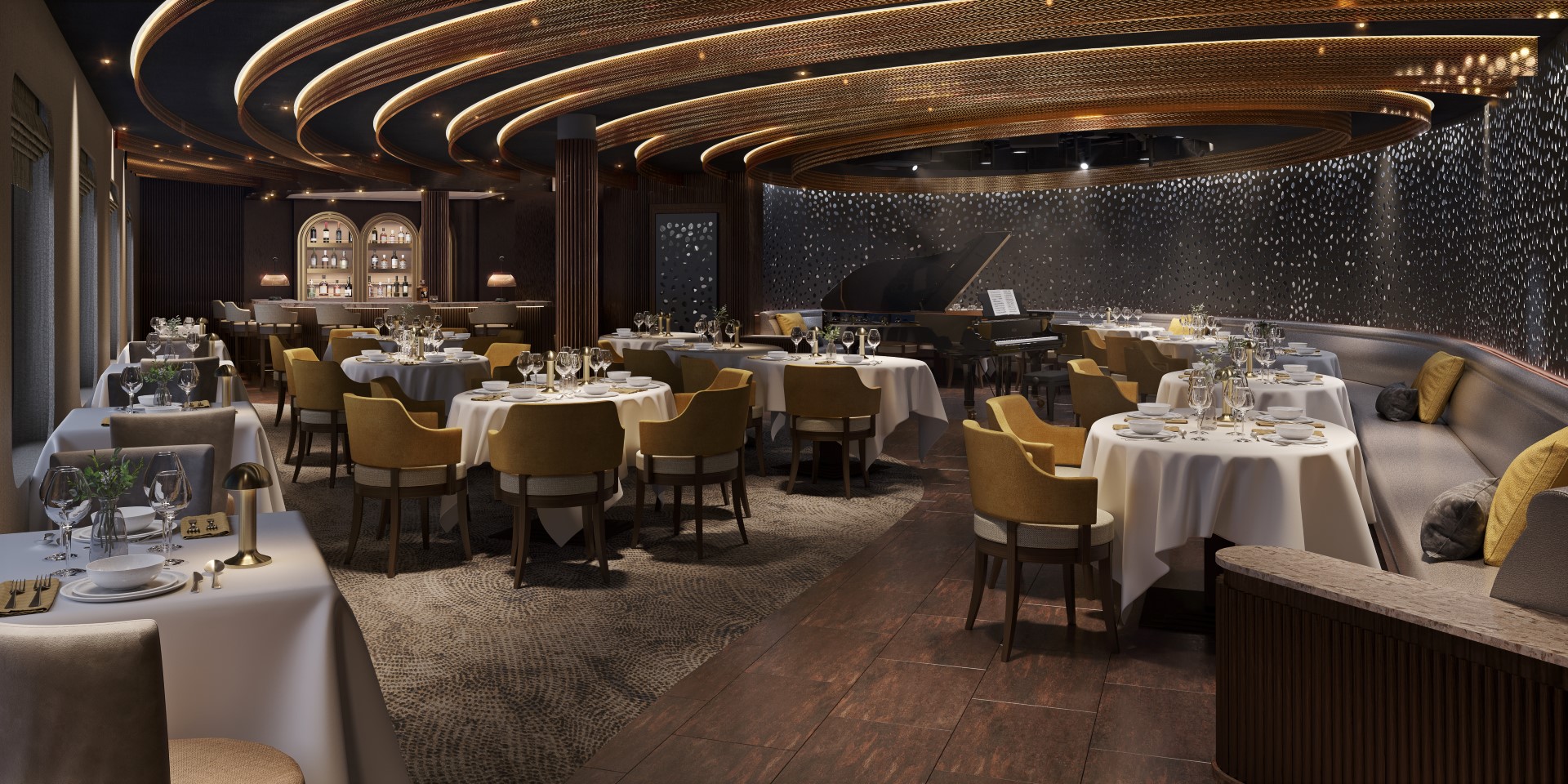
Silver Note
Small-plate, tapas-style dishes of mouthwatering international cuisine perfectly complement the rich, exciting entertainment as the smooth sounds of jazz and blues fill the air.
A sumptuous, intimate setting with a lively ambience is the perfect place to dine, dance, and dream the night away … Small-plate, tapas-style dishes of mouthwatering international cuisine perfectly compliment the rich, exciting entertainment as the smooth sounds of jazz and blues fill the air. A refined late evening menu perfectly showcases the panache and style of Silver Muse’s plentiful dining options, so expect multi-sensory fireworks as you swing and sway effortlessly across the dance floor as Silver Muse gracefully takes you to your next destination.
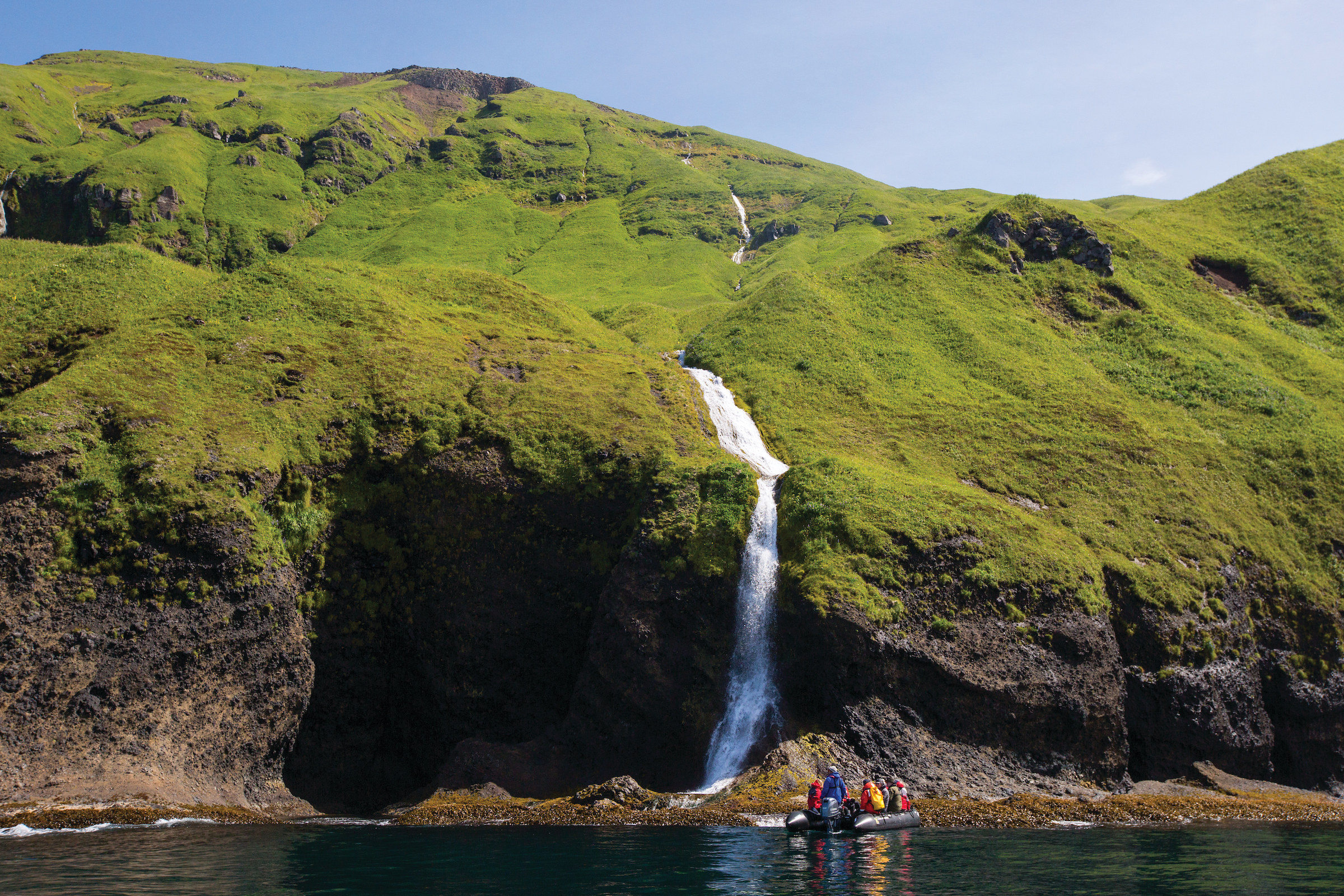
Shore Excursions
Highlight Experiences
Seamless tours of iconic sites
Explore iconic landmarks and cultural treasures with our Highlight Experiences, half or full-day adventures led by expert guides. Enjoy seamless, hassle-free journeys to must- see attractions — perfect for guests seeking a convenient, turnkey experience.
Signature Experiences
Smaller tours, crafted by Silversea
These immersive Signature Experiences offer privileged access and personalized interactions with local experts. These experiences are perfect for those seeking meaningful, social exploration who want to connect with destinations through authentic dining and slow travel.
Private Experiences
Exclusive tours for your group
Create your own exclusive adventure with a dedicated vehicle, driver, and guide. Explore at your pace, linger, or spontaneously discover new sites. Available at most ports for half- or full-day bookings, Private Experiences are ideal for families seeking privacy and flexibility.
Custom Experiences
Tailor-made tours designed for you
Enjoy personalized Custom Experiences tailored to your interests, with exclusive access and specialized guides. Our team handles every detail, ensuring unforgettable moments that exceed your expectations—crafted entirely around your pace and preferences.
Overland Experiences
Mid-cruise, inland tours
Venture inland on two- to three-day journeys to iconic sites like the Taj Mahal or Angkor Wat. Vith flights, stays, and guided access included, these immersive journeys offer rare experiences beyond the coast — all with the signature Silversea service.
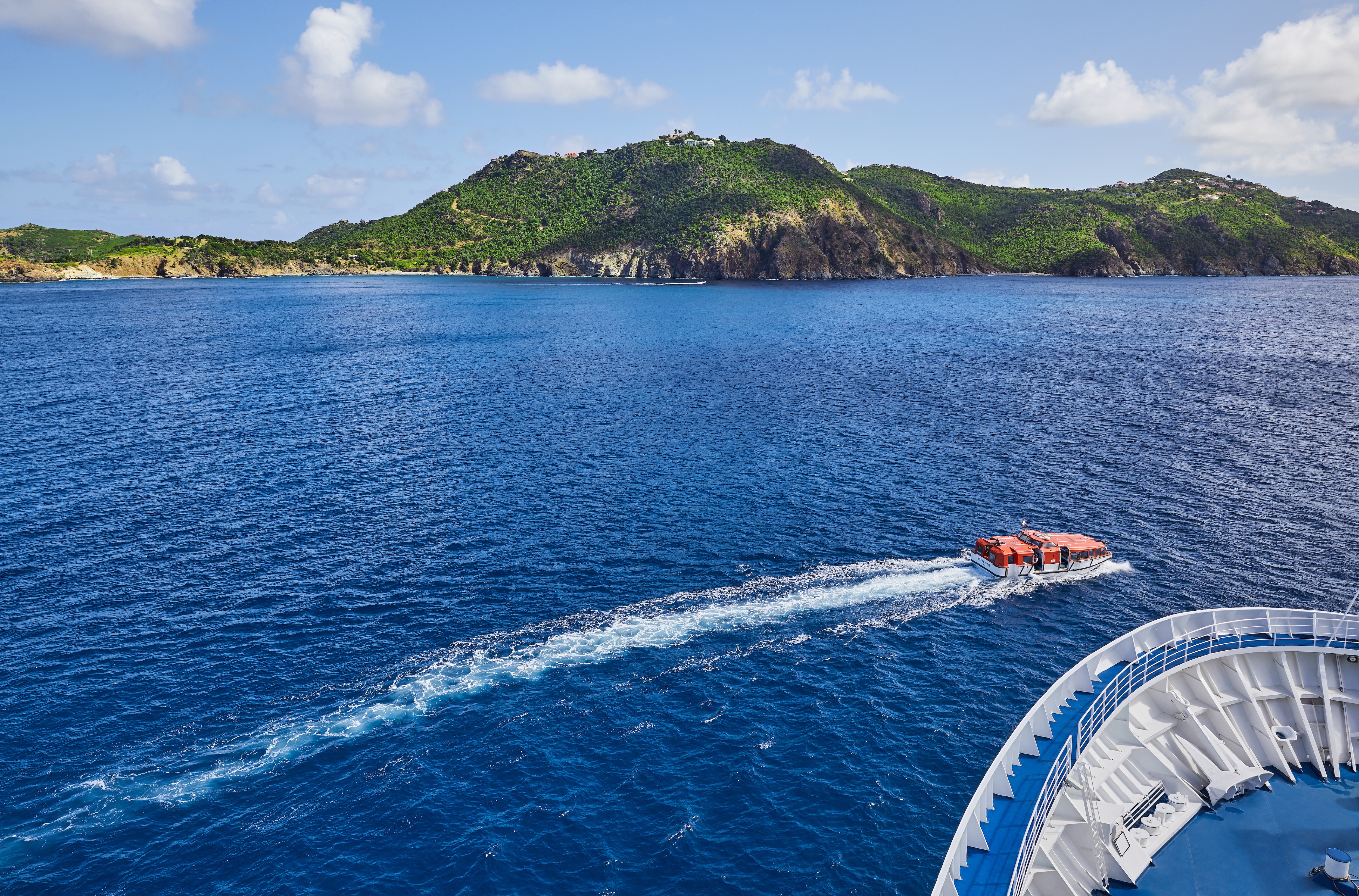
Mid-Voyage Adventures
Multiple days at sea mean plenty of R & R for some, but others prefer to drink in all there is to offer on land. Our Mid-Cruise Land Adventures allow you to take full advantage of your time with us without missing a single thing! These short escapades offer an array of adventures, break up your sea days and allow for deeper exploration beyond the coast.
Silver Shore Concierge
Let Silversea customise a special event or excursion exclusively for you. Expert Shore Excursion professionals are available to assist with all your shore questions. Make an appointment and gain insider access to knowledgeable suggestions, personalised planning and hassle-free coordination of all private, independent touring, including area highlights, flightseeing, water sports, and much more. Take advantage of this service either in advance of your voyage by email at shoreconcierge@silversea.com or on board by visiting the Silvershore® Concierge desk. Have the Silver Shore Concierge create your tailor-made tour, or be whisked away by private car for a day — the pace and agenda are up to you.
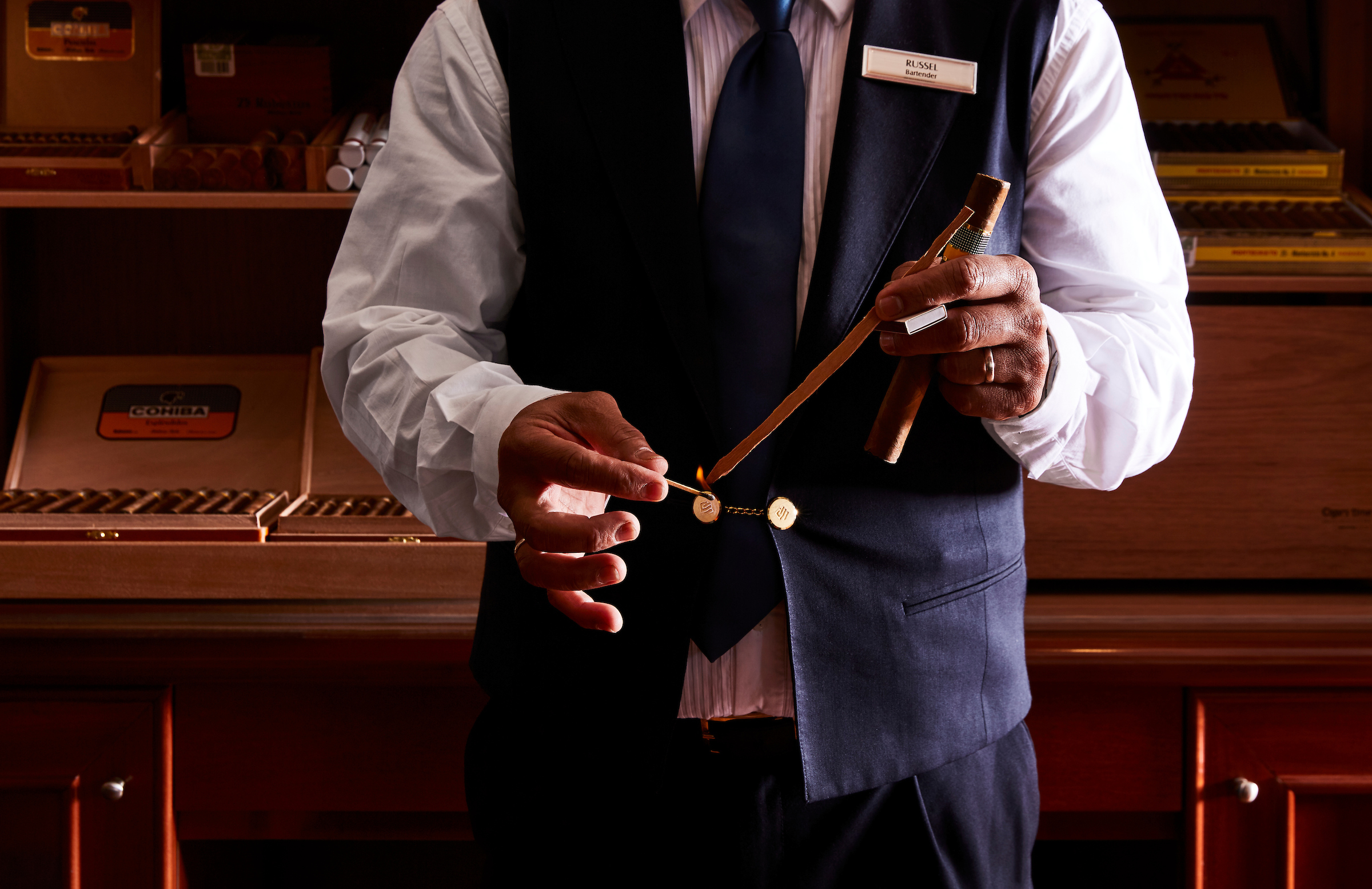
Connoisseur’s Corner
Rich and luxurious, yet airy and spacious, this indoor/outdoor venue is where you sip the finest cognac or whisky from a prestigious range and revel in the tranquil murmur of after-dinner conversation.
Discreet. Tasteful. Polished. If you appreciate the finer things in life, then the sophisticated touches of the Connoisseur’s Corner will not disappoint. Rich and luxurious, yet airy and spacious, this indoor/outdoor venue is where you sip the finest cognac or whiskey from a prestigious range and revel in the tranquil murmur of after-dinner conversation. A premium choice of cigars is also available, making this a perfect evening haven of serenity.

Dolce Vita
Dolce Vita is the gathering place for our savvy travellers of the world, a place where guests mingle and exchange stories and where new faces become lifelong friends.
What could be a more fitting name for the very heart of Silver Muse? Central to the soul and inspiration behind Silversea’s Italian heritage, Dolce Vita is the gathering place for our savvy travellers of the world, a place where guests mingle and exchange stories and where new faces become lifelong friends. Let us spoil you with an incredible array of flawless cocktails, wines, and spirits, as you relax, enjoy the evening sounds of a live pianist, and enjoy “the sweet life” aboard.

Casino
Enjoy a selection of games at the Silversea Casino for guests 18 and older, or discover new games during your luxury cruise.
Let the fun begin! Channel your inner James Bond and place a bet at a variety of table games, including American Roulette, Blackjack, and Ocean Poker, as Silver Muse glides silently through the waves. An assortment of multi-game, multi-denominational reel and video slot machines are also available. Prepare yourself for a luxurious and exhilarating experience with every turn of a card and spin of the wheel. Game on!
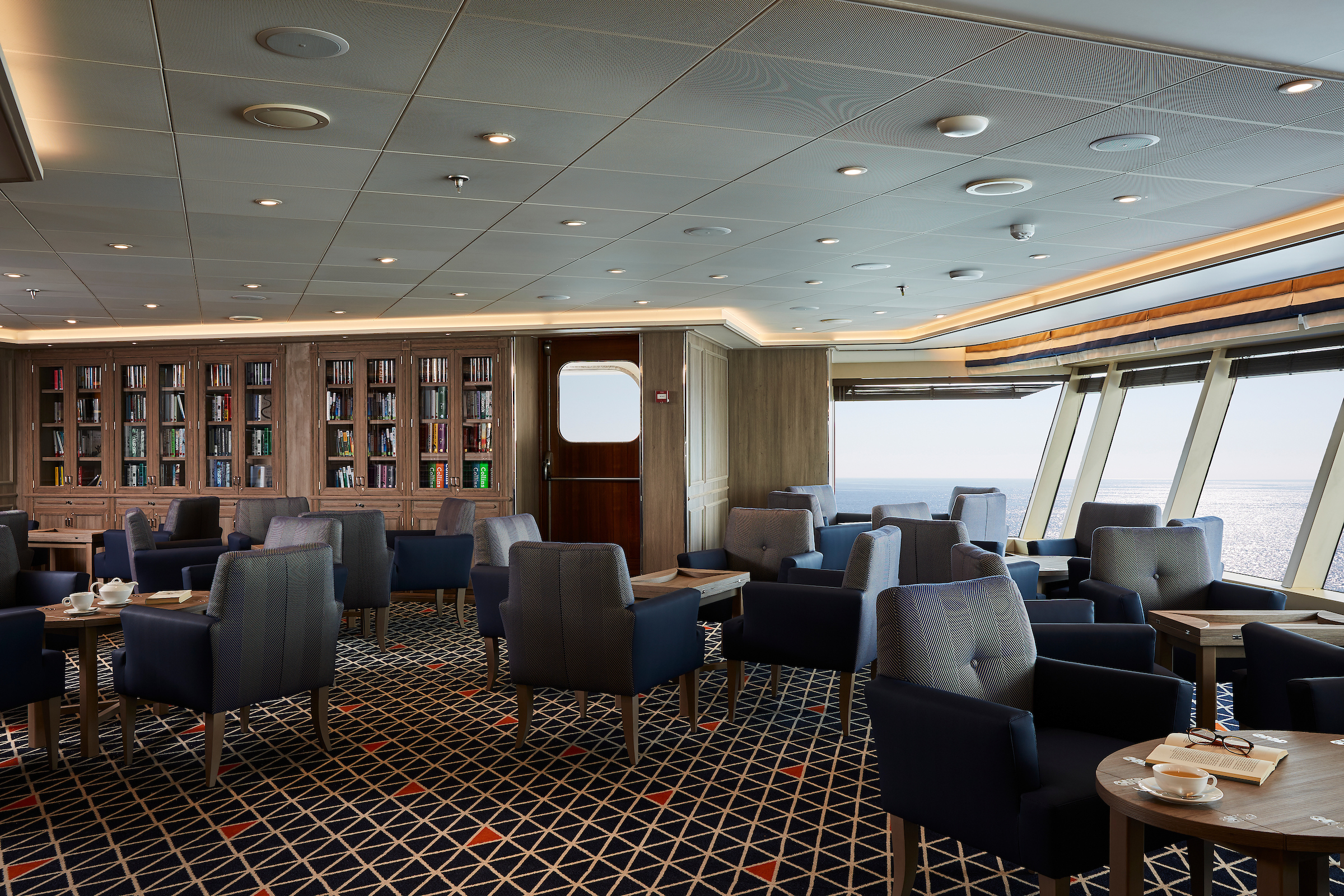
Observation Library
The Observation Library boasts exceptional views overlooking the ocean as it stretches out below you while you enjoy your cruise.
The eponymous lounge carries its name well. Set on the highest level at the very top of the ship, this is a quiet space for reading and reflection while being dazzled by the undulating seascapes that are part of life on board. Borrow a book from the in-house library, read the papers, or just embrace the tranquility of being at sea.

Venetian Lounge
Welcome to Venetian Lounge, a place where the arts of theatre and music meet with full-scale productions and feature films.
The grandeur and magic of music and theatre. The experience of being transported by performance. That satisfying feeling of seeing an evening show … Welcome to the Venetian Lounge, a place where the arts of theatre and music meet with full-scale productions and feature films. Paying tribute to a golden age of glamour, the Venetian Lounge offers belle-époque-style cabaret seating, with intimate tables and chairs subtly placed between the rows of comfortable tiered banquettes. As the stage lights are dimmed, soak up the atmosphere, relax, and enjoy a night of dazzling sights and sounds.

Arts Café
Hosting various, exciting exhibitions, the Arts Café will showcase painting and sculptures from a broad range of talent.
The all-new Arts Café is nestled cozily on deck 8. Hosting varied and exciting exhibitions, the Arts Café will showcase paintings and sculptures from a broad range of talent. The distinctive design of the venue is a relaxing getaway and offers daytime cuisine in the form of a café and deli-bar. But come early evening, the venue turns into a lively, evening cocktail lounge, meaning you can retreat to one of the comfortable chairs, grab a drink, and relax as you absorb the incredible view and watch the world float by. Whether you prefer the gentle sea breeze on the terrace or the sophistication inside, a superlative experience is always assured.

Panorama Lounge
A peaceful retreat that is the perfect place to take a break, a social place to meet and greet old friends, or an evening venue to partake in a cocktail as you sit back and watch the world go by.
From early morning to late at night, the Panorama Lounge offers everything you could wish for. A peaceful retreat that is the perfect place to take a break, a social place to meet and greet old friends, or an evening venue to partake in a cocktail as you sit back and watch the world go by. Sink into the plush seats, and come evening, enjoy listening to the gentle sounds of a pianist or the invigorating beats of our in-house DJ.

Boutique
There is a wealth of luxury shopping experiences aboard all Silversea ships, featuring the most distinctive and appealing brands from across the globe.
Exceptional shopping experiences do not end in the cosmopolitan cities we visit. Silversea’s striking new shipboard boutiques, reimagined and redesigned are stunning modern design spaces befitting the finest creations from legendary designers. Carefully selected partners onboard Silversea’s duty-free boutiques offers our guests a carefully curated selection of cutting edge fashions, jewellery, accessories, fine perfumes, cosmetics and Silversea Logo collection all at duty-free prices.

Zagara Beauty Spa
The Zagara Beauty Spa by Silversea is a sanctuary of pure bliss… Sweeping sea views from the floor-to-ceiling windows, nine treatment rooms, an acupuncture suite, relaxation areas and a dedicated outdoor whirlpool allow delectable indulgence on board.
Relax, rejuvenate, and renew all your senses. The Zagara Beauty Spa by Silversea is a sanctuary of pure bliss … Sweeping ocean views from the floor-to-ceiling windows, nine treatment rooms, an acupuncture suite, relaxation areas, and a dedicated outdoor whirlpool allow delectable indulgence on board. Invigorating therapies including facials, body wraps, and massages, plus men’s and women’s saunas and steam rooms, are perfect for relaxing before your spa treatment or after your workout.

Fitness Centre
The Fitness Centre brings together elite design with programs that are specifically created for your body type and needs.
With state-of-the-art Technogym® equipment, free weights, and specialty classes, the Fitness Center brings together elite design with programs that are specifically created for your body type and needs. With personal trainers available for individual sessions, training here is a five-star experience for all levels of fitness and experience. And with the best view that you’ll ever have while working out, there are definitely no more excuses …
Images are intended as a general reference. Features, materials, finishes and layout may be different than shown.

Pool Deck & Jacuzzi Area
Take a dip in the pool, relax in one of the whirlpools or simply soak up the view from one of the sunbeds, while your pool attendant anticipates your every whim.
The epitome of open-air living—defining how you enjoy the outdoors—this is the place to cool off, unwind, and enjoy the sunshine. Take a dip in the pool, relax in one of the whirlpools, or simply soak up the view from one of the sun beds while your pool attendant anticipates your every whim. A little more ice? Certainly. A plush towel to dry off with? Of course. With breathtaking landmarks gliding by, dive into the clear waters in a setting that is so idyllic that you will not want to disembark.

Zagara Beauty Salon
Maintain your fresh look throughout your luxury cruise at the Beauty Salon. Services are available for men and women.
A full range of salon services, including hairstyling, manicures, and pedicures, is available on board this luxury cruise ship for both men and women. Appointments for these chargeable services may be made on board the ship, or in advance via My Silversea. Maintain the look of prestige travel while you cruise.
Dress Code
We have created this guide to help answer any questions you might have before you embark on your voyage. You may be wondering what you should pack in your suitcase and what kind of clothing to wear while on board and ashore. Perhaps you are unsure of what type of dress code is expected in our restaurants on board and what to wear while exploring ashore. We have provided answers here while anticipating your questions and concerns about what to wear and we hope you find it helpful. If we have not covered a specific query or concern, simply contact your travel professional or our Reservations Department.
We look forward to welcoming you on board. Bon voyage!
ON BOARD
We have a dress code on board, so we have created this overview to help you prepare.
OCEAN-GOING
Silversea has an onboard dress code after 6:00 p.m.
During the day, casual wear, similar to five-star resort sportswear, is suitable for daytime activities. It is recommended to wear flat or low-heeled shoes for deck activities.
Evening wear falls into two categories:
- Elegant Casual: On casual evenings, ladies may opt for trousers, a blouse, a skirt or a casual dress, while gentlemen may wear an open-collar shirt and dress pants. A jacket is optional.
- Formal Optional: A more formal attire may be chosen, such as an evening gown or cocktail dress for ladies and a tuxedo, dinner jacket, or dark suit with a tie for gentlemen. Alternatively, adhering to an Elegant Casual dress code is welcomed, but a jacket is still required for gentlemen in all indoor spaces.
Regardless of the daily dress code:
- After 6:00 pm, indoor spaces prohibit jeans, shorts, hats, caps, sneakers or flip-flop type footwear.
- Casual wear is always suitable in outdoor venues.
- Gentlemen dining at La Dame restaurants are required to wear a jacket.
The number of formal evenings depends on the length of the voyage. A guideline for reference is below:
- On sailings of 7 days or less, Elegant Casual nights throughout.
- On sailings of 8–14 days, expect between one to two Formal Optional nights.
- On sailings of 15 days or more, expect two or more Formal Optional nights.
EXPEDITION
Onboard Silver Endeavour, Silver Cloud and Silver Wind
Silversea has an onboard dress code after 6:00 p.m.
During the day, casual wear, similar to five-star resort sportswear, is suitable for daytime activities. It is recommended to wear flat or low-heeled shoes for deck activities.
Evening wear falls into the following category:
- Elegant Casual: On casual evenings, ladies may opt for trousers, a blouse, a skirt or a casual dress, while gentlemen may wear an open-collar shirt and dress pants. A jacket is optional.
Regardless of the daily dress code:
- After 6:00 pm, indoor spaces prohibit jeans, shorts, hats, caps, sneakers or flip-flop type footwear.
- Casual wear is always suitable in outdoor venues.
- Gentlemen dining at La Dame restaurants are are not required to wear a jacket. The use of a jacket is optional.
On board Silver Origin
On board Silver Origin, shipboard attire is always casual.
During the day, casual wear, similar to five-star resort sportswear, is suitable for daytime activities. Shoes should be non-skid, flat or low-heeled for deck activities.
Evening attire is casual; open-neck shirts, trousers and sports outfits are appropriate, with the exception of jeans and shorts, which are not permitted in The Restaurant.
ASHORE
As you’ll be traveling to some of the most remote environments on board our expedition ships, our Expedition Experts curated a packing list for each destination to help you prepare the right gear and clothing items that are essential for your upcoming adventure.
For additional expedition gear please visit Ship to Shore Traveller
How many formal nights are on my cruise, and what type of clothing is worn?
Find out what to pack. All the details are shown in the General Information section. For Silversea Expeditions guests, casual resort wear is appropriate at all times when on board, with the exception of two evenings when formal attire is required. For men, this means a jacket, tie optional.
Does Silversea offer tuxedo rental service?
No, however, the onboard boutique has a limited selection of formal wear attire for purchase.
Disabled Facilities
Wheelchair guests must bring their own collapsible wheelchair. Please note that not all shore excursions are suitable for guests with impaired mobility. Silversea strongly recommends wheelchair guests travel with someone who is able to assist them both ashore and at sea as Silversea may be unable to offer special assistance. Please note that wheel-on and/or wheel-off access may not be available at some ports-of-call. Silversea reserves the right to deny boarding to any guest who failed to notify Silversea of such requirement at the time of booking.
Silversea welcomes guests with mobility needs and offers various accessibility features onboard. However, due to the nature of cruising, some destinations and excursions may present challenges. Below is a guide to help guests plan their journey.
BEFORE BOOKING
Do guests need to notify Silversea in advance about mobility needs?
Yes, guests should inform Silversea of any special assistance or mobility equipment requirements before sailing. This can be done via My Silversea under Guest Information / Special Request, or by contacting specialservices@silversea.com.
Does Silversea provide wheelchairs?
Yes, each vessel has wheelchairs available at the reception for temporary use, such as embarkation and disembarkation. Guests who require a wheelchair for the entire cruise should bring their own.
Can guests bring their own mobility equipment?
Yes, personal wheelchairs, scooters, and other mobility aids are allowed. However, guests staying in standard (non-ADA) suites should note that electric scooters may not fit through the doors.
Therefore, guests traveling with a wheelchair, scooter, or ECV are always highly suggested to book a wheelchair-accessible suite with a wider entrance door and an appropriate path of travel inside the room and accommodate the equipment. Regular Suites have a narrower entrance door and may not have the necessary interior space to accommodate wheelchairs and scooters.
What features do wheelchair-accessible suites offer?Silversea ships offer specially designed suites for guests who require mobility assistance. These suites are equipped with wider entrance doors and appropriate paths of travel to accommodate wheelchairs, scooters, and other mobility equipment. All areas within these suites are reachable without the need for additional ramps, except for Silver Suites onboard Silver Moon and Silver Dawn and Classic Veranda onboard Silver Endeavour. In these suites Silversea offer ramp to go outside the balcony. The vessels also have wheelchairs available at the reception for guest use.
Where to find the information regarding the disabled access suites?
This information is visible under the Suite tab by suite category.
Also, can be found on the deck plan after clicking on the “View Deck Plan” tab on the ship page. The disabled access suites are indicated with the universal accessibility icon.
EMBARKATION & DISEMBARKATION
How do guests get on and off the ship with mobility equipment?
Silversea vessels have procedures in place to assist guests with mobility equipment during embarkation and disembarkation. When the gangway is flat, guests can drive their wheelchair off the ship. However, if the gangway involves stairs, our staff will provide assistance. The Safety Officer or Bridge must be informed whenever a wheelchair is involved in disembarkation or boarding, and our crew members are available to assist guests in need.
Is assistance available for boarding?
Yes, but guests who require full-time assistance should travel with a companion, as Silversea does not provide dedicated personal caregivers. Butlers can assist with getting to the gangway or dining venues but do not provide continuous mobility assistance.
ONBOARD
Silversea’s ships are designed for accessibility, featuring:
- Wide gangways to accommodate most wheelchairs and scooters
- Accessible public restrooms
- Wheelchair seating in dining venues, bars, and the Venetian Lounge
- Braille/tactile signage for visually impaired guests in elevators, stateroom numbers, and staircases
How does Silversea assist disabled guests in their suites?
Silversea butler can provide reasonable assistance to guest getting to and from the gangway, and to and from a restaurant, however Silversea does not offer full-time wheelchair service and/or staff fully dedicated to providing Guests with wheelchair assistance. Guests traveling on their own wheelchair should be assisted only when requested and are recommended to travel with an able bodily companion.
GOING ASHORE
Are all ports wheelchair accessible?
Not all ports have wheelchair-friendly infrastructure. In some destinations, tender boats or on Silversea Expeditions Zodiacs are required for disembarkation, and wheelchairs or mobility scooters cannot be accommodated in these cases.
Can guests arrange private accessible transportation in port?
If available, private wheelchair-accessible vehicles can be arranged. In some ports, shuttle buses may be wheelchair accessible, but availability is not guaranteed.
Does Silversea offer wheelchair-accessible shore excursions?
Until now we have been offering dedicated “Wheelchair Accessible Excursions” in some areas of the world., These tours are operated by wheelchair accessible vehicles and include only wheelchair accessible venues. These tours are mainly offered in Europe and the US. If you have any questions or concerns regarding shore excursion suitability, please contact the Shore Concierge (shoreconcierge@silversea.com) before your voyage or visit the Shore Concierge desk for more detailed information once onboard.
Wheelchair accessible shore excursions are indicated on the website with the universal accessibility icon.
Are there alternatives for guests with limited mobility?
In almost every port, Silversea offers low-activity excursions specially designed for mobility challenged guests, who can negotiate the steps on and off the coaches.
Is there any destination that is not recommend to guests with disabilities?
The more exotic destinations, like Asia, South Africa and South America it is recommended to guest to book a private vehicle due to the lack of infrastructure, for example wheelchair accessible vehicles are very rare to find and museums, restaurants and popular attractions are not often completely accessible.
Does Silversea offer wheelchair-accessible transportation between the ship and visiting site?
If available in the port yes, however this is not often available.
How Silversea assist disabled guests during excursions?
If wheelchair accessible excursions are not available, it is recommended to guests to book a private vehicle where they can have a dedicated guide and driver who can give them full attention. On regular shore excursions, the guide must look after all guests and may not be able to fully assist disabled guests.
Special Dietary Requirements
If you have special dietary requirements, Silversea will make every attempt to accommodate your requests. Please advise Silversea of your needs on the Guest Information Form at least 75 days prior to sailing. Notification should be sent to specialservices@silversea.com
Medical Centre
Each Silversea ship is equipped with a Medical Centre, which is staffed by a doctor and nurse on 24-hour call when at sea. When docked, supplementary emergency care may also be obtained through local medical facilities. Guests may be charged for medical services and for medications used for their medical treatment. The Medical Centre is not intended or designed to provide on-going treatment of pre-existing conditions or for extended critical care, and Silversea is not responsible for the diagnosis, treatment or services furnished by shipboard medical personnel.
All guests are required to report in writing to Silversea at the time their reservation is made:
- Any physical or mental condition that may require medical or professional treatment or attention during the voyage
- Any condition that may render the guest unfit for travel, or that may require special care or assistance
- Any condition that may pose a risk or danger to the guest or anyone else on board the ship
- Any condition that may require oxygen for medical reasons
- Any intention or need to use a wheelchair aboard ship.
Age Restrictions
Applicable to all ships: Minors under the age of 18 must be accompanied, in the same or connecting suite, by a parent or other responsible adult over the age of 21 for the duration of the voyage and on all shore excursions and land programs. If the adult accompanying the minor is not their parent, a parental consent guardianship form must be signed by a parent or legal guardian and received by Silversea prior to sailing. Please contact our Special Services department at SpecialServices@Silversea.com for a Parental Consent Form. Silversea cannot accommodate infants under six months of age and reserves the right to limit the number of children under three years of age. Guests must be 21 years of age or older to consume alcohol. Silversea reserves the right to refuse to serve anyone who in its sole judgment may be under the influence of alcohol, or for any reason necessary to preserve the health and safety of guests and employees. Children under the age of eight years old are only permitted to participate in suitable Silver Shore Excursions / shuttle service if the vehicles are equipped with the correct safety harness and seating equipment. Child harnesses and secure seating cannot be guaranteed. Silversea reserves the right to refuse children under the age of eight years old on any tour on the basis of safety. Guests may use their own approved safety seat, booster seat or harness provided they are compatible with the local touring vehicle and can properly secure the child.
Smoking Policy
At Silversea, the comfort, enjoyment and safety of all guests is paramount. To ensure a pleasant and safe environment, smoking is prohibited in most public areas, guest suites or suite balconies. However, cigarette, e-cigarette, cigar, pipe and vaporiser smoking is permitted in the Connoisseur’s Corner both indoors and outdoors (where applicable). In addition, cigarette, e-cigarette and vaporiser smoking is permitted in specifically designated outside areas and tables:
- Silver Nova, Silver Ray: Dusk Bar (port side);
- Silver Muse, Silver Spirit: Panorama Lounge (port side) and Pool Grill (port side);
- Silver Moon, Silver Dawn: Panorama Lounge (starboard side) and Pool Grill (port side);
- Silver Shadow, Silver Whisper: Panorama Lounge (starboard side) and Pool Grill (starboard side);
- Silver Cloud, Silver Wind: Panorama Lounge (port side) and Pool Grill (port side);
- Silver Origin: on open deck 4 aft;
Silversea kindly requests that all guests observe the non-smoking areas.
Laundry Service
Complete valet services, including laundry, pressing and wet cleaning, are available at an additional charge and may be arranged through your butler. Laundry service is complimentary on higher category suites (Premium Medallion, Medallion, Silver, Royal, Grand, Junior Grand, Signature, Master, Otium and Owner’s Suites) and for those Venetian Society members who have reached certain reward levels. click here to learn more. A self-service laundromat offers washing machines, dryers, irons and laundry supplies, allowing you to limit the amount of cruise luggage needed, especially for longer voyages.
Wi-FI & Internet
All Silversea ships are equipped to offer wireless (Wi-Fi) Internet access. You can use your own laptop to surf the Internet and check emails at Wi-Fi locations throughout the ship, or from the comfort and privacy of your suite. Computers, email and Internet access are also available on board at the Internet Café. However, it is important to understand that telecommunication services while at sea are via satellite and significantly different than high-speed connections on land back home. The signal travels in a similar manner to radio waves but at much greater distances. Therefore, onboard Internet access is not guaranteed at all times. Satellite communications are also affected by weather and the ship’s location. In particular, Internet service is extremely sporadic while in the Arctic. Guests aboard expedition cruises to/from Svalbard should be prepared to be out of communication for the duration of their time on board.
Onboard cell phone service enables you to make and receive phone calls, text messages and other select data services on your cell phone even when miles away from land. Your cell phone service provider will bill you for calls and/or messages, which may appear as roaming charges. Please note that cell phone service is sporadic at best while in the Arctic. Guests aboard voyages to/from Svalbard should be prepared to be out of communication for the duration of their time on board. Click here for more information on Silversea’s Cellular Phone service.
Will my devices work on board?
To be most successful, prepare your devices BEFORE leaving home:
- Learn how to turn ON and turn OFF both the Wi-Fi and network (mobile/cellular) connections on each of your devices.
- Contact your mobile/cellular service provider to confirm that a roaming agreement with Silversea Cruises has been established and to ask about rates. Learn how to enable your international roaming
- Set up an email account if you do not have one already.
- Be sure you know any usernames and passwords you may need.
- Switch your settings to the most basic choice that shows less graphics and loads faster.
- Make any software updates and turn off any automatic update settings for the duration of your cruise.
- Download any books, audiobooks, music, movies, games, apps, etc. that you may want during your cruise.
- Facebook users should bookmark and plan to use M.Facebook.com or Touch.Facebook.com instead as these have less graphics and load faster.
- Don’t forget to pack any power cords/battery packs, camera cables to transfer pictures, adapter cables and headphones you may need for each of your devices.
Will I be able to download videos and stream music?
Certain websites and services may be restricted due to limited bandwidth. Downloading videos, books and movies or using Skype are examples of high-bandwidth services that will be more frustrating than enjoyable and should be avoided. Plan to use the Internet only for emailing and web browsing.
How can someone contact me on the ship?
In the case of an emergency back home, friends and family should not call your cell phone. The Shore-to-Ship number provided in your Final Cruise Documents is the best way to reach you while aboard ship. Click here for more information on Dial A Ship service, an alternate option for contacting ships at sea, anywhere in the world.

Deck 11
- Observation Library
- Silver Suites
- Spaccanapoli
- Jogging Track
- Launderette

Deck 10
- Pool Deck
- Pool Bar
- The Grill
- Whirlpool Area
- Silver Suites
- Launderette

Deck 9
- Panorama Lounge
- Activities Room & Outdoor Area
- Superior Veranda Suites
- Silver Suites (x1 Accessible Suite)
- Grand Suites
- Owner’s Suites
- Panorama Suites
- Launderette

Deck 8
- Connoisseur’s Corner
- Boutique
- Arts Café
- Conference/Card Room
- Launderette
- Grand Suites
- Superior Veranda Suites
- Deluxe Veranda Suites
- Elevator

Deck 7
- La Terrazza
- Silver Note
- Casino
- Launderette
- Royal Suites
- Deluxe Verandah Suites
- Superior Verandah Suites
- Elevator

Deck 6
- Zagara Beauty Spa
- Steam Rooms and Saunas
- Fitness Centre
- Aerobic Studios
- Thermal Suite
- Whirlpool
- Launderette
- Classic Veranda Suites
- Deluxe Veranda Suites

Deck 5
- Reception/Guest Relations
- Shore Concierge
- Dolce Vita
- Launderette
- Venetian Lounge
- Future Cruise Manager
- Classic Veranda Suites

Deck 4
- Atlantide
- Indochine
- Kaiseki
- La Dame
- Launderette
- Vista Suites