Itinerary
On one of the best stretches of the Mediterranean, this classic luxury destination is one of the most sought-after addresses in the world. With all the high-rise towers you have to look hard to find the Belle Époque grace of yesteryear. But if you head to the town’s great 1864 landmark Hôtel de Paris—still a veritable crossroads of the buffed and befurred Euro-gentry—or enjoy a grand bouffe at its famous Louis XV restaurant, or attend the opera, or visit the ballrooms of the casino, you may still be able to conjure up Monaco’s elegant past. Prince Albert II, a political science graduate from Amherst College, traces his ancestry to Otto Canella, who was born in 1070. The Grimaldi dynasty began with Otto’s great-great-great-grandson, Francesco Grimaldi, also known as Frank the Rogue. Expelled from Genoa, Frank and his cronies disguised themselves as monks and in 1297 seized the fortified medieval town known today as Le Rocher (the Rock). Except for a short break under Napoléon, the Grimaldis have been here ever since, which makes them the oldest reigning family in Europe. In the 1850s a Grimaldi named Charles III made a decision that turned the Rock into a giant blue chip. Needing revenue but not wanting to impose additional taxes on his subjects, he contracted with a company to open a gambling facility. The first spin of the roulette wheel was on December 14, 1856. There was no easy way to reach Monaco then—no carriage roads or railroads—so no one came. Between March 15 and March 20, 1857, one person entered the casino—and won two francs. In 1868, however, the railroad reached Monaco, and it was filled with Englishmen who came to escape the London fog. The effects were immediate. Profits were so great that Charles eventually abolished all direct taxes. Almost overnight, a threadbare principality became an elegant watering hole for European society. Dukes (and their mistresses) and duchesses (and their gigolos) danced and dined their way through a world of spinning roulette wheels and bubbling champagne—preening themselves for nights at the opera, where such artists as Vaslav Nijinsky, Sarah Bernhardt, and Enrico Caruso came to perform. Along with the tax system, its sensational position on a broad, steep peninsula that bulges into the Mediterranean—its harbor sparkling with luxury cruisers, its posh mansions angling awnings toward the nearly perpetual sun—continues to draw the rich and famous. One of the latest French celebrities to declare himself “Monégasque,” thus giving up his French passport, is superchef Alain Ducasse, who said that he made the choice out of affection for Monaco rather than tax reasons. Pleasure boats vie with luxury cruisers in their brash beauty and Titanic scale, and teams of handsome young men—themselves dyed blond and tanned to match—scour and polish every gleaming surface. As you might expect, all this glitz doesn’t come cheap. Eating is expensive, and even the most modest hotels cost more here than in nearby Nice or Menton. As for taxis, they don’t even have meters so you are completely at the driver’s mercy (with prices skyrocketing during events such as the Grand Prix). For the frugal, Monaco is the ultimate day-trip, although parking is as coveted as a room with a view. At the very least you can afford a coffee at Starbucks. The harbor district, known as La Condamine, connects the new quarter, officially known as Monte Carlo with Monaco-Ville (or Le Rocher), a medieval town on the Rock, topped by the palace, the cathedral, and the Oceanography Museum. Have no fear that you’ll need to climb countless steps to get to Monaco-Ville, as there are plenty of elevators and escalators climbing the steep cliffs. But shuttling between the lovely casino grounds of Monte Carlo and Old Monaco, separated by a vast port, is a daunting proposition for ordinary mortals without wings, so hop on the No. 1 bus from Saint Roman, or No. 2 from the Jardin Exotique – Both stop at Place du Casino and come up to Monaco Ville.
Sorrento may have become a jumping-off point for visitors to Pompeii, Capri, and Amalfi, but you can find countless reasons to love it for itself. The Sorrentine people are fair-minded and hardworking, bubbling with life and warmth. The tuff cliff on which the town rests is spread over the bay, absorbing sunlight, while orange and lemon trees waft their perfume in spring. Winding along a cliff above a small beach and two harbors, the town is split in two by a narrow ravine formed by a former mountain stream. To the east, dozens of hotels line busy Via Correale along the cliff—many have “grand” included in their names, and some indeed still are. To the west, however, is the historic sector, which still enchants. It’s a relatively flat area, with winding, stone-paved lanes bordered by balconied buildings, some joined by medieval stone arches. The central piazza is named after the poet Torquato Tasso, born here in 1544. This part of town is a delightful place to walk through. Craftspeople are often at work in their stalls and shops and are happy to let you watch; in fact, that’s the point. Music spots and bars cluster in the side streets near Piazza Tasso.
The medieval cliff-hanging town of Taormina is overrun with tourists, yet its natural beauty is still hard to dispute. The view of the sea and Mt. Etna from its jagged cactus-covered cliffs is as close to perfection as a panorama can get—especially on clear days, when the snowcapped volcano’s white puffs of smoke rise against the blue sky. Writers have extolled Taormina’s beauty almost since it was founded in the 6th century BC by Greeks from nearby Naxos; Goethe and D. H. Lawrence were among its well-known enthusiasts. The town’s boutique-lined main streets get old pretty quickly, but the many hiking paths that wind through the beautiful hills surrounding Taormina promise a timeless alternative. A trip up to stunning Castelmola (whether on foot or by car) should also be on your itinerary.
Siracusa, known to English speakers as Syracuse, is a wonder to behold. One of the great ancient capitals of Western civilization, the city was founded in 734 BC by Greek colonists from Corinth and soon grew to rival, and even surpass, Athens in splendor and power. It became the largest, wealthiest city-state in the West and a bulwark of Greek civilization. Although Siracusa lived under tyranny, rulers such as Dionysius filled their courts with Greeks of the highest cultural stature—among them the playwrights Aeschylus and Euripides, and the philosopher Plato. The Athenians, who didn’t welcome Siracusa’s rise, set out to conquer Sicily, but the natives outsmarted them in what was one of the greatest military campaigns in ancient history (413 BC). The city continued to prosper until it was conquered two centuries later by the Romans.Present-day Siracusa still has some of the finest examples of Baroque art and architecture; dramatic Greek and Roman ruins; and a Duomo that’s the stuff of legend—a microcosm of the city’s entire history in one building. The modern city also has a wonderful, lively, Baroque old town worthy of extensive exploration, as well as pleasant piazzas, outdoor cafés and bars, and a wide assortment of excellent seafood. There are essentially two areas to explore in Siracusa: the Parco Archeologico (Archaeological Zone), on the mainland; and the island of Ortygia, the ancient city first inhabited by the Greeks, which juts out into the Ionian Sea and is connected to the mainland by two small bridges. Ortygia is becoming increasingly popular with tourists, and is starting to lose its old-fashioned charm in favor of modern boutiques.Siracusa’s old nucleus of Ortygia, a compact area, is a pleasure to amble around without getting unduly tired. In contrast, mainland Siracusa is a grid of wider avenues. At the northern end of Corso Gelone, above Viale Paolo Orsi, the orderly grid gives way to the ancient quarter of Neapolis, where the sprawling Parco Archeologico is accessible from Viale Teracati (an extension of Corso Gelone). East of Viale Teracati, about a 10-minute walk from the Parco Archeologico, the district of Tyche holds the archaeological museum and the church and catacombs of San Giovanni, both off Viale Teocrito (drive or take a taxi or city bus from Ortygia). Coming from the train station, it’s a 15-minute trudge to Ortygia along Via Francesco Crispi and Corso Umberto. If you’re not up for that, take one of the free electric buses leaving every 10 minutes from the bus station around the corner.
Rising from the turquoise expanse of the sunny Mediterranean, Hydra is the counterpoint of choice for Athenians – who can swap the city chaos for blissful relaxation with an hour’s boat journey. Known for its inspiring celebrity appeal – Leonard Cohen bought a house here in the 60s – Hydra is a pretty island of rising streets, whitewash mansions, and carefree clamour. Located a stone’s throw from the Greek mainland, the authorities have resisted the temptation to cash in, meaning Hydra remains an endearing time-warp, which revels in life in the slow lane. With cars and new building developments banned – discover an island of donkeys plodding cobbled streets, and fishing boats undulating gently on the harbour’s waves.
It’s no wonder that all roads lead to the fascinating and maddening metropolis of Athens. Lift your eyes 200 feet above the city to the Parthenon, its honey-color marble columns rising from a massive limestone base, and you behold architectural perfection that has not been surpassed in 2,500 years. But, today, this shrine of classical form dominates a 21st-century boomtown. To experience Athens—Athína in Greek—fully is to understand the essence of Greece: ancient monuments surviving in a sea of cement, startling beauty amid the squalor, tradition juxtaposed with modernity. Locals depend on humor and flexibility to deal with the chaos; you should do the same. The rewards are immense. Although Athens covers a huge area, the major landmarks of the ancient Greek, Roman, and Byzantine periods are close to the modern city center. You can easily walk from the Acropolis to many other key sites, taking time to browse in shops and relax in cafés and tavernas along the way. From many quarters of the city you can glimpse “the glory that was Greece” in the form of the Acropolis looming above the horizon, but only by actually climbing that rocky precipice can you feel the impact of the ancient settlement. The Acropolis and Filopappou, two craggy hills sitting side by side; the ancient Agora (marketplace); and Kerameikos, the first cemetery, form the core of ancient and Roman Athens. Along the Unification of Archaeological Sites promenade, you can follow stone-paved, tree-lined walkways from site to site, undisturbed by traffic. Cars have also been banned or reduced in other streets in the historical center. In the National Archaeological Museum, vast numbers of artifacts illustrate the many millennia of Greek civilization; smaller museums such as the Goulandris Museum of Cycladic Art Museum and the Byzantine and Christian Museum illuminate the history of particular regions or periods. Athens may seem like one huge city, but it is really a conglomeration of neighborhoods with distinctive characters. The Eastern influences that prevailed during the 400-year rule of the Ottoman Empire are still evident in Monastiraki, the bazaar area near the foot of the Acropolis. On the northern slope of the Acropolis, stroll through Plaka (if possible by moonlight), an area of tranquil streets lined with renovated mansions, to get the flavor of the 19th-century’s gracious lifestyle. The narrow lanes of Anafiotika, a section of Plaka, thread past tiny churches and small, color-washed houses with wooden upper stories, recalling a Cycladic island village. In this maze of winding streets, vestiges of the older city are everywhere: crumbling stairways lined with festive tavernas; dank cellars filled with wine vats; occasionally a court or diminutive garden, enclosed within high walls and filled with magnolia trees and the flaming trumpet-shaped flowers of hibiscus bushes. Formerly run-down old quarters, such as Thission, Gazi and Psirri, popular nightlife areas filled with bars and mezedopoleia (similar to tapas bars), are now in the process of gentrification, although they still retain much of their original charm, as does the colorful produce and meat market on Athinas. The area around Syntagma Square, the tourist hub, and Omonia Square, the commercial heart of the city about 1 km (½ mi) northwest, is distinctly European, having been designed by the court architects of King Otho, a Bavarian, in the 19th century. The chic shops and bistros of ritzy Kolonaki nestle at the foot of Mt. Lycabettus, Athens’s highest hill (909 feet). Each of Athens’s outlying suburbs has a distinctive character: in the north is wealthy, tree-lined Kifissia, once a summer resort for aristocratic Athenians, and in the south and southeast lie Glyfada, Voula, and Vouliagmeni, with their sandy beaches, seaside bars, and lively summer nightlife. Just beyond the city’s southern fringes is Piraeus, a bustling port city of waterside fish tavernas and Saronic Gulf views.
Ship features

The Owners Suite
SUITE DESCRIPTION
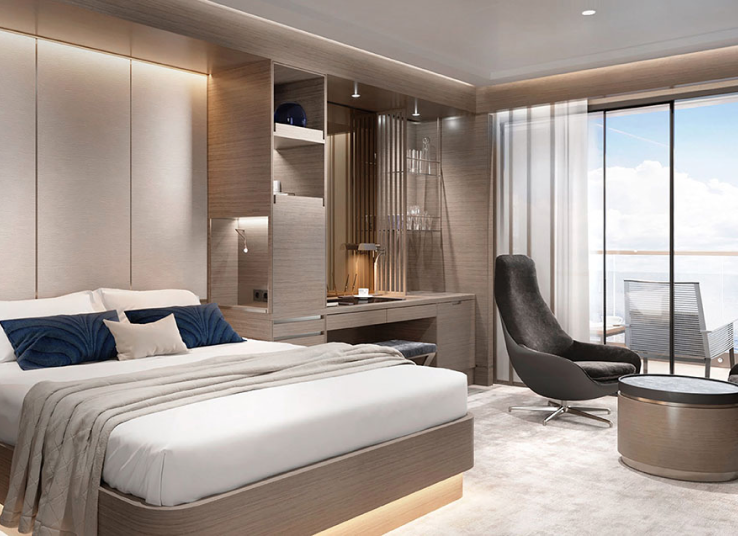
The Owner’s Suite was designed to epitomize the yachting lifestyle, with outsize suite and terrace spaces inviting unparalleled entertaining and ultimate comfort. The suite’s expansive private terrace truly wows with a whirlpool, dedicated outdoor dining table and conversation spaces that blur the lines of indoor-outdoor living, all to the sweeping backdrop of majestic sea views. The suite itself is distinguished by a second full bath with shower, a full bar with seating, two living/conversation areas and a dining table that comfortably seats 6 guests.
SUITE HIGHLIGHTS
MAGNIFICENT OCEAN VIEWS
- Private, spacious terrace overlooking the ocean, with private whirlpool
SPACIOUS SUITE ACCOMMODATIONS
- Luxurious and modern living and dining area
- Luxury custom king bed sleep system
- Double vanity bathroom
PERSONALIZED SERVICE AND AMENITIES
- The Personal Concierge is your single onboard touch point to ensure a flawless, seamless journey from beginning to end
- 24-hour in-suite dining, espresso machine, complimentary coffee and teas and a mini-bar provisioned to your preferences, upon request once on board
ACCOMMODATIONS
Bed & Bath
- Luxury custom king bed sleep system
- Double vanity bathroom with modern soaking tub and separate shower
- Second bathroom with modern shower system
- Custom luxury bed and bath linens
Suite Features
- Private, spacious terrace overlooking the ocean with private whirlpool
- Luxurious and modern living and dining area
- Walk-in wardrobe
- Convertible sleep sofa
Size
- Suite: 1091 SQ FT | 101 SQ M
- Terrace: 635 SQ FT | 59 SQ M
SERVICES AND AMENITIES
- 24-hour in-suite dining
- Luxury bath amenities & individual robe and slippers
- Premium Wi-Fi, supporting browsing, social media, streaming services, video calls and VPN services
- Complimentary chilled bottle of champagne upon arrival
- Espresso machine with complimentary coffee and teas
- Digital flat screen television
- In-suite safe
- Vanity mirror
- Hair dryer
- Hypoallergenic pillows, upon request
- 230v and 120v outlets, as well as USB charging capabilities
- Set of high-zoom binoculars

The View Suite
The View suite brings the outdoors in with its expansive length of dramatic floor to ceiling glass and private terrace, offering unmatched views and capturing the sea breeze from Juliet balconies in the living, bed and bath areas. These views are meant to be shared, with the large private terrace, living and dining areas allowing guests to entertain out of sight of the suite’s bed and bath area.
SUITE HIGHLIGHTS
MAGNIFICENT OCEAN VIEWS
- Dramatic floor to ceiling glass throughout
- Private, spacious terrace overlooking the ocean
SPACIOUS SUITE ACCOMMODATIONS
- Luxurious and modern living and dining area
- Luxury custom king bed sleep system
- Double vanity bathroom
PERSONALIZED SERVICE AND AMENITIES
- The Personal Concierge is your single onboard touch point to ensure a flawless, seamless journey from beginning to end
- 24-hour in-suite dining, espresso machine, complimentary coffee and teas and a mini-bar provisioned to your preferences, upon request once on board
ACCOMMODATIONS
Bed & Bath
- Luxury custom king bed sleep system
- Double vanity bathroom with modern soaking tub and separate shower
- Custom luxury bed and bath linens
Suite Features
- Private, spacious terrace overlooking the ocean
- Convertible sleep sofa
Size
- (Suite 732 & 733)
- Suite: 544 SQ FT | 51 SQ M
- Terrace: 108 SQ FT | 10 SQ M
(Suite 734 & 735)
- Suite: 574 SQ FT | 53 SQ M
- Terrace: 129 SQ FT | 12 SQ M
SERVICES AND AMENITIES
- 24-hour in-suite dining
- Luxury bath amenities & individual robe and slippers
- Premium Wi-Fi, supporting browsing, social media, streaming services, video calls and VPN services
- Complimentary chilled bottle of champagne upon arrival
- Espresso machine with complimentary coffee and teas
- Digital flat screen television
- In-suite safe
- Vanity mirror
- Hair dryer
- Hypoallergenic pillows, upon request
- 230v and 120v outlets, as well as USB charging capabilities

The 2-Story Loft Suite
The Loft suite is a study in duality: a lower level designed for rest and relaxation, and an upper level perfect for socializing and entertaining. With a powder room and expanded living area upstairs, this space easily converts into a second private sleeping area for guests traveling with children or travelers sleeping separately. The expanded desk and dressing table in the lower level provides uninterrupted views through an oversized picture window.
SUITE HIGHLIGHTS
MAGNIFICENT OCEAN VIEWS
- Private, spacious terrace overlooking the ocean on the upper level
- Picture window on the lower level
SPACIOUS SUITE ACCOMMODATIONS
- Innovative two story suite with entry from both levels
- Luxurious and modern living and dining area on the upper level
- Luxury custom king bed sleep system on the lower level
- Double vanity bathroom
PERSONALIZED SERVICE AND AMENITIES
- The Personal Concierge is your single onboard touch point to ensure a flawless, seamless journey from beginning to end
- 24-hour in-suite dining, espresso machine, complimentary coffee and teas and a mini-bar provisioned to your preferences, upon request once on board
ACCOMMODATIONS
Bed & Bath
- Powder room on the upper level
- Double vanity master bathroom with modern soaking tub and separate shower on the lower level
- Luxury custom king bed sleep system on the lower level
- Custom luxury bed and bath linens
Suite Features
- Innovative two story suite with entry from both levels
- Private, spacious terrace overlooking the ocean on the upper level
- Luxurious and modern living and dining area on the upper level
- Convertible sleep sofa on the upper level
Size
- Suite: 611 SQ FT | 57 SQ M
- Terrace: 81 SQ FT | 7.5 SQ M
SERVICES AND AMENITIES
- 24-hour in-suite dining
- Luxury bath amenities & individual robe and slippers
- Premium Wi-Fi, supporting browsing, social media, streaming services, video calls and VPN services
- Complimentary chilled bottle of champagne upon arrival
- Espresso machine with complimentary coffee and teas
- Digital flat screen television
- In-suite safe
- Vanity mirror
- Hair dryer
- Hypoallergenic pillows, upon request
- 230v and 120v outlets, as well as USB charging capabilities
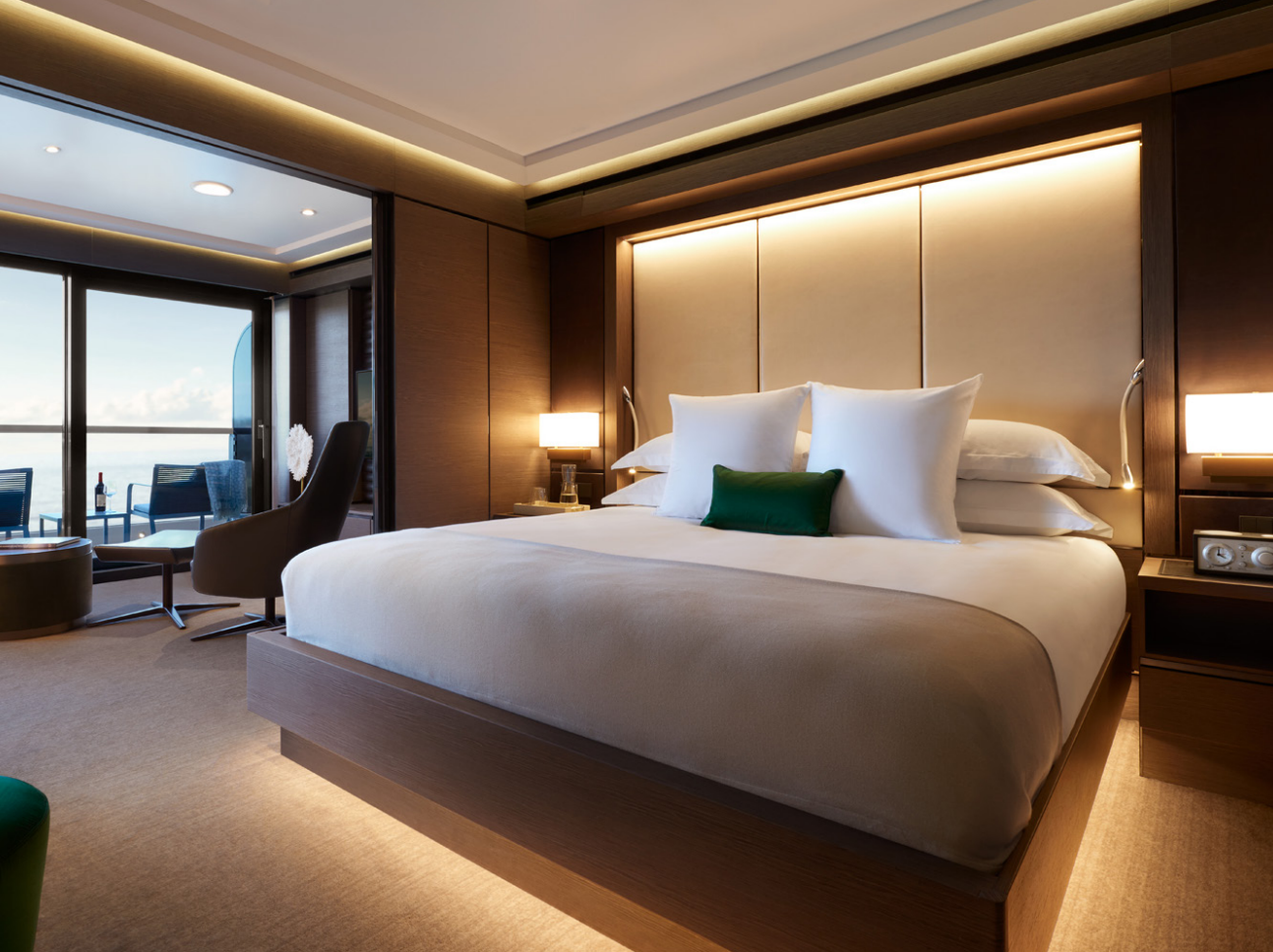
The Grand Suite
The Grand Suite offers a distinctly residential suite experience, allowing guests to feel at home upon the sea. The suite features dual walk-in closets, a dining table that comfortably accommodates 4 guests, plus added space on the private terrace and in living and bath spaces to spread out and relax.
SUITE HIGHLIGHTS
MAGNIFICENT OCEAN VIEWS
- Private, spacious terrace overlooking the ocean
SPACIOUS SUITE ACCOMMODATIONS
- Luxury custom king bed sleep system
- Double vanity bathroom
- Luxurious and modern living and dining area
PERSONALIZED SERVICE AND AMENITIES
- The Personal Concierge is your single onboard touch point to ensure a flawless, seamless journey from beginning to end
- 24-hour in-suite dining, espresso machine, complimentary coffee and teas and a mini-bar provisioned to your preferences, upon request once on board
ACCOMMODATIONS
Bed & Bath
- Luxury custom king bed sleep system
- Double vanity bathroom with modern soaking tub and separate shower
- Custom luxury bed and bath linens
Suite Features
- Private, spacious terrace overlooking the ocean
- Luxurious and modern living and dining area
- Dual walk-in wardrobes
- Convertible sleep sofa
Size
- Suite: 587 SQ FT | 55 SQ M
- Terrace: 108 – 118 SQ FT | 10 – 11 SQ M
SERVICES AND AMENITIES
- 24-hour in-suite dining
- Luxury bath amenities & individual robe and slippers
- Premium Wi-Fi, supporting browsing, social media, streaming services, video calls and VPN services
- Complimentary chilled bottle of champagne upon arrival
- Espresso machine with complimentary coffee and teas
- Digital flat screen television
- In-suite safe
- Vanity mirror
- Hair dryer
- Hypoallergenic pillows, upon request
- 230v and 120v outlets, as well as USB charging capabilities
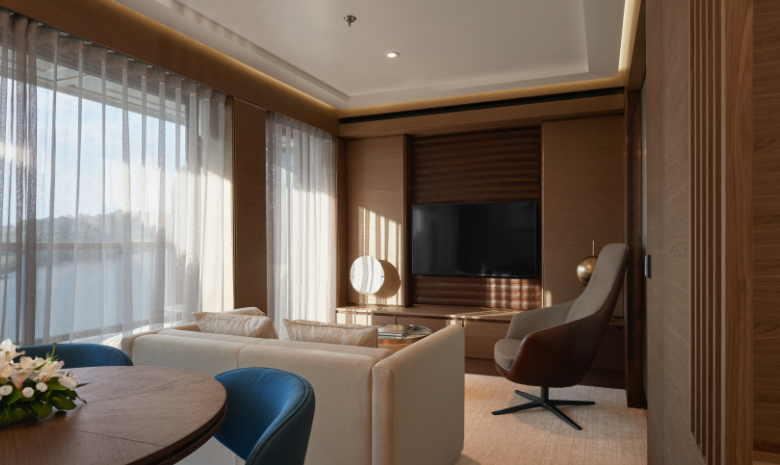
The Signature Suite
SUITE HIGHLIGHTS
MAGNIFICENT OCEAN VIEWS
- Private, spacious terrace overlooking the ocean
SPACIOUS SUITE ACCOMMODATIONS
- Luxurious and modern living and dining area
- Luxury custom king bed sleep system
- Double vanity bathroom
PERSONALIZED SERVICE AND AMENITIES
- The Personal Concierge is your single onboard touch point to ensure a flawless, seamless journey from beginning to end
- 24-hour in-suite dining, espresso machine, complimentary coffee and teas and a mini-bar provisioned to your preferences, upon request once on board
ACCOMMODATIONS
Bed & Bath
- Luxury custom king bed sleep system
- Double vanity bathroom with modern soaking tub and separate shower
- Custom luxury bed and bath linens
Suite Features
- Private, spacious terrace overlooking the ocean
- Luxurious and modern living and dining area
- Convertible sleep sofa
Size
- Suite: 429 SQ FT | 40 SQ M
- Terrace: 81 – 118 SQ FT | 7.5 – 11 SQ M
SERVICES AND AMENITIES
- 24-hour in-suite dining
- Luxury bath amenities & individual robe and slippers
- Premium Wi-Fi, supporting browsing, social media, streaming services, video calls and VPN services
- Complimentary chilled bottle of champagne upon arrival
- Espresso machine with complimentary coffee and teas
- Digital flat screen television
- In-suite safe
- Vanity mirror
- Hair dryer
- Hypoallergenic pillows, upon request
- 230v and 120v outlets, as well as USB charging capabilities
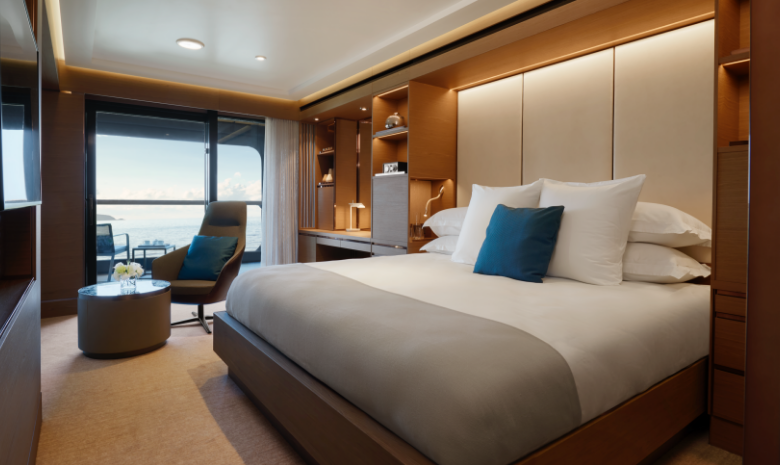
The Terrace Suite
The Terrace Suite provides a foundation for the very best amenities enjoyed by all suite categories on board, including a private terrace, king-sized bed and double vanity. Best of all, guests enjoy the superlative service of an assigned suite ambassador.
SUITE HIGHLIGHTS
MAGNIFICENT OCEAN VIEWS
- Private, spacious terrace overlooking the ocean
SPACIOUS SUITE ACCOMMODATIONS
- Luxury custom king bed sleep system
- Double vanity bathroom
PERSONALIZED SERVICE AND AMENITIES
- The Personal Concierge is your single onboard touch point to ensure a flawless, seamless journey from beginning to end
- 24-hour in-suite dining, espresso machine, complimentary coffee and teas and a mini-bar provisioned to your preferences, upon request once on board
ACCOMMODATIONS
Bed & Bath
- Luxury custom king bed sleep system
- Double vanity bathroom with modern shower system
- Custom luxury bed and bath linens
Suite Features
- Private, spacious terrace overlooking the ocean
Size
- Suite: 300 SQ FT | 28 SQ M
- Terrace: 54 – 81 SQ FT | 5 – 7.5 SQ M
SERVICES AND AMENITIES
- 24-hour in-suite dining
- Luxury bath amenities & individual robe and slippers
- Premium Wi-Fi, supporting browsing, social media, streaming services, video calls and VPN services
- Complimentary chilled bottle of champagne upon arrival
- Espresso machine with complimentary coffee and teas
- Digital flat screen television
- In-suite safe
- Vanity mirror
- Hair dryer
- Hypoallergenic pillows, upon request
- 230v and 120v outlets, as well as USB charging capabilities
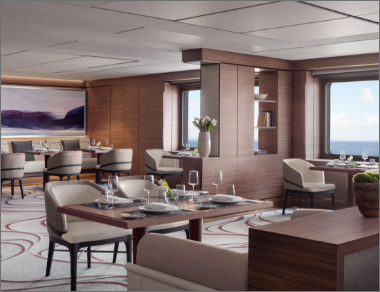
The Evrima Room
Designed with intimate seating arrangements, the spacious main restaurant offers a thoughtfully-designed balance of privacy and social connection. A menu of locally inspired creations change with the seasons to reflect the passing scene. The menu highlights the varied cultures, lands, and sights that are best explored at The Ritz-Carlton Yacht Collection destinations.
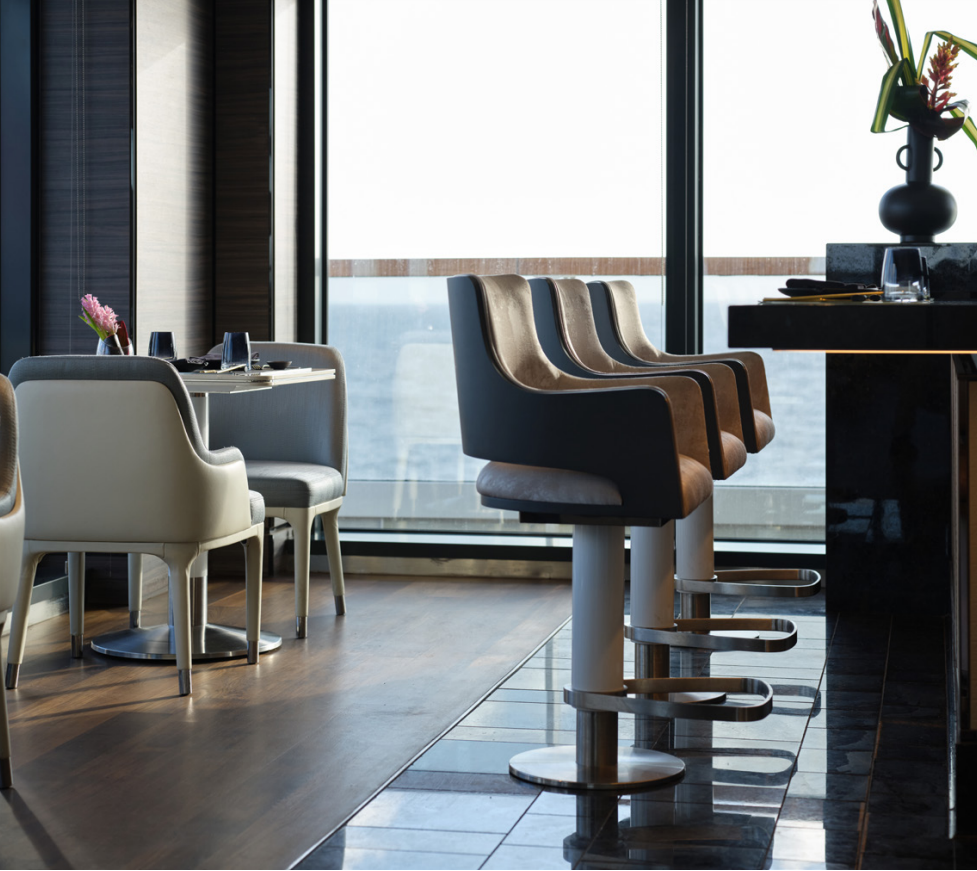
Talaat Nam
Creative interpretations of Southeast Asian cuisine are paired with sophisticated, laidback luxury in this sleek, contemporary restaurant. Sit down at the sushi bar, enjoy a more family-style table experience, or dine outside and watch the day’s destination disappear with the setting sun.
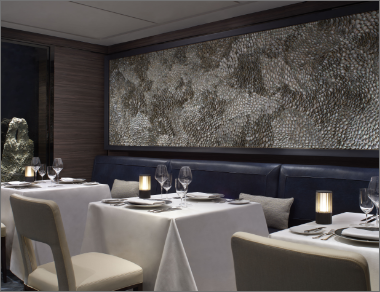
S.E.A
Indulge in a specialty dining experience designed by Chef Sven Elverfeld of Aqua, the three Michelin-starred restaurant at The Ritz-Carlton® in Wolfsburg. S.E.A. offers an inspired European tasting menu in a sophisticated setting with a contemporary feel. Cruise dining has never been more refreshing. Reservations required, additional fee applies. Located on Deck 6.
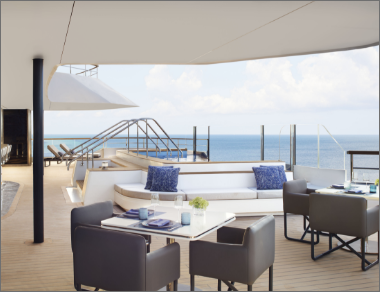
Mistral
Come as you are, for lunch or a romantic dinner al fresco. The Mediterranean-inspired menu features fresh local catches, while prime cuts are prepared to order from the grill. The deck serves as one of the best views on the yacht to enjoy dinner or drinks. Located on Deck 8.

The Living Room
Guests will wake to freshly roasted coffees and baked pastries at the espresso counter and bar. An array of ready-made culinary treats are also available for day trips and late nights.

In-Suite Dining
Dine in the comfort of your suite or on your private terrace when you order from the All-Day Dining menu, featuring influences from every dining venue onboard. For guests looking for further flexibility within all of The Ritz-Carlton Yacht Collection suites, a Late-Night Dining menu will also be available.
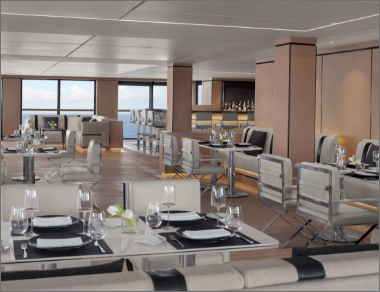
The Pool House
From a leisurely breakfast for early risers to late-night dining, this casual eatery serves a variety of cuisines prepared à la minute in an open air space. Enjoy a relaxing meal or casual bite at this inspired poolside restaurant.
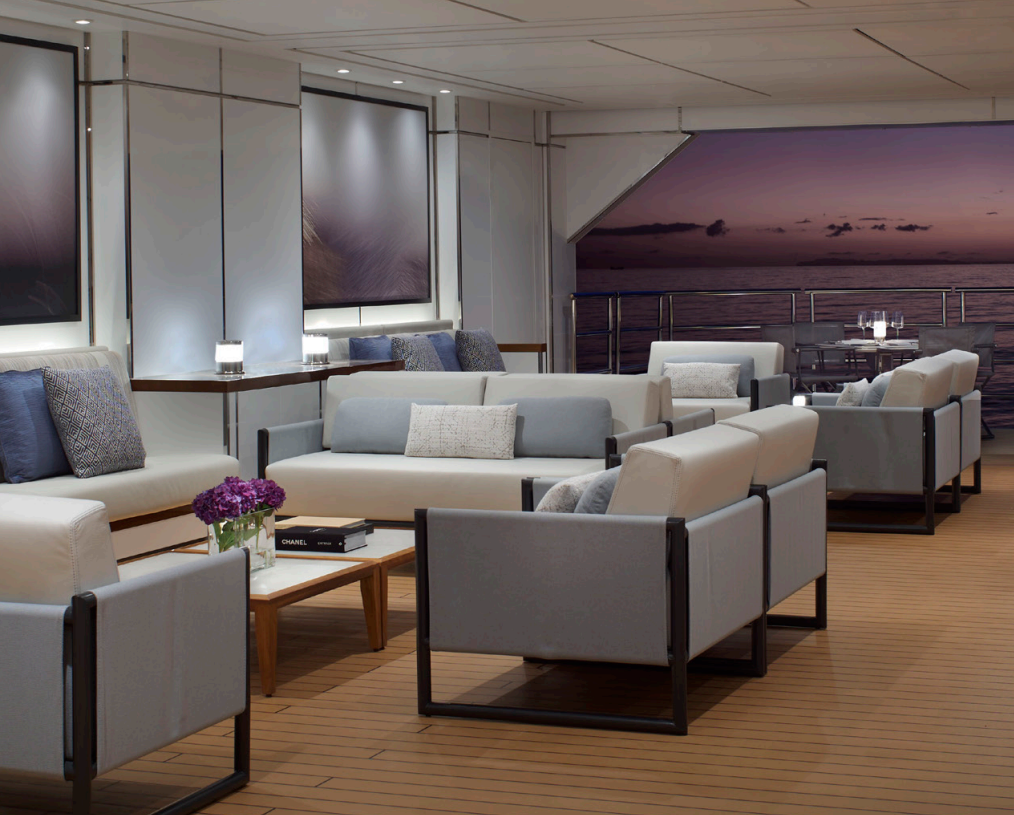
Marina and Marina Terrace
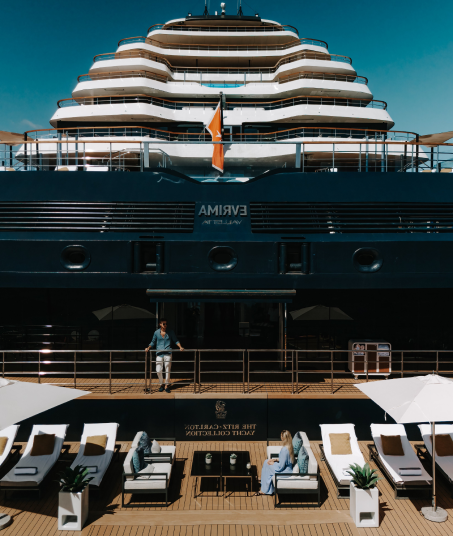
Sitting right at the water’s edge, the Marina offers sun loungers and a generous choice of water toys. Like a private beach with seamless entry into the sea, it’s the go-to spot while at anchor. Just steps above, the Marina Terrace serves handcrafted cocktails and light bites with stunning view

The Observation Lounge
Top-deck views erase the borders between land and sea, an inspired setting for lounging, cocktails or socializing. At twilight, the space is transformed into a venue with cocktails and live entertainment, extending into a late-night hangout. Whether exploring on luxury repositioning cruises, luxury Baltic cruises, US-based cruises, or anything in between, The Observation Lounge is your vantage point for sightseeing anywhere at sea.
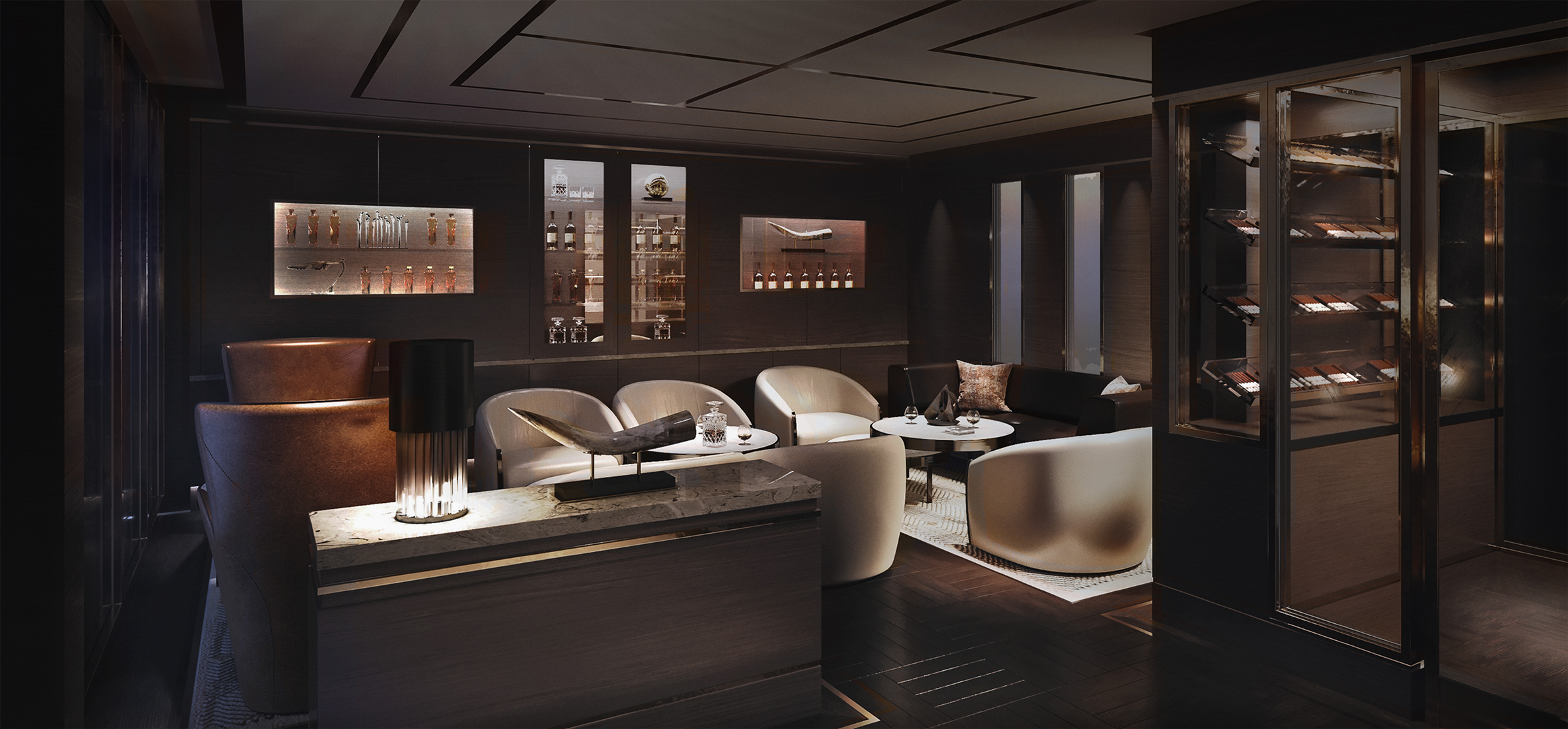
The Humidor
Cap off your day with a premium cognac in this intimate lounge with its comfortable furnishings. An excellent selection of premium, hand-rolled cigars are showcased in the state-of-the-art humidor.
The Boutique
From exclusive sportswear and branded apparel to jewelry and leather goods, leading labels offer enticing options. In select ports, your shopping experience is further enhanced by bespoke collaborations with local artisans who come on board to showcase their offerings.
The Living Room
Bold shades of blue reflecting the sea provide a vibrant accent to the yacht’s gathering place, with its chic, comfortable furnishings and library with travel guides and best sellers. Diffused lighting transforms the space into a cocktail lounge with piano bar, dancing and live music later on, making The Living Room one of the most popular Ritz-Carlton Yacht Collection onboard features.
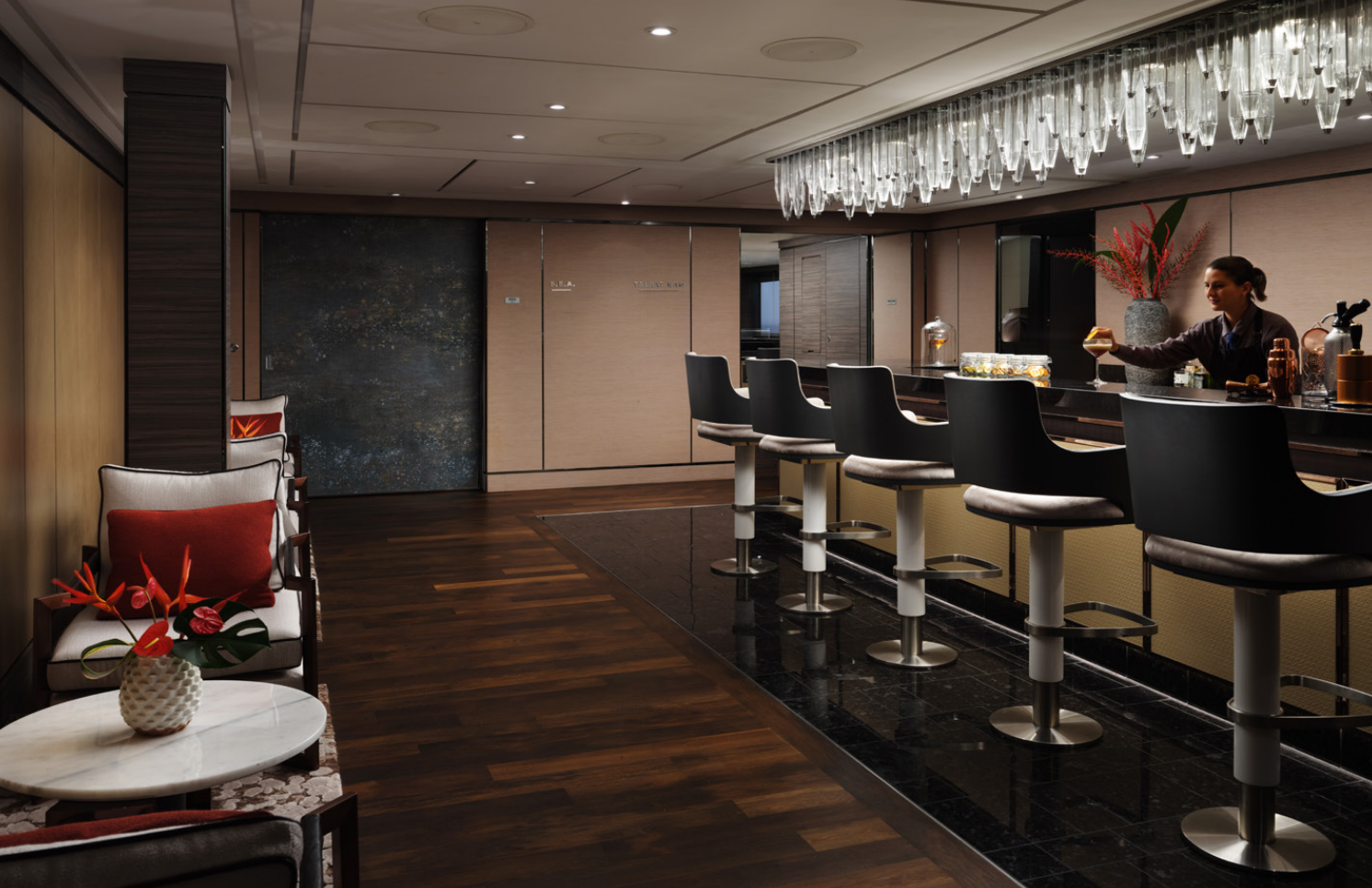
The Bar
This intimate lounge serves premium labels from around the world and also offers champagne and caviar pairings.
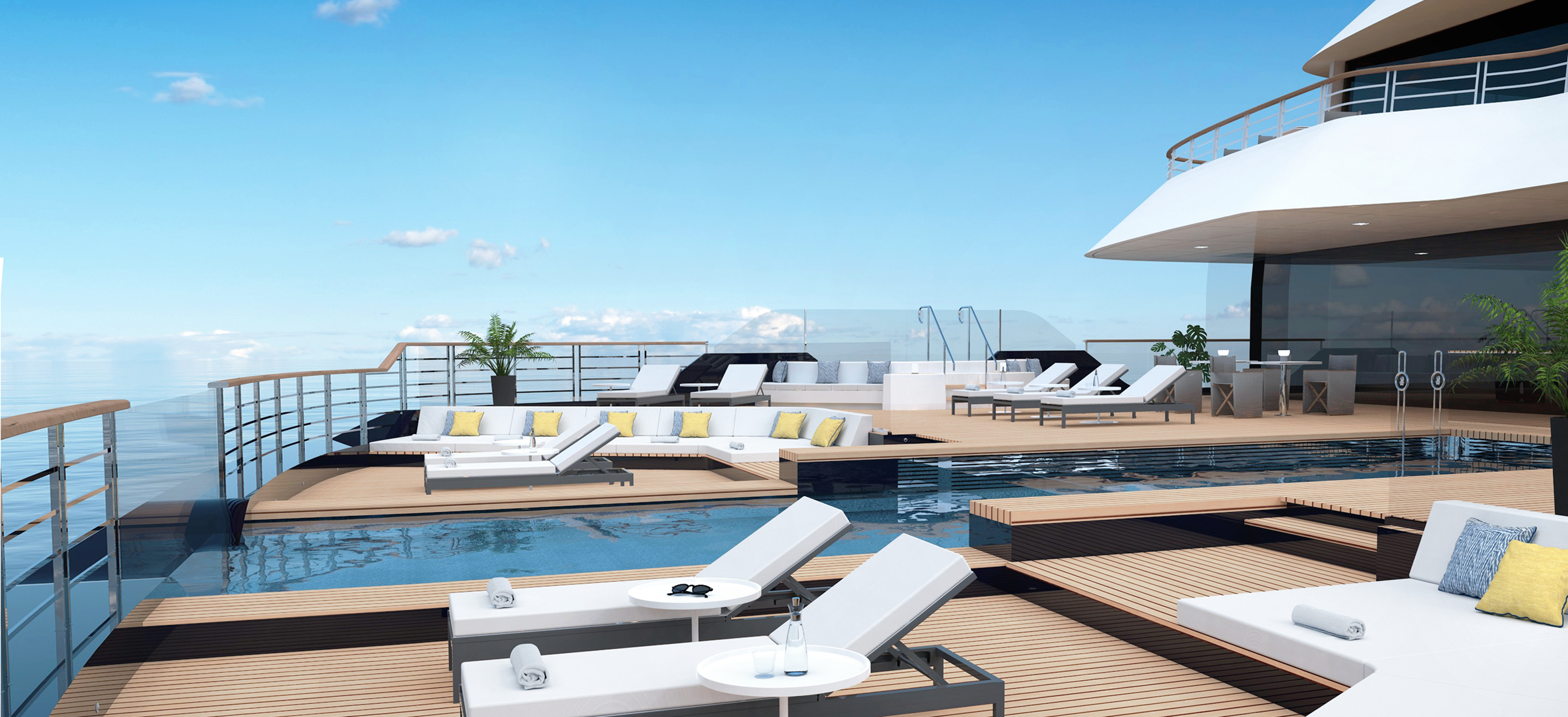
The Pool
An infinity oasis of blue is just steps away from The Pool House, where guests can enjoy all-day dining. Frozen treats and refreshing water mistings pamper guests on the sun loungers and banquettes or soaking in the whirlpools. A spacious venue for deck parties and open-air movies.
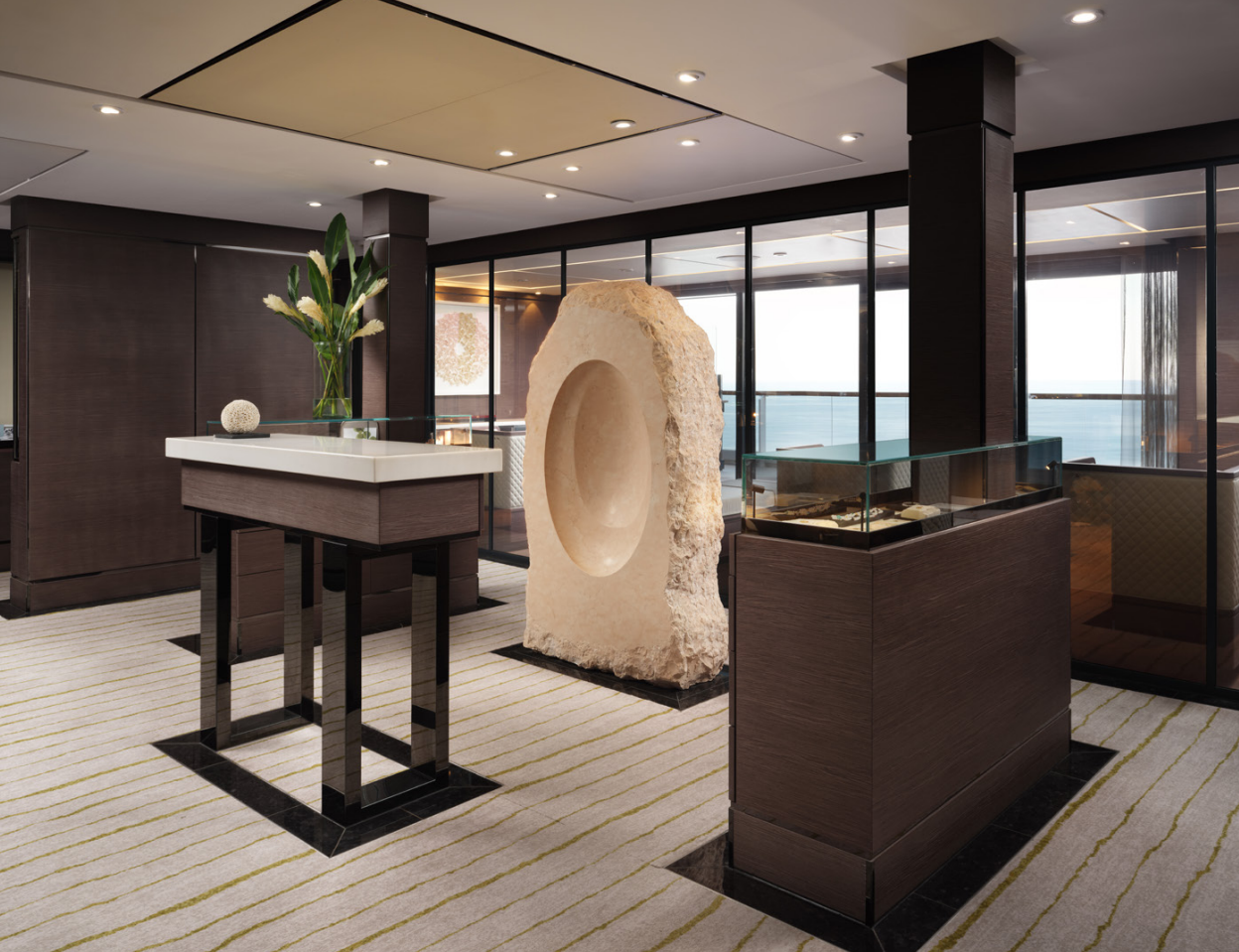
The Ritz-Carlton Spa
Listen to the gentle lap of waves while reclining on a massage table, savoring a therapeutic spa treatment from the private terrace of one of our treatment rooms. Inspired by the destinations we visit and curated to fulfill your needs, our treatments feature the finest ESPA products to awaken the senses, refresh the body and renew the spirit. Arrive early, stay a while and drift away into relaxation aboard your oasis at sea.
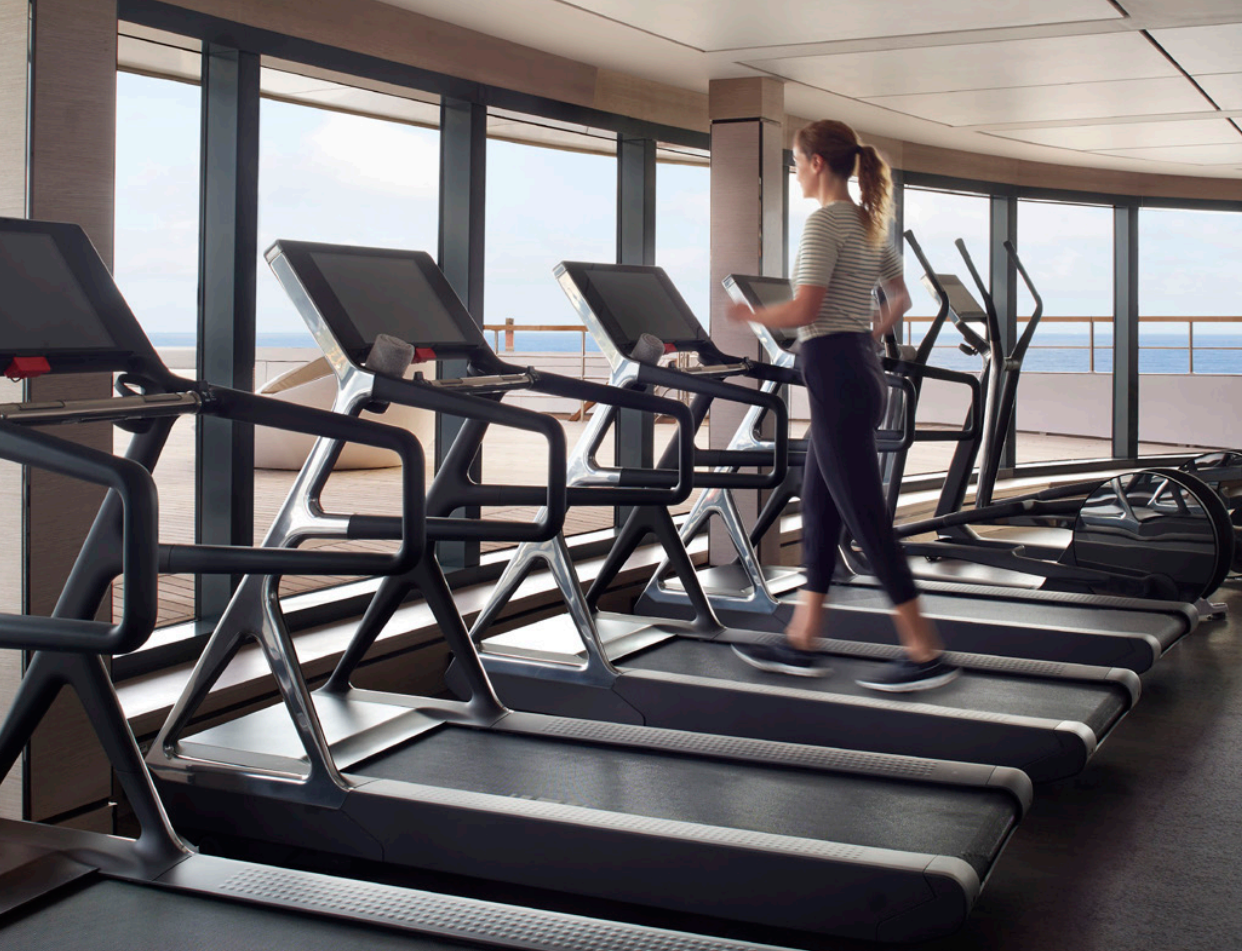
The Fitness Studio
The Fitness Studio is home to a health and wellness program that integrates fitness and spa with lectures and nutrition that can be customized for each guest. From personal training to sunrise yoga and mat Pilates, each voyage has opportunities to maintain a healthy lifestyle.
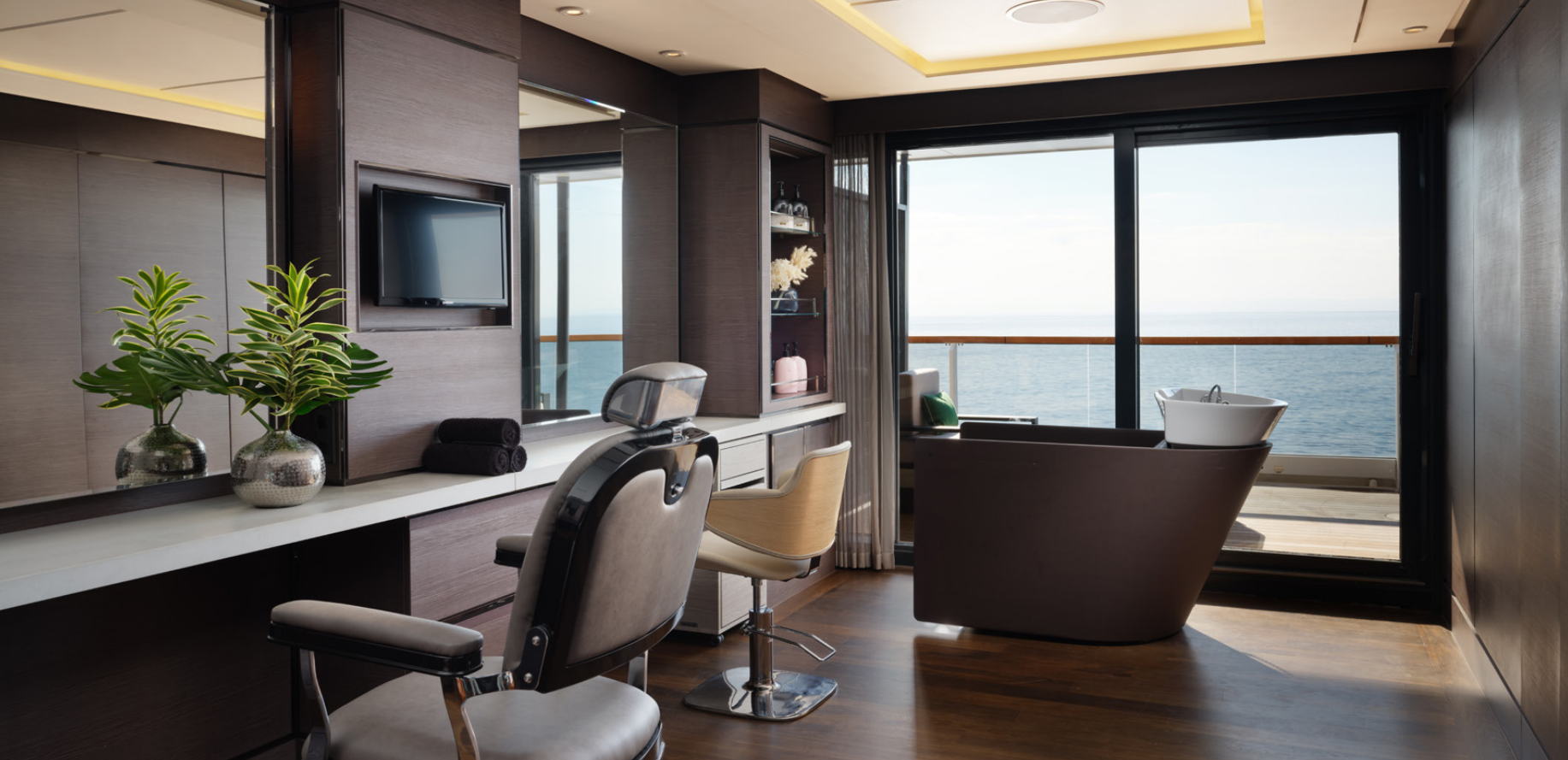
Barber & Salon Services
The Salon offers a variety of beauty and hair services including manicure and pedicure treatments, hair consultations, cutting, styling and blow drying. Next door at The Barber, gentlemen can enjoy a close shave or invigorating facial before heading ashore to explore the port feeling refreshed and revitalized.
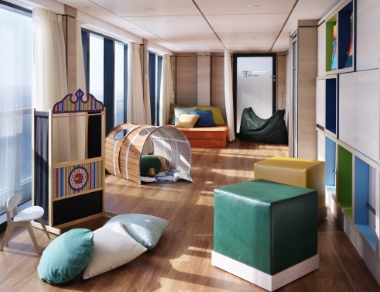
Ritz-Kids
Families exploring the world together are welcome aboard The Ritz-Carlton Yacht Collection. With its own dedicated space on board, Ritz-Kids® is an educational and fun-filled program that encourages children ages 4 to 12 to explore the world around them. Enhanced programming will be available during holidays and summer months.
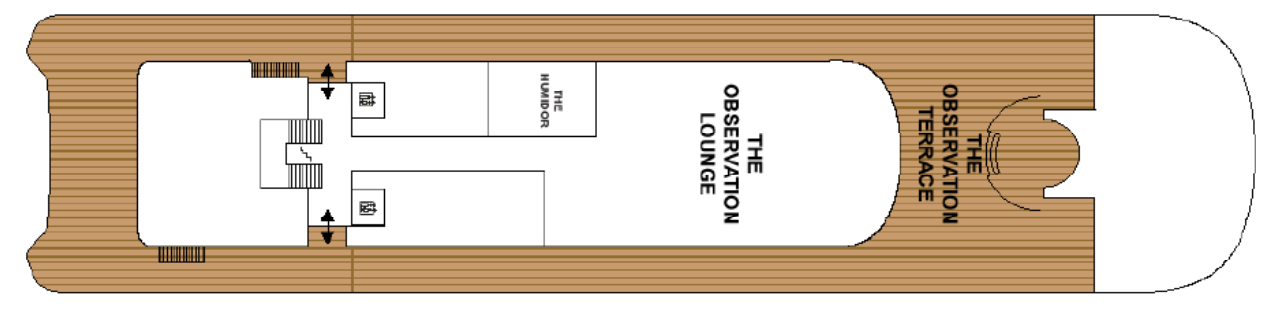
Deck 10
- The Observation Lounge
- The Observation Terrace
- The Humidor
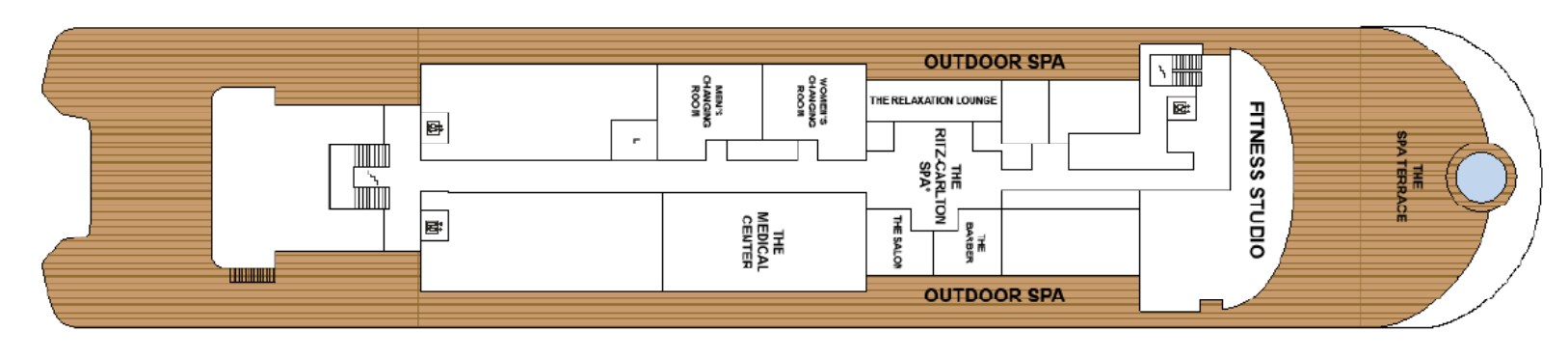
Deck 9
- The Gym
- Fitness Studio
- The Ritz-Carlton Spa
- Outdoor Spa
- The Spa Terrace
- The Barber/The Salon
- Launderette
- Men/Women’s Changing Rooms
- The Medical Centre
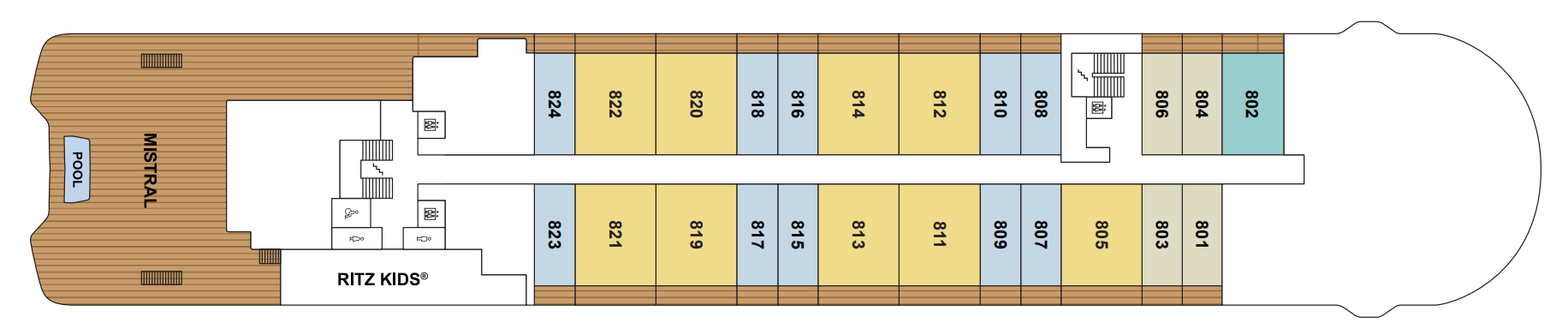
Deck 8
- Mistral
- Pool
- Ritz-Kids
- Suites 801 – 824

Deck 7
- Suites 701 – 737

Deck 6
- The Bar
- S.E.A
- Talaat Nam
- Suites 601 – 645

Deck 5
- The Pool House
- The Pool
- Suites 501 – 545

Deck 4
- The Meeting Rooms
- The Living Room
- The Boutique
- Wine Vault
- Wine Tasting Area
- The Evrima Room
- Dining Privee
- Dining Privée
- 505 – 519 Lower Level

Deck 3
- The Marina Terrace
- The Marina