
Itinerary
Italy’s vibrant capital lives in the present, but no other city on earth evokes its past so powerfully. For over 2,500 years, emperors, popes, artists, and common citizens have left their mark here. Archaeological remains from ancient Rome, art-stuffed churches, and the treasures of Vatican City vie for your attention, but Rome is also a wonderful place to practice the Italian-perfected il dolce far niente, the sweet art of idleness. Your most memorable experiences may include sitting at a caffè in the Campo de’ Fiori or strolling in a beguiling piazza.
Located in the South of Corsica, Bonifacio is one of the island’s most beautiful destinations. From its breathtaking views and sandy white islands to its historic citadel, the city is a must visit for anyone travelling to the island.
Livorno is a gritty city with a long and interesting history. In the early Middle Ages it alternately belonged to Pisa and Genoa. In 1421 Florence, seeking access to the sea, bought it. Cosimo I (1519–74) started construction of the harbor in 1571, putting Livorno on the map. After Ferdinando I de’ Medici (1549–1609) proclaimed Livorno a free city, it became a haven for people suffering from religious persecution; Roman Catholics from England and Jews and Moors from Spain and Portugal, among others, settled here. The Quattro Mori (Four Moors), also known as the Monument to Ferdinando I, commemorates this. (The statue of Ferdinando I dates from 1595, the bronze Moors by Pietro Tacca from the 1620s.)In the following centuries, and particularly in the 18th, Livorno boomed as a port. In the 19th century the town drew a host of famous Britons passing through on their grand tours. Its prominence continued up to World War II, when it was heavily bombed. Much of the town’s architecture, therefore, postdates the war, and it’s somewhat difficult to imagine what it might have looked like before. Livorno has recovered from the war, however, as it’s become a huge point of departure for container ships, as well as the only spot in Tuscany for cruise ships to dock for the day.Most of Livorno’s artistic treasures date from the 17th century and aren’t all that interesting unless you dote on obscure baroque artists. Livorno’s most famous native artist, Amedeo Modigliani (1884–1920), was of much more recent vintage. Sadly, there’s no notable work by him in his hometown.There may not be much in the way of art, but it’s still worth strolling around the city. The Mercato Nuovo, which has been around since 1894, sells all sorts of fruits, vegetables, grains, meat, and fish. Outdoor markets nearby are also chock-full of local color. The presence of Camp Darby, an American military base just outside town, accounts for the availability of many American products.If you have time, Livorno is worth a stop for lunch or dinner at the very least.
The colorful facades and pedestrians-only calata (promenade) make Portovenere the quintessential Ligurian seaside village. As a UNESCO World Heritage Site, its harbor is lined with tall, thin “terratetto” houses that date from as far back as the 11th century and are connected in a wall-like formation to protect against attacks by the Pisans and local pirates. Its tiny, carruggi (alley-like passageways) lead to an array of charming shops, homes, and gardens and eventually to the village’s impressive Castle Doria high on the olive tree covered hill. To the west standing guard over the Mediterranean is the picturesque medieval Chiesa di San Pietro, once the site of a temple to Venus (Venere in Italian), from which Portovenere gets its name. Nearby, in a rocky area leading to the sea, is Byron’s Cave, a favorite spot that the poet loved to swim out into the sea from.
One of the most photographed villages along the coast, with a decidedly romantic and affluent aura, Portofino has long been a popular destination for the rich and famous. Once an ancient Roman colony and taken by the Republic of Genoa in 1229, it’s also been ruled by the French, English, Spanish, and Austrians, as well as by marauding bands of 16th-century pirates. Elite British tourists first flocked to the lush harbor in the mid-1800s. Some of Europe’s wealthiest drop anchor in Portofino in summer, but they stay out of sight by day, appearing in the evening after buses and boats have carried off the day-trippers.There’s not actually much to do in Portofino other than stroll around the wee harbor, see the castle, walk to Punta del Capo, browse at the pricey boutiques, and sip a coffee while people-watching. However, weaving through picture-perfect cliffside gardens and gazing at yachts framed by the sapphire Ligurian Sea and the cliffs of Santa Margherita can make for quite a relaxing afternoon. There are also several tame, photo-friendly hikes into the hills to nearby villages.Unless you’re traveling on a deluxe budget, you may want to stay in Camogli or Santa Margherita Ligure rather than at one of Portofino’s few very expensive hotels. Restaurants and cafés are good but also pricey (don’t expect to have a beer here for much under €10).
United with France only since 1860, Nice has its own history and atmosphere, which dates back 230,000 years. It was on Colline du Château (now château-less) and at the Plage des Ponchettes, in front of the Old Town, that the Greeks established a market-port in 350 BC and named it Nikaia, which would become Marseilles’ chief coastal rival. The Romans established themselves a little later on the hills of Cimiez (Cemenelum), already previously occupied by Ligurians and Celts, and quickly overshadowed the waterfront port. After falling to the Saracen invasions, Nice regained power as an independent state, becoming an important port in the early Middle Ages.So cocksure did it become that in 1388, Nice, along with the hill towns behind, effectively seceded from the county of Provence, under Louis d’Anjou, and allied itself with Savoie. Thus began its liaison with the House of Savoy, and through it with Piedmont and Sardinia, it was the Comté de Nice (Nice County). This relationship lasted some 500 years, tinting the culture, architecture, and dialect in rich Italian hues.By the 19th century Nice was flourishing commercially, locked in rivalry with the neighboring shipping port of Genoa. Another source of income: the dawning of tourism, as first the English, then the Russian nobility, discovered its extraordinary climate and superb waterfront position. A parade of fine stone mansions and hotels closed into a nearly solid wall of masonry, separated from the smooth-round rocks of the beach by what was originally named Camin deis Anglés (the English Way), which of course is now the famous Promenade des Anglais. This magnificent crescent, which is seeking UNESCO recognition, is one of the noblest in France. Many of Nice’s most delightful attractions—the Cours Saleya market, the Old Town streets, the Hotel Negresco, and the Palais Masséna—are on or close to this 10-km (6-mile) waterfront, making it the first stop for most visitors, while the redevelopment of Nice’s port, around the other side of the Colline du Château, makes it easier for amblers who want to take in the Genoese architecture or peruse the antiques at the Puces de Nice, now part of the Promenade des 100 Antiquaires, along Quai Papacino. Nice also has the distinction of the “Family Plus” label, with free strollers, play areas, and restaurants with child-friendly activities.
Since being designated a European Capital of Culture for 2013, with an estimated €660 million of funding in the bargain, Marseille has been in the throes of an extraordinary transformation, with no fewer than five major new arts centers, a beautifully refurbished port, revitalized neighborhoods, and a slew of new shops and restaurants. Once the underdog, this time-burnished city is now welcoming an influx of weekend tourists who have colonized entire neighborhoods and transformed them into elegant pieds-à-terre (or should we say, mer). The second-largest city in France, Marseille is one of Europe’s most vibrant destinations. Feisty and fond of broad gestures, it is also as complicated and as cosmopolitan now as it was when a band of Phoenician Greeks first sailed into the harbor that is today’s Vieux Port in 600 BC. Legend has it that on that same day a local chieftain’s daughter, Gyptis, needed to choose a husband, and her wandering eyes settled on the Greeks’ handsome commander Protis. Her dowry brought land near the mouth of the Rhône, where the Greeks founded Massalia, the most important Continental shipping port in antiquity. The port flourished for some 500 years as a typical Greek city, enjoying the full flush of classical culture, its gods, its democratic political system, its sports and theater, and its naval prowess. Caesar changed all that, besieging the city in 49 BC and seizing most of its colonies. In 1214 Marseille was seized again, this time by Charles d’Anjou, and was later annexed to France by Henri IV in 1481, but it was not until Louis XIV took the throne that the biggest transformations of the port began; he pulled down the city walls in 1666 and expanded the port to the Rive Neuve (New Riverbank). The city was devastated by plague in 1720, losing more than half its population. By the time of the Revolution, Marseille was on the rebound once again, with industries of soap manufacturing and oil processing flourishing, encouraging a wave of immigration from Provence and Italy. With the opening of the Suez Canal in 1869, Marseille became the greatest boomtown in 19th-century Europe. With a large influx of immigrants from areas as exotic as Tangiers, the city quickly acquired the multicultural population it maintains to this day.
The fishing village of Sète serves as gateway to Montpellier, in the North. Other noteworthy destinations in this area include Carcassone, Aigues Mortes, the Abbaye de Fontfroide, and Pezenas. For a look at the real fisherman’s life, however, stay right where you are. Sète is the Mediterranean’s biggest fishing port. Canals winding through town make it fun to stroll around, and there are a number of good walking paths leading to the beach (about 30 minutes to the west). Although it’s small and unspectacular, Plage de la Corniche has calm, pristine waters that are perfect for swimming. For a panoramic view of the area, climb Mont St-Clair or Les Pierres Blanches and pick a beach to settle down on.
Ship features
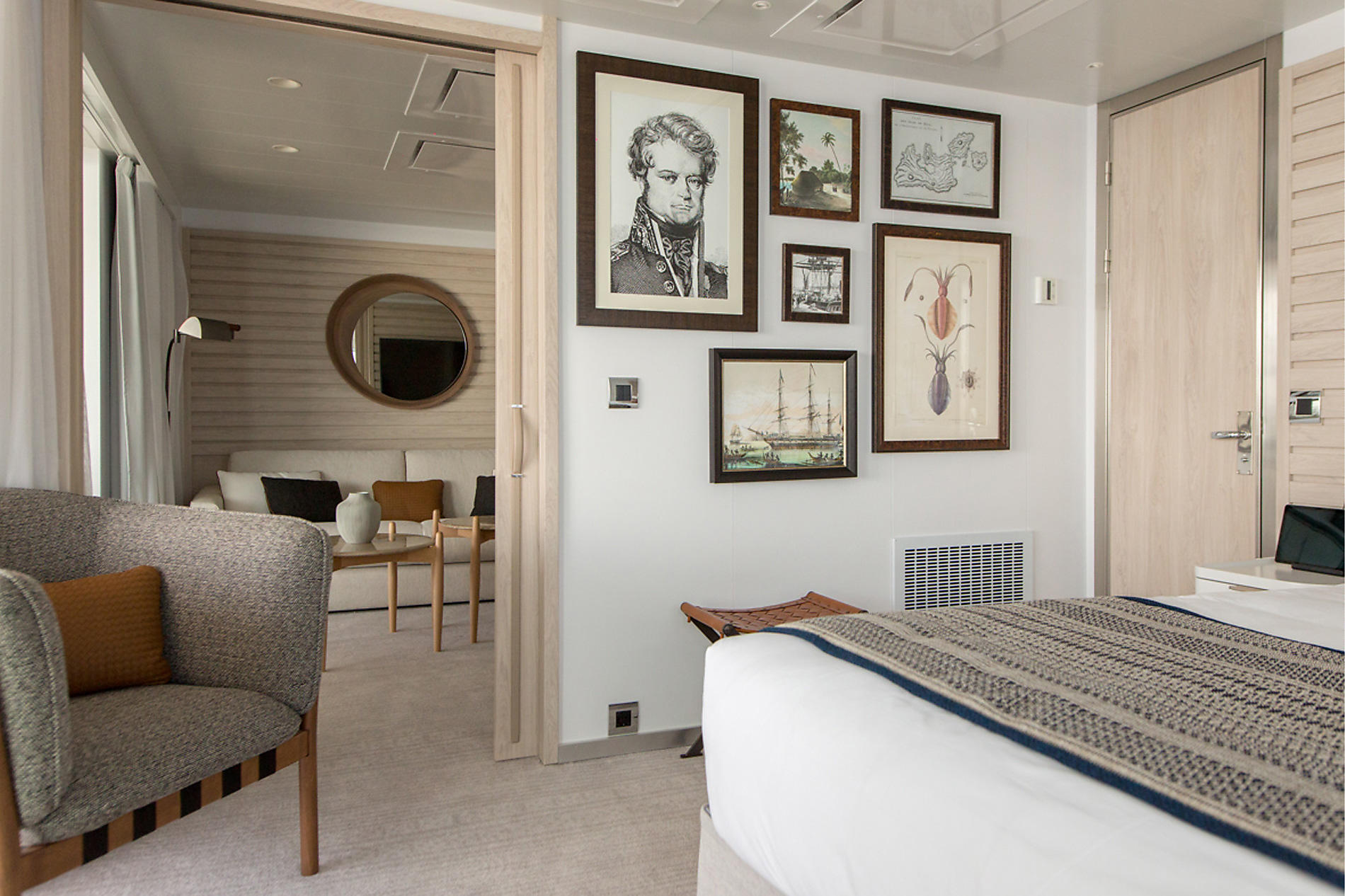
Owner's Suite
In addition to the common services provided to all our suites and staterooms:
- A private 430 ft² terrace with hot tub and lounge area with 2 deck chairs, sofa, and armchair
- Two sliding panoramic windows
- A bathroom with shower, spa bathtub, and smart mirror
- Butler service
- A one-hour treatment per person (for 2 people) in the wellness area, including body and facial treatments
- A private return transfer
- Priority boarding (depending on port of embarkation)
- Champagne and fruit on arrival
- A fruit basket every day
- A living room with a convertible sofa into a double bed, armchair, and TV
- One bedroom with king-size bed (180 x 190 cm) or two single beds (90 x 190 cm)
- Included premium pass: access to a selection of premium spirits at the bar
Included in all staterooms
- Minibar
- Diptyque Paris top-of-the-line bath products
- Bose Bluetooth speaker
- Individually-controlled air conditioning
- Nespresso coffee maker and boiler
- Dressing room with shelves and closet
- 110V American / 220V European
- Dressing table and hairdryer
- Direct line telephone
- 2 ADA stateroom
- 24-hour room service
- Electronic safe
- Flat screen TV, international channels and videos on demand
- Inclusive Wifi internet
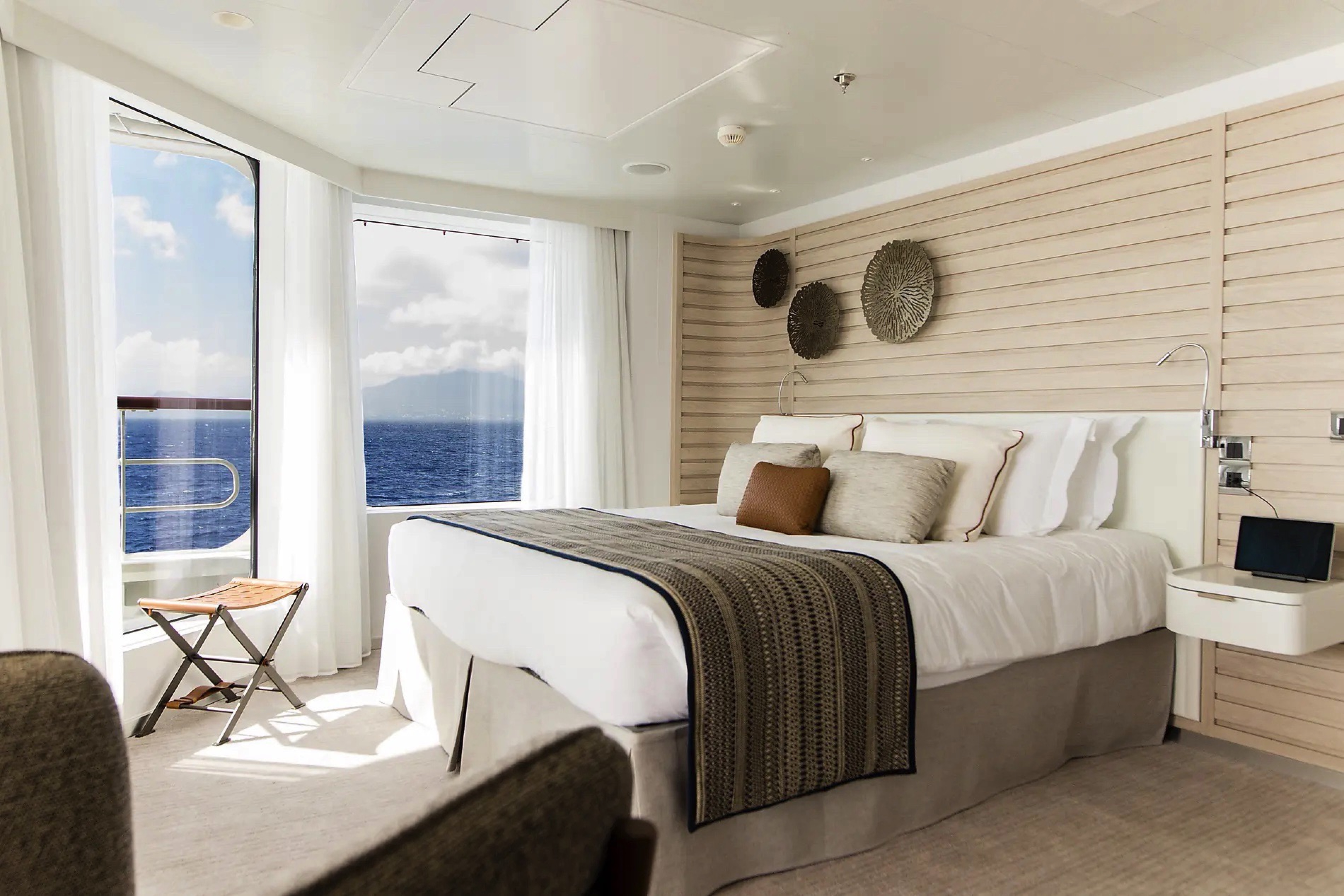
Grand Suite
In addition to the common services provided to all our suites and staterooms:
- A private 344 ft² terrace with two deck chairs and a dining table for four people
- Two sliding panoramic windows
- A bathroom with shower and spa bathtub
- Priority boarding (depending on port of embarkation)
- Butler service
- A fruit basket every day
- One bedroom with king-size bed (180 x 190 cm) or two single beds (90 x 190 cm)
- A living room with a convertible sofa into a double bed, armchair, and TV
- Champagne and fruit on arrival
Included in all staterooms
- Minibar
- Diptyque Paris top-of-the-line bath products
- Bose Bluetooth speaker
- Individually-controlled air conditioning
- Nespresso coffee maker and boiler
- Dressing room with shelves and closet
- 110V American / 220V European
- Dressing table and hairdryer
- Direct line telephone
- 2 ADA stateroom
- 24-hour room service
- Electronic safe
- Flat screen TV, international channels and videos on demand
- Inclusive Wifi internet
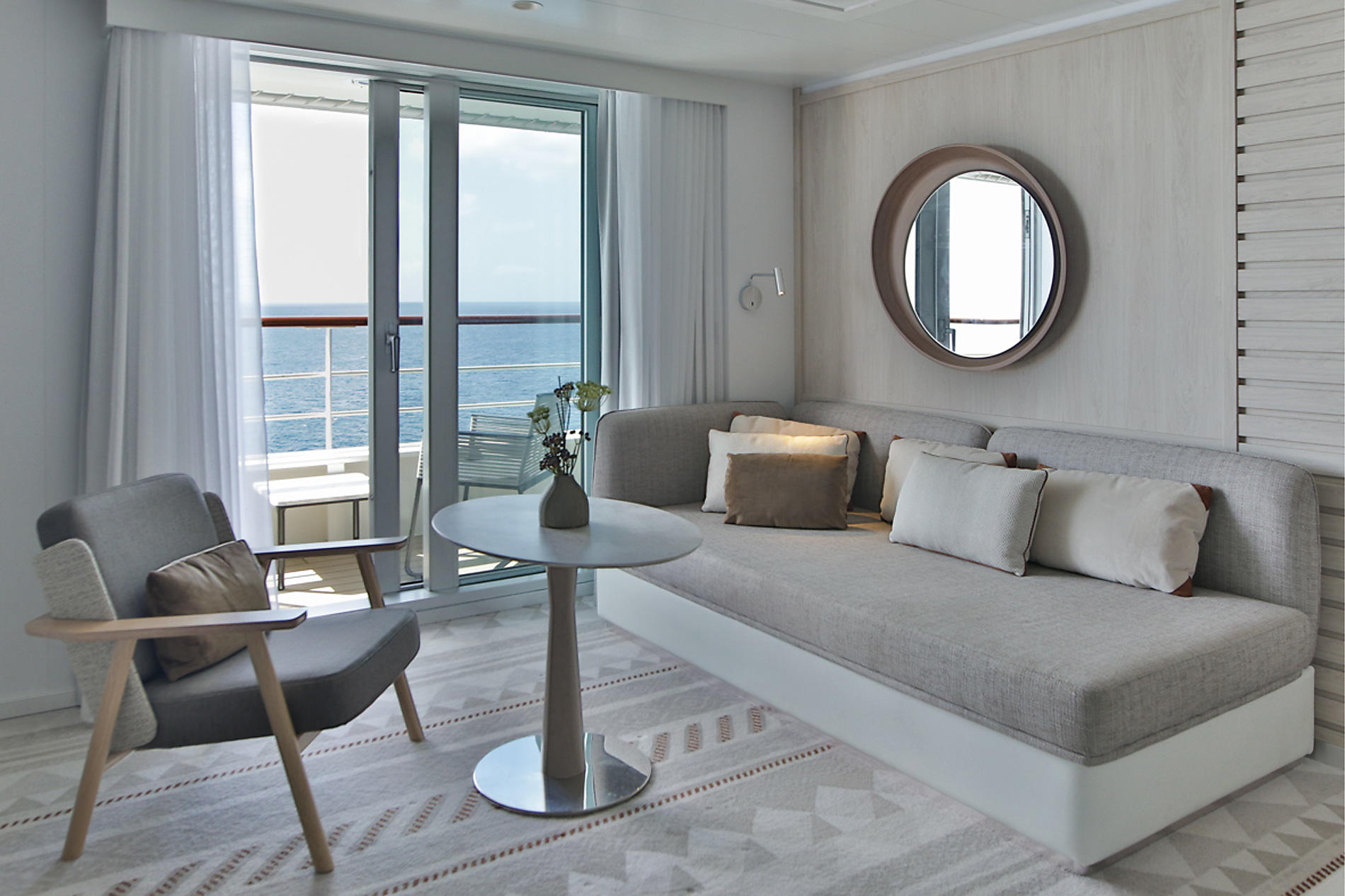
Privilege Suite
In addition to the common services provided to all our suites and staterooms:
- Priority boarding (depending on port of embarkation)
- Champagne and fruit basket on arrival
- Butler service
- A fruit basket every day
- One king-size bed (180 x 200 cm) or two single beds (90 x 200 cm)
- A lounge area with chaise longue and armchair
- A bathroom with shower
- A private 8 m² balcony with two armchairs
- A panoramic sliding bay window
Included in all staterooms
- Minibar
- Diptyque Paris top-of-the-line bath products
- Bose Bluetooth speaker
- Individually-controlled air conditioning
- Nespresso coffee maker and boiler
- Dressing room with shelves and closet
- 110V American / 220V European
- Dressing table and hairdryer
- Direct line telephone
- 2 ADA stateroom
- 24-hour room service
- Electronic safe
- Flat screen TV, international channels and videos on demand
- Inclusive Wifi internet
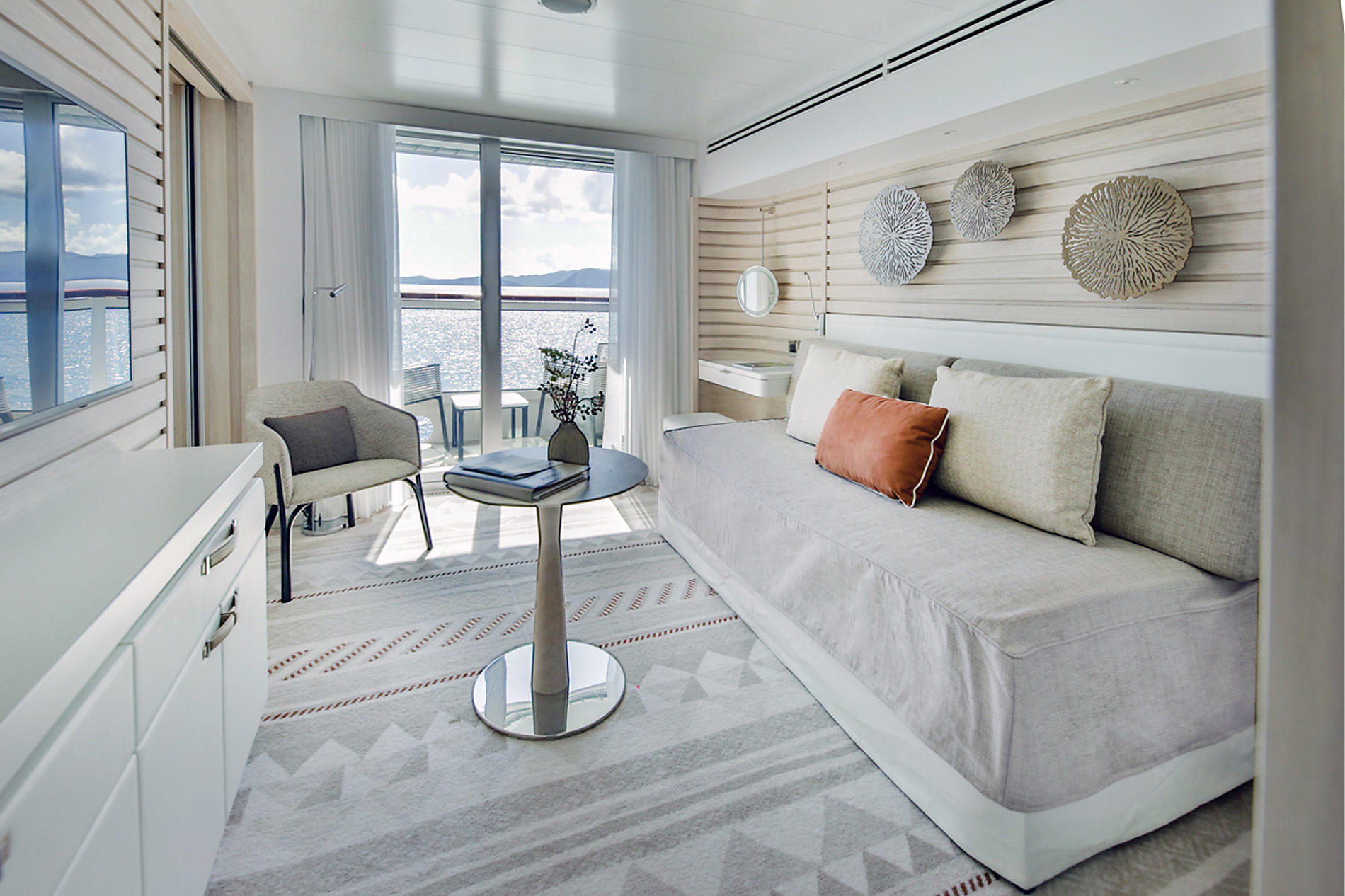
Prestige Suite
In addition to the common services provided to all our suites and staterooms:
- Priority boarding (depending on port of embarkation)
- Champagne and fruit basket on arrival
- Butler service
- A fruit basket every day
- A bedroom with king-size bed (180 x 200 cm) or two single beds (90 x 200 cm)
- A lounge with convertible sofa to a king-size bed (180 x 200 cm) or two single beds (90 x 200 cm), armchair, second TV, and sliding courtesy door
- Two bathrooms with shower
- A private 8 m² balcony with four armchairs
- Two panoramic sliding bay windows
Services provided
- 24-hour room service
- Inclusive Wifi internet access (availability dependent on navigation and latitude)
- Individually-controlled air conditioning
- Dressing room with shelves and closet
- Dressing table and hairdryer
- Diptyque Paris top-of-the-line bath products
- Minibar
- Nespresso coffee maker and boiler
- Electronic safe
- Direct line telephone
- Bose Bluetooth speaker
- Flat screen TV, international channels (availability dependent on navigation) and videos on demand
- 110V American (two flat pins)/220V European (round sockets with two round pins)
- Two ADA staterooms
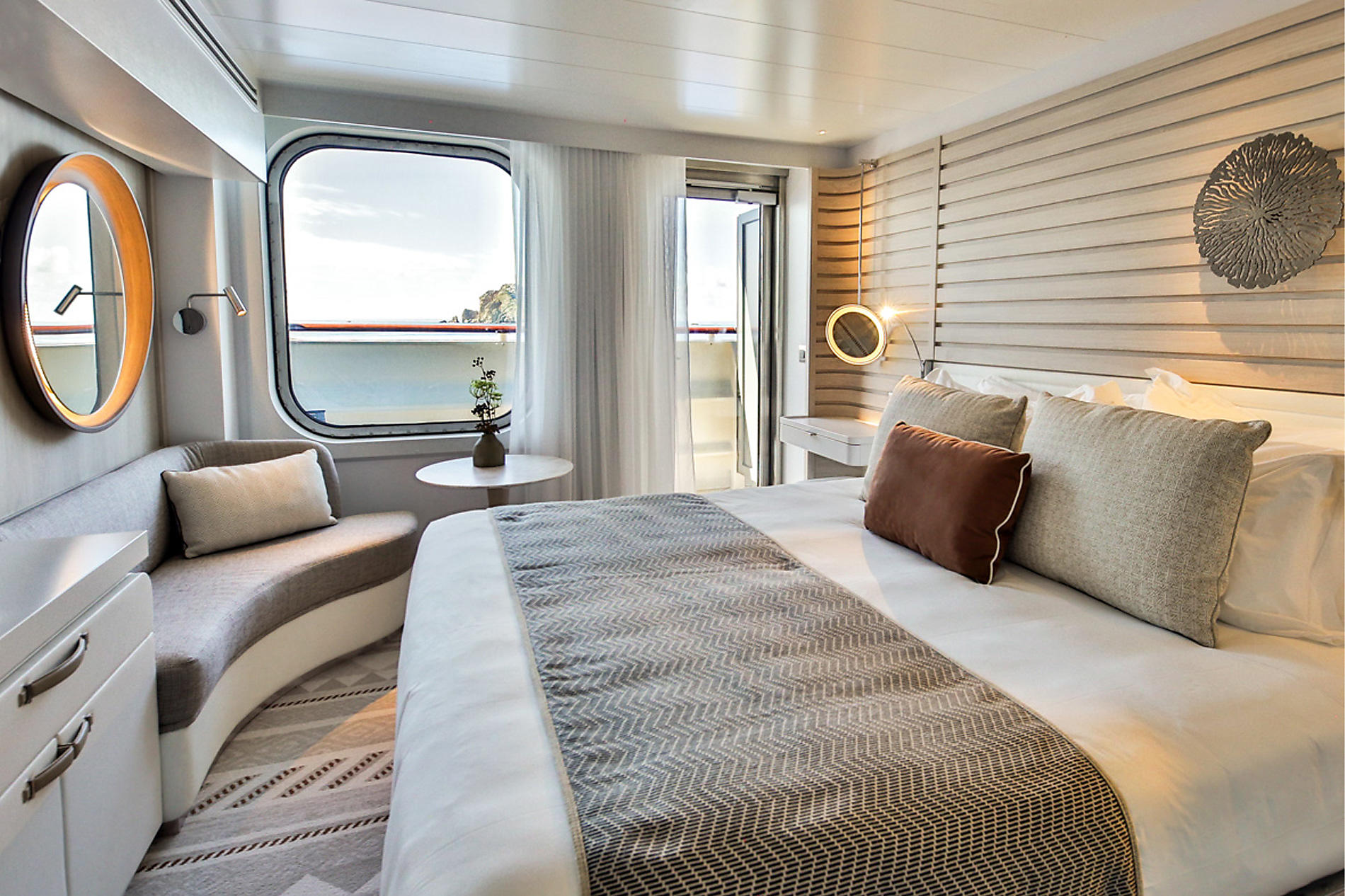
Deluxe Suite
In addition to the common services provided to all our suites and staterooms:
- Suites on Deck 6 have a 32 ft² private balcony with two armchairs Suites on Deck 5 have a 43 ft² private balcony with two armchairs Suites on Decks 3 and 4 have a private 64 ft² balcony with two armchairs
- Suites on Deck 3 have a panoramic glass door and porthole; suites on Decks 4, 5, and 6 have a sliding panoramic window
- One king-size bed (180 x 190 cm) or two single beds (90 x 190 cm)
- An armchair and sofa
- A bathroom with shower
- Champagne and fruit on arrival for suites on Decks 5 and 6
Included in all staterooms
- Minibar
- Diptyque Paris top-of-the-line bath products
- Bose Bluetooth speaker
- Individually-controlled air conditioning
- Nespresso coffee maker and boiler
- Dressing room with shelves and closet
- 110V American / 220V European
- Dressing table and hairdryer
- Direct line telephone
- 2 ADA stateroom
- 24-hour room service
- Electronic safe
- Flat screen TV, international channels and videos on demand
- Inclusive Wifi internet
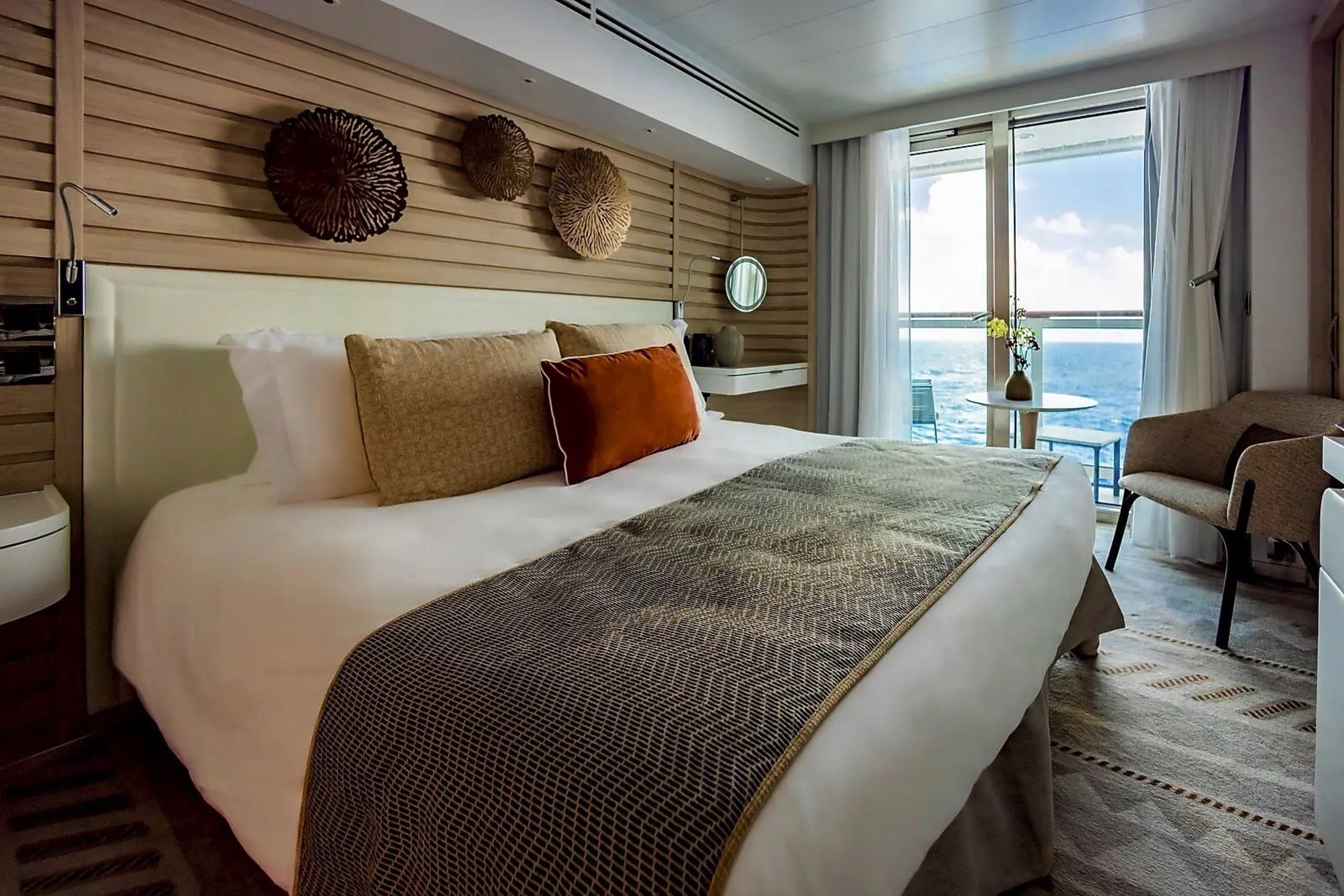
Upper Decks Balcony Stateroom
In addition to the common services provided to all our suites and staterooms:
- A private 4m² balcony with two armchairs
- Depending on the stateroom, either a sliding panoramic window or a glass door
- One king-size bed (180 x 190 cm) or two single beds (90 x 190 cm)
- A chaise lounge
- A bathroom with shower
Included in all staterooms
- Minibar
- Diptyque Paris top-of-the-line bath products
- Bose Bluetooth speaker
- Individually-controlled air conditioning
- Nespresso coffee maker and boiler
- Dressing room with shelves and closet
- 110V American / 220V European
- Dressing table and hairdryer
- Direct line telephone
- 2 ADA stateroom
- 24-hour room service
- Electronic safe
- Flat screen TV, international channels and videos on demand
- Inclusive Wifi internet
Lower Decks Balcony Stateroom
In addition to the common services provided to all our suites and staterooms:
- A private 4m² balcony with two armchairs
- Depending on the stateroom, either a sliding panoramic window or a glass door
- One king-size bed (180 x 190 cm) or two single beds (90 x 190 cm)
- A chaise lounge
- A bathroom with shower
Included in all staterooms
- Minibar
- Diptyque Paris top-of-the-line bath products
- Bose Bluetooth speaker
- Individually-controlled air conditioning
- Nespresso coffee maker and boiler
- Dressing room with shelves and closet
- 110V American / 220V European
- Dressing table and hairdryer
- Direct line telephone
- 2 ADA stateroom
- 24-hour room service
- Electronic safe
- Flat screen TV, international channels and videos on demand
- Inclusive Wifi internet

Le Nautilus
At the back of deck 4, you will find a gourmet restaurant complete with wine cellar, offering French and international cuisine. It can accommodate all guests in a single service for breakfast, lunch and dinner.

Grill Restaurant
In a relaxed atmosphere, the grill restaurant located on deck 3 welcomes you for breakfast and buffet lunches as well as themed dinners.
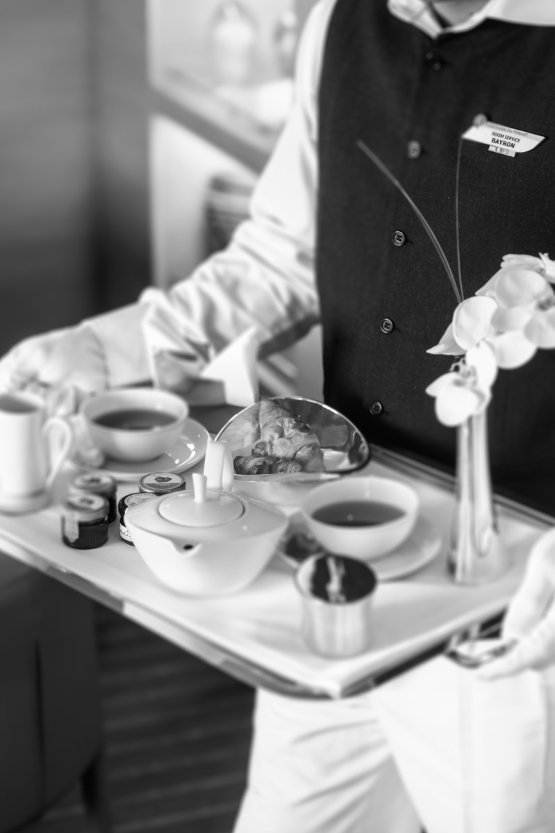
Room Service
Whether you want to fully enjoy your cabin for breakfast, savor a peaceful snack in the middle of the day, or have your meal in complete privacy, room service is at your disposal. Treat yourself to a moment of indulgence and enjoy a diverse menu available at any time of day and night.
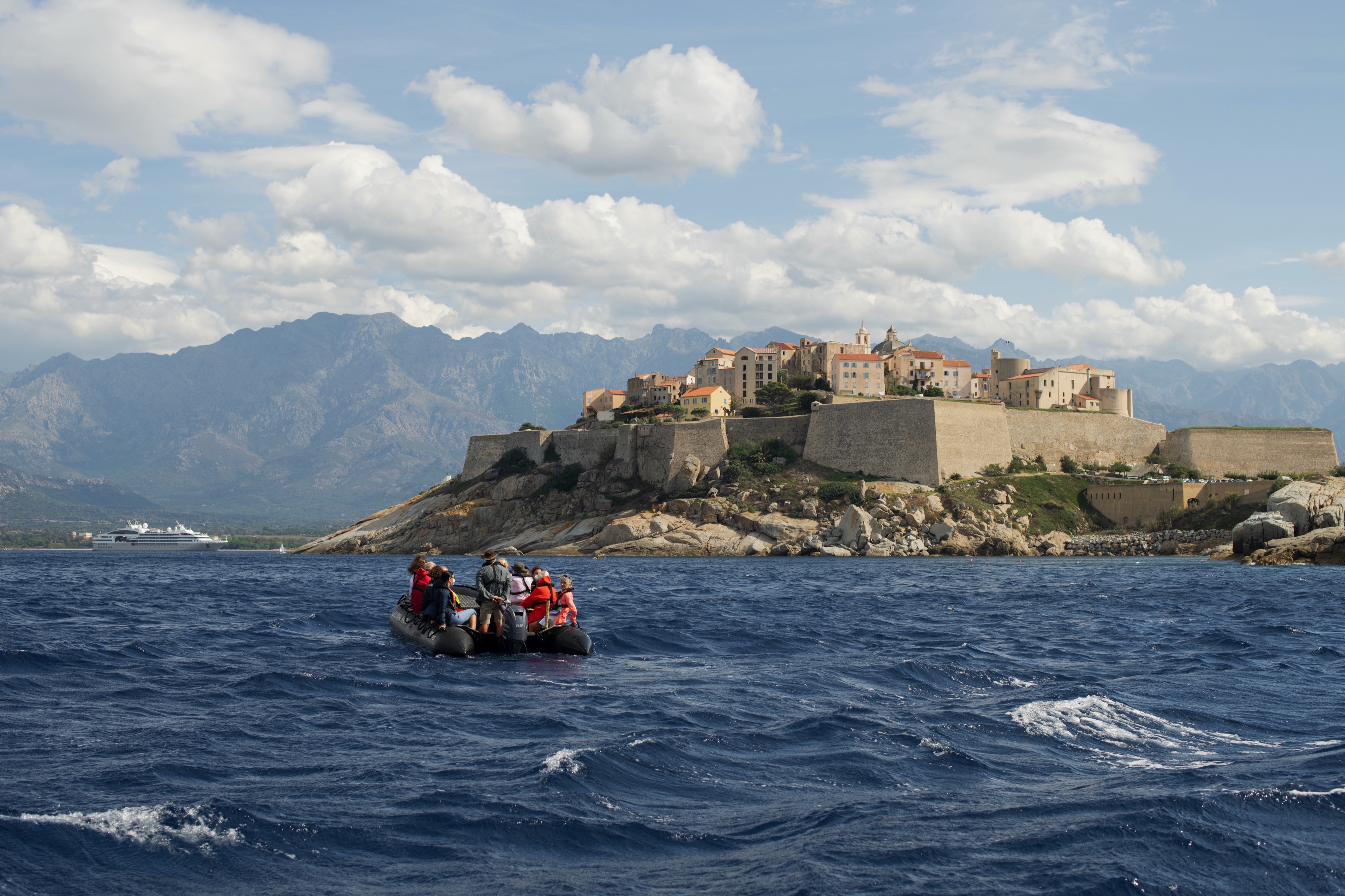
Explorations
Because your desires for escape are many, we offer a range of explorations, each promising unique experiences. Timeless, Discoveries, or Expeditions: each collection offers a distinct and tailored approach, allowing you to experience your chosen destination as closely as possible.
Timeless
Preserved and authentic towns and villages, iconic or more secluded sites… Discover the cultural and gastronomic riches of your destination through the eyes of inspiring local guides and your onboard lecturer, experts in the regions visited.
Timeless: your experiences
- Disembarkation at the dock or by tender, excursions by air-conditioned bus or local transport, depending on the destinations
- One excursion per day and per stopover, accompanied by local guides
- Optional paid excursions, available depending on the port of call, to further explore the destination
- Lectures led by expert guides or distinguished guests
- Activities supervised by Kids Club staff for children aged 4 to 13, depending on departure times.
Discoveries
Explore your destination in all its facets: cultural, natural, historical or even gastronomic… Each itinerary is designed to offer you the best of your stopovers thanks to the expertise of local guides or naturalist guides, depending on the destination.
Discoveries: your experiences
- Disembarkations at the dock, by tender or Zodiac, excursions by air-conditioned bus or local transport, depending on the destination
- One activity per day and per stopover, accompanied by local guides or naturalist guides
- Optional paid excursions, available depending on the port of call, to further explore the destination
- Lectures given by tour guides, naturalist guides, or distinguished guests
Shipments
Sail to the most secluded shores on the planet. An all-inclusive immersive experience, co-created with local communities, accompanied by a team of naturalist guides passionate about the world’s wildlife, flora, and cultures. These experts share their knowledge through inspiring onboard lectures, Zodiac excursions, walks or hikes in small groups, and opportunities to connect with peoples whose traditions are thousands of years old.
The program for all excursions, both included and optional, is available eight months before departure. Booking takes place approximately two months before departure.

Experts by your side
Captains, expedition leaders, experienced naturalist guides, lecturers, wildlife photographers, personalities from the world of art, science, culture and gastronomy… Experts share their passions with you on board or on land.
Captains
Your captain is responsible for ensuring the smooth running of your journey on board. An expert in navigating polar or tropical waters, their announcements punctuate your day. And when wildlife appears on the horizon, do not hesitate to accept their invitation to join the outer decks for magnificent observations. Gala dinners are also unmissable opportunities to meet your captain and share with them your passion for travel.
Expedition leaders
Alongside the captain, the expedition leader conducts your exploration. They supervise the team of naturalist guides, ensure the safety of the proposed experiences, and adjust the highlights of your journey according to the navigation conditions, to reveal all the riches of these fascinating ecosystems.
Photo ambassadors
During some trips, having renowned photographers on board offers you the unique opportunity to participate in workshops, and conferences, and receive personalised advice to enhance your images.
Activity guides
Scuba diving, snorkelling, kayaking, polar hiking on foot or snowshoes, cross-country skiing, dog sledding… Whether it’s for an introduction or to deepen your practice, experience immersive activities led by certified guides, ambassadors of local cultures and communities.
Guests and partners
Dancers, musicians, writers, journalists, researchers, adventurers… Experts and prestigious partners share their passion, whether it is artistic or scientific.
Speakers
Art historians, journalists, ethnologists, naturalists… Every journey is a unique opportunity to learn more about the regions visited.
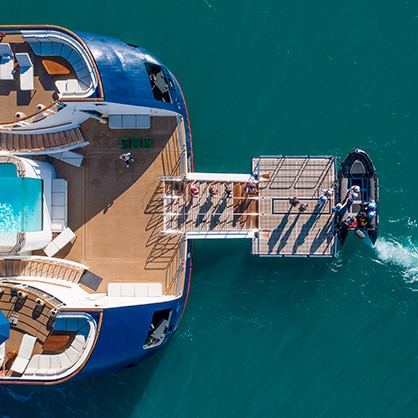
The Hydraulic Platform
- Deck 2
- Much easier onboard access than on any other cruise ship
- Easier disembarking and embarking by Zodiac when participating in expeditions
- Swimming and bathing in the sea and various nautical sports, such as kayaking and paddleboarding

The Observatory Lounge
Library, internet space, bar, occasional live entertainment, terrace: enjoy a 180° panorama of the horizon from the observatory lounge.
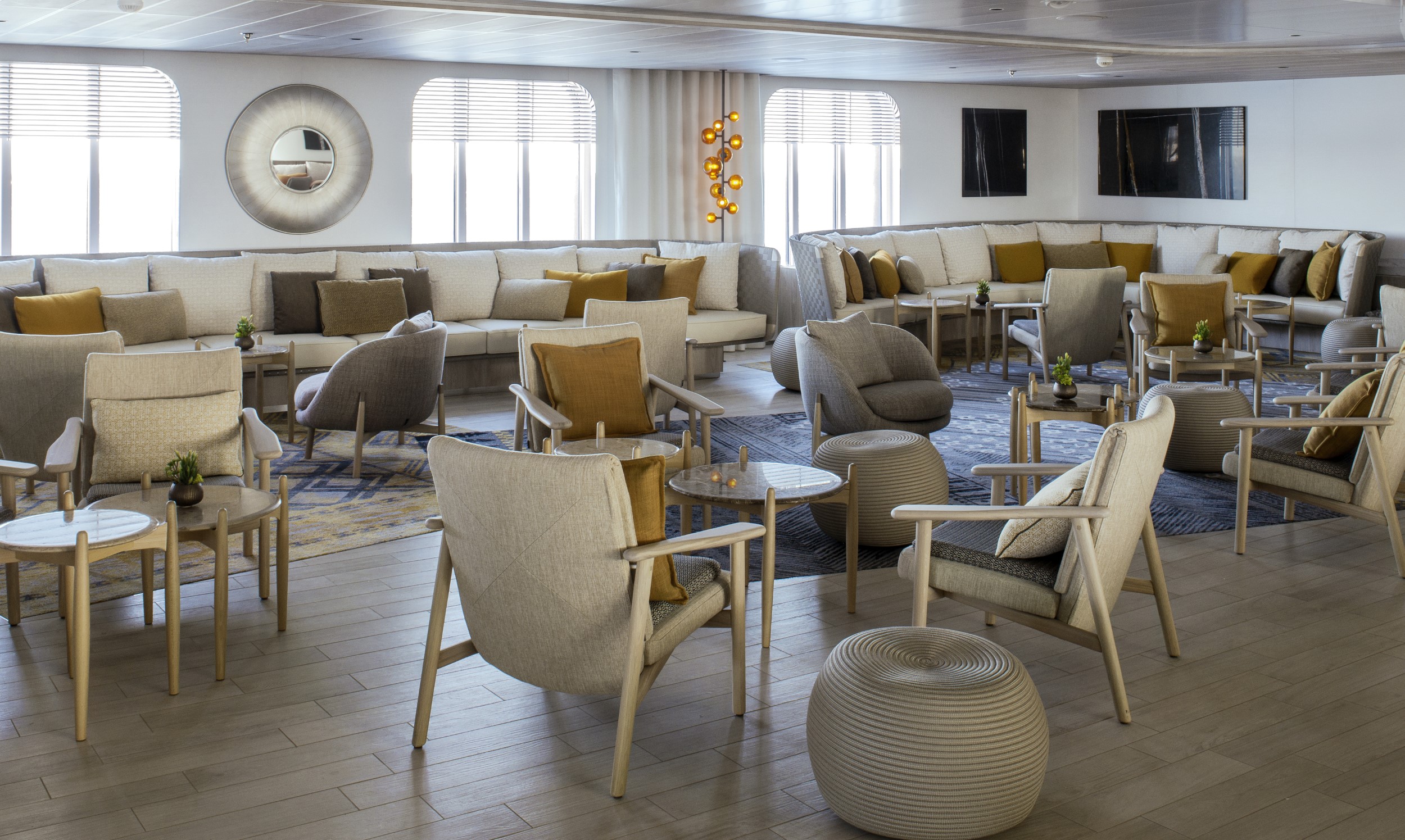
The Main Lounge Room
Tea room, bar, live music, dance floor, terrace: the main lounge is an essential meeting place throughout your journey.

Swimming Pool
With its water blending into the surrounding landscapes, the pool is perfect for relaxing in the sun. From the marina platform, embark on your sea excursions or water activities in complete tranquility.
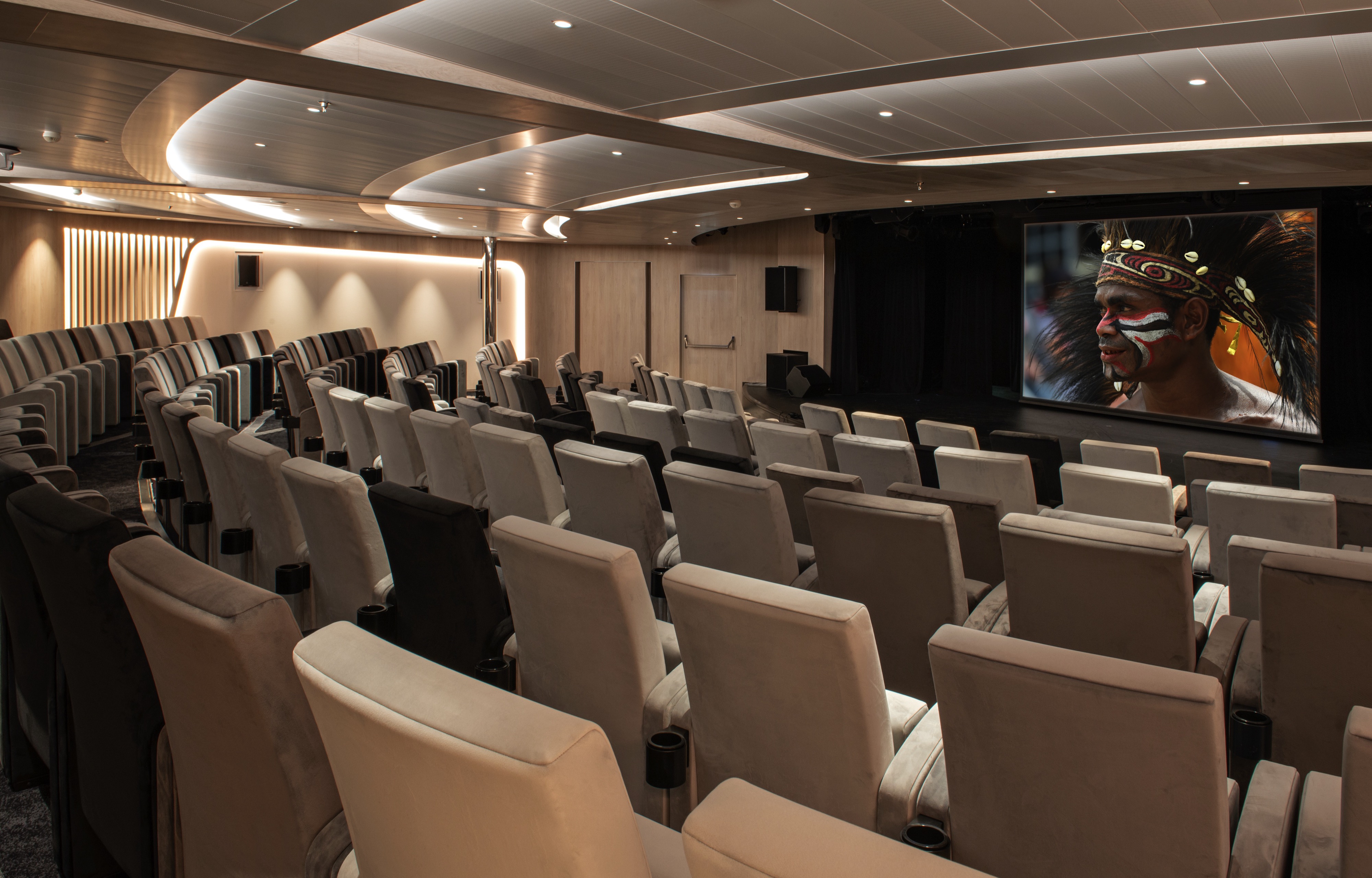
Theatre
Comfortably seated, you can attend conferences given by the guests and teams of naturalists, as well as the various shows, concerts, and performances organised by professional dancers and musicians.
When the night comes alive
Concerts, dance performances, or film screenings: every night on board is a promise of wonder and sharing of emotions.
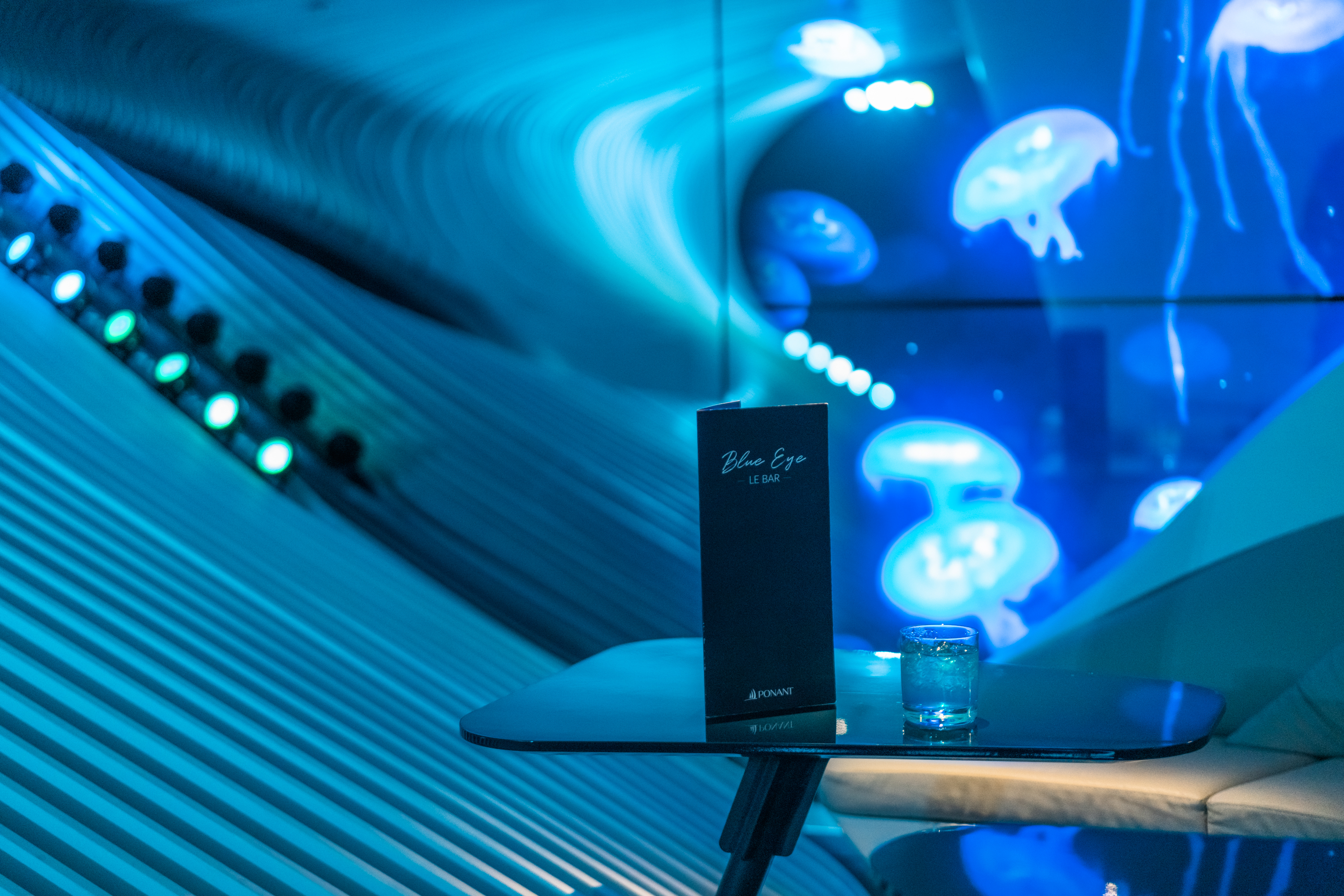
The Blue Eye
Located below the waterline of the ship, the Blue Eye is an innovative underwater lounge. Its design, inspired by the beauty of cetaceans, pays tribute to oceanographic environments.

Boutique
An extension of the journey and the ship, la Boutique offers an exclusive shopping experience with a wide range of technical and casual ready-to-wear and equipment, with or without PONANT personalization. It also features unique souvenirs to extend the journey back home, as well as jewelry, accessories and luxury items. Opening hours follow the voyage schedule, including days at sea, and all purchases on board are tax-free.
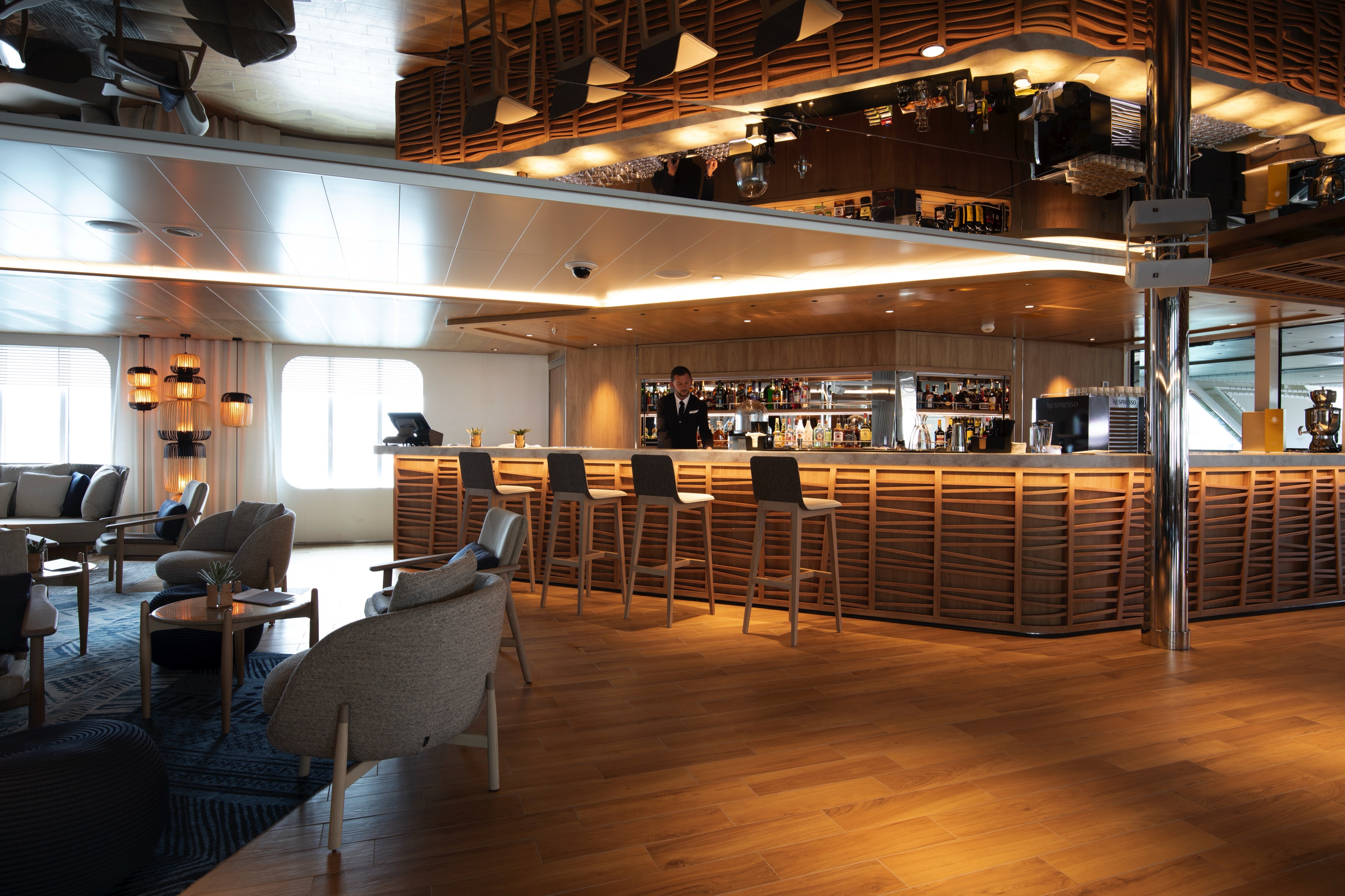
Open Bar
From the moment you board and throughout your cruise, your unlimited drinks are included*, at any time of the day. A drink with friends at the bar, refreshments on your return from an excursion or in the calm of your Stateroom’s balcony: enjoy a large selection of beverages (mineral waters, cold drinks, cruise wines, beer, champagne, spirits, coffee, tea). A selection of premium alcoholic drinks is also available “à la carte”.
*It doesn’t include premium alcoholic drinks indicated in the Bar Menu. It is valid only for individual personal consumption, without limitations.
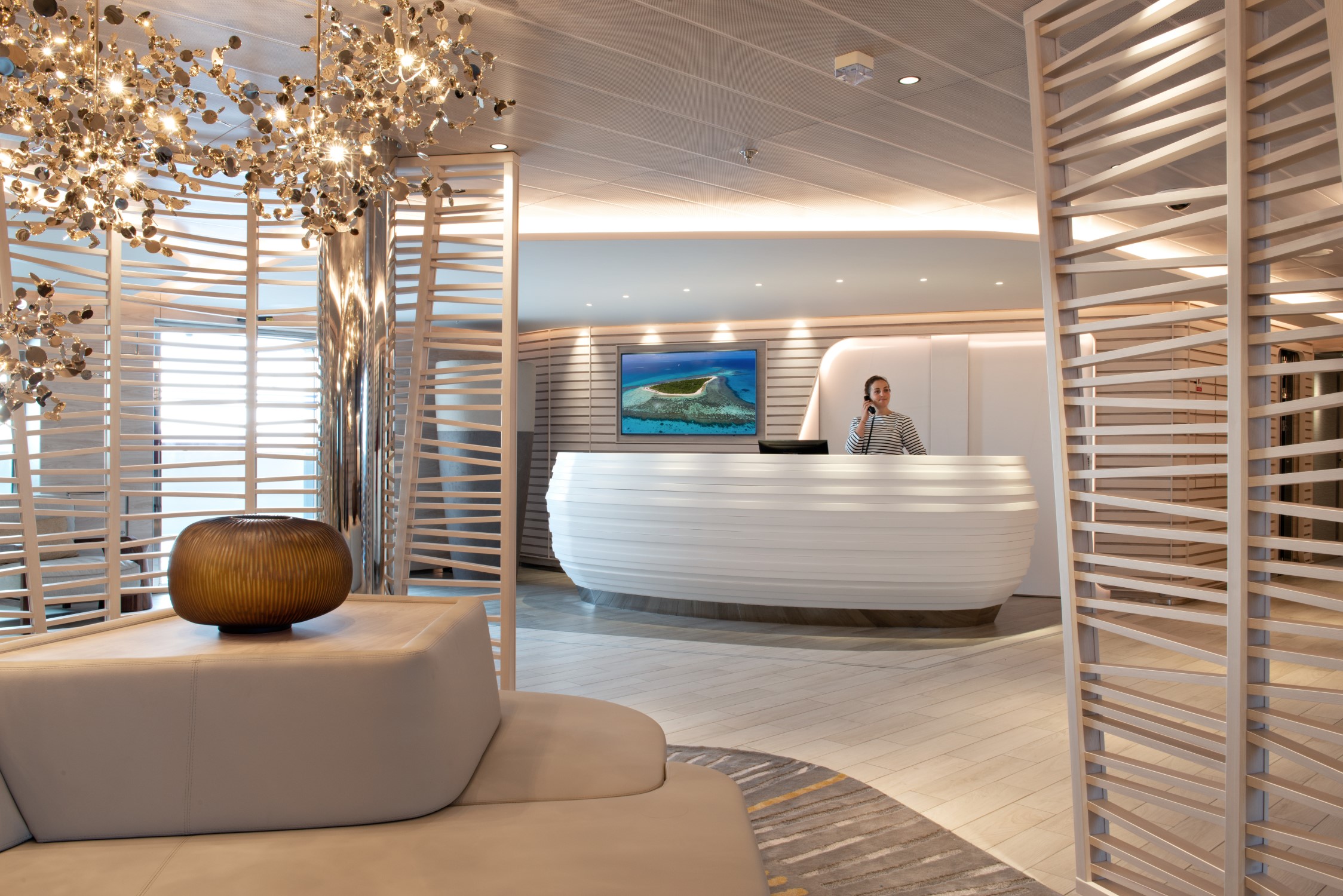
Excursion Reception and Office
If you have not made a pre-booking before your cruise, you can book your excursions on board during one of the daily opening times of the excursion desk (timetables available in your daily program). It is only possible to pre-book one excursion per port day. If you would like to book a second excursion on the same day, please contact the excursion desk to check availability.
PONANT Studio
A photography and videography team escort you throughout your trip. These professionals capture the most beautiful moments of your cruise, which you can share with family and friends upon your return.*
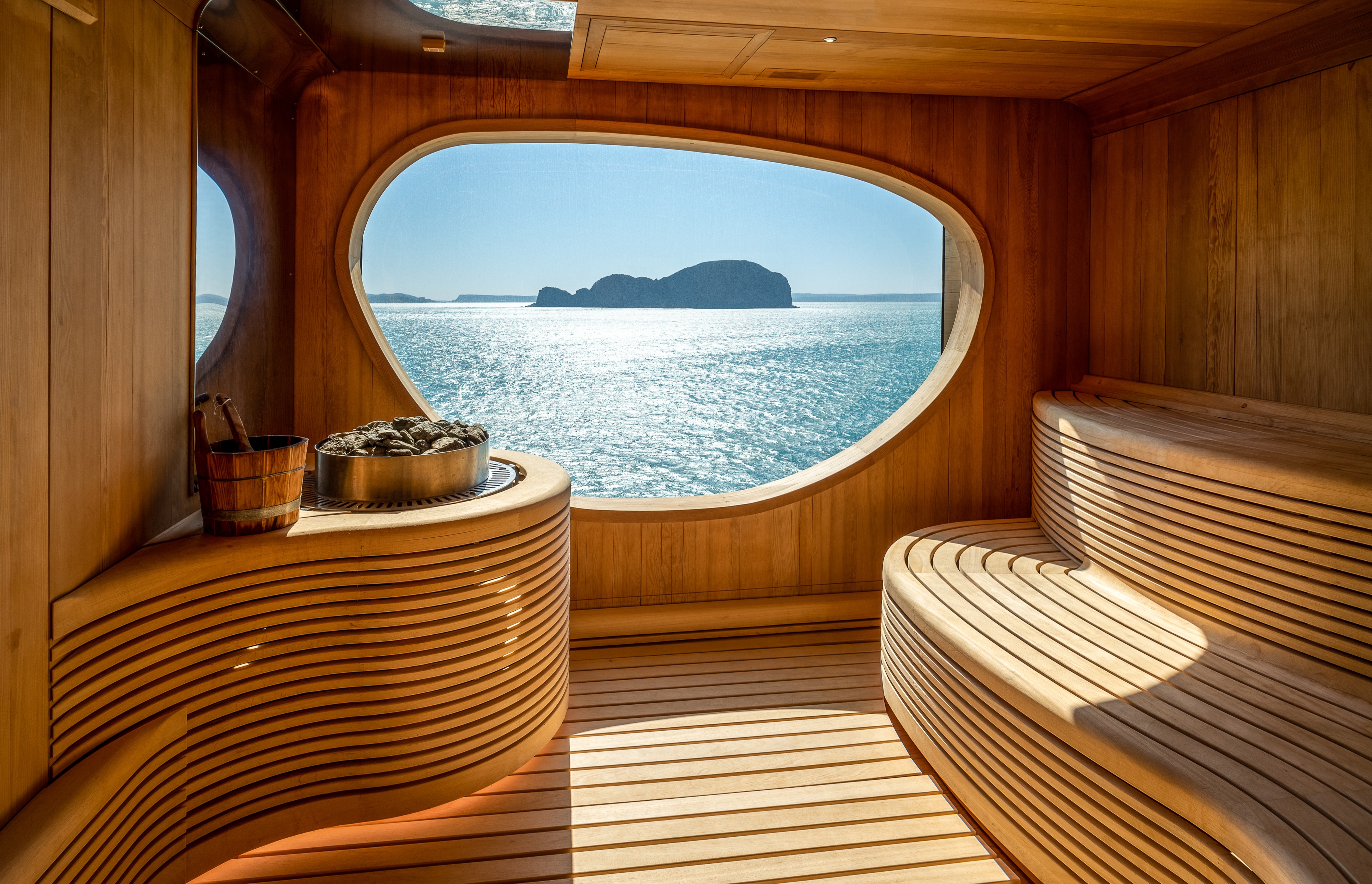
The Spa
In partnership with SOTHYS™ and Davines®, the spa offers a wide range of treatments, massages, hairdressing services, as well as a hammam and a fitness room perfect for self-care and well-being.

The Gym
The fitness room offers a wide range of exercises suitable for all levels to train facing magnificent views.
The Hairdressing Salon
Provided in partnership with KÉRASTASE® and L’ORÉAL PROFESSIONNEL®, the hairdressing salon offers a complete range of top quality treatments designed to strengthen, nourish and reinvigorate hair’s shine and brilliance. Our stylists are available to serve all your styling, highlighting, colouring, cutting and tailored hair advice needs.
The Kids Explorers Club
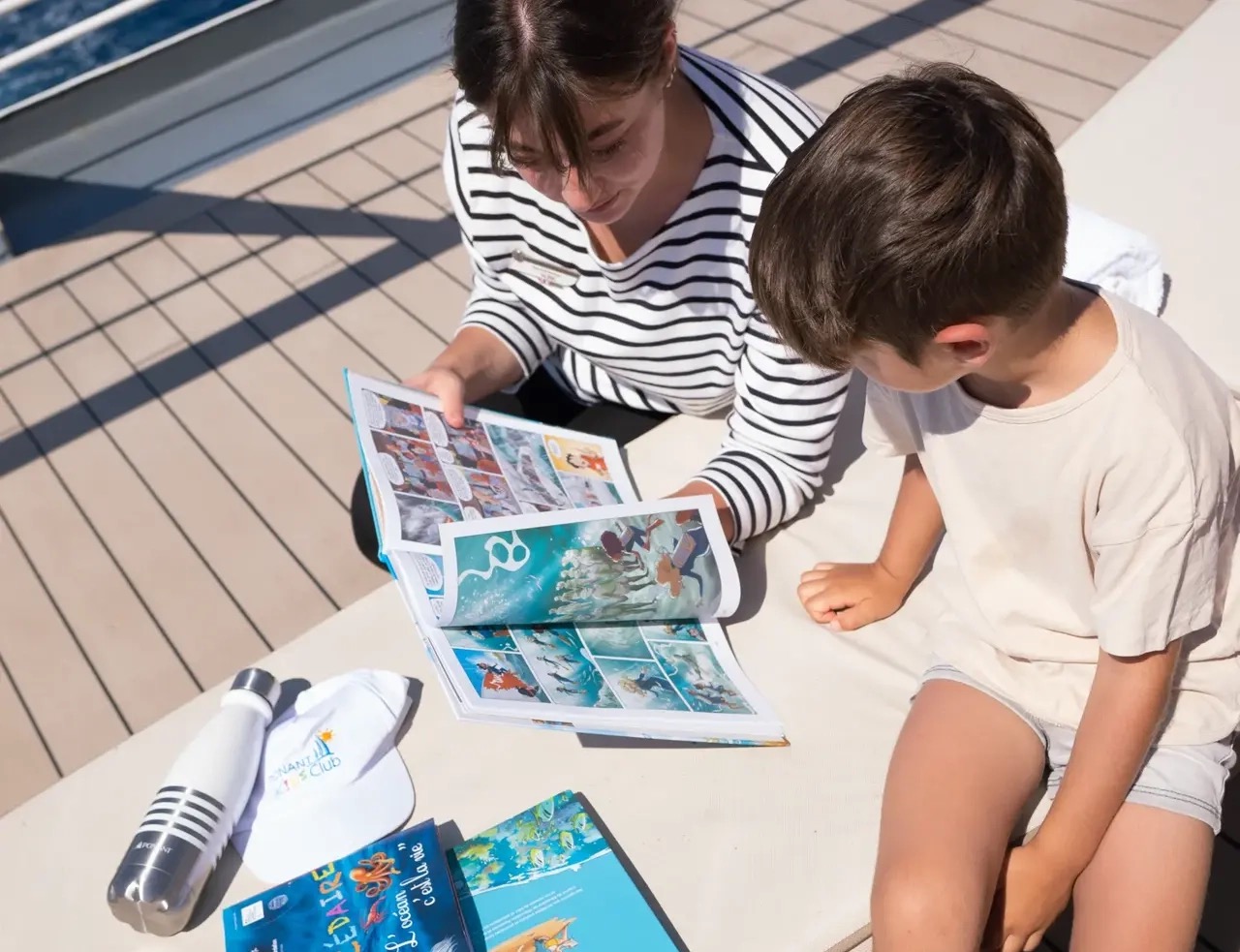
During your cruise, PONANT EXPLORATIONS offers a program of activities dedicated to children, from 4 to 13 years old on our entire fleet.
A team of experienced facilitators on board offers daily manual activities, educational workshops, board games, introductory meditation sessions, and much more, as well as content specific to each itinerary and the number of participants.
Kid Explorers have the opportunity to extend this experience on land with the possibility of enjoying a tailor-made excursion, swimming outings, walks and scavenger hunts.
This program of activities will be offered to children every day. (The exact times will be communicated to you by the activity leaders.)
To best meet your needs, the schedule is adapted to your cruise itinerary. For more information, please contact the entertainment team beforehand.
The program of entertainment and activities is communicated daily in the logbook.
A welcome kit with gifts is offered to each child on board.
Laundry
Your staterllm attendant is at your disposal to provide a laundry service. It takes 24 to 48 hours to wash and iron your clothes. Only an ironing service can be provided on the same day. Dry cleaning is not possible, so we kindly ask you to only give us clothes that can be washed with water.
** These services are chargeable and billed directly to your cabin account.
Smoking Policy
Ships are non-smoking, even on accommodation balconies. Smoking is only allowed in designated outdoor areas of the ship.
Power Adapters
Electrical plug adapters are provided on board, they are available at the reception.
European Standard Sockets
The 220 volt 50 hertz alternating current is distributed by sockets meeting European standards. Onboard power is 200 volt AC (European standard) and 110 volt AC (North American standard). For safety reasons, hair irons and clothes irons cannot be used in staterooms. Please note that on Le Ponant, 110 volt AC is only available in stateroom bathrooms.
Age Restrictions
Children under one (1 year old / 12 months) are not permitted on PONANT EXPLORATIONS cruises.
On Classic cruises, children are permitted from one (1 year old), with a maximum of five children aged one to six (1 to 6 years old) on board each voyage.
Children aged four years and older are welcome at the Kids’ Club when the service is offered on board.
In all cases and at all times, both on board or on land, children and young minors are the full and total responsibility of their parents or accompanying adults.
Languages
The languages spoken on board are French and English. The signage is in French and English. On some cruises, crew members also speak other languages.
Telephone
To reach a correspondent around the world, a satellite communication system is available to you. The cost of communications is charged directly to your account (pricing depends on the navigation zone). Calls from your correspondents can be transferred directly to your accommodation or to any common area on the ships. You can also send and receive faxes. Contacting reception.
Wi-Fi
You have free Wi-Fi internet access on board all ships (cabins and common areas). On the Sisterships (L’Austral, Le Lyrial, The Boréal, Le Soléal), one or more computers are available to you in the leisure areas. Thanks to the Starlink network provided by Marlink, PONANT EXPLORATIONS GROUP guarantees you quality Wi-Fi access, regardless of the location and navigation conditions.
Medical Facilities
There is a doctor on board available to the passengers on all our ships:
- The schedules of consultation are listed each day in the log book (emergency consultation 24/7).
- The Sisterships, PONANT Explorers and Le Commandant Charcot also have a hospital for any small surgery.
- During the excursions, the passengers are accompanied by a doctor or a nurse.
- There is a fee for consultations on board . The price may vary according to the time and place of the consultation (hospital or staterooms). You must also pay for medications.
- The doctor on board is not authorised to distribute sick leaves and prescriptions. Only accounts and invoices are provided which may be used by the passenger to obtain a refund from his/her health insurance if his/her contract allows.
Medical Consultations
Consultations, medical and surgical procedures, laboratory tests or medical imaging examinations (radiology) carried out on board by the doctor or nurse are subject to charges. The price may vary depending on the time and location of the consultation (at the onboard hospital or in the cabin). The cost of all procedures is displayed in the waiting room. Guests are also required to pay for any medications.
The ship’s doctor is unable to provide medical certificates and prescriptions. Only reports and invoices are issued, which can be used by the guest to claim a refund from their health insurance if their policy allows it.
Special Medical Treatment
If you have a special treatment, please inform the reservation service at the time of your registration, indicate it on the information form filled out before departure, then inform the crew on board at the time of boarding and bring your specific medications for the duration of the cruise.
Seasickness
Our ships (with the exception of Le Ponant and the Spirit of Ponant) are equipped with stabilisers fitted with dynamic fins that adapt to the movements of the ship. This system allows for anticipation and compensation for pitch and roll to provide great stability. Guests anticipating seasickness experience reduced symptoms and are surprised not to be inconvenienced.
Guests with reduced mobility
Only the Sisterships, the PONANT Explorers, Paul Gauguin and Le Commandant Charcot have been designed to accommodate passengers with reduced mobility.
- Staterooms specially designed on board the Sisterships, decks 3 (307), 4 (407) and 5 (509) 3 c for two people aged 18. in a wheelchair, with a double bed (180 x 200) cm) or two single beds (90 x 200 shower and toilet in the bathroom as well as a balcony of 4 2 (only for cabins on the decks 4 and 5) having a small ramp Wheelchair accessible,
- on board the PONANT Explorers, decks 4 (431) and 5 (527) 2 cabins for two people each at 27.5 2in a wheelchair, with a double bed (180 x 200) cm) or two single beds (90 x 200 sink, shower, and toilet in the bathroom, as well as a balcony of 4 Wheelchair accessible,
- 2I’m accIin a wheelchair, with a double bed (180 x 200) cm) or two single beds (90 x 200 shower and toilet in the bathroom, as well as abalcony of 7.5.2 a small ramp Wheelchair accessible,
- on board the Paul Gauguin, bridge 4 (415 and 416) 2 cabins for two people each aged 21 in a wheelchair, with a double queen size bed (160 x 200) cm) only for the 416, and a double queen size bed (160 x 200 cm) or two single beds (80 x 200 cm) for the 415, shower and toilet in the bathroom, as well as.a window with panoramic view.
- Ramps providing easy access for movement in common areas.
- Posters, signage, and cabin numbers translated into braille.
Despite these arrangements, each passenger must be able to be autonomous or travel with a companion who can provide all the necessary assistance during their journey. If a person is not deemed sufficiently fit to travel safely, the company reserves the right to refuse their boarding. Landings in difficult areas or on zodiacs are subject to the approval of the captain, always with the passenger’s well-being and safety in mind.
Packing Tips
Technical Accessories
We recommend that you bring a ski mask, sunglasses, walking sticks, a waterproof backpack, binoculars, a technical watch, a mosquito net for the face (in the Arctic), and a waterproof pouch. These accessories are also available for purchase at the onboard shop.
Dress Code
Dress Code
We recommend wearing casual and elegant outfits, cocktail attire for gala evenings, and white or black and white attire for the Officers’ evening. Shorts and bermudas are not allowed in the evening at gourmet restaurants.
Expedition Cruise
For an expedition cruise, pack practical clothing and comfortable shoes. During your polar cruises, a polar parka in your size will be provided and boots in your size will be loaned to you.
Sustainable Development
Sustainable development is enshrined in the company’s statutes and is at the heart of the PONANT EXPLORATIONS GROUP project. Founded over 30 years ago by committed sailors, the company was born out of a desire to share the passion for the oceans and the treasures of the Earth. This responsibility commits us to engage in a respectful dialogue with the environment and the populations encountered, and to invest in various areas related to the preservation and enhancement of the natural and cultural heritage of polar and oceanic regions.
To learn more about our commitments to sustainable development and about the PONANT Foundation, visit the page. Engagements.
Clean Ships
We were among the first in the world to abandon heavy fuel. Our ships are equipped with electric diesel engines and SCR catalytic converters, which help reduce our emissions and fuel consumption. Our high polar exploration ship, Le Commandant Charcot, is a hybrid electric ship, powered by liquefied natural gas (LNG) and light fuel. Thanks to LNG, there is a reduction of -25% in CO2 emissions, -85% in nitrogen oxide emissions, and -95% in fine particle emissions. Every time we design a new ship, we equip it with the latest eco-technologies available, allowing us to maintain our position as a leader in the cruise industry in terms of the environment, surpassing international regulations in some aspects. This commitment is recognised by numerous independent organisations. If you would like to learn more, please visit our section on ‘labels, certifications, and distinctions’ on the Engagements page.
Wastewater
Wastewater is treated using processes that exclude the use of chemicals. The treated water is sometimes reused on board for technical purposes (laundry, deck washing…) and is used for the external cleaning of the ship.
Waste
We have optimised our organisation to reduce waste at the source, waste is still produced on board. Equipment adapted for sorting each type of waste is in place. This equipment helps reduce the stored volume and facilitates their recovery. We ensure complete traceability of this waste and have a valuation rate of 80% by 2026.
Single-use plastics
We have eliminated single-use plastics (such as straws, cups, food portions, laundry bags, etc.). A metal water bottle is provided to each guests during expedition cruises, and water fountains are available in the common areas of the ships. We are also developing the bottling of our water in glass bottles.
Discover all our products in daily actions.
Special Diets
If you follow a specific diet (vegetarian, diabetic, low calorie, gluten-free, allergy…), it is essential to specify it when making your reservation. You will then receive adapted menus throughout your cruise.
Solo Travellers
Every season, we offer a wide range of cruises with ‘no single supplement’: you thus benefit from a double stateroom to yourself, at no extra cost. The onboard atmosphere is conducive to meeting and interacting with other guests, and the crew ensures your well-being and integration on board. Discover the cruises by consulting the single page offered.
Included on Every Cruise
A complete offer (excluding Spirit of PONANT and La Désirade¹)
SERVICES INCLUDED ON ALL OUR CRUISES
- Full board from arrival to departure day
- High-end gastronomy in all restaurants
- All drinks in restaurants, bars and minibars. All drinks are included² (selection of champagnes, wines and spirits, beers, cocktails, water, soft drinks, hot drinks)
- 24-hour room service
- Butler service for certain suites³
- Free and unlimited internet access on board
- Evenings, shows and other entertainment
- Access to the fitness area and the hammam or sauna, depending on the ship.
- All port and security fees
SERVICES INCLUDED DEPENDING ON THE TYPE OF CRUISE/SHIP
- Activities included, which may vary depending on the type of exploration:
- Timeless: one included excursion⁴ per person, per day and per stopover, led by local guides (visits to monuments, tastings of local products, etc.)
- Discoveries: one included activity per person, per day and per stopover, which can be either an included excursion⁴ led by local guides or an included activity led by naturalist guides
- Expeditions: one activity included per person, per day, per port of call, led by naturalist guides (hiking, zodiac excursions, etc.).
- Some more secluded ports of call, with few or no facilities, will be offered for independent exploration. Passengers will thus have the freedom to explore the area and enjoy activities on their own (swimming at the beach, shopping, restaurants, shows, etc.).
- Lectures by our naturalist guides or our destination expert (excluding sea voyages)
- Non-motorized water sports activities (excluding diving), such as kayaking on the Commandant Charcot or stand-up paddleboarding depending on the ship, are subject to weather and safety conditions, local authorizations, and the Captain’s agreement.
- Taxes for national parks and protected areas
- The accompaniment of a team of naturalist guides is provided only on expedition and discovery cruises; on land or, depending on the destination, during excursions and/or landings by Zodiac.
Butler Service
Attentive and discreet, your butler offers you a fully personalized service.
The butler service is reserved for passengers traveling in one of the suites located on deck 6 aboard the Sisterships, as well as in all suites of the Shipowner, Deluxe Suites, Privilege Suites, and Prestige Suites located on deck 6 aboard the PONANT EXPLORERS.
The PONANT app
Our app accompanies you in your preparations and during your stay on board. Find the services offered and the information that facilitates your journey.
Are you soon boarding with us?
Thanks to its app, PONANT accompanies you in your travel preparations, and then during your stay on board. Find our services and information that will make your cruise even easier.
Prepare your cruise with peace of mind
- Receive notifications to pre-book your programs before and after the cruise, as well as your excursions.
- Get a sneak peek of the captain and crew who will accompany you during your stay.
- Follow in real-time the positioning of the ship on which you will embark.
- Access your luggage checklist, the clothing outfits recommended by our experts for your destination, and the formalities to be expected before your departure.
- Check the steps of your journey and find out the details of the amenities in your cabin.
Once on board, the PONANT app makes all your procedures easier
- Use the guest mode to access onboard services without logging in.
- Find the highlights of your cruise, day by day.
- Add your favourite excursions to your wishlist.
- Check out the most beautiful photos from your cruise.
- Order your breakfast and room service from your smartphone.
- Conference schedules, spa relaxation sessions… All your important appointments on board are noted in your application.
Download the application
The companion of your next journey
Download on the App Store
Download on Google Play
Required Android version: 5.0 and later Required iOS version: 12.4 and later
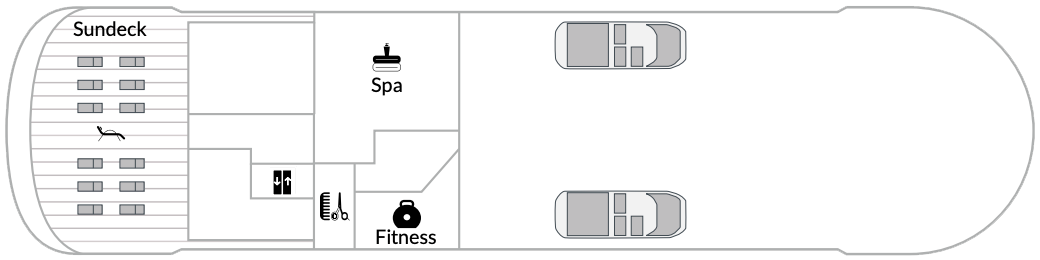
Deck 7
- Sun Deck
- Spa
- Fitness Centre
- Hair Salon
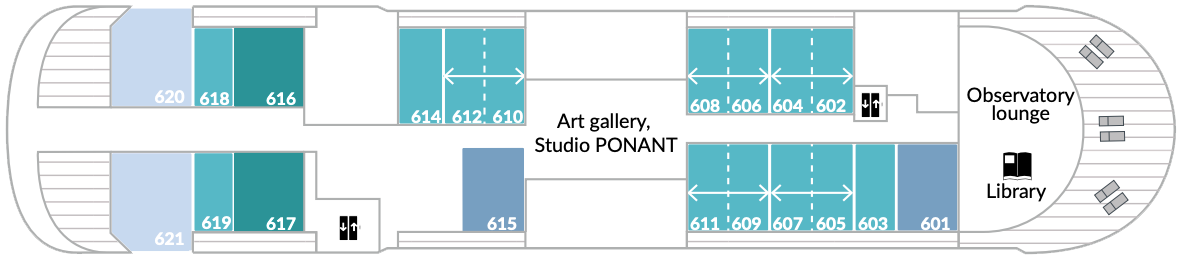
Deck 6
- Observatory Lounge
- Art Gallery/Studio Ponant
- Library
- Privilege Suites
- Grand Suites
- Deluxe Suites
- Prestige Suites
- Upper Decks Balcony Stateroom

Deck 5
- Bridge
- Owners Suite
- Prestige Suites
- Deluxe Suites
- Privilege Suites
- Upper Decks Balcony Stateroom
- Accessible Staterooms

Deck 4
- Restaurant
- Deluxe Suites
- Upper Decks Balcony Stateroom
- Accessible Staterooms

Deck 3
- Theatre
- Medical Centre
- Excursion Desk
- Reception Desk
- Shop
- Main Lounge
- Grill
- Pool
- Marina
- Deluxe Suites
- Lower Deck Balcony Stateroom