Itinerary
About 8 miles downstream—which means seaward, to the east—from central London, Greenwich is a small borough that looms large across the world. Once the seat of British naval power, it is not only home to the Old Royal Observatory, which measures time for our entire planet, but also the Greenwich Meridian, which divides the world into two—you can stand astride it with one foot in either hemisphere. Bear in mind that the journey to Greenwich is an event in itself. In a rush, you can take the driverless DLR train—but many opt for arriving by boat along the Thames. This way, you glide past famous sights on the London skyline (there’s a guaranteed spine chill on passing the Tower) and ever-changing docklands, and there’s usually a chirpy Cock-er-ney navigator enlivening the journey with his fun commentary. A visit to Greenwich feels like a trip to a rather elegant seaside town—albeit one with more than its fair share of historic sites. The grandiose Old Royal Naval Hospital, designed by Christopher Wren, was originally a home for veteran sailors. Today it’s a popular visitor attraction, with a more glamorous second life as one of the most widely used movie locations in Britain. Greenwich was originally home to one of England’s finest Tudor palaces, and the birthplace of Henry VIII, Elizabeth I, and Mary I. Inigo Jones built what is considered the first “classical” building in England in 1616—the Queen’s House, which now houses a collection of fine art. Britain was the world’s preeminent naval power for over 500 years, and the excellent National Maritime Museum> details that history in an engaging way. Its prize exhibits include the coat worn by Admiral Lord Nelson (1758–1805) in his final battle—bullet hole and all. The 19th-century tea clipper Cutty Sark was nearly destroyed by fire in 2007, but reopened in 2012 after a painstaking restoration. Now it’s more pristine than ever, complete with an impressive new visitor center. Greenwich Park, London’s oldest royal park, is still home to fallow red deer, just as it has been since they were first introduced here for hunting by Henry VIII. The Ranger’s House now houses a private art collection, next door to a beautifully manicured rose garden. Above it all is the Royal Observatory, where you can be in two hemispheres at once by standing along the Greenwich Meridian Line, before seeing a high-tech planetarium show. Toward north Greenwich, the hopelessly ambitious Millennium Dome has been successfully reborn as the O2 and now hosts major concerts and stand-up comedy gigs. More adventurous visitors can also go Up the O2 on a climbing expedition across the massive domed surface. Meanwhile, those who prefer excursions of a gentler kind may prefer to journey a couple of miles south of the borough, farther out into London’s southern suburbs, to the shamefully underappreciated Eltham Palace. Once a favorite of Henry VIII, parts of the mansion were transformed into an art deco masterpiece during the 1930s.
Honfleur, the most picturesque of the Côte Fleurie’s seaside towns, is a time-burnished place with a surplus of half-timber houses and cobbled streets that are lined with a stunning selection of stylish boutiques. Much of its Renaissance architecture remains intact—especially around the 17th-century Vieux Bassin harbor, where the water is fronted on one side by two-story stone houses with low, sloping roofs and on the other by tall slate-topped houses with wooden facades. Maritime expeditions (including some of the first voyages to Canada) departed from here; later, Impressionists were inspired to capture it on canvas. But the town as a whole has become increasingly crowded since the Pont de Normandie opened in 1995. Providing a direct link with Upper Normandy, the world’s sixth-largest cable-stayed bridge is supported by two concrete pylons taller than the Eiffel Tower and designed to resist winds of 257 kph (160 mph).
Cobblestone streets, blooming floral displays, and tiny churches welcome you to this wonderfully pretty harbour. The town of St Peter Port is as pretty as they come, with glowing flower displays painting practically every street corner and window-ledge with colour. As the capital, and main port of Guernsey, St Peter Port puts all of the island’s gorgeous beaches, wonderful history and inspiring stories at your fingertips. Feel the gut punch of the midday gun firing at Castle Cornet, which stands guard over one of the world’s prettiest ports. This 800-year-old, Medieval castle offers staggering views of the harbour from its imposing, craggy island location, and you can look out across to the looming shorelines of the other Channel Islands from its weathered battlements. With four well-tended gardens, and five museums offering a rich overview of Guernsey’s history, you’ll want to leave a few hours aside to explore the many treasures that lie within the castle’s walls.
Originally a little fishing village, Cherbourg has developed into a historic port designed by Vauban. This was also a strategic naval port during the Napoleonic wars; there is a marina with over 1000 moorings. “Cap de la Hague” is to the West and the “Pointe de Barfleur” to the East. This port, which belongs to Normandy, is a region that has provided inspiration for countless artists and writers, and is the land of apple orchards and rolling farmland dotted with villages of half-timbered houses. Boasting a wealth of abbeys and châteaux, as well as a superb coastline, it offers something for everyone. Cherbourg was also the first stop of RMS Titanic after it left Southampton, England. On 19 June 1864, the naval engagement between USS Kearsarge and CSS Alabama took place off Cherbourg. The Battle of Cherbourg, fought in June 1944 following the Normandy Invasion, ended with the capture of Cherbourg on June 30.
Bordeaux as a whole, rather than any particular points within it, is what you’ll want to visit in order to understand why Victor Hugo described it as Versailles plus Antwerp, and why the painter Francisco de Goya, when exiled from his native Spain, chose it as his last home (he died here in 1828). The capital of southwest France and the region’s largest city, Bordeaux remains synonymous with the wine trade: wine shippers have long maintained their headquarters along the banks of the Garonne, while buyers from around the world arrive for the huge biennial Vinexpo show (held in odd-number years).Bordeaux is, admittedly, a less exuberant city than many others in France, but lively and stylish elements are making a dent in its conservative veneer. The cleaned-up riverfront is said by some, after a bottle or two, to exude an elegance reminiscent of St. Petersburg, and that aura of 18th-century élan also permeates the historic downtown sector—“le vieux Bordeaux”—where fine shops invite exploration. To the south of the city center are old docklands undergoing renewal—one train station has now been transformed into a big multiplex movie theater—but the area is still a bit shady. To get a feel for the historic port of Bordeaux, take the 90-minute boat trip that leaves Quai Louis-XVIII every weekday afternoon, or the regular passenger ferry that plies the Garonne between Quai Richelieu and the Pont d’Aquitaine in summer. A nice time to stroll around the city center is the first Sunday of the month, when it’s pedestrian-only and vehicles are banned.
Bordeaux as a whole, rather than any particular points within it, is what you’ll want to visit in order to understand why Victor Hugo described it as Versailles plus Antwerp, and why the painter Francisco de Goya, when exiled from his native Spain, chose it as his last home (he died here in 1828). The capital of southwest France and the region’s largest city, Bordeaux remains synonymous with the wine trade: wine shippers have long maintained their headquarters along the banks of the Garonne, while buyers from around the world arrive for the huge biennial Vinexpo show (held in odd-number years).Bordeaux is, admittedly, a less exuberant city than many others in France, but lively and stylish elements are making a dent in its conservative veneer. The cleaned-up riverfront is said by some, after a bottle or two, to exude an elegance reminiscent of St. Petersburg, and that aura of 18th-century élan also permeates the historic downtown sector—“le vieux Bordeaux”—where fine shops invite exploration. To the south of the city center are old docklands undergoing renewal—one train station has now been transformed into a big multiplex movie theater—but the area is still a bit shady. To get a feel for the historic port of Bordeaux, take the 90-minute boat trip that leaves Quai Louis-XVIII every weekday afternoon, or the regular passenger ferry that plies the Garonne between Quai Richelieu and the Pont d’Aquitaine in summer. A nice time to stroll around the city center is the first Sunday of the month, when it’s pedestrian-only and vehicles are banned.
Ship features

The Owners Suite
MAGNIFICENT OCEAN VIEWS
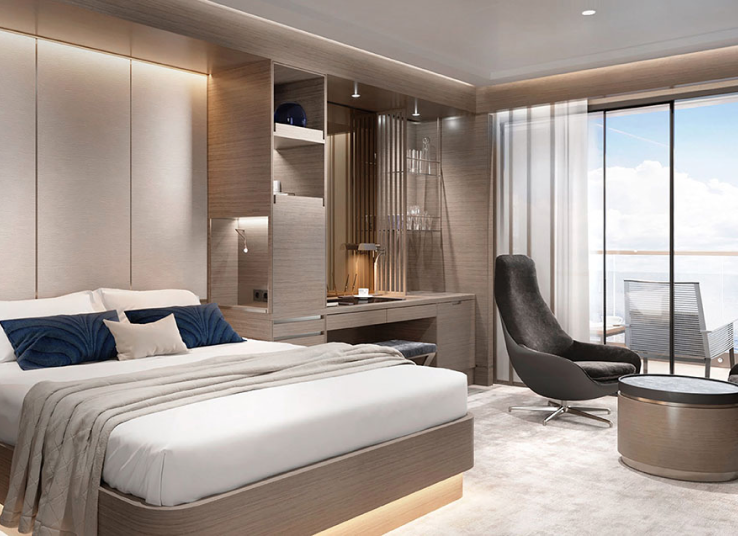
Private, spacious terrace overlooking the ocean with private whirlpool
SPACIOUS SUITE ACCOMMODATIONS
- Luxurious and modern living and dining area
- Luxury custom king bed sleep system
- Double vanity bathrooms
PERSONALIZED SERVICE AND AMENITIES
- Your Suite Ambassador delivers attentive, anticipatory service for a personalized in-suite experience tailored to your preferences, from unpacking assistance and garment pressing to in-suite dining and beverages.
- 24-hour in-suite dining, espresso machine, complimentary coffee and teas and a mini-bar provisioned to your preferences, upon request once on board

The View Suite
MAGNIFICENT OCEAN VIEWS
- Dramatic floor to ceiling glass throughout
- Private, spacious terrace overlooking the ocean
SPACIOUS SUITE ACCOMMODATIONS
- Luxurious and modern living and dining area
- Luxury custom king bed sleep system
- Double vanity bathroom
PERSONALIZED SERVICE AND AMENITIES
- Your Suite Ambassador delivers attentive, anticipatory service for a personalized in-suite experience tailored to your preferences, from unpacking assistance and garment pressing to in-suite dining and beverages.
- 24-hour in-suite dining, espresso machine, complimentary coffee and teas and a mini-bar provisioned to your preferences, upon request once on board

The 2-Story Loft Suite
SPACIOUS SUITE ACCOMMODATIONS
- Powder room on the upper level
- Double vanity master bathroom with soaking tub and separate shower on the lower level
- Innovative two-story suite with entry from both levels
- Luxury custom king bed sleep system on the lower level
- Luxurious and modern living and dining area on the upper level
MAGNIFICENT OCEAN VIEWS
- Private, spacious terrace overlooking the ocean on the upper level
- Picture window on the lower level
PERSONALIZED SERVICE AND ACCESSORIES
- Your Suite Ambassador delivers attentive, anticipatory service for a personalized in-suite experience tailored to your preferences, from unpacking assistance and garment pressing to in-suite dining and beverages.
- 24-hour in-suite dining, espresso machine, complimentary coffee and teas and a mini-bar provisioned to your preferences, upon request once on board
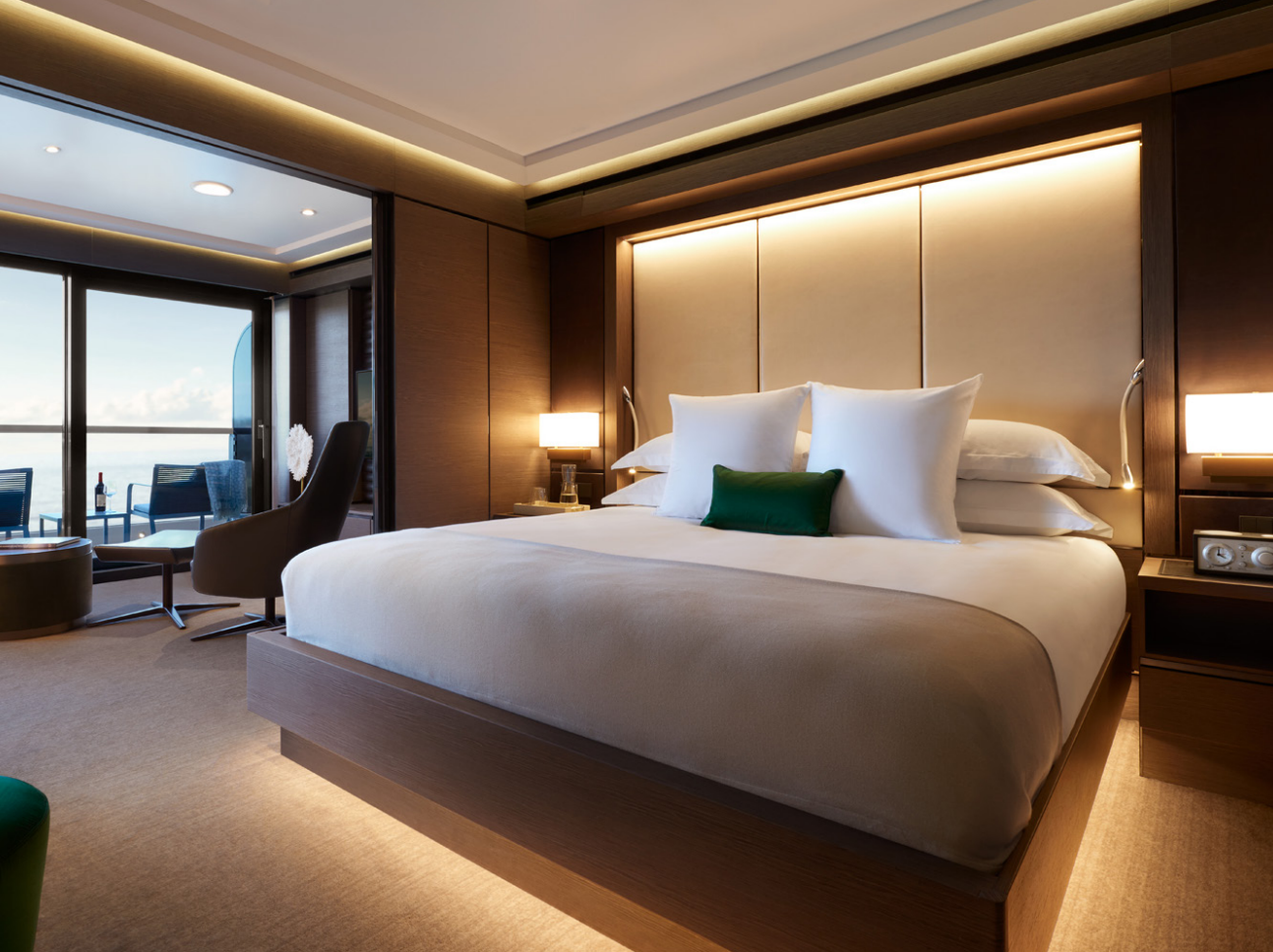
The Grand Suite
MAGNIFICENT OCEAN VIEWS
- Private, spacious terrace overlooking the ocean
SPACIOUS SUITE ACCOMMODATIONS
- Luxurious and modern living and dining area
- Luxury custom king bed sleep system
- Double vanity bathroom
PERSONALIZED SERVICE AND AMENITIES
- Your Suite Ambassador delivers attentive, anticipatory service for a personalized in-suite experience tailored to your preferences, from unpacking assistance and garment pressing to in-suite dining and beverages.
- 24-hour in-suite dining, espresso machine, complimentary coffee and teas and a mini-bar provisioned to your preferences, upon request once on board
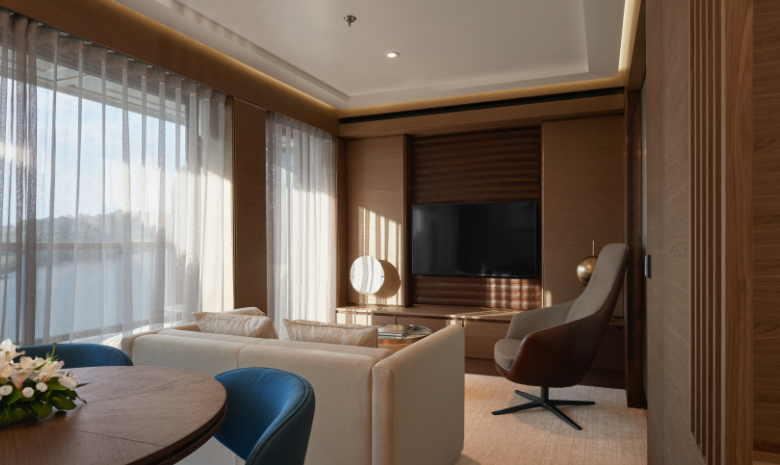
The Signature Suite
MAGNIFICENT OCEAN VIEWS
- Private, spacious terrace overlooking the ocean
SPACIOUS SUITE ACCOMMODATIONS
- Luxurious and modern living and dining area
- Luxury custom king bed sleep system
- Double vanity bathroom
PERSONALIZED SERVICE AND AMENITIES
- Your Suite Ambassador delivers attentive, anticipatory service for a personalized in-suite experience tailored to your preferences, from unpacking assistance and garment pressing to in-suite dining and beverages.
- 24-hour in-suite dining, espresso machine, complimentary coffee and teas and a mini-bar provisioned to your preferences, upon request once on board
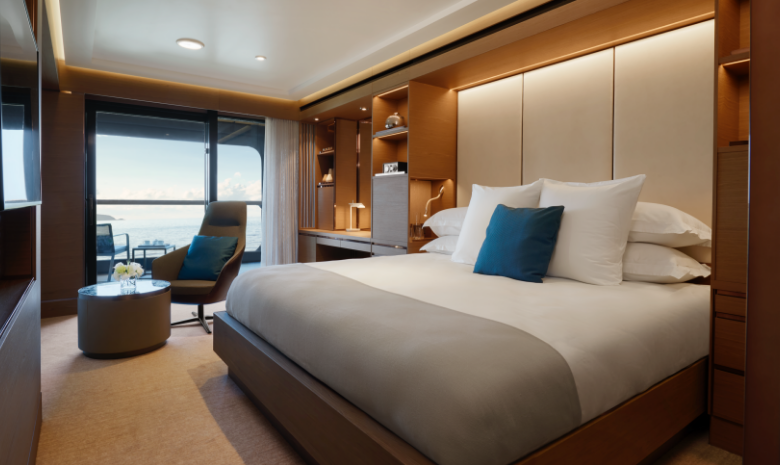
The Terrace Suite
MAGNIFICENT OCEAN VIEWS
- Private, spacious terrace overlooking the ocean
- SPACIOUS SUITE ACCOMMODATIONS
- Luxury custom king bed sleep system
- Double vanity bathroom
PERSONALIZED SERVICE AND AMENITIES
- Your Suite Ambassador delivers attentive, anticipatory service for a personalized in-suite experience tailored to your preferences, from unpacking assistance and garment pressing to in-suite dining and beverages.
- 24-hour in-suite dining, espresso machine, complimentary coffee and teas and a mini-bar provisioned to your preferences, upon request once on board
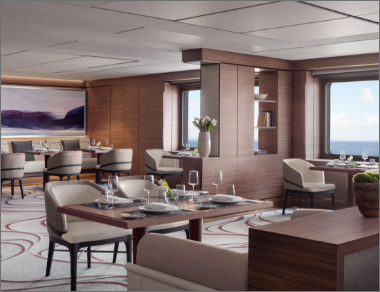
The Evrima Room
Designed with an inviting balance of privacy and connection, The Evrima Room is the spacious main restaurant aboard Evrima. Intimate seating, warm lighting and a relaxed sense of ease set the tone for quiet meals or shared moments. Evolving menus draw on regional flavors and seasonal ingredients for dining with connection to the destinations.
Talaat Nam
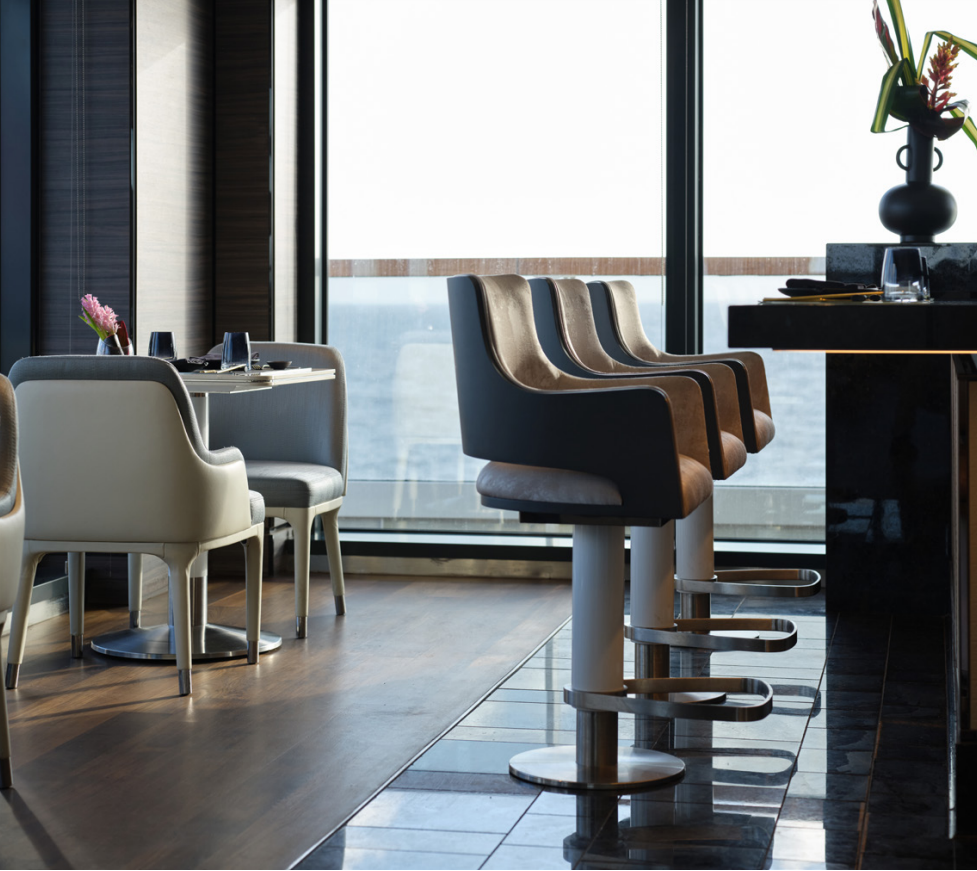
Talaat Nam offers a contemporary take on Southeast Asian cuisine, balancing vibrant flavors with a relaxed sense of ease. Its sleek, welcoming setting suits light bites or lingering dinners, with options ranging from the precision of the sushi bar to shared regional dishes, and outdoor dining as Evrima sails.
S.E.A
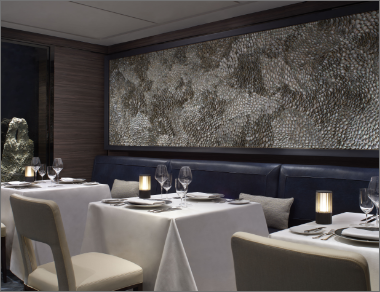
Created by Chef Sven Elverfeld of Aqua, the three-Michelin-starred restaurant formerly at The Ritz-Carlton® in Wolfsburg, Germany, S.E.A. reflects his precise, contemporary approach to European cuisine. A curated tasting menu unfolds through seasonal, expressive dishes in an intimate, elegantly modern setting designed for an elevated evening on board.
Mistral
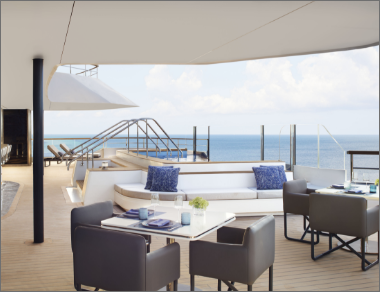
Mistral welcomes guests for relaxed lunches or romantic dinners al fresco. Its Mediterranean-inspired menu highlights fresh local catches, handmade pastas, crisp salads, and grilled prime cuts. With spacious indoor and outdoor seating and views that mirror the surrounding sea and sky, it’s one of the yacht’s most inviting settings for dining.

The Living Room
The Living Room Café and Bar is a warm, inviting gathering place throughout the day. Mornings begin with freshly roasted coffee and pastries at the espresso counter, while daytime brings treats ideal for moments between activities. As evening settles in, the space offers a relaxed setting for a quiet drink or light bite.
In-Suite Dining
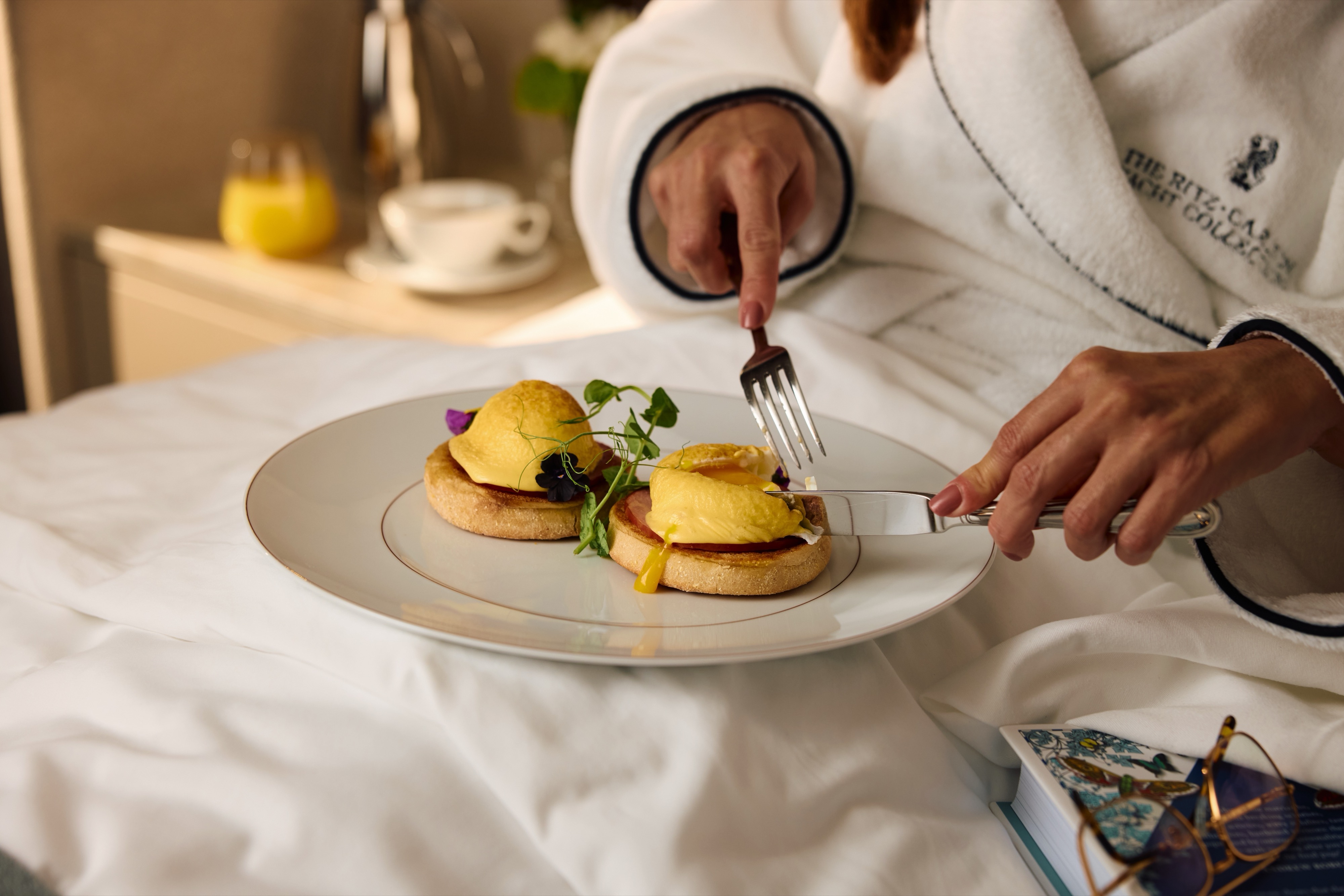
In-suite dining offers the comfort and privacy of enjoying thoughtfully prepared dishes in your suite or on your private terrace. The all-day dining menu features favorites from across the yacht’s venues, delivered with attentive presentation. A late-night menu adds flexibility, creating a seamless, refined experience at any hour.
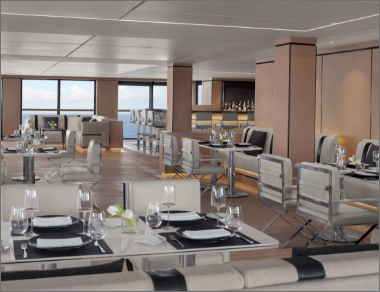
The Pool House
The Pool House offers a relaxed, open-air setting with fresh, à la minute dishes served throughout the day. From early breakfasts to late-night bites, the globally influenced menu suits any moment—whether returning from time ashore or pausing between hours by the water. Comfortable seating and shifting views create an effortless, welcoming atmosphere.
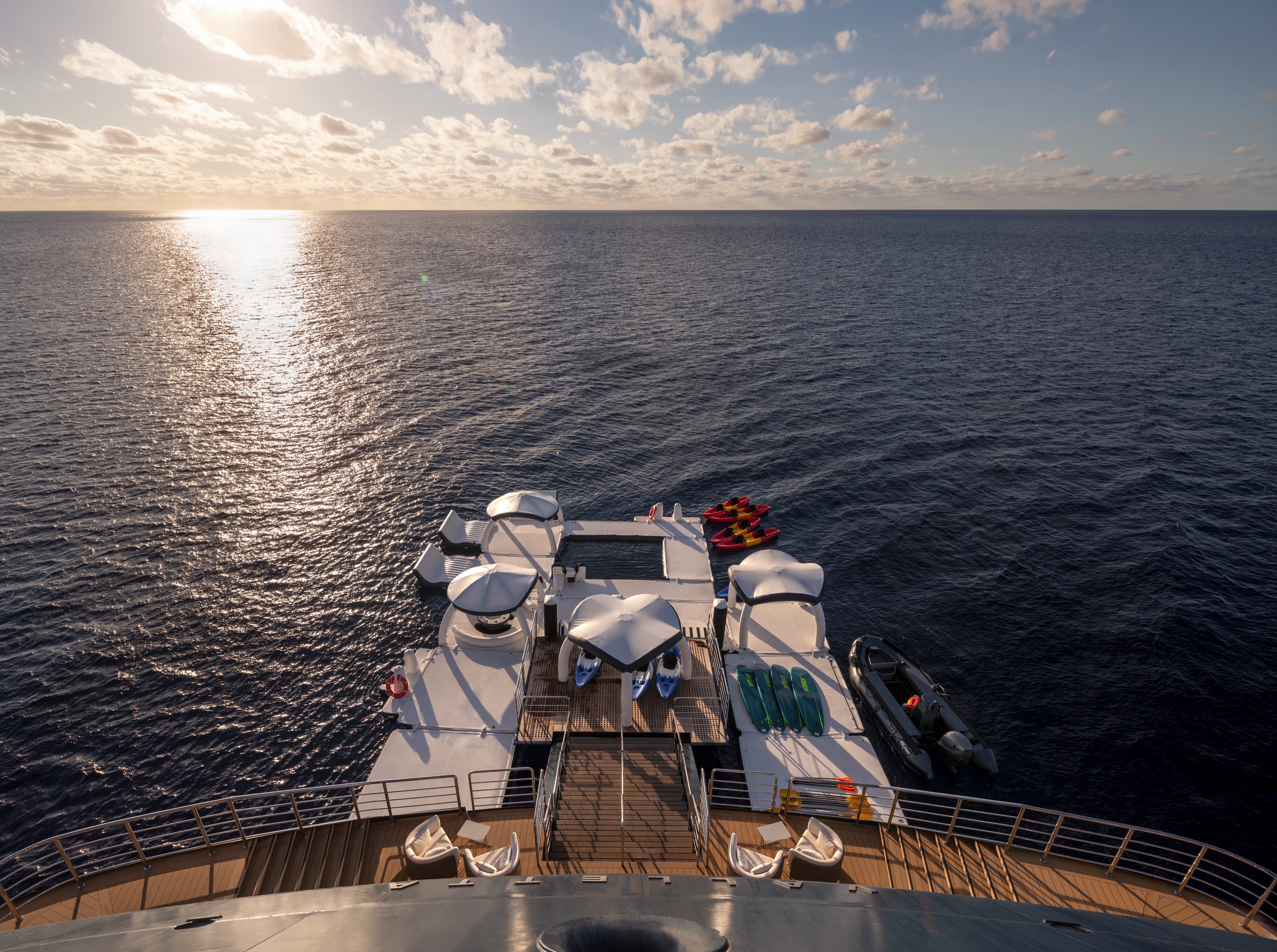
Marina and Marina Terrace
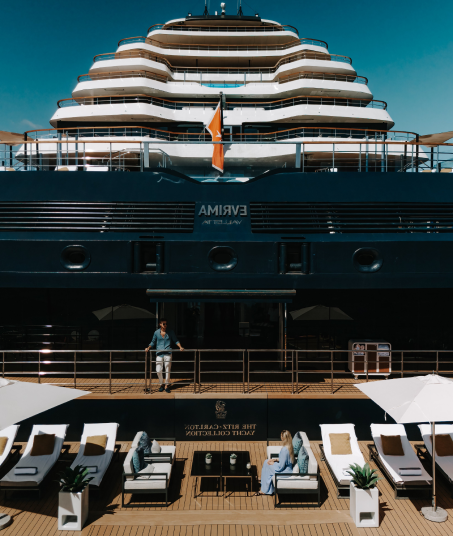
Nestled at the water’s edge, the Marina offers an inviting place to unwind while at anchor, with sun loungers and an exciting selection of water toys for time on the sea. Just above, the Marina Terrace provides a refined open-air setting for handcrafted cocktails and light bites, creating an effortless transition from water activities to leisurely afternoons looking to the horizon.

The Observation Lounge
The Observation Terrace offers panoramic views that blur the line between land and sea, creating an inspired setting for lounging, cocktails or quiet conversation. As twilight settles in, the atmosphere shifts into a relaxed venue with live entertainment that extends into the evening.
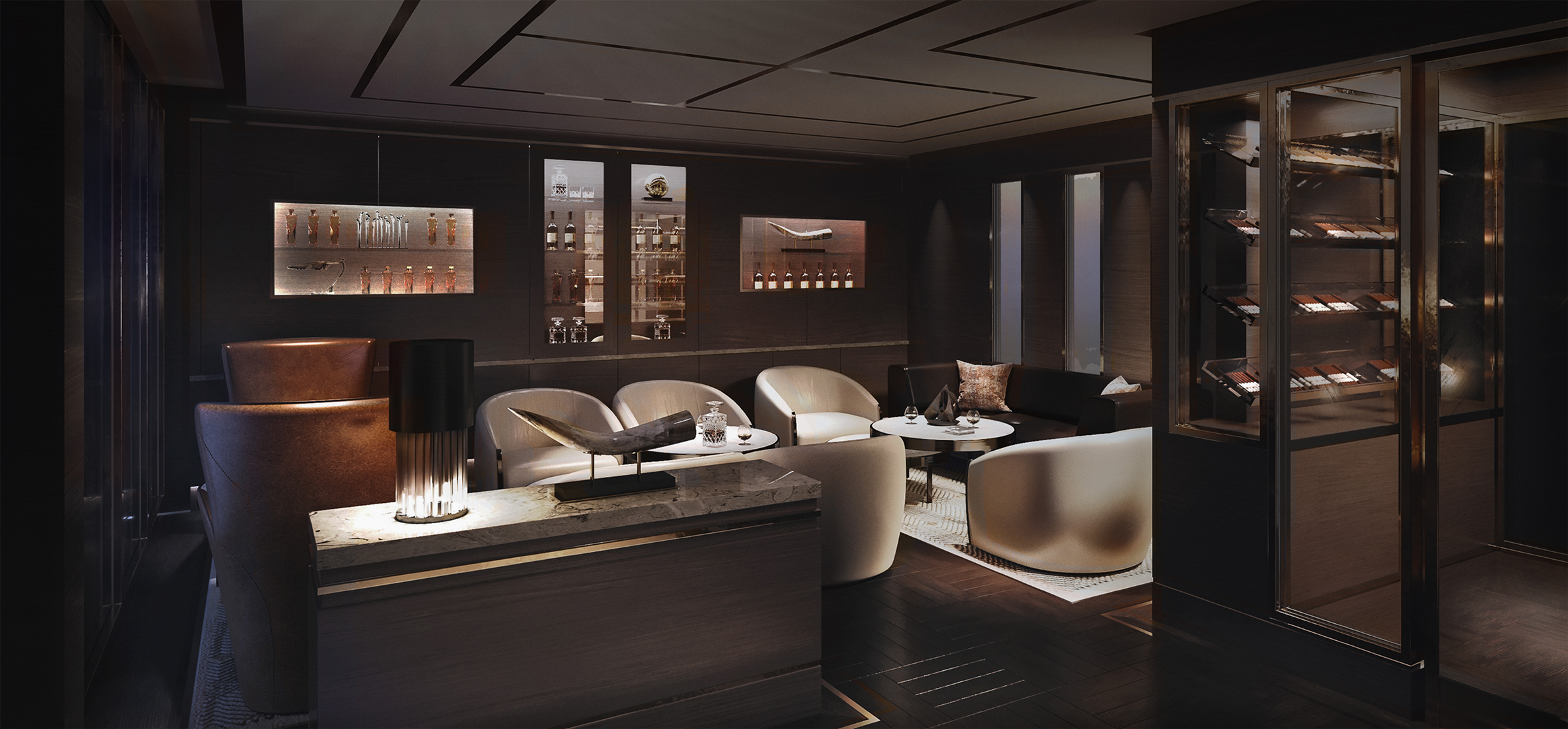
The Humidor
The Humidor is an intimate, quietly sophisticated setting for unhurried moments at day’s end. Guests can enjoy fine cognacs, single malts and other aged spirits while exploring a curated selection of hand-rolled cigars showcased in a state-of-the-art humidor. Warm and nuanced, it’s a welcoming place for reflection or relaxed conversation.
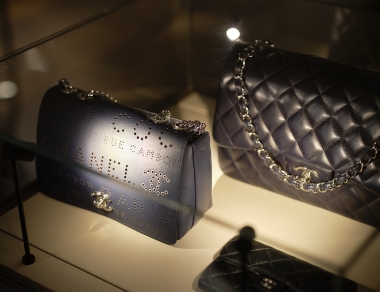
The Boutique
The Boutique features a curated selection of high-end sportswear, designer apparel, jewelry and leather goods, offering guests the opportunity to explore thoughtfully chosen pieces throughout their journey. On select voyages, the shopping experience is enhanced by exclusive collaborations with local artisans who share their craft and present distinctive creations inspired by the regions visited.
The Living Room
Bold shades of blue reflecting the sea provide a vibrant accent to the yacht’s gathering place, with its chic, comfortable furnishings and library with travel guides and best sellers. Diffused lighting transforms the space into a cocktail lounge with piano bar, dancing and live music later on, making The Living Room one of the most popular Ritz-Carlton Yacht Collection onboard features.
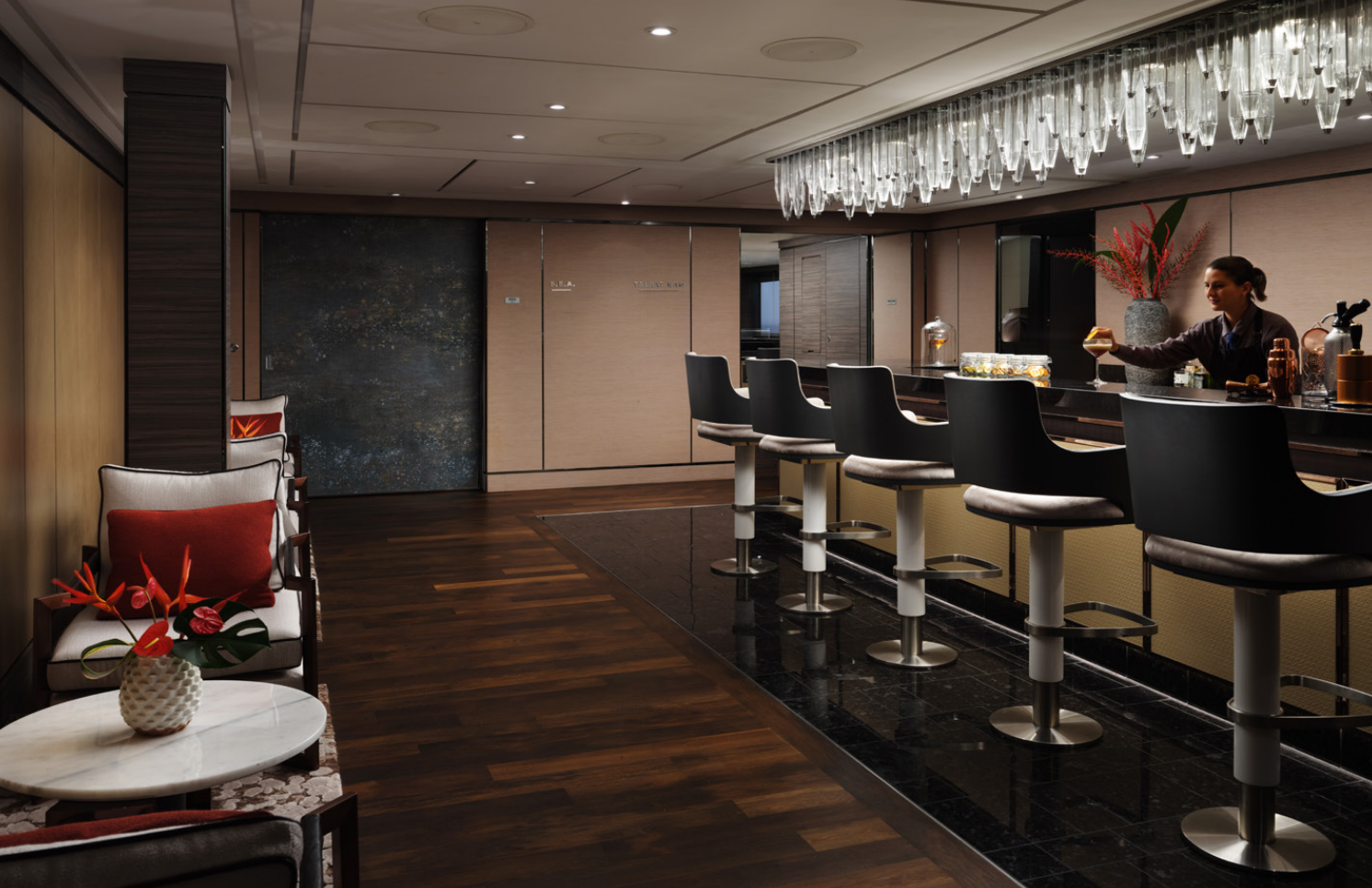
The Bar
This intimate lounge serves premium labels from around the world and also offers champagne and caviar pairings.
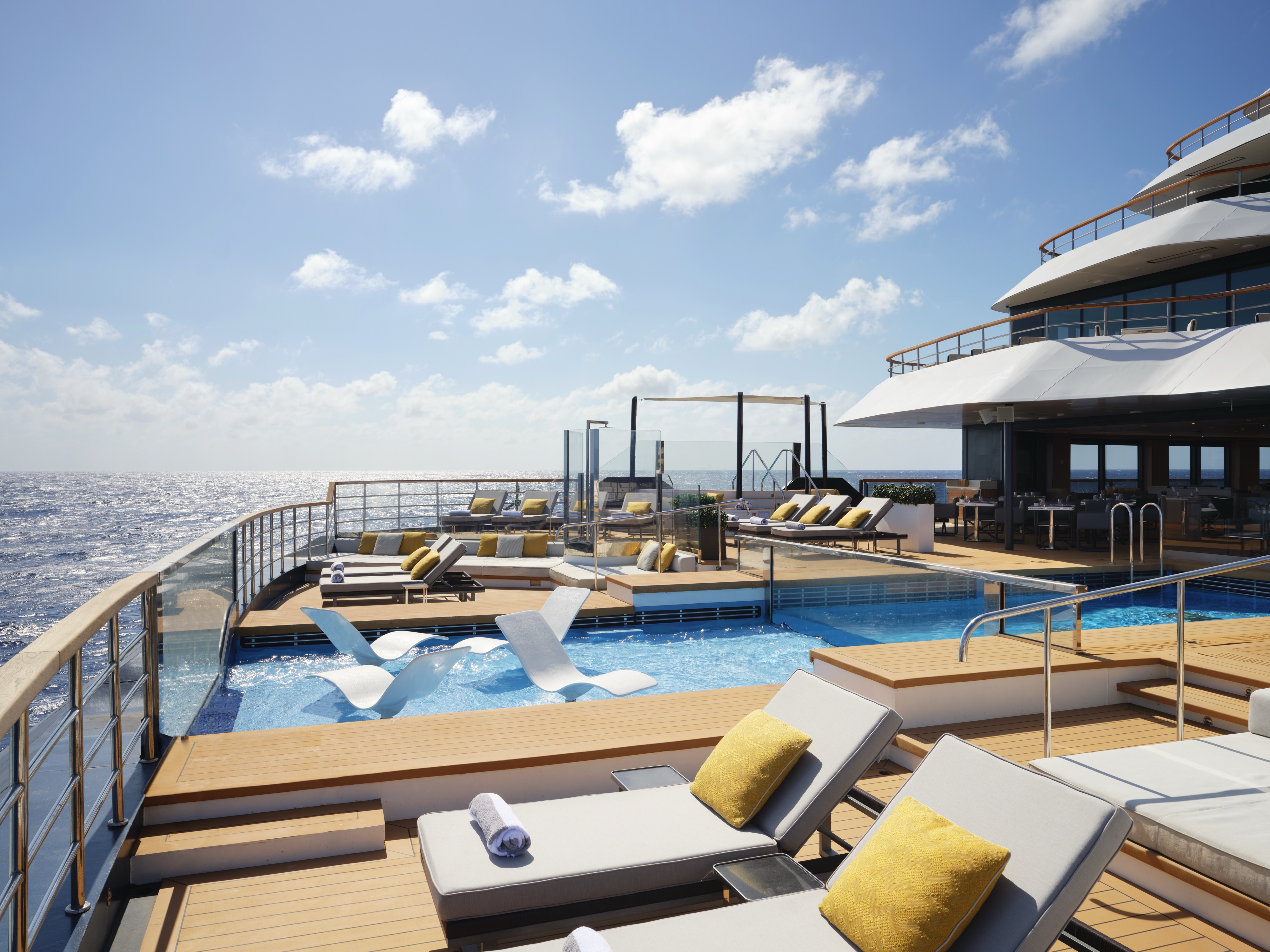
The Pool
The Pool offers panoramic views and a relaxed setting for unwinding throughout the day. Guests can enjoy all-day dining, frozen treats and drinks from the nearby bar, or settle into sunbeds, banquettes, tanning ledges and whirlpools. Gentle misting sprays add a cooling touch, while generous sundecks invite reading, resting or simply taking in the sea and sky.
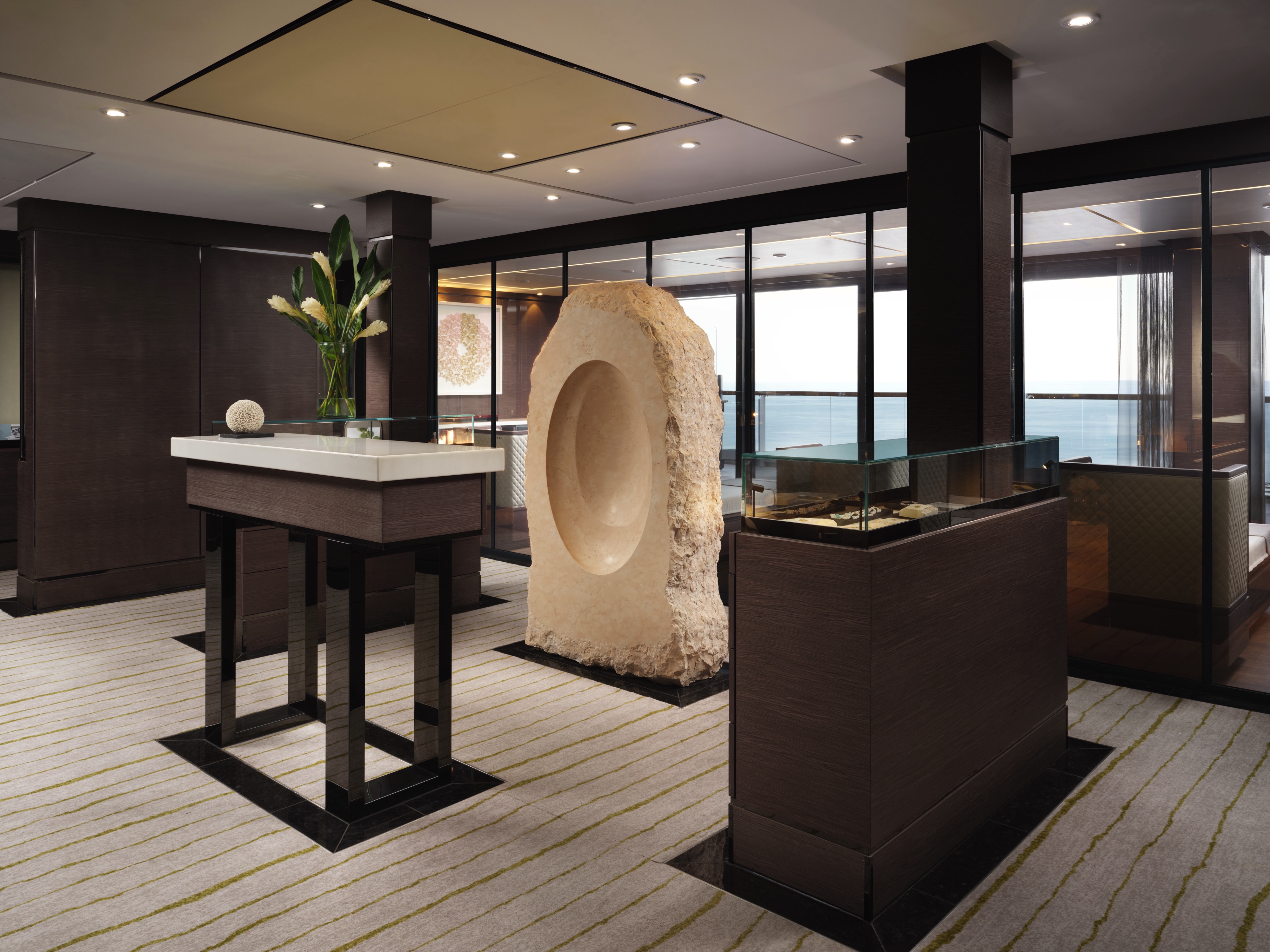
The Ritz-Carlton Spa
Unwind with expert massages, restorative facials and globally inspired treatments in a tranquil setting designed for ease and renewal. The spa invites guests to slow down, relax and immerse themselves in soothing aromas, calming rituals and thoughtful care that enhance every journey.
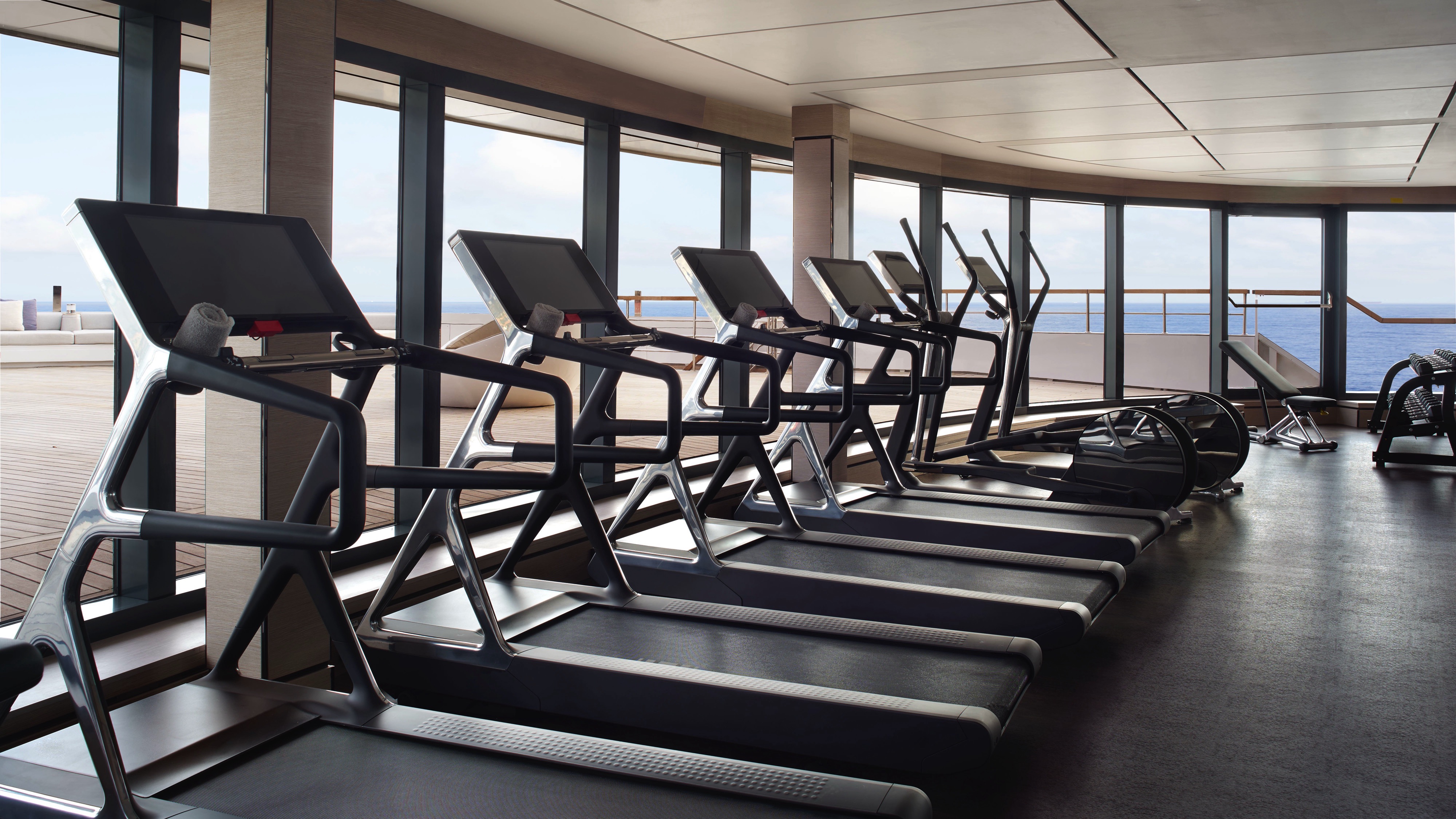
The Fitness Studio
The Fitness Studio offers a holistic approach to wellbeing, with personalized guidance, movement-focused programming and optional lectures that support a healthy voyage. A selection of Technogym equipment enables familiar routines or new forms of exercise, all within a calm, contemporary setting designed for strengthening, stretching and reconnecting with the body.
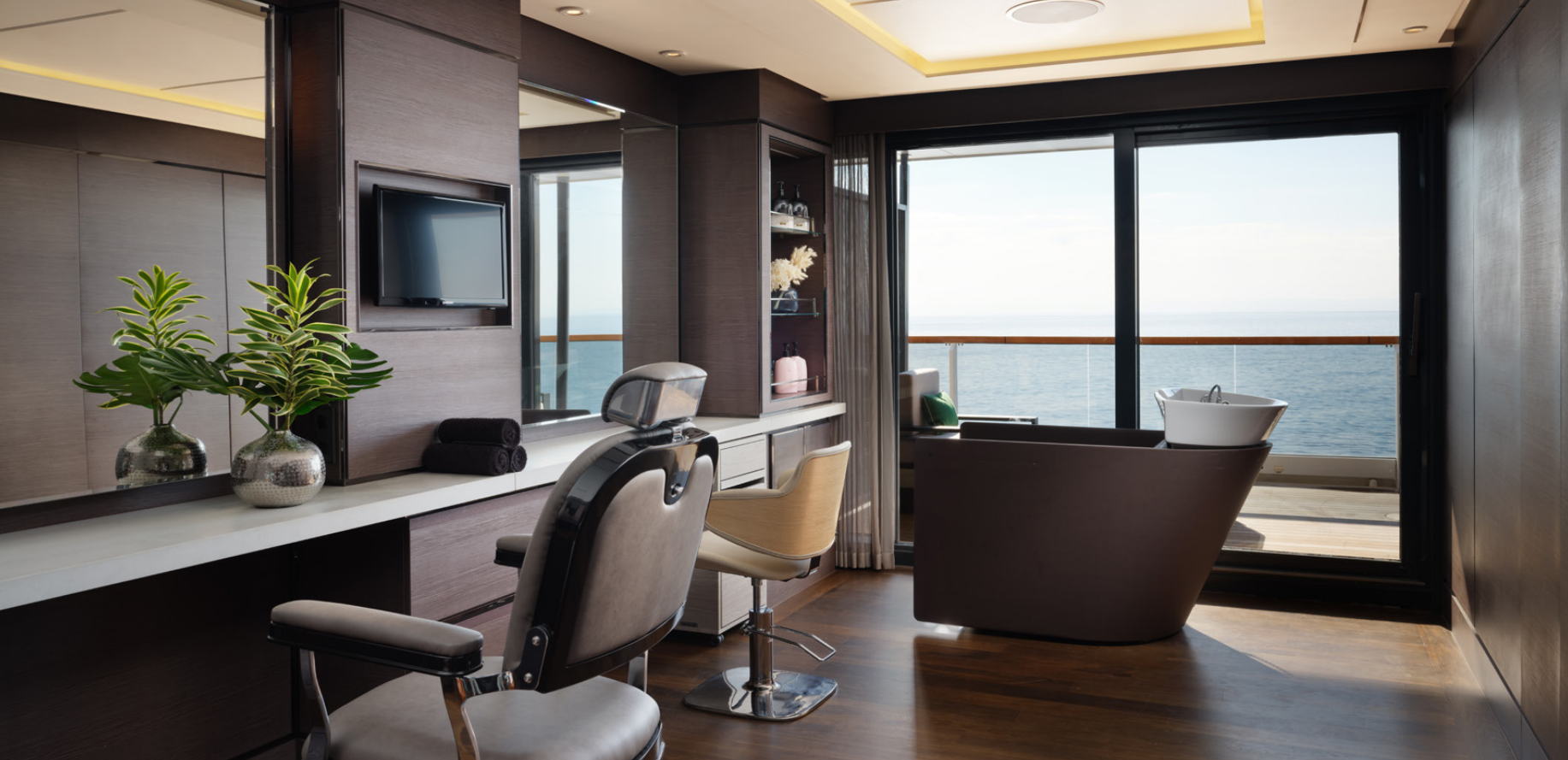
Barber & Salon Services
The Salon offers a variety of beauty and hair services including manicure and pedicure treatments, hair consultations, cutting, styling and blow drying. Next door at The Barber, gentlemen can enjoy a close shave or invigorating facial before heading ashore to explore the port feeling refreshed and revitalized.
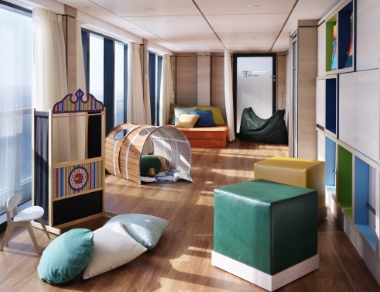
Ritz-Kids
Ritz Kids® is a dedicated program for families designed to inspire curiosity and creativity. Guided by engaging, age-appropriate activities, children can learn about the natural world and enjoy time with new friends. With its bright, inviting environment and attentive supervision, Ritz Kids® provides young travelers with a place to discover, play and connect.
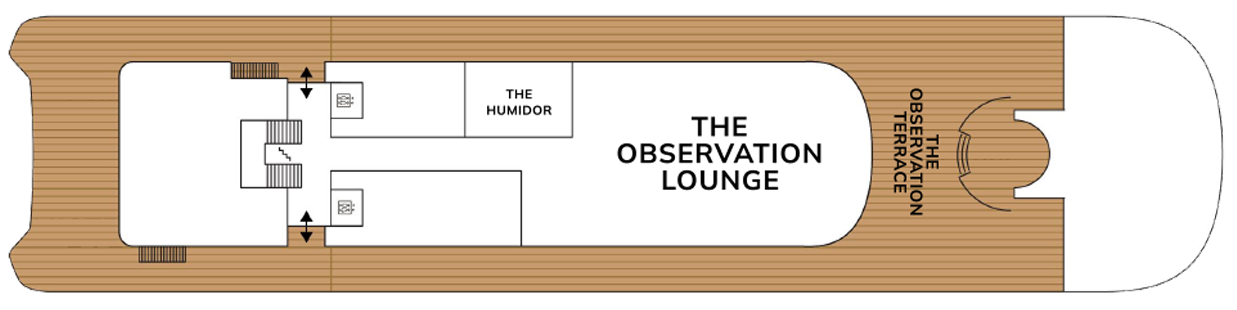
Deck 10
- The Observation Lounge
- The Observation Terrace
- The Humidor
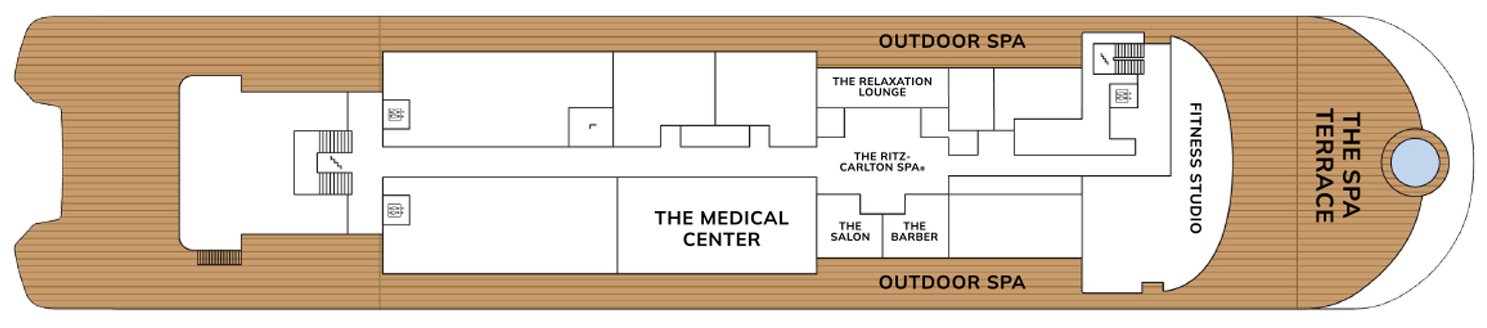
Deck 9
- The Gym
- Fitness Studio
- The Ritz-Carlton Spa
- Outdoor Spa
- The Spa Terrace
- The Barber/The Salon
- Launderette
- Men/Women’s Changing Rooms
- The Relaxation Lounge
- The Medical Centre
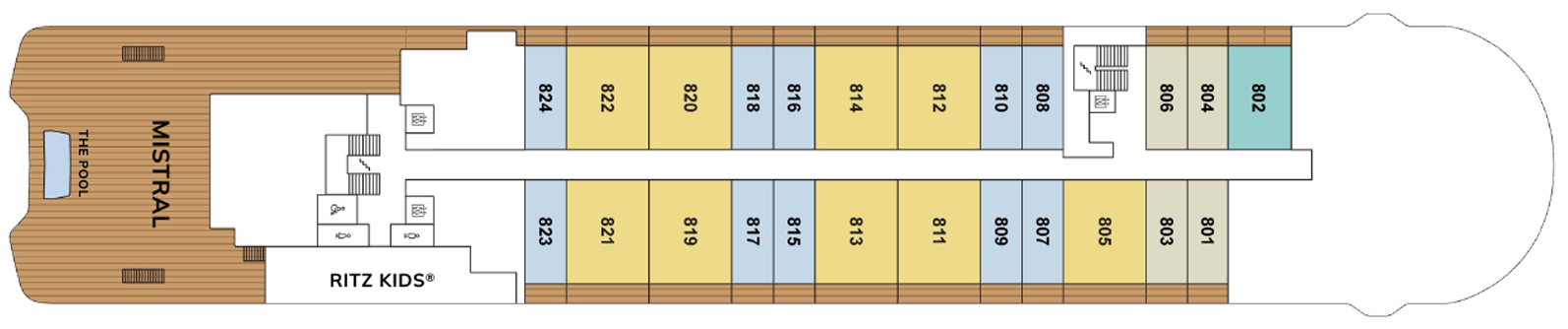
Deck 8
- Mistral
- Pool
- Ritz-Kids
- The Terrace Mid Suites
- The Grand Suites
- The Terrace Suites
- The Signature

Deck 7
- The Owner’s Suites
- The View Suites
- The Grand Suites
- The Terrace Mid Suites
- The Signature Mid Suites
- The Terrace Suites
- The Signature Suites

Deck 6
- The Bar
- S.E.A
- Talaat Nam
- The Terrace Suites
- The Signature Mid Suites
- The Terrace Mid Suites
- The Signature Suites

Deck 5
- The Pool House
- The Pool
- The Terrance Mid Suites
- The Terrace Suites
- The 2-Story Loft Suites

Deck 4
- The Meeting Rooms
- The Living Room
- The Boutique
- Wine Vault
- Wine Tasting Area
- The Evrima Room
- Dining Privée
- The 2-Story Loft Suites

Deck 3
- The Marina Terrace
- The Marina