Itinerary
Day programme:
Welcome to Athens, the capital of Greece, where the ancient and the contemporary exist side by side in a way found almost nowhere else on earth. You will spend two nights here, with time to settle in and begin absorbing all that surrounds you.This evening, meet your Tour Director and fellow guests for a welcome dinner at a rooftop restaurant overlooking the Acropolis – an introduction to Athens that sets the tone for the days ahead.
Day programme:
This morning your Tour Director leads you on a private guided tour of Athens, beginning at the Acropolis, described by UNESCO as "the most striking and complete ancient Greek monumental complex still existing in our times". The Parthenon, built between 447 and 432 BC under the leadership of the statesman Perikles and the sculptor Pheidias, remains the supreme expression of classical Greek architecture. Your tour continues to the Temple of Zeus, Hadrian's Arch, and the Panathenaic Stadium – known as the Kallimarmaro – built entirely of marble and the site of the first modern Olympic Games in 1896. A visit to the Acropolis Museum and the Ancient Agora completes a morning of extraordinary depth.The afternoon is yours to explore at your own pace. The winding streets of Plaka, Athens' oldest neighbourhood, draw you through traditional cafés, shops, and hidden corners that have defined this city for generations.
Day programme:
After breakfast, you depart Athens and journey north toward Meteora, one of the most extraordinary landscapes in Greece. The monasteries began to take shape in the 14th century, when monks sought refuge atop the region's towering sandstone pillars, and the complex is today recognised as a World Heritage Site and one of the most important centres of Eastern Orthodox monasticism in the world. Upon arrival in Kalambaka, your hotel awaits.As the day draws to a close, a gentle walk around the monasteries offers a quiet encounter with a landscape that feels genuinely unlike anywhere else on earth. The evening settles gently into dinner at a local restaurant, where the flavours of the region bring a warm and fitting close to a day of remarkable discovery.
Day programme:
Two of the six surviving monasteries of Meteora are your first destination this morning. each perched atop its own sandstone column and home to historic chapels and Byzantine frescoes that have endured for centuries. Scenic EnrichBefore departing the region, a visit to a family-owned honey business offers a hands-on encounter with one of Greece's oldest agricultural traditions. Dressed in protective gear, you participate in a beekeeping activity that brings you closer to both the landscape and the rhythms of rural Greek life. The afternoon brings you to the charming seaside town of Galaxidi, where a picturesque harbour and unhurried streets will be your home for the next two nights.
Day programme:
This morning you journey to Delphi, considered by the ancient Greeks to be the centre of the world and home to the most celebrated oracle of antiquity. A World Heritage Site, the sanctuary was first inhabited as early as the 15th century BC, with the cult of Apollo established here in the 8th century BC. Your guided tour traces the sacred way through the sanctuary's treasuries and temples before you step inside the Delphi Archaeological Museum, home to the celebrated Charioteer of Delphi. Scenic EnrichA hands-on pie-making workshop with a local chef offers a genuine window into the traditions of Greek home cooking. Guided by expert hands, you roll, fill, and fold alongside your fellow guests before sitting down together to enjoy the fruits of your efforts – a convivial, warmly personal experience that reveals the heart of Greek hospitality. As the afternoon unfolds, unwind on the golden shores of Itea, letting the gentle sea breeze and sparkling waters refresh your body and soul.
Oraia (beautiful) is the word Greeks use to describe Nafplion. The town’s old section, on a peninsula jutting into the gulf of Argos, mixes Greek, Venetian, and Turkish architecture; narrow streets, often just broad flights of stone stairs, climb the slopes beneath the walls of Acronafplia. Tree-shaded plazas surround neoclassic buildings. The Palamidi fortress—an elegant display of Venetian might from the early 1700s—guards the town. Nafplion deserves at least a leisurely day of your undivided attention, and you may want to spend several days or a week here and use the city as the base from which to explore the many surrounding ancient sights.
Day programme:
Depart for Nafplio, one of Greece’s most romantic coastal towns. The journey takes you through scenic landscapes of rolling hills and shimmering waters, offering glimpses of the Greek countryside at its most picturesque.You will have the afternoon to explore Nafplio at your own pace, wandering through its narrow cobblestone streets, discovering charming cafés, boutique shops, and neoclassical architecture, or simply relaxing by the sparkling harbor and soaking in the town’s enchanting atmosphere.As evening falls, enjoy a festive dinner at a traditional taverna, where authentic Greek cuisine is paired with lively folk dancing – a perfect introduction to the warmth and spirit of Nafplio.
Oraia (beautiful) is the word Greeks use to describe Nafplion. The town’s old section, on a peninsula jutting into the gulf of Argos, mixes Greek, Venetian, and Turkish architecture; narrow streets, often just broad flights of stone stairs, climb the slopes beneath the walls of Acronafplia. Tree-shaded plazas surround neoclassic buildings. The Palamidi fortress—an elegant display of Venetian might from the early 1700s—guards the town. Nafplion deserves at least a leisurely day of your undivided attention, and you may want to spend several days or a week here and use the city as the base from which to explore the many surrounding ancient sights.
Day programme:
This morning your journey takes you through the storied landscape of the Argolis Peninsula, a region where mythology and history are woven into every hillside and ancient stone visible from the road. Your destination is the legendary citadel of Mycenae, one of the most significant archaeological sites in Greece.At Mycenae, walk through the imposing Lion Gate, visit the Treasury of Atreus, and explore the Acropolis, where the stories of kings and heroes come vividly to life. The afternoon brings a quieter pleasure – a visit to a local vineyard where a carefully curated wine tasting showcases the character and heritage of the region's varietals.
Oraia (beautiful) is the word Greeks use to describe Nafplion. The town’s old section, on a peninsula jutting into the gulf of Argos, mixes Greek, Venetian, and Turkish architecture; narrow streets, often just broad flights of stone stairs, climb the slopes beneath the walls of Acronafplia. Tree-shaded plazas surround neoclassic buildings. The Palamidi fortress—an elegant display of Venetian might from the early 1700s—guards the town. Nafplion deserves at least a leisurely day of your undivided attention, and you may want to spend several days or a week here and use the city as the base from which to explore the many surrounding ancient sights.
Day programme:
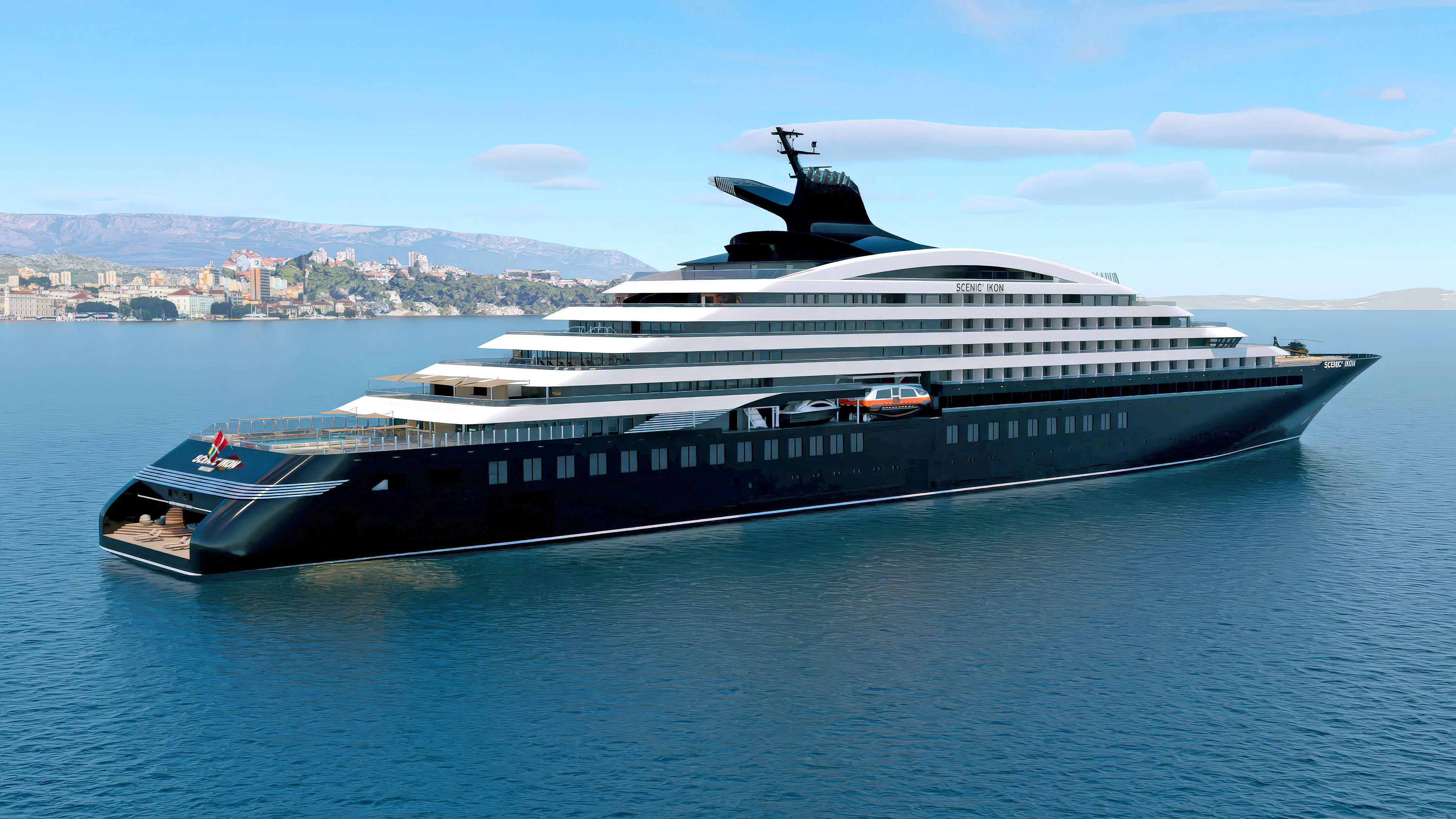
Leaving Nafplio behind, the morning drive to Epidaurus passes through a landscape that rewards those who simply pause and look – gentle hills and glimpses of the Saronic Gulf unfolding beyond the window. At Epidaurus, the remarkably preserved ancient theatre commands quiet awe – its acoustics so extraordinary that even a whisper from the stage carries clearly to the highest seats, a testament to the ingenuity of the ancient world.From Epidaurus, your journey continues to Piraeus Port, where the next remarkable chapter of your experience awaits as you prepare to embark the next-generation Scenic Discovery Yacht, Scenic Ikon.
It’s no wonder that all roads lead to the fascinating and maddening metropolis of Athens. Lift your eyes 200 feet above the city to the Parthenon, its honey-color marble columns rising from a massive limestone base, and you behold architectural perfection that has not been surpassed in 2,500 years. But, today, this shrine of classical form dominates a 21st-century boomtown. To experience Athens—Athína in Greek—fully is to understand the essence of Greece: ancient monuments surviving in a sea of cement, startling beauty amid the squalor, tradition juxtaposed with modernity. Locals depend on humor and flexibility to deal with the chaos; you should do the same. The rewards are immense. Although Athens covers a huge area, the major landmarks of the ancient Greek, Roman, and Byzantine periods are close to the modern city center. You can easily walk from the Acropolis to many other key sites, taking time to browse in shops and relax in cafés and tavernas along the way. From many quarters of the city you can glimpse “the glory that was Greece” in the form of the Acropolis looming above the horizon, but only by actually climbing that rocky precipice can you feel the impact of the ancient settlement. The Acropolis and Filopappou, two craggy hills sitting side by side; the ancient Agora (marketplace); and Kerameikos, the first cemetery, form the core of ancient and Roman Athens. Along the Unification of Archaeological Sites promenade, you can follow stone-paved, tree-lined walkways from site to site, undisturbed by traffic. Cars have also been banned or reduced in other streets in the historical center. In the National Archaeological Museum, vast numbers of artifacts illustrate the many millennia of Greek civilization; smaller museums such as the Goulandris Museum of Cycladic Art Museum and the Byzantine and Christian Museum illuminate the history of particular regions or periods. Athens may seem like one huge city, but it is really a conglomeration of neighborhoods with distinctive characters. The Eastern influences that prevailed during the 400-year rule of the Ottoman Empire are still evident in Monastiraki, the bazaar area near the foot of the Acropolis. On the northern slope of the Acropolis, stroll through Plaka (if possible by moonlight), an area of tranquil streets lined with renovated mansions, to get the flavor of the 19th-century’s gracious lifestyle. The narrow lanes of Anafiotika, a section of Plaka, thread past tiny churches and small, color-washed houses with wooden upper stories, recalling a Cycladic island village. In this maze of winding streets, vestiges of the older city are everywhere: crumbling stairways lined with festive tavernas; dank cellars filled with wine vats; occasionally a court or diminutive garden, enclosed within high walls and filled with magnolia trees and the flaming trumpet-shaped flowers of hibiscus bushes. Formerly run-down old quarters, such as Thission, Gazi and Psirri, popular nightlife areas filled with bars and mezedopoleia (similar to tapas bars), are now in the process of gentrification, although they still retain much of their original charm, as does the colorful produce and meat market on Athinas. The area around Syntagma Square, the tourist hub, and Omonia Square, the commercial heart of the city about 1 km (½ mi) northwest, is distinctly European, having been designed by the court architects of King Otho, a Bavarian, in the 19th century. The chic shops and bistros of ritzy Kolonaki nestle at the foot of Mt. Lycabettus, Athens’s highest hill (909 feet). Each of Athens’s outlying suburbs has a distinctive character: in the north is wealthy, tree-lined Kifissia, once a summer resort for aristocratic Athenians, and in the south and southeast lie Glyfada, Voula, and Vouliagmeni, with their sandy beaches, seaside bars, and lively summer nightlife. Just beyond the city’s southern fringes is Piraeus, a bustling port city of waterside fish tavernas and Saronic Gulf views.
The second-largest city in Crete and capital of the Homonym Prefecture, Chania is located in Minoan Kidonia at the end of the Homonym Gulf between the Akrotiri and Onicha peninsulas. Chania City is divided into two parts; the Old Town, which is comprised of several connected districts built around the old Venetian Harbour, and New Town, a larger, more modern city whose centre is situated next to, and south of, the Old Town. The Old Town is home to Venetian buildings and Turkish elements that combine to create a unique architectural style, and is considered to be the most beautiful urban district on Crete. It was once surrounded by old Venetian fortifications that separated it from the New Town; however, only the eastern and western parts remain today. Due to its compact size, Skiathos can be easily explored in just a single day.
Day programme:
Chania, the capital of Crete until the 1970s, boasts a rich history dating back more than 5,000 years, with influences from civilisations such as Minoan, Venetian and Ottoman. Its charming maze-like Old Town is known for its picturesque harbour, narrow cobblestone streets, and well-preserved Venetian and Turkish architecture. Spend the day exploring historic landmarks like the 16th-century lighthouse, the dusky pink Mosque of Kioutsouk Hasan and the Byzantine walls.
Day programme:
Paros is one of the most charming Greek Islands, sitting in the heart of the Aegean Sea. Its verdant green landscape captivates with vineyards and orchards laden with citrus fruits and pomegranates. Wander the winding streets of the capital Parikia, lined with quintessential Cycladic architecture – quaint whitewashed houses are adorned with bright blue doors and window boxes overflow with blooming bougainvillea.
Day programme:
The island of Amorgos, Greece, captivates with Katapola, an historic port known for its Cycladic architecture. Founded in ancient times, it boasts whitewashed villages and the iconic Panagia Hozoviotissa monastery, perched dramatically above the Aegean. In the late afternoon, set sail to the nearby island of Nikouria. This uninhabited outcrop is renowned for its serene, rugged landscapes and deserted beaches facing calm, clear water.
Early travelers described Rhodes as a town of two parts: a castle or high town (Collachium) and a lower city. Today Rhodes town—sometimes referred to as Ródos town—is still a city of two parts: the Old Town, a UNESCO World Heritage site that incorporates the high town and lower city, and the modern metropolis, or New Town, spreading away from the walls that encircle the Old Town. The narrow streets of the Old Town are for the most part closed to cars and are lined with Orthodox and Catholic churches, Turkish houses (some of which follow the ancient orthogonal plan), and medieval public buildings with exterior staircases and facades elegantly constructed of well-cut limestone from Lindos. Careful reconstruction in recent years has enhanced the harmonious effect.
Day programme:
Best known for its medieval architecture and rich history, the Greek island of Rhodes sits close to the coast of Turkey. Its well-preserved medieval Old Town is a designated World Heritage-listed site, resplendent with cobblestone streets, ancient walls and the impressive Kastello – Palace of the Grand Master of the Knights. Rhodes also boasts a fascinating hybrid of Greek, Ottoman and Italian influences, that you can experience through its diverse architecture, cuisine, and culture.
This big, brash resort city has two faces, and they’re hard to reconcile. From the sea, a line of hotels stretches around the northern edge of a great bay, the whole encircled by a magical necklace of pine-clad mountains. Behind those same hotels, however, the city has been overwhelmed by boxy concrete development and streets lined with a hundred generically named eateries. An annual horde of European tourists descends on these workaday establishments, but for the international traveler, there is little about Marmaris that can’t be savored elsewhere in Turkey. Although it is a pretty spot, there isn’t much reason to linger unless you are meeting a yacht, traveling on to the Greek island of Rhodes, or perhaps snapping up an unbeatable deal at one of the top resorts, some of which are spectacular worlds unto themselves.
Day programme:
Today, explore Marmaris, a vibrant Turkish coastal town where natural beauty meets lively culture. Surrounded by pine-covered mountains and sparkling turquoise waters, Marmaris offers a bustling marina, colourful bazaars, and a charming old town filled with history and warmth. Whether you’re strolling along the waterfront or sampling delicious local cuisine, Marmaris will be an unforgettable experience.
Day programme:
Start your day with an early session in the gym or some guided stretching in the Pilates studio. After breakfast, explore Bodrum, a glamourous Turkish city with twin bays and the medieval Bodrum Castle. This fourth century fortress was built partly with stones taken from the Mausoleum at Halicarnassus, one of the Seven Wonders of the Ancient World. Wander through the castle’s winding streets and dive into the vibrant atmosphere of the bazaar, where colourful stalls tout treasures from rugs to spices. After departing from Bodrum, you’ll sail on to Kos for an overnight stay. This beautiful Greek Island is ringed by golden sandy beaches and renowned for its rich history.
Day programme:
A stunning Greek Island popular for its stunning beaches, crystal-clear waters and rich history, Kos is home to enthralling ancient ruins. These include the famous Asklepion, a traditional healing centre dedicated to the Greek god of medicine, Asklepios, and the Castle of the Knights, a medieval fortress that offers stunning views of the surrounding area.
Whilst the busy resort town of Kusadasi offers much in the way of shopping and dining – not to mention a flourishing beach life scene, the real jewel here is Ephesus and the stunning ruined city that really take centre stage. With only 20% of the classical ruins having been excavated, this archaeological wonder has already gained the status as Europe’s most complete classical metropolis. And a metropolis it really is; built in the 10th century BC this UNESCO World Heritage site is nothing short of spectacular. Although regrettably very little remains of the Temple of Artemis (one of the seven wonders of the ancient world), the superb Library of Celsus’ façade is practically intact and it is one of life’s great joys to attend an evening performance in the illuminated ruins once all the tourists have left. The history of the city is fascinating and multi-layered and it is well worth reading up on this beforehand if a visit is planned. Another point of interest for historians would be the house of the Virgin Mary, located on the romantically named Mount Nightingale and just nine kilometres away from Ephesus proper. Legend has it that Mary (along with St. John) spent her final years here, secluded from the rest of the population, spreading Christianity. An edifying experience, even for non-believers. For the less historical minded amongst you, Kusadasi offers plenty in the way of activities. After a stroll through the town, jump in a taxi to Ladies’ Beach (men are allowed), sample a Turkish kebap on one of the many beachfront restaurants and enjoy the clement weather. If you do want to venture further afield, then the crystal clear beaches of Guzelcamli (or the Millipark), the cave of Zeus and the white scalloped natural pools at Pamukkale, known as Cleopatra’s pools, are definitely worth a visit.
Day programme:
Wander lively bazaars and savour Turkish cuisine in the popular seaside resort town of Kusadasi. The port also serves as the gateway to the World Heritage-listed ancient city of Ephesus, renowned for its breathtaking Greco-Roman ruins dating back as far as the 10th century BC. Marvel at Ephesus’ grand Library of Celsus and the majestic ruins of the Temple of Artemis, one of the original Seven Wonders of the World, echoes of antiquity’s splendour.
Although the fishing boats still go out in good weather, Mykonos largely makes its living from tourism these days. The summer crowds have turned one of the poorest islands in Greece into one of the richest. Old Mykonians complain that their young, who have inherited stores where their grandfathers once sold eggs or wine, get so much rent that they have lost ambition, and in summer sit around pool bars at night with their friends, and hang out in Athens in winter when island life is less scintillating. Put firmly on the map by Jackie O in the 1960s, Mykonos town—called Hora by the locals—remains the Saint-Tropez of the Greek islands. The scenery is memorable, with its whitewashed streets, Little Venice, the Kato Myli ridge of windmills, and Kastro, the town’s medieval quarter. Its cubical two- or three-story houses and churches, with their red or blue doors and domes and wooden balconies, have been long celebrated as some of the best examples of classic Cycladic architecture. Luckily, the Greek Archaeological Service decided to preserve the town, even when the Mykonians would have preferred to rebuild, and so the Old Town has been impressively preserved. Pink oleander, scarlet hibiscus, and trailing green pepper trees form a contrast amid the dazzling whiteness, whose frequent renewal with whitewash is required by law. Any visitor who has the pleasure of getting lost in its narrow streets (made all the narrower by the many outdoor stone staircases, which maximize housing space in the crowded village) will appreciate how its confusing layout was designed to foil pirates—if it was designed at all. After Mykonos fell under Turkish rule in 1537, the Ottomans allowed the islanders to arm their vessels against pirates, which had a contradictory effect: many of them found that raiding other islands was more profitable than tilling arid land. At the height of Aegean piracy, Mykonos was the principal headquarters of the corsair fleets—the place where pirates met their fellows, found willing women, and filled out their crews. Eventually the illicit activity evolved into a legitimate and thriving trade network. Morning on Mykonos town’s main quay is busy with deliveries, visitors for the Delos boats, lazy breakfasters, and street cleaners dealing with the previous night’s mess. In late morning the cruise-boat people arrive, and the shops are all open. In early afternoon, shaded outdoor tavernas are full of diners eating salads (Mykonos’s produce is mostly imported); music is absent or kept low. In mid- and late afternoon, the town feels sleepy, since so many people are at the beach, on excursions, or sleeping in their air-conditioned rooms; even some tourist shops close for siesta. By sunset, people have come back from the beach, having taken their showers and rested. At night, the atmosphere in Mykonos ramps up. The cruise-boat people are mostly gone, coughing three-wheelers make no deliveries in the narrow streets, and everyone is dressed sexy for summer and starting to shimmy with the scene. Many shops stay open past midnight, the restaurants fill up, and the bars and discos make ice cubes as fast as they can. Ready to dive in? Begin your tour of Mykonos town (Hora) by starting out at its heart: Mando Mavrogenous Square.
Day programme:
This morning your ultra-luxury Discovery Yacht, Scenic Ikon, will arrive at the island of Mykonos, Greece, a cosmopolitan Cycladic gem known for its iconic windmills and distinctive architecture. Founded as a port in the 11th century BC, it boasts pristine beaches, whitewashed buildings and vibrant bougainvillea climbing along winding streets. Discover picturesque churches, savour authentic Greek cuisine in lively waterfront cafés, and be immersed in the island’s rich history and spirited charm.
It’s no wonder that all roads lead to the fascinating and maddening metropolis of Athens. Lift your eyes 200 feet above the city to the Parthenon, its honey-color marble columns rising from a massive limestone base, and you behold architectural perfection that has not been surpassed in 2,500 years. But, today, this shrine of classical form dominates a 21st-century boomtown. To experience Athens—Athína in Greek—fully is to understand the essence of Greece: ancient monuments surviving in a sea of cement, startling beauty amid the squalor, tradition juxtaposed with modernity. Locals depend on humor and flexibility to deal with the chaos; you should do the same. The rewards are immense. Although Athens covers a huge area, the major landmarks of the ancient Greek, Roman, and Byzantine periods are close to the modern city center. You can easily walk from the Acropolis to many other key sites, taking time to browse in shops and relax in cafés and tavernas along the way. From many quarters of the city you can glimpse “the glory that was Greece” in the form of the Acropolis looming above the horizon, but only by actually climbing that rocky precipice can you feel the impact of the ancient settlement. The Acropolis and Filopappou, two craggy hills sitting side by side; the ancient Agora (marketplace); and Kerameikos, the first cemetery, form the core of ancient and Roman Athens. Along the Unification of Archaeological Sites promenade, you can follow stone-paved, tree-lined walkways from site to site, undisturbed by traffic. Cars have also been banned or reduced in other streets in the historical center. In the National Archaeological Museum, vast numbers of artifacts illustrate the many millennia of Greek civilization; smaller museums such as the Goulandris Museum of Cycladic Art Museum and the Byzantine and Christian Museum illuminate the history of particular regions or periods. Athens may seem like one huge city, but it is really a conglomeration of neighborhoods with distinctive characters. The Eastern influences that prevailed during the 400-year rule of the Ottoman Empire are still evident in Monastiraki, the bazaar area near the foot of the Acropolis. On the northern slope of the Acropolis, stroll through Plaka (if possible by moonlight), an area of tranquil streets lined with renovated mansions, to get the flavor of the 19th-century’s gracious lifestyle. The narrow lanes of Anafiotika, a section of Plaka, thread past tiny churches and small, color-washed houses with wooden upper stories, recalling a Cycladic island village. In this maze of winding streets, vestiges of the older city are everywhere: crumbling stairways lined with festive tavernas; dank cellars filled with wine vats; occasionally a court or diminutive garden, enclosed within high walls and filled with magnolia trees and the flaming trumpet-shaped flowers of hibiscus bushes. Formerly run-down old quarters, such as Thission, Gazi and Psirri, popular nightlife areas filled with bars and mezedopoleia (similar to tapas bars), are now in the process of gentrification, although they still retain much of their original charm, as does the colorful produce and meat market on Athinas. The area around Syntagma Square, the tourist hub, and Omonia Square, the commercial heart of the city about 1 km (½ mi) northwest, is distinctly European, having been designed by the court architects of King Otho, a Bavarian, in the 19th century. The chic shops and bistros of ritzy Kolonaki nestle at the foot of Mt. Lycabettus, Athens’s highest hill (909 feet). Each of Athens’s outlying suburbs has a distinctive character: in the north is wealthy, tree-lined Kifissia, once a summer resort for aristocratic Athenians, and in the south and southeast lie Glyfada, Voula, and Vouliagmeni, with their sandy beaches, seaside bars, and lively summer nightlife. Just beyond the city’s southern fringes is Piraeus, a bustling port city of waterside fish tavernas and Saronic Gulf views.
Day programme:
Your Signature Yacht Cruise concludes this morning in Piraeus, where you’ll disembark and be transferred to Athens airport. Nestled in the heart of Greece, Athens captivates with its vibrant streets and ancient ruins. Rising above, the Acropolis showcases the Erechtheion’s graceful columns, blending historic grandeur with the city’s lively modern spirit. After one final delicious breakfast on board your next-generation Discovery Yacht, bid farewell to the crew and your fellow guests, taking with you stories for life. Please book your flight to depart out of Athens after 12:00 PM.#Spa treatments and services at additional cost. Daily activities may be subject to change; please consult your Daily Wonder for updates. +All drinks on board, including those stocked in your mini bar, are included, except for a very small number of rare, fine and vintage wines, Champagnes and spirits. Specialty restaurants require a reservation, enquire on board.^Experiences on board our helicopters and submersible are at additional cost, subject to regulatory approval, availability, weight restrictions, medical approval and weather conditions.Submersible not operational in Europe.The itinerary is a guide only and may be amended for operational reasons. As such Scenic cannot guarantee the voyage will operate unaltered from the itinerary stated above. Please refer to our terms and conditions for further information.
Ship features

Ikon Penthouse
Your own private residence at sea.
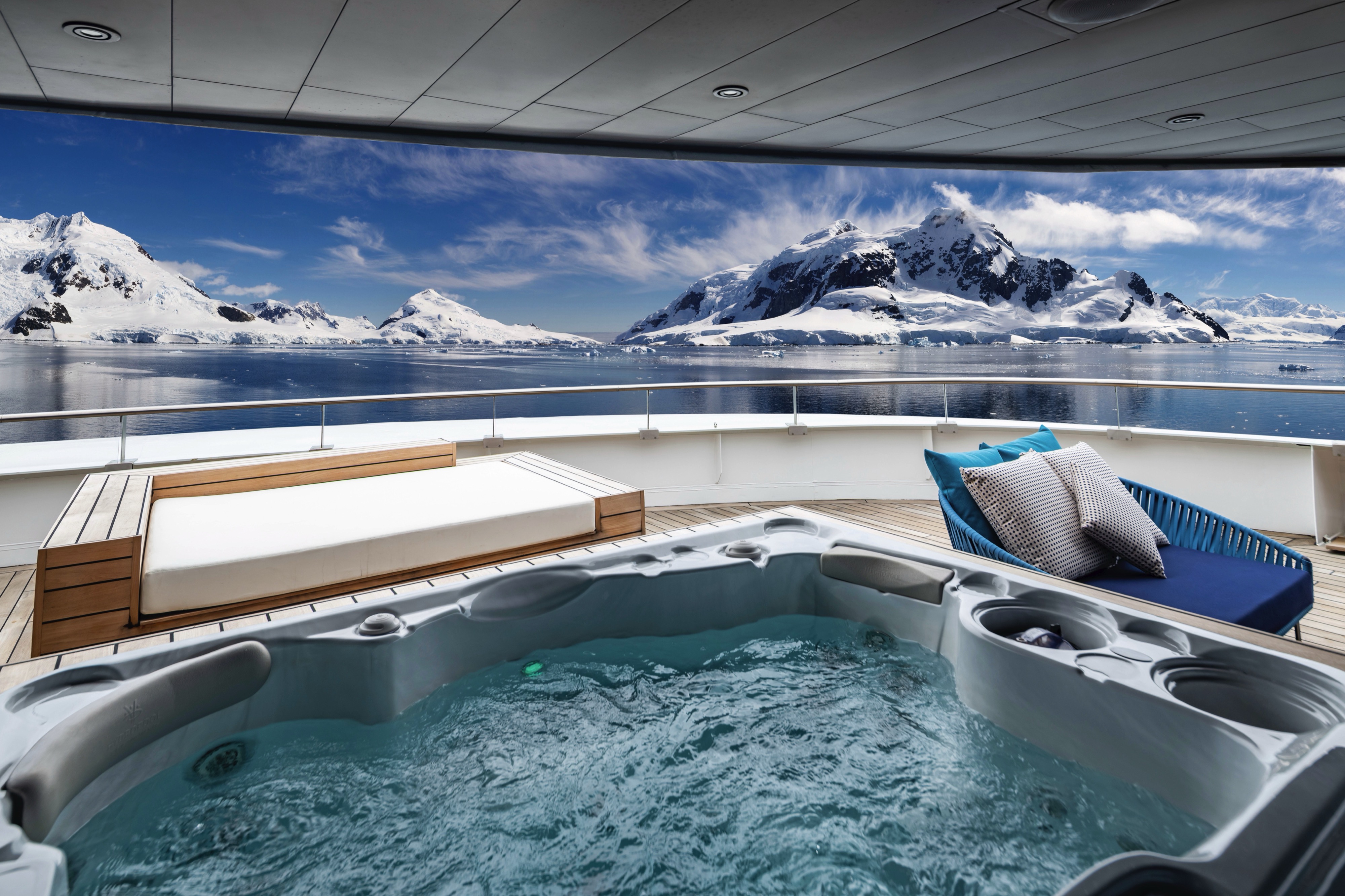
The lounge is thoughtfully appointed areas for relaxation, dining, and entertaining, with a fully appointed bar island: delight in anything your heart desires — from crafted cocktails to wellness-inspired refreshments and light dining — all served discreetly by your private butler. The suite features a master bedroom plus a wellness studio with in-suite ESPA spa services and private fitness amenities. Which can transform into a second bedroom for family or guests. The bathroom is enhanced with steam and infrared experiences for ultimate wellbeing and indulgence with full-size baths and double vanities, ensuring the utmost in comfort and indulgence. A spacious walk-in wardrobe and private Glam Bar, fully appointed with Dyson’s advanced hair care tools and elevated ESPA amenities, complete the suite, offering effortless luxury and the ultimate in oceanfront living. An expansive terrace with Jacuzzi, private cabana, and outdoor lounge and dining areas provides the perfect space to relax or entertain under open skies.
Grand Terrace Suite
Enjoy enhanced space and bespoke amenities. Each suite features spacious walk-in wardrobes and Glam Bars. These top-tier suites further elevate indulgence with expansive, fully appointed Butler Bars, offering a personalised selection of refreshments and in-suite dining options. Full-size bath, double vanity, Glam bar, and elevated ESPA amenities, delivering unparalleled comfort and refined ultra-luxury. A private terrace with jacuzzi, cabana and dining.
Scenic Yacht Suite
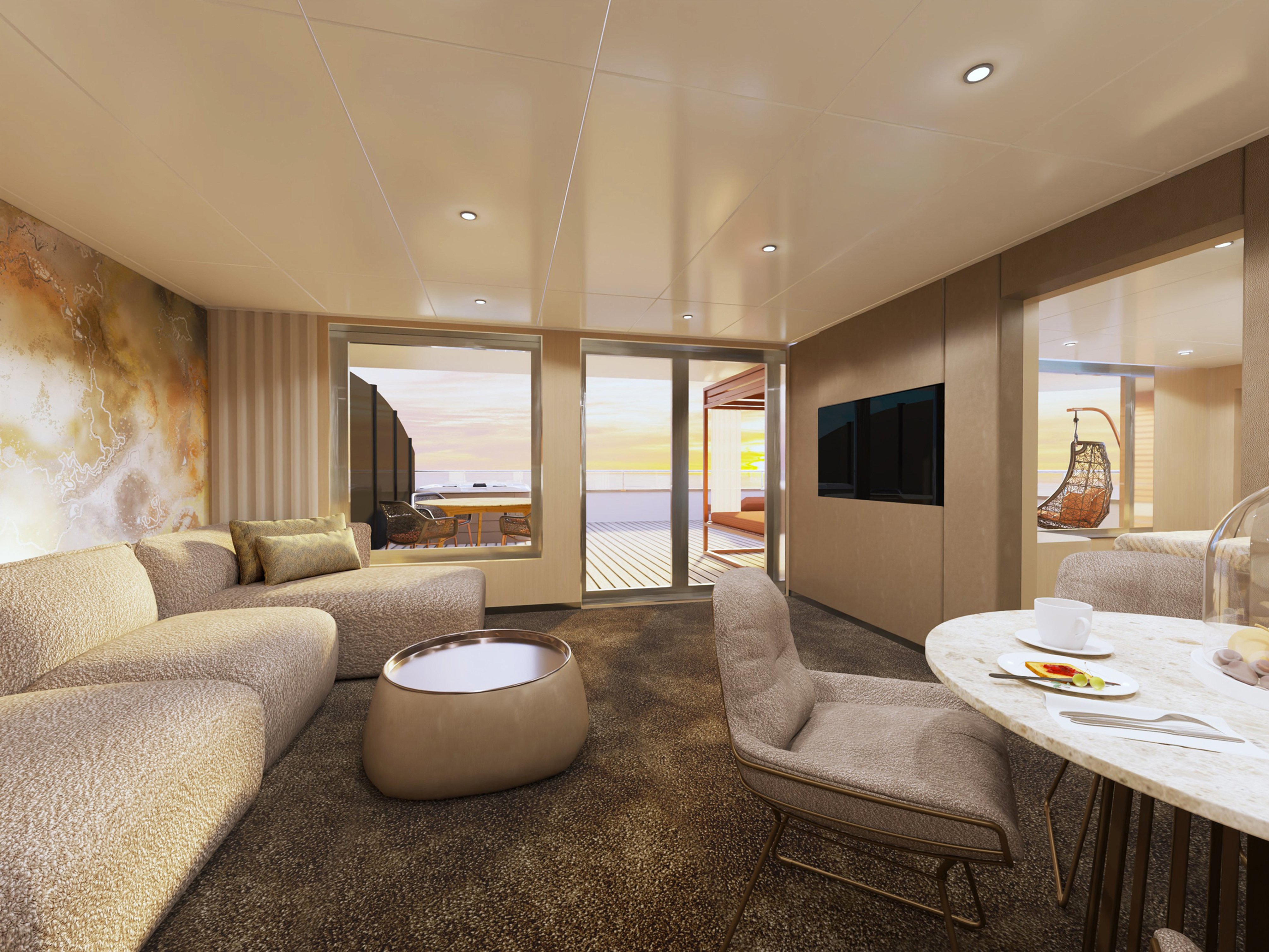
Enjoy enhanced space and bespoke amenities. Each suite features spacious walk-in wardrobes and Glam Bars. These top-tier suites further elevate indulgence with expansive, fully appointed Butler Bars, offering a personalised selection of refreshments and in-suite dining options. Full-size bath, double vanity, Glam bar, and elevated ESPA amenities, delivering unparalleled comfort and refined ultra-luxury. A private terrace with jacuzzi, cabana and dining.
Horizon Suite
Separate bedroom for enhanced privacy. Full-size bath, double vanity, walk-in wardrobe, and Glam Bar, ensuring every detail is designed for comfort, privacy, and indulgence.
Signature Spa Suite
A romantic retreat for couples, featuring a luxurious four-poster bed and indulgent wellness bathroom with a soaking spa bath, steam shower, soothing light therapy, and ocean vista, double vanity, and elevated ESPA spa amenities. Every detail is designed for shared relaxation and rejuvenation.
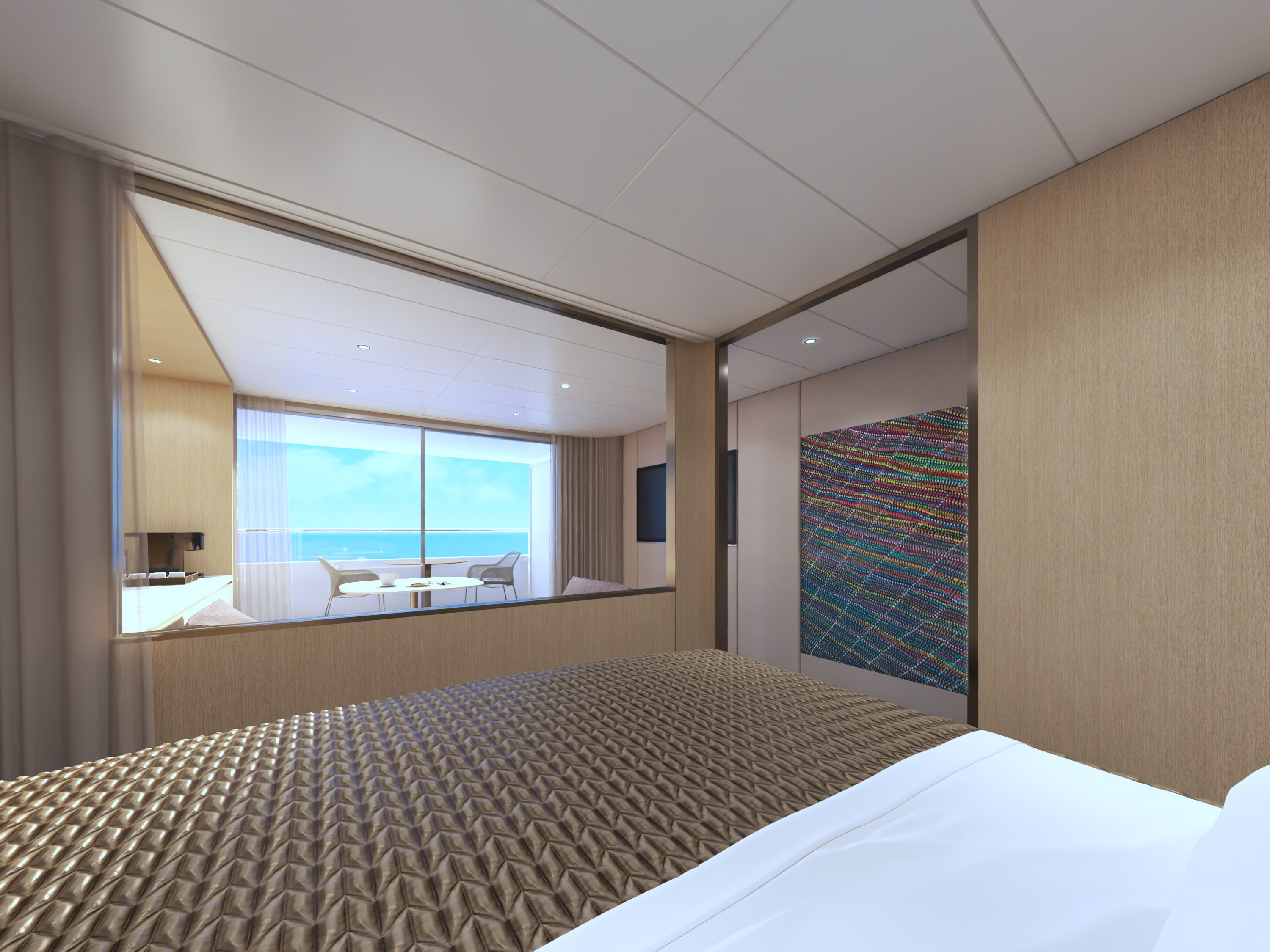
Master One Bedroom Suite
Separate bedrooms for enhanced privacy. Master Suite also offering adjoining suites for family accommodation. Full-size bath, double vanity, walk-in wardrobe, and Glam Bars, ensuring every detail is designed for comfort, privacy, and indulgence.
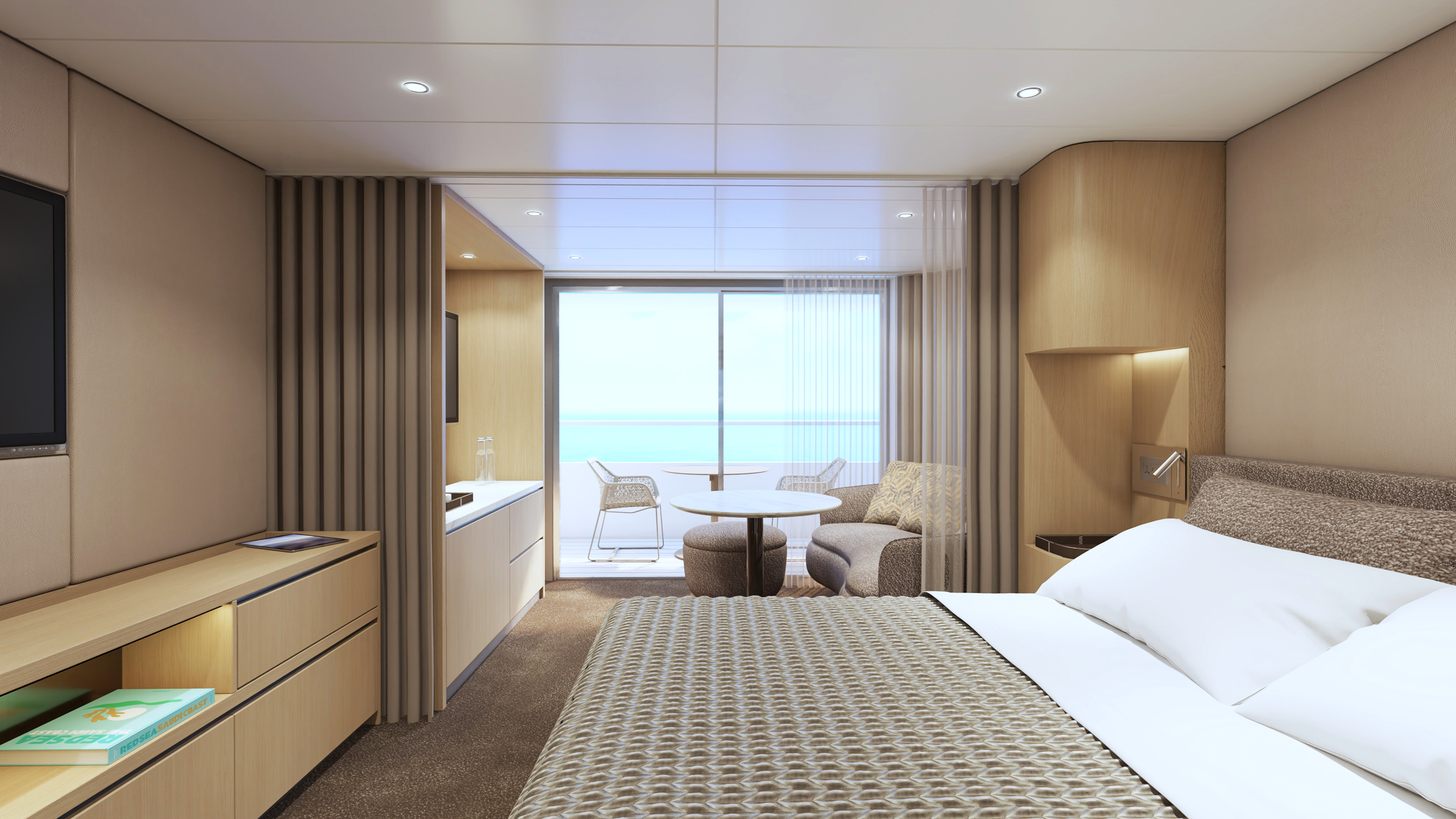
Grand Deluxe Verandah Suite
Separate sleep and lounge areas for the ultimate comfort. Enhanced spaces and elevated amenities. Walk-in wardrobes, Glam Bar, and fully appointed all-inclusive Butler Bars with custom tables for private in-suite dining.
Deluxe Verandah Suite
Separate sleep and lounge areas for the ultimate comfort. Enhanced spaces and elevated amenities. Walk-in wardrobes, Glam Bar, and fully appointed all-inclusive Butler Bars with custom tables for private in-suite dining.
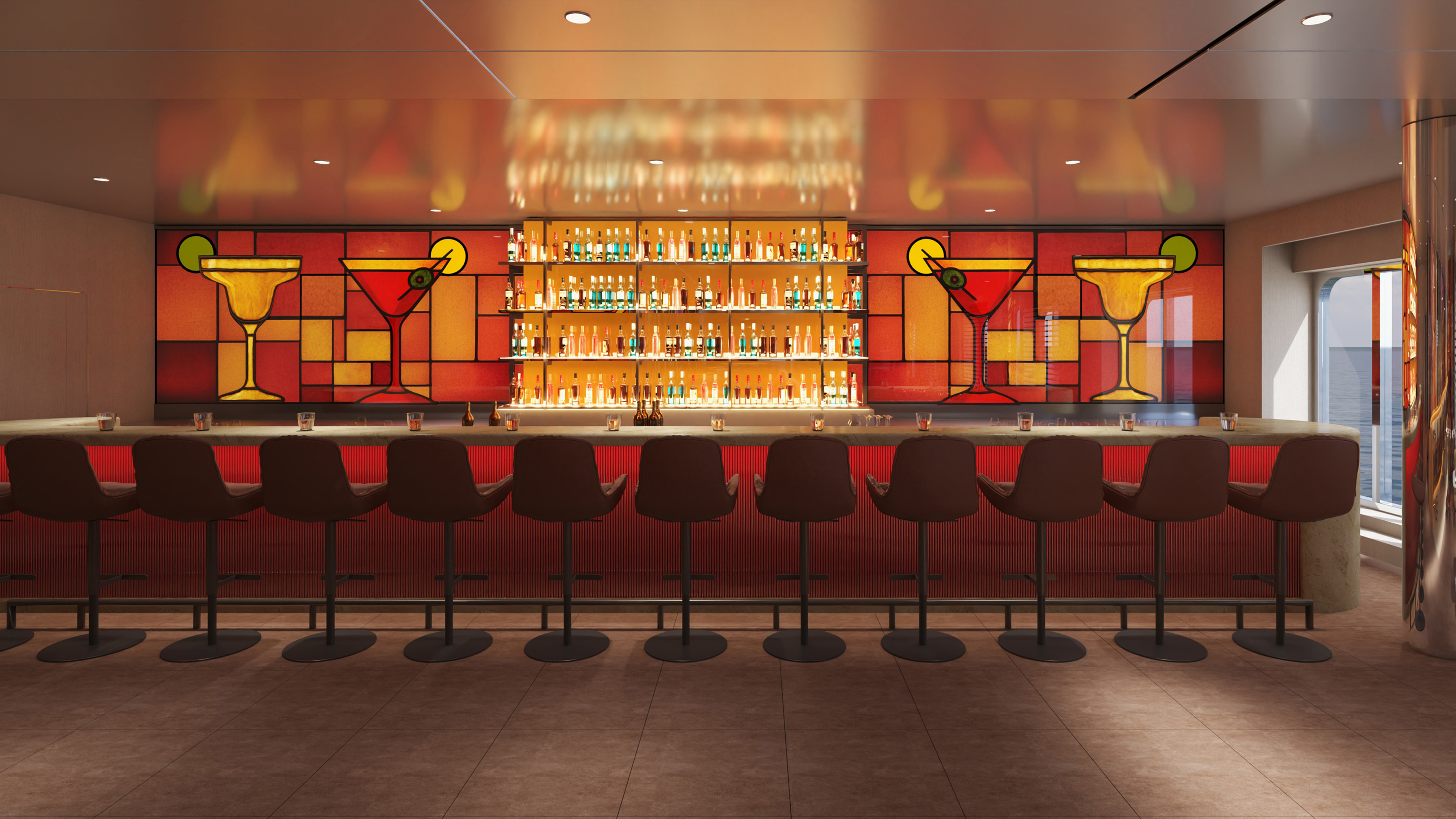
Textura
Expertly prepared Italian classics, premium steaks, and fresh seafood in an elegant yet relaxed atmosphere, with sweeping ocean views, exquisite flavours meet breathtaking scenery.
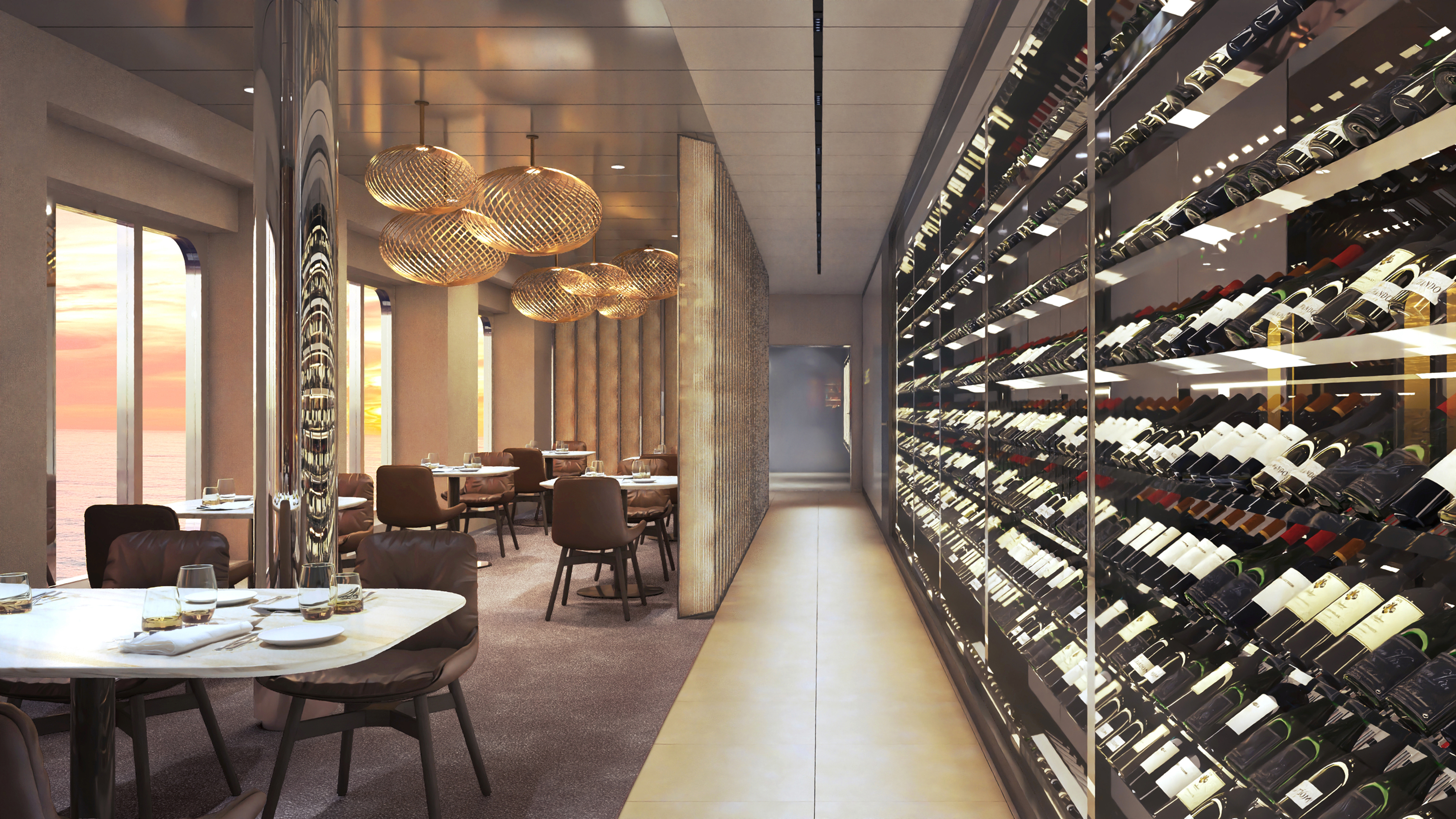
Elements
Expertly prepared Italian classics, premium steaks, and fresh seafood in an elegant yet relaxed atmosphere, with sweeping ocean views, exquisite flavours meet breathtaking scenery.
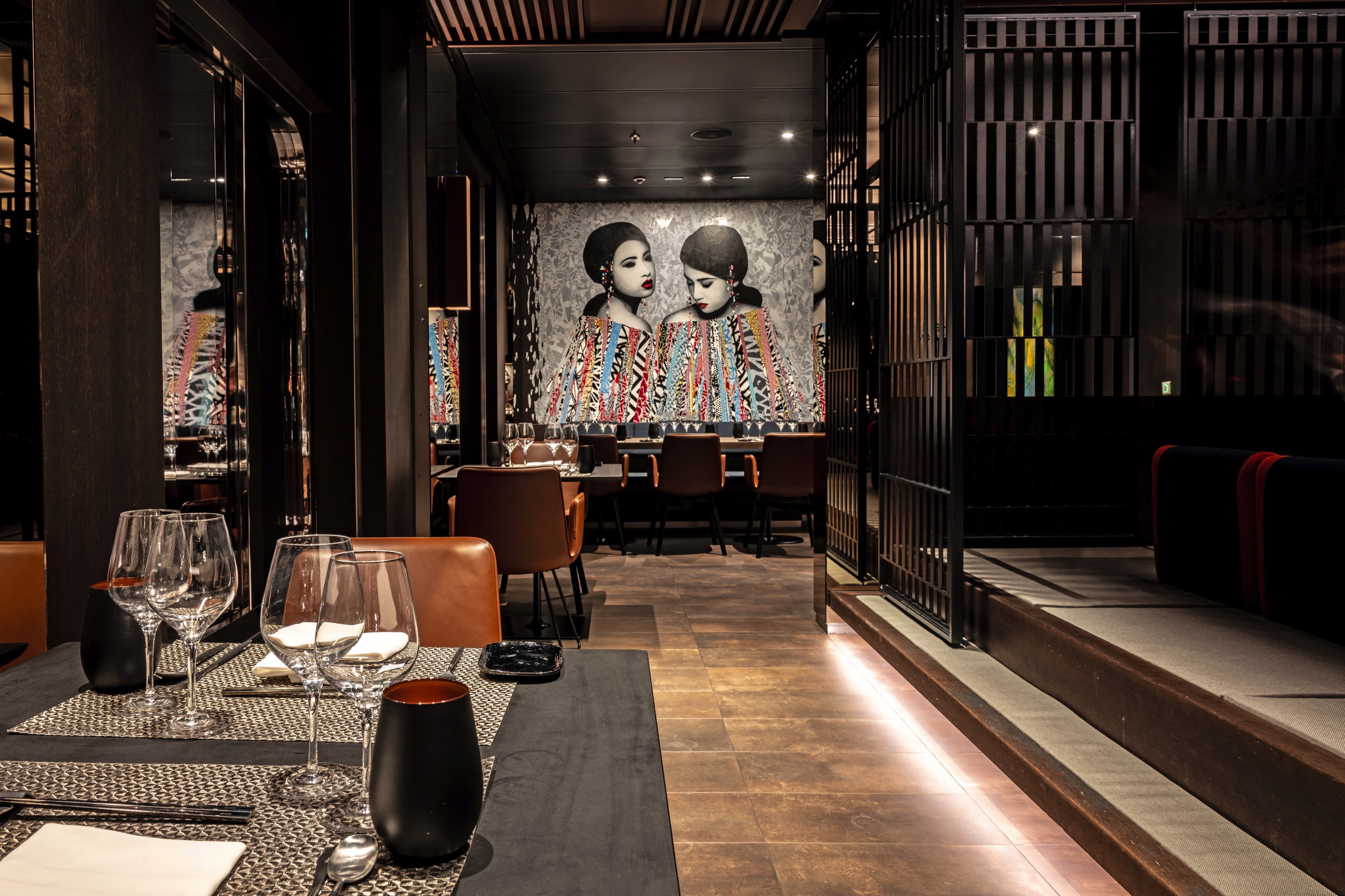
Koko’s Asian Fusion, Sushi & Night Market
For a contemporary twist, these experiences reimagine Asian traditions with dynamic flavours, lively presentation, and an energetic, immersive atmosphere.
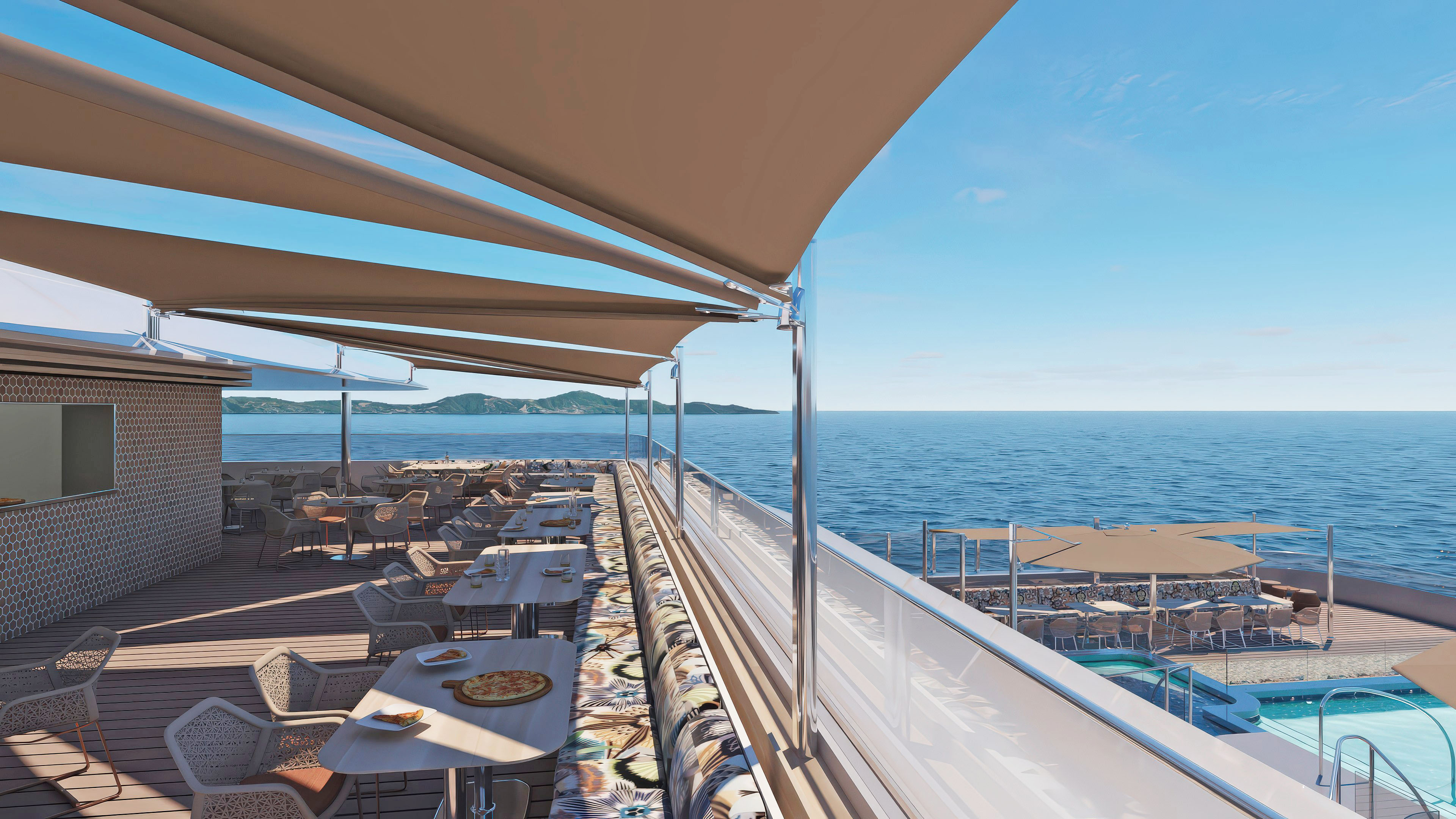
Crustory
Transforms pizza into a bold culinary exploration.

In-Suite Dining
24-hour room service for all suites.

Chef’s Table
A unique culinary concept at sea, this invitation-only dégustation experience showcases the innovative cooking techniques of the Executive Chef.
Lumière
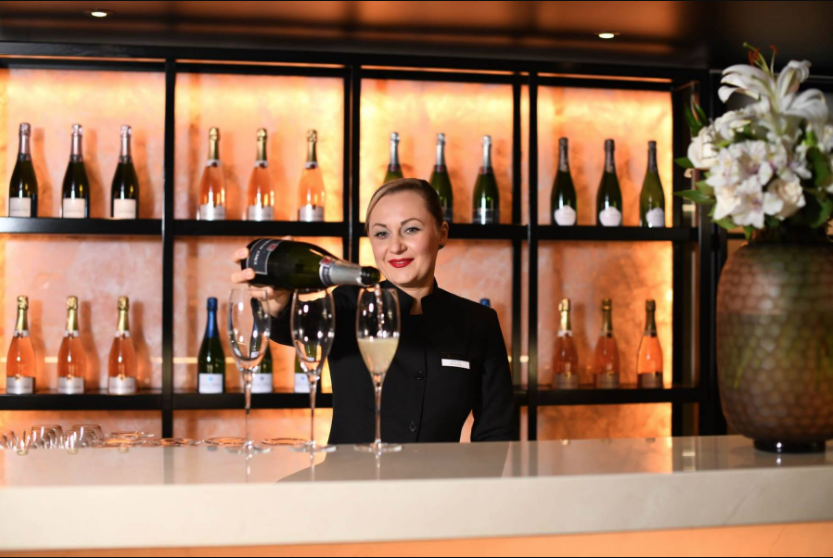
Modern French cuisine is elevated to extraordinary heights in an intimate, refined setting, enhanced by an exclusive Champagne experience. French Fine Dining
The Yacht Club
Casual dining with a new al fresco terrace – from hot entrées to crisp salads, roast meats, seasonal seafood dishes and artisanal pastries. On special evenings, it transforms into a spectacular venue for gala celebrations, pairing exceptional cuisine with sweeping ocean views.
Azure Café & Bar
Embrace all-day dining with savoury light meals, delectable miniature desserts, hot drinks and premium beverages.
Summa
Elevates local ingredients in share-style plates.
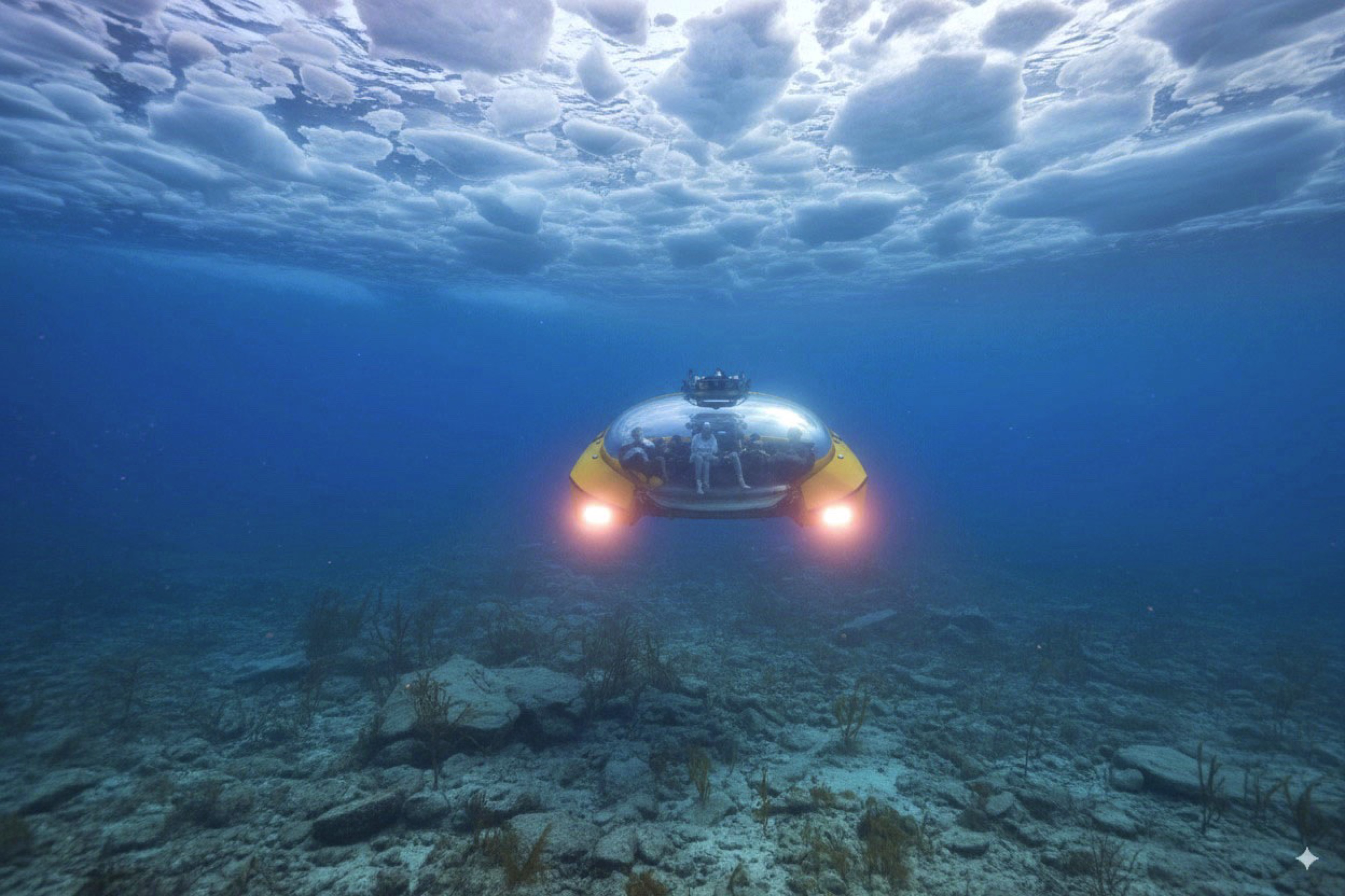
Scenic Neptune
Scenic Neptune III Triton AVA certified up to 200m, dives up to 100m for the best viewing experience. Up to eight guests plus pilot. 360 degree panoramic views, acrylic sphere. Will operate in Antarctica on Scenic Ikon.

Discovery Team
Led by Director of Discovery Operations, Jason Flesher, the Discovery Team ensures unparalleled exploration and rich cultural immersion on Expedition and Discovery Voyages.
Our team of up to 20 specialists on Expedition Voyages, and up to 15 on Discovery Voyages, spans fields like history, biology, archaeology, naturalism, geology and photography. Enhancing your experience with their passion and expertise.
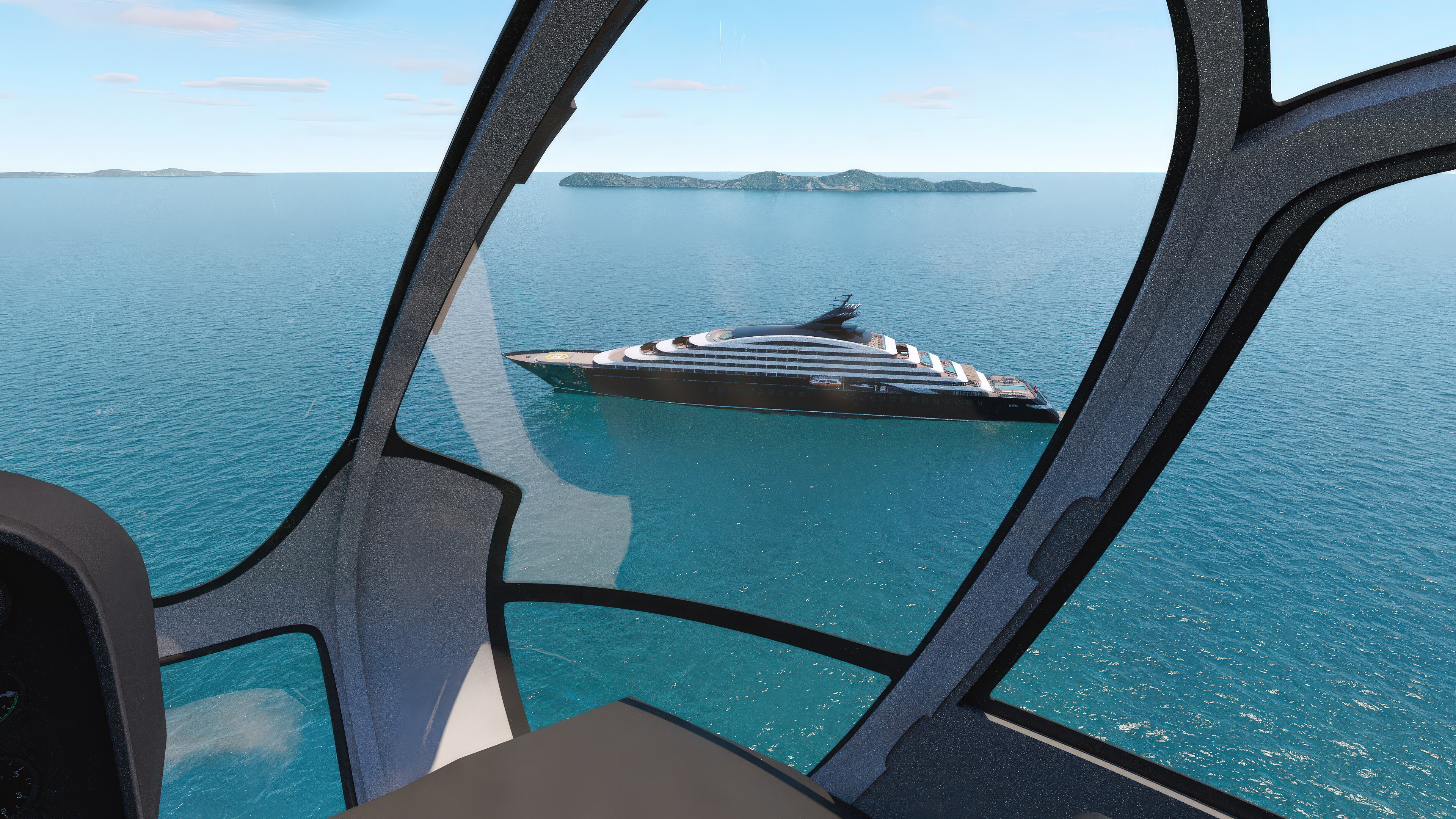
Helicopter Experiences
Two Airbus H130-T2 helicopters for up to 6 guests plus pilot. The quietest in the sky. Outstanding visibility from all seats, expansive windows and large, wrap-around windscreen. Noise cancelling Bose headphones.
Guests can elevate their voyage of discovery to the next level through thoughtfully curated helicopter experiences. With exclusive landings at prestigious golf courses, celebrated local restaurants and special access to historic cultural sites.
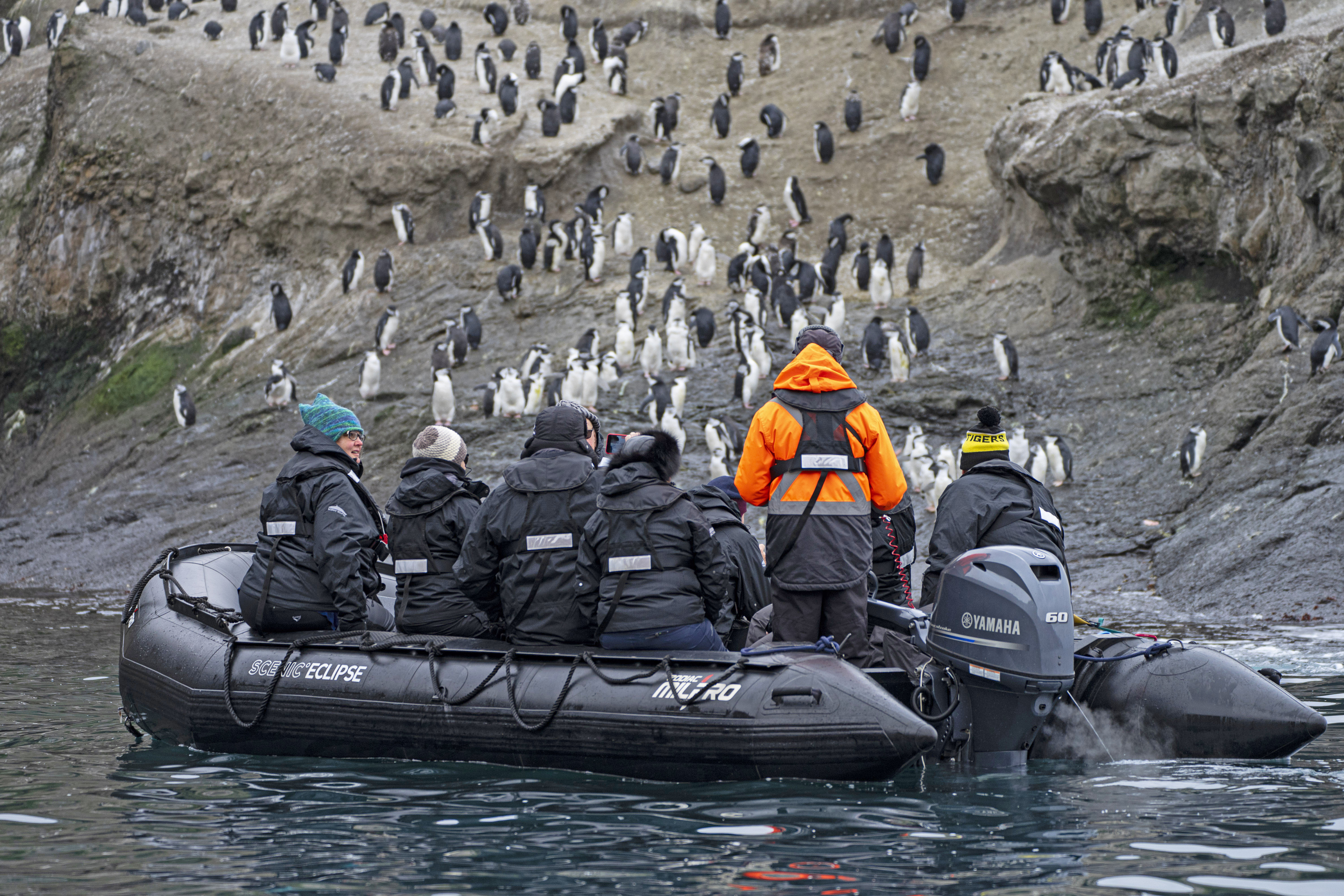
Zodiacs
The Discovery Team are expert operators of our fleet of Zodiacs. On both Expedition and Discovery Voyages the team will guide guests on Zodiac excursions to view stunning coastlines and wildlife, as well as onshore landings.
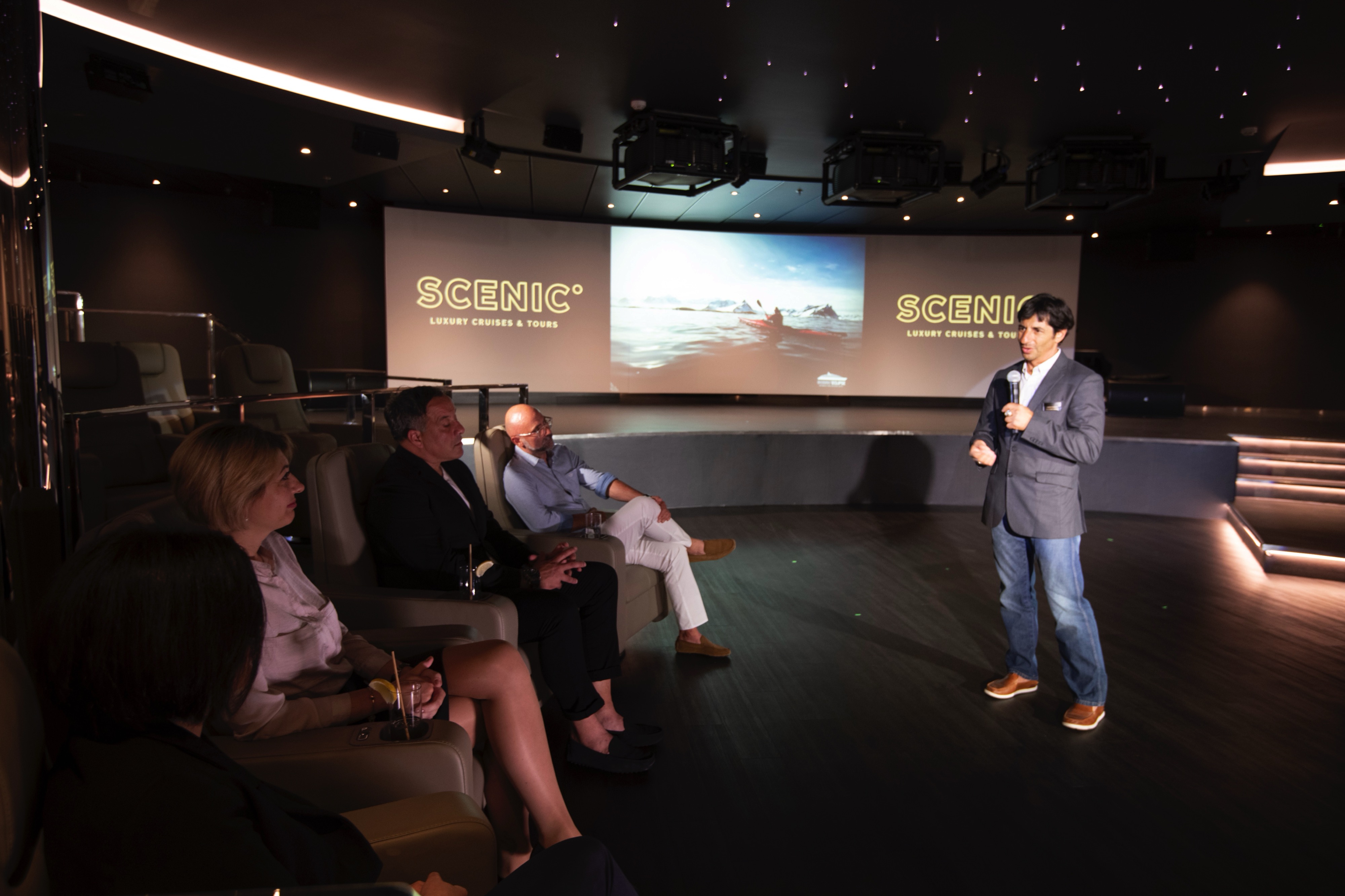
Education Programs
Learn about the unique wildlife, landscapes, history and culture of your destination from our knowledgeable experts during enriching lectures and education programs, hosted in the Discovery Yacht’s impressive state-of-the-art theatre.
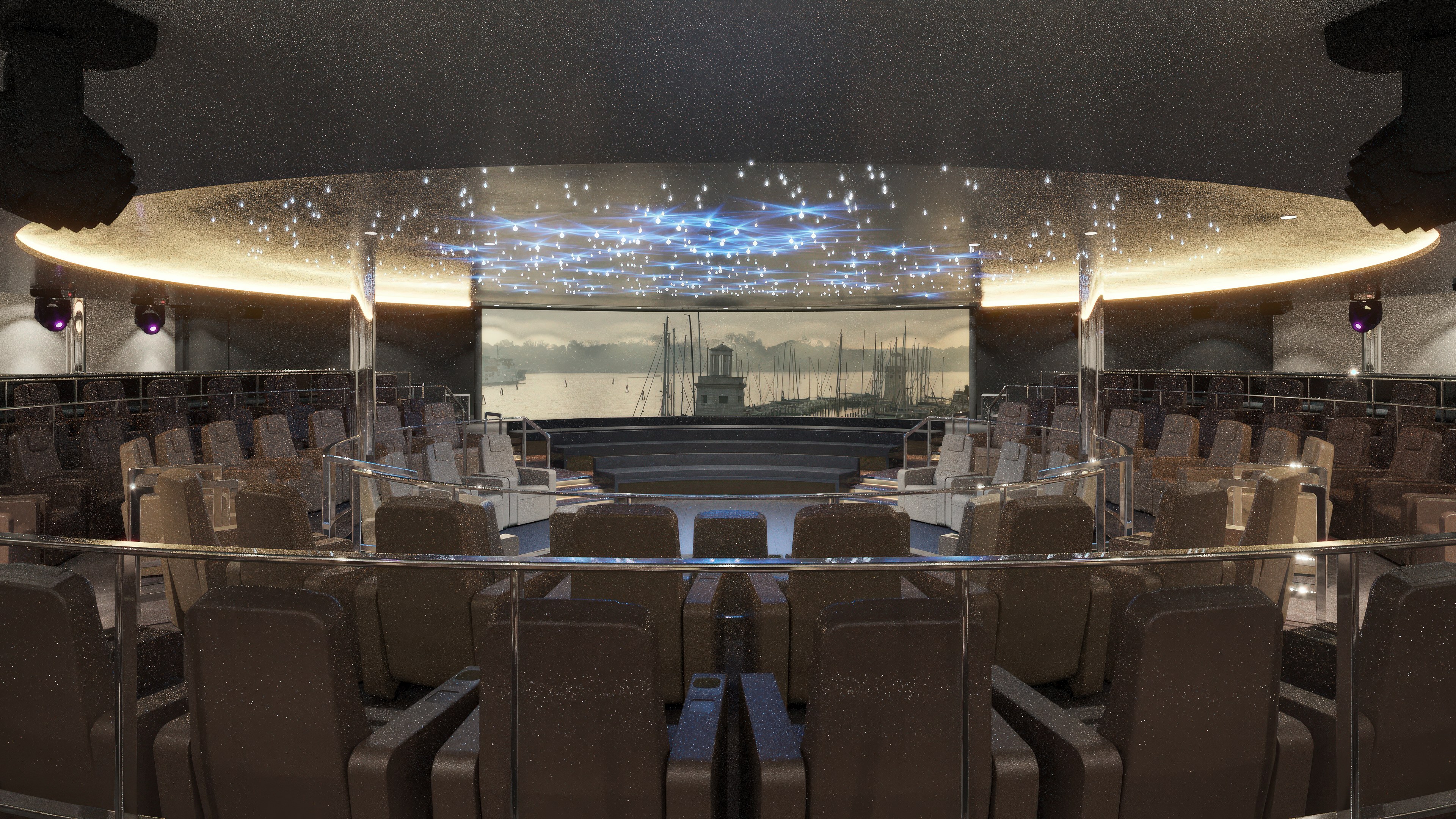
Theatre
Innovative In-The-Round Theatre
Seating for all 270 guests for bespoke shows, culinary masterclassesand Discovery Team presentations come to life.
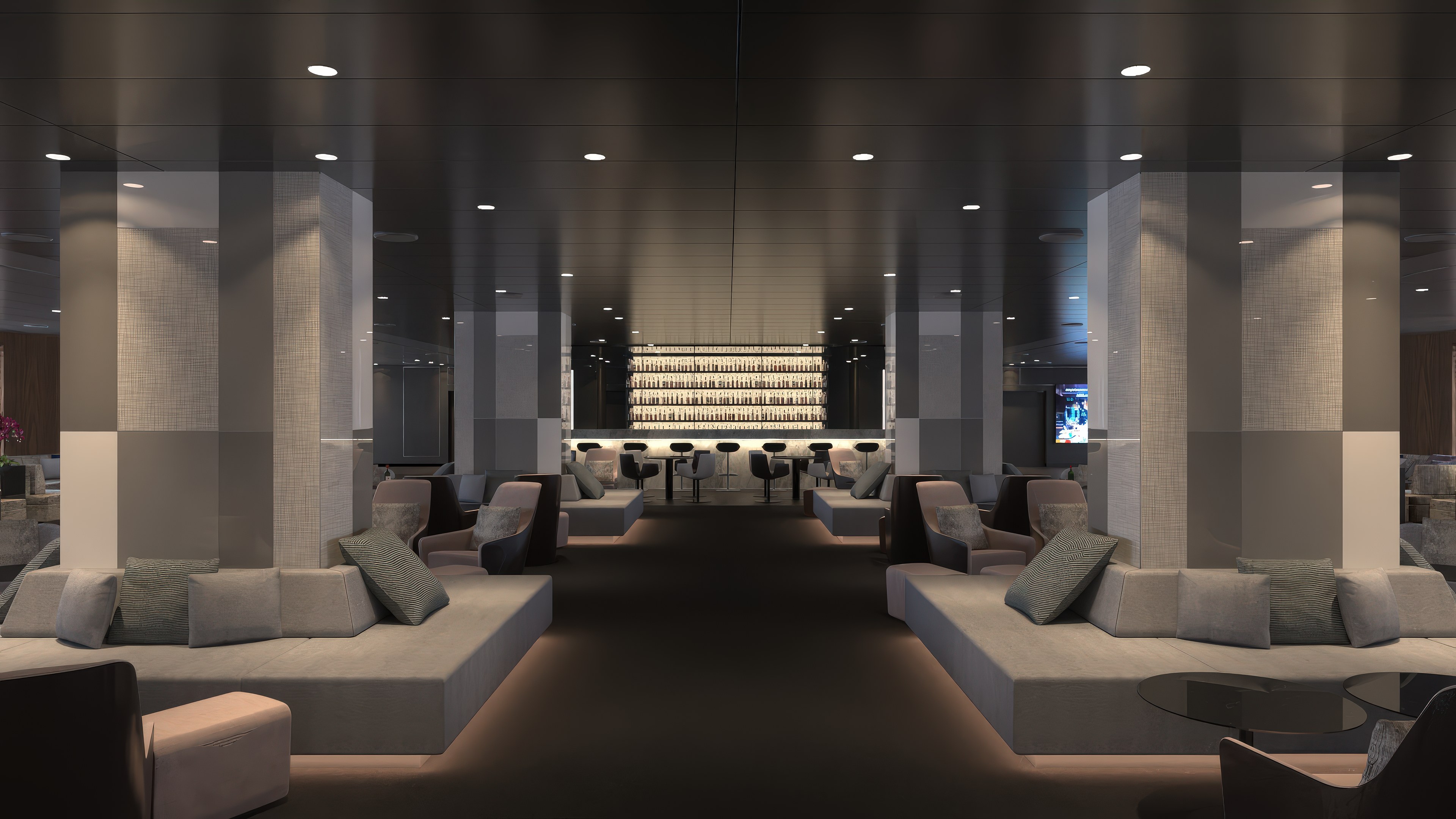
Main Lounge
The Main Lounge can be located on Deck 4
Unique Open Bridge
To meet the Captain and navigational team, gaining insights into Scenic Ikon’s cutting-edge design and technology. Whilst spending time with the Discovery Team as you search for wildlife and take in spectacular sights along your journey.
Scenic Lounge Bar
Interactive game shows, intimate performances by on board musicians and music from the in-house pianist.
Observation Lounge
Read a book, play board games or relax with a specialty tea or coffee. Spot wildlife through Swarovski telescopes.
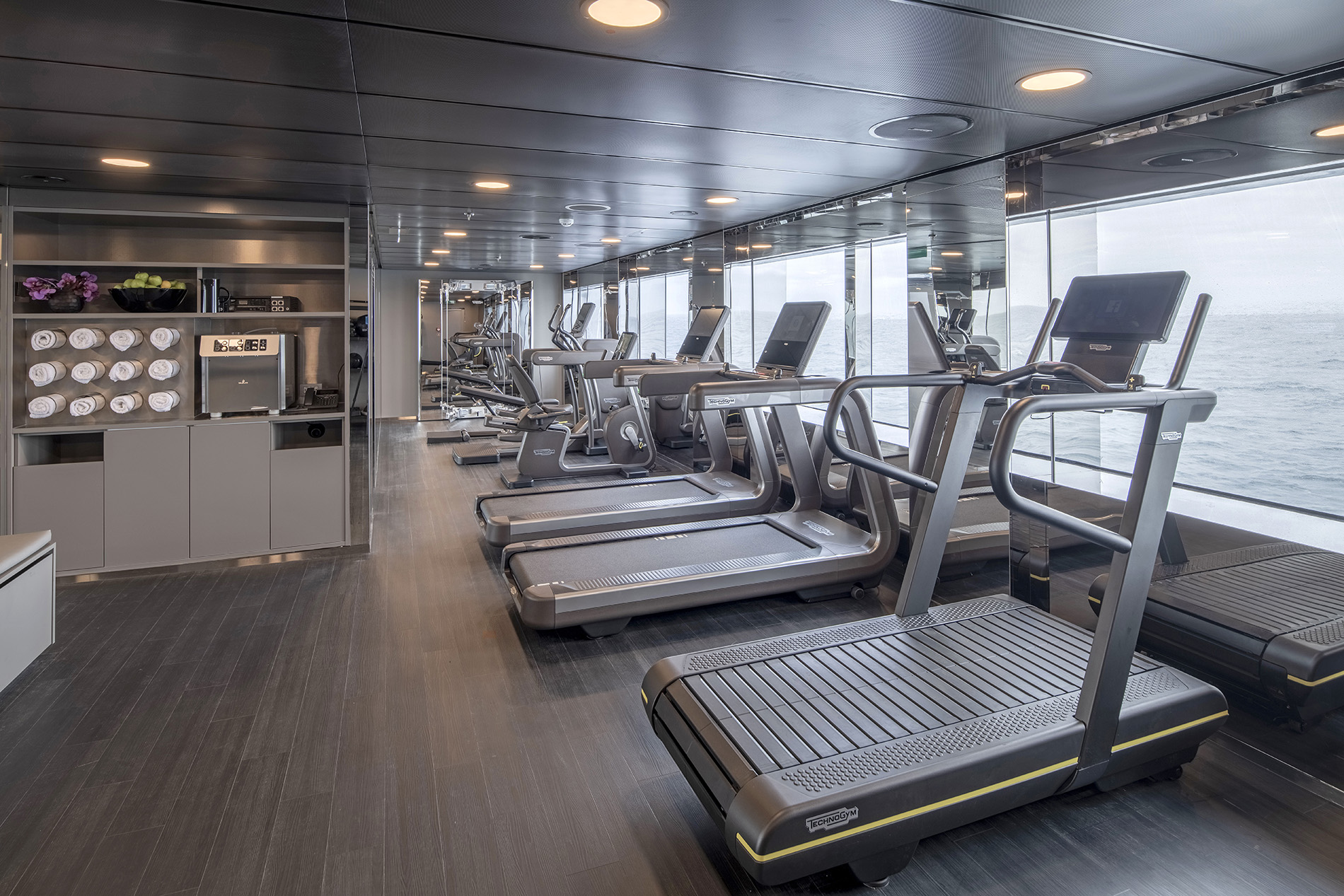
Senses Power Gym
Keep up your fitness during your voyage in the fully equipped, state-of-the-art gym. Raise your heart rate with a cardio or strength workout as you overlook spectacular ocean views. Train your way or opt for a personal training session with one of our qualified, onboard instructors#.
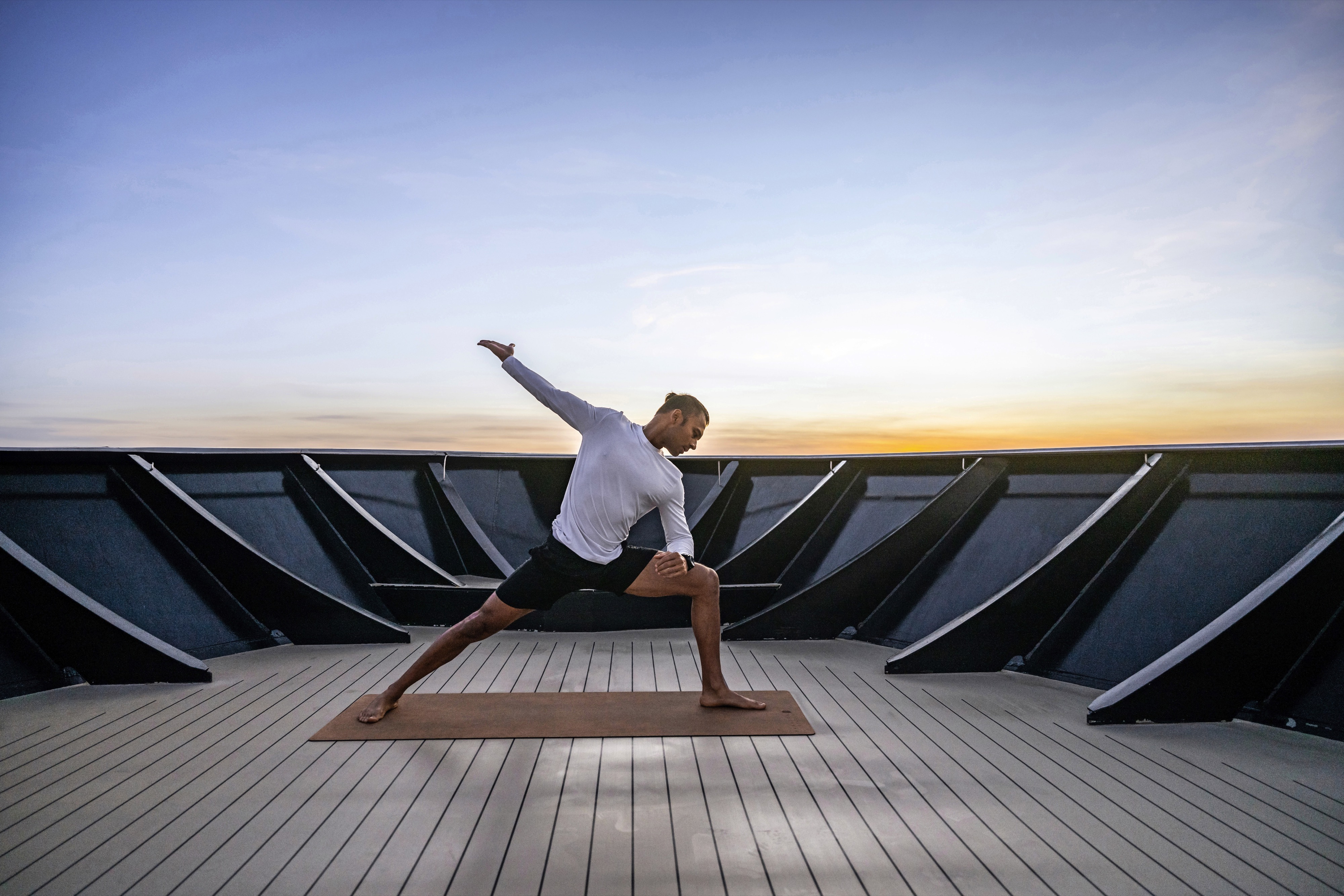
Pure Yoga & Pilates Studio
Our yoga and Pilates studio on Deck 7 is the only studio of its kind at sea. Rejuvenate your mind and body with a private session#. Or mix it up with one of our holistic therapy sessions, including aerial yoga, TRX, mindfulness meditation and Tibetan sound bowl classes.
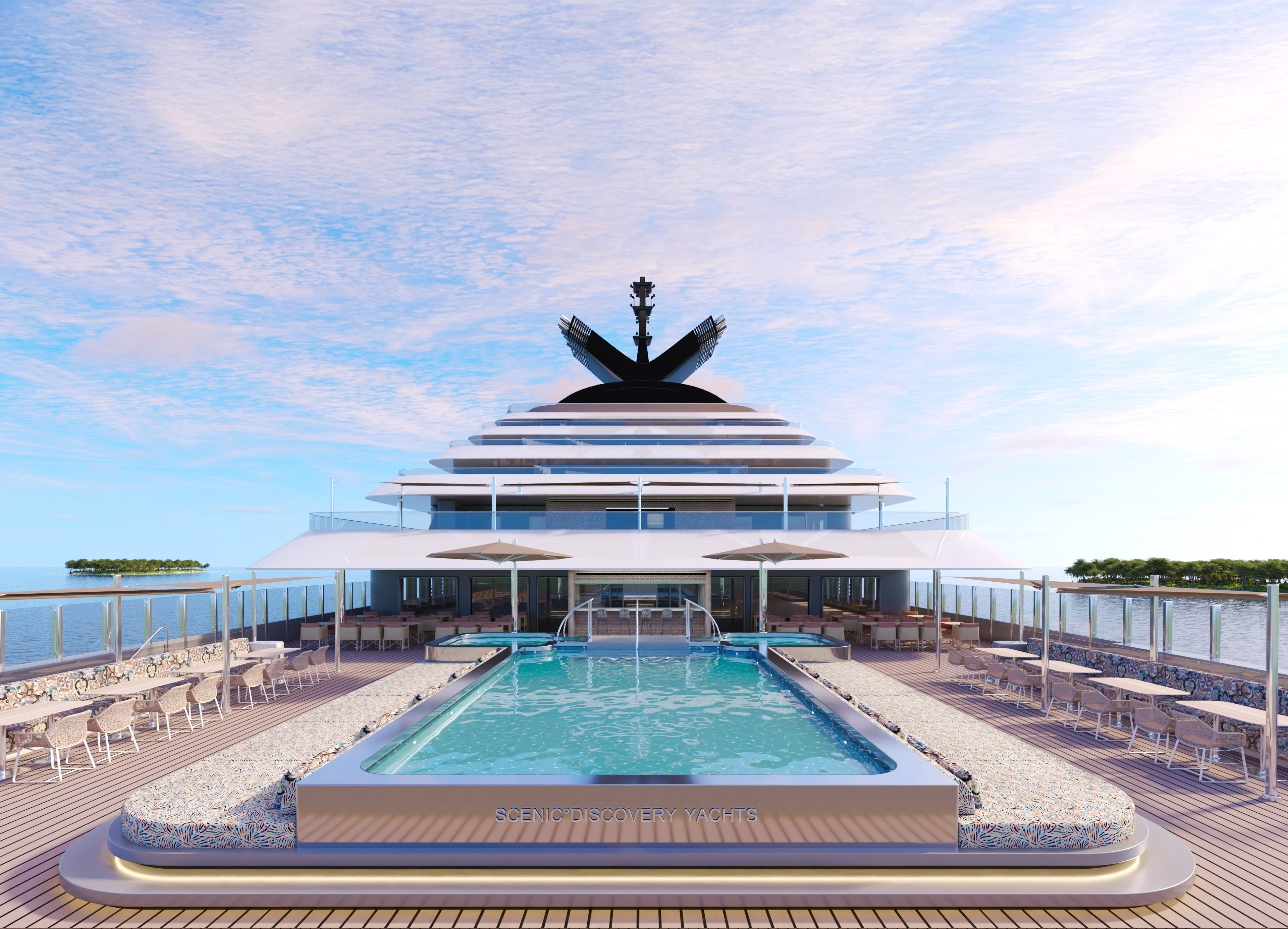
Pool and Terrace
Directly adjacent to Senses Spa. Relax in this tranquil pool admiring the spectacular landscapes, perhaps after a revitalising treatment or yoga class.
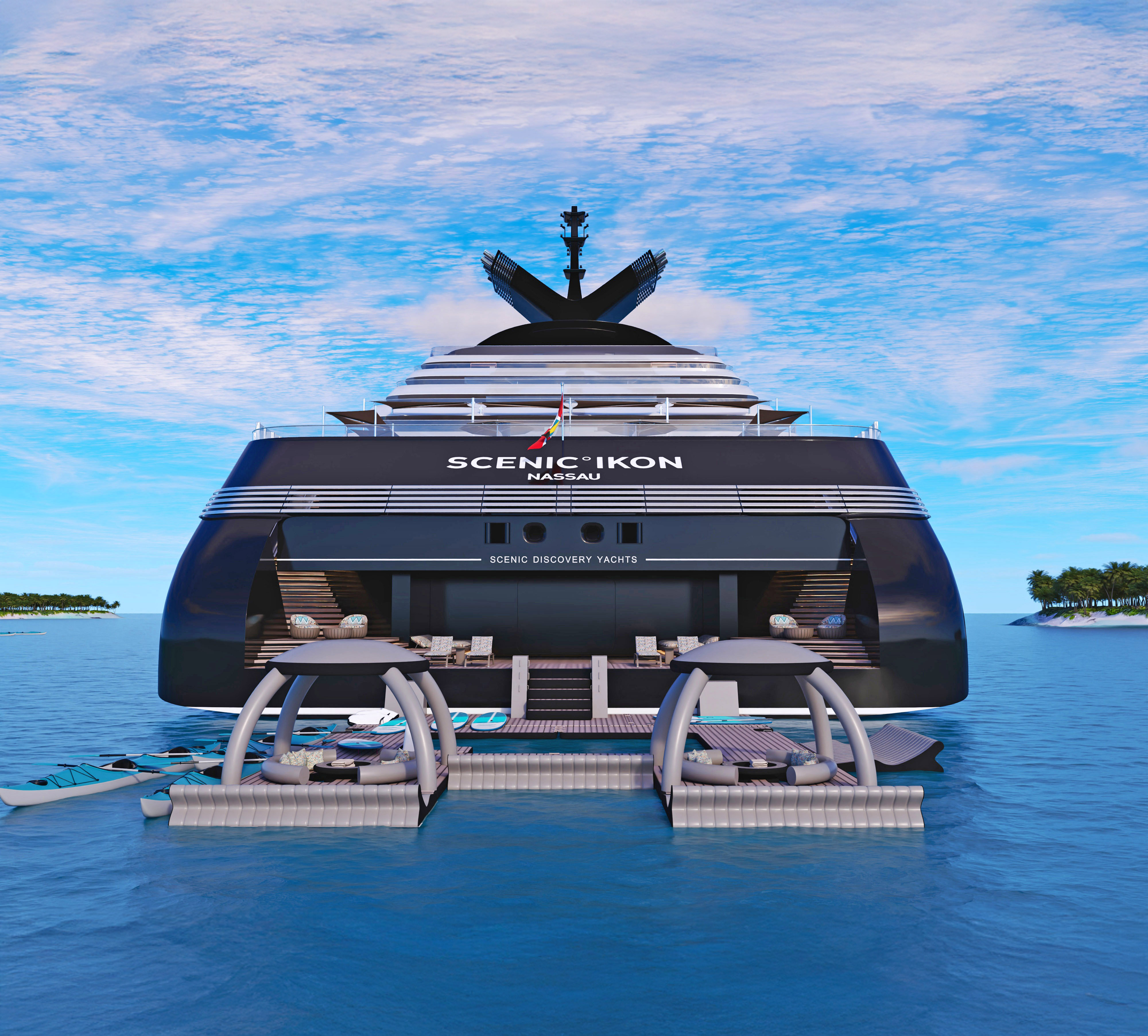
The Marina
A space to relax and exploring coastal wonders at your own pace with an array of water sports – paddleboard, dive with a Seabob, or take a refreshing ocean swim.
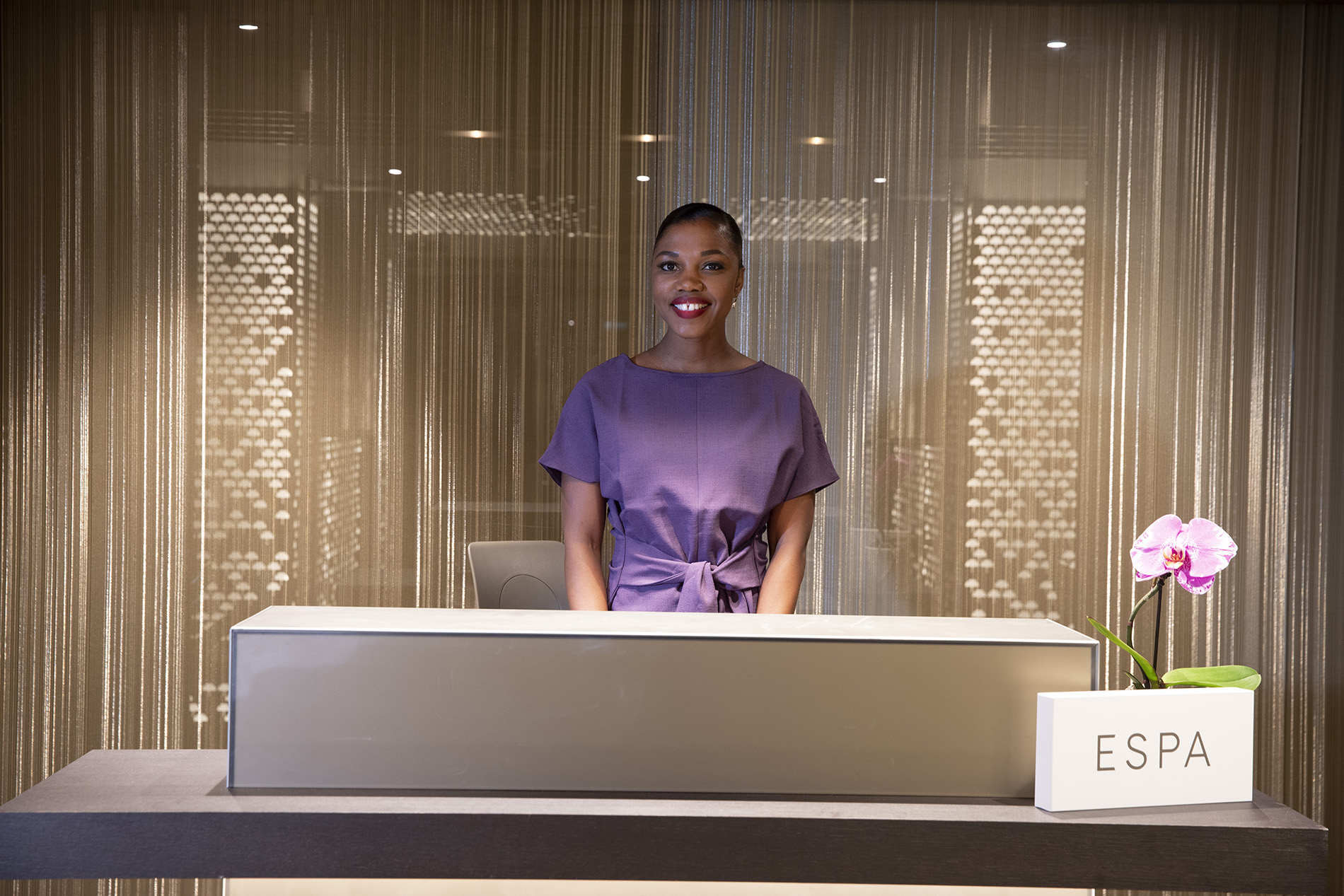
Senses Spa
Soak in the serenity with unsurpassed wellbeing experiences. Trained, specialist staff and state-of-the-art wellness facilities on board bring you a cruising experience like no other.
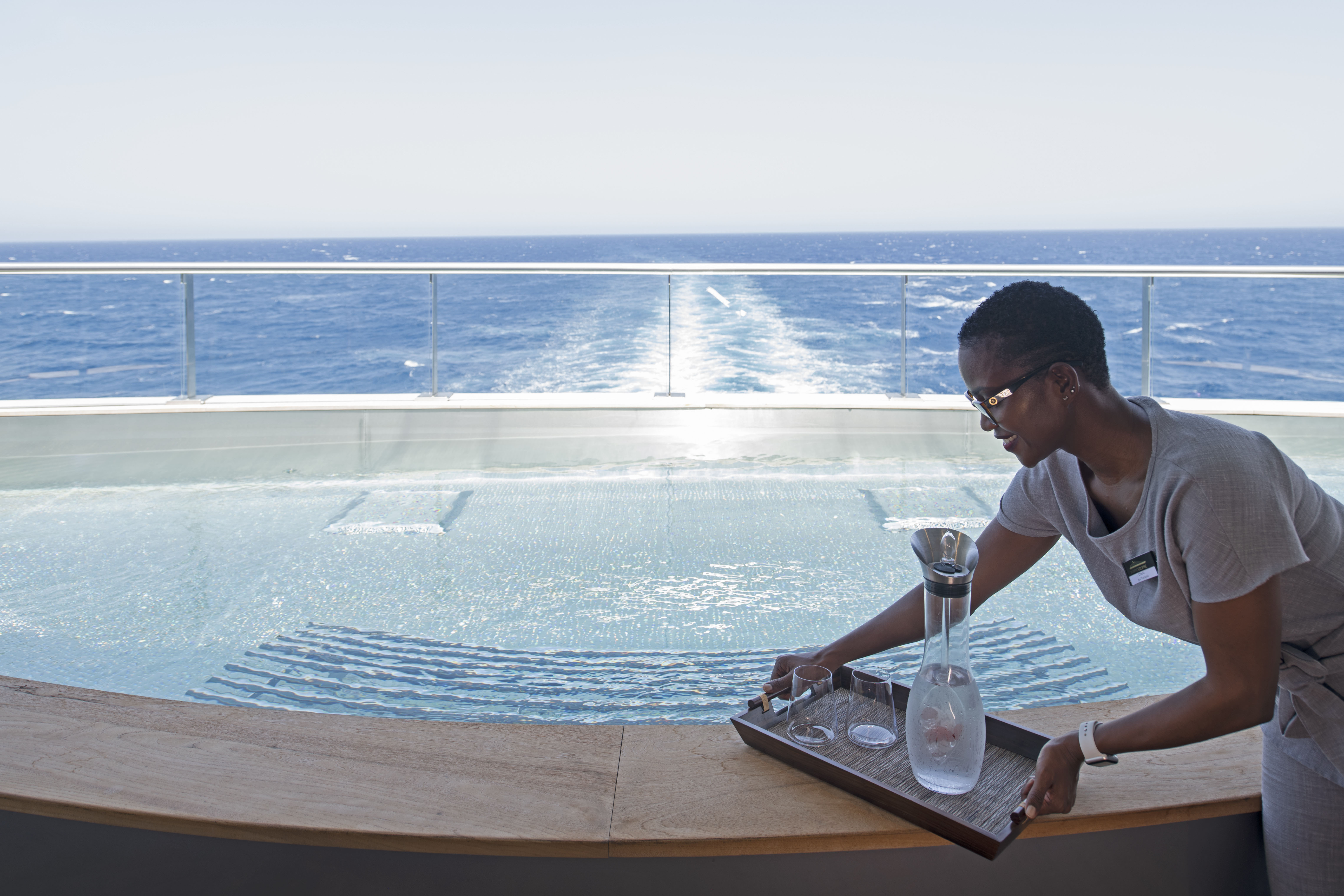
Senses Spa Pool Deck
Step into the rejuvenating Vitality Pool on Deck 6, directly adjacent to Senses Spa. Relax in this tranquil pool admiring the spectacular landscapes, perhaps after a revitalising treatment or yoga class.
WI-FI & Internet Access
Complimentary internet facilities are available and Wi-Fi is accessible throughout the ship for your personal electronic devices. We cannot guarantee the availability or quality of the internet connections as this may vary according to destination and weather. Please note service will be limited in Polar and remote regions. Some sites also may not be accessible due to Scenic firewall/company protection.
Smoking Policy
There is a designated outside smoking area on Deck 6 for guests. All suites, including suite verandah’s and terraces are non-smoking.
Special Dietary Requirements
Scenic accommodates special dietary requirements to the best of our ability across our river cruises, ocean voyages and land journeys where applicable. If you have special dietary requests, please notify us at the time of booking and inform your Cruise Director when you arrive.
Please note: while we do our best to accommodate all dietary requirements, special requests are not guaranteed and failure to meet any request is not a breach of contract on our behalf.
If your question has not been fully answered, please get in touch via our Contact Us page.
Dress Code
When you are relaxing on board, the dress code is smart casual and comfortable. Do not forget your swimsuits and exercise attire for the heated pools and plunge pools, the wellness areas and the gym, yoga and Pilates studio.
For evenings, while there are no formal nights, the recommended o board dress code is elegant casual for most restaurants. Suggested attire for women includes a dress, skirt or trousers with a sweater or blouse, and for men, trousers and a collared shirt. A tie and jacket are optional, but not required.
There are no specific pieces of clothing we insist you pack, however we can offer advice, based upon your itinerary. We recommend comfortable walking shoes for sightseeing, as well as any garments, such as hats, gloves and water-resistant jackets, which will help you to stay comfortable whatever the weather. The dress code across all Scenic cruise and tour itineraries is casual and comfortable. Dinner attire is smart casual – open-neck shirts, trousers and dresses; you may if you wish wear a jacket or blazer with a tie but it is not required.
Children
Luxury expedition-style cruising is not recommended for children under 12. Guests under the age of 18 years must be accompanied by an adult and must share their accommodation with an adult. No children’s programs or babysitting services are available on board.
Visitor Policy
In selected ports on request, visitors may be allowed on board. Visitation is not permitted on embarkation and disembarkation day. A visitor form is to be completed prior to the cruise. The guests will be informed once approved. Visitors will receive a visitor pass at ship’s gangway after they provide photo identification. Visitors will need to be accompanied at all times.
Our Commitment to a Sustainable Future
At Scenic, we are committed to ensuring the pristine destinations and communities we visit retain their wonder. We’ve invested in state-of-the-art technology and sustainable initiatives to leave as small a footprint as possible.
- State-of-the-art technology: The GPS Dynamic Positioning system allows the ship to maintain location without dropping anchor onto the sensitive seabed. Our highly efficient engines reduce noise and vibrations for minimal disturbance to the wildlife.
- Biosecurity: We adhere to IAATO and AECO protocols, ensuring that both our crew and guests maintain a safe distance from wildlife and strictly follow biosecurity guidelines.
- Efficient fuel and engines: Advanced emissions technology and IMO low sulphur fuel.
- Wastewater treatment: Advanced treatment systems to ensure minimal impact on local ecosystems.
- Plastics Reduction: We are committed to reducing our environmental footprint, with our ships already over 95% single-use guest plastic-free.
- Local sourcing and on board herb garden: We source from local markets wherever possible, and maintain an on board self-sufficient herb garden, significantly reducing waste and transportation-related emissions.
- Conservation education: Educational program that fosters a deeper understanding of the environments we visit.
Language
The official language spoken on board is English. All officers, staff and crew as well as local guides and regional specialists speak fluent English. All announcements and lectures will be presented in English.

Deck 10
- Smoking Area
- Elevator
- Cabanas
- Sky Cocktail Bar
- Sky Deck & Pool

Deck 9
- Chairmans Club
- Elevator
- Ikon Penthouse
- Scenic Yacht Suite
- Horizon Suite
- Signature Spa Suite
- Deluxe Verandah Suite

Deck 8
- Experience Pool
- Senses Rejuvenation Spa
- Strength & Endurance Gym
- Elevator
- Grand Terrace Suite
- Master One Bedroom Suite
- Grand Deluxe Verandah Suite
- Deluxe Verandah Suite

Deck 7
- Spa Vitality Pool
- Senses Rejuvenation Spa
- Yoga & Pilates
- Elevator
- Balance & Flexibility Gym
- Wheelhouse
- Master One Bedroom Suite
- Grand Deluxe Verandah Suite
- Deluxe Verandah Suite

Deck 6
- Azure Dining Terrace
- Crustory
- Azure Bar & Cafe
- Lumiere Dining
- Alkemia
- Elevator
- Observation Lounge
- Helideck
- Observation Deck
- Deluxe Verandah Suite
- Grand Deluxe Verandah Suite
- Master One Bedroom Suite

Deck 5
- Pool & Pool Terrace
- Yacht Club Bar
- Yacht Club
- Elevator
- Master One Bedroom Suite
- Grand Deluxe Verandah Suite
- Deluxe Verandah Suite

Deck 4
- Summa Dining
- Textura Dining
- Night Market @ Koko’s
- Elements Dining
- Koko’s
- Chef’s Table
- Sushi Bar @ Koko’s
- Elevator
- Guest Service
- Reception
- Main Lounge
- Scenic Bar
- Boutique
- Theatre

Deck 3
- Marina
- Marina Lounge
- Elevator
- Discovery Centre